


CORVETTE GENERATIONS
The C2 Corvette (1963–1967)
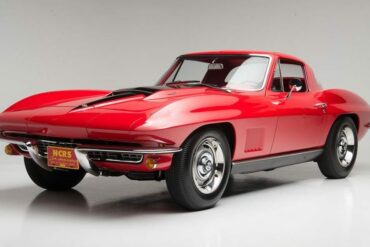
The Sting Ray: five model years, 1963 to 1967, and 117,964 cars built in St. Louis. Bill Mitchell’s body on Zora Arkus-Duntov’s chassis with the Corvette’s first independent rear suspension, its first coupe, four-wheel disc brakes from 1965, the big block from mid-1965 and the 427 from 1966. The split-window coupe, the Z06, the Grand Sport and the L88 all come from these five years, and so does the most expensive Corvette ever sold.
Quick Nav: Story · Featured · Timeline · Model Years · Specials · Z06 · Grand Sport · L88 · Engines · Racing · Buying & Market · Technical · Pics & Videos · All Posts · FAQs
The Basics
Generation: C2 Corvette, the second generation; the “mid-year” or Sting Ray Corvette
Body Styles: Two-door Sport Coupe (fastback, split rear window in 1963 only) and two-door convertible with optional auxiliary hardtop
Production: 117,964: 45,546 coupes and 72,418 convertibles (21,513 / 22,229 / 23,562 / 27,720 / 22,940 by year)
Chief Engineer: Zora Arkus-Duntov; design by Bill Mitchell with Larry Shinoda at GM Styling (project XP-720)
Chassis: Front-engine, rear-wheel drive; new ladder frame, 98-in wheelbase (4 in shorter than the C1), independent rear suspension with a transverse leaf spring, fiberglass body on a steel birdcage
Engines: 327 ci small-block V-8, 250 to 375 hp (fuel injection through 1965); 396 ci big block, 425 hp (mid-1965); 427 ci big block, 390 to 435 hp (1966–67) and the 430-hp L88 (1967)
Transmissions: 3-speed manual standard; Borg-Warner T-10 (1963) then Muncie M20/M21/M22 4-speeds; 2-speed Powerglide automatic
Brakes: 11-in drums 1963–64; four-wheel 11.75-in disc brakes standard from 1965
Original Price: $4,257 coupe / $4,037 convertible in 1963 to $4,388.75 / $4,240.75 in 1967
Assembly: St. Louis, Missouri; small blocks from Flint, big blocks from Tonawanda
Predecessor: C1 Corvette (1953–1962)
Successor: C3 Corvette (1968–1982)
The Overview
The second-generation Corvette, the Sting Ray, was built for five model years, 1963 through 1967, and it is the generation that turned the Corvette from an American sports car into a world one. Everything under the fiberglass was new: a ladder frame four inches shorter in the wheelbase, the first independent rear suspension on an American production car, a lower seating position inside the frame rails rather than on top of it, and the first Corvette coupe. The 327-cubic-inch small block carried over from the last C1 in four states of tune, up to 360 horsepower with Rochester fuel injection.
The five years read as one steady escalation. 1963 brought the split-window coupe, the Z06 race package and the five Grand Sports. 1964 settled the arguments: one-piece rear glass, 375 horsepower from the fuelie. 1965 added four-wheel disc brakes and, at mid-year, the 396 Mark IV big block. 1966 enlarged it to 427 cubic inches in 390- and 425-horsepower form, the first year a third of Corvette buyers chose a big block. 1967, the year Chevrolet had not planned to build, got Tri-Power 427s with 400 and 435 horsepower, the twenty L88s, and the cleanest body of the run.
Chevrolet built 117,964 of them, 45,546 coupes and 72,418 convertibles, and they are the most valuable production Corvettes there are. A 1963 split-window coupe is a six-figure car, a 1967 L71 Tri-Power convertible more, a 1967 L88 a seven-figure car, and on August 15, 2026 Grand Sport chassis 003 sold at RM Sotheby’s Monterey for $18,705,000, the most ever paid for a Corvette at auction. This page is the hub for all of it: the story, a year-by-year table, every engine, the race cars, a buying guide with current prices, and links to the model-year pages and research for 1963 through 1967.
The C2 Corvette Story
By the early 1960s the first-generation Corvette had evolved about as far as it could. The 1962 car sold 40 percent more than the 1961, had 360 horsepower with fuel injection and had proved that Americans would pay a premium for a performance car, but its 1953 X-braced frame and solid rear axle were not going to beat Porsche and Ferrari on a road course, and Zora Arkus-Duntov, who had spent the solid-axle years defending the Corvette against critics who thought it a boulevard car, knew the next one had to silence them.
The racers that became the Sting Ray
The second generation was shaped on the racetrack before it was shaped in the studio, in the years when General Motors was officially out of racing. The Automobile Manufacturers Association ban of June 1957 forbade factory racing programs and performance marketing, but it did not stop Duntov from making sure anyone who wanted a race-ready Corvette knew which options to order, and it did not stop two projects already under way. The 1957 Corvette SS, a magnesium-bodied racer with a “flying football” headrest, was tested at Sebring by Juan Manuel Fangio and Stirling Moss before mechanical troubles and the ban ended its career after one race. The Q-Corvette, a compact coupe-only study with a rear transaxle, independent rear suspension and inboard rear disc brakes, drawn by Bob McLean and a young Peter Brock with Larry Shinoda, was meant for 1960 production and died when the corporate rear-transaxle program it depended on was cancelled.
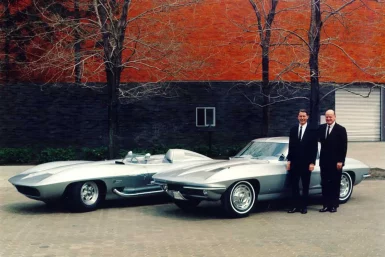
Bill Mitchell, who became GM’s vice president of styling in December 1958, bought the SS test mule’s chassis for one dollar and, with his own money and without GM’s blessing, had a new body built on it in the basement “Studio X” at the Tech Center in Warren: the Sting Ray racer, with the Q-Corvette’s peaked fenders, a crease line that wrapped the whole car and side pipes behind the front wheels. Duntov saw to the mechanicals, a fuel-injected 283 with the Duntov camshaft, and Dr. Dick Thompson, the racing dentist, drove it to the SCCA C-Modified championship in 1960 against Europe’s purpose-built sports racers. The car never wore a Chevrolet badge in competition, but when Mitchell reworked it as a show car for the Chicago Auto Show on February 18, 1961, everyone understood it as a preview.
XP-720
The production program, XP-720, began in the fall of 1959 in the same basement, with Shinoda drafting Mitchell’s shape into a fastback coupe. Duntov set the engineering brief in a December 1957 memo to Harry Barr: better accommodation, more luggage room, better ride, better handling and more performance, and a car that could be bigger inside while smaller outside. A rear-engine Corvette built around the Corvair’s air-cooled flat six was mocked up full size and rejected as too big a step; the Corvette stayed front-engine, rear-drive, with the engine set back toward a “front mid-engine” position.
The structure was new from the ground up. The 1950s X-frame gave way to a ladder frame with five crossmembers, stiff enough to carry the loads of an independent rear suspension and the bigger engines already planned. Passengers sat inside the rails rather than on top of them, which cut the wheelbase four inches to 98 and the center of gravity to 16.5 inches, against 19 for the C1. Duntov’s rear suspension, developed from CERV I, used a frame-mounted differential, half-shafts that doubled as upper control arms, lower lateral arms, trailing radius rods and a single transverse leaf spring. GM’s executives thought it too expensive; Duntov sold it by promising 30,000 cars a year. The front suspension and recirculating-ball steering carried over with a quicker ratio, a steering damper and, for the first time, optional power assist. Drum brakes stayed, with sintered-metallic linings and finned Al-Fin drums optional.
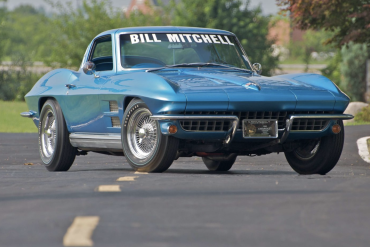
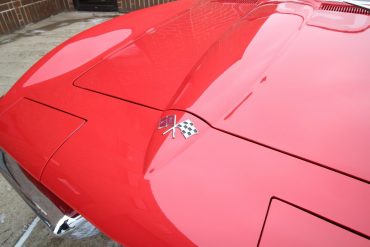
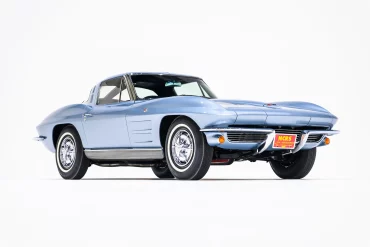
The coupe’s styling was settled by April 1960 and its interior by November, after which the team turned to the convertible and its new detachable hardtop; a four-seat coupe went as far as a full-size mock-up and no further. The split rear window, a “saddleback” shape McLean had drawn for the Q-Corvette and Mitchell had admired on the 1956 Oldsmobile Golden Rocket, was the most argued-over line on the car: Duntov said it blocked the view, Mitchell said it made the car. Mitchell won for 1963 and Duntov for 1964. The hood’s two faux vents were a reference to the racer’s functional ones, left blind because real vents fed hot engine air into the new windows-up cowl ventilation. The fuel filler hid under a round crossed-flags emblem on the single panel that formed the rear deck, the B-pillars and the fenders. Mitchell named the car Sting Ray, two words, after his racer, and it was the first Corvette to carry his signature.
1963: the most significant Corvette year
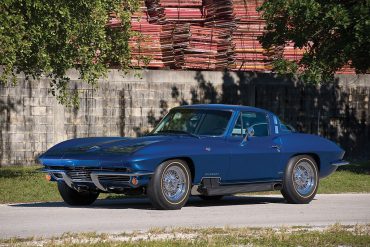
The 1963 Sting Ray went on sale in the fall of 1962 as a coupe or a convertible, with hidden headlights, the first on an American car since the 1942 DeSoto, and the four 327s from 1962: 250 and 300 horsepower on Carter four-barrels, 340 with the Duntov cam and solid lifters, and 360 with Rochester fuel injection. A three-speed manual was standard, the Borg-Warner four-speed went into about four cars in five, and Powerglide was available with the two milder engines. Duntov’s race package, RPO Z06, put heavy-duty springs, shocks and anti-roll bar, finned drums with sintered linings, a 36.5-gallon fiberglass tank, Positraction, the four-speed and the fuelie into a coupe for $1,818.45; 199 were built, 63 of them with the big tank, and three of them won at Riverside on the car’s first weekend of racing in October 1962.
Then there were the Grand Sports. Duntov wanted a lightweight Corvette to beat Carroll Shelby’s Cobras, and five were built on a tube frame with a thin fiberglass body, Plexiglas windows and an aluminum 377 planned, 1,900 pounds against 3,200 for a production car. GM chairman Frederic Donner killed the program when journalists saw them testing, so the cars went to private teams, Nassau Speed Week in December 1963 with John Mecom’s team being their finest hour. Chevrolet sold 21,513 Sting Rays for 1963, half as many again as any Corvette before it, and St. Louis added a second shift to build them.
1964 to 1965: the arguments settled, the chassis caught up
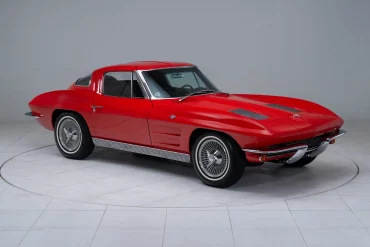
1964 was the 1963 with the arguments settled. The split window became one piece of glass, the hood vents went, the coupe’s driver-side pillar vent became functional with a three-speed fan, body mounts and insulation were revised to quiet the car, and build quality improved. The solid-lifter 327 went to 365 horsepower and the fuelie to 375 with bigger valves and a new cam; the Muncie four-speed replaced the Borg-Warner, and the knock-off aluminum wheels listed for 1963 finally reached 806 customers after the porous first castings were scrapped. 22,229 were built, and for the first time the convertible outsold the coupe, 13,925 to 8,304.
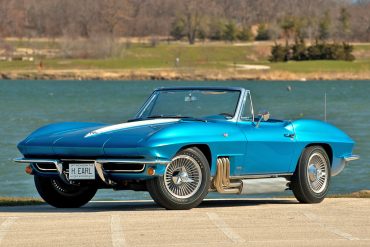
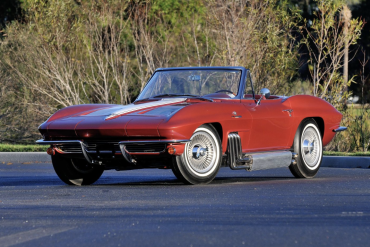
1965 gave the chassis the brakes it deserved. Four-wheel disc brakes with 11.75-inch finned rotors and four-piston calipers became standard; 316 buyers took a $64.50 credit to keep the drums. The hood went smooth, the coupe’s fake roof vents went, the fender louvers became three functional slots, side-mount exhaust and a 350-horsepower hydraulic-lifter L79 joined the list. At mid-year came the engine that changed the Corvette’s character: the 396-cubic-inch Mark IV big block, RPO L78, with the staggered-valve “porcupine” heads, 425 horsepower and a bulged hood to clear it, the first Corvette engine rated over 400 horsepower and about 150 pounds heavier on the front wheels. 2,157 were sold in half a season. It was also the last year for fuel injection, which 771 buyers chose over the big block; the Rochester unit would not return until 1982. Production reached 23,562.
1966 to 1967: the 427 years
For 1966 the big block grew to 427 cubic inches and came two ways: the hydraulic-lifter L36 with 390 horsepower and the solid-lifter L72 with 425 horsepower and 460 lb-ft, four-bolt mains, an aluminum intake and a 780-cfm Holley. Early cars and literature said 450 and 400; mid-year Chevrolet lowered the numbers without touching the engines, and Car and Driver still ran an L72 to 60 mph in 4.8 seconds on a 4.11 axle. Positraction, the four-speed and the F41 suspension were mandatory with the 427. The small-block list shrank to the 300 and the 350, the grille went egg-crate, the coupe lost its roof vents, and 27,720 cars, the generation’s record, were built, 10,374 of them big blocks.
1967 was not supposed to happen. The C3 was ready for 1967 until Duntov sent it back to the wind tunnel, so the Sting Ray got a fifth year and Chevrolet used it to take things off: the hood script, the fender flags and the rocker trim went, five small louvers replaced the three fender slots, slotted Rally wheels with trim rings replaced the wheel covers, the parking brake moved between the seats and the convertible got a smaller hardtop. Four of the five engines were 427s. The L36 kept 390 horsepower, and three Holley two-barrels on an aluminum intake under a triangular air cleaner made the 400-horsepower L68 and the 435-horsepower L71, with the L89 adding aluminum heads to the L71 on sixteen cars. Then there was RPO L88: aluminum heads, 12.5:1 compression, a forged crank, an 850-cfm Holley and a cowl-induction hood, rated at 430 horsepower so that no street customer would order it by mistake and making something closer to 550; it required the heavy-duty brakes, suspension, M22 gearbox and Positraction and deleted the radio, heater and choke, and Chevrolet built twenty. 22,940 Sting Rays were built for 1967, and the last of them was the end of the body Mitchell had drawn in a basement in 1959.
What the Sting Ray left behind
The C2 is the shortest Corvette generation and the one the others are measured against. Its chassis, with detail changes, carried the Corvette through 1982; its independent rear suspension was the Corvette’s until 1984; the big block it introduced defined the muscle years; the Z06 and Grand Sport names returned on the C5, C6, C7 and C8; and the L88 became the most valuable production Corvette engine. Every one of the 117,964 is collectible now, and the best of them, the split-window coupes, the tankers, the Tri-Power 427s, the L88s and the five Grand Sports, are the Corvettes that set the records. The year pages linked below carry the full specifications, options, VIN ranges, colors and production numbers for each of the five years.
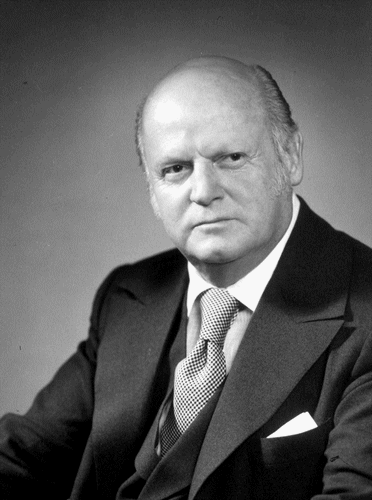 Bill Mitchell, Lead Designer of the Second-Generation C2 Corvette Sting Ray. (Image courtesy of GM Media.)
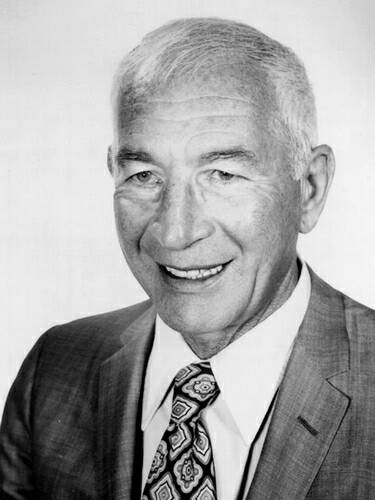 Zora Arkus-Duntov, the “Father of the Corvette.” (Image courtesy of GM Media.)
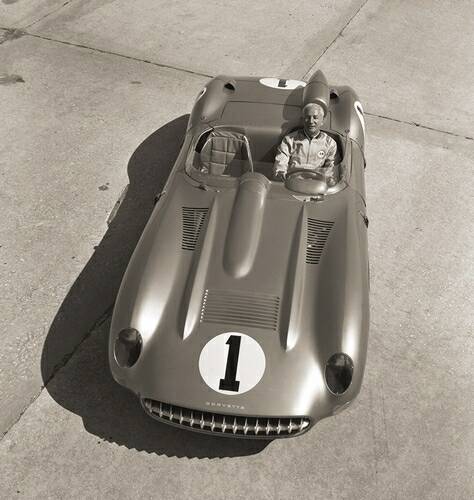 The 1957 Corvette SS with Zora Arkus-Duntov at the wheel. (Image courtesy of GM Media.)
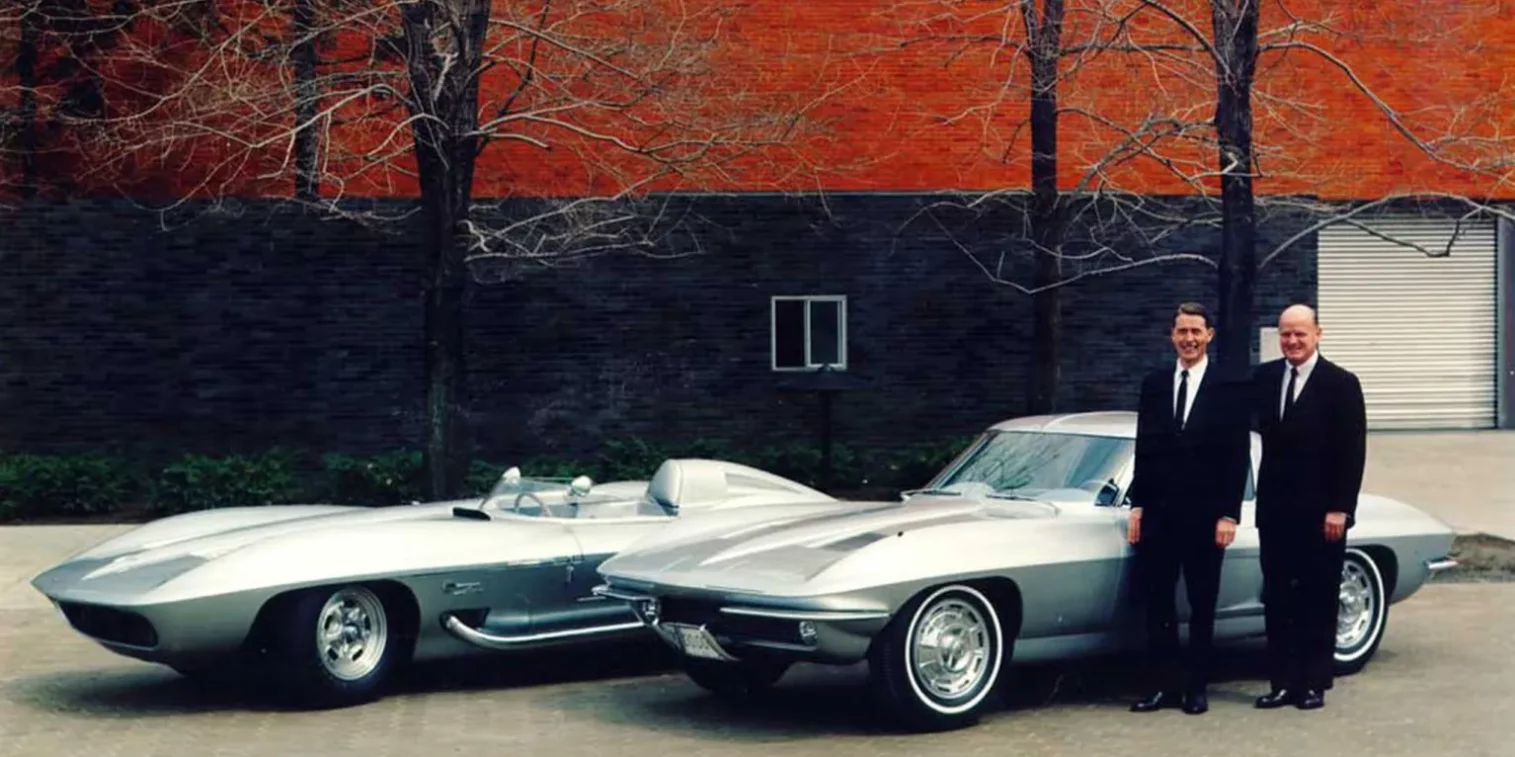
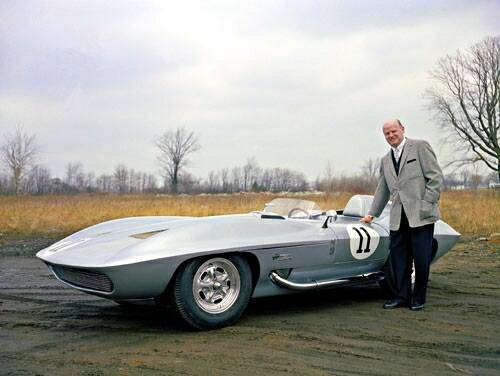 Bill Mitchell and the Stingray Special. (Image courtesy of GM Media.)
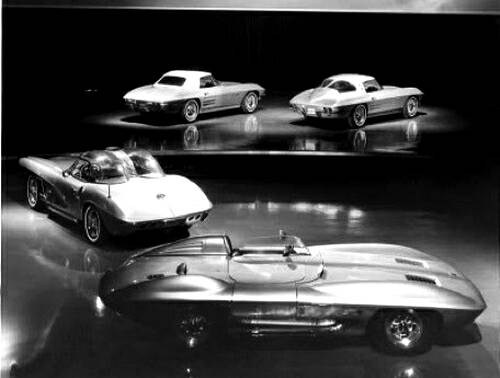 The evolution of the C2 Corvette began with the Stingray Special and the Corvette Super Sport. (Image courtesy of GM Media.)
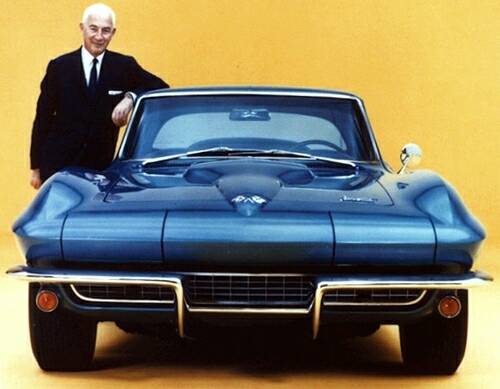 The 1963 Corvette was considered a massive triumph by Zora Arkus-Duntov. (Image courtesy of GM Media.)
Of the 117,964 Sting Rays, 72,418 were convertibles and only 45,546 coupes, and the coupe outsold the convertible in just one year, 1963, when 10,594 split-windows found buyers against 10,919 roadsters. Many of those split windows were later converted to the one-piece 1964 glass, so an unmodified 1963 coupe is rarer than the production figure suggests, and a converted-back car is worth checking for the original window frame.
DID YOU KNOW
Featured C2 Corvette Stories
Longer reads from the archive on the cars that made the generation. Most of these are members-only: an ad-free read and the full archive for the price of a tank of fuel. BECOME A MEMBER

The C2 Corvette Year by Year - The Model Timeline
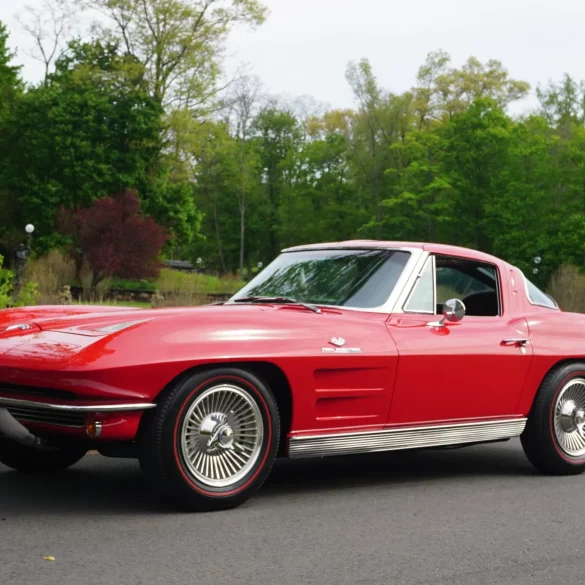
Five model years, one body, and a change of real consequence every year: the independent rear suspension and the split window in 1963, the one-piece glass and the Muncie in 1964, disc brakes and the 396 in 1965, the 427 in 1966, Tri-Power and the L88 in 1967. The quickest way to tell them apart from the outside is the hood (bullet-shaped indents with vents in 1963, indents only in 1964, smooth from 1965, bulged on big blocks) and the fender vents (two fake in 1963–64, three real in 1965–66, five small louvers in 1967).
Production rose every year through 1966 and dipped in 1967 because buyers knew a new body was coming. The convertible outsold the coupe in every year but the first. Base prices moved little, $4,037 to $4,388.75, but the option list did: a fuel-injected or big-block car with the four-speed, Positraction, knock-offs and side pipes could cost a thousand dollars more, and the options are what set the values today.
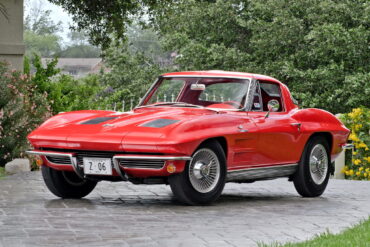
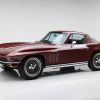
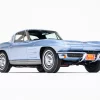
1963 Corvette
The styling changes alone were earth shattering. If a UFO landed next to a Corvette when it was introduced in 1963 it could have garnered more attention, but maybe not. It had an aggressiveness that still would not be considered brutal, all the while featuring improved aerodynamics. The chassis also saw significant changes, so there was a lot more going on in 1963 than just an updated shape. The new independent rear suspension made a huge difference in every performance area, with improved ride and driving experience as part of the bargain.
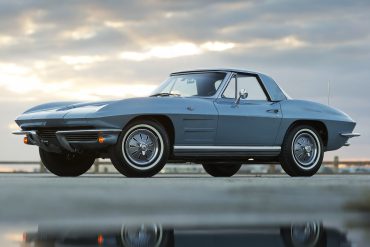
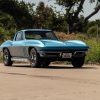
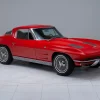
1964 Corvette
Updates for 1964 were minimal. The biggest development was the elimination of the split rear window. Even those who advocated the split window concept admitted that it had drawbacks. Also gone for 1964 were the fake hood vents. The hood indentations remained however, although word is that the 1963 faux vents will not fit on the 1964 hood. Perhaps GM figured that the incredible performance the Corvette Sting Ray offered made enough of a statement. Another change was the added functionality of the air outlet to the right of the driver’s door on the coupe. For 1963 they were closed off, represented by a small indentation. A small fan was added to boost airflow but it was only minimally effective and the whole idea was dropped by 1966. Updated body mounting methods and other changes improved interior noise. The overall build quality, long a legitimate Corvette complaint, was improved. There were engine improvements for 1964. The base motor (250 hp) and the upgrade L75 (300 hp) were unchanged, but the L76 went to 365 hp (previously 340 hp) and the top-dog L84 fuel-injected engine was now 375 hp, up from 360, due to revised heads, camshaft and bigger valves. All 1964 engines were 327 cubic inches.
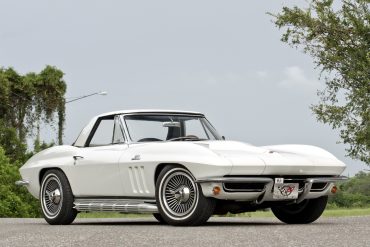
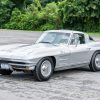
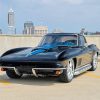
1965 Corvette
A long desired and needed upgrade, disc brakes, became standard equipment. The good news is that they appeared on all four corners, not just the front as was common practice of the day. Racers were particularly happy with this development, as they had long been suffering with drum brakes: although special sintered-metallic linings had been available, fade under racing conditions was still a problem. Jaguar had been offering four-wheel disc brakes on the more expensive E-Type and it wouldn’t do for the Sting Ray to be playing second in any area. The unloved drum brakes were still available as a deletion credit (RPO J61, –$64.50) and 316 1965 Corvettes were so equipped.
A new Corvette era was ushered in when a leading-edge class of engine, fondly known as the “big block,” was introduced late in the 1965 model year. A huge horsepower race was taking place industry-wide and the 396-cubic-inch Turbo-Jet was the Corvette’s ticket to the party. Rated at 425 hp, it furthered the Corvette’s bad-boy reputation and was the first Corvette engine rated at over 400 hp. A new “bubble hood” was required to clear it, and due to supply problems a number of small-block cars left the factory with the big-block hood.
Most of the horsepower advantage in the new engine was in the heads, nicknamed “porcupine heads” for the way the valves sat at odd angles like the quills on a porcupine; the big-block Corvette was sometimes known as the “fiberglass porcupine.” The physically much bigger engine required an enhanced cooling system, and there was another drawback: approximately 150 lb of added weight, all of it on the front wheels. Weight distribution changed to 51 percent front / 49 percent rear, a handling disadvantage compared to the better-balanced small block.
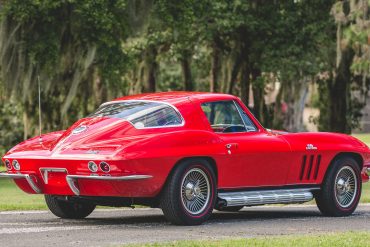
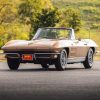
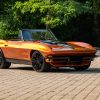
1966 Corvette
Big-block engines dominated the Sting Ray story for 1966. They had first appeared in April 1965 and as such had limited exposure; 1966 extended the big-block story with the legendary 427-cubic-inch engines, bored and stroked versions of the 1965 396, available in two flavors: 390 hp (RPO L36, $181.20) and 425 hp (RPO L72, $312.85). The extra cost of the L72 was justified: four-bolt mains, impact-extruded aluminum pistons, a very aggressive camshaft, a 780-cfm Holley on an aluminum intake and a free-flowing exhaust, with the K66 transistorized ignition a mandatory option. There are reports that the L72 actually made more than the 450 hp first quoted; the ratings were lowered to avoid backlash from safety legislation, but enthusiasts only had to read the magazine reviews to learn what was really going on.
Drivetrain choices were nicely varied in 1966, with a number of axle ratios available, quite a contrast to later years when regulations would effectively limit the options. “Not recommended for general driving” in the order guide refers to the famous M22 “Rock Crusher” Muncie four-speed: exceptionally strong but, due to its straighter-cut gears, with an audible whine.
1967 Corvette
1967 was the last year of the “mid-year” C2 Sting Rays, as the 1963 through 1967 models are known. The styling that shook the world in 1963 had proved itself everywhere, with critical praise and a sales volume that would not quit; every model year saw a sales increase through 1966, and things cooled down for 1967 in part because it was known that a new body was coming for 1968. For all cars, 1967 would be a pivotal year: safety and smog requirements became law in 1968 and the new regulations affected performance cars profoundly.
Big blocks continued to be the way to go for Corvette buyers in 1967; of the five engine options, four were 427s. Multiple carburetors were the secret of the L68 (400 hp, 2,101 built, $305.50) and L71 (435 hp, 3,754 built, $437.10). Tri-Power had been used with great success on the Pontiac GTO before a GM corporate ban removed it from Pontiac; the Corvette was exempted, and three Holley two-barrels were mounted on an aluminum manifold. The center carburetor was used in normal driving and the front and rear units opened under hard throttle, so fuel economy was part of the bargain, since only one carburetor was in use most of the time.
MORE: PRODUCTION FIGURES / BUILD DATES
| YEAR | BUILT | BASE PRICE | ENGINES | WHAT CHANGED |
|---|---|---|---|---|
| 1963 | 21,513 | $4,257 coupe / $4,037 convertible | 327 ci V-8, 250 to 360 hp (fuel injection optional) | All new: ladder frame, independent rear suspension, 98-in wheelbase, hidden headlights, first coupe with the one-year split window; Z06 package (199) and five Grand Sports; 21,513 built, a record |
| 1964 | 22,229 | $4,252 coupe / $4,037 convertible | 327 ci V-8, 250 to 375 hp (fuel injection optional) | One-piece rear window, hood vents deleted, functional driver-side pillar vent, quieter body mounts; L76 to 365 hp and L84 to 375 hp; Muncie 4-speed; knock-off wheels delivered (806) |
| 1965 | 23,562 | $4,321 coupe / $4,106 convertible | 327 ci V-8, 250 to 375 hp; 396 ci big block, 425 hp (from mid-year) | Four-wheel disc brakes standard; smooth hood, three functional fender slots, side exhaust; 350-hp L79 added; 396 Mark IV big block (425 hp) from mid-year; last year of fuel injection |
| 1966 | 27,720 | $4,295 coupe / $4,084 convertible | 327 ci V-8, 300 or 350 hp; 427 ci big block, 390 hp (L36) or 425 hp (L72) | 427 big block in 390-hp L36 and 425-hp L72 form (badged 400/450 early); small blocks cut to 300 and 350 hp; egg-crate grille, coupe roof vents deleted; record 27,720 built, 10,374 big blocks |
| 1967 | 22,940 | $4,388.75 coupe / $4,240.75 convertible | 327 ci V-8, 300 or 350 hp; 427 ci big block, 390 hp (L36), 400 hp Tri-Power (L68), 435 hp Tri-Power (L71/L89), 430 hp L88 (20 built) | Trim removed, five fender louvers, Rally wheels, smaller hardtop, parking brake between the seats; Tri-Power L68 (400 hp) and L71 (435 hp), L89 aluminum heads (16), L88 (20); last Sting Ray |
C2 Corvette Model Year Research Hubs (1963–1967)
One page per model year with everything we have on it: the story, specifications, every option and its price, the color chart, VIN ranges, production numbers, pictures, videos, cars for sale and the questions people ask. Start with the year you own or want.
C2 Corvette Special Models, Race Cars & Concepts
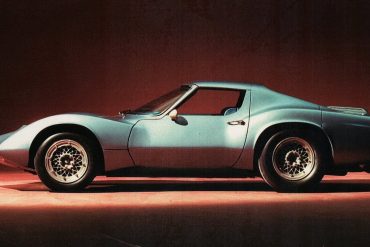
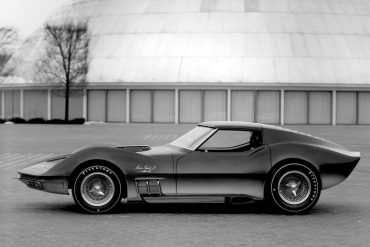
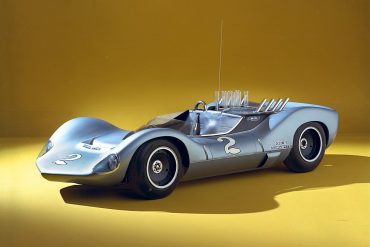
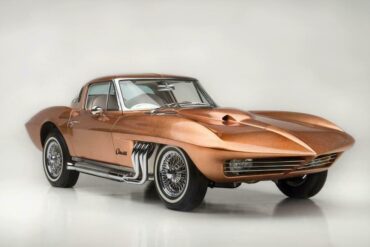
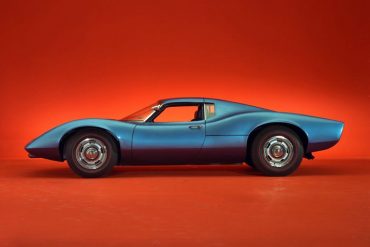
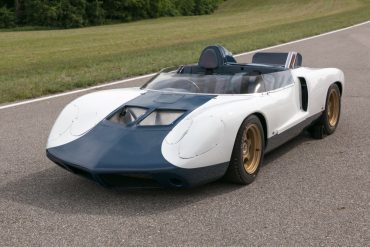
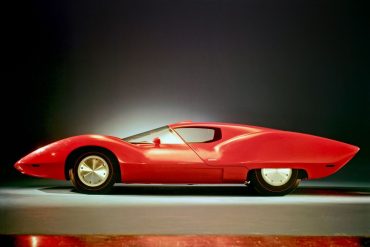
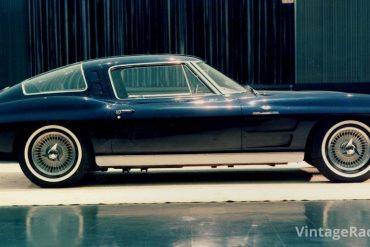
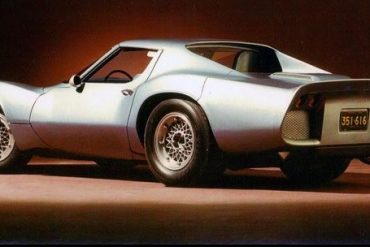
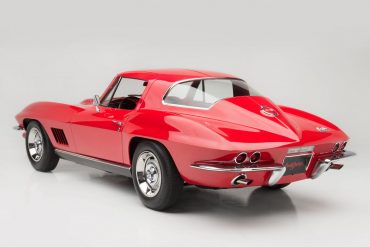
The cars built in ones and tens: the Z06 and the Grand Sports, the L88s, the Tri-Power and L89 cars, the Knudsen and show cars, and the concepts that pointed to the C3 and beyond: Mako Shark II, CERV II, XP-819, the Astro I and the Rondine. The Z06, Grand Sport and L88 have their own sections below.
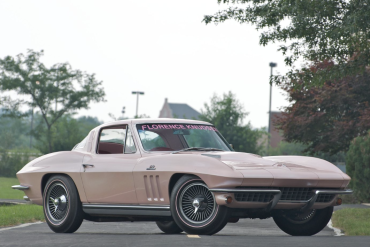
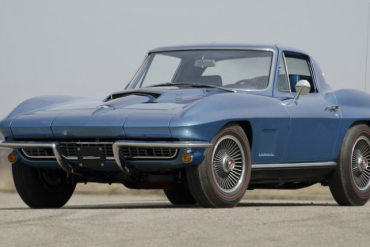
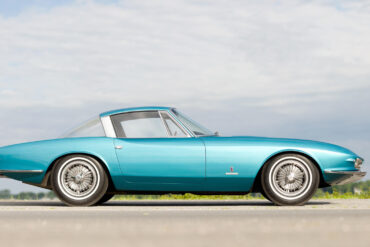
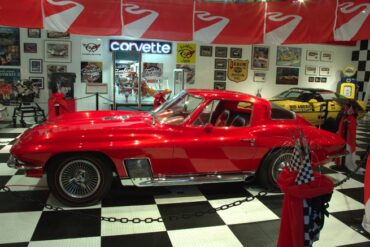
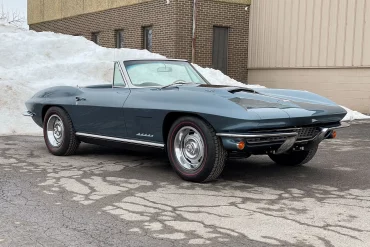
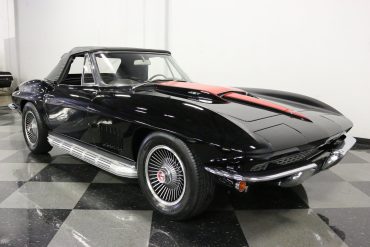
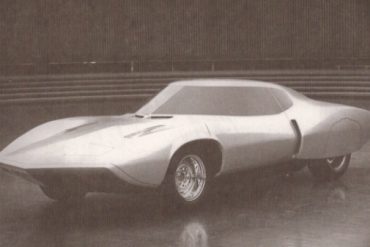
The 1963 Corvette Z06
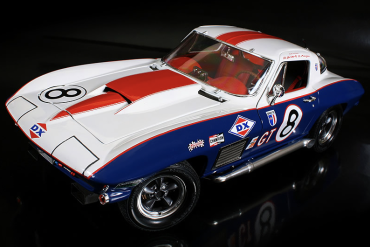
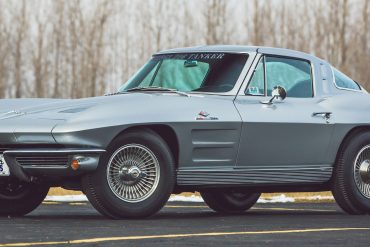
Duntov’s race package for the first Sting Ray, RPO Z06 at $1,818.45: the 360-hp fuel-injected 327, the four-speed, Positraction, heavy-duty springs, shocks and anti-roll bar, finned Al-Fin drums with sintered-metallic linings and a 36.5-gallon fiberglass tank, coupe only. 199 were built, 63 of them “tankers” with the big tank, and three of them won their class at Riverside on October 13, 1962, the Sting Ray’s first race. The name came back on the C5 in 2001 and has been the track Corvette ever since.
MORE: THE 1963 Z06 GUIDE / ALL Z06 POSTS
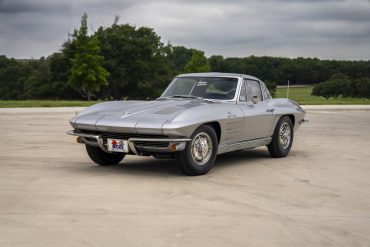


The 1963 Corvette Grand Sport
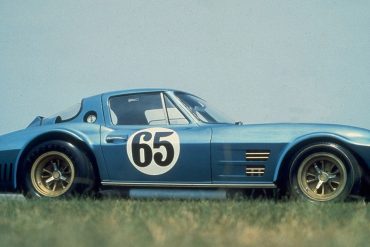
Five cars Duntov built to beat the Cobras: a tubular frame, a thin hand-laid fiberglass body with Plexiglas windows, Girling disc brakes, and about 1,900 pounds against 3,200 for a production coupe, with an aluminum 377 planned. GM’s chairman killed the program after journalists saw them testing, so the Grand Sports raced in private hands, most famously at Nassau in December 1963, where they ran away from the Cobras. All five survive, three as coupes and two as roadsters, every one accounted for, and chassis 003 sold at RM Sotheby’s Monterey on August 15, 2026 for $18,705,000, the most ever paid for a Corvette at auction.
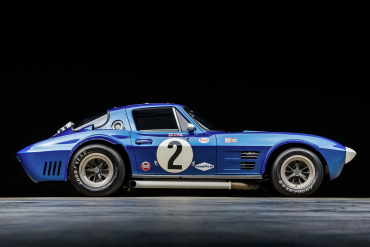


The 1967 Corvette L88
The race engine Chevrolet sold with a straight face: a 427 with aluminum heads, 12.5:1 compression, a forged crank and pistons, a radical solid-lifter cam and an 850-cfm Holley under a cowl-induction hood, rated at 430 horsepower so nobody would order it by mistake and making closer to 550 on racing fuel. It required the heavy-duty brakes and suspension, the M22 and Positraction and deleted the radio, heater and choke. Twenty were built for 1967 before 80 followed in 1968 and 116 in 1969. A 1967 L88 coupe brought $3.85 million in 2014, still the record for a production Corvette, and the 1967 cars raced at Sebring, Daytona and, once, Le Mans.
MORE: THE L88 GUIDE / ALL L88 POSTS
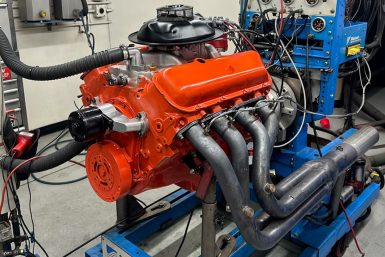
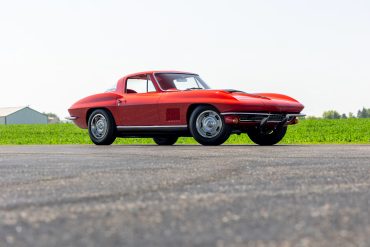



C2 Corvette Engines
Every C2 engine is a Chevrolet V-8 with a cast-iron block, and there are two families. The 327-cubic-inch small block (4.00 x 3.25 in) carried over from 1962 and was offered in two to five states of tune each year, from the 250-horsepower base engine on a Carter four-barrel to the solid-lifter 340, 365 and the Rochester fuel-injected 360 and 375. The 350-horsepower hydraulic-lifter L79 of 1965–67 is the one most enthusiasts call the best small block of the generation, and the fuel-injected L84 of 1963–65 is the rarest and most faked.
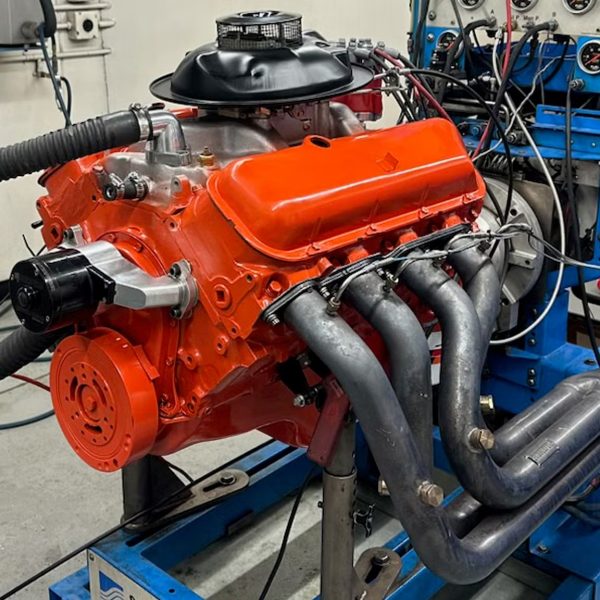
The Mark IV big block arrived at mid-year 1965 as the 396-cubic-inch L78 with the staggered-valve “porcupine” heads and 425 horsepower, grew to 427 cubic inches for 1966 as the hydraulic L36 and the solid-lifter L72, and gained three two-barrel carburetors for 1967 as the L68 and L71, with the L89 adding aluminum heads and the L88 adding everything. Big blocks weigh about 150 pounds more over the front wheels, came with a bulged hood and 427 emblems, and required Positraction, the four-speed and the F41 suspension. Chevrolet rated them conservatively: the 1966 L72 was sold as 450 and then 425 horsepower with no change to the engine, and the L88’s 430 was a fiction.
The engine pad, the block casting number and its date are what separate a real one from a dressed-up 300: the suffix must match the equipment, the block must predate the car’s build, a 396 or 427 should carry a Tonawanda T prefix, and an L84 needs the right-series Rochester unit. The engine guides linked in the table cover each one in detail.
MORE: EVERY C2 ENGINE
| RPO | ENGINE | OUTPUT | YEARS | MORE |
|---|---|---|---|---|
| Base | 327 ci small block, Carter WCFB/AFB four-barrel, hydraulic lifters, 10.5:1 | 250 hp / 350 lb-ft | 1963–65 | Guide |
| L75 | 327 ci small block, Carter AFB four-barrel, hydraulic lifters, 10.5:1; the base engine from 1966 | 300 hp / 360 lb-ft | 1963–67 | – |
| L76 | 327 ci, Duntov camshaft, solid lifters, 11.25:1 (1963) then 11.0:1 with a Holley (1964–65) | 340 hp (1963); 365 hp / 350 lb-ft (1964–65) | 1963–65 | Guide |
| L84 | 327 ci, Rochester mechanical fuel injection, Duntov camshaft, solid lifters; the last fuel-injected Corvette until 1982 | 360 hp (1963); 375 hp / 350 lb-ft (1964–65) | 1963–65 | Guide |
| L79 | 327 ci, Holley four-barrel, hydraulic lifters, 11.0:1; the best-driving small block of the generation | 350 hp / 360 lb-ft | 1965–67 | – |
| L78 | 396 ci Mark IV big block, Holley four-barrel, solid lifters, 11.0:1; from mid-1965, bulged hood | 425 hp / 415 lb-ft | 1965 | Guide |
| L36 | 427 ci Mark IV, Holley four-barrel on cast-iron intake, hydraulic lifters, 10.25:1, two-bolt mains (badged 400 hp early in 1966) | 390 hp / 460 lb-ft | 1966–67 | Guide |
| L72 | 427 ci, 780-cfm Holley on aluminum intake, solid lifters, 11.0:1, four-bolt mains, K66 ignition required (badged 450 hp early in 1966) | 425 hp / 460 lb-ft | 1966 | Guide |
| L68 | 427 ci, three Holley two-barrels (Tri-Power) on aluminum intake, hydraulic lifters, 10.25:1 | 400 hp / 460 lb-ft | 1967 | Guide |
| L71 | 427 ci Tri-Power, solid lifters, 11.0:1, four-bolt mains; Positraction and the four-speed mandatory | 435 hp / 460 lb-ft | 1967 | Guide |
| L89 | L71 with aluminum cylinder heads, about 75 lb lighter; 16 built | 435 hp / 460 lb-ft | 1967 | Guide |
| L88 | 427 ci, aluminum heads, 12.5:1, forged crank and pistons, 850-cfm Holley, cowl-induction hood; radio, heater and choke deleted; 20 built | 430 hp rated (about 550 actual) | 1967 | Guide |
The C2 Corvette in Competition
The Sting Ray raced from its first weekend to its last, through the years when General Motors was officially not racing at all. The Z06 package existed so that privateers could, and three Z06 coupes finished Mickey Thompson’s team’s first outing at Riverside in October 1962 with Doug Hooper winning the production class on the day the Sting Ray was introduced to the public. The Grand Sports were Duntov’s answer to the Cobra, and in their one unrestricted season, Nassau Speed Week in December 1963, John Mecom’s cars beat Shelby’s; they went on to Sebring, Daytona and the SCCA in the hands of Roger Penske, Jim Hall, A. J. Foyt, Delmo Johnson and Dick Guldstrand before the Cobras and then the GT40s moved the game on.
The big block made the production Sting Ray a racer again. Roger Penske’s 1966 coupe, the first car fitted with the L88 engine on a Central Office order, won the GT class at the Daytona 24 Hours and again at Sebring, where it finished ninth overall; its driver Dick Guldstrand ran the Daytona night stints with flashlights taped to the fenders after a crash took out the headlights. The 1967 L88 package made that car orderable. The Sunray DX team’s L88 debuted at Sebring in March 1967 and won its class at Daytona in 1968, and the Dana Chevrolet L88 coupe of Guldstrand, Bob Bondurant and Don Yenko was timed at 171.5 mph on the Mulsanne Straight at Le Mans in June 1967, the only mid-year Corvette ever to race there, before its engine failed in the thirteenth hour.
Those cars are why the C2 matters to racing history out of proportion to its five years: the Z06 and Grand Sport names, the L88 and the big-block Corvette as an endurance-racing GT all start here, and Corvette Racing’s wins at Daytona, Sebring and Le Mans from 2001 onward trace straight back to them.
MORE: 1967 L88 RACE CARS / THE GRAND SPORT / LE MANS 1955 AND THE L88 / CORVETTE’S RACING LEGACY
| YEAR | CAR | EVENT | RESULT |
|---|---|---|---|
| 1960 | Sting Ray racer (XP-87) | SCCA C-Modified, Dick Thompson | National champion; the production car’s preview |
| 1962 | 1963 Z06 coupes | Riverside, October 13, Mickey Thompson team | Doug Hooper wins the production race on the Sting Ray’s first weekend |
| 1963 | Grand Sport (5 built) | Nassau Speed Week, December, Mecom Racing | Grand Sports outrun the Cobras; the program is killed at GM |
| 1964 | Grand Sport coupes and roadsters | Sebring 12 Hours, Daytona, SCCA | Raced privately by Penske, Hall, Foyt, Johnson and others |
| 1966 | Penske L88 coupe (COPO) | Daytona 24 Hours; Sebring 12 Hours | 1st in GT at both; 11th and 9th overall |
| 1967 | Sunray DX L88 | Sebring 12 Hours | The production L88’s debut; 1st in class at Daytona 1968 |
| 1967 | Dana Chevrolet L88 coupe | 24 Hours of Le Mans | 171.5 mph on the Mulsanne; retired in the 13th hour; the only mid-year to race at Le Mans |
Buying a C2 Corvette
What They Bring & What To Check
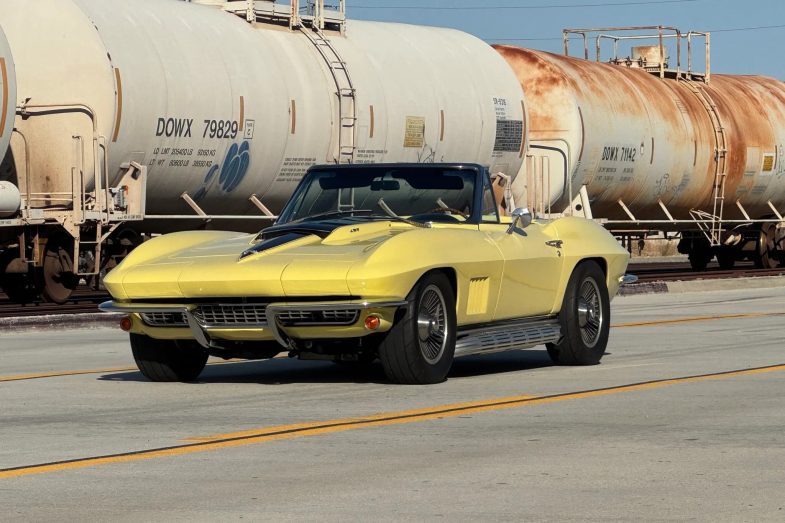
The C2 is the most valuable production Corvette generation and the market sorts by year, body and engine in that order. 1963 split-window coupes and 1967 big blocks are the bookends; 1964 and 1965 are the value years for a driver; coupes carry a premium over convertibles at every level; and within a year the engine sets the price, a fuelie or a solid-lifter 427 on top, the 300-horsepower cars most of the 117,964 are at the bottom. Documentation, matching numbers and originality move a car a tier in either direction, and the specials, Z06, Grand Sport and L88, are markets of their own.
Results tracked by Classic.com in September and October 2026 show the ladder. 1963 split-window coupes sold for about $170,000 to $250,000 original or restored and $125,000 to $300,000 as restomods, convertibles for $50,000 to $60,000. Fuel-injected 1964 and 1965 cars brought $89,000 to $135,000, 1965 L79s $65,000 to $84,000 and an original 396 convertible $82,500. 1966 427/425 L72 cars sold for $121,000 to over $200,000 and L36s for $76,000 to $125,000. 1967 L71 Tri-Power convertibles brought $111,000 and $185,000 at auction with dealers asking $290,000 and up, and 1967 L79s $105,000 to $150,000. Driver-grade 300-horsepower cars of any year ran $50,000 to $75,000. Above all of that, a 1967 L88 coupe made $3.85 million in 2014 and Grand Sport 003 $18.7 million in August 2026. Check whether a result includes the buyer’s premium, and treat asking prices and unsold high bids separately from completed sales.
Verification starts at the engine pad: the suffix code must match the equipment the car claims, the block casting date must precede the car’s build date, a big block should carry a Tonawanda T prefix, a fuelie needs the right-series Rochester unit, and a Z06 or L88 needs its paperwork, because every part of both packages has been reproduced. The trim tag should agree with the paint and interior, and Positraction and the four-speed were mandatory with the 427s, so a big-block Powerglide is wrong somewhere. NCRS judging sheets, tank stickers, Protect-O-Plates, old photographs and ownership records all help; ask for dates and scores rather than just the award.
The body is fiberglass but it is bonded to a steel birdcage, and that is where the expensive problems hide: the windshield frame, the door hinge pillars and, on coupes, the rear window frame rust from the inside. The ladder frame rusts at the kickups over the rear wheels and around the trailing-arm mounts; trailing-arm bushings and half-shaft U-joints wear; the 1965-on calipers weep fluid unless they have been sleeved in stainless. On the road the independent rear should feel planted, a solid-lifter engine should idle lumpily but evenly, a Tri-Power car should come in hard above 3,500 rpm, and a big block that runs hot usually has a radiator or shroud problem. Most of these cars see few miles, so budget for tires, brakes and fuel-system work on anything that has sat. The buyer’s guide below goes year by year.
MORE: THE MARKET
C2 Corvette Technical Research
The numbers behind the Sting Ray: production figures and build dates for all five years, VIN decoding, every RPO code and factory option with its price and take rate, the color charts, specifications and performance, sales brochures, owners manuals, service bulletins, recalls and common problems. The year pages carry each model year’s own set.






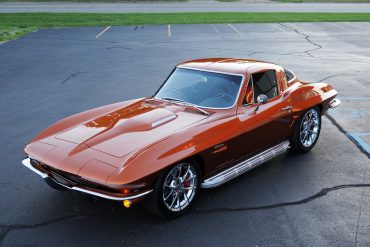
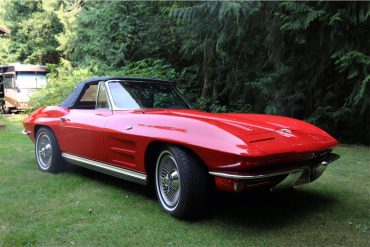
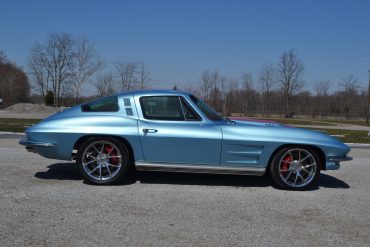
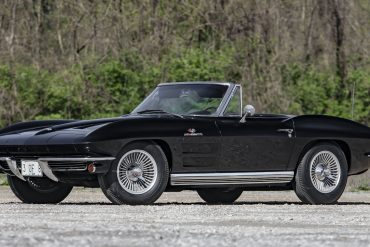


C2 Corvette Pictures, Videos, Wallpapers & Galleries
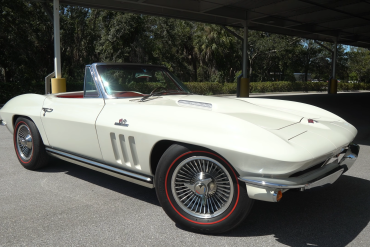
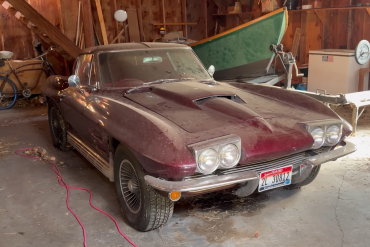
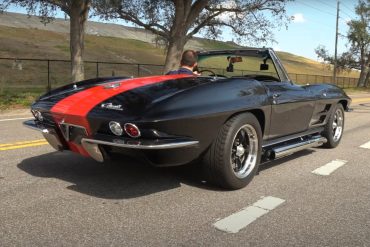
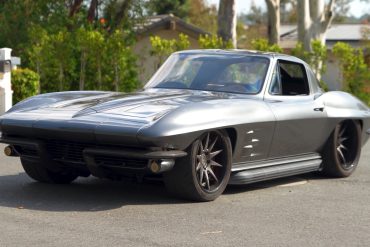
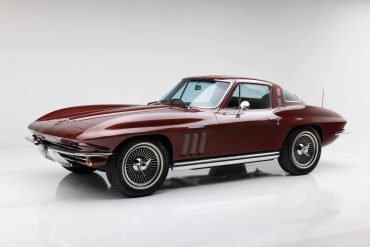
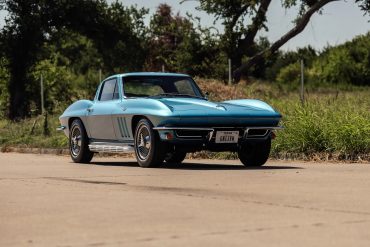
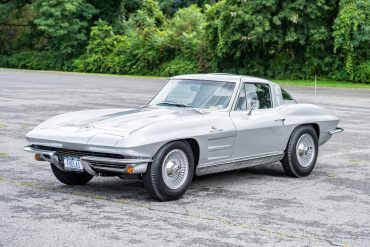
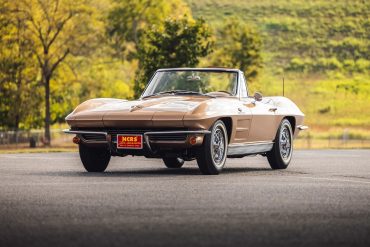
The Sting Ray from every angle: our galleries for each year, wallpapers, the C2s we have featured as Corvette of the Day, and videos of split-windows, big blocks, Grand Sports and L88s on the road, at auction and on track.


Everything We've Published On The C2 Corvette
Every story tagged C2 Corvette, newest first: cars for sale and auction results, restorations and restomods, videos, galleries and history. The latest headlines here.
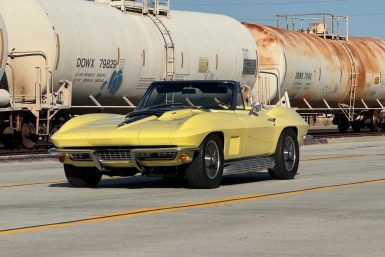
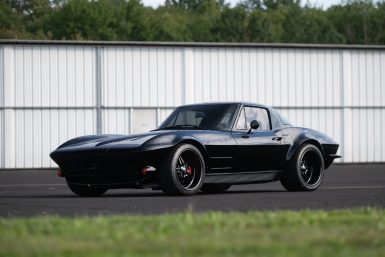
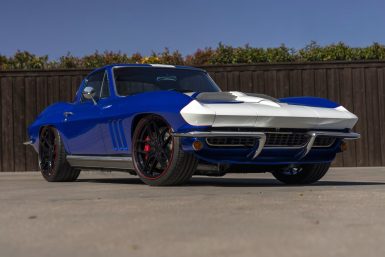
FAQs
What years are the C2 Corvette?
The C2 Corvette was built for five model years, 1963 through 1967. Chevrolet called it the Sting Ray, two words, and enthusiasts call these cars the mid-years. It replaced the solid-axle C1 of 1953–1962 and was replaced by the C3 Stingray (one word) for 1968, which kept the C2’s chassis under a new body. 1963 cars were built from the fall of 1962 and the last 1967s in the summer of 1967, all at the St. Louis assembly plant.
How many C2 Corvettes were built?
117,964: 45,546 coupes and 72,418 convertibles. By year, 21,513 in 1963 (10,594 coupes, 10,919 convertibles), 22,229 in 1964 (8,304 and 13,925), 23,562 in 1965 (8,186 and 15,376), 27,720 in 1966 (9,958 and 17,762) and 22,940 in 1967 (8,504 and 14,436). The convertible outsold the coupe every year except 1963. Within those totals the rare cars are the 199 Z06 coupes of 1963 (63 with the 36-gallon tank), the 771 fuel-injected cars of 1965, the 16 L89s and the 20 L88s of 1967; the five Grand Sports were built outside production.
Who designed the C2 Corvette Sting Ray?
Bill Mitchell, GM’s vice president of styling, with Larry Shinoda drafting the production body in the XP-720 program from the fall of 1959; the shape descends from Mitchell’s privately funded Sting Ray racer of 1959 and the stillborn Q-Corvette drawn by Bob McLean and Peter Brock. Zora Arkus-Duntov was the chief engineer responsible for the chassis, the independent rear suspension and the engines, and for the Z06, the Grand Sport and the L88. The Sting Ray was the first Corvette to carry Mitchell’s signature and the first with a coupe body.
What engines did the C2 Corvette have?
Two families. The 327-cubic-inch small block in 250, 300, 340/365 and fuel-injected 360/375-horsepower versions (1963–65) and the 300 and 350-horsepower L75 and L79 (1965–67). The Mark IV big block as the 396-cubic-inch, 425-horsepower L78 from mid-1965, then the 427 as the 390-horsepower L36 and 425-horsepower L72 in 1966, and the 390-horsepower L36, Tri-Power 400-horsepower L68 and 435-horsepower L71 in 1967, with the L89 adding aluminum heads to the L71 and the L88 making about 550 horsepower while rated at 430. Fuel injection ended after 1965 and did not return to the Corvette until 1982.
What changed from the C1 to the C2 Corvette?
Almost everything except the engine. The C2 got a new ladder frame with a 98-inch wheelbase, four inches shorter than the C1, passengers seated inside the frame rails rather than on top of it, the Corvette’s first independent rear suspension in place of the solid axle, recirculating-ball steering with a quicker ratio and optional power assist, hidden headlights, the first coupe body, a windows-up ventilation system, and from 1965 four-wheel disc brakes and the big block. The 327 V-8, the three transmissions and the fiberglass-over-steel construction carried over. The result was a lower, shorter, better-handling car that Duntov said was the first Corvette he would be proud to drive alongside Europe’s best.
What is the difference between the 1963 split-window and the later coupes?
The 1963 coupe’s rear window is two pieces of glass divided by a body-colored bar that runs down the spine of the roof; Mitchell insisted on it and Duntov objected that it blocked the view, and for 1964 it became a single piece of glass. The 1963 also has two non-functional vents in the hood and a fake vent on each side of the coupe’s rear pillar, all gone or made functional in 1964. Because many owners converted their 1963s to the one-piece glass in the 1960s and many have since been converted back, an original split-window structure is the first thing to verify on a 1963 coupe, and it is why the 1963 coupe is the most valuable regular-production Sting Ray.
Which C2 Corvette year is the best to buy?
For a driver, 1965 or 1966: 1965 added four-wheel disc brakes and the 350-horsepower L79, the best small block of the generation, and 1966 added the 427 while keeping the L79, so both give the finished chassis with a choice of engines at prices below the 1963 and 1967 collector years. 1964 is the value year, the 1963 chassis without the split-window premium. For a collector, the 1963 split-window coupe and the 1967 Tri-Power and L88 cars are the ones that hold the records. Whatever the year, buy the engine and the paperwork before the color, and check the birdcage and frame before anything else.
How much is a C2 Corvette worth today?
In the twelve months to October 2026, Classic.com tracked driver-grade 300-horsepower Sting Rays of any year selling for about $50,000 to $75,000, 1963 split-window coupes for $170,000 to $250,000 original and up to $300,000 as restomods, fuel-injected 1964–65 cars for $89,000 to $135,000, 1966 L72 427s for $121,000 to over $200,000, and 1967 L71 Tri-Power cars for $111,000 to $185,000 at auction with dealers asking $290,000 and more. The specials sit far above: a 1967 L88 coupe sold for $3.85 million in 2014, and Grand Sport chassis 003 sold for $18,705,000 at RM Sotheby’s Monterey in August 2026, the most ever paid for a Corvette at auction. Convertibles bring less than coupes at every level.
What were the C2 Corvette special models?
Three factory specials and a handful of one-offs. The 1963 Z06 was Duntov’s race package (199 built, 63 big-tank “tankers”); the 1963 Grand Sport was a five-car lightweight racing program killed by GM’s chairman; the 1967 L88 was a 427 race engine sold as a production option on 20 cars. Beyond those, collectors single out the 16 1967 L89 aluminum-head cars, the 36-gallon N03 “big tank” coupes of every year, the Bunkie Knudsen and GM Styling show cars, and the concepts built on or around the C2: the Mako Shark II of 1965, which previewed the C3, the mid-engine CERV II and XP-819, and the Astro I.
How did the C2 Corvette do in racing?
It won from the start despite GM’s official absence from racing. Z06 coupes won their class at Riverside on the car’s first weekend in October 1962; the Grand Sports beat the Cobras at Nassau in December 1963 and raced privately at Sebring and Daytona; Roger Penske’s 1966 L88-engined coupe won the GT class at the Daytona 24 Hours and the Sebring 12 Hours; the 1967 L88s raced at Sebring and Daytona, and the Dana Chevrolet L88 was timed at 171.5 mph at Le Mans in 1967, the only mid-year Corvette to run there. The Z06 and Grand Sport names and the big-block endurance Corvette all begin with the C2.
What are the common problems with a C2 Corvette?
Rust in the steel birdcage the fiberglass body is bonded to, especially the windshield frame, the door hinge pillars and the coupe’s rear window frame, and in the frame at the kickups over the rear wheels and the trailing-arm mounts; worn trailing-arm bushings and half-shaft U-joints; weeping four-piston brake calipers on 1965-and-later cars unless they have been sleeved; overheating big blocks, usually a radiator, shroud or fan-clutch problem; and faked engines, since the L84, the 427s and the Z06 and L88 packages have all been reproduced down to the casting numbers. Parts supply is excellent, which is also why documentation matters more than the parts.
Is a C2 Corvette a good investment?
The C2 has been the most valuable production Corvette generation for decades and the best examples keep setting records, but the market is layered: the specials and the big blocks have appreciated most, documented fuel-injected and Tri-Power cars have been steady, and the plentiful 300-horsepower convertibles are driver’s cars whose prices track the wider collector market. A Sting Ray bought with its paperwork, an honest body and a verified engine has held value well; one bought on badges has not. We are not financial advisers, and Classic.com results, dated, are the place to check before paying, together with NCRS judging history for the car in question.
All The Research
C2 Corvette Advertisements / C2 Corvette Bolt-On Mods / C2 Corvette Build Dates / C2 Corvette Buyer’s Guide / C2 Corvette Colors / C2 Corvette Common Issues / C2 Corvette Engine / C2 Corvette Engines (All) / C2 Corvette Factory Options / C2 Corvette Maintenance / C2 Corvette Owners Manual / C2 Corvette Performance / C2 Corvette Posters / C2 Corvette Pricing / C2 Corvette Production / C2 Corvette Production Figures / C2 Corvette Recalls / C2 Corvette Research / C2 Corvette RPO Codes / C2 Corvette Sales Brochures / C2 Corvette Service Bulletins / C2 Corvette Specifications / C2 Corvette VIN Decoder / C2 Corvette VIN Numbers
