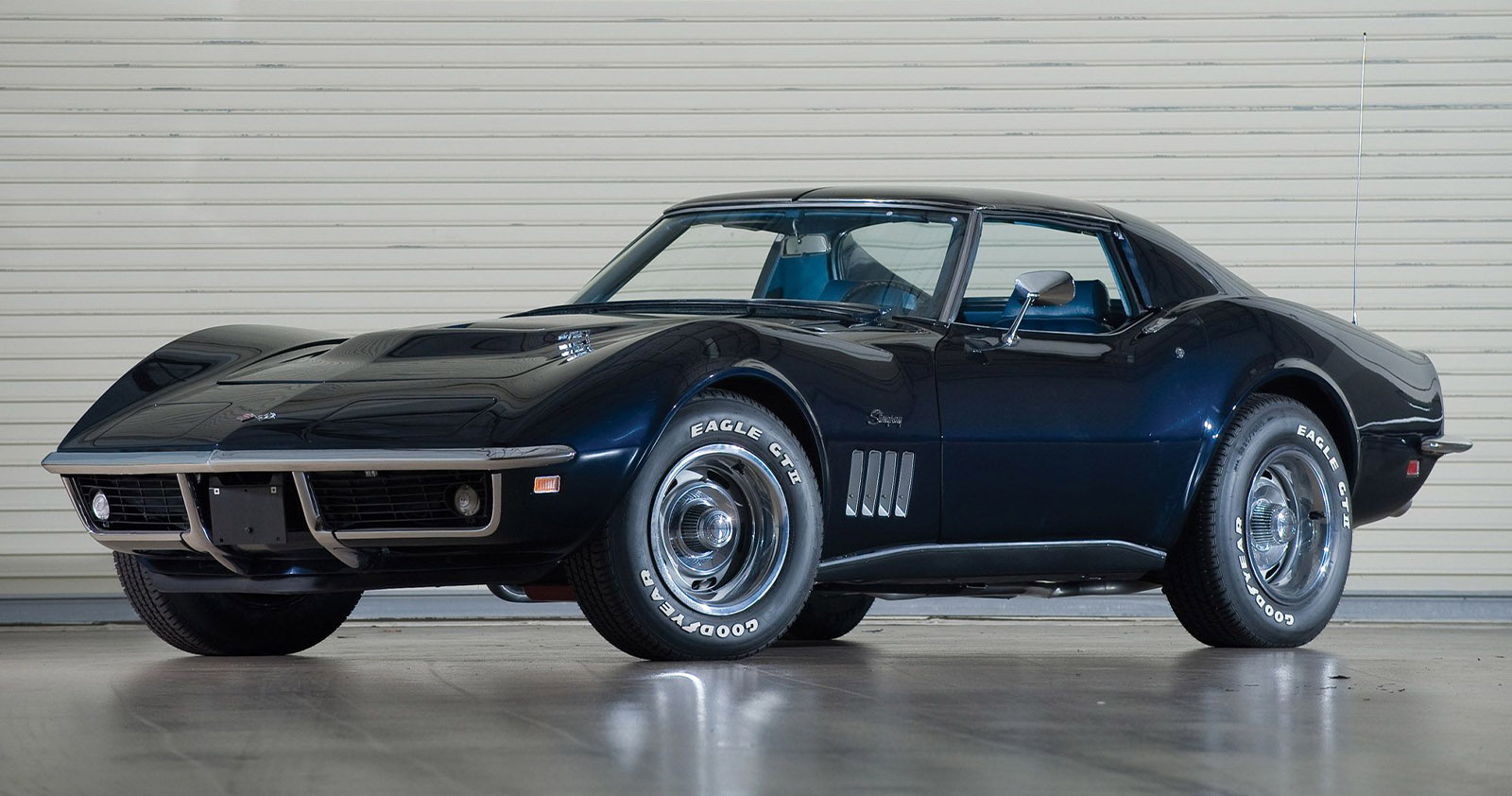
Legend says a drummer wanted room for his kit. Greenwood's answer was a Corvette with a wagon roof and a working hatch, sold as a kit for the rubber-bumper Sharks.


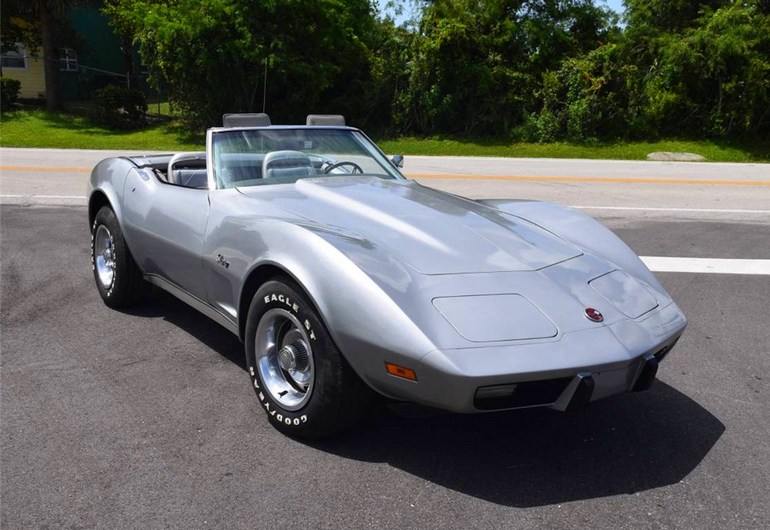
C3 CORVETTE - 1975
The last convertible for eleven years, the first catalytic converter, HEI ignition and unleaded fuel, two 350s and no big block, and Zora Arkus-Duntov’s retirement. The low point for horsepower at 165, and 38,465 built anyway.
Quick Nav: Story · Specials · Price & Options · VIN · Specs · Technical · Pics & Videos · The Market · All · FAQs
Model & Gen: 1975 Corvette (C3)
Body Type: Sport Coupe (T-top) or Convertible (last year until 1986)
VIN: 1Z37J5S400001 – 1Z37J5S438465
Original Price: $6,810.10 coupe / $6,550.10 convertible
Colors: 10 (Classic White, Silver, Bright Blue, Steel Blue, Bright Green, Bright Yellow, Medium Saddle, Orange Flame, Dark Red, Mille Miglia Red)
Engine: 350 ci V-8 only: 165 hp (L48; 155 hp in California) or 205 hp (L82); catalytic converter and HEI ignition new; no big block
Transmission: Muncie 4-speed standard (M20 wide or M21 close ratio at no charge); 3-speed Turbo Hydra-Matic (M40) at no charge, in 74 percent of cars
Units Produced: 38,465
The 1975 Corvette looks like the 1974 with black rubber pads on its bumpers, and almost everything that mattered happened out of sight. The catalytic converter arrived with unleaded fuel, so both exhaust manifolds now fed a Y-pipe into one converter before splitting again into twin mufflers, and true dual exhaust was gone. Delco’s breakerless High Energy Ignition replaced points and drove an electronic tachometer. The 454 was in the early order guide and cancelled before a car was built, leaving the 350 alone for the first time since 1967, and the detuning for the converter took the base L48 to 165 hp, 155 in California, the lowest rating a Corvette has ever carried, with the L82 at 205. Zora Arkus-Duntov retired on January 1, 1975, after twenty-one years, and Dave McLellan, fresh from MIT, took over an engineering job that would not let him change the car for another eight years.
The body changes were the one-piece rear cover in place of 1974’s seamed pair, a honeycomb core in the front bumper, shock absorbers behind the rear one, a headlights-on buzzer, a bladder in the fuel tank, kilometers on the speedometer and L82 badges on the hood of cars that had the engine (not all of them got the badges). More important was what ended: this was the last Corvette convertible until 1986, built because Chevrolet expected rollover rules to ban open cars and because only 4,629 buyers wanted one, the fewest of any year the body was offered. Many were bought as investments; it did not work. It was also the last year of Astro Ventilation and the last time a Corvette convertible cost less than the coupe.
None of it hurt sales. Production reached 38,465, within 300 cars of the 1969 record, with the automatic in 74 percent, air conditioning in 83 percent and power steering in 98 percent; the price rose $809 to $6,810.10 for the coupe. The 1975 is the year the Corvette stopped being a performance car and started being a successful one, and in the market it sits at the bottom of the C3 with the 1976 and 1977, except for the convertibles, which carry a premium out of proportion to how good they are, and the 144 Z07 cars.
The 1975 Chevy Corvette, along with the automotive industry as a whole, would experience a significant transformation at the onset of the new model year. Because of serious health issues and environmental contamination associated with the use of lead fuel, it was determined that the automotive industry would – and should – phase it out.
Tetraethyllead (also known as TEL, or simply “lead”) was introduced in the 1920s as an additive to prevent fuel from auto-igniting in high compression, internal combustion engines. While the lead additives allowed engine designers to produce more powerful, higher compression engines, it also produced a dangerous neurotoxin through exhaust emissions, which resulted in many cases of acute, and widespread lead poisoning, especially in children.
Additionally, the lead component was destructive to catalytic converters, which were to become a federally mandated requirement to aid in the control of damaging exhaust emissions. For Chevrolet in general, and the Corvette in particular, the 1975 model year marked a turning point in the car's history. Zora Arkus-Duntov, who had been instrumental in breathing life into the Corvette, retired on January 1, 1975, after 21 years and 7 months with General Motors. Duntov's legacy with Corvette started in 1953 when he saw the original Harley Earl Corvette prototype on GM's Motorama stage in New York. He had come to work for Chevrolet later that same year after writing to Ed Cole with his insights about the Corvette Prototype.
While working on other projects for Chevrolet, Duntov had begun “fiddling on the side” (his words) with the Corvette throughout 1953 and 1954, making improvements to the car's overall design along the way. By 1956, he had been named the division's director of high-performance vehicle design and development. While he would continue to be partnered with the Corvette throughout his career, he was not officially named Corvette's Chief Engineer until 1968.
Given Zora's incredible reputation, his history with Corvette, and the legacy of incredible cars that he was instrumental in developing for more than two decades, there were many who questioned how anyone could fill the hole that was left behind by his retirement.
The person tasked with the challenging position – and the sizable shoes to fill – was David Ramsay McLellan, who had worked with Duntov and had been groomed for the job after joining General Motors in 1959.
McLellan had spent most of 1973 and 1974 at the Massachusetts Institute of Technology's Sloan School of Management at GM’s direction, and then, with his master's degree in hand, had returned to Chevrolet as one of Duntov's staff engineers. When Zora Arkus-Duntov resigned his post just six months later, it was understood that McLellan would fill the post that he had been so carefully groomed for. Despite this, McLellan would not have a significant influence on the design of the Corvette until the introduction of the C4 Corvette some eight years later.
The 1975 Corvette look was almost identical physically to the 1974 model. The one notable change to the car's exterior design was the introduction of a pair of front and rear bumper pads. These pads were integrated into the soft front and rear bumpers with the intent of providing the Corvette with additional protection in parking lots (and similar environments where the car might make contact with a curb or another vehicle).
Beyond the introduction of these parking pads, the structure of both the front and rear bumpers was modified slightly as well. The front bumper now featured an inner honeycomb core which offered added rigidity. The rear bumper received inner shock absorbers to reduce damage in the event of an impact condition.
Lastly, the rear bumper fascia was molded as a single urethane plastic component, unlike the 1974 model which featured two separate urethane assemblies that mated down the centerline of the car.
A significant milestone that was also represented in the 1975 model year had nothing to do with what the Corvette introduced as a new option, but rather what it was about to eliminate as a production option for nearly the next decade.
The 1975 Corvette would be the last of the third-generation Corvettes to be offered as both a coupe and a convertible. Because convertible volumes had continued to diminish year after year, Chevrolet had already considered eliminating the option, but when the government threatened to enact legislation that would have effectively banned fully open cars in the United States after the 1975 model year, it sealed the deal. The decision was made to discontinue production of a Corvette convertible and the last C3 Corvette convertible rolled off the assembly line in late July 1975.
While the legislation surrounding convertibles never actually materialized, it had given domestic automotive manufacturers the excuse they'd been looking for to discontinue production of slow-selling convertible rag-tops. Naturally, there was a fair amount of discontent by enthusiasts about the decision, especially given that the Corvette had existed as a convertible/rag-top since its inception in 1953.
Despite this, the decision would stand for an entire decade and would mark the last time in Corvette's history when a convertible was actually less expensive than a coupe.
Engine options for the 1975 Corvette were more limited than any second- or third-generation Corvette that had come before it. While GM did briefly offer an optional big-block V-8 engine, it was dropped very early in the production run, leaving the stock 165-horsepower 350 cubic inch engine and the optional 205-horsepower RPO L82 350 as the only choices.
Not since the 1955 Corvette model had such a limited number of engine options been made available to consumers. Additionally, it was the first year since 1967 that only a single engine displacement was offered.
Just as there were few changes to its appearance, there were equally few changes to the car's mechanical and structural makeup. However, 1975 was a significant year, not only for Corvette but for many production automobiles, as it was the year that the catalytic converter was formally introduced and adopted by manufacturers across the United States.
The catalytic converter was designed to convert toxic byproducts produced by internal combustion engines into a less toxic substance via catalyzed chemical reactions. This method of managing emissions was considered far more efficient than earlier, less conventional emission control methods, and may actually have prevented Corvette's horsepower ratings from dropping even further than they had. As a result of the introduction of the catalytic converter, the 1975 Corvette was also the first model not to feature dual exhaust. Instead, the exhaust left both manifolds via a Y-pipe, passed through the catalytic converter, and then split again to a pair of muffler/tailpipe assemblies.
Under the hood was a new, breakerless electronic ignition system known as HEI (High Energy Ignition). Quite different from the transistor ignition systems that had been available previously, the HEI ignition was the first ignition on a Corvette to feature a distributor that did not require a points and condenser setup. In conjunction with the new electronic ignition system, Chevrolet also introduced the first electronic (instead of mechanical) tachometer drive.
While tachometers had previously been driven off of the distributor, the new distributor would receive an electrical signal which was translated into the output seen by drivers on the dashboard. Additionally, the 1975 Corvette was the first model year to feature the “Kilometers Per Hour” subtext beneath the standard “Miles Per Hour” on the speedometer.
Elsewhere on the 1975 Corvette, a headlights-on warning buzzer was added per a federal mandate. An internal bladder was added to the fuel tank to help prevent gas fumes from escaping while also keeping air from entering and/or getting trapped in the tank. Hood emblems featuring the engine designation “L82” were introduced in 1975, though many Corvettes built that year did not include the emblem. Lastly, the 1975 Corvette was the final model year to feature the Astro Ventilation system which had been introduced as part of the third-generation Corvette in 1968.
Despite these minimal changes to the car, the 1975 Corvette's sales numbers continued to rise over the previous model year. In total, 38,465 Corvettes were sold that year, which was within 300 units of the 1969 model year, which was still – to that point in time – the best production year ever for Corvette. The coupe accounted for all but 4,629 units sold that year, which once more reinforced Chevrolet's decision to discontinue the Corvette convertible.
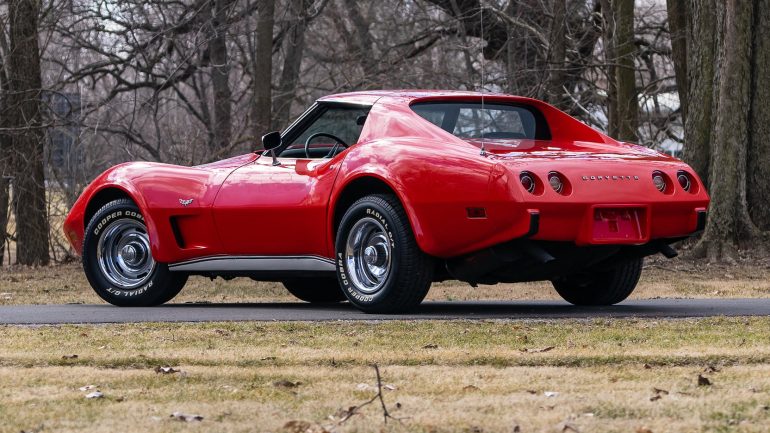
 The 1975 model would be the last year of the 3rd Generation Corvettes to include a convertible option. (Image courtesy of GM Media.)

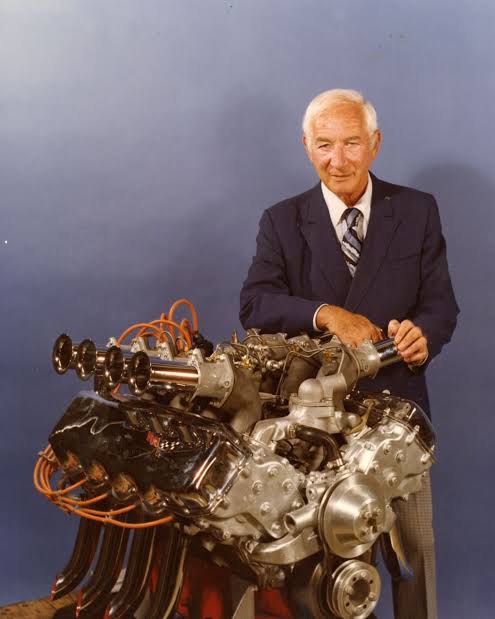 Zora Arkus Duntov, the "Father of the Corvette" retired from Chevrolet in 1975

 1975 Chevrolet Corvette Brochure. (Image courtesy of GM Media.)
The 1975 Corvette’s 165-hp base engine was the lowest rating ever put on a Corvette, ten more than the 1954 Blue Flame six, and California cars were rated at 155. The same year Chevrolet built the last Corvette convertible for eleven years, 4,629 of them, many bought by people who expected open cars to be outlawed and their rag-tops to become valuable; the ban never came and neither did the value.
DID YOU KNOW
1975 has few specials: the 144 Z07 cars, Greenwood’s Sportwagon conversion, the Schwab Stingray and the cars built from the year’s 38,465, including the sixteen-part CorvSport race-car build.

The Sport Coupe listed at $6,810.10 and the convertible at $6,550.10, up $809 and $785 on 1974, the steepest rise yet, with radial tires, the alarm, Positraction and the four-speed or Turbo Hydra-Matic included.
The engine list was two long: the 205-hp L82 at $336.00 went into just 2,372 cars, leaving about 36,093 with the 165-hp L48. The Turbo Hydra-Matic went into 28,473 cars, 74 percent, the close-ratio M21 into 1,057 and the standard M20 into about 8,935.
The Gymkhana suspension (RPO FE7, $7.00) went into 3,194 cars and the Z07 package ($400.00) into 144, its best year; the optional axle ratio (RPO ZQ1, $12.00) went into 1,969 cars and the California emission test (RPO YF5, $20.00) into 3,037.
Power steering (RPO N41, $129.00) reached 37,591 cars, 98 percent, power brakes (RPO J50, $50.00) 35,842, air conditioning (RPO C60, $490.00) 31,914, the tilt-telescopic column (RPO N37, $82.00) 31,830 and power windows (RPO A31, $93.00) 28,745. The stereo (RPO U58, $284.00) went into 24,701 cars against 12,902 AM/FM radios (RPO U69, $178.00); the map light (RPO UF1, $5.00) into 21,676, the dual horns (RPO U05, $4.00) into 22,011 and the heavy-duty battery (RPO UA1, $15.00) into 16,778.
Chevrolet did not record how many cars took the $154.00 custom interior. Raised-white-letter radials (RPO QRZ, $48.00) went on 30,407 cars against 5,233 white-stripes (RPO QRM, $35.00); there were no optional wheels. The hardtop (RPO C07, $267.00) went onto 2,407 of the 4,629 convertibles and the vinyl-covered hardtop (RPO C08, $350.00) onto 279, the rear defogger (RPO C50, $46.00) into 13,760 cars and shoulder belts (RPO A85, $41.00) into 646 convertibles.
Ten colors were offered with black or white tops; the color totals add up to 34,531, about 3,900 short of production.
MORE: PRICING, OPTIONS & COLORS / RPO CODES
| CODE | DESCRIPTION | QUANTITY | RETAIL PRICE |
|---|---|---|---|
| 1YZ37 | Base Corvette Sport Coupe | 33,836 | $6,810.10 |
| 1YZ67 | Base Corvette Convertible (last until 1986) | 4,629 | $6,550.10 |
| A31 | Power Windows | 28,745 | $93.00 |
| A85 | Custom Shoulder Belts (standard on coupes; convertibles) | 646 | $41.00 |
| C07 | Auxiliary Hardtop (convertible) | 2,407 | $267.00 |
| C08 | Vinyl-Covered Auxiliary Hardtop | 279 | $350.00 |
| C50 | Rear Window Defogger | 13,760 | $46.00 |
| C60 | Air Conditioning | 31,914 | $490.00 |
| FE7 | Gymkhana Suspension (heavy-duty springs and shocks) | 3,194 | $7.00 |
| J50 | Power Brakes | 35,842 | $50.00 |
| L82 | 350ci, 205HP Engine | 2,372 | $336.00 |
| M21 | 4-Speed Manual Transmission, Close Ratio | 1,057 | no charge |
| M40 | Turbo Hydra-Matic 3-Speed Automatic | 28,473 | no charge |
| N37 | Tilt-Telescopic Steering Column | 31,830 | $82.00 |
| N41 | Power Steering | 37,591 | $129.00 |
| QRM | White Stripe Steel-Belted Radial Tires, GR70x15 | 5,233 | $35.00 |
| QRZ | White Letter Steel-Belted Radial Tires, GR70x15 | 30,407 | $48.00 |
| U05 | Dual Horns | 22,011 | $4.00 |
| U58 | AM-FM Radio, Stereo | 24,701 | $284.00 |
| U69 | AM-FM Radio | 12,902 | $178.00 |
| UA1 | Heavy Duty Battery | 16,778 | $15.00 |
| UF1 | Map Light on Rearview Mirror | 21,676 | $5.00 |
| YF5 | California Emission Test | 3,037 | $20.00 |
| Z07 | Off-Road Suspension and Brake Package (L82, 4-speed) | 144 | $400.00 |
| ZQ1 | Optional Rear Axle Ratio | 1,969 | $12.00 |
| – | Custom Interior Trim (leather seats, cut-pile carpet, wood-grain trim) | – | $154.00 |
| CODE | EXTERIOR | TOTAL | SOFT TOP | INTERIOR |
|---|---|---|---|---|
| 10 | Classic White | 8,007 | Black, White | Black, Dark Blue, Dark Red, Medium Saddle, Neutral, Silver |
| 13 | Silver | 4,710 | Black, White | Black, Dark Blue, Dark Red, Medium Saddle, Silver |
| 67 | Medium Saddle | 3,403 | Black, White | Black, Medium Saddle, Neutral |
| 76 | Mille Miglia Red | 3,355 | Black, White | Black, Dark Red, Medium Saddle, Neutral, Silver |
| 74 | Dark Red | 3,342 | Black, White | Black, Dark Red, Medium Saddle, Neutral, Silver |
| 70 | Orange Flame | 3,030 | Black, White | Black, Medium Saddle, Neutral |
| 56 | Bright Yellow | 2,883 | Black, White | Black, Medium Saddle, Neutral |
| 22 | Bright Blue | 2,869 | Black, White | Black, Dark Blue, Silver |
| 42 | Bright Green | 1,664 | Black, White | Black, Medium Saddle, Neutral, Silver |
| 27 | Steel Blue | 1,268 | Black, White | Black, Dark Blue, Silver |
Two engines, one displacement. The L48 350 kept its 8.5:1 compression but was retuned for the catalytic converter and unleaded fuel and rated at 165 hp net at 3,800 rpm and 255 lb-ft at 2,400 (155 hp with California equipment), the lowest rating a Corvette has carried.
The L82 kept its forged crank, four-bolt mains and performance cam at 9.0:1 and was rated at 205 hp at 4,800 rpm with the same 255 lb-ft. Both ran Quadrajets, both got Delco’s HEI distributor with no points or condenser and a signal for the new electronic tachometer, and both exhausted through a Y-pipe into a single converter and back out through two mufflers.
The LS4 454 was printed in early option lists and never built. Car and Driver’s L82 four-speed reached 60 in 7.7 seconds and ran the quarter in 16.1; a base automatic was two seconds slower.
The chassis was unchanged apart from the bumper hardware: a honeycomb energy absorber behind the front cover and hydraulic shock absorbers behind the one-piece rear cover, with black protective pads on both.
The Gymkhana package, RPO FE7, put stiffer springs and shocks under any car for $7.00, and the Z07 package ($400.00) added heavy-duty stabilizer bars and brakes to L82 four-speed cars; 144 were built, three times the 1974 count.
The fuel tank gained an internal bladder to control vapors and shrank to 17 gallons, the speedometer gained kilometers, and the Astro Ventilation system made its last appearance. Weight crept toward 3,500 lb, and the 15 x 8 Rally wheels and GR70-15 radials carried over.
MORE: FULL SPECIFICATIONS / ENGINE
| SPEC | 1975 CORVETTE |
|---|---|
| Engines | 350 ci (5.7 L) small-block V-8 in two versions; one displacement for the first time since 1967 and the fewest choices since 1955; the LS4 454 was listed and cancelled before production; catalytic converter and unleaded fuel from this year |
| Base engine (L48) | 350/165 hp net @ 3,800 rpm, 255 lb-ft @ 2,400 rpm, 8.5:1, hydraulic lifters, Rochester Quadrajet, HEI ignition; 155 hp in California; about 36,093 cars |
| RPO L82 | 350/205 hp net @ 4,800 rpm, 255 lb-ft @ 3,600 rpm, 9.0:1, hydraulic lifters, forged crank, four-bolt mains, high-performance camshaft, Quadrajet, finned aluminum valve covers, L82 hood emblems; 2,372 cars, $336.00 |
| RPO FE7 / Z07 | Gymkhana suspension (RPO FE7, $7.00): higher-rate springs and firmer shocks, 3,194 cars; off-road suspension and brake package (RPO Z07, $400.00): the same plus heavy-duty stabilizer bars and brakes, L82 with four-speed only, 144 cars |
| Transmission | Muncie 4-speed standard: wide-ratio M20 (about 8,935 cars) or close-ratio M21 (1,057) at no charge; 3-speed Turbo Hydra-Matic (RPO M40) at no charge in 28,473 cars, 74 percent |
| Axle ratio | 3.36:1 standard with manuals, 3.08:1 with Turbo Hydra-Matic; Positraction standard; optional ratios (RPO ZQ1, $12.00) on 1,969 cars |
| Ignition | Delco High Energy Ignition (HEI), breakerless, with an electronic tachometer drive; the first Corvette without points |
| Exhaust | Single catalytic converter fed by a Y-pipe from both manifolds, splitting again to twin mufflers and tailpipes; the first Corvette without true dual exhaust; unleaded fuel required |
| Front suspension | Independent; short-long arm, coil springs, anti-roll bar; FE7 or Z07 heavy-duty |
| Rear suspension | Independent; frame-mounted differential, half-shafts, trailing arms, nine-leaf transverse spring; FE7 or Z07 heavy-duty |
| Brakes | Four-wheel disc, 11.75-in rotors, four-piston calipers, dual-circuit master cylinder; power assist (RPO J50, $50.00; 35,842 cars); heavy-duty with Z07 |
| Steering | Saginaw recirculating ball, 16.0:1; 15-in wheel; tilt-telescopic column (RPO N37, $82.00; 31,830 cars); power steering (RPO N41, $129.00; 37,591 cars) |
| Body | One-piece rear urethane cover (replacing 1974’s two-piece), black bumper pads front and rear, honeycomb core in the front bumper and shock absorbers behind the rear, headlights-on buzzer, bladder in the fuel tank, kilometers on the speedometer, last year of Astro Ventilation |
| Wheels & tires | 15 x 8 in slotted steel Rally wheels with trim rings and caps; GR70 x 15 steel-belted radials, raised-white-letter (RPO QRZ, 30,407 cars) or white-stripe (RPO QRM, 5,233) |
| Fuel tank | 17 gal with bladder; unleaded fuel only |
| Wheelbase | 98 in |
| Overall length / width / height | 185.2 in / 69.0 in / 48.0 in (coupe) |
| Track, front / rear | 58.7 in / 59.5 in |
| Curb weight | approx. 3,500 lb |
| 0–60 mph | 7.7 sec (L82 four-speed, Car and Driver); approx. 9 sec (L48 automatic) |
| Quarter mile | 16.1 sec (L82, Car and Driver); approx. 17 sec (L48) |
| Top speed | approx. 120 mph (L82); 115 mph (L48) |
| Production | 38,465: 33,836 coupes and 4,629 convertibles, the fewest convertibles of any two-body year; within 300 of the 1969 record |
| Assembly | St. Louis, Missouri; engines from Flint |
The 1975 Corvette carries a thirteen-character VIN: 1Z37J5S for the base Sport Coupe and 1Z67J5S for the convertible, followed by a sequence number from 400001 to 438465 shared by both bodies and accounting for all 38,465 cars. The 1 is Chevrolet, Z the Corvette series, 37 or 67 the body, the fifth character the engine (J for the 165-hp L48, T for the L82), 5 the model year and S the St. Louis plant. The VIN plate is on the left front hinge pillar, with the trim tag on the same pillar carrying the body build date, the trim code and the paint code; the number is stamped on the frame and as a partial VIN on the engine and transmission.
The engine pad on the right front of the block carries the Flint V prefix, the build date and a suffix: CHA, CHU, CRJ and CUA for the L48 with the four-speed and CHB and CRK with the automatic (CHZ California automatic), CHC, CRL and CUD for the L82 with the four-speed and CKC and CRM with the automatic (CHR California). Both engines are casting 3970010 with 333882 heads and run Quadrajets numbered 70452xx. The VIN engine letter, the pad suffix and the casting dates should agree, the distributor should be an HEI unit, and the transmission, axle and distributor should all be dated before the build date.
MORE: VIN DECODER / PRODUCTION
| POSITION | MEANING |
|---|---|
| 1 (First Digit) | Manufacturer: 1 = Chevrolet |
| Z (Second Digit) | Series: Z = Corvette |
| 37 / 67 (Third & Fourth Digits) | Body: 37 = Sport Coupe, 67 = Convertible |
| J / T (Fifth Digit) | Engine: J = 350/165 L48, T = 350/205 L82 |
| 5 (Sixth Digit) | Model year: 5 = 1975 |
| S (Seventh Digit) | Assembly plant: S = St. Louis, Missouri |
| 400001–438465 (Eighth through Thirteenth Digits) | Production sequence number, shared by coupes and convertibles |
Ten colors, with Classic White on one car in five: Classic White (8,007), Silver (4,710), Medium Saddle (3,403), Mille Miglia Red (3,355), Dark Red (3,342), Orange Flame (3,030), Bright Yellow (2,883), Bright Blue (2,869), Bright Green (1,664) and Steel Blue (1,268), with black or white soft tops and six interior colors.
The 1975 is the bottom of the C3 market with the 1976 and 1977, and for the same reason the 1974 is cheap: low power, high production, automatics and air on most cars. The exceptions are the convertibles, 4,629 built and the last for eleven years, which bring a premium that has more to do with scarcity than driving, and the 144 Z07 cars and 2,372 L82s, especially four-speeds. A clean L48 automatic coupe is the least expensive Corvette with T-tops, and a good L82 four-speed with the Gymkhana suspension is the one to look for if the car is to be driven.
Results tracked by Classic.com from October 2025 through October 2026: a convertible with hardtop sold for $32,450 at Mecum Nashville in September 2026 and another for $20,000 on Bring a Trailer in October, while a four-speed coupe was bid to $25,000 at Mecum Fort Worth without selling. Earlier, an original automatic coupe made $18,060 at ACC, an L82 four-speed $12,500 on Bring a Trailer and a convertible $10,000 there, with an L82 convertible bid to $14,500 and coupes to $13,500 to $16,000 without selling; a project went for $3,300. Dealers’ last asking prices on cars that sold or were withdrawn ran $15,900 to $34,997, the top figures for convertibles with hardtops. In autumn 2026 original coupes were offered at $13,900 to $23,450, convertibles at $25,995 to $38,500, an L82 four-speed at $29,900 and a few low-mileage cars at $46,900 to $48,995. Check whether a result includes the buyer’s premium (Mecum and Barrett-Jackson results do, Bring a Trailer bids do not), and treat asking prices and unsold high bids separately from completed sales.
Verification follows the later-C3 pattern: the fifth VIN character names the engine (J base, T L82), so an L82 with a J in the VIN is a dress-up, and the hood badges prove nothing because many real L82s never got them. The engine pad should carry a V prefix and an L82 suffix (CHC, CRL, CUD, CKC, CRM or CHR) on a 3970010 block with the partial VIN matching the car, and the distributor should be the HEI unit. A Z07 car needs the heavy-duty bars and brakes with an L82 and a four-speed and the build sheet or tank sticker to prove it; FE7 is only springs and shocks. On a convertible, check that the top frame, boot and rear deck are 1975 parts, because convertible bodies have been built from coupes.
The C3 body sits on the C2’s birdcage and rusts in the same places: the windshield frame, the door hinge pillars, the frame kickups over the rear wheels and around the trailing-arm mounts, and the lower doors behind the steel beams. The urethane covers at both ends crack and sag as the mounting hardware corrodes, the headlights still run on vacuum, which leaks at the actuators and check valves until nothing works, and the original catalytic converter and Y-pipe are often long gone in favor of true duals, which is common and worth knowing before a judged show. The cowl-induction flap solenoid and the T-top seals are the usual leaks. Trailing-arm bushings, half-shaft U-joints and the four-piston calipers (weeping unless sleeved) are the usual mechanical work, and the HEI and unleaded-fuel engine is the easiest C3 to live with on modern gasoline. Budget for the bumper covers, the vacuum system, seals and brakes on any 1975 that has sat.
MORE: THE MARKET

Get all the latest news stories, upcoming auctions, prices, videos and more about the 1975 Chevrolet Corvette! The latest headlines here.


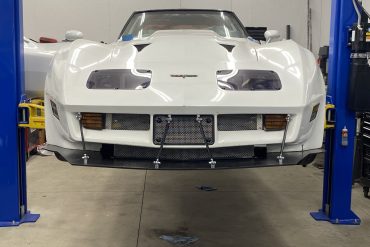
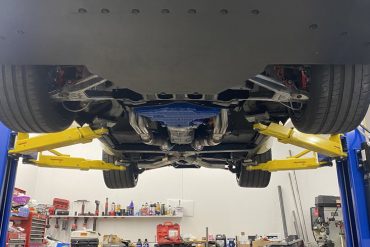
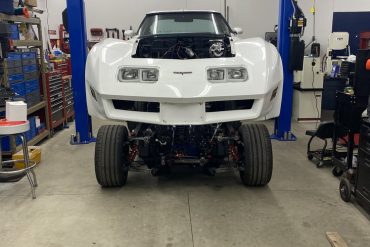

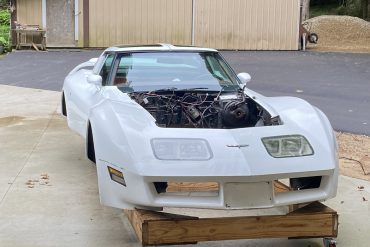
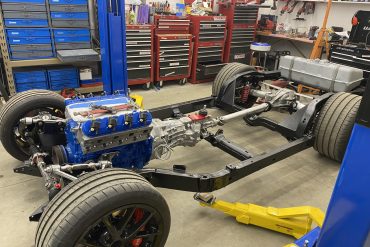
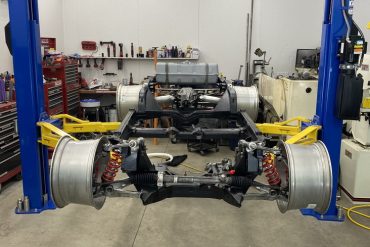
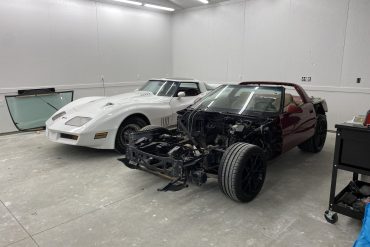


Chevrolet built 38,465 Corvettes for 1975 at St. Louis, Missouri, 33,836 T-top Sport Coupes and 4,629 convertibles, within 300 cars of the 1969 record. The convertible count was the lowest of any year the body was offered and the last until 1986. Only 2,372 cars had the L82; 28,473 had the Turbo Hydra-Matic, 31,914 air conditioning, 37,591 power steering, 3,194 the Gymkhana suspension and 144 the Z07 package.
In late 2025 and 2026, original 1975 coupes sold for $12,500 to $18,060 at auction and were offered at $13,900 to $23,450, with a four-speed bid to $25,000; convertibles sold for $10,000 to $32,450, the top figure with a hardtop at Mecum, and were offered at $25,995 to $38,500; low-mileage cars were asked up to $48,995. The 1975 is among the least expensive Corvettes, with the convertibles carrying the premium.
Two, both 350 small blocks with hydraulic lifters, catalytic converters and unleaded fuel: the L48 at 165 hp (155 in California), the lowest rating in Corvette history, and the L82 at 205 hp. The 454 was listed early and cancelled before any were built, so 1975 was the first year since 1967 with a single displacement. HEI breakerless ignition was new, the four-speed was standard in wide or close ratio and the Turbo Hydra-Matic went into 74 percent of cars.
Ten: Classic White (8,007 cars), Silver (4,710), Medium Saddle (3,403), Mille Miglia Red (3,355), Dark Red (3,342), Orange Flame (3,030), Bright Yellow (2,883), Bright Blue (2,869), Bright Green (1,664) and Steel Blue (1,268), with black or white soft tops. Interiors came in black, silver, dark blue, neutral, medium saddle and dark oxblood red vinyl, with leather in the custom interior.
The Sport Coupe was $6,810.10 and the convertible $6,550.10, up more than $800 on 1974, with radial tires, the alarm, Positraction and the four-speed or Turbo Hydra-Matic included. The L82 added $336.00, the Gymkhana suspension $7.00 and the Z07 package $400.00; power steering was $129.00, power brakes $50.00, air conditioning $490.00, the custom interior $154.00, the AM/FM radio $178.00 and the stereo $284.00. A typical automatic, air-conditioned L48 coupe with power steering and brakes, the custom interior and the stereo came to about $7,920.
A catalytic converter with a single exhaust system and unleaded fuel, HEI breakerless ignition with an electronic tachometer, a one-piece rear bumper cover with protective pads at both ends, a honeycomb front bumper core and rear shock absorbers, a headlights-on buzzer, a bladder in the fuel tank and kilometers on the speedometer. The 454 was dropped, the base engine fell to 165 hp and the L82 to 205, the convertible was built for the last time until 1986, Astro Ventilation ended, and Zora Arkus-Duntov retired.
Convertible sales had fallen every year since 1969, to 4,629 in 1975, and Chevrolet expected federal rollover rules to outlaw fully open cars after the 1975 model year, so it stopped building the Corvette convertible when the last one left St. Louis in late July 1975. The rules never came, but the decision stood until the convertible returned for 1986. It was also the last time a Corvette convertible cost less than the coupe. Many 1975 convertibles were bought as investments on the strength of being the last, which did not pay off.
1975 Corvette Advertisements / 1975 Corvette Colors / 1975 Corvette Engine / 1975 Corvette Factory Options / 1975 Corvette For Sale / 1975 Corvette Maintenance / 1975 Corvette Mods / 1975 Corvette Owners Manual / 1975 Corvette Performance / 1975 Corvette Posters / 1975 Corvette Pricing / 1975 Corvette Production / 1975 Corvette Recalls / 1975 Corvette Research / 1975 Corvette RPO Codes / 1975 Corvette Sales Brochures / 1975 Corvette Special Model Overview / 1975 Corvette Specifications / 1975 Corvette Technical Research / 1975 Corvette Service Bulletins / 1975 Corvette VIN Numbers