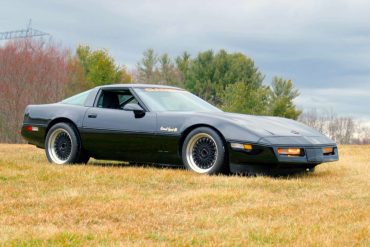
Aimed at autocross and Pro-Solo drivers, the GS80 turned Guldstrand from tuner into small-volume manufacturer. The guide breaks down the suspension package, the three TRACO engine stages and the removable roll bar.



C4 CORVETTE - 1987
The year the Corvette got a twin-turbo option from the factory order form: RPO B2K sent 184 cars from Bowling Green to Callaway in Connecticut and brought them back with 345 hp, 465 lb-ft and a 177.9-mph top speed.
Quick Nav: Story · Specials · Callaway Twin Turbo · Price & Options · VIN · Specs · Technical · Pics & Videos · The Market · All · FAQs
Model & Gen: 1987 Corvette (C4)
Body Type: Two-door hatchback coupe with lift-off roof panel and two-door convertible
VIN: 1G1YY2182H5100001 – 1G1YY2182H5130632 (coupes 1G1YY21…, convertibles 1G1YY31…, one shared sequence)
Original Price: $27,999.00 coupe; $33,172.00 convertible; Callaway Twin Turbo (RPO B2K) $19,995.00 extra
Colors: 12 solid colors plus four two-tones (RPO D84, coupe only); Dark Red Metallic on nearly one car in five
Engine: 350 ci L98 with Tuned-Port Injection and new roller lifters, 240 hp; or the Callaway B2K twin-turbo conversion, 345 hp
Transmission: 700-R4 four-speed overdrive automatic (MX0) standard, now with a 2.59:1 axle; Doug Nash 4+3 four-speed manual with overdrive (MM4) at no cost, 4,298 cars
Units Produced: 30,632 (20,007 coupes + 10,625 convertibles), including 184 Callaway B2K twin-turbos
The 1987 Corvette looks like a 1986 with argent-gray wheel centers, and most of what changed is under the clamshell. Roller hydraulic lifters cut friction in the L98 and raised it to 240 hp at 4,000 rpm and 345 lb-ft at 3,200, with new raised-rail rocker covers to stop the oil leaks, a thicker-core radiator, a second electric fan and a finned power-steering cooler; the aluminum heads were on every car now. The automatic got a taller 2.59:1 axle for the EPA, the 4+3 kept its 3.07:1 Dana 44, and the new Z52 Sport Handling Package ($470) gave 12,662 buyers the Z51’s 9.5-inch wheels, Bilstein gas shocks, quick steering, thicker front bar and all but one of the convertible’s chassis stiffeners on the base springs, which is to say the handling without the punishment; the Z51 itself ($795), stiffer still and now restricted to coupes with the manual, found only 1,596 takers. A power passenger seat, an illuminated vanity mirror, heated mirrors on the convertible and a low-tire-pressure warning that could set off the car parked next to it, and was withdrawn after a few dozen cars, rounded out the list.
The news was RPO B2K. Chevrolet had admired Reeves Callaway’s turbocharged Alfa Romeos, and for 1987 it put his twin-turbo conversion on the Corvette order form: a buyer ticked B2K at any Chevrolet dealer, Bowling Green built the car with a specific equipment group, shipped it to Callaway Cars in Old Lyme, Connecticut, and it came back with a rebuilt L98 on forged low-compression pistons, two intercooled RotoMaster turbochargers, new intake and exhaust plumbing and a full GM warranty, rated at 345 hp and 465 lb-ft. Car and Driver took one to 177.9 mph, the fastest car then sold through an American dealer, and the option cost $19,995 on top of the $27,999 coupe or $33,172 convertible; 184 were built for 1987, the first of about 500 B2Ks through 1991. It was the first time General Motors had farmed a regular production option out to an outside specialist, and it made Callaway’s name.
The convertible, in its second year, outsold its first by more than three thousand, 10,625 against 20,007 coupes, at $5,173 more than the coupe. Road & Track’s 4+3 convertible ran 0–60 in 6.3 seconds and the quarter in 14.8 at 95 mph; Motor Trend’s did 6.3 and 15.1. Dark Red Metallic jumped to 5,578 cars behind Bright Red’s 8,285, and Copper Metallic, four cars in 1986, was built 87 times. Behind the scenes Tony Rudd at Lotus, newly owned by GM, concluded there was no future in twin-cam heads on the L98 and set the program that became the LT5 and the ZR-1 in motion. Today the 1987 is a 1986 with ten more horsepower and the Z52’s better manners, priced with it; the B2K cars are a market of their own, the first collectible C4s after the 1986 Pace Car convertibles.
During the middle of the 1986 model year, General Motors had acquired a controlling interest in Lotus, a small British automotive manufacturing company. Already known around the world for having an enviable reputation in Formula One Grand Prix racing and building some truly amazing automobiles, General Motors saw in their acquisition the opportunity to explore advancements in their own engine development programs.
In fact, Tony Rudd, Lotus’s technical director, had entered into an agreement with GM to design twin-cam, sixteen-valve cylinder heads for the L98 engine. The challenge they faced was how to squeeze the additional hardware into an already limited amount of engine space.
At the same time, other significant advancements were being made within the existing Corvette program. The return of the Corvette Convertible in 1986 had represented the first re-uniting of the coupe and the convertible (offered in the same model year) in more than a decade. Despite less than stellar sales numbers in its first year, the return of the convertible option was well received by critics and Corvette enthusiasts alike.
Many Corvette purists pointed out that the Corvette had begun its existence as a convertible, and it seemed only logical that General Motors should continue to offer the convertible option as part of the Corvette’s heritage. In fact, many Corvette enthusiasts had strongly criticized the absence of a convertible option when it had been previously discontinued at the onset of the 1976 model year. So, for 1987, both the coupe and the convertible returned, but not without some noteworthy changes to both variants of the vehicle.
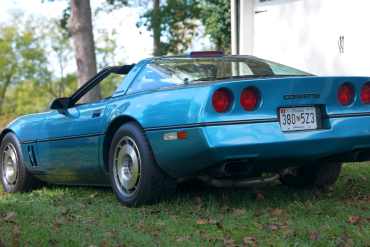
Cosmetically, the Corvette was virtually unchanged from the 1986 model, save for one, immediately identifiable feature – the wheels. For the 1984 and 1985 models, the wheels’ center caps and radial slots had been painted black. In 1986, only the slots featured the black paint.
For the 1987 model year, the black paint was eliminated completely from the wheels, and both the caps and slots were now treated to an argent gray coloring.
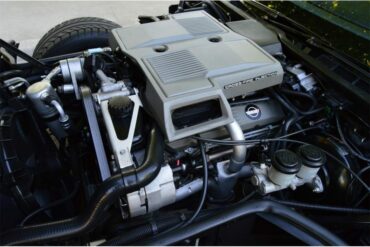
In an ongoing effort to reduce engine friction with the intent of improving both engine performance and fuel economy, Chevrolet added rollers to the hydraulic lifters. In doing so, the engine performance of the 1987 Corvette was increased by ten horsepower, taking the rating to 240 hp. Torque also improved by 15 lb-ft, to 345. In addition to the rollers, they also added rocker-arm covers with raised rails to help prevent oil leaks. A thicker-core radiator and a second electric cooling fan were also included to further aid in maintaining cooler engine temperatures.
Additionally, a finned power-steering cooler was included.
Did you know? Although Callaway Cars, Inc. is known around the world for its prestigious, high-performance, turbocharged variants to high-end production sports cars, they garnered this reputation by developing a number of special edition Corvettes. Perhaps their most impressive accomplishment to date is the development of the Sledgehammer Corvette, a specially modified C4 Callaway Corvette which is capable of reaching speeds in excess of 250mph, with a current, recorded top speed of 254.76 miles per hour!
In addition to the engine upgrades, a second suspension option was made available. Designated with option code Z52 and priced at $470.00, this “sports handling package” option was essentially a softer version of the Z51 package, with the wider 9.5 inch wheels, plus a solid and thicker front anti-roll bar, new gas-charged shocks, quick-ratio steering, and all but one of the chassis stiffeners originally developed for the convertible.
Spring rates and bushings were carried over from the base chassis. The original Z51 package was also offered in 1987, now only on coupes with the manual transmission, and featured much of the same hardware as the Z52 option, although it included much stiffer springs and front lower-control-arm bushings, plus a solid (instead of link type) rear stabilizer.
The Z52 option was praised by automotive enthusiast magazines for its improved ride quality with handling that was little changed.
A couple of other options found their way into the 1987 Corvette. Although these options were not new to General Motors as a whole, they were unique to the Corvette in that they had never been featured in any of its earlier forms. A low-tire-pressure indicator (RPO UJ6) made a brief appearance early in the 1987 model year. The low-tire pressure indicator signaled a drop in pressure of one pound per square inch on any wheel, via a dash panel display. Priced at $325, it was soon discovered that some of the installed units could actually trigger the same hardware in other Corvettes equipped with this same option, causing false alarms and inaccurate pressure reporting for both vehicles.
The option was withdrawn after a few dozen cars and returned, sorted, for 1989. Another “existing option” that made its way into the 1987 Corvette was electronic air conditioning. While it had been available in the Corvette coupe in 1986, the option was made available for both the coupe and the convertible for the 1987 model year.
New for 1987 was an aftermarket option that was offered to consumers when ordering their Corvettes from the factory. Although it was not a factory option, speed-thirsty consumers could order a Callaway Twin-Turbo Engine package through participating dealerships.
Under the designation RPO B2K, the twin turbo option was rated at 345 bhp and 465 lbs/ft of torque. When installed, it allowed the Corvette to reach a top speed of 177.9 miles per hour in Car and Driver’s hands, with the 0.60:1 overdrive. Unfortunately for most consumers, the Twin-Turbo Engine package included a steep price tag of an additional $19,995 (over the base price of the Corvette), putting it well out of reach for many Corvette consumers. Still, for those that did order their Corvette with this option, their Corvette would be shipped from Bowling Green (upon its completion) to Callaway Cars in Old Lyme, Connecticut where it would be modified to include the B2K option.
Even in its base form, the 1987 Corvette was proving itself as a genuine performance car. Motor Trend Magazine performed a series of time trials with a Corvette Convertible and recorded some remarkable results for its day. Equipped with a manual transmission and the newly improved 240 horsepower version of the L98 engine, the 1987 Corvette Convertible accelerated from 0-60 in just 6.3 seconds and ran a respectable 15.11 seconds in the quarter mile, reaching a speed of 93.8 miles per hour.
By the end of the 1987 model year, Tony Rudd came back to David McLellan with the conclusion that there was no viable way to re-invent the L98 engine. While General Motors had managed to moderately push the L98’s horsepower limitations in the mid-eighties, the respectable, though relatively unimpressive numbers represented the restrictions built into the engine itself.
After much review with McLellan of the many modification pursuits he’d undertaken to improve the performance of the L98 engine, Rudd ultimately won his case that GM’s only chance for success was to take this engine program in an entirely new direction.
Ironically, in pursuing this endeavor, Rudd would begin a journey that would ultimately lead to the development of arguably one of the greatest Corvette engines of all time – the LT5 – but that development would be another three years in the making.
Although Corvette’s performance numbers were steadily on the rise, so too was its price. At $27,999 for the coupe and $33,172 for the convertible, many critics felt the Corvette was becoming too pricey for its own good. Still, when compared to European cars of the same caliber, the Corvette was still a better value than most exotic cars in its price range. For the 1987 model year, Corvette sales did continue to decline, although overall sales were still respectable at 30,632 cars, of which the convertible accounted for 10,625 – an increase of 3,310 over 1986. A total of 184 Callaway twin-turbo cars were also sold that year.
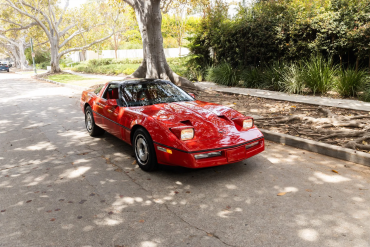
 1987 Callaway Twin-Turbo Corvette
 The 1987 Corvette L98 Engine featured new hydraulic lifters that included newly installed rollers.
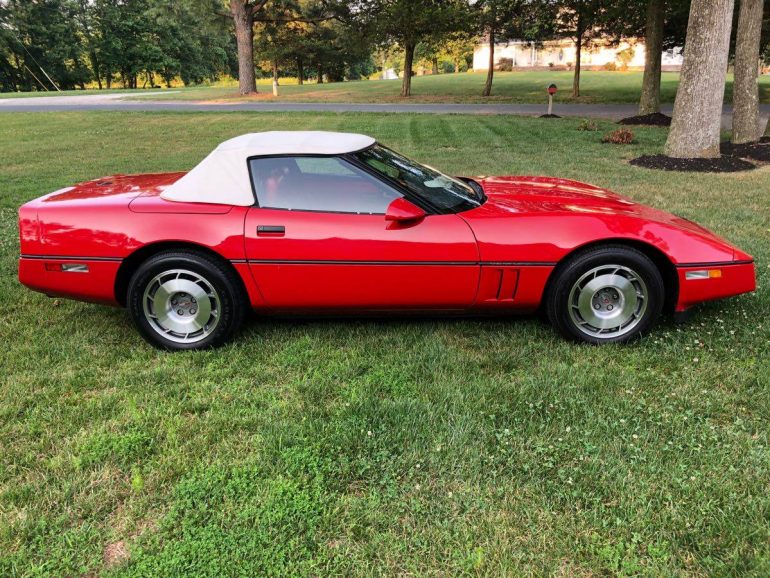
 The 1987 Corvette wheels were trimmed with Argent Grey paint instead of black paint as with the 1984-1986 models.
 1987 Callaway Corvette Twin Turbo Engine.
 © Bring A Trailer
RPO B2K was the first time General Motors let an outside company build a regular production option: a 1987 Corvette ordered with B2K at any Chevrolet dealer was built at Bowling Green, trucked to Callaway Cars in Old Lyme, Connecticut, for twin turbochargers, intercoolers and forged pistons, and delivered through the dealer with a GM warranty, 345 hp and a 177.9-mph top speed, for $19,995 on top of the sticker. 184 were built in 1987; the car it led to, Callaway’s 1988 Sledgehammer, reached 254.76 mph.
DID YOU KNOW
The specials are the Callaway B2K Twin Turbo (184 cars, the only Corvette you could order with turbochargers), Dick Guldstrand’s GS80, and the racers: the Corvette GTP prototype and the Trans-Am and IMSA GTO Corvettes that put the C4 back on the track in 1987.
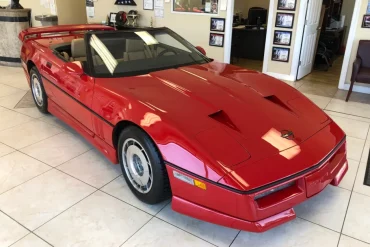
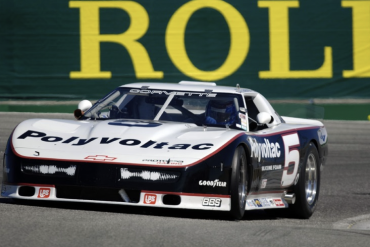
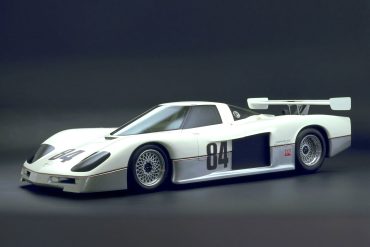
The only Corvette you could order with turbochargers: tick RPO B2K at the dealer, pay $19,995 over sticker, and Bowling Green shipped the car to Callaway Cars in Old Lyme, Connecticut, for forged pistons, two intercooled RotoMaster turbochargers and new manifolds, returning it with 345 hp, 465 lb-ft, a 177.9-mph top speed and a GM warranty. 184 were built for 1987, 121 coupes and 63 convertibles, each with a Callaway serial plate; about 500 followed through 1991, and the program produced the 254.76-mph Sledgehammer. Documented B2Ks bring several times a standard 1987 today.
MORE: THE CALLAWAY B2K STORY
The 1987 coupe listed at $27,999.00 and the convertible at $33,172.00, each about a thousand dollars more than 1986, with the 240-hp L98, the 700-R4 automatic, anti-lock brakes, VATS, air conditioning, power windows, the tilt-telescopic column, cloth seats and digital instruments standard; 20,007 coupes and 10,625 convertibles were built. The Callaway Twin Turbo (RPO B2K, $19,995.00) was ordered through the dealer like any other option and installed in Connecticut; 184 cars got it, which made a B2K coupe about $48,000 and a convertible about $53,000 before any other options.
The new Z52 Sport Handling Package ($470.00) went into 12,662 cars and the stiffer Z51 ($795.00), now only on coupes with the 4+3, into 1,596; 1,957 took the Bilstein shocks alone (RPO FG3, $189.00), 7,291 the radiator boost fan (B4P, $75.00), 7,871 the heavy-duty radiator (V01, $40.00) and 6,679 the oil cooler (KC4, $110.00). The 4+3 (RPO MM4) was free and went into 4,298 cars, the 3.07:1 performance axle (G92, $22.00) into 7,285 automatics now that the standard ratio was 2.59:1, two-tone paint (D84, $428.00), coupe only, onto 1,361 and California emissions (NN5, $99.00) onto 5,423.
Inside, the new six-way power passenger seat (RPO AC1, $240.00) went into 17,124 cars alongside the driver’s (AC3, $240.00, 29,561); 14,119 buyers took the leather sport seats (AQ9, $1,025.00) and 14,579 leather on the base seats (AR9, $400.00), leaving fewer than two thousand cars in cloth. Power locks (AU3, $190.00) went into 29,748 cars, cruise control (K34, $185.00) into 29,594, the Delco-Bose stereo (UU8, $905.00) into 27,721, electronic air-conditioning control (C68, $150.00), now on both bodies, into 20,875 and the new illuminated vanity mirror (D74, $58.00) into 14,992. Coupe roof panels: blue-tinted glass (RPO 24S, $615.00) on 8,883, bronze (64S, $615.00) on 5,766, both panels (C2L, $915.00) on 5,017; the rear-window and mirror defoggers (Z6A, $165.00) went on 19,043 coupes and heated mirrors (DL8, $35.00) on 6,840 convertibles.
Radios otherwise: 2,236 plain cassette stereos (UM6, $132.00) and 247 radio-delete credits (UL5, $256.00). The low-tire-pressure indicator (UJ6, $325.00) was withdrawn after a few dozen cars when the units proved to trigger each other. A typical coupe with leather sport seats, both power seats, Bose, locks, cruise, defoggers, Z52 and a tinted roof came to about $31,900, and a convertible so equipped about $36,500; the two-tone and Copper cars are the scarce ones. The published color totals add up to 30,632.
MORE: PRICING, OPTIONS & COLORS / RPO CODES
| CODE | DESCRIPTION | QUANTITY | RETAIL PRICE |
|---|---|---|---|
| 1YY07 | Base Corvette Hatchback Coupe (240-hp L98, 700-R4 automatic, ABS, VATS, cloth seats, lift-off roof panel, air conditioning, power windows, digital instruments) | 20,007 | $27,999.00 |
| 1YY67 | Base Corvette Convertible (as coupe, with manual soft top and reinforced structure) | 10,625 | $33,172.00 |
| AR9 | Base Seats, leather | 14,579 | $400.00 |
| 24S | Removable Transparent Roof Panel, blue tint (coupe) | 8,883 | $615.00 |
| 64S | Removable Transparent Roof Panel, bronze tint (coupe) | 5,766 | $615.00 |
| AC1 | Six-Way Power Passenger Seat (new) | 17,124 | $240.00 |
| AC3 | Six-Way Power Driver Seat | 29,561 | $240.00 |
| AQ9 | Sport Seats, leather (inflatable lumbar, power side bolsters) | 14,119 | $1,025.00 |
| AU3 | Power Door Locks | 29,748 | $190.00 |
| B2K | Callaway Twin Turbo conversion (installed by Callaway Cars, Old Lyme, Connecticut; 345 hp, 465 lb-ft; GM warranty) | 184 | $19,995.00 |
| B4P | Radiator Boost Fan | 7,291 | $75.00 |
| C2L | Dual Removable Roof Panels, body-color and tinted (coupe) | 5,017 | $915.00 |
| C68 | Electronic Air Conditioning Control (now coupe and convertible) | 20,875 | $150.00 |
| D74 | Illuminated Driver Vanity Mirror (new) | 14,992 | $58.00 |
| D84 | Two-Tone Paint, four combinations (coupe) | 1,361 | $428.00 |
| DL8 | Twin Remote Heated Mirrors (convertible) | 6,840 | $35.00 |
| FG3 | Delco-Bilstein Gas Shock Absorbers | 1,957 | $189.00 |
| G92 | Performance Axle Ratio, 3.07:1 (automatic cars) | 7,285 | $22.00 |
| K34 | Cruise Control with Resume | 29,594 | $185.00 |
| KC4 | Engine Oil Cooler | 6,679 | $110.00 |
| MM4 | Doug Nash 4+3 Four-Speed Manual with Overdrive | 4,298 | no charge |
| NN5 | California Emission Requirements | 5,423 | $99.00 |
| UJ6 | Low Tire Pressure Indicator (withdrawn early in the year) | a few dozen | $325.00 |
| UL5 | Radio Delete | 247 | $256.00 credit |
| UM6 | AM-FM ETR Stereo with Cassette | 2,236 | $132.00 |
| UU8 | Delco-Bose AM-FM Stereo with Cassette | 27,721 | $905.00 |
| V01 | Heavy-Duty Radiator | 7,871 | $40.00 |
| Z51 | Performance Handling Package (coupe with manual transmission only: heavy-duty springs and lower-arm bushings, Bilstein shocks, solid rear stabilizer bar, fast-ratio steering, 9.5-inch wheels, heavy-duty cooling) | 1,596 | $795.00 |
| Z52 | Sport Handling Package (new: 9.5-inch wheels, Bilstein gas shocks, thicker solid front stabilizer bar, fast-ratio steering, thicker radiator and second fan, convertible-type chassis stiffeners, on base springs) | 12,662 | $470.00 |
| Z6A | Rear Window and Side Mirror Defoggers (coupe) | 19,043 | $165.00 |
| CODE | EXTERIOR | TOTAL | SOFT TOP | INTERIOR |
|---|---|---|---|---|
| 81 | Bright Red | 8,285 | Black, Saddle, White | Graphite, Red, Saddle |
| 74 | Dark Red Metallic | 5,578 | Black, Saddle, White | Graphite, Saddle |
| 41 | Black | 5,101 | Black, Saddle, White | Graphite, Medium Gray, Red, Saddle |
| 40 | White | 3,097 | Black, Saddle, White | Blue, Bronze, Graphite, Medium Gray, Red, Saddle |
| 20 | Medium Blue Metallic | 2,668 | Black, White | Blue, Graphite |
| 35 | Yellow | 1,051 | Black, White | Graphite |
| 18 | Medium Gray Metallic | 1,035 | Black, White | Graphite, Medium Gray, Red |
| 59 | Silver Beige Metallic | 950 | Black | Bronze, Graphite |
| 13 | Silver Metallic | 777 | Black, White | Graphite, Medium Gray |
| 53 | Gold Metallic | 397 | Black, Saddle | Graphite, Saddle |
| 69 | Medium Brown Metallic | 245 | Saddle | Bronze, Saddle |
| 66 | Copper Metallic | 87 | Black, Saddle | Graphite, Saddle |
| 59/69 | Two-tone Silver Beige / Medium Brown (RPO D84, coupe) | 447 | – | Bronze |
| 13/18 | Two-tone Silver / Medium Gray (RPO D84, coupe) | 403 | – | Graphite, Medium Gray, Red |
| 18/41 | Two-tone Medium Gray / Black (RPO D84, coupe) | 316 | – | Graphite, Medium Gray |
| 40/13 | Two-tone White / Silver (RPO D84, coupe) | 195 | – | Graphite, Medium Gray |
The L98 for 1987 was the aluminum-head Tuned-Port 350 of late 1986 with roller hydraulic lifters in place of flat tappets, which cut friction enough to raise the rating to 240 hp at 4,000 rpm and 345 lb-ft at 3,200 and improve fuel economy at the same time; the block was a new casting, 14093638, the heads 14101128 at 9.5:1, the rocker covers gained raised rails for better sealing, the radiator a thicker core and a second electric fan, and the power steering a finned cooler.
The 700-R4 automatic (RPO MX0) was standard with a new, taller 2.59:1 axle, with 3.07:1 available as RPO G92; the Doug Nash 4+3 (RPO MM4) kept its 3.07:1 Dana 44. Road & Track’s June 1987 test of a 4+3 convertible ran 0–60 in 6.3 seconds and the quarter in 14.8 at 95 mph, stopped from 60 in 130 feet and pulled 0.87 g; Motor Trend’s convertible did 6.3 and 15.1 at 93.8. Top speed was about 150 mph.
RPO B2K replaced that engine with Callaway’s: the L98 rebuilt with forged low-compression pistons and a reworked bottom end, two intercooled RotoMaster turbochargers on new manifolds, a new intake tract and exhaust, and boost control through the stock Tuned-Port electronics, rated at 345 hp and 465 lb-ft on premium fuel. Cars were built at Bowling Green with a B2K equipment group (every one a 4+3 or automatic chosen by the buyer), shipped to Callaway Cars in Old Lyme, Connecticut, converted, and returned through the dealer with the GM warranty intact; Car and Driver recorded 177.9 mph and 0–60 in the high fours.
The chassis was the 1986 car’s with Bosch ABS II and VATS standard; the new Z52 Sport Handling Package combined 16 x 9.5-inch wheels with P255/50VR16 Goodyears, Delco-Bilstein gas shocks, a thicker solid front stabilizer bar, the 13.0:1 steering rack, the thicker radiator and second fan and most of the convertible’s structural stiffeners on the standard springs and bushings, while Z51, coupe and manual only, added the heavy-duty springs, stiffer lower-control-arm bushings and a solid rear bar. The wheels lost their black paint for argent-gray centers and slots. Dimensions and weights were unchanged: 96.2-inch wheelbase, 176.5 inches long, about 3,240 lb for the coupe and 3,290 for the convertible.
MORE: FULL SPECIFICATIONS / ENGINE
| SPEC | 1987 CORVETTE |
|---|---|
| Engine | 350 ci (5.7 L) small-block V-8, RPO L98, the only factory engine: Tuned-Port Injection with Bosch mass-airflow sensor, aluminum heads (casting 14101128) at 9.5:1, new roller hydraulic lifters, raised-rail rocker covers; block casting 14093638; three catalytic converters |
| RPO L98 | 350/240 hp net @ 4,000 rpm, 345 lb-ft @ 3,200 rpm (up 5 hp and 15 lb-ft on the 1986 aluminum-head engine, from the roller lifters); engine suffix ZJN (automatic); thicker-core radiator with second electric fan, finned power-steering cooler |
| RPO B2K | Callaway Twin Turbo, $19,995.00, 184 cars: L98 rebuilt by Callaway Cars with forged low-compression pistons, two intercooled RotoMaster turbochargers, new manifolds, intake and exhaust; 345 hp, 465 lb-ft; 177.9 mph (Car and Driver); installed in Old Lyme, Connecticut, sold and warranted through Chevrolet dealers |
| Transmission | 700-R4 four-speed automatic with overdrive and lock-up converter (RPO MX0) standard; Doug Nash 4+3 four-speed manual with computer-controlled overdrive (RPO MM4, no charge, 4,298 cars) |
| Axle ratio | 2.59:1 automatic (new, taller), 3.07:1 manual and with RPO G92 ($22.00, 7,285 cars); Dana 36 with the automatic, Dana 44 with the manual; limited-slip standard |
| Chassis | Welded steel uniframe with aluminum front crossmember; convertible with X-brace, K-braces, reinforced cowl and rear-torque-box crossbeam; Z52 adds most of the convertible’s stiffeners to the coupe |
| Suspension | Independent front with forged-aluminum control arms and transverse fiberglass monoleaf spring; independent five-link rear with fiberglass monoleaf spring and aluminum arms; anti-roll bars; Delco-Bilstein gas shocks with Z51, Z52 or RPO FG3 ($189.00, 1,957 cars) |
| RPO Z52 | Sport Handling Package, new, $470.00, 12,662 cars: 16 x 9.5-in wheels with P255/50VR16 tires, Bilstein gas shocks, thicker solid front stabilizer bar, 13.0:1 fast-ratio steering, thicker radiator and second fan, convertible-type chassis stiffeners; standard springs and bushings |
| RPO Z51 | Performance Handling Package, $795.00, 1,596 cars, coupe with manual transmission only: Z52 content plus heavy-duty springs, stiffer front lower-control-arm bushings and a solid rear stabilizer bar |
| Brakes | Four-wheel Girlock discs, 11.5-in vented rotors, aluminum calipers; Bosch ABS II anti-lock standard |
| Security | VATS resistor-key anti-theft system standard; alarm |
| Steering | Rack-and-pinion with power assist, 15.5:1 (13.0:1 with Z51 and Z52); tilt-telescopic column standard |
| Body | Fiberglass hatchback coupe with lift-off roof panel (blue-tinted glass RPO 24S or bronze 64S, $615.00; both panels RPO C2L, $915.00) and convertible with manual top; unchanged from 1986 except wheel centers and slots painted argent gray instead of black; two-tone paint (RPO D84, $428.00, coupe) on 1,361 cars |
| Interior | Digital instrument panel; cloth base seats (leather RPO AR9, $400.00, 14,579 cars), Lear Siegler sport seats in leather (RPO AQ9, $1,025.00, 14,119); six-way power driver seat (RPO AC3, $240.00, 29,561) and, new, power passenger seat (RPO AC1, $240.00, 17,124); illuminated driver vanity mirror new (RPO D74, $58.00, 14,992); Delco-Bose sound system (RPO UU8, $905.00, 27,721); electronic air conditioning (RPO C68, $150.00, 20,875) now on both bodies; low-tire-pressure indicator (RPO UJ6, $325.00) offered briefly and withdrawn |
| Wheels & tires | 16 x 8.5-in cast aluminum wheels with argent-gray centers and slots, P245/50VR16 Goodyear Eagle tires; 16 x 9.5-in wheels with P255/50VR16 with Z51 and Z52 |
| Fuel tank | 20 gal (18 gal on automatic cars); unleaded only; B2K requires premium |
| Wheelbase | 96.2 in |
| Overall length / width / height | 176.5 in / 71.0 in / 46.7 in (coupe) |
| Track, front / rear | 59.6 in / 60.4 in |
| Curb weight | approx. 3,240 lb coupe; approx. 3,290 lb convertible |
| 0–60 mph | 6.3 sec (Road & Track, June 1987, 4+3 convertible; Motor Trend the same); B2K high-4s (Car and Driver) |
| Quarter mile | 14.8 sec @ 95 mph (Road & Track, convertible); 15.1 sec @ 93.8 mph (Motor Trend, convertible) |
| Top speed | about 150 mph; 177.9 mph for the Callaway B2K (Car and Driver) |
| Lateral acceleration / braking | 0.87 g; 60–0 mph in 130 ft (Road & Track, convertible) |
| Production | 30,632: 20,007 coupes and 10,625 convertibles, including 184 Callaway B2K conversions |
| Assembly | Bowling Green, Kentucky; B2K conversions at Callaway Cars, Old Lyme, Connecticut |
The 1987 Corvette VIN changed format: 1G1YY2182H5 for the coupe and 1G1YY3182H5 for the convertible, with a single shared sequence number from 100001 to 130632 for all 30,632 cars (the 1986’s separate 900001 convertible series was dropped). The 1 is the United States, G General Motors, 1 Chevrolet, Y (fourth) the Corvette car line, Y (fifth) the base series, 2 (sixth) the hatchback coupe or 3 the convertible, 1 (seventh) the manual-belt restraint system, 8 the L98 Tuned-Port 350 (the only engine; a Callaway B2K car keeps the 8), the ninth character a check digit that varies with the car, H the 1987 model year and 5 the Bowling Green plant. The VIN plate sits on top of the dash on the driver’s side, visible through the windshield; the body and trim plate on the left door-hinge pillar carries the build date, the paint code (two on two-tone coupes) and the trim code.
The engine pad at the front of the block on the passenger side carries the plant prefix, the build date and a suffix, ZJN on an automatic; every 1987 block is casting 14093638 with 14101128 aluminum heads and roller lifters under the Tuned-Port plenum. A Callaway B2K car is identified by its own Callaway serial plate and number (001 upward for 1987) in addition to the Chevrolet VIN, with the twin turbochargers, intercoolers, Callaway valve covers and documentation; Callaway Cars keeps the registry and will confirm a car from its number, which is the first thing to do with any B2K offered for sale, since the conversion has been copied. A Z51 car must be a coupe with the 4+3 and the heavy-duty springs; a Z52 car has the 9.5-inch wheels and Bilsteins on standard springs.
MORE: VIN DECODER / PRODUCTION
| POSITION | MEANING |
|---|---|
| 1G1 (First through Third) | Country, maker, make: 1 = built in the USA, G = General Motors, 1 = Chevrolet |
| Y (Fourth) | Car line: Y = Corvette |
| Y (Fifth) | Series: Y = Corvette (Z on the 1990–95 ZR-1) |
| 2 or 3 (Sixth) | Body: 2 = two-door hatchback coupe; 3 = two-door convertible (new single-digit body codes this year) |
| 1 (Seventh) | Restraint system: 1 = manual (active) belts |
| 8 (Eighth) | Engine: 8 = 350/240 L98 Tuned-Port Injection, the only engine (Callaway B2K cars keep the 8) |
| x (Ninth) | Check digit, calculated from the other sixteen characters |
| H (Tenth) | Model year: H = 1987 |
| 5 (Eleventh) | Assembly plant: 5 = Bowling Green, Kentucky |
| 100001–130632 (Twelfth through Seventeenth) | Production sequence number, one series shared by coupes and convertibles; 30,632 built |
Twelve solid colors and four coupe-only two-tones: Bright Red (8,285), Dark Red (5,578), Black (5,101), White (3,097), Medium Blue (2,668), Yellow (1,051), Medium Gray (1,035), Silver Beige (950), Silver (777), Gold (397), Medium Brown (245) and Copper (87); two-tones Silver Beige/Medium Brown (447), Silver/Gray (403), Gray/Black (316) and White/Silver (195). Convertible tops in black (4,748), white (4,158) and saddle (1,719); interiors in Graphite, Medium Gray, Blue, Red, Saddle and Bronze.
The 1987 is priced with the 1986: a few hundred dollars more for the roller-cam 240-hp engine and the Z52’s better ride, below the 1988–89 cars with their 17-inch wheels and, from 1989, the ZF six-speed. Convertibles bring a premium over coupes, low-mileage original automatics and 4+3 cars with Z52 or Z51 bring the most, and the two-tones and the 87 Copper Metallic cars are the scarce colors. The Callaway B2K cars are a separate market: with 184 built and a registry at Callaway, documented examples trade privately and at the big auctions for two to four times what a standard 1987 brings, with mileage, originality of the turbo installation and the Callaway paperwork setting the price, and converted or re-engined cars worth far less. Standard cars with Greenwood or other period body kits sell on their looks, not their rarity.
Results tracked by Classic.com from November 2025 through October 2026: Mecum sold a 17,000-mile automatic coupe for $19,800 at Lebanon, Tennessee, in September 2026, a 92,000-mile 4+3 for $9,900 at Indianapolis, and cars for $7,700, $6,600 and $6,050 at Harrisburg, Kansas City and Glendale; Bring a Trailer sold a 29,000-mile Z51 4+3 coupe for $19,750 in February, an 11,000-mile automatic for $14,500 and an 18,000-mile 4+3 for $14,000 in July, an 18,000-mile car for $11,000 in April, 19,000- and 51,000-mile 4+3 cars for $8,700 and $7,250 (the latter a Z51), a modified car for $8,000 and a 183,000-mile Z52 for $4,383; Barrett-Jackson got $8,250 at West Palm Beach. A 5,000-mile automatic was bid to $20,000 and not sold at Mecum Indianapolis, and a 15,000-mile convertible to $11,500 at AutoHunter. Dealers’ last asking prices on cars that sold or were withdrawn ran $4,987 to $27,995 for coupes and $9,900 to $19,900 for convertibles, with a 31,000-mile Callaway convertible at $34,995 in April; in autumn 2026 coupes were offered at $10,450 to $20,000 (a 16,000-mile car) and convertibles at $13,999 to $21,900 (a 14,000-mile car). Check whether a result includes the buyer’s premium (Mecum and Barrett-Jackson results do, Bring a Trailer bids do not), and treat asking prices and unsold high bids separately from completed sales.
Verification: the sixth VIN character is 2 for a coupe and 3 for a convertible, the sequence runs to 130632, and the trim tag on the door pillar should carry a 1986 or 1987 build date and a paint code that matches the car (two codes on a two-tone coupe). Every 1987 should have aluminum 14101128 heads and roller lifters on a 14093638 block with the partial VIN stamped on the pad and a suffix such as ZJN; argent-gray wheel centers are correct, black ones are 1984–86 wheels. A Z51 car must be a 4+3 coupe; a Z52 car has 9.5-inch wheels and Bilstein shocks with the standard springs. A Callaway B2K needs its Callaway serial plate, the registry’s confirmation and the full installation: two turbochargers with intercoolers, Callaway manifolds, plumbing and valve covers, and the original window sticker or Callaway invoice if it survives; without those it is a turbocharged Corvette, not a B2K.
The inspection list is the C4’s plus the convertible’s. Digital dash first: faded or dark LCD panels, a dead dimmer, corroded connectors. Then the L98’s mass-airflow sensor and burn-off relay, cold-start injector, fuel-pump relay and oxygen sensor, plenum and runner gaskets, and the injectors on cars that sit; the roller-lifter engine itself is the most durable C4 small-block. VATS keys wear and decoders fail, ABS pumps and sensors are expensive, the 4+3’s overdrive leaks and slips and is often bypassed, Bilstein shocks are usually tired, headlight motors strip their gears, power antennas snap, and the uniframe rusts under the battery tray and at the rear kick-ups. Convertibles add top fabric, pads, rear window and frame bushings, header-latch alignment and water leaks at the rear corners. On a B2K, the turbochargers, intercooler plumbing and the aged boost and fuel-management parts need a specialist; Callaway still supports the cars.
MORE: THE MARKET
Get all the latest news stories, upcoming auctions, prices, videos and more about the 1987 Chevrolet Corvette! The latest headlines here.

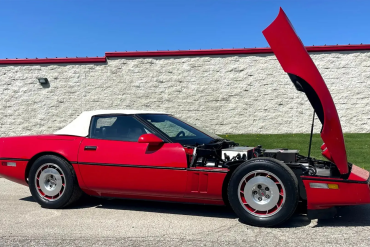


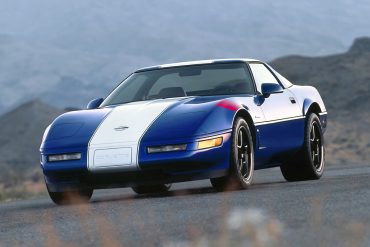
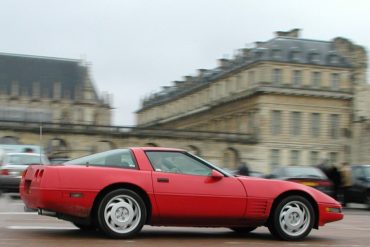
Chevrolet built 30,632 Corvettes for 1987 at Bowling Green, Kentucky: 20,007 hatchback coupes and 10,625 convertibles, the convertible up more than three thousand on its first year. Of the cars, 29,748 had power locks, 29,594 cruise control, 29,561 the power driver seat, 27,721 the Delco-Bose stereo, 17,124 the new power passenger seat, 14,119 leather sport seats, 12,662 the new Z52 Sport Handling Package, 4,298 the Doug Nash 4+3 manual, 1,596 the Z51 package, 1,361 two-tone paint and 184 the Callaway B2K twin-turbo conversion.
Between November 2025 and October 2026, standard 1987 Corvettes sold at auction for $4,383 to $19,800, with most between $6,000 and $15,000: Mecum got $19,800 for a 17,000-mile coupe and Bring a Trailer $19,750 for a 29,000-mile Z51 4+3. Dealers were asking $10,450 to $20,000 for coupes and $13,999 to $21,900 for convertibles in autumn 2026. The 184 Callaway B2K cars trade separately and bring several times those figures when documented; a 31,000-mile B2K convertible was offered at $34,995 in April 2026.
The L98 350 with Tuned-Port Injection and aluminum heads, now with roller hydraulic lifters, rated at 240 hp at 4,000 rpm and 345 lb-ft at 3,200, ten more horsepower and fifteen more pound-feet than 1986, with the 700-R4 automatic (2.59:1 axle) or the no-cost Doug Nash 4+3 manual (3.07:1). Or, for $19,995 more, RPO B2K: the same engine rebuilt by Callaway Cars with forged pistons and two intercooled turbochargers, rated at 345 hp and 465 lb-ft and good for 177.9 mph; 184 were built. Road & Track’s standard 4+3 convertible ran 0–60 in 6.3 seconds and the quarter mile in 14.8 at 95 mph.
Twelve solid colors and, on coupes, four two-tones. Bright Red (8,285) led, followed by Dark Red Metallic (5,578), Black (5,101), White (3,097), Medium Blue (2,668), Yellow (1,051), Medium Gray (1,035), Silver Beige (950), Silver (777), Gold (397), Medium Brown (245) and Copper Metallic (87, up from four in 1986). The two-tones were Silver Beige/Medium Brown (447), Silver/Gray (403), Gray/Black (316) and White/Silver (195). Convertible tops came in black (4,748), white (4,158) and saddle (1,719); interiors in Graphite, Medium Gray, Blue, Red, Saddle and Bronze.
The coupe was $27,999.00 and the convertible $33,172.00, about a thousand dollars more than 1986. The Callaway Twin Turbo (RPO B2K) added $19,995.00, the leather sport seats $1,025.00, base leather $400.00, each power seat $240.00, the Delco-Bose stereo $905.00, the Z52 Sport Handling Package $470.00, the Z51 package $795.00, a tinted roof panel $615.00 or both panels $915.00, power locks $190.00, cruise control $185.00 and two-tone paint $428.00; the 4+3 manual was free. A well-equipped Z52 coupe came to about $31,900 and a convertible about $36,500; a B2K coupe started around $48,000.
A 1987–91 Corvette ordered with RPO B2K, the Callaway Twin Turbo. Chevrolet built the car at Bowling Green, shipped it to Callaway Cars in Old Lyme, Connecticut, where the L98 was rebuilt with forged low-compression pistons, two intercooled turbochargers and new manifolds, and delivered it through the dealer with a GM warranty: 345 hp and 465 lb-ft in 1987, a 177.9-mph top speed in Car and Driver’s test, and $19,995 on top of the sticker. 184 were built in 1987 and about 500 through 1991. It was the first regular production option GM ever contracted to an outside specialist, and every genuine car carries a Callaway serial plate recorded in Callaway’s registry.
Roller lifters took the L98 to 240 hp and 345 lb-ft, with new rocker covers, a thicker radiator, a second fan and a power-steering cooler; the automatic’s axle went to 2.59:1. The Z52 Sport Handling Package arrived as a comfortable alternative to Z51, which became coupe-and-manual only. The wheels lost their black paint for argent-gray centers, a power passenger seat, an illuminated vanity mirror, heated convertible mirrors and electronic air conditioning for the convertible joined the options, a low-tire-pressure warning came and went, and the Callaway Twin Turbo became orderable as RPO B2K. Otherwise the car was the 1986 convertible and coupe carried over.
1987 Corvette Advertisements / 1987 Corvette Colors / 1987 Corvette Common Issues / 1987 Corvette Engine / 1987 Corvette Factory Options / 1987 Corvette For Sale / 1987 Corvette Maintenance / 1987 Corvette Mods / 1987 Corvette Owners Manual / 1987 Corvette Performance / 1987 Corvette Posters / 1987 Corvette Pricing / 1987 Corvette Production / 1987 Corvette Recalls / 1987 Corvette Research / 1987 Corvette RPO Codes / 1987 Corvette Sales Brochures / 1987 Corvette Special Model Overview / 1987 Corvette Specifications / 1987 Corvette Technical Research / 1987 Corvette Service Bulletins / 1987 Corvette VIN Numbers