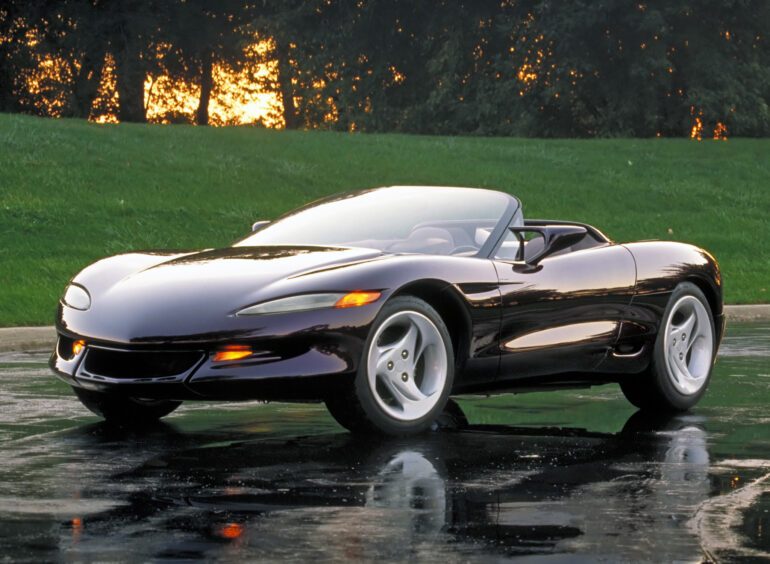
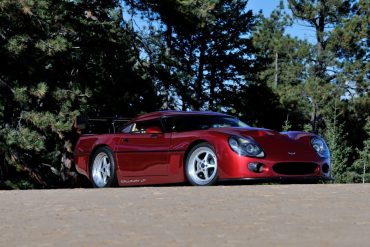
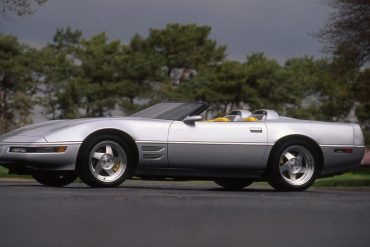
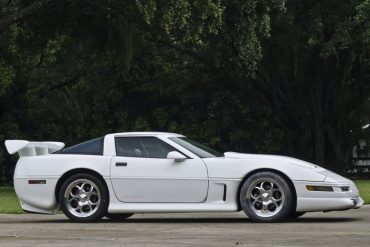
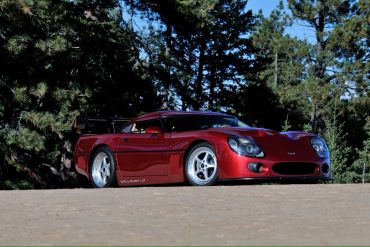
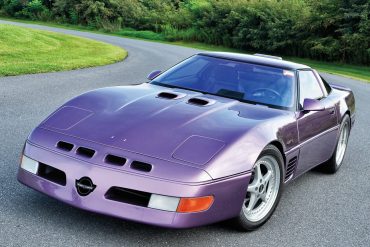
The offspring of collaboration between Corvette performance guru Reeves Callaway and designer Paul Deutschman, the Super Speedster LM is an astonishing step up on the original Speedster, taking full advantage of the ZR1’s Lotus-engineered, all-aluminum DOHC engine and 6-speed manual transmission. One of only three twin turbocharged and intercooled LT5 engines built by Callaway, it delivers a pavement-shredding 766 HP.
Quick Nav: Story · Specials · ZR-1 · Callaway · Price & Options · VIN · Specs · Technical · Pics & Videos · The Market · All · FAQs
The Basics
Model & Gen: 1991 Corvette (C4)
Body Type: Two-door hatchback coupe with lift-off roof panel and two-door convertible, both with the facelifted nose and the ZR-1’s convex tail; ZR-1 coupe (RPO ZR1)
VIN: 1G1YY2386M5100001 – 1G1YY2386M5118595 (L98 coupes 1G1YY23…, convertibles 1G1YY33…); ZR–1: 1G1YZ23J…M5800001 – 802044
Original Price: $32,455.00 coupe; $38,770.00 convertible; ZR-1 $64,138.00 ($31,683.00 package); Callaway Twin Turbo $33,000.00
Colors: 10 solid colors; Bright Red on one car in four; four soft-top colors including a new blue
Engine: 350 ci L98 with speed-density Tuned-Port Injection, 245 hp (250 with the 3.07:1 axle), its last year; or the ZR-1’s 5.7 L LT5 32-valve V-8, 375 hp
Transmission: 700-R4 (4L60) four-speed overdrive automatic standard on L98 cars; ZF six-speed manual (MN6) at no cost, 5,875 cars, standard on the ZR-1
Units Produced: 20,639 (14,967 coupes, of which 2,044 ZR-1s, + 5,672 convertibles), plus the last 71 Callaway B2Ks
The Overview
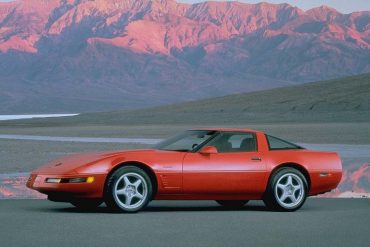
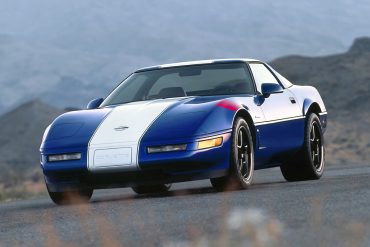
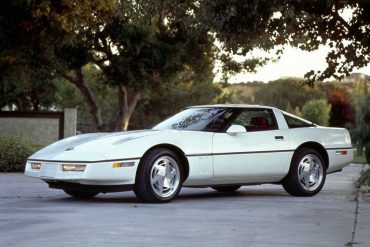
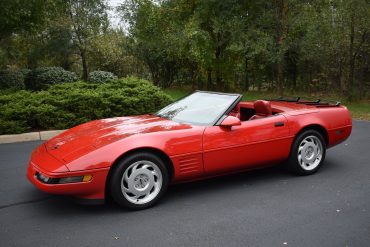
The 1991 Corvette is the C4’s mid-life facelift, and it was done in the ZR-1’s image. The front fascia was slimmer and smoother with wraparound parking, cornering and fog lamps, the body-side moldings were widened and painted body color, the front-fender gills became four horizontal strakes, the 17 x 9.5-inch wheels took a new turbine, or “saw-blade,” pattern, and the standard coupe and convertible were given the ZR-1’s convex rear fascia with four rectangular taillights, the high-mounted stop lamp set into the fascia above the Corvette script. The ZR-1 kept its unique doors and rear quarters, three inches wider for the 11-inch rear wheels, its roof-mounted stop lamp and its badge, and from twenty feet nobody could tell the difference. Under the skin, the L98 had its last year with new, larger mufflers and a finned power-steering cooler but the same 245 hp (250 with the 3.07:1 axle), the 700-R4 was renamed 4L60, a power-delay circuit kept the radio and windows alive after the key was turned off, a low-oil light joined the driver information center, every car was pre-wired for a cellular phone, and the ZR-1’s “full power” light moved next to its valet key.
The new option was Z07 ($2,155, coupes with the six-speed only): the old Z51 heavy-duty springs, bushings and bars combined with FX3 Selective Ride Control, which gave a car that could be switched between firm and very firm and was meant for showroom-stock racers; 733 were built. The ZR-1 itself was unchanged except for the price, now $31,683 over a $32,455 coupe, or $64,138 before options, and it suffered for it: Chevrolet had planned 4,000 to 8,000 a year, Dodge announced the 400-hp V-10 Viper for 1992 in January 1991, the 1990 buyers who had paid over sticker now had a facelifted base car that looked the same, and ZR-1 sales fell from 3,049 to 2,044. The B2K Callaway Twin Turbo ran out its contract: Callaway built the 500th twin-turbo Corvette on September 26, 1991, badged the cars after it “Callaway 500,” and ended the program after this year with the ZR-1 and a recession against it; the 1991 cars cost $33,000 over sticker, and alongside them Callaway sold the Speedster, a 450-hp open two-seater by Paul Deutschman on the twin-turbo chassis at $107,000 and up, ten of them.
Overall sales fell again to 20,639, coupes outselling convertibles three to one, and inside GM the Corvette’s future was argued over: the all-new car once planned for 1995 slipped toward the end of the decade, and Chevrolet general manager Jim Perkins had to make the case to the corporation that the Corvette should continue at all. He won, and the answer to the Viper and the ZR-1’s price problem was already in the works for 1992, the 300-hp LT1 for every Corvette. Today the 1991 is the quiet one in the middle: the last L98 and the first of the facelifted cars, priced with the 1989–90s, with Z07 coupes and six-speed cars at the top of the standard range, 1991 ZR-1s the second-cheapest LT5 year after 1990, and the Callaway Speedsters and Callaway 500 cars in six figures among the people who collect such things.
The 1991 Corvette Story
With the arrival of the ZR-1 in 1990, the Corvette had once more been elevated to a stature that had been missing since the early seventies. The “King of the Hill” had arrived and had met or exceeded the expectations of most enthusiasts and automobile reviewers alike.
Its arrival had been anticipated for so long that prospective buyers gladly paid well in excess of the $58,995 list price. And yet, as fate would have it, the high priced ZR-1 that was so widely embraced in 1990 would be the same car that would ultimately bring about its own decline beginning just a year later in 1991.
While there was no mistaking the ZR-1’s high-tech approach to mastering triple-digit speeds on command, there were glaring deficiencies elsewhere in the car that adversely impacted the ZR-1’s success in the commercial market place.
Admittedly, despite the hefty $31,683 premium that accompanied the RPO ZR1 package option (note that this was in addition to the already expensive $32,455 base coupe price tag), the ZR-1 was still far more affordable than most exotic European sports cars. The most glaring (and looking back, most obvious) criticism of the ZR-1 was the minimal styling enhancements to the body and interior of the car.
While, by comparison, there was no mistaking a Porsche 911 from a Porsche 944, it took a trained eye to discern the differences between the base coupe and the far more expensive ZR-1.
What made things worse for the 1991 model year was the fact that Chevrolet further blurred the line between the two Corvettes when they introduced some cosmetic enhancements to the 1991 base model coupe and convertible.
While the ZR-1 did retain its unique doors and rear fenders that were required to accommodate the 11-inch-wide rear wheels and tires, the standard coupe and convertible received a ZR-1 inspired rear fascia, with a similar convex styling and four rectangular shaped tail lamps. With this new backend on the base Corvettes, the only distinguishing features of the ZR-1 that remained were the slightly wider rear flanks, the roof-mounted center stop-lamp, and a single badge to distinguish a ZR-1 from a base coupe. In contrast, on 1991 (and beyond) base coupes and convertibles, the third taillight was integrated into the rear fascia just above the CORVETTE emblem.
Another devastating event to adversely impact the ZR-1 line came from outside anything that Chevrolet could readily counteract. In early 1991, Dodge announced that they would be introducing an all-new sports car as part of their 1992 model line – the Dodge Viper.
The Viper would include a 400 horsepower V-10 engine and promised sports car enthusiasts a more expressive way to spend their performance-car dollars. Hailed as “offering some of the most aggressive race-car looks to date”, the Shelby Cobra inspired Dodge Viper would have a dramatically negative impact on the sale of ZR-1’s over the course of the 1991 model year. Where Chevrolet had planned on selling 4000-8000 ZR-1’s per year, total sales of the super Corvette dropped to just 2,044 units in 1991. It appeared that, despite its initial novelty and promise of unsurpassed performance, the ZR-1 had quickly become “yesterday’s news.”
Making matters even worse for GM, it was determined that an all-new Corvette, which had originally been projected for a 1995 arrival, would still be several years away. Due largely to their struggling financial situation, GM’s top brass delayed the program, and the new car would not arrive until 1997. In fact, overall Corvette sales had waned so dramatically that Chevrolet General Manager Jim Perkins was brought before the GM brass to determine whether Chevrolet should continue to produce the Corvette at all. Though ultimately it was agreed that the Corvette would, and should, continue as the division’s flagship, it was also agreed that, until financial conditions improved, Chevrolet would not have the ability to fund the research necessary to develop a mid-engine model, (an endeavor that had been the silent ambition of Corvette designers for generations).
Despite these setbacks, 1991 was not all bad news for the Chevy Corvette. Cosmetically, the C4 Corvette received many additional enhancements to those listed earlier, including a smoother, slimmer front fascia with wraparound parking/cornering/fog lights, wider body-side moldings that were now painted to match the body color, and horizontal front-fender strakes that replaced the previous gill-like louvers.
Additionally, the 9.5 inch wide aluminum wheels were re-designed and now featured a turbine-like appearance.
While the cosmetic makeup of the 1991 Corvette’s interior remained largely unchanged, it did receive a number of mechanical/electrical updates that improved overall operability. A new power-delay feature was added to the audio system and power windows which allowed both to operate after the ignition was switched off until such time as either the driver or passenger doors were opened or for a maximum of fifteen minutes (whichever came first).
Additionally, a “low oil” indicator was added to the driver information center, and all models were pre-wired to accommodate a cellular telephone or other 12-volt accessory. On the ZR-1’s, the “full power” indicator light was relocated to alongside the valet-selection key.
The Corvette’s exhaust system underwent some revisions for 1991. Included in the update were larger muffler sections with a more finely tuned exhaust note and lower back pressure. While the introduction of these new mufflers was intended to add power to the existing L98 engine, the horsepower ratings remained unchanged. In addition to the upgraded exhaust system, a finned power-steering cooler was also installed with the intent of improving performance.
Continuing beneath the car, the suspension package was revamped for 1991 as well. New for the 1991 Corvette was RPO Z07. Priced at $2,155, this option effectively combined the previous Z51 performance handling package with the FX3 selective ride and handling option. It offered prospective owners the option of an all heavy-duty suspension system that drivers could adjust between “firm” and “very firm”. Limited only to Corvette coupes, the Z07 package was intended for true sports car enthusiasts and racers.
The World Challenge racing series was continued in 1991, but Chevrolet no longer offered a specially modified Corvette to run in the series. Instead, consumers would have to purchase a Corvette and perform the modifications themselves.
Did you know? The 1991 model year marked the 10th anniversary of the Chevy Corvette's production at the Bowling Green Corvette Assembly Plant in southern Kentucky.
1991 also marked the final year for the dealer installed Callaway Twin-Turbo package. Much like the ZR-1 option, dwindling sales drove Chevrolet executives to make the decision to discontinue the Callaway option. In fact, fewer than a hundred Callaway Corvettes were sold in 1991 (71 by Callaway’s count, 62 by Chevrolet’s), at an additional $33,000 apiece. Despite the dwindling sales numbers of Callaway Corvettes, Chevrolet did recognize the build of the 500th Callaway Corvette on September 26, 1991. The subsequent Callaway Corvettes that rolled off the assembly line were dubbed “Callaway 500” and could be optioned (for an additional $600.00) with commemorative “Callaway 500” badges.
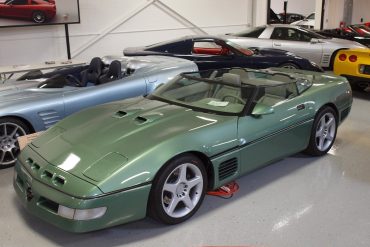
Notwithstanding Chevrolet’s decision to discontinue the Callaway line as part of Corvette’s RPO (available options package), Reeves Callaway introduced a Corvette conversion kit of his own for the 1991 model year. Dubbed the Callaway Speedster, this open two-seater on the B2K twin-turbo drivetrain produced 450 horsepower and 600 lb-ft of torque. The 1991 Speedster was somewhat reminiscent of the earlier 1988 Corvette Sledgehammer, although its overall appearance was more aerodynamic. The Speedster featured O.Z. brand racing wheels and a Connolly leather interior. Priced at $107,000 (and higher), a total of 10 of these cars were built in 1991.
Production Volumes
Overall, sales of the 1991 Chevy Corvette followed the downward trend started earlier in the model year by the ZR-1. In all, 20,639 units were sold, with coupes outselling convertibles at a ratio of about three-to-one.
With the ZR-1’s sales numbers crumbling around them, and with General Motors unable to fund the development of an all-new Corvette for the foreseeable future, Corvette engineers knew that a happy medium would have to be reached between the performance limited L98 base model and the overly priced ZR-1.
If Corvette was going to retain its stature as a true American sports car against future competitors like the Dodge Viper, there was no question that improvements would have to be made to ensure that every Corvette – not just the super exclusive ZR-1 – would be able to hold its own in the future.

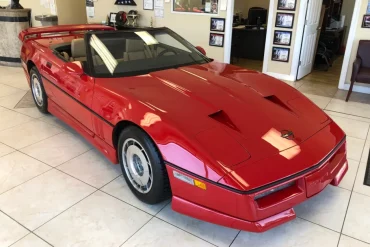
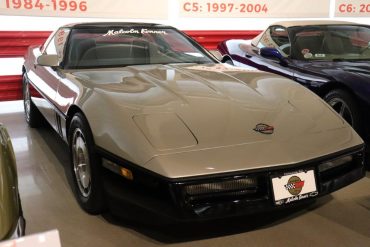
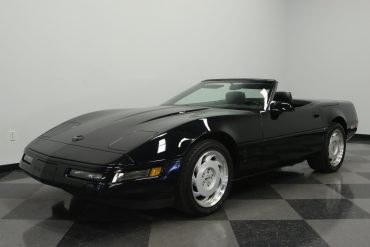
1991 Chevrolet Corvette coupe from Bring A Trailer
1991 Chevrolet Corvette Z07 Performance Handling Package | Bring A Trailer
1991 ZR-1 Corvette Interior
The 1991 Twin-Turbo Callaway Speedster Corvette Convertible
Chevrolet’s 1991 facelift gave every Corvette the ZR-1’s wide-looking convex tail and square taillights, so the only things left to tell a $64,138 ZR-1 from a $32,455 coupe were three inches of rear fender, a stop lamp in the roof instead of the bumper and one badge, and ZR-1 sales fell by a third. The same year Callaway built its 500th twin-turbo Corvette, on September 26, 1991, and ten Callaway Speedsters at $107,000 and up, a few of which have since been offered for more than half a million dollars.
DID YOU KNOW
1991 Corvette ZR-1
The second ZR-1: unchanged in substance, with the 375-hp LT5, the ZF six-speed, FX3, Z51 suspension, 13-inch brakes and the 11-inch rear wheels under three-inch-wider quarters, but now $31,683 over a $32,455 coupe ($64,138) and, after the facelift gave every Corvette its convex tail, distinguishable from a base car only by the quarters, the roof-mounted stop lamp and one badge. With the Viper announced and the 1990 frenzy over, sales fell to 2,044. It is the second-cheapest LT5 year today: $17,600 to $37,400 at auction in the 2025–26 season, mileage deciding.
MORE: ALL 1991 ZR-1 POSTS
1991 Callaway Corvette: Twin Turbo, Callaway 500 and Speedster
The last year of RPO B2K, now $33,000 over sticker for 382 hp: Callaway built the 500th twin-turbo Corvette on September 26, 1991, badged the cars after it “Callaway 500,” and ended the program with 71 cars for the year by its own count (62 by Chevrolet’s). Alongside them came the Speedster, Paul Deutschman’s 450-hp open two-seater with O.Z. wheels and Connolly leather at $107,000 and up, ten built, and the one-off Speedster LM. The 1991 Callaways are the most valuable C4s of all: a 7,000-mile Twin Turbo was offered at $149,979 and a 4,000-mile Speedster at $599,979 in the 2025–26 season.
MORE: THE CALLAWAY B2K STORY
Price & Options
Core Features & Factory Options
The 1991 coupe listed at $32,455.00 and the convertible at $38,770.00, up $476 and $1,506, with the facelifted body, the new wheels, the airbag, ABS, VATS, the 17-inch wheels and Bilsteins, air conditioning and power windows standard; 12,923 L98 coupes and 5,672 convertibles were built.
The ZR-1 package (RPO ZR1) rose to $31,683.00, making the car $64,138 before options, and 2,044 were built, down a third; the Callaway Twin Turbo (B2K, $33,000.00) was ordered for the last time by 71 buyers by Callaway’s count (62 by Chevrolet’s), the cars after the 500th conversion wearing “Callaway 500” badges for $600 more. The new Z07 Adjustable Suspension Package ($2,155.00), six-speed coupes only, went into 733 cars; FX3 ($1,695.00) into 6,894 in all, including the ZR-1s and Z07s, which leaves 4,117 ordinary coupes with it.
The ZF six-speed (RPO MN6) was free and went into 5,875 cars, 3,831 of them L98s; the oil cooler (KC4, $110.00) into 7,525, the 3.07:1 axle (G92, $22.00) into 3,453 automatics, California emissions (NN5, $100.00) onto 3,050.
Inside, the power driver seat (RPO AC3, $290.00) went into 19,937 cars and the passenger seat (AC1, $290.00) into 17,267; 10,650 took the leather sport seats (AQ9, $1,050.00) and 9,505 leather on the base seats (AR9, $425.00), leaving under 500 cars in cloth, and the trim counts show black leather on half of all 1991s.
The Bose CD system (U1F, $1,219.00) went into 15,345 cars, three in four, the cassette Bose (UU8, $823.00) into 3,786, electronic air conditioning (C68, $180.00) into 19,233 and the tire-pressure warning (UJ6, $325.00) into 5,175. Coupe roof panels: blue-tinted glass (24S, $615.00) on 6,991, bronze (64S, $615.00) on 3,036, both panels (C2L, $915.00) on 5,031. Convertibles: the hardtop (CC2, $1,995.00) on 1,230, the luggage rack (V56, $140.00) on 886, and a new blue soft top on 162 Steel Blue and Turquoise cars from mid-year. A typical L98 coupe with leather, both power seats, the CD, electronic air and a tinted roof came to about $36,100, a hardtop convertible about $43,600, a Z07 six-speed coupe about $38,000 and a ZR-1 with a tinted roof panel about $64,750.
The published color totals add up to 20,634, five short of production.
MORE: PRICING, OPTIONS & COLORS / RPO CODES
| CODE | DESCRIPTION | QUANTITY | RETAIL PRICE |
|---|---|---|---|
| 1YY07 | Base Corvette Hatchback Coupe (245-hp L98, 4L60 automatic, facelifted body with convex tail, saw-blade 17-inch wheels, driver airbag, ABS, VATS, cloth seats, lift-off roof panel, air conditioning, power windows) | 14,967 | $32,455.00 |
| 1YY67 | Base Corvette Convertible (as coupe, with manual soft top and reinforced structure) | 5,672 | $38,770.00 |
| AR9 | Base Seats, leather | 9,505 | $425.00 |
| 24S | Removable Transparent Roof Panel, blue tint (coupe) | 6,991 | $615.00 |
| 64S | Removable Transparent Roof Panel, bronze tint (coupe) | 3,036 | $615.00 |
| AC1 | Six-Way Power Passenger Seat (included with ZR1) | 17,267 | $290.00 |
| AC3 | Six-Way Power Driver Seat (included with ZR1) | 19,937 | $290.00 |
| AQ9 | Sport Seats, leather (included with ZR1) | 10,650 | $1,050.00 |
| B2K | Callaway Twin Turbo conversion (last year; installed by Callaway Cars; 382 hp, 562 lb-ft; “Callaway 500” badges $600.00 after September 26, 1991) | 71 (62 by Chevrolet’s count) | $33,000.00 |
| C2L | Dual Removable Roof Panels, body-color and tinted (coupe) | 5,031 | $915.00 |
| C68 | Electronic Air Conditioning Control (included with ZR1) | 19,233 | $180.00 |
| CC2 | Removable Hardtop (convertible) | 1,230 | $1,995.00 |
| FX3 | Selective Ride and Handling, electronic (any coupe; included with ZR1 and Z07) | 6,894 | $1,695.00 |
| G92 | Performance Axle Ratio, 3.07:1 (automatic cars; coupes so equipped rated 250 hp) | 3,453 | $22.00 |
| KC4 | Engine Oil Cooler | 7,525 | $110.00 |
| MN6 | ZF Six-Speed Manual Transmission with CAGS (standard on ZR1) | 5,875 | no charge |
| NN5 | California Emission Requirements | 3,050 | $100.00 |
| U1F | Delco-Bose AM-FM Stereo with Compact Disc, 200 watts (included with ZR1) | 15,345 | $1,219.00 |
| UJ6 | Low Tire Pressure Warning Indicator (included with ZR1) | 5,175 | $325.00 |
| UU8 | Delco-Bose AM-FM Stereo with Cassette, 200 watts | 3,786 | $823.00 |
| V56 | Luggage Rack (convertible) | 886 | $140.00 |
| Z07 | Adjustable Suspension Package (new; coupe with six-speed: Z51 heavy-duty springs, bushings and stabilizer bars plus FX3 Selective Ride Control, 13.0/12.0-inch rotors, heavy-duty cooling) | 733 | $2,155.00 |
| ZR1 | Special Performance Package (coupe: 375-hp LT5, ZF six-speed, FX3, Z51 suspension, 13-inch front brakes, heavy-duty differential, 3-inch-wider rear quarters, roof-mounted stop lamp, 17 x 11-inch rear wheels on P315/35ZR17, power leather sport seats, Bose CD, low-tire-pressure warning, valet key) | 2,044 | $31,683.00 |
| CODE | EXTERIOR | TOTAL | SOFT TOP | INTERIOR |
|---|---|---|---|---|
| 81 | Bright Red | 5,318 | Black, Beige | Black, Gray, Red, Saddle |
| 10 | White | 4,305 | Black, Beige, White | Blue, Black, Gray, Red, Saddle |
| 41 | Black | 3,909 | Black, Beige, White | Blue, Black, Gray, Red, Saddle |
| 42 | Turquoise Metallic | 1,621 | Black, Beige, White, Blue (mid-year) | Black, Saddle |
| 75 | Dark Red Metallic | 1,311 | Black, Beige | Black, Saddle |
| 91 | Polo Green Metallic | 1,230 | Black, Beige, White | Black, Saddle |
| 80 | Quasar Blue Metallic | 1,038 | Black, Beige, White | Black, Saddle |
| 25 | Steel Blue Metallic | 835 | Black, White, Blue (mid-year) | Blue, Black |
| 35 | Yellow | 650 | Black, Beige, White | Black, Gray, Saddle |
| 96 | Charcoal Metallic | 417 | Black, Beige | Black, Gray, Saddle |
Specifications & Performance
Engine & Transmission
The L98 had its last year in the Corvette: the speed-density Tuned-Port 350 with roller lifters and 10088113 aluminum heads, rated at 245 hp at 4,000 rpm and 350 lb-ft at 3,200, or 250 hp in coupes with the 3.07:1 axle, now breathing through larger mufflers with lower back pressure and a better note (the rating did not change) and cooled by a finned power-steering cooler; it came with the four-speed overdrive automatic, the 700-R4 now called 4L60 (2.59:1 axle, 3.07:1 as G92), or the ZF six-speed (3.33:1).
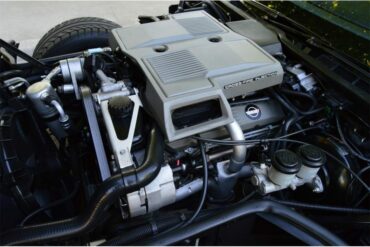
The LT5 in the ZR-1 was unchanged at 375 hp at 5,800 rpm and 370 lb-ft at 4,800, with a new block casting, 10153558, and its sixteen-runner induction with the valet key, built by Mercury Marine and matched only to the six-speed and a 3.45:1 axle. Performance was as in 1990: the L98 six-speed coupe at about 5.6 seconds to 60 and 14.1 at 101 mph in the quarter, the automatic a tenth slower, the convertible 6.3 and 14.8; the ZR-1 at 4.5 to 4.9 seconds, the low 13s and 175 mph.
Every 1991 got the facelift: a slimmer front fascia with wraparound parking, cornering and fog lamps, wider body-color side moldings, four horizontal strakes in place of the fender gills, new 17 x 9.5-inch saw-blade alloy wheels on P275/40ZR17 Goodyear Eagle ZR tires, and the ZR-1’s convex rear fascia with four rectangular taillights and the stop lamp in the fascia; the ZR-1 kept its wider doors and quarters, its 17 x 11-inch rear wheels on P315/35ZR17s and its roof-mounted stop lamp.
The chassis was the 1990 car’s, with Bilstein gas shocks, 13.0:1 steering, two-piston front calipers and Bosch ABS II with yaw control standard, FX3 Selective Ride Control optional on any coupe, and the new Z07 Adjustable Suspension Package combining Z51’s heavy-duty springs, bushings and stabilizer bars and 13.0/12.0-inch rotors with FX3 for six-speed coupes; the ZR-1 carried Z51 and FX3 as before.
Wheelbase stayed at 96.2 inches and length at 178.5 with the new nose; curb weight was about 3,225 lb for the L98 coupe, 3,265 for the convertible and 3,465 for the ZR-1.
MORE: FULL SPECIFICATIONS / ENGINE
| SPEC | 1991 CORVETTE |
|---|---|
| Engine, L98 | 350 ci (5.7 L) small-block V-8, RPO L98, last year: Tuned-Port Injection with speed-density control, roller lifters, aluminum heads (casting 10088113) on the 14093638 block; 245 hp net @ 4,000 rpm, 350 lb-ft @ 3,200 rpm; 250 hp in coupes with the 3.07:1 axle; new larger mufflers, finned power-steering cooler; engine suffix ZTA (automatic) |
| Engine, LT5 (RPO ZR1) | 5.7 L all-aluminum DOHC 32-valve 90-degree V-8 by Lotus and Mercury Marine, 3.90 x 3.66 in, 11.25:1, sixteen-runner three-stage induction with valet lock-out; 375 hp @ 5,800 rpm, 370 lb-ft @ 4,800 rpm, 7,200-rpm fuel cut; new block casting 10153558 |
| RPO B2K | Callaway Twin Turbo, $33,000.00, 71 cars (62 by Chevrolet’s count), last year: L98 rebuilt by Callaway Cars with forged pistons and two intercooled turbochargers, 382 hp, 562 lb-ft; 500th twin-turbo built September 26, 1991, later cars badged “Callaway 500” ($600.00); Callaway Speedster (ten built, $107,000 and up) and Speedster LM on the same drivetrain, 450 hp |
| Transmission | 4L60 (700-R4) four-speed automatic with overdrive and lock-up converter standard on L98 cars; ZF S6-40 six-speed manual (RPO MN6, no charge, 5,875 cars) with CAGS skip-shift, standard on the ZR-1 and required for Z07 |
| Axle ratio | 2.59:1 automatic, 3.07:1 with RPO G92 ($22.00, 3,453 cars), 3.33:1 with the six-speed on L98 cars; 3.45:1 in the ZR-1’s heavy-duty Dana 44; limited-slip standard |
| Suspension | Independent front with forged-aluminum control arms and transverse fiberglass monoleaf spring; independent five-link rear with fiberglass monoleaf spring; Delco-Bilstein gas shocks standard; FX3 Selective Ride Control (RPO FX3, $1,695.00, 6,894 cars incl. ZR-1 and Z07) on any coupe |
| RPO Z07 | Adjustable Suspension Package, new, $2,155.00, 733 cars, six-speed coupes only: Z51 heavy-duty springs, bushings and stabilizer bars, 13.0-in front / 12.0-in rear rotors, heavy-duty cooling, plus FX3 Selective Ride Control; replaces Z51 as a separate option |
| Brakes | Four-wheel discs with Bosch ABS II and yaw control; two-piston front calipers; 11.5-in rotors on base cars, 13.0-in front / 12.0-in rear on Z07 and ZR-1 |
| Safety & security | Driver’s airbag; VATS resistor key; alarm; power-delay circuit for radio and windows (up to 15 minutes after key-off); low-oil warning; 12-volt pre-wiring for a cellular phone |
| Steering | Rack-and-pinion with power assist, 13.0:1; tilt-telescopic column; finned power-steering cooler new |
| Body | Facelift for every car: slimmer front fascia with wraparound parking, cornering and fog lamps, wider body-color side moldings, four horizontal front-fender strakes, ZR-1-style convex rear fascia with four rectangular taillights and fascia-mounted stop lamp; ZR-1 keeps its unique doors, 3-inch-wider rear quarters, roof-mounted stop lamp and badge; coupe roof panels blue-tinted glass (RPO 24S) or bronze (64S) $615.00, both panels (C2L) $915.00; convertible hardtop (RPO CC2, $1,995.00, 1,230), luggage rack (RPO V56, $140.00, 886) |
| Interior | 1990 instrument panel with digital speedometer and analog gauges; cloth base seats, leather (RPO AR9, $425.00, 9,505 cars) or leather sport seats (RPO AQ9, $1,050.00, 10,650, standard on ZR-1); power driver seat (RPO AC3, $290.00, 19,937) and passenger seat (AC1, $290.00, 17,267); Delco-Bose cassette (RPO UU8, $823.00, 3,786) or CD (RPO U1F, $1,219.00, 15,345, standard on ZR-1); electronic air conditioning (RPO C68, $180.00, 19,233); low-tire-pressure warning (RPO UJ6, $325.00, 5,175); ZR-1 full-power light moved beside the valet key |
| Wheels & tires | New 17 x 9.5-in saw-blade unidirectional alloys with P275/40ZR17 Goodyear Eagle ZR on L98 cars; ZR-1 17 x 9.5-in front and 17 x 11-in rear (new design) with P275/40ZR17 and P315/35ZR17 |
| Fuel tank | 20 gal; unleaded only (premium recommended for the LT5) |
| Wheelbase | 96.2 in |
| Overall length / width / height | 178.5 in / 71.0 in / 46.7 in (L98 coupe, with the new nose); ZR-1 178.5 in long, 73.1 in wide at the rear |
| Track, front / rear | 59.6 in / 60.4 in (L98); ZR-1 rear 61.9 in |
| Curb weight | approx. 3,225 lb L98 coupe; 3,265 lb convertible; 3,465 lb ZR-1 |
| 0–60 mph | L98: about 5.6 sec six-speed coupe, 5.7 automatic, 6.3 convertible (as 1990, Motor Trend); ZR-1: 4.5–4.9 sec |
| Quarter mile | L98: about 14.1 sec @ 101 mph six-speed coupe, 14.8 @ 95 convertible; ZR-1: 12.8–13.4 sec @ 108–111 mph |
| Top speed | L98: about 150 mph; ZR-1: 175 mph |
| Production | 20,639: 14,967 coupes (2,044 ZR-1) and 5,672 convertibles; 71 Callaway B2Ks (62 by Chevrolet’s count) and ten Callaway Speedsters |
| Assembly | Bowling Green, Kentucky (tenth anniversary of Corvette production there); LT5 engines from Mercury Marine, Stillwater, Oklahoma; Callaway conversions at Old Lyme, Connecticut |
Vehicle Identification Numbers (VIN)
20,639 (14,967 coupes, of which 2,044 ZR-1s, + 5,672 convertibles), plus the last 71 Callaway B2Ks Cars, 1G1YY2386M5100001 TO 1G1YY2386M5118595 (L98 coupes 1G1YY23…, convertibles 1G1YY33…); ZRTO1: 1G1YZ23J…M5800001 TO 802044
The 1991 Corvette carries two VIN series: 1G1YY2386M5 for the L98 coupe and 1G1YY3386M5 for the convertible, with one sequence from 100001 to 118595 for the 18,595 L98 cars, and 1G1YZ23J…M5 for the ZR-1, with its own sequence from 800001 to 802044 for the 2,044 ZR-1s. The 1 is the United States, G General Motors, 1 Chevrolet, Y (fourth) the Corvette car line, Y (fifth) the base series or Z the ZR-1, 2 (sixth) the hatchback coupe or 3 the convertible, 3 (seventh) the driver-airbag restraint system, 8 the L98 or J the LT5 in the eighth position, the ninth character a check digit that varies with the car, M the 1991 model year and 5 the Bowling Green plant. The VIN plate sits on top of the dash on the driver’s side, visible through the windshield; the body and trim plate on the left door-hinge pillar carries the build date, the paint code and the trim code.
The L98’s engine pad carries the plant prefix, build date and a suffix, ZTA on an automatic, on casting 14093638 with 10088113 heads; the LT5 carries Mercury Marine’s build plate and the partial VIN on its 10153558 block. A 1991 ZR-1 is identified by the Z in the fifth VIN position, the J in the eighth, the 800001-series sequence, the wider rear quarters, the roof-mounted stop lamp, the 11-inch rear wheels and the valet key; the convex tail and square taillights no longer prove anything, since every 1991 has them. Z07 and FX3 show on the build sheet, FX3 also by the console switch and the shock-rod motors. A Callaway B2K carries its Callaway serial plate and, on cars built after September 26, 1991, the Callaway 500 badges; a Speedster its Callaway build number, since only ten were made.
MORE: VIN DECODER / PRODUCTION
| POSITION | MEANING |
|---|---|
| 1G1 (First through Third) | Country, maker, make: 1 = built in the USA, G = General Motors, 1 = Chevrolet |
| Y (Fourth) | Car line: Y = Corvette |
| Y or Z (Fifth) | Series: Y = Corvette (L98); Z = ZR-1 |
| 2 or 3 (Sixth) | Body: 2 = two-door hatchback coupe (all ZR-1s); 3 = two-door convertible |
| 3 (Seventh) | Restraint system: 3 = manual belts with driver’s airbag |
| 8 or J (Eighth) | Engine: 8 = 350 L98 Tuned-Port Injection, 245/250 hp, last year (Callaway B2K cars keep the 8); J = 5.7 L LT5 DOHC 32-valve, 375 hp (ZR-1) |
| x (Ninth) | Check digit, calculated from the other sixteen characters |
| M (Tenth) | Model year: M = 1991 |
| 5 (Eleventh) | Assembly plant: 5 = Bowling Green, Kentucky |
| 100001–118595 / 800001–802044 (Twelfth through Seventeenth) | Production sequence number: L98 coupes and convertibles from 100001 (18,595 cars); ZR-1s in their own series from 800001 (2,044 cars) |
Pictures, Videos, Wallpapers & Galleries
Ten colors: Bright Red (5,318), White (4,305), Black (3,909), Turquoise (1,621), Dark Red (1,311), Polo Green (1,230), Quasar Blue (1,038), Steel Blue (835), Yellow (650) and Charcoal (417). Convertible tops in black (3,158), white (1,402), the new beige (950) and, from mid-year on Steel Blue and Turquoise cars only, blue (162); interiors in Black, Red, Saddle, Gray and Blue, with black leather on half of all cars.
Market & Buying Guide
For Sale & What They Bring
The 1991 sits between two markets. The L98 cars are priced with the 1989–90s, the last of the Tuned-Port engine under the first of the facelifted bodies, with six-speed coupes, FX3 cars and the 733 Z07 coupes at the top of the standard range, convertibles a little above coupes, and the new-for-1990 colors still the ones people ask for. The 1991 ZR-1 is the second-cheapest LT5 year after 1990, the same 375-hp car with the facelift and 2,044 built; it has never caught the 1993–95 cars’ 405-hp premium, which makes it the value ZR-1, and unused examples still set the top of the range. Above all of that, the Callaway cars have become a market of their own since the B2K ended here: the Callaway 500 twin-turbos, the Speedster LM and the ten Speedsters are offered in six figures by the dealers who specialize in them.
Results tracked by Classic.com from October 2025 through January 2026: Mecum sold a 7,000-mile 1991 ZR-1 for $37,400 at Kissimmee in January 2026 and an 18,000-mile ZR-1 for $17,600 at Kansas City in December, and a 12,000-mile ZR-1 was bid to $18,666 and not sold at PCARMARKET; dealers’ last asking prices on ZR-1s ran $26,950 to $35,000. L98 cars sold for $16,500 (39,000-mile automatic coupe) and $10,250 (60,000-mile six-speed) on Bring a Trailer, $8,800 at Mecum Fort Worth, $6,100 at Hagerty and $5,600 at Cars & Bids, with unsold high bids of $4,200 to $7,500; dealers’ last asking prices ran $10,991 to $16,900. A 7,000-mile Callaway Twin Turbo was offered at $149,979 and a 4,000-mile Callaway Speedster at $599,979 by the same Georgia dealer. In autumn 2026 ZR-1s were offered at $24,000 to $42,900, L98 coupes at $10,490 to $29,950 (a 9,000-mile six-speed) and convertibles at $14,900 to $15,298. Check whether a result includes the buyer’s premium (Mecum and Barrett-Jackson results do, Bring a Trailer bids do not), and treat asking prices and unsold high bids separately from completed sales.
Verification: on an L98 car the sixth VIN character is 2 for a coupe and 3 for a convertible, the sequence runs to 118595, the trim tag should carry a 1990 or 1991 build date and a matching paint code, and the engine should be a 14093638 block with 10088113 heads, the speed-density intake and the partial VIN on the pad; a 250-hp coupe has the 3.07:1 axle. Z07 is the one to check: it shows on the build sheet and window sticker as Z07 with FX3, the car must be a six-speed coupe, and the heavy-duty springs and bars and the FX3 switch and shock motors should all be present, since Z51 and FX3 parts can be added to any coupe. A ZR-1 needs the Z and J in the VIN, the 800001-series sequence, the wide quarters and roof lamp, and the LT5’s Mercury Marine plate and service history. A Callaway needs its serial plate and Callaway’s registry confirmation, and a Callaway 500 its badges and a build date after September 26, 1991.
The inspection list is the 1990 car’s. The L98 is the most durable C4 engine, but its mass-airflow-less speed-density system depends on a healthy MAP sensor and coolant sensor, injectors clog on cars that sit, and the plenum gaskets leak. The LT5 needs a specialist: sixteen injectors, the secondary-port actuator, the valet solenoid, the timing-chain tensioners, the coolant plumbing and a plenum-off job for plugs. On both, the 1990–91 dash is better than the 1984–89 cluster but its digital speedometer fails, VATS keys and decoders wear, ABS pumps and sensors are expensive, FX3 shocks fail electrically and are often replaced with conventional Bilsteins (which hurts a Z07 or ZR-1), the ZF’s CAGS solenoid and shifter bushings wear, headlight motors strip their gears, the power antenna snaps, the new body-color side moldings fade, and the uniframe rusts under the battery tray and at the rear kick-ups. Convertibles add top fabric and pads, frame bushings and leaks at the rear corners; the new beige and blue tops are hard to match.
MORE: THE MARKET
FAQs
How many 1991 Corvettes were built?
Chevrolet built 20,639 Corvettes for 1991 at Bowling Green, Kentucky: 14,967 hatchback coupes, of which 2,044 carried the ZR-1 package, and 5,672 convertibles, plus the last 71 Callaway Twin Turbo conversions (62 by Chevrolet’s count). Of the cars, 19,937 had the power driver seat, 19,233 electronic air conditioning, 15,345 the Bose CD system, 10,650 leather sport seats, 6,894 FX3 Selective Ride Control, 5,875 the ZF six-speed, 5,175 the tire-pressure warning, 1,230 the convertible hardtop and 733 the new Z07 Adjustable Suspension Package.
How much is a 1991 Corvette worth today?
Between October 2025 and January 2026, 1991 ZR-1s sold at auction for $17,600 (18,000 miles) and $37,400 (7,000 miles), with dealers asking $24,000 to $42,900 in autumn 2026; the 1991 is the second-cheapest LT5 year after 1990. L98 coupes sold for $5,600 to $16,500 and were offered at $10,490 to $29,950, convertibles at $14,900 to $15,298. The Callaway cars are a market apart: a 7,000-mile Twin Turbo was offered at $149,979 and a Speedster at $599,979. Six-speed, FX3 and Z07 cars bring the premium among standard 1991s.
What engine did the 1991 Corvette have?
The L98 350 with Tuned-Port Injection in its last year, rated at 245 hp at 4,000 rpm and 350 lb-ft at 3,200, or 250 hp in coupes with the 3.07:1 axle, with new larger mufflers and the 4L60 automatic or the no-cost ZF six-speed; or, in the ZR-1, the 375-hp LT5 32-valve V-8 built by Mercury Marine, six-speed only. The L98 six-speed coupe ran 0–60 in about 5.6 seconds and the quarter mile in 14.1 at 101 mph; the ZR-1 in 4.5–4.9 seconds and the low 13s, to 175 mph. The 300-hp LT1 replaced the L98 for 1992.
What colors did the 1991 Corvette come in?
Ten colors: Bright Red (5,318), White (4,305), Black (3,909), Turquoise Metallic (1,621), Dark Red Metallic (1,311), Polo Green Metallic (1,230), Quasar Blue Metallic (1,038), Steel Blue Metallic (835), Yellow (650) and Charcoal Metallic (417). Convertible tops came in black (3,158), white (1,402), a new beige (950) and, from mid-year on Steel Blue and Turquoise cars only, blue (162). Interiors were Black, Red, Saddle, Gray and Blue in leather or cloth; black leather went into half of all 1991s. The color totals published add up to 20,634, five short of production.
How much did the 1991 Corvette cost when new?
The coupe was $32,455.00, the convertible $38,770.00 and the ZR-1, as a $31,683.00 package on the coupe, $64,138.00. The Callaway Twin Turbo was $33,000.00 in its last year, the new Z07 Adjustable Suspension Package $2,155.00, FX3 $1,695.00, the Bose CD system $1,219.00, leather sport seats $1,050.00, the convertible hardtop $1,995.00, each power seat $290.00 and a tinted roof panel $615.00; the ZF six-speed was free. A well-equipped L98 coupe came to about $36,100, a hardtop convertible about $43,600 and a ZR-1 about $64,750.
What is the Z07 package on a 1991 Corvette?
RPO Z07, the Adjustable Suspension Package, new for 1991 at $2,155.00 on coupes with the six-speed: the previous Z51 Performance Handling Package’s heavy-duty springs, bushings and stabilizer bars and 13.0/12.0-inch brake rotors combined with FX3 Selective Ride Control, so the driver could switch a fully heavy-duty suspension between firm and very firm from the console. It was aimed at showroom-stock and World Challenge racers, 733 were built, and it continued through 1995. The ZR-1 carried the same Z51/FX3 combination as part of its own package.
What changed on the 1991 Corvette?
The facelift: a slimmer nose with wraparound lamps, body-color side moldings, horizontal fender strakes, new saw-blade 17-inch wheels, and the ZR-1’s convex tail with four square taillights on every car (the ZR-1 kept its wider rear quarters and roof-mounted stop lamp). New larger mufflers and a finned power-steering cooler for the L98, the 4L60 name for the automatic, a power-delay circuit for the radio and windows, a low-oil light, cellular-phone pre-wiring, a relocated full-power light on the ZR-1, the Z07 package, a blue soft top, and the last year for the L98 and for the Callaway B2K.
All The Research
1991 Corvette Advertisements / 1991 Corvette Colors / 1991 Corvette Common Issues / 1991 Corvette Engine / 1991 Corvette Factory Options / 1991 Corvette For Sale / 1991 Corvette Maintenance / 1991 Corvette Mods / 1991 Corvette Owners Manual / 1991 Corvette Performance / 1991 Corvette Posters / 1991 Corvette Pricing / 1991 Corvette Production / 1991 Corvette Recalls / 1991 Corvette Research / 1991 Corvette RPO Codes / 1991 Corvette Sales Brochures / 1991 Corvette Special Model Overview / 1991 Corvette Specifications / 1991 Corvette Technical Research / 1991 Corvette Service Bulletins / 1991 Corvette VIN Numbers / 1991 Corvette ZR1