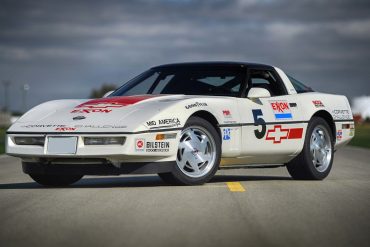
John Powell's one-make series put 56 factory-sealed, equally matched C4s on track. The B9P option code makes a real Challenge car easy to verify, and this guide lists exactly how each was equipped.


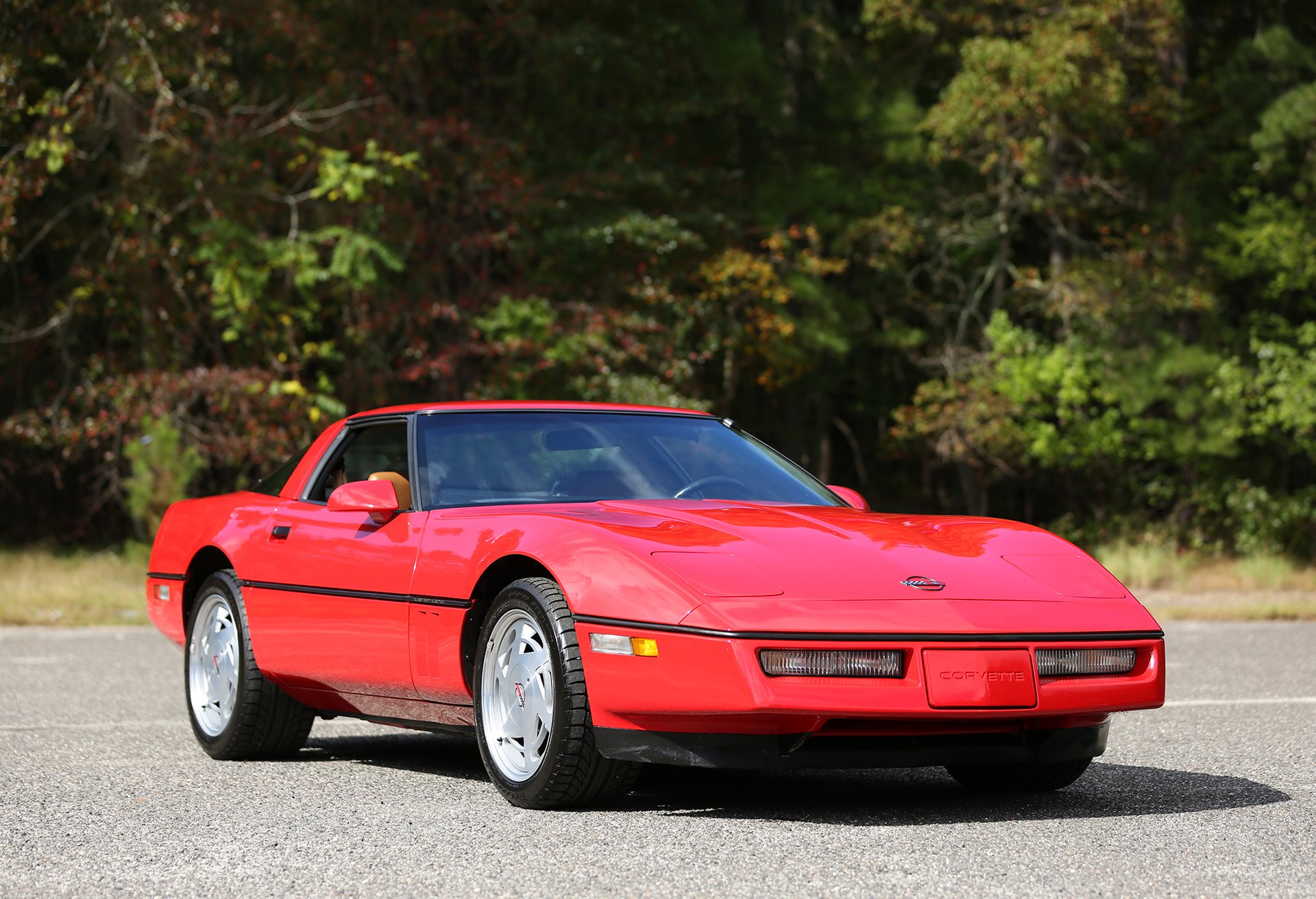
C4 CORVETTE - 1988
The 35th Anniversary year: 2,050 white-over-black Z01 coupes with white leather, white 17-inch wheels and a numbered console plaque, the first anniversary Corvette since 1978. Under every 1988 were new aluminum heads, 17-inch “Cuisinart” wheels on Z51 and Z52, zero-scrub-radius front geometry and bigger brakes.
Quick Nav: Story · Specials · 35th Anniversary · Callaway Twin Turbo · Sledgehammer · Price & Options · VIN · Specs · Technical · Pics & Videos · The Market · All · FAQs
Model & Gen: 1988 Corvette (C4)
Body Type: Two-door hatchback coupe with lift-off roof panel and two-door convertible; 35th Anniversary Edition coupe (RPO Z01)
VIN: 1G1YY2182J5100001 – 1G1YY2182J5122789 (coupes 1G1YY21…, convertibles 1G1YY31…, one shared sequence)
Original Price: $29,489.00 coupe; $34,820.00 convertible; 35th Anniversary package $4,795.00; Callaway Twin Turbo $25,895.00
Colors: 10 solid colors plus the White-over-Black 35th Anniversary scheme; five Dark Orange pilot cars; Bright Red on one car in four
Engine: 350 ci L98 with Tuned-Port Injection and new aluminum heads, 240 hp (245 hp in coupes with the 3.07:1 axle and low-restriction mufflers); Callaway B2K 382 hp
Transmission: 700-R4 four-speed overdrive automatic (MX0) standard, 2.59:1 axle; Doug Nash 4+3 four-speed manual with overdrive (MM4) at no cost, 4,282 cars, its last year
Units Produced: 22,789 (15,382 coupes + 7,407 convertibles), including 2,050 35th Anniversary coupes and 125 Callaway B2Ks
The 1988 Corvette turned the C4’s chassis up another notch and marked the car’s 35th birthday, the 30th having passed in 1983 without a car to celebrate it. The L98 got new aluminum heads with better ports and a new camshaft, rated at 240 hp at 4,300 rpm and 340 lb-ft, or 245 hp in coupes ordered with the 3.07:1 performance axle, which alone got a pair of low-restriction mufflers Chevrolet judged too loud for the convertible. The Z51 and Z52 handling packages moved to 17 x 9.5-inch twelve-slot unidirectional wheels, the “Cuisinarts,” on P275/40ZR17 Goodyear Eagle Z-rated tires, the first 17-inch wheels on an American production car, and the base car’s 16-inch wheels took a matching six-slot design on P255/50ZR16s. The front suspension was redrawn for zero scrub radius so the car tracked straight under hard braking, the rear got more rebound travel and less camber, the brakes grew two-piston front calipers and thicker rotors (13.0 and 12.0 inches on Z51) and the rear calipers absorbed the parking brake, retiring the little drums the C4 had used since 1984. Z52 ($970, now with the 17-inch wheels) went into 16,017 cars; Z51 ($1,295, coupe and manual only) into 1,309.
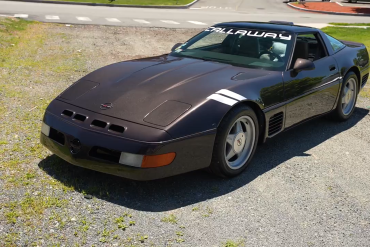
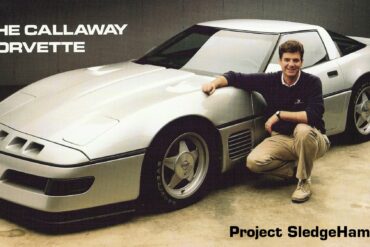
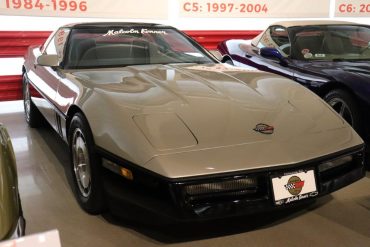
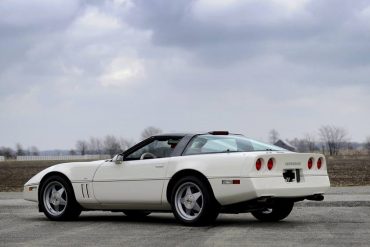
The 35th Anniversary Edition (RPO Z01, $4,795) was a coupe only: white lower body with white door handles, mirrors and body moldings, a black roof bow with a transparent black acrylic roof panel, white 17-inch wheels, white leather sport seats with embroidered anniversary emblems, a white leather steering wheel, special badges above the fender vents and a console plaque carrying the car’s sequence number, with dual six-way power seats, automatic climate control, Bose and heated mirrors included. Chevrolet announced 2,000 and built 2,050, introduced them at the New York Auto Show in April 1988 in a nod to the 1953 Motorama at the Waldorf-Astoria, and sold out. Callaway’s B2K entered its second year at $25,895 with 382 hp and 562 lb-ft, 125 cars, and in October a Callaway-built 1988 called Sledgehammer, with 880 hp from a twin-turbo 350, ran 254.76 mph at the Transportation Research Center in Ohio with John Lingenfelter driving, then was driven home to Connecticut; it is still the fastest street-legal Corvette ever timed. The SCCA, having watched the Corvette go unbeaten in Showroom Stock for three years, banned it and created the one-make Corvette Challenge; Chevrolet built 56 street-legal race cars for the 1988 season through Protofab in Wixom, Michigan.
Inside, the parking-brake handle moved lower and rearward, the coupe’s air extractors were enlarged for the automatic climate control, and the color chart was redrawn: Dark Blue, Medium Smoke Gray, Charcoal and Dark Red Metallic arrived, Bright Red led again at 5,340, and five Dark Orange pilot cars slipped into the count. The 4+3 manual had its last year, taken by 4,282 buyers. Road & Track’s and Car and Driver’s Z51 4+3 coupes both ran 0–60 in 6.0 seconds, the quarter in 14.2–14.6 at 95–98 mph and 152–158 mph flat out, at prices of $29,489 for the coupe and $34,820 for the convertible, and 22,789 were sold, the fewest since 1964. Today the 35th Anniversary cars are the most collected C4 of the eighties after the B2Ks, trading on mileage and completeness of their white interiors, while the standard 1988 is a 1987 with much better brakes, wheels and tires at a small premium.
The arrival of the 1988 model year brought with it the 35th anniversary of the Chevy Corvette. For General Motors as a whole, and especially for the teams of people responsible for the design and development of “America’s Sports Car”, this anniversary was significant not only because of the milestone it represented, but because the thirtieth anniversary of Corvette had passed with barely a whisper.
After all, the Corvette had turned thirty years old in 1983, and, because of engineering decisions that were made to support increasingly high emissions standards, Chevrolet had opted not to build an ’83 Corvette at all. The result was that Corvette had gone a decade without any type of anniversary special edition model to celebrate its ongoing successes.
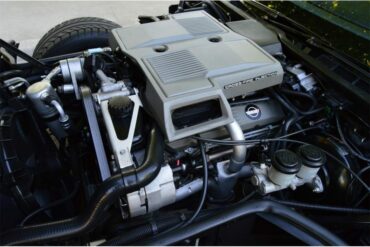
So, for its 35th anniversary year, the Corvette was treated to a number of important engine and chassis upgrades. While Lotus worked on the L98’s eventual replacement, Chevrolet’s own engineers kept refining the L98. For 1988, it received another five horsepower bump in power thanks to the addition of freer-breathing cylinder heads and a re-profiled camshaft.
Additionally, Chevrolet introduced a new, less restrictive muffler package for the 1988 model. The source of the official five-horsepower gain, these new mufflers were introduced only on Corvette coupes that were fitted with the optional 3.07:1 performance axle.
The increased resonance from the mufflers was deemed too loud for the convertible models. Similarly, the taller 2.59:1 gearing was considered impractical for the less-restrictive mufflers, which meant that, at least for 1988, the standard axle ratio model Corvettes were fitted with the same mufflers as their 1987 counterparts.
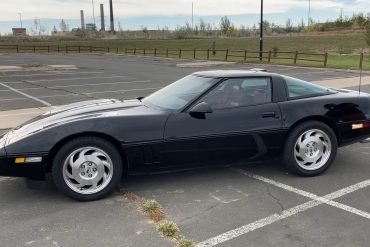
Advances in chassis design included the introduction of larger, 17 x 9.5 inch “Cuisinart” rims that were mated to hefty P275/40ZR-17 Goodyear Eagle GT tires. The new rims featured a freshly designed twelve-slot pattern. Still side specific (meaning that four-way tire rotation was not possible), this new design was a considerable improvement over the original C4 wheels.
The new tires were classified as “Z-rated” tires, meaning that they could maintain sustained driving speeds in excess of 149 miles per hour, which was a significant advancement in Corvette’s tire/wheel program. While this new tire/rim assembly was only offered as part of the Z51 and Z52 suspension package upgrades in 1988, the standard 16 x 8.5 inch rims were similarly updated, featuring a new six slot pattern that was mated to P255/50ZR-16 Z-rated tires.
With the introduction of the higher performance tires to its platform, Corvette engineers wanted to ensure that they utilized the new tires’ greater durability while also developing better directional control of the Corvette during hard stops. To achieve this, the front suspension geometry was re-worked to incorporate “zero scrub radius”. A “zero scrub radius” is a steering axis that intersects the exact center of the tire’s contact patch, rather than an outboard (positive scrub radius) or inboard (negative scrub radius) as has been found on some European cars of that era.
The rear suspension was also revised and was fitted with slightly more rebound travel and reduced camber for improved straight-line and braking stability. To further aid in the development of directional control during braking, the brakes were fortified as well. For 1988, the Corvette came standard with larger two-piston front calipers and thicker rotors, and Z51 cars got 13.0-inch front and 12.0-inch rear rotors. Lastly, an integral handbrake was introduced to the rear discs, replacing the previous small, separate drums that served as the parking brake on earlier C4 models.
The interior of the 1988 Corvette received few upgrades from the previous model year, though there were some minor, but significant updates that were introduced to increase ease of driving and the driver’s overall comfort. Much like the Porsche 928 from that same era, the C4 had been introduced with a pull-up handbrake mounted outboard of the driver’s seat. It featured a brake lever that could be folded down after engagement so that it would not interfere with the driver’s ability to enter and exit the vehicle. While this design was not changed for 1988, the location of the parking brake lever was moved a bit lower and further back from its original position with the intent of being less intrusive.
Another, less notable change to the interior involved the modification of the interior air extractors within all Corvette coupes. This was done to increase the flow rate of air through the climate control system, which was now offered with the extra-cost automatic-temperature control that was phased in toward the tail end of the 1987 Corvette’s production run.
Did you know? The 1988 model represented the 35th Anniversary of the Corvette. 2,050 35th Anniversary Corvettes were built to commemorate this occasion. All were white coupes, with white leather interiors and white wheels, and each received special badging. Also, in preparation for the SCCA Corvette Challenge Series, GM built 56 race cars for the newly appointed series and all of these special Corvettes were street-legal. After competing in the SCCA sanctioned events, these Corvettes were then sold to private owners. Lastly, the 1988 Corvette was the first to include unidirectional wheels.
For its 35th anniversary, Chevrolet announced that a limited production of 2,000 Special Anniversary Edition Corvettes would be manufactured. The anniversary model would only be available as a coupe. Officially offered under option code Z01, the car featured a bright white lower body (which included color-matched door handles, mirrors, body side moldings, and 17-inch wheels) which was set off by a black roof hoop and a transparent black acrylic roof panel.
Special edition commemorative badges were inserted above the body side gills as well as being embroidered into the all-white leather-upholstered interior. Additionally, the Special Anniversary Edition Corvette was fitted with a commemorative console mounted anniversary plaque. Other features packed into the 35th anniversary model included dual six-way power sport seats, automatic climate control, the GM Delco / Bose audio system, and heated door mirrors.
As a homage to the original 1953 Motorama Corvette, which was originally introduced at the Waldorf Astoria Hotel, Chevrolet executives decided to introduce the 1988 35th Anniversary Corvette at the New York Auto Show on April 1, 1988. The car was well received and the limited edition Anniversary Corvettes quickly sold out. Even so, the sale of these Corvettes – 2,050 units in all – was not enough to change the overall direction of Corvette sales at the dealership level.
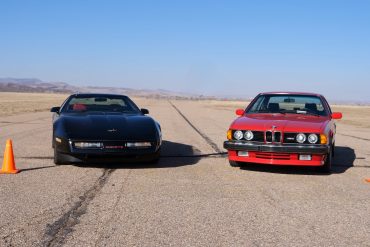
As with every model year since 1985, total Corvette sales continued to decline. With just under 23,000 units sold, the 1988 Corvette was the lowest-selling model year since 1964. At the same time, the C4 was continuing to find success at the race track. It had been the undefeated class champion in SCCA Showroom Stock racing for three straight years. For 1988, Chevrolet decided to build fifty-six street-legal cars for the 1988 SCCA Corvette Challenge series.
The series existed because the SCCA had banned the Corvette from Showroom Stock racing after three unbeaten seasons and, to keep Chevrolet in the fold, created a one-make Corvette Challenge for 1988 and 1989. Stock engines were built at the CPC plant in Flint, Michigan, and installed at Bowling Green, and the finished cars were trucked to Protofab in Wixom, Michigan, for roll cages and racing equipment.
During the season Chevrolet replaced the engines in the Challenge cars with sealed, blueprinted units of matched output, so that the racing came down to the drivers; the cars were sold to private owners afterward and are collected today.



 Tony Rudd, lead designer of the LT5, the engine that would power the C4 ZR-1 Corvette from 1990 - 1995.
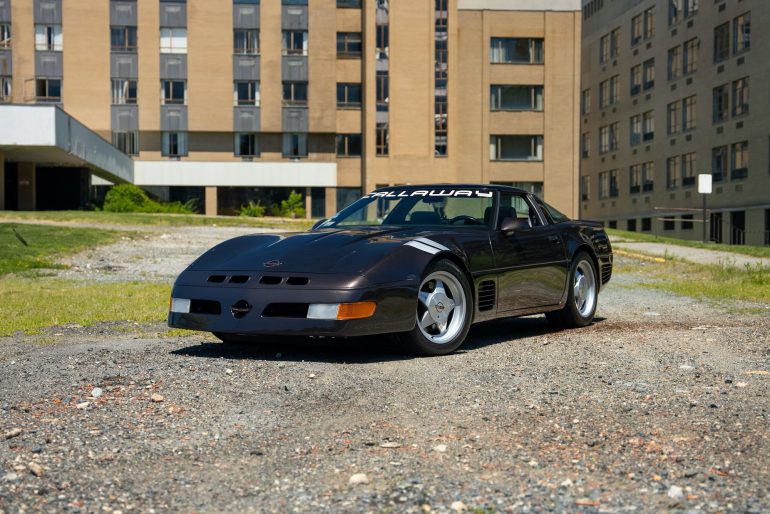
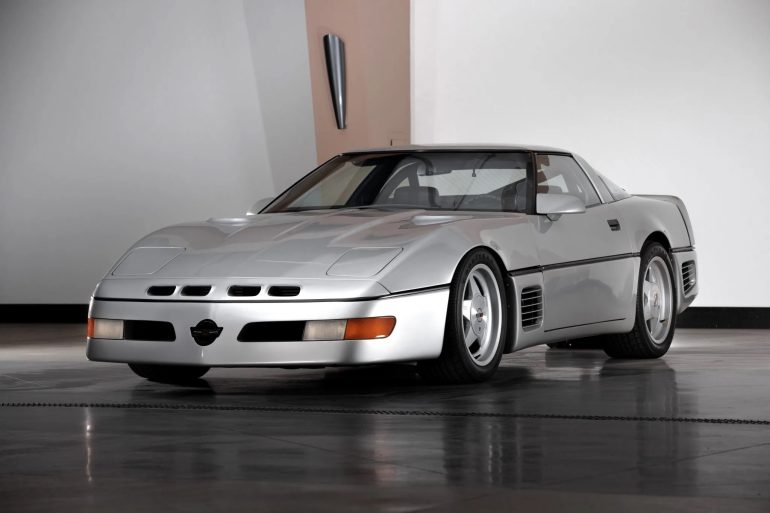
Every 1988 35th Anniversary Edition carries its own number on a console plaque, but Chevrolet’s own count went past the plan: it announced 2,000 cars and built 2,050. The same year a 1988 Corvette built by Callaway, nicknamed Sledgehammer, drove 700 miles from Old Lyme, Connecticut, to the Transportation Research Center in Ohio, ran 254.76 mph with John Lingenfelter driving, and was driven home again, a record for a street-legal Corvette that still stands.
DID YOU KNOW
A full year: the 35th Anniversary Edition, the Callaway B2K Twin Turbo and the 254.76-mph Sledgehammer each have their own section below. Also here: the 56 Corvette Challenge race cars, the EX4607 ZR-1 prototype, Guldstrand’s GS80 and the GTP and Trans-Am racers.
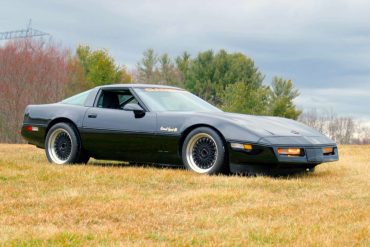
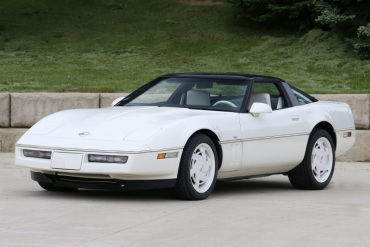
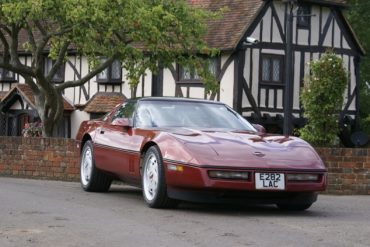
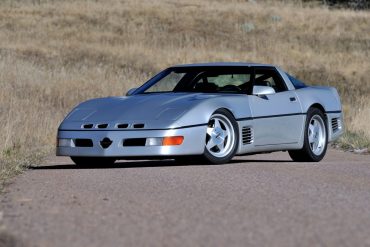
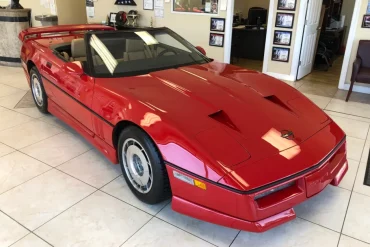
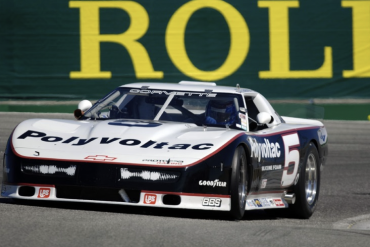
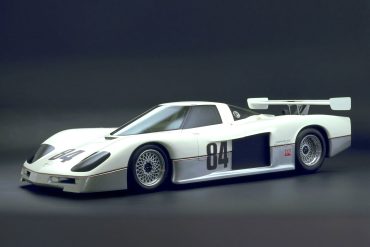
RPO Z01, $4,795 on a coupe: White lower body with white handles, mirrors and moldings, a black roof bow under a transparent black acrylic roof panel, white 17-inch wheels, white leather sport seats and steering wheel with embroidered emblems, anniversary badges and a numbered console plaque, with dual power seats, electronic air conditioning, Bose and heated mirrors included. Chevrolet announced 2,000, built 2,050 and introduced them at the New York Auto Show in April 1988, thirty-five years after the Motorama car. The first anniversary Corvette since 1978 and the most collected eighties C4: in 2025–26 they sold for $15,250 to $22,750 at auction, with mileage and the white interior setting the price.


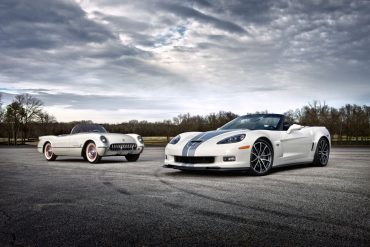

Second year of RPO B2K, now $25,895 over sticker: the L98 rebuilt by Callaway Cars in Old Lyme, Connecticut, on forged pistons with two intercooled turbochargers, rated at 382 hp and 562 lb-ft, sold and warranted through Chevrolet dealers. 125 were built for 1988 in coupe and convertible form, including a handful on 35th Anniversary cars. Documented B2Ks with their Callaway serial plates bring two to three times a standard 1988: a 23,000-mile coupe sold for $50,500 in 2025.
MORE: THE CALLAWAY B2K STORY
One car. Callaway built Sledgehammer on a 1988 Corvette with an 880-hp twin-turbo 350, a Paul Deutschman aero body and a six-speed, drove it 700 miles from Connecticut to the Transportation Research Center in Ohio, ran 254.76 mph on October 26, 1988, with John Lingenfelter at the wheel, and drove it home. It remains the fastest street-legal Corvette ever timed and the reason Callaway’s name is attached to the C4.
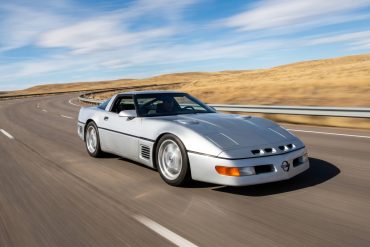

The 1988 coupe listed at $29,489.00, up $1,490, and the convertible at $34,820.00, up $1,648, with the L98, the 700-R4 automatic, anti-lock brakes, VATS, the new 16-inch six-slot wheels on Z-rated tires, air conditioning, power windows, the tilt-telescopic column, cloth seats and digital instruments standard; 15,382 coupes and 7,407 convertibles were built.
The 35th Anniversary Special Edition Package (RPO Z01, $4,795.00) put 2,050 coupes at $34,284 before other options, and the Callaway Twin Turbo (B2K, $25,895.00) put 125 cars at $55,384 and up. The Z52 Sport Handling Package ($970.00), now including the 17-inch wheels and tires, went into 16,017 cars, seven in ten, and the Z51 ($1,295.00), still coupe-and-manual only, into 1,309; the counts for the Bilstein shocks (RPO FG3, $189.00, 18,437), the oil cooler (KC4, $110.00, 18,877), the boost fan (B4P, $75.00, 19,035) and the heavy-duty radiator (V01, $40.00, 19,271) include the cars that got them inside the packages.
The 3.07:1 performance axle (G92, $22.00), which brought the 245-hp exhaust on coupes, went into 4,497 automatics; the Doug Nash 4+3 (RPO MM4), free and in its final year, into 4,282 cars; California emissions (NN5, $99.00) onto 3,882.
Inside, the power driver seat (RPO AC3, $240.00) went into 22,084 cars and the power passenger seat (AC1, $240.00) into 18,779; 12,724 took the leather sport seats (AQ9, $1,025.00) and 9,043 leather on the base seats (AR9, $400.00), so about a thousand cars kept cloth.
The Delco-Bose stereo (UU8), cut to $773.00, went into 20,304 cars, electronic air conditioning (C68, $150.00) into 19,372, the illuminated vanity mirror (D74, $58.00) into 14,249. Coupe roof panels: blue-tinted glass (24S, $615.00) on 8,332, bronze (64S, $615.00) on 3,337, both panels (C2L, $915.00) on 5,091, with the anniversary cars’ black-tinted panel included in Z01; the rear-window and mirror defoggers (Z6A, $165.00) went on 14,648 coupes and heated mirrors (DL8, $35.00) on 6,582 convertibles; 179 buyers took the radio-delete credit (UL5, $297.00). Two-tone paint was gone except on the anniversary cars.
A typical Z52 coupe with leather sport seats, both power seats, Bose, electronic air and a tinted roof came to about $33,300, a convertible so equipped about $38,000, and a fully equipped 35th Anniversary coupe about $35,500. The published color totals, with the five Dark Orange pilot cars, add up to 22,789.
MORE: PRICING, OPTIONS & COLORS / RPO CODES
| CODE | DESCRIPTION | QUANTITY | RETAIL PRICE |
|---|---|---|---|
| 1YY07 | Base Corvette Hatchback Coupe (240-hp L98, 700-R4 automatic, ABS, VATS, 16-inch wheels, cloth seats, lift-off roof panel, air conditioning, power windows, digital instruments) | 15,382 | $29,489.00 |
| 1YY67 | Base Corvette Convertible (as coupe, with manual soft top and reinforced structure) | 7,407 | $34,820.00 |
| AR9 | Base Seats, leather | 9,043 | $400.00 |
| 24S | Removable Transparent Roof Panel, blue tint (coupe) | 8,332 | $615.00 |
| 64S | Removable Transparent Roof Panel, bronze tint (coupe) | 3,337 | $615.00 |
| AC1 | Six-Way Power Passenger Seat | 18,779 | $240.00 |
| AC3 | Six-Way Power Driver Seat | 22,084 | $240.00 |
| AQ9 | Sport Seats, leather | 12,724 | $1,025.00 |
| B2K | Callaway Twin Turbo conversion (installed by Callaway Cars; 382 hp, 562 lb-ft) | 125 | $25,895.00 |
| B4P | Radiator Boost Fan | 19,035 | $75.00 |
| C2L | Dual Removable Roof Panels, body-color and tinted (coupe) | 5,091 | $915.00 |
| C68 | Electronic Air Conditioning Control | 19,372 | $150.00 |
| D74 | Illuminated Driver Vanity Mirror | 14,249 | $58.00 |
| DL8 | Twin Remote Heated Mirrors (convertible) | 6,582 | $35.00 |
| FG3 | Delco-Bilstein Gas Shock Absorbers | 18,437 | $189.00 |
| G92 | Performance Axle Ratio, 3.07:1 (automatic cars; coupes so equipped rated 245 hp) | 4,497 | $22.00 |
| KC4 | Engine Oil Cooler | 18,877 | $110.00 |
| MM4 | Doug Nash 4+3 Four-Speed Manual with Overdrive (last year) | 4,282 | no charge |
| NN5 | California Emission Requirements | 3,882 | $99.00 |
| UL5 | Radio Delete | 179 | $297.00 credit |
| UU8 | Delco-Bose AM-FM Stereo with Cassette | 20,304 | $773.00 |
| V01 | Heavy-Duty Radiator | 19,271 | $40.00 |
| Z01 | 35th Anniversary Special Edition Package (coupe: White over Black with black roof bow, transparent black roof panel, white 17-inch wheels, white leather sport seats, white steering wheel, anniversary emblems, numbered console plaque; dual power seats, electronic air conditioning, Bose, heated mirrors) | 2,050 | $4,795.00 |
| Z51 | Performance Handling Package (coupe with manual transmission only: heavy-duty springs and bushings, Bilstein shocks, solid stabilizer bars, fast-ratio steering, 17 x 9.5-inch wheels with P275/40ZR17 tires, 13.0/12.0-inch rotors, heavy-duty cooling) | 1,309 | $1,295.00 |
| Z52 | Sport Handling Package (17 x 9.5-inch wheels with P275/40ZR17 tires, Bilstein gas shocks, thicker front stabilizer bar, fast-ratio steering, radiator boost fan and heavy-duty radiator, engine oil cooler, chassis stiffeners, on base springs) | 16,017 | $970.00 |
| Z6A | Rear Window and Side Mirror Defoggers (coupe) | 14,648 | $165.00 |
| CODE | EXTERIOR | TOTAL | SOFT TOP | INTERIOR |
|---|---|---|---|---|
| 81 | Bright Red | 5,340 | Black, Saddle, White | Black, Gray, Red, Saddle |
| 40 | White | 3,620 | Black, Saddle, White | Black, Blue, Gray, Red, Saddle |
| 41 | Black | 3,420 | Black, Saddle, White | Black, Gray, Red, Saddle |
| 74 | Dark Red Metallic | 2,878 | Black, Saddle, White | Black, Saddle |
| 28 | Dark Blue Metallic | 1,675 | Black, Saddle, White | Black, Saddle |
| 20 | Medium Blue Metallic (Nassau Blue) | 1,148 | Black, White | Blue, Black |
| 96 | Charcoal Metallic (Dark Smoke Gray) | 1,046 | Black, Saddle, White | Gray, Saddle |
| 90 | Medium Smoke Gray Metallic | 644 | Black, White | Black, Gray |
| 35 | Yellow | 578 | Black, White | Black, Saddle |
| 13 | Silver Metallic | 385 | Black, White | Black, Gray, Red, Saddle |
| 40/41 | White over Black, 35th Anniversary Edition (RPO Z01, coupe) | 2,050 | – | White leather |
| 66 | Dark Orange Metallic (pilot cars only) | 5 | – | – |
The 1988 L98 kept the roller-lifter, Tuned-Port 350 of 1987 and gained new aluminum cylinder heads, casting 10088113, with revised ports and a re-profiled camshaft, at 9.5:1 on the 14093638 block. The rating stayed 240 hp, now quoted at 4,300 rpm, with 340 lb-ft at 3,200, but coupes ordered with the 3.07:1 performance axle also got a pair of low-restriction mufflers and were rated at 245 hp; Chevrolet judged the mufflers too loud for the open car and too much for the tall 2.59:1 gearing, so convertibles and standard-axle coupes kept the 1987 exhaust and 240 hp.
The 700-R4 automatic (RPO MX0) was standard with the 2.59:1 axle (3.07:1 as G92) and the Doug Nash 4+3 (RPO MM4) with its 3.07:1 Dana 44 was the no-cost manual for the last time; the ZF six-speed replaced it for 1989. Road & Track (February 1988) and Car and Driver (September 1988) both tested Z51 4+3 coupes: 0–60 in 6.0 seconds in each, the quarter in 14.6 at 95.5 and 14.2 at 98.0, 0.89 g on the skidpad for both, 60–0 in 135 feet, and a top speed of 152 mph measured by Car and Driver (Road & Track estimated 158).
The Callaway B2K for 1988 was rated at 382 hp and 562 lb-ft, and Callaway’s one-off Sledgehammer, on a 1988 chassis, ran 254.76 mph with 880 hp.
The chassis changes were the biggest since 1985. Up front, the suspension geometry was redrawn for zero scrub radius, with the steering axis meeting the ground at the center of the tire’s contact patch so the car tracked straight under hard or uneven braking; at the rear, the five-link got more rebound travel and reduced camber for straight-line and braking stability.
The brakes gained two-piston front calipers and thicker rotors, 13.0 inches in front and 12.0 behind with Z51, with Bosch ABS II still standard, and the parking brake moved into the rear calipers, replacing the small separate drums of 1984–87. Z51 and Z52 brought the new 17 x 9.5-inch twelve-slot unidirectional alloy wheels, side-specific so the tires could not be rotated across the car, on P275/40ZR17 Goodyear Eagle ZR tires rated above 149 mph; the base car took new 16 x 8.5-inch six-slot wheels on P255/50ZR16 Z-rated Eagles. Z52 ($970) combined the 17-inch wheels and tires with Bilstein gas shocks, a thicker solid front stabilizer bar, the 13.0:1 steering, heavy-duty cooling with the boost fan, the oil cooler and the convertible-type stiffeners on standard springs; Z51 ($1,295, coupe with 4+3 only) added heavy-duty springs and bushings and the solid rear bar.
The 35th Anniversary cars rode on white 17-inch wheels. Wheelbase stayed at 96.2 inches and length at 176.5; curb weight was about 3,230 lb for the coupe and 3,280 for the convertible.
MORE: FULL SPECIFICATIONS / ENGINE
| SPEC | 1988 CORVETTE |
|---|---|
| Engine | 350 ci (5.7 L) small-block V-8, RPO L98, the only factory engine: Tuned-Port Injection with Bosch mass-airflow sensor, roller lifters, new aluminum heads (casting 10088113) with revised ports and a new camshaft at 9.5:1 on the 14093638 block |
| RPO L98 | 350/240 hp net @ 4,300 rpm, 340 lb-ft @ 3,200 rpm; 245 hp in coupes with the 3.07:1 axle (RPO G92 or MM4) and low-restriction mufflers, all convertibles 240 hp; engine suffix ZMA (automatic) |
| RPO B2K | Callaway Twin Turbo, $25,895.00, 125 cars: L98 rebuilt by Callaway Cars with forged pistons and two intercooled turbochargers, 382 hp, 562 lb-ft; Callaway’s one-off 1988 Sledgehammer, 880 hp, ran 254.76 mph at the Transportation Research Center, Ohio, in October 1988 |
| Transmission | 700-R4 four-speed automatic with overdrive and lock-up converter (RPO MX0) standard; Doug Nash 4+3 four-speed manual with computer-controlled overdrive (RPO MM4, no charge, 4,282 cars), last year before the ZF six-speed |
| Axle ratio | 2.59:1 automatic, 3.07:1 manual and with RPO G92 ($22.00, 4,497 cars); Dana 36 with the automatic, Dana 44 with the manual; limited-slip standard |
| Front suspension | Independent; forged-aluminum control arms, transverse fiberglass monoleaf spring, anti-roll bar; geometry revised for zero scrub radius (steering axis through the center of the tire contact patch); Bilstein gas shocks with Z51, Z52 or RPO FG3 ($189.00) |
| Rear suspension | Independent five-link; transverse fiberglass monoleaf spring, aluminum arms, anti-roll bar; more rebound travel and reduced camber for 1988 |
| RPO Z52 | Sport Handling Package, $970.00, 16,017 cars: 17 x 9.5-in twelve-slot unidirectional wheels with P275/40ZR17 Goodyear Eagle ZR tires, Bilstein gas shocks, thicker solid front stabilizer bar, 13.0:1 steering, radiator boost fan, heavy-duty radiator, engine oil cooler, chassis stiffeners; standard springs |
| RPO Z51 | Performance Handling Package, $1,295.00, 1,309 cars, coupe with manual transmission only: Z52 content plus heavy-duty springs and bushings, solid rear stabilizer bar, 13.0-in front and 12.0-in rear rotors |
| RPO Z01 | 35th Anniversary Special Edition Package, $4,795.00, 2,050 coupes: White lower body, black roof bow, transparent black acrylic roof panel, white 17 x 9.5-in wheels, white leather sport seats and steering wheel with embroidered emblems, anniversary badges, numbered console plaque, dual power seats, electronic air conditioning, Bose stereo, heated mirrors |
| Brakes | Four-wheel discs with Bosch ABS II standard; new two-piston front calipers and thicker rotors (11.5 in standard; 13.0 in front / 12.0 in rear with Z51); parking brake integrated into the rear calipers, replacing the separate drums of 1984–87 |
| Security | VATS resistor-key anti-theft system standard; alarm |
| Steering | Rack-and-pinion with power assist, 15.5:1 (13.0:1 with Z51 and Z52); tilt-telescopic column standard |
| Body | Fiberglass hatchback coupe with lift-off roof panel (blue-tinted glass RPO 24S or bronze 64S, $615.00; both panels RPO C2L, $915.00; black-tinted panel on Z01) and convertible with manual top; unchanged from 1987 except wheels and the anniversary scheme; two-tone paint dropped |
| Interior | Digital instrument panel; parking-brake handle relocated lower and rearward; coupe air extractors enlarged; cloth base seats (leather RPO AR9, $400.00, 9,043 cars), leather sport seats (RPO AQ9, $1,025.00, 12,724), white leather on Z01; power driver seat (RPO AC3, $240.00, 22,084) and passenger seat (AC1, $240.00, 18,779); Delco-Bose stereo (RPO UU8, $773.00, 20,304); electronic air conditioning (RPO C68, $150.00, 19,372) |
| Wheels & tires | Standard: 16 x 8.5-in six-slot unidirectional alloy wheels with P255/50ZR16 Goodyear Eagle Z-rated tires. Z51 and Z52: 17 x 9.5-in twelve-slot unidirectional alloys with P275/40ZR17 Eagle ZR, the first 17-in wheels on an American production car; white on Z01 |
| Fuel tank | 20 gal; unleaded only |
| Wheelbase | 96.2 in |
| Overall length / width / height | 176.5 in / 71.0 in / 46.7 in (coupe) |
| Track, front / rear | 59.6 in / 60.4 in |
| Curb weight | approx. 3,230 lb coupe; approx. 3,280 lb convertible |
| 0–60 mph | 6.0 sec (Road & Track, February 1988, and Car and Driver, September 1988, both Z51 4+3 coupes) |
| Quarter mile | 14.6 sec @ 95.5 mph (Road & Track); 14.2 sec @ 98.0 mph (Car and Driver) |
| Top speed | 152 mph (Car and Driver); 158 mph estimated (Road & Track); 254.76 mph for Callaway’s Sledgehammer |
| Lateral acceleration / braking | 0.89 g (both); 60–0 mph in 135 ft (Road & Track) |
| Production | 22,789: 15,382 coupes and 7,407 convertibles, including 2,050 Z01 35th Anniversary coupes, 125 Callaway B2Ks and 56 Corvette Challenge cars; the fewest since 1964 |
| Assembly | Bowling Green, Kentucky; B2K conversions at Callaway Cars, Old Lyme, Connecticut; Challenge cars completed by Protofab, Wixom, Michigan |
The 1988 Corvette carries the 17-character VIN 1G1YY2182J5 for the coupe and 1G1YY3182J5 for the convertible, with one sequence number series from 100001 to 122789 for all 22,789 cars. The 1 is the United States, G General Motors, 1 Chevrolet, Y (fourth) the Corvette car line, Y (fifth) the base series, 2 (sixth) the hatchback coupe or 3 the convertible, 1 (seventh) the manual-belt restraint system, 8 the L98 Tuned-Port 350 (the only engine; 240 or 245 hp, and the Callaway B2K cars keep the 8), the ninth character a check digit that varies with the car, J the 1988 model year and 5 the Bowling Green plant. The VIN plate sits on top of the dash on the driver’s side, visible through the windshield; the body and trim plate on the left door-hinge pillar carries the build date, the paint code (40 over 41 on a 35th Anniversary car) and the trim code (113 for the anniversary cars’ white leather).
The engine pad at the front of the block on the passenger side carries the plant prefix, the build date and a suffix, ZMA on an automatic; every 1988 engine is casting 14093638 with the new 10088113 aluminum heads. Nothing in the VIN identifies a 35th Anniversary Edition: the car must show RPO Z01 on its build sheet or window sticker, paint code 40/41 and trim 113 on the tag, and the numbered plaque on the console, with the white wheels, white leather and black roof panel in place; all were coupes. A Callaway B2K carries its own Callaway serial plate recorded in Callaway’s registry, and a Corvette Challenge car its Protofab build documentation, roll cage and series history. A Z51 car must be a 4+3 coupe; the 17-inch wheels alone mean only Z51 or Z52.
MORE: VIN DECODER / PRODUCTION
| POSITION | MEANING |
|---|---|
| 1G1 (First through Third) | Country, maker, make: 1 = built in the USA, G = General Motors, 1 = Chevrolet |
| Y (Fourth) | Car line: Y = Corvette |
| Y (Fifth) | Series: Y = Corvette (Z on the 1990–95 ZR-1) |
| 2 or 3 (Sixth) | Body: 2 = two-door hatchback coupe (all 35th Anniversary cars); 3 = two-door convertible |
| 1 (Seventh) | Restraint system: 1 = manual (active) belts |
| 8 (Eighth) | Engine: 8 = 350 L98 Tuned-Port Injection, the only engine (240 hp; 245 hp in 3.07-axle coupes; Callaway B2K cars keep the 8) |
| x (Ninth) | Check digit, calculated from the other sixteen characters |
| J (Tenth) | Model year: J = 1988 |
| 5 (Eleventh) | Assembly plant: 5 = Bowling Green, Kentucky |
| 100001–122789 (Twelfth through Seventeenth) | Production sequence number, one series shared by coupes and convertibles; 22,789 built |
Ten solid colors plus the 35th Anniversary scheme: Bright Red (5,340), White (3,620), Black (3,420), Dark Red (2,878), Dark Blue (1,675), Medium Blue (1,148), Charcoal (1,046), Medium Smoke Gray (644), Yellow (578) and Silver (385), White over Black on the 2,050 anniversary coupes, and five Dark Orange pilot cars. Convertible tops in black (3,431), white (2,811) and saddle (1,165); leather interiors in Black, Red, Saddle, Gray, Blue and, on the anniversary cars, White.
The 1988 is three markets. Standard coupes and convertibles sit a little above the 1987 for the 17-inch wheels (on Z52 cars), the brakes and the new heads, and below the 1989–91 cars with the ZF six-speed and the 1991 facelift; convertibles bring a premium, 4+3 cars have their following in the transmission’s last year, and Z51 coupes are scarce. The 35th Anniversary Edition is the collectible: 2,050 numbered cars whose value rests on mileage, an unmarked white interior, the correct white wheels and black roof panel and the paperwork, with low-mileage automatics the typical survivor and the few manuals worth more. The Callaway B2Ks (125 cars at 382 hp) trade at two to three times a standard car when documented, and the 56 Corvette Challenge race cars have a market of their own among racers and collectors; Sledgehammer is in a class by itself.
Results tracked by Classic.com from mid-2025 through October 2026: 35th Anniversary coupes sold for $22,750 (22,000 miles) and $18,444 (19,000 miles) in June 2025, $15,250 (12,000 miles) in October 2025, $19,300 (18,000 miles, 4+3) in November and $20,000 (19,000 miles) in December, all on Bring a Trailer, while Mecum and GAA bid anniversary cars to $9,000–$20,000 without selling them; dealers’ last asking prices on them ran to $18,995. Callaway B2Ks: a 23,000-mile 4+3 coupe sold for $50,500 in July 2025, a 94,000-mile 4+3 convertible for $20,800 on Bring a Trailer in December, and a 16,000-mile car was bid to $25,000 and not sold. A Corvette Challenge race car sold for $30,000 in July 2025. Standard cars sold for $5,000 to $13,200: Mecum $13,200 and $7,700 at Las Vegas in November 2025, Bring a Trailer $7,500 for a 27,000-mile convertible and $7,500 for a Z51 4+3 coupe, GAA $8,500 for a convertible; an 18,000-mile coupe was bid to only $4,700 in October 2026. Dealers’ last asking prices ran $4,900 to $17,000, and in autumn 2026 standard cars were offered at $6,977 to $24,995 (a 33,000-mile 4+3), with anniversary cars listed up to $49,489 for a 7,000-mile example. Check whether a result includes the buyer’s premium (Mecum and Barrett-Jackson results do, Bring a Trailer bids do not), and treat asking prices and unsold high bids separately from completed sales.
Verification on a 35th Anniversary car: Z01 on the build sheet or window sticker, paint 40/41 and trim 113 on the door-pillar tag, the numbered console plaque (the number is the car’s place in the 2,050, not its VIN sequence), white 17-inch wheels, white leather sport seats and steering wheel with the embroidered emblems, the black roof bow and transparent black roof panel and the fender badges; white-painted standard cars exist, and plaques have been reproduced, so the tag and paperwork decide. On every 1988 the sixth VIN character is 2 for a coupe and 3 for a convertible, the heads should be 10088113 castings on a 14093638 block with the partial VIN stamped and a suffix such as ZMA, 17-inch wheels mean Z51 or Z52, and a Z51 car must be a 4+3 coupe; a 3.07-axle coupe should have the low-restriction mufflers. A B2K needs its Callaway serial plate and registry confirmation; a Challenge car its Protofab documentation and race history.
The inspection list is the C4’s: digital dash first (faded or dark LCD panels, dead dimmer, corroded connectors), then the L98’s mass-airflow sensor and burn-off relay, cold-start injector, fuel-pump relay, oxygen sensor and plenum gaskets. VATS keys wear and decoders fail, ABS pumps and sensors are expensive, the 4+3’s overdrive leaks and slips in its final year and is often bypassed, the Bilstein shocks on most cars are worn, headlight motors strip their gears, power antennas snap, the new rear parking-brake calipers seize when unused, and the uniframe rusts under the battery tray and at the rear kick-ups. The 17-inch Goodyear Eagle ZR tires are no longer made in the original size and most cars wear substitutes. Convertibles add top fabric, pads, rear window, frame bushings and leaks at the rear corners; anniversary cars add the white leather, which stains and discolors and is costly to redo correctly.
MORE: THE MARKET

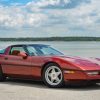
Get all the latest news stories, upcoming auctions, prices, videos and more about the 1988 Chevrolet Corvette! The latest headlines here.
Chevrolet built 22,789 Corvettes for 1988 at Bowling Green, Kentucky: 15,382 hatchback coupes and 7,407 convertibles, the fewest since 1964. Of the cars, 2,050 were 35th Anniversary Edition coupes (RPO Z01), 125 became Callaway B2K twin-turbos and 56 were built as Corvette Challenge race cars. 16,017 had the Z52 Sport Handling Package with 17-inch wheels, 1,309 the Z51 package, 22,084 the power driver seat, 20,304 the Bose stereo, 12,724 leather sport seats and 4,282 the Doug Nash 4+3 manual in its last year.
Between mid-2025 and October 2026, standard 1988s sold at auction for $5,000 to $13,200, with convertibles around $7,500–$8,500 and most coupes under $10,000; dealers were asking $6,977 to $24,995 in autumn 2026. 35th Anniversary coupes sold for $15,250 to $22,750 on Bring a Trailer, with a 7,000-mile car offered at $49,489. A documented Callaway B2K coupe brought $50,500 and a high-mileage B2K convertible $20,800; a Corvette Challenge race car sold for $30,000. Mileage, the white interior’s condition and paperwork decide the anniversary cars.
The L98 350 with Tuned-Port Injection, new aluminum heads and a new camshaft, rated at 240 hp at 4,300 rpm and 340 lb-ft at 3,200, or 245 hp in coupes ordered with the 3.07:1 performance axle, which got low-restriction mufflers; convertibles were all 240 hp. It came with the 700-R4 automatic or, for the last time, the no-cost Doug Nash 4+3 manual. Road & Track and Car and Driver both ran Z51 4+3 coupes to 60 in 6.0 seconds and through the quarter in 14.2–14.6 seconds; Car and Driver measured 152 mph. Callaway’s B2K conversion made 382 hp, and Callaway’s Sledgehammer 880.
Ten solid colors plus the 35th Anniversary scheme. Bright Red (5,340) led, then White (3,620), Black (3,420), Dark Red Metallic (2,878), Dark Blue Metallic (1,675), Medium Blue (1,148), Charcoal Metallic (1,046), Medium Smoke Gray (644), Yellow (578) and Silver (385); the 2,050 anniversary coupes were White over Black with white wheels, and five Dark Orange pilot cars were built. Convertible tops came in black (3,431), white (2,811) and saddle (1,165); leather interiors in Black, Red, Saddle, Gray and Blue, and White on the anniversary cars. Two-tone paint was otherwise dropped.
The coupe was $29,489.00 and the convertible $34,820.00. The 35th Anniversary package (RPO Z01) added $4,795.00, the Callaway Twin Turbo (B2K) $25,895.00, the Z52 Sport Handling Package with 17-inch wheels $970.00, the Z51 package $1,295.00, leather sport seats $1,025.00, base leather $400.00, each power seat $240.00, the Bose stereo $773.00, a tinted roof panel $615.00 or both panels $915.00; the 4+3 manual was free. A well-equipped Z52 coupe came to about $33,300, a convertible about $38,000 and a 35th Anniversary coupe about $35,500.
A coupe ordered with RPO Z01, the 35th Anniversary Special Edition Package: White lower body with white handles, mirrors and moldings, a black roof bow with a transparent black acrylic roof panel, white 17-inch wheels, white leather sport seats and steering wheel with embroidered anniversary emblems, special badges and a console plaque with the car’s sequence number, plus dual power seats, electronic air conditioning, the Bose stereo and heated mirrors, for $4,795.00. Chevrolet announced 2,000, built 2,050 and introduced the car at the New York Auto Show in April 1988. It was the first anniversary Corvette since the 1978 Silver Anniversary and the first of the 35th/40th/50th series.
New aluminum heads and camshaft (240 hp, 245 with the 3.07 axle on coupes), 17 x 9.5-inch unidirectional wheels with P275/40ZR17 tires on Z51 and Z52 and new six-slot 16-inch wheels on Z-rated tires for the base car, zero-scrub-radius front geometry, revised rear geometry, two-piston front calipers with thicker rotors (13.0/12.0 inches on Z51) and the parking brake moved into the rear calipers. The 35th Anniversary Edition and the Corvette Challenge race cars were added, the Callaway B2K rose to 382 hp, the parking-brake handle moved, the coupe’s air extractors grew, the color chart was redrawn and the 4+3 manual had its last year before the ZF six-speed.
1988 Corvette 35th Anniversary Edition / 1988 Corvette Advertisements / 1988 Corvette Colors / 1988 Corvette Common Issues / 1988 Corvette Engine / 1988 Corvette Factory Options / 1988 Corvette For Sale / 1988 Corvette Maintenance / 1988 Corvette Mods / 1988 Corvette Owners Manual / 1988 Corvette Performance / 1988 Corvette Posters / 1988 Corvette Pricing / 1988 Corvette Production / 1988 Corvette Recalls / 1988 Corvette Research / 1988 Corvette RPO Codes / 1988 Corvette Sales Brochures / 1988 Corvette Sledgehammer / 1988 Corvette Special Model Overview / 1988 Corvette Specifications / 1988 Corvette Technical Research / 1988 Corvette Service Bulletins / 1988 Corvette VIN Numbers