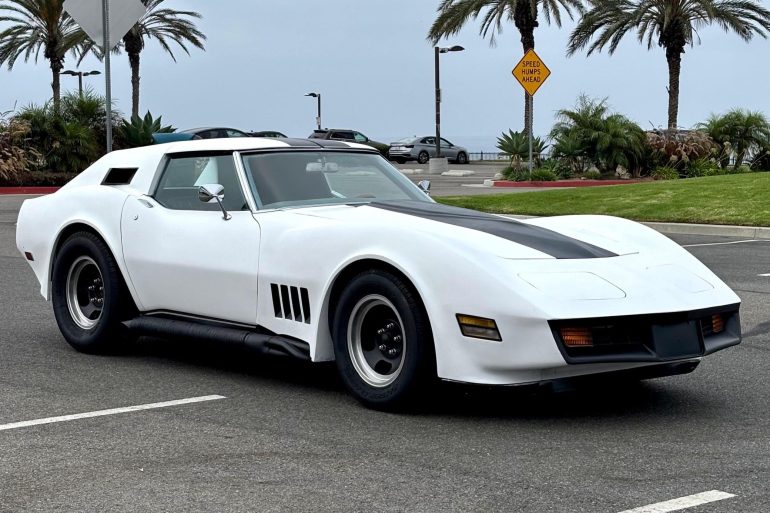
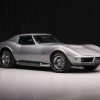
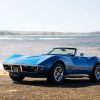
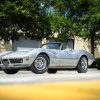
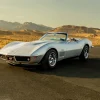
A Corvette with cargo space? Greenwood took Chuck Miller's Kammback kit, added a working glass hatch and a 22-gallon fuel cell, and created the rarest C3 body style of all.


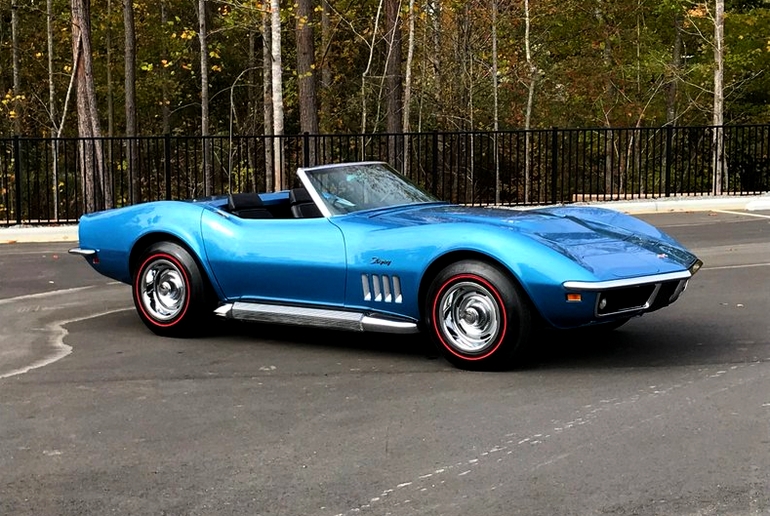
C3 CORVETTE - 1969
The Stingray name returns, the 327 becomes a 350, side pipes and 8-inch wheels arrive, and the all-aluminum ZL1 goes into two cars. A strike-stretched model year set a record of 38,762 that stood until 1976.
Quick Nav: Story · Specials · L88 · ZL1 · Price & Options · VIN · Specs · Technical · Pics & Videos · The Market · All · FAQs
Model & Gen: 1969 Corvette (C3)
Body Type: Sport Coupe (T-top) or Convertible
VIN: 194379S700001 – 194379S738762
Original Price: $4,781.00 coupe / $4,438.00 convertible
Colors: 10 (Tuxedo Black, Can-Am White, Monza Red, LeMans Blue, Riverside Gold, Fathom Green, Daytona Yellow, Cortez Silver, Burgundy, Monaco Orange)
Engine: 350 ci V-8, 300 or 350 hp; 427 ci big block, 390 hp (L36), 400 hp Tri-Power (L68), 435 hp Tri-Power (L71/L89), 430 hp L88 (116 built), all-aluminum ZL1 (2 built)
Transmission: 3-speed manual standard; Muncie 4-speed (M20/M21/M22) and 3-speed Turbo Hydra-Matic (M40, now available with L71 and L88) optional
Units Produced: 38,762
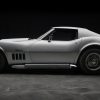
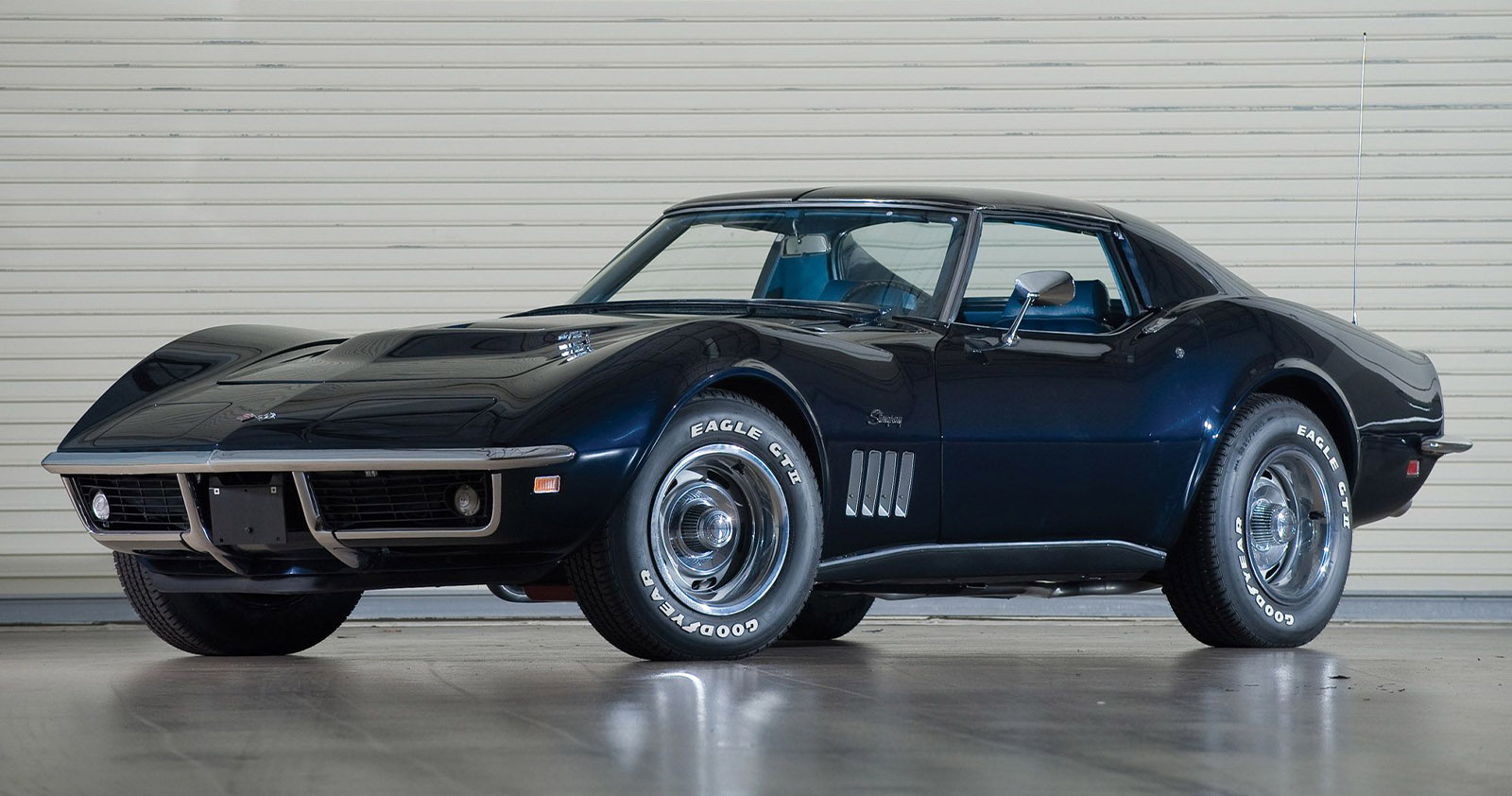
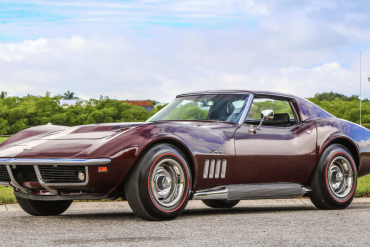
The 1969 Corvette is the 1968 with the complaints answered. The Stingray name came back, as one word on the front fenders, the way Bill Mitchell had spelled it on his 1959 racer. The push-button door releases gave way to flush handles, the 16-inch steering wheel shrank to 15, the ignition moved to the column with a steering lock, the door panels were thinned half an inch a side after Zora Arkus-Duntov pushed through a $120,000 tooling change, map pockets went on the dash, the frame was stiffened, the backup lights moved into the inner taillamps and the headlights got washers and a warning light. Side-mount exhaust returned, the fender louvers could be trimmed in chrome, and the Rally wheels grew from 7 to 8 inches.
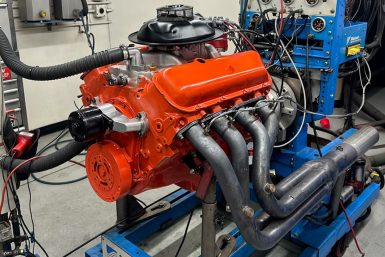
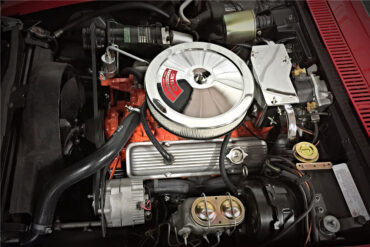
Under the hood the 327 became the 350, stroked a quarter inch, at the same 300 and 350 hp ratings with a little more torque. The four 427s carried over, the Turbo Hydra-Matic was now offered behind the solid-lifter L71 and L88, the aluminum-head L89 found 390 buyers and the L88 116. Above them sat the ZL1: the L88 on an all-aluminum block developed for McLaren’s Can-Am cars, 100 lb lighter and good for 550 horsepower or more, priced at $4,718.35 on top of the L88 package. Two were built. The solid-lifter LT-1 small block was listed for 1969 but did not arrive until 1970.
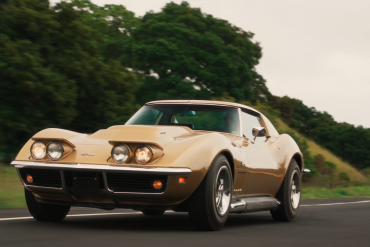
A UAW strike stretched the model year into December, and the result was 38,762 cars, 22,129 coupes and 16,633 convertibles, a record that stood until 1976; the 250,000th Corvette, a Riverside Gold convertible, came off the line on November 7, 1969. Car and Driver, which had refused to test the 1968, found the 1969 worth the trouble, and the big-block take rate topped 15,000. It is the first year collectors treat the Shark as a Stingray and, because of the L88 and ZL1, the most valuable year of the C3.
The 1969 Chevy Corvette arrived on the coattails of critics who had been anything but kind to the inaugural C3 Corvette just the year before. Although the overall tone of the critics was marginally more positive by the end of the 1968 model year, GM recognized that there was still a way to go to fully win over the same people who were so quick to tear the Corvette apart.
Still, critics had appreciated some of the design changes that had been made in the third-generation Corvette over the earlier C2s, even though the second-generation Corvettes had been so well-loved and so widely received. For one, the 1968 Corvette had featured stiffer springs, and been fitted with wider wheels that had improved handling. For another, Chevrolet had made the right decision to replace the old Powerglide automatic transmission with the vastly superior Turbo Hydra-Matic.
Still, there were items that needed to be addressed. So it was that the changes that were to be made to the 1969 Corvette would preclude any real new improvements for design’s sake, but would instead resolve the “unanswered criticisms” of the 1968 Corvette. As is common in automotive manufacturing, the sophomore model of any production vehicle is often a carryover from its inaugural year, with the changes occurring to correct for errors in the initial design – errors that are often identified as the result of feedback from both the automotive media and consumers alike. This was definitely the case for the 1969 Corvette.
The exterior alterations were mostly minor, with one obvious exception – the return of the Stingray designation (now one word instead of the former “Sting Ray” found on Second-Generation Corvettes) over the car’s front-fender louvers. The all-welded, 5-cross member, ladder-type, steel-reinforced frame was “stiffened” in an effort to reduce body shake and vibration. The exterior door handles were changed from the conventional door grip with thumb button to a single-piece door lever that was depressed as the door was gripped during opening.
A new headlight washer system was introduced and the windshield washer jets were relocated to the wiper arms. The hidden wiper system, which allowed the wiper blades to be concealed when not in use, was further complicated for the 1969 model year when engineers introduced an override switch to the system that allowed the vacuum-operated panel to be left up during freeze conditions.
At the opposite end of the vehicle, the previously separate back/taillight assemblies were incorporated into a single lens which resided in the inboard taillight lamp assembly. Additionally, a trunk rack was supplied to consumers who wanted it to increase the Corvette’s luggage carrying capacity, but utilizing the rack with any kind of luggage reduced the driver’s rear vision to zero. Further, the image of a luggage rack went directly “in the face” of the
Like the 1968 Corvette before it, the 1969 Corvette also featured a number of standard body features – the most obvious being the same corrosion-proof fiberglass body that had been a trademark of the Corvette since Harley Earl used fiber-reinforced plastic on the 1953 prototype. It also featured steel-reinforced body sills, door hinge pillars and lock pillars, plus lateral steel cross-member integrating front pillars.
The coupe also featured supporting members that enclosed the passenger compartment with protective steel framing. All of this structural steel was specifically laid out to ensure that the occupants of the Corvette were well protected, even when the drivers were “exposed”. The Corvette convertible added the additional amenity of a fold down top that stowed away beneath a double-locking, spring-loaded cover panel.
The interior received a number of minor, but significant changes. First, a new, smaller steering wheel was introduced, trimmed back an inch for more under-rim thigh clearance. Interior door handles and control knobs were redesigned to improve upon safety.
The ignition switch, which had been mounted on the dashboard since Corvette’s inception in 1953, was moved to the steering column for the 1969 model year, where it combined with the newly mandated column lock for additional security.
Elsewhere, a warning light was added to inform drivers if the pop-up headlights hadn’t opened completely. The Astro-Ventilation System, which had been introduced as part of the 1968 Corvette, improved airflow through the car’s cockpit, though the volume of air it produced continued to be inadequate. A flexible dash mounted three-section map pocket was included to help make up for the lack of a proper glovebox.
Lastly, Zora Arkus-Duntov had pushed through a $120,000 tooling change that opened up the inner door panels a half-inch per side, allowing occupants additional shoulder space.
Interestingly, there was one optional interior item that changed for the 1969 model year. The driver and passenger seats had been designed with a headrest that had been listed as an option, albeit a mandatory option (RPO A82) in 1968.
While the A82 option became a standard feature on the Corvette on January 1, 1969, General Motors records also indicate that the option could also be deleted when ordering a Corvette. Had any consumer requested the deletion, GM would have issued a credit in the amount of $17.95. However, all records indicate that every Corvette built in 1969 included the headrest option.
All 1969 Corvette interiors continued to feature a reasonably-sized luggage compartment behind the front driver and passenger seats with a concealed storage space which was ideal for storing tools, or other small valuables. To ensure that luggage shift did not injure or annoy vehicle occupants, the new Corvette also featured a vertical riser that protected/shielded seatbacks from possible luggage damage.
Beyond those referenced above, the 1969 Corvette featured an extensive array of additional safety features specifically designed to protect both the occupants of the car as well as the car itself. In the event that the Corvette were to be involved in a collision, engineers had equipped the new Stingray with an energy-absorbing steering column, seat and shoulder belt restraints, an energy absorbing instrument panel, padded sunvisors and a reduced-glare instrument panel for improved visibility during night driving. To protect the car when its occupants were absent, an anti-theft ignition system was installed featuring anti-theft steering and transmission locks, and an anti-theft ignition key warning buzzer that would sound whenever the keys were left in the ignition cylinder.
While aesthetics and safety were being improved upon by the Corvette’s body designers, its mechanical engineers were likewise making alterations to the car’s engine and drivetrain assemblies. While some of these changes were directed by the aforementioned feedback that Chevrolet had received on the 1968 model, many others were the direct result of the federally mandated emissions control standards that had been introduced the previous model year.
Still, even Federal regulations did not prevent Corvette engineers from enhancing the power output from the variety of engines that were made available to it.
The Chevy small-block was stroked approximately a quarter inch to 3.48 inches, which boosted the engine displacement from 327 to 350 cubic inches on the same 4.00 inch bore. For the 1969 model year, the 350 cubic inch engine was offered in 300- and 350-bhp versions – which were the same ratings as the 1968 Corvette small block offerings, though the new engines saw a drop in compression.
The 300 horsepower engine now operated at a compression ratio of 10.25:1 and the 350 horsepower at 11.0:1. Additionally, each engine’s peak power engine speed was lowered by approximately 200 rpm, to 4,800 and 5,600 respectively.
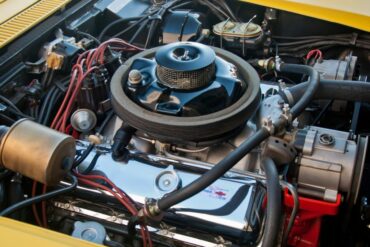
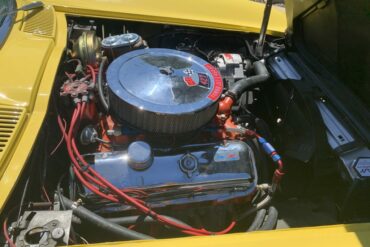
All four versions of the 427 cubic inch big block engine remained the same for 1969 as in previous years, with power ratings of 390 to 435 horsepower. Even the high end, aluminum-head L88 engine was again made available as an option – and was again rated at a respectable 430 horsepower, though its staggering price of $1,032 was not inviting to consumers, and only 116 units were sold for the model year. Despite the cost prohibitive nature of the L88, the 427 cubic inch engines as a whole were widely recognized as a worthwhile investment and accounted for four of every ten Corvettes sold. Equipped with triple two-barrel Holley carburetors, a Muncie manual gearbox and a 3.55:1 rear axle ratio, the 435 horsepower 427C.I. Corvette could accelerate from zero to sixty in less than six seconds and could manage a quarter mile in under fourteen seconds.
Despite these impressive performance numbers (for its time), there were two new performance options for 1969 that further improved the Corvette’s performance.
The first was an entirely new big-block engine option which was even more powerful than anything that had come before it. Designated RPO ZL1, this production option fitted the 1969 Corvette with an all-aluminum 427C.I. engine block that weighed 100 pounds less than the L-88 engine.
This ultra-high-performance 427C.I. engine was developed by McLaren for use in the SCCA’s Canadian-American Challenge Cup Series racing, and was rated somewhere between 560 and 585 brake horsepower, although it carried the same 430-bhp rating as the L88 engine.
The engine, simply put, was “a racing mill let loose on the street.” The ZL1 engine option, while impressive, was also prohibitively expensive, raising the price of a “standard” Corvette by nearly 60 percent – from under $5,000 to more than $10,000 per car. Because of the sticker shock to most consumers, only two Corvettes ever left the factory equipped with this option.
Even though the ZL1 engine never really saw much use in the street variant of the Corvette, the story behind its evolution is nonetheless an interesting one, and certainly a significant milestone in the development of the Corvette as both a high-performance street vehicle and a race car.
Its very evolution skirted on violating the AMA (Automobile Manufacturers Association) racing ban that Chevrolet had openly participated in since 1957.
However, Chevrolet’s Performance Products Chief Vince Piggins had begun lobbying for an all-aluminum big-block engine in 1968, with the intention of supporting, among others, Bruce McLaren’s successful Canadian-American (Can-Am) Challenge Cup team.
After all, small-block Chevy-powered McLaren racers had begun their domination of the Can-Am series in 1967.
When Chevrolet failed to meet the demands of developing a big-block variant for the racers, McLaren threatened to look to Ford for a comparable lightweight big block to power his 1968 Can-Am cars. Piggins stepped in, using the leverage that Ford could – and would – produce a big-block engine that would replace the Chevy small blocks. The rest is history. Ironically, now armed with the ZL1 engine, McLaren dominated all Can-Am racers from 1968 to 1971, winning 32 of the 37 racing events held during that time period.
The second performance option that was developed was listed as an option in 1969, though it did not become available until 1970 as a direct result of development and manufacturing problems.
Zora Duntov, who had always been a proponent of extracting horsepower out of any engine, had returned to work on the small-block, and the result was a special solid-lifter version of the new, 350 cubic inch engine.
The engine, which was listed as RPO LT1, was the genesis of Duntov’s longtime goal of minimizing weight in a performance car that continuously grew heavier with every new creature comfort that was added to its design. Unlike other small block engines, the LT1 had more radical cam overlap.
It utilized the big-block engines’ hefty 2.5-inch-diameter exhaust system, and was fed through the same 850-cfm Holley carburetor that had been fitted to the L88 / ZL1 big blocks. The resulting engine produced 370 horsepower at 6,000 rpm and 380 lb-ft of torque at 4,000 rpm.
The LT1 could only be ordered with a four-speed manual transmission. When equipped, the Corvette was capable of running a quarter mile from a standing start in approximately 14.2 seconds at a speed of 102 miles per hour. A Corvette equipped with this option was only identifiable by its special domed hood, which featured perimeter striping and discreet “LT1” lettering. However, the visual identifiers were unnecessary. One had only to listen to the distinct rap-rap sound coming from the exhaust or the equally distinct tapping of the mechanical lifters.
Just as the engine lineup for the 1969 Corvette was (with the noted exceptions above) a carry-over from the 1968 model year, so too was the transmission lineup being offered to consumers. In fact, all the transmissions were identical to those offered in 1968 with one exception – the Turbo Hydra-Matic (RPO M40) became available behind the two solid-lifter 427 cubic inch engines. When ordered with the base model 350 cubic inch engine, the M40 Hydra-Matic transmission was priced at $221.80.
However, when ordered with either the L71 or L88 engines, it cost $290.40. The variant in the transmissions (and their respective prices) comes from the setup of the transmission shift points. As stated in Car Life’s July 1969 issue, “In the wild engines, the transmission stays in the lower gear until the driver lifts his foot, right up to the redline.
In the milder engines, the M40 is set to shift up quickly.” Of the 116 L88 Corvettes that were built in 1969, 17 of them featured the Turbo Hydra-matic transmission.
Between the improvements made to all of the small block engines, the power and performance of the extensive array of big block engines, and the appeal of the ZL1 and LT1 engines enticing consumers and critics alike to give Corvette a more serious look, there were few who had anything negative to say about the new GM powertrains being offered. In fact, even the critics at Car & Driver Magazine now felt the car was worth giving a serious look, despite comments only a year earlier that the car was “too tacky to test.” The critics at Car & Driver felt that the 1969 Corvette offered an interesting problem for prospective owners to ponder: “The small-engine Corvettes are marginally fast and extraordinarily comfortable; the big-engine Corvettes are extraordinarily fast and marginally comfortable.” The question became which would consumers choose?
Did you know? On November 7, 1969, the 250,000th Corvette came off the production line. Also for 1969, the “Shark” once more became a Stingray (though spelled as one word instead of “Sting Ray” as had been seen on the second generation Corvettes). The revised spelling was actually a throwback to the spelling Bill Mitchell had originally used for his 1959-1960 Stingray race car.
The answer would come with sales numbers that were literally off the charts for any Corvette that had come before the 1969 model year.
Despite the improvements that were made to the 1969 Corvette, some critics continued to take issue with the Stingray’s “dismal build quality, styling eccentricities, and overall lack of finesse.”
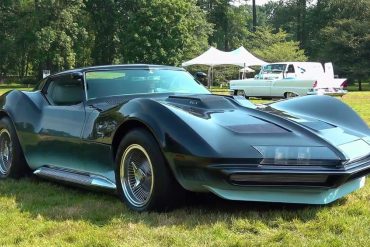
One other notable Corvette that emerged – or, better said, evolved – in 1969, was the Manta Ray show car. The Manta Ray was actually the evolution of Bill Mitchell’s Mako Shark II, which had toured on the auto show circuit during the development of the C3 Corvette before serving time as Bill Mitchell’s personal vehicle. Already measuring roughly 9 inches longer than a standard Stingray, the Mako Shark’s length grew even more after the Manta Ray conversion took place. The additional length came during the Mako Shark’s transformation, when the car’s tail was restyled and stretched to create a tapered look when viewed in profile perspective.
The point of the car’s tail was protected by a body-colored Endura bumper. Elsewhere on the car, updates included a chin spoiler on the front end and a repaint that minimized the shark shading that had been so prevalent on the Shark II. Sidepipes were eventually added, as were small mirrors mounted up high on the windshield pillars. However, the biggest change was the engine used to replace the Shark II’s iron-block 427. The new power source was none other than Chevrolet’s all-aluminum ZL1 engine, a one-of-a-kind engine that was matched to a one-of-a-kind Corvette. When finished, estimates indicate that the Manta Ray show car’s development and transformation may have cost as much as $3 million to complete, a number that, while still impressive today, was unimaginably expensive in 1969.
Criticisms of the 1969 Corvette did nothing to deter consumers from purchasing it. In 1969, sales took a vertical leap, increasing by more than 10,000 units to a total of 38,762 Corvettes sold that year. Of those sold, 22,129 were coupes, which had a base price of $4,781. The convertibles, on the other hand, accounted for 16,633 units with a base price of $4,438. It was a Corvette sales record that would not be topped again until 1976, although some argue that the only reason that the 1969’s sales numbers were as high as they were was the result of a UAW (United Auto Workers) strike which forced a two-month extension of the 1969 production run into the start of the 1970 model year.
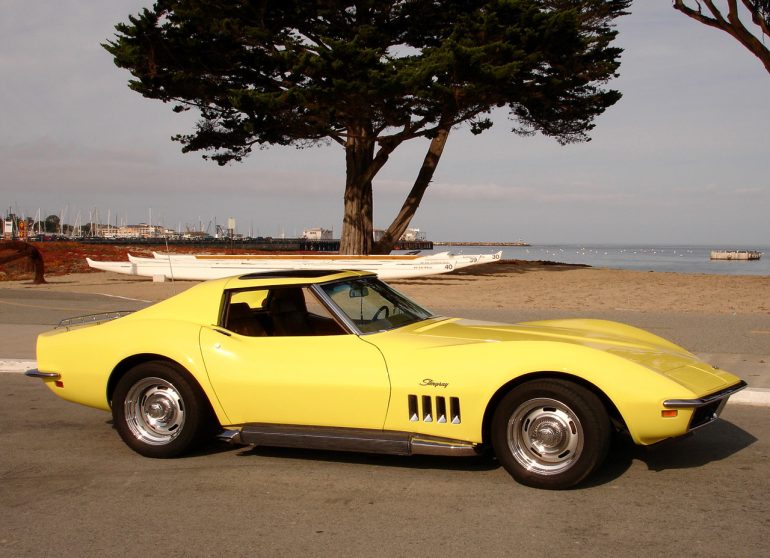
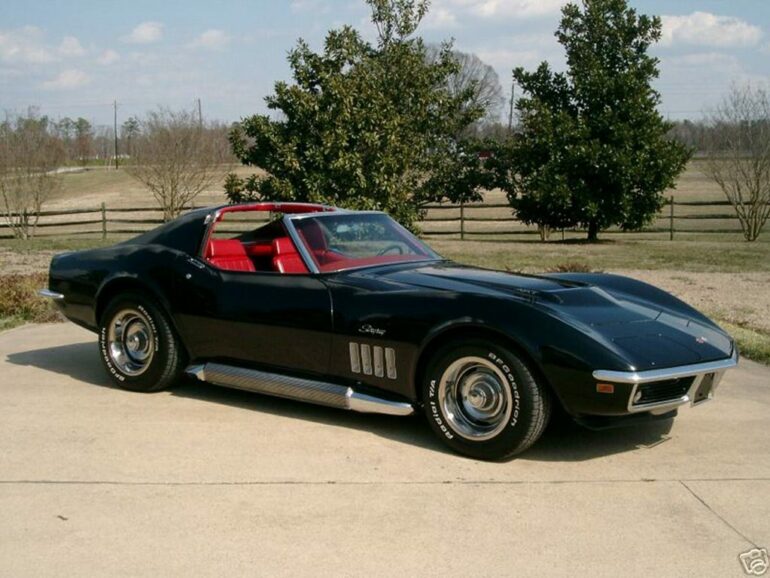


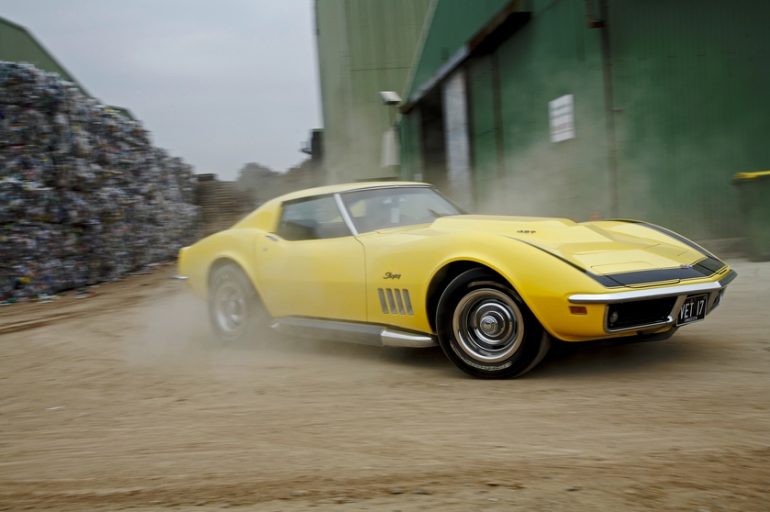 The 1969 ZL-1 Corvette
 The 1969 Manta Ray (Image courtesy of GM Media LLC)
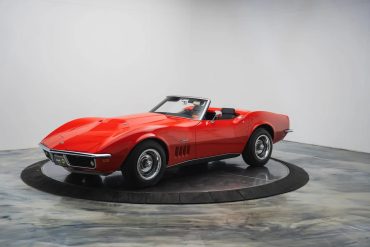
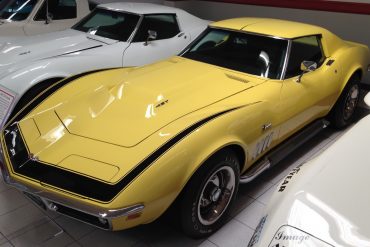
The ZL1 engine option cost $4,718.35, which was $62.65 less than the $4,781 coupe it went into. With the L88 package and the mandatory extras the two cars built stickered at more than $10,000, and the Daytona Yellow coupe sat unsold on a Chevrolet showroom floor from November 1969 into 1970. The Can-Am White convertible sold for $3.14 million at RM Sotheby’s in January 2023.
DID YOU KNOW
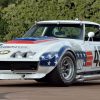
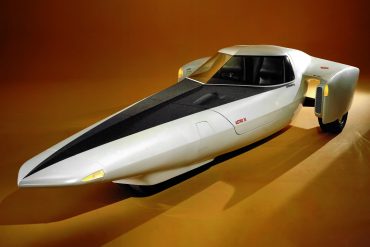
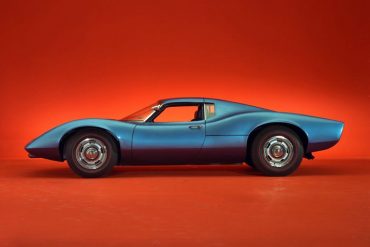
1969’s specials are the two ZL1s and the 116 L88s, the aluminum-head L89, the Manta Ray show car that inherited a ZL1 engine, the mid-engine Astro III turbine concept, the Baldwin-Motion Phase III GT and the L88 racers from Greenwood, Owens-Corning and the Rebel team.
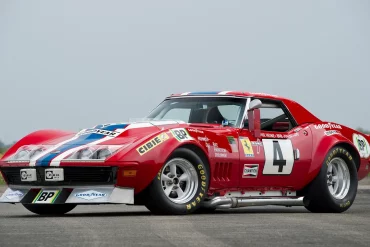
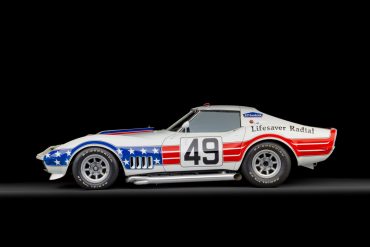

The L88’s last and biggest year: 116 built at $1,032.15, with the same aluminum heads, 12.5:1 compression, forged bottom end and 850-cfm Holley, the same 430-hp rating that hid 550, and for the first time the choice of the M40 Turbo Hydra-Matic, which 17 buyers took. It still required the heavy-duty brakes, suspension, ignition and Positraction and deleted the radio and air conditioning. The 1969s raced for Owens-Corning, Greenwood and the Rebel team, and the best street cars have sold for $850,000 and $860,000 in 2026.
MORE: ALL 1969 L88 POSTS
RPO ZL1 was the L88 cast in aluminum: the Can-Am engine Vince Piggins had pushed through for McLaren, with an aluminum block and open-chamber aluminum heads, about 100 lb lighter than the iron L88 and 550 horsepower or more. It cost $4,718.35 on top of the L88 package and its mandatory options, so the two cars built, a Daytona Yellow coupe and a Can-Am White convertible, stickered at over $10,000. The convertible sold for $3.14 million in 2023 and the coupe is in Roger Judski’s collection; the Manta Ray show car got the third engine.
MORE: ALL 1969 ZL1 POSTS
The Sport Coupe listed at $4,781.00 and the convertible at $4,438.00 with the 300-hp 350 and the three-speed, up $118 on 1968, and the coupe outsold the convertible for the first time since 1963, 22,129 to 16,633.
The engine list moved again: the 350-hp L46 at $131.65 went into 12,846 cars, the 427/390 L36 at $221.20 into 10,531, the Tri-Power 427/400 L68 at $326.55 into 2,072 and the 427/435 L71 at $437.10 into 2,722, with 390 L71 buyers adding the L89 aluminum heads at $832.05, 116 ordering the L88 at $1,032.15 and two the ZL1 at $4,718.35. That left about 10,473 cars with the base engine, and 15,443 of the 38,762 were big blocks.
The four-speed ($184.80) went into 30,248 cars in M20 or M21 form, the M22 into 101, and the Turbo Hydra-Matic (RPO M40, $221.80, or $290.40 behind the L71, L88 and L89) into 8,161; only about 252 kept the three-speed. Positraction (RPO G81, $46.35) was on 36,965 cars, the heavy-duty dual-disc clutch (RPO MA6, $79.00) on 102.
Power steering (RPO N40, $105.35) went into 22,866 cars, 59 percent, and the new tilt-telescopic column (RPO N37, $84.30) into 10,325; power brakes (RPO J50, $42.15) reached 16,876, air conditioning (RPO C60, $428.70) 11,859, power windows (RPO A31, $63.20) 9,816 and transistor ignition (RPO K66, $81.10) 5,702. The alarm (RPO UA6, $26.35) jumped from 388 cars to 12,436, the chrome louver trim (RPO TJ2, $21.10) went on 11,962 and the returning side-mount exhaust (RPO N14, $147.45) on 4,355. The AM/FM radio (RPO U69, $172.75) went into 33,871 cars and the stereo (RPO U79, $278.10) into 4,114. White-stripe tires (RPO PT7, $31.30) went on 21,379 cars, red-stripes (RPO PT6) on 5,210 and the new raised-white-letter tires (RPO PU9, $33.15) on 2,398; the deluxe wheel covers (RPO P02, $57.95) went on 8,073.
The hardtop (RPO C07, $252.80) went onto 7,878 of the convertibles, 3,266 of them with the vinyl covering (RPO C08, $57.95), the coupe-only rear defroster (RPO C50, $32.65) into 2,485 cars, the engine block heater (RPO K05, $10.55) into 824 and leather ($79.00) into 3,729. Headrests (RPO A82, $17.95) became standard on January 1, 1969 and are counted on every car. Ten colors were offered, with black, white or beige tops; Chevrolet did not keep production totals by color for 1969, though interior trim counts through August put black vinyl in 15,347 cars.
MORE: PRICING, OPTIONS & COLORS / RPO CODES
| CODE | DESCRIPTION | QUANTITY | RETAIL PRICE |
|---|---|---|---|
| 19437 | Base Corvette Sport Coupe | 22,129 | $4,781.00 |
| 19467 | Base Corvette Convertible | 16,633 | $4,438.00 |
| 402–428 | Genuine Leather Seats (black, red, bright blue, green, saddle, gunmetal) | 3,729 | $79.00 |
| A01 | Soft Ray Tinted Glass, All Windows | 31,270 | $16.90 |
| A31 | Power Windows | 9,816 | $63.20 |
| A82 | Headrests (standard from January 1, 1969) | 38,762 | $17.95 |
| A85 | Custom Shoulder Belts (standard on coupes; convertibles) | 600 | $42.15 |
| C07 | Auxiliary Hardtop (convertible) | 7,878 | $252.80 |
| C08 | Vinyl Covering for Auxiliary Hardtop | 3,266 | $57.95 |
| C50 | Rear Window Defroster (coupe) | 2,485 | $32.65 |
| C60 | Air Conditioning | 11,859 | $428.70 |
| F41 | Special Front and Rear Suspension | 1,661 | $36.90 |
| G81 | Positraction Rear Axle, all ratios | 36,965 | $46.35 |
| J50 | Power Brakes | 16,876 | $42.15 |
| J56 | Special Heavy Duty Brakes | 115 | $384.45 |
| K05 | Engine Block Heater | 824 | $10.55 |
| K66 | Transistor Ignition System | 5,702 | $81.10 |
| L36 | 427ci, 390HP Engine | 10,531 | $221.20 |
| L46 | 350ci, 350HP Engine | 12,846 | $131.65 |
| L68 | 427ci, 400HP Engine (Tri-Power) | 2,072 | $326.55 |
| L71 | 427ci, 435HP Engine (Tri-Power) | 2,722 | $437.10 |
| L88 | 427ci, 430HP Engine | 116 | $1,032.15 |
| L89 | Aluminum Cylinder Heads for L71 | 390 | $832.05 |
| M20 | 4-Speed Manual Transmission, Wide Ratio | 16,507 | $184.80 |
| M21 | 4-Speed Manual Transmission, Close Ratio | 13,741 | $184.80 |
| M22 | 4-Speed Manual, Close Ratio, Heavy Duty | 101 | $290.40 |
| M40 | Turbo Hydra-Matic 3-Speed Automatic ($290.40 with L71/L88/L89) | 8,161 | $221.80 |
| MA6 | Heavy Duty Clutch | 102 | $79.00 |
| N14 | Side Mount Exhaust System | 4,355 | $147.45 |
| N37 | Tilt-Telescopic Steering Column | 10,325 | $84.30 |
| N40 | Power Steering | 22,866 | $105.35 |
| P02 | Deluxe Wheel Covers | 8,073 | $57.95 |
| PT6 | Red Stripe Tires, F70x15, nylon | 5,210 | $31.30 |
| PT7 | White Stripe Tires, F70x15, nylon | 21,379 | $31.30 |
| PU9 | White Letter Tires, F70x15, nylon | 2,398 | $33.15 |
| TJ2 | Front Fender Louver Trim | 11,962 | $21.10 |
| U15 | Speed Warning Indicator | 3,561 | $11.60 |
| U69 | AM-FM Radio | 33,871 | $172.75 |
| U79 | AM-FM Radio, Stereo | 4,114 | $278.10 |
| UA6 | Alarm System | 12,436 | $26.35 |
| ZL1 | Special L88 Engine, Aluminum Block | 2 | $4,718.35 |
| CODE | EXTERIOR | SOFT TOP | INTERIOR |
|---|---|---|---|
| 900 | Tuxedo Black | Black, White, Beige | Black, Bright Blue, Green, Gunmetal, Red, Saddle |
| 972 | Can-Am White | Black, White, Beige | Black, Bright Blue, Green, Gunmetal, Red, Saddle |
| 974 | Monza Red | Black, White, Beige | Black, Red, Saddle |
| 976 | LeMans Blue | Black, White, Beige | Black, Bright Blue |
| 980 | Riverside Gold | Black, White, Beige | Black, Saddle |
| 983 | Fathom Green | Black, White, Beige | Black, Green, Saddle |
| 984 | Daytona Yellow | Black, White, Beige | Black |
| 986 | Cortez Silver | Black, White, Beige | Black, Bright Blue, Green, Gunmetal, Red, Saddle |
| 988 | Burgundy | Black, White, Beige | Black, Saddle |
| 990 | Monaco Orange | Black, White, Beige | Black |
The small block grew for 1969. The 327’s 3.25-inch stroke went to 3.48 on the same 4.00-inch bore for 350 cubic inches, and the two versions kept the old ratings, 300 hp at 4,800 rpm on 10.25:1 compression and 350 hp at 5,600 as the L46 on 11.0:1, with torque up to 380 lb-ft on both.
The 427s were unchanged: the 390-hp L36 on a single Quadrajet, the 400-hp L68 and 435-hp L71 on three Holley two-barrels, and the L89 heads for the L71, now at $832.05, which 390 buyers paid. The Turbo Hydra-Matic went behind the L71 and L88 for the first time, at $290.40 instead of $221.80 because its shift points were set to hold the lower gears to the redline; 17 L88s were built that way. A dual-disc heavy-duty clutch (RPO MA6) was new for the big blocks.
The L88 returned at $1,032.15 with the same aluminum heads, 12.5:1 compression, forged bottom end, solid-lifter cam and 850-cfm Holley, and 116 were built, nearly as many as 1967 and 1968 together.
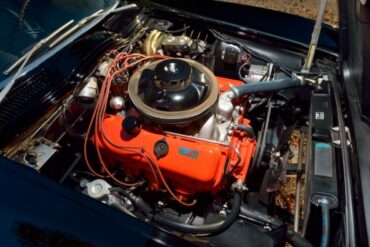
The ZL1 was the same engine cast in aluminum: Vince Piggins had pushed the all-aluminum 427 through to keep Bruce McLaren’s Can-Am team in Chevrolet power, and the production version, with open-chamber aluminum heads, weighed about 100 lb less than the L88 and roughly what a small block did, with 550 horsepower or more.
It cost $4,718.35 on top of the L88 package and its mandatory options, and two cars got it. The LT-1, a solid-lifter 370-hp 350 on an 850-cfm Holley, was announced for 1969 and delivered in 1970. The chassis was 1968’s with a stiffer frame, 15 x 8 wheels and F70 x 15 tires; Hot Rod ran an L88 through the quarter in 13.6 seconds at 111 mph, a 435 needed under six seconds to 60, and Motor Trend’s drag-prepared ZL1 ran 10.89 at 130.
MORE: FULL SPECIFICATIONS / ENGINE
| SPEC | 1969 CORVETTE |
|---|---|
| Engines | 350 ci (5.7 L) small-block V-8 in two versions, new this year; 427 ci (7.0 L) Mark IV big-block V-8 in four production versions plus the L88 and the aluminum-block ZL1 |
| Base engine | 350/300 hp @ 4,800 rpm, 380 lb-ft @ 3,200 rpm, 10.25:1, hydraulic lifters, Rochester Quadrajet; about 10,473 cars |
| RPO L46 | 350/350 hp @ 5,600 rpm, 380 lb-ft @ 3,600 rpm, 11.0:1, hydraulic lifters, Quadrajet; 12,846 cars, $131.65 |
| RPO L36 | 427/390 hp @ 5,400 rpm, 460 lb-ft @ 3,600 rpm, 10.25:1, hydraulic lifters, single Quadrajet; 10,531 cars, $221.20 |
| RPO L68 | 427/400 hp @ 5,400 rpm, 460 lb-ft @ 3,600 rpm, 10.25:1, hydraulic lifters, three Holley two-barrels (Tri-Power); 2,072 cars, $326.55 |
| RPO L71 | 427/435 hp @ 5,800 rpm, 460 lb-ft @ 4,000 rpm, 11.0:1, solid lifters, Tri-Power, four-bolt mains; 2,722 cars, $437.10; Turbo Hydra-Matic available for the first time |
| RPO L89 | L71 with aluminum cylinder heads, same 435-hp rating; 390 cars, $832.05 over L71 |
| RPO L88 | 427 with aluminum heads, 12.5:1 compression, forged crank and pistons, solid-lifter racing cam, 850-cfm Holley; rated 430 hp @ 5,200 rpm and 485 lb-ft (actual output around 550 hp); 116 cars, $1,032.15, 17 of them with the M40 automatic; required J56, F41, G81 and K66, no radio or air conditioning |
| RPO ZL1 | L88 specification on an all-aluminum block with open-chamber aluminum heads, about 100 lb lighter than the L88 and roughly the weight of a small block; rated 430 hp, actually 550 or more; 2 cars, $4,718.35 on top of the L88 package |
| Transmission | 3-speed manual standard (about 252 cars); Muncie 4-speed wide-ratio M20 (16,507 cars) or close-ratio M21 (13,741), $184.80; heavy-duty M22 (101 cars, $290.40); 3-speed Turbo Hydra-Matic (RPO M40, $221.80, or $290.40 with L71/L88/L89; 8,161 cars); heavy-duty dual-disc clutch (RPO MA6, $79.00; 102 cars) |
| Axle ratio | 3.36:1 standard with manuals, 3.08:1 with Turbo Hydra-Matic; 2.73, 3.55, 3.70, 4.11 and 4.56:1 available; Positraction (RPO G81, $46.35) on 36,965 cars |
| Frame | Welded ladder frame with five crossmembers, carried over from 1963 and stiffened for 1969 against body shake |
| Front suspension | Independent; short-long arm, coil springs, anti-roll bar; F41 heavy-duty springs, shocks and seven-leaf rear spring (1,661 cars) |
| Rear suspension | Independent; frame-mounted differential, half-shafts, trailing arms, nine-leaf transverse spring |
| Brakes | Four-wheel disc, 11.75-in rotors, four-piston calipers, dual-circuit master cylinder; power assist (RPO J50; 16,876 cars); J56 heavy-duty brakes (115 cars, $384.45) |
| Steering | Saginaw recirculating ball, 16.0:1; 15-in wheel, an inch smaller than 1968; tilt-telescopic column (RPO N37, $84.30; 10,325 cars); power steering (RPO N40, $105.35; 22,866 cars) |
| Exhaust | Dual; side-mount exhaust (RPO N14, $147.45) returned and went on 4,355 cars |
| Wheels & tires | 15 x 8 in slotted steel Rally wheels, an inch wider than 1968; F70 x 15 bias-ply tires; white-stripe (RPO PT7, 21,379 cars), red-stripe (RPO PT6, 5,210) or new raised-white-letter (RPO PU9, 2,398); deluxe wheel covers (RPO P02, $57.95; 8,073 cars) |
| Fuel tank | 20 gal |
| Wheelbase | 98 in |
| Overall length / width / height | 182.5 in / 69.0 in / 47.8 in (coupe) |
| Track, front / rear | 58.7 in / 59.4 in |
| Curb weight | approx. 3,300 lb small block; big-block cars roughly 150 lb heavier |
| 0–60 mph | under 6 sec (427/435); approx. 7.5 sec (350/350) |
| Quarter mile | 13.6 sec @ 111 mph (L88, Hot Rod); under 14 sec (427/435); approx. 15.5 sec (350/350); a prepared ZL1 ran 10.89 sec @ 130 mph for Motor Trend |
| Top speed | approx. 125 mph (350/350); 145–160 mph (427/400 and 427/435) |
| Production | 38,762: 22,129 coupes and 16,633 convertibles; 15,443 big blocks; the model year ran to December 1969 because of the UAW strike |
| Assembly | St. Louis, Missouri; small blocks from Flint, big blocks from Tonawanda |
The 1969 Corvette carries a thirteen-character VIN: 194379S for the Sport Coupe and 194679S for the convertible, followed by a sequence number from 700001 to 738762 shared by both bodies and accounting for all 38,762 cars. The 1 is Chevrolet, 9 the Corvette series, 4 the V-8, 37 or 67 the body, 9 the model year and S the St. Louis plant. The VIN plate is on the left front hinge pillar, visible with the door open, with the trim tag on the same pillar carrying the body build date (A for August 1968 through Q for December 1969, the long strike year), the trim code and the paint code; the number is also stamped on the frame and, from 1969, on the engine and transmission as a partial VIN.
The engine pad on the right front of the block carries the plant, the build date and a suffix: HY and HZ for the 300-hp 350 with manual and automatic, HW for the L46 (GC with transistor ignition), LR for the 427/435 (LT with the heavy-duty clutch, LX with the automatic), LP for the L89 (LW automatic), LO and MR for the L88 with the four-speed, LV for the L88 automatic, and ME and MG for the ZL1 with manual and automatic. Big blocks carry Tonawanda’s T prefix and the small blocks, new this year, Flint’s V. The 350 blocks are castings 3932386, 3956618 or 3970010; the 427s are 3935439, 3955270 or 3963512, with the ZL1 cast as 3946052; aluminum heads are 3919842 on the L88 and L89 and 3946074 on the ZL1. The transmission, axle (AK 3.36 manual, AL 3.08 Positraction with the automatic, AP 4.11) and distributor all carry date codes that should precede the build date.
MORE: VIN DECODER / PRODUCTION
| POSITION | MEANING |
|---|---|
| 1 (First Digit) | Manufacturer: 1 = Chevrolet |
| 9 (Second Digit) | Series: 9 = Corvette |
| 4 (Third Digit) | Engine: 4 = V-8 |
| 37 / 67 (Fourth & Fifth Digits) | Body: 37 = Sport Coupe, 67 = Convertible |
| 9 (Sixth Digit) | Model year: 9 = 1969 |
| S (Seventh Digit) | Assembly plant: S = St. Louis, Missouri |
| 700001–738762 (Eighth through Thirteenth Digits) | Production sequence number, shared by coupes and convertibles |
Ten colors, eight of them new: Tuxedo Black, Can-Am White, Monza Red, LeMans Blue, Riverside Gold, Fathom Green, Daytona Yellow, Cortez Silver, Burgundy and Monaco Orange, with black, white or beige soft tops and six interior colors. Chevrolet did not record production by color in 1969.
The 1969 is the most valuable year of the C3 because it has the two cars at the top of the Corvette market after the 1967 L88: the ZL1s and the 116 L88s. Below them the order is the 390 L89 cars, the 435-hp L71, the 400-hp L68 and the 390-hp L36, then the 350-hp L46 and the 300-hp cars that most of the 38,762 are. The coupe outnumbers the convertible for the first time in the C3, and buyers pay for the Stingray badge, the flush door handles and the 350, so a 1969 brings more than the same car as a 1968. With the LT-1 and the 454 arriving in 1970, the 1969 is the last year a small-block car is the plain one.
The headline results come from the L88s. A 1969 L88 coupe sold for $860,000 on Bring a Trailer in June 2026, the record for a 1969 L88, and a LeMans Blue L88 convertible with a Muncie M22 brought $850,000 on the same site in August; at Mecum Kissimmee in January 2026 an automatic L88 sold for $544,500 and a four-speed car for $330,000, and another was bid to $725,000 at SBX in December 2025 without selling. The V.V. Cooke L88 racer, four times SCCA B-Production champion, failed to meet its $600,000 to $800,000 estimate at RM Sotheby’s Monterey in August 2026. The Can-Am White ZL1 convertible sold for $3.14 million at RM Sotheby’s Arizona in January 2023; the Daytona Yellow coupe is in Roger Judski’s collection. Results tracked by Classic.com put the L89s at $139,000 on Bring a Trailer in October 2026, $150,000 there in May, $184,250 at Mecum Indianapolis in May and $194,000 on Bring a Trailer in November 2025, with two bid to $175,000 and $240,000 at Kissimmee without selling; the Classic.com benchmark is about $125,000.
For the rest, Classic.com results from Kissimmee and Scottsdale in January 2026 are the best guide: L36 cars sold for $49,500 and $110,000, L68s for $50,600 and $66,000, original L46 cars for $36,300 to $99,000 (the top figure a convertible) and modified L46 cars for $33,000 to $44,000, while L71 convertibles brought $86,500 and $42,500 on Bring a Trailer in late 2025. Restomods and customs sold between $77,000 and $170,500. In September and October 2026 dealers were asking $47,995 to $118,960 for L36 cars, $124,000 for an L71, $42,000 for an automatic L36 convertible with hardtop and $30,000 to $33,000 for original automatic coupes, and a 427/435 tribute roadster was offered at $69,000. Check whether a result includes the buyer’s premium (Mecum and Barrett-Jackson results do, Bring a Trailer bids do not), and treat asking prices and unsold high bids separately from completed sales.
Verification is the same drill as 1968 with more at stake: start at the engine pad for the right plant prefix (T for big blocks, V for small blocks), the right suffix (LR for L71, LP for L89, LO or MR for L88, LV for an automatic L88, ME or MG for a ZL1), the right casting (3935439, 3955270 or 3963512 for an iron 427, 3946052 for the aluminum block) and a casting date before the build date on the trim tag, then confirm that the L89 or L88 has the aluminum 3919842 heads and that the partial VIN stamped on the pad matches the car. All the L88s and both ZL1s are known to the registries, so an undocumented one is a tribute until proven otherwise. The first-year 350 is the cheapest small block to verify because it has the fewest reproduction parts chasing it. NCRS and Bloomington Gold judging sheets, tank stickers, Protect-O-Plates and build sheets all help.
The C3 body sits on the C2’s birdcage and rusts in the same places: the windshield frame, the door hinge pillars and the frame kickups over the rear wheels and around the trailing-arm mounts. The 1969 is the better car to live with than the 1968, with the frame stiffened and the fit improved, but it still carries the vacuum system for the headlights and wiper door, which leaks at the actuators and check valves until nothing works, the fiber-optic lamp monitors that go dark, and T-top and rear-window seals that leak. Trailing-arm bushings, half-shaft U-joints and the four-piston calipers (weeping unless sleeved) are the usual mechanical work. A Tri-Power car should idle on the center carburetor and come in hard when the outers open; a big block that runs hot has a radiator, shroud or timing problem. Budget for the vacuum system, seals and brakes on any 1969 that has sat.
MORE: THE MARKET
Get all the latest news stories, upcoming auctions, prices, videos and more about the 1969 Chevrolet Corvette! The latest headlines here.
Chevrolet built 38,762 Corvettes for 1969 at St. Louis, Missouri, 22,129 T-top Sport Coupes and 16,633 convertibles, a record that stood until 1976; the model year ran into December 1969 because of a UAW strike. Of those, 15,443 had a 427 big block (10,531 L36, 2,072 L68, 2,722 L71, 116 L88 and 2 ZL1, with 390 of the L71s carrying L89 aluminum heads), 12,846 had the 350-hp L46, 30,349 had a four-speed and 8,161 had the Turbo Hydra-Matic.
In 2026, 1969 L88s sold for $330,000 to $860,000 at auction, L89 cars for $139,000 to $184,250, L36 and L68 cars for $49,500 to $110,000, original L46 cars for $36,000 to $99,000 and modified or restomod cars for $33,000 to $170,500, with dealers asking $30,000 to $33,000 for original automatic coupes. The Can-Am White ZL1 convertible sold for $3.14 million at RM Sotheby’s in January 2023.
Eight: the new 350 small block at 300 hp (base) or 350 hp (L46), and the 427 big block as the 390-hp L36, the 400-hp Tri-Power L68, the 435-hp Tri-Power L71, the L71 with aluminum heads (L89, 390 built), the 430-hp-rated racing L88 (116 built) and the all-aluminum ZL1 (2 built). A three-speed manual was standard, the Muncie four-speed went into 78 percent of cars, and the Turbo Hydra-Matic went into 8,161 cars, offered behind the L71 and L88 for the first time.
Ten: Tuxedo Black, Can-Am White, Monza Red, LeMans Blue, Riverside Gold, Fathom Green, Daytona Yellow, Cortez Silver, Burgundy and Monaco Orange, with black, white or beige soft tops. Only Tuxedo Black and LeMans Blue carried over from 1968. Interiors came in black, red, bright blue, green, saddle and gunmetal in vinyl or leather. Chevrolet did not record production by color for 1969, so there are no official totals.
The Sport Coupe was $4,781.00 and the convertible $4,438.00 with the 300-hp 350 and three-speed manual. The 350-hp L46 added $131.65, the 427/390 $221.20, the 427/400 $326.55, the 427/435 $437.10, the L89 heads another $832.05, the L88 $1,032.15 and the ZL1 $4,718.35 on top of the L88 package; the four-speed was $184.80, the Turbo Hydra-Matic $221.80, Positraction $46.35, power steering $105.35, side exhaust $147.45 and air conditioning $428.70. A 435-hp coupe with the four-speed, Positraction, power steering and brakes came to about $5,600, and a ZL1 to more than $10,000.
The Stingray name returned on the front fenders, the push-button door releases became flush handles, the backup lights moved into the inner taillamps, the headlights got washers and the wiper door an override; the Rally wheels went from 7 to 8 inches wide, side-mount exhaust and chrome louver trim were optional, and a luggage rack was offered. Inside, a 15-inch steering wheel, the ignition on the column with a steering lock, map pockets on the dash and door panels thinned half an inch a side. The 327 became the 350, the Turbo Hydra-Matic was offered behind the L71 and L88, and the ZL1 and L89 joined the list.
RPO ZL1 put the L88 engine on an all-aluminum 427 block with aluminum heads, the engine Chevrolet had developed for McLaren’s Can-Am cars. It weighed about 100 lb less than an iron L88, roughly what a small block did, was rated at 430 hp and actually made 550 or more. It cost $4,718.35 on top of the L88 package and its required heavy-duty brakes, suspension, ignition and Positraction, so a ZL1 Corvette stickered at more than $10,000 when the coupe was $4,781. Two were built, a Daytona Yellow coupe and a Can-Am White convertible, which sold for $3.14 million in 2023; the Manta Ray show car got a third engine.
1969 Corvette Advertisements / 1969 Corvette Colors / 1969 Corvette Common Issues / 1969 Corvette Engine / 1969 Corvette Factory Options / 1969 Corvette For Sale / 1969 Corvette L88 / 1969 Corvette L89 / 1969 Corvette Maintenance / 1969 Corvette Mods / 1969 Corvette Owners Manual / 1969 Corvette Performance / 1969 Corvette Posters / 1969 Corvette Pricing / 1969 Corvette Production / 1969 Corvette Recalls / 1969 Corvette Research / 1969 Corvette RPO Codes / 1969 Corvette Sales Brochures / 1969 Corvette Special Model Overview / 1969 Corvette Specifications / 1969 Corvette Technical Research / 1969 Corvette Service Bulletins / 1969 Corvette VIN Numbers / 1969 Corvette XP-882 / 1969 Corvette ZL-1