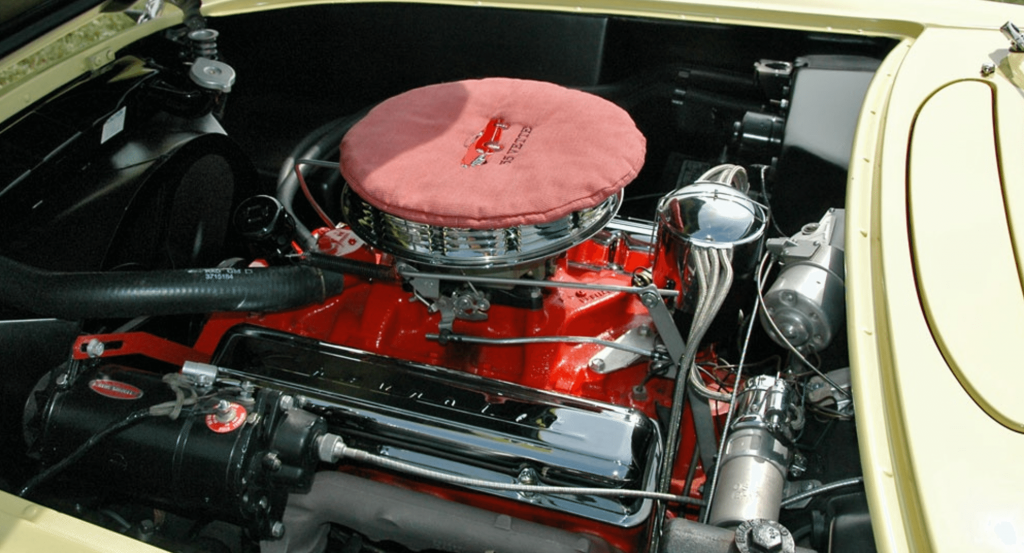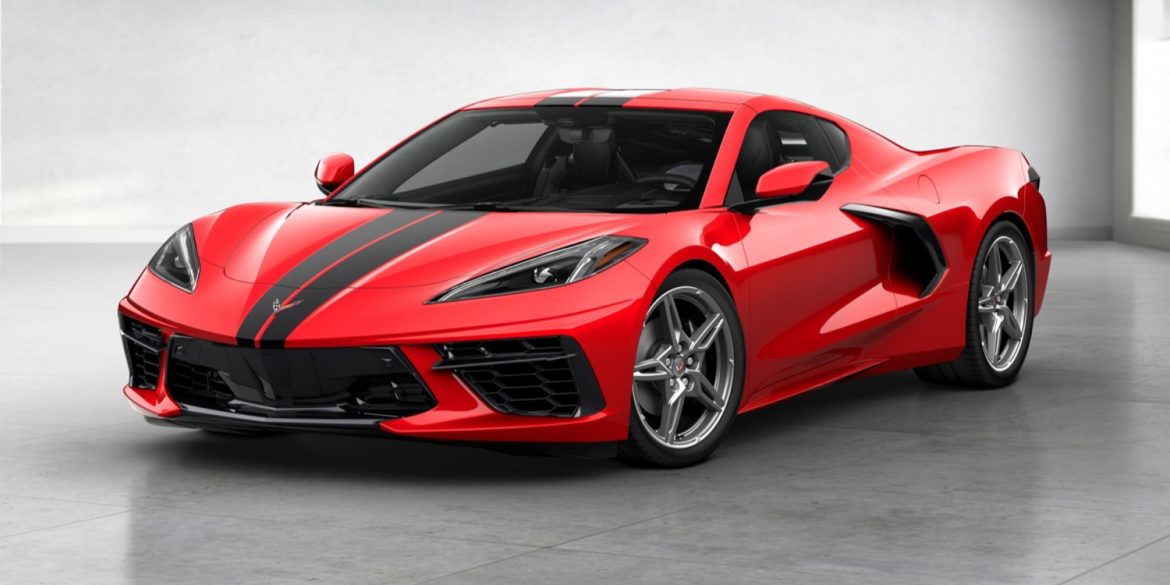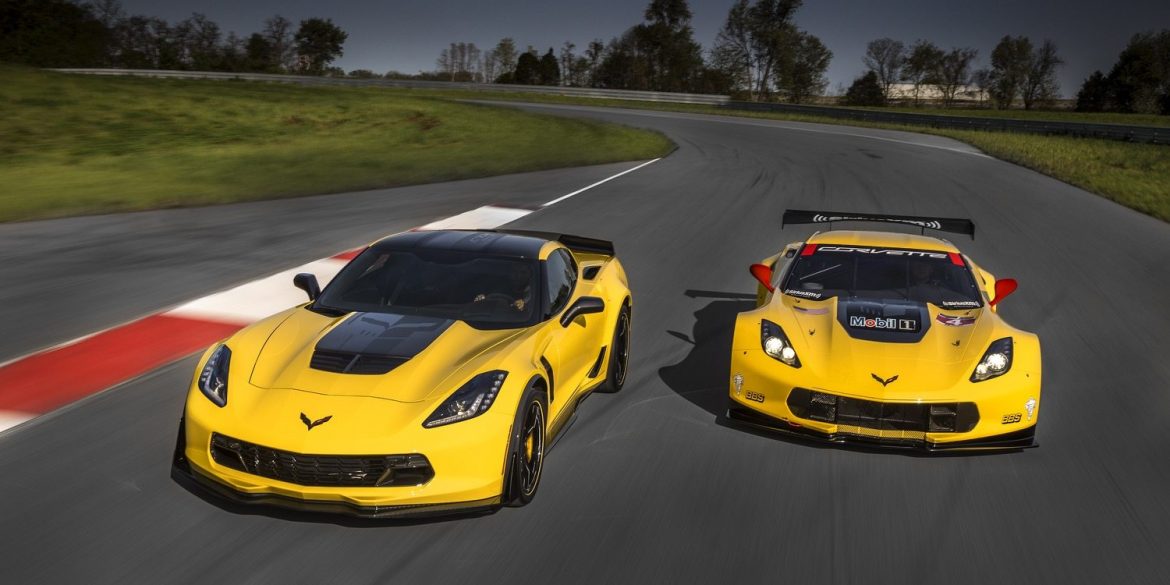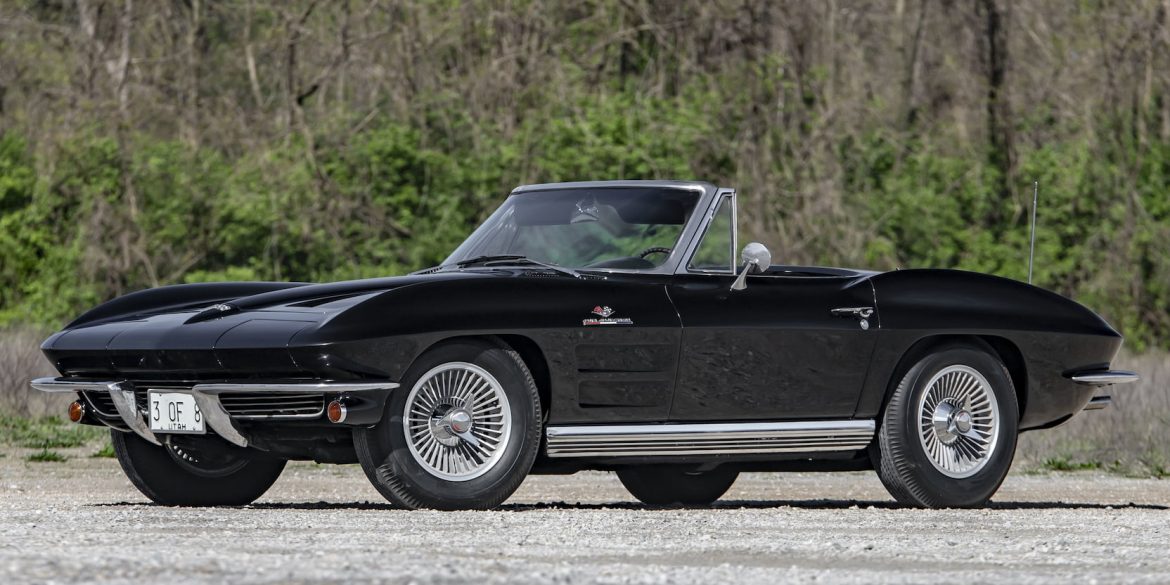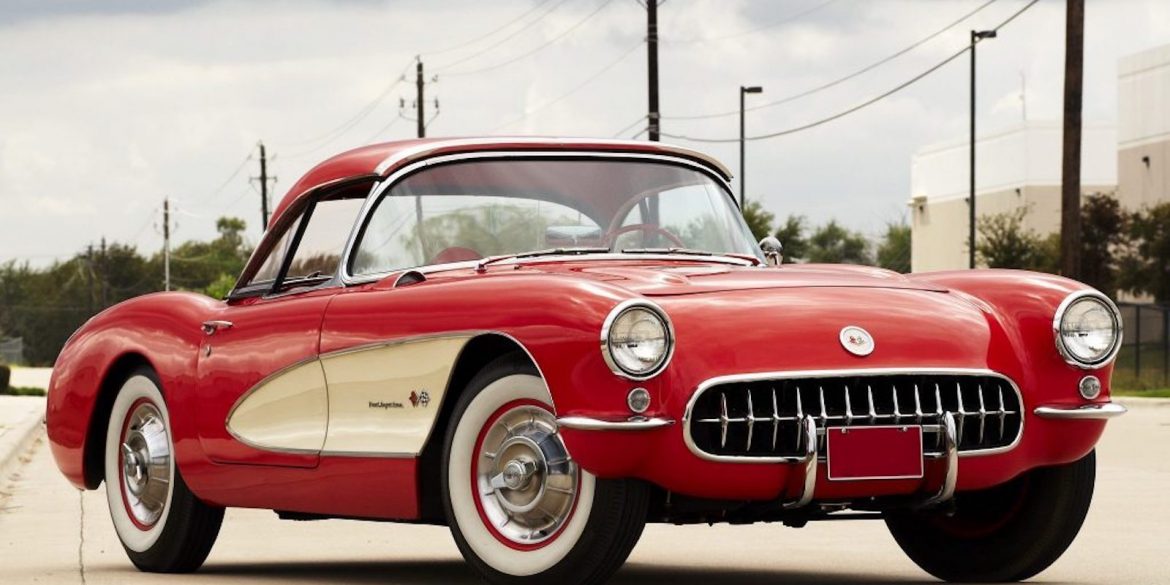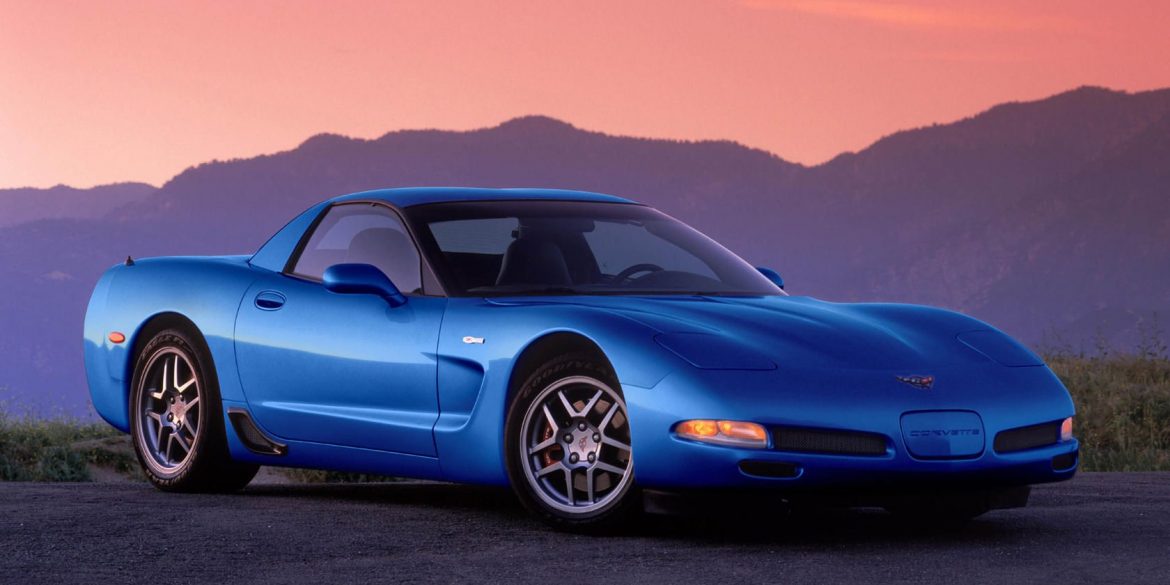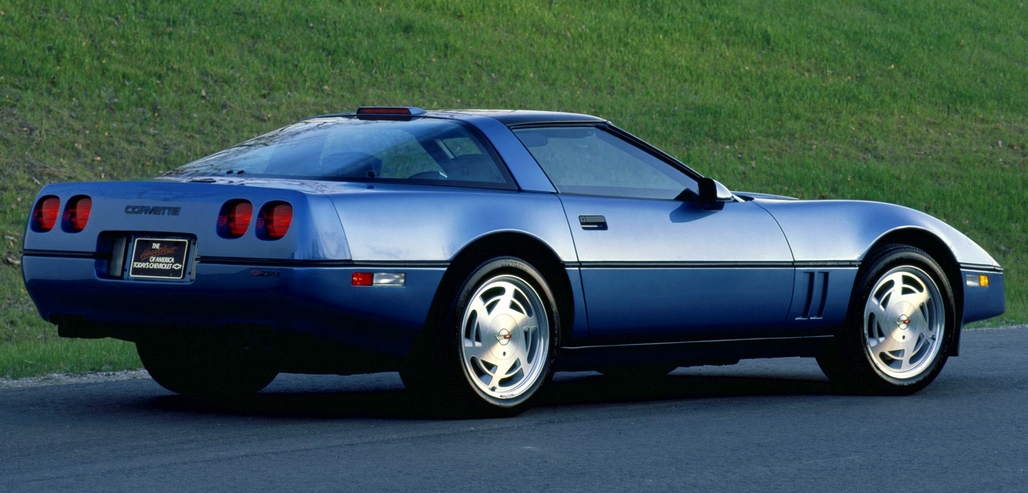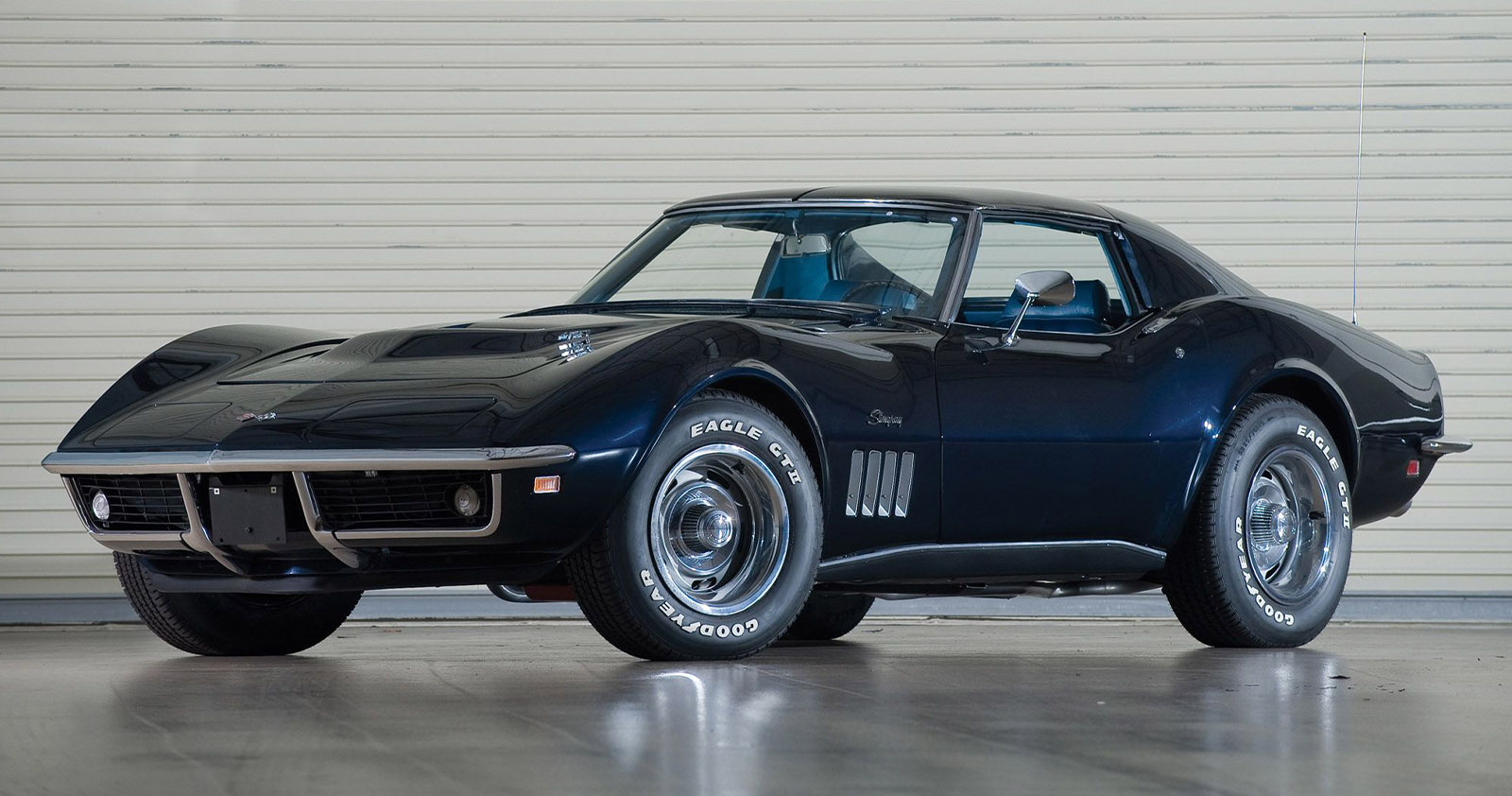
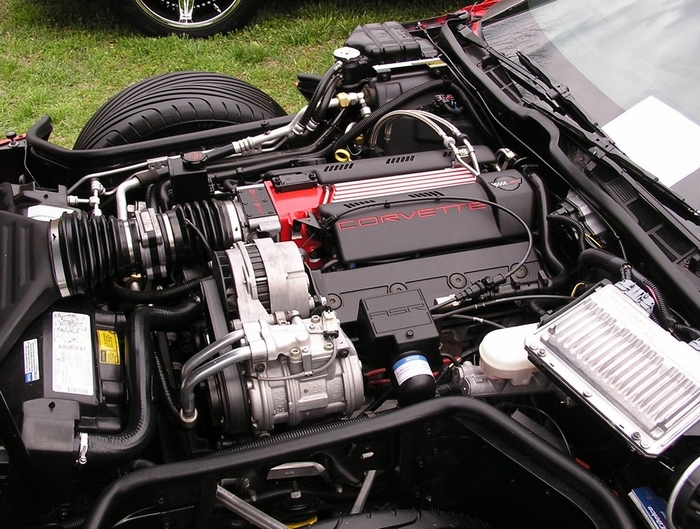
GM ultimately decided to postpone the release of their fifth-gen Corvette, largely due to budgetary constraints. However, the development of a new powerplant for the aging C4 Corvette was greenlighted nonetheless. This engine carried the LT1 designation, and prove quite capable. The 1992 LT1 would serve as a bridge between GM small-block development.
JoinedNovember 1, 2019
Articles122
Josh Boyd is an ASE certified, career automotive technician with an intense passion for all things mechanical in nature. He resides with his wife and children in Bowling Green, Kentucky, the home of the Corvette. His research-heavy posts have tons of detail. Whenever Josh does not have a wrench in his hand, he can be found in the woods or on the water enjoying the great outdoors.
During many production years, consumers were provided with multiple engine options to choose from. This was especially true during the late 1960s. However, by the late 1970s, GM had begun to significantly scale back the number of production engines offered for the Corvette. This trend peaked in 1981, when only one engine, known as the L81, was offered to buyers.
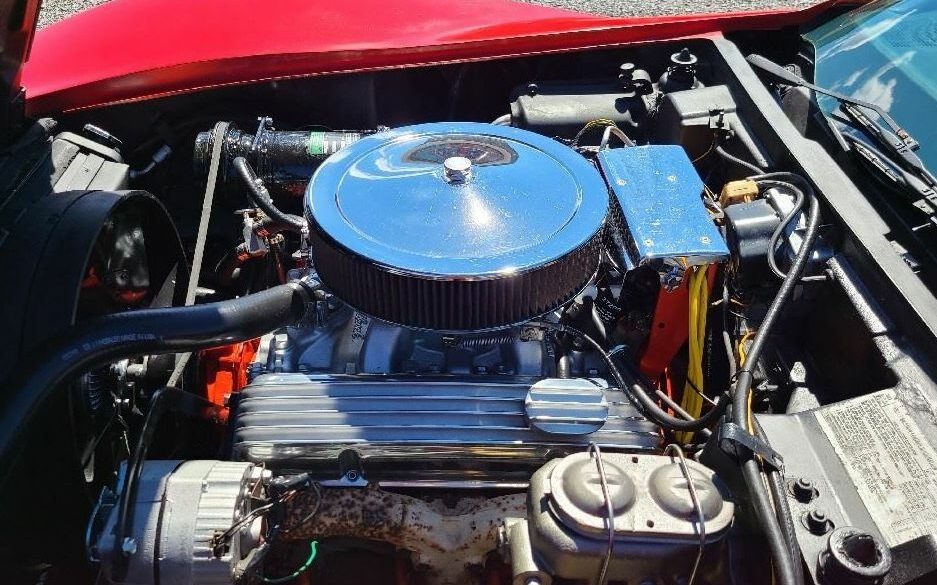
Finally, in 1973, consumers were left with only three available engine options, two of which were of a small-blocks. The third was the 454 cubic-inch LS4, would only survive for two years, serving as the final big-block to grace the Corvette’s engine bay. By 1975, the Corvette was only offered with one of two engines, of which, the 350 cubic-inch L82 was the most formidable.
Was the 454 cubic-inch LS4 one of General Motors’ most powerful big-blocks? Absolutely not. However, it is historically significant nonetheless. The LS4 served as the end of the road for the big-block Corvette, as America’s sports car returned to its small-block roots. Today, many collectors seek out LS4 equipped Corvettes.
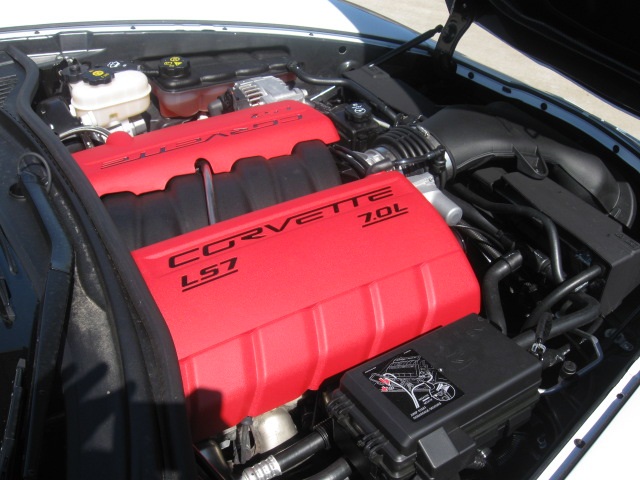
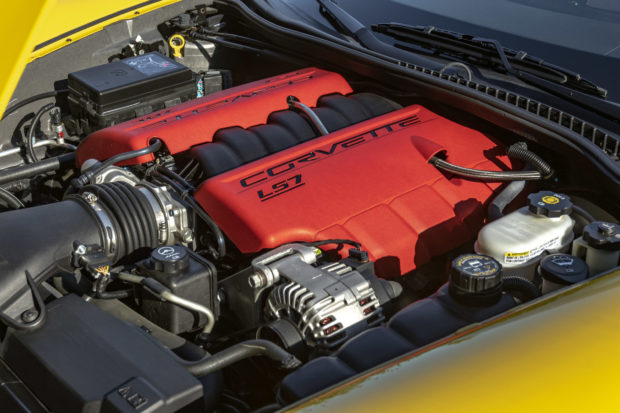
In 2013, a revelation of sorts took place within the Corvette world. General Motors unveiled a “best of both worlds'' type offering, which paired the C6 Corvette, in its convertible form, with an indisputably fearsome powerplant. Beneath the Corvette’s hood, sat a 427 cubic-inch small-block, which carried the LS7 designation.
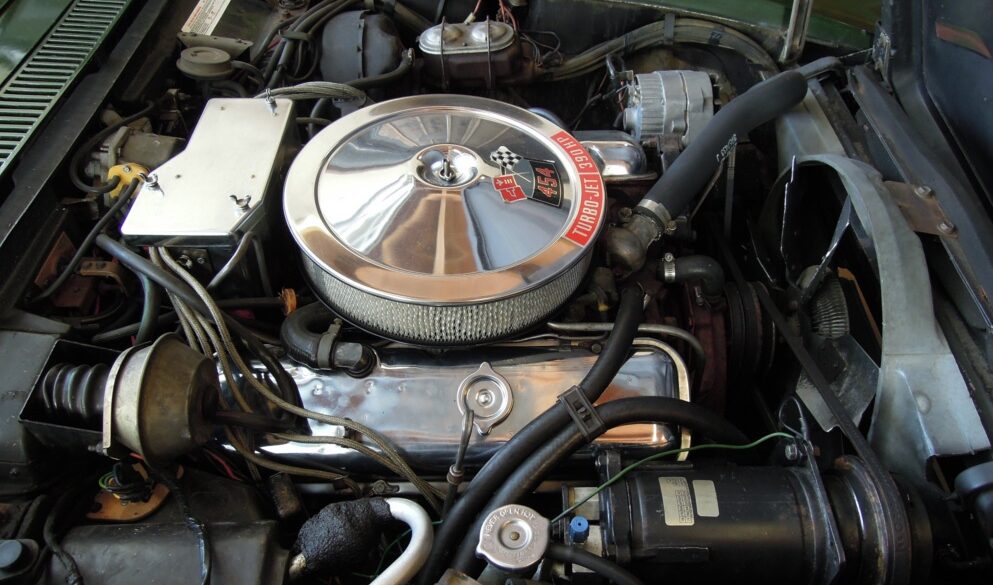
General Motors sought out any means of retaining the Corvette’s performance acuity. This desire ultimately gave rise to the company's illustrious LS5 454 cubic-inch big-block. The 454ci LS5 is remembered as one of the final GM big-block offerings to have come out in the 60’s and 70’s.
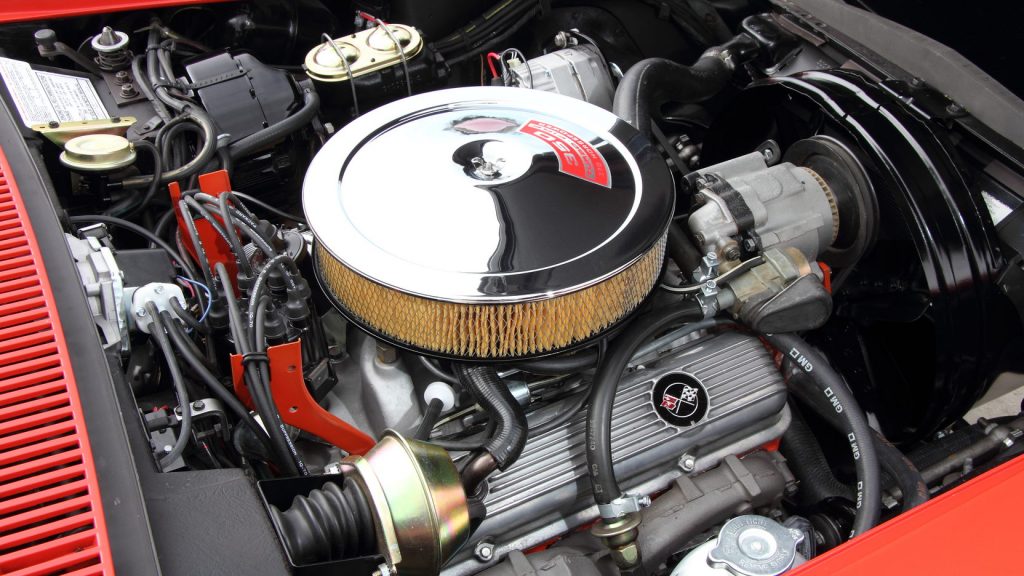
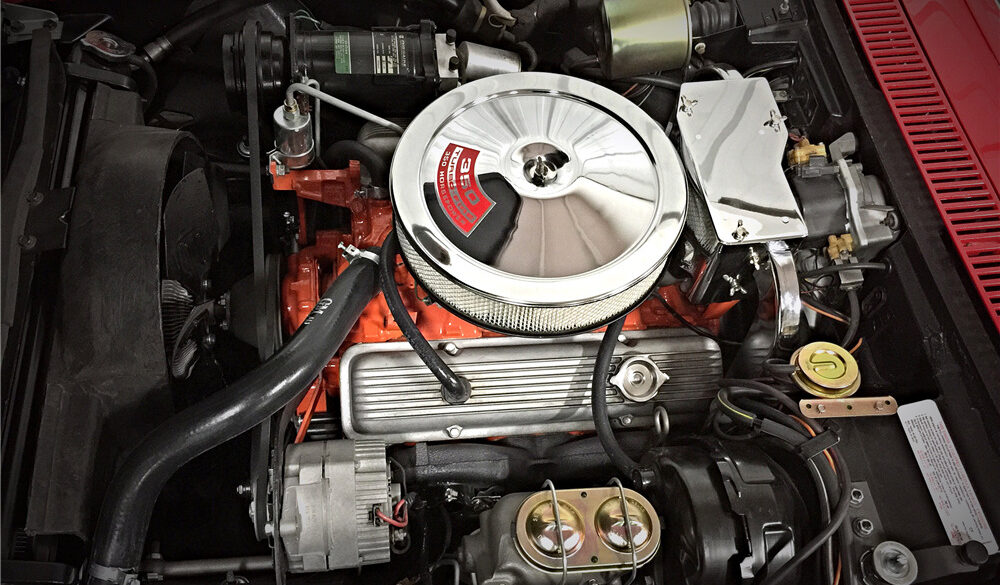
The LT-1 served as a revised version of GM’s famed 350 cubic-inch platform, and is often heralded as one of the manufacturer’s most beloved small-block powerplants. Though quite legendary in status, the LT-1 was rather obscure and short-lived during its production run, only produced for three years (1970-1972).
The 350ci V8 was actually a further extension of GM’s decade-old small-block engine series. In a bid to further cement the Corvette’s performance legacy, subsequent modifications to these earlier engines were made, thereby giving birth to one illustrious platform. It would serve as a mainstay of the Corvette line for over three decades to come.
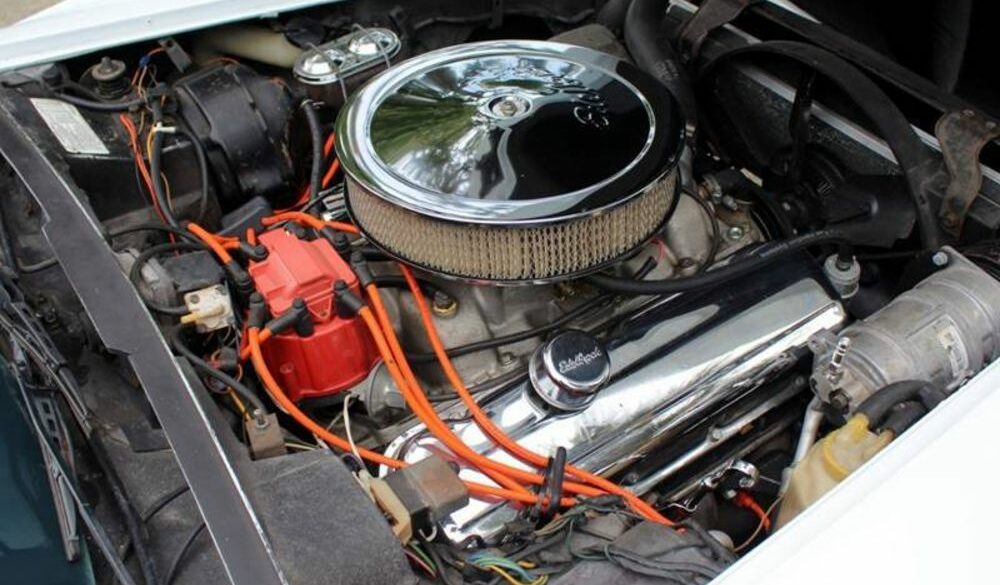
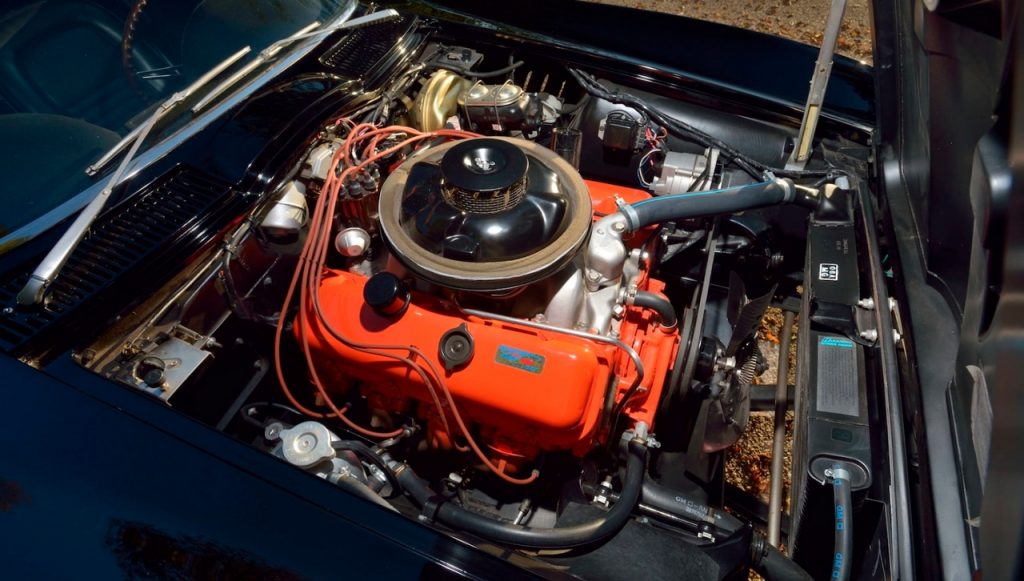
No list of formidable Corvette engines would be complete without including the 1967 L88. The L88 was a fire-breathing variant of GM’s 427 cubic-inch big-block lineup, which served as nothing short of a production race engine. Officially rated at 430 HP, the L88 was capable of propelling its C2 host to previously unattainable performance status. The L88 was nothing, if not a loosely veiled production race engine.
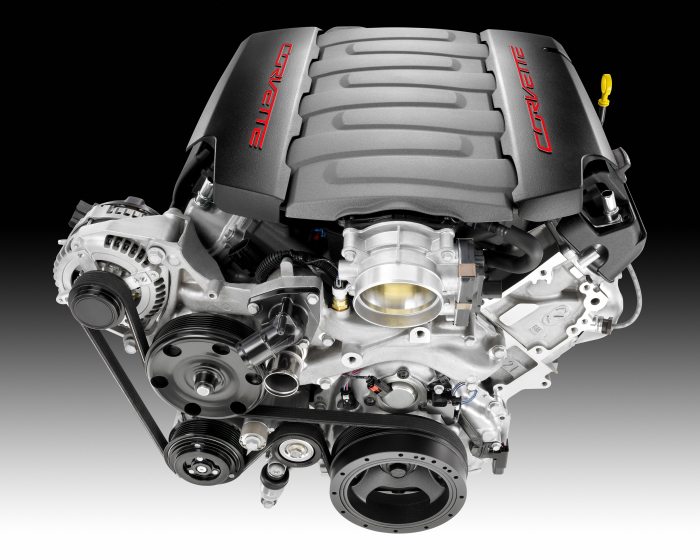
It seems as if many of the engine-related advancements found in standard General Motors’ vehicles, first came to prominence when implemented in Corvette production, a decade or more prior. One such engine, which could easily be considered revolutionary, is the 2014 6.2-liter LT1. This fearsome powerplant was as sophisticated as it was powerful.
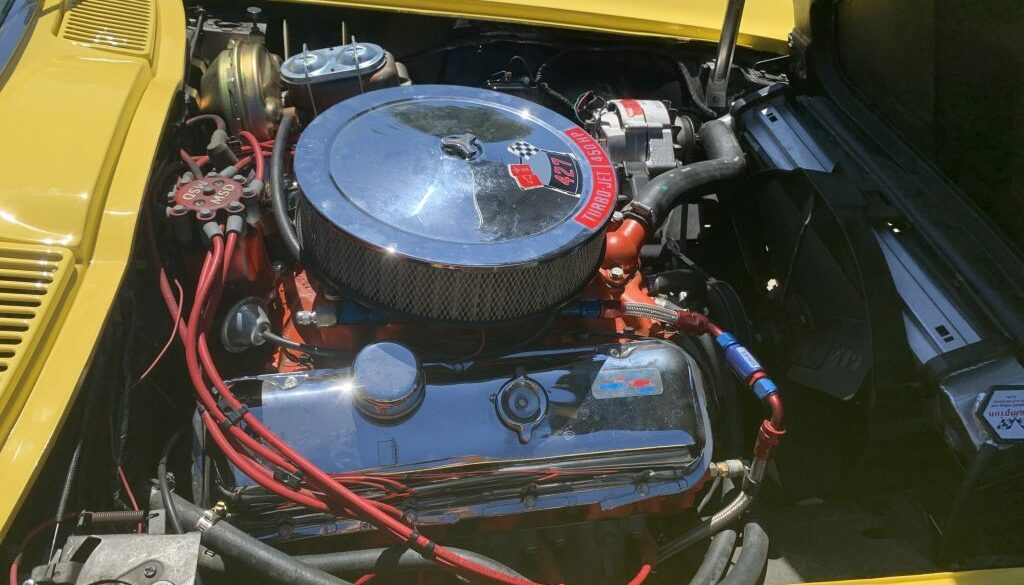
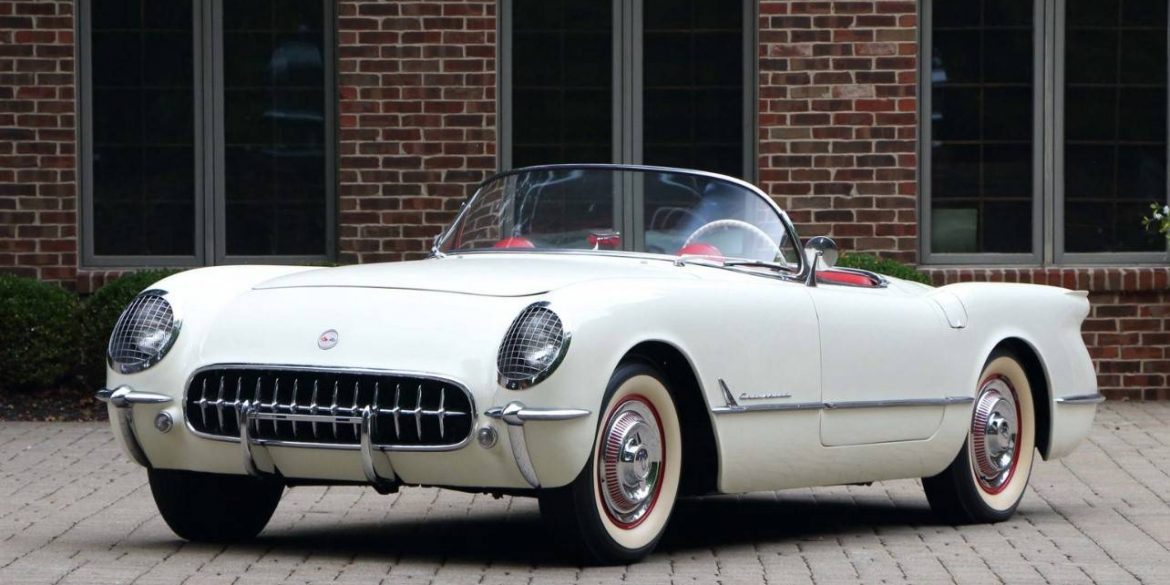
Upon its 1953 release, America’s sports car mustered only 150 HP, yet in 1966, the newly evolved Corvette nearly tripled this level of output. It was in 1966 that the Corvette was offered with not one, but two different variants of the robust 427 cubic-inch (7.0L) V8. In its most potent form (L72), the 427 officially produced 425 HP. However, most believe this value to be grossly understated.
In the midst of the Z06’s development, engineers knew that something truly remarkable would be needed to best the base Corvette’s 400 horsepower LS2. In its production form, this new small-block V8 came to be known as the LS7. The LS7 was nothing short of all-powerful, featuring a displacement of 427 cubic inches and an output of 505 horsepower.
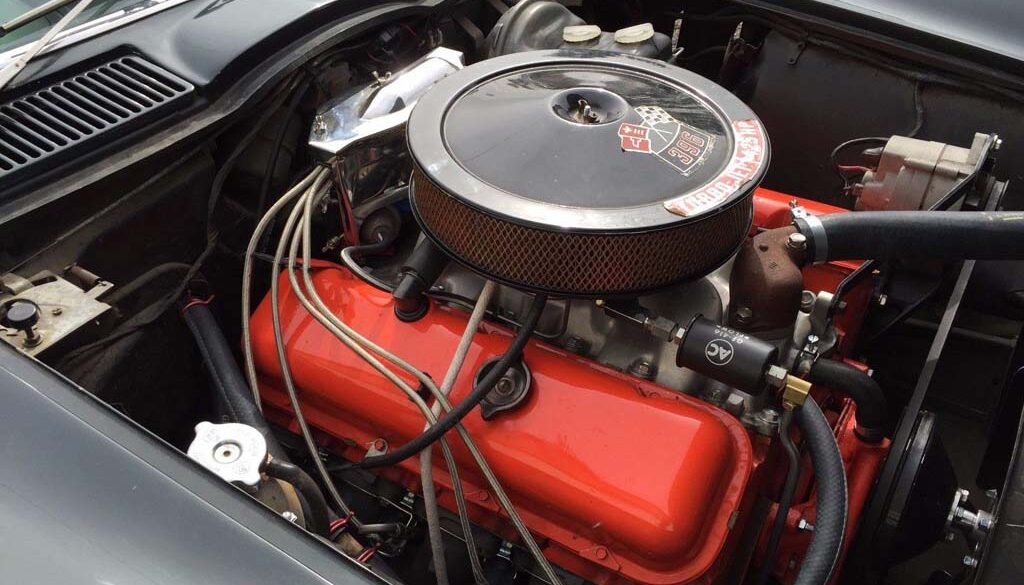
For more than a decade after the Corvette's initial release it had small-block power. In fact, the 265 cubic-inch V8’s 1955 introduction was largely responsible for the Corvette’s validation as a sporty, performance-minded vehicle. However, by the mid-1960s, those behind the scenes at Chevrolet had begun developing a new powerplant. This engine would become the first big-block V8 to be used in Corvette production.
As efforts turned toward bringing the C2 Corvette to market, GM’s engineering staff envisioned a larger, more robust addition to their already popular Turbo-Fire V8 lineup. This engine would make its debut under the hood of the 1962 Corvette, further bolstering the line’s power and performance-related attributes.
Famous Movie Corvettes With each passing decade, the Corvette becomes further entwined in American pop culture. This is only fitting, as few if any vehicles are as indelibly American in nature as the Corvette. The Corvette has become the subject of numerous songs, appeared in many product advertising campaigns, and...
The National Corvette Museum is known as the world’s single largest repository of all that is of significance, in regards to the Corvette. First opened in 1994, the Corvette Museum has welcomed an untold number of visitors and continues to draw significant fanfare on an annual basis. After more than...
Automotive history is full of outlandish tales and shenanigans, many of which would be hard to believe if the fine details of the event in question had not been thoroughly recorded. However, few tales of this nature are quite as intriguing as that of the L88 Corvette that competed at...
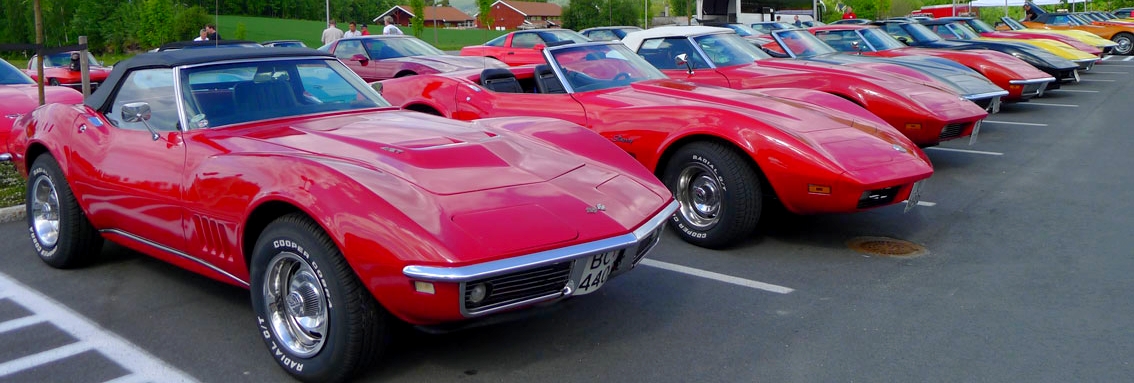
Corvette clubs across the nation continue to grow in size and number with every passing year. Clubs of this nature can be found in every state, with most gathering regularly to share in camaraderie among members. A simple search of the internet will provide Corvette enthusiasts with a wealth of...
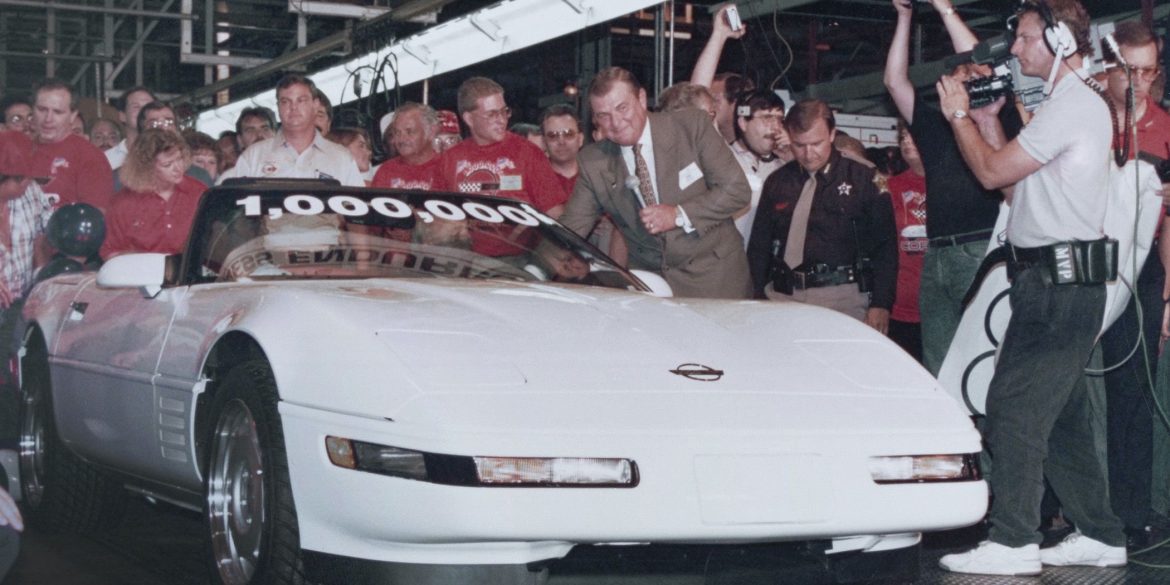
Things We Bet You Didn’t Know About The One-Millionth Corvette On July 2, 1992, General Motors celebrated the production of their One-Millionth Corvette. This was a major milestone for the manufacturing giant, as it showcased just how far the Corvette had come since its initial launch in 1953. During those...
Corvette Is Still King – Here’s Why Since it’s initial release in 1953, the Corvette has carried the distinction of being America’s quintessential sports car. As such, the Corvette has gained an immense following, far larger in scope than that which surrounds many other American Performance cars. But why is...
Loving the Corvette, and being quite fond of General Motors go hand-in-hand. The illustrious automotive manufacturing giant has been responsible for the creation of many highly sought after vehicles, with the Corvette being perhaps the most prized of all. While consumers the world over are well aware of GM’s storied history...
Following only two years of production, the Corvette's future appeared bleak, as talk began to circulate about discontinuing the line in its entirety. However, the well-timed advent of Chevrolet’s newest powerplant would soon rescue the Corvette from almost certain demise.
Of the C8’s numerous features, some stand out above the rest for their usefulness and overall worth to consumers. The following are 4 of the most unique C8 Corvette features.
For over two decades, the Corvette Race Team has stood as a dominant force within the realm of endurance racing, compiling numerous wins along the way. This is a fact that carries immense weight, especially considering that the Corvette’s earliest racing endeavors were thwarted by GM’s insistence toward complying with...
While the Corvette is known the world over for its superior performance capabilities, and highly refined styling, America’s sports car represents so much more. The Corvette has become forever ingrained in American pop culture, and is often depicted in media works of every conceivable category. Throughout the years, the Corvette...
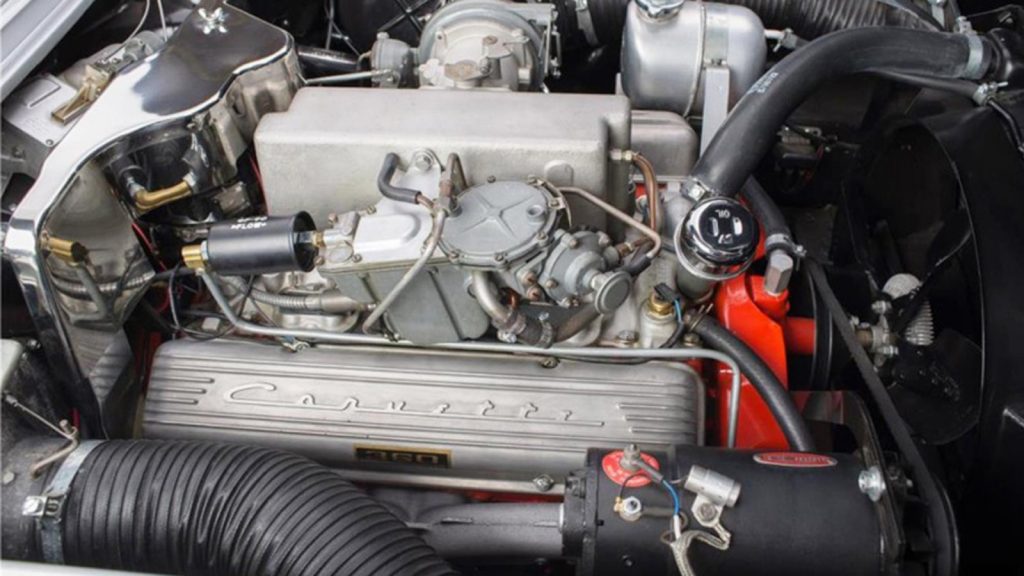
Though the 283 cubic-inch V8 seldom receives its share of attention in a world dominated by LS and LT series engines, this early Chevrolet small-block was ahead of its time. The 283ci showcased a plethora of new and innovative tech, and highlighted the engineering prowess of legendary Corvette luminary, Zora-Arkus Duntov.
For the avid fan of all that is Corvette in nature, there are few locations in the world as high on the “must visit” list as Bowling Green, Kentucky. The city of Bowling Green is home to the Corvette assembly plant, where all Corvettes have been manufactured since 1981. Every...
The title of Chief Corvette Engineer is not to be taken lightly. After all, this title has historically been reserved for some of the most renowned automotive engineers that the industry has ever seen. When one considers that this title was originally held by Corvette luminary Zora Arkus-Duntov, it is...
Upon stepping into the role of Corvette Chief Engineer in 1975, Dave McLellan was forced to shoulder an enormous load. The mid-1970s were a time in which forced compliance with federal emissions mandates had effectively left the Corvette deprived of any significant performance merit. Additionally, McLellan was left to fill...
The History of America’s sports car is no doubt a colorful one. Now, nearly 70 years in the making, the Corvette is in its 8th generation of production and is among the most potent of performance cars currently available. However, this distinction did not come by happenstance. On the contrary,...