CORVETTE LISTS
Corvette History In Milestones:
1953 To Today
Every turning point in seventy-three years of America’s sports car on one timeline: the Motorama car, the V8 that saved it, the Sting Ray, the missing 1983, the ZR-1, the LS1, the mid-engine C8 and the 1,250-horsepower ZR1X, with the design cues that have run through all of it.
Quick Nav: At A Glance · The Timeline · The Milestones · Since 2024 · Design DNA · About · FAQs · History · More Lists
At A Glance
Born: January 17, 1953 at the GM Motorama, New York; first production car June 30, 1953, Flint, Michigan
Saved: 1955, when Ed Cole’s 265 V8 replaced the Blue Flame six and Zora Arkus-Duntov joined Chevrolet
Transformed: 1963 Sting Ray (independent rear suspension, hidden headlights, the split window); 1984 C4; 2020 mid-engine C8
The gap: There is no 1983 Corvette; one survives at the National Corvette Museum
The numbers: Millionth car July 2, 1992; 1.5-millionth May 28, 2009; best year 1979 (53,807); Bowling Green since June 1981
The peaks: 1990 ZR-1 (375 hp), 2009 ZR1 (638 hp, first past 200 mph), 2019 ZR1 (755 hp), 2025 ZR1 (1,064 hp, 233 mph), 2026 ZR1X (1,250 hp)
At Le Mans: Ten class wins, 2001 to 2026
The Overview
Since its debut in 1953, the Chevrolet Corvette has transcended from a mere concept car to an enduring automotive icon. The brainchild of designer Harley Earl, the Corvette's fibreglass body and powerful engine quickly captured the nation's imagination. Since then, the Corvette has only grown in status and popularity.
While competitors like the Dodge Challenger and Chevrolet Camaro have come and gone, the Corvette has persevered, continually evolving while staying true to its performance-oriented roots. The Chevrolet Corvette has passed the seven-decade mark and shows no signs of slowing down. Join us as we explore ten key milestones that have cemented the Corvette's position as America's beloved sports car.
This page is the whole story on one timeline. The table lists every turning point from the Motorama to the ZR1X with a link to the year it happened; below it, the milestones that mattered most are told in full, and the page closes with the design cues that have run through all eight generations. Every year links to its year page and every generation to its hub.
The Corvette Timeline, 1953–2026
Every turning point, in order. Each year links to its year page.
| YEAR | MILESTONE | WHY IT MATTERED |
|---|---|---|
| 1953 | The EX-122 debuts at the Motorama, January 17; production starts June 30 | Harley Earl’s dream car becomes a production car in five months; 300 built, all Polo White |
| 1954 | Production moves to St. Louis | 3,640 built; a third sit unsold and the car’s future is in doubt |
| 1955 | The 265-cubic-inch V8 arrives; Zora Arkus-Duntov joins Chevrolet | The V8 saves the Corvette; Duntov begins turning it into a sports car |
| 1956 | First restyle: the side coves, roll-up windows, a removable hardtop | The Corvette gets the shape it keeps through 1962 |
| 1957 | Ramjet fuel injection and the four-speed manual | 283 horsepower from 283 cubic inches, one per cube; the Corvette becomes a racer |
| 1958 | Quad headlights; first profitable year | 9,168 sold; the C1 at its most chromed |
| 1960 | Briggs Cunningham’s Corvettes race at Le Mans; Fitch/Grossman win the class | The first Le Mans class win, eighth overall |
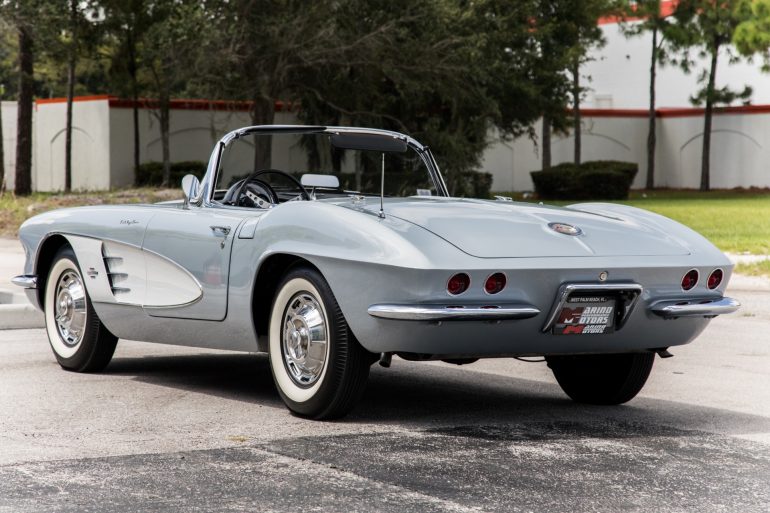
| 1961 | The ducktail rear with four round tail lights | A Corvette signature for the next fifty years |
| 1962 | The 327 arrives | The engine that carries the Corvette into the C2 |
| 1963 | The Sting Ray: coupe body, independent rear suspension, hidden headlights, the split window; the Z06 option; the Grand Sports | The most important single year in the car’s history |
| 1965 | Four-wheel disc brakes and the 396 big block | The Corvette becomes a muscle car |
| 1967 | The L88 | Twenty built; the most valuable production Corvette |
| 1968 | The C3 Stingray | The longest-running generation, fifteen model years |
| 1969 | The 350 small block, the ZL1 and 116 L88s | The big-block peak; the engine that would carry the Corvette to 1991 |
| 1970 | The LT-1 and the LS5 454 | The last great pre-emissions year |
| 1972 | Net horsepower ratings | Numbers fall overnight even before the engines do |
| 1974 | The last big block and the last year without a catalytic converter | The end of an era, with the body-colored rear bumper completing the soft-nose look |
| 1975 | Catalytic converters, 165 horsepower, the last convertible for eleven years; Zora retires January 1 | The low point in power, and 38,000 sold anyway |
| 1977 | The 500,000th Corvette, March 15 | Built at St. Louis, a white 1977 |
| 1978 | The 25th Anniversary, the fastback rear window, the first Indy 500 pace car | The Corvette’s first anniversary edition and the start of a pace-car tradition |
| 1979 | The best-selling Corvette ever: 53,807 | A record that has stood for forty-seven years |
| 1981 | Production moves to Bowling Green, Kentucky, June 1 | Every Corvette since has been built there |
| 1982 | Cross-Fire Injection and the Collector Edition | The C3 bows out with the first fuel injection since 1965 |
| 1983 | No 1983 Corvette | The C4 is a year late; one 1983 survives, at the National Corvette Museum |
| 1984 | The C4 | A new chassis, 0.95 g, 51,547 sold |
| 1986 | The convertible returns; ABS; the Indy 500 pace car | The first open Corvette since 1975 |
| 1990 | The ZR-1 and its Fort Stockton records | The Lotus-designed LT5, 375 hp, and a 24-hour average of 175.885 mph |
| 1992 | The 300-hp LT1; the one-millionth Corvette, July 2 | A white convertible with a red interior, like the first one |
| 1994 | The National Corvette Museum opens, September 2 | Across the road from the plant in Bowling Green |
| 1996 | The Grand Sport and Collector Edition; the LT4 | The C4 goes out on its best year |
| 1997 | The C5 and the LS1 | The hydroformed frame, the rear transaxle and the engine family that changed GM |
| 1999 | Corvette Racing debuts the C5-R at Daytona | The start of the factory program |
| 2001 | The C5 Z06; Corvette Racing wins its class at Le Mans | The first of ten Le Mans class wins |
| 2003 | The 50th Anniversary | Half a century, and a Pace Car for the Indianapolis 500 the year before |
| 2005 | The C6 | Exposed headlights for the first time since 1962 |
| 2006 | The Z06 with the 505-hp LS7 | The first 7.0-liter Corvette |
| 2009 | The ZR1: 638 hp, 205 mph; the 1.5-millionth Corvette, May 28 | The first production Corvette past 200 mph |
| 2013 | The 60th Anniversary and the 427 Convertible | The C6 bows out |
| 2014 | The C7 Stingray; the Museum sinkhole, February 12 | The Stingray name returns; eight cars fall into the ground |
| 2015 | The C7 Z06: 650 hp | The first Z06 convertible |
| 2019 | The C7 ZR1, 755 hp; the last front-engine Corvette; the C8 revealed July 18 | Sixty-seven years of front engines end |
| 2020 | The mid-engine C8 Stingray | The thing Zora wanted since 1960 |
| 2023 | The C8 Z06 and the flat-plane LT6; the 70th Anniversary; Corvette Racing wins Le Mans | The most powerful naturally aspirated V8 in production |
| 2024 | The E-Ray: the first hybrid and first all-wheel-drive Corvette; the ZR1 revealed July 25 | 655 hp, 2.5 seconds to 60 |
| 2025 | The ZR1: 1,064 hp, 233 mph; the ZR1X: 1,250 hp; three concept cars | The first Corvette past 1,000 horsepower, and a look past the C8 |
| 2026 | The ZR1X paces the Indianapolis 500; Corvette wins its class at Le Mans again; the Grand Sport returns for 2027 | Ten Le Mans class wins |
MORE: THE GENERATION HUBS / EVERY MODEL YEAR
The Milestones That Made The Corvette
The turning points, told in full, from the Motorama to the thousand-horsepower ZR1.
1953: The Beginning
A Motorama dream car becomes a production car in five months.
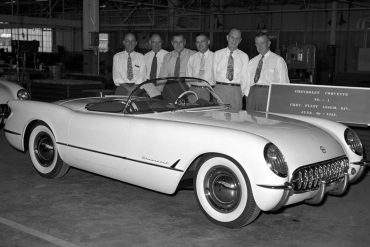
Legendary GM styling director Harley Earl was one of the big names behind the birth of the Corvette. He was convinced there was enough room for an American-made sports car in a market dominated by European imports. The first full-scale Corvette was a concept displayed as a 'dream car' at GM's Motorama in New York's Waldorf Astoria Hotel in January 1953. By June, production models had begun to roll off the assembly line. The initial production run was rather underwhelming, with roughly 300 units made. What's more? They all had the same colour scheme - a Polo White exterior with a red bucket seat interior trim.
MORE: THE 1953 CORVETTE / THE C1 CORVETTE HUB / THE CORVETTE STORY #1: HJE’S SPORTY CAR / 1953: DREAM CAR OR NIGHTMARE?
 One of the first generation Corvettes being assembled at the factory.
1955: The V8
The 265-cubic-inch small block replaces the Blue Flame six.
The first Corvettes were powered by a 'Blue Flame' 3.9-litre inline-six that made 150 hp, a relatively modest power output even for that period. The Corvette needed more oomph if it was to compete more favourably with rivals from European manufacturers like Porsche, Jaguar and MG.
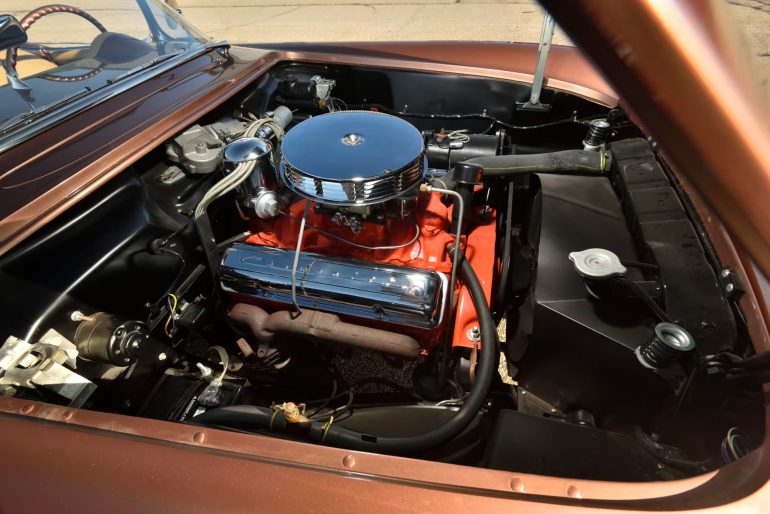
Fortunately, Chevrolet realized that, and in 1955, the Corvette received a welcome engine upgrade. A small-block V8 replaced the inline-six as the beating heart of the American sports car. The initial V8 displacement was 265 cubic inches with a 195 hp rating. This power boost dramatically improved the Corvette's acceleration and overall performance.
MORE: THE 1955 CORVETTE / THE C1 CORVETTE HUB / THE 1955 265 V8 ENGINE GUIDE
1963: The Sting Ray And The Split Window
A new body, a new chassis, hidden headlights, and one year of the split rear window.
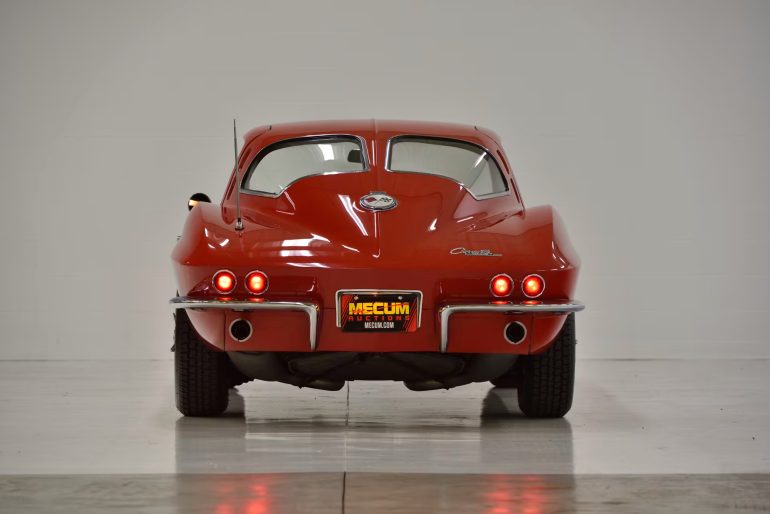
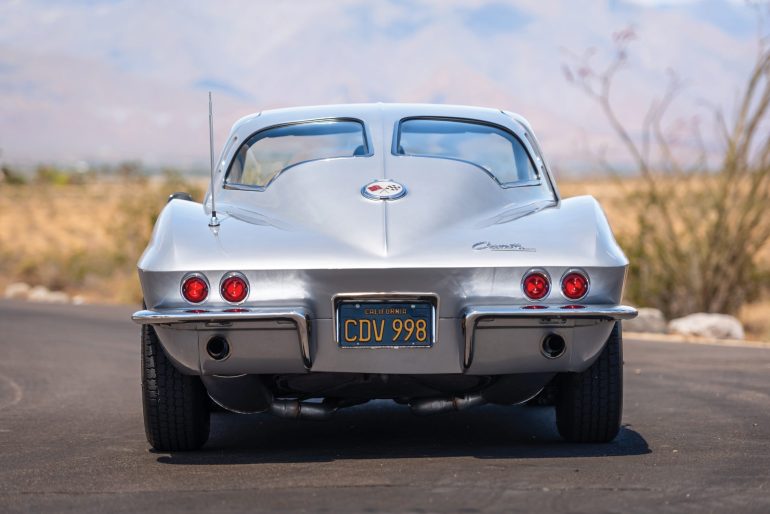
The split rear window is arguably the most iconic visual cue of the classic Corvette era. Introduced on the 1963 Chevrolet Corvette, this bold styling choice instantly transformed the Corvette from a good-looking sports car into a design masterpiece. That split window, reminiscent of a fighter jet canopy, added a dramatic flair to the car's profile. Unfortunately, while visually striking, the split window compromised rear visibility. It was replaced by a more conventional design in 1964. The short lifespan of the window design has made the 1963 Corvette a highly sought-after collector's item, cementing its status as a design icon.
The 'Sting Ray' moniker was first used to describe production Corvettes in 1963, part of the second-generation models. The arrival of this unique design language marked a pivotal moment in Corvette history, with some elements remaining today in the eighth-generation models. It was a radical departure from the subtle styling cues of the C1 Corvette, complete with sharp, angular lines and a completely redesigned front end.
There was also the distinctive split rear-window design (present only for the 1963 model year), which turned out to be the most symbolic design characteristic of the classic-era Corvettes. The extreme design approach underscored GM's willingness to push the boundaries with its sports car, giving the Corvette an aura of aggression and sophistication that resonated with enthusiasts.
MORE: THE 1963 CORVETTE / THE C2 CORVETTE HUB / THE CORVETTE STORY #3: THE FIRST STING RAY / THE SPLIT-WINDOW COUPE GUIDE
1963: Hidden Headlights
A Corvette signature for forty-one years, 1963 to 2004.
The Split-window design was not the only highlight of the '63 Corvette. That model year also marked the first time a production Corvette was fitted with hidden headlights. The vacuum-controlled lights were housed in rotating casings that blended seamlessly with the car's sharp-edged front when fully retracted.
In this way, the Corvette was able to retain its sleek, aerodynamic profile, which helped emphasize its sporty character. This design cue also added a touch of futuristic flair and significantly contributed to the car's iconic status. The hidden headlights were so fundamental to the overall Corvette appearance that they remained a design feature from the C2 Corvette to the C5 Corvette, a production period that spanned just over four decades.
MORE: THE 1963 CORVETTE / THE C2 CORVETTE HUB
1965: The Big Block
The 396 L78 turns the Corvette into a muscle car.
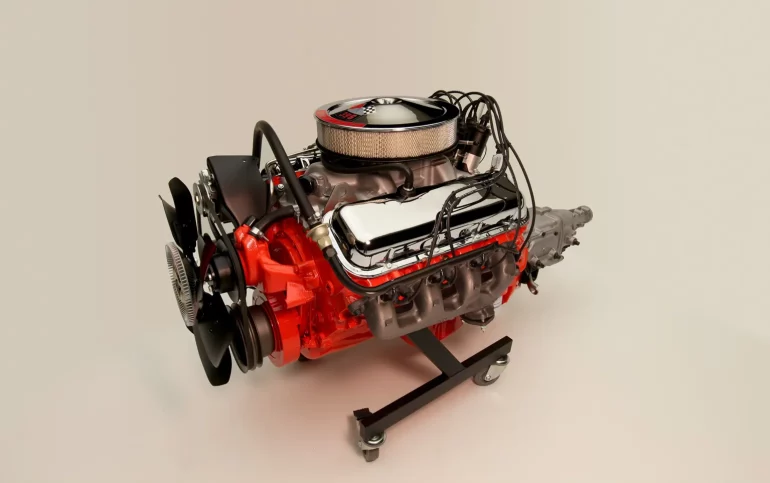
After its launch and initial wobbles, it was not until the '60s that the Corvette entered a new era of performance with the introduction of the Chevy big-block V8 engine. The first Corvette to get the big-block V8 was a '65 model with a 396 cubic-inch unit shoe-horned under the hood. The 396 V8 engine, dubbed the L78, featured a high-performance camshaft, high-compression motors and a four-barrel carburetor.
In peak mode, the engine churned out as much as 425 hp at 6,400 rpm and 415 lb-ft of torque at 4,000 rpm, making it one of the most powerful engines of that era. Other variations of the big-block V8 were even more powerful, like the L88. However, it was the 396 L78 that really transformed the Corvette from a spirited performer to a bona fide muscle car, at par with some of its main rivals on the market.
MORE: THE 1965 CORVETTE / THE C2 CORVETTE HUB / THE L88 MODEL GUIDE
1968: The C3 Arrives
The longest-running generation begins.
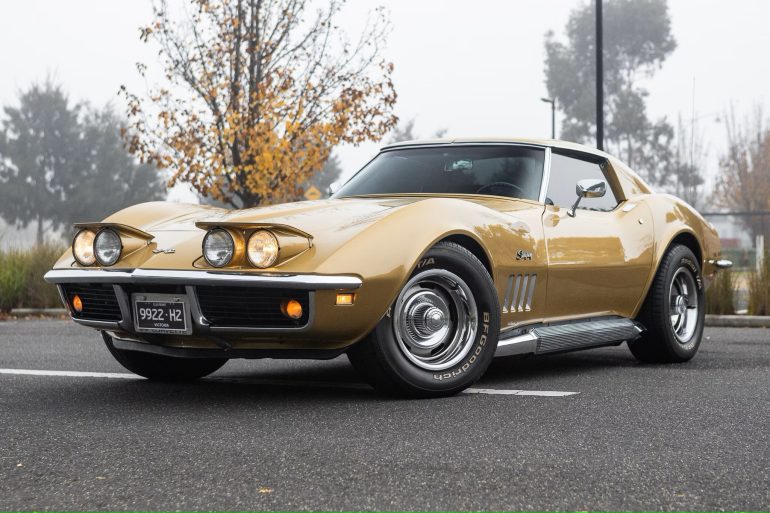
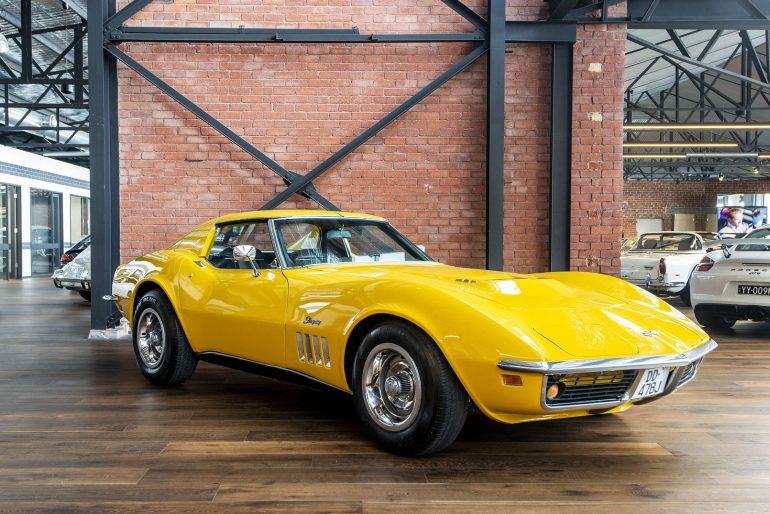
The third generation of the Corvette unveiled in 1968, marked a significant departure from its predecessors in certain key areas. Dubbed the C3, the Corvette stretched its wheelbase, resulting in a more spacious interior and improved ride and handling. Retractable headlights, first introduced with the C2 Corvette, remained a design highlight for the C3. A popular feature, it was synonymous with the Corvette for decades. The C3's overall styling favoured a more curvaceous and muscular look than previous generations. It remained in production until 1982, making it the longest-lasting Corvette generation. Several design changes and performance upgrades in that time ensured its relevance throughout its lifespan.
MORE: THE 1968 CORVETTE / THE C3 CORVETTE HUB
1983: The Gap Year
The Corvette that does not exist.
Production of the C3 Corvette wrapped up in 1982, but the next-gen replacement, the C4, did not immediately follow it. Even though the Corvette had existed for several years at this point, its future was still far from guaranteed. GM faced significant challenges in developing the new generation, including technical hurdles in implementing advanced technologies and ensuring the necessary quality standards were met. Furthermore, economic conditions during the early 1980s were challenging, impacting the automotive industry as a whole. The combined delays led to production delays and forced GM to extend the lifespan of the C3 Corvette for an additional year. The C4 Corvette, initially set for the 1983 model year, eventually entered production in 1984.
MORE: THE 1984 CORVETTE / THE C4 CORVETTE HUB / THE ONE AND ONLY 1983 CORVETTE
1984: The C4 And Its Aerodynamics
A 64-degree windshield and 150 mph.
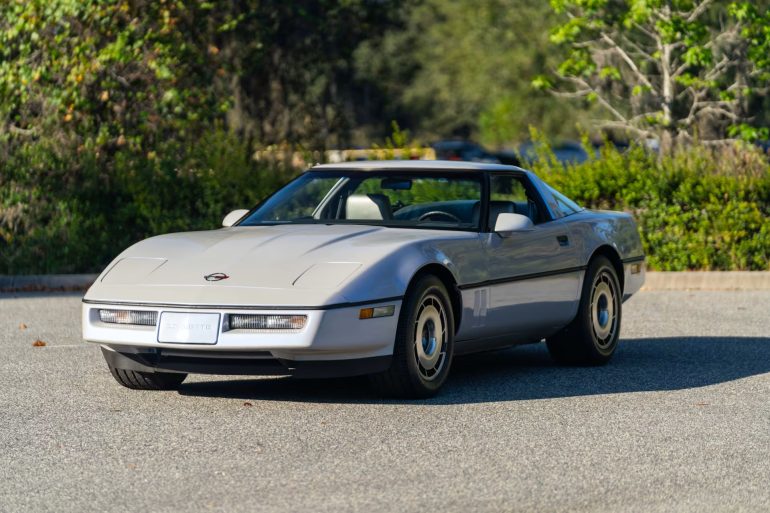
GM took its time with the C4 Corvette; the C3 Corvette remained in production from 1968 to 1982, making it the longest-running generation in Corvette history. However, when the C4 eventually debuted in 1984, it introduced a raft of changes that greatly enhanced the performance capabilities of the Corvette.
Design-wise, the 'Sting Ray' design was mostly gone, with the signature narrowed midsection now replaced by straight-edge body lines. A lowered hood and 64-degree angled windshield accentuated the low-slung look of the C4 Corvette. The result was an enhanced aerodynamic profile that allowed the C4 Corvette reach speeds of up to 150 mph (241 km/h). That performance was enough to make the C4 Corvette one of the fastest street cars of that era.
MORE: THE 1984 CORVETTE / THE C4 CORVETTE HUB / HOW THE C4 SET THE STAGE
1990: King Of The Hill
The ZR-1 takes on Europe.
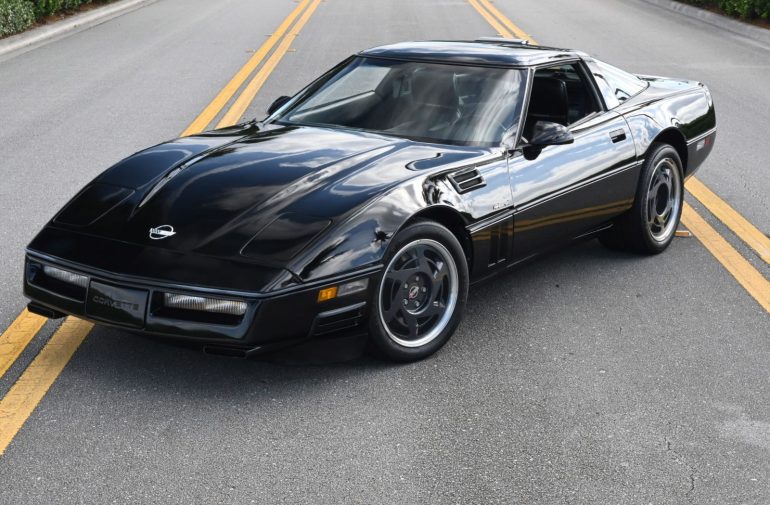
1990 marked the introduction of the performance-oriented Corvette ZR1, dubbed 'King of the Hill.' The Corvette ZR1 directly challenged European supercars like the Ferrari 328 GTS and Porsche 911 Turbo for supremacy. A technological tour de force, the ZR1 boasted a Lotus-designed naturally aspirated LT5 engine producing a heady 375 hp. The 1990 Corvette ZR1 elevated the Corvette's reputation from a mere pony car to a world-class performance machine. It blazed the trail for future generations of high-performance Corvette models.
MORE: THE 1990 CORVETTE / THE C4 CORVETTE HUB / THE 1990–95 ZR-1 GUIDE
1997: The LS1 V8 Debuts
The engine family that changed General Motors.
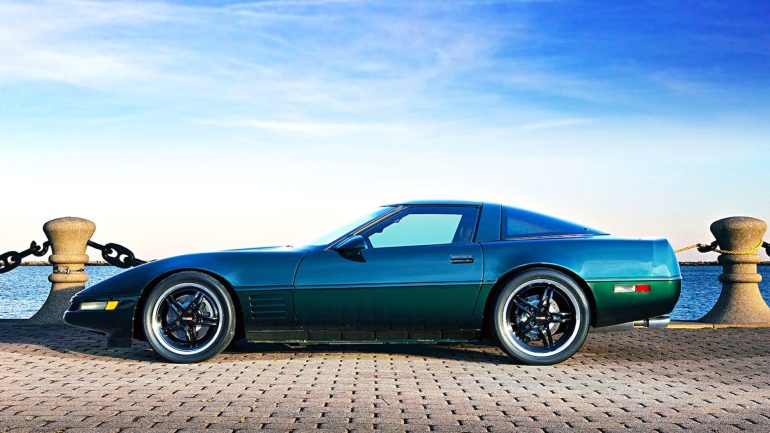
The legendary LS engine celebrated its 27th anniversary in 2024. It is one of the most well-known engines worldwide, favoured by tuners and performance enthusiasts. Its popularity is a testament to its exceptional design and performance. Introduced in 1997 for the C5 Corvette, the LS1 quickly became a benchmark for V8 engines. Its compact aluminum block and advanced technologies delivered impressive power and efficiency. The LS1 V8, with newfound performance and improved fuel economy, made the C5 a more desirable sports car for a wider market segment.
MORE: THE 1997 CORVETTE / THE C5 CORVETTE HUB / THE LS1 ENGINE GUIDE / THE COMPLETE HISTORY OF THE LS ENGINES
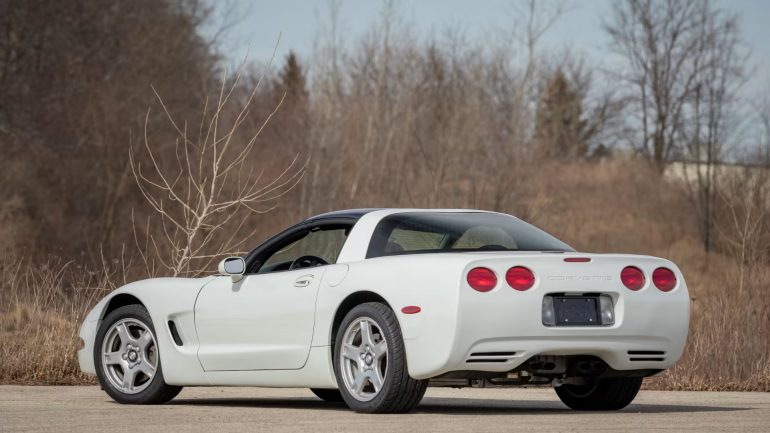
2019–2020: Mid-Engine Magic
Fifty years after the XP-882, the engine moves.
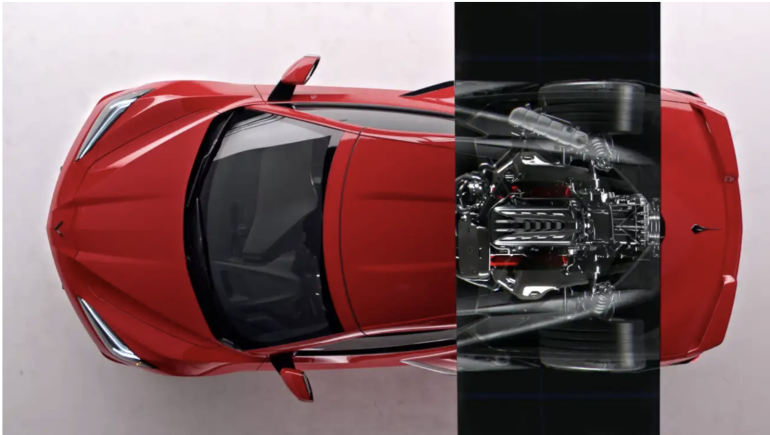
It was in 2019 that GM undertook what is perhaps its biggest gamble in the history of the Corvette with the introduction of a mid-engine eight-generation Corvette. This groundbreaking departure from the traditional front-engine layout sent seismic shockwaves through the automotive world. It was a move that paid off massively. The mid-engine configuration, a hallmark of traditional supercars, elevated the Corvette's handling, acceleration and overall driving experience to unprecedented levels and effectively kickstarted a new era of performance.
The biggest change in the modern Corvette and arguably the most significant shift in the sports car's storied history was the adoption of a mid-engine layout for the eight-generation model.
In July 2019, GM finally confirmed it was indeed working on a mid-engine replacement for the C7 Corvette with an image of a camouflaged C8 Corvette prototype cruising through New York's busy streets. It confirmed what most people in the car community already knew, courtesy of numerous spy photos and videos.
A switch to the mid-engine layout for the traditionally front-engined Corvette was not one GM took lightly. In fact, it took the carmaker almost five decades to act on the seed that was first sown back in 1969, when the 'Father of the Corvette' Zora built two mid-engine prototypes. However, moving to a mid-engine platform was a high-stakes gamble that has now paid off massively, injecting new life into a brand that was in danger of stagnating and unlocking new levels of performance that placed the Corvette firmly in supercar territory.
MORE: THE 2020 CORVETTE / THE C8 CORVETTE HUB / THE MID-ENGINE CORVETTE, REVEALED / HOW THE C8 REDEFINED THE LEGEND / EVERY MID-ENGINE PROTOTYPE
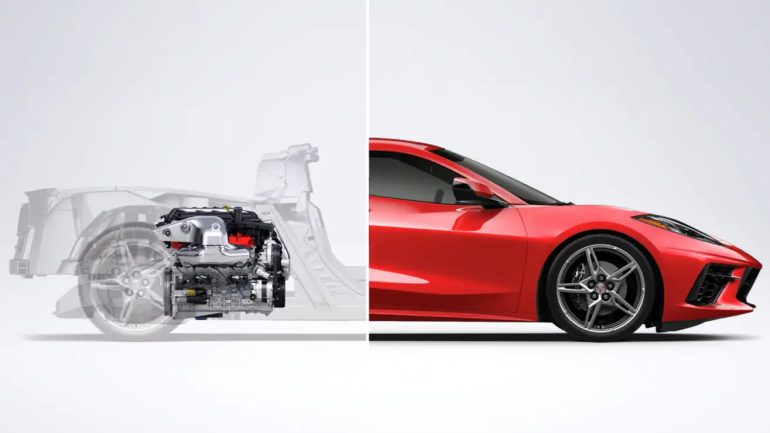
2023: Electrification
The E-Ray: the first hybrid Corvette and the first with all-wheel drive.
In 2023, the Chevrolet brand demonstrated its ability to adapt to sweeping changes in the automobile landscape with the introduction of the Corvette E-Ray. As the first-ever electrified Corvette, it represented a bold step into the future without compromising the brand's performance legacy. The E-Ray's hybrid powertrain pairs a 160 hp electric motor on the front axle that powers the front wheels with a 6.2-litre V8 that drives the rear wheels. The result is an all-wheel-drive setup with a combined 655 hp. There's even a 1.1kWh battery pack that allows the Corvette E-Ray to travel at up to 45 mph on electric power alone.
In 2023, GM unveiled a new C8 Corvette variant. Dubbed the Corvette E-Ray, it was revolutionary for a number of reasons. First, it boasted an electrified powertrain, a first for any Corvette. The hybrid setup pairs a 6.2-litre V8 with an electric motor mounted on the front axle, creating an all-wheel-drive vehicle in the process - another Corvette first.
The electric motor also allowed GM to introduce an all-new Stealth Mode, where the Corvette E-Ray can travel silently on battery power alone at up to 45 mph (72 km/h) for short distances. The combined power output of the Corvette E-Ray is rated at 655 hp, enough for a 2.5-second burst to 60 mph before completing the quarter-mile run in 10.5 seconds at 130 mph (209 km/h). These stats make the E-Ray second only to the 2025 Corvette ZR1. The hybrid Corvette is further proof of the brand's ability to adjust to dynamic customer preferences and market realities. It's a key trait that's helped the Corvette survive for over seven decades in a highly competitive market segment.
MORE: THE 2024 CORVETTE / THE C8 CORVETTE HUB / THE E-RAY IN-DEPTH GUIDE
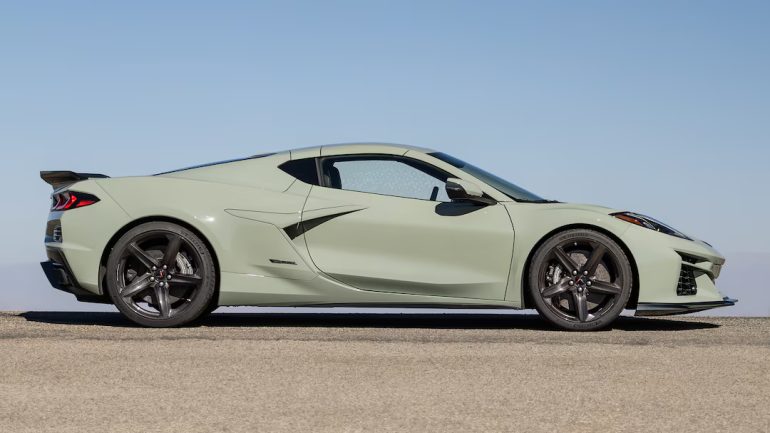
2024: A New Dawn, 1,000 Horses
The twin-turbo LT7 ZR1.
GM is not done with the Corvette by any means. Traditional rivals like the Dodge Challenger and the Chevrolet Camaro have already called it quits, but the carmaker's latest move is proof that the Corvette still has plenty to offer. The July 2024 reveal of the newest iteration of the Corvette ZR1 shattered expectations and redefined performance boundaries. At its heart is a formidable twin-turbocharged V8 engine - a first for a production Corvette - primed to generate a whopping 1,064 hp! It is, by some margin, the most powerful production Corvette ever. That power combines well with an aggressive aerodynamic design and advanced chassis technology to push the capabilities of the new Corvette ZR1 well into supercar territory. There, it battles the likes of the Ferrari SF90 and the Porsche 911 GT2 RS - exciting times ahead for the ultimate American sports car.
Switching to a mid-engine platform unlocked a new level of performance for the Corvette. Now, GM is taking that performance to higher levels with the 2025 Corvette ZR1. The performance beast boasts an all-new handbuilt 5.5-litre twin-turbocharged LT7 V8. It was the first time Chevrolet strapped turbochargers to a production Corvette right from the factory.
It resulted in the most powerful stock Corvette in history to that point, with a staggering 1,064 hp at 7,000 rpm and 828 lb-ft of torque at 6,000 rpm. That power output is not just for bragging rights. The 2025 Corvette ZR1 laid down some serious performance markers, hitting a verified top speed of 233 mph (375 km/h). That's significantly faster than much more expensive rivals like the Lamborghini Revuelto, Mclaren 765LT and the Ferrari SF90.
The Chevrolet Corvette has been around for over six decades and it could very well hang around for the next six.
MORE: THE 2025 CORVETTE / THE C8 CORVETTE HUB / THE 2025 ZR1 MODEL GUIDE / THE ZR1 AT 233 MPH
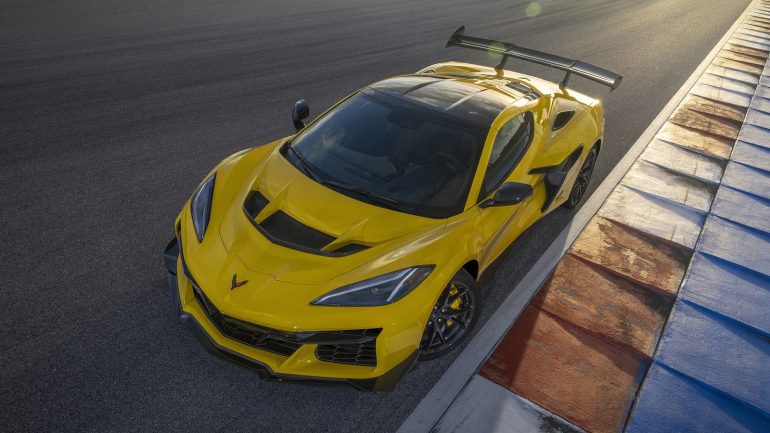
Chevrolet built 43 pilot 1983 Corvettes to prove out the C4 and the new Bowling Green plant, then crushed all but one. The survivor, white with a blue interior, was found in the plant years later and sits in the National Corvette Museum: the only 1983 Corvette in existence.
DID YOU KNOW
Since 2024
Tolu’s ten milestones ran to the 2025 ZR1’s reveal in July 2024. Since then the Corvette has not slowed down: the ZR1 verified 233 mph at Papenburg and lapped the Nürburgring in 6:50; the 1,250-horsepower, all-wheel-drive hybrid ZR1X arrived in June 2025 as the quickest Corvette ever built and paced the 2026 Indianapolis 500; GM’s three design studios each showed a Corvette concept in 2025, the first new Corvette show cars since 2009; Corvette Racing took its tenth Le Mans class win in 2026; and the Grand Sport name returned for 2027 with the new LS6. Each of those has its own page on CorvSport, linked below.
THE 2025 CORVETTE · THE 2026 CORVETTE · THE 2025 CONCEPTS · THE RECORDS · CORVETTE RACING
The Design DNA: Signature Elements Across Eight Generations
In July 2024, Chevrolet peeled back the covers of the latest C8 Corvette iteration, the 2025 Corvette ZR1. The supercar kicked off a new chapter in the Corvette's enduring legacy - one that dates back seven decades. The first Corvette had its public debut in 1953, then as a General Motors Motorama show car.
Since then, the Corvette has gone on to write its story as an enduring symbol of American automotive excellence. Its distinctive design language has evolved over the years, with certain elements that have helped the Corvette's iconic status.
The first-generation Corvette was known for its innovative fibreglass body, while the split-rear window was arguably one of the hallmarks of the '60s era Corvette. Every generation of the Corvette has had its differentiating touches; however, there are also styling cues that connect the different models and run through every generation.
“Each generation of Corvette shares some common elements which create a consistent Corvette theme that is expressive, distinctly American, artful, and passionate,” said Tom Peters, ex-GM Design Chief.
As the Corvette gets set for a new chapter in its storied journey with the introduction of the 2025 Corvette ZR1, we check out some of the signature design elements that have helped shape the Corvette's remarkable 70-year legacy.
Split-Window
One year, 1963, and a return on the 2025 ZR1.
The split-window design is one of the most recognizable features of the classic-era Corvettes. Interestingly, it only appeared in the 1963 model year Corvette, which was also the first time the Corvette was available with a coupe body style. There are a few stories connected to the origins of the split-window design. Some people believe it was influenced by the work of legendary GM designer Bill Mitchell. Others claim GM execs mimicked the style of a 1937 Adler Trumpf Rennlimousine, a German car with the same split-window design. Ironically, the split window was not well received by the public at the time. The center pillar hampered rear visibility, and this quickly became a safety concern. After a single year of production, Chevrolet scrapped the split rear-window design in favour of the more conventional single back glass in 1964. It's a different story today - the rarity of the split-window Corvette makes it one of the most desirable classic Corvette collectibles. What's more? The split-window design has made a return, in some form, on the 2025 Chevrolet Corvette ZR1.

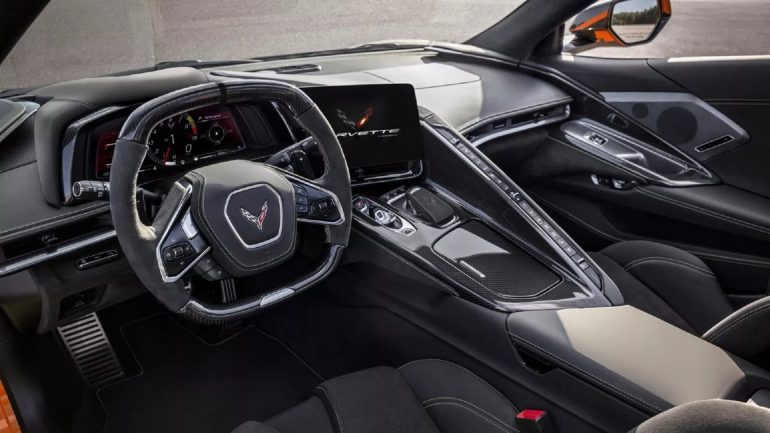
Driver-Centric Interior Layout
Fighter-aircraft thinking, from the C1 to the C8.
The interior layout of the Corvette is a deliberate styling feature that has been a hallmark of the sports car for decades. Inspired by fighter aircraft, this design philosophy emphasizes a driver-centric arrangement, with instruments and controls clustered around the driver for quick and intuitive access. The styling concept, quickly evident in the car's interior, creates a sense of unity and focus, allowing the driver to feel connected to the machine as it is being pushed to its performance limits. It remains a central feature in modern Corvettes. There have been a few tweaks, but the focus remains on the driver.
Cockpit Architecture
The wraparound windshield.
Another homage to fighter aircraft is seen in the Corvette's cockpit architecture. The wraparound design is a deliberate attempt to capture the sports car's aggressive and performance-oriented nature. Introduced in the '50s and early '60s, around the time when Americans were obsessed with space flight, the low, wraparound design immediately evoked images of speed and agility.
It created a sense of immersion for the vehicle's occupants, especially the driver, with easy visibility and access to the Corvette's critical controls.

Bodyside Cove
From 1956 chrome ornament to the ZR1’s air extractors.
It was in 1956, following a redesign of the C1 Corvette, that the side coves became an integral part of the Corvette design. The coves were sculpted into the car's bodywork as a concave indentation behind the front wheels. This feature enhanced the overall design appeal of the Corvette, breaking up the long, blocky look of the original fibreglass-bodied Corvettes (1953 - 55). The coves were outlined in chrome and were often painted a different colour than the rest of the car.
The cove has evolved over the years, becoming increasingly functional rather than serving only purely aesthetic purposes. For example, on the new Corvette ZR1, they mainly serve as air extractors along the sides of the car.
The Waterfall Effect
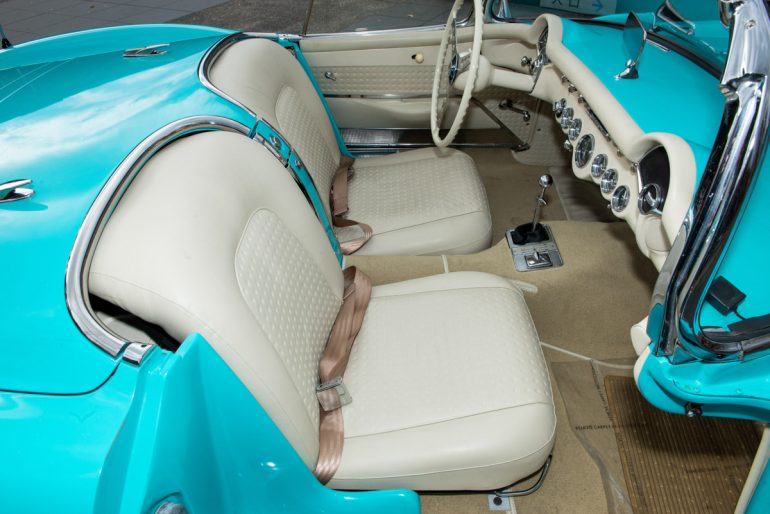
The body flowing between the seats, since the C1.
The Waterfall is a Corvette Convertible styling element that has been around since the C1 and houses the XM tuner module in the current models. The Waterfall effect describes the way in which a part of the exterior bodywork 'flows' into the passenger compartment, between the seat backs. It is a signature cue that has formed a key part of the Corvette design language - present even in the current generation models.
Proportion
Long dash-to-axle, short tail, small greenhouse.
Every Corvette is deliberately designed to follow a particular theme with regard to its proportions. There's the long 'dash-to-axle' portion. That's essentially the distance between the leading edge of the dash and the front axle.
The Corvette styling is also characterized by a short tail or rear end and a small greenhouse, the part of the car above the fender that comprises mostly the glass bits. It helps enhance the low-slung profile of the Corvette, giving it an aggressive stance even when standing still.

Tail Lights
Round since 1961; three-dimensional since 2014.
Chevrolet adopted the round tail lights for the 1961 model year (still in the first generation). That feature remained a part of Corvette design for over 50 years, becoming an integral part of the car's exterior appearance. More than a few people were upset when Chevrolet eventually ditched the styling of the headlights, opting for an edgier look with a three-dimensional design.
In a video made for Autoweek, then-GM Design Chief Tom Peters explained that the carmaker needed to adopt a more modern approach to designing the rear lights, taking advantage of available technology to develop a product that blended well with the car's new profile.
Engine Placement
Front for sixty-seven years, then not.
Though the Corvette's front engine placement (from the C1 to the C7 generation) has mechanical undertones, it was still a design decision that was a defining characteristic of the iconic sports car for decades. The front-engine placement provided a balance of weight distribution and engine accessibility. It also allowed for a comfortable and spacious interior, which was crucial for the Corvette's appeal as a daily driver.
However, after adopting the front-engine formula for so long, it quickly became clear sometime during the development of the C6 Corvette ZR1, that a change was needed as Chevrolet sought more performance for its sports car. The seeds were sown, but it was not until the C8 Corvette that Chevrolet implemented the daring decision to switch to a mid-engine layout. The move paid off as the Corvette is a much more capable supercar, boasting more power and performance than ever. However, the front-engine layout will always remain an integral part of Corvette design history.
How The Timeline Is Built
The timeline counts the moments that changed what a Corvette is: a new generation, a new engine family, a technology arriving or leaving, a production milestone, a race that mattered. It leaves out individual special editions and horsepower bumps unless they moved the car’s place in the world, which is why the ZR-1 is here and the Grand Sport is not. Dates are GM’s and the National Corvette Museum’s; the full stories behind each year are on the year pages and generation hubs linked throughout. The written milestones are Tolu’s, from his 2024 and 2025 series, merged in date order with the duplicated subjects combined; the timeline table, the 2024–2026 update and the fun fact are new. The page is updated when the Corvette does something that belongs on it.
FAQs
When was the first Corvette made?
The EX-122 show car was revealed at the GM Motorama in New York’s Waldorf-Astoria on January 17, 1953, and the first production Corvette came off a temporary line in Flint, Michigan on June 30, 1953. Three hundred were built that year, all Polo White with red interiors.
Why is there no 1983 Corvette?
The all-new C4 ran late, and with the car not ready and the Bowling Green plant new, Chevrolet skipped the 1983 model year and introduced the C4 as a 1984 in March 1983. Forty-three 1983 pilot cars were built; one survives, in the National Corvette Museum.
What are the Corvette generations and their years?
C1 1953–62, C2 1963–67, C3 1968–82, C4 1984–96, C5 1997–2004, C6 2005–13, C7 2014–19, C8 2020–present. Each generation has its own hub on CorvSport, linked from the timeline.
When did the Corvette go mid-engine?
The C8 was revealed on July 18, 2019 and went on sale as a 2020 model. Zora Arkus-Duntov had proposed a mid-engine Corvette in 1960 and GM built a dozen prototypes between the 1960 CERV I and the 1990 CERV III before committing.
Where are Corvettes built?
Bowling Green, Kentucky, since June 1981. Before that, St. Louis from December 1953 to July 1981, and Flint, Michigan for the first 300 cars in 1953. The National Corvette Museum is across the road from the plant.
What was the most important year in Corvette history?
1963, for the Sting Ray: a new coupe body, independent rear suspension, hidden headlights, the split window, the Z06 option and the Grand Sports all arrived at once. 1955 (the V8), 1984 (the C4) and 2020 (the mid-engine C8) are the other turning points.
How many Corvettes have been built?
More than 1.9 million. The millionth was built on July 2, 1992 and the 1.5-millionth on May 28, 2009; production has run at roughly 30,000 to 50,000 a year since, with a record 53,807 in 1979.
Corvette History
CorvSport’s history series: the stories behind the cars, the people and the decisions on this timeline.


More Corvette Lists
The fastest, the rarest, the most expensive, the best of every generation and the ones we would buy with our own money.