CORVETTE MODELS
C2 Corvette Sting Ray (1963–1967):
The Complete Guide
Every C2 Corvette Sting Ray, 1963–1967: The second-generation Corvette, 1963–67: the Sting Ray name on the split-window coupe and the convertible, independent rear suspension, fuel injection, disc brakes from 1965 and the big-block from the 396 to the 427 and the L88. The story, every year, the stats, production and buyer’s guide.
Quick Nav: The Story · The Years · Chart · 1963 · 1964 · 1965 · 1966 · 1967 · Specs · Colors · News · Buyer’s Guide · What to Pay · Known Issues · Market Reports · For Sale · FAQs
The Basics
The Car: The second-generation Corvette, 1963–67: the Sting Ray name on the split-window coupe and the convertible, independent rear suspension, fuel injection, disc brakes from 1965 and the big-block from the 396 to the 427 and the L88
Years: 1963–1967 (5 model years)
Built: 95,737 by GM’s counts
Engine: 327-ci small-block (250–375 hp, fuel injection to 1965); 396 (1965) and 427 (1966–67) big-blocks to 435 hp and the L88
Power: 360 to 435 hp
Performance: 0–60 in 5.5 s · quarter mile 13.8 @ 104 · 140 mph (1967, period test)
Price New: $4,252 to $5,337
The Code: 117,964 built; the Z06 package (1963), the Grand Sport racers and the L88 (1967)
Successor: C3 Corvette Stingray
Related: the C2 hub, C2 Corvette L88
The Overview
The C2 Corvette Sting Ray was built 1963–1967, 95,737 cars by GM’s counts. The second-generation Corvette, 1963–67: the Sting Ray name on the split-window coupe and the convertible, independent rear suspension, fuel injection, disc brakes from 1965 and the big-block from the 396 to the 427 and the L88.
This page has every model year of the C2 Corvette Sting Ray in its own section with the year page’s account, the specs, the numbers and the posts; the figures by year; the colors; how it compares to its siblings; the site’s guides, videos and news; and a buyer’s guide: which year to buy, what to pay, how to verify one, what goes wrong and the site’s market reports. The C2 hub has the whole line across every generation.
The C2 Corvette Sting Ray Story
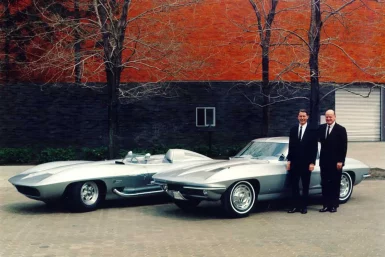
“Sting Ray”, two words, was the name Bill Mitchell gave his 1959 racer and then the 1963 production car that took its shape: the hidden headlights, the split rear window, the independent rear suspension, the first Corvette coupe. It ran five years, the shortest Corvette generation and to many the best, with the 327 fuelie at one end and the 427 L88 at the other.
This page is the Sting Ray year by year — 1963 to 1967 — with each year’s account, figures, production, prices and colors, and the Z06, Grand Sport and L88 on their own pages. The C2 hub has the full story; the name became one word, Stingray, in 1969 and returned on the C7 and C8.
MORE: THE C2 HUB

The C2 Corvette Sting Ray Year by Year
Every model year of the C2 Corvette Sting Ray: what changed, how many were built, what it cost and what it made. Each year has its section below and its own research page on the site.
MORE: THE C2 HUB / THE FULL MODEL LIST
| THE YEAR | BUILT | PRICE NEW | POWER | |
|---|---|---|---|---|
 |
1963 C2 Corvette Sting Ray The first Sting Ray: a new chassis with independent rear suspension, the one-year-only split-window coupe, four 327s up to 360 hp, the Z06 race package and the Grand Sport, and 21,513 built, 50 percent more than any Corvette before it. |
21,513 | $4,257 coupe / $4,037 convertible | 360 hp |
 |
1964 C2 Corvette Sting Ray The Sting Ray’s second year: one-piece rear window, hood vents gone, a 375-hp fuelie, Muncie four-speeds, knock-off wheels that finally shipped, and 22,229 built, with the convertible now outselling the coupe five to three. |
— | $4,252 coupe / $4,037 convertible | 375 hp |
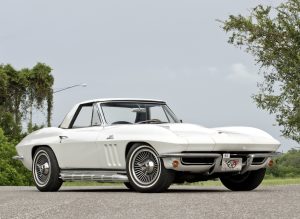 |
1965 C2 Corvette Sting Ray Four-wheel disc brakes, the 396 Mark IV big block at mid-year, the new 350-hp L79, side exhaust, knock-offs and a smooth hood: the year the Sting Ray grew up, and 23,564 built, the last with fuel injection until 1982. |
23,564 | $4,321 coupe / $4,106 convertible | 425 hp |
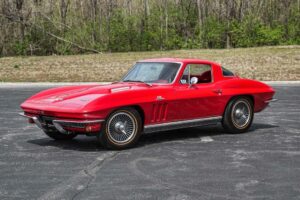 |
1966 C2 Corvette Sting Ray The 427 arrives in two strengths, the small-block list shrinks to two, the grille goes egg-crate and the coupe loses its roof vents: a record 27,720 built, more than a third of them big blocks. |
27,720 | $4,295 coupe / $4,084 convertible | 425 hp |
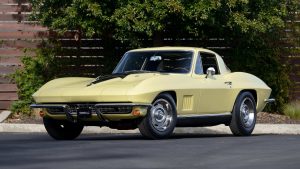 |
1967 C2 Corvette Sting Ray The last and cleanest Sting Ray: five fender louvers, Rally wheels, Tri-Power 427s with 400 and 435 hp, and twenty L88s built for the track |
22,940 | $4,388.75 coupe / $4,240.75 convertible | 430 hp |
C2 Corvette Sting Rays Built by Year
GM’s production counts for the C2 Corvette Sting Ray in each model year.
1963 C2 Corvette Sting Ray
The 1963 Corvette Sting Ray is the car that turned the Corvette from an American sports car into a world one. Bill Mitchell’s body, developed from his Sting Ray racer and Larry Shinoda’s drawings, came as a convertible or, for the first time, a coupe, with hidden headlights, a shorter 98-inch wheelbase and, on 1963 coupes only, the split rear window that Mitchell insisted on and Zora Arkus-Duntov hated. Underneath was Duntov’s new chassis: a ladder frame with independent rear suspension on a single transverse leaf spring, faster steering, wider drum brakes and weight moved rearward. The engines, three carbureted 327s and the 360-hp fuel-injected L84, carried over from 1962.
Buyers ordered it as a sports car. About four in five took the four-speed, power steering and power brakes appeared for the first time, air conditioning reached 278 cars, and leather was available with the Saddle interior. For racers Duntov wrote RPO Z06, a $1,818.45 package of Al-Fin brakes, stiff suspension and a 36.5-gallon tank on fuel-injected four-speed coupes: 199 were built. Outside the option list, he built five Grand Sports to take on the Cobra before GM shut the program down.
MORE: THE 1963 RESEARCH PAGE
 The Inaugural Ad for the 1963 Chevrolet Corvette.
1963 C2 Corvette Sting Ray: Specs and Numbers
The 1963 C2 Corvette Sting Ray by the numbers, from the 1963 research page and the Compared dataset.
| SPEC | 1963 |
|---|---|
| Engine | 327 ci (5.4 L) OHV small-block V-8, 4.00 x 3.25 in, cast iron block & heads; four versions carried over from 1962 |
| Power / torque | 360 hp / 352 lb-ft |
| 0–60 / quarter mile | 5.9 s / 14.5 @ 102 |
| Top speed | 142 mph |
| Weight | 3,150 lb |
| Built | 21,513 |
| Price | $4,257 coupe / $4,037 convertible |
1964 C2 Corvette Sting Ray
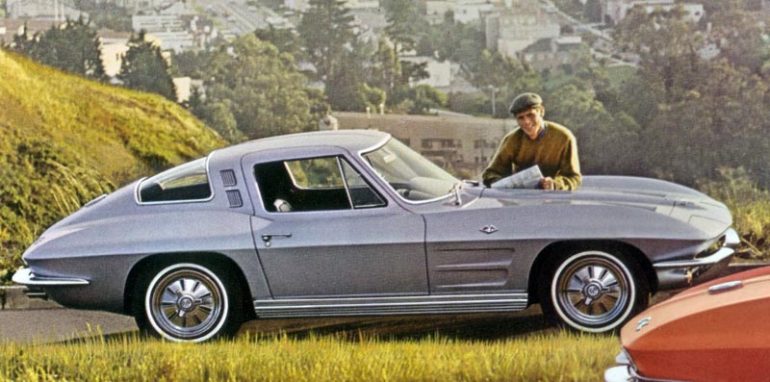
The 1964 Corvette is the 1963 with the arguments settled. The split rear window became one piece of glass, the fake hood vents were removed, the driver’s-side pillar vent on the coupe became functional with a three-speed fan, the rocker trim was simplified and the wheel covers were redesigned. Inside, more insulation and a revised exhaust quieted a car the European press had called noisy, the steering wheel went to simulated walnut, and the instruments lost their brushed-silver faces for flat black.
Under the hood the two solid-lifter engines moved up: the carbureted 327 became the 365-hp L76 with a Holley four-barrel, and the fuel-injected L84 went to 375 hp at 6,200 rpm. Muncie four-speeds, wide-ratio or close-ratio depending on the engine, replaced the Borg-Warner boxes and went into 19,034 of the 22,229 cars, while only 715 buyers kept the three-speed. Variable-rate springs and new shocks softened the ride, transistor ignition joined the list, and the cast aluminum knock-off wheels that had been withdrawn in 1963 were finally delivered, on 806 cars.
MORE: THE 1964 RESEARCH PAGE
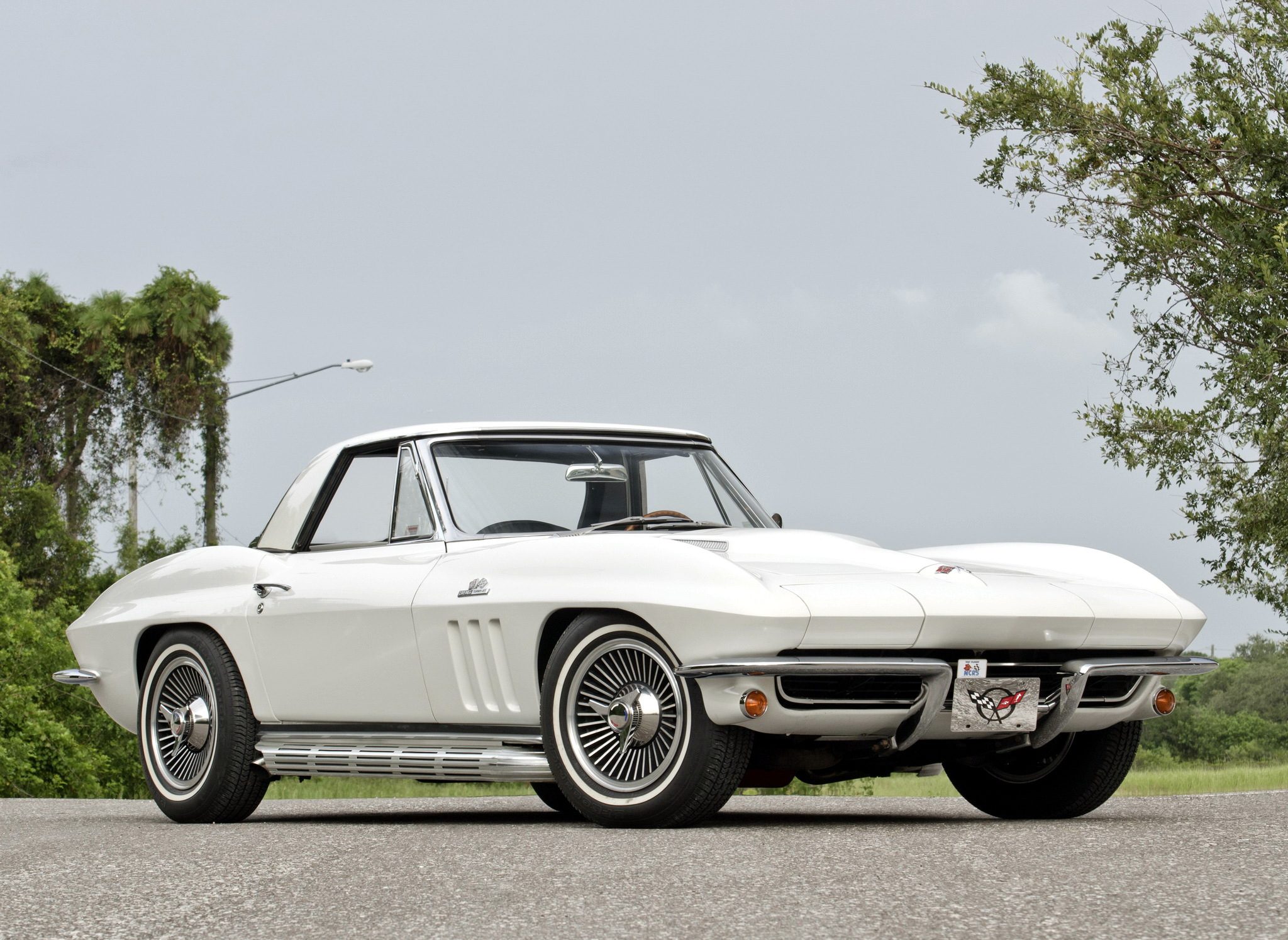
1964 C2 Corvette Sting Ray: Specs and Numbers
The 1964 C2 Corvette Sting Ray by the numbers, from the 1964 research page and the Compared dataset.
| SPEC | 1964 |
|---|---|
| Engine | 327 ci (5.4 L) OHV small-block V-8, 4.00 x 3.25 in, cast iron block & heads |
| Power / torque | 375 hp / 350 lb-ft |
| 0–60 / quarter mile | 5.6 s / 14.2 @ 100 |
| Top speed | 138 mph |
| Weight | 3,180 lb |
| Price | $4,252 coupe / $4,037 convertible |
1965 C2 Corvette Sting Ray
The 1965 Corvette is the C2 with the hardware the chassis had been waiting for. Four-wheel disc brakes, 11.75-inch finned rotors with four-piston calipers, became standard, and only 316 buyers took the $64.50 credit to keep drums. Mid-year, the 396-cubic-inch Mark IV big block arrived as RPO L78 with 425 horsepower, a bulged hood and a new reputation; 2,157 were built in half a season. At the same time the fuel-injected 327 bowed out: 771 L84s were built, and injection would not return to a Corvette until 1982.
In between, the new 350-hp L79 gave the small block a hydraulic-lifter engine that ran like a solid-lifter one, and 4,716 buyers took it. The cosmetics were tidied: the hood lost its depressions and became a single smooth surface, the front fender vents became three functional slots, the grille bars went black, the rocker moldings were redesigned, and inside the instruments got flat black faces and the seats and door panels new patterns. Side-mount exhaust, the telescopic steering column, goldwall tires and leather in eight colors joined the list, and the knock-off wheels sold 1,116 sets.
MORE: THE 1965 RESEARCH PAGE
1965 C2 Corvette Sting Ray: Specs and Numbers
The 1965 C2 Corvette Sting Ray by the numbers, from the 1965 research page and the Compared dataset.
| SPEC | 1965 |
|---|---|
| Engines | 327 ci (5.4 L) small-block V-8 in five versions; 396 ci (6.5 L) Mark IV big-block V-8 from mid-year |
| Power / torque | 425 hp / 415 lb-ft |
| 0–60 / quarter mile | 5.7 s / 14.1 @ 103 |
| Top speed | 136 mph |
| Weight | 3,260 lb |
| Built | 23,564 |
| Price | $4,321 coupe / $4,106 convertible |
1966 C2 Corvette Sting Ray
The 1966 Corvette is the first 427. Chevrolet bored the Mark IV big block from 396 to 427 cubic inches and offered it two ways: the hydraulic-lifter L36 with 390 horsepower and the solid-lifter L72 with 425 and 460 lb-ft of torque, the latter briefly badged 450 before Chevrolet quietly lowered the number on paper. Together they went into 10,374 cars, more than a third of production, and the small-block list shrank from five engines to two, the 300-hp L75 and the 350-hp L79. Fuel injection was gone.
The rest of the car was left mostly alone, which is why the 1966 is sometimes called the 1965 with the engine the chassis deserved. An egg-crate grille replaced the horizontal bars, the coupe lost its roof-mounted extractor vents and the interior blower that fed them, the wheel covers and rocker moldings were restyled, backup lights became standard, and the seats got extra pleats, a vinyl headliner and optional headrests. The four-speed went into 24,755 cars, Positraction into 24,056 and the AM/FM radio into 26,363, so a plain 1966 is a rare thing.
MORE: THE 1966 RESEARCH PAGE
1966 C2 Corvette Sting Ray: Specs and Numbers
The 1966 C2 Corvette Sting Ray by the numbers, from the 1966 research page and the Compared dataset.
| SPEC | 1966 |
|---|---|
| Engines | 327 ci (5.4 L) small-block V-8 in two versions; 427 ci (7.0 L) Mark IV big-block V-8 in two versions |
| Power / torque | 425 hp / 460 lb-ft |
| 0–60 / quarter mile | 5.4 s / 13.4 @ 105 |
| Top speed | 140 mph |
| Weight | 3,270 lb |
| Built | 27,720 |
| Price | $4,295 coupe / $4,084 convertible |
1967 C2 Corvette Sting Ray
The 1967 Corvette is the Sting Ray Chevrolet did not plan to build. The C3 was ready for 1967 until Zora Arkus-Duntov sent it back to the wind tunnel, so the C2 got a fifth year, and Chevrolet used it to take things off rather than put them on: the hood script and fender flags went, the rocker trim was flattened, the three fender vents became five louvers, a single backup light sat over the license plate, and the knock-off wheels gave way to bolt-on Rally wheels and a cast-aluminum N89 option. The result is the cleanest C2 and, for most people, the most desirable.
Under the hood the 427 came four ways. The 390-hp L36 carried over; the new L68 added three two-barrel Holleys for 400 hp; the solid-lifter L71 with the same Tri-Power made 435, and 16 L71s got aluminum heads as the L89. Above them was the L88: aluminum heads, 12.5:1 compression, a racing cam and an 850-cfm Holley under a cowl-induction hood, rated at 430 hp to discourage the curious and good for well over 500. Twenty were built, with the radio and heater deleted and a label warning that anything less than 103-octane fuel would break it. The small blocks stayed at 300 and 350 hp.
MORE: THE 1967 RESEARCH PAGE
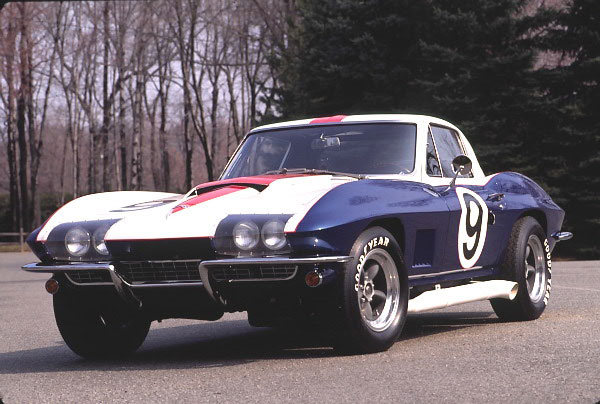 The 1967 Sting Ray was the only second-generation Corvette to run in the 24 Hours of Le Mans.
1967 C2 Corvette Sting Ray: Specs and Numbers
The 1967 C2 Corvette Sting Ray by the numbers, from the 1967 research page and the Compared dataset.
| SPEC | 1967 |
|---|---|
| Engines | 327 ci (5.4 L) small-block V-8 in two versions; 427 ci (7.0 L) Mark IV big-block V-8 in four production versions plus the L88 |
| Power / torque | 430 hp / 460 lb-ft |
| 0–60 / quarter mile | high 11s on slicks |
| Top speed | 150 mph |
| Weight | 3,150 lb |
| Built | 22,940 |
| Price | $4,388.75 coupe / $4,240.75 convertible |
C2 Corvette Sting Ray Specs by Year
The figures for every year with a row in the site’s Compared dataset: GM’s where published, otherwise the period road tests.
MORE: CORVETTES COMPARED / THE ENGINES
| YEAR | ENGINE | POWER | TORQUE | 0–60 | ¼ MILE | TOP SPEED | WEIGHT | PRICE |
|---|---|---|---|---|---|---|---|---|
| 1963 | 327 ci FI (L84), 360 hp | 360 hp | 352 lb-ft | 5.9 s | 14.5 @ 102 | 142 mph | 3,150 | $4,257 |
| 1964 | 327 ci FI (L84), 375 hp | 375 hp | 350 lb-ft | 5.6 s | 14.2 @ 100 | 138 mph | 3,180 | $4,252 |
| 1965 | 396 ci big-block (L78), 425 hp | 425 hp | 415 lb-ft | 5.7 s | 14.1 @ 103 | 136 mph | 3,260 | $4,321 |
| 1966 | 427 ci (L72), 425 hp | 425 hp | 460 lb-ft | 5.4 s | 13.4 @ 105 | 140 mph | 3,270 | $4,295 |
| 1967 | 427 ci (L71), 435 hp | 435 hp | 460 lb-ft | 5.5 s | 13.8 @ 104 | 140 mph | 3,250 | $4,389 |
| 1967 | 427 ci L88, 430 hp rated (540–580 actual) | 430 hp | 460 lb-ft | — | high 11s on slicks | 150 mph | 3,150 | $5,337 |
C2 Corvette Sting Ray Colors by Year
How many C2 Corvette Sting Rays were built in each color, from the year pages’ color charts. Years missing from the table have no per-model split in the chart. Every color has its own page in the Corvette Colors library.
MORE: ALL CORVETTE COLORS / COLORS BY YEAR
| COLOR | 1963 | 1964 | 1965 | 1966 | 1967 | TOTAL |
|---|---|---|---|---|---|---|
| Nassau Blue | — | — | 6,022 | 6,100 | — | 12,122 |
| Ermine White | — | 3,909 | 2,216 | 2,120 | 1,423 | 9,668 |
| Rally Red | — | — | 3,688 | 3,366 | 2,341 | 9,395 |
| Silver Pearl | — | — | 2,552 | 2,967 | 1,952 | 7,471 |
| Milano Maroon | — | — | 2,831 | 3,799 | — | 6,630 |
| Riverside Red | — | 5,274 | — | — | — | 5,274 |
| Tuxedo Black | — | 1,897 | 1,191 | 1,190 | 815 | 5,093 |
| Sunfire Yellow | — | — | — | 2,339 | 2,325 | 4,664 |
| Goodwood Green | — | — | — | — | 4,293 | 4,293 |
| Marina Blue | — | — | — | — | 3,840 | 3,840 |
| Glen Green | — | — | 3,782 | — | — | 3,782 |
| Marlboro Maroon | — | — | — | — | 3,464 | 3,464 |
| Daytona Blue | — | 3,454 | — | — | — | 3,454 |
| Silver Blue | — | 3,121 | — | — | — | 3,121 |
| Satin Silver | — | 2,785 | — | — | — | 2,785 |
| Mosport Green | — | — | — | 2,311 | — | 2,311 |
| Laguna Blue | — | — | — | 2,054 | — | 2,054 |
| Saddle Tan | — | 1,765 | — | — | — | 1,765 |
| Trophy Blue | — | — | — | 1,463 | — | 1,463 |
| Lynndale Blue | — | — | — | — | 1,381 | 1,381 |
| Goldwood Yellow | — | — | 1,275 | — | — | 1,275 |
| Elkhart Blue | — | — | — | — | 1,096 | 1,096 |
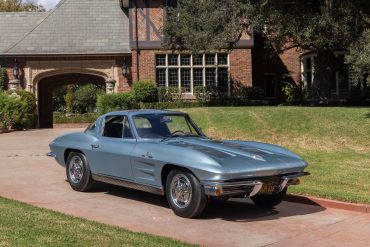
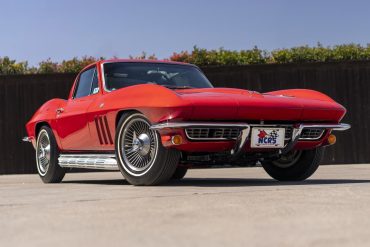
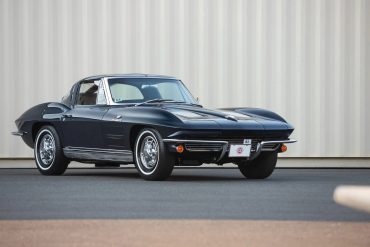
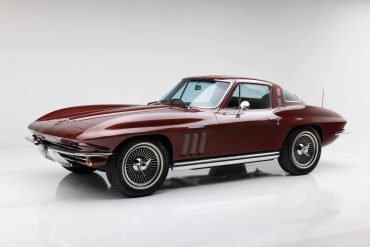
C2 Corvette Sting Ray News and Posts by Year
Everything tagged to the C2 Corvette Sting Ray’s model years, newest first.
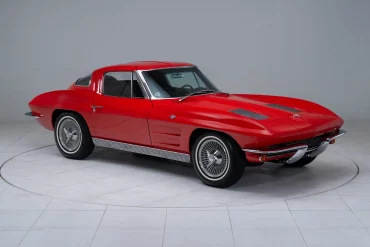
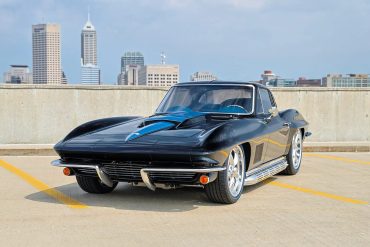
The C2 Corvette Sting Ray Buyer’s Guide
The 1963–67 Sting Ray is the most collected Corvette there is, and the market is a ladder with the engine on every rung: the 1963 split-window coupe at the top of the small blocks, the fuel-injected cars, the 1965–67 big blocks, then the L79 and the 300-hp cars most people buy. Every year has the same questions — the engine pad, the birdcage, the trim tag and the paperwork — and every year has tributes and re-bodied cars among the real ones.
Buy a 300-hp or L79 four-speed with a good body and the paperwork for a driver, a documented fuelie or big block for the collection, and the 1963 coupe for the icon. Coupes carry a premium over convertibles in every year, and NCRS and Bloomington judging sheets are worth more than a seller’s description.
Which C2 Corvette Sting Ray to Buy
Every model year of the C2 Corvette Sting Ray with the verdict a buyer needs: what the year brought, which are collected and which are the value.
| YEAR | BUILT | NEW | POWER | THE VERDICT |
|---|---|---|---|---|
| 1963 | 21,513 | $4,257 coupe / $4,037 convertible | 360 hp | The split-window coupe; the most valuable C2 small-block year and the one with the most reproductions to see through. |
| 1964 | — | $4,252 coupe / $4,037 convertible | 375 hp | The one-piece window, the quietest year of the five; the value coupe. |
| 1965 | 23,564 | $4,321 coupe / $4,106 convertible | 425 hp | Four-wheel discs and the first big block; the widest spread of values. |
| 1966 | 27,720 | $4,295 coupe / $4,084 convertible | 425 hp | The 427 arrives in two states of tune; the L72 is the muscle-car C2. |
| 1967 | 22,940 | $4,388.75 coupe / $4,240.75 convertible | 430 hp | The most valuable year at every level: the L71 and the Tri-Power, the L88 above them all. |
What a C2 Corvette Sting Ray Costs Today
What the year pages record for each year: the market ladder and the results the site has tracked. Check whether a result includes the buyer’s premium, and treat asking prices and unsold high bids separately from completed sales.
MORE: THE C2 BUYER’S GUIDE / MSRP BY YEAR
| YEAR | BUILT | NEW | THE MARKET |
|---|---|---|---|
| 1963 | 21,513 | $4,257 coupe / $4,037 convertible | The 1963 is the most valuable production Corvette of its generation and the market is really two markets. Split-window coupes are the collector car: their price depends first on whether the split window is original rather than restored from a one-piece conversion, then on the engine, with the 360-hp fuel-injected L84 at the top and the 340-hp L76 close behind, then on documentation. Convertibles are the driver’s C2 and sell for a fraction of a comparable coupe. Results tracked by Classic.com for October 2026 show the spread. Original or well-restored split-window coupes sold for $172,500 (a 340-hp car with 196 miles on Bring a Trailer), $231,000 and $250,000 (a 360-hp fuelie with 61,000 miles, also on Bring a Trailer), while custom and restomod coupes brought $230,000 at Richmond Auctions and $297,000 at Mecum Fort Worth, and a modified coupe $125,563. A project coupe sold for $76,563. |
| 1964 | — | $4,252 coupe / $4,037 convertible | The 1964 is the value C2 for a driver: the same chassis and engines as the collectible years, without the split-window premium or the big-block cachet. Coupes carry a premium over convertibles for the body style alone, and the engine sets the rest: a documented 375-hp fuelie first, then the 365-hp L76 with the close-ratio four-speed, then the 300-hp L75, which is the one most cars have and the easiest to live with. Knock-off wheels, the 36-gallon tank and the J56 brakes add value when documented, and all three have been reproduced. |
| 1965 | 23,564 | $4,321 coupe / $4,106 convertible | The 1965 is the C2 with the widest spread of values because it has the widest spread of engines. At the top sit the 771 fuel-injected L84s and the 2,157 first-year big blocks, with a documented 396 coupe or an L84 convertible the cars collectors chase; below them the 365-hp L76 and the 350-hp L79, which is the best-driving small block of the generation; then the 300-hp L75 that most cars have, and the 250s and Powerglides at the entry point. Side exhaust, knock-offs and the 36-gallon tank add value when documented, and all three are easy to add later. Coupes carry a premium over convertibles at every level. |
| 1966 | 27,720 | $4,295 coupe / $4,084 convertible | The 1966 market is a big-block market. The 427s are the cars collectors want, with the solid-lifter L72 on top and a documented early “450-hp” car or a 36-gallon tank coupe above that; the hydraulic L36 is the same look for less; then the 350-hp L79, the best small block of the C2 years; then the 300-hp cars most of the 27,720 are. Coupes carry a premium over convertibles at each level, and the modified and restomod cars that make up much of the supply trade on their build rather than their engine code. Results tracked by Classic.com for September and October 2026 show the spread: a 76-mile L72 coupe sold for $121,000 at Mecum Fort Worth and an L72 convertible with hardtop for $202,720 at Kruse; an L36 convertible with hardtop brought $125,000 on Bring a Trailer and an 88,000-mile L36 coupe $76,000; an L79 convertible sold for $100,000 and 300-hp convertibles for $64,960 and $70,000. |
| 1967 | 22,940 | $4,388.75 coupe / $4,240.75 convertible | The 1967 is the most valuable year of the C2 at every level. Below them the 16 L89 cars, then the 435-hp L71, the 400-hp L68 and the 390-hp L36, then the 350-hp L79 (the best-driving small block) and the 300-hp cars most of the 22,940 are. Coupes carry a premium over convertibles at each level, and a documented Tri-Power car with side exhaust and the N89 wheels is the picture most buyers have in mind. An L68 coupe was bid to $165,000 without selling; L36 cars were bid to $55,500 to $90,000 without meeting reserve. L79 cars sold for $104,500 (coupe) and $126,500 (convertible with hardtop) at Mecum and $150,000 on Bring a Trailer, and a 300-hp convertible with hardtop for $49,000. Modified and restomod cars sold between $53,000 and $121,000, and a project coupe for $20,250. Dealer asking prices for L71s ran $290,000 to $315,000. |
How to Verify a C2 Corvette Sting Ray
The VIN positions, the labels, the stampings and the parts that prove a C2 Corvette Sting Ray is what it claims to be, from the year pages, year by year; where a later year repeats an earlier one, only what is new is added.
1963: On a coupe, verification starts with the rear window: the split bar and its surrounding glass were commonly replaced with 1964-and-later one-piece glass in the 1960s, and many have since been converted back, so look for evidence of the original split-window structure and trim. The trim tag should agree with the paint and interior. NCRS judging sheets, old photographs, ownership records and restoration invoices all help, and ask to see dates and scores rather than just the award.
1964: Verification starts at the engine pad: the suffix (RC, RD, RE, RF and their transistor-ignition and air-conditioning variants, or SC/SD for Powerglides) must match the equipment, and the block date must precede the car’s build. A 375 needs a 1964-series Rochester injection unit; a 365 needs the Holley and the solid-lifter cam. The Muncie should be wide-ratio behind a 250 or 300 and close-ratio behind a 365 or 375. Knock-off wheels are the most faked option of the year, so check the date codes on the wheels and the spinners against the car.
1965: Verification starts at the engine pad: the suffix must match the equipment, the block date must precede the car’s build, and a 396 should carry a Tonawanda T prefix and the correct 3855962 block casting. L79 and L76 share a block, so the cam, intake and carburetor decide which is which; an L84 needs a 1965-series Rochester unit, the rarest and most faked engine of the year. The disc brakes should be the original four-piston calipers, often sleeved in stainless, and a drum-brake car needs the J61 documentation to be believed.
1966: Verification starts at the engine pad: a 427 should carry a Tonawanda T prefix, an IH/IK or IL suffix and a block date before the car’s build date, and an L72 needs the four-bolt block, aluminum intake and 780 Holley, since L36 and L72 share a bore and a hood. Positraction, the four-speed and F41 were mandatory with the 427, so a big-block car without them is wrong somewhere. The 450-hp badging is easy to reproduce and does not by itself make an early car.
1967: Verification is everything in a 1967 big block, because the Tri-Power setup, the hood and the badges are all reproduced and a 390 is easily dressed as a 435.
MORE: THE 1963 RESEARCH PAGE
The C2 Corvette Sting Ray Inspection List
What to check on a C2 Corvette Sting Ray before the money changes hands, from the year pages, with each year adding what is new.
1963: The C2 body is bonded to a birdcage of steel around the cockpit, and that structure is where the expensive problems hide: the windshield frame, the door hinge pillars and the rear window frame on coupes rust from inside and are costly to repair, so inspect them carefully. The ladder frame rusts at the kickups over the rear wheels and around the trailing-arm mounts, and the trailing-arm bushings and half-shaft U-joints wear. On the road the independent rear should feel planted, the steering should be light at speed, the drums should pull straight, and a solid-lifter engine should idle lumpily but evenly. Most of these cars see few miles, so budget for tires, brakes and fuel-system work on anything that has sat.
1965: On the road the independent rear should feel planted, the discs should stop the car straight with a firm pedal, and a big block should idle lumpily, pull hard above 3,500 rpm and run cool in traffic.
1966: A 427 should start easily, idle lumpily on the solid-lifter cam, pull hard from 3,000 rpm and hold its temperature in traffic; a big block that runs hot usually has a radiator or shroud problem.
1967: A Tri-Power car should idle cleanly on the center carburetor and come in hard when the outers open above about 3,500 rpm; if it stumbles there, the vacuum diaphragms or linkage need work. A big block that runs hot usually has a radiator or shroud problem.
MORE: THE C2 BUYER’S GUIDE
What Goes Wrong: The C2 Corvette Sting Ray’s Known Issues
The faults a C2 Corvette Sting Ray is known for, the years they affect, what they look like and what the fix is. None of them should stop a purchase; all of them should be on the checklist, and a car with the paperwork for them is the one to buy.
| ISSUE | YEARS | WHAT HAPPENS | THE FIX |
|---|---|---|---|
| Birdcage rust | 1963–67 | The steel structure under the fiberglass rusts at the windshield frame, the door hinge pillars and the rear window frame on coupes. | The most expensive C2 repair; inspect with a light and a mirror. |
| Frame rust | 1963–67 | The kickups over the rear wheels and the trailing-arm mounts. | Look from below; a repaired frame should be disclosed. |
| Engine originality | 1963–67 | Pads have been restamped; blocks, heads and intakes swapped. | Casting dates before the build date, the right suffix, the NCRS. |
| Trailing arms and half-shafts | 1963–67 | The bushings and U-joints wear; the rear wanders. | A known job. |
| Brakes | 1963–67 | The 1963–64 drums and the 1965–67 four-piston discs, which weep unless sleeved. | Check for leaks and pull. |
| Fuel injection (1963–65) | 1963–65 | The Rochester unit needs a specialist and the right fuel. | Many cars have been converted to carburetors; an original unit is worth money. |
| Re-bodied and tribute cars | 1963–67 | Convertibles made into coupes, small blocks into big blocks, 1964s into 1963s. | The trim tag, the VIN plate, the body’s seams and the paperwork. |
The C2 Corvette Sting Ray Options and Editions That Matter
What moves the price of a C2 Corvette Sting Ray beyond mileage and condition: the packages, the equipment groups and the special editions, and what each does to the value.
MORE: THE SPECIAL EDITIONS / MSRP BY YEAR
| OPTION OR EDITION | WHY IT MATTERS | WHAT IT DOES TO THE PRICE |
|---|---|---|
| Engine | From the 250-hp base to the 435-hp L71 and the L88. | The price ladder; the Specs and Values sections show it. |
| Coupe or convertible | The coupe is the design icon. | Coupes lead every year; the 1963 split window most of all. |
| Fuel injection (1963–65) | The Rochester mechanical injection. | A large premium with the original unit. |
| Side exhaust, knock-off wheels, the 36-gallon tank | The period performance options, all reproduced. | A premium when documented; easy to add later. |
| Air conditioning | Rare in every year. | A premium on a driver’s car. |
| Color | Riverside Red, Rally Red, Nassau Blue, Ermine White, Tuxedo Black; the rare ones (Sebring Silver 1963, the 1967 Marina Blue) carry more. | The Colors section has the counts. |
What a C2 Corvette Sting Ray Costs to Own
A Sting Ray is cheap to keep running — parts are reproduced down to the last clip and any classic shop knows the small block — and expensive to restore, because the body, the birdcage and the interior are specialist work. Budget tires, brakes and fuel-system work on any car that has sat. Insure on an agreed value with a classic-car insurer.
MORE: THE C2 BUYER’S GUIDE
The Site’s Market Reports on the C2 Corvette Sting Ray
What CorvSport has written about buying, selling and valuing the C2 Corvette Sting Ray: the market reports, the bargain hunting, the auction results and the cars it has listed, newest first.
C2 Corvette Sting Ray: Recalls, Service Bulletins and Maintenance
The site’s recall, service-bulletin and maintenance-schedule posts for the C2 Corvette Sting Ray’s model years and the C2 generation.


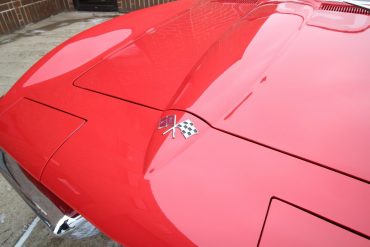


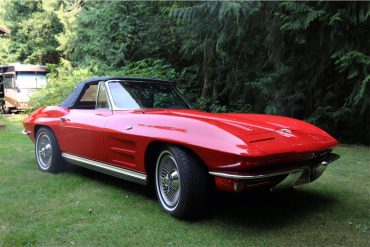
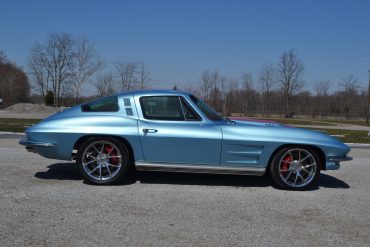


C2 Corvette Sting Rays For Sale
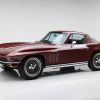
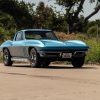
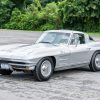
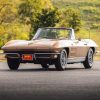
The C2s the site has listed for sale, newest first; the C2 Corvette Sting Rays are among them. The for-sale page has every Corvette the site is following and the auctions page the results.
Go Deeper
The pages around this one.
Every Corvette model and year — the full list
The C2 Corvette hub — the generation, 1963–67
Corvettes Compared — every year’s figures
FAQs
What years was the C2 Corvette Sting Ray made?
1963–1967, 5 model years. The second-generation Corvette, 1963–67: the Sting Ray name on the split-window coupe and the convertible, independent rear suspension, fuel injection, disc brakes from 1965 and the big-block from the 396 to the 427 and the L88.
How many C2 Corvette Sting Rays were built?
95,737 by GM’s counts: 1963 21,513, 1965 23,564, 1966 27,720, 1967 22,940.
How much horsepower does the C2 Corvette Sting Ray have?
327-ci small-block (250–375 hp, fuel injection to 1965); 396 (1965) and 427 (1966–67) big-blocks to 435 hp and the L88. 360 to 435 horsepower across the years
How fast is the C2 Corvette Sting Ray?
1963: 0–60 in 5.9 s, 142 mph · 1964: 0–60 in 5.6 s, 138 mph · 1965: 0–60 in 5.7 s, 136 mph · 1966: 0–60 in 5.4 s, 140 mph · 1967: 0–60 in 5.5 s, 140 mph (GM’s figures or the period tests; the Compared page has them all).
How much did the C2 Corvette Sting Ray cost new?
1963: $4,257 coupe / $4,037 convertible · 1964: $4,252 coupe / $4,037 convertible · 1965: $4,321 coupe / $4,106 convertible · 1966: $4,295 coupe / $4,084 convertible · 1967: $4,388.75 coupe / $4,240.75 convertible. The MSRP by Year page has every year in today’s dollars.
What is a C2 Corvette Sting Ray worth today?
See What to Pay in the buyer’s guide above: the site’s tracked auction and dealer results by year. The figures move, and the for-sale feed shows asking prices now.
Why is it Sting Ray and not Stingray?
Chevrolet wrote it as two words on the 1963–67 cars, after Bill Mitchell’s 1959 Stingray racer whose name was written both ways; the 1969–76 C3s and the 2014-on C7 and C8 use one word. Nothing but the badge changed.
What is the most valuable C2 Sting Ray?
The 1967 L88s — $3.85 million for the record coupe — then the 1963 Z06 “tankers”, the 1963 split-window fuelies and the 1967 427/435 Tri-Power cars; the 1963 Grand Sport racers are in another class at $18.7 million. The C2 buyer’s guide has the ladder.
Which C2 year is the best to buy?
The 1965 for disc brakes and the last fuel injection with the first big-block, the 1966 for the 427 and the most cars built, the 1963 for the split window and the 1967 for the last and most refined; the buyer’s guide covers each.
Which C2 Corvette year is best to buy?
A 1965–67 for the four-wheel discs and the big-block option, a 1964 for value, a 1963 coupe for the icon. The engine matters more than the year: an L79 or 300-hp four-speed is the driver’s car, a fuelie or an L71 the collector’s.
What should I check on a C2 Corvette?
The birdcage and the frame for rust, the engine pad and the casting dates, the trim tag against the paint and interior, the trailing arms and the brakes, and the paperwork. The site’s C2 buyer’s guide has the whole inspection.
How much is a 1963–67 Corvette worth?
From the forties for a driver to seven figures for an L88, with the year pages’ market sections tracking the results by engine; the ladder on this page shows where each year sits.