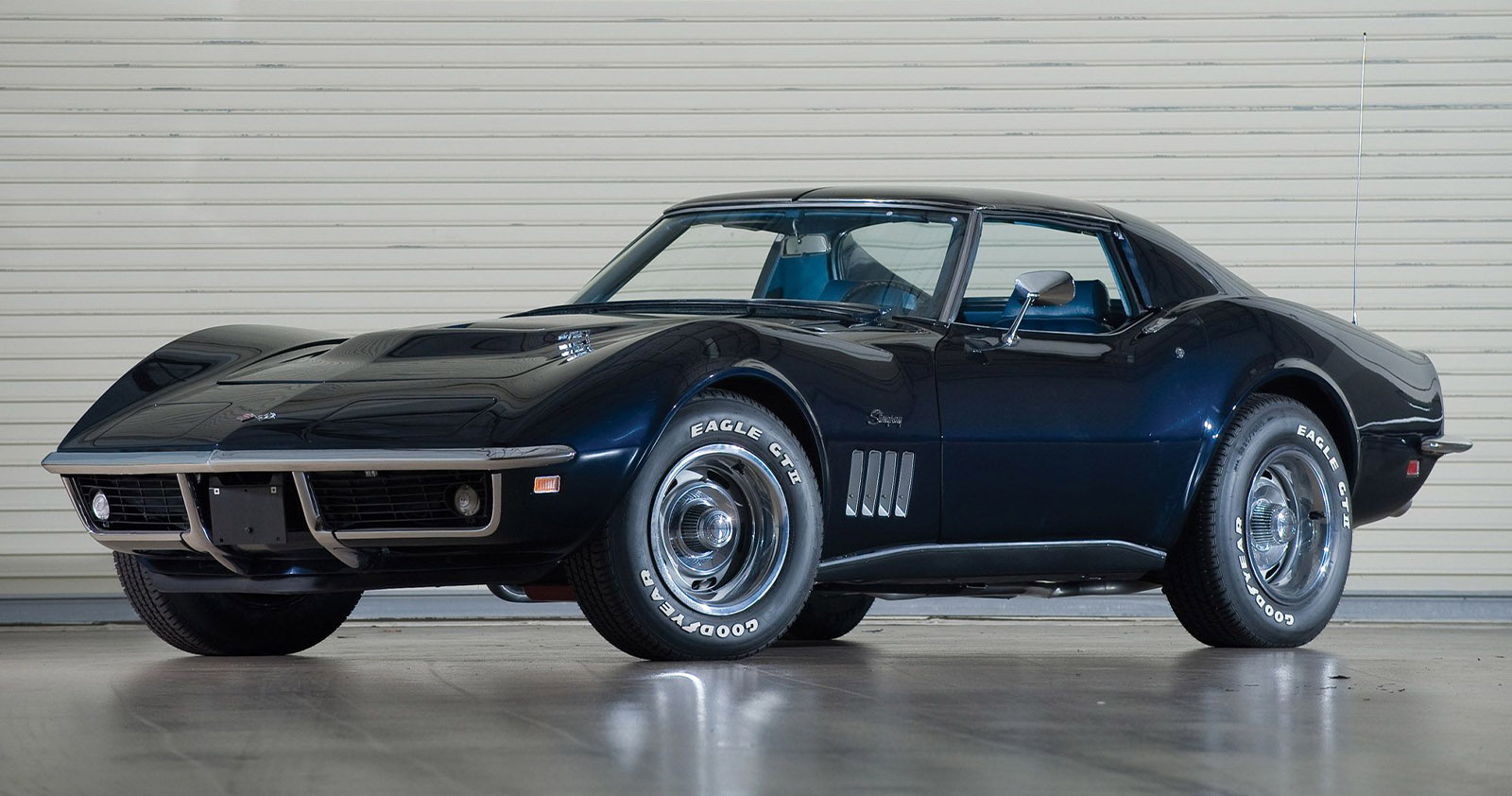
Five model years. That’s all the second-generation Corvette got, from 1963 to 1967, which makes it the shortest-lived Corvette of the lot. And yet it’s the one collectors line up for, the one auction houses like to put on the catalog cover, and the one Chevrolet’s own designers still can’t stop quoting more than half a century later. Most people put that down to the shape, and fair enough, it’s a terrific shape.
What tends to get skipped is how the shape got there. The Sting Ray came out of years of rows between GM’s styling boss, its most stubborn engineer, and a boardroom that wanted nothing to do with racing, thank you very much. Who won each of those fights, and who flatly refused to accept losing them, explains most of what makes the C2 worth talking about.
Born Under a Racing Ban
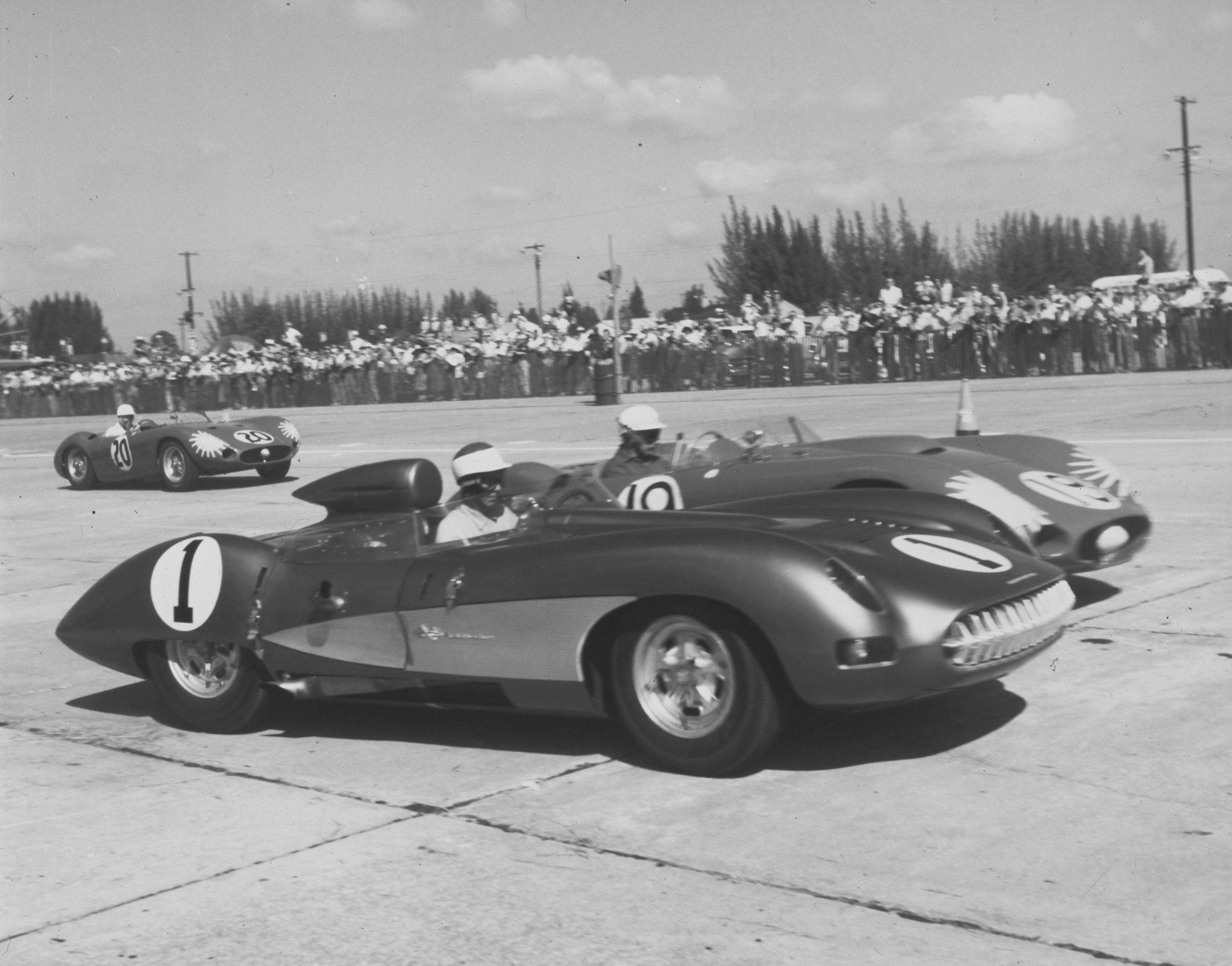
In June 1957, Detroit decided it was done with factory-backed racing. Or rather, the Automobile Manufacturers Association decided on Detroit’s behalf, and its members, GM included, agreed to stop backing motorsport directly. Overnight, the Corvette SS, Zora Arkus-Duntov’s purpose-built racer, became an expensive car with nowhere to go. Bill Mitchell, about to inherit Harley Earl’s job as head of GM Styling, was not the type to take a memo like that to heart.
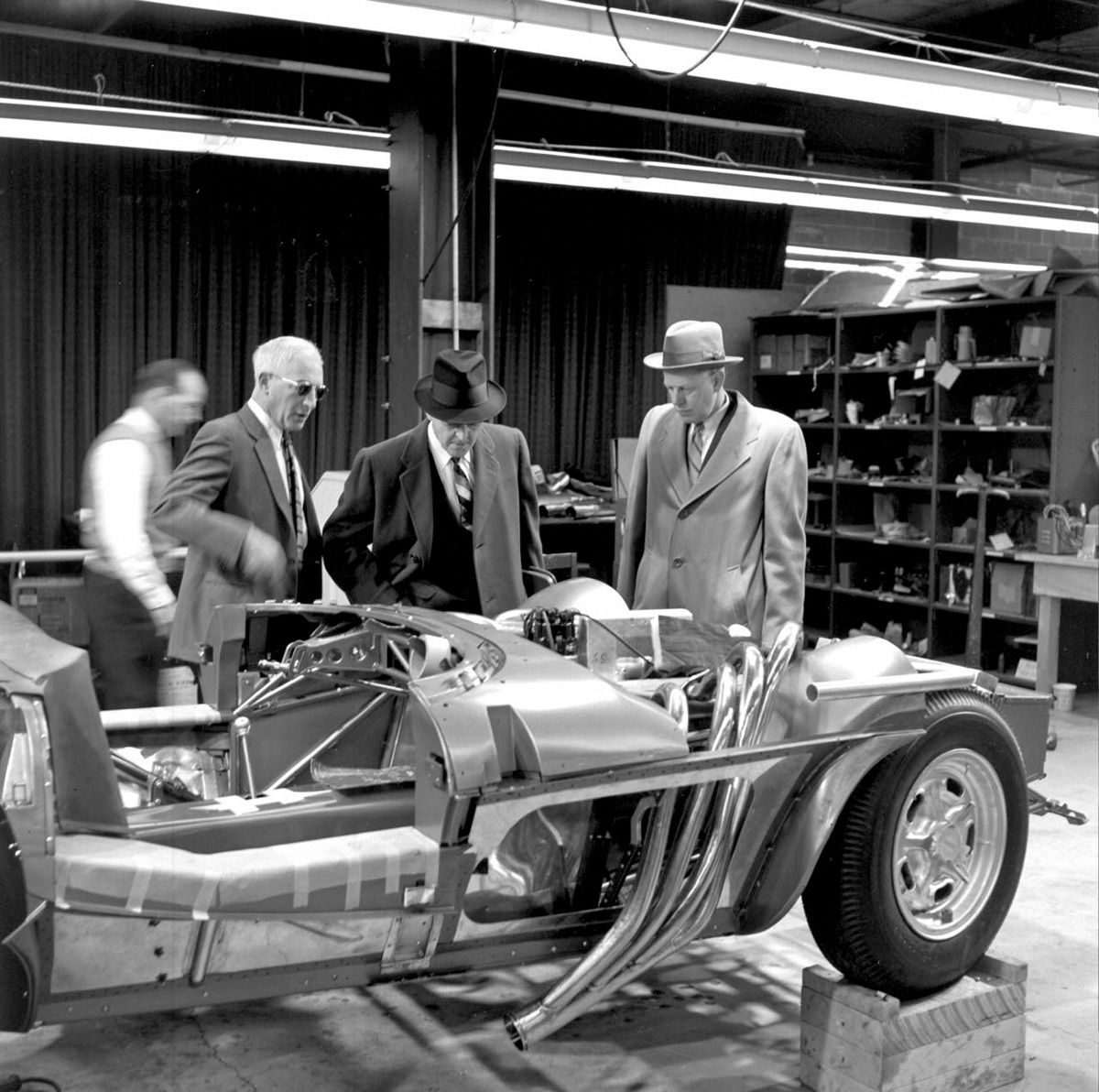
So he went shopping. In the fall of 1958, Mitchell got hold of the SS test mule, the chassis the team had used for practice laps at Sebring. What he paid depends on who’s telling the story (a dollar in some versions, $500 in others), and Duntov, who wasn’t thrilled about the styling department getting its hands on his hardware, reportedly tried to block the sale. He lost that one.
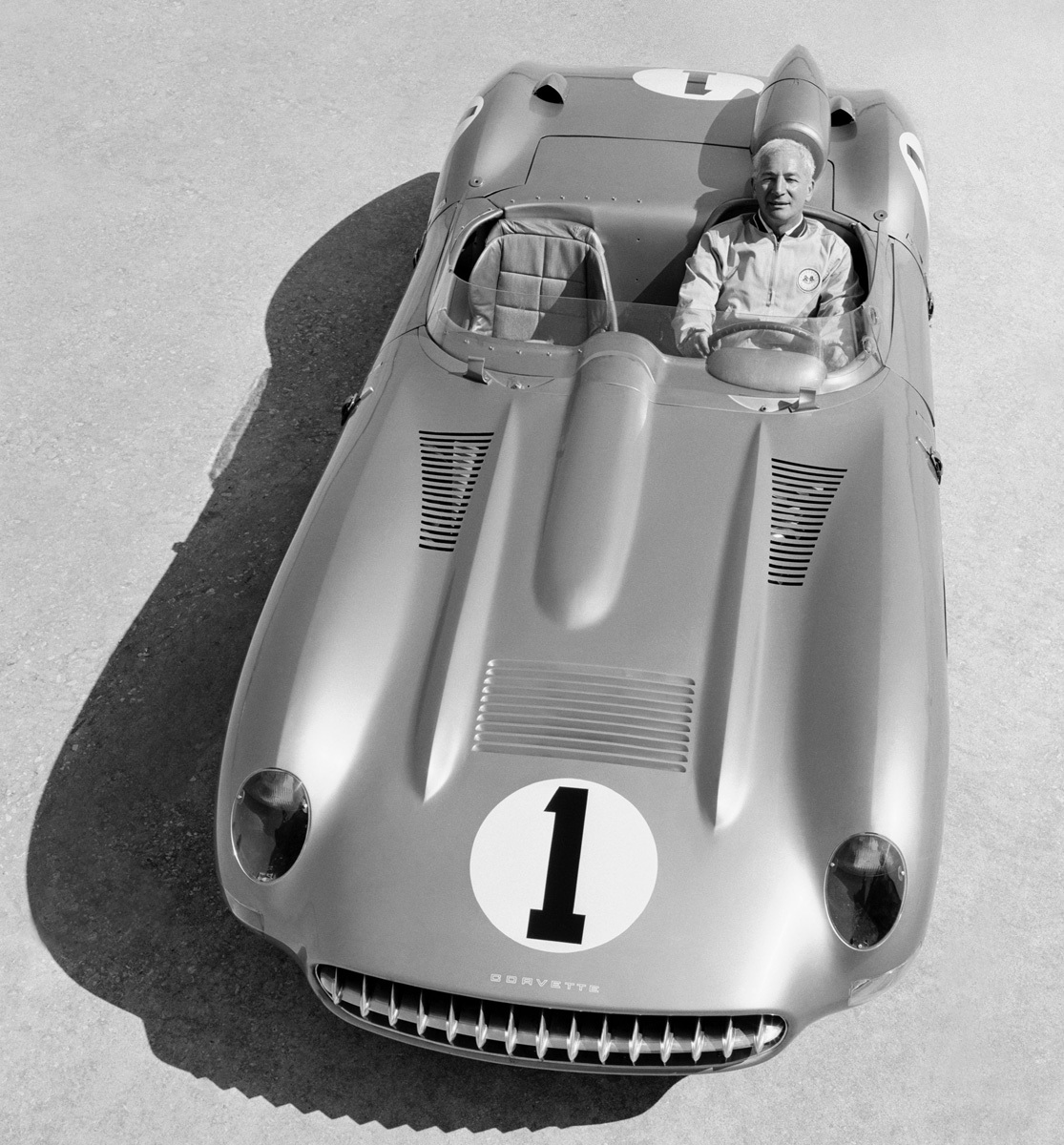
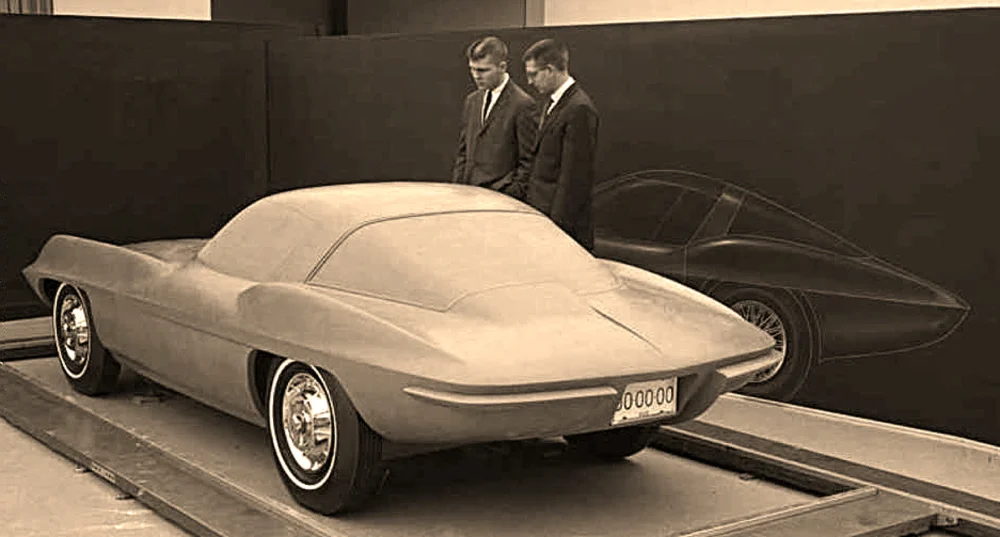
The body came out of the advanced studio. Pete Brock, who had joined GM at 19 as its youngest designer, had sketched the earlier Q-Corvette study that set the direction, and Chuck Pohlmann and Larry Shinoda shaped the racer’s final form on the SS underpinnings. Chevrolet couldn’t put its name on a race car, so Mitchell entered the Stingray Racer as a private owner and footed the racing bills himself. Behind the wheel was Dick Thompson, a Washington, D.C., dentist who happened to be one of the quickest Corvette drivers on the East Coast.
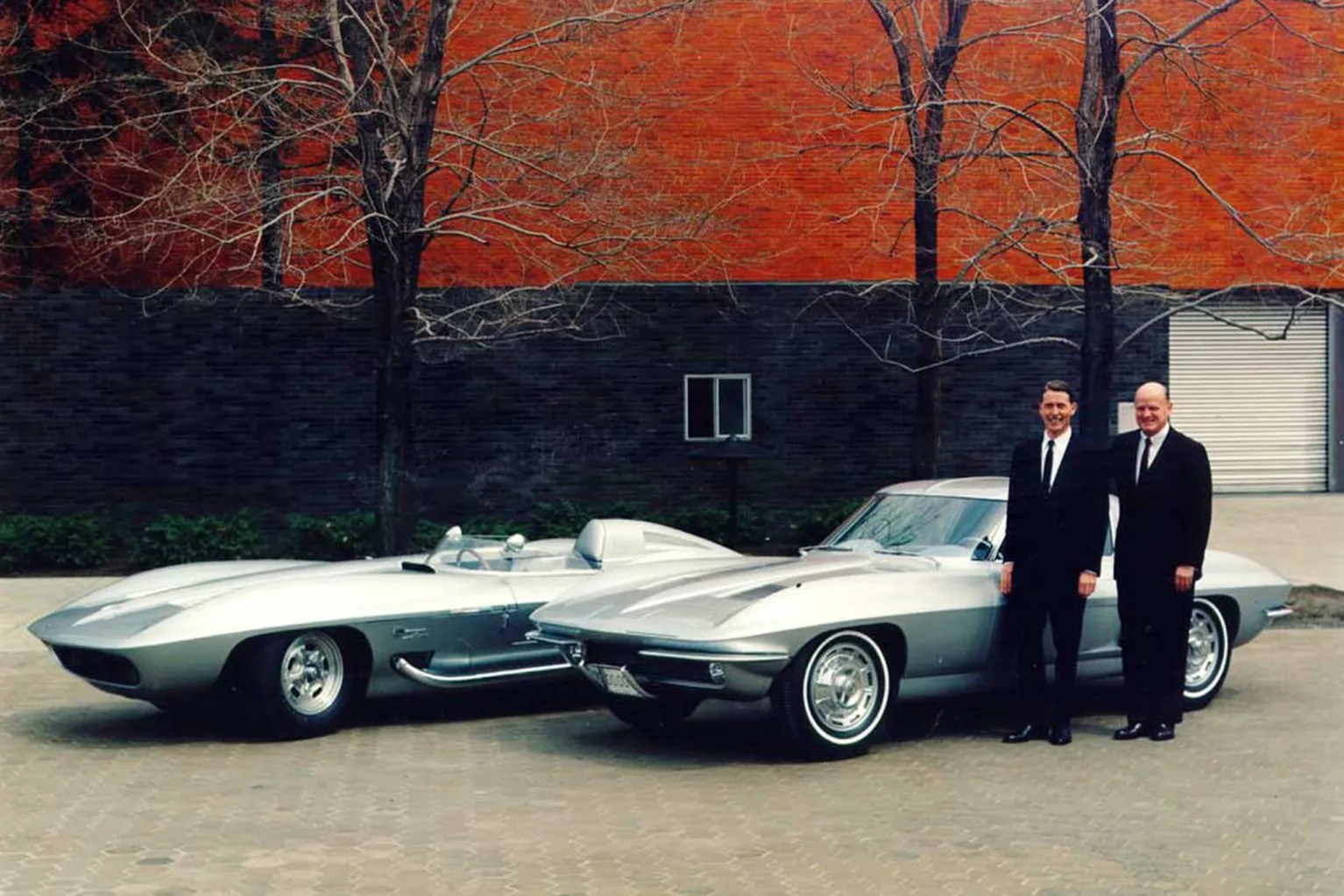
The car debuted at Marlboro Raceway in Maryland in April 1959 and finished fourth. It also had a nasty habit. Brock has said that somewhere past 140 mph the body made enough lift to pull the front wheels off the ground, and the car’s stance was reworked into a nose-down rake to keep it planted. Thompson took the SCCA C-Modified national title in 1960, and by then Shinoda’s clay model for the production car had been approved. So the 1963 Corvette’s styling was, in effect, proven on track by a race car GM officially had nothing to do with.
The Split Window Standoff
Mitchell and Duntov were stuck with each other, and both of them knew it. Mitchell was a showman who trusted his eye above just about everything. Duntov, born in Belgium to Russian parents, was a Le Mans veteran who had talked his way into GM in 1953 after spotting the first Corvette at the Motorama and deciding it deserved a lot better than it was getting.
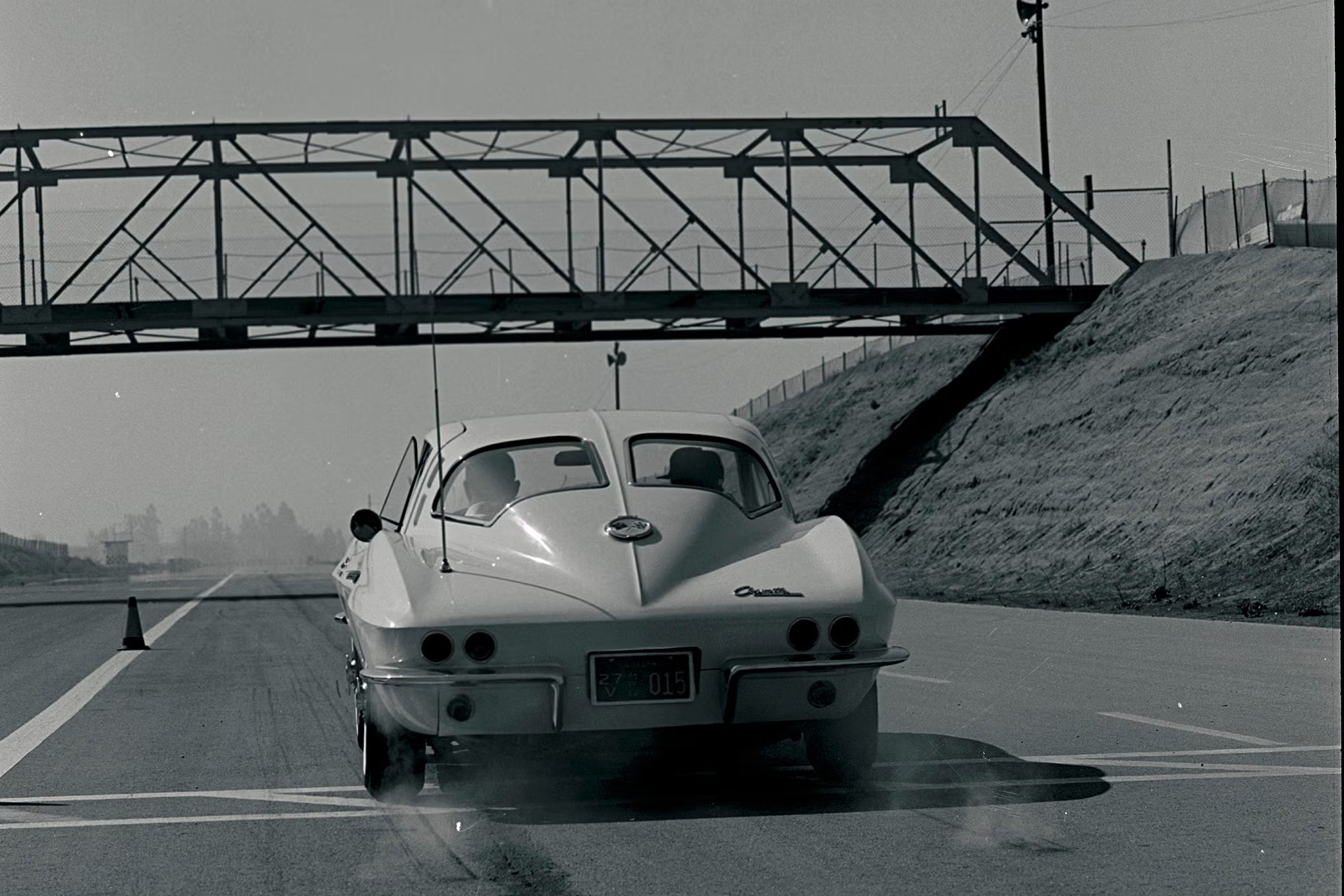
Their most famous fight was over a strip of fiberglass. On the 1963 coupe, a raised spine ran down the middle of the roof and carried straight on through the rear window, splitting the glass in two. To Mitchell, it was the point of the whole car, and he reportedly said that losing it would ruin the design. To Duntov, it was a bar parked dead center in the rearview mirror, which is not ideal in a car built to go fast and, now and then, be followed by a state trooper.
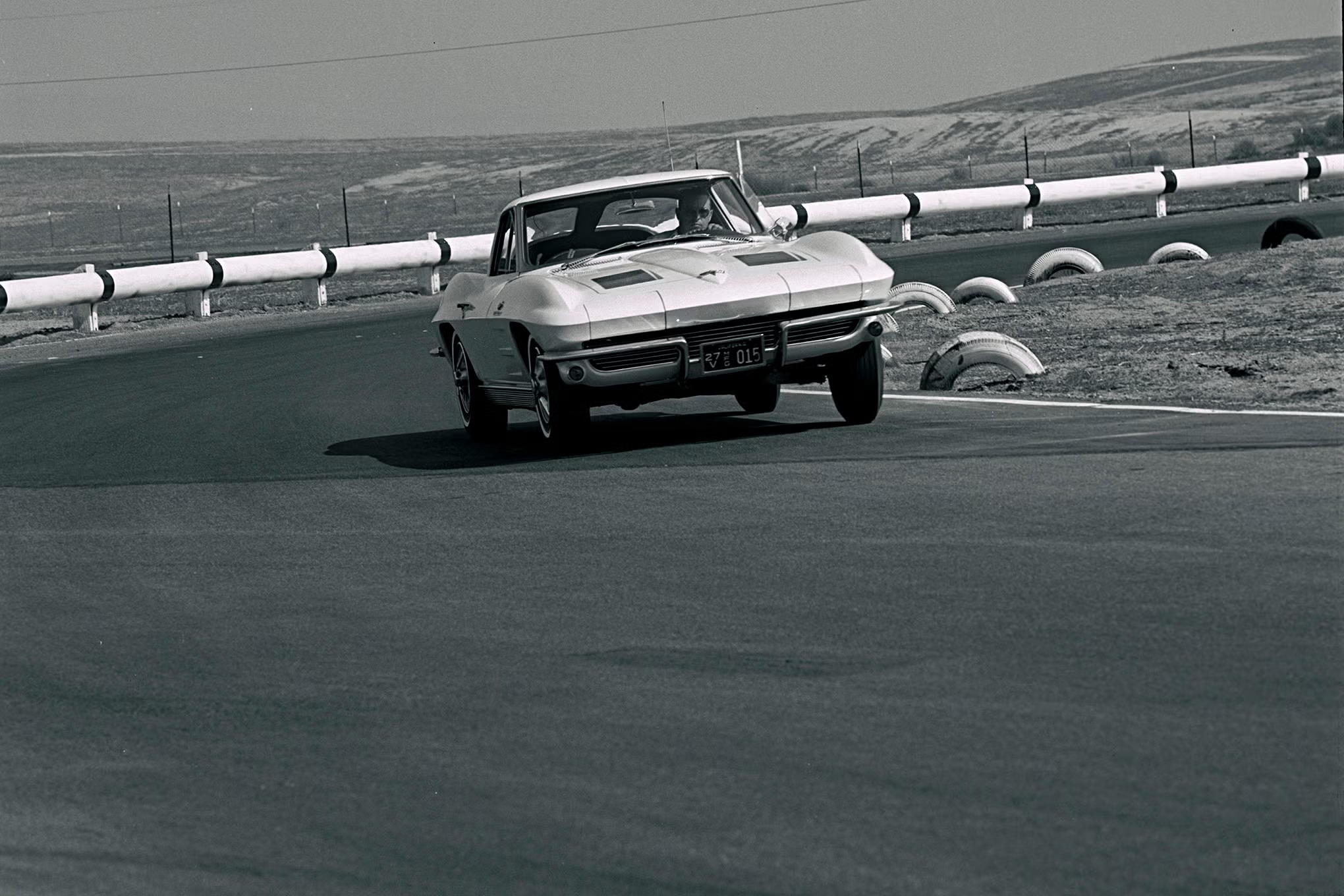
Mitchell got his split window for exactly one year. The 1964 coupe arrived with a single piece of glass, and the feature never came back. Chevrolet built 10,594 coupes for 1963, and plenty of owners spent the following years having the bar cut out and replaced with one-piece glass, as if it were a factory defect. These days an unmolested split-window is one of the most coveted C2s around, and some of those “fixed” cars have been put back the way they left St. Louis. Duntov won the argument, but the collectors, it turns out, were on Mitchell’s side all along.
Styling vs. Physics
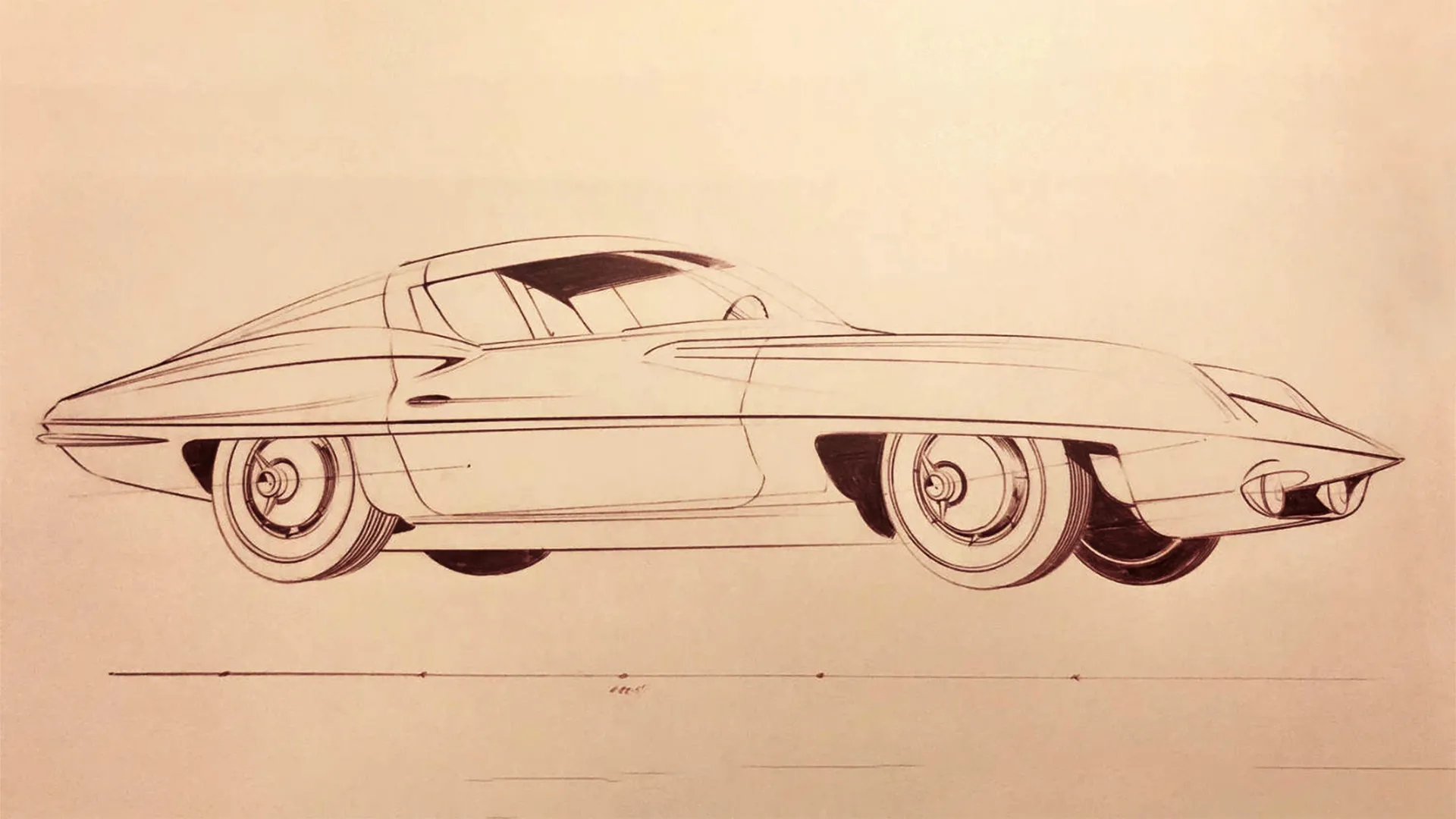
The racer’s aero quirk raises a fair question about the road car. The production body was refined largely by eye in Mitchell’s studio and borrowed the racer’s look, rounded nose and long, sloping tail included. It was a different body developed through its own process, though, so the racer’s lift problem can’t simply be assumed to have come along for the ride. Still, a car that looked like it was doing 150 mph parked at the curb was very much a stylist’s priority, and the kind of styling-first thinking Duntov spent his career pushing back against. Hold that thought, because lift comes back into this story.
Underneath, though, Duntov was in charge, and it shows. The ditched the C1’s X-braced frame for a new ladder frame and moved more of its weight rearward. The headline act was independent rear suspension, a clever and, crucially, cheap setup in which the half shafts doubled as upper links, working with trailing arms, lateral strut rods and a single transverse leaf spring slung under the differential. Duntov had tried similar ideas on his CERV I research car, and this version was compact and affordable enough to go into a car regular people could actually buy.
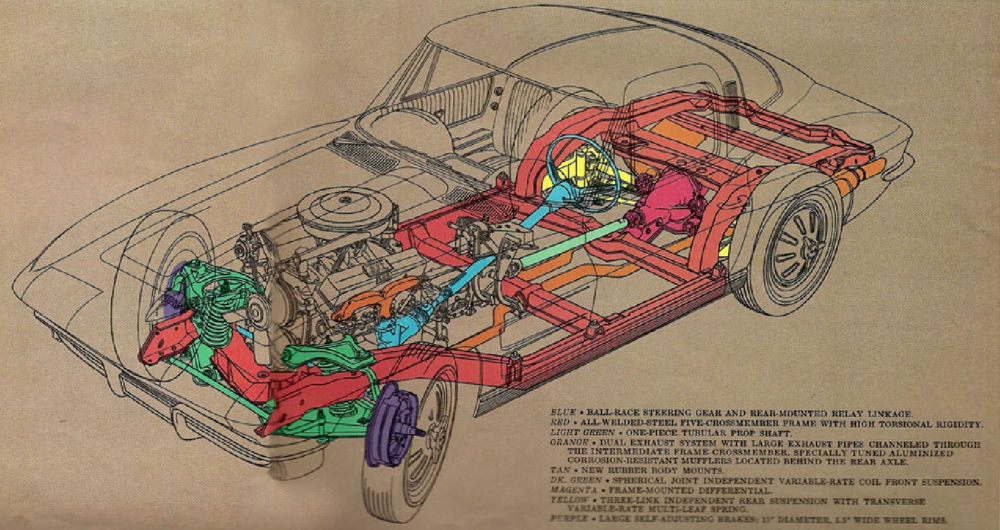
Four-wheel disc brakes joined the standard equipment list for 1965. And that transverse leaf spring? It stuck around, eventually in composite form, until the C8 finally swapped it for coil-overs. Duntov’s fix was still bolted under new Corvettes more than five decades after the split window was gone.
The Grand Sport and the Front Office
Then there’s the one that got away. In 1962, Duntov set out to build a lightweight Corvette for international GT racing, with Le Mans as the goal and Carroll Shelby’s Cobra as the car to beat. Around his shop it was simply called the Lightweight, which tells you everything about its priorities. The plan was 125 cars, enough to clear the FIA’s 100-car homologation rule, and Chevrolet general manager Bunkie Knudsen was on board.
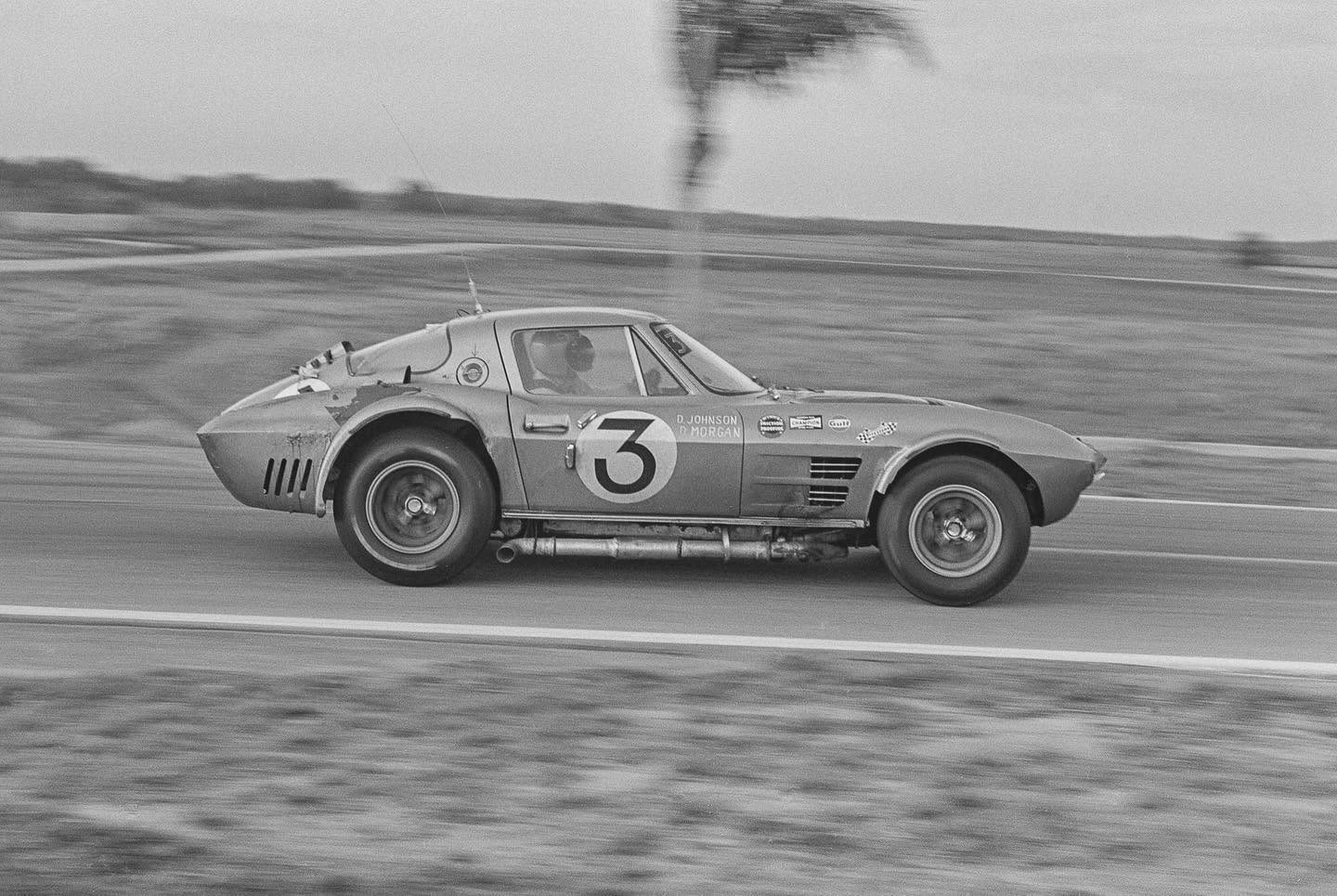
The numbers were serious. A tube frame, wafer-thin fiberglass and aluminum wherever it would fit brought the weight down to roughly 1,900 to 2,000 pounds, a thousand pounds or more under a showroom Sting Ray. Unfortunately for Duntov, GM chairman Frederic Donner found out, and in early 1963 he shut the program down and reportedly ordered the cars destroyed.
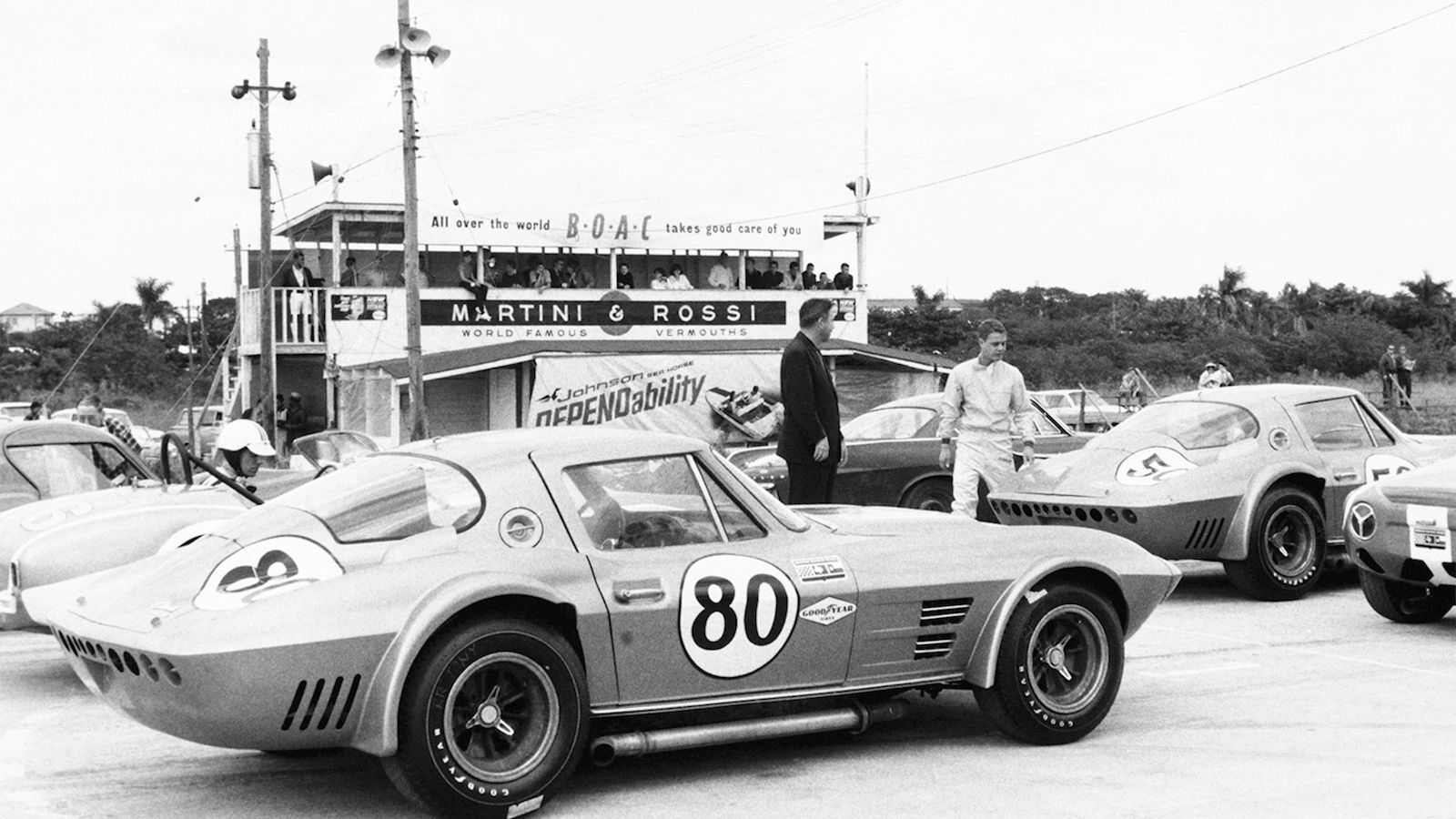
Five chassis were already built, and Duntov had no intention of feeding them to a crusher. Instead, they slipped out the back door to privateers. Dick Doane raced one in SCCA events through 1963, and that December three of them turned up at Nassau Speed Week in the Bahamas with John Mecom Jr.’s Texas team, now packing 377-cubic-inch aluminum V8s. It was the first time the Grand Sports met the Cobras head on, and fans of both have been arguing about that week ever since.
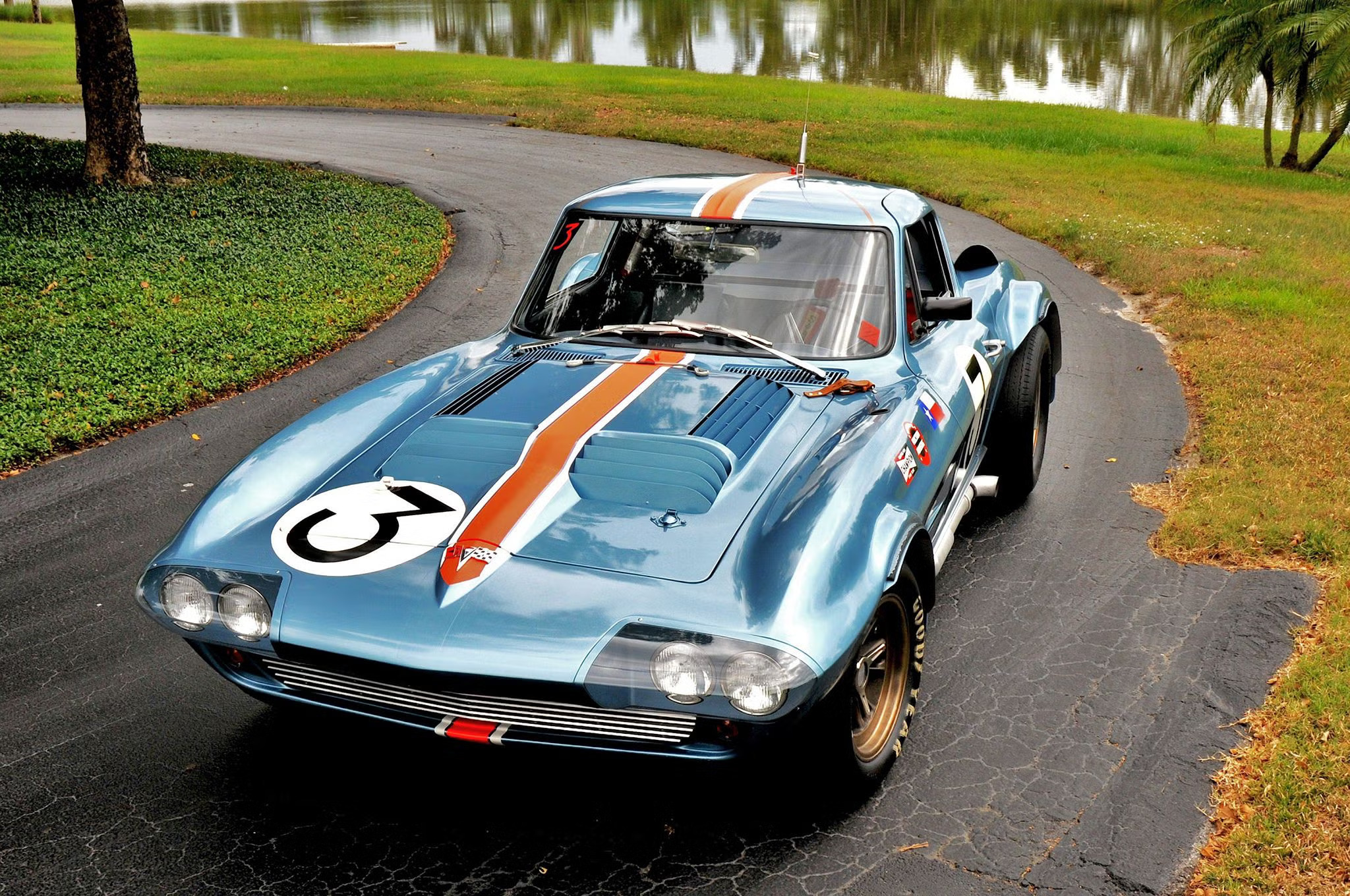
All five cars survive. This August, chassis 003 sold at RM Sotheby’s Monterey auction for $18.7 million including fees, not bad for a car its own company reportedly wanted scrapped. Some of that money is for the hardware, but a good chunk of it is for the story: an engineer working around his bosses right up until his bosses caught him.
Losing the Argument, Winning the Legacy
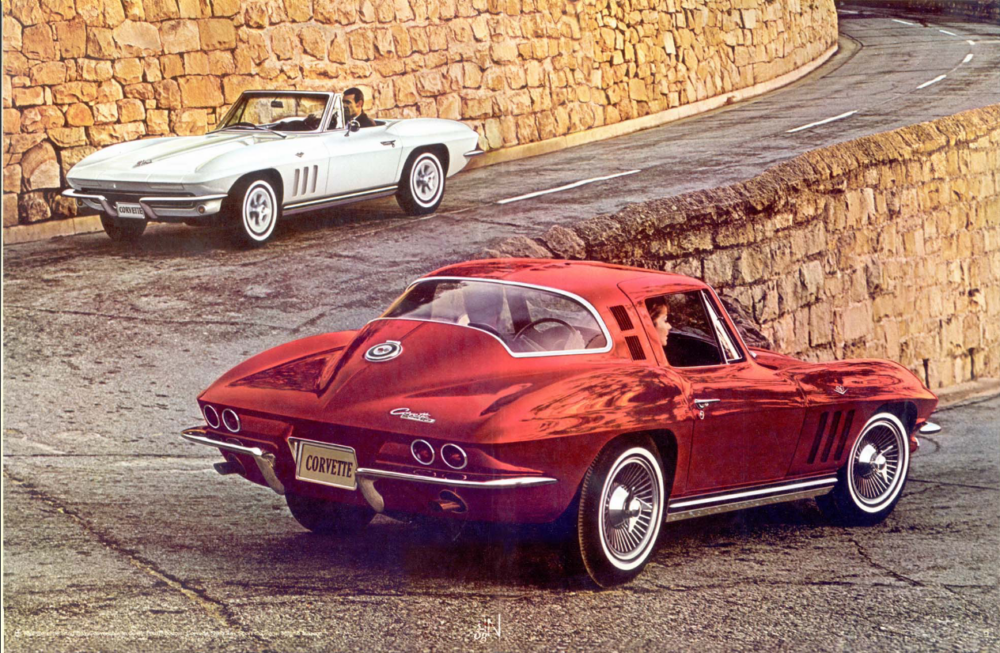
While C2s were still rolling out of St. Louis, Duntov was already chasing the next thing. In 1964 he built CERV II, a mid-engine, four-wheel-drive research car aimed squarely at endurance racing. Management looked it over, nodded politely, and filed it away. The production Corvette headed the other way, toward cubic inches: mechanical fuel injection disappeared after 1965, the year the 396 big-block showed up, and the 427 arrived for 1966.

Mitchell, naturally, already had the replacement lined up. Executives saw the Mako Shark II concept in 1965 and quickly decided it would be the next Corvette, pencilled in for 1967. Turning it into a production car took longer than anyone wanted, and the launch slipped to 1968. Among the problems that turned up along the way, testing showed the shape had a tendency toward front lift at high speed, the same issue that had the Stingray Racer’s nose going light back in 1959. Duntov wasn’t terribly surprised.
He retired in 1975 without ever seeing a mid-engine Corvette in a showroom. Chevrolet got there for the 2020 model year, 56 years after CERV II. Look at a C2 today and you can more or less read the scorecard off the car itself: here’s where the stylist won, here’s where the engineer won, and here’s where the company overruled the pair of them.