CORVETTE LISTS
The People Who Built The Corvette
The designers, engineers and executives who created, saved and shaped the Corvette, ranked: Harley Earl, Zora Arkus-Duntov, Bill Mitchell, the chief engineers from McLellan to Holder, and the names behind the scenes who never got the credit.
Quick Nav: At A Glance · The Ranking · Chief Engineers · Modern Era · Ghost Architects · Methodology · FAQs · Profiles · More Lists
At A Glance
Father of the Corvette: Harley Earl, GM’s head of styling, 1927–1958
Godfather of the Corvette: Zora Arkus-Duntov, chief engineer 1967–1975 (at Chevrolet from 1953)
Chief engineers since Zora: Dave McLellan (1975–92), Dave Hill (1992–2006), Tom Wallace (2006–08), Tadge Juechter (2008–24), Josh Holder (2024– )
Design chiefs of the generations: Earl (C1), Mitchell/Shinoda (C2, C3), Jerry Palmer (C4), John Cafaro (C5), Tom Peters (C6, C7, C8)
The one who saved it: Duntov in 1955 with the V8; Russ McLean in 1992 with the C5 business case
The one nobody credits: Bob McLean, who laid out the 1953 Corvette’s proportions in a week
The Overview
The Corvette has exponentially outlived its early reputation as an underpowered roadster, incapable of handling with the agility most had anticipated. Its prominent position in today’s performance landscape is quite remarkable, considering that its production was almost halted shortly after it began. The drastic turnaround is a true testament to the creative vision of those hard at work behind the scenes within GM’s design and development departments. Without these visionaries we would likely never have seen the Corvette reach its full potential, and would all be left to ponder the question, “What if?”
The Corvette’s continual evolution over seventy-three years stands as a collective of thoughts, ideas and opinions from some of the most brilliant minds in the history of automotive design, and only a few of them are household names. This page ranks the ten who mattered most, then gives the chief engineers and design chiefs of every generation, the modern team that built the mid-engine car, and the ghost architects whose names rarely make the lists but without whom there would be no Corvette to list. Each entry links to CorvSport’s full profile where we have one.
The Ten Most Influential People In Corvette History
Josh Boyd’s ranking of the designers, engineers and executives without whom the Corvette would not exist, or would not be the car it is. Each entry links to the full profile where CorvSport has one.
1. Zora Arkus-Duntov
Chief engineer · the Godfather of the Corvette · at Chevrolet 1953–1975
Zora Arkus-Duntov would not only serve as the original Chief Engineer for the Chevrolet Corvette but would also come to be known as the “Godfather of the Corvette” as well. Ever the visionary, Duntov would be the first to envision the Corvette as a true performance vehicle, even saving the Corvette from an almost certain early demise, due to his insistence that the sports car be offered with an optional V8 powerplant.
After joining the Chevrolet engineering team in 1953, Duntov penned a memo titled “Thoughts Pertaining to Youth, Hot Rodders, and Chevrolet” to Chevrolet Chief Engineer Ed Cole. The memo outlined the perceived virtues of bolstering the Corvette’s performance to meet the demands of young consumers, and served as the ultimate catalyst toward the V8. Duntov would pioneer early Corvette racing efforts as well, often in the face of hostility from top GM brass, setting records at Daytona Beach and Pikes Peak and building the Grand Sports in secret. He would even serve as the first to experiment with the notion of switching to a mid-engine configuration, seeking desperately to make the Corvette competitive with the European racers of the era. Without exception, Zora Arkus-Duntov was the true visionary behind what the Corvette has now become.
MORE: PROFILING GREATNESS: ZORA ARKUS-DUNTOV / THE ONLY CORVETTE ZORA OWNED / ALL ZORA POSTS
2. Harley Earl
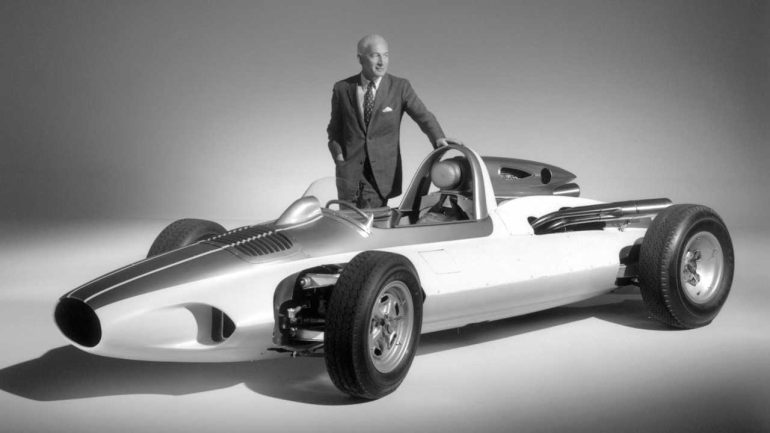
GM Vice President of Styling, 1927–1958 · the Father of the Corvette
It goes without saying that if it had not been for Harley Earl, there would have been no Corvette. Toward the latter days of his illustrious career, the famed designer set out to create his vision of the quintessential American sports car as part of an endeavor codenamed Project Opal. Originally dubbed prototype EX-122, the Corvette debuted to significant fanfare at GM’s Motorama in New York City on January 17, 1953, and as a result was greenlighted for immediate production.
Earl would spend the last few years of his career tirelessly campaigning to keep the Corvette in production despite lackluster initial sales, experimenting with an array of trim configurations in an attempt to catch the eye of new and youthful consumers, before retiring in 1958. Though others have undoubtedly played a larger role in the Corvette’s rise to success, Earl provided future engineers and designers with the starting point from which to base their efforts. Karl Ludvigsen’s account of how Earl, Bob McLean and Carl Renner styled the 1953 car is the definitive telling, and it is linked below.
MORE: PROFILING GREATNESS: HARLEY EARL / STYLING BY EARL, McLEAN AND RENNER
3. Bill Mitchell
GM Vice President of Styling, 1958–1977 · the Sting Ray
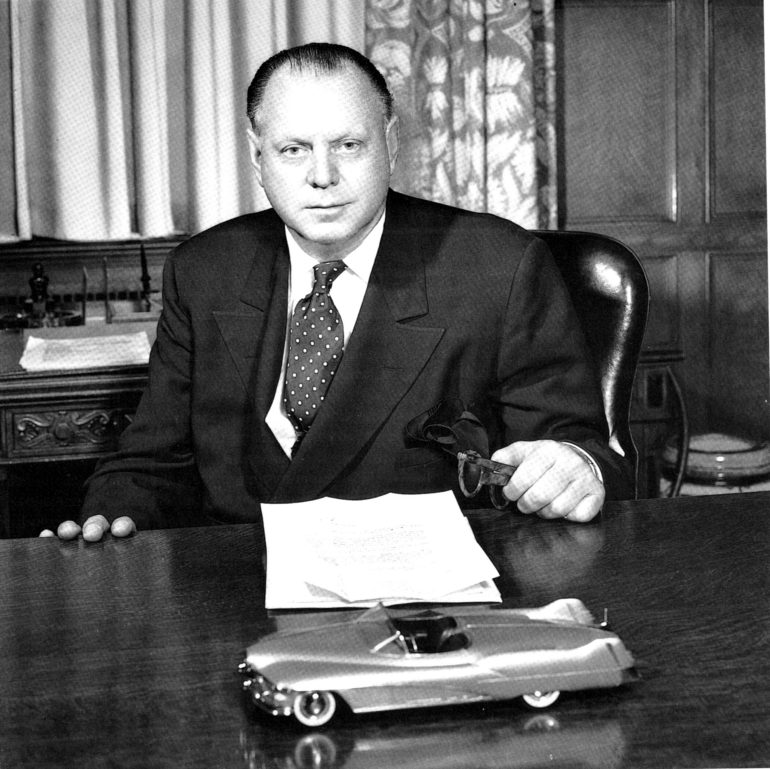
Bill Mitchell played a pivotal role in the Corvette’s early design and development, serving as General Motors’ Vice President of Styling from the late 1950s through the mid-1970s. In a time in which America’s sports car was coming of age, it seemed as if Mitchell had all the answers, identifying keenly with the interests of consumers. Mitchell made a career of pioneering countless designs that were as distinct and over the top as his own personality.
Mitchell was perhaps best known for his contributions to the design of the second- and third-generation Corvettes. When visiting the Turin Auto Show in Italy he began toying with the idea of a new racing concept, which would eventually become the Sting Ray Racer. Along with his understudy, Larry Shinoda, Mitchell placed considerable effort into the Sting Ray Racer, the Mako Shark and the Mako Shark II, and many of the racer’s design cues, most notably its pronounced fenders and sweeping rear end, made their way into the 1963 Sting Ray, split rear window included.
MORE: PROFILING GREATNESS: BILL MITCHELL / BILL MITCHELL’S STING RAY RACER
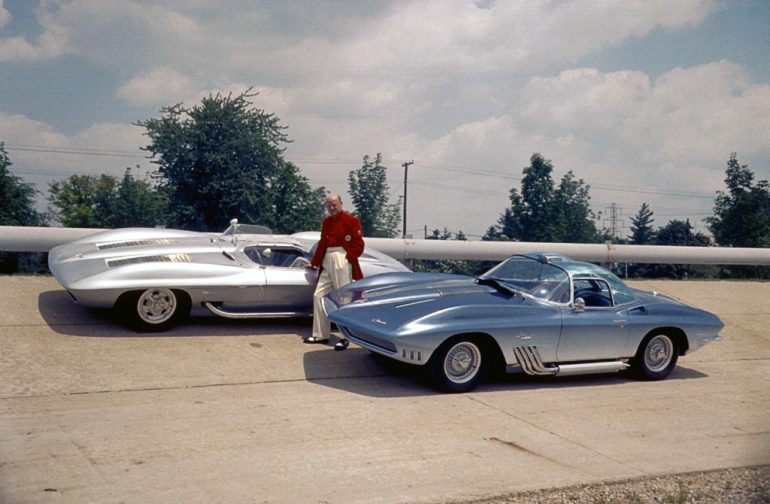
4. Dave McLellan
Corvette Chief Engineer, 1975–1992 · the C4
Following up on the efforts of famed Corvette engineer Zora Arkus-Duntov is no small task for any individual. Nonetheless, Dave McLellan found himself being dealt this exact hand in 1975 upon Arkus-Duntov’s retirement. Further complicating matters was the fact that the domestic performance industry had been stifled as a whole by the newly enacted environmental mandates of the day, and the U.S. performance market was in the midst of a nosedive following the oil crisis.
However, in the face of largely insurmountable odds, Dave McLellan found astonishing success, pioneering fourth-generation Corvette production while digging Chevrolet’s famed sports car out of an ever-deepening performance drought. McLellan was also at the helm during a period in which many technical gains were achieved, such as the advent of ABS brakes, traction control and passive keyless entry, and he was vital in Chevrolet’s return to competitive racing and in the creation of the ZR-1.
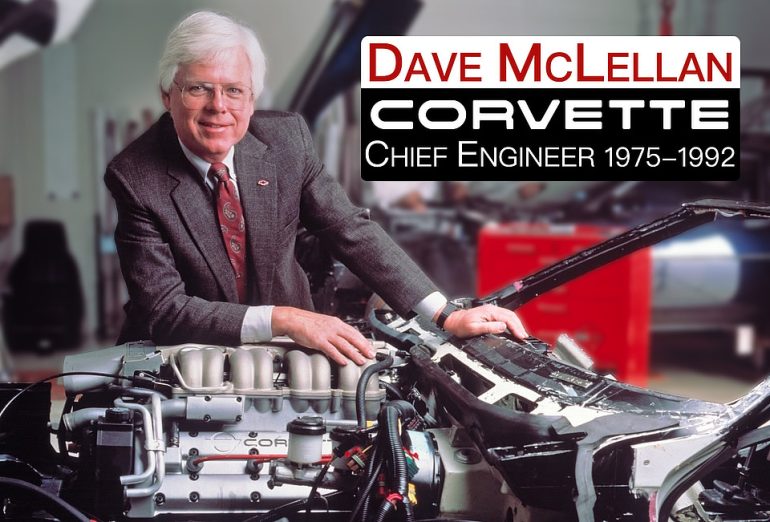
5. Dave Hill
Corvette Chief Engineer, 1992–2006 · the C5 and C6
Though fourth-generation Corvette production is still regarded as an overall success by many, much was still left to be desired in terms of overall performance acuity. The matter of achieving such gains was left in the hands of then Chief Engineer Dave Hill, who came over from Cadillac in 1992 and was tasked with leading fifth-generation design and development. Hill knew the stakes at hand, yet soldiered on undeterred, issuing one of the finest Corvettes to date: the hydroformed-frame, LS1-powered C5 of 1997, followed by the C5 Z06.
Without pause, Hill then jumped headlong into upping the ante on his own design efforts, working through a list of a hundred “dissatisfiers” to develop the C6. These efforts proved fruitful, as the C6’s popularity eclipsed even that of Hill’s earlier design. Perhaps most important were Hill’s efforts to work hand in hand with the Corvette Racing team, to produce a commercially available Corvette that was truly track-ready straight from the showroom floor. Hill retired in 2006 and was inducted into the Corvette Hall of Fame within months.
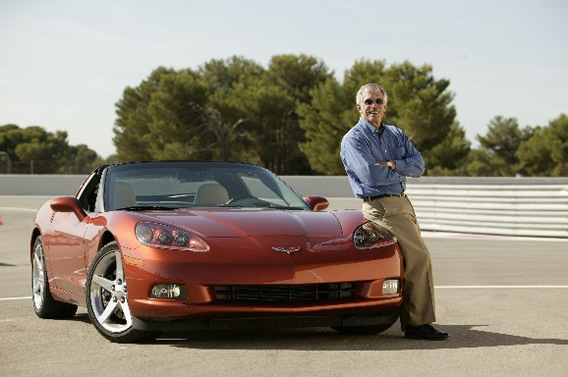
6. Tom Peters
Design director · the C6, C7 and C8
Many people claim that Tom Peters was born with the purpose of designing some of the most renowned performance cars to have ever pounded the pavement. This, by all accounts, would likely be an accurate depiction. From the Cadillac XLR to the Chevy Camaro, Peters has had a hand in developing a number of GM’s most iconic vehicles.
However, perhaps most enduring of all is the fact that Tom Peters spearheaded the design of the C8 Corvette. In a time in which the performance car landscape as a whole was evolving, Peters had a vision unlike any other, and delivered a Corvette far ahead of its time. He had already led the C6 and the C7 Stingray; the mid-engine car completed a three-generation run no other Corvette designer has matched.
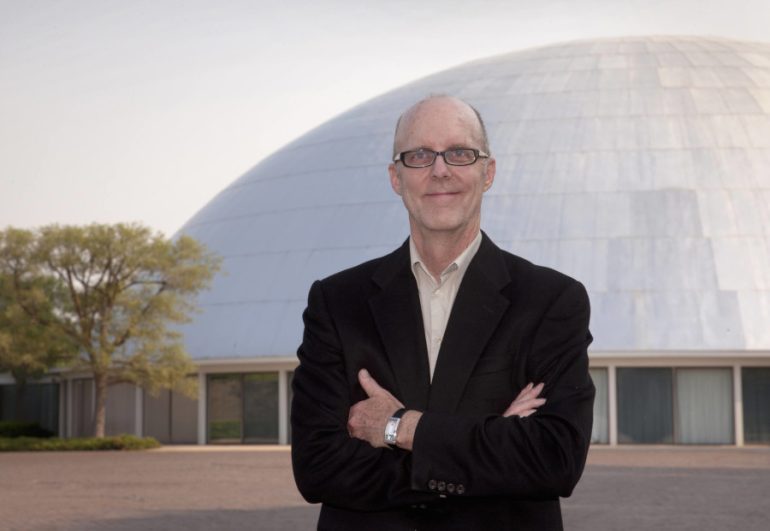
7. Larry Shinoda
Designer · the Sting Ray Racer, the Mako Sharks, CERV
Larry Shinoda was perhaps one of the most impactful individuals within the realm of Corvette design and development to have never held the Chief Engineer title. However, what Shinoda did hold dear was a certain degree of creative freedom levied on him by his boss, the illustrious Bill Mitchell. In more instances than one, Mitchell would run an idea by Shinoda, task the young designer with heading up the subsequent effort, and watch as Shinoda transformed his idea into a masterful work of art.
A young Larry Shinoda would go on to conceptualize many highly renowned Corvette prototypes, including the Sting Ray Racer, the CERV prototypes and the Astro series show cars. However, most enduring of all was Shinoda’s involvement in the development of the Mako Shark and Mako Shark II. These iconic prototypes would ultimately prove to be the front-runners of the third-generation Corvette.
MORE: PROFILING GREATNESS: LARRY SHINODA / ALL SHINODA POSTS
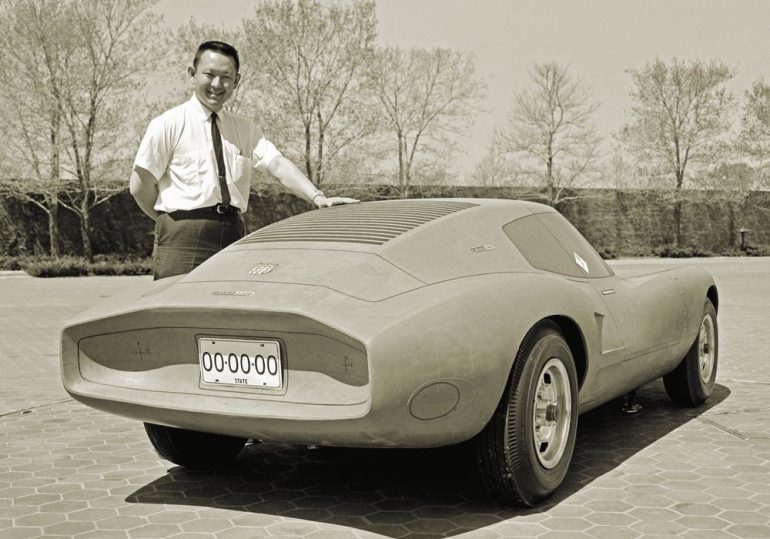
8. Ed Cole
Chevrolet Chief Engineer, then General Manager · the small-block V8 · the Corvette’s “corporate angel”
Though not directly responsible for the design or development of the Corvette itself, Ed Cole served as the gatekeeper of sorts to the early Corvette brand’s growth. Known by many as the maverick of Chevy small-block design, and as Chief Engineer and later General Manager of Chevrolet, Ed Cole was known to give his nod of approval to performance-enhancing modifications, especially when earmarked for the Corvette. It was Cole who hired Duntov on the strength of a letter, and Cole who put his new 265-cubic-inch V8 into the 1955 car.
Ed Cole was also known to be highly competitive, and had a reputation for giving the “unofficial” green light to many backdoor racing endeavors. Though the bulk of these efforts were halted by top GM executives, a wealth of technical data was accrued in the process. “Kick the hell out of the establishment” was his credo, and from the beginning of the Corvette story to his retirement in 1974 he was its corporate angel, the man with the passion and the authority to shepherd it through the red tape.

9. John Heinricy
Manager, Corvette Development · the ZR-1 record run
While many included on this list were noteworthy for their influence upon the Corvette’s aesthetic appeal or prominence upon the world stage, John Heinricy’s legacy endures for another reason entirely. Heinricy spent much of his career serving as the Manager of the Corvette Development Group at the GM proving grounds, working diligently to perfect the Corvette’s handling and overall driving dynamics.
John Heinricy has also likely logged more racing and hot-lap miles behind the wheel of a Corvette than any other individual currently walking the face of the earth. Heinricy was an integral part of the highly publicized 1990 Corvette ZR-1 record run at Fort Stockton, during which twelve international world time and distance speed records were broken.
MORE: THE GHOST ARCHITECTS
 Image Via: Corvette Forum
10. Thomas Keating
Chevrolet General Manager, 1949–1956 · the executive who said yes
If you are like many Corvette enthusiasts, you are likely far more familiar with the name Harley Earl than you are Thomas Keating. This is relatively standard, as Earl’s name is mentioned far more prominently when discussing the Corvette’s creation. However, Thomas Keating, Chevrolet’s top executive of the era, was known to have been heavily involved in the same projects as Harley Earl, lending credence to the idea of his impact.
Keating, however, was rather reserved, with a mild-mannered persona, often skipping his opportunity to bask in the limelight. Though news circulars of the day mention Keating’s involvement with early Corvette design and development without exception, he proved far less eager than Earl to claim the “Father of the Corvette” moniker.

Zora Arkus-Duntov was hired on the strength of a letter. In 1953 he wrote to Ed Cole criticizing the new Corvette’s engine, Cole hired him, and two years later Duntov’s memo “Thoughts Pertaining to Youth, Hot Rodders, and Chevrolet” put Cole’s V8 in the car and saved it.
DID YOU KNOW
Every Corvette Chief Engineer
Six people have held the title in seventy-three years. Duntov was the Corvette’s engineer from 1953 but did not get the title until 1967.
| CHIEF ENGINEER | YEARS | GENERATIONS | LEGACY |
|---|---|---|---|
| Zora Arkus-Duntov | 1967–1975 (Corvette engineer from 1953) | C1, C2, C3 | The V8, racing, the Z06, the L88, the mid-engine prototypes |
| Dave McLellan | 1975–1992 | C3, C4 | The C4, ABS, the ZR-1, the return to racing |
| Dave Hill | 1992–2006 | C4, C5, C6 | The C5, the C5 Z06, the C6, Corvette Racing |
| Tom Wallace | 2006–2008 | C6 | The C6 Z06 program, the ZR1 |
| Tadge Juechter | 2008–2024 | C6, C7, C8 | The C7, the 755-hp ZR1, the mid-engine C8, the Z06, the E-Ray |
| Josh Holder | 2024– | C8 | The ZR1, the ZR1X, the 2027 Grand Sport and the LS6 |
The Design Chiefs Of Every Generation
The people whose studios shaped each Corvette.
| DESIGN CHIEF | ROLE | CORVETTES | SIGNATURE |
|---|---|---|---|
| Harley Earl | GM Vice President of Styling, 1927–58 | C1 | The 1953 Motorama car; Project Opal |
| Bill Mitchell | GM Vice President of Styling, 1958–77 | C2, C3 | The Sting Ray, the split window, the Mako Shark |
| Larry Shinoda | Designer, Chevrolet Studio | C2, C3 | Sting Ray Racer, Mako Shark I and II, CERV |
| Jerry Palmer | Chief designer, Chevrolet Studio 3 | C4 | The 1984 Corvette, the Indy concept |
| John Cafaro | Chief designer | C5 | The 1997 Corvette |
| Tom Peters | Design director, performance cars | C6, C7, C8 | The C6, the C7 Stingray, the mid-engine C8 |
| Kirk Bennion | Exterior design manager | C7, C8 | The C7’s and C8’s exterior |
The Modern Era
The lists tend to stop at Dave Hill. The people who built the mid-engine Corvette, the most ambitious reinvention in the car’s history, deserve the same treatment.
Tadge Juechter
Corvette Chief Engineer, 2008–2024 · the C7, the C8 and the mid-engine revolution
Tadge Juechter joined the Corvette team in 1993 under Dave Hill, became chief engineer in 2008 after Tom Wallace’s short tenure, and ran the program for sixteen years, longer than anyone but Duntov. Under him the C7 brought the Corvette its first truly modern interior and a 755-horsepower ZR1, and then he did what Zora had wanted to do since 1960: he moved the engine behind the driver. The C8 Stingray of 2020, the flat-plane Z06, the hybrid E-Ray and the 1,064-horsepower ZR1 were all his, and he retired in July 2024 with the ZR1X in the pipeline.
MORE: THE C7 ALMOST NEVER HAPPENED / ALL TADGE JUECHTER POSTS
Josh Holder
Corvette Chief Engineer, 2024– · the ZR1X and the 2027 lineup
Josh Holder, Juechter’s long-time deputy on the C8 program, took over as chief engineer in 2024 and delivered the ZR1X, the 1,250-horsepower all-wheel-drive hybrid that is the quickest American production car ever built, followed by the 2027 Grand Sport, the Grand Sport X and the 6.7-liter LS6 that replaced the LT2.
MORE: JOSH HOLDER ON A Z06X
Tom Wallace
Corvette Vehicle Line Executive and Chief Engineer, 2006–2008 · the C6 ZR1
Tom Wallace bridged the Hill and Juechter eras. In his two years at the top he saw the 505-horsepower Z06 into the world and signed off the supercharged LS9 ZR1, the first production Corvette past 200 mph, before retiring in 2008 and handing the program to Juechter.
Kirk Bennion
Exterior design manager · the C7 and C8
Kirk Bennion managed the exterior design of the C7 Stingray and the C8 under Tom Peters, which makes him the designer whose hand is on the two most-sold Corvette generations of the modern era. The C8’s proportions, the mid-engine package that still had to read as a Corvette from every angle, were worked out in his studio.
The Ghost Architects
Some of the people who mattered most never made the lists. Doug Barton’s “Ghost Architects” tells eight of their stories in full; here is who they were.
Bob McLean
GM Styling · laid out the 1953 Corvette
Harley Earl envisioned the car; Bob McLean packaged it. A young designer with an engineering degree, McLean laid out the first Corvette from the rear axle forward, with the engine set back behind the front wheels and the seats low and far aft, the European proportions, 102-inch wheelbase and 53/47 weight distribution that gave the 1953 car a sports-car stance no American car had. Carl Renner drew the lines over McLean’s package.
Maurice Olley
Chevrolet research and development · the 1953 chassis
Maurice Olley, the English engineer who had run Rolls-Royce’s American operation and invented much of modern suspension theory at Cadillac, was given the Corvette’s chassis in 1952 and designed it in a matter of months: a new box-section frame, the first Chevrolet passenger-car chassis built for a sports car. The C1 rode on his work for nine years.
MORE: CHASSIS BY MAURICE OLLEY
Russ McLean
Corvette platform manager · saved the C5
In 1992 GM was losing billions and the next Corvette was a line item nobody needed. Russ McLean, the Corvette’s platform manager, fought the business case through a corporation that had cancelled the C5 more than once, protected the program’s budget and its team through the restructuring, and got the C5 to 1997. Without him Dave Hill’s car never gets built.
Peter Brock, Harry Barr, Mauri Rose and the rest
The names in the footnotes
Peter Brock, at nineteen the youngest designer GM had hired, drew the sketch that became Bill Mitchell’s Sting Ray Racer and, through it, the 1963 Sting Ray, then left to design Shelby’s Daytona Coupe. Harry Barr co-designed the small-block V8 with Ed Cole and ran Chevrolet engineering when the Corvette got it. Mauri Rose, the three-time Indianapolis 500 winner, was the engineer Cole hired to make the 1953 Corvette drive like a sports car. The full Ghost Architects story has all eight names and what each of them did.
MORE: THE GHOST ARCHITECTS
How We Ranked Them
The ranking is Josh Boyd’s, from his 2023 countdown, and it weighs what a person changed about the Corvette that would not have happened without them. Earl created it and Duntov made it a sports car, which is why they sit above the chief engineers who ran it for decades; Mitchell and Shinoda gave it the shape everyone recognizes; McLellan and Hill carried it through its two worst decades; Peters designed three generations; Cole, Heinricy and Keating made things possible from above and below.
The chief engineers and design chiefs are listed in full because the lists always stop at Hill, and the mid-engine car was built by people who deserve the same treatment. The ghost architects are the names that only appear in the footnotes. Every entry links to CorvSport’s full profile where one exists, and the profiles are member content; the page is updated as new profiles are written.
FAQs
Who designed the Corvette?
Harley Earl, GM’s head of styling, conceived it and had it built for the 1953 Motorama; Bob McLean laid out its proportions and Carl Renner drew its lines. Every generation since has had its own design chief: Bill Mitchell and Larry Shinoda (C2, C3), Jerry Palmer (C4), John Cafaro (C5) and Tom Peters (C6, C7, C8).
Who is the Father of the Corvette?
Harley Earl, who created it. Zora Arkus-Duntov, who turned it into a sports car and ran its engineering for two decades, is called the Godfather of the Corvette; most of the lists put him first.
Who saved the Corvette?
Twice. Zora Arkus-Duntov in 1955, when his memo got the V8 into a car Chevrolet was ready to drop after two years and 4,000 sales; and Russ McLean in the early 1990s, when he kept the C5 program alive through GM’s near-bankruptcy.
Who were the Corvette’s chief engineers?
Zora Arkus-Duntov (1967–75, after fourteen years as the car’s engineer), Dave McLellan (1975–92), Dave Hill (1992–2006), Tom Wallace (2006–08), Tadge Juechter (2008–24) and Josh Holder (2024– ).
Who designed the C8 Corvette?
Tom Peters led the design with Kirk Bennion managing the exterior, under Tadge Juechter as chief engineer. The mid-engine layout fulfilled what Duntov had been proposing since the CERV prototypes of 1960.
Who designed the 1963 Sting Ray?
Bill Mitchell, from his Sting Ray Racer of 1959, with Larry Shinoda doing the production design and a sketch by nineteen-year-old Peter Brock at the start of it. Duntov engineered the chassis and fought Mitchell over the split rear window.
Who is the Corvette’s chief engineer today?
Josh Holder, since July 2024. The ZR1X and the 2027 Grand Sport are his cars.
The CorvSport Profiles
Full-length profiles of the people in this list, from Zora’s letter to Ed Cole to Dave Hill’s hundred dissatisfiers.


More Corvette Lists
The best of every generation, the fastest, the rarest, the most expensive and the ones we would buy with our own money.