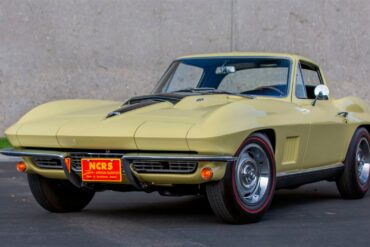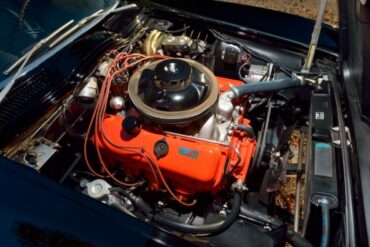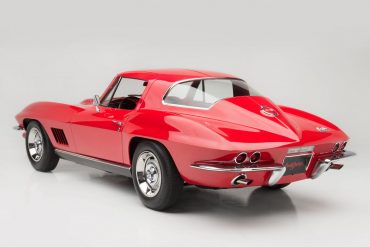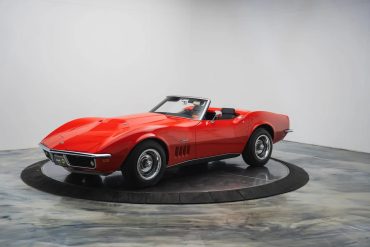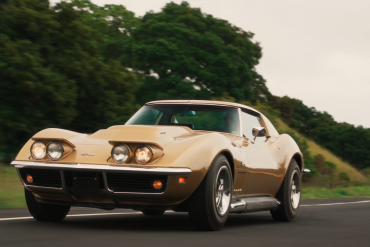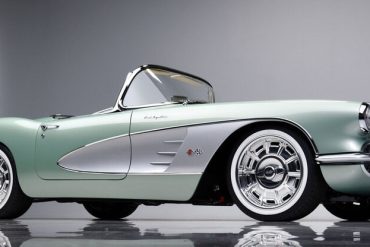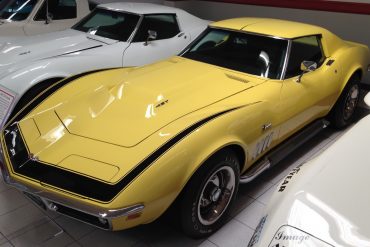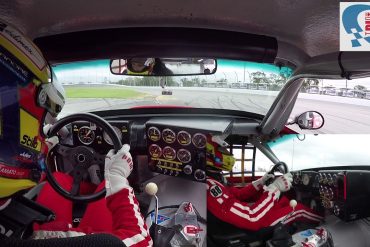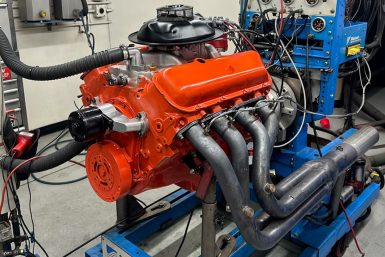
Twice the price of the L71 for five fewer rated horsepower, no heater, no radio and a 12.5:1 compression ratio that demanded racing fuel. Members get the story of how Duntov hid a race engine in the order guide.


CORVETTE MODELS
The L88 was a race engine hidden in the Corvette order guide: a 427 with aluminum heads, 12.5:1 compression and an 850-cfm Holley, rated at 430 horsepower to keep buyers away and making 540 to 580, sold with a list of mandatory heavy-duty hardware and a list of things you could not have, including a heater and a radio in 1967. Zora Arkus-Duntov built it so privateers could race a Corvette through the AMA ban; 216 were built in three years.
The Name: Regular Production Option L88, the racing 427 of 1967–69, priced at $947.90 (1967–68) and $1,032.15 (1969) against $437.10 for the 435-hp L71; RPO ZL1 (1969, $4,718.35) was the same engine in aluminum
Built: 216 L88 Corvettes: 20 in 1967 (all Sting Rays), 80 in 1968 and 116 in 1969 (17 of them automatics), plus 2 ZL1s; Tonawanda built 94 ZL1 engines with Corvette prefixes, most sold loose to racers
The Engine: 427 ci (7.0 L) Mark IV big-block, 4.25 x 3.76 in., 12.5:1, aluminum heads with 2.19/1.84-inch valves, forged cross-drilled crank with four-bolt mains, solid-lifter cam (0.562/0.584 in. lift), Holley 850 cfm, cowl-induction hood; 430 hp at 5,200 rpm and 460 lb-ft on paper, 540–580 hp in fact
Required Options: M22 Rock Crusher four-speed (M40 automatic optional in 1969), J56 heavy-duty brakes with J50 power assist, F41 suspension, K66 transistor ignition, G81 Positraction; radio not available, heater deleted (C48) in 1967, air conditioning never; 103-octane fuel only
Performance: Quarter miles in the high elevens on slicks; 171.5 mph on the Mulsanne at Le Mans in 1967; the ZL1 engineering car 0–60 in 4.0 and 12.1 at 116 mph (Road & Track)
Racing: GT class wins at Daytona and Sebring 1967 (Penske), Sebring 1967 (Sunray DX), Daytona 1968, Le Mans 1972 (RED/NART), the Rebel’s 1971 IMSA championship; the Owens-Corning, Greenwood and Yenko teams
Values: $3.85 million for a 1967 coupe (2014, the record for a production Corvette); $2,585,000 for the first-and-last pair (2024); $850,000 to $860,000 for the best 1969 street cars (2026); the ZL1 convertible $3.14 million (2023)
Related Pages: The Z06, ZR1 and Grand Sport guides (the other Duntov racing packages), the special editions, the race cars, the Greenwood guide, the engines index, the C2 and C3 hubs
In 1967 a Corvette buyer reading the order guide found two 427s that looked almost alike: the L71 Tri-Power at 435 horsepower for $437.10, and the L88 at 430 horsepower for $947.90, twice the money for five fewer. That was the point. The L88 was a racing engine, a 427 with aluminum heads, 12.5:1 compression, a solid-lifter cam and the biggest Holley Chevrolet ever bolted to a production car, breathing through a cowl-induction hood, and Chevrolet rated it low, priced it high, tied it to heavy-duty brakes, suspension and the Rock Crusher gearbox, deleted the heater and the radio and warned that regular gasoline must never be used, all to keep it out of the hands of anyone who was not going racing. Zora Arkus-Duntov had built it that way on purpose: with GM holding to the AMA ban on factory racing, the only way to put a race car on the track was to list its parts as options and let privateers buy them.
Two hundred and sixteen were built, 20 on the 1967 Sting Ray and 80 and 116 on the 1968 and 1969 Stingrays, and two more carried the ZL1, the same engine cast in aluminum for McLaren’s Can-Am cars, at $4,718.35 for the option alone. They won their classes at Daytona and Sebring in 1967 (Penske’s COPO car, with Dick Guldstrand driving part of the night by flashlight), ran 171.5 mph on the Mulsanne at Le Mans that June, won Le Mans in class in 1972 as the RED/NART car and raced on for Owens-Corning, Greenwood and the Rebel team into the 1970s. Then they became the holy grail of production Corvettes: a 1967 coupe sold for $3.85 million in 2014, the first and last L88s brought $2,585,000 as a pair in 2024, and the best 1969 street cars passed $850,000 in 2026.
This page collects everything the site knows about the L88: the story of how it came to be, the engine in detail, every year with its production, price and changes, every documented car the site has written about, the race cars, the ZL1, the auction records, how to verify a real one, then the videos and everything tagged L88. The Z06, ZR1 and Grand Sport pages cover Duntov’s other back doors to the racetrack.
Nine chapters: the ban it was built around, the engine, the price of admission, the three years, the ZL1, the race cars, the market, the fakes and the legacy.
In 1957 the Automobile Manufacturers Association agreed that its members would withdraw from factory racing, in the shadow of the 1955 Le Mans disaster, and General Motors fell in line, officially. Zora Arkus-Duntov, who had already built the SR-2s, the SS and the Grand Sports and watched the company kill them, found another route: the Regular Production Option. If competition hardware was in the order guide, any customer could buy it and any privateer could race it, and the factory could say it had sold a car, not raced one. The fuel-injected 1957 Airbox, the 1963 Z06 and the big-tank cars all came that way. The L88 was the fullest expression of the idea: a complete race engine and a complete race chassis, sold as a list of codes, built around a 1966 COPO car for Roger Penske and then listed for anyone with $947.90 and the sense not to use it on the street.
The L88 started with the 427-cubic-inch Mark IV big-block, 4.25-inch bore and 3.76-inch stroke, and rebuilt it for the track: a forged, cross-drilled steel crankshaft in four-bolt mains, forged and shot-peened connecting rods with 7/16-inch bolts, aluminum pistons on floating pins and 12.5:1 compression, aluminum cylinder heads with 2.19-inch intake and 1.84-inch exhaust valves on rectangular ports, a solid-lifter camshaft with 0.562/0.584 inches of lift and a third valve-spring damper for stability past 7,000 rpm, and a single 850-cfm Holley four-barrel on an aluminum intake, fed by the functional cowl-induction hood, with a transistor ignition and no choke. Chevrolet rated it at 430 horsepower at 5,200 rpm and 460 lb-ft at 4,000, five below the cheaper L71; the real figure was 540 to 580 horsepower depending on preparation, and on the right tires an L88 ran the quarter mile in the high elevens. The site’s engine guide has the full specification.
Checking the L88 box was the beginning. Chevrolet required the M22 close-ratio four-speed (the Rock Crusher, for the whine of its straight-cut gears), J56 heavy-duty brakes with J50 power assist, F41 heavy-duty suspension, K66 transistorized ignition and G81 Positraction, which turned a Sting Ray into something close to a track car and roughly doubled the cost of the option. Then came what you could not have: no radio, no air conditioning, and in 1967 the C48 heater-and-defroster delete, so no heat on a cold morning and no way to clear the windshield. The glove box held a warning that the engine required 103-octane fuel and that regular gasoline must never be used. The 430-horsepower rating completed the strategy: a buyer who did not know better took the L71, and the insurance companies and GM’s own management saw nothing to alarm them.
The L88 went on sale for the 1967 model year after the Penske COPO car had proved it at Daytona and Sebring, and twenty were built, the only L88s on the C2 body and, with the heater delete, the purest expression of Duntov’s idea. Tony DeLorenzo bought the first one, a Tuxedo Black convertible, at Hanley Dawson Chevrolet in Detroit and raced it with Dick Thompson; Don Yenko helped talk Chevrolet into building one for the Sunray DX team, which debuted the L88 at Sebring with a class win; and a coupe went to Le Mans with Guldstrand and Bondurant. The 1967s sit at the very top of the market: the red-over-red coupe that brought $3.85 million at Barrett-Jackson in 2014 remains the most expensive production Corvette ever sold at auction.
The L88 carried over to the new body at the same $947.90, with a PCV valve, the AIR smog pump and chrome valve covers, in coupe or convertible form and with the heater back; 80 were built for 1968. For 1969 the price rose to $1,032.15, the M40 Turbo Hydra-Matic was offered for the first time (17 buyers took it, and the site’s “Automatically Yours” car is one), air conditioning and the radio stayed locked out, and 116 were built, the biggest year and the last: 216 L88 Corvettes in all. The 1969s raced for Owens-Corning, Greenwood and the Rebel team, and today the best documented 1969 street cars bring $850,000 to $860,000, the latter a Bring a Trailer record set in June 2026.
In 1968 Vince Piggins, Chevrolet’s performance products chief, pushed through an all-aluminum 427 to keep Bruce McLaren from switching to Ford for his Can-Am cars; McLarens with the engine won 32 of 37 Can-Am races from 1968 to 1971. For 1969 it was listed on the Corvette as RPO ZL1: the L88 with an aluminum block, open-chamber aluminum heads, stronger rods and a dry sump, about 100 pounds lighter and 560 to 585 horsepower, with the same mandatory F41, G81, J56 and K66 hardware and the same deletions. The option alone cost $4,718.35, $63 less than a 1969 coupe, and a finished car stickered at $10,048.15, so two were sold: a Daytona Yellow coupe, now in Roger Judski’s collection, and a Can-Am White convertible that sold for $3.14 million in January 2023. Tonawanda built 94 ZL1 engines with Corvette prefixes, most of them sold loose to racers; Chevrolet Engineering ran a handful of ZL1 test cars, one of them Duntov’s, and Road & Track timed one at 4.0 seconds to 60 and 12.1 at 116 mph in the quarter. The Manta Ray show car got a third engine.
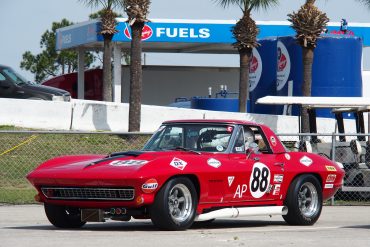
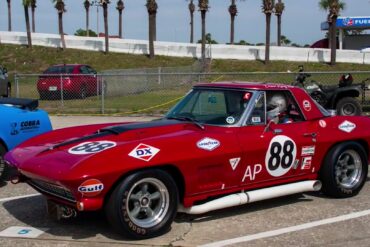
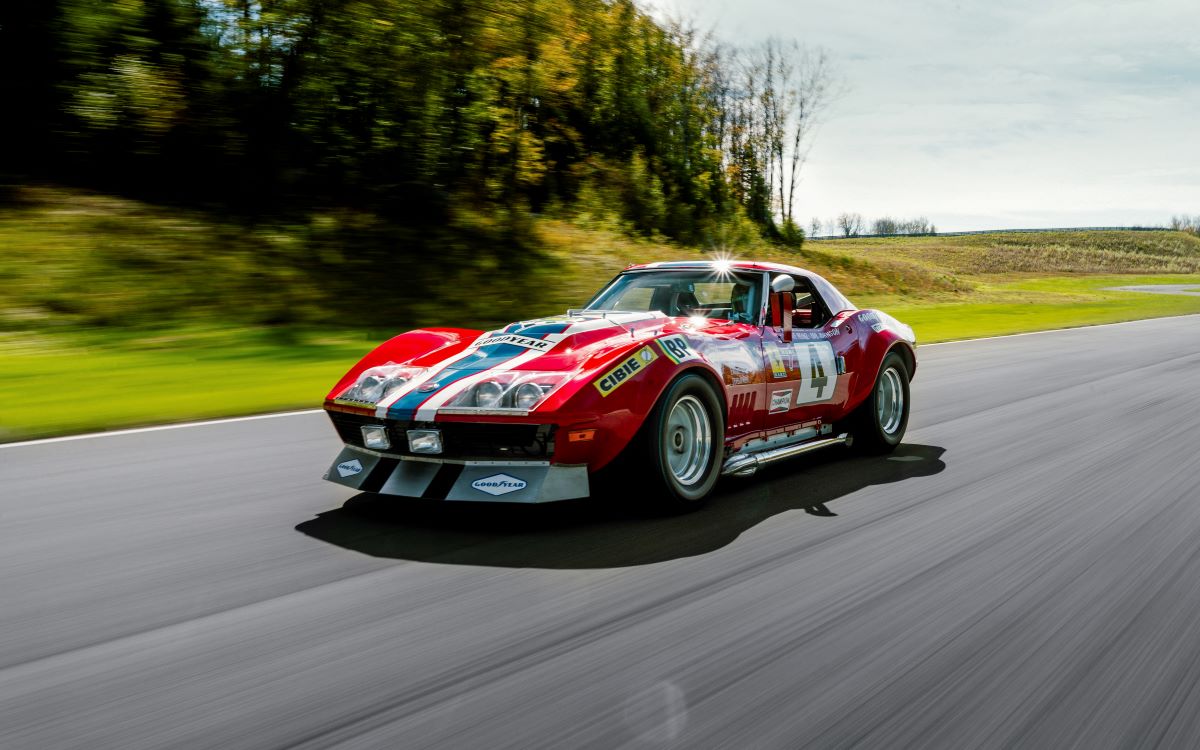
The L88’s competition record began before it was an option. The 1966 COPO coupe Chevrolet built for Roger Penske, with the first factory L88, J56 brakes, the 36-gallon tank and a prototype cowl-induction hood (one of three; the other two went on Grand Sports), won the GT class at the 1967 Daytona 24 Hours and finished 11th overall, Guldstrand driving through the night with two flashlights taped to the fenders after Wintersteen’s crash, then won its class at Sebring, 9th overall. The Sunray DX car took the L88’s production debut at Sebring 1967 with a class win and 10th overall and won its class at Daytona in 1968. At Le Mans in June 1967 Guldstrand, Bondurant and Yenko’s coupe was timed at 171.5 mph on the Mulsanne before the engine let go in the 13th hour, the only mid-year Corvette ever to race there. The 1968 and 1969 cars raced for years: the RED/NART car won the GT class at Le Mans in 1972 and finished third overall at Daytona in 1973, the best Corvette result until 2001; the Rebel, a 1969 convertible, won its class at Daytona and Sebring back to back and the 1971 IMSA championship; the Owens-Corning and Greenwood L88s owned SCCA A-Production; and Pickett Racing ran a 1967 in Trans-Am.
Many L88s went straight to the track, and engines blew and cars were wrecked, so originality is its own scarcity. The survivors became million-dollar cars before the rest of the mid-year market caught up, and the 2014 sale, $3.85 million for a 1967 coupe with its tank sticker and NCRS awards, turned whispers into gospel. Since then: $2.5 million for DeLorenzo’s first 1967 (2021), $2,585,000 for the first and last L88s sold as a pair at Mecum Kissimmee in January 2024 (the top Corvette of 527 and eighth of 4,383 cars), a 1967 offered at $3.8 million the same week, $544,500 for a 1969 automatic in January 2026, $747,500 for the RED/NART racer at Monterey in August 2026 and $850,000 and $860,000 for 1969 street cars. The ZL1 convertible at $3.14 million is the most expensive C3. The site’s Tracking the Legends feature follows the top sales.
That kind of money attracts fakes, and turning a big-block Corvette into an L88 lookalike is not hard; an honest tribute is one thing, a car passed off as factory-original another. The L88 had no VIN code of its own, so serious buyers check everything: the tank sticker and Protect-O-Plate, the dealer order and build records, the engine block’s casting and date codes and the stamped pad, the aluminum heads and the correct carburetor, hood and deletions, and recognition from NCRS, Bloomington Gold and specialists like Al Grenning’s CCAS. No single document settles it, because paperwork can be forged; the cars with the strongest paper, like the first-and-last pair, carry the strongest prices.
Today’s Corvettes make the 1967 strategy look quaint: the Z06 makes 670 horsepower, the ZR1 1,064, and Chevrolet advertises every one. But the idea is the L88’s, track capability sold at a dealer, and the lineage runs straight from Duntov’s hidden race car through the 1970–72 ZR1 package that replaced it to the Z06 and ZR1 of today. The L88 was never a big seller and was never meant to be; it was meant to win on Saturday, and in 216 cars it did enough winning to become the most coveted engine ever to wear crossed flags.
MORE: THE ENGINE CHEVROLET DIDN’T WANT YOU TO BUY / HOW THE 1955 LE MANS DISASTER NEARLY PREVENTED THE L88 / TRACKING THE LEGENDS: THE L88 AND ITS TOP SALES
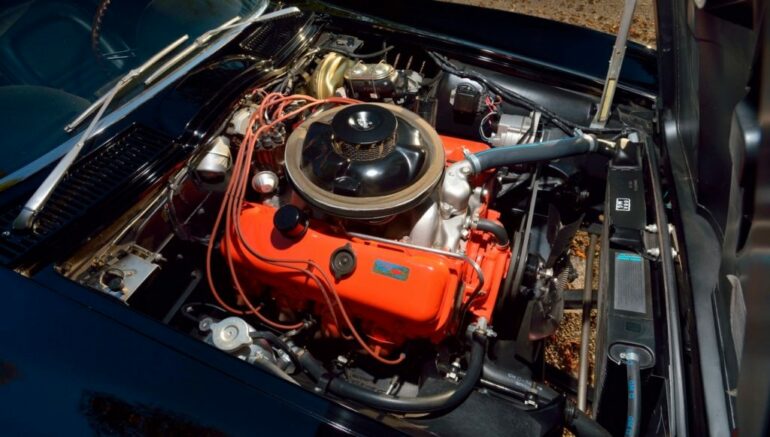

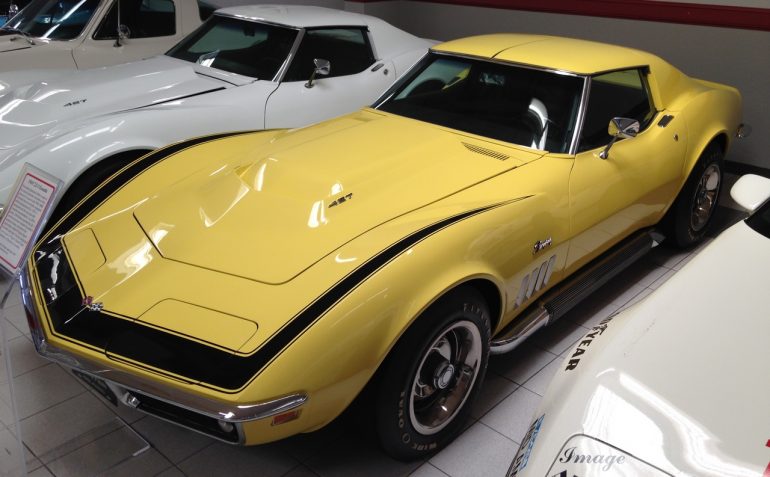
The L88 and the ZL1 side by side with the 427s they sat beside in the order guide. Chevrolet’s ratings were theater; the actual outputs are the figures racers and engine builders have recorded.
MORE: THE CORVETTE ENGINES / THE RPO CODES
| ENGINE | YEARS | WHAT IT WAS | RATED / ACTUAL | PRICE | BUILT |
|---|---|---|---|---|---|
| L88 | 1967–69 | 427 ci, aluminum heads, 12.5:1, forged crank and rods, solid-lifter cam, Holley 850, cowl-induction hood; M22, J56/J50, F41, K66, G81 required; no radio, no air; heater deleted in 1967; 103-octane | 430 hp / 460 lb-ft rated; 540–580 hp actual | $947.90 (1967–68); $1,032.15 (1969) | 20 / 80 / 116 = 216 |
| ZL1 | 1969 | The L88 with an aluminum block, open-chamber aluminum heads, stronger rods, dry sump; about 100 lb lighter; the Can-Am engine; same mandatory options and deletions | 430 hp rated; 560–585 hp actual | $4,718.35 (the car $10,048.15) | 2 (94 engines) |
| L71 | 1967–69 | 427 Tri-Power, iron heads, 11:1, hydraulic cam; the engine the 430-hp rating steered buyers toward | 435 hp / 460 lb-ft | $437.10 | 3,754 (1967) |
| L89 | 1967–69 | The L71 with the L88’s aluminum heads | 435 hp | $368.65 over L71 (1967) | 16 (1967) |
| L36 / L68 | 1967–69 | The 427 four-barrel and the Tri-Power hydraulic-cam big-blocks | 390 / 400 hp | $200.15 / $305.55 (1967) | the volume 427s |
The production years, the documented cars and the race cars the site has written about, in order, with its picture, what it was, how many were built and the guide or feature. Every real L88 is one of 216; these are the ones with a story.
MORE: EVERYTHING TAGGED L88 / THE RACE CARS / THE SPECIAL EDITIONS
| THE CAR | YEARS | BUILT | |
|---|---|---|---|
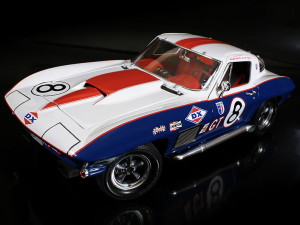 |
Penske COPO L88 (the first L88) The Central Office Production Order 1966 coupe built with the first factory L88 and the competition package for Roger Penske: Dick Guldstrand, Ben Moore and George Wintersteen won the GT class at the 1967 Daytona 24 Hours (11th overall, flashlights taped to the fenders) and again at Sebring, 9th overall The guide / The race cars / Year page |
1966–67 | 1 (COPO) |
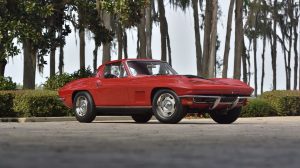 |
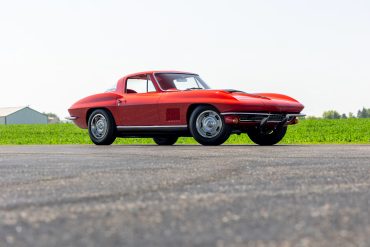
1967 Corvette L88 Twenty cars, the only L88s on the Sting Ray body and the purest: the heater and radio deleted, 103-octane only, 430 hp on paper and 540 to 580 in truth; the 1967 coupe that sold for $3.85 million in 2014 is still the most expensive production Corvette The guide / The engine guide / A 1967 L88 / Year page |
1967 | 20 |
|
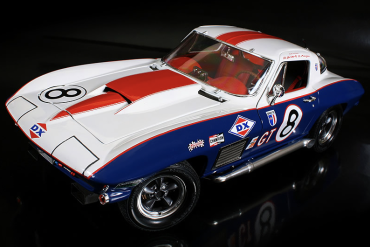
Sunray DX L88 (Sebring 1967) The Don Yenko-brokered L88 built so the Sunray DX team could race Sebring in 1967, where the L88 debuted first in class and 10th overall; first in class at Daytona in 1968 ahead of the new 1968 L88s The guide / The race cars / Year page |
1967 | race car |
|
The Le Mans L88 (Guldstrand and Bondurant) The only mid-year Corvette ever to race Le Mans: Dick Guldstrand, Bob Bondurant and Don Yenko, 171.5 mph on the Mulsanne, out in the 13th hour with a broken engine The guide / Dick Guldstrand interview / Year page |
1967 | race car |
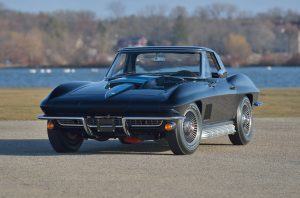 |
DeLorenzo’s Tuxedo Black L88 (the first production L88) The first 1967 L88 built and the only black one, bought new by Tony DeLorenzo, raced with Dick Thompson and through the 1970s; Bloomington Gold Hall of Fame; $2.5 million in 2021 and half of the $2,585,000 first-and-last pair in 2024 The guide / The first-and-last pair / Year page |
1967 | 1 |
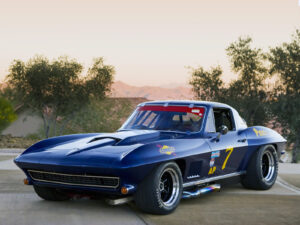 |
Pickett Racing L88 (Trans-Am) A 1967 L88 coupe campaigned in Trans-Am, one of the few C2 L88s with a documented competition history The guide / Year page |
1967 | race car |
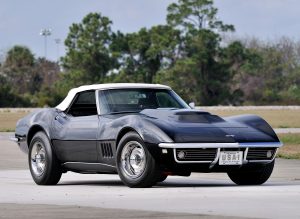 |
1968 Corvette L88 Eighty cars on the new body, coupe or convertible, the heater back, the same 430-hp rating and the same mandatory hardware; the year the L88 became a privateer’s standard racing Corvette The guide / The L88 story / Year page |
1968 | 80 |
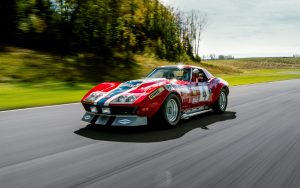 |
RED/NART L88 (Le Mans class winner) Built from a wrecked 1968 by Race Engineering Development and run for Luigi Chinetti’s NART: GT class win at Le Mans in 1972 and third overall at Daytona in 1973, the best Corvette finish until 2001; $747,500 at RM Sotheby’s Monterey in 2026 The guide / The race cars / Year page |
1968–73 | race car |
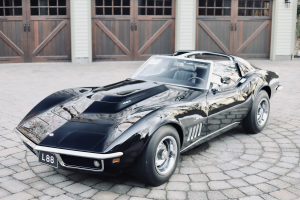 |
1969 Corvette L88 The last and biggest year, 116 cars, the first with an automatic option (17 built); documented street cars sold for $850,000 and $860,000 in 2026, the latter a Bring a Trailer record The guide / The $860,000 sale / An automatic L88 / Year page |
1969 | 116 |
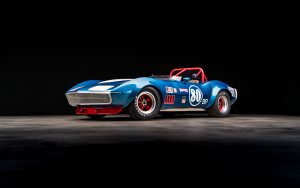 |
V.V. Cooke L88 racer The Louisville dealer’s 1969 L88 racing coupe, one of the documented period competition cars, offered at auction in 2026 The guide / Year page |
1969 | race car |
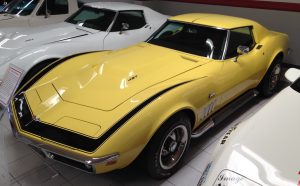 |
1969 Corvette ZL1 The L88 cast in aluminum: the Can-Am engine Vince Piggins pushed through for McLaren, 100 pounds lighter, 560 to 585 hp, dry sump, open-chamber heads, $4,718.35 for the option alone and $10,048 for the car; two sold, a Daytona Yellow coupe and a Can-Am White convertible; Road & Track ran an engineering car 0–60 in 4.0 and the quarter in 12.1 at 116 The guide / Judski’s coupe / The convertible / Year page |
1969 | 2 |
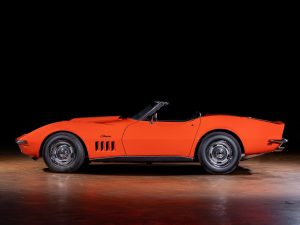 |
The ZL1 convertible The only ZL1 convertible, Can-Am White, sold for $3.14 million in January 2023, the most paid for a C3 The guide / The video / Year page |
1969 | 1 |
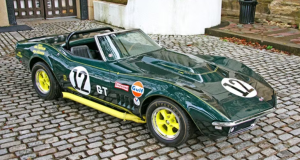 |
Ten L88s at Amelia Island, 2026 A class of ten L88 Corvettes, nearly five percent of all built, staged at the 2026 Amelia Concours; the site’s report on the cars and their owners The guide / Year page |
1967–69 | feature |
Three model years on two bodies: the twenty Sting Rays of 1967 and the 196 Stingrays of 1968 and 1969. Each section below has the site’s account, a table of the year with production, price and what changed, and the pages tagged to it.
The L88 arrived in the Sting Ray’s last year, after the Penske COPO car had won its class at Daytona and Sebring and the Sunray DX car had won at Sebring on the option’s debut. Twenty were built, every one a racer’s car: the aluminum-head 427 under the stinger hood with its functional cowl induction, the M22, J56 brakes, F41 suspension, K66 ignition and Positraction required, the radio unavailable and the heater deleted, and a 430-horsepower rating that steered every ordinary buyer to the L71. Tony DeLorenzo’s Tuxedo Black convertible was the first, and the only black one; the rest were spread across the 1967 colors, and most saw a racetrack. They are the top of the Corvette market: the $3.85 million coupe of 2014, DeLorenzo’s $2.5 million car, the $3.8 million one-of-one offered in 2024.
MORE: THE C2 HUB / THE 1967 L88 RACE CARS / THE 1967 L88 ENGINE GUIDE / A 1967 L88
| YEAR | L88S BUILT | PRICE | WHAT CHANGED | |
|---|---|---|---|---|
| 1967 | 20 | $947.90 option on a $4,388.75 coupe | The first L88: aluminum heads, 12.5:1, forged bottom end, 850-cfm Holley under the cowl-induction hood, 430 hp on paper; M22, J56, F41, K66 and Positraction required, radio and heater deleted; 103-octane only; the only C2 L88s and the purest | Year page |
The new body changed the L88’s looks and nothing about its purpose. The 1968 car kept the $947.90 price and the mandatory hardware, added the PCV valve, the AIR pump and chrome valve covers, brought the heater back and could be a coupe or a convertible; 80 were built, and they became the standard privateer Corvette, the RED/NART car among them. The 1969 car cost $1,032.15, could have the M40 automatic (17 did) and still could not have air conditioning or a radio; 116 were built, the most of any year, beside the two ZL1s. The 1969s raced for Owens-Corning, Greenwood and the Rebel team, and they are the L88s that trade most often today: $544,500 for an automatic coupe and $850,000 to $860,000 for the best street cars in 2026, with the RED/NART racer at $747,500.
MORE: THE C3 HUB / A 1968 L88 / THE $860,000 1969 / THE 1969 ZL1
| YEAR | L88S BUILT | PRICE | WHAT CHANGED | |
|---|---|---|---|---|
| 1968 | 80 | $947.90 option | The new body at the same price: a PCV valve and the AIR pump, chrome valve covers, coupe or convertible, the heater back; the same required hardware and the same 103-octane warning; four times the 1967 count | Year page |
| 1969 | 116 | $1,032.15 option; ZL1 $4,718.35 | The last and biggest year: $1,032.15, the M40 Turbo Hydra-Matic offered for the first time (17 cars), air conditioning and radio still locked out; the ZL1 all-aluminum version on two cars; the Rebel, Owens-Corning and Greenwood racers | Year page |
The headline sales the site has tracked. Documentation decides everything: tank sticker, Protect-O-Plate, build records and NCRS or Bloomington Gold recognition separate the seven-figure cars from the rest, and a race history with period photographs adds another tier.
MORE: TRACKING THE LEGENDS: TOP L88 SALES / THE $860,000 SALE / CORVETTES FOR SALE
| THE CAR | SOLD FOR | WHERE AND WHEN |
|---|---|---|
| 1967 L88 coupe (red over red) | $3,850,000 | Barrett-Jackson Scottsdale, January 2014; still the most expensive production Corvette sold at public auction |
| 1969 ZL1 convertible (Can-Am White) | $3,140,000 | January 2023; the only ZL1 convertible and the most expensive C3 |
| The first (1967) and last (1969) L88, as a pair | $2,585,000 | Mecum Kissimmee, January 2024; top Corvette of 527 offered and eighth of 4,383 cars |
| 1967 L88 convertible, Tuxedo Black (DeLorenzo’s) | $2,500,000 | Mecum Kissimmee, 2021 (gallery sale); the first 1967 L88 built |
| 1967 L88 coupe, one-of-one color | offered at $3.8 million | Mecum Kissimmee, January 2024 (expected $3.8 million) |
| 1969 L88 coupe (street car) | $860,000 | Bring a Trailer, June 2026; a record for the site and the year |
| 1969 L88 (street car) | $850,000 | 2026 auction season |
| 1968 RED/NART L88 Le Mans class winner | $747,500 | RM Sotheby’s Monterey, August 2026 |
| 1969 L88 coupe, automatic | $544,500 | Mecum Kissimmee, January 2026; one of 17 automatics |
| 1967 Sunray DX L88 racer | bid to $900,000, unsold | RM Auctions; the Sebring 1967 debut car |
The L88 was built to race and it did, from the Penske COPO car’s first weekend to the privateer seasons of the early 1970s.
MORE: ALL THE RACE CARS / THE GREENWOOD CORVETTES / DICK GULDSTRAND INTERVIEW
| CAR | YEARS | THE RECORD |
|---|---|---|
| 1966 Penske COPO L88 | 1967 | GT class win and 11th overall at the Daytona 24 Hours (Guldstrand, Moore, Wintersteen); GT class win and 9th overall at Sebring; the first acknowledged L88 |
| Sunray DX L88 | 1967–68 | First in class and 10th overall at Sebring 1967 on the option’s debut; first in class at Daytona 1968 |
| The Le Mans L88 | 1967 | Guldstrand, Bondurant and Yenko; 171.5 mph on the Mulsanne; out in the 13th hour; the only mid-year Corvette to race Le Mans |
| RED/NART 1968 L88 | 1968–73 | GT class win at Le Mans 1972 for NART; third overall at Daytona 1973, the best Corvette finish until 2001 |
| The Rebel 1969 L88 | 1969–71 | Back-to-back class wins at Daytona and Sebring and the 1971 IMSA class championship |
| Owens-Corning, Greenwood, Yenko, Pickett | 1968–73 | SCCA A-Production titles for the Owens-Corning team (DeLorenzo and Thompson), Greenwood’s 1970–71 championships and 1971 Sebring class win, Pickett Racing in Trans-Am, Yenko’s Sunray DX cars |
The L88 had no code of its own in the VIN, so a real one is proved by paper and by parts. What the specialists check:
MORE: THE L88 STORY / THE VIN DECODER
| WHAT | WHY IT MATTERS |
|---|---|
| Tank sticker and Protect-O-Plate | The build sheet glued to the fuel tank and the owner’s warranty plate list the RPOs; the L88 code on either, with matching VIN and dates, is the foundation |
| Dealer order, invoice, title chain | Period paper from the selling dealer and an unbroken ownership history; the first-and-last pair carried DeLorenzo’s own letter and a title search to the first owner |
| Engine block and pad | The correct casting number and date code for the year, the stamped pad with the assembly code and VIN derivative, four-bolt mains, forged crank |
| Heads, intake, carburetor, hood | Aluminum heads with the right casting numbers, the aluminum intake, the 850-cfm Holley with its list number, the functional cowl-induction hood with the plenum |
| The mandatory options and deletions | M22, J56/J50, F41, K66, G81 all present; no radio; C48 heater delete on 1967s; no air conditioning on any |
| Recognition | NCRS Top Flight and judging sheets, Bloomington Gold certification, MCACN Triple Diamond, CCAS affirmation (Al Grenning); the registries know most of the 216 by VIN |
Everything tagged L88 and ZL1, newest first: the cars for sale and at auction, the features, the Corvette of the Day pictures and the market reports.
A 1967–69 Corvette ordered with RPO L88, the racing 427: aluminum heads, 12.5:1 compression, a solid-lifter cam and an 850-cfm Holley under a cowl-induction hood, rated at 430 horsepower and making 540 to 580, sold with mandatory heavy-duty brakes, suspension, ignition, Positraction and the M22 four-speed and without a radio, air conditioning or (in 1967) a heater. Zora Arkus-Duntov built it so privateers could race a Corvette through the AMA ban.
216: 20 in 1967, 80 in 1968 and 116 in 1969 (17 of the 1969s with the automatic). Two more 1969s carried the all-aluminum ZL1 version of the engine. Many went straight to the track, so original, documented survivors are rarer still.
Chevrolet rated it at 430 horsepower at 5,200 rpm and 460 lb-ft, five less than the cheaper L71, on purpose; builders and racers put the real figure at 540 to 580 horsepower, and some period dyno claims reached 600. The ZL1 made 560 to 585.
To keep ordinary buyers, insurers and GM’s own management away from a race engine. Rated below the 435-hp L71 and priced at twice the money, with the heater deleted and a warning that regular gasoline must never be used, it was built for racers and Chevrolet made sure nobody else would want one.
The 1967 cars are the top of the market: $3.85 million for a coupe in 2014 (the record for any production Corvette), $2.5 million for DeLorenzo’s first car, $2,585,000 for the first and last L88s as a pair in 2024. The 1968–69 cars bring $544,500 (a 1969 automatic, 2026) to $850,000–$860,000 (the best 1969 street cars, 2026), and race cars with history more: the RED/NART Le Mans winner brought $747,500 in 2026. The ZL1 convertible sold for $3.14 million in 2023.
The M22 Rock Crusher four-speed (or the M40 automatic in 1969), J56 heavy-duty brakes with J50 power assist, F41 heavy-duty suspension, K66 transistorized ignition and G81 Positraction. A radio could not be ordered, air conditioning was never available, and 1967 cars took the C48 heater-and-defroster delete.
The ZL1 is the L88 cast in aluminum: an aluminum block to go with the aluminum heads, open-chamber heads, stronger rods and a dry sump, about 100 pounds lighter and 560 to 585 horsepower, developed for McLaren’s Can-Am cars. It cost $4,718.35 as an option in 1969, almost the price of a Corvette, so two were sold against 216 L88s; Tonawanda built 94 ZL1 engines with Corvette prefixes, most of them for racers.
Twice with results that mattered: the 1967 coupe of Guldstrand, Bondurant and Yenko ran 171.5 mph on the Mulsanne before its engine failed in the 13th hour, the only mid-year Corvette to race there, and the RED/NART 1968 L88 won the GT class in 1972. The L88 also won its class at Daytona and Sebring in 1967 and 1968 and the 1971 IMSA championship as the Rebel.
The red-over-red 1967 coupe that sold for $3.85 million at Barrett-Jackson Scottsdale in January 2014, still the most expensive regular-production Corvette sold at public auction; only purpose-built race cars (the 1963 Grand Sport at $18.7 million, the 1957 SS at $7.7 million) have beaten it. The 1969 ZL1 convertible at $3.14 million is the most expensive C3.
By paper and parts together: the tank sticker and Protect-O-Plate showing the L88 code, the dealer and ownership records, the correct block casting and date codes and stamped pad, the aluminum heads, intake, 850 Holley and cowl-induction hood, the mandatory options present and the deletions absent, and recognition from NCRS, Bloomington Gold or CCAS. No single document settles it; the registries know most of the 216 by VIN.
It was, for its day, and by actual output it stayed the most powerful engine in a production Corvette until the supercharged cars of the 2000s: the 505-hp LS7 Z06 of 2006 was rated near the L88’s real figure, and the 638-hp ZR1 of 2009 passed it. Today’s Z06 makes 670 and the ZR1 1,064, but none was hidden in the order guide.