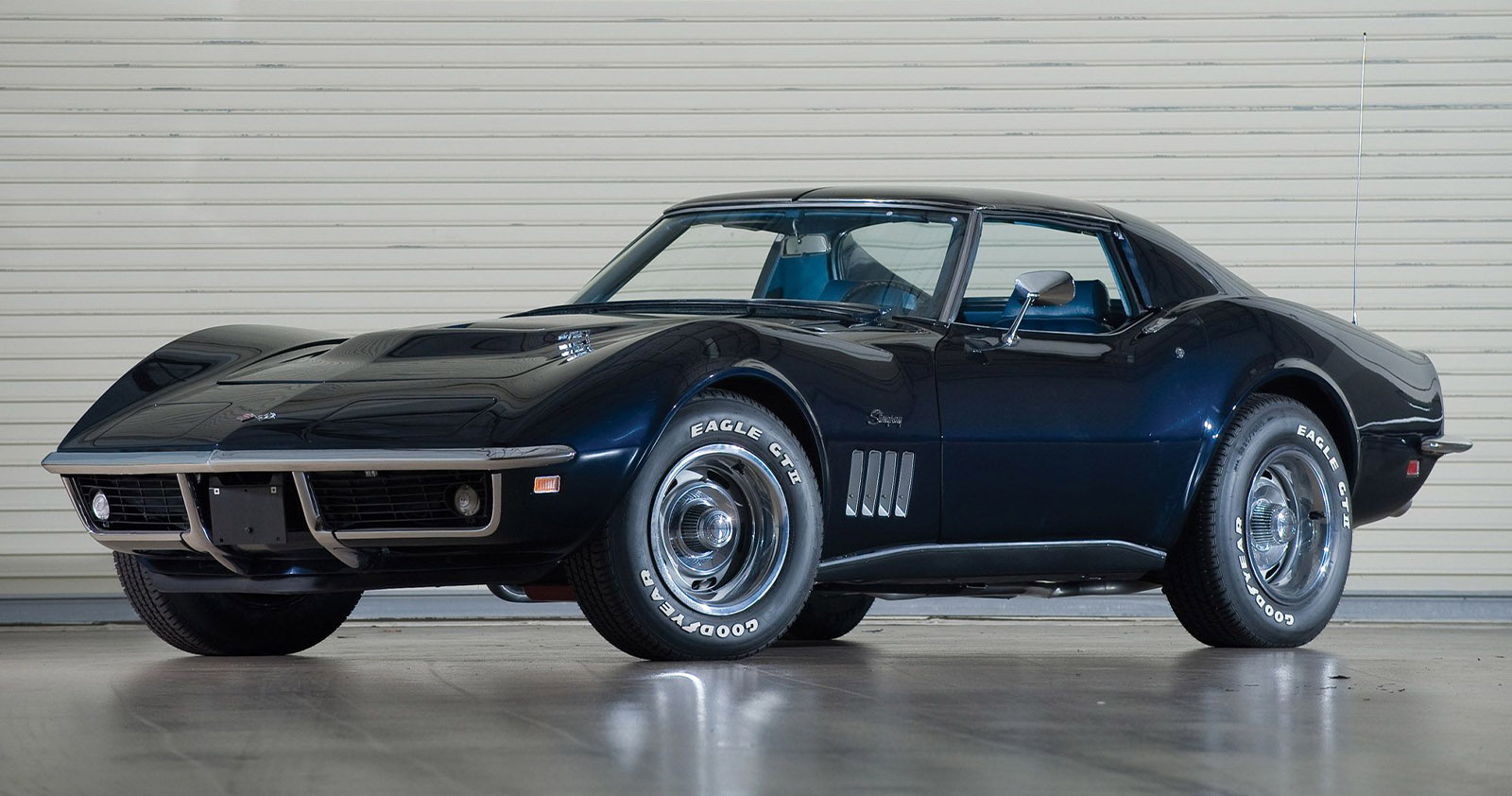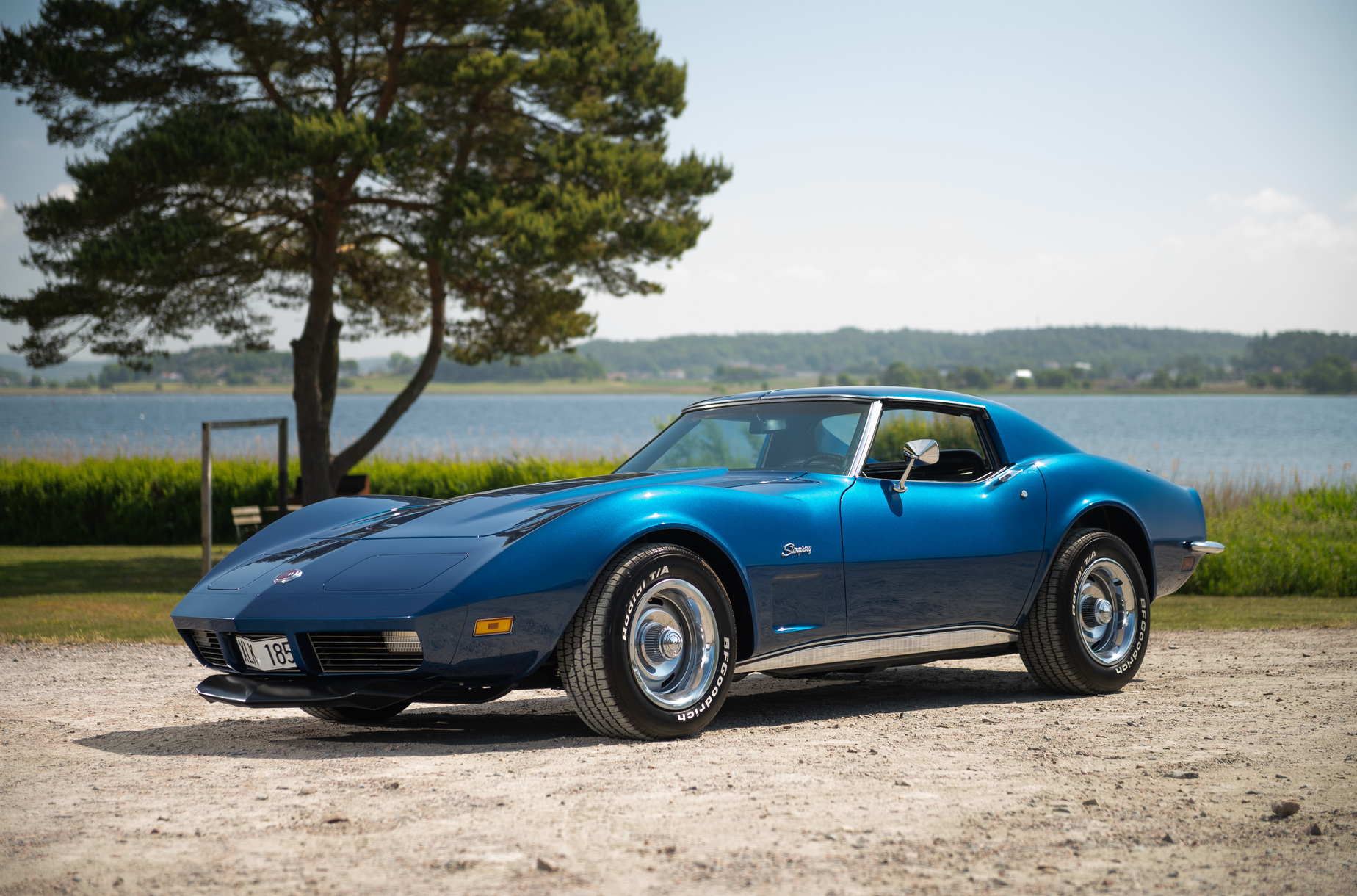
CORVETTE MODELS
C3 Corvette Stingray (1969–1976):
The Complete Guide
Every C3 Corvette Stingray, 1969–1976: The one-word Stingray years of the C3, 1969 to 1976: the chrome-bumper cars to 1972, the big-blocks to 1974, the last convertible in 1975 and the record-selling late coupes. The story, every year, the specs and the figures, how many were built, the editions and race cars, a buyer’s guide.
Quick Nav: The Story · The Years · Chart · 1969 · 1970 · 1971 · 1972 · 1973 · 1974 · 1975 · 1976 · Specs · Colors · News · Buyer’s Guide · What to Pay · Known Issues · Market Reports · For Sale · FAQs
The Basics
The Car: The one-word Stingray years of the C3, 1969 to 1976: the chrome-bumper cars to 1972, the big-blocks to 1974, the last convertible in 1975 and the record-selling late coupes
Years: 1969–1976 (8 model years)
Built: 257,872 by GM’s counts
Engine: 350-ci small-blocks (base, L46, LT-1, L82) and 427 / 454 big-blocks (L88, ZL1, LS5, LS6, LS4)
Power: 205 to 435 hp
Performance: 0–60 in 5.6 s · quarter mile 13.6 @ 105 · 142 mph (1969, period test)
Price New: $4,781 to $10,048
The Code: The Stingray badge, 1969–76; dropped for 1977 and revived on the 2014 C7
Predecessor: C2 Corvette Sting Ray
Successor: C7 Corvette Stingray
Related: the C3 hub, C3 Corvette L88, C3 Corvette ZR1
The Overview
The C3 Corvette Stingray was built 1969–1976, 257,872 cars by GM’s counts. The one-word Stingray years of the C3, 1969 to 1976: the chrome-bumper cars to 1972, the big-blocks to 1974, the last convertible in 1975 and the record-selling late coupes.
This page has every model year of the C3 Corvette Stingray in its own section with the year page’s account, the specs, the numbers and the posts; the figures by year; the colors; how it compares to its siblings; the site’s guides, videos and news; and a buyer’s guide: which year to buy, what to pay, how to verify one, what goes wrong and the site’s market reports. The C3 hub has the whole line across every generation.
The C3 Corvette Stingray Story
The 1968 Corvette had no Stingray badge; for 1969 Chevrolet put the name back as one word, and it stayed on the fenders through 1976 — the years of the LT-1, the LS6, the L88 and ZL1, the chrome-to-urethane bumpers, the last convertible and the sales records of the mid-1970s. The badge came off for 1977 and did not return until the C7.
This page is the Stingray years one by one, with each year’s account, figures, production, prices and colors; the L88 and ZR1 have their own pages, and the C3 hub has the whole generation to 1982.
MORE: THE C3 HUB

The C3 Corvette Stingray Year by Year
Every model year of the C3 Corvette Stingray: what changed, how many were built, what it cost and what it made. Each year has its section below and its own research page on the site.
MORE: THE C3 HUB / THE FULL MODEL LIST
| THE YEAR | BUILT | PRICE NEW | POWER | |
|---|---|---|---|---|
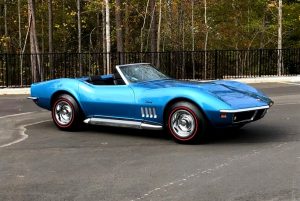 |
1969 C3 Corvette Stingray The Stingray name returns, the 327 becomes a 350, side pipes and 8-inch wheels arrive, and the all-aluminum ZL1 goes into two cars |
38,762 | $4,781.00 coupe / $4,438.00 convertible | 435 hp |
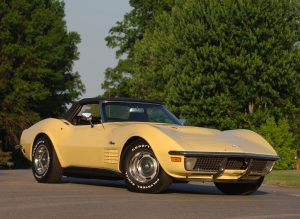 |
1970 C3 Corvette Stingray The 454 arrives, the solid-lifter LT-1 small block and the first ZR1 debut, and the Shark gets its egg-crate grille and flared fenders |
17,316 | $5,192.00 coupe / $4,849.00 convertible | 390 hp |
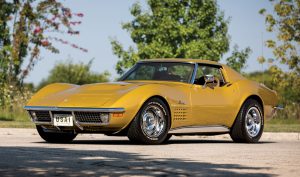 |
1971 C3 Corvette Stingray The year the compression came out: 91-octane rules cut the base 350 to 270 hp and the LT-1 to 330, while the aluminum-head LS6 454 made 425 for 188 buyers and the ZR2 put it in twelve race-ready cars |
21,801 | $5,496.00 coupe / $5,259.00 convertible | 330 hp |
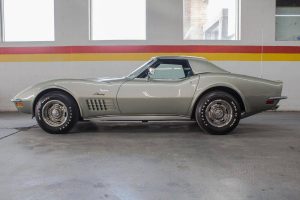 |
1972 C3 Corvette Stingray The last chrome-bumper Corvette: the last LT-1 and ZR1, the last removable rear window and egg-crate grille, with the engines now rated in SAE net horsepower and the alarm standard |
27,004 | $5,533.00 coupe / $5,296.00 convertible | 255 hp |
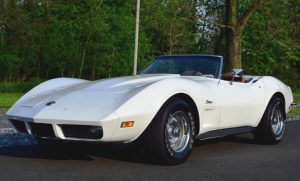 |
1973 C3 Corvette Stingray The Shark gets a body-color urethane nose, a fixed rear window, radial tires and door beams for its 20th anniversary, the solid-lifter engines are gone and the L82 arrives |
30,464 | $5,561.50 coupe / $5,398.50 convertible | 250 hp |
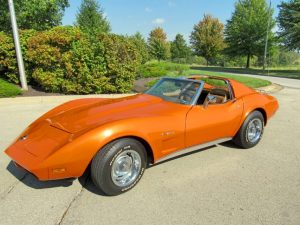 |
1974 C3 Corvette Stingray The body-color tail arrives in two pieces with a seam only the 1974 has, and the 454 bows out |
37,502 | $6,001.50 coupe / $5,765.50 convertible | 270 hp |
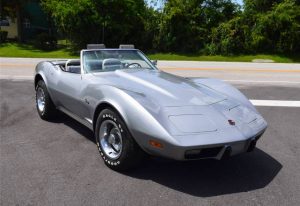 |
1975 C3 Corvette Stingray The last convertible for eleven years, the first catalytic converter, HEI ignition and unleaded fuel, two 350s and no big block, and Zora Arkus-Duntov’s retirement |
38,465 | $6,810.10 coupe / $6,550.10 convertible | 205 hp |
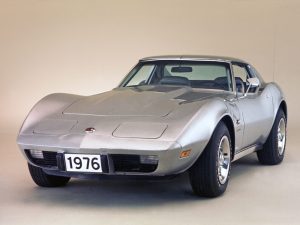 |
1976 C3 Corvette Stingray Coupe only for the first time, the Stingray badge for the last, aluminum wheels back after three years, a steel floor over the catalyst and a steering wheel borrowed from the Vega |
46,558 | $7,604.85 | 210 hp |
C3 Corvette Stingrays Built by Year
GM’s production counts for the C3 Corvette Stingray in each model year.
1969 C3 Corvette Stingray
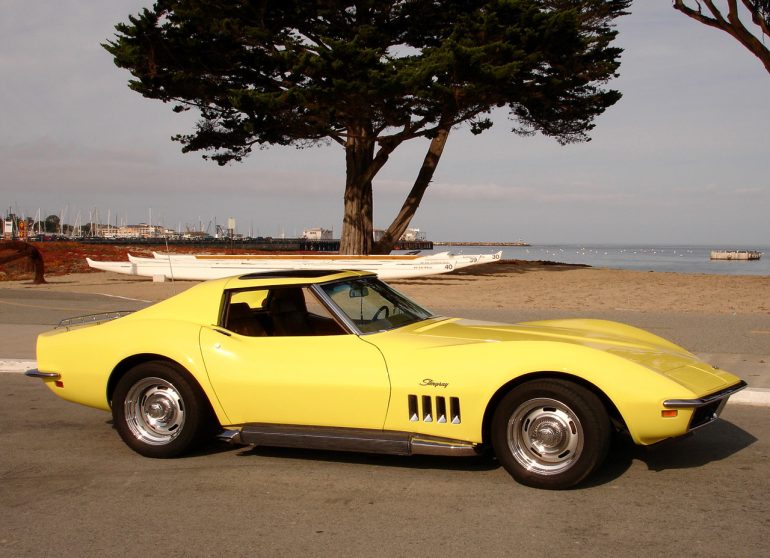
The 1969 Corvette is the 1968 with the complaints answered. The Stingray name came back, as one word on the front fenders, the way Bill Mitchell had spelled it on his 1959 racer. The push-button door releases gave way to flush handles, the 16-inch steering wheel shrank to 15, the ignition moved to the column with a steering lock, the door panels were thinned half an inch a side after Zora Arkus-Duntov pushed through a $120,000 tooling change, map pockets went on the dash, the frame was stiffened, the backup lights moved into the inner taillamps and the headlights got washers and a warning light. Side-mount exhaust returned, the fender louvers could be trimmed in chrome, and the Rally wheels grew from 7 to 8 inches.
Under the hood the 327 became the 350, stroked a quarter inch, at the same 300 and 350 hp ratings with a little more torque. The four 427s carried over, the Turbo Hydra-Matic was now offered behind the solid-lifter L71 and L88, the aluminum-head L89 found 390 buyers and the L88 116. Above them sat the ZL1: the L88 on an all-aluminum block developed for McLaren’s Can-Am cars, 100 lb lighter and good for 550 horsepower or more, priced at $4,718.35 on top of the L88 package. Two were built. The solid-lifter LT-1 small block was listed for 1969 but did not arrive until 1970.
MORE: THE 1969 RESEARCH PAGE
1969 C3 Corvette Stingray: Specs and Numbers
The 1969 C3 Corvette Stingray by the numbers, from the 1969 research page and the Compared dataset.
| SPEC | 1969 |
|---|---|
| Engines | 350 ci (5.7 L) small-block V-8 in two versions, new this year; 427 ci (7.0 L) Mark IV big-block V-8 in four production versions plus the L88 and the aluminum-block ZL1 |
| Power / torque | 435 hp / 460 lb-ft |
| 0–60 / quarter mile | 5.6 s / 13.6 @ 105 |
| Top speed | 142 mph |
| Weight | 3,435 lb |
| Built | 38,762 |
| Price | $4,781.00 coupe / $4,438.00 convertible |
1970 C3 Corvette Stingray
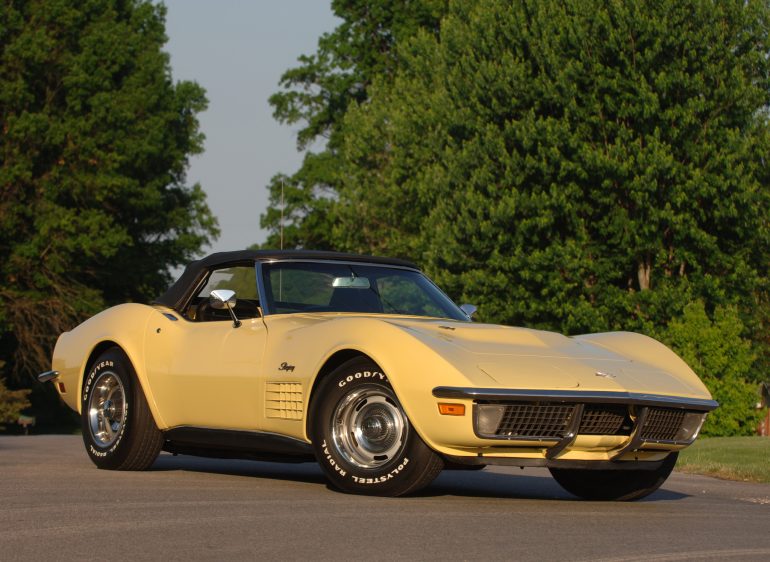
The 1970 Corvette was late. The UAW strike and John DeLorean’s decision to run the record 1969 model year into December meant the 1970 did not reach showrooms until February, and when it arrived it carried the changes previewed on Bill Mitchell’s Aero Coupe show car: an egg-crate grille with matching fender louvers in place of the four gills, square parking lamps in the grille corners, wheel openings flared to stop stone chips on the tuck-under, rectangular exhaust tips recessed into the tail and bigger side markers. Inside, the seats were reshaped for an inch more headroom with the headrests built in, the shoulder-belt reels moved into the rear quarters, and a $158 custom interior added leather, cut-pile carpet and wood-grain trim. Tinted glass, Positraction and the four-speed (or the Turbo Hydra-Matic) became standard, and the price went up $411 to cover it: $5,192 for the coupe, $4,849 for the convertible.
The engines were the news. The 427 was stroked to 454 and offered only as the 390-hp LS5 with 500 lb-ft of torque; the 460-hp aluminum-head LS7 was printed in the order guide, driven across the country by Sports Car Graphic and then cancelled before a customer got one. Zora Arkus-Duntov’s answer to the big block was the LT-1, a solid-lifter 350 with 11.0:1 compression, an 850-cfm Holley and a 6,500-rpm redline, rated at 370 hp and sold with a striped hood for $447.60; 1,287 buyers took it. For racers the ZR1 package wrapped the LT-1 in the M22 gearbox, heavy-duty brakes and suspension and an aluminum radiator and forbade the radio and air conditioning. Twenty-five were built, the first cars to wear a badge Chevrolet would bring back in 1990, 2009 and 2019.
MORE: THE 1970 RESEARCH PAGE
1970 C3 Corvette Stingray: Specs and Numbers
The 1970 C3 Corvette Stingray by the numbers, from the 1970 research page and the Compared dataset.
| SPEC | 1970 |
|---|---|
| Engines | 350 ci (5.7 L) small-block V-8 in three versions, including the new solid-lifter LT-1; 454 ci (7.4 L) Mark IV big-block V-8 as the LS5; the 460-hp LS7 was listed and never built for sale |
| Power / torque | 390 hp / 500 lb-ft |
| 0–60 / quarter mile | 5.7 s / 14.0 @ 100 |
| Top speed | 130 mph |
| Weight | 3,520 lb |
| Built | 17,316 |
| Price | $5,192.00 coupe / $4,849.00 convertible |
1971 C3 Corvette Stingray
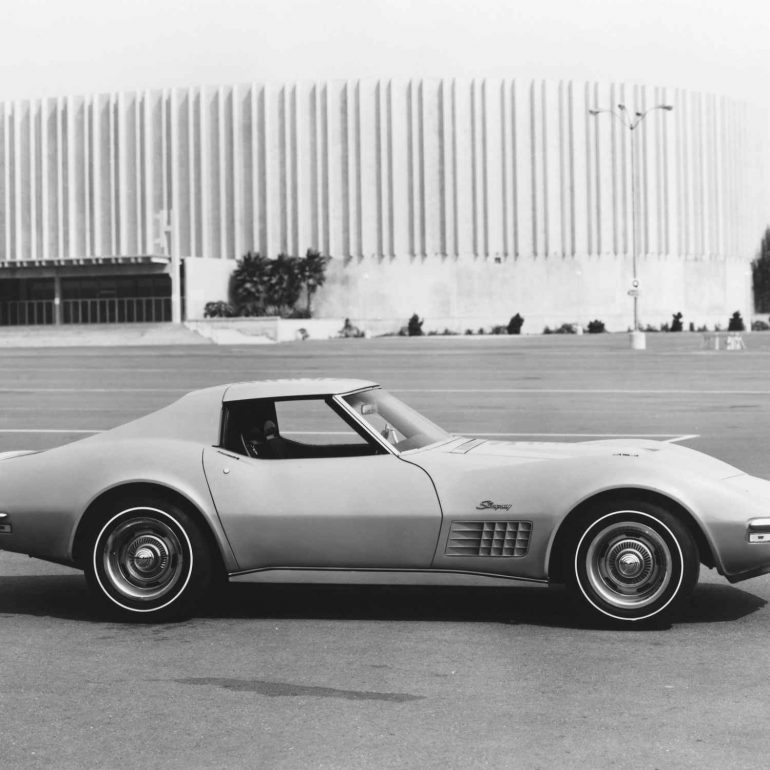
The 1971 Corvette is the 1970 again, and on purpose. The strike and the late 1970 launch left Chevrolet no time or appetite for change, so the body, the interior and the chassis carried over with a few details: an easier fuel-filler door, a lit shift quadrant for the automatic, amber parking-lamp lenses in the specifications (most cars still got clear lenses and amber bulbs), and the fiber-optic lamp monitors in their last year, missing from many late cars. The St. Louis plant, finally building one car for two years, used the breathing room to fix the fit and finish the magazines had been complaining about since 1968, and the 1971 is a better-built car than the two before it.
What changed was under the hood. Ed Cole, now president of General Motors, ordered every 1971 GM engine to run on 91-octane low-lead fuel ahead of catalytic converters, and the Corvette’s engines were detuned in weeks: the base 350 fell from 10.25:1 and 300 hp to 8.5:1 and 270, the solid-lifter LT-1 from 370 hp to 330 on 9.0:1, and the 454 LS5 from 390 hp to 365. The exception was the LS6, the cancelled 1970 LS7 reworked for low-lead fuel: aluminum heads, solid lifters, 9.0:1 compression and 425 hp, the last Corvette engine rated above 400 horsepower until the 2002 Z06. It cost $1,221 and 188 buyers paid it, 12 of them as the ZR2 package with the M22 gearbox, heavy-duty brakes and suspension and no radio or air conditioning. The ZR1 returned on the LT-1 for 8 cars.
MORE: THE 1971 RESEARCH PAGE
1971 C3 Corvette Stingray: Specs and Numbers
The 1971 C3 Corvette Stingray by the numbers, from the 1971 research page and the Compared dataset.
| SPEC | 1971 |
|---|---|
| Engines | 350 ci (5.7 L) small-block V-8 in two versions; 454 ci (7.4 L) Mark IV big-block V-8 in two versions, including the aluminum-head LS6; all detuned to run on 91-octane low-lead fuel |
| Power / torque | 330 hp / 360 lb-ft |
| 0–60 / quarter mile | 6.0 s / 14.5 @ 100 |
| Top speed | 130 mph |
| Weight | 3,390 lb |
| Built | 21,801 |
| Price | $5,496.00 coupe / $5,259.00 convertible |
1972 C3 Corvette Stingray
The 1972 Corvette is the 1970 for the third year and the last of its kind. Nothing changed outside, and the changes inside were subtractions: the fiber-optic lamp monitors went, a new console took their place, and the horn-honking alarm that had been RPO UA6 became standard, armed with a key at the back of the car. The engine list shrank to three, the fewest since 1956, because the aluminum-head LS6 and the ZR2 were gone after one year. What remained was rated in SAE net horsepower for the first time, measured with the accessories and exhaust fitted, so the base 350 read 200 hp, the solid-lifter LT-1 255 and the 454 LS5 270, numbers that looked like a collapse next to 1971 and mostly were not. The LS5 was never certified for California and could not be sold there.
The LT-1 could at last be ordered with air conditioning, with a tachometer redlined at 5,600 rpm instead of 6,500 so that the belts stayed on, and about 240 buyers took it; 1,741 LT-1s were built in all, 20 of them as the ZR1 package with the M22 gearbox, heavy-duty brakes and suspension and no comfort options. Both ended with the year. On the track the Corvette had its best season yet: Dave Heinz and Bob Johnson won the GT class at Daytona and Sebring on Goodyear radials, finishing fourth overall at Sebring, and the RED/NART 1968 L88 won its class at Le Mans.
MORE: THE 1972 RESEARCH PAGE

1972 C3 Corvette Stingray: Specs and Numbers
The 1972 C3 Corvette Stingray by the numbers, from the 1972 research page and the Compared dataset.
| SPEC | 1972 |
|---|---|
| Engines | 350 ci (5.7 L) small-block V-8 in two versions; 454 ci (7.4 L) Mark IV big-block V-8 as the LS5; three engines, the fewest since 1956, all rated in SAE net horsepower for the first time |
| Power / torque | 255 hp / 280 lb-ft |
| 0–60 / quarter mile | 6.9 s / 15.0 @ 95 |
| Top speed | 125 mph |
| Weight | 3,390 lb |
| Built | 27,004 |
| Price | $5,533.00 coupe / $5,296.00 convertible |
1973 C3 Corvette Stingray
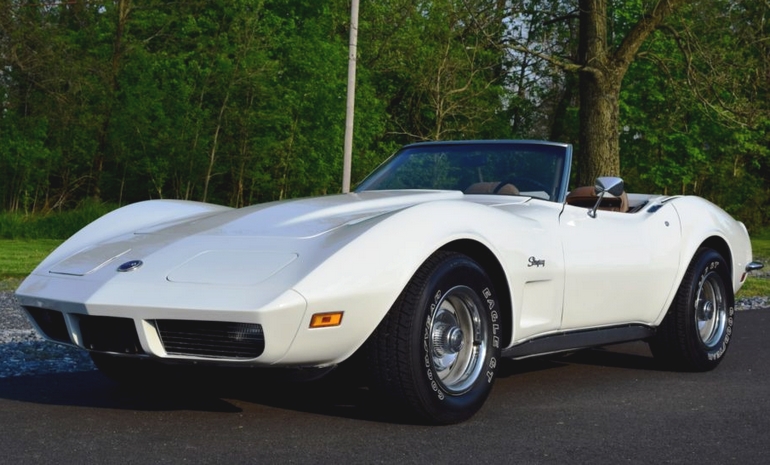
The 1973 Corvette is the first Shark that looks different, and the reason was the law. The federal five-mile-per-hour bumper rule arrived for 1973, and Chevrolet met it with a body-color urethane cover over a steel bumper on a nose two inches longer and 35 pounds heavier, blended into the fenders so well that most people took it for a facelift. The chrome rear bumpers stayed for one more year. The fender gills gave way to a single recessed vent, a longer hood hid the wipers and brought back cowl induction through a solenoid-operated flap, the coupe’s rear window was fixed in place to gain two inches of luggage room, steel beams went into the doors, radial tires became standard, the body went onto rubber-in-steel mounts and an asphalt sound-deadener, a hood pad and thicker carpet cut cabin noise by a claimed forty percent. The 20th-anniversary Corvette was quieter, softer and heavier than any before it.
The engines lost their solid lifters for the first time since 1956. The base L48 350 made 190 hp net; the new L82, with a forged crank, four-bolt mains and a hotter hydraulic cam, made 250 and cost $299, and the LS4 454 made 275 for $250, the only year the big block was cheaper than the hot small block. The Z07 off-road suspension and brake package went into 45 cars, and the first Corvette aluminum wheels, RPO YJ8, were sold to four buyers before porosity problems forced a recall. Car and Driver still saw 60 mph in 6.7 seconds and the quarter in 15.1, and the new radials, rated for 120 mph, set the top speed.
MORE: THE 1973 RESEARCH PAGE
 1973 Corvette Convertible
1973 C3 Corvette Stingray: Specs and Numbers
The 1973 C3 Corvette Stingray by the numbers, from the 1973 research page and the Compared dataset.
| SPEC | 1973 |
|---|---|
| Engines | 350 ci (5.7 L) small-block V-8 in two versions, including the new L82; 454 ci (7.4 L) Mark IV big-block V-8 as the LS4; all hydraulic-lifter, the first Corvette line without a mechanical-lifter engine since 1956; SAE net ratings |
| Power / torque | 250 hp / 285 lb-ft |
| 0–60 / quarter mile | 7.2 s / 15.5 @ 92 |
| Top speed | 124 mph |
| Weight | 3,520 lb |
| Built | 30,464 |
| Price | $5,561.50 coupe / $5,398.50 convertible |
1974 C3 Corvette Stingray
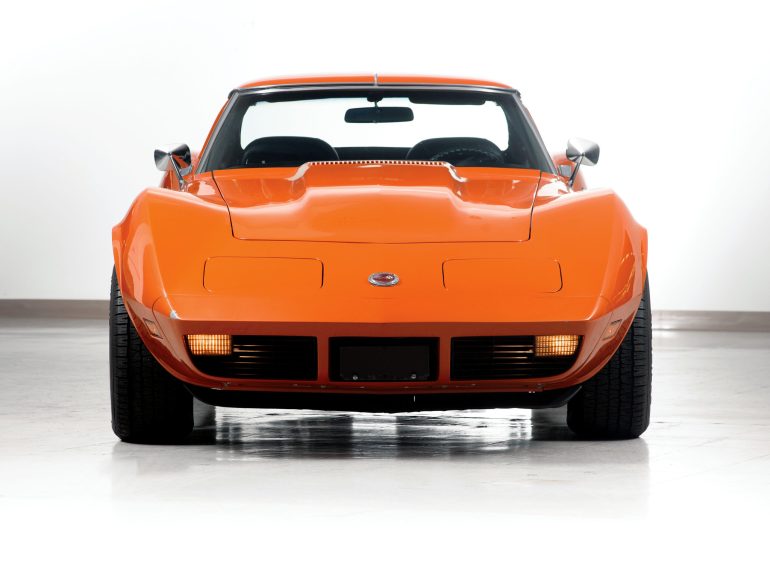
The 1974 Corvette finished what the 1973 started. The federal five-mph standard now applied at the back, and Chevrolet answered with a body-color urethane cover over an aluminum impact bar on telescoping brackets, tapering down instead of up like the old Kamm tail, with the license plate and taillights recessed into it and the exhaust moved below it. The cover was moulded in two halves with a vertical seam down the middle, which lasted one year and is the quickest way to spot a 1974. The alarm switch moved to the left front fender, coupes got integrated lap-and-shoulder belts with inertia reels, the inside mirror grew to ten inches, the radiator was redesigned, the power-steering pump got magnets to trap debris, and resonators quieted the exhaust. The Gymkhana suspension, RPO FE7, offered the F41 springs and shocks for seven dollars.
Under the hood it was the end of several things. The LS4 454 made its last appearance, 270 hp and 380 lb-ft for $250, in 3,494 cars, and no Corvette since has had a big block. The 1974 was also the last Corvette to run on leaded fuel and the last without a catalytic converter, which means the last with true dual exhaust; from 1975 both banks fed one converter. The base L48 crept up to 195 hp and the L82 stayed at 250, good for 0–60 in about 7.5 seconds and 125 mph on 14 miles to the gallon, which mattered when the Arab oil embargo of October 1973 to March 1974 had drivers queuing for rationed gasoline.
MORE: THE 1974 RESEARCH PAGE
1974 C3 Corvette Stingray: Specs and Numbers
The 1974 C3 Corvette Stingray by the numbers, from the 1974 research page and the Compared dataset.
| SPEC | 1974 |
|---|---|
| Engines | 350 ci (5.7 L) small-block V-8 in two versions; 454 ci (7.4 L) Mark IV big-block V-8 as the LS4 for the last year; all hydraulic-lifter, SAE net ratings; 91-octane leaded or low-lead fuel, no catalytic converter, true dual exhaust for the last year |
| Power / torque | 270 hp / 380 lb-ft |
| 0–60 / quarter mile | 7.0 s / 15.3 @ 94 |
| Top speed | 125 mph |
| Weight | 3,620 lb |
| Built | 37,502 |
| Price | $6,001.50 coupe / $5,765.50 convertible |
1975 C3 Corvette Stingray
The 1975 Corvette looks like the 1974 with black rubber pads on its bumpers, and almost everything that mattered happened out of sight. The catalytic converter arrived with unleaded fuel, so both exhaust manifolds now fed a Y-pipe into one converter before splitting again into twin mufflers, and true dual exhaust was gone. Delco’s breakerless High Energy Ignition replaced points and drove an electronic tachometer. The 454 was in the early order guide and cancelled before a car was built, leaving the 350 alone for the first time since 1967, and the detuning for the converter took the base L48 to 165 hp, 155 in California, the lowest rating a Corvette has ever carried, with the L82 at 205. Zora Arkus-Duntov retired on January 1, 1975, after twenty-one years, and Dave McLellan, fresh from MIT, took over an engineering job that would not let him change the car for another eight years.
The body changes were the one-piece rear cover in place of 1974’s seamed pair, a honeycomb core in the front bumper, shock absorbers behind the rear one, a headlights-on buzzer, a bladder in the fuel tank, kilometers on the speedometer and L82 badges on the hood of cars that had the engine (not all of them got the badges). More important was what ended: this was the last Corvette convertible until 1986, built because Chevrolet expected rollover rules to ban open cars and because only 4,629 buyers wanted one, the fewest of any year the body was offered. Many were bought as investments; it did not work. It was also the last year of Astro Ventilation and the last time a Corvette convertible cost less than the coupe.
MORE: THE 1975 RESEARCH PAGE

1975 C3 Corvette Stingray: Specs and Numbers
The 1975 C3 Corvette Stingray by the numbers, from the 1975 research page and the Compared dataset.
| SPEC | 1975 |
|---|---|
| Engines | 350 ci (5.7 L) small-block V-8 in two versions; one displacement for the first time since 1967 and the fewest choices since 1955; the LS4 454 was listed and cancelled before production; catalytic converter and unleaded fuel from this year |
| Power / torque | 205 hp / 255 lb-ft |
| 0–60 / quarter mile | 7.7 s / 16.1 @ 88 |
| Top speed | 120 mph |
| Weight | 3,530 lb |
| Built | 38,465 |
| Price | $6,810.10 coupe / $6,550.10 convertible |
1976 C3 Corvette Stingray
The 1976 Corvette is the first with no convertible and the last with Stingray on its fenders, and in between it is the 1975 cleaned up. The rear-deck grilles went with the Astro Ventilation system they had served, the cowl-induction flap that whistled on the 1973–75 hood went too, replaced by a duct that drew air from above the radiator (the hood grille stayed for one more year), and the rear ‘CORVETTE’ letters changed from the wide 1975 style to small recessed ones part-way through the run, so both are correct. A partial steel floor pan went in as a heat shield over the catalytic converter and stiffened the structure, the lighter Delco Freedom battery became standard, and so, from mid-year, did power steering and power brakes; 173 early cars left without power steering.
The interior got the change nobody wanted: a four-spoke sport steering wheel shared with the Vega GT, which lasted exactly one year. The aluminum wheels came back after their 1973 recall, now a set of four Kelsey-Hayes castings made in Mexico for $299 with a steel spare, and 6,253 buyers took them. Horsepower moved the right way for the first time since 1969: the L48 to 180 and the L82 to 210, helped by the new induction. California buyers could not have the L82 or a manual transmission, and the automatic behind the L48 was now the lighter TH350 rather than the TH400, which stayed behind the L82. The Z07 package disappeared and the Gymkhana suspension went to $35.
MORE: THE 1976 RESEARCH PAGE
1976 C3 Corvette Stingray: Specs and Numbers
The 1976 C3 Corvette Stingray by the numbers, from the 1976 research page and the Compared dataset.
| SPEC | 1976 |
|---|---|
| Engines | 350 ci (5.7 L) small-block V-8 in two versions, hydraulic lifters, catalytic converter, unleaded fuel, SAE net ratings; the L82 and all manual transmissions were not certified for California |
| Power / torque | 210 hp / 255 lb-ft |
| 0–60 / quarter mile | 7.5 s / 15.5 @ 90 |
| Top speed | 120 mph |
| Weight | 3,530 lb |
| Built | 46,558 |
| Price | $7,604.85 |
C3 Corvette Stingray Specs by Year
The figures for every year with a row in the site’s Compared dataset: GM’s where published, otherwise the period road tests.
MORE: CORVETTES COMPARED / THE ENGINES
| YEAR | ENGINE | POWER | TORQUE | 0–60 | ¼ MILE | TOP SPEED | WEIGHT | PRICE |
|---|---|---|---|---|---|---|---|---|
| 1969 | 427 ci all-aluminum ZL1, 430 hp rated (560–585) | 430 hp | 450 lb-ft | 4.0 s | 12.1 @ 116 | 155 mph | 2,945 | $10,048 |
| 1969 | 427 ci (L71), 435 hp | 435 hp | 460 lb-ft | 5.6 s | 13.6 @ 105 | 142 mph | 3,435 | $4,781 |
| 1970 | 350 ci solid-lifter LT-1, 370 hp | 370 hp | 380 lb-ft | 5.7 s | 14.2 @ 102 | 135 mph | 3,390 | $5,192 |
| 1970 | 454 ci (LS5), 390 hp | 390 hp | 500 lb-ft | 5.7 s | 14.0 @ 100 | 130 mph | 3,520 | $5,482 |
| 1971 | 454 ci aluminum-head LS6, 425 hp | 425 hp | 475 lb-ft | 5.3 s | 13.8 @ 104 | 140 mph | 3,530 | $6,532 |
| 1971 | 350 ci LT-1, 330 hp | 330 hp | 360 lb-ft | 6.0 s | 14.5 @ 100 | 130 mph | 3,390 | $5,496 |
| 1972 | 350 ci LT-1, 255 hp net | 255 hp | 280 lb-ft | 6.9 s | 15.0 @ 95 | 125 mph | 3,390 | $5,533 |
| 1973 | 350 ci L82, 250 hp | 250 hp | 285 lb-ft | 7.2 s | 15.5 @ 92 | 124 mph | 3,520 | $5,562 |
| 1974 | 454 ci LS4, 270 hp; the last big-block | 270 hp | 380 lb-ft | 7.0 s | 15.3 @ 94 | 125 mph | 3,620 | $6,001 |
| 1975 | 350 ci L82, 205 hp; the catalytic-converter year | 205 hp | 255 lb-ft | 7.7 s | 16.1 @ 88 | 120 mph | 3,530 | $6,810 |
| 1976 | 350 ci L82, 210 hp | 210 hp | 255 lb-ft | 7.5 s | 15.5 @ 90 | 120 mph | 3,530 | $7,605 |
C3 Corvette Stingray Colors by Year
How many C3 Corvette Stingrays were built in each color, from the year pages’ color charts. Years missing from the table have no per-model split in the chart. Every color has its own page in the Corvette Colors library.
MORE: ALL CORVETTE COLORS / COLORS BY YEAR
| COLOR | 1969 | 1970 | 1971 | 1972 | 1973 | 1974 | 1975 | 1976 | TOTAL |
|---|---|---|---|---|---|---|---|---|---|
| Classic White | — | — | 1,875 | 2,763 | — | — | 8,007 | 10,674 | 23,319 |
| Silver | — | — | — | — | — | — | 4,710 | 6,934 | 11,644 |
| Mille Miglia Red | — | — | 2,180 | 2,478 | — | — | 3,355 | — | 8,013 |
| Ontario Orange | — | — | 2,269 | 4,891 | — | — | — | — | 7,160 |
| Orange Flame | — | — | — | — | — | — | 3,030 | 4,073 | 7,103 |
| Bright Yellow | — | — | — | — | — | — | 2,883 | 3,389 | 6,272 |
| War Bonnet Yellow | — | — | 3,706 | 2,550 | — | — | — | — | 6,256 |
| Bright Blue | — | — | — | — | — | — | 2,869 | 3,268 | 6,137 |
| Red | — | — | — | — | — | — | — | 4,590 | 4,590 |
| Dark Brown | — | — | — | — | — | — | — | 4,447 | 4,447 |
| Elkhart Green | — | — | — | 4,200 | — | — | — | — | 4,200 |
| Mahogany | — | — | — | — | — | — | — | 4,182 | 4,182 |
| Steel Cities Gray | — | — | 1,591 | 2,346 | — | — | — | — | 3,937 |
| Brands Hatch Green | — | — | 3,445 | — | — | — | — | — | 3,445 |
| Medium Saddle | — | — | — | — | — | — | 3,403 | — | 3,403 |
| Dark Red | — | — | — | — | — | — | 3,342 | — | 3,342 |
| Targa Blue | — | — | — | 3,198 | — | — | — | — | 3,198 |
| Buckskin | — | — | — | — | — | — | — | 2,954 | 2,954 |
| Sunflower Yellow | — | — | 1,177 | 1,543 | — | — | — | — | 2,720 |
| Mulsanne Blue | — | — | 2,465 | — | — | — | — | — | 2,465 |
| Dark Green | — | — | — | — | — | — | — | 2,038 | 2,038 |
| Bright Green | — | — | — | — | — | — | 1,664 | — | 1,664 |
| Bryar Blue | — | — | — | 1,617 | — | — | — | — | 1,617 |
| Bridgehampton Blue | — | — | 1,417 | — | — | — | — | — | 1,417 |
C3 Corvette Stingray News and Posts by Year
Everything tagged to the C3 Corvette Stingray’s model years, newest first.
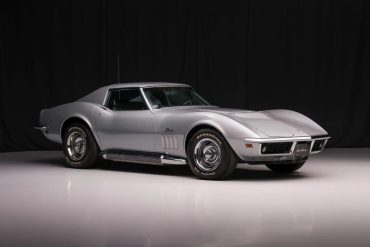

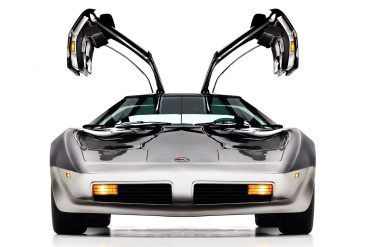


The C3 Corvette Stingray Buyer’s Guide
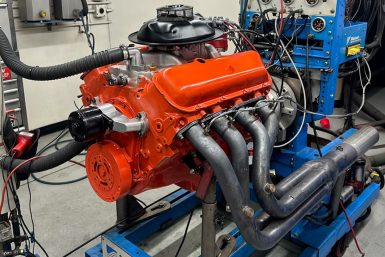
The 1969–76 Stingray is the entry point to the classic Corvette market and the widest spread in it: a chrome-bumper 1969–72 LT-1 or 454 at the top, the base 1973–76 small blocks with the automatic at the bottom, and everything in between for less than a new Stingray. Every year has the same C3 questions — the birdcage and frame, the engine pad, the vacuum system, the T-tops — and the later cars add the urethane bumpers and the emissions equipment.
The site’s advice has been consistent: a 1970–72 small block with the four-speed and the paperwork is the C3 to want; a 1973–74 is the chrome-and-urethane bargain; a 1975–76 is the cheapest way into a Corvette with a Stingray script. Buy the best body and frame you can find, because the drivetrain is cheap to fix and the structure is not.
Which C3 Corvette Stingray to Buy
Every model year of the C3 Corvette Stingray with the verdict a buyer needs: what the year brought, which are collected and which are the value.
| YEAR | BUILT | NEW | POWER | THE VERDICT |
|---|---|---|---|---|
| 1969 | 38,762 | $4,781 coupe / $4,438 convertible | 435 hp | The 350 arrives and the frame is stiffened; the first year to live with, and the L88 and ZL1 year at the top. |
| 1970 | 17,316 | $5,192 coupe / $4,849 convertible | 390 hp | The LT-1 and the 454; the flared fenders and the egg-crate grilles. |
| 1971 | 21,801 | $5,496 coupe / $5,259 convertible | 330 hp | Lower compression and the LS6 454; the last of the big horsepower. |
| 1972 | 27,004 | $5,533 coupe / $5,296 convertible | 255 hp | The last chrome-bumper car; the LT-1’s last year; the VIN finally tells the engine. |
| 1973 | 30,464 | $5,561.50 coupe / $5,398.50 convertible | 250 hp | The urethane nose with the chrome tail; the one-year look and the bargain. |
| 1974 | 37,502 | $6,001.50 coupe / $5,765.50 convertible | 270 hp | Urethane both ends, the last 454, the last without catalysts. |
| 1975 | 38,465 | $6,810.10 coupe / $6,550.10 convertible | 205 hp | Catalytic converters, the last convertible for eleven years, 165 hp base. |
| 1976 | 46,558 | $7,604.85 | 210 hp | The last Stingray script, the aluminum wheels, the L82 at 210 hp; the bottom of the market with the 1975 and 1977. |
What a C3 Corvette Stingray Costs Today
What the year pages record for each year: the market ladder and the results the site has tracked. Check whether a result includes the buyer’s premium, and treat asking prices and unsold high bids separately from completed sales.
MORE: THE C3 BUYER’S GUIDE / MSRP BY YEAR
| YEAR | BUILT | NEW | THE MARKET |
|---|---|---|---|
| 1969 | 38,762 | $4,781 coupe / $4,438 convertible | Below them the order is the 390 L89 cars, the 435-hp L71, the 400-hp L68 and the 390-hp L36, then the 350-hp L46 and the 300-hp cars that most of the 38,762 are. The coupe outnumbers the convertible for the first time in the C3, and buyers pay for the Stingray badge, the flush door handles and the 350, so a 1969 brings more than the same car as a 1968. With the LT-1 and the 454 arriving in 1970, the 1969 is the last year a small-block car is the plain one. The V.V. The Daytona Yellow coupe is in Roger Judski’s collection. Results tracked by Classic.com put the L89s at $139,000 on Bring a Trailer in October 2026, $150,000 there in May, $184,250 at Mecum Indianapolis in May and $194,000 on Bring a Trailer in November 2025, with two bid to $175,000 and $240,000 at Kissimmee without selling; the Classic.com benchmark is about $125,000. |
| 1970 | 17,316 | $5,192 coupe / $4,849 convertible | The 1970 is the C3 the market has decided is the best of the chrome-bumper cars: the last high-compression year, the first LT-1, the only 390-hp 454, the facelift, and the smallest production run of the decade. The order is the ZR1s (25 built) well ahead of everything else, then the LT-1, the LS5, the L46 and the 300-hp cars, with the convertible carrying a premium over the coupe at each level and documented original engines mattering more than in 1968 or 1969 because the LT-1 is the most faked small block Chevrolet built. A correct LT-1 hood, the right Holley and the CTK/CTR/CTU suffix are what buyers pay for. |
| 1971 | 21,801 | $5,496 coupe / $5,259 convertible | The order is the ZR2s (12 built, Classic.com benchmark about $543,000), the 188 LS6 cars (benchmark about $160,000), the 8 ZR1s, then the LT-1, the LS5, and the 270-hp cars that two thirds of the 21,801 are. Convertibles carry a premium over coupes at each level, and an LS6 with the automatic is worth less than a four-speed. Because the 1971 looks like a 1970 and costs less, it is the sensible way into a chrome-bumper Shark for someone who does not need the last 30 horsepower. LS6 cars tracked by Classic.com sold for $136,000 (an M22 coupe on Bring a Trailer, June 2026) and $112,750 (an automatic at Mecum Kissimmee, January 2026), with convertibles bid to $100,000 at Kissimmee and $110,000 at Mecum Indianapolis in May 2026 without selling; the seven highest LS6 sales on record run from $140,000 to $214,500. |
| 1972 | 27,004 | $5,533 coupe / $5,296 convertible | The 1972 is priced as the last of the chrome-bumper cars, above the 1973–82 Sharks and a little below the 1970 and 1971 for the same engine, with the LT-1 carrying most of the premium: it is the last year, the VIN letter proves it, and the air-conditioned cars are the rarest street LT-1s. The order is the 20 ZR1s (Classic.com’s 1970–72 benchmark about $209,000), then the LT-1, the LS5 and the 200-hp cars that four fifths of the 27,004 are; the convertible carries a premium over the coupe, and the 1970–72 LT-1 benchmark is about $54,000. A 1972 small block with the automatic and air is the entry-level C3 that still has chrome at both ends. |
| 1973 | 30,464 | $5,561.50 coupe / $5,398.50 convertible | The 1973 is the cheapest way into a C3 with the early dash, a 454 on the option list and a soft nose that still looks like the 1968 car, and the market prices it that way: below the 1972, above the 1974–77 cars, with the convertible and the LS4 carrying the premiums. The order is the Z07 cars (45 built, rarely offered), then the LS4 convertibles, the LS4 coupes, the L82 and the L48 cars, with four-speeds over automatics at each level. Original cars with the custom interior and air sell best because that is how most were built. An original YJ8 wheel set, if one turns up, is a collectible in its own right. Results tracked by Classic.com through October 2026: at Mecum Nashville in September an original four-speed coupe sold for $55,000 and an automatic for $26,400, and a 6,000-mile LS4 four-speed was bid to $60,000 without selling. |
| 1974 | 37,502 | $6,001.50 coupe / $5,765.50 convertible | The 1974 is the cheapest big-block Corvette and one of the cheapest Sharks of any kind, and the market treats it as a 1973 with a softer tail: below the chrome-bumper cars, level with 1975–77, with the convertible and the LS4 carrying the premiums. Because two thirds were automatics and more than half had the custom interior and air, a four-speed L82 or 454 with the Gymkhana suspension is the car collectors look for, and a documented one costs little more than a base car did a few years ago. Zora’s own 1974 is in the museum and not for sale. |
| 1975 | 38,465 | $6,810.10 coupe / $6,550.10 convertible | The 1975 is the bottom of the C3 market with the 1976 and 1977, and for the same reason the 1974 is cheap: low power, high production, automatics and air on most cars. A clean L48 automatic coupe is the least expensive Corvette with T-tops, and a good L82 four-speed with the Gymkhana suspension is the one to look for if the car is to be driven. Results tracked by Classic.com from October 2025 through October 2026: a convertible with hardtop sold for $32,450 at Mecum Nashville in September 2026 and another for $20,000 on Bring a Trailer in October, while a four-speed coupe was bid to $25,000 at Mecum Fort Worth without selling. Earlier, an original automatic coupe made $18,060 at ACC, an L82 four-speed $12,500 on Bring a Trailer and a convertible $10,000 there, with an L82 convertible bid to $14,500 and coupes to $13,500 to $16,000 without selling; a project went for $3,300. |
| 1976 | 46,558 | $7,604.85 | The 1976 shares the bottom of the C3 market with the 1975 and 1977, with a few points in its favor: the last Stingray script, the first of the aluminum wheels, 15 more horsepower than 1975, and no convertible to pull money away from the coupes. The order is L82 four-speeds with the Gymkhana suspension and aluminum wheels first, then L82 automatics, then the 40,000-odd L48s that most cars are, with original paint and interior counting for more than mileage. A clean L48 automatic with air and the custom interior is the entry ticket to C3 ownership; the Vega steering wheel is usually the first thing a new owner replaces, and a car that still has it gets a nod from the judges. |
How to Verify a C3 Corvette Stingray
The VIN positions, the labels, the stampings and the parts that prove a C3 Corvette Stingray is what it claims to be, from the year pages, year by year; where a later year repeats an earlier one, only what is new is added.
1969: Verification is the same drill as 1968 with more at stake: start at the engine pad for the right plant prefix (T for big blocks, V for small blocks), the right suffix (LR for L71, LP for L89, LO or MR for L88, LV for an automatic L88, ME or MG for a ZL1), the right casting (3935439, 3955270 or 3963512 for an iron 427, 3946052 for the aluminum block) and a casting date before the build date on the trim tag, then confirm that the L89 or L88 has the aluminum 3919842 heads and that the partial VIN stamped on the pad matches the car. The first-year 350 is the cheapest small block to verify because it has the fewest reproduction parts chasing it. NCRS and Bloomington Gold judging sheets, tank stickers, Protect-O-Plates and build sheets all help.
1970: Verification on a 1970 starts with the engine pad: a V prefix and a CTK, CTR or CTU suffix (CTV for a ZR1) on a 3970010 block with 3973414 heads, a Holley R4489A or R4555A, the aluminum intake and the 2.5-inch exhaust make an LT-1, and the partial VIN stamped beside the suffix must match the car. The LT-1 hood, stripes and console plaque are all reproduced and prove nothing on their own. A ZR1 needs the LT-1 plus the M22, the J56 calipers and proportioning valve, the F41 springs, the K66 distributor and the aluminum radiator with its metal shroud, and no factory radio or air conditioning; the Protect-O-Plate, tank sticker and build sheet are the documents that matter, and the registries know most of the 25. An LS5 should carry a T-prefix 3963512 block with CGW, CRI, CRJ or CZU and 3964290 heads. NCRS and Bloomington Gold judging sheets and old photographs help with all of them.
1971: Verification follows the 1970 drill with the 1971 codes: a V-prefix 3970010 block with a CGY suffix (CGZ for a ZR1), 3973487 heads, the Holley and aluminum intake and the 2.5-inch exhaust make an LT-1; a T-prefix 3963512 block with CPW (four-speed) or CPX (automatic), aluminum 3994026 or 3946074 heads and the Holley make an LS6, and CPH or CPJ with iron 3993820 heads an LS5. The partial VIN stamped beside the suffix must match the car. An LS6 is the most valuable engine of the year and the easiest to fake with a set of aluminum heads on an LS5, so the suffix, the casting dates and the build sheet or tank sticker matter more than the badges, and a ZR2 or ZR1 needs the M22, J56 brakes, F41 bars, K66 distributor and aluminum radiator and no factory radio or air; all twenty are known to the registries.
1972: Verification is easier on a 1972 than on any earlier Corvette because the fifth VIN character names the engine: L is an LT-1, W an LS5, K a base car, and a 350 with an LT-1 hood and a K in the VIN is a tribute. An LS5 wants a T-prefix 3999289 block with CPH, CPJ, CSR or CSS and 3999241 heads. Build sheets, tank stickers, Protect-O-Plates and NCRS or Bloomington Gold judging sheets help with all of them, and an original air-conditioned LT-1 should have the 5,600-rpm tachometer.
1973: Verification is simple on a 1973 because the VIN names the engine: J is a base car, T an L82 and Z a 454, so a car with L82 valve covers and a J in the VIN is a dress-up. The engine pad should carry a V prefix and CLR or CLD (CLS or CLH in California) on a 3970010 or 3970014 block with 330545 heads for an L82, and a T prefix with CWM, CWR, CWT or CWS on a 3999289 block with 353049 heads for an LS4, with the partial VIN beside the suffix matching the car. A Z07 car needs the heavy-duty springs, shocks, bars and brakes and the L82 or LS4 with a four-speed, and the build sheet or tank sticker to prove it. Original 1973 urethane noses have usually been repainted or replaced because the early urethane cracked and faded; a car with the correct nose and the flex-agent paint mismatch the factory produced is a plus, not a flaw.
1974: The two-piece rear cover with its center seam is correct for 1974 and wrong on any other year; a 1974 with a one-piece 1975-style cover has been repaired, which is common and not a crime but should be priced in.
1975: Verification follows the later-C3 pattern: the fifth VIN character names the engine (J base, T L82), so an L82 with a J in the VIN is a dress-up, and the hood badges prove nothing because many real L82s never got them. The engine pad should carry a V prefix and an L82 suffix (CHC, CRL, CUD, CKC, CRM or CHR) on a 3970010 block with the partial VIN matching the car, and the distributor should be the HEI unit. On a convertible, check that the top frame, boot and rear deck are 1975 parts, because convertible bodies have been built from coupes.
1976: Verification is simple: the fifth VIN character is X on an L82 and L on a base car, so an L82 with an L in the VIN is a dress-up, and California cars (RPO YF5) are always L48 automatics. Original YJ8 wheels carry Kelsey-Hayes and Mexico markings inside the rim; reproductions and later GM wheels are common and worth less. A 1976 should have no rear-deck grilles and no cowl flap under the hood grille, and either rear emblem style is correct; the Vega steering wheel and the steel floor pan are the other year markers.
MORE: THE 1969 RESEARCH PAGE
The C3 Corvette Stingray Inspection List
What to check on a C3 Corvette Stingray before the money changes hands, from the year pages, with each year adding what is new.
1969: The C3 body sits on the C2’s birdcage and rusts in the same places: the windshield frame, the door hinge pillars and the frame kickups over the rear wheels and around the trailing-arm mounts. The 1969 is the better car to live with than the 1968, with the frame stiffened and the fit improved, but it still carries the vacuum system for the headlights and wiper door, which leaks at the actuators and check valves until nothing works, the fiber-optic lamp monitors that go dark, and T-top and rear-window seals that leak. Trailing-arm bushings, half-shaft U-joints and the four-piston calipers (weeping unless sleeved) are the usual mechanical work. A Tri-Power car should idle on the center carburetor and come in hard when the outers open; a big block that runs hot has a radiator, shroud or timing problem. Budget for the vacuum system, seals and brakes on any 1969 that has sat.
1970: An LT-1 wants its solid lifters adjusted and its Holley set up properly or it will not idle, and a 454 that runs hot has a radiator, shroud or timing problem; both are hard on the four-piston calipers, which weep unless sleeved. Budget for the vacuum system, seals and brakes on any 1970 that has sat, and for a correct LT-1 carburetor if the car has lost its original.
1972: The 1972 keeps the vacuum system for the headlights and wiper door, which leaks at the actuators and check valves until nothing works, and T-top and rear-window seals that leak; the fiber optics are gone, which is one less thing to fix, and the alarm lock cylinder in the rear panel is often seized.
1973: The urethane nose cover cracks with age and sags where the mounting bolts corrode, and the headlights still run on vacuum, which leaks at the actuators and check valves until nothing works; the wiper door is gone, which removes the worst of it. The cowl-induction flap solenoid and the T-top seals are the other usual leaks.
1974: The urethane covers at both ends crack and sag as the mounting hardware corrodes, the rear cover’s seam opens up, and the headlights still run on vacuum, which leaks at the actuators and check valves until nothing works.
1975: The urethane covers at both ends crack and sag as the mounting hardware corrodes, the headlights still run on vacuum, which leaks at the actuators and check valves until nothing works, and the original catalytic converter and Y-pipe are often long gone in favor of true duals, which is common and worth knowing before a judged show.
1976: The T-top seals are the usual leak.
MORE: THE C3 BUYER’S GUIDE
What Goes Wrong: The C3 Corvette Stingray’s Known Issues
The faults a C3 Corvette Stingray is known for, the years they affect, what they look like and what the fix is. None of them should stop a purchase; all of them should be on the checklist, and a car with the paperwork for them is the one to buy.
| ISSUE | YEARS | WHAT HAPPENS | THE FIX |
|---|---|---|---|
| Birdcage rust | 1969–76 | The windshield frame, the door hinge pillars and the rear window frame. | The expensive one; inspect with a light. |
| Frame rust | 1969–76 | The kickups over the rear wheels and the trailing-arm mounts. | Look from below. |
| Vacuum system | 1969–76 | The headlamp doors and the wiper door run on vacuum and leak. | Everything should open and close; the hoses are cheap, the diagnosis is not. |
| T-tops | 1969–76 | The removable panels leak and rattle. | Check the seals and the latches. |
| Engine originality | 1969–76 | Pads restamped; LT-1 and L82 cars dressed from base cars (the VIN tells from 1972). | Casting dates, the suffix, the paperwork. |
| Brakes | 1969–76 | The four-piston calipers weep unless sleeved. | Check for leaks. |
| Trailing arms and half-shafts | 1969–76 | Bushings and U-joints wear. | A known job. |
| Heat (1973–76) | 1973–76 | The emissions-era cars run hot; the radiators and shrouds are often wrong. | The site’s radiator-upgrade guide covers it. |
The C3 Corvette Stingray Options and Editions That Matter
What moves the price of a C3 Corvette Stingray beyond mileage and condition: the packages, the equipment groups and the special editions, and what each does to the value.
MORE: THE SPECIAL EDITIONS / MSRP BY YEAR
| OPTION OR EDITION | WHY IT MATTERS | WHAT IT DOES TO THE PRICE |
|---|---|---|
| Engine | From the base 350 to the LT-1 and the 454s; the L82 from 1973. | The price ladder; the LT-1 and the LS6 carry the premiums. |
| Four-speed | The manual against the Turbo Hydra-Matic. | A premium on every year. |
| Convertible (to 1975) | The last C3 convertible was the 1975. | Convertibles lead in the chrome-bumper years. |
| Air conditioning and power steering | Common from 1973; rare with the LT-1. | A premium on a driver. |
| Side exhaust (1969) and the aluminum wheels (1976) | The period options. | A small premium. |
| Documentation | Tank stickers, Protect-O-Plates, NCRS sheets. | The premium over an undocumented car. |
What a C3 Corvette Stingray Costs to Own
The C3 is the cheapest classic Corvette to run: every part is reproduced, the small blocks are simple, and any classic shop can service one. The money goes into the body and the structure, which is why the inspection matters more than the mileage. Insure on an agreed value with a classic-car insurer; most qualify for limited-use policies.
MORE: THE C3 BUYER’S GUIDE
The Site’s Market Reports on the C3 Corvette Stingray
What CorvSport has written about buying, selling and valuing the C3 Corvette Stingray: the market reports, the bargain hunting, the auction results and the cars it has listed, newest first.
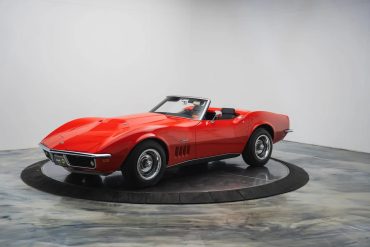
CorvSport Curates: Ten Rules For Buying Your First C3 Corvette — 2025
FOR SALE: 1969 Chevrolet Corvette Stingray Convertible (C3) - LS2 Restomod — 2026
FOR SALE: Extremely Rare 1969 Chevrolet Corvette Stingray ZL-1 Convertible — 2022
FOR SALE: Incredibly Elegant 1970 Chevrolet Corvette Stingray — 2022
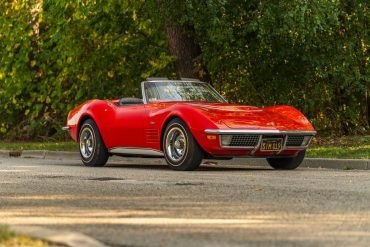
FOR SALE: 1972 Corvette Stingray Convertible For Auction On eBay — 2020
C3 Corvette Stingray: Recalls, Service Bulletins and Maintenance
The site’s recall, service-bulletin and maintenance-schedule posts for the C3 Corvette Stingray’s model years and the C3 generation.


C3 Corvette Stingrays For Sale
The C3s the site has listed for sale, newest first; the C3 Corvette Stingrays are among them. The for-sale page has every Corvette the site is following and the auctions page the results.
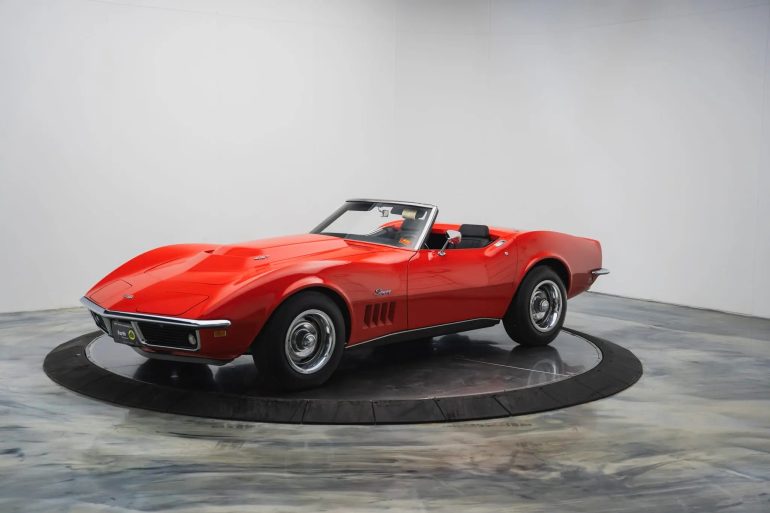
Go Deeper
The pages around this one.
Every Corvette model and year — the full list
The C3 Corvette hub — the generation, 1968–82
Corvettes Compared — every year’s figures
FAQs
What years was the C3 Corvette Stingray made?
1969–1976, 8 model years. The one-word Stingray years of the C3, 1969 to 1976: the chrome-bumper cars to 1972, the big-blocks to 1974, the last convertible in 1975 and the record-selling late coupes.
How many C3 Corvette Stingrays were built?
257,872 by GM’s counts: 1969 38,762, 1970 17,316, 1971 21,801, 1972 27,004, 1973 30,464, 1974 37,502, 1975 38,465, 1976 46,558.
How much horsepower does the C3 Corvette Stingray have?
350-ci small-blocks (base, L46, LT-1, L82) and 427 / 454 big-blocks (L88, ZL1, LS5, LS6, LS4). 205 to 435 horsepower across the years
How fast is the C3 Corvette Stingray?
1969: 0–60 in 4.0 s, 155 mph · 1969: 0–60 in 5.6 s, 142 mph · 1970: 0–60 in 5.7 s, 135 mph · 1970: 0–60 in 5.7 s, 130 mph · 1971: 0–60 in 5.3 s, 140 mph · 1971: 0–60 in 6.0 s, 130 mph · 1972: 0–60 in 6.9 s, 125 mph · 1973: 0–60 in 7.2 s, 124 mph · 1974: 0–60 in 7.0 s, 125 mph · 1975: 0–60 in 7.7 s, 120 mph · 1976: 0–60 in 7.5 s, 120 mph (GM’s figures or the period tests; the Compared page has them all).
How much did the C3 Corvette Stingray cost new?
1969: $4,781.00 coupe / $4,438.00 convertible · 1970: $5,192.00 coupe / $4,849.00 convertible · 1971: $5,496.00 coupe / $5,259.00 convertible · 1972: $5,533.00 coupe / $5,296.00 convertible · 1973: $5,561.50 coupe / $5,398.50 convertible · 1974: $6,001.50 coupe / $5,765.50 convertible · 1975: $6,810.10 coupe / $6,550.10 convertible · 1976: $7,604.85. The MSRP by Year page has every year in today’s dollars.
What is a C3 Corvette Stingray worth today?
See What to Pay in the buyer’s guide above: the site’s tracked auction and dealer results by year. The figures move, and the for-sale feed shows asking prices now.
Which C3 Corvettes are Stingrays?
The 1969 through 1976 cars carried the Stingray badge; the 1968 and 1977–82 cars did not, though the whole generation is called the Stingray or the Shark informally.
What is the best C3 Stingray year?
The site’s best-of-every-generation pick is the 1970 LT-1; the 1969 for the L88 and ZL1 and the most 427 options, the 1971 for the LS6, the 1972 as the last chrome-bumper car and the 1973 for the first urethane nose are the others collectors argue over.
Why did the Stingray badge disappear in 1977?
Chevrolet dropped it with the 1977 facelift and the cross-flag emblem; the car was simply the Corvette until the name returned, one word, on the 2014 C7.
Which C3 Stingray year is best?
A 1970–72 for the chrome bumpers and the engines, a 1969 for the first 350 and the stiffer frame, a 1973–74 for value with the chrome tail, a 1975–76 for the cheapest way in. The site’s C3 buyer’s guide and its “ten rules” post cover the choice.
What should I check on a C3 Corvette?
The birdcage and frame for rust, the vacuum system, the T-tops, the engine pad and casting dates, the brakes and the trailing arms. Buy the body, not the engine.
How much is a 1969–76 Corvette worth?
From the teens for a 1975–76 automatic to six figures for an LT-1 or a ZR1, with the year pages’ market sections tracking every rung; the ladder on this page shows where each year sits.