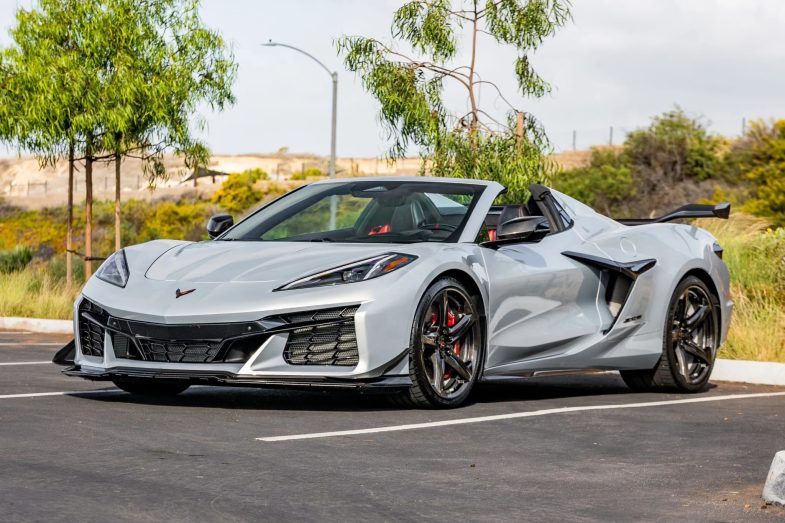
C8 Corvette E-Ray (2024–2026): The Complete Guide Quick Nav: The Story · The...


CORVETTE BUYER’S GUIDES
Buying a mid-engine Corvette? This guide covers every C8 year and model, what each costs in today’s market from the results the site tracks, where the dealer markups went and where they remain, the best buys, the dual-clutch, LT2 and LT6 questions, the recalls, and the inspection, with the model guides and the cars for sale beside it.
Quick Nav: Overview · Why Buy · Year by Year · Year Details · Models & Packages · Values · Price Ladder · What Moves the Price · Model Guides · Driving · Costs to Own · Considerations · Problems · Inspection · By Year · Market Reports · For Sale · FAQs
The Car: The eighth-generation Corvette, 2020 to the present: the first mid-engine Corvette, an aluminum spaceframe with the engine behind the seats, a Tremec eight-speed dual-clutch on every car and no manual, as a coupe with a removable roof panel or a hardtop convertible
Years and Built: 20,368 (2020), 26,216 (2021), 25,831 (2022), 53,785 (2023), 42,934 (2024), 25,835 (2025), about 25,184 (2026, unofficial), the 2027 in production; about 220,000 so far
Models: Stingray (2020–); Z06 (2023–); E-Ray (2024–26); ZR1 (2025–); ZR1X (2026–); Grand Sport and Grand Sport X (2027–)
Engines: 6.2 L LT2, 490/495 hp (Stingray 2020–26, E-Ray, plus a 160-hp front motor for 655 hp); 5.5 L flat-plane LT6, 670 hp (Z06); 5.5 L twin-turbo LT7, 1,064 hp (ZR1; plus a 186-hp motor for 1,250 hp in the ZR1X); 6.7 L LS6, 535 hp (2027 Stingray and Grand Sport, 721 hp in the Grand Sport X)
Price New: $59,995 for a 2020 Stingray coupe to $73,495 in 2027; Z06 from $106,395; E-Ray from $106,595; ZR1 from $174,995; ZR1X from $207,395; Grand Sport $88,495; all including destination
What One Costs Today: Stingrays $47,000–$88,000, most 2020–22 cars $55,000–$72,000; E-Rays $83,500–$103,000; Z06s around $134,000 and 3LZ coupes $120,000–$127,000; ZR1s $233,500–$320,000; ZR1Xs $315,000–$452,000 (results tracked October 2026)
The Pick: A 2021–23 Stingray 2LT Z51 coupe with 10,000–25,000 miles from a dealer that has done the campaigns; a 2024–25 Z06 at or under sticker; the E-Ray as the value in the range; the ZR1 and ZR1X only if you accept paying over sticker
Related: The C8 hub, the eight year pages, the six model pages (Stingray, Grand Sport, Z06, E-Ray, ZR1, ZR1X), the wholesale market reports, the Bargain Hunting series and the C8 news
For seventy years Corvette ownership has been an expression of the American dream, the two-seater that looks as good on the open road as it does beside the picket fence, and for most buyers it still comes later in life, once the kids are through college. A new mid-engine Corvette stretches most household budgets; a used one is now within reach of far more of them, because the C8 Stingray has done something no modern Corvette did before it: depreciated like an ordinary car. A 2020–22 coupe can be had for about half what a new one costs. If even that is more than the budget allows, the site has a buyer’s guide for every earlier generation, from the $5,000 C4 to the C7; the Buyer’s Guides hub links them all.
That makes the C8 a different purchase from any earlier Corvette, and this guide is written for it. The market is really several markets: the Stingray, now a used car with a clear ladder by year, mileage and trim; the Z06, which spent 2023 far above sticker and now trades at or a little under it; the E-Ray, which never had a markup year and has fallen fastest, which is where the value is; and the ZR1 and ZR1X, the only Corvettes that still sell above their window stickers because Chevrolet builds a few hundred a year. Dealer markups, allocations and waiting lists are part of the C8 story in a way they were not for the C7, and knowing where they went and where they remain is most of the buying decision.
This guide walks through all of it: the years and what changed, the models and packages, what each tier of the market costs from the auction and dealer results the site tracks, what moves the price, what the cars are like to drive and to own, the problems a six-year-old mid-engine car has (the dual-clutch, the LT2, the LT6, the recalls), the inspection step by step including the vehicle-history work that matters more on a modern car than on a classic, the questions to ask a seller and the dealer, and the questions readers ask most. The year pages and the model pages go deeper on each car; this page is where to start.
For the past seventy-plus years, Corvette ownership has been an outward expression of the American Dream, the two-seater sports car that looks as stunning on the open road as it does parked next to the white picket fence that frames the idealistic family home. Although the reality of Corvette ownership is that, for many, it comes later in life once the kids have grown and found their way through college and out into the world this is not always the case. While purchasing a NEW Corvette might push the limits of the household budget for some, the USED car market has made the possibility of Corvette ownership far more affordable for nearly any budget, even making it more manageable when considering the purchase of the latest iteration of America's Sports Car - the mid-engine, eighth-generation Corvette Stingray.
Now, in the interest of not sounding like we've completely lost our grip on reality, we recognize that most used C8 Corvettes still fetch some pretty significant dollars, especially those examples that have lower mileage and have been well maintained. We understand that there are other, more affordable choices out there, and we've assembled buyers guides for each of those models too. If you are interested in learning more about any of these, please make sure to use one of the following links to find your way over to those guides:
Today, though, we're here to help you navigate the options available to you in the both the new- and used-mid-engine Corvette Stingray market. We want to equip you with all the tools you'll need to properly evaluate whether a mid-engine Corvette is the right car for you and, just as importantly, if the car you are considering checks out to help ensure your Corvette ownership experience is filled with many years of unparalleled driving enjoyment!
Margaret Wolfe Hungerford, a 19th-century Scottish author, once coined the phrase beauty is in the eye of the beholder. For many Corvette enthusiasts, this expression exemplifies public opinion of the mid-engine Stingray. For some, it is the culmination of everything that came before it. It features an aggressive stance, some of the most dramatic body lines, and arguably one of the most aerodynamic profiles of any Corvette ever assembled in the brand's 70+ year history.
For others, the argument has been made that the mid-engine Corvette Stingray is too much of a departure from the design elements that made a Corvette, well, a CORVETTE. There are undeniable influences that can be attributed to some of the many European supercars that helped inspire Corvette's designers through the development of the mid-engine Corvette, and some of the car's staunchest critics have rallied against the car, calling it a poor man's Ferrari.
But while there may be some contention about the car's outward aesthetic, or about the build quality of the car's interior (more on this later), the one area that is devoid of grievance is the new Stingray's performance.
I've driven the new C8 Corvette repeatedly over the last few years, and its performance is remarkable. From straight-line acceleration and the incredible, almost intuitive responsiveness of the car's dual-clutch automatic transmission to the car's robust brakes and planted posture at high speeds, there's a LOT to love about this newest Corvette (in all of its available iterations.) The C8 Coupe and Convertible are balanced, powerful vehicles capable of sub-three-second 0-60 times. For those not already in the know - that's pretty darn quick. Bump it up to a mid-engine Z06 or an ERay, and the numbers get even faster. How does a 0-60 time at 2.6 seconds out of the Z06 and 2.5 seconds out of the Eray sound to anyone keeping score?
Beauty is in the eye of the beholder, and no Corvette has divided the beholders like the C8. To some it is the culmination of everything before it: the most aggressive stance, the most dramatic body lines and the most aerodynamic profile of any Corvette in seventy years. To others it is too much of a departure from what made a Corvette a Corvette, with European influences you can see from across the parking lot; its harshest critics called it a poor man’s Ferrari. The argument has not ended and it does not matter to a buyer, because the one thing nobody disputes is the performance.
The Stingray’s 495-horsepower LT2 sits behind the seats and sends the car to 60 in under three seconds; Car and Driver recorded 2.8 seconds and an 11.2-second quarter mile at 122 mph in a Z51 car, stopped it from 70 mph in 149 feet and pulled 1.03 g on the skidpad, numbers that compete with cars costing twice as much. The eight-speed dual-clutch, the first automatic-only Corvette, is so intuitive that most owners leave the paddles alone. The Z06 does 60 in 2.6 seconds and revs to 8,600 rpm on a flat-plane crank; the E-Ray, the first hybrid and all-wheel-drive Corvette, does it in 2.5; the ZR1 has 1,064 horsepower and has been timed at 233 mph; the ZR1X has 1,250 and runs the quarter mile in the nines. There has never been a performance range like it under one badge, and every one of them is serviced at a Chevrolet dealer.
The C8 is also the first Corvette in decades that a buyer can watch depreciate. The 2020–22 cars sold over sticker through the strike, the pandemic and the chip shortage; by 2023 production caught up, the Stingray sold at list from the start, and the early cars have come down to half their original price. A 2021 2LT Z51 with 15,000 miles is a $60,000 car with a factory warranty still on the powertrain, and that is the cheapest route into a mid-engine supercar there is. The Z06 and the E-Ray have followed the same arc two years later; only the ZR1 and ZR1X, at a few hundred cars a year, still carry the premium.
The C8 is a daily driver in a way no exotic is: two trunks, a front lift that remembers the driveway, Magnetic Ride, a hardtop convertible with no compromise in the coupe’s shape, and a pushrod V8 that takes ordinary oil changes. The cars that are hard to live with are the ones bought for the wrong reason: a ZR1 at a markup as an investment, a Z07 Z06 on carbon wheels for a commute, a tracked car sold as a garage queen. The rest of this guide is about buying the right one.
MORE: THE C8 HUB / THE C8 STINGRAY MODEL PAGE / ALL EIGHT BUYER’S GUIDES
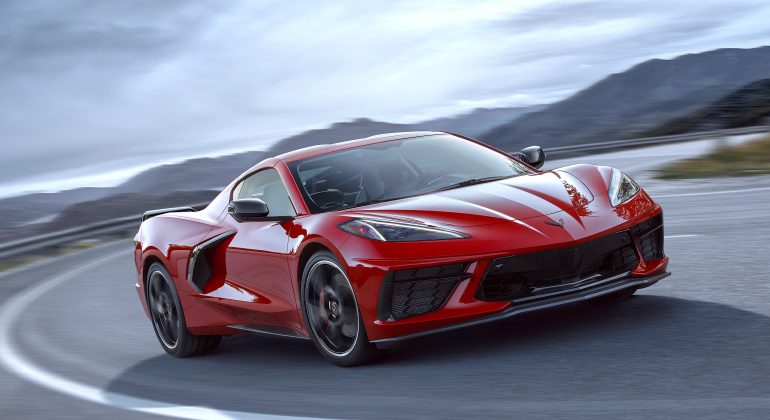
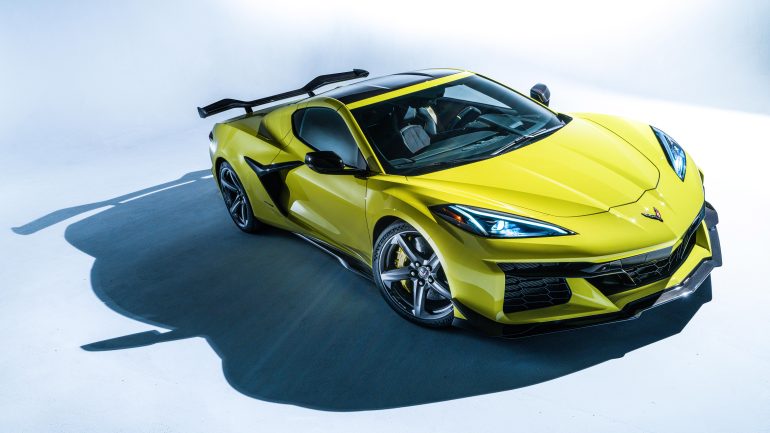
 Credit: GM Tech Link
 Photo Credit: Chevrolet
The C8 has changed every year, mostly by adding models: the Stingray alone in 2020–22, the Z06 in 2023, the E-Ray in 2024, the ZR1 in 2025, the ZR1X in 2026 and the Grand Sport in 2027, with the new three-screen interior arriving for 2026 and the 6.7-liter LS6 for 2027. The table gives the changes, the production, the engines and the verdict for each year; the year pages have the full story, the specs, the options, the colors, the MSRPs by trim and the current market for that year.
Three rules hold across all of them. Mileage moves a used C8’s price more than the year or the trim. The 2023 is the first Stingray sold at list from the start, so a 2023–25 Stingray costs less used than its sticker suggests while a 2020–22 has already shed its markup. And the window sticker is the floor and the ceiling for every model but the ZR1 and ZR1X: know what the car cost new before you look at the asking price.
MORE: THE 2020 PAGE / THE 2021 PAGE / THE 2022 PAGE / THE 2023 PAGE / THE 2024 PAGE / THE 2025 PAGE / THE 2026 PAGE / THE 2027 PAGE / THE C8 HUB / MSRP BY YEAR
| YEAR | WHAT CHANGED | BUILT | ENGINES | THE VERDICT |
|---|---|---|---|---|
| 2020 | All new: mid-engine aluminum spaceframe, the 490/495-hp LT2 with a dry sump, the Tremec TR-9080 eight-speed dual-clutch and no manual, coupe and hardtop convertible, 1LT–3LT, Z51 ($5,000: brakes, cooling, ELSD, exhaust, spoiler, PS4S tires) on 76 percent of cars. Revealed July 18, 2019; built from February 3, 2020 around the nine-week shutdown; orders closed March 18. | 20,368 | 376 ci (6.2 L) LT2 V-8 with dry-sump oiling, 490 hp / 465 lb-ft standard; 495 hp @ 6,450 rpm / 470 lb-ft @ 5,150 rpm with the NPP performance exhaust (18,174 cars) | First year, the shortest and the one with the most campaigns (frunk latch, transmission software). The markup is long gone; a 2020 trades as a used Stingray with a first-year badge, and the Museum-delivery and early-build cars are the ones collected. |
| 2021 | Wireless CarPlay and Android Auto, Buckle-to-Drive, new gauge displays, Magnetic Ride ($1,851) without Z51, full-length stripes in more colors, the Sky Cool Gray/Strike Yellow interior, a Roadside Safety Package, Red Mist and Silver Flare; the first $1,000 price rise from March 1, 2021. Six weeks lost to the chip shortage; 42 percent convertibles. | 26,216 | 376 ci (6.2 L) LT2 V-8 with dry-sump oiling, 490 hp / 465 lb-ft standard; 495 hp @ 6,450 rpm / 470 lb-ft @ 5,150 rpm with the NPP performance exhaust (22,872 cars) | The biggest-value Stingray: the 2020’s software behind it, the best color chart (Red Mist, Silver Flare), Magnetic Ride without Z51, and prices that have settled at $47,000–$70,000 by mileage. The one the site’s Bargain Hunting keeps finding. |
| 2022 | Upgraded direct injection, calibration and Active Fuel Management; Hypersonic Gray, Caffeine and Amplify Orange; a low-profile spoiler and a Z51-style splitter for non-Z51 cars; the 1,007-car IMSA GTLM Championship Edition ($6,595, 3LT Z51, Accelerate Yellow or Hypersonic Gray with C8.R graphics, plaque and matching cover); right-hand drive begins; a $1,200 rise. Eight months of production. | 25,831 | 376 ci (6.2 L) LT2 V-8 with dry-sump oiling and an upgraded direct-injection fuel system, 490 hp / 465 lb-ft standard; 495 hp @ 6,450 rpm / 470 lb-ft @ 5,150 rpm with the NPP performance exhaust (22,441 cars) | The last over-sticker year and the shortest model year; now priced like a 2021. The IMSA GTLM Championship Edition holds $15,000–$25,000 over an equivalent 3LT Z51 at low miles. |
| 2023 | The Z06: 5.5-liter flat-plane LT6, 670 hp at 8,400 rpm, 8,600-rpm redline, 3.6 inches wider, 1LZ–3LZ, Carbon Aero and the Z07 package (FE7 Magnetic Ride, Cup 2 R ZP tires, carbon wheels, Brembo carbon-ceramics). The 70th Anniversary Edition on both ($5,995: White Pearl or Carbon Flash, stripes, Edge Red calipers, two-tone Ceramic interior, luggage) and a 70th plaque on every 2023. Three Stingray price rises; a record 53,785 built. | 53,785 | Stingray: 376 ci (6.2 L) LT2 V-8, 490 hp / 465 lb-ft, 495 / 470 with NPP (47,239 cars); Z06: 335 ci (5.5 L) LT6 flat-plane-crank DOHC V-8, 670 hp @ 8,400 rpm / 460 lb-ft @ 6,300 rpm, 8,600-rpm redline — the most powerful naturally aspirated production V-8 (6,413 cars) | The Z06 arrives and the Stingray sells at list from the start. The best used Stingray year on price; the 70th Anniversary cars carry a modest premium, and a 2023 Z06 with its recalls done is the collector’s C8 Z06 at or under sticker. |
| 2024 | The E-Ray: LT2 plus a 160-hp, 125-lb-ft front motor on a 1.9-kWh battery between the seats, 655 hp, all-wheel drive, Stealth mode, 2.5 seconds to 60. Riptide Blue, Cacti Green and Sea Wolf Gray ($995); Carbon Flash on every trim; wide dual stripes in five colors; three new wheels; engine appearance packages; the Artemis interior with green belts; Google built-in on an 8-inch screen; standard follow-distance indicator, forward collision alert, lane keep assist, IntelliBeam, automatic emergency braking and pedestrian braking. Z06 adds a power hood pull-down and red-stripe carbon wheels. | 42,934 | Stingray and E-Ray: 376 ci (6.2 L) LT2 V-8, 490 hp / 465 lb-ft (495 / 470 with NPP; the E-Ray always 495) — the E-Ray adds a 160-hp, 125-lb-ft front electric motor and a 1.9-kWh battery for 655 hp combined; Z06: 335 ci (5.5 L) LT6 flat-plane DOHC V-8, 670 hp @ 8,400 rpm / 460 lb-ft | Three models: the E-Ray joins, the Z06 markups end, the Stingray gets the driver-assistance suite and Google built-in. A 2024 Stingray is a 2023 that cost more new; the 2024 E-Ray is the cheapest way into 655 hp. |
| 2025 | The ZR1: twin-turbo LT7, 1,064 hp and 828 lb-ft, 233 mph, a split rear window, $174,995–$195,995 plus a $3,000 gas-guzzler tax, ZTK ($1,500 with the $8,495 carbon aero), 180 built from April 28, 2025. New colors, a Jet Black-with-blue interior, a Z51 spoiler and Z06 wheels; the E-Ray and Z06 up $2,000, the Stingray unchanged. The August 2025 fuel-system recall and stop-sale on every Z06 and ZR1. | 25,835 | Stingray and E-Ray: 376 ci (6.2 L) LT2 V-8, 490 / 495 hp (E-Ray + 160-hp front motor = 655 hp); Z06: 335 ci (5.5 L) LT6 flat-plane DOHC V-8, 670 hp @ 8,400; ZR1: 335 ci (5.5 L) LT7 twin-turbo flat-plane DOHC V-8, 1,064 hp @ 7,000 rpm / 828 lb-ft @ 6,000 — the first turbocharged Corvette engine and the most powerful American production V-8 (180 cars) | The ZR1 returns with 1,064 hp, 180 built, the first C8 to trade above sticker used. For the other three the changes are cosmetic, so a 2024 is the same car for less; the last year of the original interior. |
| 2026 | The new cockpit on every model: three screens, Google built-in, the wall of buttons retired. The ZR1X: the LT7 plus a 186-hp front motor, 1,250 hp and 973 lb-ft, $207,395 and up, the Quail Silver Limited Edition ($241,395) and the one-off Stars & Steel car. Gas-guzzler tax on the Z06 too; the E-Ray’s last year; about 25,000 built in ten months. | about 25,184 | Stingray: 376 ci (6.2 L) LT2, 490 / 495 hp; E-Ray: LT2 + 160-hp front motor, 655 hp; Z06: 335 ci (5.5 L) LT6, 670 hp; ZR1: 335 ci (5.5 L) twin-turbo LT7, 1,064 hp / 828 lb-ft; ZR1X: LT7 + a 186-hp, 145-lb-ft front motor on a 1.9-kWh battery — 1,250 hp / 973 lb-ft combined, the most powerful car GM has built | The three-screen interior and the ZR1X; the ZR1 in its first full year. A 2026 Stingray trades a few thousand over a 2025; the ZR1 and ZR1X are the two Corvettes above sticker; the E-Ray’s last and rarest year. |
| 2027 | The 6.7-liter LS6 (535 hp, 520 lb-ft, Flint-built) replaces the LT2 in the Stingray and the revived Grand Sport ($88,495, the wide body, Z52 Sport and Track packages, Admiral Blue with the stripe and hashes); the 721-hp Grand Sport X replaces the E-Ray; Z06, ZR1 and ZR1X carry over with price rises and a $2,495 destination charge. Model year began June 8, 2026. | in production | Stingray, Grand Sport and Grand Sport X: 409 ci (6.7 L) LS6 pushrod V-8, 535 hp / 520 lb-ft, 13.0:1, 6,600 rpm — the first of GM’s sixth-generation small-blocks, built in Flint (the Grand Sport X adds the ZR1X’s 186-hp front motor for 721 hp); Z06: 335 ci (5.5 L) LT6, 670 hp; ZR1: twin-turbo LT7, 1,064 hp; ZR1X: LT7 + 186-hp motor, 1,250 hp | On sale, not a used car yet: the LS6, the Grand Sport and Grand Sport X. Expect first-year Grand Sport markups to fade as the E-Ray’s and Z06’s did; the 2026 pages are the guide to what the carried-over cars bring. |
The table gives the headlines; this is the detail a buyer uses at the viewing, because on a C8 the year decides which recalls apply, which interior and infotainment the car has, which colors and packages it could have been ordered with, and what it cost new. What follows is the year-by-year from the site’s original C8 buyer’s guide, as written, with the Z06, E-Ray and ZR1 sections that followed it, and the 2025, 2026 and 2027 model years added by CorvSport in 2026 where the original said “coming soon”. The year pages carry the full specifications, the MSRPs by trim, the options, the colors and the production split for each.
The 2020 model year was the first year for Chevrolet's all-new, mid-engine Corvette Stingray coupe and hardtop convertible. As with the seventh-generation before it, the 2020 Corvette came in three different trim levels (1LT, 2LT, 3LT), with all three trim packages also offered with the optional Z51 performance package.
Also, as with the C7 Corvette Stingray coupe and convertible models before it, the new C8 featured a 6.2-liter V8 engine. Designated the LT2 engine, this latest iteration of GM's enormously popular LT powerplants was rated at 490 horsepower and 470 lb.-ft of torque. When equipped with the dual-mode performance exhaust of the Z51 package, engine horsepower increased to 495 horsepower. The Z51 option also included an electronic limited-slip rear differential (ELSD), firmer springs and dampers, a splitter and multiplane decklid spoiler, additional radiators, a transmission cooler, more aggressive brakes at all four corners, a 5.17 rear axle ratio, Performance Traction Management, and Michelin Pilot Sport 4S ZP summer tires. The Z51 upgrade was such a popular option that 20,368 (76% of all 2020 Corvettes) were equipped with the Z51 performance package.
One of the most interesting characteristics of the eighth-generation, mid-engine Corvette Stingrays was the absence of a manual transmission option. Instead, all C8 Corvettes could only be purchased with an eight-speed dual-clutch automatic transmission, which was a first in the history of the brand. Paddle-mounted shifters were installed in every C8 Corvette, which enables owners to manually shift their Corvettes, but the intuitive programming of the dual-clutch automatic transmission is so good that most drivers simply prefer to let the car take care of business for itself. In fact, Car & Driver Magazine recorded a 0-60 time of just 2.8 seconds and a quarter-mile time of 11.2 seconds at 122 miles per hour when testing the 2020 C8 Corvette on-track. Their test vehicle (which was equipped with the Z51 Performance Package (which added $5000 in cost to any version of the car)) also managed a braking distance of just 149 feet from 70 mph and a 1.03g skid pad, clearly identifying the new mid-engine Corvette as a car capable of competing with other, far more expensive entrants in the supercar category.
While mostly unchanged from its inaugural year, the 2021 Mid-Engine Corvette Stingray did have a few new standard features added to the mix. These included wireless Apple CarPlay and Android Auto, new options for the digital gauge display, and a Buckle-to-Drive safety feature that prevented the driver from shifting the car into gear until the driver buckled their seat belt. The 2021 Corvette also offered consumers.
In addition, there were several new optional features available to consumers when ordering their 2021 Corvette. These included Magnetic Selective Ride Control, a feature that could previously only be ordered when purchasing the expensive Z51 performance package. When ordered new, this option added $1851 to the purchase price but was far less expensive than the entire Z51 package. The benefit of the Magnetic Selective Ride control was that, by using a magnetorheological fluid inside the shock absorbers, drivers could change the viscosity of the fluid in the shock, thereby increasing or decreasing the stiffness of the car's ride.
Like the 2020 Corvette before it, the 2021 models could be ordered with full-body racing stripes. Unlike the 2020 model, the 2021 model included a larger variety of stripe colors, including blue, orange, red, and yellow. A new Sky Cool Gray-and-Strike Yellow interior color scheme was also added to the options sheet. Consumers could also order an optional Roadside Safety Package, which was available for all trim levels. This package included a Highway Safety Kit and a First Aid Kit.
For the 2022 model year, the mid-engine Corvette Stingray featured several new features (both standard and optional). The Corvette's LT2 6.2-liter V8 engine received an upgraded direct injection fuel system, improved engine calibration, and an enhanced Active Fuel Management system. Three new, optional color choices were introduced, including Hypersonic Gray, Caffeine, and Amplify Orange Tintcoat. A new, low-profile rear spoiler was introduced as was an optional Z51-inspired front splitter for consumers purchasing a non-Z51 model.
The most notable addition to the 2022 lineup was the introduction of the 2022 Corvette Stingray IMSA GTLM Championship Edition Corvette. This special edition model was offered on Corvettes with the 3LT trim level when equipped with the Z51 Performance Package. Each Championship Edition Corvette came finished in a custom, Corvette Racing-themed graphics package and could be ordered in one of two colors: Accelerate Yellow (the No. 3 edition), which featured gray graphics, and Hypersonic Gray (the No. 4 edition) which featured yellow graphics.
Additionally, the exterior of these cars featured a high-wing spoiler finished in Carbon Flash, yellow brake calipers, Black Trident-designed wheels with the Jake logo on the center caps (and mounted using black lug nuts), Exterior mirrors finished in Carbon Flash, black side rockers, and splash guards.
The interior of these Special Edition Corvettes featured a Strike Yellow and Sky Cook Gray cabin (designed to mimic the yellow and gray racing theme of the C8.R race cars). Each came equipped with standard GT2 seats (although Competition Sport seats were offered as an optional upgrade), yellow seat belts, and a C8.R Special Edition numbered plaque commemorating each example of the car.
Each car also came packaged with a custom-fitted indoor car cover that featured the likeness of the No. 3 or No. 4 Corvette C8.R race car (and matched to the Special Edition color/package ordered at the time of purchase.
For reference, the IMSA GTLM Championship Edition package started at an additional $6,595, and will likely result in a higher asking price for these examples on the used car market.
The 2023 model year marked the seventieth anniversary of the Chevy Corvette. To commemorate this milestone, Chevrolet introduced a 70th Anniversary Edition package. All of the 70th Anniversary Edition cars were offered to consumers in one of two colors - an all-new White Pearl Metallic Tricoat (as pictured above) or Carbon Flash Metallic. Each of these cars came finished with accompanying body-length race stripes - Satin Gray stripes on the White Pearl Metallic Tricoat model, and Satin Black on the Carbon Flash Metallic. Each car came equipped with special 70th Anniversary Edition exterior badging on both the driver and passenger doors, and each car also featured special front and rear Corvette crossflags.
In addition to the two signature paint schemes, each of the 70th Anniversary Edition Corvettes also featured distinct wheels adorned with commemorative 70th Anniversary wheel center caps. While the Stingray and the Z06 models each had their own, unique wheel designs, both sets of wheels shared a similar dark finish and Edge Red stripe around the wheel's outer edge. Contrasting the dark finish of the wheels was a set of Edge Red brake calipers behind all four wheels.
Inside the cockpit, the 70th Anniversary Edition Corvettes came equipped with either two-tone Ceramic Leather GT2 or Competition Sport seats. The interiors featured red stitching throughout, red seatbelts, and sueded microfiber inserts on the seats and the steering wheel. Special 70th Anniversary Edition logos were stitched into the seats and mounted on the steering wheel and sill plates.
Additional features found on/with the 70th Anniversary Edition Corvette included:
Rear bumper protector and trunk cover
Custom luggage set with red stitching and the 70th Anniversary Edition logo
An Edge Red engine cover.
All 2023 Corvettes, including those not equipped with the 70th Anniversary Edition package, included a commemorative 70th anniversary interior plaque located on the center speaker grille and a graphic imprinted on the lower rear window.
As is customary with almost every new model year Corvette, Chevrolet offered consumers an assortment of new color choices for the 2024 model year. The three colors that were introduced for the 2024 model year were:
Riptide Blue Metallic (RPO GJV)
Cacti Green (RPO GVR)
Sea Wolf Gray Tricoat (GXA).
When ordered new, this was an extra-cost color that added $995 to the purchase price.
In addition to the new paint colors, the Carbon Flash Metallic exterior color (RPO GAR) was made available for all models and on all trim levels. Paint colors Elkhart Lake Blue Metallic (GS7), White Pearl Metallic Tricoat (G1W), and Caffeine Metallic (G48) were discontinued.
The 2024 Corvette was offered with some additional trim options, including wider, full-body length dual racing stripes. These stripes could be ordered in one of five colors, including blue, yellow, orange, red, or silver. In addition to the stripe packages, three new wheel options were also introduced for the 2024 model year. Of these, two - a wheelset finished in Satin Graphite with machined edge forged aluminum and a 5-split spoke machined-face Sterling Silver-painted forged aluminum - were only offered on the base model Stingray (excluding the ERay or Z06). The third, a 15-spoke bright polished aluminum wheel, could be ordered on all variants of the 2024 Corvette.
Chevrolet offered two new engine appearance packages for the 2024 model year, one for the coupe and one for the convertible. The coupe's appearance package featured carbon fiber trim, whereas the convertible's appearance package included a window under the tonneau cover and engine cover. Visible carbon fiber trim was offered on the two-stanchion spoiler and the door intake trim.
Additions/changes to the interior were kept to a minimum. A new Artemis-color palette with green seat belts was offered to consumers when ordering their car with the 3LT trim. Visible carbon fiber sill plates were offered as a Genuine Corvette accessory. A new infotainment system with Google built-in and an 8-inch diagonal HD display replaced an earlier unit that had been featured on the C8 since its introduction in 2020.
Several new standard safety features were incorporated into the 2024 model year Corvettes including a follow-distance indicator (UE4), a forward collision alert (UEU), a lane keep assist with lane departure warning (UHX), IntelliBeam auto high beams (TQ5), automatic emergency braking (UHY), and front pedestrian bicyclist braking (UKT).
The 2025 model year (written here by CorvSport in 2026; the original guide left it as “coming soon”) brought the ZR1 back above the Z06 with the LT7, a twin-turbocharged LT6 with port and direct injection making 1,064 horsepower at 7,000 rpm and 828 lb-ft, the first turbocharged Corvette engine and the most powerful American production V8, a 233-mph top speed, a split rear window, $174,995 to $195,995 plus a $3,000 gas-guzzler tax and the ZTK Performance Package ($1,500 with the required $8,495 carbon aero). Only 180 were built from April 28, 2025 before the model year closed on July 30, 83 with ZTK and 43 with carbon wheels; the balance of the orders moved to 2026. For the Stingray, Z06 and E-Ray the changes were cosmetic: three new colors, a Jet Black interior with blue accents, a Z51 spoiler and new Z06 wheels, with the E-Ray and Z06 up $2,000 and the Stingray unchanged. In August 2025 GM recalled every C8 Z06 and ZR1 and stopped sales after fires while fueling; the campaign must be complete by VIN on any Z06 or ZR1 you buy. 25,835 were built, the shortest year since 2022, and a ZR1 paced Indianapolis.
Introduced as part of the 2023 model year lineup, the C8 Z06 Coupe and Convertible took the automotive world by storm when introduced. Equipped with a 5.5-liter, DOHC V8 engine that featured a low-intertia rotating assembly and a flat plant crank, this latest entry in the mid-engine lineup boasted a massive 670 horsepower at 8,400 rpm (the car has an 8.600 rpm redline) and 460 lb-ft of torque at 6,300 rpm. What's more, the uniquely crafted exhaust note of this impressive powerplant gave the Z06 a character sound that became one of the car's key marketing elements....and with good reason. To hear a mid-engine Z06 fire up on a cold start is akin to hearing the opening four chords of Beethoven't fifth-symphony....yes, it's THAT good!
As with the Grand Sport and Z06 models from earlier generations, the 2023 C8 Z06 (and all model years that have followed since) featured a wide, sculpted front and rear fascia assembly that, in the words of GM marketing define(d) a confident stance and exotic proportions.
Like its Stingray counterpart, the C8 Corvette Z06 came in both coupe and hardtop convertible versions, and either of these could be ordered iwth the 1LZ, 2LZ, or 3LZ trim packages. In addition, an optional (available) Carbon Aero package was introduced for the Z06. This package offered drivers the maximum track-capable downforce and manuverability of any Corvette that came before it, and certainly maximized the performance of this already incredble supercar variant of the Chevy Corvette. In addition, an available Z07 Performacne Package was also offered that included the carbon fiber aero package as well as tthe FE7 suspension with unique Magnetic Ride Control calibration, Michelin SPort Cup 2 RZP tires, the available carbon fiber wheels and Brenmo carbon ceramic brakes.
If you were a serious driver looking to buy a production version of Pratt Miller's C8.R race car, this was about as close as one could get....at least until the introduction of the 2025 ZR1 Corvette (more on that below.)
For it sophomore year of production, Chevrolet added some new features and color options to the 2024 lineup. Included in the offerings were:
Three new exterior colors: Riptide Blue Metallic, Cacti Green and Sea Wolf Gray Tricoat (available at an extra cost)
A Power hood pull-down.
Available carbon fiber wheels with red stripe (required the carbon ceramic brake system)
Five new accent-color choices with the available full-length dual racing stripes.
Artemis interior with green accents throughout, including the seat belts.
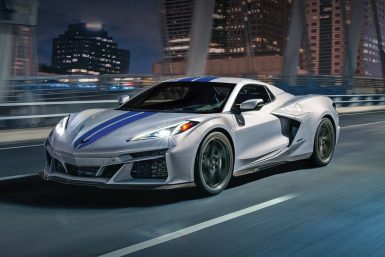
Introduced by Chevrolet exactly seventy years after the original Corvette debuted at the Motorama in New York City, Chevrolet welcomed their first-ever electrified Corvette - the 2024 Corvette E-Ray - a Stingray that features all-wheel-drive and a powerful 6.2L LT2 Small Block V-8 paired with a 160 hp electric motor to its lineup.
The E-Ray was developed by Chevrolet to afford Corvette owners with a sports car that could be driven anywhere, regardless the season.It uses electrification to enhance the driving experience with intense straight-line performance, all-weather confidence and sure-footed grand touring capabilities that can only be achieved with electric all-wheel-drive.
“Corvette has been a halo for Chevrolet since 1953,” said Scott Bell, vice president of Chevrolet. “E-Ray’s unprecedented blend of confidence, luxury performance, sophistication and style provides a new reason for more people to experience Corvette.”
As of 2024, the Corvette E-Ray was the fastest accelerating production Corvette in history, clocking a 2.5-second 0-60 mph time before acheiving a the quarter-mile time of just 10.5 seconds.
“Corvettes must provide an exhilarating driving experience on backroads and tracks, and E-Ray nails it,” said Tadge Juechter, executive chief engineer, Corvette. “The electrification technology enhances the feeling of control in all conditions, adding an unexpected degree of composure.”
The E-Ray's aforementioned 6.2L LT2 Small Block V-8 produces 495 horsepower and 470 lb-ft of torque to the rear axle. It is complemented by an electric motor that channels an additional 160 horsepower and 125 lb-ft of torque through the front wheels via a 1.9 kWh battery pack, which is located between the seats. In total, E-Ray produces a combined 655 horsepower from both the electric motor and Small Block V-8.
An update from CorvSport, 2026: the ZR1 is no longer coming soon. The 2025 ZR1 (1,064 hp, 180 built) and the 2026 ZR1X (the LT7 plus a 186-hp front motor, 1,250 hp, all-wheel drive) are both on sale, both carry the August 2025 fuel-system recall, and both are the only Corvettes trading above their window stickers in 2026, with 2025 ZR1s against a Classic.com benchmark of $284,294 and ZR1Xs sold at $315,000 to $452,000. The C8 ZR1 and C8 ZR1X model pages carry the full buyer’s guides for each, and the 2025 and 2026 year pages the current results.
The 2026 (written by CorvSport in 2026) brought the first interior change: every model got the three-screen cockpit with Google built-in and lost the wall of buttons on the center spine, the thing most 2020–25 owners complained about. The ZR1X arrived above the ZR1 from $207,395, with the Quail Silver Limited Edition at $241,395 and the one-off Stars & Steel car that brought $2,605,000 for charity at Barrett-Jackson Scottsdale. The ZR1 had its first full year, the Z06 picked up a $3,000 gas-guzzler tax, the Stingray rose to $71,995 and the E-Ray ran its last and rarest year, about 1,177 cars. About 25,184 were built in ten months by the unofficial VIN count, with the Museum’s sheet still to come; a ZR1X paced Indianapolis.
The 2027 (on sale as this is written, 2026) brought the first new engine family since the LT7: the 6.7-liter LS6, a sixth-generation pushrod small block built in Flint, 535 horsepower and 520 lb-ft at 13.0:1, replaces the LT2 in the Stingray ($73,495) and in the revived Grand Sport ($88,495), the wide-body car between the Stingray and the Z06 with Z52 Sport ($3,500) and Z52 Track packages (carbon-ceramics, Cup 2 Rs, the aero, a center-exit exhaust) and a Launch Edition in Admiral Blue with the white stripe and red hashes. The Grand Sport X ($112,195) adds the ZR1X’s 186-hp front motor for 721 horsepower and all-wheel drive and takes the E-Ray’s place; the Z06, ZR1 and ZR1X carry over with price rises, and destination is $2,495. The model year began June 8, 2026, the first Grand Sports reached customers in July and the Grand Sport X followed in August. This is a new car, not a used one, and the year page is provisional until the model year ends.
MORE: 2020 / 2021 / 2022 / 2023 / 2024 / 2025 / 2026 / 2027 / THE C8 TIMELINE
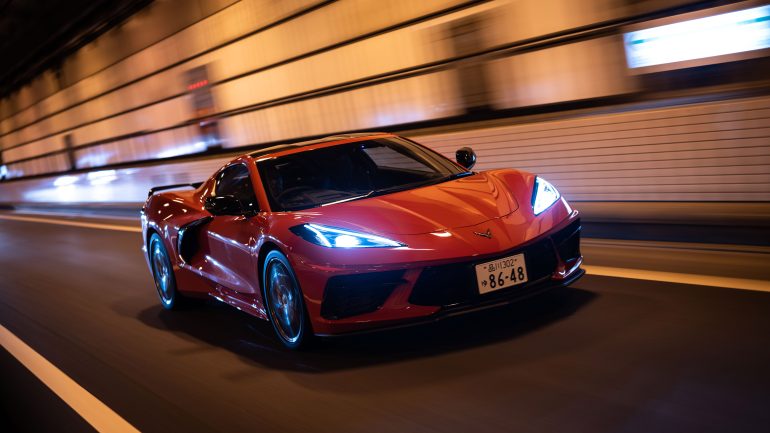
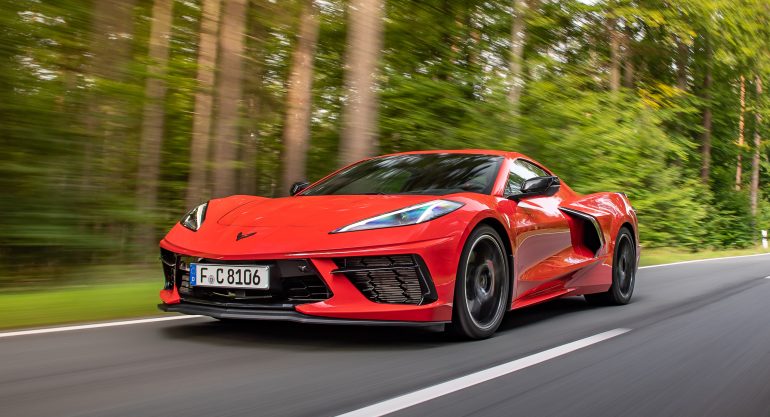 2022 Chevrolet Corvette Stingray

 Credit: Chevrolet
Chevrolet sells the C8 as six models, each in two bodies and three trims, and the packages and editions do the rest. Unlike a classic, a C8 is bought from its window sticker and build sheet, which GM’s order system and the Corvette archives can reproduce for any VIN, so the question is never whether a car is what it claims (the RPO label on the door jamb settles that) but which of the many combinations it is and what that combination cost new. The table sorts the models and the packages that move the price; the model pages carry a full buyer’s guide for each car.
Trims first: 1LT/1LZ is the base interior, 2LT/2LZ adds the heated and ventilated seats, the head-up display, the PDR and the Bose system, 3LT/3LZ the leather-wrapped dash, the sueded microfiber and the Competition Sport seats. Most used buyers want 2LT; 3LT is worth having only if you want the interior, and it is the trim whose stitched dash and microfiber have the known problems.
MORE: THE STINGRAY GUIDE / THE Z06 GUIDE / THE E-RAY GUIDE / THE ZR1 GUIDE / THE ZR1X GUIDE / THE GRAND SPORT GUIDE / EVERY C8 ENGINE
| MODEL OR PACKAGE | WHAT IT IS | BUILT | WHAT A BUYER SHOULD KNOW |
|---|---|---|---|
| Stingray | The 490/495-hp LT2 car, 2020–26; the 535-hp LS6 car from 2027. Coupe with a removable roof panel or hardtop convertible | About 175,000 (2020–26) | The C8 most people buy and now an ordinary used car. 2020–22 cars have shed their markups and trade $47,000–$70,000; 2023–25 cars $58,000–$85,000; mileage, then trim, then Z51 set the price. The convertible, about a third to a half of production, carries little or no premium. |
| Z51 Performance Package | Brakes, extra cooling and a transmission cooler, the electronic limited-slip, the performance exhaust (495 hp), firmer suspension, the spoiler and splitter, PS4S tires, a shorter final drive | About 70% of Stingrays | Worth more to a driver than the few thousand dollars it adds used: it is the car the reviews were written about. Z51 cars have the third radiator in the driver’s-side rear intake. |
| Z06 | The 670-hp 5.5-liter flat-plane LT6, the wide body, 1LZ–3LZ, 2023–; Carbon Aero and Z07 optional | 6,413 (2023) · 10,575 (2024) · 8,862 (2025) · about 6,550 (2026) | Spent 2023 at $20,000–$100,000 over sticker; trades at or a little under its $106,000–$160,000 window stickers now (benchmark $134,263). The early LT6 failures, the warranty-voiding on flipped 2023 cars and the August 2025 fuel-system recall are the three questions, all answered by VIN. |
| Z07 Performance Package | FE7 suspension and Magnetic Ride calibration, Cup 2 R ZP tires, Brembo carbon-ceramic brakes, the stage-3 aero; carbon-fiber wheels optional | 1,845 (2023) · 2,715 (2024) · 1,805 (2025) | The main Z06 premium and its most expensive consumables: the rotors wear by weight and cost five figures, the carbon wheels crack on impact and cost more than a used Stingray. Have the rotors weighed and every spoke inspected. |
| E-Ray | The LT2 plus a 160-hp front motor on a 1.9-kWh battery, 655 hp, all-wheel drive, the wide body, carbon-ceramics and Magnetic Ride standard, all-season tires; 2024–26 | 1,417 (2024) · 3,153 (2025) · about 1,177 (2026) | Never had a markup year and has fallen fastest: $83,500–$103,000 against $106,595–$128,545 new (benchmark $98,131). The value in the range; the hybrid system has its own longer warranty, and the ZER package (summer tires) is worth finding. |
| ZR1 | The 1,064-hp twin-turbo LT7, 233 mph, the split rear window, 1LZ/3LZ, 2025–; carbon aero and ZTK optional | 180 (2025) · about 1,553 with the ZR1X (2026) | The first C8 to trade above sticker used: benchmarks of $284,294 (2025) and $294,306 (2026), sales from $233,500 to $320,000 against $174,995–$203,395 new. The 2025 is the collector car (83 ZTK, 43 carbon-wheel cars); the premium is trending down as 2026s and 2027s arrive. |
| ZTK Performance Package | The high wing and dive planes, stiffer springs, Cup 2 R tires and the carbon-ceramics’ track tuning; requires the carbon aero | 83 of 180 (2025) | The ZR1’s main premium; the Cup 2 Rs age out quickly and are poor in the wet and cold, so check date codes. “Launch Edition” in a listing is a seller’s phrase, not a GM package. |
| ZR1X | The LT7 plus a 186-hp front motor on the 1.9-kWh battery, 1,250 hp and 973 lb-ft, all-wheel drive; 2026– | About 270 (2026) | The most expensive Corvette and the one with the highest markups: $315,000, $365,000 and $452,000 (the Quail Silver No. 19) at auction against $207,395–$241,395 new, and a 2027 sold $102,000 over sticker in October 2026. Buy it for the car, not as an investment the first year can promise. |
| Grand Sport and Grand Sport X (2027) | The 535-hp LS6 in the Z06’s wide body with Z52 Sport and Track packages; the X adds the 186-hp front motor for 721 hp and replaces the E-Ray | In production | On sale, not yet used. Expect first-year markups while allocations catch up and expect them to fade as the E-Ray’s and Z06’s did; the Z52 Track car is the one the Z06 crowd will want. |
| The editions | IMSA GTLM Championship Edition (2022, 1,007); 70th Anniversary Edition (2023, 5,601 across Stingray and Z06); Quail Silver Limited Edition and the one-off Stars & Steel ZR1X (2026) | As stated | The IMSA car has its own Classic.com benchmark ($110,270) and holds $15,000–$25,000 over an equivalent 3LT Z51 at low miles; the 70th Z06s that brought $150,000–$302,500 in 2023–24 are back near sticker, the 70th Stingrays carry a modest premium; the Quail Silver cars set the records. The plaque number and the window sticker are what the listing should state. |
The C8 market is several markets. The ZR1 and ZR1X trade far above sticker, because Chevrolet builds a few hundred a year and every one is spoken for; the Z06 trades at or just under its window sticker, with the 70th Anniversary and Quail Silver editions above it; the E-Ray trades under sticker as the shortest-lived variant; and the Stingray is now an ordinary used car, the first modern Corvette to depreciate in its first years, with a 2020–22 coupe available for half what a new one costs. Within each group mileage, the 3LT or 3LZ trim, Z51, Z07 and ZTK, the front lift and the color decide the price, and a convertible brings about the same as a coupe.
The results the site tracked on Classic.com in October 2026 show the spread. Stingrays sold for $47,000 to $88,000, most 2020–22 2LT and 3LT cars between $55,000 and $72,000 and 2023–25 cars $60,000 to $85,000, with dealer asking prices for 2024s $8,000–$12,000 under their stickers after one to two years. E-Rays sold for $83,500 to $103,000 against a benchmark of $98,131. Z06s sit against a benchmark of $134,263, with 3LZ coupes selling between $120,000 and $127,000 and the 70th Anniversary cars that brought $150,000 to $302,500 in 2023–24 back near sticker. The 2025 ZR1 benchmark is $284,294 and the 2026’s $294,306, with a 9-mile 3LZ at $320,000 and dealers asking $243,000 to $420,000; ZR1Xs have sold for $315,000, $365,000 and $452,000, and the one-of-one Stars & Steel ZR1X brought $2,605,000 for charity.
Two cautions that apply to every figure on this page. Check whether an auction result includes the buyer’s premium, and treat asking prices and unsold high bids separately from completed sales: a 2020 3LT Z51 bid to $64,000 without selling is not a $64,000 car, and a dealer asking $99,995 for a 2021 2LT has not noticed the market moved. The year pages carry each year’s results and are updated as the site tracks new sales; the wholesale market reports follow what dealers pay in the lanes week by week; the price ladder below puts the whole generation in five tiers.
MORE: 2020 MARKET / 2021 MARKET / 2022 MARKET / 2023 MARKET / 2024 MARKET / 2025 MARKET / 2026 MARKET / WHOLESALE MARKET REPORTS / AUCTION COVERAGE
What the money buys at each level of the mid-engine market, from the results above. On a C8 the tiers run by model and age rather than by condition, because every car is a modern one with a history report and most are still inside a warranty; within a tier, mileage sets the price, then trim, then the packages. Where a car is modified or tuned, the warranty question sets the price more than the parts.
$47,000 – $70,000
The cars that sold over sticker through the strike, the pandemic and the chip shortage and have come down the most: 1LT and 2LT coupes with 15,000–50,000 miles at $47,000–$60,000, low-mileage 2LT and 3LT Z51 cars at $60,000–$70,000. Recent sales: $55,000 (2020 2LT, 13,000 miles), $63,500 (2021 2LT Z51, 1,000 miles), $66,000 (2022 2LT Z51, 11,000 miles). The cheapest way into a mid-engine Corvette; check the campaigns by VIN.
$58,000 – $88,000
Sold at list from the start, so they have less to shed: 1LTs $58,000–$66,000, 2LTs $64,000–$72,000, 3LTs $70,000–$85,000 at dealers with 1,000 to 24,000 miles, the 2026s a few thousand more for the new interior. Recent sales: $71,500 (2022 2LT, 64 miles) and $88,000 (2020 3LTs with under 1,000 miles) show what delivery mileage adds. The 70th Anniversary Stingrays carry a modest premium.
$83,500 – $110,000
Never had a markup year and has fallen fastest, which is why the site calls it the value in the range: a benchmark of $98,131, sales of $103,000 (2024 3LZ, 9,000 miles), $104,000 (2025 3LZ, 505 miles) and $89,000 (a modified 2024), and dealers asking $91,550–$120,000 against $106,595–$128,545 new. The cheapest 655-hp, all-wheel-drive car there is; the 2026, about 1,177 built, is the collector pick.
$100,000 – $145,000
The over-sticker year is over: a benchmark of $134,263, 3LZ coupes selling $120,000–$127,000 against $120,245–$134,945 stickers, 1LZs from $99,990 and Z07 carbon-wheel cars at the top. The 70th Anniversary Z07 cars that brought $150,000–$302,500 in 2023–24 now bring their sticker at best. Buy on the engine-replacement and recall history by VIN and the warranty status; weigh the Z07 rotors.
$233,500 – $452,000+
The two Corvettes above sticker: 2025 ZR1s against a $284,294 benchmark (sales of $233,500 and $301,000), 2026s against $294,306 (a 9-mile 3LZ at $320,000), dealers asking $243,000–$420,000; ZR1Xs at $315,000, $365,000 and $452,000 for the Quail Silver No. 19, and the Stars & Steel one-off at $2,605,000. The premium is trending down as 2026s and 2027s arrive; the 2025 ZR1 ZTK cars are the collector pick.
Model and year. The ladder on this page is a model ladder first: Stingray, E-Ray, Z06, ZR1, ZR1X, each with its own band, and within the Stingray the 2020–22 cars that have shed their markups and the 2023–26 cars that sold at list. A 2024 Stingray is a 2023 that cost more new and trades the same used; a 2026 brings a few thousand more for the interior.
Mileage. Moves a used C8 more than anything else. Sub-1,000-mile 2020s ask $75,000–$90,000 while 35,000–50,000-mile 1LTs sit at $53,000–$57,000; a 2020 3LT with 67 miles brought the same $88,000 as a 1,000-mile one. Delivery-mileage cars are a market of their own on every model.
Trim and packages. 3LT/3LZ trades a step above 2LT/2LZ, 1LT is the value; Z51 adds a few thousand dollars at most and is worth more than that to a driver; Z07 and ZTK are the premiums on the Z06 and ZR1 and bring the most expensive consumables with them; carbon wheels add value only when every spoke is undamaged; the front lift and Magnetic Ride are worth having and show no clear premium.
The window sticker. On every model but the ZR1 and ZR1X, used prices track what the car cost new: a Z06 that stickered at $160,000 with options is worth more than one that stickered at $110,000, and the 2023 Stingray’s three price increases mean a 2023 cost $3,400 more than a 2022 for the same car. Know the sticker before you look at the ask.
History, warranty and campaigns. A clean history report, one or two owners, dealer service records and a transferable factory warranty add value; an accident, a salvage title, a voided warranty (GM voided them on Z06s flipped within a year of delivery in 2023) or an open recall take it away. A tuned or tracked car sells to a different buyer at a discount, because the warranty follows the ECU.
Editions and color. The IMSA GTLM car holds $15,000–$25,000 over an equivalent 3LT Z51 at low miles; the 70th Anniversary cars carry a modest premium on the Stingray and have come back to sticker on the Z06; the Quail Silver ZR1Xs set records. Red Mist, Silver Flare, Accelerate Yellow, Amplify Orange and Riptide Blue sell quickly; the rare interiors (Artemis, 210 cars across 2024; the Jet Black-with-blue of 2025) are the collector details. The convertible, 18 to 48 percent of production by year, brings about what the coupe does.
MORE: C8 COLORS BY YEAR / RPO CODES & OPTIONS / MSRP BY YEAR
The C8 is not an investment and the market has said so for three years: the Stingray depreciates like a modern car, the Z06 and the E-Ray have followed it two years behind, and the only cars above sticker are the ones Chevrolet builds a few hundred of. That is good news for a buyer. A 2021 2LT Z51 bought at $60,000 in 2026 will lose a few thousand dollars a year, far less than it lost its first owner, and the depreciation curve flattens as the car ages; the 2020–22 cars are near the bottom of theirs.
The cars with a collector case are the ones with a number on them: the 2020 first-year and Museum-delivery cars, the 1,007 IMSA GTLM Championship Editions, the 70th Anniversary Z06s (1,022, 296 with Z07), the 2025 ZR1s (180, 83 with ZTK), the 2026 E-Ray as the last and rarest of its kind (about 1,177), and the Quail Silver and Stars & Steel ZR1Xs. Even these have shown what a premium does when supply catches up: the 70th Z06s that brought $300,000 in 2023 are back at sticker, and the 2025 ZR1’s benchmark is already drifting down as 2026s and 2027s arrive.
The realistic expectation is that a used Stingray, E-Ray or Z06 bought at the tracked prices will hold most of its value for a few years and then track the used-car market, and that a ZR1 or ZR1X bought over sticker will give some of the premium back as production continues. Buy the C8 you want to drive, at a price the results support, with the warranty intact; the model that holds best is the one bought right.
The site’s wholesale market reports follow what dealers pay in the lanes every week, the Bargain Hunting series finds the cheapest clean C8s each month, and the year pages are updated as the results come in.
MORE: WHOLESALE MARKET REPORTS / THE BARGAIN HUNTING SERIES / AUCTION RESULTS
The charts below from our friends at Classic.com track recent sales and trends in the mid-engine Corvette market: the Stingray, the Z06, the E-Ray and the ZR1. For any other year or edition, the year pages carry the results the site tracks and Classic.com has the rest.
The model pages carry a full buyer’s guide for each car: which year to buy, what one costs from the tracked results, how to verify the spec, the inspection list, the known issues and the options that carry a premium.
MORE: THE FULL MODEL LIST / THE SPECIAL EDITIONS / C8 PERFORMANCE FIGURES
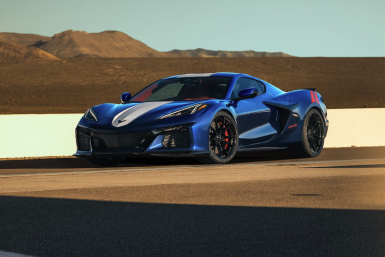
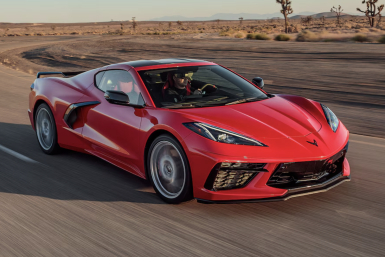
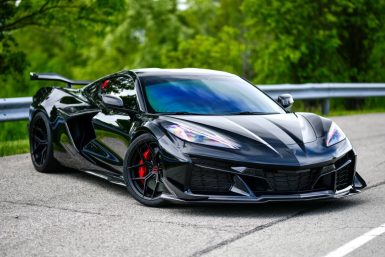
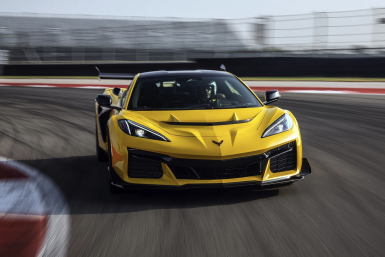
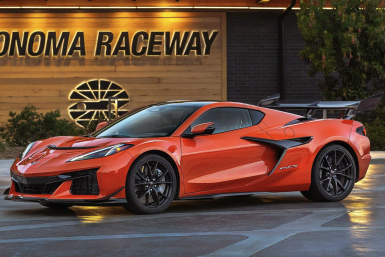
A C8 drives like a mid-engine supercar with Chevrolet manners, which is what it is. The engine behind your head changes everything a front-engine Corvette owner knows: the nose is light and points where you look, the car rotates around your hips rather than ahead of them, traction off the line is enormous, and the limit arrives later and with less warning than in a C7. The ride on Magnetic Ride is better than any Corvette before it, the steering is quick and a little numb, and the view forward over the low cowl is the best in the brand’s history; the view rearward, through the engine cover and the buttresses, is not.
The Stingray. The 495-horsepower LT2 is a pushrod V8 with a dry sump, lazy at 1,500 rpm and savage at 6,000, and the dual-clutch is the part that convinces the skeptics: instant upshifts, intelligent downshifts, and so good at reading the road that most owners never touch the paddles. The things people notice are the low-speed creep (a dual-clutch does not behave like a torque converter in a parking lot), the occasional hesitation on a cold 2020–21 car before its software updates, and the noise of the direct injection at idle, which is normal. Z51 cars ride firmer, stop harder and stay cooler on a back road; a non-Z51 car on Magnetic Ride is the better commuter.
The Z06. A different animal: the flat-plane LT6 makes no torque to speak of below 4,000 rpm and then screams to 8,600 with a sound no other American car makes, the wide body fills a lane, and the Z07 cars on Cup 2 Rs are track cars that happen to be registered. A Z06 is wonderful on a mountain road and tiring in traffic, and the carbon-ceramic brakes squeal and cost a fortune. Drive a Z06 before you buy one for a daily commute.
The E-Ray. The easiest C8 to live with and the fastest to 60 until the ZR1X: the electric front axle fills in the LT2’s torque, the all-wheel drive makes it a four-season car, Stealth mode moves it silently out of the driveway, and the standard carbon-ceramics and Magnetic Ride make it the best grand tourer of the range. The all-season tires reviewers complained about are the first thing most owners change; check what is fitted.
The ZR1 and ZR1X. 1,064 and 1,250 horsepower are more than any road can use, and both cars are set up to let you use some of it: the ZR1 is the purest and the ZR1X the most composed, with the hybrid front axle putting the power down. ZTK cars on Cup 2 Rs are hard-edged and miserable in the cold; the standard-aero cars are supercars you can drive on a Sunday.
Daily driver or weekend car? A Stingray or an E-Ray can be driven every day; the trunks hold a weekend’s luggage and the golf clubs, the front lift saves the splitter, and Chevrolet dealers service them. A Z06 is a weekend car for most people, a ZR1 or ZR1X a collector’s car that gets driven to events. The convertible gives up nothing in stiffness or speed to the coupe, whose roof panel comes off and stows in the rear trunk; the choice is whether you want the glass over your head or the sky.
Drive more than one, and drive the trim you mean to buy. A 1LT non-Z51 on Magnetic Ride and a 3LT Z51 on PS4S tires are different cars at the same price, and the quiet car is as likely to suit you as the loud one you came for.
MORE: C8 PERFORMANCE FIGURES / SPECS BY YEAR / EVERY C8 ENGINE
A Stingray is the cheapest mid-engine car in the world to run, and it is not close: the LT2 is a pushrod V8 on a dry sump that takes about eight quarts of Mobil 1, the dual-clutch wants its fluid changed on GM’s schedule, the tires are ordinary performance sizes, the brakes are steel, and every Chevrolet dealer can service it under a warranty that covers the early-year items on cars still inside it (three years or 36,000 miles bumper to bumper, five years or 60,000 on the powertrain). Owners of driven cars report $1,000–$2,500 a year in routine service, tires and fluids, more if the car sees a track.
The costs climb with the model. The E-Ray adds the carbon-ceramic rotors, which wear by weight and cost a five-figure sum to replace, though the hybrid system is covered by its own eight-year warranty and needs no plug. The Z06 adds the LT6’s oil schedule (a change at the first 500 miles and strict intervals after that), the 345-section rear tires, the Cup 2 Rs on Z07 cars that last a few thousand miles, and the Z07 brakes, the most expensive consumable in the range; a damaged carbon wheel costs more than a used Stingray. The ZR1 and ZR1X are the Z06’s costs with two turbochargers and, on the X, the hybrid system added, and there is no independent service history for either yet.
Insurance is ordinary for a sports car on the Stingray and E-Ray; the Z06, the editions and the ZR1s justify an agreed-value policy, because the ZR1 and ZR1X trade above sticker and a standard policy will not replace one. Two costs that do not show in a service schedule: the 12-volt battery, which drains on cars that sit and locks the car out or throws warnings, so budget a tender; and the front radiators, which sit low behind the grilles, get pitted by road debris and are a few hundred dollars each to replace when the cooling suffers.
Budget, in other words, for the car plus the history report, plus a pre-purchase inspection at a Chevrolet dealer or Corvette specialist, plus whatever campaigns or fluids are due, plus tires and a tender on a car that has sat. The “garage queen” with 2,000 miles and no oil change in three years is the one that costs the most in its first year.
MORE: C8 MAINTENANCE SCHEDULES / C8 RECALLS / OWNER’S MANUALS
Beyond price, condition and mileage, a C8 purchase turns on judgments the inspection alone cannot make: what the car is for, who you buy it from and what comes with it, how much of the value is paperwork and warranty, where the car has been, and where it sits in a market that has moved a long way since 2022. Think these through before the first viewing.
Decide first whether this is a car to drive every day, to drive on weekends or to keep. A daily driver wants a Stingray or an E-Ray with Magnetic Ride and the front lift, a 2LT interior and a full service history, and the Z51 question answered by how you drive; a weekend car can be a Z06 or a Z07; a collector wants the numbered cars, the 2025 ZR1, the IMSA edition, the 70th Z06, the last E-Ray. Most regrets come from buying one kind of car for the other purpose: the Z07 Z06 on Cup 2 Rs for a commute, the ZR1 at a markup as an investment, the 1LT bought to save money by someone who wanted the 3LT interior.
A Chevrolet dealer gives you the campaign history by VIN, a transferable warranty and often a certified-pre-owned extension, at a price a few thousand above a private sale; a private seller gives you the owner, the receipts and the story, and asks that you arrange your own inspection and, often, show proof of funds before a test drive, which is a reasonable request on a car like this. The auction sites (Bring a Trailer, Cars & Bids, Mecum) set the prices this page quotes and sell on photographs and a history report; buy there with an inspection arranged beforehand. Be wary of any seller who will not allow a test drive or wants to close before you have seen the car.
While this first step sounds obvious and overly simplistic, the availability of data these days makes using a vehicle history report an essential first step when beginning your personal research into any car, but most especially into a high-performance sports car. Why you ask? The answer is multi-faceted.
First, let's explore the three most common types of Corvette owners out there and how a vehicle history report can be adapted to evaluate each:
1.) There are the Keepers of Garage Queens - those individuals who buy a Corvette, take it out of the garage just long enough to wash it on a regular (weekly or even more frequent) basis, drive it a few miles (and only on occasion) to a local car show or meetup event, and put it back in the garage (often under a car cover and/or in a climate-controlled environment. These cars don't get driven much, making them an amazing find when you come across one. When you do find one of these, it's important to look at the vehicle history to ensure that, at a minimum, regular interval maintenance has been performed. While these cars may only have a few hundred to a few thousand miles on the odometer, oil (and other fluids) do depreciate over time and have a finite shelf life, making it paramount to confirm that they've still received the professional maintenance required to avoid premature wear of critical moving parts.
2.) The Weekend Warriors - those individuals who track their cars regularly/routinely. While these cars may also have lower mileage, especially for those drivers who trailer their cars between events and only put miles on their cars when slinging them around a race track, most of these (if properly maintained) are going to list far more frequent service/maintenance records as a byproduct of the added wear and tear they receive from this type of use. Documented maintenance on these cars will include anything from more frequent oil changes to maintenance/repair work on the brakes, suspension, tire replacement, etc. In addition, work performed at tune shops should also be captured here, and will show up as part of many vehicle history reports. While the work performed by these shops may not be detailed, a history report can be a tell as to the nature of the car's previous use.
3.) The Daily Drivers. This third and final group is, in reality, the least common of the three types (at least among Corvette owners.) At the same time, this group is going to provide would-be consumers with the most competitively priced used vehicle examples (in most cases) of any of the groups listed herein. Their cars will often have higher mileage and should (if properly maintained) have a long and thorough service history documenting the type of maintenance that has been performed throughout their use. For these, understanding the regularity (and consistency) of their service will indicate how well the cars have been maintained. When evaluating a vehicle history report on one of these higher-mileage Corvettes, you must compare the vehicle history report records with the scheduled maintenance requirements found in the C8 Corvette owner manual. This information can be readily found online and will help establish whether the owner fully maintained their car, or if the services rendered were limited to essential services such as oil changes and fluid inspections. A poorly serviced daily driver can often be a worse purchase than a Corvette that has regularly been driven hard at a race track, especially since most competitive drivers also understand the importance of proper maintenance and care...not only for the sake of their cars but for their own well being.
While understanding how a car was owned and maintained is probably one of the largest benefits of a vehicle history report, the other major component that many consumers examine closely is whether the car has been involved in one (or more) accidents and, if so, the severity of the accident (if known.). Some buyer reports will provide specificity around the accident, while others will simply document that the car was previously involved in an event that resulted in the vehicle sustaining some level of damage.
Should this be an immediate deterrent? It depends on the buyer's end game. If someone is looking to purchase a Corvette for a short period (for less than a year, for example), it is worth noting that the car's level of depreciation will likely be greater than a car with a clean accident report. While many (in fact, MOST) automotive bodywork/repairs are done to a level where would-be consumers might not otherwise be aware their vehicle had sustained any damage, an accident is a significant blemish on the vehicle's history, causing the affected car to depreciate more quickly and retain a lesser value than the exact same car with a clean history report. What's more, having a higher number of previous owners will also adversely impact the car's value.
However, buying a car that has an accident in its history also presents an opportunity to save money on the purchase. Many consumers will even seek out Corvette listings that indicate the car has been previously involved in an accident because the pricepoint on these cars will be lower than examples with a clean record. This logic might sound flawed, but any car that has sustained serious damage will often have a salvage title (or similar) and should be regarded with much greater caution. For others, something as incidental as a paint abrasion (after rubbing up against a bollard or guardrail) that causes a car to go into a body/repair shop will result in its being listed as having been in an accident and, consequently, will depreciate the car's value.
When considering a Corvette, here's the tip: Do your homework, but don't be too quick to dismiss a Corvette that may have an accident in its history. It is not uncommon to find hundreds of examples on the market at any given time listed as having been involved in an accident. The wise shopper will try to understand the nature of the accident and the extent of the damage the car received. They will also do a comparative analysis of that car's value as compared to an equivalent example without an accident on its history report. The price savings between the two are often significant and something worth considering, especially for would-be consumers looking to purchase a car for the long term.
The next steps listed in this buyer guide need not be performed in any particular order. Each is recommended below as part of the automotive buying homework process when evaluating a used mid-engine Corvette for purchase. While inspecting, test driving, and having a trained mechanic inspect the vehicle are all important - but interchangeable - steps in this process, we list them in this order because we believe that being aware of the possible mechanical/functional pitfalls surrounding any C8 Corvette will improve your buying experience while simultaneously reducing the amount of time looking at an example that won't pass muster.
What follows below is a list of common items that an experienced automotive consumer should be able to evaluate on his/her own. However, this list is also valuable when taking a C8 Corvette to a mechanic for inspection ahead of purchase. These items should NOT be ignored. Instead, these items should be examined thoroughly and properly repaired by the car's current owner before they attempt to sell the car.
We'll begin with the elephant in the room...the transmission!
Despite being one of the most intuitive automatic transmissions ever developed by GM, the car's eight-speed Tremec TR-9080 Dual-Clutch Transmission (DCT) has become somewhat notorious for developing shifting problems and making usual noises during operation. While a search on the internet will bring up dozens (if not hundreds) of irritated/irate customers, it is worth noting that the total percentage of C8 Corvettes experiencing significant transmission issues was around 4% (per a 2022 consumer report.)
Here are a few specific items to look for when inspecting the Tremec DCT transmission.
Leaks: The Tremec TR-9080 eight-speed dual-clutch transmission in the C8 Corvette may leak. Look for fluid beneath the car, for the appearance of moisture on/around the housing, and discoloration of the same.
Gasket Failures: Seemingly more common on the C8 Z06, premature gasket failure results in the discharge of transmission fluid (either in its entirety or, at a minimum, in large quantities). This will be readily notable as there will be significant fluid pooling beneath the car. While this is similar to the leaking issue listed previously, this issue is far more dramatic and will require immediate attention by a GM-certified technician.
Transmission Control Modules/Error Messages: The transmission may flash error messages stating that owners should put their vehicle into park and take it in for servicing. Additionally, the Transmission Control Module has been known to incorrectly clear diagnostic trouble code communications from other modules because of direct communication loss, thereby resulting in improper operation of the transmission (and other systems) without identifying the error to vehicle operators.
This issue was addressed in a voluntary recall issued by GM on all 2020 and 2021 models.
Debris: Debris on the park position sensor magnet may cause the transmission control module to receive an incorrect position reading.
While this list is by no means an all-inclusive list of transmission issues, it should be noted that the transmissions in these cars have been a source of consternation for some owners. While GM has acknowledged these issues, and while improvements are continuously being made by the Tremec company to its DCT mid-engine transmission, a thorough inspection of the transmission housing, as well as the condition (and level) of the transmission fluid should be a must do when inspecting a mid-engine Corvette.
Although the C8's 6.2L LT2 V8 engine has proved to be incredibly reliable, there are still some items that are worth inspecting. Some of the most common issues experienced by consumers pertaining to the LT2 powerplant include overheating, unusual noises, and reduced power output. These issues stem from various sources like cooling system malfunctions or wear and tear of engine components.
When inspecting a mid-engine Corvette, it is worth examining the cooling fins on each of the car's two radiators. Make sure that the radiators, which reside directly behind the grills on the left and right sides of the front fascia, are not heavily pitted/dented/damaged from road debris. Because of their proximity to the ground, and the limited protection afforded them by the factory grills, these radiators can become pitted/damaged, which will result in reduced airflow through the radiator which, in turn, reduces the effective cooling capacity of the radiator itself (thereby causing overheating.). NOTE: On Z51 models, a third radiator is mounted on the rear driver's side inside the rear quarter panel air intake opening.
Regarding engine wear and tear, regular maintenance and periodic inspections are key to preventing major engine issues. As referenced in the Vehicle History Report section earlier, being aware of how frequently/completely the engine has been maintained will provide valuable insight into the car's condition. Additionally, the engine should be visually examined (both from above and below the car). Look for fluid leaks around the valve covers and the intake manifolds.
Like most modern cars, the eighth-generation Corvette Stingray is full of complex electronics, including a fully digital dashboard and a large, complex, touchscreen infotainment center. Make sure to take time to inspect the operation of all the electrical components inside of the car's cockpit. Navigate through all of the dashboard displays. Go through all of the infotainment center touch screens and verify the operability of all the systems, from the stereo and climate controls to the PDR, backup cameras, and navigation system. There have been reports of the dashboard displays operating erratically and issues with the car's lighting systems.
Although the C8 Corvette's interior is almost universally considered the nicest, and most advanced in the history of the brand, some consumers have identified deficiencies with the fit-and-finish of these interiors. Reports of loose trim and malfunctioning seat controls have been previously documented, so would-be consumers should take time to inspect the interior for quality issues. Cars equipped with the 3LT trim level have leather-wrapped interiors with sueded microfiber coverings. These coverings are known to peel over time, especially on cars that have not been stored in a climate-controlled environment. Because of this, careful inspection of the leather-trimmed surfaces is paramount to help avoid expensive and time-consuming interior repairs later on.
When inspecting system operability (see also Electrical System Issues above), take time to verify the operability of all of the HVAC (Heating, Ventilation, and Air Conditioning) controls. Some examples of the C8 Corvette have been known to deliver inconsistent heating or cooling, generate unusual HVAC system noises, or even have airflow problems. This isn't common, but is worth inspecting before purchase.
Take time to review any of the documentation or maintenance history of the vehicle that was kept/collected by the previous owner. Although much of this information should have already been captured (high level) as part of the vehicle history report, taking time to evaluate the documentation may provide additional insight into the vehicle you are purchasing that was not documented in the vehicle history report.
Earlier, we shared the pricing for each NEW model year C8 Corvette. While this pricing provides some great historical data, and even offers would-be consumers with a frame of reference on how Corvettes with varying trim levels were priced when new, it is important to become familiar with what your local market will demand in terms of used car pricing. Unfortunately, not all used Corvettes are priced the same, and different markets may offer dramatic shifts in pricepoint, depending a variety of factors, including market saturation, average cost of living, median incomes, etc. Each of these factors can impact what a person should expect to pay for a Corvette, and it may lead some to travel (even great distances) to save money on a car.
When doing research on a prospective used Corvette, it is worth taking the time to shop for comparable examples in other markets. When comparing cars, make sure they have the same trim levels, similar mileage, similar number of owners, accidents (if applicable), even paint and interior colors. Even if the comp car isn't identical, take note of the pricing - are they in the same price range (within a few hundred to a couple thousand dollars?) Does the person or organization selling it offer any type of warranty (even a transferable factory warranty) that might reasonably increase the asking price of the car?
By being equipped with comparable pricing, prospective buyers will be better equipped to negotiate on the price and will, in many cases, walk away with a better deal should they elect to move forward with making a purchase.
Here are some key questions to ask during the price negotiating phase:
What is the lowest price you are willing to accept?
This car is priced higher that comparable examples? (Make sure to have examples ready to present if asked)
Have you had any recent repairs done?
How much are you willing to negotiate on the price?
Does this price include any warranties or extra features (additional floor mats, a second roof panel, a car cover, etc.)?
What is your best price on this car?
It is important that you never assume the asking price is their best and final. While many dealerships are less willing to negotiate than they used to be, knowing what the market will bear will help ensure that you'll get a better deal when making a purchase.
Knowing when to buy a Corvette can also affect what you'll pay. There are trade-offs to this tactic - though buyers can often save thousands buying a used Corvette in the late fall/early winter, the trade-off (depending on where the car and/or buyer is located) may mean that the car will have to be put into storage until the following spring, when warmer weather (and better road conditions) return. While Chevrolet has marketed the Corvette as being drivable year round (there was even a commercial showing a C8 doing donuts in the snow), the reality is that the Corvette is a fair weather vehicle. As such, buying at the start of winter may result in ownership of a car that is undrivable for several months.
Still, if you can be patient, you recognize some significant savings by buying a Corvette in the fall/winter months.
Although we’ve provided a variety of tips/tricks to purchasing a used Corvette, there is no substitution for actually driving the car. Where many sellers, especially private owners, may be reluctant to allow a would-be driver to get behind the wheel without a commitment to purchase, driving a Corvette (as with any car) will enable to experience the car in a way that no report or inspection can, no matter how detailed or thorough.
When working with a seller, especially a private owner, it is a good idea to communicate with the seller ahead of any appointment. This will enable both parties to reach an understanding about what should be expected when inspecting the car. Sellers may ask buyers to present cash ahead of a test drive, and this request is often reasonable, given the nature of the car being driven. Sadly, there are people out there who will pose as a prospective but who lack the financial resources to actually purchase the car. These “tire kickers” may be looking to do nothing more than joy ride a high performance car, causing unnecessary ware on the seller’s vehicle.
At the same time, buyers should be wary of sellers who are completely resistant to a test drive. There is a lot that can be learned by driving a used car, and so this part of the buying process should be paramount for both parties. If a seller is obstinate to allowing a test drive, it could suggest that there is a larger issue with the car. Be wary of sellers who want to close a deal before allowing you access to their vehicle.
When test driving any Corvette, here are some things to look for/listen for:
1.) Start the car when “cold.” A cold start (starting the car after its been sitting for an extended period of time) is an excellent way to assess the engine’s overall health by observing how well it starts and runs when cold. When performing a cold start, the engine should crank easily and the engine turn over quickly. Watch for colored smoke from the exhuast pipes – this could indicate an internal engine issue. Listen how strong the engine cranks – a slow or sluggish start could be an indicator of a weak battery, or even a faulty starter motor.
2.) Check for “pulling” in the steering. When driving down a straight road at a reasonable rate of speed, momentarily loosen/release your grip on the steering wheel and observe if the car pulls to the left or right. This is an indicator of an alignment issue, which could result in premature wear of tires, suspension components, etc. A slight pull to the left or right is not concerning, but if the car pulls dramatically in either direction, it could be an indicator of a more serious issue.
3.) Vibration in the steering wheel. Similar to No. 2, this is an indicator of either a tire balance issue or a possible alignment/steering/suspension issue. If present, refer to the inspection instructions above and make sure that all steering/suspension components are evaluated prior to purchase! Also, vibration in the steering wheel during braking could be an indicator of warped brake rotors/failing brake pads. While this is not a deal breaker, brakes on a Corvette are not cheap, so make sure to remember this finding when negotiating price.
4.) Inspect all the accessories. Too often, when buying a used car, it is easy to overlook the operability of secondary/tertiary systems like wipers, heating/cooling/defrost, the stereo, even power window, locks, cruise control, etc. When it comes to a mid-engine Corvette, these cars are loaded with technology and feature more “drive by wire” systems than any Corvette that came before it. Be VERY vigilant and inspect the operability of all the technology onboard these cars. This process may take some time as there are a lot of features (especially on 2LT and 3LT models) but the extra effort may save a prospective buyer thousands if caught before making a purchase.
Know where the car sits before you pay for it: a 2020–22 Stingray near the bottom of its curve, a 2023–25 Stingray or a Z06 still shedding a little, an E-Ray at the value point, a ZR1 or ZR1X above sticker and drifting down. Shop comparable cars in other markets (same trim, mileage, owners, accident status, even colors), because prices differ by region enough to justify a flight, and price against the site’s tracked results and the wholesale reports, not the asking prices around it. Time of year matters too: buyers save thousands in late fall and winter at the cost of storing the car until spring, because whatever the commercial with the C8 doing donuts in the snow suggested, this is a fair-weather car for most owners.
The C8 is a reliable car by supercar standards and an ordinary one by Chevrolet’s: the LT2 has proved durable, the structure does not rust, and the recall list is short. The known items are the dual-clutch’s software and leaks, the first-year campaigns, the LT6’s early failures and the 2025 fuel-system recall on the Z06 and ZR1, the expensive consumables on the Z07 and ZTK cars, and the cosmetic items of a modern interior. All are known, documented and, on a car inside its warranty, Chevrolet’s problem rather than yours; a car with the campaigns done and the records to show it is the one to buy.
The site’s yearly recall and maintenance posts list every campaign by year; the list below is the generation’s.
MORE: C8 RECALLS / C8 SERVICE BULLETINS / C8 MAINTENANCE SCHEDULES
| PROBLEM | YEARS | WHAT HAPPENS | THE FIX AND THE COST |
|---|---|---|---|
| Dual-clutch transmission | 2020– | The Tremec TR-9080 is one of the most intuitive automatics GM has built and the elephant in the room: about four percent of cars by a 2022 consumer report have had shifting problems or unusual noises. Hesitation, hanging in gear, harsh low-speed shifts, fluid leaks at the housing, premature gasket failures that dump fluid (more often on the Z06), “put the vehicle in park and service” messages, a control module that could clear other modules’ trouble codes (a voluntary recall on 2020–21 cars), and debris on the park-position sensor magnet giving a false reading. | Software reflashes, fluid and in a few cases valve bodies, under warranty on covered cars; a gasket failure is a dealer job that must not wait. Inspect the housing and the fluid level and color, drive it slowly in traffic, and check the service history for the transmission campaigns. |
| Frunk latch | 2020–21 | The front trunk could open while driving; a recall and stop-delivery in 2020, and a second campaign on the 2021. | The software update and the latch check; confirm completion by VIN. |
| LT2 cold-start tick and oil consumption | 2020–26 | A ticking from the lifters at cold start covered by a GM bulletin, different from the normal direct-injection noise; some cars use oil between changes. Overheating, unusual noises and reduced power are the complaints owners report, mostly traced to the cooling system or deferred maintenance. | Listen at a cold start; ask whether the bulletin was applied; check the oil level and the service intervals. |
| Front radiators | 2020– | The two radiators sit directly behind the grilles on each side of the front fascia with little protection and get pitted, dented and clogged by road debris, cutting airflow and cooling capacity; Z51 cars have a third radiator in the driver’s-side rear quarter intake. | Inspect the fins with a light; replacements are a few hundred dollars each plus labor. A car that runs warm in traffic usually has damaged or clogged radiators. |
| Rear-axle seal and other leaks | 2020–21 | The early cars’ differential seal weeps; look for oil at the back of the car and on the valve covers and intake from above and below. | A seal; a dealer job under warranty. Any fluid on the ground under a C8 needs a name before you buy. |
| LT6 engine failures | 2023–24 | A number of early flat-plane LT6s failed, some at very low mileage, and GM ran an engine-replacement campaign in early 2023; the forums tracked the cases. | A replaced engine is not a bad thing when documented; check the VIN history and that the oil changes were done at GM’s intervals, including the first at 500 miles. |
| Fuel-system fire risk (Z06, ZR1) | 2023–25 | The August 2025 recall and stop-sale on every C8 Z06 and ZR1 after fires while refueling. | Confirm the campaign is complete by VIN before buying any Z06 or ZR1. |
| Carbon-ceramic rotors and carbon wheels | 2023– | Standard on the E-Ray and ZR1, part of Z07 on the Z06: the rotors wear by weight rather than thickness and cost a five-figure sum; the optional carbon-fiber wheels crack on impact and cost more than a used Stingray to replace. Curb-rashed alloy wheels are near-universal on every model. | Have the rotors weighed at a dealer; inspect every spoke of a carbon wheel inside and out; ask for the wheel-damage history. |
| Electrical, screens and 12-volt battery | 2020– | A fully digital dash, a large touchscreen and more drive-by-wire systems than any Corvette before it: reports of erratic dash displays, lighting faults, PDR and camera glitches, and the 2026 rear turn-signal recall. The 12-volt battery drains on cars that sit and can lock the car out; the hybrid system reports faults when it does on an E-Ray or ZR1X. | Work through every screen, mode and camera at the viewing; a tender is the fix for the battery, and the software is dealer-updated. |
| Interior fit and finish | 2020–25 | The nicest interior in the brand’s history with known weak points: loose trim, seat controls that fail, the stitched leather dash delaminating and the sueded microfiber peeling on 3LT/3LZ cars that have not lived in a garage, and HVAC that heats or cools unevenly, makes noises or loses airflow on some cars. | Warranty items on covered cars, expensive repairs on the rest; inspect every leather and microfiber surface and run the climate control through its range. |
| Paint and body | 2020– | Paint peeling or lifting at the headlamp edges on some cars; chips at the nose and splitter; roof-panel seals that let water in and a panel that rattles; convertible top sensors that fault. | Look in daylight; a clear bra is a plus; test the roof or top through a full cycle. |
| Front lift | 2020– | The optional nose lift (E60) and its sensors fail on some cars; the splitter scrapes on cars without it. | Test the lift and its location memory; look under the splitter for damage. |
| Tuned, tracked and modified cars | 2020– | The warranty follows the ECU: a tune voids the powertrain coverage, and track use shows in the brakes, the tires, the heat exchangers and the history report’s tune-shop entries. The E-Ray and ZR1X add the hybrid battery’s state of health. | Ask directly; a scan at a dealer shows the calibration; price a tuned car as a car without a warranty. |
On a modern car the homework is as important as the viewing, and most of it can be done before you travel. Take your time, do the paperwork first, then the car, then the drive, and remember that the order of the last three is interchangeable: knowing the pitfalls before you look saves time on cars that will not pass.
1. Start with the vehicle history report. It sounds obvious; on a high-performance car it is essential, and for more than the accident history. The report tells you which of the three C8 owner types had the car. The garage queen with a few hundred or a few thousand miles is a wonderful find if the fluids were changed on schedule anyway, because oil and brake fluid age whether the car moves or not. The weekend warrior’s track car will show frequent oil, brake, tire and suspension entries and tune-shop visits, which tell you how it was used even when the work is not itemized; a tracked car with records is often the better buy. The daily driver has the mileage and should have the longest service history; compare it against the scheduled maintenance in the C8 owner’s manual, because a poorly serviced daily driver is a worse purchase than a well-kept track car.
2. Read the accident history with judgment. An accident on the report lowers the car’s value and raises its depreciation whatever the repair looked like, and more previous owners do the same. It is also an opportunity: many buyers seek out cars with an accident entry because they are priced lower, and a paint abrasion from a bollard that sent the car to a body shop reads the same on the report as a serious collision. Understand the nature and extent of the damage, compare the price to an equivalent clean car, and treat a salvage or rebuilt title with far more caution than a cosmetic repair. For a long-term owner the saving can be worth it; for someone keeping the car a year, the clean car is the better buy.
3. The paperwork. The window sticker and the build sheet (GM’s order system and the Corvette archives can reproduce them for any VIN), the RPO label on the door jamb against the car, the recall and campaign status at a Chevrolet dealer by VIN, the warranty status (intact, transferred, voided, extended), the edition plaque and matching cover on an IMSA or 70th car, and the owner’s own folder of receipts, which often holds more than the history report does. On a Z06 or ZR1 the August 2025 fuel-system recall must be complete; on a 2020–21 the frunk and transmission campaigns.
4. The transmission. The elephant in the room. Look under the car for fluid and at the housing for moisture and discoloration; check the fluid level and condition; ask about the transmission campaigns and reflashes; and on the drive feel for hesitation, hanging in gear and harsh low-speed shifts. A gasket failure that has dumped fluid is a stop-everything dealer job. Tremec has improved the TR-9080 continuously and GM has acknowledged the issues, which is why a car with the updates is the car to buy.
5. The engine and cooling. Start it cold if you can and listen for the lifter tick (a bulletin item) over the normal direct-injection clatter, watch for colored smoke, and note how strongly it cranks, since a weak crank means a tired 12-volt battery or starter. Inspect the two front radiators behind the grilles for pitting, dents and debris, and the third one in the driver’s-side rear intake on a Z51; a car that runs warm in traffic usually has damaged radiators. From above and below, look for leaks at the valve covers, the intake manifold, the rear differential seal and the dry-sump tank. On a Z06 or ZR1 ask about the oil-change intervals and, on a 2023–24 Z06, whether the engine was replaced under the campaign.
6. The electronics. The C8 is full of them: a fully digital dash, a large touchscreen, cameras, the PDR, the front lift. Navigate every dashboard display and drive mode, every infotainment screen, the stereo, the climate control, the backup and front cameras, the navigation, the PDR and the lift and its memory; owners have reported erratic displays and lighting faults, and the 2026 interior’s software is in its first year. Work the roof panel or the convertible top through a full cycle and check its sensors and seals.
7. The interior. Inspect every leather and microfiber surface on a 3LT/3LZ for peeling and delamination, especially the stitched dash, the trim for looseness, the seat controls for operation, and run the HVAC through heat, cold and every vent for uneven output, noises or weak airflow. The interior is the nicest in the brand’s history and the place where the fit-and-finish complaints live.
8. Wheels, brakes, tires and body. Curb rash is near-universal; cracks are not, so inspect every wheel inside and out, and every spoke of a carbon wheel. Have carbon-ceramic rotors weighed at a dealer; check steel rotors for lips and pads for life; read the tire date codes and tread, and on a Z07 or ZTK car ask how many sets of Cup 2 Rs it has used. Look at the paint at the headlamp edges, the nose and the splitter in daylight, and under the splitter for lift-less scrapes.
9. The test drive. There is no substitute for it, and a seller who refuses one, or wants to close before you have seen the car, is telling you something; a private seller asking for proof of funds first is being reasonable about tire kickers who want a joyride in a supercar, so agree the ground rules before the appointment. Then: start it cold and watch the smoke and the crank; on a straight road loosen your grip and feel for pull, which means alignment and premature tire and suspension wear if it is more than slight; feel for vibration through the wheel at speed (balance or suspension) and under braking (rotors and pads, not a deal-breaker but a negotiating point, because Corvette brakes are not cheap); and drive it slowly in traffic for the transmission. Then run every accessory, wiper, window, lock, cruise control and screen, because there are more drive-by-wire systems on this car than on any Corvette before it, and the extra half hour can save thousands.
10. Get a second opinion, then negotiate from the market. A pre-purchase inspection at a Chevrolet dealer or a Corvette specialist is a few hundred dollars against a five- or six-figure purchase and should include the VIN campaign check and a scan for a tune. Then price the car against the site’s tracked results and the wholesale reports, shop comparable cars in other markets, and ask the questions: what is the lowest price you will accept, why is this car priced above comparable examples (have them ready), what recent repairs have been done, how much will you negotiate, does the price include a warranty or extras (a second roof panel, the car cover, floor mats), what is your best price. Never assume the asking price is final, even at a dealer, and remember there is always another C8.
Conclusion, from the original guide. Buying a Corvette should be a fun, exciting time. For many of us, Corvette ownership is the culmination of many years of waiting, of scrimping/saving, etc. By using some of the recommendations listed in this article, it is our sincere hope that you’ll be more fully informed when making your first (or next) Corvette purchase, and that you’ll end up with a car that will bring you many years of enjoyment!
MORE: WHOLESALE MARKET REPORTS / C8 RECALLS BY YEAR / THE OWNER’S MANUALS / THE VIN DECODER
A C8 is verified from its window sticker, its build sheet and the RPO label on the door jamb, and the VIN’s fifth character gives the model and the eighth the engine, so there is no stamping to decode; what changes from year to year is which campaigns apply, which editions and packages exist and what the car should have cost. This is the short version to take to the viewing; the year pages carry the full lists and the current results.
MORE: 2020 / 2021 / 2022 / 2023 / 2024 / 2025 / 2026 / 2027 / THE VIN DECODER / RPO CODES
| YEAR | THE CAMPAIGNS, THE EDITIONS AND THE MARKERS | WHAT TO CONFIRM |
|---|---|---|
| 2020 | The frunk-latch recall and stop-delivery, the transmission-software campaign, the early-build cars (sequence numbers under about 2,700 were built before the March 2020 shutdown), the 943 Museum deliveries with the CFX plaque and R8C paperwork, Z51 on 76 percent of cars. Stickers $59,995–$78,945 plus options. | Both campaigns complete by VIN; the window sticker for the trim, Z51 and the exhaust (18,174 cars had NPP); Museum paperwork if claimed; the wheels for rash. |
| 2021 | The frunk, transmission-software and seat-belt-pretensioner campaigns; Magnetic Ride (FE4) as a stand-alone option; the $1,000 price rise for orders from March 1, 2021 on the sticker; 1,274 Museum deliveries; Red Mist and Silver Flare. Stickers $59,995–$79,945. | The campaigns by VIN; original or replaced Carbon Flash wheels (curb rash is common); which side of the price rise the sticker falls on. |
| 2022 | The upgraded fuel system and software; the IMSA GTLM Championship Edition (ZCR on the sticker, $6,595, 1,007 built, seven plaques above 1,000) with its plaque and matching cover; the first right-hand-drive cars; a $1,200 rise. Stickers $62,195–$81,145. | On a Championship Edition the plaque number, the cover and ZCR on the sticker; on every 2022 the recall and bulletin list on the site’s maintenance post. |
| 2023 | The Z06’s first year: the early-2023 LT6 engine-replacement campaign, the warranties GM voided on cars flipped within a year, the August 2025 fuel-system recall; the 70th Anniversary Edition ($5,995; 5,601 built, 1,022 Z06s, 296 with Z07) with its plaque; the FA6 carbon interior; three Stingray prices before the first sale. Stickers $62,295–$84,545 Stingray, $106,395–$127,245 Z06. | On a Z06: engine history, warranty status and the fuel-system recall by VIN, Z07 rotors by weight, carbon wheels for cracks. On any 2023 the 70th plaque and which Stingray price the sticker carried. |
| 2024 | The E-Ray’s first year with the eight-year hybrid warranty and the ZER package (874 of 1,417); the Z06 markups end; standard driver-assistance suite and Google built-in on the Stingray; the Artemis interior (210 cars) and the Tech Bronze package as rarities; three new colors. Stickers $69,995–$88,745 Stingray, $106,595–$124,545 E-Ray, $111,795–$132,345 Z06. | On an E-Ray: the hybrid warranty terms, the battery and 12-volt condition, ZER, the tires fitted. On a Z06: carbon-ceramics (4,253 cars) and the recall. On a Stingray: that the driver-assistance features work. |
| 2025 | The ZR1’s year: 180 built from April 28, 83 with ZTK, 43 with carbon wheels, a $3,000 gas-guzzler tax and the dealer addendum on the sticker, “Launch Edition” a seller’s phrase; the August 2025 fuel-system recall and stop-sale on every Z06 and ZR1; the last original interior; the Jet Black-with-blue interior (691 cars) and the last Artemis (34). Stickers unchanged for the Stingray, +$2,000 E-Ray and Z06, $174,995–$195,995 ZR1. | On a ZR1: which of the three cars it is (standard, carbon aero, ZTK), the carbon wheels, the sticker against what the seller paid, the recall by VIN. On a Z06: the recall by VIN. |
| 2026 | The three-screen interior and Google built-in in their first year; the ZR1X with the J59 brakes and the hybrid battery; the Quail Silver Limited Edition (3LZ convertible, Blade Silver Matte, the EMT interior) and the twenty-five Stars & Steel ZR1s; the rear turn-signal recall; the E-Ray’s last year (about 1,177). Stickers $71,995–$90,745 Stingray, $119,695–$140,245 Z06, $182,395–$203,395 ZR1, $207,395–$241,395 ZR1X. | The interior software has been updated; the electrochromic roof if fitted; on a ZR1X the battery’s state of health, the campaign status and whether it is one of the editions; on every 2026 the turn-signal recall. |
| 2027 | On sale: the LS6’s first year in the Stingray and Grand Sport, the Grand Sport X, Z52 Sport and Track packages, the Launch Edition interior, Admiral Blue with the stripe and hashes, the SUP red badges; the first Grand Sports carried markups and one auction listing was pulled over shill bidding. Stickers $73,495 Stingray, $88,495 Grand Sport, $112,195 Grand Sport X, with a $2,495 destination charge. | The build sheet against the car, the invoice and the markup, the dealer’s record of the first-year updates, the warranty status; there is no used-car history yet. |
What CorvSport has written about buying, selling and valuing the mid-engine Corvette: the wholesale market reports from the dealer-only lanes, the dealer-margin and depreciation pieces, the Bargain Hunting series, the ZR1 and ZR1X auction results and the 2027 Grand Sport pricing, newest first. The year pages carry the current results for each year.
CorvSport Goes Corvette Bargain Hunting: A Comprehensive C8 Z06 Market Analysis — 2026
CorvSport’s Insider Series: C8 Stingrays Test The Dealer-Only Corvette Lanes & Dallas Sends Signals — 2026
E-Ray In The Wild: A Rare Wholesale Sighting Headlines The C8 Corvette & Dallas Dealer-Only Lanes — 2026
The Rise & Fall Of The E-Ray: A Market Perspective For The Shortest-Lived Corvette Variant — 2026
No-Reserve Roulette: Do C8 Corvette Sales With No Safety Net Bring More Money Than Wholesale? — 2026
The 2027 Z06 Options List Is Out And Some Packages Cost More Than a New Car — 2026
2027 Corvette Grand Sport Pricing Is Official, and It Lands Right Where It Should — 2026
Our Hunt For C8 Corvette Z06 Bargains: A One-Year Market Check Through Retail & Wholesale Lenses — 2026
Wholesale Market Report: The First C8 Corvette ZR1 1LZ Faces Dallas’ Unstoppable Market — 2026
The site’s recall, service-bulletin and maintenance-schedule posts for the 2020-and-later Corvette, by year.


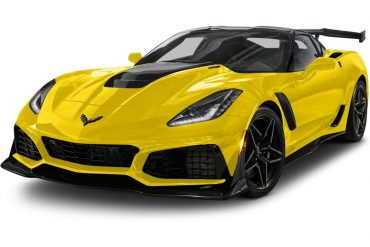
The mid-engine Corvettes the site has listed for sale, newest first: owners’ cars, dealer stock and the auction consignments worth watching, with the asking price and what we make of it against the tracked results. The for-sale page has every Corvette the site is following, the wholesale reports what dealers are paying this week and the auctions tag the results.
For a Stingray, a 2021–23: the 2020’s campaigns are behind it, it has come down the most, and the 2023 sold at list from the start so it has the least left to shed; the 2024 and 2025 are 2023s that cost more new, and the 2026 brings the new interior for a few thousand more. For a Z06, a 2024–25 with the recalls done trades at or under sticker with the first-year engine campaign behind it; the 2023 70th Anniversary cars are the collector pick. The E-Ray is the value in the range in any year, with the 2026 the rarest.
If you want one answer: a 2021–23 Stingray 2LT Z51 coupe with 10,000–25,000 miles, bought from a dealer that has done the campaigns, for $55,000–$70,000. It is the car the reviews were written about at the price the market has settled on.
From about $47,000 for a higher-mileage 2020–21 1LT to $452,000 for a Quail Silver ZR1X, which is why the price ladder on this page has five tiers by model. In the results the site tracked in October 2026, Stingrays sold for $47,000 to $88,000 with most 2020–22 cars between $55,000 and $72,000; E-Rays $83,500 to $103,000; Z06s around a $134,263 benchmark with 3LZ coupes at $120,000–$127,000; 2025 and 2026 ZR1s against benchmarks of $284,294 and $294,306; and ZR1Xs at $315,000 to $452,000.
Mileage moves the price more than the year, the window sticker is the ceiling on everything but the ZR1 and ZR1X, and every figure moves; use the year pages, which carry the current results, and check whether an auction result includes the buyer’s premium.
Only on the ZR1 and ZR1X, and only because Chevrolet builds a few hundred a year. The Stingray sold over sticker through 2020–22 and has been at or under list since the 2023; the Z06 carried $20,000–$100,000 markups in 2023 and was back to MSRP by the 2024 model year, with used cars now at or a little under sticker; the E-Ray never had a markup year at all. The first 2027 Grand Sports are carrying markups while allocations catch up, and the site’s reports expect those to fade as the others did.
A markup paid by the first owner does not transfer to the second: a used Z06 that sold new for $150,000 with a $40,000 addendum is worth what a $110,000-sticker Z06 is worth. Know the sticker, not the invoice, and walk from any markup on a car with more than a few hundred built a year.
The dual-clutch is the headline: about four percent of cars have had shifting problems or noises, with software reflashes, fluid, the occasional valve body and, more often on the Z06, gasket failures that dump fluid, plus a recall on the 2020–21 control module. After that: the 2020–21 frunk-latch recall, the LT2’s cold-start lifter tick and the pitted front radiators that make cars run warm, the early LT6 failures on 2023–24 Z06s and the August 2025 fuel-system recall on every Z06 and ZR1, expensive carbon-ceramic rotors and carbon wheels on Z07, E-Ray and ZR1 cars, the 12-volt battery on cars that sit, screens and electrical gremlins, and the 3LT interior’s peeling microfiber and delaminating dash.
All of it is known and documented, and on a car inside its warranty it is Chevrolet’s problem. The common-problems table above has the list with the fixes; the site’s yearly recall posts have every campaign by VIN.
No, with a few exceptions, and that is the good news for a buyer. The Stingray has depreciated like a modern car since 2023, the Z06 and the E-Ray have followed it, and the 70th Anniversary Z06s that brought $300,000 in 2023 are back at sticker; only the ZR1 and ZR1X trade above list, and their premiums are drifting down as production continues. A used C8 bought at the tracked prices will hold most of its value for a few years and then track the used-car market.
The cars with a collector case are the numbered ones: the 2020 first-year and Museum-delivery cars, the IMSA GTLM Championship Edition, the 70th Anniversary Z06s, the 180 2025 ZR1s, the last E-Rays and the Quail Silver and Stars & Steel ZR1Xs. Buy the C8 you want to drive at a price the results support and let the market be a bonus.
A Chevrolet dealer gives you the campaign history by VIN, a transferable factory warranty or a certified-pre-owned extension, and recourse, at a price a few thousand above a private sale; a private seller gives you the owner, the receipts and the story, at a better price, with the inspection and the warranty transfer your responsibility. Either is fine; what matters is that the history report, the campaigns, the warranty status and a pre-purchase inspection are done before the money moves.
Agree the ground rules with a private seller before the appointment: proof of funds before a test drive is a reasonable request on a car like this, but a seller who refuses a drive altogether, or wants to close before you have seen the car, is telling you something. The auction sites set the prices on this page and sell on photographs and a report; buy there with an inspection arranged first.
Yes for a driver, and the used-market premium is small, a few thousand dollars at most. Z51 brings the bigger brakes, the extra radiators and transmission cooler, the electronic limited-slip, the performance exhaust and its five horsepower, firmer springs and dampers, the splitter and spoiler, Performance Traction Management and the Michelin Pilot Sport 4S tires, which together make the Stingray the car the reviews were written about; about three cars in four were ordered with it, so there is no shortage.
A non-Z51 car on Magnetic Ride is the better commuter, rides more softly and is a little cheaper to keep in tires and brakes. Buy the trim you will use: a 1LT Z51 is the driver’s bargain, a 3LT non-Z51 the cruiser, and the 2LT the trim most buyers want for the seats, the head-up display and the Bose.
The Stingray is the C8 most people should buy: 495 horsepower, under three seconds to 60, the cheapest to run and the one that has depreciated into reach. The E-Ray is the one for someone who wants all-wheel drive, 655 horsepower and a four-season car, and it is the value in the range at $83,500–$103,000. The Z06 is the flat-plane track car, a 670-horsepower engine that screams to 8,600 rpm in a wide body, wonderful on a mountain and tiring in traffic, at or under its sticker now. The ZR1 and ZR1X are 1,064- and 1,250-horsepower collector cars that trade above sticker and are driven to events.
Decide what the car is for before you decide which one it is. Most regrets are a Z07 Z06 on Cup 2 Rs bought for a commute, or a ZR1 bought at a markup as an investment.
A Stingray is the cheapest mid-engine car to run anywhere: about eight quarts of Mobil 1 on a dry sump, the dual-clutch fluid on GM’s schedule, ordinary performance tires, steel brakes and any Chevrolet dealer, with owners of driven cars reporting $1,000–$2,500 a year plus insurance; the factory warranty covers the known items on cars still inside it. The E-Ray adds carbon-ceramic rotors (with its own eight-year hybrid warranty); the Z06 adds the LT6’s oil schedule, 345-section rears, Cup 2 Rs and the Z07 brakes, the most expensive consumable in the range; the ZR1 and ZR1X add the turbochargers and, on the X, the hybrid system.
Budget a tender for the 12-volt battery, a few hundred dollars for a front radiator if the fins are damaged, and a first-year catch-up of fluids and tires on any garage queen that has sat. Insure the Z06, the editions and the ZR1s on an agreed value.
Late fall and early winter, if you can store the car until spring: buyers save thousands when the convertible season ends, at the cost of a car that is undrivable for several months in most of the country, whatever the commercial with the C8 doing donuts in the snow suggested. Shop comparable cars in other regions, because prices differ enough to justify a flight, and price against the tracked results rather than the asking prices around you.
The for-sale section above and the site’s for-sale page gather the C8s we are following from owners, dealers and the auctions, newest first; the wholesale market reports follow what dealers pay in the lanes every week; the Bargain Hunting series finds the cheapest clean C8s each month; and the year pages carry the current results. Bring a Trailer, Cars & Bids, Mecum, Barrett-Jackson, Classic.com and the Chevrolet dealers’ certified-pre-owned lots are where the cars change hands.