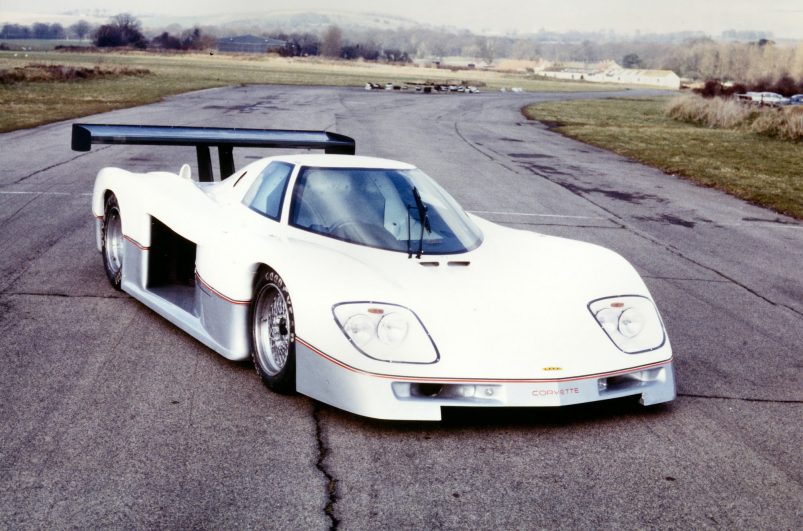
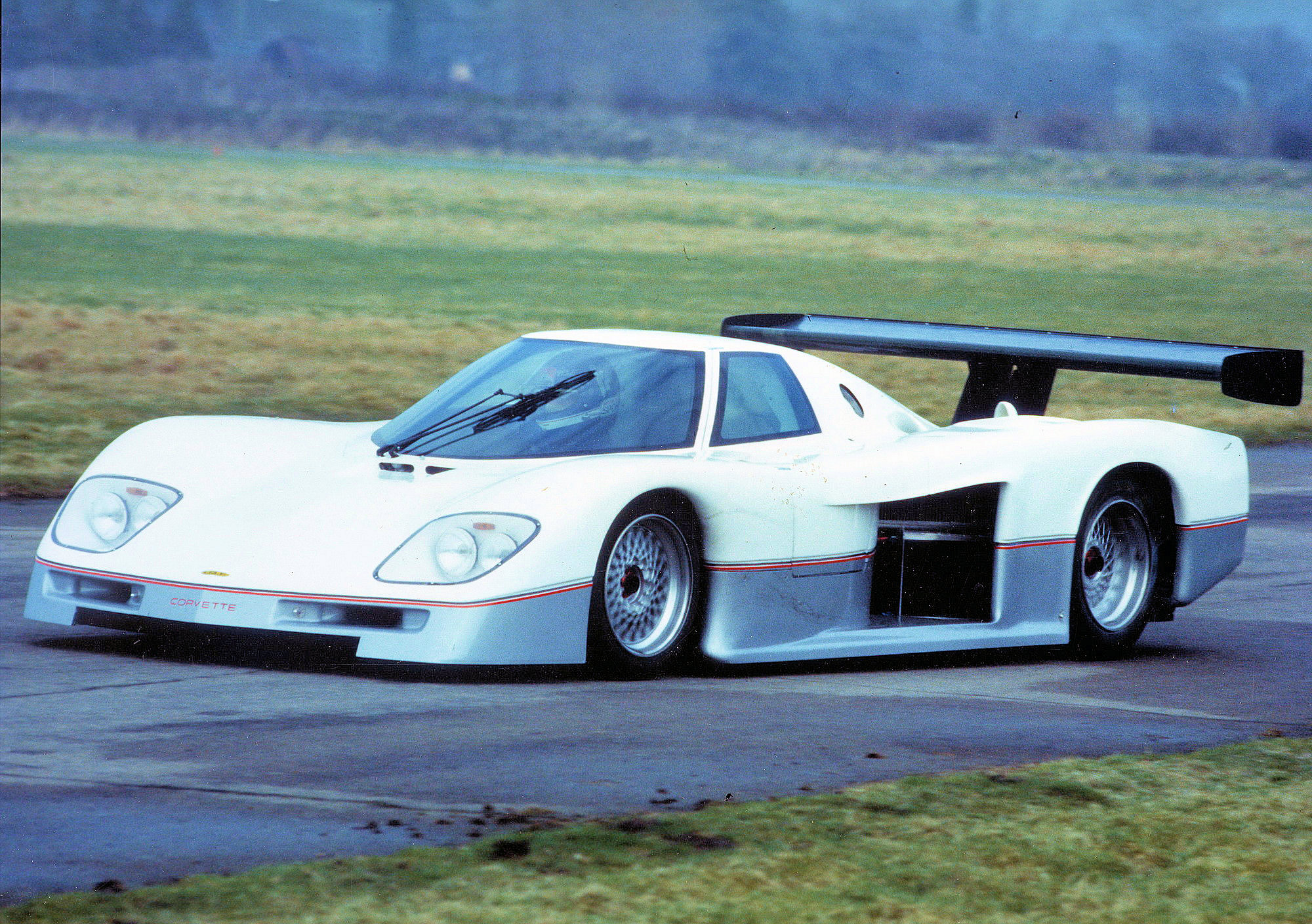
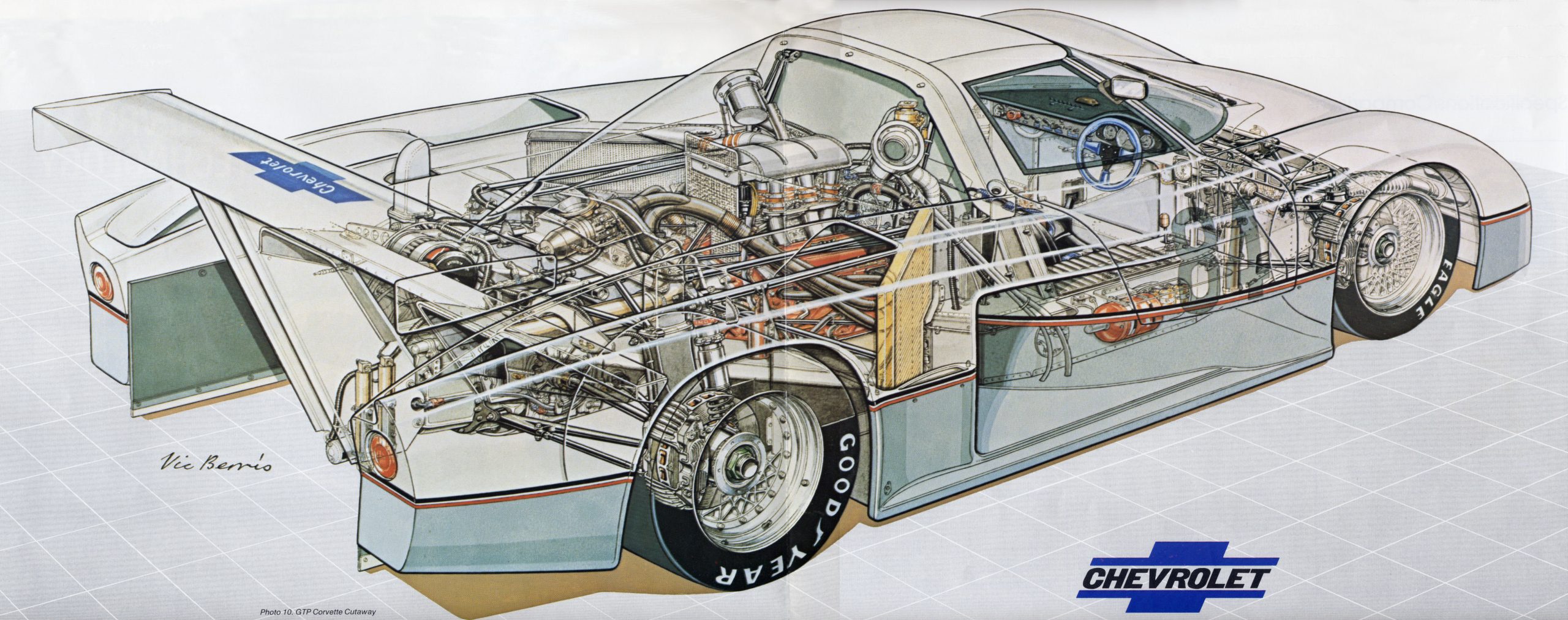
In April 1986 a Corvette won an IMSA GTP race at Road Atlanta by nearly half a minute. The badge was the only familiar part. The chassis came from England, and the car was campaigned by Rick Hendrick’s team years before his NASCAR empire took shape. But the most compelling part of this story is the engine behind the driver’s shoulders: a turbocharged V6. Chevrolet called it the Corvette GTP, and for a couple of seasons it was one of the fastest qualifiers in American sports car racing come Saturday afternoon. Sunday was another matter, and that tension between raw speed and fragility is what makes this car worth remembering.
Why Chevrolet Wanted a V6 Prototype
Credit: Lola Heritage
IMSA’s GTP class in the early 1980s was where manufacturers went to settle arguments. General Motors was already there in spirit, and privateer teams in the class were running naturally aspirated Chevrolet V8s and turbocharged Buick V6s long before any factory effort existed. The hardware was in the paddock, but what was missing was a car with Chevrolet’s own name on it.
That changed when a Lola project developed with Chevrolet’s blessing produced the car that became the Corvette GTP, built to test Chevrolet’s V8 and V6 engines against Jaguar, Porsche, Nissan and Mazda. Officially, though, GM never went racing at all. General Motors had a longstanding policy against factory-backed racing, one that Autosport traced back to 1927, and the better-known industry-wide withdrawal agreement followed in 1957. The magazine’s 1984 story on the project was careful to note that the competition program would be independent, with Chevrolet’s blessing and technical support but no factory money. The marketing upside was obvious, but the engineering motive came first. Chevrolet was unusually honest about it, pitching the car as a rolling test bed for its V6 engine family. The division wanted to know how much stress the 90-degree V6 architecture could take, and a prototype class with generous rules was the cheapest place to find out.
Credit: Lola Heritage
The program grew out of one engine builder’s persistence. Ryan Falconer had been developing a turbocharged version of Chevrolet’s 90-degree V6 since his Indycar days, and after failing to convince Lola to offer it in the T600, he took the engine to Ted Field’s Interscope team, which ran a twin-turbo version in Danny Ongais’ T600 at the 1982 IMSA finale at Daytona. Ongais was leading when the car retired. IMSA banned the twin-turbo setup for 1983, Interscope folded soon after, and Falconer went back to Lola with a single-turbo concept that this time lined up with Chevrolet’s plans for the V6. A Corvette-styled mock-up body, mounted on an ex-Interscope T600 chassis, was shown in Detroit in June 1983, Lola completed the first real car in early 1984, and the racing program then sat largely dormant until Hendrick Motorsports and the Goodwrench brand got involved in 1985.
Join 45,000+ Corvette Owners Who Read Our Newsletter
Our newsletter delivers all the Vette news, rumors, deals and events directly to you each week
Members only$35 / year
Keep going. This is where it gets good.
CorvSport Membership is for people who'd rather spend an hour inside one engine option than skim ten headlines. The rest of this story — and every other one like it — is a few seconds away.
Every members-only story
Deep history, market reports, buyer's guides, and the full archive back to 2010.
No ads. None.
The whole site reads like a magazine, on every device.
Every model year, 1953 to today
Production numbers, VINs, RPO codes, colors, options — one page per year.
30% off the shop
Every CorvSport shirt and piece of merch, all year.