

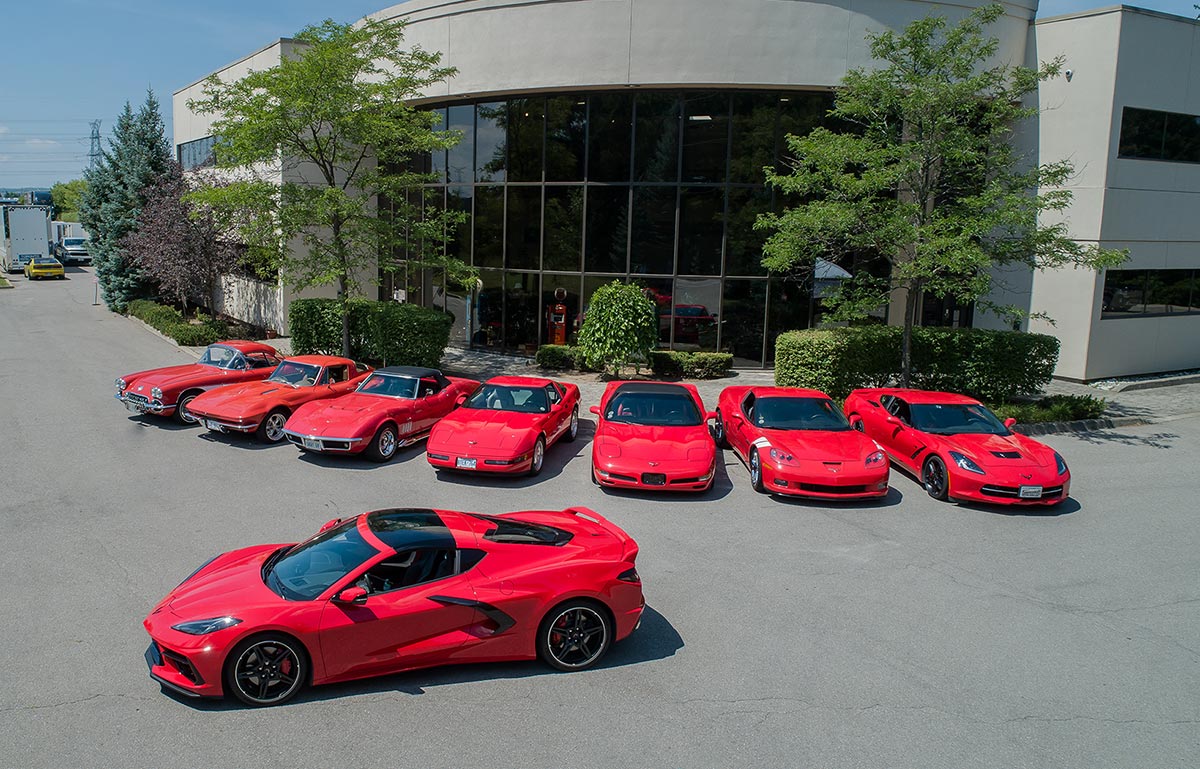
THE CHEVROLET CORVETTE
Chevrolet Corvette: The Complete History of America’s Sports Car
Eight generations and more than seventy years: Harley Earl’s fiberglass dream car of 1953 that nearly died as the “plastic bathtub,” the V-8 and the fuel injection that saved it, Duntov’s Sting Rays and racing packages, the fifteen-year Shark, the King of the Hill, the Le Mans-winning C5 and C6, the last front-engine car and the mid-engine C8.
Quick Nav: Overview · The Story · Generations · The Generations · The People · The Plants · Firsts · Production · The Hubs · The Models · History Features · Bowling Green · FAQs
The Basics
Manufacturer: Chevrolet, a division of General Motors; the Corvette has been Chevrolet’s sports car and GM’s flagship since 1953
Production: 1953 to the present, 1,961,365+ cars across eight generations: C1 (1953–62), C2 (1963–67), C3 (1968–82), C4 (1984–96), C5 (1997–2004), C6 (2005–13), C7 (2014–19) and C8 (2020 on); no 1983 model year
The Plants: Flint, Michigan (the 300 cars of 1953); St. Louis, Missouri (December 1953 to July 1981); Bowling Green, Kentucky (since June 1, 1981), beside the National Corvette Museum
Body Styles: Two-seat convertible (1953 on) and coupe (1963 on, with removable roof panels since 1968 and hatchbacks since 1982); front-engine and rear-wheel drive through 2019, mid-engine since 2020
The Name: Suggested by Chevrolet assistant advertising manager Myron Scott in late 1952, from the small, fast warship; the crossed flags have carried the Chevrolet bowtie and a checkered flag since the American flag was dropped before the 1953 Motorama
The Current Range: 2027: Stingray and Grand Sport (535-hp 6.7 L LS6), Grand Sport X (721-hp hybrid), Z06 (670-hp LT6), ZR1 (1,064-hp twin-turbo LT7) and ZR1X (1,250 hp), from $73,495 to $248,395
The People: Harley Earl, Ed Cole, Robert McLean and Maurice Olley (the first car); Zora Arkus-Duntov (chief engineer to 1975); Bill Mitchell and Larry Shinoda (the Sting Ray and the Shark); Dave McLellan, Dave Hill, Tadge Juechter and Josh Holder (chief engineers since)
Related Pages: The eight generation hubs, every year page, the full model list, the special editions, the Z06, ZR1, Grand Sport and L88 guides, the race cars, the concepts, the production numbers and the buyer’s guides
The Overview
The Corvette began as a show car. Harley Earl, General Motors’ head of styling, wanted an American answer to the MGs and Jaguars the servicemen were bringing home, built it in fiberglass around Chevrolet’s six-cylinder sedan engine and a two-speed automatic, and put it on the stand at the 1953 Motorama in New York; the public asked when they could buy one, and Chevrolet built 300 that year in Flint. The car was beautiful and slow, sold 700 in 1955 and nearly died, and was saved by three men: Ed Cole, whose small-block V-8 arrived in 1955; Zora Arkus-Duntov, the Belgian-born engineer who joined to make it a sports car and added fuel injection, racing packages and the independent rear suspension; and Bill Mitchell, whose Sting Ray of 1963 gave it a shape the world recognized.
Every generation since has been a Corvette in the same sense, a two-seat, V-8, fiberglass-bodied sports car built in one plant and sold at a price that undercut the exotics it ran against: the fifteen-year Shark of 1968–82, the C4 of 1984 with its Lotus-engined ZR-1, Dave Hill’s all-new C5 of 1997 that went to Le Mans and won, the C6 and C7 that pushed the front-engine car to 755 horsepower, and the mid-engine C8 of 2020, the car Duntov had sketched in the 1960s, which now tops out at 1,250 horsepower. Nearly two million have been built, 1,961,365 and counting, all of them since 1981 in Bowling Green, Kentucky, across the road from the museum that holds the one 1983 that exists.
This page is the history in one place and the front door to the rest of the site: the story of the eight generations, a table and a picture row for each with its hub, the people and the plants, the firsts and the records, production by generation, and the guides to every year and every model. Each generation’s hub goes deeper, and every model year since 1953 has its own research page.
The Story of Eight Generations
From the plastic bathtub to the ZR1X, generation by generation.
The Plastic Bathtub, 1953
In the economic boom that occurred at the end of World War II, General Motors introduced the only production sports car being offered by American automotive manufacturers at that time. American soldiers, many of whom were returning home from active service in Europe, were introduced to the C1 Chevrolet Corvette, a two seat “image” car that found immediate initial appeal as a centerpiece of the 1953 GM Motorama.
The appeal was short-lived. Within a few months of its initial introduction, Chevrolet rolled the first production 1953 Corvettes off their assembly lines. It didn’t take long for the public to realize that this first Corvette was more sparkle than substance. The car quickly earned the nickname “the plastic bathtub”, a title that was a distinct correlation between the stark white shell of its body and its sluggish, unimpressive performance.
Fortunately for GM, their engineers and marketing teams listened and responded to the criticism of those first Corvette owners. In the years that followed, Corvette came into its own and GM began producing cars that offered greater performance that matched the attitude and styling of its 1953 Corvette counterpart.
The Sting Ray and the Grand Sport, the 1960s
By the 1960s, Corvette had developed a solid reputation both on the open road and the racetrack. With ever increasing horsepower being packed into each of these cars, General Motors had developed a car that could truly hold its own on race day against cars like the Shelby Cobra.
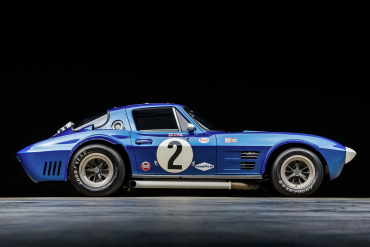
The 1963 Grand Sport Corvette, though short lived, solidified the future for Corvette – not only as a production car, but as a true American sports car. The Grand Sport, along with all of the second generation Corvette production models, captivated the hearts and imaginations of car enthusiasts worldwide and secured a future for Corvette that continues to flourish more than sixty years later.
The Shark Years, 1968–1982
By the early 1970s, Corvette (along with many production model sport and muscle cars) was met with a lot of adversity. Internal issues within GM mixed with the politically charged Vietnam War, mass civil unrest, the emergence of federally mandated safety guidelines, pollution regulations, and a need for increased fuel efficiency brought into question the future of this iconic sports car.
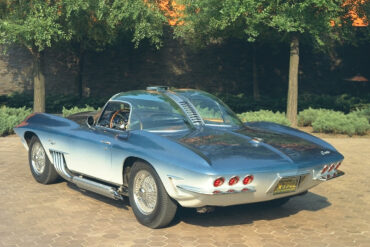
However, with the emergence of the Mako Shark II prototype (in the late sixties) laying the foundation for the future look and feel of the third generation Corvette, GM pushed on despite these odds and the Corvette triumphed, remaining in its same basic form for fifteen years.
Because of the immense popularity of the third-generation Corvette, speculation began to grow as to how GM was going to top the durable and appealing “shark”. It wasn’t long before enthusiasts and critics alike were discussing the possibility of a mid-engine Corvette that could rival its European counterparts. Even so, the third-generation “Shark” kept evolving. Chevrolet continued to refine the car throughout the late 1970s and into the 1980s, including a hatchback model in 1982 which foreshadowed the next-generation Corvette – a car that was already deep into development by that time.
The C4 and the King of the Hill, 1984–1996
GM began production of the fourth generation Corvette in 1984. This new C4 Corvette was the first fully redesigned Corvette in 15 years. Although it lacked some of the outrageous performance of its predecessor, it emerged instead as a more sophisticated and practical sports car. Still, despite the notable decrease in horsepower (in early fourth generation models) due to ever increasing emission regulations, GM focused its attention instead to develop a car that focused primarily on handling. Like the generations of Corvettes before it, the new 4th generation Corvette got better over time. In 1986, Corvette enthusiasts celebrated the return of a convertible model which hadn’t been available to consumers since 1975.
One of the crowning achievements of the 4th generation Corvette was the arrival of the ZR-1 in 1990. The ZR-1 was strictly a high performance Corvette. It quickly became known as “the King of the Hill” – a title which was well earned. A true supercar in every sense of the word, the ZR-1 could run with some of the most exotic sports cars in the world including Ferrari and Porsche. However, the ZR-1 remained a surprisingly inexpensive alternative, offering comparable handling and performance for less than half the exuberant sticker prices tied to its European counterparts.
Despite the arrival of the ZR-1 and the ever increasing handling and performance of this newest Corvette, challenging financial markets and internal corporate issues left GM questioning the feasibility of Corvette’s future as production pressed on into the 1990s. Despite these concerns, the C4 Corvette continued to improve in performance and quality, improving demand for the car and opening the door for an even more advanced, more sophisticated Corvette.
The C5 and the Z06, 1997–2004
The arrival of the fifth generation C5 Corvette in 1997 marked a turning point in the evolution of “America’s Favorite Sports Car.” It was the first truly all-new Corvette since 1953. Moreover, it was designed from the outset to be a sturdy convertible. The C5 Corvette was engineered to achieve higher levels of performance, sophistication and quality than any of its predecessors.
The styling of this new Corvette was also a departure from earlier models. While the conceptualization of the C4 had largely been a simplification of the seventies era “Shark,” the C5 featured a more rounded and graceful appearance that helped to recapture some of the aggressive looks of the C3. Automotive critics hailed the C5 Corvette as “the best Corvette in history.”
Much like the ZR-1 before it, GM recognized the opportunity to produce a higher end Corvette and introduced the Z06 in 2001. This “high end” Corvette included an updated suspension, larger wheels and tires, revised gearing ratios and functional brake cooling ducts as well as an impressive step up in horsepower with the addition of a more powerful engine that carried the Z06 to an impressive 385 horsepower. While this Corvette was superior to the ZR-1 in almost every category except speed, it was also substantially less expensive, which helped further catapult its popularity with automotive enthusiasts everywhere.
The C6 and the Blue Devil, 2005–2013
The sixth generation C6 Corvette was introduced in 2005. The C6 was considered more of an evolution of the C5 than an all new Corvette, although the C6 continued to take giant steps forward in the areas of performance and styling. One of the most notable changes that GM made to the sixth-generation Corvette was the return of the exposed headlamps (which had been absent from the Corvette since 1962). Along those same lines, the C6 re-introduced a somewhat “retro design” that was a throwback to the Sting Rays of the 1960s.
While the Z06 was notably absent at the initial roll out of the C6, it wasn’t long in coming. In late 2005, the 2006 Z06 Corvette was announced. This Corvette was engineered for the race track, producing performance and handling unlike any Corvette in the history of America’s favorite sports car – that is until rumors began to circulate that GM was developing an even higher-performance Corvette. Initially known only by its codename “Blue Devil,” General Motors began to release details of the Blue Devil project in April 2007 and later that year revealed the “Blue Devil” was, in fact, the return of the ZR1 Corvette. This “super-Vette” emerged from the shadows to become the fastest (and most expensive) production Corvette to date in the history of the brand, and the first to cost more than $100,000.
In 2010, General Motors unveiled the Grand Sport Edition Corvette and the Z06 Carbon Special Edition Corvette. Like the ZR1, each of these special edition Corvettes provided consumers with upgraded and more robust performance options, greater horsepower, better handling, and a broad assortment of regular production options – from satellite radio to built in GPS and more.
The C7 Stingray, 2014–2019
On January 13, 2013, Chevrolet unveiled the all-new 2014 C7 Chevy Corvette Stingray at the Detroit Auto Show. The arrival of the C7 Corvette was the culmination of months of speculation by enthusiasts, car experts, critics, and countless fans, and was treated with more fanfare and pomp-and-circumstance than a Hollywood blockbuster movie debut.
The 2014 C7 Corvette Stingray was a true departure from its predecessor. It only shared two parts with the previous-generation Corvette – the removable roof release lever and a filter in the air filtration system. The rest of the car was completely new – including the frame structure, chassis, powertrain, and an all-new interior and exterior design. The development of this new Corvette was centered around the mantra that “form follows function.” The result was a Corvette that not only rivaled its European counterparts, but was capable of dominating them both on the racetrack and the open road.
In 2015, Chevrolet unveiled an all-new Z06 model to its lineup that was more powerful than any production Corvette that had come before it – including the sixth-generation ZR1. Boasting 650 horsepower and 650 lb-ft of torque, this Z06 was intended for the track. It was also the first Z06 to be offered with a supercharged engine, a removable roof panel (thanks to a stronger aluminum frame) and, perhaps most noteworthy, it was the first Z06 to feature an eight-speed automatic transmission.
By 2016, rumors had already begun to circulate that Chevrolet engineers were once more at work on an all-new Corvette. As a mid-engine Corvette had been a source of speculation since the announcement of the C3 Corvette in the late 1960s, it wasn’t long before the automotive press began circulating rumors that a mid-engine Corvette was imminent – with many “factual” claims stating the car could potentially be available as soon as 2018!
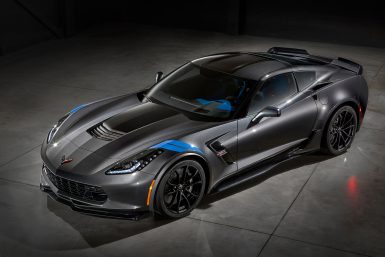
Meanwhile, production options for the C7 Corvette continued to evolve as did the available packages offered to consumers. In 2017, Chevrolet unveiled its newest iteration – the Corvette Grand Sport – at the Geneva Auto Show. The all-new 2017 Corvette Grand Sport was the culmination of the car’s motorsports-bred pedigree. Like the 2015 Corvette C7.R Pro race car, the new Grand Sport combined a lightweight architecture, a track-honed aerodynamics package, Michelin tires and a naturally aspirated engine.
On November 12, 2017, Chevrolet officially unveiled the all-new Corvette ZR1 as a 2019 model. The car boasted a powerful LT5 6.2L V-8 supercharged engine which dramatically advanced the supercharging technologies first introduced in the 2009 sixth-generation Corvette ZR1 and continued with the 2015 seventh-generation Z06 Corvette. The engine, which was officially rated at 755 horsepower (563 kW) and 715 lb-ft of torque (969 Nm), established an entirely new benchmark in Chevrolet performance. The 2019 Corvette ZR1 was unveiled in Dubai and was finished in the Sebring Orange Design Package. The car officially went on sale in spring of 2018 with an initial base price of $119,995, the most expensive Corvette yet.
The Mid-Engine Corvette Arrives, 2019
As for the C8 Corvette that was rumored for 2018? As the 2018 model year approached, rumors continued to circulate about an alleged mid-engine Corvette that was under development by Chevrolet. Ambitious automotive journalists, camped out at automotive tracks and testing centers around the world, began publishing “spy photos” of a heavily camouflaged coupe that became the subject of scrutiny by the Corvette community.
The 2018 model year came and went without word from GM about any mid-engine projects. That didn’t stop the rumor mills from churning out endless bits of information – from CAD drawings and alleged “insider” bloggers to dozens (eventually hundreds) of credible spy photos and videos – that added credence to the belief that a mid-engine Corvette was on the horizon.
Finally, on July 18, 2019, Chevrolet officially unveiled the 2020 Mid-Engine Corvette to the world. The car, which had been a vision of Corvette pioneers since the 1960s, had finally become a reality. It was showcased across the United States on a national tour that included Chevrolet dealerships, the Corvette Homecoming at the National Corvette Museum and the Petit Le Mans at Road Atlanta, and the first model year sold out before the car had reached most showrooms.
The Mid-Engine Years, 2020–2027
The 2020 Stingray put the 490-horsepower LT2 behind the seats on an aluminum spaceframe built in Bowling Green, with an eight-speed dual-clutch and no manual, for $59,995, and its first year sold out before most dealers had one; the pandemic cut the 2020 run to 20,368 cars. Then the range Duntov had imagined filled in from the top: the 2023 Z06 with the 5.5-liter flat-plane LT6, 670 horsepower at 8,400 rpm, the most powerful naturally aspirated V-8 in any production car, in the biggest Corvette year since 1979 (53,785); the 2024 E-Ray, the first hybrid and the first all-wheel-drive Corvette, 655 horsepower with a motor on the front axle; the 2025 ZR1, the first turbocharged Corvette, 1,064 horsepower from the twin-turbo LT7 and 233 mph; and the 2026 ZR1X, the ZR1 and the E-Ray in one car, 1,250 horsepower and under two seconds to 60, the most powerful car General Motors has built. For 2027 Chevrolet replaced the LT2 with the 6.7-liter LS6, 535 horsepower in the Stingray and the first mid-engine Grand Sport, and the E-Ray with the 721-horsepower Grand Sport X. Tadge Juechter retired in 2024 after thirty years on the car and Josh Holder became its fifth chief engineer; Corvette Racing’s factory C8.R gave way in 2024 to the customer Z06 GT3.R, which won Le Mans in 2025 and the IMSA titles the same year.
Three Things People Get Wrong
The original front emblem and horn button on the “Autorama” show circuit Corvette featured crossed American and checkered flags. It was later discovered that using an American flag on a product trade mark was against the law and the emblem was changed shortly before the New York Motorama.
Interestingly, there are rumors that circulate to this day that claim the C1 Corvette was developed as a parts bin car (meaning that it was cobbled together using existing hardware from other GM automobiles). While there are elements to this claim that are accurate (the early Stovebolt Six six-cylinder engine, for example, was a standard powerplant used in a number of cars during that era), the majority of the car – including its frame and suspension – were uniquely designed for the Corvette. All first-generation Corvettes (from 1953 thru 1962) ride on a setup that was designed by Maurice Olley, GM's top suspension man during the early 1950s. Considered one of the best in the industry, Olley worked closely with Zora Arkus-Duntov to develop a suspension platform that would make the Corvette a competitor on the racetrack. The design work that went into the frame, suspension and braking systems of the C1 Corvette transformed the car from a wiggle wagon (as Duntov had once described the original 1953 Corvette) to a track worthy competitor.
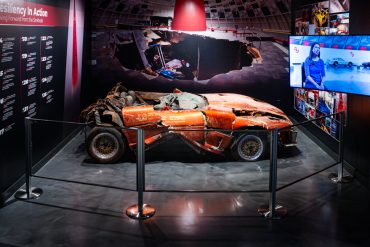
While there are many Corvette enthusiasts that deny the existence of the 1983 Corvette, there is ONE example of this car. The “One and Only” 1983 Corvette resides at the National Corvette Museum in Bowling Green, Kentucky and is available for public viewing in the large domed rotunda along with many other, unique Corvettes. Chevrolet built 43 pilot 1983s while the C4 was delayed to a 1984 launch, and that white car in the rotunda is the sole survivor.
MORE: THE CORVETTE WAS NOT BORN A SPORTS CAR / THE GHOST ARCHITECTS WHO SHAPED THE CORVETTE / 11 CORVETTES GM KILLED / THE GENERATION HUBS
The Eight Generations at a Glance
Years, production, engines, the base price when each generation began and ended, and the cars that defined it. Each generation has its own hub with the story, the year pages, the specials, the engines, the racing and the market.
MORE: THE GENERATION HUBS / PRODUCTION NUMBERS BY YEAR / EVERY CORVETTE ENGINE
| GENERATION | YEARS | BUILT | ENGINES | BASE PRICE, FIRST → LAST YEAR | DEFINING CARS |
|---|---|---|---|---|---|
| C1 Corvette | 1953–62 | 69,015 | 235 ci six, 150 hp; 265 and 283 ci V-8s to 315 hp; 327 ci, 360 hp (1962) | $3,498 (1953) → $4,038 (1962) | 1957 fuelie; 1962 327 |
| C2 Corvette | 1963–67 | 117,964 | 327 ci to 375 hp; 396 ci 425 hp; 427 ci to 435 hp; L88 430 (540+) | $4,257 coupe (1963) → $4,389 (1967) | 1963 split-window; 1967 L88 |
| C3 Corvette | 1968–82 | 542,861 | 327 and 350 ci small-blocks 165–370 hp; 427 and 454 ci big-blocks to 435 hp; L88, ZL1, LT-1 | $4,663 (1968) → $18,290 (1982) | 1969 ZL1; 1970 LT-1; 1978 Pace Car |
| C4 Corvette | 1984–96 | 358,180 | 350 ci L83, L98, LT1, LT4, 205–330 hp; LT5 DOHC 375–405 hp (ZR-1); Callaway B2K to 403 hp | $21,800 (1984) → $37,225 (1996) | 1990 ZR-1; 1996 Grand Sport |
| C5 Corvette | 1997–2004 | 248,715 | 5.7 L LS1 345–350 hp; LS6 385–405 hp (Z06) | $37,495 (1997) → $44,535 (2004) | 2001 Z06; 2003 50th Anniversary |
| C6 Corvette | 2005–13 | 215,123 | 6.0 L LS2 400 hp; 6.2 L LS3 430–436 hp; 7.0 L LS7 505 hp (Z06); supercharged LS9 638 hp (ZR1) | $44,245 (2005) → $50,575 (2013) | 2006 Z06; 2009 ZR1 |
| C7 Corvette | 2014–19 | 189,507 | 6.2 L LT1 455–460 hp; supercharged LT4 650 hp (Z06); supercharged LT5 755 hp (ZR1) | $51,995 (2014) → $56,590 (2019) | 2015 Z06; 2019 ZR1 |
| C8 Corvette | 2020– | 220,000 so far | 6.2 L LT2 490–495 hp; 5.5 L LT6 670 hp (Z06); LT7 twin-turbo 1,064 hp (ZR1); hybrids 655, 721 and 1,250 hp; 6.7 L LS6 535 hp (2027) | $59,995 (2020) → $73,495 (2027) | 2023 Z06; 2025 ZR1; 2026 ZR1X |
The Eight Corvette Generations
Each generation with its picture, what it was and what it built, and the way into its hub.
| THE GENERATION | YEARS | BUILT | |
|---|---|---|---|
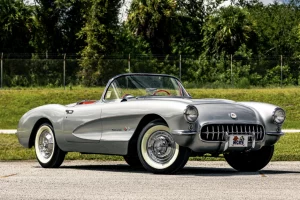 |
The C1 Corvette (1953–1962) The first Corvette: Harley Earl’s Motorama dream car in fiberglass, the Blue Flame six and Powerglide of 1953, saved by Ed Cole’s V-8 in 1955 and Zora Arkus-Duntov’s fuel injection in 1957; 69,015 built, all convertibles The C1 hub / Year pages / Research |
1953–62 | 69,015 |
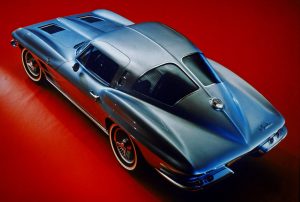 |
The C2 Corvette (1963–1967) The Sting Ray: Bill Mitchell and Larry Shinoda’s coupe with the split rear window, Duntov’s independent rear suspension, the Z06, the Grand Sport, the big-blocks and the L88; five years, 117,964 cars The C2 hub / Year pages / Research |
1963–67 | 117,964 |
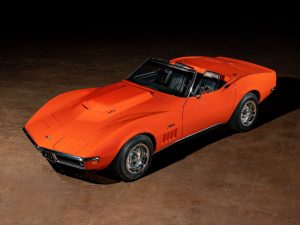 |
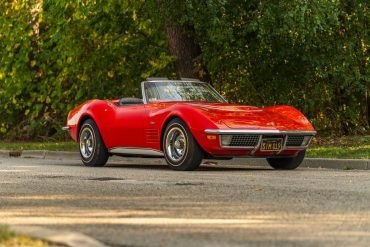
The C3 Corvette (1968–1982) The Shark: the Mako Shark II made production and stayed fifteen years, through the big-block peak, the smog years, T-tops and the record 53,807 cars of 1979; the ZR1 and ZL1 packages, the Pace Car and the Collector Edition The C3 hub / Year pages / Research |
1968–82 | 542,861 |
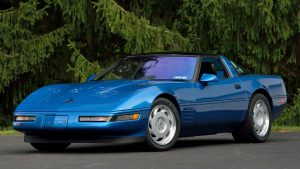 |
The C4 Corvette (1984–1996) The first all-new chassis since 1963: the clamshell hood and digital dash of 1984, the convertible’s return in 1986, Tuned-Port Injection, the Callaway Twin Turbo and the Lotus-engined ZR-1, the King of the Hill; 358,180 cars The C4 hub / Year pages / Research |
1984–96 | 358,180 |
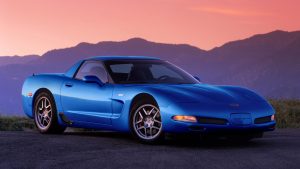 |
The C5 Corvette (1997–2004) Dave Hill’s Corvette: the hydroformed frame, rear transaxle and LS1 of 1997, the first truly new Corvette since 1953, the C5-R’s Le Mans wins and the Z06 that outran the ZR-1 for $47,500; 248,715 cars The C5 hub / Year pages / Research |
1997–2004 | 248,715 |
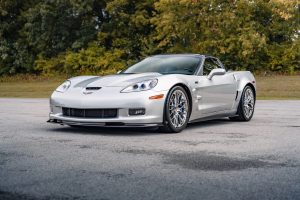 |
The C6 Corvette (2005–2013) Exposed headlamps for the first time since 1962, the 7.0-liter Z06 on an aluminum frame, the Grand Sport that became the best-seller and the 638-hp ZR1, the first Corvette over 200 mph and $100,000; 215,123 cars The C6 hub / Year pages / Research |
2005–13 | 215,123 |
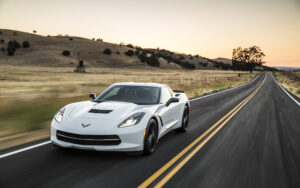 |
The C7 Corvette (2014–2019) The Stingray name returns on an aluminum frame for every model: the direct-injected LT1, the supercharged 650-hp Z06, the Grand Sport on the Z06’s chassis and the 755-hp ZR1, the last front-engine Corvette; 189,507 cars The C7 hub / Year pages / Research |
2014–19 | 189,507 |
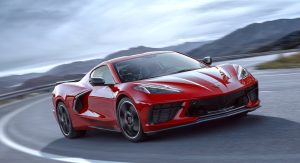 |
The C8 Corvette (2020–Present) The mid-engine Corvette, revealed July 18, 2019: the Stingray, the flat-plane 670-hp Z06, the hybrid E-Ray, the 1,064-hp twin-turbo ZR1, the 1,250-hp ZR1X and the 2027 Grand Sport with the 6.7-liter LS6; the first Corvette with no manual, and the biggest year since 1979 in 2023 The C8 hub / Year pages / Research |
2020– | 220,000 so far |
The People Who Made the Corvette
The designers, engineers and executives behind the car, from the Motorama to the mid-engine era. The site’s features on each are linked where it has them.
MORE: THE GHOST ARCHITECTS / BILL MITCHELL’S STING RAY RACER
| WHO | ROLE | YEARS | WHAT THEY DID |
|---|---|---|---|
| Harley J. Earl | GM vice president of styling | 1927–58 | Conceived the Corvette as a Motorama dream car in fiberglass and pushed it into production; the 1953–57 cars are his |
| Edward N. Cole | Chevrolet chief engineer, later GM president | 1952–74 | Championed the car at Chevrolet and gave it the 265 small-block V-8 in 1955, the engine that saved it |
| Robert F. McLean | Engineer and designer | 1952–53 | Laid out the first Corvette from the rear axle forward: the engine behind the front axle, the 102-inch wheelbase, the low profile |
| Maurice Olley | Chief of research and development, Chevrolet | 1952–55 | Designed the C1’s frame and suspension, the setup every 1953–62 Corvette rode on |
| Zora Arkus-Duntov | Engineer, chief engineer from 1968 | 1953–75 | Made it a sports car: fuel injection, the racing packages (Z06, L88, ZR1), the Grand Sports, the independent rear suspension, the mid-engine prototypes; the father of the Corvette |
| Bill Mitchell | GM vice president of styling | 1958–77 | The Stingray Racer, the 1961 ducktail, the 1963 Sting Ray and the Mako Shark II that became the C3 |
| Larry Shinoda | Designer | 1956–68 | Drew the 1963 Sting Ray and the Mako Sharks under Mitchell |
| Dave McLellan | Chief engineer | 1975–92 | The C4 of 1984, the convertible’s return, the ZR-1 and the Callaway B2K program |
| Dave Hill | Chief engineer | 1992–2006 | The all-new C5, the Z06 of 2001, the C6 and the 2006 Z06; Corvette Racing’s factory program began on his watch |
| Tadge Juechter | Chief engineer | 2008–24 | The C7, the 650- and 755-hp cars, and the mid-engine C8 through the ZR1; thirty years on the program |
| Tom Peters | Design director | 2005–19 | The exterior of the C6, the C7 Stingray and the C8 |
| Josh Holder | Chief engineer | 2024– | The ZR1X, the 2027 Grand Sport, Grand Sport X and the LS6 era |
| Doug Fehan | Corvette Racing program manager | 1999–2020 | Ran the C5-R through C8.R factory program with Pratt & Miller: seven Le Mans class wins |
| Jim Perkins | Chevrolet general manager | 1989–96 | Saved the C5 when GM considered killing the Corvette in the early 1990s; drove the last ZR-1 to the museum |
| Mark Reuss | GM president | 2019– | Green-lit the mid-engine program and revealed the C8 on July 18, 2019 |
Where the Corvette Is Built
Three plants in seventy years, and one museum across the road from the last of them.
MORE: WHY BOWLING GREEN IS A MUST-SEE / REMEMBERING THE SINKHOLE / PRODUCTION BY YEAR AND PLANT
| PLANT | YEARS | WHAT WAS BUILT THERE |
|---|---|---|
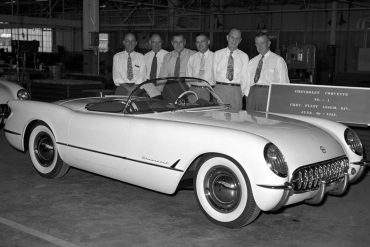
| Flint, Michigan | 1953 | The first 300 Corvettes, hand-assembled on a temporary line at the Flint Chevrolet plant from June 30, 1953, all Polo White with red interiors |
| St. Louis, Missouri | 1953–81 | Every Corvette from December 1953 to July 31, 1981: the C1, C2 and most of the C3, including the record 53,807 cars of 1979; the plant overlapped with Bowling Green for two months |
| Bowling Green, Kentucky | 1981– | Every Corvette since June 1, 1981: the end of the C3, the C4 through the C8, the ZR-1’s LT5 (built by Mercury Marine in Oklahoma) excepted; the Performance Build Center moved there in 2017 to hand-build the LT6 and LT7; the millionth Corvette was built there on July 2, 1992 and the 1.5-millionth on May 28, 2009 |
| National Corvette Museum | 1994– | Across Corvette Drive from the plant: the one 1983, the millionth car (restored after the 2014 sinkhole), the plant tours and the NCM Motorsports Park |
Corvette Firsts and Records
The milestones, in order.
MORE: THE BEST CORVETTES / THE RACE CARS / THE PACE CARS
| YEAR | THE MILESTONE |
|---|---|
| 1953 | The first Corvette: 300 built in Flint, all Polo White, with the 150-hp Blue Flame six and Powerglide |
| 1955 | The first V-8, Ed Cole’s 265; the first manual transmission; the year the car nearly died at 700 sales |
| 1957 | Rochester fuel injection, 283 hp from 283 cubic inches, one horsepower per cubic inch; the four-speed |
| 1963 | The first coupe (the split window), independent rear suspension, the Z06 package and the Grand Sports; the St. Louis plant’s first 20,000-car year |
| 1965 | Four-wheel disc brakes and the first big-block, the 396 |
| 1967 | The L88, the racing 427; 20 built |
| 1978 | The first Indianapolis 500 pace car and the first pace-car replica, 6,502 sold, for the 25th anniversary |
| 1979 | The all-time production record, 53,807 cars |
| 1990 | The ZR-1 and the Lotus-designed 32-valve LT5; FIA 24-hour records at Fort Stockton |
| 1992 | The millionth Corvette, a white convertible, built July 2 in Bowling Green |
| 2001 | Corvette Racing’s first Le Mans class win with the C5-R, and the Z06’s return |
| 2009 | The first Corvette over 200 mph and over $100,000, the 638-hp ZR1; the 1.5-millionth car on May 28 |
| 2015 | The first Z06 convertible and automatic; 650 horsepower |
| 2020 | The first mid-engine Corvette and the first with no manual transmission |
| 2023 | The flat-plane LT6, the most powerful naturally aspirated V-8 in a production car; 53,785 built, the second-biggest year |
| 2024 | The first hybrid and first all-wheel-drive Corvette, the E-Ray |
| 2025 | The first turbocharged Corvette and the first over 1,000 horsepower, the ZR1; 233.5 mph at Papenburg, the fastest car made in America |
| 2026 | The ZR1X, 1,250 horsepower, the most powerful car General Motors has built; Grand Sport 003 sells for $18.7 million, the most ever paid for a Corvette |
Corvette Production by Generation
Nearly two million Corvettes, 1,961,365 through the 2026 model year with the 2027 in production. The year-by-year figures, with bodies, models and colors, are on the production-numbers page and every year page.
| GENERATION | YEARS | BUILT | BEST YEAR | LOWEST YEAR | SHARE OF ALL CORVETTES |
|---|---|---|---|---|---|
| C1 Corvette | 1953–62 | 69,015 | 1962: 14,531 | 1953: 300 | 3.5% |
| C2 Corvette | 1963–67 | 117,964 | 1966: 27,720 | 1963: 21,513 | 6.0% |
| C3 Corvette | 1968–82 | 542,861 | 1979: 53,807 (the record) | 1970: 17,316 | 27.7% |
| C4 Corvette | 1984–96 | 358,180 | 1984: 51,547 | 1992: 20,479 | 18.3% |
| C5 Corvette | 1997–2004 | 248,715 | 2002: 35,767 | 1997: 9,752 (a short first year) | 12.7% |
| C6 Corvette | 2005–13 | 215,123 | 2007: 40,561 | 2012: 11,647 | 11.0% |
| C7 Corvette | 2014–19 | 189,507 | 2016: 40,689 | 2018: 9,686 (a seven-month year) | 9.7% |
| C8 Corvette | 2020– | about 220,000 so far | 2023: 53,785 | 2020: 20,368 (the pandemic year) | 11.2% and rising |
The Generation Hubs
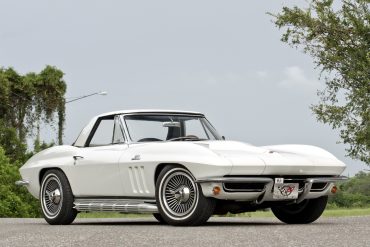
Every generation has a hub: the story, the year pages, the specials, the engines, the racing, the market and the research for its years.



The Model Guides
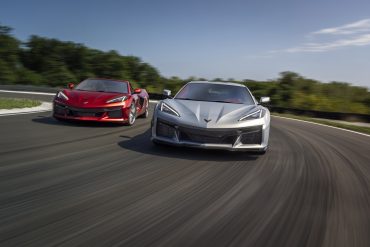
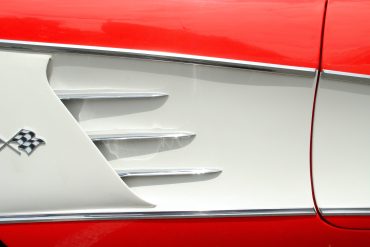
The Corvette by model and series: every model and year, the special editions, the anniversary cars, the pace cars, the Z06 and ZR1, the Callaways and Greenwoods, the concepts, the race cars and the best of them.




Corvette History: Features and Stories
The site’s features on the people who made the car, newest first: Duntov, Earl, Mitchell and the rest.









From Bowling Green: The Plant and the Museum
Everything tagged to the plant and the National Corvette Museum, newest first.


FAQs
How many generations of Corvette are there?
Eight: C1 (1953–62), C2 (1963–67), C3 (1968–82), C4 (1984–96), C5 (1997–2004), C6 (2005–13), C7 (2014–19) and C8 (2020 to today). The letters are enthusiasts’ shorthand that Chevrolet adopted; there was no 1983 model year, so the C4 began with the 1984.
When was the first Corvette built?
June 30, 1953, in Flint, Michigan, six months after the Motorama show car’s debut at the Waldorf-Astoria in New York in January. Three hundred were hand-built that year, all Polo White convertibles with red interiors, the Blue Flame six and a two-speed Powerglide; production moved to St. Louis in December 1953.
Who designed the Corvette?
Harley Earl, GM’s head of styling, conceived the first car and ran its design; Robert McLean laid out its chassis, Maurice Olley engineered the suspension and Ed Cole championed it at Chevrolet. Zora Arkus-Duntov joined in 1953 and made it a sports car; Bill Mitchell and Larry Shinoda styled the Sting Ray and the Shark; the later generations came from chief engineers Dave McLellan, Dave Hill, Tadge Juechter and Josh Holder with GM’s design studios.
Why is it called the Corvette?
Myron Scott, Chevrolet’s assistant advertising manager, suggested it in late 1952 from a list of some 300 names: a corvette is a small, fast, maneuverable warship. The badge’s crossed flags originally paired an American flag with a checkered flag; the American flag was found to be illegal on a trademark and became the Chevrolet bowtie and fleur-de-lis before the 1953 Motorama.
How many Corvettes have been built?
About 1,961,365 through the 2026 model year, with the 2027s in production, so the two-millionth is near. By generation: 69,015 C1s, 117,964 C2s, 542,861 C3s, 358,180 C4s, 248,715 C5s, 215,123 C6s, 189,507 C7s and about 220,000 C8s. The millionth was built on July 2, 1992 and the 1.5-millionth on May 28, 2009, both in Bowling Green.
Where is the Corvette built?
Bowling Green, Kentucky, since June 1, 1981; every Corvette before that came from St. Louis, Missouri (December 1953 to July 1981), except the first 300, built in Flint, Michigan in 1953. The National Corvette Museum stands across the road from the Bowling Green plant.
Was there a 1983 Corvette?
Not for sale. The C4 was delayed to a 1984 launch, so Chevrolet built 43 pilot 1983s and skipped the model year; one survives, the white car in the National Corvette Museum’s rotunda. The 1983 year page on this site tells the story.
What was the first mid-engine Corvette?
The 2020 C8 Stingray, revealed on July 18, 2019 and built from early 2020, sixty years after Duntov’s first mid-engine prototype, the CERV I of 1960. It was also the first Corvette with no manual transmission and the first sold with the engine visible under a hatch; the hybrid E-Ray of 2024 and the ZR1X of 2026 are the first with all-wheel drive.
What is the fastest Corvette?
The 2025 ZR1, at 233 mph (233.5 at Papenburg in 2024), the fastest car made in America, with 1,064 horsepower; the 2026 ZR1X matches its top speed and is quicker, under two seconds to 60 mph with 1,250 horsepower. Before them the 2019 ZR1 ran 212 mph and the 2009 ZR1 was the first Corvette over 200.
What is the most valuable Corvette?
The 1963 Grand Sport race car: Grand Sport 003 sold for $18.7 million in August 2026. Among production cars the 1967 L88 coupe sold for $3.85 million in 2014 holds the record, followed by the 1969 ZL1 convertible at $3.14 million; the first 2025 ZR1 brought $3.7 million for charity.
What do C1, C2, C3 and so on mean?
The generations, numbered in order: C for Corvette and the generation number. C1 is 1953–62, C2 the Sting Ray of 1963–67, C3 the Shark of 1968–82, C4 1984–96, C5 1997–2004, C6 2005–13, C7 2014–19 and C8 the mid-engine car since 2020. Chevrolet itself used the shorthand from the C5 on.
Where do I start researching a Corvette?
With its generation hub and its year page. Every model year since 1953 has a research page on this site with production, VIN, options, prices, specs, colors and the market; the hubs tie each generation together; and the model pages cover the Z06, ZR1, Grand Sport, L88, the special editions, pace cars, concepts and race cars. The buyer’s guides are the place to start if you are shopping.
