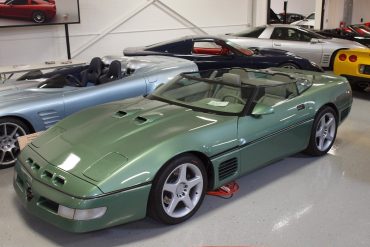
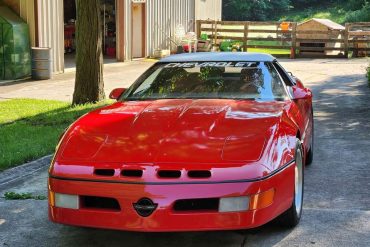
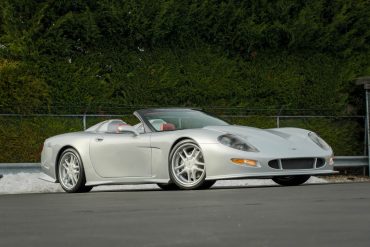
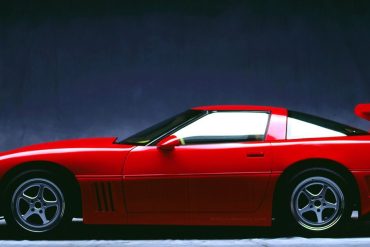
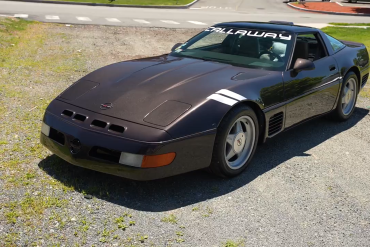
In 1989 Callaway introduced a Speedster which was the culmination of their styling, engineering and trimming talents. Their first example was a bright green ZR1, which had a severely chopped windscreen, no side mirrors, eighteen inch wheels and a vibrant blue leather interior stitched purposefully from Germany. Nothing about Callaway’s Speedster was reserved, and this is especially true when investigating the specification. The car had 450 horsepower.
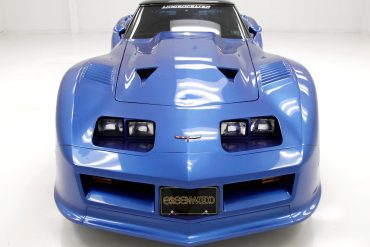
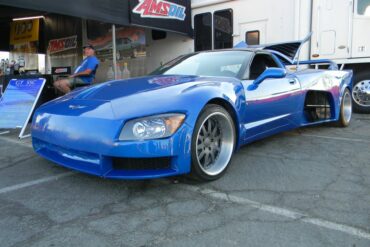
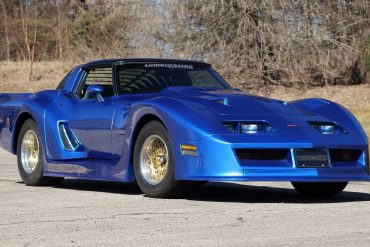
What you see before you is a 1982 Chevrolet Corvette that has been fitted with a rare Greenwood Daytona body kit. The most extreme of the Greenwood brothers' kits, the Daytona body kit is a highly sought-after modification that was developed by race-winning specialists Burt and John Greenwood.
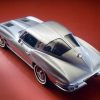
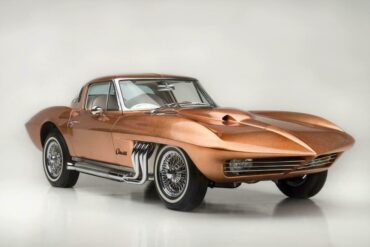
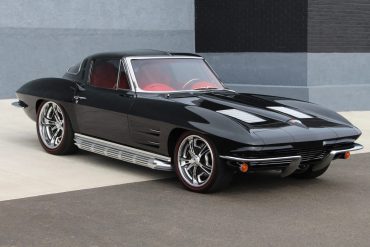
The "Asteroid" started life as a 1963 Chevy Corvette. It was ordered by mechanical engineer and renowned mid-century speed boat racer Bob Nordskog, sans any exterior paint save for a primer coat. Instead, the car was shipped directed to Barris Kustoms with instructions for Barris to transform the brand-new Corvette into a more radical version of itself.
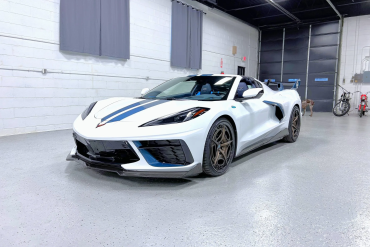
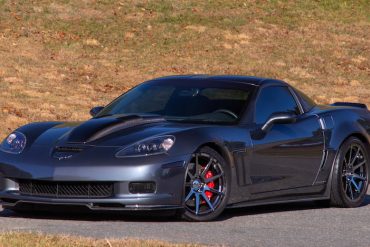
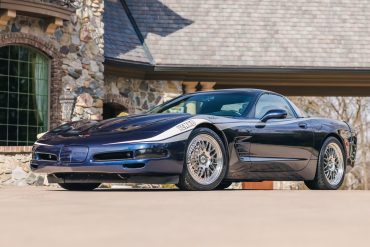
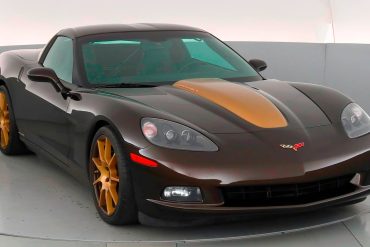
To commemorate its quarter-century milestone, Callaway Cars collaborated with Chevrolet, arranging a production run of 25 uniquely prepared 2012 Corvette Grand Sport coupes and convertibles. General Motors supplied special parts and procedures on the Bowling Green production line to facilitate final assembly at Callaway factories. Then, the performance and identity components are installed by Callaway. The 25th Anniversary Edition produced 620 bhp and 555 lb-ft of torque.
Since 1999, the factory-backed Corvette Racing program has been fielding Pratt & Miller built Corvettes at both the IMSA and FIA competition series. ...
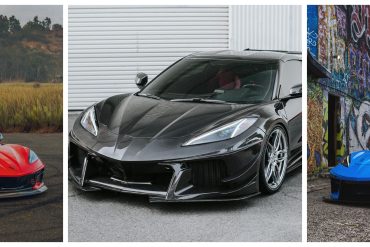
Reeves Callaway has always had a dream of competing a Corvette of his own at the 24 Hours of Le Mans, France. The idea begin with the body work for a street version, but one thing led to another, and a full race version was completed as well. The street version is almost identical to the race version because the hood, tail, rocker panels, and lower door halves, are all made of carbon fiber, just like the race version.
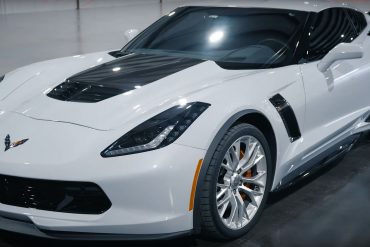
The 25th Anniversary Edition is a hardened up version of Callaway's Corvette SC757, which in turn is based on a C7-generation Corvette Z06. It features a supercharged V8 that pumps out 757-horsepower and 777 pound-feet of torque. The supercharger is a GenThree Callaway unit with the company's TripleCooled intercooler system. A high-flow intake system feeds that beast. Callaway's Level Two HD Cooling System also helps it avoid the overheating issues that plagued C7 Z06s.
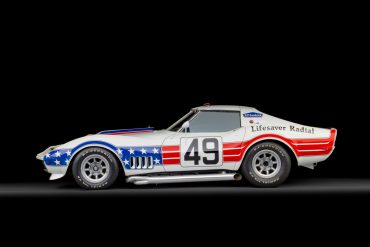
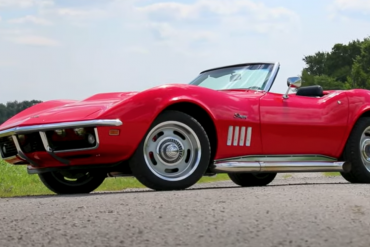
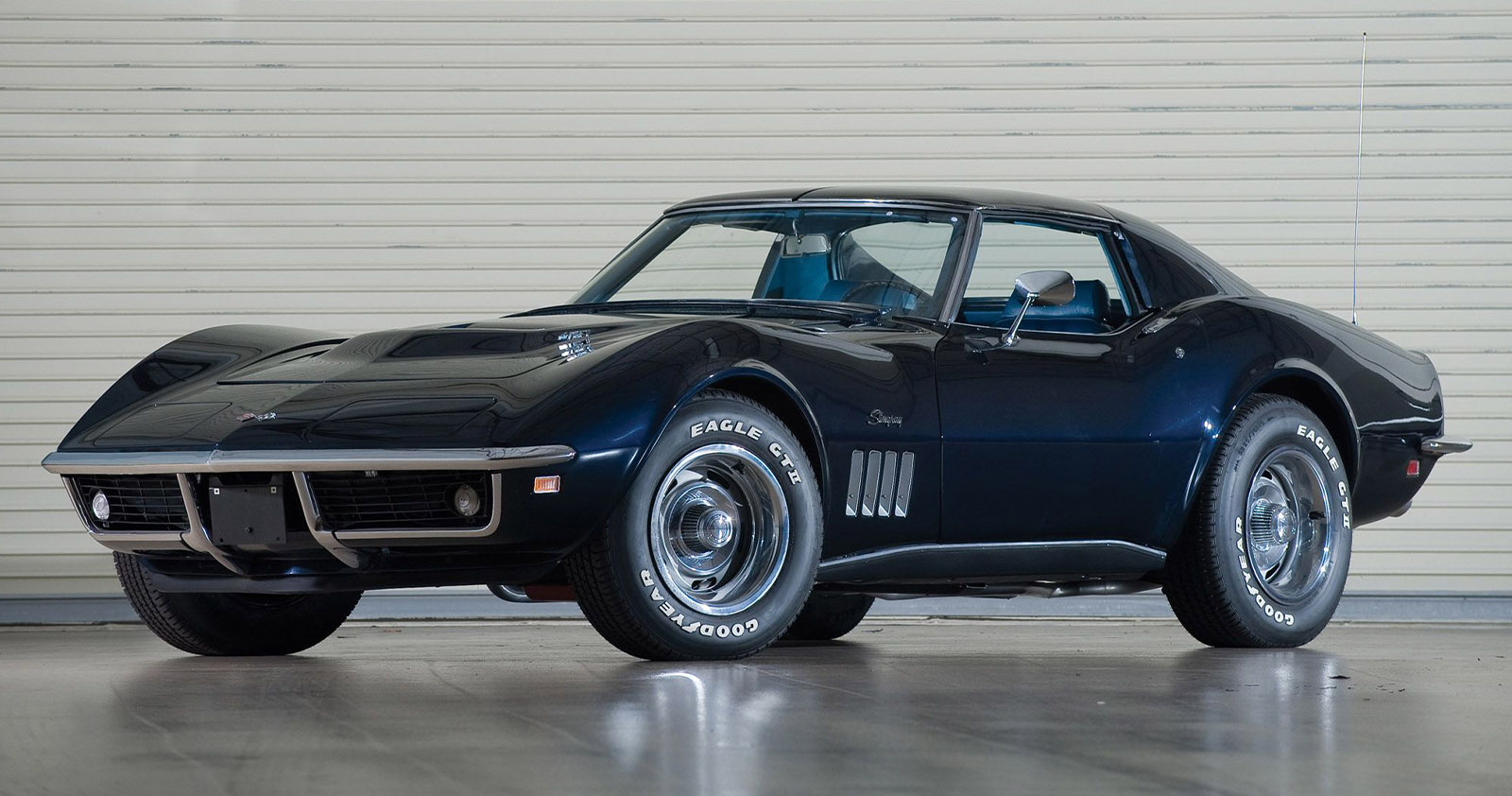
When one of his cars was severely damaged in 1972, John Greenwood converted his 1969 L88 Convertible into a formidable race car. Included as the formidable ZL1 engine with 750 bhp on tap. Other modifications included a rear spoiler, quick replacement radiator and camber adjusters. At Le Mans, this car set the GT-class record for top speed down the Le Mans straight with 215 mph.