Stung by the 1978 pace car backlash, Chevrolet made every reintroduced 1986 convertible a pace car replica with nothing more than a decal kit. Colors, VIN ranges and graphics options are all here.



C4 CORVETTE - 1986
The convertible came back after eleven years, reinforced by ASC until it was stiffer than the coupe. Bosch anti-lock brakes and the VATS resistor key became standard, the L98 got aluminum heads and 235 hp mid-year, and fifty Silver Beige-over-Black coupes went to one New Jersey dealer. 35,109 cars.
Quick Nav: Story · Specials · Price & Options · VIN · Specs · Technical · Pics & Videos · The Market · All · FAQs
Model & Gen: 1986 Corvette (C4)
Body Type: Two-door hatchback coupe with lift-off roof panel, and two-door convertible, the first since 1975 (every convertible an Indy 500 Pace Car replica)
VIN: 1G1YY0789G5100001 – 1G1YY0789G5127794 (coupe); 1G1YY6789G5900001 – 1G1YY6789G5907315 (convertible)
Original Price: $27,027.00 coupe; $32,032.00 convertible, the first Corvette past $30,000
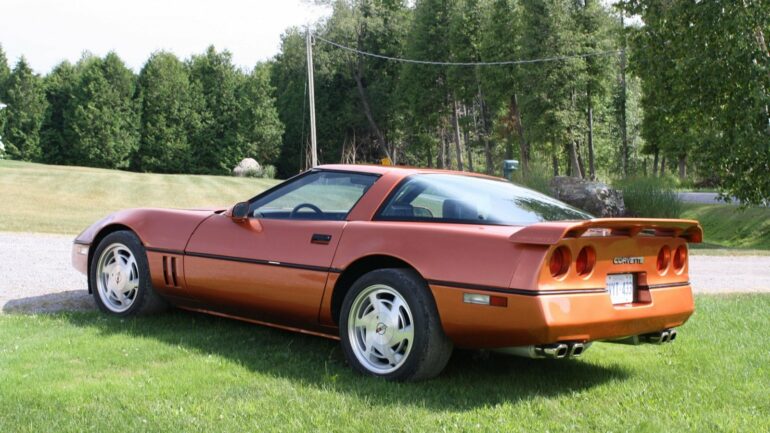
Colors: 12 solid colors plus four two-tones (RPO D84, coupe only) and the 50 Silver Beige-over-Black Malcolm Konner coupes; Copper Metallic on four cars
Engine: 350 ci L98 with Tuned-Port Injection: 230 hp with cast-iron heads (early coupes), 235 hp with the new aluminum heads (all convertibles, later coupes)
Transmission: 700-R4 four-speed overdrive automatic (MX0) standard; Doug Nash 4+3 four-speed manual with overdrive (MM4) at no cost, 6,835 cars
Units Produced: 35,109 (27,794 coupes + 7,315 convertibles)
The 1986 Corvette is the year the C4 grew up: the convertible returned, anti-lock brakes and a theft-proof key became standard, and the L98 got the aluminum heads it had been designed for. The convertible was engineered with the American Sunroof Company and built at Bowling Green: an X-brace tying the door-hinge pillars to the rear torque boxes, K-braces under the engine, a stiffer cowl, steering-column and dash beam, a crossbeam at the rear torque box and a double-wall steel riser behind the seats made the open car more rigid than the coupe for about fifty pounds, with a manual top under a hard cowl and the high-mounted stop lamp moved from the hatch to the rear fascia. It cost $32,032, $5,005 more than the $27,027 coupe and the first Corvette past $30,000, and 7,315 were sold against 27,794 coupes.
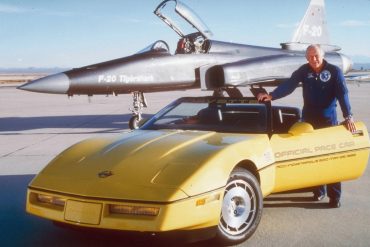
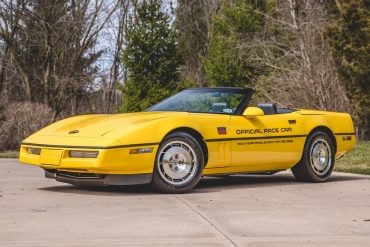
Chevrolet put a yellow convertible on the Indianapolis Motor Speedway on May 31, 1986, with General Chuck Yeager driving, and because the car needed nothing but strobes, harnesses and a fire system to pace the field, declared every 1986 convertible an Indy 500 Pace Car; there was no package or price, only dealer-supplied door decals for the owners who wanted them, which is why “Pace Car Edition” in a listing today means a convertible of any color with the decals on. Under the hood, the Tuned-Port 350 picked up aluminum cylinder heads with centrally located copper-core plugs, bigger intake ports and sintered valve seats, raising compression to 9.5:1 and output from 230 to 235 hp; the first heads cracked at the bolt bosses in durability testing, so the thicker production heads arrived late and early coupes kept cast iron while every convertible got aluminum. Bosch ABS II anti-lock brakes became standard on every Corvette, and so did VATS, the Vehicle Anti-Theft System that read a resistor pellet in the key and shut down the starter and fuel pump for minutes if it saw the wrong one, cutting theft from seven percent of C4s to under one and insurance premiums by a fifth.
The rest was detail: caster up to six degrees for straighter tracking, the standard tire narrowed to P245/50VR16 (Z51 coupes kept the P255s), a three-converter exhaust, an upshift light and re-angled LCD gauges, wheels with raised hub emblems and a brushed finish, and the fifty Malcolm Konner Commemorative Edition coupes in Silver Beige over Black (RPO 4001ZA, $500), the only time GM built a special edition for a single dealer. Road & Track’s coupe ran 0–60 in 5.8 seconds and the quarter in 14.4 at 96 mph and pulled 0.91 g; production fell for the second year to 35,109. Today the 1986 is the C4 to buy for a convertible on a budget, and the Pace Car replicas are the first C4s with a collector following, with low-mileage yellow cars and 4+3 manuals bringing the most.
For those that lived through that era, 1986 probably resonates as one of the most innovative and exciting years of the entire decade. It was the year the Human Genome Project was first proposed, the effort that would map the genetic structure of the human body. IMAP, the protocol that still delivers much of the world’s e-mail, was written. IBM unveiled the PC Convertible, its first laptop computer.
And, in its own way, General Motors was also pioneering new territory as they continued the evolution of their famous sports car. With the continual refinement of their L98 engine, a bigger focus on safety and security, and the development of many new functions and luxury features, the arrival of the 1986 Corvette carried with it the continuation of the spirit of innovation that had helped Corvette rise to become a world leader in the sports car market since its humble beginnings in 1953.
Since the introduction of the C4 Corvette in 1984, a significant increase in Corvette theft had been reported all across the country. Of all the Corvettes built in 1984 and 1985, approximately 7 percent had been stolen. Recognizing a need to make their cars more secure for the customers who were purchasing them, General Motors introduced a new security technology as a standard feature on all Corvettes.
“VATS” or “Vehicle Anti-Theft System” was a simple but effective addition to the existing alarm system. A small metal pellet with a specific electrical resistance was embedded in the ignition key, and had to be read by a hidden, electronic “decoder” before the engine could start.
Using the wrong key would cause the decoder to shut down both the starter relay and the fuel pump for a minimum of two minutes (although there are recorded incidents where the car would remain immobilized for as long as 15 minutes) before allowing the operator another attempt at starting the car. After the introduction of the VATS system in 1986, Corvette theft dropped from 7% to less than 1% in 1986 and to near 0% by late 1987 /early 1988.
The results were significant enough to prompt many automotive insurance companies to reduce their comprehensive premium rates for Corvettes equipped with VATS by 20-25 percent.
Another advancement of the 1986 model year involved the introduction of the first anti-lock braking system to the Chevrolet Corvette. Anti-lock brakes (ABS), which used the latest ABS II setup from Bosch in Germany, prevented wheel lock up in extreme braking conditions and reduced/eliminated skidding and subsequent loss of control of the car. ABS was relatively new in 1986 and its usage was limited mainly to high-cost luxury cars. Although no additional changes were made to the Corvette’s braking system, the addition of the ABS helped the Corvette further gain acceptance as the true world-class sports car that Chevy said it was.
Still other, less notable (but equally significant) changes were made. Under the hood, the L98 engine received an upgrade when the cylinder heads were changed from cast-iron to aluminum, taking weight off the nose.
The first aluminum heads were found to be too thin during durability testing, cracking around the head-bolt bosses under high engine loads, so production heads had to be thicker, and their arrival was delayed until well into the model year: early coupes kept the cast-iron heads while every convertible and the later coupes got aluminum. The new heads carried centrally located copper-core spark plugs for better combustion, larger intake ports and sintered-metal valve seats, and raised the compression ratio to 9.5:1. Engines fitted with aluminum heads were rated at 235 horsepower, five more than the 1985 and the early-1986 iron-head cars.
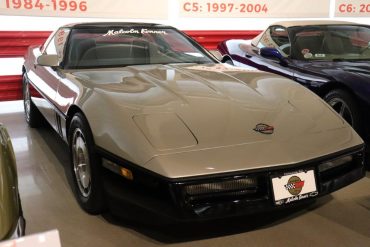
Did you know? Fifty 1986 Malcolm Konner Commemorative Edition Corvettes were built in a special arrangement honoring the New Jersey Chevrolet dealership's founder, Malcolm Konner. Each Corvette was painted a two-tone paint scheme: Silver Beige over Black. Window stickers reflected 4001ZA as the RPO, and a $500.00 cost was listed for MALCOLM KONNER SP. EDIT. PAI (Malcolm Konner Special Edition Paint). All of the Malcolm Konner Special Edition cars were coupes. Twenty were built with manual transmissions while the other thirty were fitted with automatics. All had graphite leather interiors.
Other mechanical changes were made to the Corvette as well, though none provided any performance improvement.
Amongst these changes, the exhaust system was revised, introducing triple catalytic converters to meet the ever increasing Federal emissions standards that were put into place for 1986.
Caster was increased from 3.8 degrees to 6.0 degrees to improve on-center road feel and to decrease wander. The standard tires were changed to P245/50VR16s, a size narrower than the P255s every 1984 and 1985 had worn.
However, for the Z51 package, the tires continued to be P255s. The overall size of the fuel tank was reduced by two gallons on automatic Corvette models.
Cosmetic, but functional, changes were also introduced on the 1986 Corvette. Above the rear hatch window, a high-mounted stop lamp was added. This brake light, which was introduced to meet a new federal requirement, was a key distinguishing feature of the 1986 Corvette, as it was one of the few outward changes that was made to the C4 since its introduction in 1984.
Elsewhere, small changes appeared throughout the car. In the cockpit, the LCD instruments were re-angled to aid in daytime legibility. Despite the re-angling, the digital dashboard continued to be a problem during daytime operation of the Corvette.
New to the dash cluster in ’86 was the introduction of an upshift indicator light which was intended to help drivers achieve maximum fuel mileage by signaling the optimal time to shift gears during vehicle operation.
While considered an unnecessary feature by many consumers, its intent was to help keep the car’s EPA mileage figures above the gas-guzzler level. (As an interesting side note, the shift indicator light was tied into all automatic transmissions as well.)
Additionally, “low coolant” and “anti-lock” (in reference to the anti-lock brakes) instrument displays were also added. Wheels were given raised hub emblems and a bright brushed finish which replaced the black centers of the 1984 and 1985 models.
But for all of this, the most significant change didn’t come as an optional component, but rather as an entirely optional model type – the Corvette Convertible. Chevrolet engineers, aided in part by engineers from the American Sunroof Company (ASC), had stated that the C4 Corvette’s design had always been intended to support a convertible variant of the beloved coupe, and so they knew that transforming the car from coupe to convertible would be a straightforward process. Because the absence of the roof pillar (and other supporting hardware) would increase body flex in the car, reinforcement was applied to the frame cross member in front of the engine. Larger X-braces were added to tie door-hinge pillars to the rear chassis torque boxes and larger K-shape braces were used to connect the under engine member to the frame rails. Additional structural reinforcements were added to the cowl structure, including the steering column, its mounts, the front torque box and the dashboard mounting beam. Similarly, a crossbeam was added to the rear torque box, and the steel riser behind the seats became a sturdier, double-wall structure.
Subtle cosmetic changes were made for the convertible as well, although the Corvette maintained a clear likeness to its coupe counterpart. For one, the rear center taillight was moved from the rear deck lid glass and was instead inserted in the upper center of the rear bumper fascia, just above the rear Corvette nameplate. For another, the cockpit featured a cowling that discreetly covered the convertible top, giving the 1986 Corvette an appearance that was as much “roadster” as convertible.
The new Corvette convertible was only fifty pounds heavier than the coupe and, because of the careful attention spent in reinforcing its structural design, was actually more rigid than the coupe, proving that the convertible could be as competitively functional as the coupe. Of course, this type of additional innovation carried additional cost, and the convertible Corvette was no exception. Its introduction in 1986 was accompanied by a $5,005 premium over the coupe.
The arrival of the convertible brought with it Corvette’s return to Indianapolis. Although the announcement came late in the automotive season, its introduction occurred in time for the Corvette to be invited to participate in that year’s Indianapolis 500 as the official Pace Car. The 1986 Corvette convertible would become the second Corvette in history (second only to its 1978 forerunner) to serve as a pace car at the Indianapolis 500, and Chevrolet was more than proud that its two-seat convertible needed no special performance or engineering modifications to help the car reach the necessary speeds to lead a field of race cars around the famous Brickyard racetrack. With the exception of safety-conscious strobe lights, a pair of five point harnesses (driver and passenger), and an onboard fire system, the yellow, 235-horsepower convertible that led the pace lap on May 31, 1986 was nearly identical to all other Corvette convertibles sold to the public that year.
Although the actual pace cars were painted a bright yellow and wore special “Official Pace Car” badges, General Motors deemed that every Corvette convertible built in 1986 would be a street-going Indy pacer, regardless of color. In fact, no special limited-edition “pace car” package option was ever offered, but instead, buyers were given the option of adding dealer-supplied commemorative decals to the doors of their 1986 Corvette.
Interestingly, the arrival of the new Corvette Convertible in 1986 resulted in less than stellar sales. Probably due in large part to “sticker shock”, only 7,315 Corvette convertibles were sold that year. While there was certainly no question that Corvette engineers, workers and fans alike welcomed back the nostalgia-filled convertible, its price proved to put the car just out of reach for most consumers looking to purchase a convertible sports car that year.
The Z51 Performance Handling Package, taken by 12,821 buyers, was offered only on the coupe: even with its X-member reinforcement, the convertible chassis was not offered with the bone-jarring Z51 suspension.
In all, 35,109 Corvettes were sold in 1986. While this number was still considered to be very respectable, it was the second year in a row that overall Corvette sales numbers had slipped. Despite these diminished numbers, there was no question that Corvette was continuing to move in the right direction.
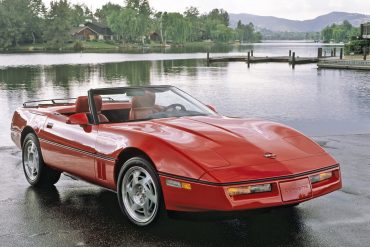
 The 1986 Corvette Convertible. (Image Courtesy of GM Media)
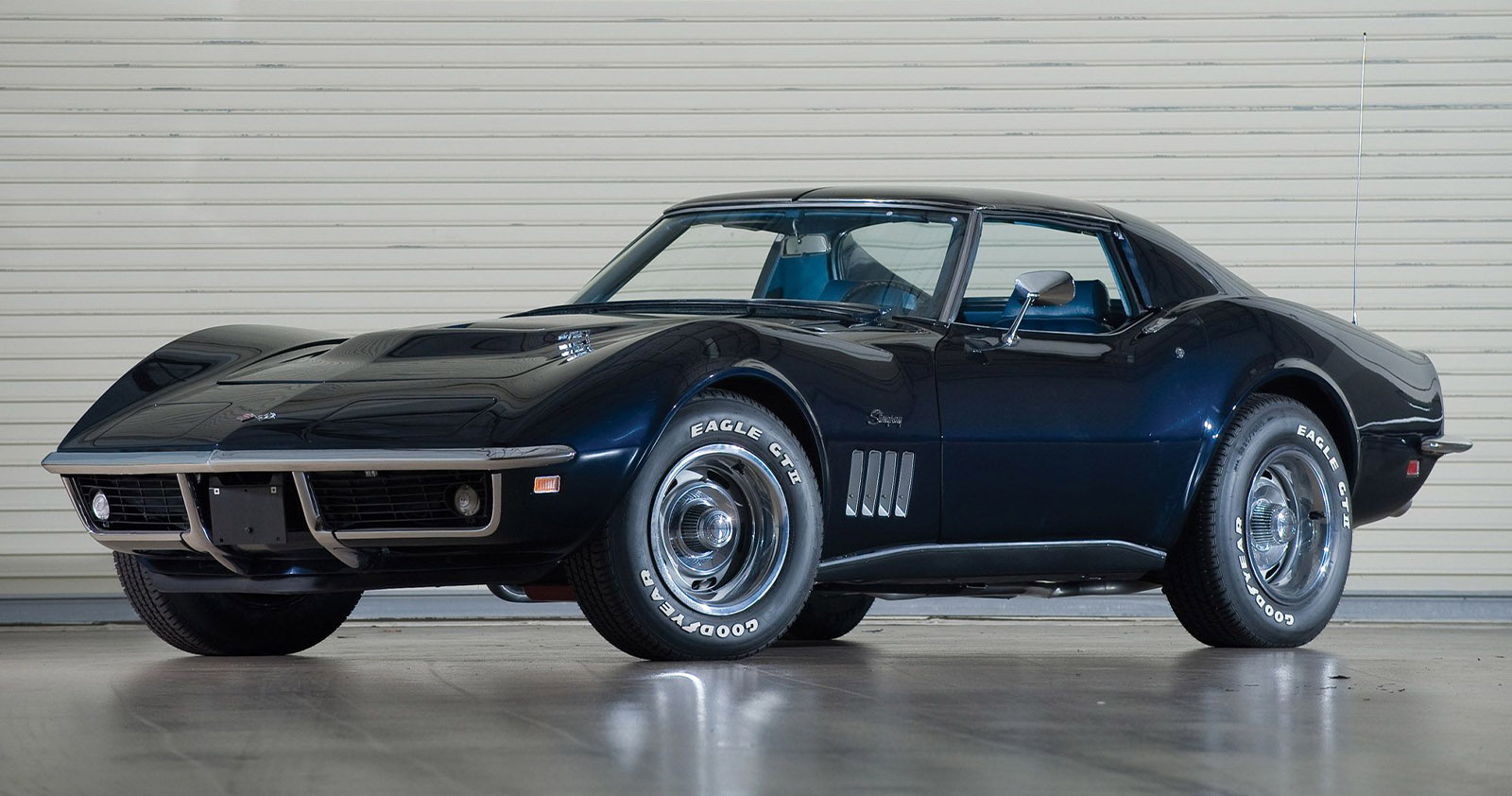
 The 1986 Corvette (yellow) and the 1978 Corvette (black) were the first two Corvettes ever to serve as a pace car at the Indianapolis 500.
 The Malcolm Konner Special Edition Corvette
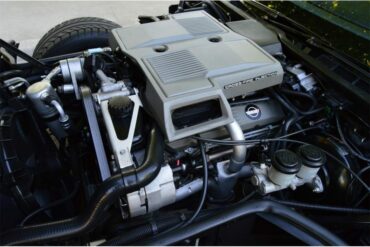
 The 1986 L98 Engine produced 235HP after the introduction of aluminum heads.
 1986 Corvette Interior (Note the dash cluster instrument display in the center of the dashboard.)
The 1986 Indianapolis 500 pace car was driven by General Chuck Yeager, the first man to break the sound barrier, and it was a stock yellow 235-hp convertible with strobe lights, harnesses and a fire system added; Chevrolet then declared every 1986 Corvette convertible, in any color, an official Pace Car replica, so the 7,315 convertibles are all “Pace Cars” and none of them is rare for it. Rare is Copper Metallic (code 66): four cars out of 35,109.
DID YOU KNOW
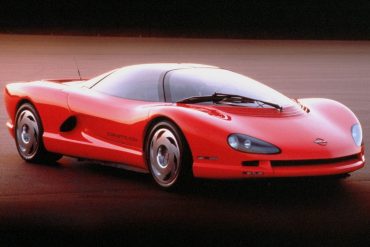
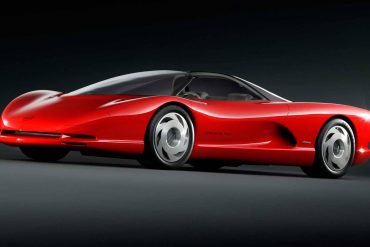
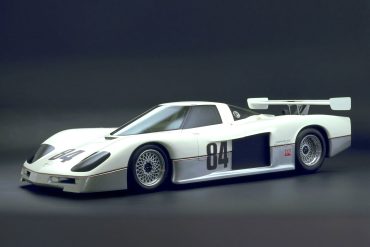
The year’s specials are the Indy 500 Pace Car convertible (every 1986 convertible is one), the fifty Malcolm Konner Commemorative Edition coupes in Silver Beige over Black, the Corvette Indy mid-engine show car unveiled at Detroit in January 1986, the four Copper Metallic cars and Dick Guldstrand’s GS80 conversions.
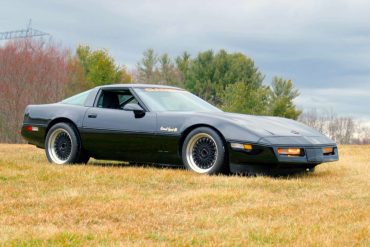
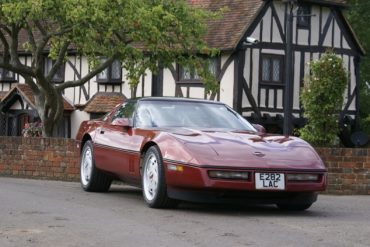
The 1986 coupe listed at $27,027.00, up $2,624 on 1985, with anti-lock brakes, the VATS key, the high-mounted stop lamp, the L98, the 700-R4 automatic, air conditioning, power windows, the tilt-telescopic column, the lift-off roof panel, cloth seats and digital instruments standard; 27,794 were built.
The convertible listed at $32,032.00, exactly $5,005 more, with the reinforced structure, the manual top and the aluminum-head 235-hp engine on every car, and 7,315 were built, every one an Indy 500 Pace Car replica with dealer-applied decals optional. The Z51 Performance Handling Package ($470.00) was coupe-only and went into 12,821 cars, 46 percent of the coupes; 5,521 took the Delco-Bilstein shocks alone (RPO FG3, $189.00), 7,394 the engine oil cooler (KC4, $110.00), 8,216 the radiator boost fan (B4P, $75.00) and 10,423 the heavy-duty radiator (V01, $40.00).
The Doug Nash 4+3 (RPO MM4) was free and went into 6,835 cars, down from 9,576; the 3.07:1 performance axle (G92, $22.00) into 4,879 automatics; two-tone paint (D84, $428.00), coupe only, onto 3,897; California emissions (NN5, $99.00) onto 5,697; and the Malcolm Konner Commemorative Edition paint (RPO 4001ZA, $500.00) onto fifty coupes for Malcolm Konner Chevrolet of Paramus, New Jersey.
Inside, 13,372 buyers took the leather sport seats (RPO AQ9, $1,025.00) and most of the rest leather on the base seats (AR9, $400.00; the count was not broken out); the power seat (AG9, $225.00) went into 33,983 cars, power locks (AU3, $175.00) into 34,215, cruise control (K34, $185.00) into 34,197, the Delco-Bose stereo (UU8, $895.00) into 32,478 and the new electronic air-conditioning control (C68, $150.00), a late-year option, into 16,646.
Coupe roof panels came three ways: a blue-tinted glass panel (RPO 24S, $595.00) on 12,021 cars, a bronze-tinted panel (64S, $595.00) on 7,819, or both the body-color panel and a tinted one (C2L, $895.00) on 6,242; the rear-window and mirror defoggers (Z6A, $165.00) went on 21,837 coupes and the Custom Feature Package of defogger, heated mirrors and map-light mirror (B4Z, $195.00) on 4,832. Radios otherwise: 2,039 plain cassette stereos (UM6, $122.00) and 166 radio-delete credits (UL5, $256.00); the CB was gone. A typical coupe with leather sport seats, Bose, power seat, locks, cruise, defoggers and a tinted roof came to about $30,300, and a convertible with the same seats and electronics to about $34,500.
The published color totals add up to 35,108, one short of production.
MORE: PRICING, OPTIONS & COLORS / RPO CODES
| CODE | DESCRIPTION | QUANTITY | RETAIL PRICE |
|---|---|---|---|
| 1YY07 | Base Corvette Hatchback Coupe (L98, 700-R4 automatic, 16-inch wheels, ABS, VATS, cloth seats, lift-off roof panel, air conditioning, power windows, digital instruments) | 27,794 | $27,027.00 |
| 1YY67 | Base Corvette Convertible (as coupe, with manual soft top and structural reinforcement; aluminum heads and 235 hp on all; Indy 500 Pace Car replica) | 7,315 | $32,032.00 |
| AR9 | Base Seats, leather | – | $400.00 |
| 24S | Removable Transparent Roof Panel, blue tint (coupe) | 12,021 | $595.00 |
| 4001ZA | Malcolm Konner Commemorative Edition paint, Silver Beige over Black (coupe; 20 manuals, 30 automatics, all Graphite leather) | 50 | $500.00 |
| 64S | Removable Transparent Roof Panel, bronze tint (coupe) | 7,819 | $595.00 |
| AG9 | Six-Way Power Driver Seat | 33,983 | $225.00 |
| AQ9 | Sport Seats, leather (inflatable lumbar, power side bolsters) | 13,372 | $1,025.00 |
| AU3 | Power Door Locks | 34,215 | $175.00 |
| B4P | Radiator Boost Fan | 8,216 | $75.00 |
| B4Z | Custom Feature Package (rear defogger, heated outside mirrors, map-light mirror) | 4,832 | $195.00 |
| C2L | Dual Removable Roof Panels, body-color and tinted (coupe) | 6,242 | $895.00 |
| C68 | Electronic Air Conditioning Control (late in the year) | 16,646 | $150.00 |
| D84 | Two-Tone Paint, four combinations (coupe) | 3,897 | $428.00 |
| FG3 | Delco-Bilstein Gas Shock Absorbers | 5,521 | $189.00 |
| G92 | Performance Axle Ratio, 3.07:1 (automatic cars) | 4,879 | $22.00 |
| K34 | Cruise Control with Resume | 34,197 | $185.00 |
| KC4 | Engine Oil Cooler | 7,394 | $110.00 |
| MM4 | Doug Nash 4+3 Four-Speed Manual with Overdrive | 6,835 | no charge |
| NN5 | California Emission Requirements | 5,697 | $99.00 |
| UL5 | Radio Delete | 166 | $256.00 credit |
| UM6 | AM-FM ETR Stereo with Cassette | 2,039 | $122.00 |
| UU8 | Delco-Bose AM-FM Stereo with Cassette | 32,478 | $895.00 |
| V01 | Heavy-Duty Radiator | 10,423 | $40.00 |
| Z51 | Performance Handling Package (coupe only: heavy-duty springs, Bilstein shocks, larger stabilizer bars, fast-ratio steering, 9.5-inch wheels with P255/50VR16 tires, heavy-duty cooling) | 12,821 | $470.00 |
| Z6A | Rear Window and Side Mirror Defoggers (coupe) | 21,837 | $165.00 |
| CODE | EXTERIOR | TOTAL | SOFT TOP | INTERIOR |
|---|---|---|---|---|
| 81 | Bright Red | 9,466 | Black, Saddle, White | Graphite, Red, Saddle |
| 41 | Black | 5,464 | Black, Saddle, White | Graphite, Medium Gray, Red, Saddle |
| 74 | Dark Red Metallic | 5,002 | Black, Saddle, White | Graphite, Saddle |
| 40 | White | 4,176 | Black, Saddle, White | Blue, Bronze, Graphite, Medium Gray, Red, Saddle |
| 18 | Medium Gray Metallic | 1,603 | Black, White | Graphite, Medium Gray, Red |
| 35 | Yellow (the Indy Pace Car color) | 1,464 | Black, White | Graphite |
| 59 | Silver Beige Metallic | 1,383 | Black | Bronze, Graphite |
| 13 | Silver Metallic | 1,209 | Black, White | Graphite, Medium Gray |
| 53 | Gold Metallic | 777 | Black, Saddle | Graphite, Saddle |
| 69 | Medium Brown Metallic | 488 | Saddle | Bronze, Saddle |
| 20 | Medium Blue Metallic (Nassau Blue) | 128 | Black, White | Blue, Graphite |
| 66 | Copper Metallic | 4 | Black, Saddle | Graphite, Saddle |
| 18/41 | Two-tone Medium Gray / Black (RPO D84, coupe) | 1,138 | – | Graphite, Medium Gray |
| 13/18 | Two-tone Silver / Medium Gray (RPO D84, coupe) | 1,049 | – | Graphite, Medium Gray, Red |
| 59/69 | Two-tone Silver Beige / Medium Brown (RPO D84, coupe) | 1,014 | – | Bronze |
| 40/13 | Two-tone White / Silver (RPO D84, coupe) | 693 | – | Graphite, Medium Gray |
| 59/41 | Silver Beige / Black, Malcolm Konner Commemorative Edition (RPO 4001ZA, coupe) | 50 | – | Graphite leather |
The L98 kept its Tuned-Port Injection, Bosch mass-airflow sensor and 350 cubic inches but got a new block casting, 14088548, and, during the year, aluminum cylinder heads (casting 14101128) with centrally located copper-core spark plugs, larger intake ports, sintered-metal valve seats and 9.5:1 compression in place of the cast-iron 462624 heads at 9.0:1.
The first aluminum heads cracked around the head-bolt bosses in durability testing, so the thicker production heads were late: early coupes carry iron heads and the 1985 rating of 230 hp at 4,000 rpm and 330 lb-ft at 3,200, while every convertible and the later coupes carry aluminum heads rated at 235 hp at 4,000 rpm and 330 lb-ft at 3,200. The exhaust gained a third catalytic converter. The 700-R4 overdrive automatic (RPO MX0) with a 2.73:1 axle (3.07:1 with G92) was standard and the Doug Nash 4+3 (RPO MM4) with a 3.07:1 Dana 44 was the no-cost manual; an upshift light on the dash told drivers of both when to change up for the EPA.
Road & Track’s February 1986 coupe ran 0–60 in 5.8 seconds and the quarter in 14.4 at 96 mph, pulled 0.91 g and stopped from 60 in 133 feet; top speed was about 150 mph.
Bosch’s ABS II anti-lock system became standard on every Corvette, the first on an American sports car, working through the unchanged Girlock aluminum four-wheel discs; VATS, the resistor-pellet ignition key with a decoder that disabled the starter and fuel pump, was standard too. Caster rose from 3.8 to 6.0 degrees for on-center feel, the standard tire became a P245/50VR16 Goodyear Eagle on the 16 x 8.5-inch wheels, now with raised hub emblems and a brushed finish, and the Z51 package, coupe only, kept the P255/50VR16s on 9.5-inch wheels with Bilstein shocks, larger bars and heavy-duty cooling.
The convertible used the coupe’s uniframe with an X-brace between the door-hinge pillars and the rear torque boxes, K-braces under the engine, reinforced cowl, steering-column mounts and dash beam, a rear-torque-box crossbeam and a double-wall riser behind the seats, and came out stiffer than the coupe at about fifty pounds more; its manual top folded under a hard cowl and its stop lamp sat in the rear fascia.
The fuel tank was 20 gallons (18 on automatics), the wheelbase 96.2 inches and the length 176.5; curb weight was about 3,240 lb for the coupe and 3,290 for the convertible.
MORE: FULL SPECIFICATIONS / ENGINE
| SPEC | 1986 CORVETTE |
|---|---|
| Engine | 350 ci (5.7 L) small-block V-8, RPO L98, the only engine: Tuned-Port Injection with Bosch mass-airflow sensor, cast-aluminum plenum, eight tuned runners and port injectors; new block casting 14088548; three catalytic converters |
| RPO L98, iron heads | 350/230 hp net @ 4,000 rpm, 330 lb-ft @ 3,200 rpm, 9.0:1, cast-iron 462624 heads; early coupes only; engine suffix DKF (automatic with oil cooler) |
| RPO L98, aluminum heads | 350/235 hp net @ 4,000 rpm, 330 lb-ft @ 3,200 rpm, 9.5:1, aluminum 14101128 heads with centrally located copper-core plugs, larger intake ports and sintered-metal valve seats; introduced mid-year after the first heads cracked in testing; all convertibles and later coupes |
| Transmission | 700-R4 four-speed automatic with overdrive and lock-up converter (RPO MX0) standard; Doug Nash 4+3 four-speed manual with computer-controlled overdrive in 2nd, 3rd and 4th (RPO MM4, no charge, 6,835 cars); upshift indicator light new |
| Axle ratio | 2.73:1 automatic, 3.07:1 manual and with RPO G92 ($22.00, 4,879 cars); Dana 36 with the automatic, Dana 44 with the manual; limited-slip standard |
| Chassis | Welded steel uniframe with aluminum front crossmember; convertible adds an X-brace from the door-hinge pillars to the rear torque boxes, K-braces under the engine, reinforced cowl, steering-column mounts and dash beam, a rear-torque-box crossbeam and a double-wall riser behind the seats (engineered with ASC), and is stiffer than the coupe; caster increased from 3.8 to 6.0 degrees |
| Suspension | Independent front with forged-aluminum control arms and transverse fiberglass monoleaf spring; independent five-link rear with fiberglass monoleaf spring and aluminum arms; anti-roll bars; Delco-Bilstein gas shocks with Z51 or RPO FG3 ($189.00, 5,521 cars) |
| RPO Z51 | Performance Handling Package, coupe only, $470.00, 12,821 cars: heavy-duty springs and Bilstein shocks, larger stabilizer bars, 13.0:1 fast-ratio steering, heavy-duty cooling with radiator boost fan, 16 x 9.5-in wheels with P255/50VR16 tires |
| Brakes | Four-wheel Girlock discs, 11.5-in vented rotors, aluminum calipers; Bosch ABS II anti-lock braking standard, the first on a Corvette |
| Security | VATS (Vehicle Anti-Theft System) standard: resistor pellet in the ignition key read by a decoder that disables the starter and fuel pump for at least two minutes on a wrong key; alarm retained |
| Steering | Rack-and-pinion with power assist, 15.5:1 (13.0:1 with Z51); tilt-telescopic column standard |
| Body | Fiberglass hatchback coupe with lift-off roof panel (blue-tinted glass RPO 24S, bronze-tinted 64S, $595.00; both body-color and tinted panels RPO C2L, $895.00); new convertible with manual top under a hard cowl, 7,315 built; center high-mounted stop lamp above the coupe’s hatch and in the convertible’s rear fascia; two-tone paint (RPO D84, $428.00, coupe) on 3,897 cars; Malcolm Konner Commemorative Edition Silver Beige over Black (RPO 4001ZA, $500.00) on 50 coupes |
| Interior | Digital instrument panel re-angled for legibility, with upshift, low-coolant and anti-lock indicators; cloth base seats (leather RPO AR9, $400.00), Lear Siegler sport seats in cloth or leather (RPO AQ9, $1,025.00, 13,372 cars); six-way power driver seat (RPO AG9, $225.00, 33,983); Delco-Bose sound system (RPO UU8, $895.00, 32,478); electronic air-conditioning control (RPO C68, $150.00, 16,646, late in the year) |
| Wheels & tires | 16 x 8.5-in cast aluminum wheels with raised hub emblems and brushed finish; P245/50VR16 Goodyear Eagle tires standard (narrower than 1984–85); Z51 coupes on 16 x 9.5-in wheels with P255/50VR16 |
| Fuel tank | 20 gal (18 gal on automatic cars); unleaded only |
| Wheelbase | 96.2 in |
| Overall length / width / height | 176.5 in / 71.0 in / 46.7 in (coupe); convertible 46.4 in with the top up |
| Track, front / rear | 59.6 in / 60.4 in |
| Curb weight | approx. 3,240 lb coupe; approx. 3,290 lb convertible |
| 0–60 mph | 5.8 sec (Road & Track, February 1986, coupe) |
| Quarter mile | 14.4 sec @ 96 mph (Road & Track) |
| Top speed | about 150 mph |
| Lateral acceleration / braking | 0.91 g; 60–0 mph in 133 ft (Road & Track) |
| Production | 35,109: 27,794 coupes and 7,315 convertibles |
| Assembly | Bowling Green, Kentucky |
The 1986 Corvette carries two 17-character VIN prefixes: 1G1YY0789G5 for the coupe, with sequence numbers 100001 to 127794 for the 27,794 coupes, and 1G1YY6789G5 for the convertible, with sequence numbers 900001 to 907315 for the 7,315 convertibles. The 1 is the United States, G General Motors, 1 Chevrolet, Y (fourth) the Corvette car line, Y (fifth) the base series, 07 the hatchback coupe or 67 the convertible, 8 the L98 Tuned-Port 350 (the only engine, iron or aluminum heads), the ninth character a check digit that varies with the car, G the 1986 model year and 5 the Bowling Green plant. The VIN plate sits on top of the dash on the driver’s side, visible through the windshield; the body and trim plate on the left door-hinge pillar carries the build date, the paint code (both codes on two-tones and the fifty Konner cars) and the trim code.
The engine pad at the front of the block on the passenger side carries the plant prefix, the build date and a suffix, DKF on an iron-head automatic with the oil cooler; every 1986 block is casting 14088548, and the heads tell the story: 462624 is cast iron and 230 hp, 14101128 is aluminum and 235 hp, so a convertible or a late coupe should have aluminum heads and an early coupe iron ones. A Pace Car replica is any convertible, so the decals prove nothing; the yellow (code 35) convertibles are the color of the actual pace cars. A Konner coupe should carry the Silver Beige-over-Black paint codes on the trim tag with Graphite leather, and one of the fifty 4001ZA window stickers if the paperwork survives.
MORE: VIN DECODER / PRODUCTION
| POSITION | MEANING |
|---|---|
| 1G1 (First through Third) | Country, maker, make: 1 = built in the USA, G = General Motors, 1 = Chevrolet |
| Y (Fourth) | Car line: Y = Corvette |
| Y (Fifth) | Series: Y = Corvette (Z on the 1990–95 ZR-1) |
| 07 or 67 (Sixth & Seventh) | Body: 07 = two-door hatchback coupe (sequence 100001–127794); 67 = two-door convertible (sequence 900001–907315), new this year |
| 8 (Eighth) | Engine: 8 = 350 L98 Tuned-Port Injection, the only engine (230 hp with iron heads, 235 hp with the mid-year aluminum heads) |
| x (Ninth) | Check digit, calculated from the other sixteen characters |
| G (Tenth) | Model year: G = 1986 |
| 5 (Eleventh) | Assembly plant: 5 = Bowling Green, Kentucky |
| 100001–127794 / 900001–907315 (Twelfth through Seventeenth) | Production sequence number: coupes from 100001, convertibles from 900001; 35,109 built |
Twelve solid colors and four two-tones plus the Konner cars: Bright Red (9,466), Black (5,464), Dark Red (5,002), White (4,176), Medium Gray (1,603), Yellow (1,464, the Pace Car color), Silver Beige (1,383), Silver (1,209), Gold (777), Medium Brown (488), Medium Blue (128) and Copper (4); two-tones Gray/Black (1,138), Silver/Gray (1,049), Silver Beige/Brown (1,014) and White/Silver (693), coupe only, and fifty Silver Beige/Black Konner coupes. Convertible tops in black (3,685), white (2,682) and saddle (948); interiors in Graphite, Medium Gray, Blue, Red, Saddle and Bronze.
The 1986 is two markets, as every convertible year will be from now on. The coupe sits with the 1985 as the cheapest way into a C4, a little above it for the anti-lock brakes, the aluminum heads and the VATS key, and well below the 1987–89 cars with their 240–245 hp engines and, from 1989, the ZF six-speed. The convertible is the first C4 with a collector following: every one is an Indy Pace Car replica, so the premium goes to low mileage, originality, the yellow pace-car color and the 4+3 manual rather than to the decals, and the best unused examples have started to bring real money. The fifty Konner coupes and the four Copper Metallic cars are the year’s rarities and trade privately. Coupes with the Z51 package are sought by drivers, and the two-tones, coupe only, are scarce.
Results tracked by Classic.com from October 2025 through October 2026: Mecum sold a 22-mile 4+3 coupe for $44,000 at Kissimmee in January 2026 and a 919-mile Pace Car convertible for $26,400 the same week, with other Kissimmee Pace Cars at $19,800 (88,000 miles) and $12,650, a 31,000-mile 4+3 convertible at $9,900 and a coupe at $7,700; Mecum’s later sales ran $6,600 and $12,100 for Pace Cars at Glendale, $11,000 for a 107,000-mile Pace Car at Tulsa, $7,700 twice at Indianapolis, $9,900 for a 4+3 Pace Car at Harrisburg and $9,350 at Fort Worth in October. Bring a Trailer sold an 11,000-mile 4+3 coupe for $22,500 and an 11,000-mile automatic for $19,750 in May, a 18,000-mile car for $13,000 in July and ordinary cars for $4,500 to $11,750; GAA sold a Pace Car for $15,000 and an 8,000-mile 4+3 coupe for $14,500 in February, Barrett-Jackson a Pace Car convertible for $12,650 at Scottsdale and a coupe for $5,500 at Las Vegas, Hagerty $10,140, $9,100 and $6,500, Richmond $9,500. Unsold high bids ran $5,000 to $26,000, the top figure a 3,000-mile car at GAA. Dealers’ last asking prices ran $6,850 to $39,900 (a 226-mile 4+3 coupe), and in autumn 2026 the cars on offer were priced from $6,900 to $24,995 for coupes, $10,995 to $21,500 for convertibles and $49,900 for a 40-mile Pace Car; most cars sat between $10,000 and $18,000. Check whether a result includes the buyer’s premium (Mecum and Barrett-Jackson results do, Bring a Trailer bids do not), and treat asking prices and unsold high bids separately from completed sales.
Verification starts with the sixth and seventh VIN characters: 07 is a coupe with a sequence number from 100001, 67 a convertible from 900001, and a “Pace Car” is simply a convertible, with or without the dealer decals; nothing on the VIN or the trim tag distinguishes a decaled car, and reproduction decals are sold. The trim tag should carry the paint code (two on two-tones and Konner cars, which should be Silver Beige over Black with Graphite leather), and the heads should match the build: aluminum 14101128 castings on every convertible and the later coupes, iron 462624 on the early coupes, on a 14088548 block with the partial VIN stamped on the pad. The ABS should self-test without a warning light, the VATS should start the car on the first turn (a two-minute lock-out on a correct key means a worn key or a failing decoder) and a Z51 coupe should have 9.5-inch wheels, Bilstein shocks and the boost fan.
The convertible adds its own list to the C4’s: the top’s fabric, pads and rear window, the top-frame bushings, the header-latch alignment, water leaks at the rear corners and under the cowl, and rust where the X-brace meets the frame if the car has lived outdoors. On every 1986 the digital dash comes first (faded or dark LCD panels, a dead dimmer, corroded connectors; the re-angling didn’t fix the sunlight problem), then the L98’s mass-airflow sensor and burn-off relay, cold-start injector, fuel-pump relay and oxygen sensor, and the plenum and runner gaskets. VATS keys wear and the decoders fail, leaving a car that will not start for minutes at a time, and bypass modules are common; the ABS pump and sensors are expensive when they fail. The 4+3’s overdrive leaks and slips, the Bilstein shocks are usually tired, the headlight motors strip their gears, the power antenna snaps, and the uniframe rusts under the battery tray and at the rear kick-ups. The fiberglass body and springs last; the electronics, the rubber and the convertible top are where the money goes.
MORE: THE MARKET
Get all the latest news stories, upcoming auctions, prices, videos and more about the 1986 Chevrolet Corvette! The latest headlines here.


Chevrolet built 35,109 Corvettes for 1986 at Bowling Green, Kentucky: 27,794 hatchback coupes and 7,315 convertibles, the first Corvette convertibles since 1975. It was the second year of falling production after the 1984 record. Of the cars, 34,215 had power locks, 34,197 cruise control, 33,983 the power seat, 32,478 the Delco-Bose stereo, 13,372 the leather sport seats, 12,821 coupes the Z51 package, 6,835 the Doug Nash 4+3 manual, 3,897 two-tone paint and 50 the Malcolm Konner Commemorative Edition paint; only four were Copper Metallic.
Between October 2025 and October 2026, 1986 coupes sold at auction for $4,500 to $22,500, with a 22-mile 4+3 coupe making $44,000 at Mecum Kissimmee, and convertibles (every one a Pace Car replica) for $6,600 to $26,400, the top figure for a 919-mile car. Most ordinary cars changed hands between $7,000 and $14,000. Dealers were asking $6,900 to $24,995 for coupes and $10,995 to $21,500 for convertibles in autumn 2026, with a 40-mile Pace Car offered at $49,900. The 1986 sits a little above the 1985 and below the 1987–89 cars.
The L98 350 with Tuned-Port Injection, in two versions. Early coupes kept the 1985 cast-iron heads and 230 hp; during the year Chevrolet introduced aluminum heads with central spark plugs, bigger ports and 9.5:1 compression, rated at 235 hp at 4,000 rpm and 330 lb-ft at 3,200, and every convertible and the later coupes have them. It came with the 700-R4 automatic or the no-cost Doug Nash 4+3 manual (6,835 cars). Road & Track ran 0–60 in 5.8 seconds and the quarter mile in 14.4 at 96 mph, and the car would reach about 150 mph.
Twelve solid colors and, on coupes, four two-tones plus the Konner edition. Bright Red (9,466) led again, followed by Black (5,464), Dark Red (5,002), White (4,176), Medium Gray (1,603), Yellow (1,464, the Indy Pace Car color), Silver Beige (1,383), Silver (1,209), Gold (777), Medium Brown (488), Medium Blue (128) and Copper Metallic, on just four cars. The two-tones were Gray/Black (1,138), Silver/Gray (1,049), Silver Beige/Brown (1,014) and White/Silver (693), and fifty Malcolm Konner coupes were Silver Beige over Black. Convertible tops came in black (3,685), white (2,682) and saddle (948); interiors in Graphite, Medium Gray, Blue, Red, Saddle and Bronze.
The coupe was $27,027.00 and the convertible $32,032.00, exactly $5,005 more and the first Corvette past $30,000. Leather sport seats were $1,025.00, base leather $400.00, the Z51 handling package (coupe only) $470.00, the Delco-Bose stereo $895.00, a tinted glass roof panel $595.00 or both panels $895.00, the power seat $225.00, cruise control $185.00, power locks $175.00, two-tone paint $428.00 and the Konner paint $500.00; the 4+3 manual was free. A well-equipped coupe came to about $30,300 and a convertible about $34,500.
Yes. A stock yellow 1986 convertible, driven by Chuck Yeager, paced the Indianapolis 500 on May 31, 1986, and Chevrolet declared every 1986 convertible an official Pace Car replica regardless of color. There was no Pace Car package or price; dealers supplied door decals that owners could apply or not. So a “Pace Car Edition” in a listing is any of the 7,315 convertibles, worth no more for the decals; the premium goes to low mileage, originality, the yellow (code 35) pace-car color and the 4+3 manual.
The convertible returned after eleven years, engineered with ASC and stiffer than the coupe, at $32,032. Bosch anti-lock brakes and the VATS resistor-key anti-theft system became standard on every car, the L98 gained aluminum heads and 235 hp during the year, caster rose to six degrees, the standard tire narrowed to P245/50VR16, a third catalytic converter and an upshift light were added, the digital gauges were re-angled, the wheels got brushed centers with raised emblems, the high-mounted stop lamp appeared above the coupe’s hatch and in the convertible’s rear fascia, and fifty Silver Beige-over-Black Malcolm Konner coupes were built for one New Jersey dealer.
1986 Corvette Advertisements / 1986 Corvette Colors / 1986 Corvette Common Issues / 1986 Corvette D.A.R.E. / 1986 Corvette Engine / 1986 Corvette Factory Options / 1986 Corvette Maintenance / 1986 Corvette Mods / 1986 Corvette Owners Manual / 1986 Corvette Pace Car / 1986 Corvette Performance / 1986 Corvette Posters / 1986 Corvette Pricing / 1986 Corvette Production / 1986 Corvette Recalls / 1986 Corvette Research / 1986 Corvette RPO Codes / 1986 Corvette Sales Brochures / 1986 Corvette Special Model Overview / 1986 Corvette Specifications / 1986 Corvette Technical Research / 1986 Corvette Service Bulletins / 1986 Corvette VIN Numbers