CORVETTE GENERATIONS
The C3 Corvette (1968–1982)
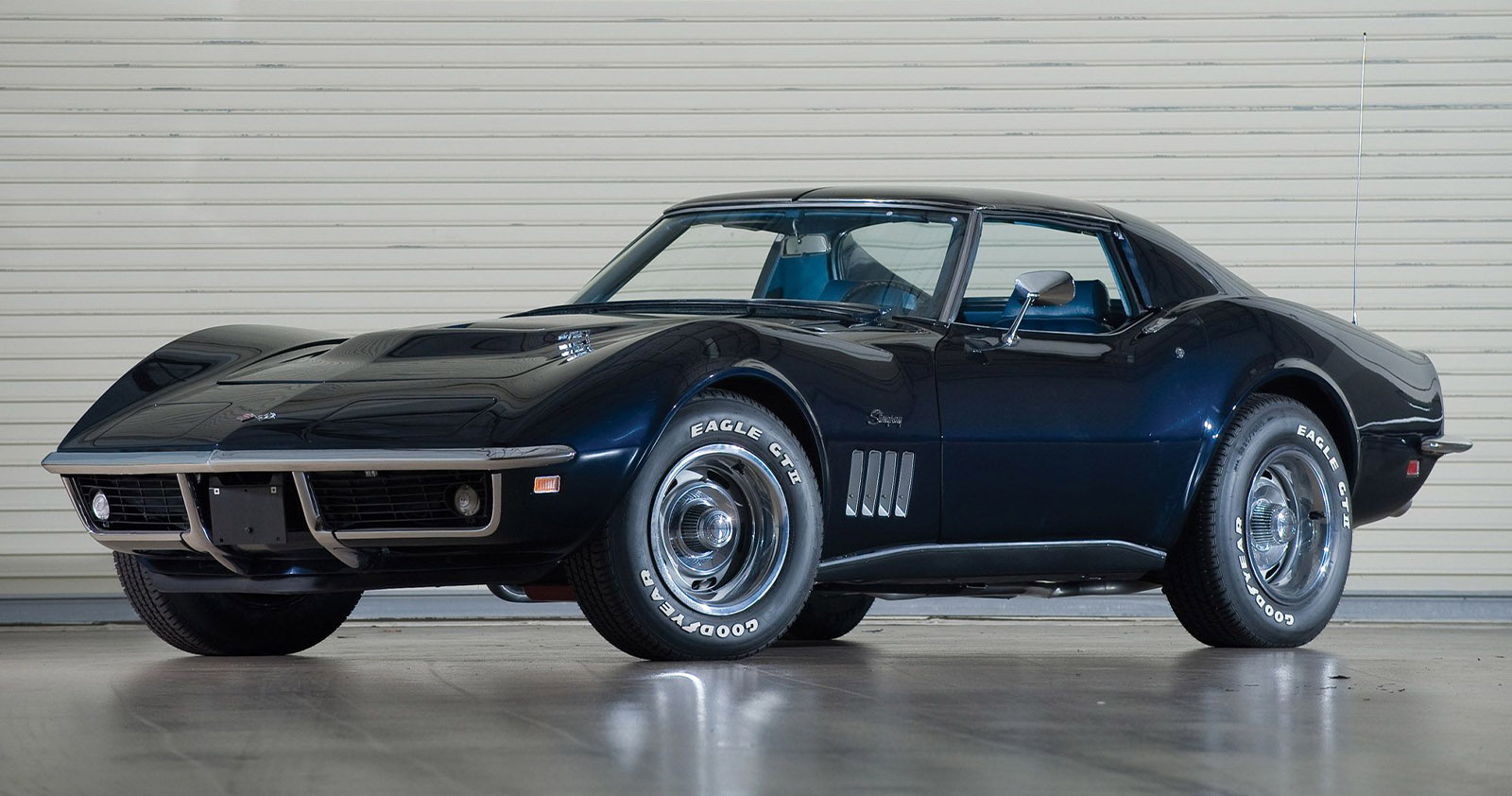
The Shark: fifteen model years, 1968 to 1982, and 542,861 cars, more than any Corvette generation before or since. Larry Shinoda’s Mako Shark II body on the Sting Ray’s chassis, with T-tops, the L88 and the all-aluminum ZL1, the LT-1 and the 454, then the smog years, the 1978 Pace Car, the 53,807-car record of 1979 and the Collector Edition that closed St. Louis. This is the hub for all fifteen years.
The Basics
Generation: C3 Corvette, the third generation; the “Shark” Corvette (Stingray, one word, 1969–1976)
Model Years: 1968, 1969, 1970, 1971, 1972, 1973, 1974, 1975, 1976, 1977, 1978, 1979, 1980, 1981, 1982
Body Styles: Two-door coupe with removable T-top panels (1968–1982) and two-door convertible (1968–1975); fastback glass rear window from 1978, opening hatch on the 1982 Collector Edition
Production: 542,861 over fifteen years: 28,566 / 38,762 / 17,316 / 21,801 / 27,004 / 30,464 / 37,502 / 38,465 / 46,558 / 49,213 / 46,776 / 53,807 / 40,614 / 40,606 / 25,407 (1968–1982); 1979 is the all-time Corvette record
Designers: Bill Mitchell and Larry Shinoda (Mako Shark II, XP-755/XP-830), production body under David Holls; chief engineer Zora Arkus-Duntov to 1975, then Dave McLellan
Chassis: Front-engine, rear-wheel drive on the 1963 Sting Ray’s ladder frame and 98-in wheelbase, independent rear suspension with a transverse leaf spring (fiberglass from 1981), four-wheel disc brakes; fiberglass body on a steel birdcage; urethane bumpers from 1973 (front) and 1974 (rear)
Engines: 327 ci (1968) and 350 ci small blocks, 165 to 370 hp; 427 ci big block to 435 hp, the L88 and the aluminum ZL1 (1968–69); 454 ci big block, LS5, LS6 and LS4 (1970–74); 305 ci LG4 (California, 1980); 350 ci Cross-Fire Injection L83 (1982)
Transmissions: 3-speed manual (to 1969), Muncie and Borg-Warner 4-speeds (to 1981), Turbo Hydra-Matic 350/400 automatics; 700-R4 4-speed overdrive automatic only in 1982
Original Price: $4,663 coupe / $4,320 convertible in 1968 to $18,290 in 1982 ($22,538 Collector Edition)
Assembly: St. Louis, Missouri to August 1, 1981; Bowling Green, Kentucky from June 1, 1981
Predecessor: C2 Corvette (1963–1967)
Successor: C4 Corvette (1984–1996)
The Overview
The third-generation Corvette ran fifteen model years, 1968 through 1982, the longest of any generation, and it is really three cars wearing one body. The first, 1968 to 1972, is the Sting Ray’s chassis under Larry Shinoda’s Mako Shark II shape, with chrome bumpers, a removable rear window, T-tops and the strongest engines Chevrolet ever put in a Corvette: the 435-horsepower Tri-Power 427, the 430-horsepower L88, the all-aluminum ZL1, the solid-lifter LT-1 small block and the 454. The second, 1973 to 1977, is the same car with urethane bumpers, emissions equipment, catalytic converters from 1975, no convertible after 1975 and horsepower that fell as low as 165. The third, 1978 to 1982, has the fastback glass roof, the 1978 Pace Car and Silver Anniversary, the record 53,807 cars of 1979, the first engine computers, the move to Bowling Green and the Cross-Fire Injection Collector Edition of 1982.
Critics panned the 1968 for its build quality and its cramped cockpit, and Car and Driver sent its test car back as unfit to test. Buyers disagreed every year: production rose from 28,566 to 53,807 as the car got heavier, slower and more expensive, because the Shark was the car people wanted to be seen in. It was also the Corvette of Duntov’s last decade, of John Greenwood’s IMSA cars, of the Indianapolis 500 pace car of 1978, and of the mid-engine prototypes that never reached production.
Chevrolet built 542,861 C3s, which makes it the most plentiful generation and the one with the widest spread of values: a 1969 ZL1 convertible sold for $3.14 million in 2023 and the 1971 ZR2 convertibles for $962,500 and $863,500, 1968–69 L88s bring $330,000 to $860,000, chrome-bumper LT-1s and 454s $35,000 to $136,000, and a sound 1976 to 1981 coupe is the cheapest classic Corvette there is at $10,000 to $25,000. This page is the hub: the story, a year-by-year table, every engine, the special models and race cars, a buying guide with current prices, and links to the fifteen model-year pages and the research behind them.
The C3 Corvette Story
The third-generation Corvette arrived sooner than anyone expected. The C1 had lasted ten years and outlived its welcome; Duntov and Mitchell were not going to let the Sting Ray do the same, and work on its replacement began in 1964, before the second Sting Ray model year was over. It arrived in the fall of 1967 into an America of Khe Sanh, two assassinations and a presidential election, and it was every bit as divisive as the year.
The mid-engine Corvette that wasn’t
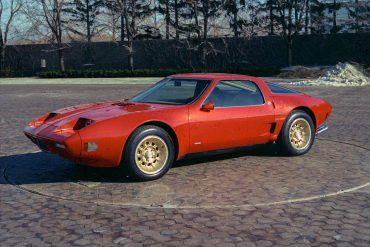
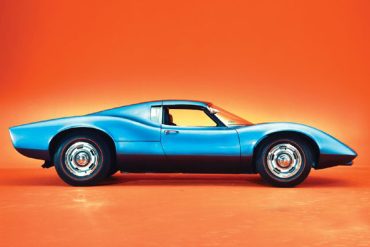
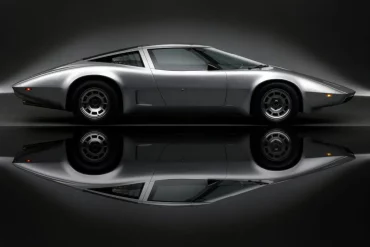
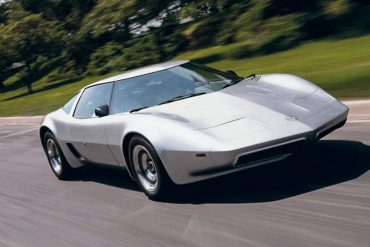
By 1964 two things had changed the Corvette’s world: the muscle car and the pony car. A GTO or a Chevelle SS 396 could match a Sting Ray in a straight line for far less money, and the Mustang and then the Camaro sold hundreds of thousands of two-plus-twos a year. At the other end, the Lamborghini Miura and the Porsche 911 made the Corvette look old. Everyone at Chevrolet assumed the answer was a mid- or rear-engine car, and three groups set out to prove it. Frank Winchell’s engineering center built XP-819, a rear-engine car on a Corvair-inspired backbone frame with a 327 behind the Pontiac Tempest transaxle and nearly 70 percent of its weight on the rear wheels; it was destroyed in a high-speed lane-change test. Duntov’s group built scale models of a true mid-engine car with a big-block Mark IV ahead of the rear wheels and a flying-buttress roof like a Porsche 904. Mitchell’s own studio made a full-size mock-up with a periscope molded into the roof because the engine left no room for a rear window.
None of them was built, for the reason that would stop every mid-engine Corvette until 2020: General Motors had no transaxle that could take a V-8’s torque, and developing one would price the car out of its market. The C3 would be a new body on the Sting Ray’s chassis, and Mitchell turned to Larry Shinoda to make the body worth the wait.
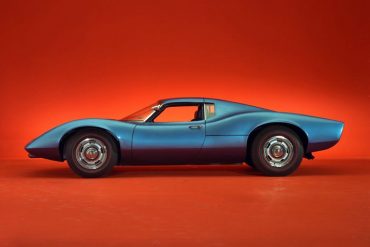
Mako Shark II
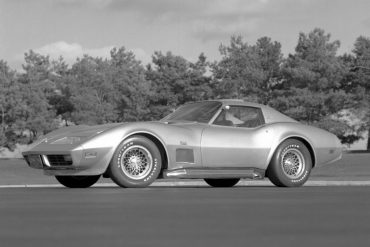
Shinoda started in 1964 and within a year had the Mako Shark II, first a static full-size model and, from April 1965, a running car with the first 396 big block. It was built to be adaptable to a front or a rear engine, and it was shown around the world as a test of public reaction; a second, tamer Mako Shark II followed in October 1965 and was closer to what would be built. Under David Holls, Chevrolet Styling adapted the shape to the C2 frame: from the beltline down it was the Mako with its contours softened, and the roof was the “sugar scoop” from Duntov’s mid-engine proposal, a vertical rear window framed by sail panels, with the panels over the cockpit and the rear glass itself removable.
The problems were found in development and some were never solved. The nose lifted at speed and the rear spoiler meant to plant the tail made it worse; a one-piece removable roof made the body creak so badly that the engineers put a bar down the middle and invented the T-top; and the narrow engine bay and shallow grille starved the radiator, so the C3 ran hot in traffic for fifteen years. The car was pushed back from 1967 to 1968, which happened to be the first year of federal safety and emissions standards. What survived from the Mako were the vacuum-operated panel that hid the wipers and the pop-up headlights, now worked by vacuum rather than the Sting Ray’s electric motors.
1968 to 1972: the chrome-bumper Sharks
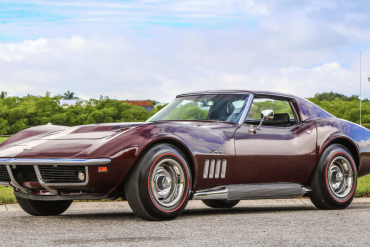
The press received the 1968 somewhere between apathy and hostility. Road & Track called the styling derivative of older Ferraris, the cockpit was smaller than the Sting Ray’s though the car was bigger, the seats were reclined to 33 degrees to fit under the roof, the Astro Ventilation did not ventilate, the panels fitted badly and the paint was amateurish; Car and Driver returned its test car as unfit for a road test. The engines nobody argued with: the 300- and 350-horsepower 327s, four 427s from 390 to 435 horsepower, and the L88 in 80 cars. Buyers bought 28,566, a record. For 1969 the Stingray name came back, one word, the 327 became a 350, the wheels went to eight inches, the door buttons went, the cockpit gained an inch, and a strike stretched the model year to 38,762 cars, 116 of them L88s and two of them ZL1s, with the all-aluminum 427 that cost more than the car.
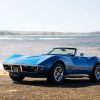
1970 brought the egg-crate grille and fender vents, flared wheel arches, the 454 in 390-horsepower LS5 form, the solid-lifter 370-horsepower LT-1 small block and the first ZR1, a race package of LT-1, M22, heavy-duty brakes and suspension that could not be ordered with a radio or air conditioning. A strike cut production to 17,316. 1971 was the year the compression came out for low-lead fuel: the LT-1 fell to 330 horsepower and the 454 to 365, but Duntov pushed the aluminum-head 425-horsepower LS6 through for 188 buyers and the ZR2 put it in twelve cars. 1972 was the last chrome-bumper Corvette, the last LT-1 and ZR1, the last removable rear window, with horsepower now quoted in SAE net and the alarm standard; 27,004 were built.
1973 to 1977: the smog years
The 1973 got a body-color urethane nose for the five-mph bumper rule, a fixed rear window, radial tires, door beams, more sound insulation and softer body mounts, and the solid-lifter engines gave way to the hydraulic L82. Road & Track, which had predicted an all-new mid-engine car, never forgave it. The 1974 got the urethane tail in two pieces and was the last year of the big block, the last on leaded fuel with true dual exhaust; 37,502 were built through the oil embargo. 1975 brought the catalytic converter, HEI ignition, a 165-horsepower base engine, the last convertible for eleven years and Duntov’s retirement, and still sold 38,465. The 1976 went coupe-only and lost the Stingray badge, and the 1977 lost the fender script and gained leather, a proper stereo and the 500,000th Corvette; they sold 46,558 and 49,213. The Shark had become a personal luxury car with a V-8, and more people wanted it that way than had ever wanted a Sting Ray.
1978 to 1982: the glass roof, the record and the end of St. Louis
For the Corvette’s 25th year the sugar-scoop roof became a fastback glass window, the tank grew to 24 gallons, and Chevrolet built two specials: the Silver Anniversary paint scheme that one buyer in three ordered, and 6,502 black-and-silver replicas of the Indianapolis 500 Pace Car, the first Corvette to pace the race, which dealers sold for twice the $13,653 sticker and speculators then could not sell at all. 1979 took the Pace Car’s seats and spoilers onto the order form, made air conditioning and the tilt column standard mid-year, and built 53,807 cars, still the record for any Corvette year. The 1980 lost 250 pounds and gained spoilers molded into the bumpers; Californians got a 305 with the first Corvette engine computer, and every speedometer stopped at 85.
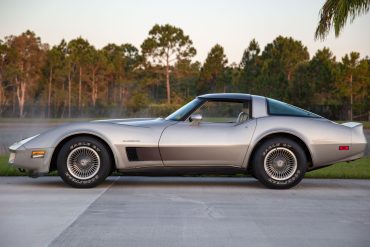
1981 had one engine for every state, the 190-horsepower L81 with Computer Command Control, a fiberglass rear spring, and two factories: the first Bowling Green Corvette was finished on June 1 and the last St. Louis car on August 1, so the 1981 is the only year built in two states with two paint systems. The 1982 was the last Shark and the first with the C4’s hardware: a 200-horsepower Cross-Fire Injection 350, the first fuel-injected Corvette since 1965, and a four-speed overdrive automatic as the only gearbox. Chevrolet marked the end with the Silver Beige Collector Edition, the first Corvette with a lifting rear window and the first past $20,000, built to order so that no dealer could repeat 1978; 6,759 were made among 25,407 cars, and then the C3 was done after fifteen years and 542,861 cars.
What the Shark left behind
The C3 is the generation that proved the Corvette could survive anything: a hostile press, the muscle-car boom, the oil embargo, catalytic converters, 165 horsepower and an 85-mph speedometer. It carried the Corvette from Duntov to McLellan and from St. Louis to Bowling Green, where every Corvette since has been built. Its early cars are among the most valuable Corvettes made, its late cars are the cheapest way into the marque, and its shape is the one most people picture when they hear the word. The year pages linked below carry the full specifications, options, colors, VIN ranges and production figures for each of the fifteen years.


Mattel beat Chevrolet to the reveal: the first Hot Wheels cars reached toy shelves in 1968 with a “Custom Corvette” that was unmistakably the new car, weeks before General Motors showed the real one. The Shark’s profile was called the Coke-bottle shape, and Pontiac nearly got there first with the 1965 Banshee, a two-seater GM killed because it would have competed with the Corvette.
DID YOU KNOW
Featured C3 Corvette Stories
Longer reads from the archive on the cars that made the generation. Most of these are members-only: an ad-free read and the full archive for the price of a tank of fuel. BECOME A MEMBER

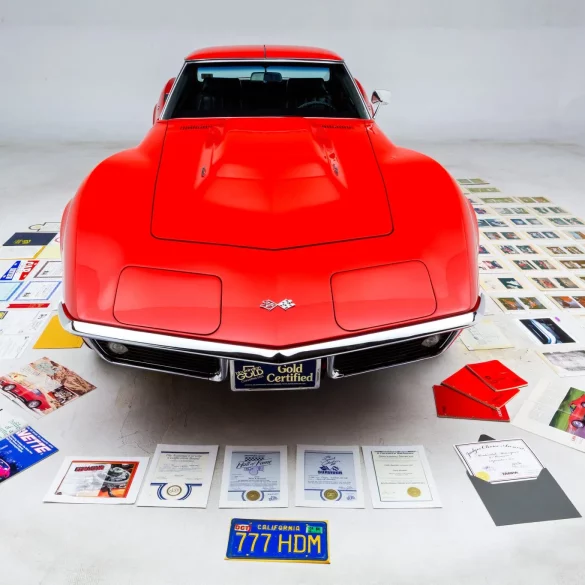
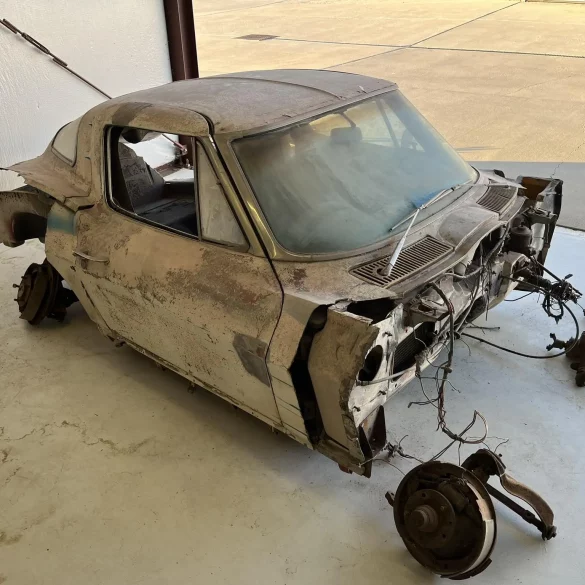

The C3 Corvette Year by Year - The Model Timeline
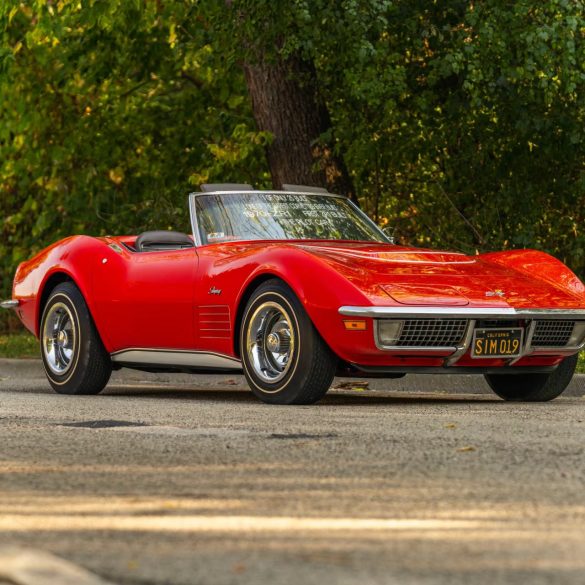
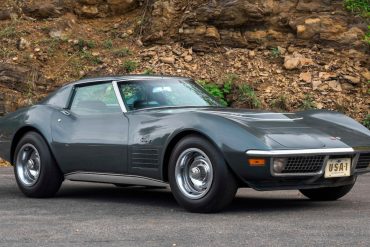
Fifteen model years and three distinct cars. The chrome-bumper Sharks of 1968–72, with the removable rear window and the big engines; the urethane-bumper cars of 1973–77, two 350s, a 454 through 1974, a convertible through 1975; and the glass-roof cars of 1978–82, with the Pace Car, the record year, the engine computer, Bowling Green and the Collector Edition. The quickest tells are the bumpers (chrome both ends to 1972, urethane nose 1973, urethane both ends from 1974, molded spoilers from 1980), the rear window (removable to 1972, fixed 1973–77, fastback glass from 1978) and the fender vents (four gills 1968–69, egg-crate 1970–72, two slots from 1973).
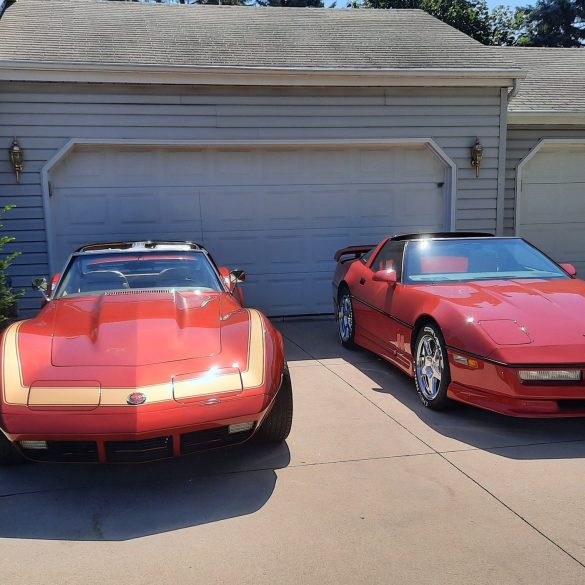
Production rose almost every year through 1979, the record 53,807, and then fell as the price passed $13,000, $16,000 and $18,000 in three years. Early cars with big engines, the L88, ZL1, LS6, LT-1 and ZR1/ZR2, are the collectible ones; the 1978 Pace Car and Silver Anniversary and the 1982 Collector Edition are the late-C3 specials; and the 1975–81 coupes are the cheapest classic Corvettes there are.
1968–1969 Corvette
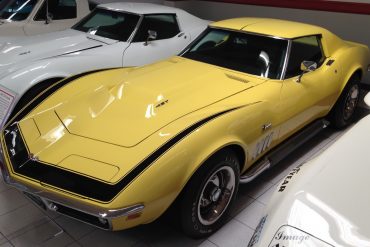
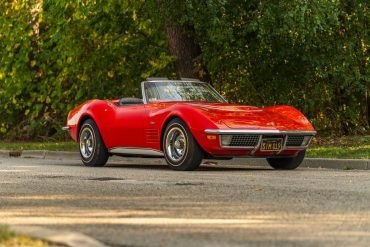
A new body on the mid-year Sting Ray’s frame, the 1968 was a toned-down version of the 1965 Mako Shark II show car, in convertible and coupe form. The coupe had the industry’s first T-top roof with two removable panels and a removable rear window that gave it a convertible feel; the car had hideaway headlights, hidden windshield wipers and a new three-speed Turbo Hydra-Matic in place of the Powerglide. There were six engine choices from a 327 to a 427 with numerous horsepower ratings, and a long option list let the customer build the car to taste. It was the first American car to do without a side vent window in the door. A base 1968 sold for $4,663 with the 300-hp 327, a three-speed manual and a vinyl interior.
For 1969 a new door handle did away with the 1968 push button, the passenger compartment was widened an inch by thinning the door panels, air induction was improved to help the car’s tendency to overheat, and the passenger side of the dash got three little “map pockets.” Buyers still had no fewer than six engine and transmission combinations, wheels were widened to eight inches on bias-ply tires, the base engine was now a 350, and 1969 was the last year for the three-speed manual.
1970–1972 Corvette
A crosshatch grille on the side fender vents, fenders flared to reduce stone chips, big-block displacement up to 454 cubic inches, the solid-lifter LT-1 with 370 hp in the 350, and the first ZR1 “special engine package”: that was 1970. If you liked the 1970 you loved the 1971, because there were very few changes, mainly due to a strike that shortened the run; engine choices were down to four and it was the last year for the fiber-optic light monitor. Appearance changes were few for 1972, the last of the true chrome-bumper (front and rear) Corvettes: the fiber optics were gone, a bright egg-crate grille arrived, the side fender grilles were functional, and this was the last coupe whose rear window could be removed and stowed. Engine choices were down to three, the base 350, the LT-1 and the 454, all now built to run on the low-lead fuels about to be mandated, a sign of the times and a peek at what was coming.
1973–1974 Corvette
This was the car that became the whipping post for Road & Track, which had already projected an “all new” mid-engine Corvette. When the 1973 arrived with subtler changes, a new urethane-covered front bumper that could take a 5-mph hit, a now-fixed rear window and the first steel-belted radials on a Corvette, the magazine was embarrassed, and from then on the Corvette became a car for it to bemoan. Better sound insulation knocked down the interior decibels and redesigned body mounts gave a softer ride. Some 4,000 VINs are missing from 1973 production (24001–28000): production was 30,464 but the VINs end at 34464. The hood was redesigned to lose the wiper hatch, steel beams went into the doors, and the car was becoming more of a personal car than a brutish sports car as the first oil embargo gripped the country. Engine choices were down to three.
1974 brought more refinement, less power and the last year of the big block. The rear bumper was now urethane-covered with a center split, radials came in black sidewall, raised white letter or white stripe, and two suspension options were offered: the FE7 gymkhana suspension for a slightly stiffer ride and the Z07 off-road suspension and brake package, fitted to only 47 cars. The car was growing ever more boulevard cruiser than sports car and buyers’ options reflected it: of 37,502 built, only 3,494 were 454s and only 6,690 took the L82; most felt the base engine with the manual or automatic was sporty enough. It was also the last year of true dual exhaust and the last Corvette to run on regular leaded gasoline.
1975–1977 Corvette
New for 1975 was a one-piece rear bumper cover, with the front and rear bumpers gaining two little black “bumperettes.” The big block was gone and engine choices were down to two, the base L48 350 at 165 hp and the optional L82 at just 205. It was the last year for the convertible body as the public opted ever more for the coupe and convertibles were being phased out industry-wide. Corvette firsts for 1975 were the catalytic converter, which required unleaded gasoline and ended true dual exhaust, with the pipes routed through a forward Y into a single converter and split again by a rear Y into twin mufflers, and high-energy ignition, which lengthened tune-up intervals. Still, at around $7,000 with options, it was considered a bargain in high-performance machinery.
America’s bicentennial saw minor changes for the 1976 and a four-spoke steering wheel that outraged owners, since it could be found on several Chevrolets including the Vega. The engine data plate made its last appearance and the car was gearing toward creature comforts. The hood was a one-year design: air was tunneled through a duct on its underside to bring it in closer to the radiator and cut interior noise. Early rear bumper covers carried a tightly scripted Corvette emblem replaced by a larger script later in the run, and the Stingray script on the fenders made its last appearance. All in all, still a great and reliable sports car.
A carry-over year like the 1967, the 1977 nonetheless changed throughout the run. Early cars had orange engines and no fender script, the only adornment being the alarm key cylinder; after a few thousand cars the crossed flags appeared and later the alarm switch moved into the driver’s door lock. Leather seats became standard, the mirror moved to the windshield, the sun visors swiveled, a leather-wrapped three-spoke wheel sat on the optional tilt-telescopic column, the shifter was shortened an inch and the column two inches to ease entry, and the redesigned console took the whole Delco radio line including an eight-track. Horsepower stayed at 180 (L48) and 210 (L82). The brushed-aluminum horn cap was recalled, as were the Firestone 500 radials whose belts separated. Cruise control arrived with the automatic, and the high beams and wipers moved to the turn-signal stalk. The 1977 proved a super Corvette and is still one of the most overlooked bargains in sporting machinery.
1978–1979 Corvette
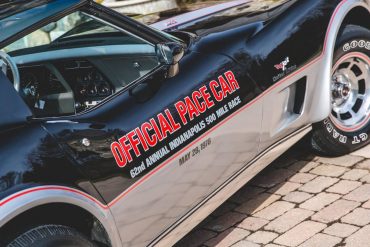
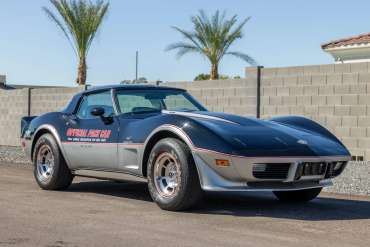
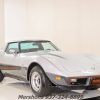
1978 was the 25th-anniversary model, with a new fastback glass roofline that looked as though it should open but was fixed, and a stunning two-tone light silver over charcoal scheme (RPO B2Z) that was the year’s most popular choice: 15,283 Corvettes wore it. To mark the milestone the Corvette paced the Indianapolis 500 for the first time, and Chevrolet built 6,502 replicas from March to May with their own VINs (900001–906502), priced to reflect the “limited” run at over $13,000. For that you got the black-over-silver B78 scheme with a red accent stripe, bolt-on front and rear spoilers, silver leather or leather-and-cloth, new lightweight clamshell seats that folded flat for the stowage area, silver-tinted glass roof panels and decals for the dealer to apply at the customer’s request. A speculators’ market pushed asking prices into the mid-twenties and higher. The fuel tank grew from 18 to 24 gallons thanks to a smaller spare.
1979 brought a new nose emblem and fuel-door emblem, with crossed flags as the exterior adornment, and production topped out at 53,807 coupes, still the all-time Corvette record. The interior received clamshell seats similar to, but not quite the same as, the Pace Car’s, and the Pace Car spoilers carried over as an option. A great all-around sports car.
1980–1982 Corvette
1980 saw a new shovel nose with molded spoilers and a rear bumper redesigned to include a spoiler as well; the crossed flags were elongated and flattened, the optional aluminum wheels were highly polished, and the engine choices grew to three: the base L48, a 305 mandated for California with the automatic, and the L82, which required the automatic. Claims of a few early manual L82s persist, but the brochure does not list the combination. Inside, the speedometer was federally limited to 85 mph and the rear stowage compartments became a two-door design.
1981 was the last year for the manual transmission and the engine choice (you never really had one) was down to a single federally certified 190-hp L81 for all 50 states. Refinements included power mirrors and a power driver’s seat. A new facility in Bowling Green, Kentucky replaced the St. Louis plant at the end of the model run, and for two and a half months Corvettes were built in both: St. Louis still used lacquer while Bowling Green started base coat/clear coat, and the optional two-tone cars were Bowling Green cars, apart from about 100 that St. Louis employees ordered for themselves.
For 1982, once again a single engine, the L83 “Cross-Fire” fuel-injected 350. A Silver Beige Collector Edition was available throughout the run with cloisonné emblems and turbine-spoke wheels that harked back to the mid-year knock-offs, a special beige leather interior with multi-colored accents and a lifting rear window exclusive to it; 6,759 were built. Fuel economy improved with the injected engine and the four-speed overdrive automatic.
MORE: PRODUCTION FIGURES / BUILD DATES
| YEAR | BUILT | BASE PRICE | ENGINES | WHAT CHANGED |
|---|---|---|---|---|
| 1968 | 28,566 | $4,663 coupe / $4,320 convertible | 327 ci 300/350 hp; 427 ci 390/400/435 hp; L88 430 hp (80) | The Shark: Mako Shark II body on the Sting Ray frame, T-tops, removable rear window, hidden wipers, Turbo Hydra-Matic; 80 L88s; critics hostile, 28,566 built, a record |
| 1969 | 38,762 | $4,781 coupe / $4,438 convertible | 350 ci 300/350 hp; 427 ci 390/400/435 hp; L88 (116), ZL1 (2) | Stingray name returns (one word), 327 becomes a 350, 8-in wheels, side pipes, door buttons gone; 116 L88s and two aluminum ZL1s; strike-stretched record of 38,762 |
| 1970 | 17,316 | $5,192 coupe / $4,849 convertible | 350 ci 300/350 hp, LT-1 370 hp; 454 ci LS5 390 hp | Egg-crate grille and fender vents, flared arches; 454 LS5, solid-lifter LT-1, first ZR1; strike-shortened year of 17,316, the fewest since 1962 |
| 1971 | 21,801 | $5,496 coupe / $5,259 convertible | 350 ci 270 hp, LT-1 330 hp; 454 ci LS5 365 hp, LS6 425 hp (188) | Compression cut for low-lead fuel; aluminum-head LS6 454 (188) and the ZR2 (12); otherwise a 1970; 21,801 built |
| 1972 | 27,004 | $5,533 coupe / $5,296 convertible | 350 ci 200 hp net, LT-1 255 hp; 454 ci LS5 270 hp | Last chrome bumpers, last LT-1 and ZR1, last removable rear window; SAE net ratings, alarm standard; 27,004 built |
| 1973 | 30,464 | $5,561.50 coupe / $5,398.50 convertible | 350 ci L48 190 hp, L82 250 hp; 454 ci LS4 275 hp | Urethane nose, fixed rear window, radials, door beams, more insulation; solid lifters gone, L82 new; last chrome rear bumper |
| 1974 | 37,502 | $6,001.50 coupe / $5,765.50 convertible | 350 ci L48 195 hp, L82 250 hp; 454 ci LS4 270 hp (last big block) | Urethane tail in two pieces; last big block (LS4), last leaded fuel and true dual exhaust; 37,502 sold through the oil embargo |
| 1975 | 38,465 | $6,810.10 coupe / $6,550.10 convertible | 350 ci L48 165 hp, L82 205 hp | Catalytic converter, HEI, unleaded; 165-hp base engine; last convertible until 1986; Duntov retires; 38,465 built |
| 1976 | 46,558 | $7,604.85 | 350 ci L48 180 hp, L82 210 hp | Coupe only; last Stingray badge; aluminum wheels return; Vega steering wheel; a record 46,558 |
| 1977 | 49,213 | $8,647.65 | 350 ci L48 180 hp, L82 210 hp | Fender script off, crossed flags on; leather standard, new console and stereo, cruise control; the 500,000th Corvette; 49,213 |
| 1978 | 46,776 | $9,351 ($13,653 Pace Car) | 350 ci L48 185 hp, L82 220 hp | 25th anniversary: fastback glass roof, 24-gallon tank; Silver Anniversary paint (15,283) and 6,502 Indy Pace Car replicas with their own VINs |
| 1979 | 53,807 | $10,220.23 | 350 ci L48 195 hp, L82 225 hp | Pace Car seats and spoilers on the order form; A/C, tilt column and radio standard mid-year; 53,807 built, the all-time Corvette record |
| 1980 | 40,614 | $13,140 | 350 ci L48 190 hp, L82 230 hp; 305 ci LG4 180 hp (California) | 250 lb lighter, spoilers molded into the bumpers; last L82 (automatic only); California 305 with the first engine computer; 85-mph speedometer |
| 1981 | 40,606 | $16,258.52 | 350 ci L81 190 hp, Computer Command Control | One 190-hp L81 with Computer Command Control for every state; fiberglass rear spring; last manual; St. Louis closes Aug 1, Bowling Green opens June 1 |
| 1982 | 25,407 | $18,290 ($22,538 Collector Edition) | 350 ci L83 Cross-Fire Injection, 200 hp | Cross-Fire Injection 350, 700-R4 overdrive automatic only; Collector Edition with lifting rear window (6,759, built to order); last C3 |
C3 Corvette Model Year Research Hubs (1968–1982)
One page per model year with everything we have on it: the story, specifications, every option and its price, the color chart, VIN ranges, production numbers, pictures, videos, cars for sale and the questions people ask. Start with the year you own or want.


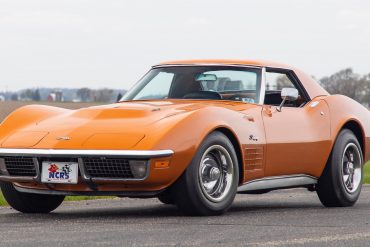


C3 Corvette Special Models, Race Cars & Concepts
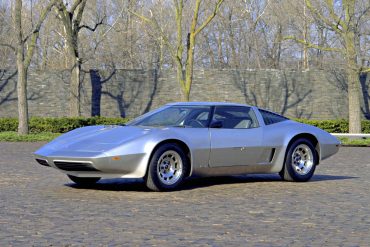
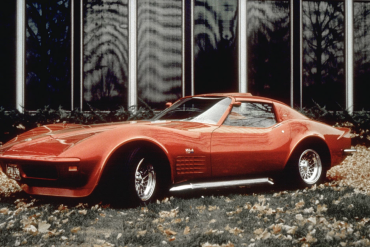
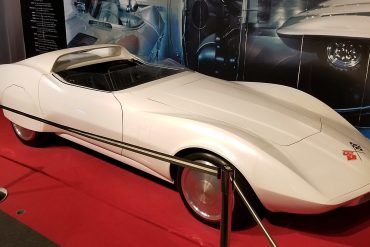
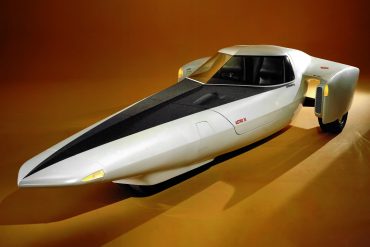
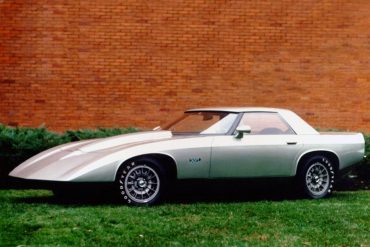
The rare ones and the never-weres: the L88 and L89, the two ZL1s, the ZR1 and ZR2, the Baldwin-Motion and Greenwood cars, the 1978 Pace Car and Silver Anniversary, the 1982 Collector Edition, the Duntov Turbo, and the mid-engine prototypes from XP-880 Astro II to the Aerovette and the rotary XP-882 that kept the mid-engine Corvette alive for fifty years. The L88, ZL1, ZR1, Pace Car and Greenwood cars have their own sections below.



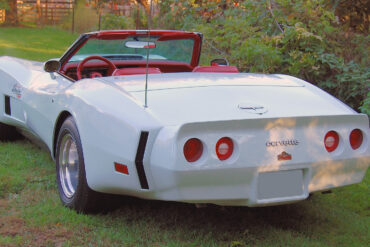
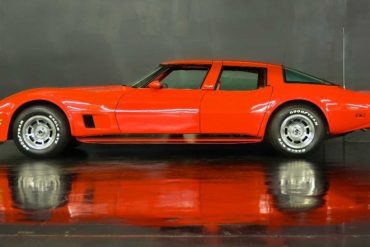
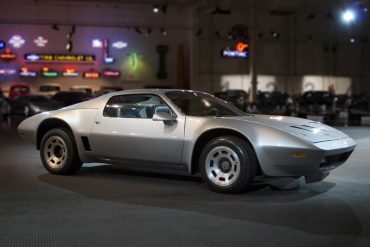
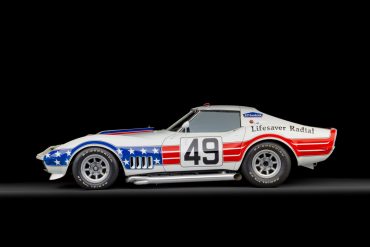


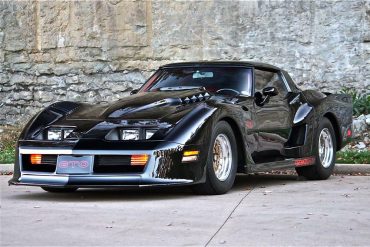
The 1968–1969 Corvette L88
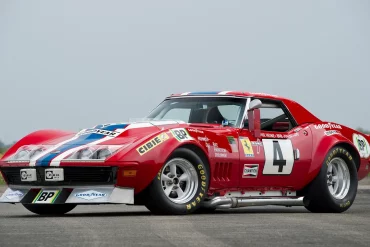
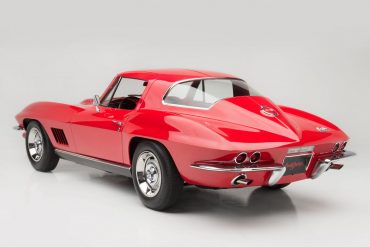
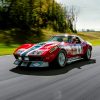
The race engine carried over from the 1967 Sting Ray: a 427 with aluminum heads, 12.5:1 compression, a forged crank, an 850-cfm Holley and a cowl-induction hood, rated at 430 horsepower so that no one would order it by mistake and making about 550. It required the heavy-duty brakes, suspension and M22 and deleted the radio, heater and choke; Chevrolet built 80 for 1968 and 116 for 1969, the last year. The Shark L88s raced at Daytona, Sebring and Le Mans, where the 1968 Owens-Corning and RED/NART cars ran, and they are the most valuable production C3s: $330,000 to $860,000 at auction in 2026.
MORE: THE L88 GUIDE / ALL L88 POSTS
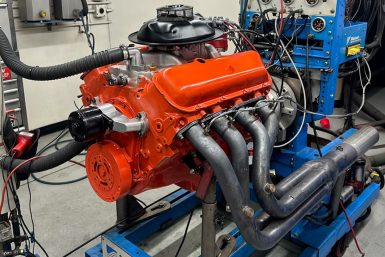
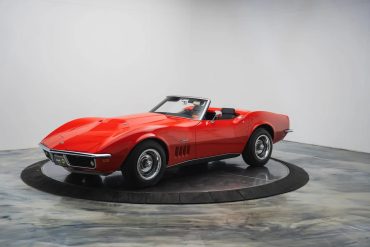
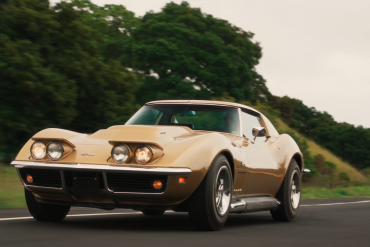


The 1969 Corvette ZL1
An L88 with an aluminum block: the all-aluminum 427 developed for Can-Am, 100 pounds lighter than the iron L88 and offered as RPO ZL1 for $4,718.35, which was more than the $4,781 coupe it went into was worth without it. With the mandatory options a ZL1 Corvette stickered at over $10,000, and Chevrolet sold two: a Can-Am White convertible and a Monaco Orange coupe. The convertible sold at RM Sotheby’s in January 2023 for $3.14 million, the most ever paid for a C3.
MORE: THE ZL1 GUIDE / ALL ZL1 POSTS


The 1970–1972 ZR1 and 1971 ZR2
The first ZR1 was a race package, not a model: the Special Purpose Engine Package put the solid-lifter LT-1 small block together with the M22 Rock Crusher, heavy-duty brakes, springs, shocks and anti-roll bars, a metal fan shroud and an aluminum radiator, and it could not be ordered with a radio, air conditioning, power steering or wheel covers. Chevrolet built 25 in 1970, 8 in 1971 and 20 in 1972. The ZR2 of 1971 was the same package around the 425-horsepower aluminum-head LS6 454, twelve cars, two of them convertibles that have sold for $962,500 and $863,500. The ZR-1 name returned on the C4 in 1990.


The 1978 Indy 500 Pace Car
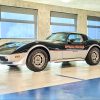
The first Corvette to pace the Indianapolis 500, and the first Corvette special edition built in numbers: Chevrolet planned 300 replicas, one for each 1953 Corvette, then 2,500, then one for every dealer, and built 6,502 with their own 900001–906502 VINs. Black over silver with a red stripe, front and rear spoilers, silver leather, the new clamshell seats, tinted glass roof panels and the decals in the trunk, at $13,653.21 that dealers doubled and speculators then could not recover. Low-mileage cars still sell for the most of any late C3; the 1978 Silver Anniversary scheme, on 15,283 cars, was the other half of the 25th birthday.



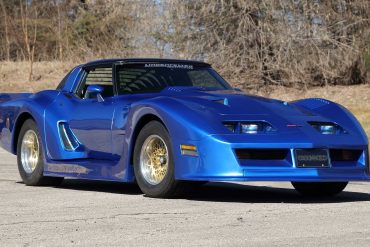
The Greenwood Corvettes
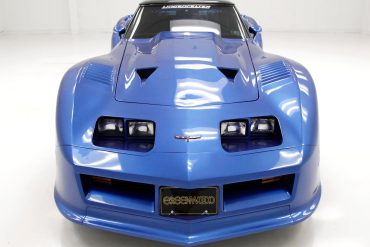
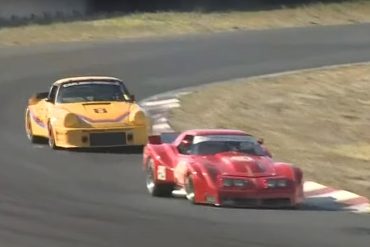
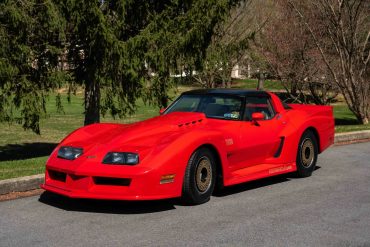
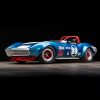
John Greenwood raced the C3 harder than anyone: SCCA A-Production champion in 1970 and 1971, a GT class win at Sebring in 1971, the BFGoodrich radial-tire cars at Le Mans in 1972 and 1973, the 1975 Trans-Am title and the 1974–76 IMSA wide-body “batmobiles” with 700-horsepower big blocks and a 215.6-mph trap speed on the Mulsanne in 1976. He then sold the look to the street: the Sportwagon of 1975, the 1976–77 GT and Sport Coupe, and the Daytona and GTO body kits of 1980–82 that Eckler’s put on hundreds of late C3s. The racing cars are among the most valuable C3s; the street cars are the only C3 specials with a body of their own.



C3 Corvette Engines
The C3 began with the C2’s engines and ended with the C4’s. In 1968 the 327 came at 300 and 350 horsepower and the 427 four ways, 390, 400 and 435 (the Tri-Power L68 and L71) and the 430-horsepower L88, with the L89 adding aluminum heads to the L71. The 350 replaced the 327 for 1969, the year of the two ZL1s. 1970 brought the 454 (390-horsepower LS5) and the solid-lifter LT-1, the best small block of the generation at 370 horsepower; 1971 cut the compression for low-lead fuel and added the 425-horsepower aluminum-head LS6 for one year; 1972 switched the ratings to SAE net, which made the same LT-1 a 255 and the base 350 a 200.
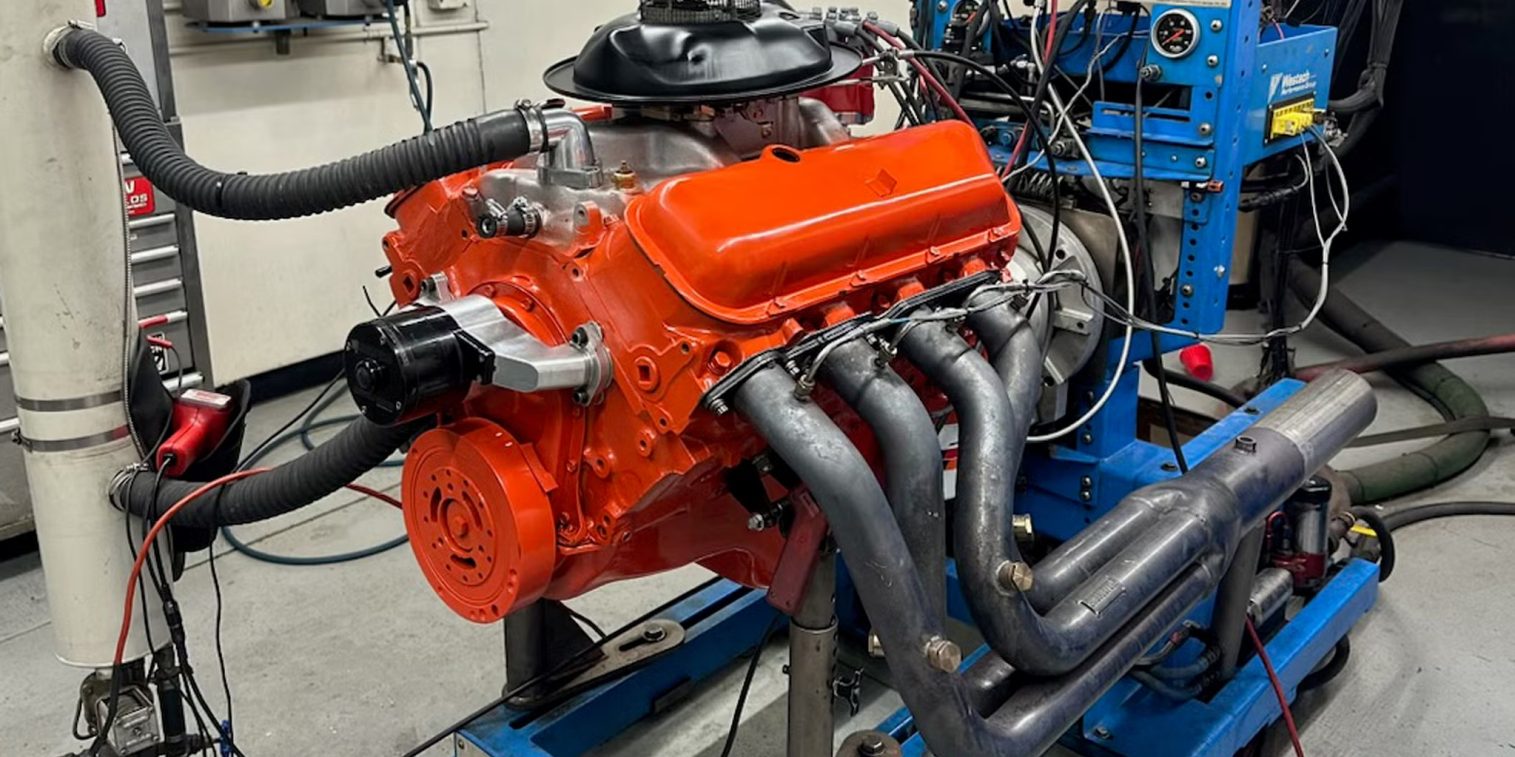
From 1973 every engine had hydraulic lifters: the L48 base 350 and the L82, which was the LT-1’s heads and intake with a milder cam, plus the LS4 454 through 1974. The catalytic converter of 1975 took the L48 to 165 horsepower, the lowest ever on a Corvette, and the numbers climbed slowly back to 195 and 225 by 1979 and 190 and 230 in 1980, when the L82 bowed out and California got a 305-cubic-inch LG4 with the first Corvette engine computer. The 1981 L81 brought Computer Command Control, magnesium valve covers and stainless manifolds to every state, and the 1982 L83 put twin throttle bodies on it as Cross-Fire Injection, 200 horsepower and the first fuel-injected Corvette since 1965.
On a chrome-bumper car the engine pad and the block casting date decide the price, and a 300-horsepower 350 wearing LT-1 or 454 badges is the most common fake in the Corvette world. The engine guides linked in the table cover each one in detail.
MORE: EVERY C3 ENGINE
| RPO | ENGINE | OUTPUT | YEARS | MORE |
|---|---|---|---|---|
| L79 / base | 327 ci small block, 300 hp base and 350 hp L79 (1968); replaced by the 350 for 1969 | 300 / 350 hp | 1968 | – |
| Base / L46 | 350 ci small block, 300 hp base and 350 hp L46 with the Duntov cam (1969–70); 270 hp in 1971, 200 hp net in 1972 | 300 / 350 hp (1969–70) | 1969–72 | Guide |
| L36 / L68 / L71 / L89 | 427 ci big block: single four-barrel 390 hp, Tri-Power 400 hp (L68) and 435 hp (L71), L89 aluminum heads on the L71 | 390 to 435 hp | 1968–69 | Guide |
| L88 | 427 ci, aluminum heads, 12.5:1, 850-cfm Holley, cowl-induction hood; 80 built in 1968, 116 in 1969 | 430 hp rated (about 550 actual) | 1968–69 | Guide |
| ZL1 | 427 ci all-aluminum L88, 100 lb lighter; two cars built at $4,718.35 for the engine alone | 430 hp rated | 1969 | – |
| LT-1 | 350 ci, solid lifters, 11.0:1, 780-cfm Holley on an aluminum intake; 370 hp (1970), 330 hp (1971), 255 hp net (1972); the ZR1 engine | 370 / 330 / 255 hp | 1970–72 | Guide |
| LS5 | 454 ci big block, hydraulic lifters, 390 hp (1970), 365 hp (1971), 270 hp net (1972) | 390 / 365 / 270 hp | 1970–72 | Guide |
| LS6 | 454 ci with aluminum heads, 9.0:1, solid lifters; 188 built, the last Corvette engine over 400 hp until 1990 | 425 hp | 1971 | – |
| LS4 | 454 ci big block, hydraulic lifters; the last Corvette big block, not sold in California | 275 hp (1973) / 270 hp (1974) | 1973–74 | Guide |
| L48 | 350 ci base engine: 190, 195, 165, 180, 180, 185, 195, 190 hp by year; the volume engine of the smog years | 165 to 195 hp | 1973–80 | – |
| L82 | 350 ci with LT-1 heads and intake, hydraulic cam: 250, 250, 205, 210, 210, 220, 225, 230 hp by year; automatic only in 1980 | 205 to 250 hp | 1973–80 | Guide |
| LG4 | 305 ci small block with Computer Command Control, California only with the automatic; 3,221 cars | 180 hp | 1980 | Guide |
| L81 | 350 ci with Computer Command Control, magnesium valve covers, stainless exhaust manifolds; one engine for every state | 190 hp | 1981 | Guide |
| L83 | 350 ci with Cross-Fire Injection (twin throttle bodies), 700-R4 automatic only; the first fuel-injected Corvette since 1965 and the 1984 C4’s engine | 200 hp | 1982 | Guide |
The C3 Corvette in Competition
The Shark raced from its first year in the hands of the same privateers who had raced the Sting Ray, with Chevrolet officially absent and Duntov still making sure the parts were in the order book. The 1968 L88s went to Daytona, Sebring and Le Mans: the Owens-Corning cars of Tony DeLorenzo and Jerry Thompson took the SCCA A-Production championships of 1968 and 1969, the Sunray DX L88 won its class at Daytona in 1968, and Henri Greder’s RED/NART L88 ran Le Mans in 1968 and 1969. John Greenwood took over from 1970, SCCA A-Production champion in 1970 and 1971 and winner of the GT class at the 1971 Sebring 12 Hours, seventh overall, in his star-spangled L88; his BFGoodrich Corvettes raced Le Mans in 1972 and 1973 on radial tires, a first there, and his IMSA wide-body cars of 1974–76 put 700 horsepower and, at Le Mans in 1976, a trap speed of 215.6 mph on the Mulsanne.
Greenwood added the 1975 SCCA Trans-Am championship and IMSA wins, and his wide-body “batmobiles” were the fastest cars in IMSA until the Monzas and Porsches arrived; by 1977 the C3’s front-line racing career was over, and Chevrolet’s own return would wait for the C4 Challenge series and, in 1999, the C5-R.
The C3 also carried the Corvette back to Indianapolis: the 1978 Pace Car was the first Corvette to pace the 500, and the 6,502 replicas made the pace car a production tradition every generation since has continued.
MORE: 1968 L88 RACE CARS / MULSANNE MONSTER / CORVETTE’S RACING LEGACY / CORVETTE & THE INDY 500
| YEAR | CAR | EVENT | RESULT |
|---|---|---|---|
| 1968–69 | Owens-Corning L88s, DeLorenzo / Thompson | SCCA A-Production | National champions both years |
| 1968 | Sunray DX L88 | Daytona 24 Hours | 1st in GT class |
| 1968–69 | RED / NART L88 coupe, Henri Greder | 24 Hours of Le Mans | The first C3s at Le Mans; both retired |
| 1970–71 | Greenwood L88 Corvettes | SCCA A-Production | John Greenwood national champion both years |
| 1971 | Greenwood L88 | Sebring 12 Hours | GT class win, 7th overall |
| 1972–73 | Greenwood BFGoodrich Corvettes | 24 Hours of Le Mans | The first race cars on radial tires at Le Mans |
| 1975 | Greenwood wide-body Corvette | SCCA Trans-Am | Champion |
| 1976 | Greenwood IMSA wide-body Corvette | 24 Hours of Le Mans | IMSA-class pole; 215.6 mph on the Mulsanne, the fastest trap speed of the race |
| 1978 | Pace Car replica (6,502 built) | Indianapolis 500 | The first Corvette to pace the 500 |
Buying a C3 Corvette
What They Bring & What To Check
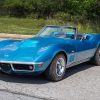
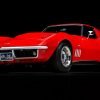
The C3 market is the widest in the Corvette world and it sorts by era first. The chrome-bumper cars of 1968–72 carry the value: big blocks above small blocks, solid-lifter LT-1s above hydraulic 350s, four-speeds above automatics, convertibles above coupes, and documentation above all, with the L88, ZL1, LS6 and ZR1/ZR2 cars in their own six- and seven-figure market. The 1973–77 cars are the entry to a classic Corvette, with the 1973–74 454s and the L82 four-speeds on top and the 1975–77 base coupes at the bottom. The 1978–82 cars are priced by mileage and by edition: the Pace Car and Silver Anniversary, then the Collector Edition, then low-mile L82 four-speeds, then everything else.
Results tracked by Classic.com in 2026 show the spread. 1969 L88s sold for $330,000 to $860,000, 1971 LS6 cars for $112,750 to $136,000, 1968–69 L89s for $124,000 to $184,250, and the ZL1 convertible made $3.14 million in 2023 and the ZR2 convertibles $962,500 and $863,500. Chrome-bumper LT-1s sold for $25,500 to $81,400, LS5 454s for $23,100 to $65,500, 427/400 and 427/435 cars for $49,500 to $110,000 and ordinary 1968–72 small blocks for $20,000 to $41,000. 1973–74 454s brought $23,100 to $32,450, 1973–77 coupes $6,600 to $28,600 and the convertibles $10,000 to $32,450. 1978 Pace Cars sold for $9,300 to $44,000 and Silver Anniversary cars for $9,400 to $36,300, 1982 Collector Editions for $14,000 to $27,000, and 1979–81 coupes for $7,700 to $24,200. Restomods ran $21,000 to $170,500 on their builds. Check whether a result includes the buyer’s premium, and treat asking prices and unsold high bids separately from completed sales.
Verification is the whole game on an early C3, because a 300-horsepower 350 wearing LT-1 or 454 badges is the most common fake in the hobby. Start at the engine pad: the suffix must match the equipment, the block casting date must precede the car’s build date, a 427 or 454 should carry a Tonawanda T prefix, an LT-1 needs the solid-lifter cam, aluminum intake and 780 Holley, and an L88, ZL1 or ZR package needs its tank sticker, Protect-O-Plate or NCRS history, since every part has been reproduced. On a 1978 Pace Car the VIN must fall in the 900001–906502 series; a decaled Silver Anniversary car is not a Pace Car. Trim tags should agree with the paint and interior, and from 1973 the build sheet is often still on the tank.
The body is fiberglass over a steel birdcage, and the birdcage rusts: the windshield frame, the door hinge pillars, the T-top channels and, on 1968–72 coupes, the rear-window frame, with the frame itself rusting at the rear kickups and the trailing-arm mounts. Vacuum-operated headlights and wiper doors fail when the hoses do, the C3 runs hot in traffic by design, the 1973–82 urethane bumpers crack and sag, the 1980–82 electronics need their sensors, and the fiber-optic light monitors of 1968–71 are a hobby of their own. Most of these cars see few miles, so budget for tires, brakes, fuel system and the vacuum system on anything that has sat. The buyer’s guide below goes year by year, and a 1977 to 1981 L82 is its recommended place to start.
MORE: THE MARKET
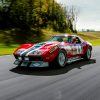


C3 Corvette Technical Research
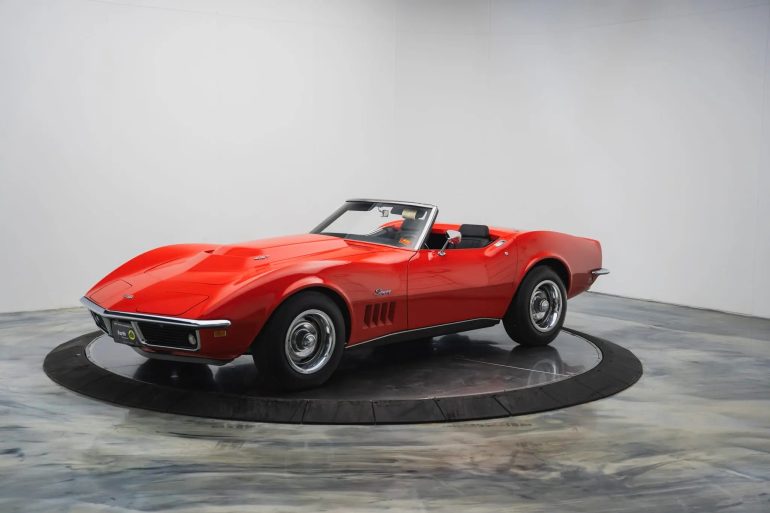
The numbers behind the Shark: production figures and build dates for all fifteen years, VIN decoding, every RPO and factory option with its price and take rate, the color charts, specifications and performance, sales brochures, owners manuals, service bulletins, recalls, common problems and our DIY series. The year pages carry each model year’s own set.


C3 Corvette Pictures, Videos, Wallpapers & Galleries
The Shark from every angle: galleries for each year, wallpapers, the C3s we have featured as Corvette of the Day, and videos of L88s, LT-1s, Pace Cars, restomods and barn finds on the road, at auction and on track.
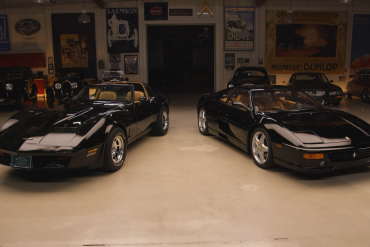
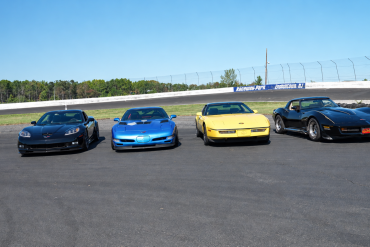


Everything We've Published On The C3 Corvette
Every story tagged C3 Corvette, newest first: cars for sale and auction results, restorations and restomods, DIY, videos, galleries and history. The latest headlines here.
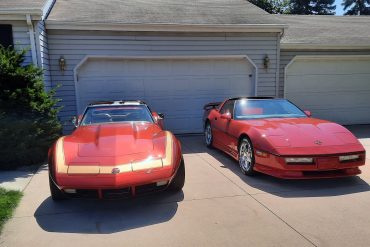


FAQs
What years are the C3 Corvette?
The C3 Corvette was built for fifteen model years, 1968 through 1982, the longest run of any generation. Enthusiasts call it the Shark, after the Mako Shark II show car it was styled on, and the chrome-bumper cars of 1968–72 are often separated from the urethane-bumper cars of 1973–82. Chevrolet used the Stingray name, one word, from 1969 to 1976. The C2 Sting Ray preceded it and the C4 replaced it for 1984; there was no 1983 Corvette.
How many C3 Corvettes were built?
542,861, more than any other Corvette generation: 28,566 in 1968, 38,762 in 1969, 17,316 in 1970, 21,801 in 1971, 27,004 in 1972, 30,464 in 1973, 37,502 in 1974, 38,465 in 1975, 46,558 in 1976, 49,213 in 1977, 46,776 in 1978, 53,807 in 1979 (the all-time record), 40,614 in 1980, 40,606 in 1981 and 25,407 in 1982. Convertibles were built through 1975 only. The rare ones are the 196 L88s, the two ZL1s, the 188 LS6 cars, the 53 ZR1s and 12 ZR2s, and among the late cars the 6,502 Pace Car replicas and 6,759 Collector Editions.
Who designed the C3 Corvette?
Larry Shinoda, under Bill Mitchell, drew the Mako Shark II show car of 1965 that the production body was adapted from by David Holls’ Chevrolet studio; the “sugar scoop” roof came from Zora Arkus-Duntov’s mid-engine proposal. Duntov was chief engineer until his retirement in 1975, when Dave McLellan took over and saw the C3 through to 1982. The chassis underneath was the 1963 Sting Ray’s, because the mid-engine cars that Duntov, Mitchell and Frank Winchell’s teams proposed needed a transaxle General Motors did not have.
What engines did the C3 Corvette have?
Small blocks: the 327 (1968), the 350 from 1969 in base, L46, LT-1, L48, L82, L81 and Cross-Fire L83 forms, and a 305 for California in 1980. Big blocks: the 427 in 1968–69 at 390, 400 and 435 horsepower plus the L88 and the aluminum ZL1, and the 454 from 1970 to 1974 as the LS5, the aluminum-head LS6 of 1971 and the LS4. Horsepower ran from 435 gross (1968–69 L71) and 370 (1970 LT-1) down to 165 (1975 L48) and back to 230 (1980 L82) and 200 (1982 L83). Ratings switched from gross to SAE net in 1972, which is why a 1972 LT-1 reads 255.
What changed from the C2 to the C3 Corvette?
The body and almost nothing else. The C3 kept the Sting Ray’s frame, 98-inch wheelbase, independent rear suspension, disc brakes and engines, and put Larry Shinoda’s Mako Shark II shape over them: a longer, lower, wider car with a pointed nose, flared fenders, hidden wipers, vacuum-operated pop-up headlights, the first T-top roof with a removable rear window, and a smaller cockpit with the seats reclined to fit under the roof. It also gained the three-speed Turbo Hydra-Matic in place of the Powerglide and lost the side vent windows. The chassis then carried the Corvette through 1982.
What is the difference between a chrome-bumper and a rubber-bumper C3?
The 1968–72 cars have chrome bumpers front and rear, a removable rear window, gross horsepower ratings through 1971 and the big engines: the 427s, the L88 and ZL1, the 454s including the LS6, and the solid-lifter LT-1. From 1973 the nose was body-color urethane to meet the 5-mph bumper rule and from 1974 the tail too, the rear window was fixed, every engine had hydraulic lifters, the 454 ended after 1974 and the convertible after 1975, and the catalytic converter arrived in 1975. The chrome-bumper cars are the collectible C3s; the urethane-bumper cars are the affordable ones, and from 1978 they have the fastback glass roof.
Which C3 Corvette year is the best to buy?
For a classic at a classic’s price, a 1970–72 LT-1 or 454 four-speed, documented; the 1972 is the last chrome-bumper car and often the best built. For value, a 1977 to 1981 L82 with the four-speed, the most overlooked Corvettes in the hobby, or a 1973–74 454 if you want a big block for small-block money. The 1978 Pace Car and the 1982 Collector Edition are the late specials that hold value, and the 1975 is the last convertible. Avoid paying for badges: a 300-horsepower 350 dressed as an LT-1 is the hobby’s most common fake, and a Silver Anniversary car with Pace Car decals is not a Pace Car.
How much is a C3 Corvette worth today?
In 2026, driven 1975–81 coupes have sold for $6,600 to $28,600 at auction, 1973–74 454s for $23,100 to $32,450, 1978 Pace Cars for $9,300 to $44,000, 1982 Collector Editions for $14,000 to $27,000, chrome-bumper small blocks for $20,000 to $41,000, LT-1s for $25,500 to $81,400, 454s for $23,100 to $65,500 and 427 Tri-Power cars for $49,500 to $110,000. The specials sit far above: 1971 LS6 cars $112,750 to $136,000, 1968–69 L88s $330,000 to $860,000, the 1971 ZR2 convertibles $962,500 and $863,500, and the 1969 ZL1 convertible $3.14 million in 2023. Results tracked by Classic.com; check whether a figure includes the buyer’s premium.
What were the C3 Corvette special models?
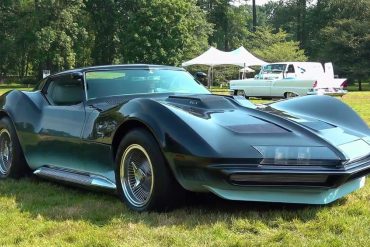
Factory: the L88 (1968–69) and ZL1 (1969), the ZR1 Special Purpose package (1970–72) and the LS6 ZR2 (1971), the 1978 Silver Anniversary paint and the 1978 Indy 500 Pace Car replica (6,502), and the 1982 Collector Edition (6,759). Dealer and tuner: the Baldwin-Motion Phase III and Manta Ray cars of 1968–72, the Greenwood Sportwagon, GT, Daytona and GTO cars, and the Duntov Turbo of 1980. Concepts: Astro II (XP-880), Astro III, the Manta Ray, XP-882 and the Four Rotor that became the Aerovette, the Two Rotor XP-897 GT, the Reynolds XP-895, the Mulsanne and the four-door Corvette America.
How did the C3 Corvette do in racing?
Privately, and well into the mid-1970s. The Owens-Corning L88s won the SCCA A-Production titles of 1968 and 1969 and L88s won their class at Daytona and ran Le Mans in 1968 and 1969; John Greenwood won A-Production in 1970 and 1971, the Sebring GT class in 1971 and the Trans-Am title in 1975, took radial-tired Corvettes to Le Mans in 1972 and 1973, and built the 700-horsepower IMSA wide-body cars that reached 215.6 mph at Le Mans in 1976. The 1978 Corvette was the first to pace the Indianapolis 500. Chevrolet itself stayed out of racing until the C4.
What are the common problems with a C3 Corvette?
Rust in the steel birdcage under the fiberglass, especially the windshield frame, door hinge pillars and T-top channels, and in the frame at the rear kickups and trailing-arm mounts; overheating in traffic, built in by the narrow engine bay; vacuum systems that stop the headlights and wiper door working; cracked and sagging urethane bumpers on 1973–82 cars; failed fiber-optic light monitors on 1968–71 cars; tired sensors on the 1980–82 computer-controlled engines; and faked engines, since the LT-1, the 454s and the L88 have all been reproduced down to the casting numbers. Parts supply is the best of any classic Corvette, which is also why documentation matters more than the parts.
Is a C3 Corvette a good investment?
The chrome-bumper specials and big blocks have appreciated steadily and the L88, ZL1 and ZR2 cars set records, but the C3 is also the generation with 542,861 cars, and most of them are driver’s cars whose prices track the wider collector market; the 1975–81 coupes have been the cheapest classic Corvettes for decades and remain so. A C3 bought with its numbers verified, an honest birdcage and its paperwork has held value; one bought on badges has not. We are not financial advisers; dated Classic.com results and the car’s NCRS or Bloomington history are the places to check before paying.
All The Research
C3 Corvette Advertisements / C3 Corvette Build Dates / C3 Corvette Buyer’s Guide / C3 Corvette Colors / C3 Corvette Common Issues / C3 Corvette DIY / C3 Corvette Engine / C3 Corvette Engines (All) / C3 Corvette Factory Options / C3 Corvette Maintenance / C3 Corvette Mods / C3 Corvette Owners Manual / C3 Corvette Performance / C3 Corvette Posters / C3 Corvette Pricing / C3 Corvette Production / C3 Corvette Production Figures / C3 Corvette Recalls / C3 Corvette RPO Codes / C3 Corvette Sales Brochures / C3 Corvette Service Bulletins / C3 Corvette Specifications / C3 Corvette VIN Decoder / C3 Corvette VIN Numbers