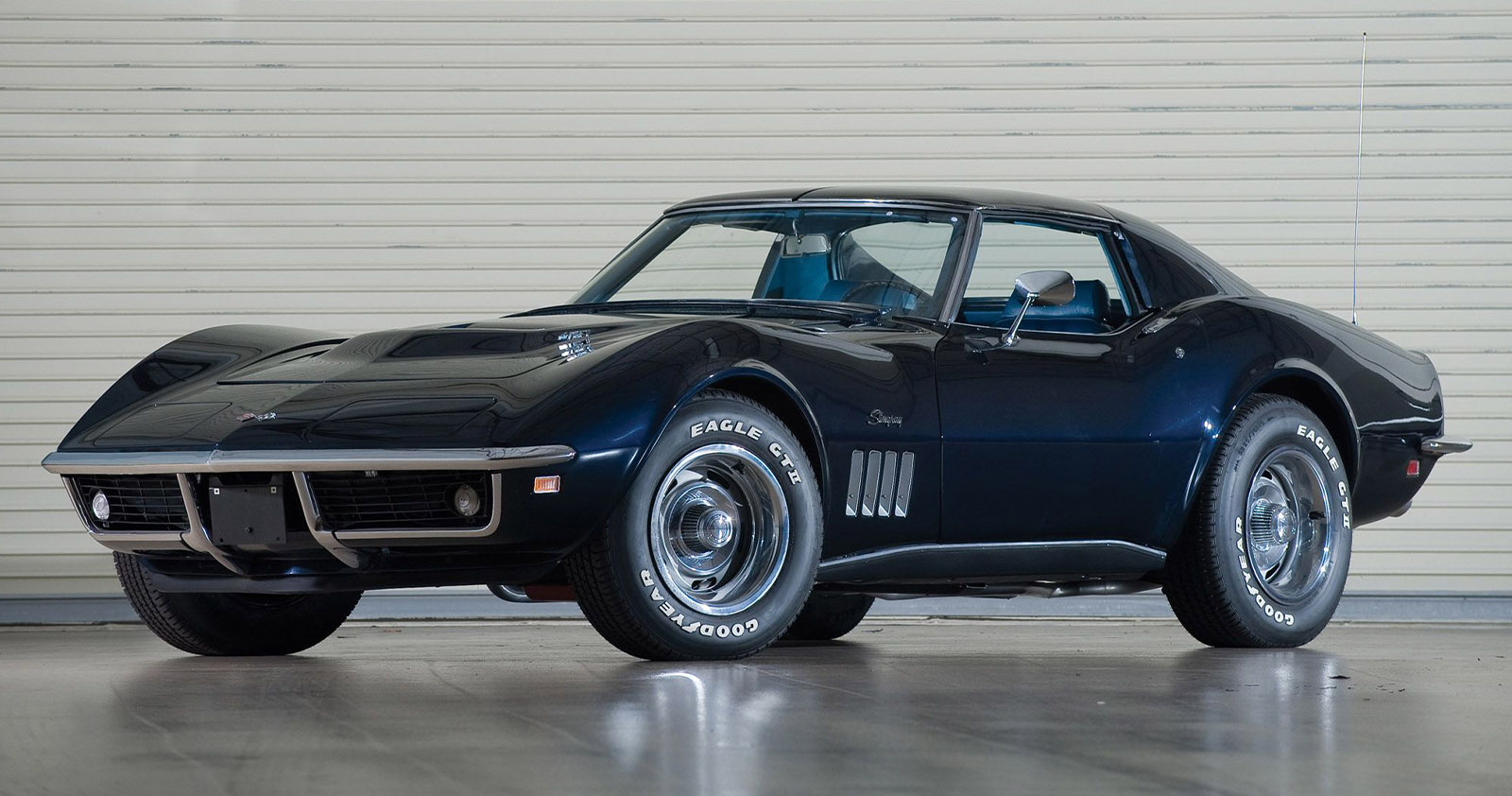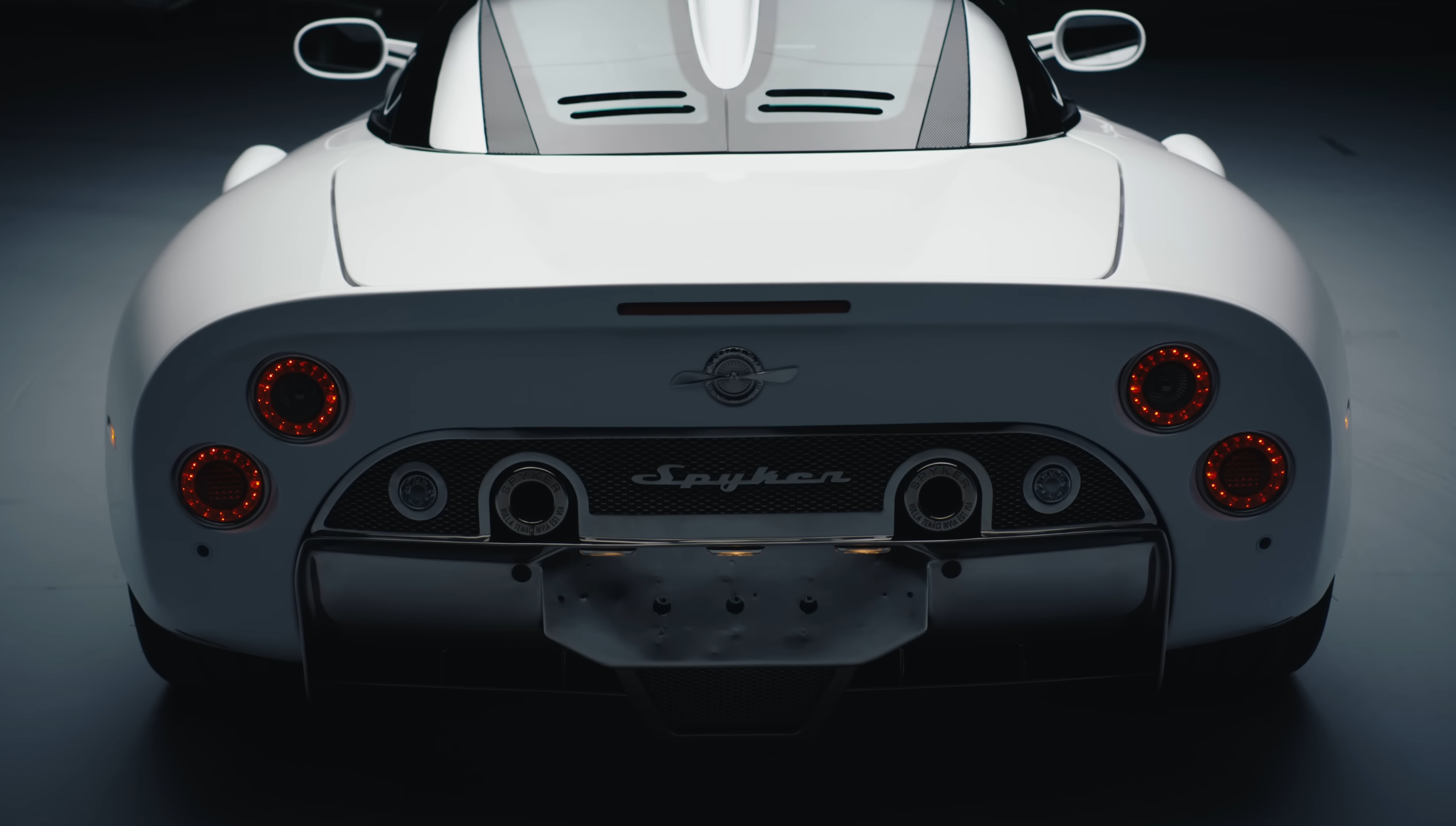
Say “C8” around here and everybody knows what you mean. Chevrolet wasn’t first to the name, though. Spyker, a small Dutch manufacturer, had a hand-built supercar badged C8 a decade before the mid-engine Corvette arrived, and the engineering philosophy will sound familiar to Corvette people: proven mechanicals underneath, money spent where the customer can see and touch it.
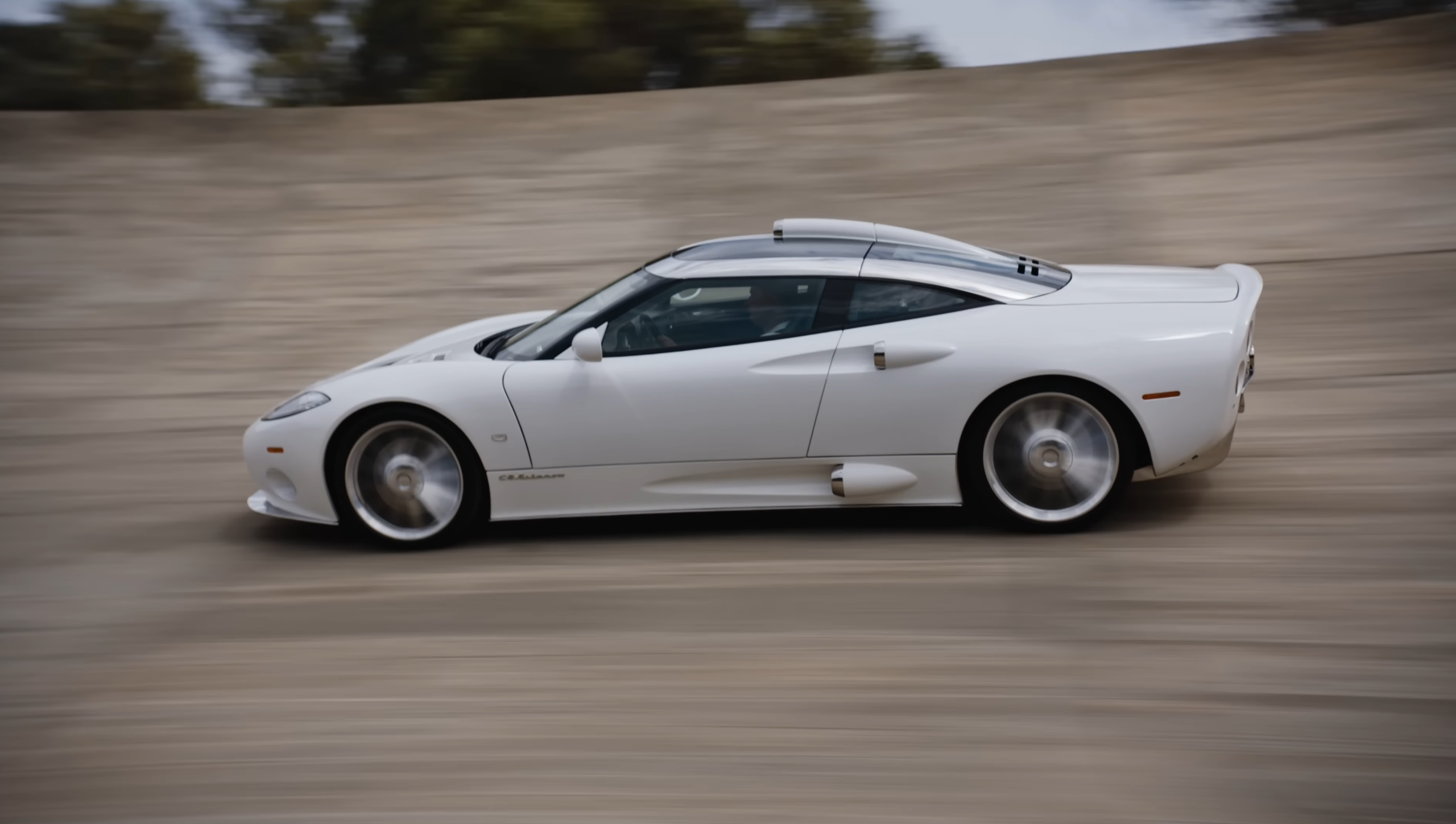
The only white C8 Aileron ever produced recently appeared in the debut film from a new media project called WBT Garage, lapping a banked Spanish circuit with more than double Daytona’s banking. Both the car and the company behind it have a stranger history than most readers probably realize.
A Supercar Built on Borrowed Sense

The C8 Aileron came out in 2009, late in Spyker’s modern run. Hand-formed aluminum body, exotic price, and on paper nothing in common with anything from Bowling Green. Underneath, the choices were conservative. Audi’s 4.2-liter V8 supplied the power. The running gear was sourced from platforms the engineers already understood. No experimental drivetrain, no bespoke engine that needed a specialist on retainer.
Corvette has run on the same idea for seventy years. A reliable foundation is what lets you actually drive an exciting car instead of storing it, and the Aileron’s owner says in the film he’d happily use his as a daily, rough streets included.
Where the budget went was the cabin. Rows of toggle switches, a red flip cover over the starter, paddle shifters machined into the shape of small propellers. It looks like a 1940s aircraft cockpit. There’s a reason for that, and it isn’t a stylist’s mood board.
The Company Behind the Badge
Spyker built its first cars before Ford Motor Company existed. Brothers Jacobus and Hendrik-Jan Spyker started with horse-drawn carriages in the Netherlands in the 1880s, and their gold-leafed royal coach from 1898 stayed in service with the Dutch monarchy for over a century. By 1903 the company had built the 60 HP, a race car with a six-cylinder engine and four-wheel drive, which was ambitious stuff at a time when much of the industry hadn’t settled basic layout questions.
World War I took the luxury car market with it. Spyker switched to aircraft, survived the war years that way, and didn’t last long after. The original company closed in the late 1920s. The aviation chapter is the part that stuck, all the way down to those propeller shifters on a car built eighty years later.
Two Bankruptcies and a Formula 1 Team
Victor Muller and engineer Maarten de Bruijn picked the name back up in the late 1990s. Their version of Spyker built cars by hand in very small numbers and sold exclusivity Ferrari genuinely couldn’t match, since the odds of meeting another one on the road rounded to zero. For a small operation it reached surprisingly far. Several Le Mans entries. A Formula 1 team in 2006 and 2007. Then came the Saab acquisition in 2010, which was too much weight for a company that size, and by around 2015 Spyker had stopped building cars again. Second collapse, for anyone counting.
The Track That Makes Daytona Look Flat
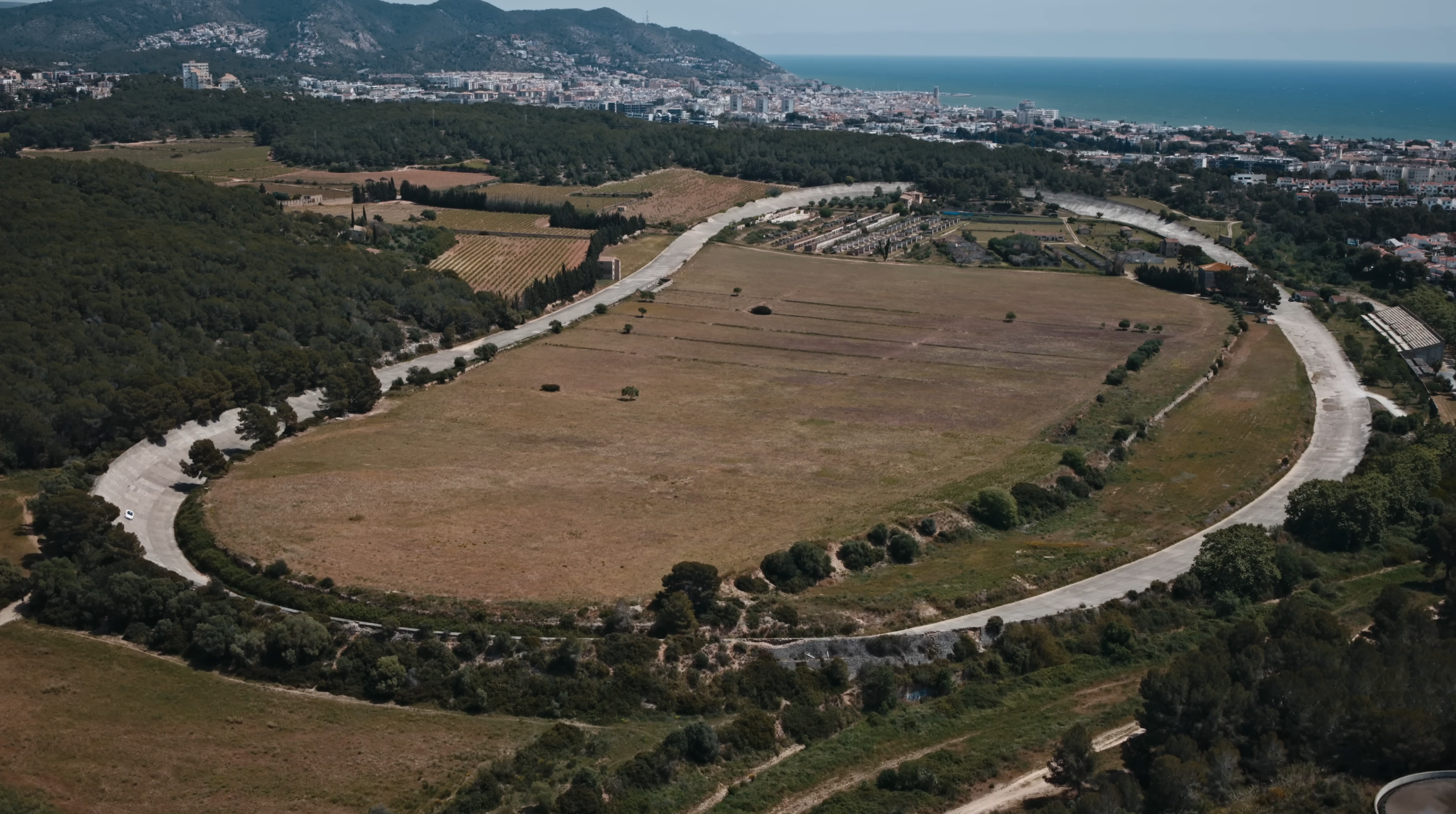
For the film, the white Aileron went to the Autòdrom de Sitges-Terramar, a concrete oval about an hour south of Barcelona. It opened in October 1923. Daytona’s banking runs about 31 degrees and drivers consider that serious. Terramar’s corners reach 66. The men who raced there in the twenties talked about it as driving along a wall, rock face on the inside, a drop off the outer edge.
One major race happened there, the 1923 Spanish Grand Prix, and the organizers couldn’t pay the prize money afterward. International racing left and never returned. The track sat deteriorating in the Catalan countryside for the next hundred years, interrupted occasionally: The Grand Tour filmed an episode on it, and in 2012 Red Bull cleared the overgrowth so Carlos Sainz could set a lap record in an Audi R8 LMS. The film’s host doesn’t think it has long left, maybe ten driveable years.
So somebody took a one-of-one, hand-built supercar up a 66-degree banking poured in 1923, on no carbon-ceramic brakes and minimal electronics, and filmed it before the option disappears.
A Collector Story That Travels

The host owns the car. Years before he bought it, he kept a 1:18 scale model of an Aileron on a shelf at home, which is a story plenty of readers have lived in some form. The die-cast ’63 split-window on a kid’s bookshelf has put more than a few real Corvettes in garages decades later. The decision happens early. The purchase catches up when it can.
WBT Garage, the project behind the film, is the international expansion of a Ukrainian automotive channel with millions of views, founded by entrepreneur and collector Volodymyr Nosov. The English-language channel is aimed at American viewers and makes documentary-style films about rare cars and private collections. No press fleets are involved anywhere in the process. Access runs through the collector world, which is how the debut subject ended up being somebody’s personal one-of-one instead of a manufacturer loaner.
Round Three
Spyker, meanwhile, is trying again. A new C8 Preliator is scheduled to debut at The Quail during Monterey Car Week this August, and the stated specs are a twin-turbocharged V8 around 800 horsepower with no electrification of any kind. The company has collapsed twice, so skepticism is fair. An 800-horsepower V8 with no hybrid assist in 2026 is still a clear statement of intent, and a brand betting on proven engines and analog driving has a natural audience on this side of the Atlantic. Corvette people understand the approach better than most.