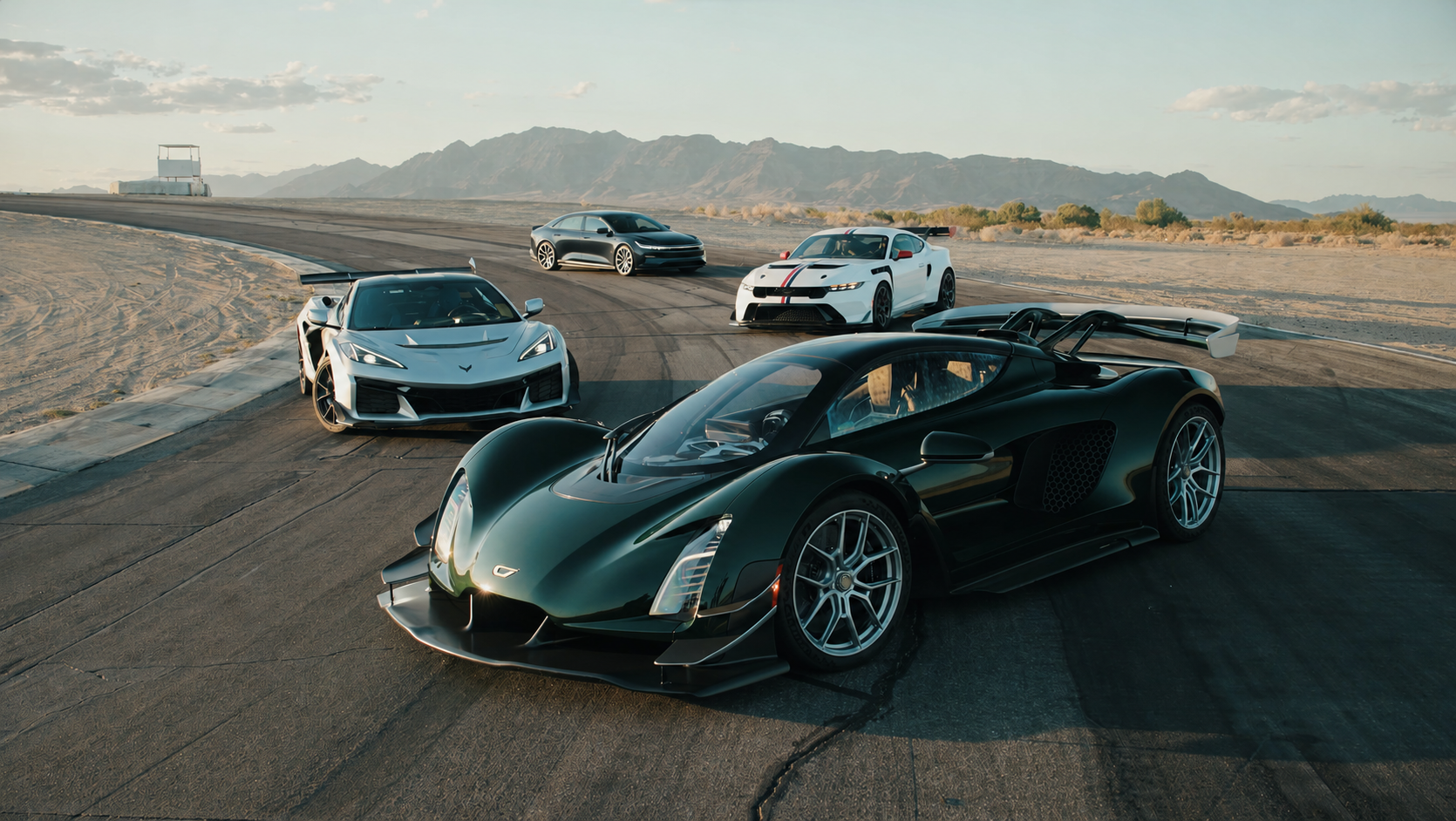
Before electric propulsion and hybrid technology became central to high-performance engineering, American performance was defined largely by displacement and raw horsepower. In 2026, however, that formula has evolved dramatically. In a recent MotorTrend comparison, four of the nation’s most advanced performance machines—the Chevrolet Corvette ZR1X, Ford Mustang GTD, Lucid Air Sapphire, and Czinger 21C—demonstrated how American engineering now spans traditional V8 muscle, electrification, and cutting-edge hypercar technology.
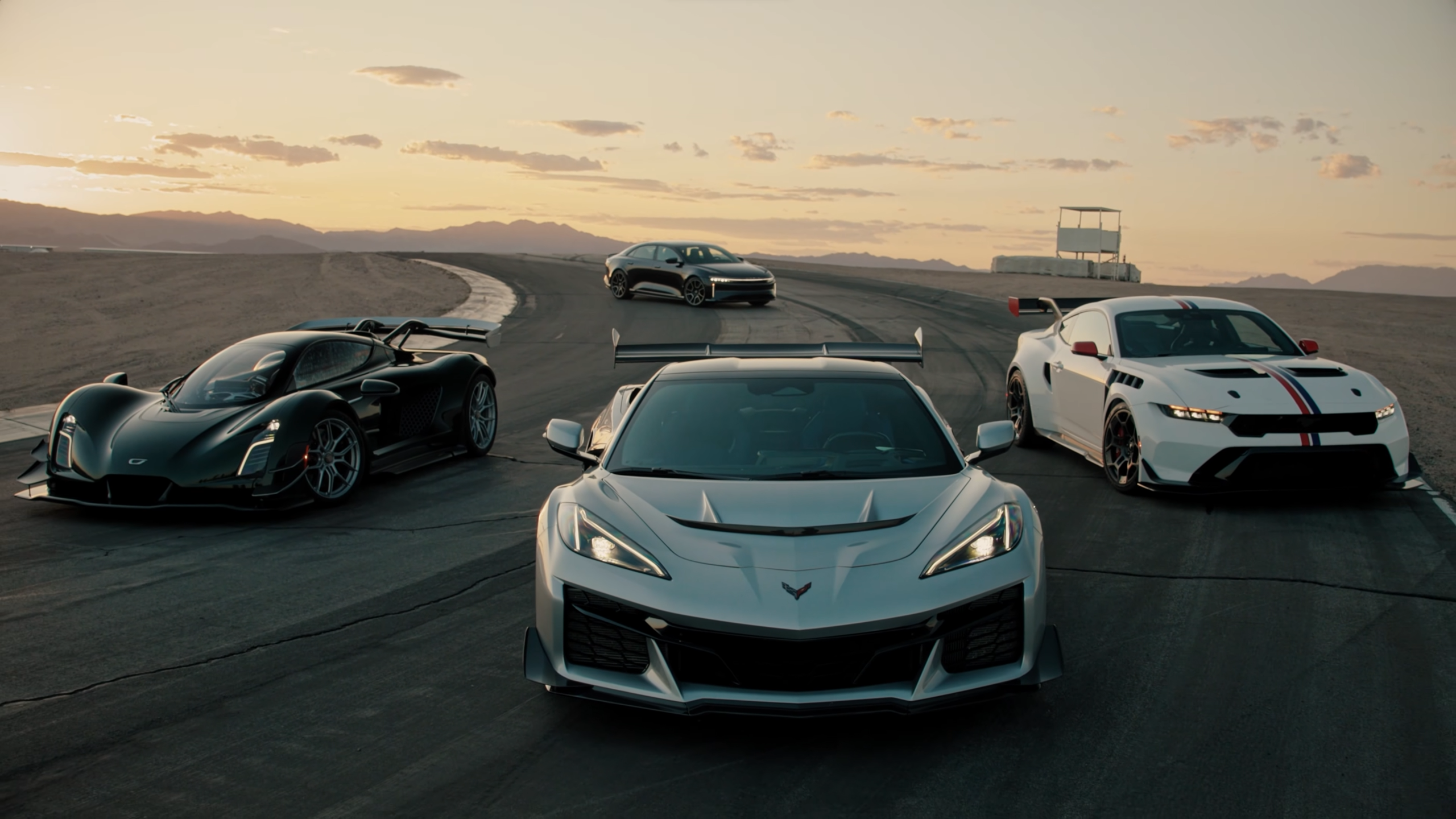
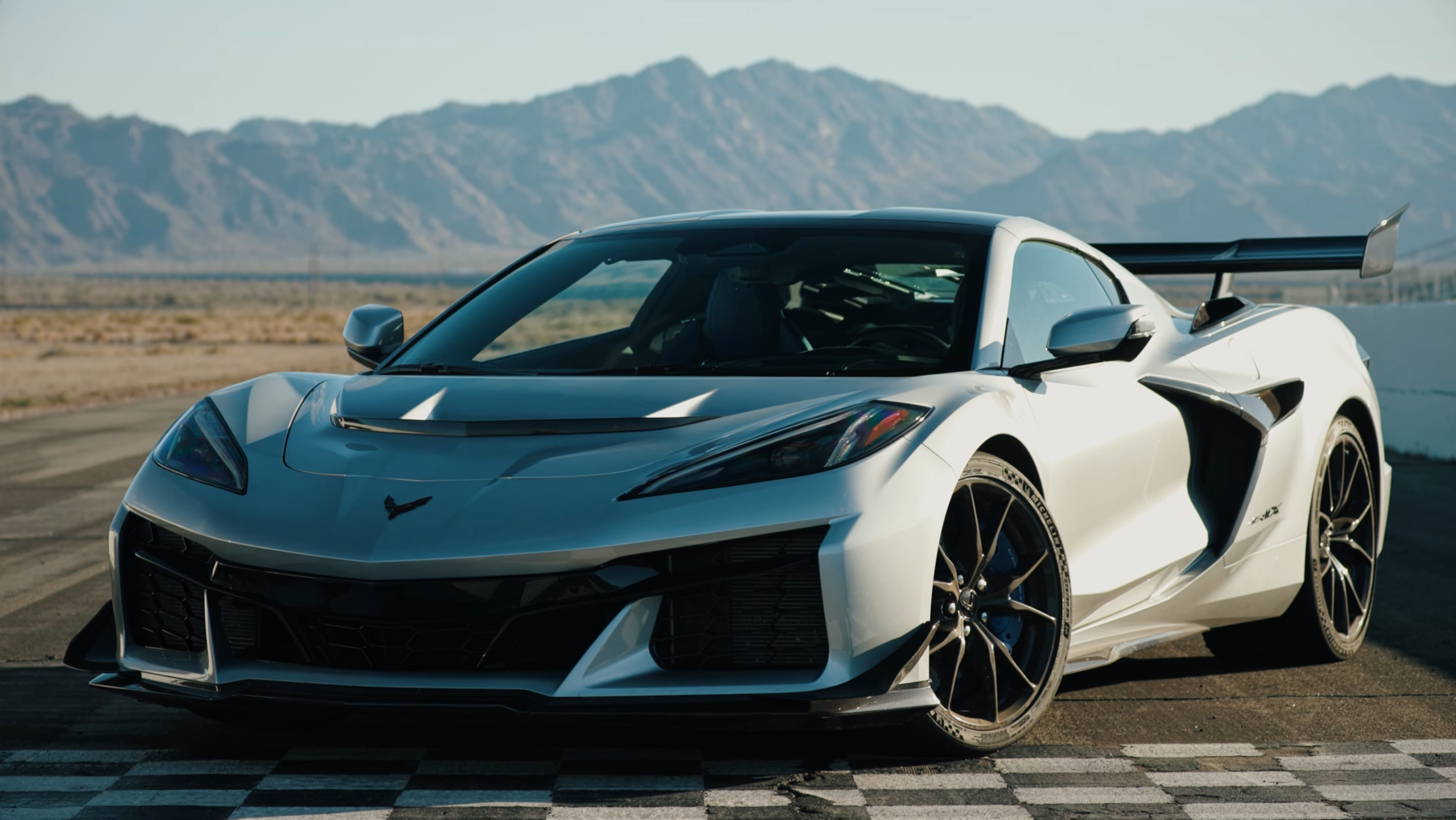
At the center of the showdown was the new Chevrolet Corvette ZR1X, the most powerful production Corvette ever created. Combining the ZR1’s 5.5-liter twin-turbocharged LT7 V8 producing 1,064 horsepower with a front-mounted electric motor, the hybrid drivetrain delivers a staggering 1,250 horsepower and all-wheel-drive capability. Equipped with the ZTK Performance Package, track-calibrated suspension, carbon-fiber aerodynamic components, and a massive rear wing, the ZR1X arrived fully prepared to challenge America’s fastest machines.
Its primary rival was the remarkable Czinger 21C, a limited-production California-built hypercar that also produces 1,250 horsepower through a hybrid powertrain. Unlike the Corvette, however, the 21C employs an advanced carbon-fiber chassis filled with 3D-printed structural components developed by Divergent Technologies. It also weighs roughly 400 pounds less than the Corvette while carrying a price tag of approximately $2.4 million—nearly ten times the ZR1X’s estimated $255,000 sticker.

Former Corvette factory driver and Daytona winner Andy Pilgrim piloted each vehicle under identical conditions to produce directly comparable lap times. The Corvette immediately impressed with explosive acceleration, exceptional braking stability, and remarkable composure despite its additional weight. Pilgrim noted that while the ZR1X exhibited mild understeer at corner entry, the hybrid system delivered tremendous traction exiting turns, allowing the car to deploy its immense power with confidence.
When the timing lights stopped, the Corvette posted an outstanding 1:48.6 lap, finishing just 2.22 seconds behind the Czinger’s record-setting 1:46.55. Considering the enormous price difference, the result underscored how close Chevrolet has come to genuine hypercar territory using the production C8 platform as its foundation.
The broader comparison also highlighted the diversity of American performance. The Mustang GTD emerged as an exceptional cornering machine with race-inspired chassis tuning, while the Lucid Air Sapphire proved that a luxury electric sedan can rival dedicated supercars both on the road and the racetrack.
Although the Czinger 21C ultimately claimed outright honors, the Corvette ZR1X may have delivered the comparison’s biggest statement. It offers hypercar-level acceleration, world-class circuit capability, and everyday usability at a fraction of the cost, making a compelling case that Chevrolet has built America’s first truly attainable hybrid hypercar.
Source: MotorTrend Channel