From the 1957 Racer Kit to a one-second-club hypercar: members get the 0-60 ladder for every generation, why only 53 C3 ZR1s were sold, the $58,995 C4 ZR-1's Lotus engine and how each later ZR1 raised the bar.


CORVETTE RESEARCH
Every Corvette’s numbers in one place: horsepower and torque, 0–60 and the quarter mile, top speed, weight and the price when new, for every model year from the 150-horsepower Blue Flame six of 1953 to the 1,250-horsepower ZR1X of 2026, with charts of how the car got faster, the fastest Corvette of every generation side by side.
Quick Nav: Overview · The Story · Flagships · Horsepower · 0–60 · Top Speed · Lb per hp · The Quickest · Every Year · 2027 Lineup · Rivals · Records · Performance Posts · Videos · FAQs
Least to Most: 150 hp (1953) to 1,250 hp (2026 ZR1X); 223 lb-ft to 973; 11.0 seconds to 60 to under 2.0; 107 mph to 233; 18-second quarter miles to under 9
The Big Steps: The V-8 (1955), fuel injection (1957), the big-block (1965), the L88 and ZL1 (1967–69), the LT5 ZR-1 (1990), the LS1 (1997), the 505-hp LS7 (2006), the supercharged LS9 (2009) and LT5 (2019), the mid-engine LT2 (2020), the flat-plane LT6 (2023), the twin-turbo LT7 (2025) and the electric front axle (2024–26)
The Dark Years: 1972–82: net ratings, low compression and emissions cut the top engine to 205 hp in 1975 and the quickest Corvette to a 7.7-second 0–60; the 1985 Tuned-Port Injection car started the climb back
Records: 254.76 mph (Callaway Sledgehammer, 1988); 175.9-mph FIA 24-hour average (ZR-1, 1990); 7:19.63 and 6:49.275 at the Nürburgring (2012 ZR1, 2026 ZR1X); 2:37.25 at VIR (2019 ZR1); 233.5 mph at Papenburg (2025 ZR1)
How to Read It: Horsepower is the factory rating, SAE gross through 1971 and SAE net from 1972 (the 1972 ‘drop’ is a change of measurement); acceleration is Chevrolet’s where published, otherwise the most-cited period road test; weights are curb weights unless marked
Related Pages: The specs library (every year’s full specifications), the engines page, the Z06, ZR1, Grand Sport and L88 guides, the race cars and the year pages
The Corvette has been getting faster for seventy years, and not in a straight line. The first car took eleven seconds to reach 60 mph and could not quite touch 110; the 1957 fuel-injected 283 cut that to under six seconds and the big-blocks of 1965–71 held the line at five and a half; then the emissions era took the top engine from 425 gross horsepower to 205 net and the quickest Corvette back to nearly eight seconds, and it took until 1985 to get under six again. From there the climb has not stopped: the ZR-1 at 4.4, the Z06 at 3.9, the 505-hp Z06 at 3.7, the 638-hp ZR1 at 3.4, the supercharged C7s under 3.0, the mid-engine Z06 at 2.6, the twin-turbo ZR1 at 2.3 and the ZR1X under 2.0.
This page puts the numbers side by side. The table below carries every model year from 1953 to 2027 with its most significant model (and the second one where it matters, the L88, the ZL1, the ZR-1 beside the base car), its horsepower and torque, 0–60 and quarter mile, top speed, weight, pounds per horsepower and the price when new; the charts show the curves; the flagship table compares the fastest Corvette of each generation; the lineup table shows what you can buy in 2027; and the rivals and record laps put it in the world’s context.
A word on the figures. Horsepower is the factory rating, which means SAE gross through 1971 and SAE net from 1972, so a 1972 engine rated at 255 horsepower is not 115 weaker than its 1971 self; it is the same engine measured honestly, less a little compression. The L88 and ZL1 were rated at 430 on purpose and made 540 to 585. Acceleration figures are Chevrolet’s where it published them (from the C5 Z06 on, mostly) and otherwise the most-cited period road tests, which varied with the driver, the tires and the day; treat a tenth either way as noise.
The performance history of the Corvette, era by era, and what moved the numbers.
The first Corvette’s Blue Flame six made 150 horsepower (155 from 1954) and took the car to 60 in eleven seconds and to 107 mph, which is why the car nearly died. Ed Cole’s 265-cubic-inch V-8 of 1955, 195 horsepower, cut 0–60 to 8.7 seconds, and the 1956 dual-quad 225-horsepower version with the three-speed manual got it to 7.3 and 129 mph: a sports car at last.
The 283 of 1957 with Rochester Ramjet fuel injection made 283 horsepower, one per cubic inch, and Road & Track’s fuelie ran 0–60 in 5.7 seconds and the quarter in 14.3: the first Corvette under six seconds. The 290- and 315-horsepower fuelies of 1958–61 and the 360-horsepower 327 of 1962 kept the C1 in the mid-fives, at 130 to 140 mph, on drum brakes.
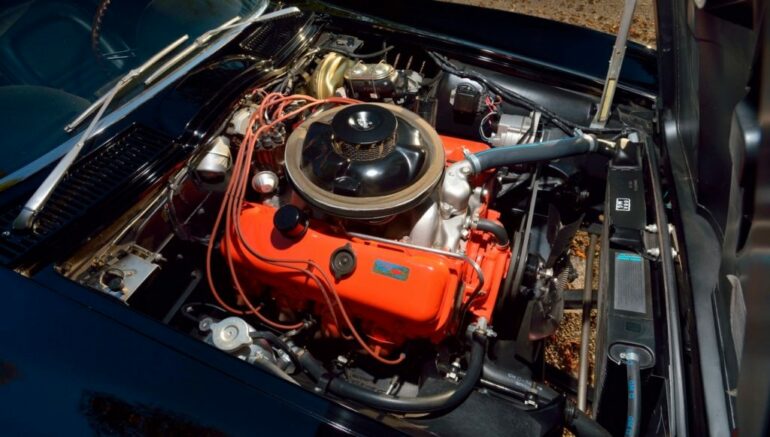
The Sting Ray’s chassis made the power usable; the 396 of 1965 (425 horsepower) and the 427s of 1966–69 (390 to 435, and the L88’s 540-plus) made it frightening. Car and Driver’s 1966 L72 ran 0–60 in 5.4 and the quarter in 13.4 at 105, the 1971 LS6 454 did 5.3 and 13.8, and the two 1969 ZL1s, with the all-aluminum 427, went 4.0 and 12.1 at 116 in Road & Track’s hands, a figure no production Corvette matched until 2001. The L88s ran elevens on slicks.
In 1972 the industry moved from gross to net ratings and the Corvette’s numbers fell on paper (the LT-1 from 330 to 255) before they fell in fact: lower compression, the catalytic converter of 1975 and the end of the big-block in 1974 took the top engine to 205 horsepower and the quickest Corvette to 7.7 seconds and 120 mph. The 1978–80 L82s at 220 to 230 horsepower were the best of the era, mid-sixes to 60; the 1981 190-horsepower car the slowest Corvette since 1954.
The 1984 car handled better than any Corvette before it and still took 6.9 seconds to 60 with the 205-horsepower Cross-Fire engine; Tuned-Port Injection in 1985 (230 horsepower) brought it to 5.7, 14.1 and 150 mph, and the Callaway Twin Turbo of 1987–91 (345 to 403) was the first Corvette past 175. Then the ZR-1: Lotus’s 32-valve LT5 at 375 horsepower ran 4.5 to 60 and 175 mph in 1990, 405 horsepower and 179 mph from 1993, and set the FIA 24-hour record at 175.9 mph. The 300-horsepower LT1 of 1992 made the base car a 163-mph, five-second machine, and the 1996 Grand Sport’s 330-horsepower LT4 closed the generation.
The C5’s 345-horsepower LS1 took the base Corvette to 4.7 seconds and 172 mph in 1997, and the 2001–04 Z06 (385 then 405 horsepower, 3,118 pounds) ran 3.9 and 12.4 at 116: the ZR-1’s pace at half the price. The C6 raised everything: 400 horsepower and 186 mph for the 2005 base car, 430 from 2008, the 505-horsepower 7.0-liter Z06 at 3.7 seconds and 198 mph in 2006, and the 638-horsepower supercharged ZR1 at 3.4 seconds, 11.3 at 131 and 205 mph in 2009, the first Corvette past 200. A ZR1 lapped the Nürburgring in 7:19.63 in 2011.
The C7 Stingray’s 460-horsepower LT1 ran 3.8 seconds with Z51; the 650-horsepower supercharged Z06 of 2015 did 2.95 with the eight-speed automatic, 10.95 at 127 in the quarter, 1.2 g and 60–0 in 99.6 feet, and with Z07 it out-lapped the C6 ZR1; the Grand Sport put the Z06’s chassis under the LT1 for 3.6 seconds; and the 755-horsepower 2019 ZR1 closed the front-engine era at 2.85 seconds, 10.6 at 134 and 212 mph, with a 2:37.25 production-car record at VIR.
Moving the engine behind the driver gave the base Corvette the traction it never had: the 495-horsepower 2020 Stingray Z51 ran 2.9 seconds to 60, quicker than the 755-horsepower ZR1, and 194 mph. The 2023 Z06’s 670-horsepower flat-plane LT6 did 2.6 and 10.6 at 131 at 8,600 rpm without a supercharger; the 2024 E-Ray added a 160-horsepower electric front axle for 2.5 seconds and the first all-wheel-drive Corvette; the 2025 ZR1’s 1,064-horsepower twin-turbo LT7 ran 2.3 seconds, 9.6 at 150 and 233.5 mph; and the 2026 ZR1X combined the two, 1,250 horsepower, under two seconds to 60, under nine in the quarter and the American production-car record at the Nürburgring, 6:49.275. For 2027 the 6.7-liter LS6 gives the Stingray and Grand Sport 535 horsepower; Chevrolet had not published their times when this page was written.
MORE: EVERY CORVETTE ENGINE / THE SPECS, EVERY YEAR / THE BEST CORVETTES

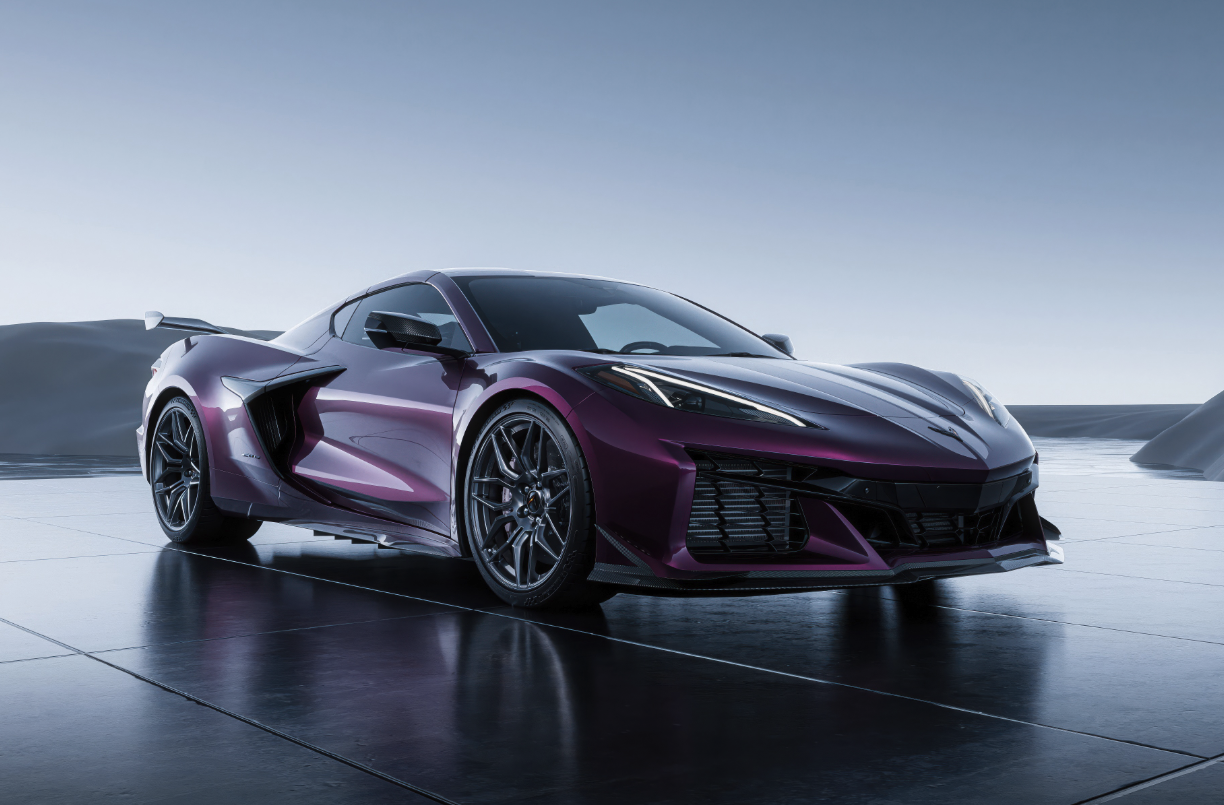
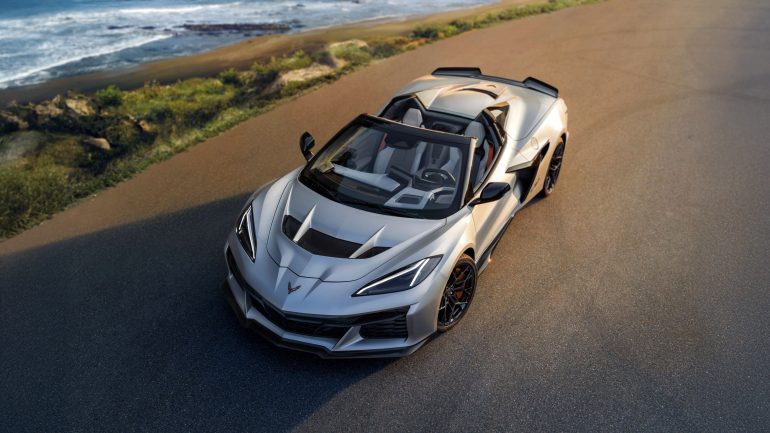 The 1,250 HP beast we thought would never exist. Phot Credit: Chevrolet
Eight cars, one per generation: the most powerful or quickest Corvette Chevrolet sold in each era, with its output, acceleration, top speed, weight and pounds per horsepower, and the price when new. The ZL1 stands for the C3 because it was the quickest; the 1971 LS6 was the most powerful regular-production C3 engine.
MORE: THE Z06 GUIDE / THE ZR1 GUIDE / THE L88 GUIDE
| GENERATION | THE CAR | ENGINE, HP / LB-FT | 0–60 | ¼ MILE | TOP SPEED | WEIGHT / LB PER HP | PRICE NEW |
|---|---|---|---|---|---|---|---|
| C1 Corvette | 1957 Fuelie | 283 ci FI, 283 hp / 290 lb-ft | 5.7 s | 14.3 @ 96 | 132 mph | 2,985 lb / 10.5 | $3,176 (+$484 FI) |
| C2 Corvette | 1966 427/425 | 427 ci L72, 425 / 460 | 5.4 s | 13.4 @ 105 | 140 mph | 3,270 / 7.7 | $4,295 |
| C3 Corvette | 1969 ZL1 | 427 ci aluminum, 430 rated (560+) / 450 | 4.0 s | 12.1 @ 116 | 155 mph | 2,945 / 6.8 | $10,048 |
| C4 Corvette | 1993 ZR-1 | 5.7 L LT5 DOHC, 405 / 385 | 4.4 s | 12.9 @ 111 | 179 mph | 3,465 / 8.6 | $66,278 |
| C5 Corvette | 2002 Z06 | 5.7 L LS6, 405 / 400 | 3.9 s | 12.4 @ 116 | 171 mph | 3,118 / 7.7 | $50,150 |
| C6 Corvette | 2009 ZR1 | 6.2 L supercharged LS9, 638 / 604 | 3.4 s | 11.3 @ 131 | 205 mph | 3,324 / 5.2 | $103,300 |
| C7 Corvette | 2019 ZR1 | 6.2 L supercharged LT5, 755 / 715 | 2.85 s | 10.6 @ 134 | 212 mph | 3,584 / 4.7 | $119,995 |
| C8 Corvette | 2026 ZR1X | 5.5 L twin-turbo LT7 + motor, 1,250 / 973 | 1.9 s | sub-9 @ 150+ | 233 mph | 3,900 / 3.1 | $207,395 |
The most powerful engine offered each year against the base engine. Ratings are SAE gross through 1971 and SAE net from 1972, which is why both lines step down in 1972; the climb from 1985 has not stopped.
MORE: THE ENGINES
From eleven seconds to under two. The plateau of the 1960s is the big-block era; the hump is 1972–84; the cliff after 2000 is the Z06, the ZR1 and then the mid-engine car.
The fastest Corvette on sale each year, as Chevrolet quoted or the magazines measured. The 1987–91 points are the Callaway Twin Turbo, sold through Chevrolet dealers as RPO B2K; the ZR-1 of 1990 was the first standard Corvette past 175, the 2009 ZR1 the first past 200.
Weight divided by rated power for the best car of each year: the truest single measure of how much faster the Corvette has become. The 1953 car carried 19 pounds per horsepower; the ZR1X carries 3.1.
Sixteen Corvettes from the ZR1X to the first car, ranked by 0–60. Every mid-engine model is quicker than every front-engine one but the 2019 ZR1 and 2015 Z06, and the 2020 Stingray is quicker than the 755-horsepower ZR1.
MORE: THE BEST CORVETTES EVER
Every model year from 1953 to 2027, with the year’s most significant model (and a second where it matters), the engine, horsepower and torque, 0–60, the quarter mile, top speed, curb weight, pounds per horsepower, the base price when new and where the acceleration figure comes from. Each year links to its research page, which carries every engine offered that year.
| YEAR | MODEL | ENGINE | HP | LB-FT | 0–60 | ¼ MILE | TOP | WEIGHT | PRICE NEW | LB/HP | SOURCE |
|---|---|---|---|---|---|---|---|---|---|---|---|
| 1953 | Corvette | 235 ci Blue Flame six, Powerglide | 150 | 223 | 11.0 | 18.0 @ 77 | 107 | 2,850 | $3,498 | 19.0 | Road & Track |
| 1954 | Corvette | 235 ci Blue Flame six, 155 hp | 155 | 223 | 11.0 | 18.0 @ 77 | 107 | 2,850 | $2,774 | 18.4 | period tests |
| 1955 | Corvette V-8 | 265 ci V-8, 195 hp | 195 | 260 | 8.7 | 16.5 @ 83 | 120 | 2,910 | $2,909 | 14.9 | Road & Track |
| 1956 | Corvette | 265 ci V-8, dual quads, 225 hp | 225 | 270 | 7.3 | 15.8 @ 90 | 129 | 2,880 | $3,120 | 12.8 | Road & Track |
| 1957 | Corvette Fuelie | 283 ci V-8, Ramjet fuel injection, 283 hp | 283 | 290 | 5.7 | 14.3 @ 96 | 132 | 2,985 | $3,176 | 10.5 | Road & Track |
| 1958 | Corvette Fuelie | 283 ci FI, 290 hp | 290 | 290 | 6.9 | 15.6 @ 92 | 125 | 3,085 | $3,591 | 10.6 | period tests |
| 1959 | Corvette Fuelie | 283 ci FI, 290 hp | 290 | 290 | 6.6 | 14.5 @ 96 | 128 | 3,080 | $3,875 | 10.6 | Motor Trend |
| 1960 | Corvette Fuelie | 283 ci FI, 315 hp | 315 | 295 | 6.5 | 14.7 @ 98 | 132 | 3,080 | $3,872 | 9.8 | period tests |
| 1961 | Corvette Fuelie | 283 ci FI, 315 hp | 315 | 295 | 5.5 | 14.2 @ 99 | 135 | 3,080 | $3,934 | 9.8 | Road & Track |
| 1962 | Corvette Fuelie | 327 ci FI, 360 hp | 360 | 352 | 5.9 | 14.5 @ 104 | 140 | 3,137 | $4,038 | 8.7 | Car and Driver |
| 1963 | Sting Ray Fuelie | 327 ci FI (L84), 360 hp | 360 | 352 | 5.9 | 14.5 @ 102 | 142 | 3,150 | $4,257 | 8.8 | Car and Driver |
| 1964 | Sting Ray Fuelie | 327 ci FI (L84), 375 hp | 375 | 350 | 5.6 | 14.2 @ 100 | 138 | 3,180 | $4,252 | 8.5 | period tests |
| 1965 | Sting Ray 396 | 396 ci big-block (L78), 425 hp | 425 | 415 | 5.7 | 14.1 @ 103 | 136 | 3,260 | $4,321 | 7.7 | Car and Driver |
| 1966 | Sting Ray 427 | 427 ci (L72), 425 hp | 425 | 460 | 5.4 | 13.4 @ 105 | 140 | 3,270 | $4,295 | 7.7 | Car and Driver |
| 1967 | Sting Ray 427 Tri-Power | 427 ci (L71), 435 hp | 435 | 460 | 5.5 | 13.8 @ 104 | 140 | 3,250 | $4,389 | 7.5 | Car and Driver |
| 1967 | Sting Ray L88 | 427 ci L88, 430 hp rated (540–580 actual) | 430 | 460 | — | high 11s on slicks | 150 | 3,150 | $5,337 | 7.3 | period tests |
| 1968 | Stingray 427 Tri-Power | 427 ci (L71), 435 hp | 435 | 460 | 5.6 | 13.6 @ 105 | 142 | 3,425 | $4,663 | 7.9 | Car and Driver |
| 1969 | Stingray ZL1 | 427 ci all-aluminum ZL1, 430 hp rated (560–585) | 430 | 450 | 4.0 | 12.1 @ 116 | 155 | 2,945 | $10,048 | 6.8 | Road & Track |
| 1969 | Stingray 427 Tri-Power | 427 ci (L71), 435 hp | 435 | 460 | 5.6 | 13.6 @ 105 | 142 | 3,435 | $4,781 | 7.9 | Car and Driver |
| 1970 | Stingray LT-1 | 350 ci solid-lifter LT-1, 370 hp | 370 | 380 | 5.7 | 14.2 @ 102 | 135 | 3,390 | $5,192 | 9.2 | Car and Driver |
| 1970 | Stingray 454 | 454 ci (LS5), 390 hp | 390 | 500 | 5.7 | 14.0 @ 100 | 130 | 3,520 | $5,482 | 9.0 | Car and Driver |
| 1971 | Stingray 454 LS6 | 454 ci aluminum-head LS6, 425 hp | 425 | 475 | 5.3 | 13.8 @ 104 | 140 | 3,530 | $6,532 | 8.3 | Car and Driver |
| 1971 | Stingray LT-1 | 350 ci LT-1, 330 hp | 330 | 360 | 6.0 | 14.5 @ 100 | 130 | 3,390 | $5,496 | 10.3 | period tests |
| 1972 | Stingray LT-1 | 350 ci LT-1, 255 hp net | 255 | 280 | 6.9 | 15.0 @ 95 | 125 | 3,390 | $5,533 | 13.3 | period tests |
| 1973 | Stingray L82 | 350 ci L82, 250 hp | 250 | 285 | 7.2 | 15.5 @ 92 | 124 | 3,520 | $5,562 | 14.1 | period tests |
| 1974 | Stingray 454 LS4 | 454 ci LS4, 270 hp; the last big-block | 270 | 380 | 7.0 | 15.3 @ 94 | 125 | 3,620 | $6,001 | 13.4 | period tests |
| 1975 | Stingray L82 | 350 ci L82, 205 hp; the catalytic-converter year | 205 | 255 | 7.7 | 16.1 @ 88 | 120 | 3,530 | $6,810 | 17.2 | Car and Driver |
| 1976 | Stingray L82 | 350 ci L82, 210 hp | 210 | 255 | 7.5 | 15.5 @ 90 | 120 | 3,530 | $7,605 | 16.8 | period tests |
| 1977 | Corvette L82 | 350 ci L82, 210 hp | 210 | 255 | 7.2 | 15.7 @ 91 | 125 | 3,530 | $8,648 | 16.8 | period tests |
| 1978 | Corvette L82 | 350 ci L82, 220 hp | 220 | 260 | 6.6 | 15.2 @ 92 | 125 | 3,570 | $9,352 | 16.2 | Car and Driver |
| 1979 | Corvette L82 | 350 ci L82, 225 hp | 225 | 270 | 6.6 | 15.3 @ 92 | 127 | 3,570 | $10,220 | 15.9 | period tests |
| 1980 | Corvette L82 | 350 ci L82, 230 hp | 230 | 275 | 7.0 | 15.5 @ 92 | 125 | 3,400 | $13,140 | 14.8 | period tests |
| 1981 | Corvette | 350 ci L81, 190 hp | 190 | 280 | 8.1 | 16.4 @ 85 | 120 | 3,300 | $16,259 | 17.4 | period tests |
| 1982 | Corvette Cross-Fire | 350 ci L83 Cross-Fire Injection, 200 hp | 200 | 285 | 7.9 | 16.1 @ 86 | 125 | 3,350 | $18,290 | 16.8 | Car and Driver |
| 1984 | Corvette | 350 ci L83 Cross-Fire, 205 hp | 205 | 290 | 6.9 | 15.2 @ 91 | 140 | 3,192 | $21,800 | 15.6 | Car and Driver |
| 1985 | Corvette TPI | 350 ci L98 Tuned-Port Injection, 230 hp | 230 | 330 | 5.7 | 14.1 @ 97 | 150 | 3,224 | $24,878 | 14.0 | Car and Driver |
| 1986 | Corvette | 350 ci L98, 230 hp | 230 | 330 | 5.8 | 14.4 @ 96 | 150 | 3,239 | $27,027 | 14.1 | period tests |
| 1987 | Corvette | 350 ci L98, 240 hp | 240 | 345 | 5.6 | 14.3 @ 97 | 150 | 3,216 | $27,999 | 13.4 | period tests |
| 1987 | Callaway Twin Turbo (B2K) | 350 ci twin-turbo, 345 hp | 345 | 465 | 4.6 | 13.0 @ 108 | 178 | 3,400 | $51,000 | 9.9 | period tests |
| 1988 | Callaway Twin Turbo (B2K) | 350 ci twin-turbo, 382 hp | 382 | 562 | 4.5 | 12.9 @ 112 | 191 | 3,400 | $55,000 | 8.9 | period tests |
| 1989 | Corvette | 350 ci L98, 245 hp; ZF six-speed | 245 | 340 | 5.6 | 14.3 @ 97 | 152 | 3,229 | $31,545 | 13.2 | period tests |
| 1990 | Corvette ZR-1 | 5.7 L LT5 DOHC 32-valve (Lotus), 375 hp | 375 | 370 | 4.5 | 13.1 @ 108 | 175 | 3,465 | $58,995 | 9.2 | Car and Driver |
| 1990 | Corvette | 350 ci L98, 245/250 hp | 250 | 350 | 5.6 | 14.3 @ 97 | 150 | 3,225 | $31,979 | 12.9 | period tests |
| 1991 | Corvette ZR-1 | LT5, 375 hp | 375 | 370 | 4.5 | 13.1 @ 108 | 175 | 3,465 | $64,138 | 9.2 | Car and Driver |
| 1992 | Corvette LT1 | 350 ci Gen II LT1, 300 hp | 300 | 330 | 5.3 | 13.9 @ 101 | 163 | 3,223 | $33,635 | 10.7 | Car and Driver |
| 1993 | Corvette ZR-1 | LT5, 405 hp | 405 | 385 | 4.4 | 12.9 @ 111 | 179 | 3,465 | $66,278 | 8.6 | Car and Driver |
| 1994 | Corvette LT1 | LT1, 300 hp | 300 | 340 | 5.2 | 13.8 @ 102 | 163 | 3,309 | $36,185 | 11.0 | period tests |
| 1995 | Corvette ZR-1 | LT5, 405 hp; the last ZR-1 | 405 | 385 | 4.4 | 12.9 @ 111 | 179 | 3,465 | $68,043 | 8.6 | Car and Driver |
| 1996 | Corvette Grand Sport | 350 ci LT4, 330 hp | 330 | 340 | 5.1 | 13.6 @ 104 | 168 | 3,298 | $40,475 | 10.0 | Car and Driver |
| 1997 | Corvette C5 | 5.7 L LS1, 345 hp | 345 | 350 | 4.7 | 13.3 @ 107 | 172 | 3,218 | $37,495 | 9.3 | Car and Driver |
| 1998 | Corvette Convertible | LS1, 345 hp | 345 | 350 | 4.8 | 13.4 @ 106 | 171 | 3,246 | $44,425 | 9.4 | period tests |
| 1999 | Corvette Hardtop | LS1, 345 hp; the lightest C5 | 345 | 350 | 4.6 | 13.2 @ 108 | 171 | 3,153 | $38,591 | 9.1 | Car and Driver |
| 2001 | Corvette Z06 | 5.7 L LS6, 385 hp | 385 | 385 | 4.0 | 12.6 @ 114 | 171 | 3,118 | $47,500 | 8.1 | Chevrolet |
| 2002 | Corvette Z06 | LS6, 405 hp | 405 | 400 | 3.9 | 12.4 @ 116 | 171 | 3,118 | $50,150 | 7.7 | Chevrolet |
| 2004 | Corvette Z06 | LS6, 405 hp; FE4 retuned at the Nürburgring | 405 | 400 | 4.2 | 12.4 @ 117 | 171 | 3,118 | $52,385 | 7.7 | Motor Trend |
| 2005 | Corvette C6 | 6.0 L LS2, 400 hp | 400 | 400 | 4.1 | 12.6 @ 114 | 186 | 3,179 | $44,245 | 7.9 | Chevrolet |
| 2006 | Corvette Z06 | 7.0 L LS7, 505 hp | 505 | 470 | 3.7 | 11.7 @ 125 | 198 | 3,132 | $65,800 | 6.2 | Chevrolet |
| 2008 | Corvette | 6.2 L LS3, 430 hp | 430 | 424 | 4.0 | 12.4 @ 116 | 190 | 3,217 | $45,995 | 7.5 | Car and Driver |
| 2009 | Corvette ZR1 | 6.2 L supercharged LS9, 638 hp | 638 | 604 | 3.4 | 11.3 @ 131 | 205 | 3,324 | $103,300 | 5.2 | Chevrolet |
| 2010 | Corvette Grand Sport | LS3, 430 hp, in the Z06 body | 430 | 424 | 4.0 | 12.4 @ 116 | 190 | 3,311 | $55,720 | 7.7 | Chevrolet |
| 2011 | Corvette Z06 Carbon | LS7, 505 hp, with Z07 | 505 | 470 | 3.7 | 11.7 @ 125 | 198 | 3,175 | $90,960 | 6.3 | Chevrolet |
| 2013 | Corvette 427 Convertible | LS7, 505 hp | 505 | 470 | 3.8 | 11.9 @ 122 | 190 | 3,355 | $76,900 | 6.6 | Chevrolet |
| 2014 | Corvette Stingray Z51 | 6.2 L LT1, 460 hp | 460 | 465 | 3.8 | 12.0 @ 119 | 185 | 3,298 | $51,995 | 7.2 | Chevrolet |
| 2015 | Corvette Z06 | 6.2 L supercharged LT4, 650 hp | 650 | 650 | 2.95 | 10.95 @ 127 | 185 | 3,524 | $78,995 | 5.4 | Chevrolet |
| 2017 | Corvette Grand Sport | LT1, 460 hp, on the Z06 chassis | 460 | 465 | 3.6 | 11.8 @ 118 | 184 | 3,428 | $66,445 | 7.5 | Chevrolet |
| 2019 | Corvette ZR1 | 6.2 L supercharged LT5, 755 hp | 755 | 715 | 2.85 | 10.6 @ 134 | 212 | 3,584 | $119,995 | 4.7 | Chevrolet |
| 2020 | Corvette Stingray Z51 | 6.2 L LT2, 495 hp; mid-engine | 495 | 470 | 2.9 | 11.2 @ 121 | 194 | 3,535 | $59,995 | 7.1 | Chevrolet |
| 2023 | Corvette Z06 | 5.5 L flat-plane LT6, 670 hp | 670 | 460 | 2.6 | 10.6 @ 131 | 195 | 3,670 | $106,395 | 5.5 | Chevrolet |
| 2024 | Corvette E-Ray | LT2 + 160-hp front motor, 655 hp; AWD hybrid | 655 | 595 | 2.5 | 10.5 @ 130 | 183 | 3,856 | $104,295 | 5.9 | Chevrolet |
| 2025 | Corvette ZR1 | 5.5 L twin-turbo LT7, 1,064 hp | 1,064 | 828 | 2.3 | 9.6 @ 150 | 233 | 3,670 | $174,995 | 3.4 | Chevrolet |
| 2026 | Corvette ZR1X | LT7 + 186-hp front motor, 1,250 hp; AWD | 1,250 | 973 | 1.9 | sub-9 @ 150+ | 233 | 3,900 | $207,395 | 3.1 | Chevrolet |
| 2027 | Corvette Grand Sport | 6.7 L LS6, 535 hp | 535 | 520 | — | unpublished | — | 3,520 | $88,495 | 6.6 | Chevrolet |
| 2027 | Corvette Grand Sport X | LS6 + 186-hp front motor, 721 hp; AWD | 721 | — | — | unpublished | — | 3,800 | $112,195 | 5.3 | Chevrolet |
Six models from 535 to 1,250 horsepower and $73,495 to $248,395. Chevrolet had published no acceleration figures for the LS6 cars when this page was written; the Z06, ZR1 and ZR1X figures are its own.
MORE: THE 2027 CORVETTE / THE GRAND SPORT / THE ZR1 AND ZR1X
| MODEL | POWERTRAIN | HP / LB-FT | 0–60 | ¼ MILE | WEIGHT (LB) | FROM |
|---|---|---|---|---|---|---|
| 2027 Stingray | 6.7 L LS6 V-8 | 535 hp / 520 lb-ft | unpublished | unpublished | 3,520 lb | $73,495 |
| 2027 Grand Sport | 6.7 L LS6 | 535 / 520 | unpublished | unpublished | 3,520 | $88,495 |
| 2027 Grand Sport X | LS6 + 186-hp front motor (eAWD) | 721 hp | unpublished | unpublished | 3,800 | $112,195 |
| 2027 Z06 | 5.5 L flat-plane LT6 | 670 / 460 | 2.6 s | 10.6 @ 131 | about 3,670 | $121,395 |
| 2027 ZR1 | 5.5 L twin-turbo LT7 | 1,064 / 828 | 2.3 s | 9.6 @ 150 | about 3,670 | $197,195 |
| 2027 ZR1X | LT7 + 186-hp front motor (eAWD) | 1,250 / 973 | under 2.0 s | under 9 @ 150+ | about 3,900 | $227,395 |
The cars the Corvette is measured against, on their makers’ figures, with the Corvette’s. The point has not changed since 1955: the numbers at a fraction of the price.
MORE: THE BEST CORVETTES
| CAR | POWER | 0–60 | TOP SPEED | PRICE |
|---|---|---|---|---|
| Corvette ZR1X (2026) | 1,250 hp | 1.9 s | 233 mph | $207,395 |
| Corvette ZR1 (2025) | 1,064 hp | 2.3 s | 233 mph | $174,995 |
| Corvette Z06 (2023) | 670 hp | 2.6 s | 195 mph | $106,395 |
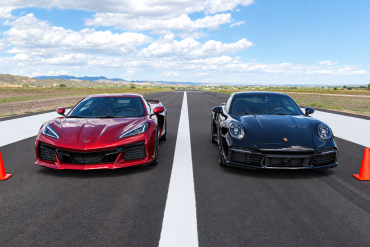
| Porsche 911 Turbo S (992.2) | 701 hp | 2.4 s | 200 mph | about $270,000 |
| Ferrari 296 GTB | 819 hp (hybrid) | 2.9 s | 205 mph | about $340,000 |
| McLaren 750S | 740 hp | 2.7 s | 206 mph | about $325,000 |
| Lamborghini Revuelto | 1,001 hp (hybrid) | 2.5 s | 217 mph | about $600,000 |
| Ford Mustang GTD | 815 hp | about 3 s | 202 mph | about $325,000 |
| Dodge Viper ACR (2017) | 645 hp | 3.3 s | 177 mph | $118,795 |
The Corvette’s timed records, from Fort Stockton to the Nordschleife.
| WHERE | CAR | TIME / SPEED | WHEN |
|---|---|---|---|
| Nürburgring Nordschleife | 2026 Corvette ZR1X | 6:49.275 | 2025; the American production-car record |
| Nürburgring Nordschleife | 2025 Corvette ZR1 | 6:50.763 | 2025; the fastest rear-drive American car |
| Nürburgring Nordschleife | 2012 Corvette ZR1 (PDE) | 7:19.63 | June 2011 |
| Nürburgring Nordschleife | 2012 Corvette Z06 (Z07) | 7:22.68 | 2011 |
| Nürburgring Nordschleife | 2004 Corvette Z06 | under 8:00 | 2003 development testing |
| Virginia International Raceway (Grand Course) | 2019 Corvette ZR1 (ZTK) | 2:37.25 | February 2018; the production-car record at the time |
| Fort Stockton, Texas (FIA 24-hour) | 1990 Corvette ZR-1 | 175.885 mph average | March 1990; 24-hour and 5,000-mile world records |
| Transportation Research Center, Ohio | 1988 Callaway Sledgehammer | 254.76 mph | October 1988; John Lingenfelter driving |
| Papenburg, Germany | 2025 Corvette ZR1 | 233.5 mph | October 2024; the fastest car made in America |
Everything tagged to performance research across the eight generations, newest first.









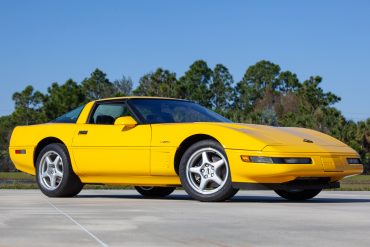


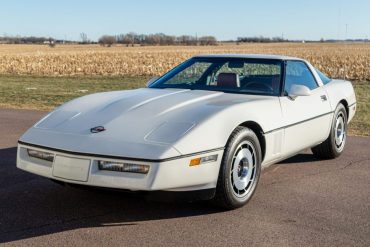


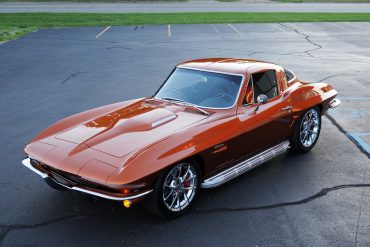


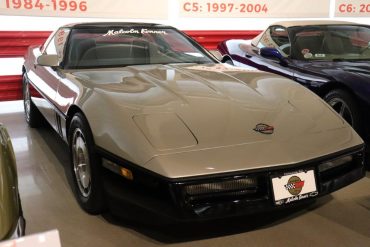





The Corvette against the clock and against its rivals: the ZR1X, ZR1 and Z06 videos.
The 2025 ZR1 and 2026 ZR1X share the top speed, 233 mph (the ZR1 ran 233.5 at Papenburg in October 2024), the fastest of any car made in America. The ZR1X is the quickest, under two seconds to 60 mph and under nine seconds in the quarter mile with 1,250 horsepower; the ZR1 does 2.3 and 9.6 at 150 with 1,064. The Callaway Sledgehammer’s 254.76 mph in 1988 was a one-off, not a production Corvette.
The 2026 ZR1X, 1,250 horsepower and 973 lb-ft from the twin-turbo LT7 and a 186-horsepower electric front motor, the most powerful car General Motors has built. The ZR1’s 1,064-horsepower LT7 is the most powerful V-8 in an American production car; the Z06’s 670-horsepower LT6 the most powerful naturally aspirated V-8 in any production car.
Slow: 150 horsepower from the Blue Flame six through a two-speed Powerglide, about eleven seconds to 60 mph, an 18-second quarter mile and 107 mph. The 1955 V-8 cut 0–60 to 8.7 seconds and the 1957 fuel-injected 283 to 5.7.
The 1969 ZL1 with the all-aluminum 427, 4.0 seconds to 60 and 12.1 at 116 in Road & Track’s test of an engineering car, a figure no production Corvette matched until the 2001 Z06. Among regular production cars the 1966 L72 427 (5.4 seconds, 13.4 at 105) and the 1971 LS6 454 (5.3, 13.8 at 104) were the quickest; the L88s ran high elevens on slicks.
Mostly on paper. The industry switched from SAE gross ratings (engine alone, no accessories) to SAE net (as installed) for 1972, so the LT-1 went from 330 to 255 with no mechanical change; lower compression for unleaded fuel and, from 1975, the catalytic converter then took real power away. The low point was 1975, 205 horsepower and 7.7 seconds to 60; the climb back began with Tuned-Port Injection in 1985.
The 1953–54 Blue Flame six, at about eleven seconds to 60. Among V-8 cars, the 1981 190-horsepower L81 (8.1 seconds) and the 1975 L82 (7.7) were the slowest; the 1980 California car with the 180-horsepower 305 was slower still.
The quickest of each: C1 5.5 seconds (1961 fuelie), C2 5.4 (1966 427/425), C3 4.0 (1969 ZL1; 5.3 for the 1971 LS6), C4 4.4 (1993–95 ZR-1), C5 3.9 (2002 Z06), C6 3.4 (2009 ZR1), C7 2.85 (2019 ZR1), C8 1.9 (2026 ZR1X). The base cars: 11.0, 8.7, 5.9, 5.7 (1970 LT-1), 6.9 (1984), 4.7 (1997), 4.1 (2005), 3.8 (2014 Z51) and 2.9 (2020 Z51).
C1 140 mph (1962 360-hp fuelie), C2 142 (1963 fuelie; 140 for the 427s), C3 155 (ZL1; 142 for the L71), C4 179 (1993–95 ZR-1; 191 for the 1988 Callaway), C5 171 (Z06; 172 for the 1997 coupe), C6 205 (2009 ZR1), C7 212 (2019 ZR1), C8 233 (ZR1 and ZR1X).
No, in any generation that had both: the ZR1 is the Z06 with more engine. C6: Z06 3.7 seconds and 198 mph, ZR1 3.4 and 205. C7: Z06 2.95 and 185, ZR1 2.85 and 212. C8: Z06 2.6 and 195, ZR1 2.3 and 233. The exception is on a track, where the C7 Z06 with Z07 aero out-lapped the C6 ZR1.
The ZR1X is quicker (1.9 seconds to 60 against 2.4) and faster (233 mph against 200) for about $60,000 less than the Porsche; the ZR1 is faster and about as quick; the Z06 (2.6 seconds, 195 mph) trails the Turbo S by a few tenths for a third of the price. The rivals table above has the current figures.
Chevrolet’s own, where it has published them, which is most years from the 2001 Z06 on; before that the most-cited period road tests (Car and Driver, Road & Track, Motor Trend), which varied with driver, tires and conditions. The source column in the full table says which; treat a tenth either way as noise, and use the year pages for every engine offered in a given year.
6:49.275 for the 2026 ZR1X and 6:50.763 for the 2025 ZR1, both set in 2025, the American production-car records. The 2012 ZR1 with the PDE Cup-tire package ran 7:19.63 in 2011, the 2012 Z06 with Z07 7:22.68, and the 2004 Z06 was developed to a sub-eight-minute lap. The 2019 ZR1 holds a 2:37.25 at Virginia International Raceway.