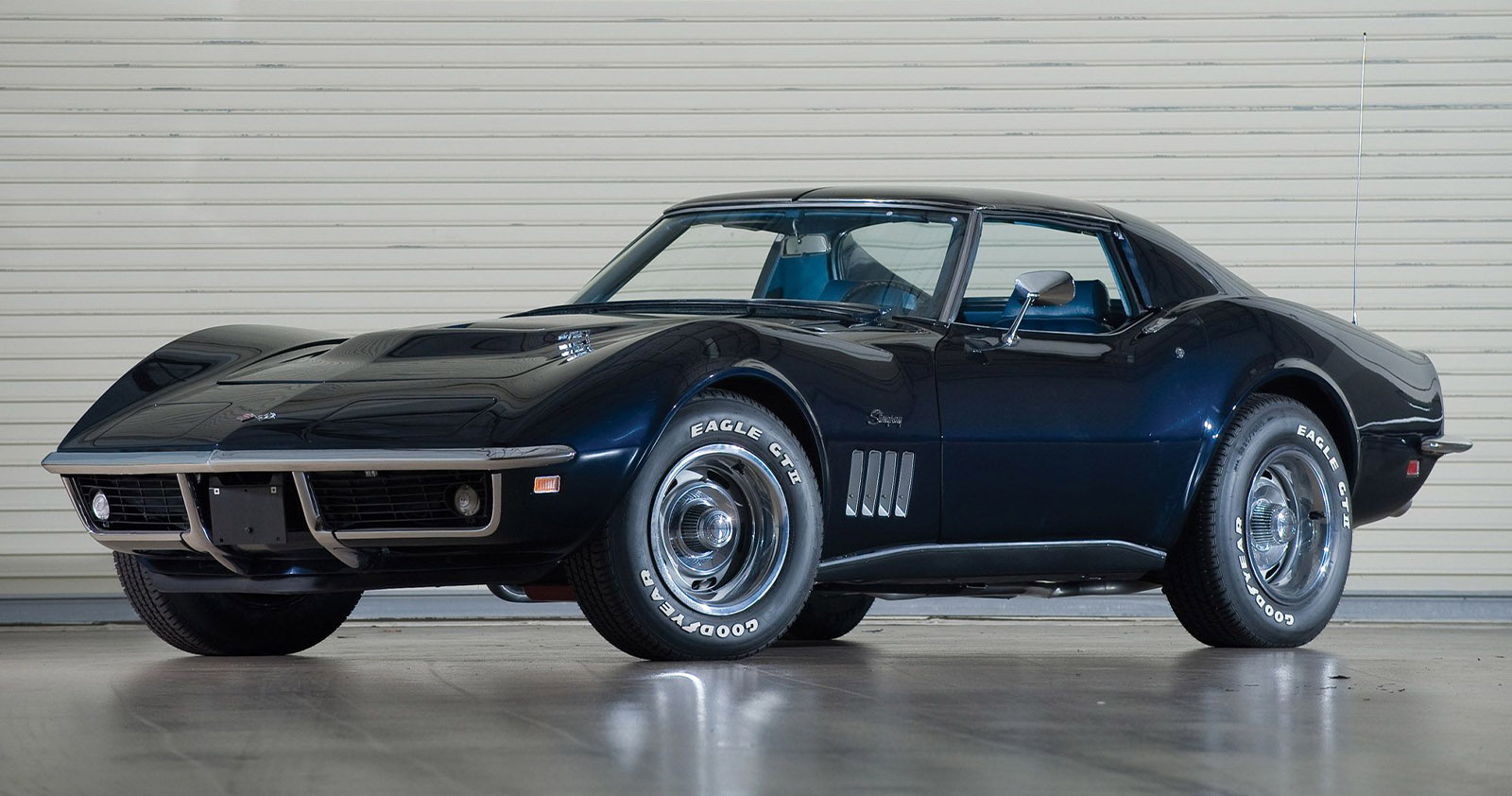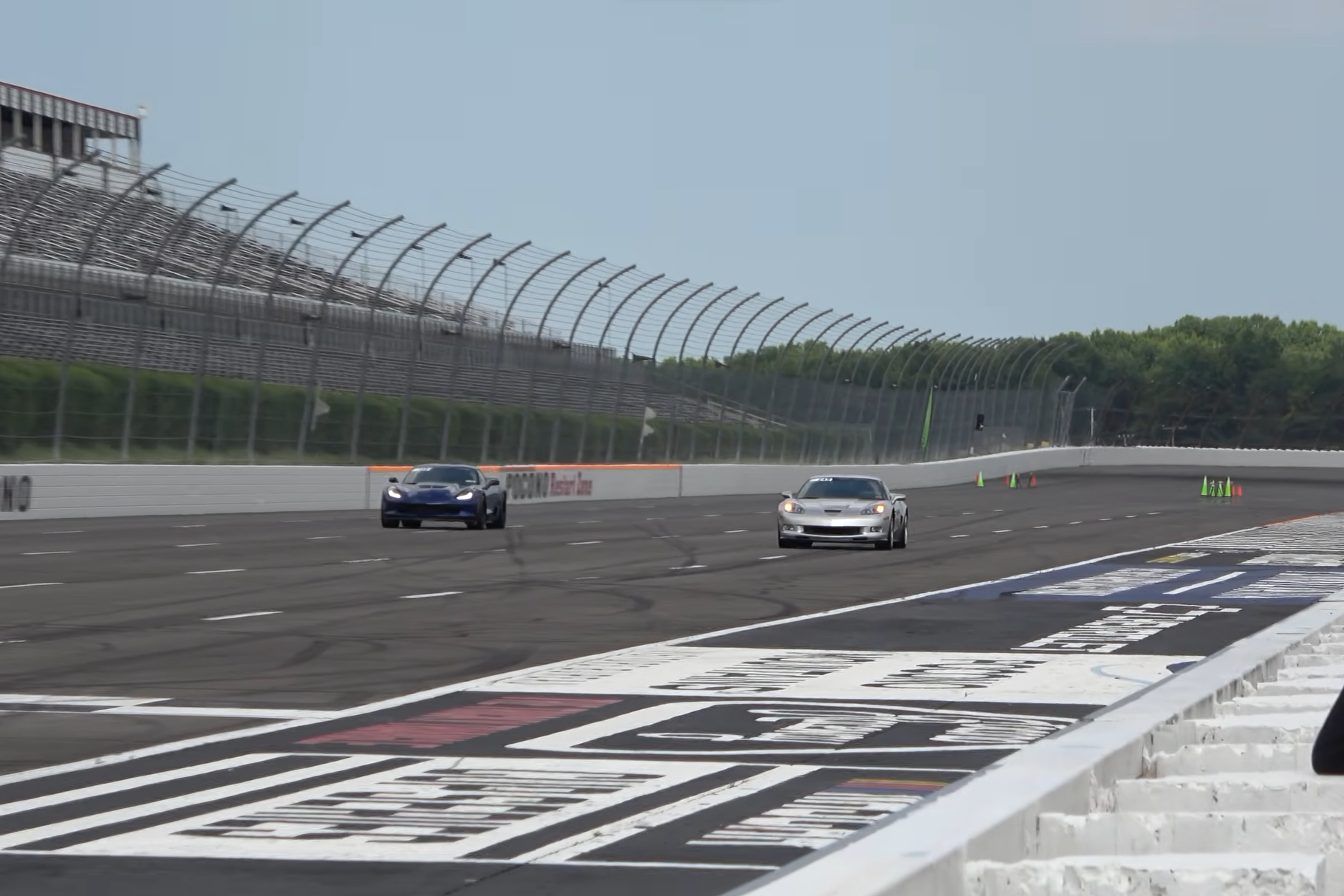
The Chevrolet Corvette Z06 has long represented the performance-focused end of the Corvette lineup, combining high-output V8 power with chassis engineering designed for demanding driving. At Pocono Raceway, two generations of the Z06 go head-to-head in a rolling-start drag race, pitting the naturally aspirated C6 against the supercharged C7 in a test of acceleration, high-speed power delivery, and real-world performance.
Rather than launching from a standstill, both cars begin their runs at approximately 65 mph. This format reduces the influence of launch technique and places greater emphasis on how effectively each powertrain delivers acceleration at speed. The result is a direct comparison between two distinct approaches to American performance engineering.
LS7 vs. LT4: Two Different Approaches to V8 Performance
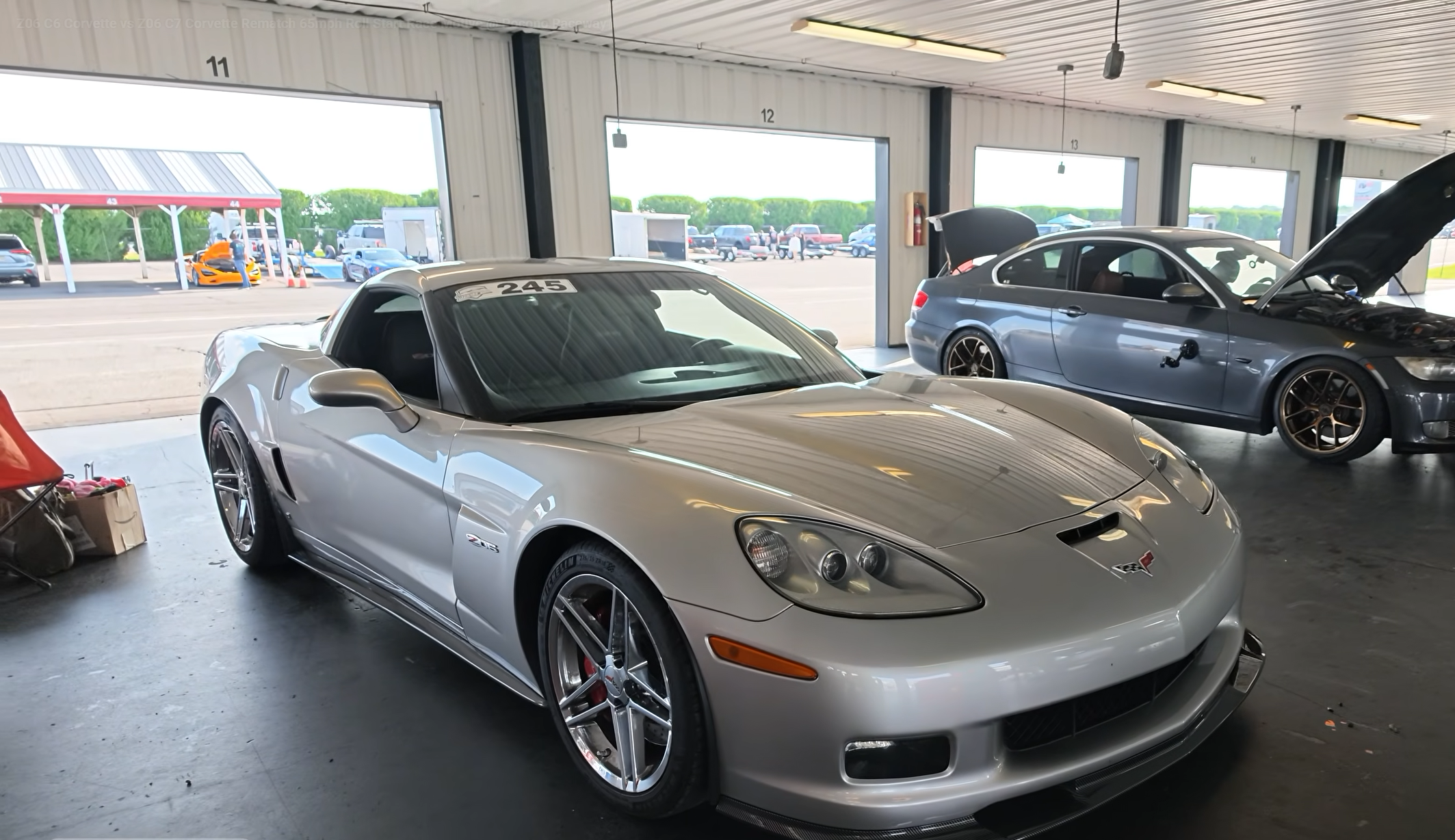
The C6 Corvette Z06, produced from 2006 through 2013, is powered by the 7.0-liter LS7 V8. Featuring a lightweight aluminum construction, titanium connecting rods, and titanium intake valves, the LS7 was engineered to deliver naturally aspirated power with a strong high-rpm character. Factory output is rated at 505 horsepower and 470 lb-ft of torque, with power delivered to the rear wheels through a six-speed manual transmission.
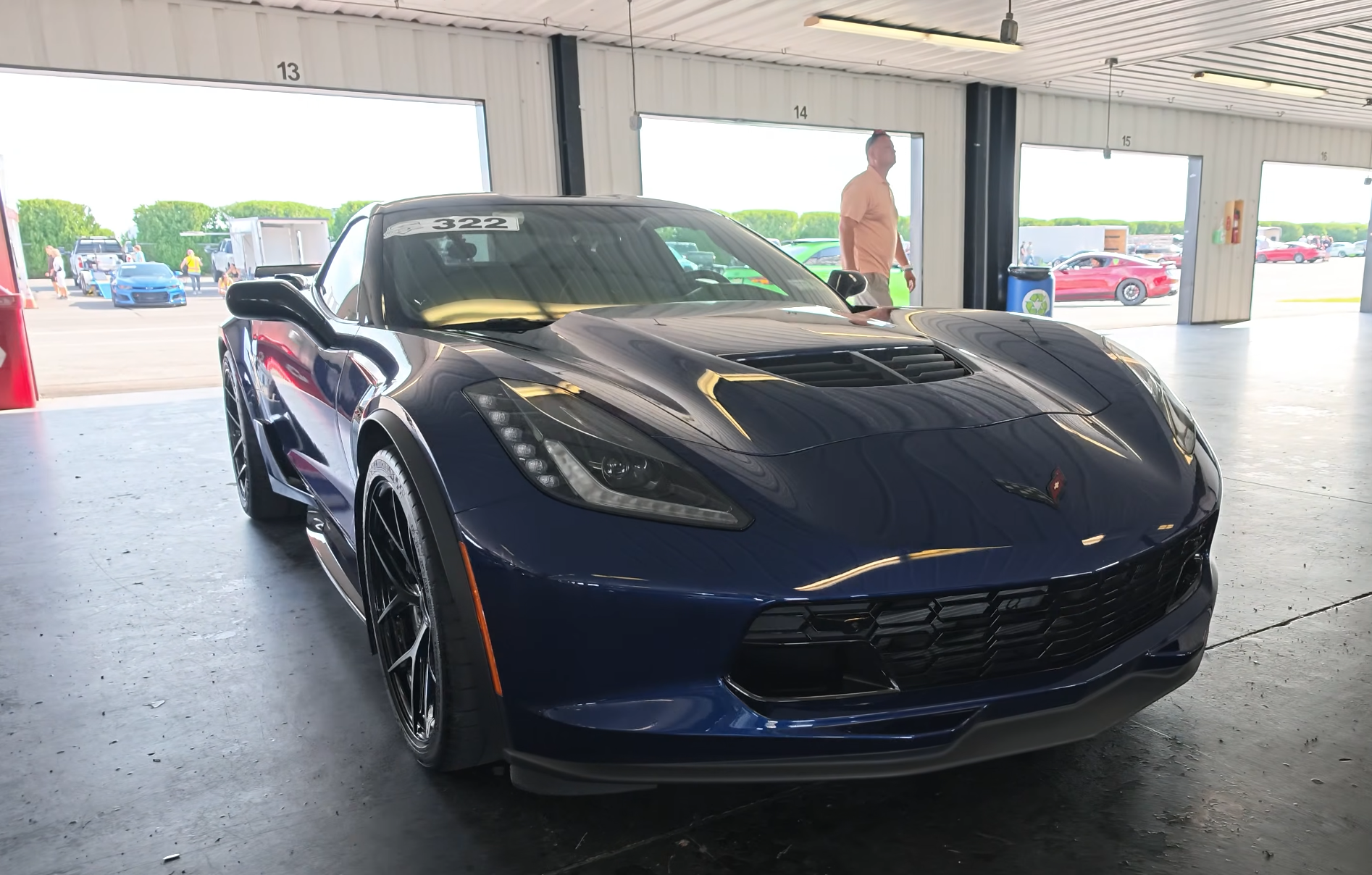
The C7 Corvette Z06, introduced for 2015, takes a different approach. Its 6.2-liter LT4 V8 uses an Eaton TVS supercharger to produce 650 horsepower and 650 lb-ft of torque in factory specification. The additional forced induction and substantially higher torque output give the newer Z06 a considerable advantage on paper, particularly when accelerating from a rolling start.
However, peak output alone does not determine the outcome of a drag race. Vehicle mass, gearing, aerodynamic resistance, tire condition, and the engine’s power delivery across the rev range all influence acceleration at higher speeds.
Round One: The C6 Z06 Takes the Lead
The opening run begins with the C6 Z06 at 63 mph and the C7 Z06 at 62 mph. Despite the newer car’s supercharged powertrain and higher factory output, the C6 establishes the advantage and crosses the finish line at a recorded 149.79 mph.
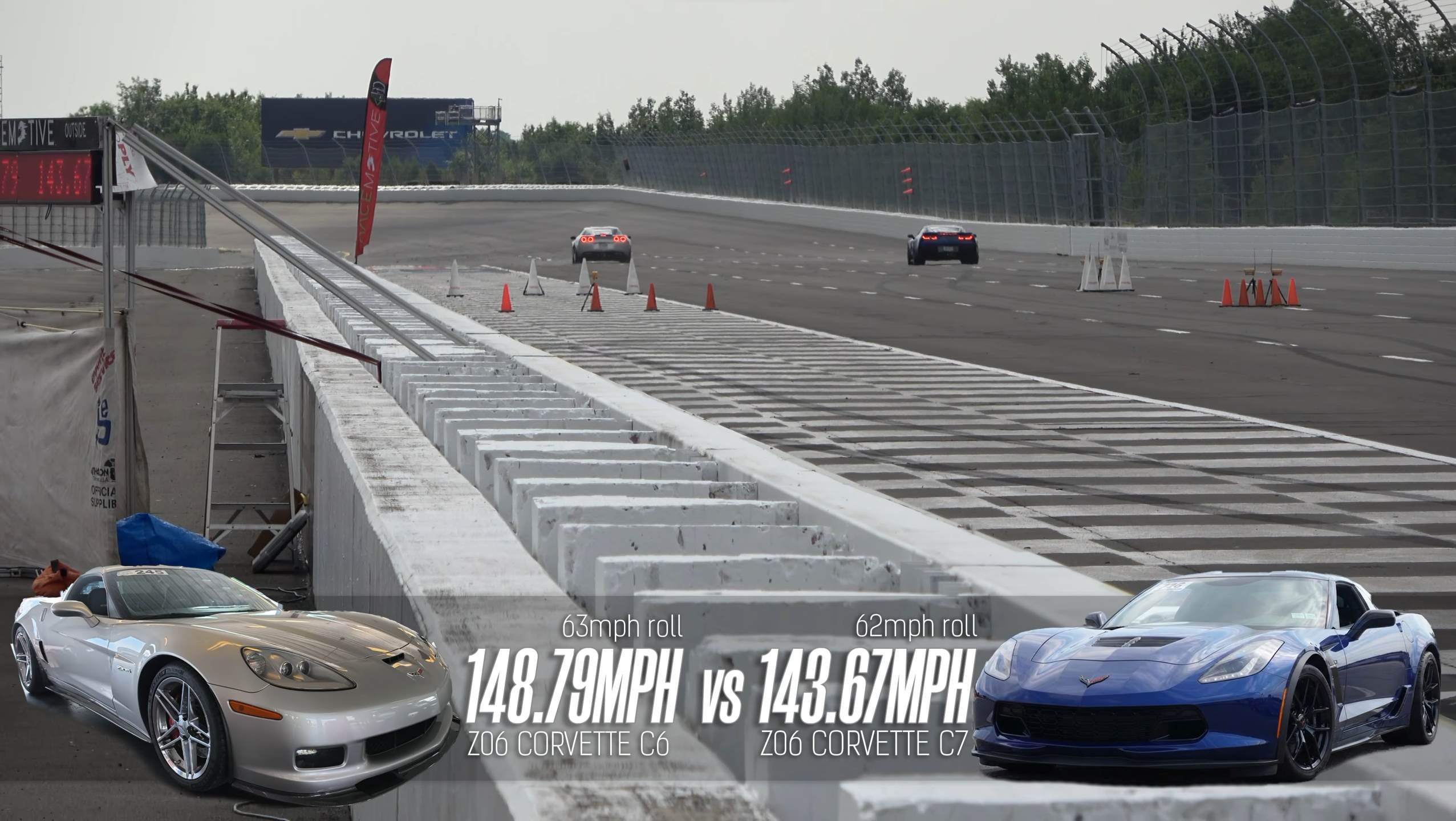
The C7 records 143.67 mph, leaving a difference of 6.12 mph between the two cars’ reported finish speeds. The result demonstrates that the LT4’s power advantage does not automatically translate into victory under these particular conditions.
Round Two: The Older Z06 Wins Again
The second run produces a similar result, reinforcing the C6’s performance in this matchup. With the C7 starting at 64 mph and the C6 at 63 mph, the two Corvettes accelerate down the Pocono straight once again.
The C6 crosses the finish line first, recording 147.28 mph against the C7’s 143.48 mph. The difference narrows to 3.80 mph, but the outcome remains unchanged: the naturally aspirated C6 Z06 wins both recorded rounds.
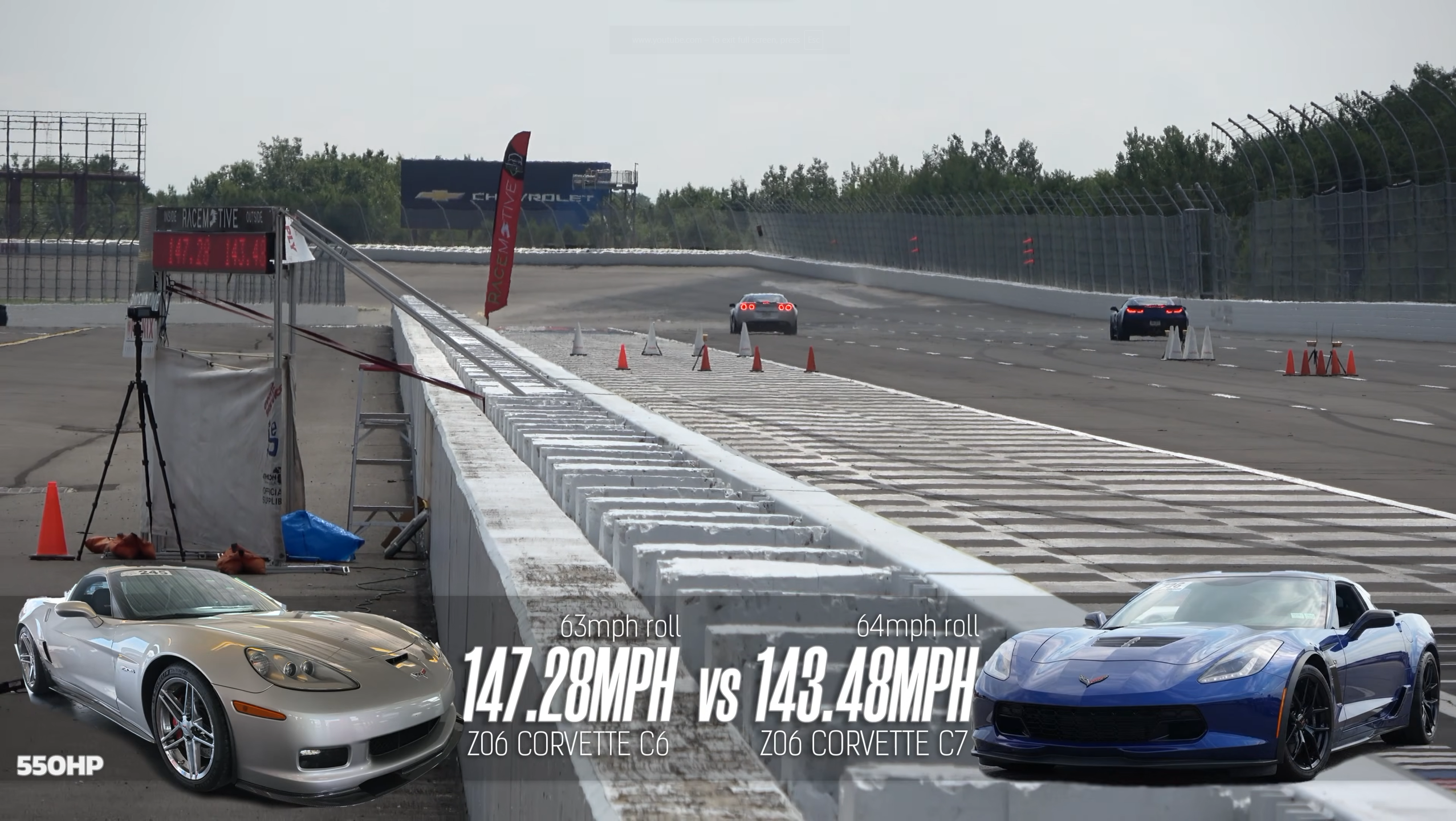
These figures represent reported finish speeds rather than complete acceleration data. Without elapsed times, distance measurements, and synchronized telemetry, they cannot independently establish the precise acceleration advantage throughout each run.
What the Results Reveal
The Pocono Raceway matchup highlights the difference between theoretical engine performance and results on the track. The C7 Z06 has the higher factory horsepower and torque figures, but the C6 Z06 proves more effective in these two rolling-start races.
That does not establish the C6 as universally faster. Differences in vehicle specifications, modifications, gearing, operating conditions, and starting speeds can substantially affect the outcome. Nevertheless, winning both runs gives the older Z06 a clear result in this particular contest.
Source: Import 2 Race