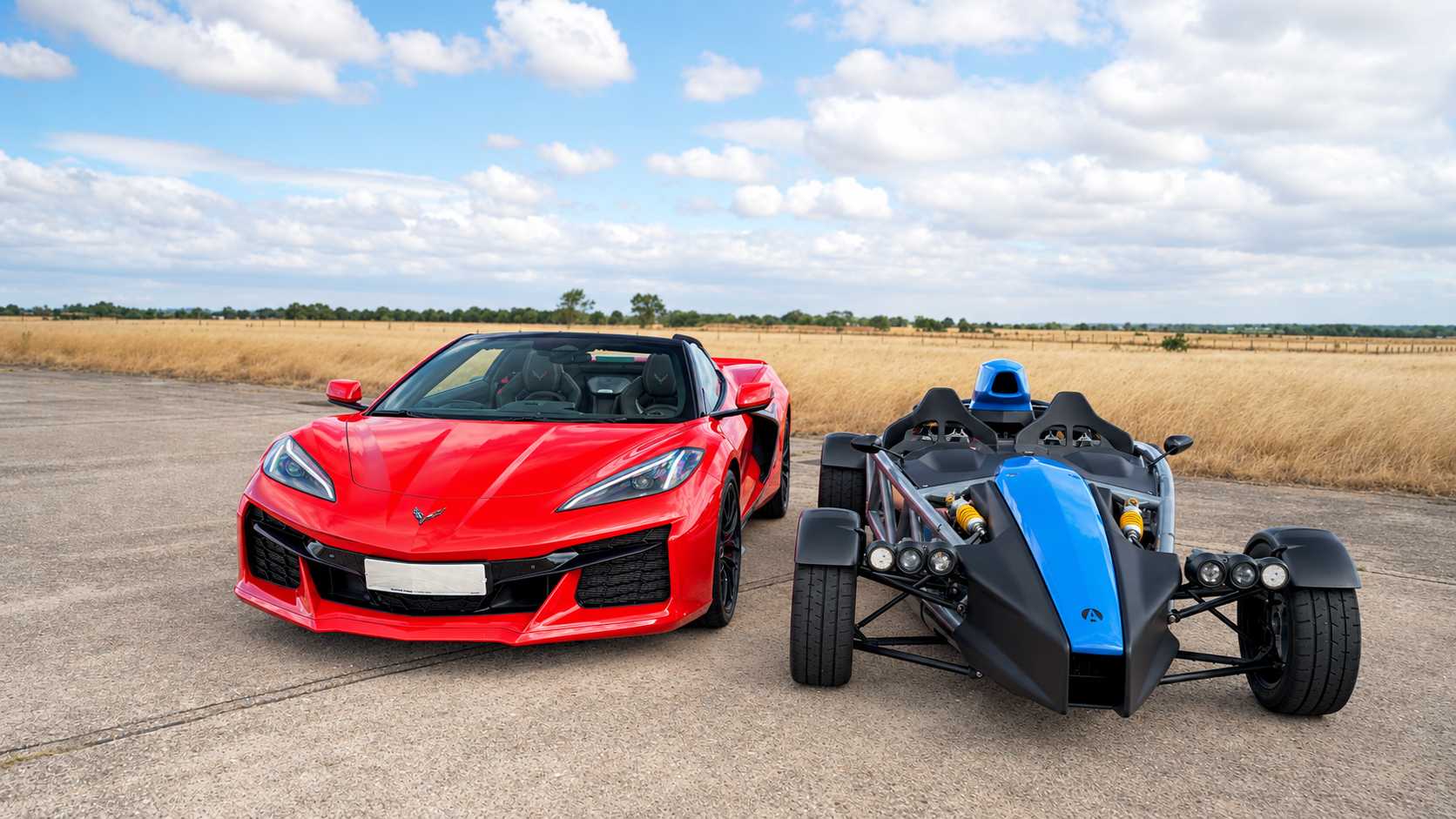
Driven+ puts two fundamentally different approaches to performance engineering against each other in a track-focused comparison between the British-built Ariel Atom 4 and the American Chevrolet Corvette C8 Z06. One prioritizes minimal mass, mechanical feedback, and driver involvement; the other combines a high-revving naturally aspirated V8 with sophisticated chassis technology and a dual-clutch transmission. The objective is to determine which philosophy delivers the stronger performance on track.
Lightweight Simplicity vs. High-Performance Technology
The Ariel Atom 4 is powered by a turbocharged 2.0-liter Honda four-cylinder producing approximately 350 horsepower and 420 Nm of torque. With a reported weight of just 595 kilograms, rear-wheel drive, and a six-speed manual gearbox, the Atom emphasizes an exceptional power-to-weight ratio and direct driver control. Its exposed construction and minimal bodywork prioritize function over comfort, while Yokohama Advan A052 tires provide substantial mechanical grip.

The Corvette Z06 approaches the challenge from a different direction. Its 5.5-liter flat-plane-crank V8 produces 637 horsepower and 595 Nm of torque in the specification tested. Power reaches the rear wheels through an eight-speed dual-clutch transmission, while the car’s substantially greater mass—approximately 1,560 kilograms—is offset by its powerful engine, advanced chassis systems, and adjustable performance settings.
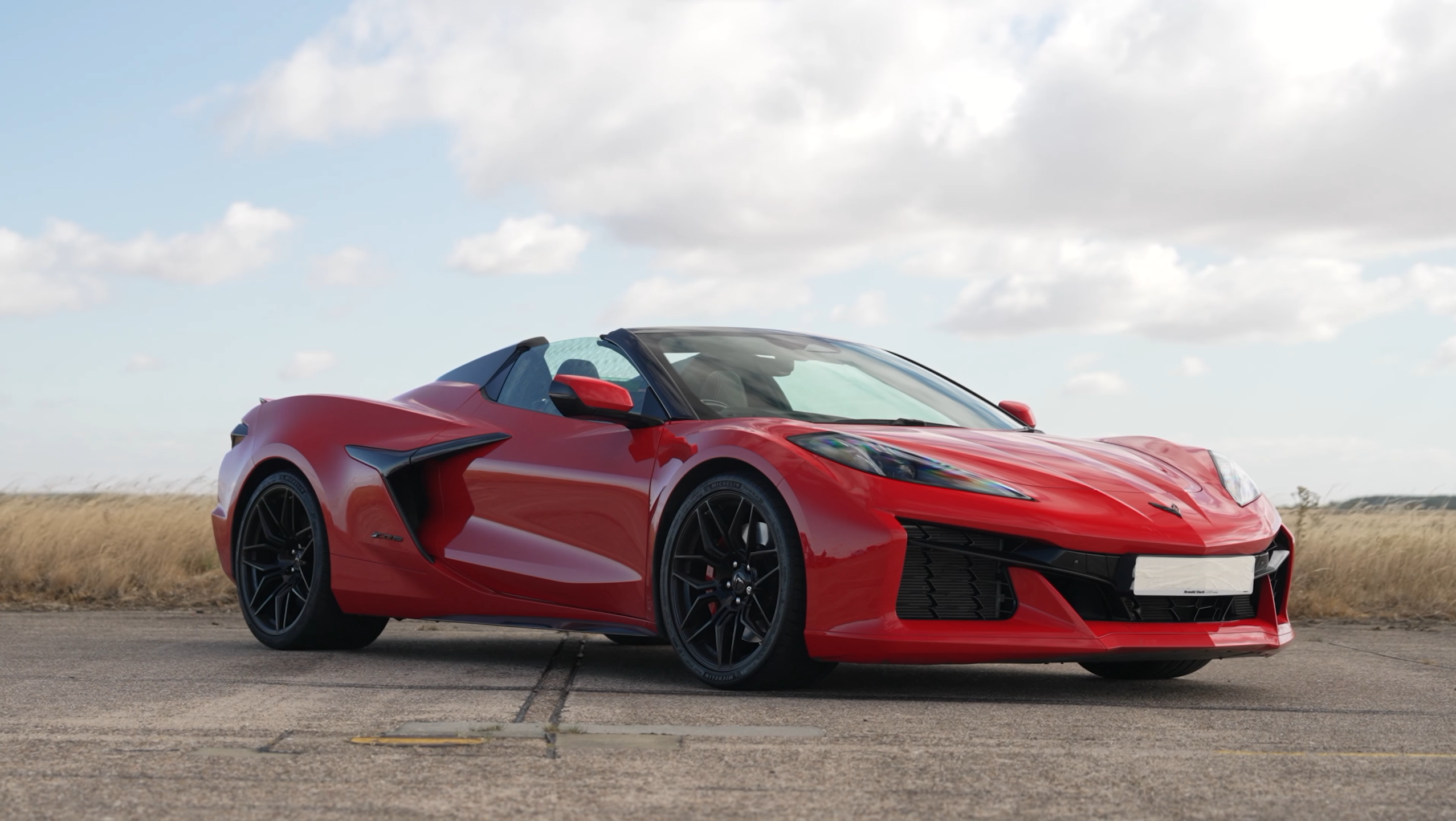
The comparison highlights an important distinction: outright power does not automatically translate into superior lap times. The Atom’s low mass allows it to change direction rapidly and maintain impressive cornering speeds, although its short wheelbase and substantial torque can make it lively at the limit.
Track Performance Comes Down to Setup and Driver Input
The test also demonstrates how electronic calibration can influence performance. During the Corvette’s initial run, its traction-control configuration compromised the driving experience. Adjusting the settings through the car’s performance systems improved the driver’s confidence and produced a substantially quicker lap.
The final recorded times put the Atom 4 ahead, completing the circuit in 46.92 seconds, compared with the Corvette Z06’s best of 48.76 seconds. The Atom also earned a perfect 50 out of 50 in the driver’s subjective scoring, while the Corvette received 45 out of 50.
Two Different Definitions of a Track Car
Driven+’s comparison illustrates the advantages of reducing mass versus adding power and technological sophistication. The Corvette delivers formidable performance, an exceptional engine, and greater refinement, but the Ariel demonstrates how lightweight construction and immediate mechanical feedback can produce a decisive advantage on a tight circuit.
Ultimately, the result reinforces a fundamental principle of performance engineering: power matters, but weight, balance, tire grip, and driver confidence can matter just as much.
Source: Driven+