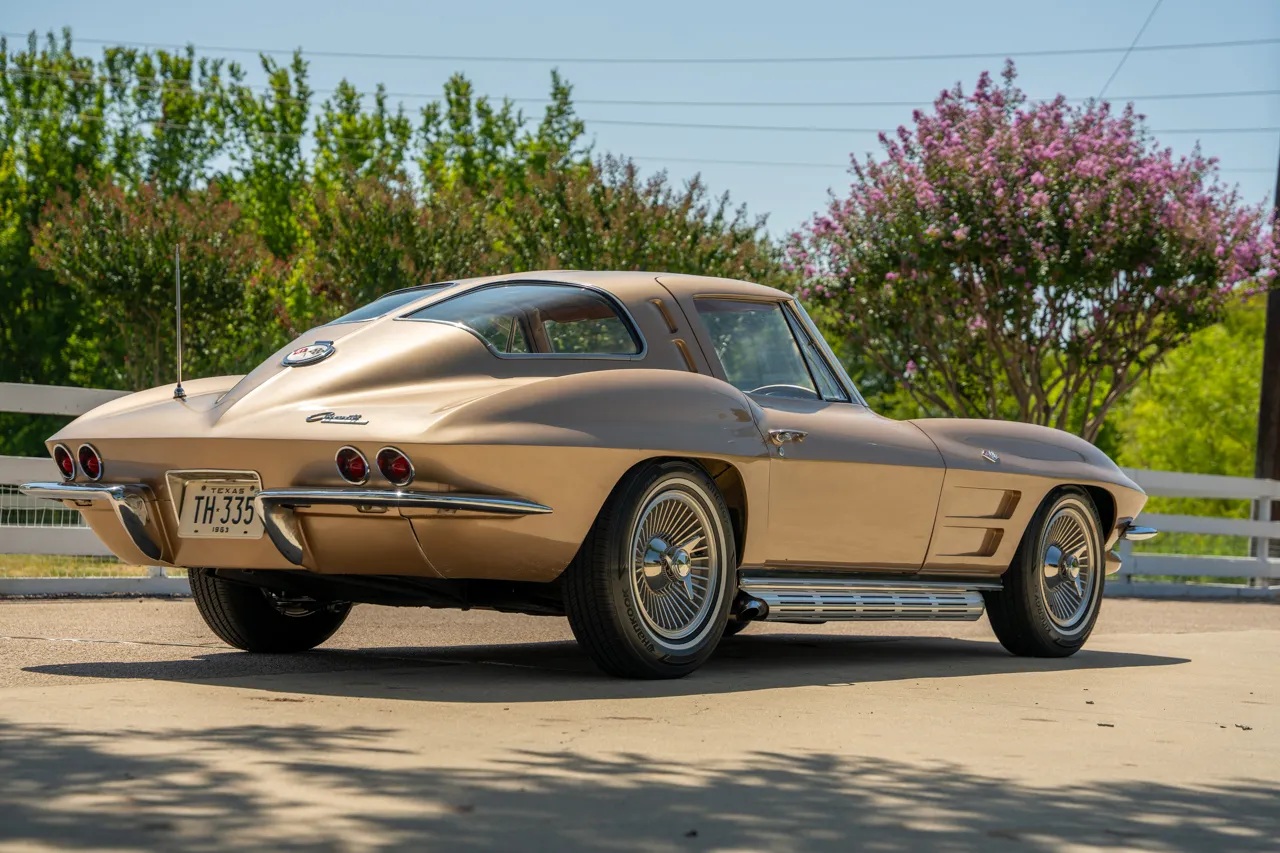
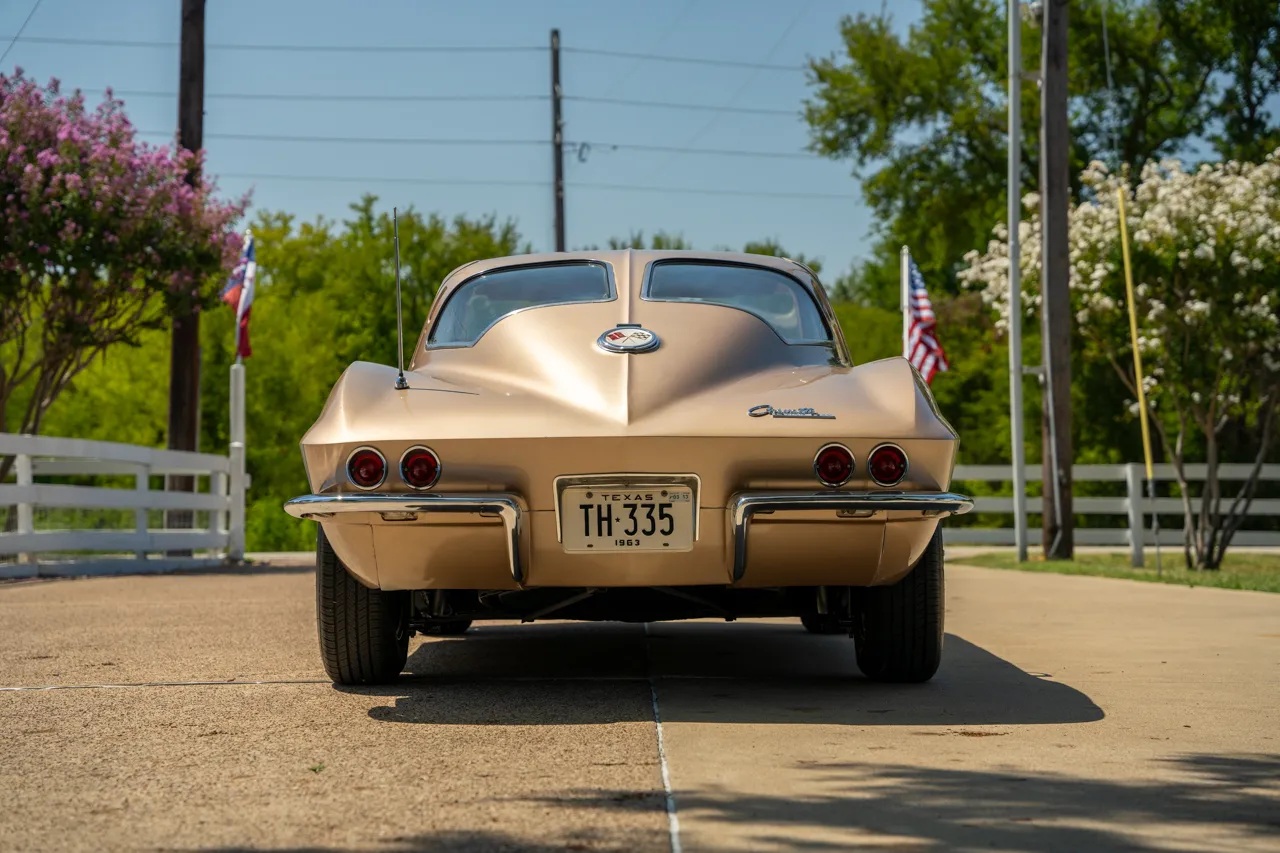
Few American performance cars carry the cultural and collector significance of the 1963 Chevrolet Corvette “split-window” coupe. It introduced the second-generation Corvette with a dramatic new design, a stronger ladder-type frame, and an independent rear suspension that significantly advanced the car’s handling capabilities. The styling, largely attributed to Larry Shinoda under the direction of design chief Bill Mitchell, was defined by sharp contours and the distinctive central roof ridge that divided the rear glass before flowing into the tail.
Although visually striking, the split rear window compromised rearward visibility and was eliminated after the 1963 model year, making this configuration unique to a single production year. Its rarity and unmistakable appearance have consequently established the 1963 coupe as one of the most coveted early Corvettes among collectors.
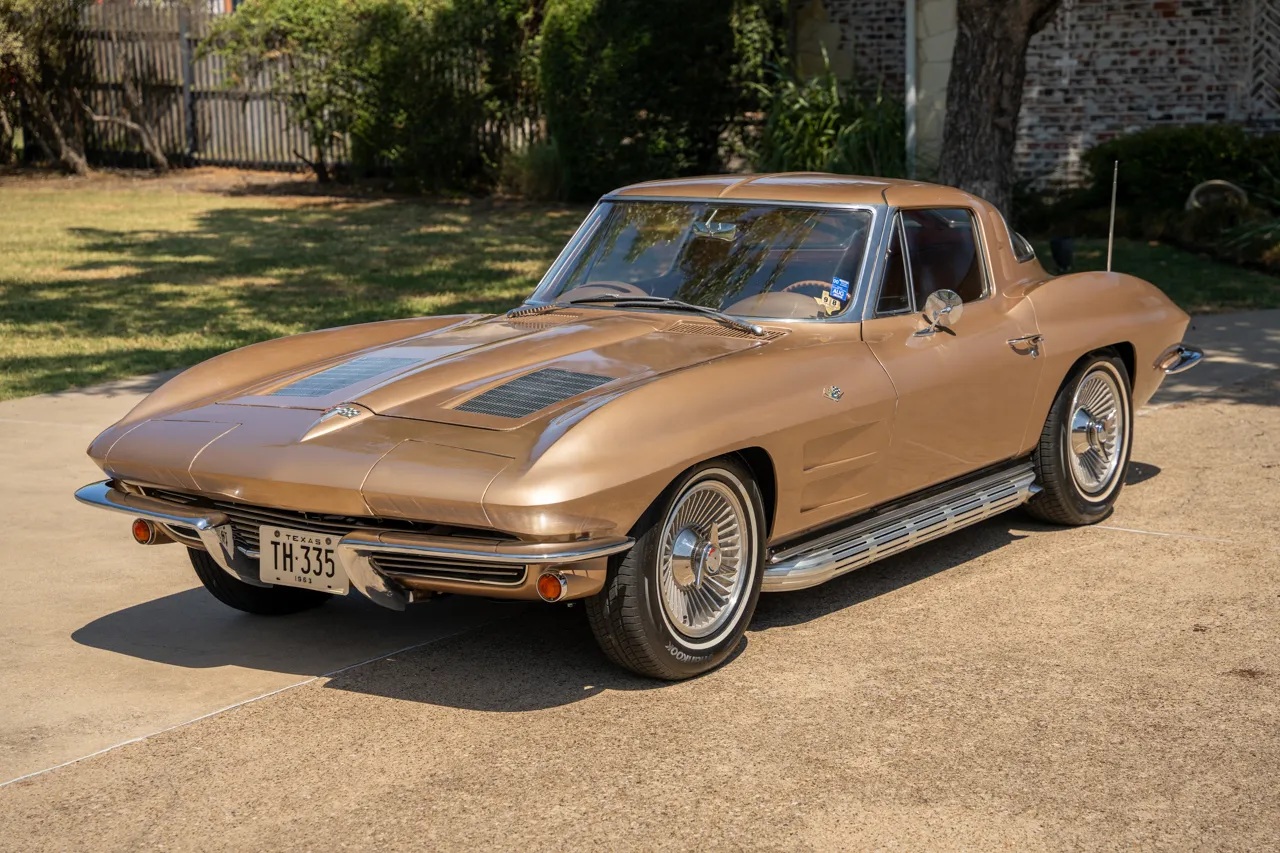
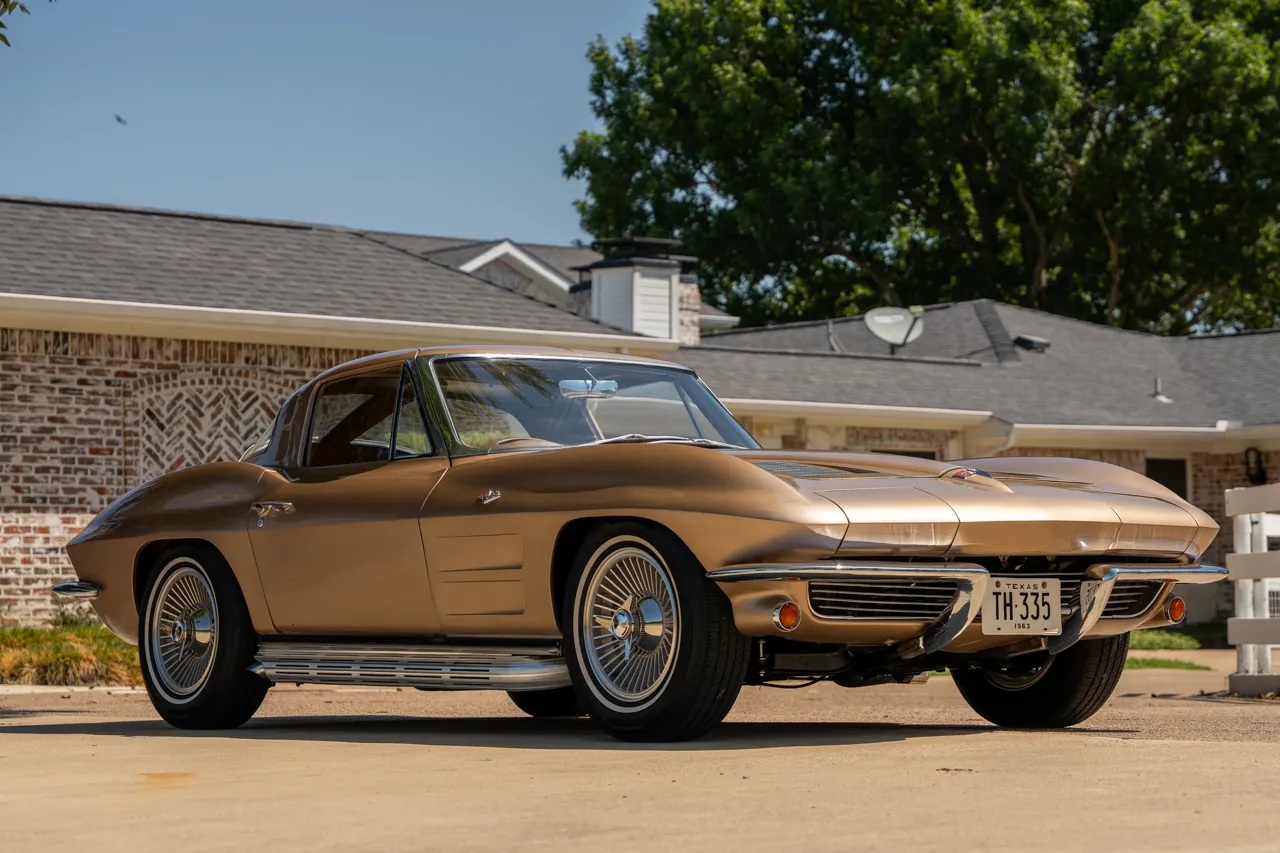
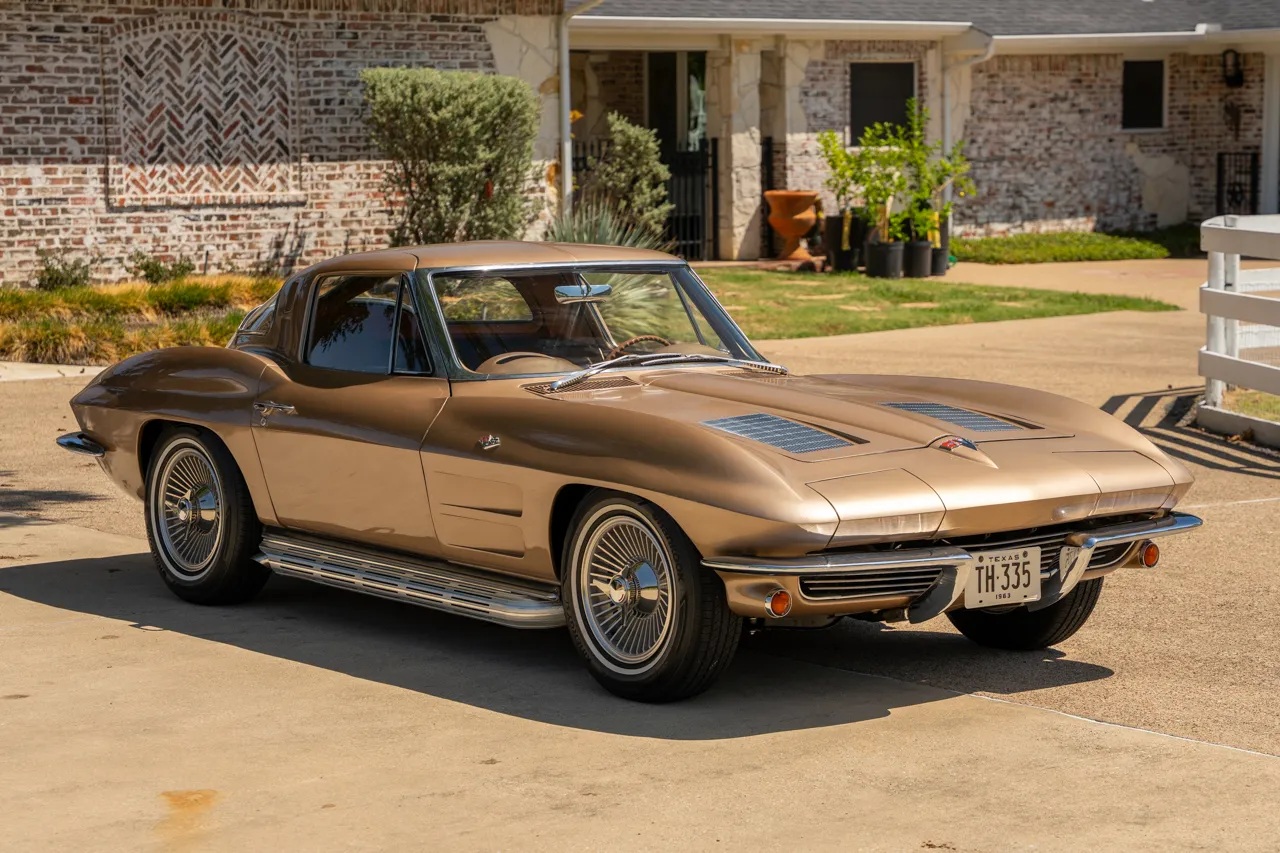
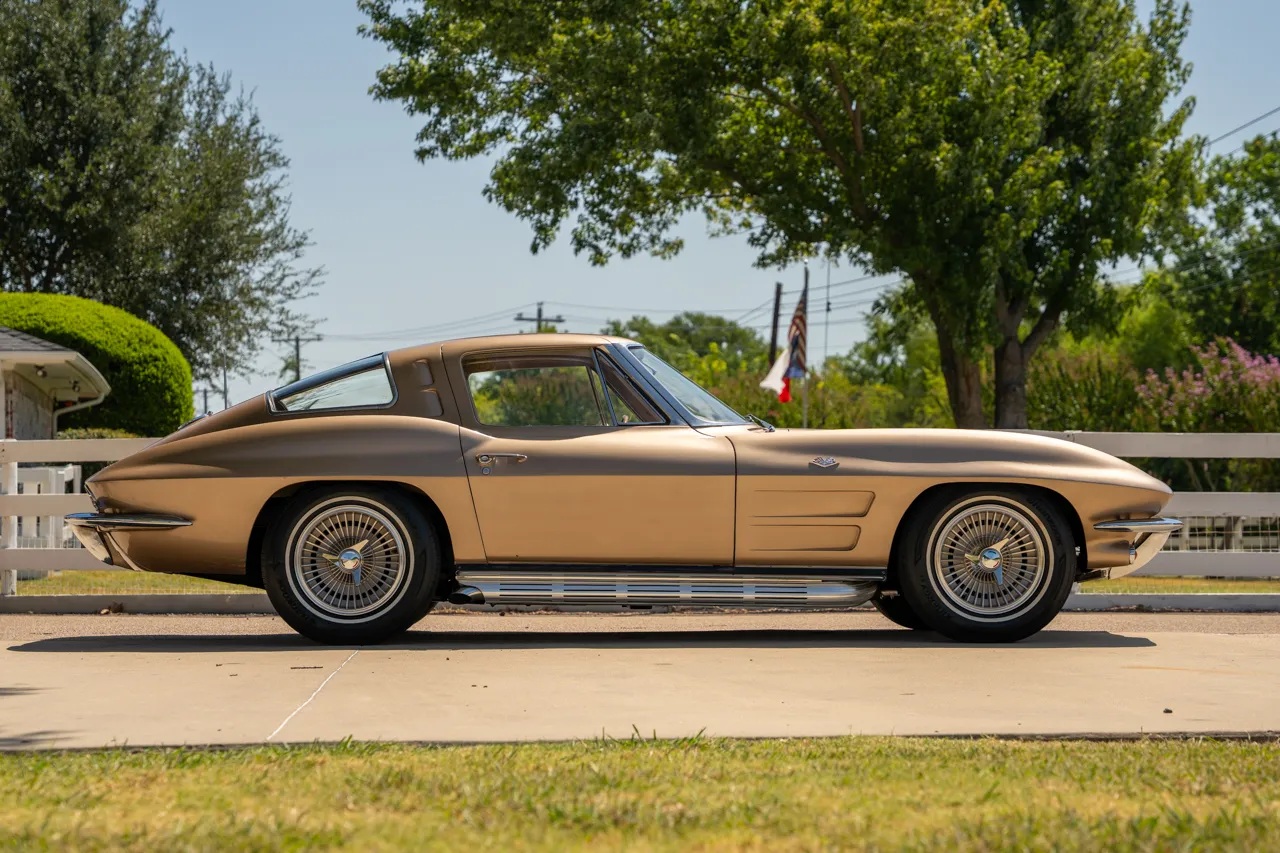
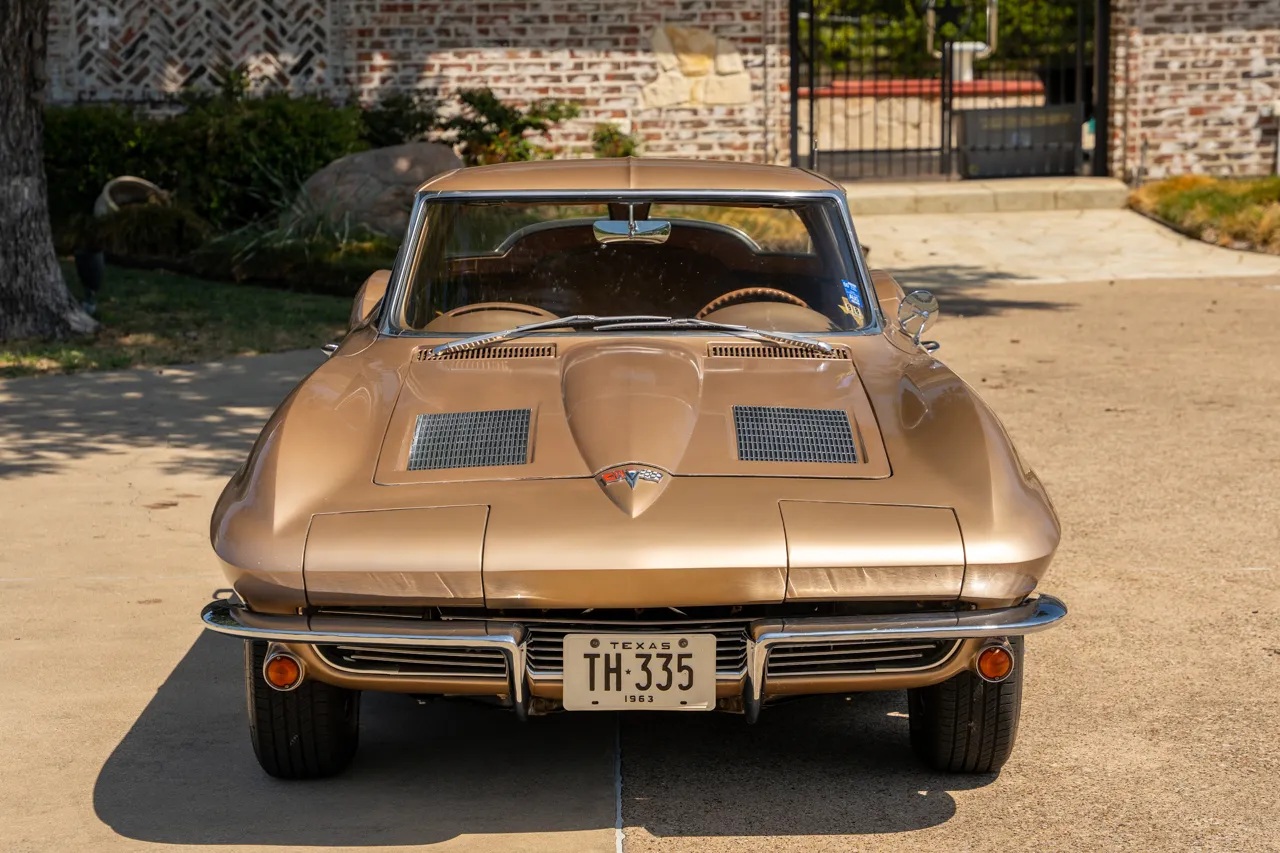
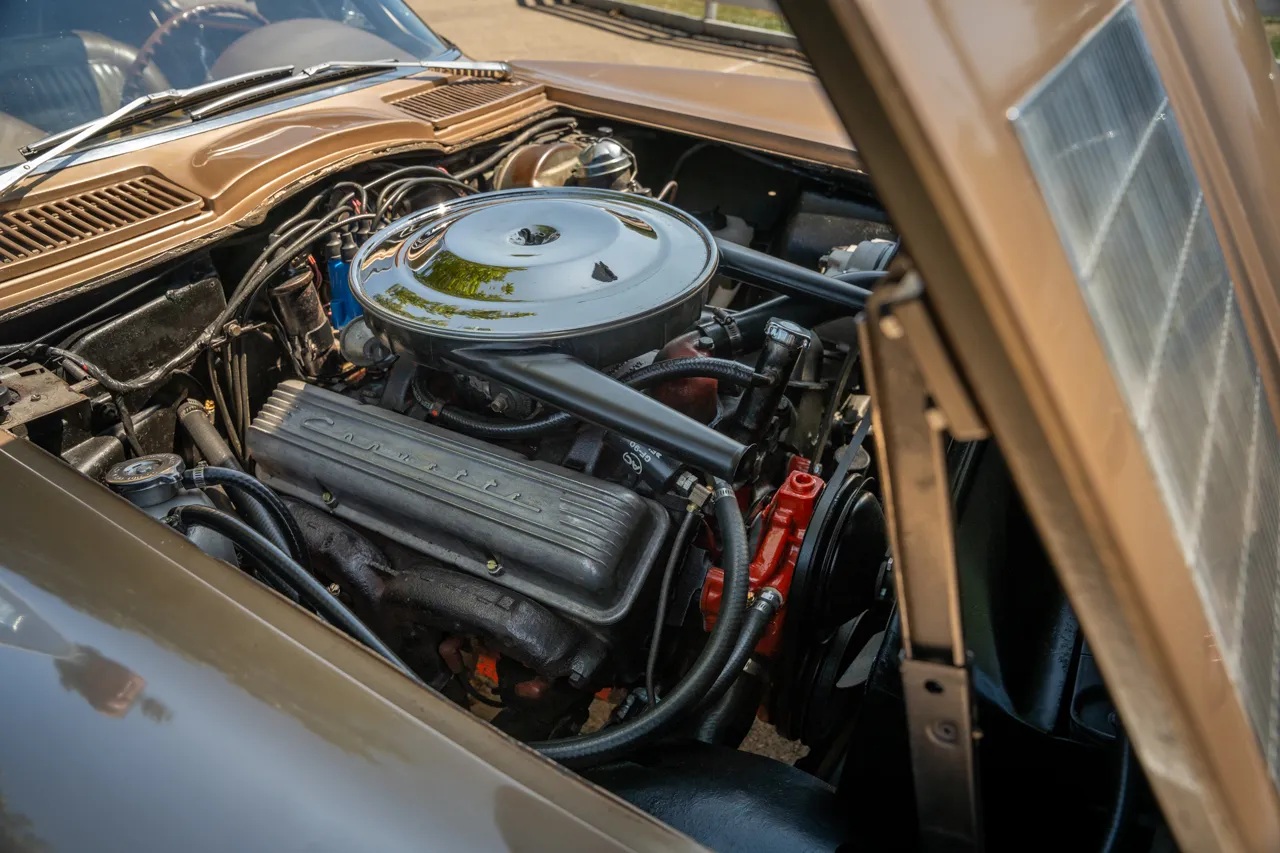
This example, offered for sale on Bring a Trailer, reportedly remained with the same Texas family for approximately four decades before being acquired by the selling dealer in 2026. It is finished in Saddle Tan over a matching Saddle vinyl interior and is powered by a 327-cubic-inch L75 V8. Factory-equipped with a four-barrel carburetor, the engine was rated at 300 horsepower and drives the rear wheels through a replacement T-10 four-speed manual transmission and Positraction differential.
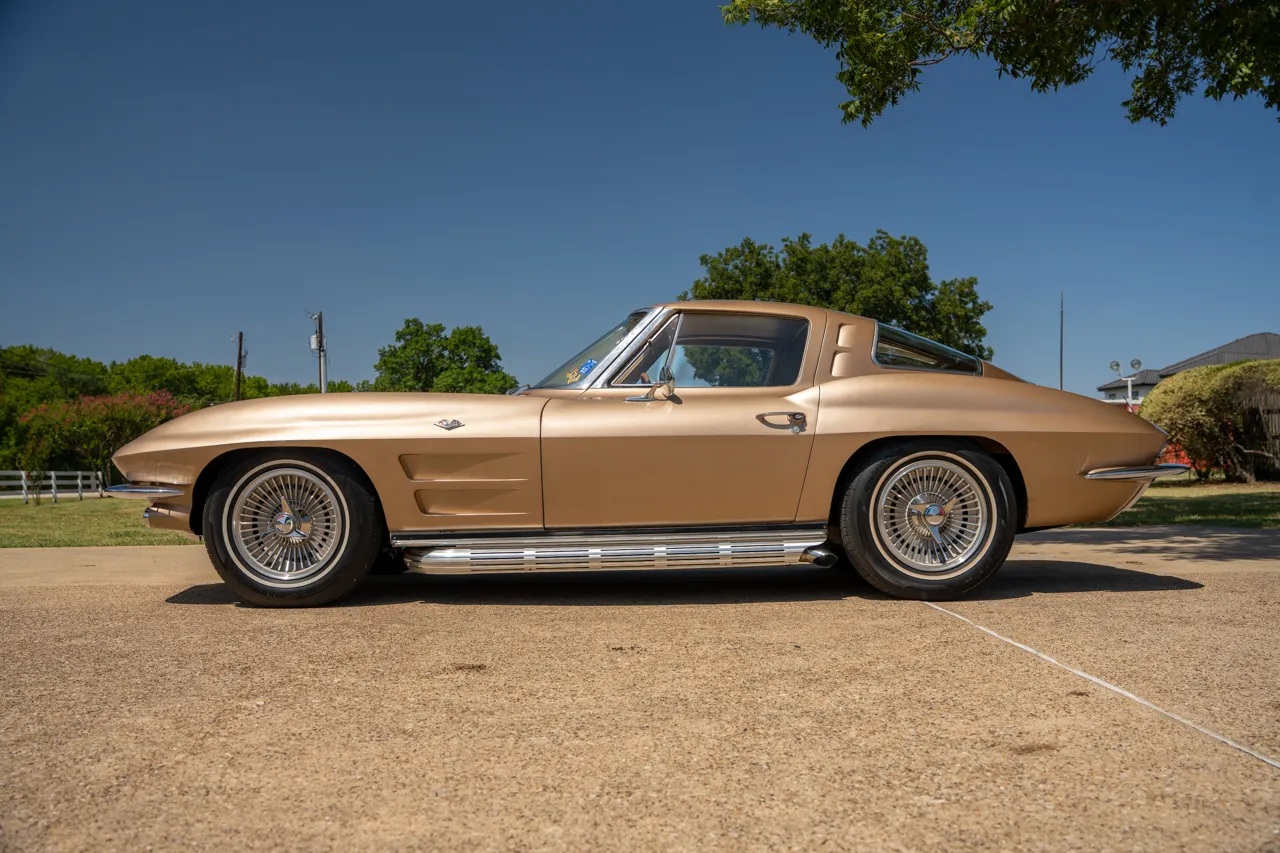
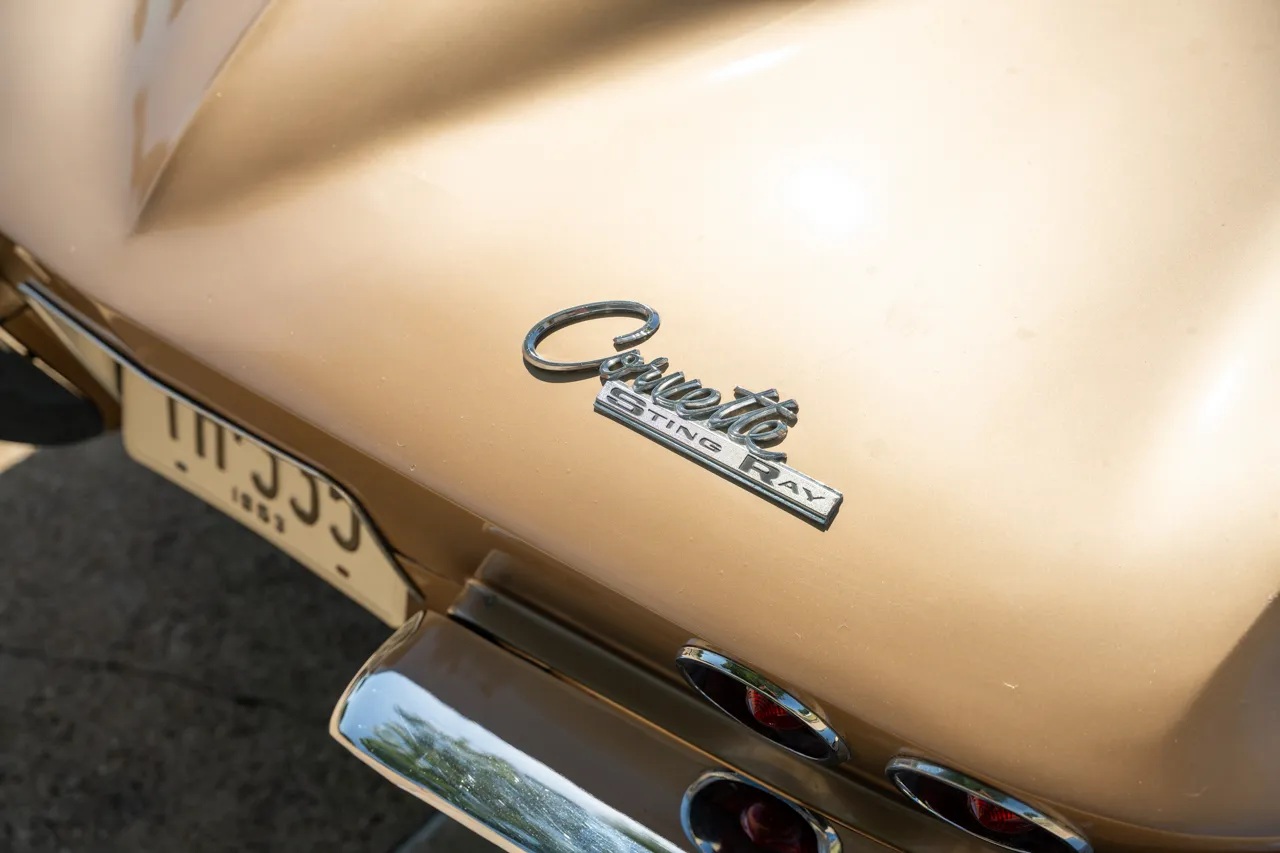
The fiberglass body was originally finished in Saddle Tan and received a subsequent repaint before 1987. Additional equipment includes power steering, four-wheel power-assisted drum brakes, power windows, side-exit exhaust, concealed headlamps, fender vents, quad taillights, and chrome bumperettes.
Preparation for the sale included installation of reproduction 15-inch Turbine-style knock-off wheels, acquired before 1987 and fitted in July 2026 with 205/75 Hankook Synergy whitewall tires. The clutch, radiator, water pump, heater core, fuel tank, and ignition components were also replaced.
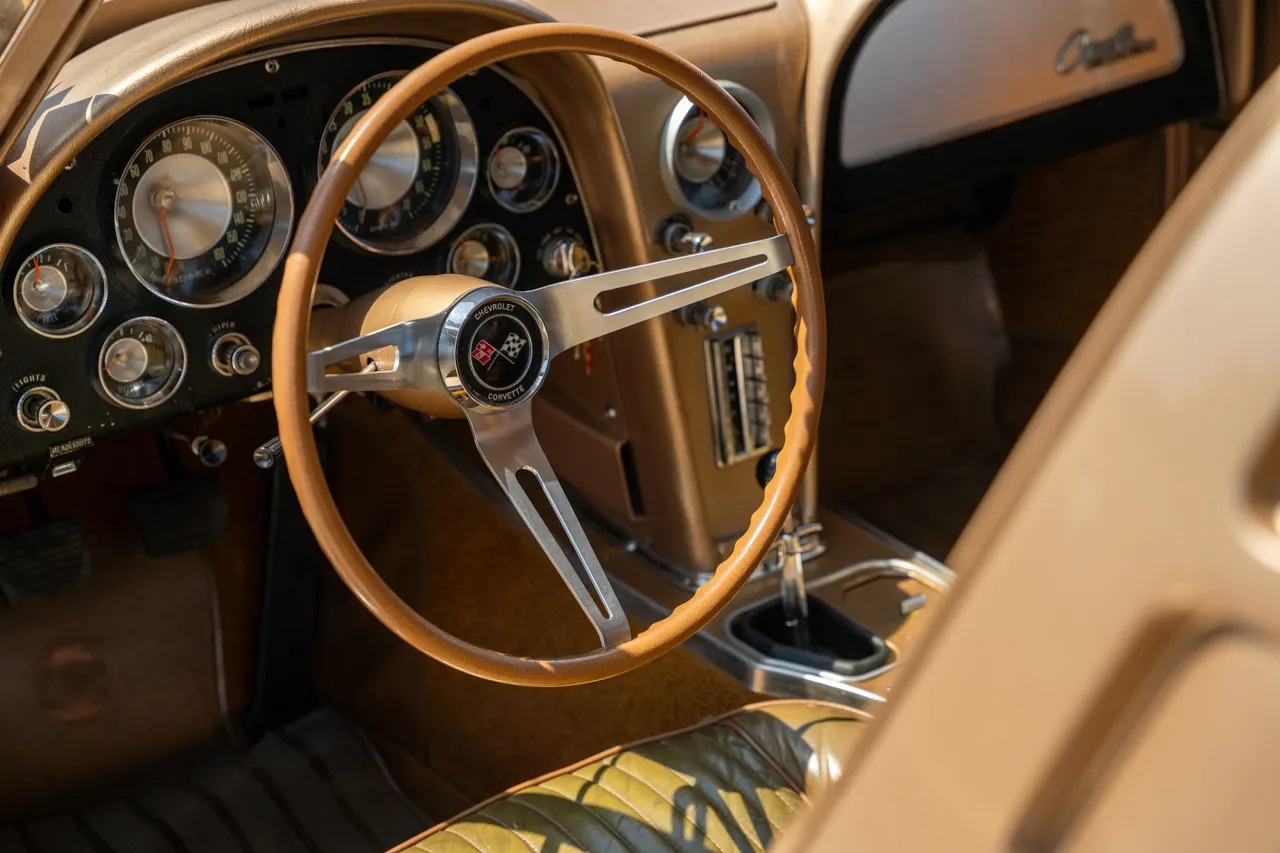
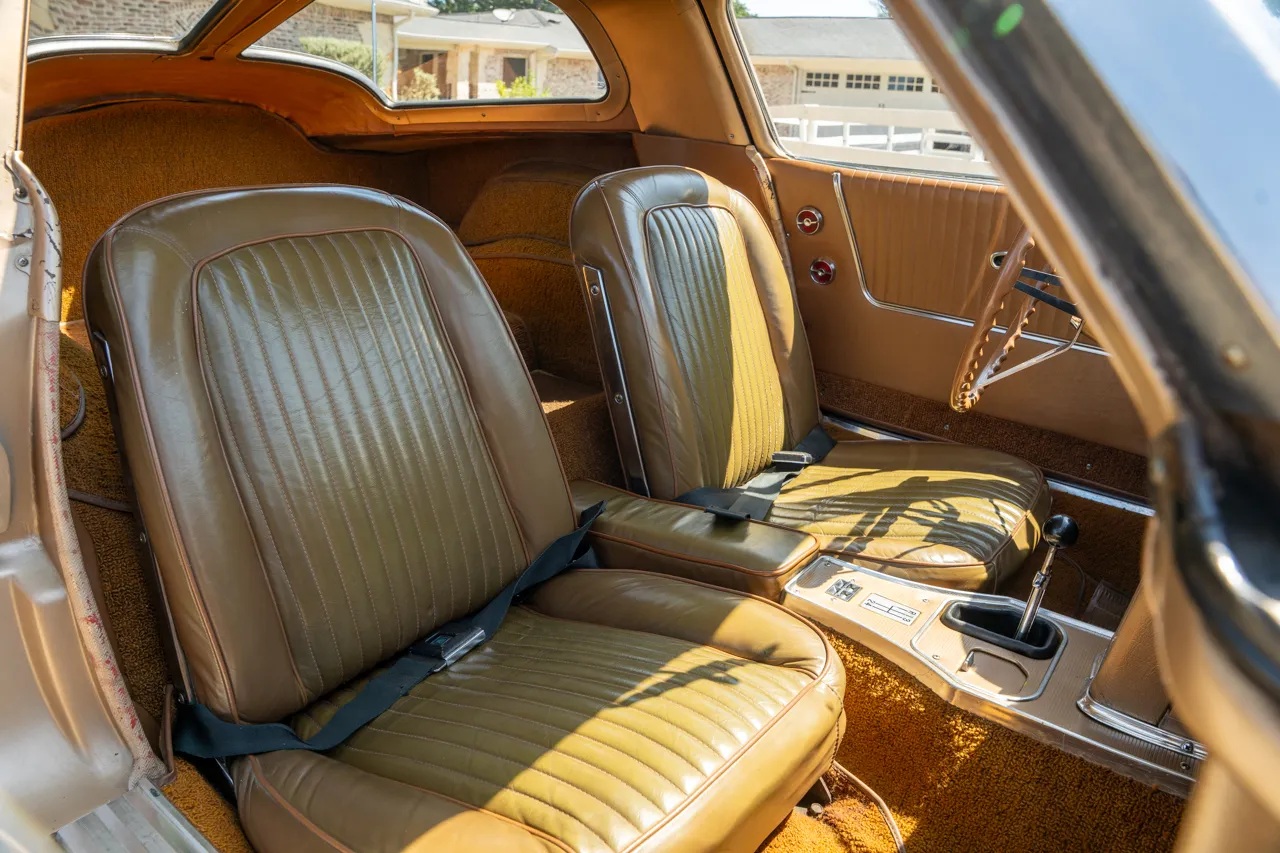
Inside, the Corvette features bucket seats, coordinated door panels and carpeting, a heater, AM radio, analog clock, power windows, and lap belts. The three-spoke steering wheel fronts a 160-mph speedometer, 5,300-rpm-redline tachometer, and gauges monitoring amperage, oil pressure, coolant temperature, and fuel level. Collectively, its one-year styling, classic mechanical specification, and long-term history make it a particularly compelling example of Chevrolet’s second-generation sports car.
Source: Bring a Trailer