The C7 Corvette was built from 2014 to 2019, sold in four flavors that barely share a wheel size between them, and modified by just about everybody who buys one. Wheels tend to be the first thing that goes, which makes sense when you consider what else a couple thousand dollars buys you in terms of visual change. Almost nothing.
The issue is that Chevrolet already ran a pretty aggressive staggered setup on these cars, so your margin for error is thinner than on most things you’d be shopping wheels for. Here’s what fits.
Factory Wheel Specs by Trim
Know what your car came with before you shop anything. The sizes moved around a lot depending on how the original owner checked the boxes.
Base Stingray: 18×8.5 front, 19×10 rear, on 245/40R18 and 285/35R19
Z51: 19×8.5 front, 20×10 rear, on 245/35R19 and 285/30R20
Grand Sport and Z06: 19×10 front, 20×12 rear, on 285/30R19 and 335/25R20
ZR1: 19×10.5 front, 20×12 rear, on 285/30R19 and 335/25R20
Bolt pattern: 5×120.65mm
Hub bore: 70.3mm
Offsets: vary by trim, and front to rear
That last one causes most of the headaches, and note that the ZR1 runs a half-inch wider front wheel than the Grand Sport and Z06 even though all three share the 20×12 rear. Offsets aren’t uniform across the lineup and plenty of product listings won’t tell you which trim they had in mind, which is how somebody with a Grand Sport ends up buying a set that was speced around a base car. Worth cross-checking against a C7 Corvette wheels buying guide while you’re comparing brands, because manufacturers don’t all publish the same numbers in the same format and it gets confusing fast.
Offset, Backspacing and Why C7 Fitment Is Unforgiving
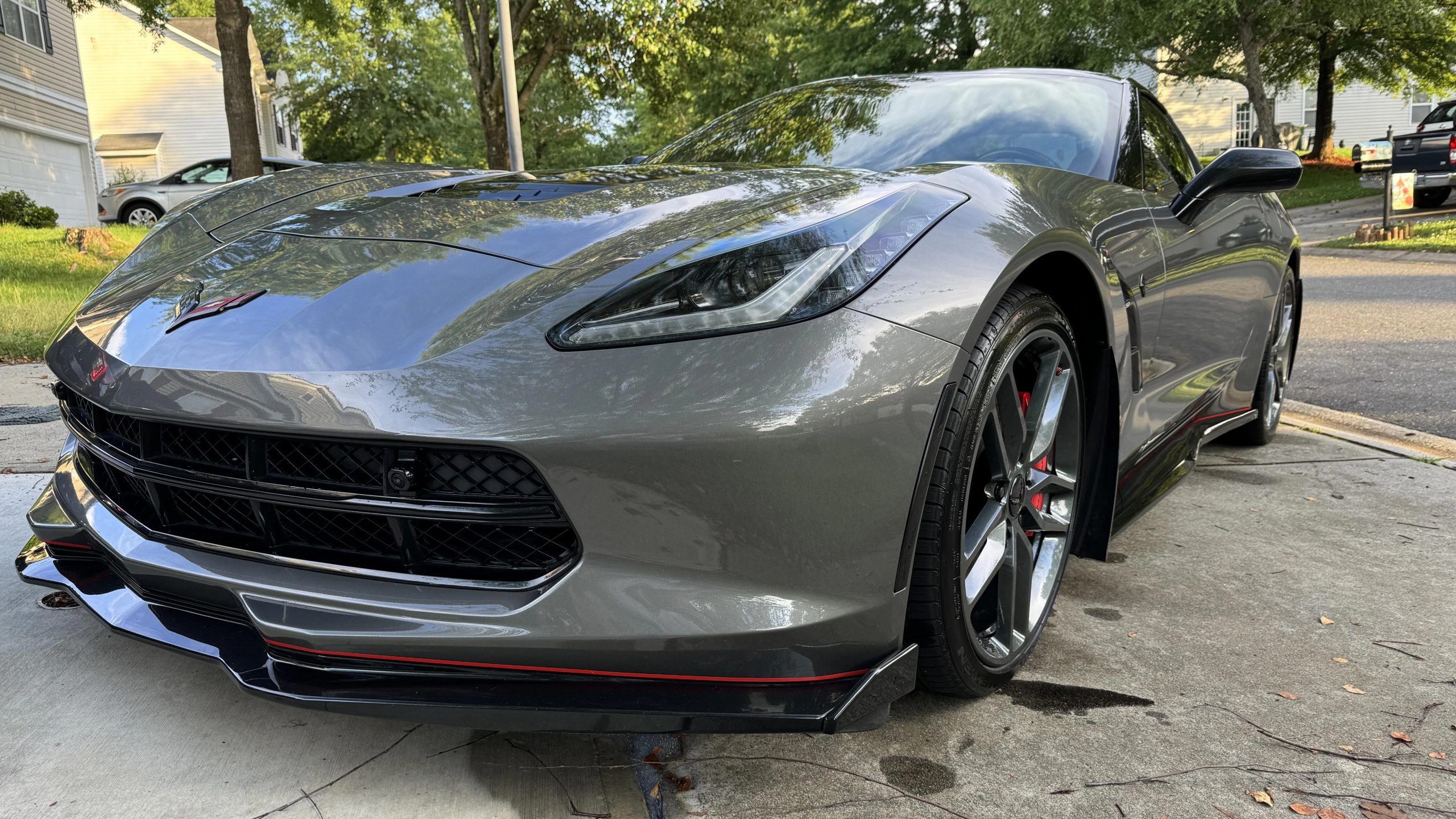
If you’ve never had to care about offset, it’s the distance between the wheel’s mounting face and its centerline, in millimeters. Higher positive number pulls the wheel in toward the suspension. Lower or negative pushes it out toward the fender. Backspacing describes the same thing but gets measured from the inside edge instead, and since manufacturers use one or the other depending on their mood, learn to convert.
Most cars will forgive you for missing by a few millimeters. This one has opinions. The rear wells are already packed with wide rubber straight from Bowling Green, and the front wheels have to clear the liner through the entire steering arc. Go too far out and you’ll find the fender on a bump or mid-corner. Go too far in and the brakes become the issue, particularly on Z51, Grand Sport and Z06 cars where the caliper is bigger and wants real room behind the spokes.
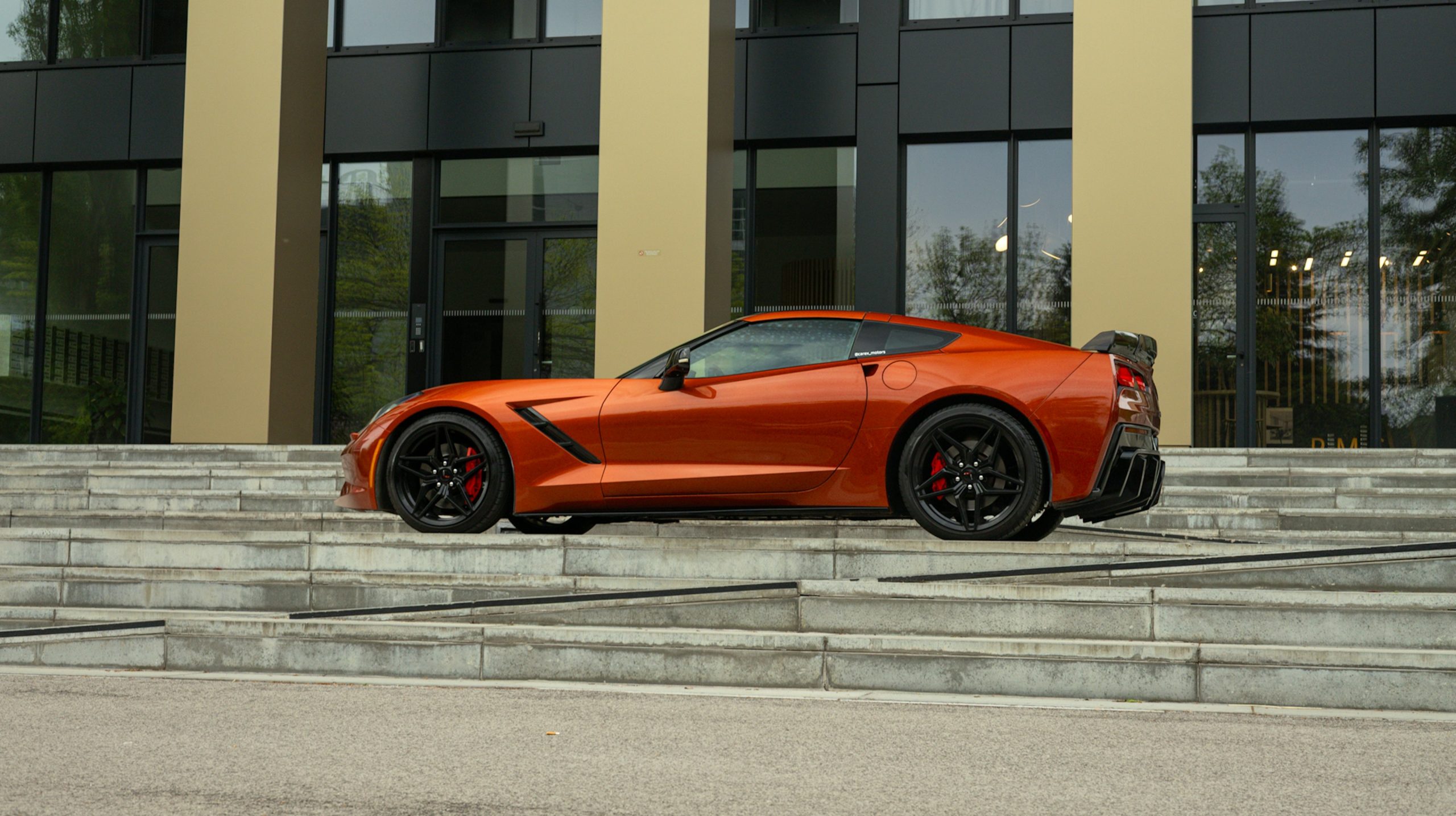
Widebody owners, pay attention to this part. Base car fitment data is useless to you. Those rear quarters flare differently and what clears on a Stingray tells you nothing about a Grand Sport or a Z06.
Spacers will rescue a set that sits slightly too far inboard, which happens more often than you’d expect with wheels that weren’t designed around this car. Use hub-centric ones and keep an eye on how much stud is left engaged.
Staggered vs. Square Setups
GM staggered these for a reason, since the rear tires do the work and the fronts mostly steer. Most owners never touch that arrangement, and that’s the right call for a street car. Square setups, meaning the same size at all four corners, come up mainly with track guys who want to rotate tires around the car instead of buying fronts and rears separately.
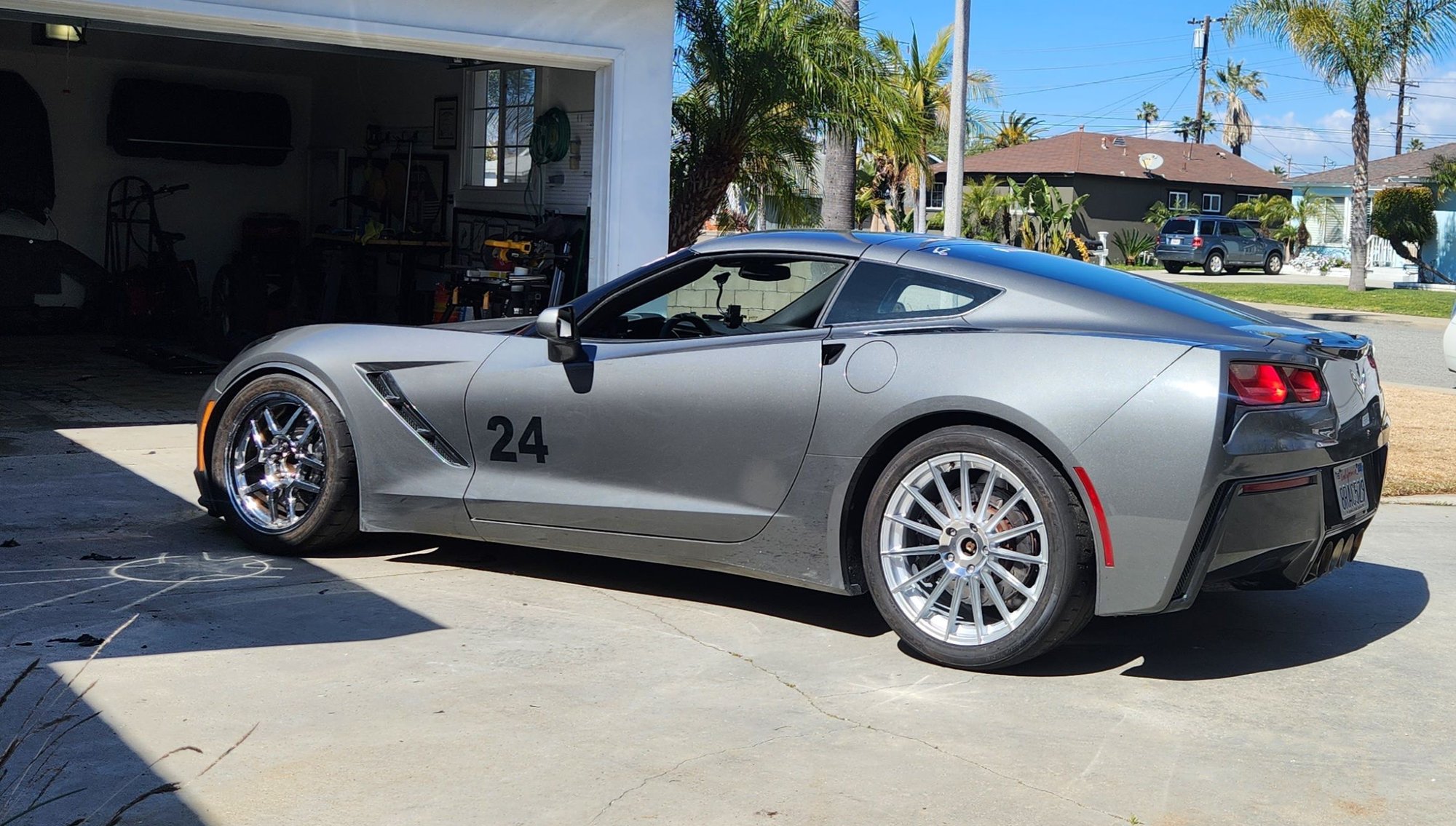
Legitimate argument if you’re going through sets. Just know you’re giving up rear width the car was built around and changing how it behaves at the limit, so it’s a track decision.
Plus-Sizing, Weight and What It Does to the Car
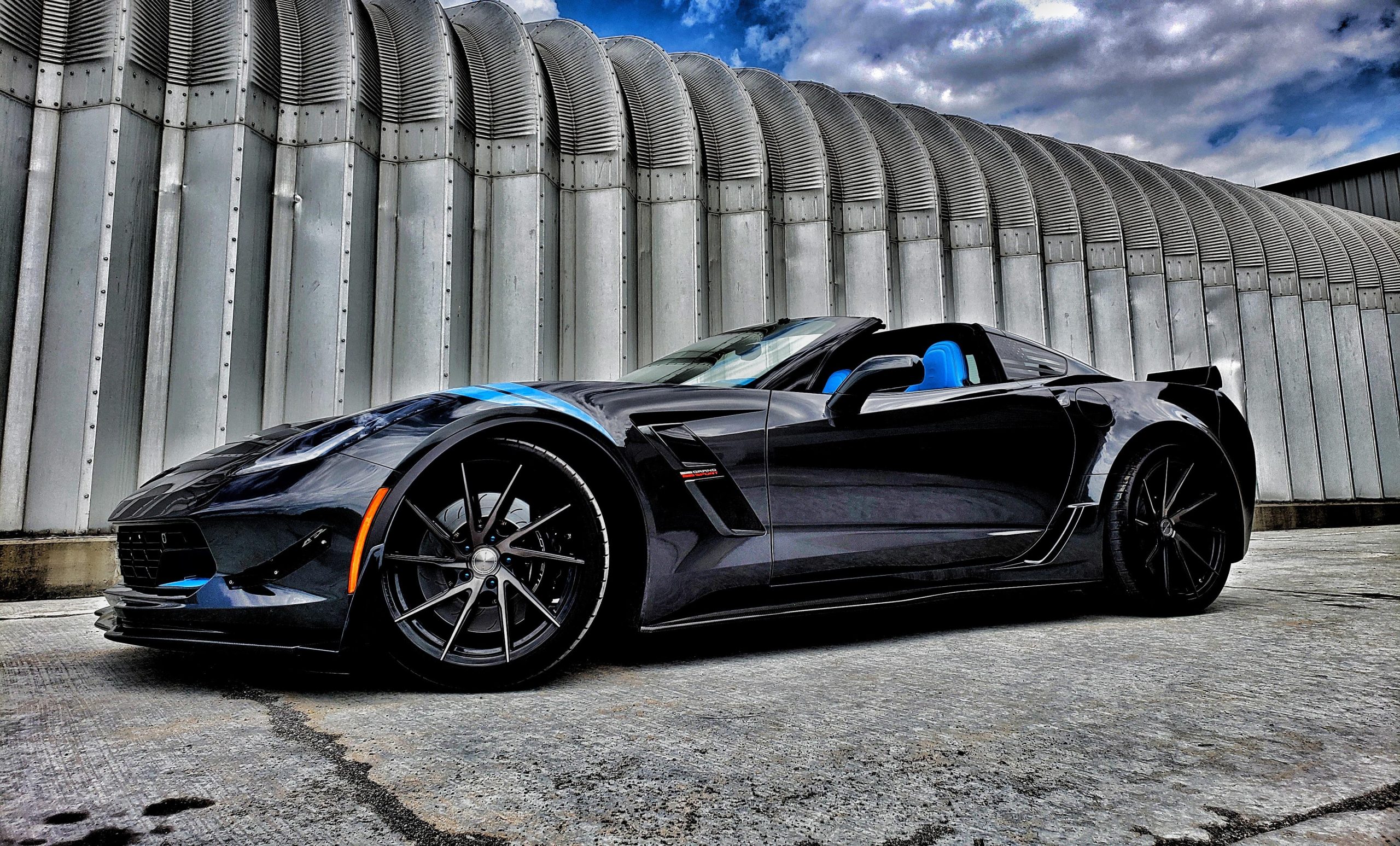
Up an inch in diameter is the popular move and it delivers what people want. Shorter sidewall, wheel fills the arch, car looks meaner in the driveway. Weight is what nobody thinks about until later.
Wheels are unsprung mass, and a pound out at the corner costs you more than a pound anywhere else in the car. A heavy 20-inch set will take some of the edge off the steering response and the ride quality that GM put a lot of engineering hours into, and there are plenty of aftermarket wheels that weigh more than the factory pieces you’re pulling off. Most buyers assume they’re going lighter. Not always the case.
Construction is where your money goes:
Cast: cheapest, heaviest, perfectly fine for a street car
Flow-formed: barrel spun under heat and pressure, stronger and lighter than cast without forged money
Forged: lightest, strongest, expensive
For a C7 that sees the occasional track day and street miles the rest of the year, flow-formed is where most people land and it’s hard to argue with.
While you’re picking sizes, keep the overall rolling diameter close to factory or the speedometer goes out. Packaged wheel and tire sets usually handle this for you, but anybody building their own combination should run the math first.
Getting the Install Right
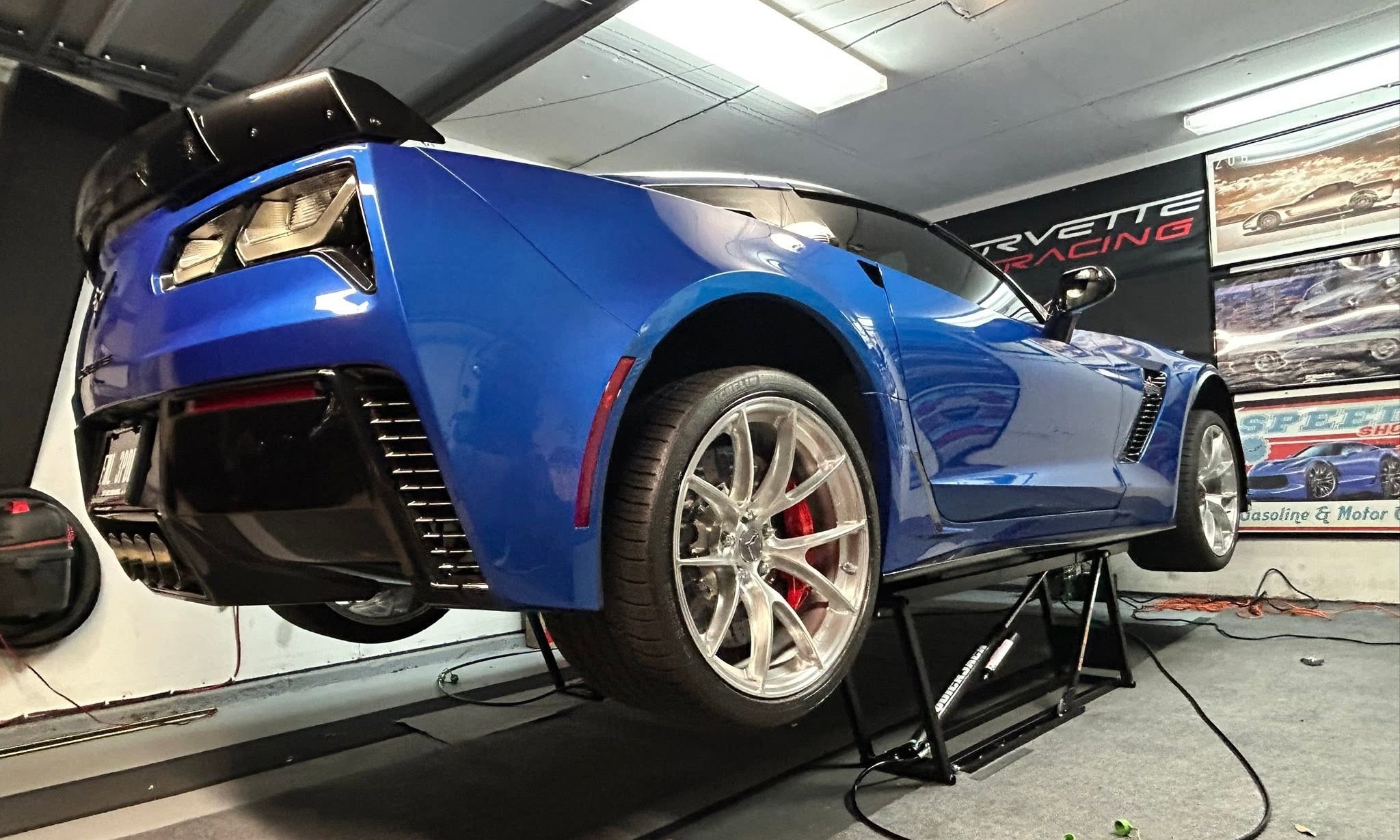
Torque them properly. C7 lug nuts call for 140 N·m (100 lb-ft) in a star pattern, with a real torque wrench and not the impact gun, then re-torque after the first 80 to 160 km (50 to 100 miles) once everything settles. Worth noting this is a dry spec, so no anti-seize or lubricant on the studs, since that changes the clamping load you actually get at a given reading. A lot of warped rotor complaints on these cars trace back to somebody who didn’t bother.
Mind the hub bore too. The C7 is hub-centric, meaning the center bore locates the wheel precisely on the hub while the torqued lug nuts do the actual clamping. If your new wheels have a larger bore, you need hub-centric rings to fill that gap, otherwise the wheel gets centered by the lug nuts alone during install and you’ll end up chasing a vibration you’ll spend weeks blaming on your tires.
Then there’s TPMS. Transfer the sensors over from the old wheels or buy a new set, and either way the system needs to be relearned so the car knows which sensor is at which corner. Nothing worse than a fresh set of wheels and a warning light staring at you.