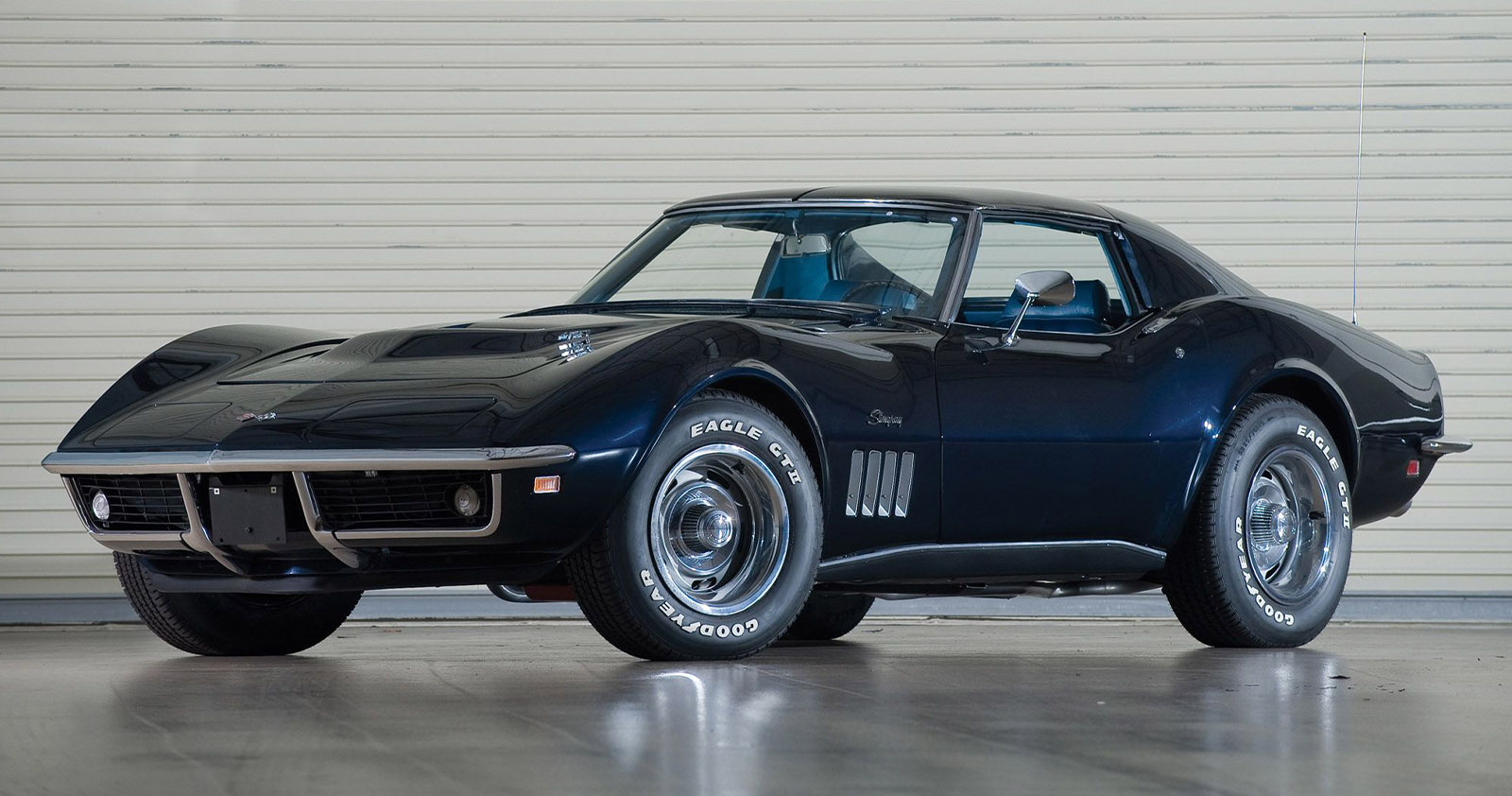
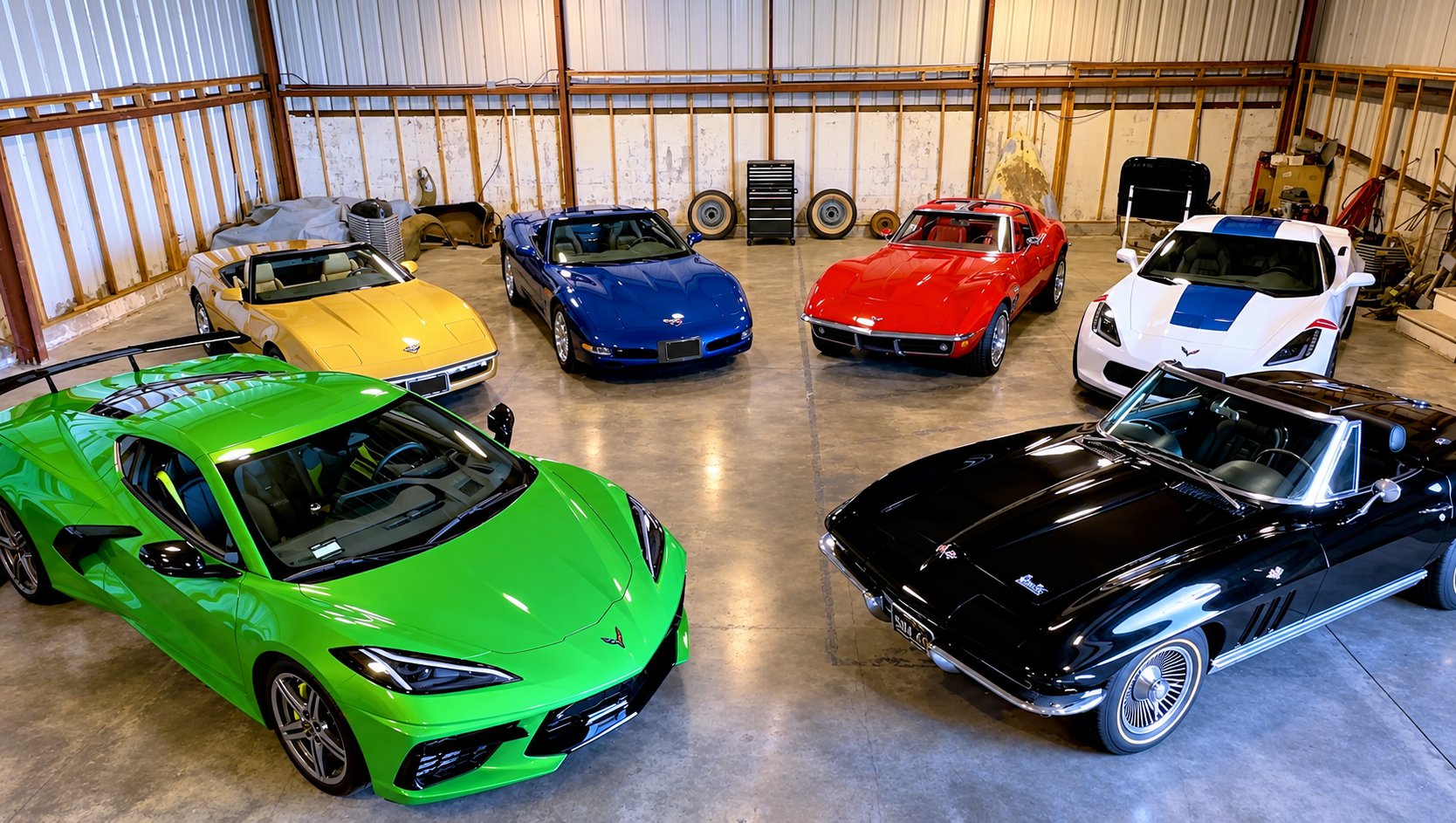
Few American cars have evolved as dramatically as the Chevrolet Corvette. Across eight generations, the Corvette has progressed from a rudimentary fiberglass sports car into a genuine mid-engine supercar, while repeatedly balancing performance, usability, technology, styling, and value.
Retro Cars Forever approaches that evolution from an unusually broad perspective. An owner and enthusiast who has driven more than 50 Corvettes, including examples from every generation and personally owned C4, C5, and C6 models, evaluates the Corvette lineage using more than performance statistics. The assessment considers how each generation performs as a car to own and drive today, as well as how it compared with its competitors when new.
C1: Where the Corvette Story Began
The C1 deserves credit for establishing the Corvette name, but its earliest versions were compromised by primitive engineering and limited equipment. The original drivetrain consisted of a six-cylinder engine and two-speed automatic transmission, while the chassis relied on a solid rear axle and drum brakes.
Zora Arkus-Duntov’s influence changed that trajectory. V8 engines, manual transmissions, and fuel injection transformed the Corvette into a legitimate performance car.
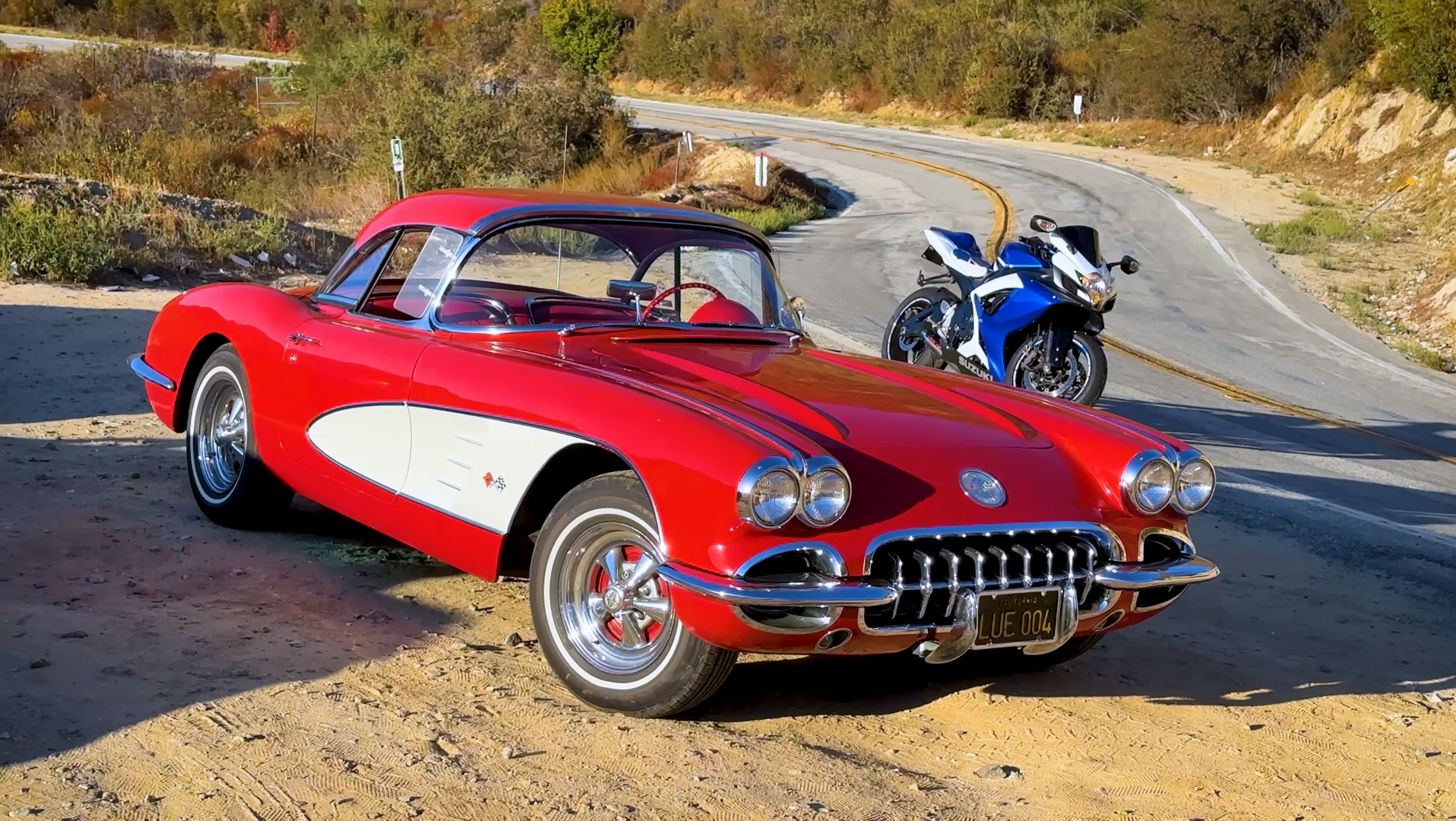
Nevertheless, the C1 remains physically demanding. Its cramped cabin, large steering wheel, primitive chassis, and lack of conveniences make it considerably more difficult to drive than later generations. Its greatest strengths are its historical importance and unmistakable styling.
C2: The Corvette Comes of Age
The C2 marked the Corvette’s most important early engineering transformation. Independent rear suspension, power steering, and disc brakes dramatically improved handling and control.
Large-displacement engines then gave the new chassis the performance to challenge expensive sports cars from overseas. According to the supplied assessment, the C2 combined this capability with unusually approachable road manners, making it comparatively easy and enjoyable to drive.
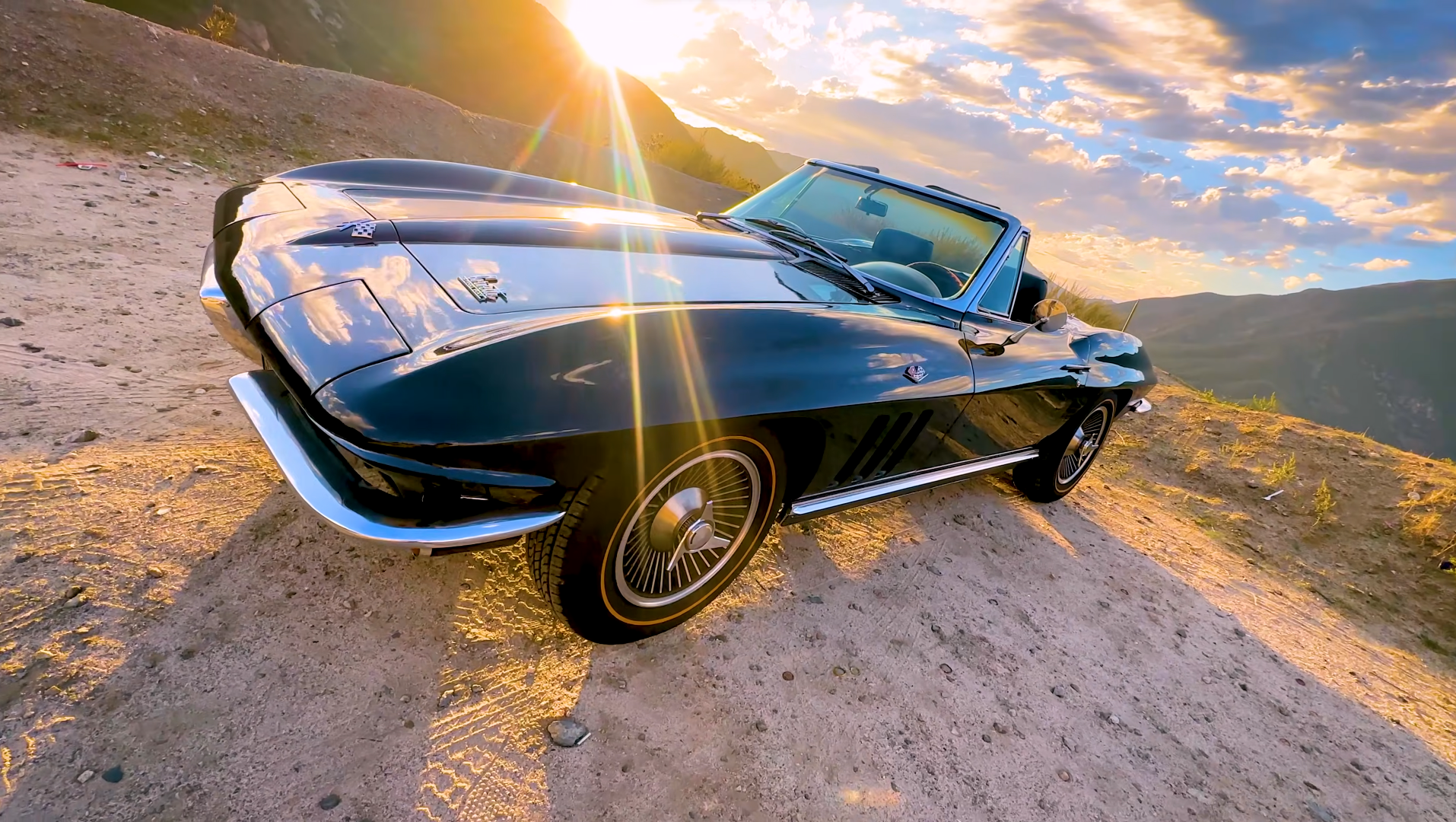
Its styling remains equally influential. The C2 established a design language that helped define the Corvette for decades and cemented its position as America’s sports car.
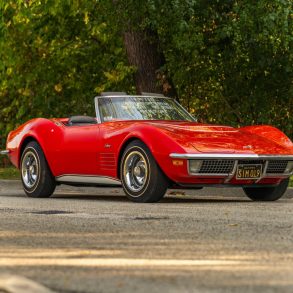
C3: The Longest-Running Corvette Generation
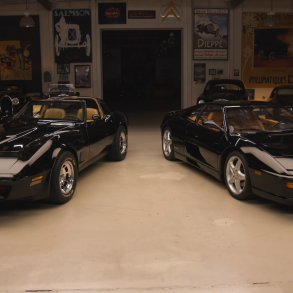
The C3 produced some of the Corvette’s greatest contrasts. Early models combined spectacular styling with powerful engines, including the 454 big-block, while the oil crisis and increasingly restrictive emissions and safety regulations subsequently reduced performance.
By the mid-1970s, horsepower had fallen dramatically and vehicle weight had increased. Chevrolet compensated by making the Corvette increasingly comfortable, adding features such as power seats and power locks.
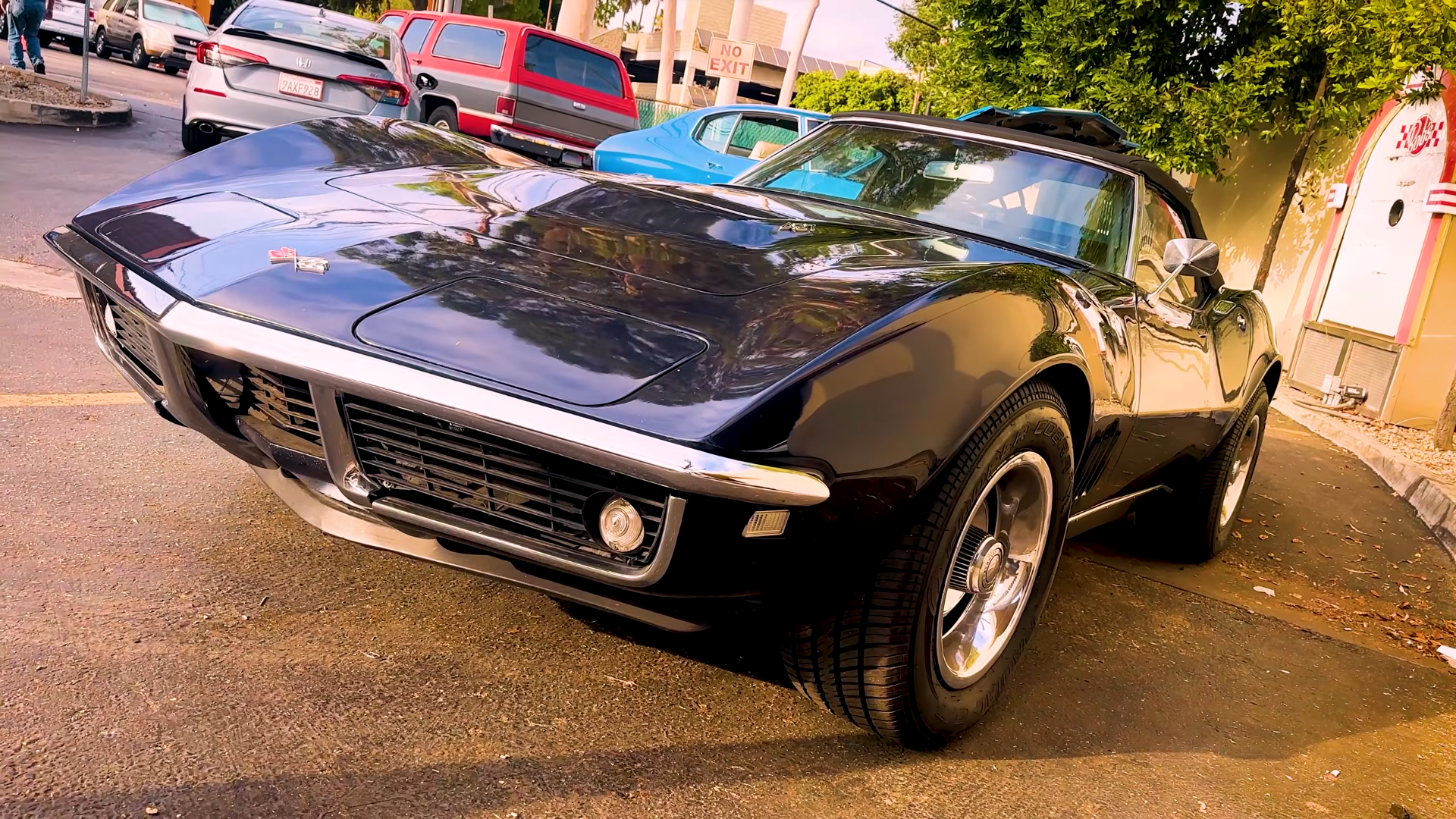
The C3 remained culturally significant and achieved strong sales, but its aging chassis increasingly fell behind foreign competition in performance, comfort, and packaging.
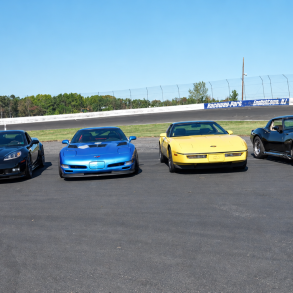
C4: Restoring Corvette Performance
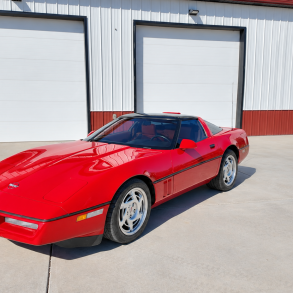
The C4 represented a major reset after the performance decline of the later C3. Chevrolet focused heavily on handling, braking, structural development, and high-speed capability.
The generation eventually produced formidable versions including the ZR-1, while the Callaway twin-turbo option demonstrated how much performance could be extracted from the platform.
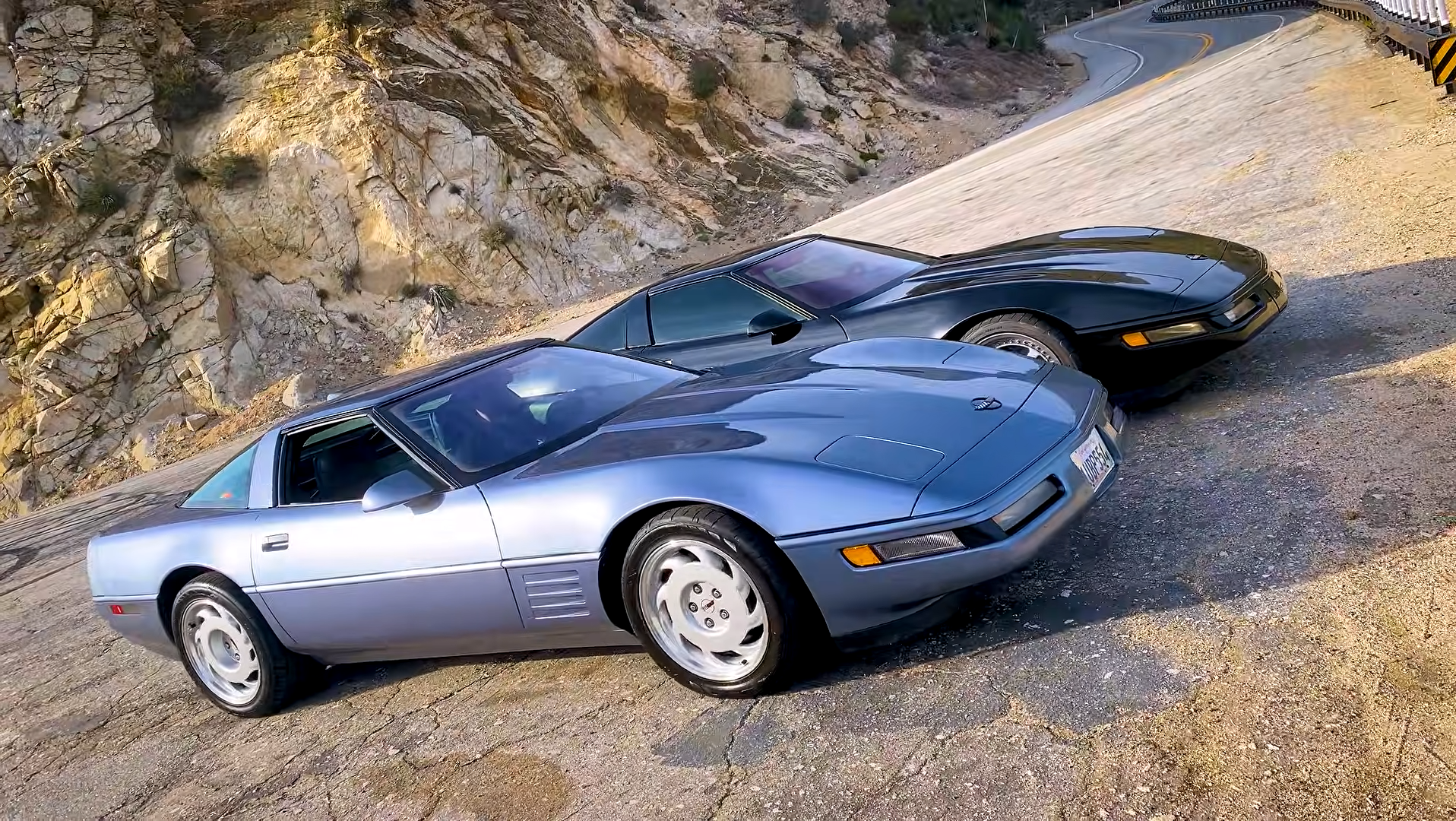
The C4’s shortcomings included difficult roof removal, high door sills, early electrical problems, harsh ride quality, and structural limitations. Yet later models remain attractive to enthusiasts because of their performance, distinctive digital instrumentation, and relatively accessible ownership costs.
C5: The Major Usability Revolution
The C5 transformed the Corvette’s everyday usability. A substantially stiffer structure eliminated much of the flex and rattling associated with the C4, while moving the transmission rearward improved weight distribution and cabin packaging.
The Corvette also gained a large luggage compartment, better visibility, and a more comfortable driving environment.
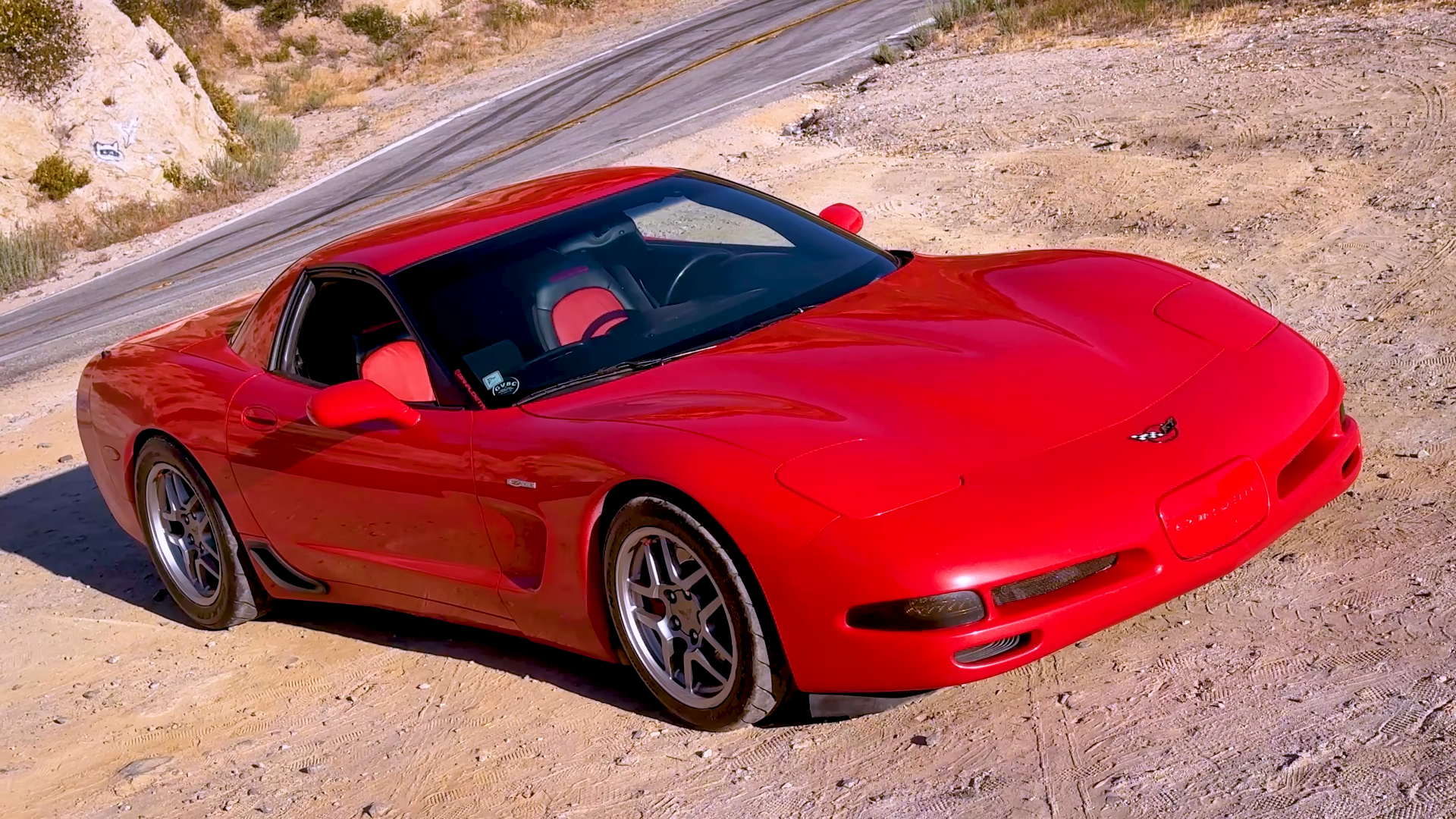
Its LS1 V8 became one of the generation’s defining features, while the introduction of the dedicated Z06 established a performance-oriented model that would become central to Corvette’s future.
The C5’s principal weakness was interior material quality. Nevertheless, its combination of performance, reliability, practicality, and value represented a major leap forward.
C6: The Front-Engine Corvette Refined
The C6 retained the fundamental architecture of the C5 while increasing power and refining the package. High-performance variants pushed the platform into supercar territory, most notably the 638-horsepower ZR1 and 7.0-liter Z06.
The generation also retained the Corvette’s traditional round separated taillights, while later improvements addressed early steering and transmission characteristics.
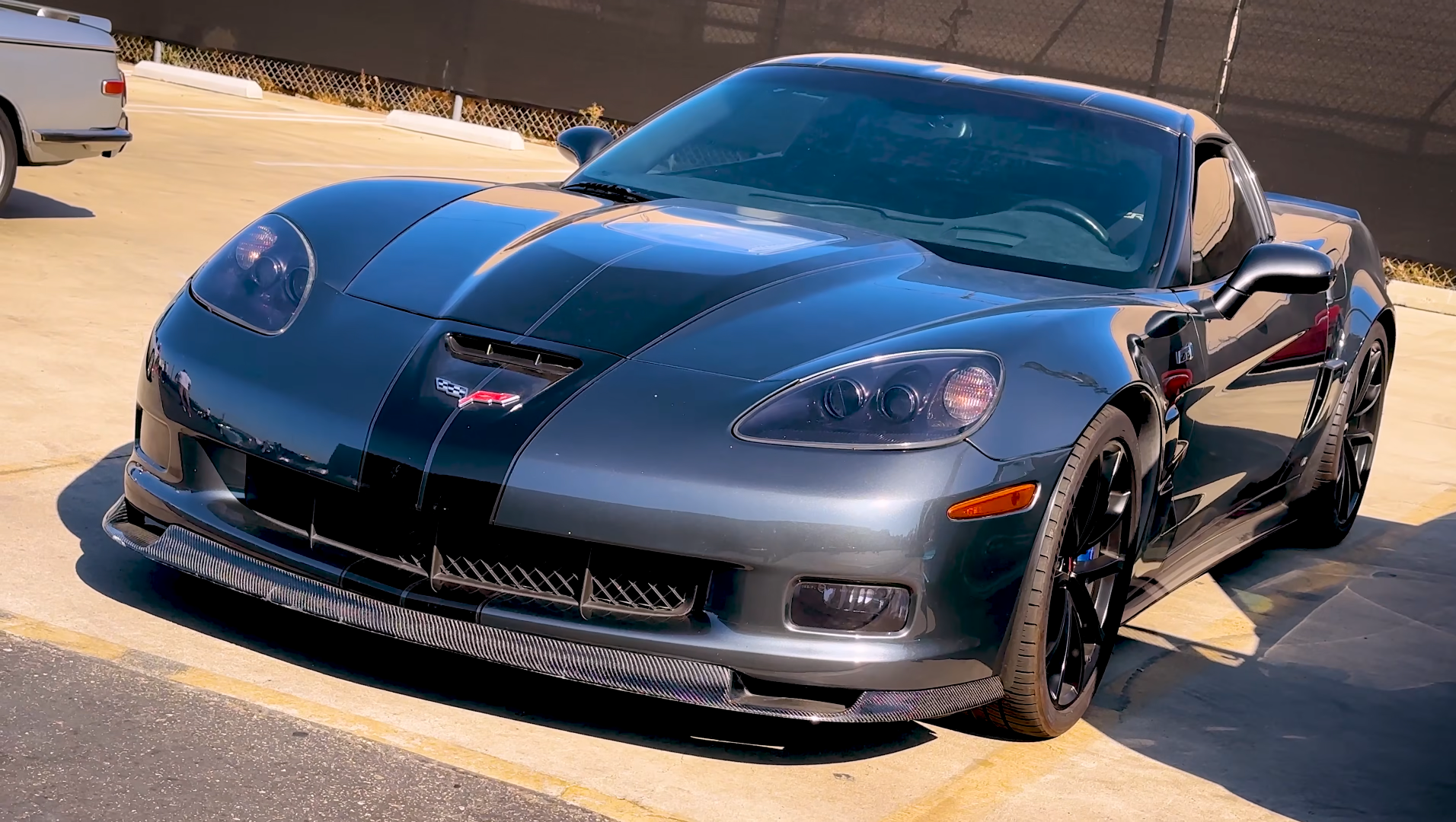
The 2008 update brought the LS3 as the standard engine, making later C6 models particularly compelling for enthusiasts seeking a balance between modern performance and traditional Corvette character.
C7: The Ultimate Front-Engine Corvette
The C7 brought the front-engine Corvette formula to an exceptionally refined stage. Its aluminum structure delivered substantial rigidity, while the cabin represented a significant improvement in perceived quality and seating comfort.
It was also the final Corvette generation to offer a manual transmission, making it an important bridge between the mechanical character of older Corvettes and the technology-focused C8.
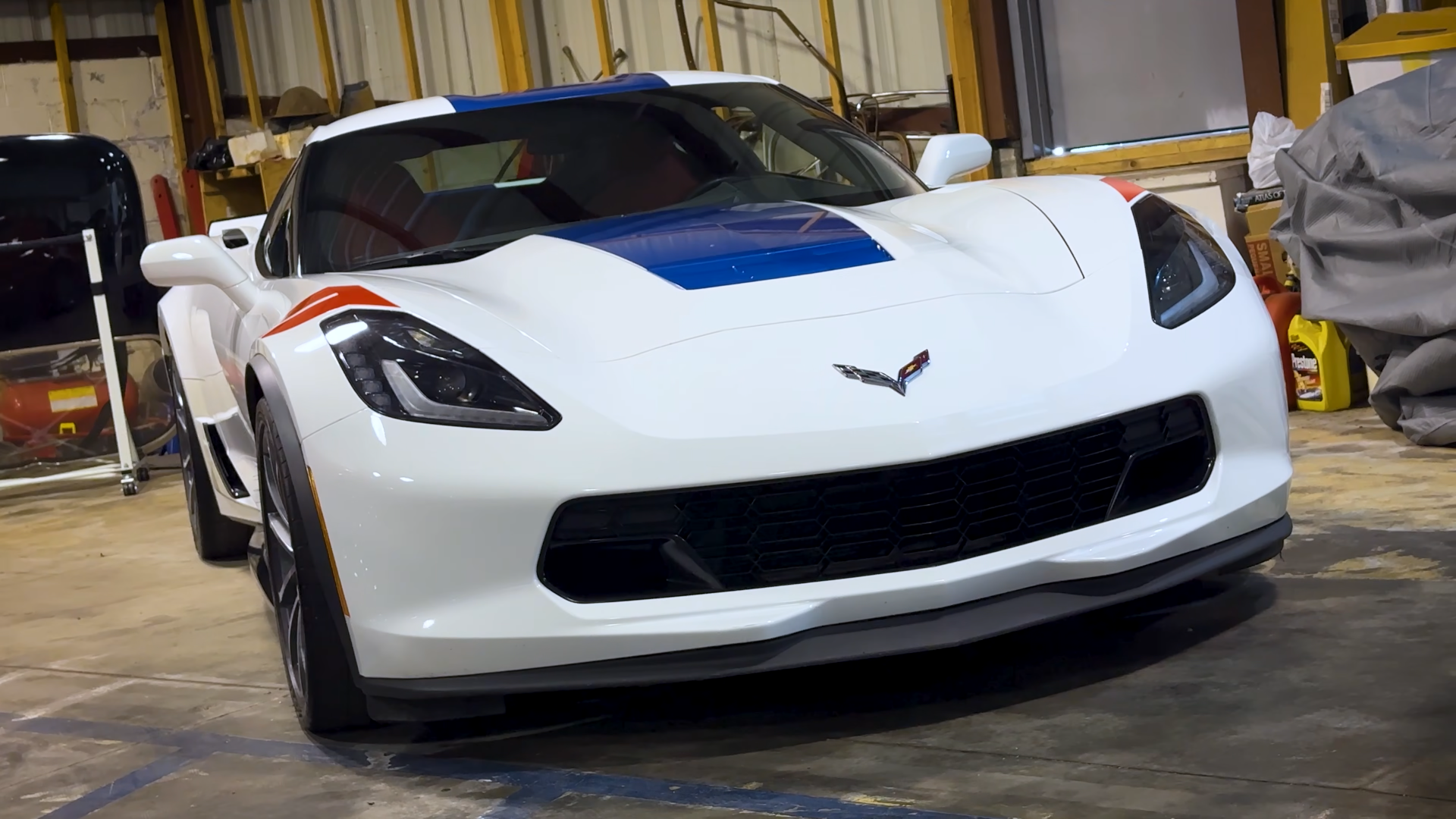
However, increased complexity introduced additional potential problem areas, including automatic fuel-management components, transmission behavior, and early Z06 supercharger cooling concerns.
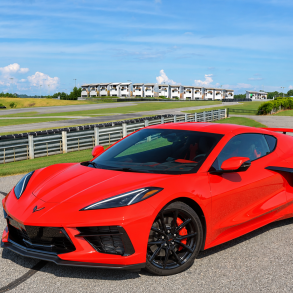
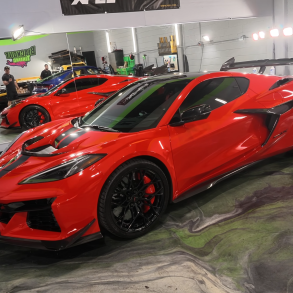
C8: The Mid-Engine Revolution
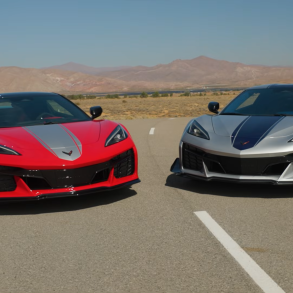
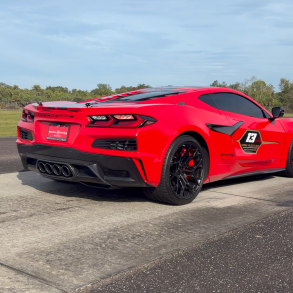
The C8 fundamentally changed the Corvette’s engineering identity by moving the engine behind the driver. The resulting traction and grip provided a dramatic increase in performance capability.
The C8 combines that performance with a more sophisticated cabin, comfortable road manners, and technology such as a front-axle lift system.
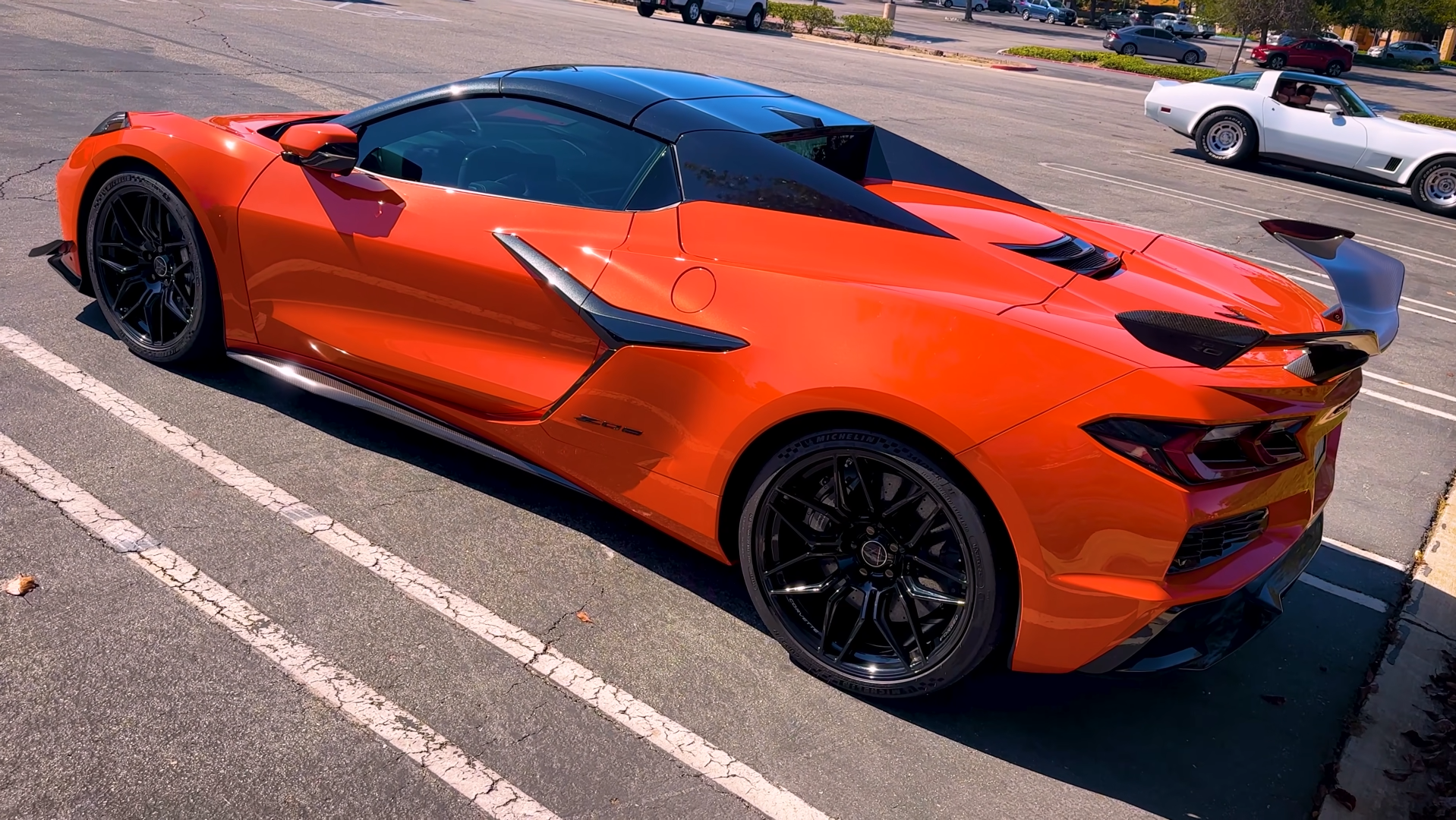
Its transformation also created new compromises. The C8 abandoned the manual transmission, introduced substantially greater electronic complexity, and adopted styling that moves away from the traditional front-engine Corvette silhouette.
For an enthusiast accustomed to earlier generations, the C8 can therefore feel less mechanically intimate despite being dramatically more capable.
The Corvette’s Evolution Is About More Than Speed
The history of the Corvette cannot be reduced to horsepower figures or acceleration times. Each generation solved different problems.
The C1 established the nameplate. The C2 created the modern Corvette formula. The C3 expanded its cultural reach while adapting to an increasingly restrictive automotive environment. The C4 restored American performance credibility. The C5 transformed everyday usability. The C6 refined the formula and pushed performance dramatically higher. The C7 perfected the front-engine architecture. The C8 then abandoned that architecture entirely in pursuit of supercar-level dynamics.
That progression explains why Corvette enthusiasts can reasonably have dramatically different favorites. The most technologically advanced Corvette is not necessarily the most engaging, the most practical Corvette is not necessarily the fastest, and the most historically significant model is not necessarily the easiest to live with.
The enduring strength of the Corvette is precisely that its identity has never remained static. From a cramped fiberglass roadster to a sophisticated mid-engine performance machine, Chevrolet has repeatedly reinvented America’s sports car while preserving the fundamental idea behind the name: delivering extraordinary performance without abandoning the road-going character that made the Corvette an icon.
Source: Retro Cars Forever