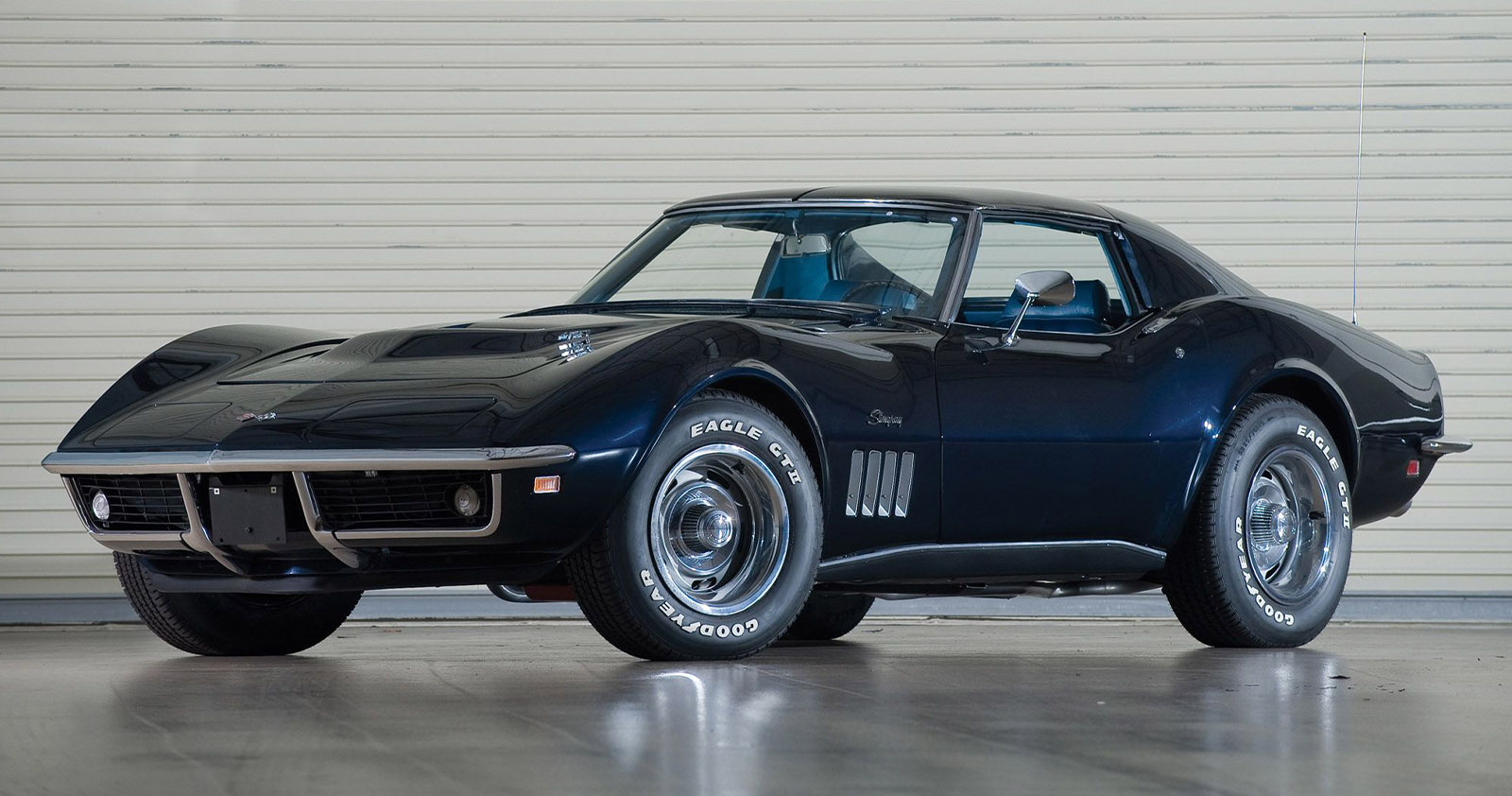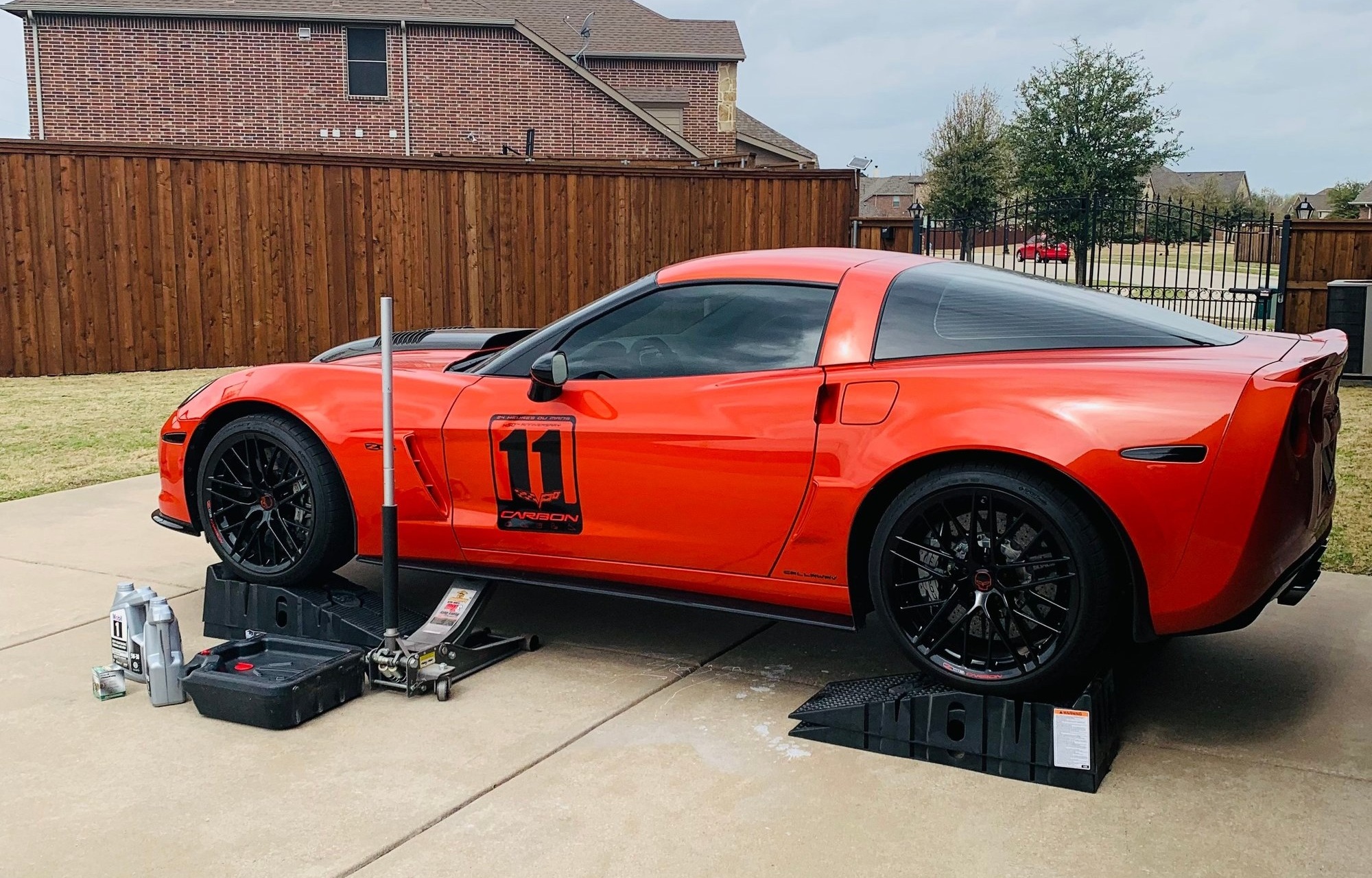
Ask around at a Corvette meet about mods worth doing and the conversation goes straight to power. Intake, exhaust, maybe a tune. Nobody brings up shocks. That’s a little strange, because on a car that’s been on the road for fifteen or twenty years, the shocks are usually what’s holding it back. Your C6 doesn’t feel slow. It feels older than it should, and there’s a good chance the reason is bolted to all four corners.
How a Tired Damper Feels From the Driver’s Seat
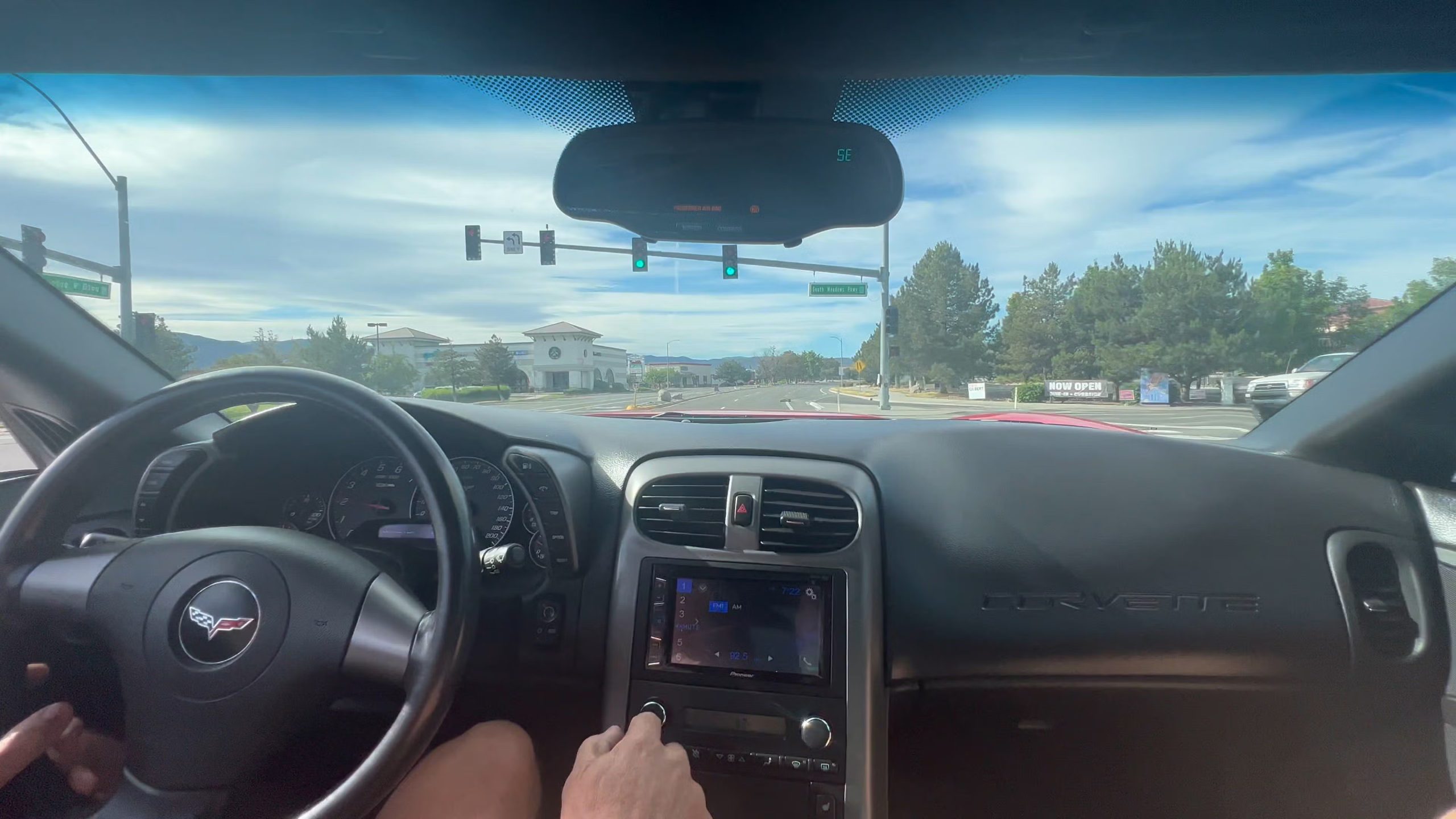
Shocks don’t die the way a water pump dies. They fade. It takes years, and the car feels fine today because it felt more or less the same yesterday. What you notice, if you notice anything at all, is that the nose floats a beat too long after a crest, or that the rear gets loose over expansion joints instead of settling down. Off center the steering goes soft and you catch yourself making little corrections that weren’t part of driving this car five years ago.
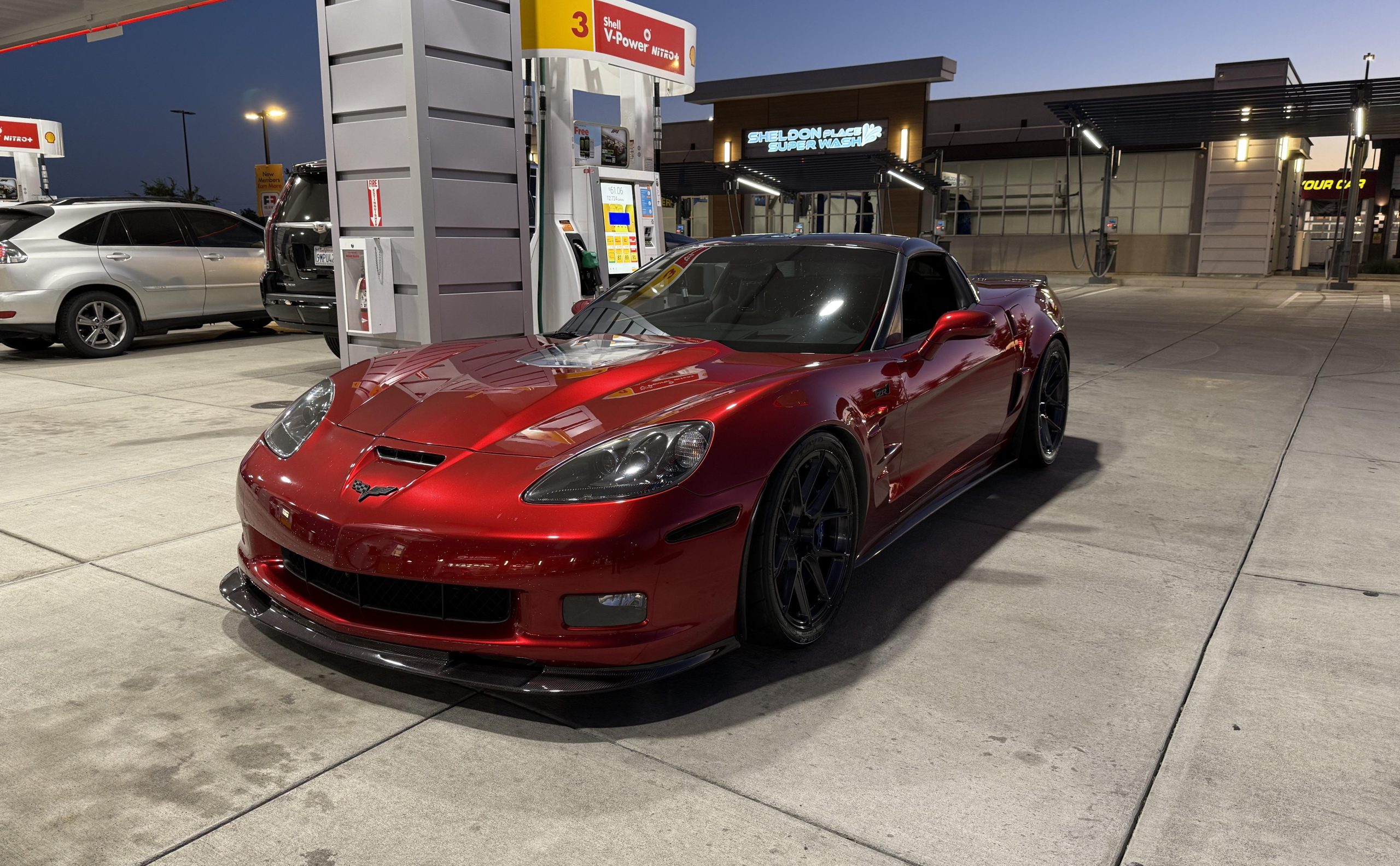
That slow fade is why the diagnosis usually lands somewhere else first. New tires help, for about a month. An alignment sharpens things up until the next stretch of bad pavement. The only reliable test is driving somebody else’s Corvette from the same generation with fresh dampers on it, and owners who do that tend to come back with a very different opinion of their own car.
Magnetic Ride Control Wears Out on Its Own Schedule
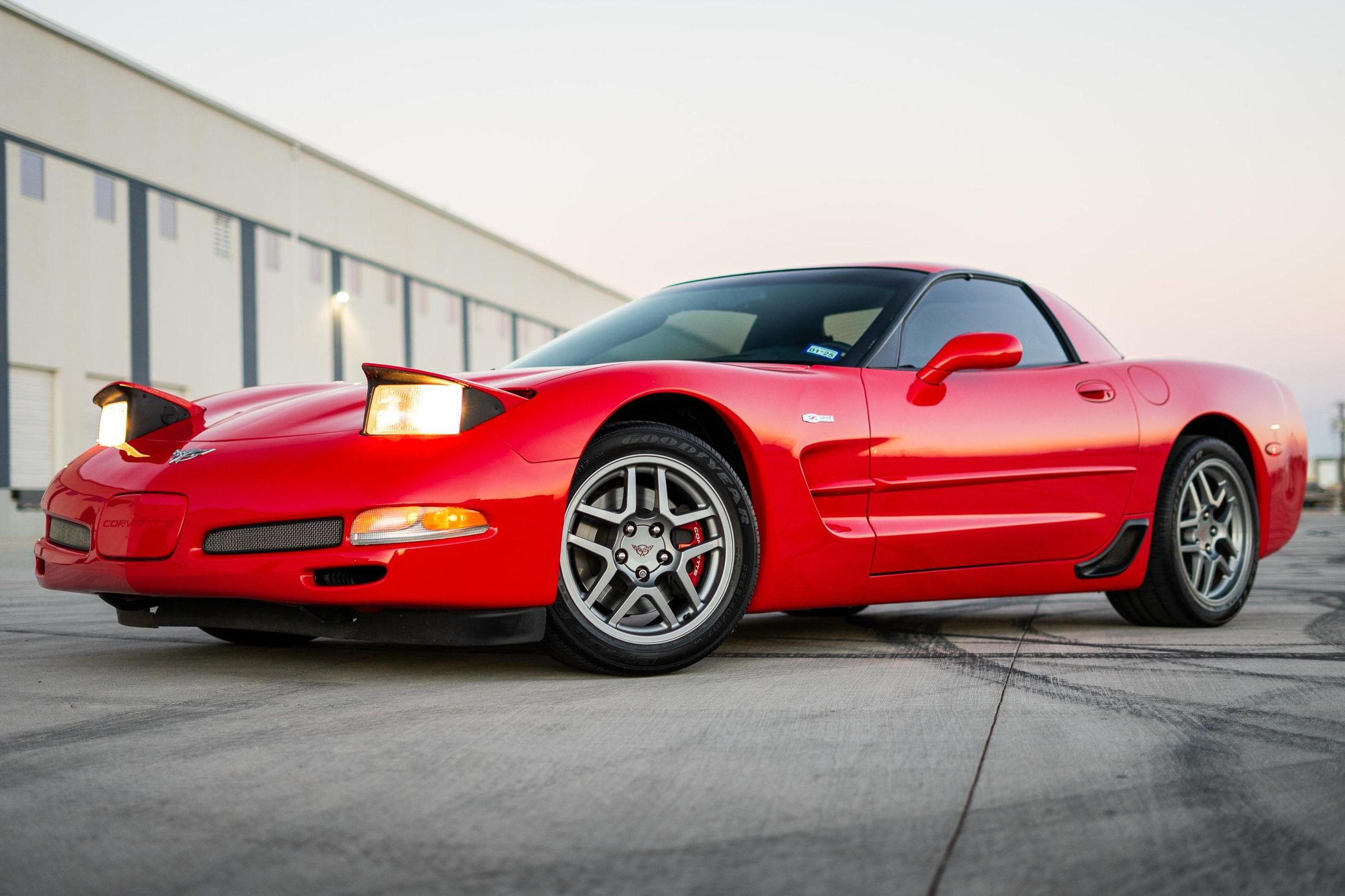
Chevrolet added Magnetic Selective Ride Control to the 2003 Corvette as option F55, and magnetic dampers stuck around through the last C7 in 2019. The concept is clever. Instead of forcing oil through valve stacks, an MR damper runs fluid full of iron particles with an electromagnet in the piston. Feed the coil some current and the fluid stiffens almost immediately, so the system reacts to a bump faster than any conventional shock can.
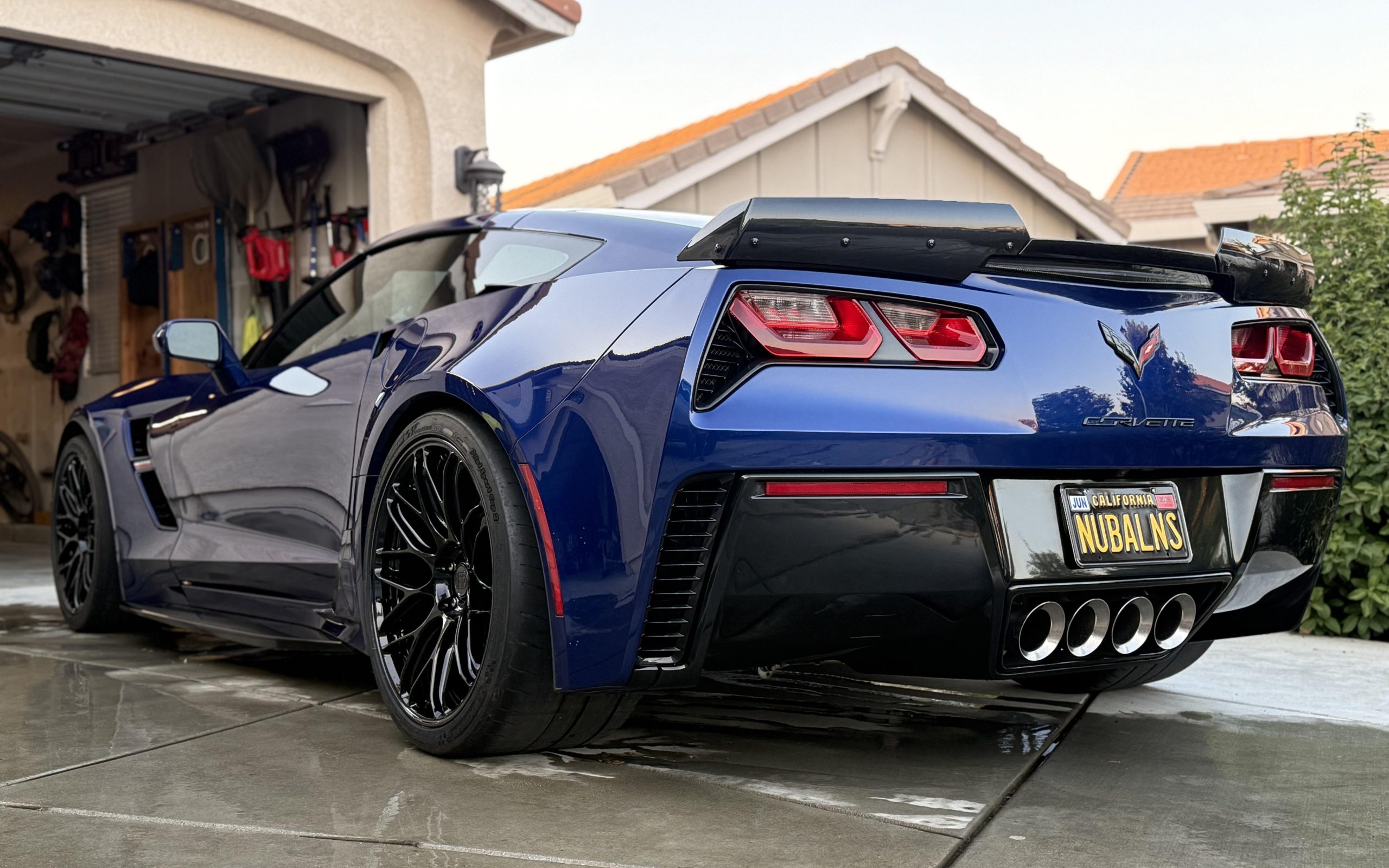
The clever part is also the expensive part. There’s nothing to revalve and no sane way to rebuild one of these in your driveway, so a unit that has lost its damping authority means buying a new one. They also don’t announce it. Most owners never see a warning, they just end up with a car that won’t settle.
C7 owners, one thing before you spend anything. The system runs a height control sensor at each corner, and a dead sensor can throw a ride control fault that reads exactly like a bad shock. Sensors go for around $120. Rule those out first.
What a Replacement Set Costs by Generation
The numbers below come from Aerosus listings as of August 2026. They exclude VAT and they move with sale pricing, so use them to set expectations rather than to write a check.
| Generation | Front unit | Rear unit |
| C5 (2003-2004) | $537 to $590 | $590 |
| C6 (2005-2013) | $537 to $590 | $590 |
| C7 (2014-2019) | $539 | $545 |
Shopping for a replacement Corvette shock absorber means matching the platform and the corner. Front and rear units aren’t interchangeable, and the C7 hardware is different again from what the C5 and C6 use.
Buy them in pairs. A new damper working against a tired one on the far side of the axle gives you a car that still won’t settle, and you’ll have spent real money to move the problem three feet to the left. Aerosus takes 10 percent off corresponding pairs and covers the units for two years, which makes buying both sides at once a lot easier to stomach.
Do the Cheap Stuff While the Car Is Apart
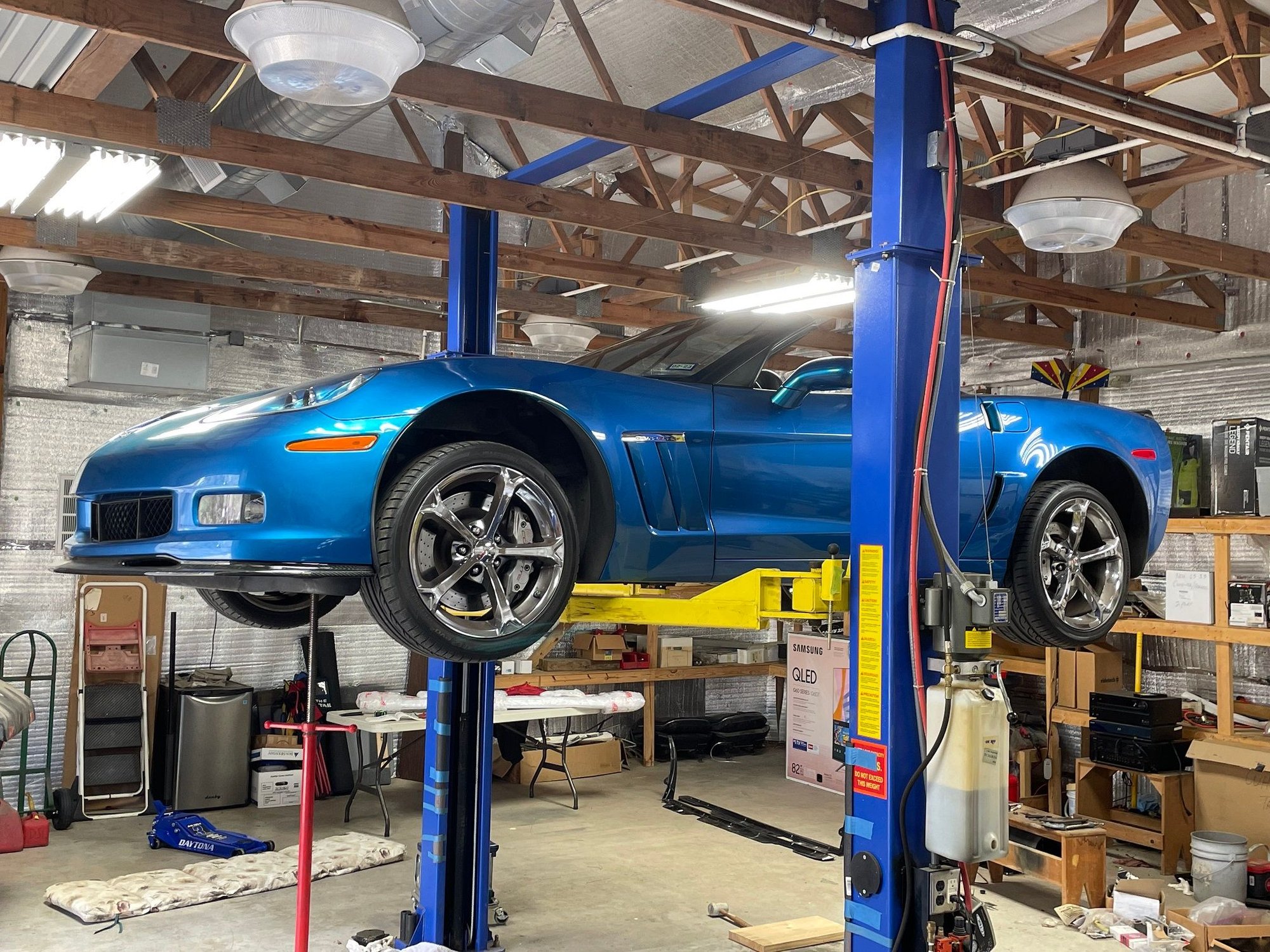
With the suspension already in pieces, a few small parts get very cheap to deal with. Sway bar end links develop play as they age and make the whole roll response feel indistinct, and they cost pocket change. Control arm bushings go soft with heat cycles and time, and the labor to swap them overlaps almost entirely with the damper job.
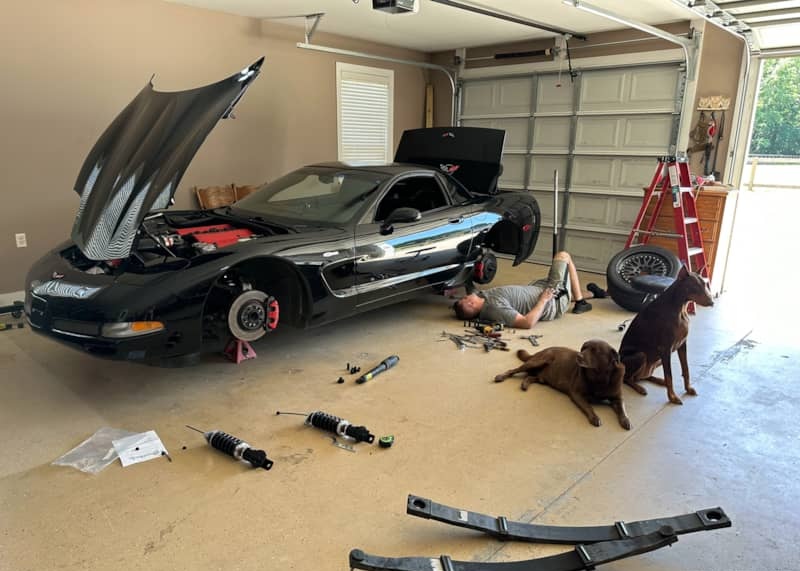
Get an alignment afterward, and tell the shop what you actually want out of it. Most Corvettes rolled off the lot with a compromise setup. A bit more negative camber and careful attention to toe will change how the car turns in for roughly the price of a tank of gas. If you see any track time, flush the brake fluid with a high-temp DOT 4 while everything’s open.
The C5 makes the strongest case of the three. That car is past 20 years old, values haven’t gone silly yet, and a clean example with fresh dampers and tight bushings drives like something that costs a lot more than it does. These cars were never short on engine.