The Chevrolet C8 Corvette Z06 was engineered around a naturally aspirated 5.5-liter LT6 V8, but HorsePower Obsessed documents how a carefully integrated twin-turbocharger system can substantially expand the mid-engine sports car’s performance potential. The installation focuses on more than adding boost: specialized turbocharger cooling, precision-fabricated plumbing, high-flow catalytic converters, and professional workshop procedures are central to the build’s execution.
The project targets nearly 900 wheel horsepower, transforming the Z06 into a substantially more powerful machine while retaining important aspects of its factory cooling architecture and exhaust functionality.
A Complex Installation in the Mid-Engine Chassis
The process begins with extensive disassembly of the rear of the Corvette. The existing AWE exhaust system, rear bumper, wing, and associated components are removed to create access to the engine bay and the areas where the turbochargers will be installed. The factory catalytic converters and other exhaust components are also taken out as the team prepares the chassis for the new hardware.
Packaging is a significant consideration in the C8 platform. With the engine positioned behind the passenger compartment, the installation requires careful coordination between turbocharger placement, exhaust routing, cooling lines, and the surrounding bodywork. Rather than treating the turbochargers as isolated additions, the technicians integrate them into the vehicle’s existing systems.
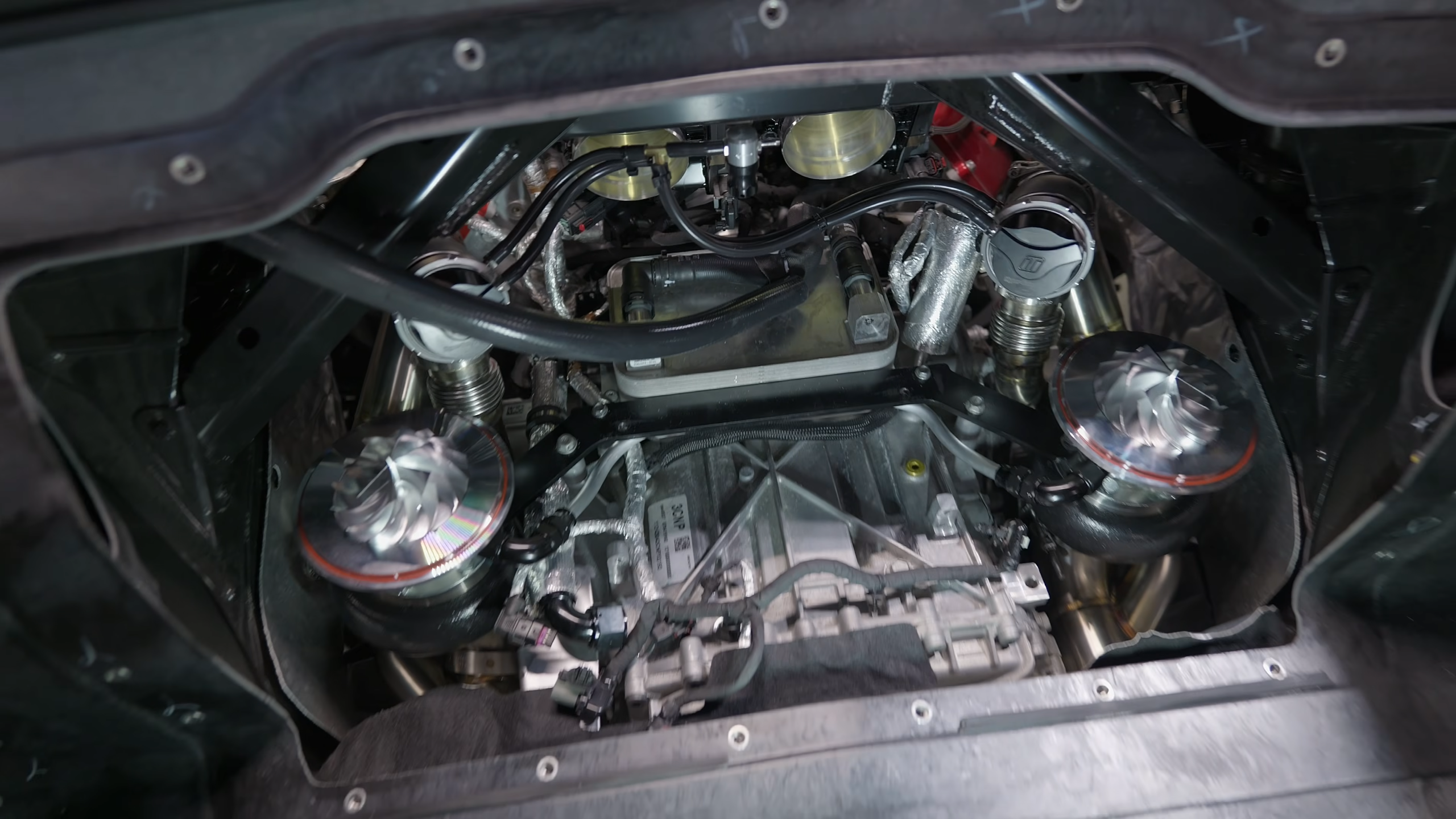
The turbocharger assemblies themselves receive additional preparation. The installers modify the compressor-housing connections to accommodate heavy-duty Vibrant clamps, replacing conventional connections with a more secure arrangement designed to withstand the demands of a boosted application.
These connections use matching fittings and O-ring seals retained by the clamp assembly. The approach provides a robust mechanical joint while reducing reliance on conventional silicone couplers and worm-drive clamps that can become liabilities under high pressure.
Dedicated Cooling and Custom Fabrication
One of the most technically significant aspects of the installation is the turbocharger cooling arrangement. The team fabricates a custom-bent hard line that connects the two turbochargers, routing coolant through the assemblies before returning it to the existing circuit. The plumbing is positioned behind the transmission, preserving cooling priority for the transmission before coolant reaches the turbochargers.
The build also incorporates an intercooler reservoir and pump, with the front-center radiator dedicated to intercooler cooling while the outer radiators continue serving the vehicle’s engine-cooling system. This division of responsibilities is intended to manage the additional thermal load introduced by forced induction.
Fabrication precision remains essential throughout the process. The technicians carefully level the mirrored turbocharger assemblies, match pipe angles, and secure hoses and wiring using appropriate mounting points. Although much of the custom plumbing remains hidden once the car is reassembled, the quality of these details directly affects installation reliability and serviceability.
High-Flow Catalytic Converters and Exhaust Integration
Rather than adopting a completely catless exhaust configuration, the team installs compact G-Sport high-flow catalytic converters. The converters are welded into custom-fabricated exhaust sections, with the passenger-side assembly used as a reference for matching the opposite side.
This configuration addresses two practical considerations: exhaust flow and emissions-related hardware. High-flow catalytic converters can reduce exhaust restriction compared with more restrictive designs while retaining catalytic treatment of exhaust gases. They can also help mitigate the strong exhaust odor commonly associated with catless turbocharged applications.
The exhaust system is positioned and checked against the rear bodywork before final assembly. The team even uses a matching Sea Wolf Gray bumper as a temporary reference to ensure correct exhaust-tip alignment, demonstrating the attention required when fitting aftermarket hardware to the C8’s tightly packaged rear structure.
Vacuum Filling and Initial Dyno Testing
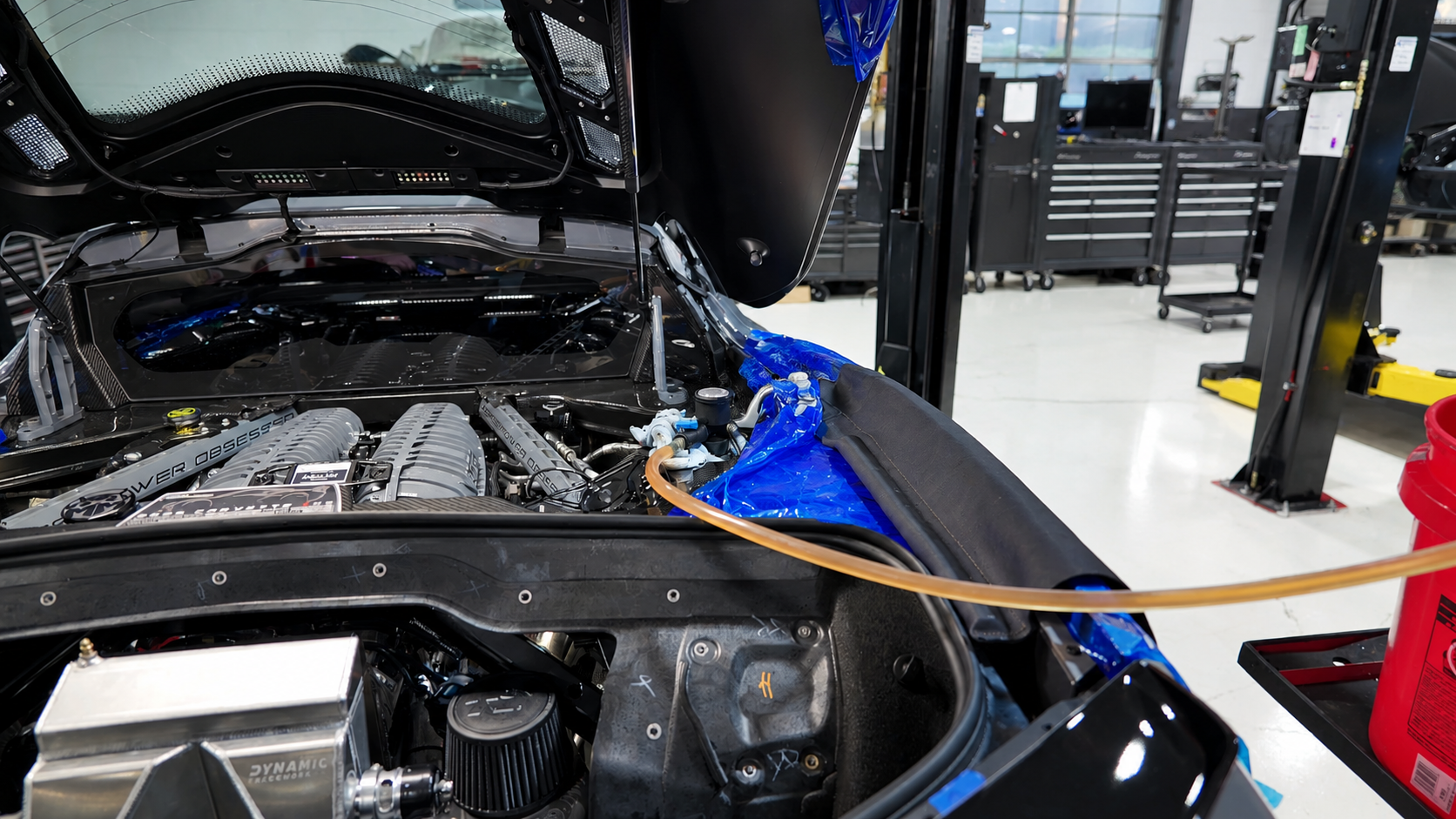
Before the first start, the technicians use a professional vacuum-filling procedure to replenish the cooling systems. Shop air powers a vacuum bleeder that evacuates air from each circuit, allowing coolant to be drawn in while minimizing trapped air pockets. The method helps reduce bleeding time and improves consistency when servicing complex cooling arrangements.
The initial dyno results provide an early indication of the installation’s progress. The first recorded run produces 699 horsepower and 567 lb-ft of torque, followed by a second run measuring 729.8 horsepower with torque remaining around 567 lb-ft. The team plans to increase boost toward a target of approximately 850–875 horsepower, with the broader project aiming for nearly 900 wheel horsepower.
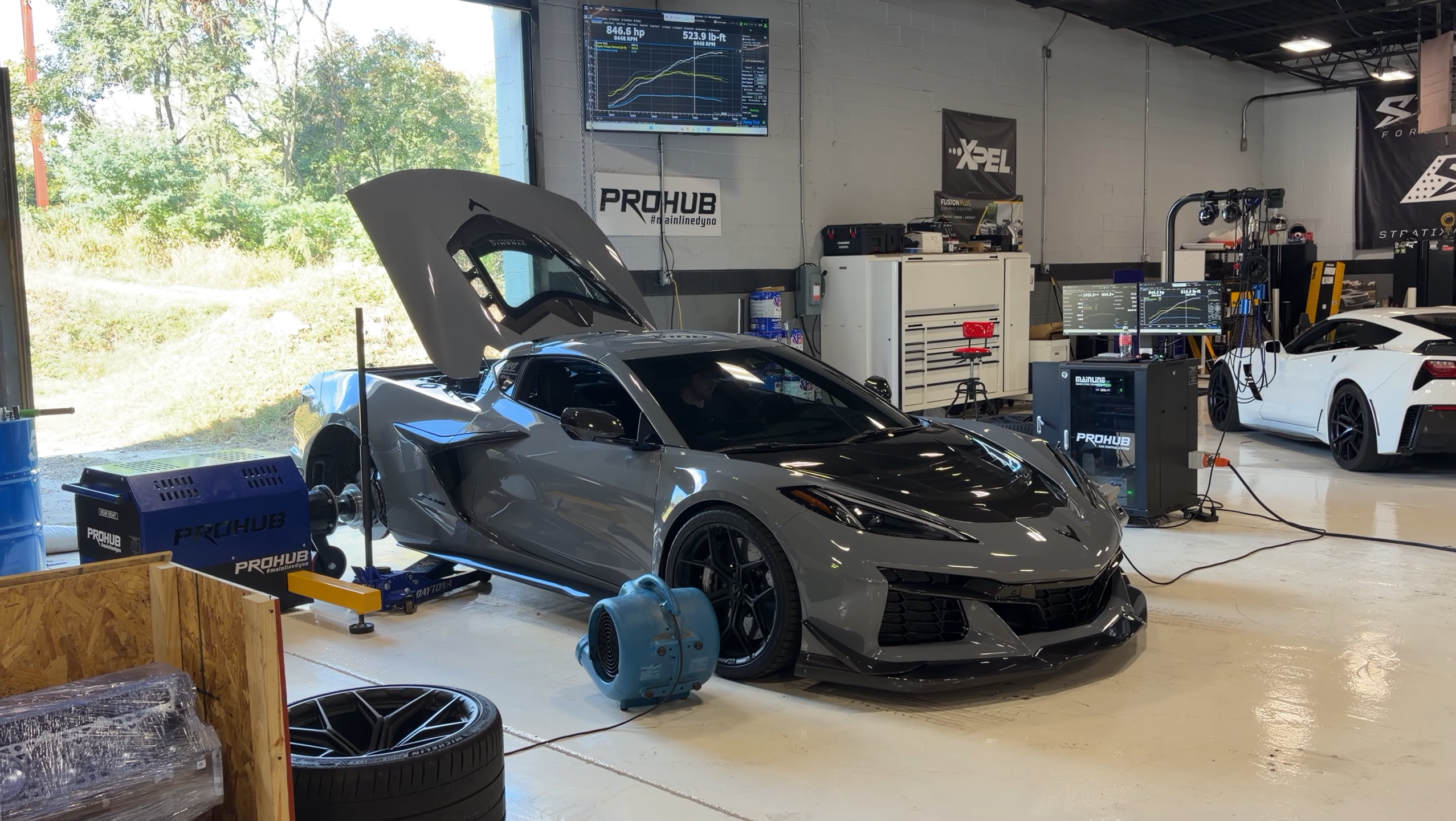
These figures represent intermediate testing rather than a confirmed final output. Nevertheless, the installation demonstrates how a twin-turbo conversion on the C8 Corvette Z06 depends on much more than the turbochargers themselves. Cooling-system engineering, pressure-resistant connections, carefully matched exhaust fabrication, and disciplined workshop procedures all contribute to building a reliable high-output package.
Source: HorsePower Obsessed, Dynamic Raceworks