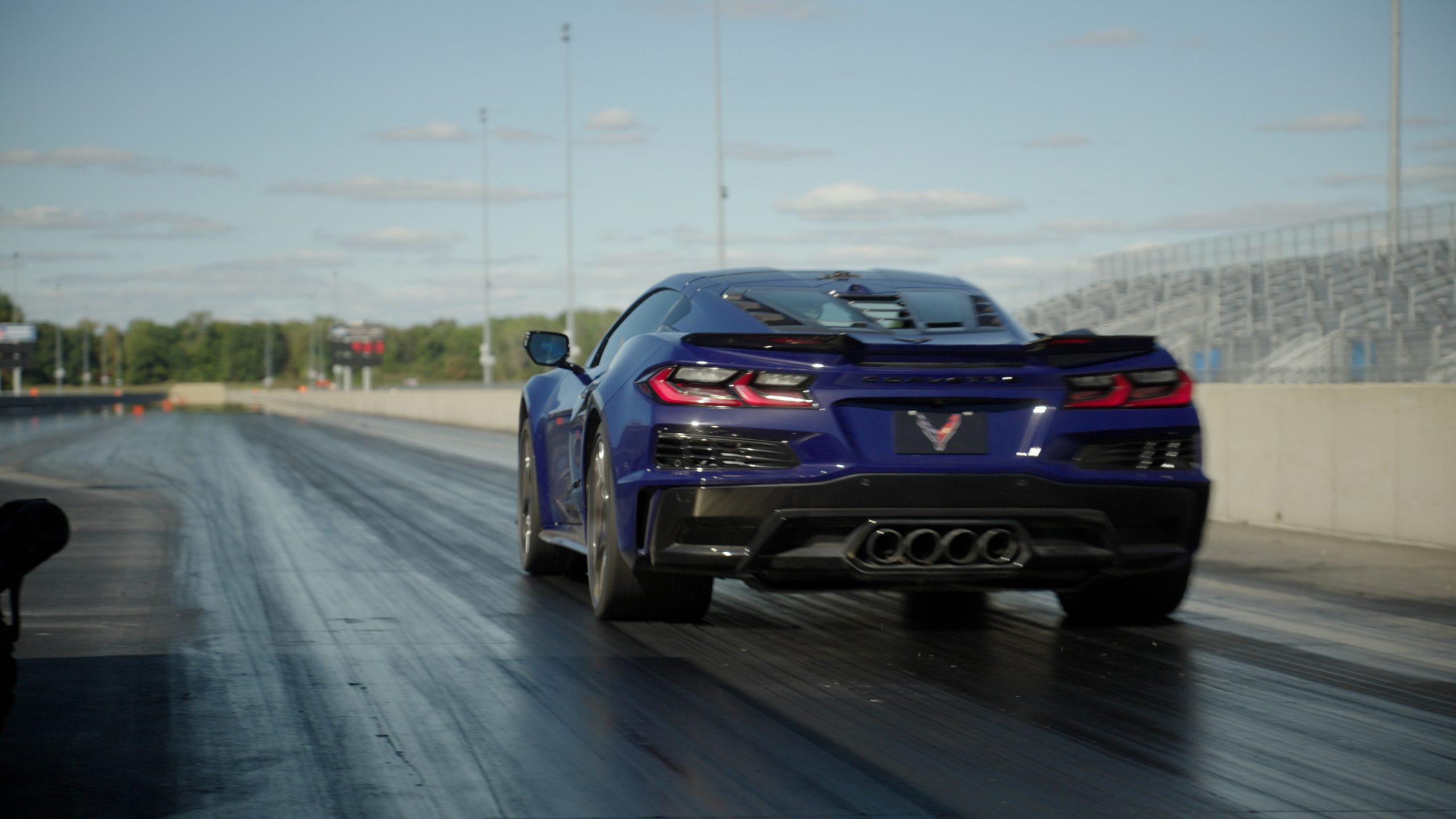
Last October, Corvette development driver Stefan Frick ran an 8.675-second quarter mile at US 131 Motorsports Park in Michigan. The car was on pump gas and standard tires, running the same 50-state-legal engine calibration every customer receives. Several follow-up passes came in under 8.8 seconds.
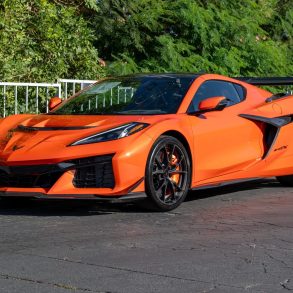
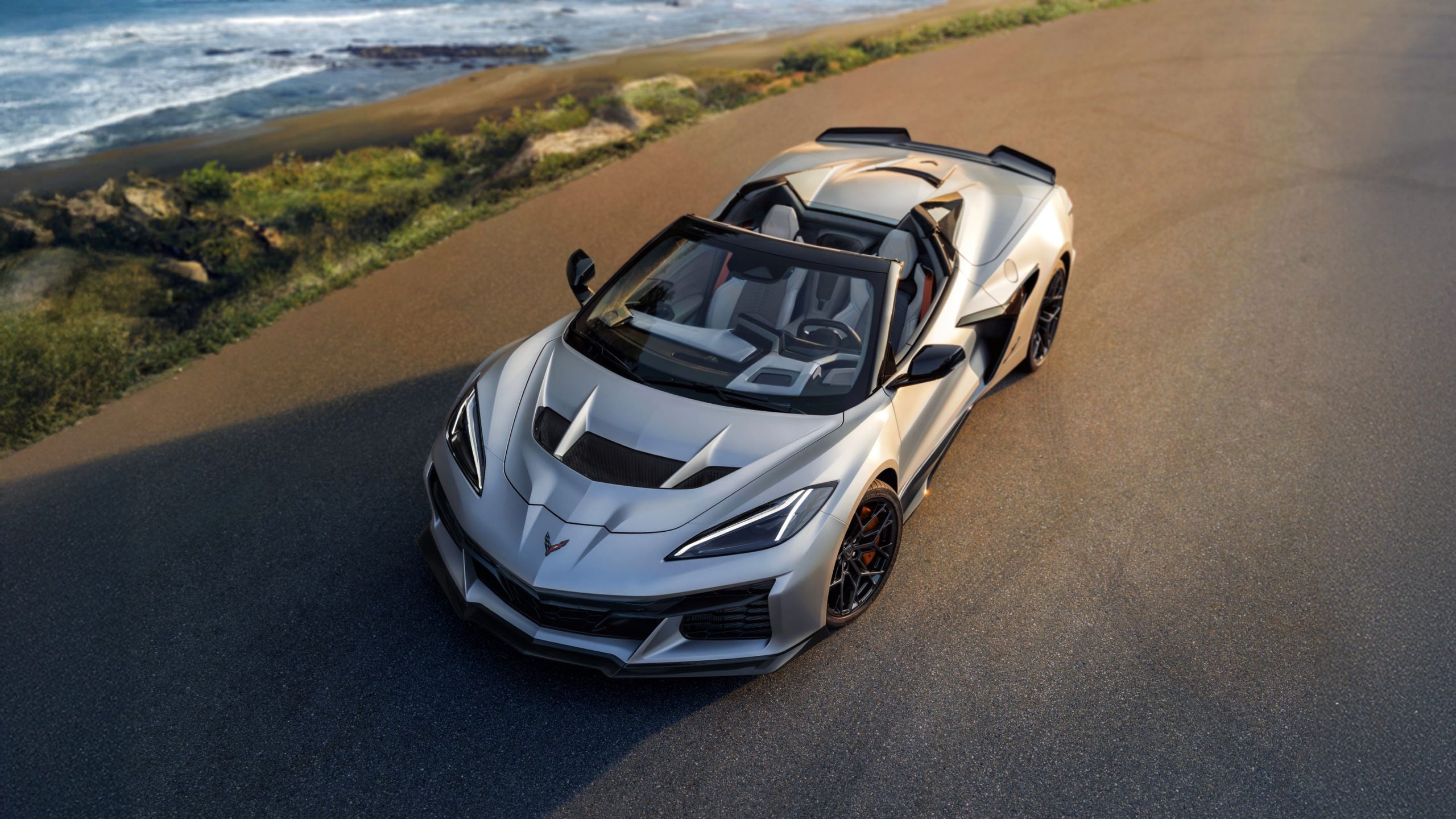
That car was the 2026 Corvette ZR1X, the most powerful and most expensive Corvette the factory has ever built. Chevrolet describes it as an American hypercar, and the timing slips support the claim. The formula pairs the ZR1’s twin-turbo LT7 V8 with the electrified front axle first developed for the E-Ray, producing 1,250 combined horsepower through all four wheels.
The LT7 + Electric Motor Powertrain
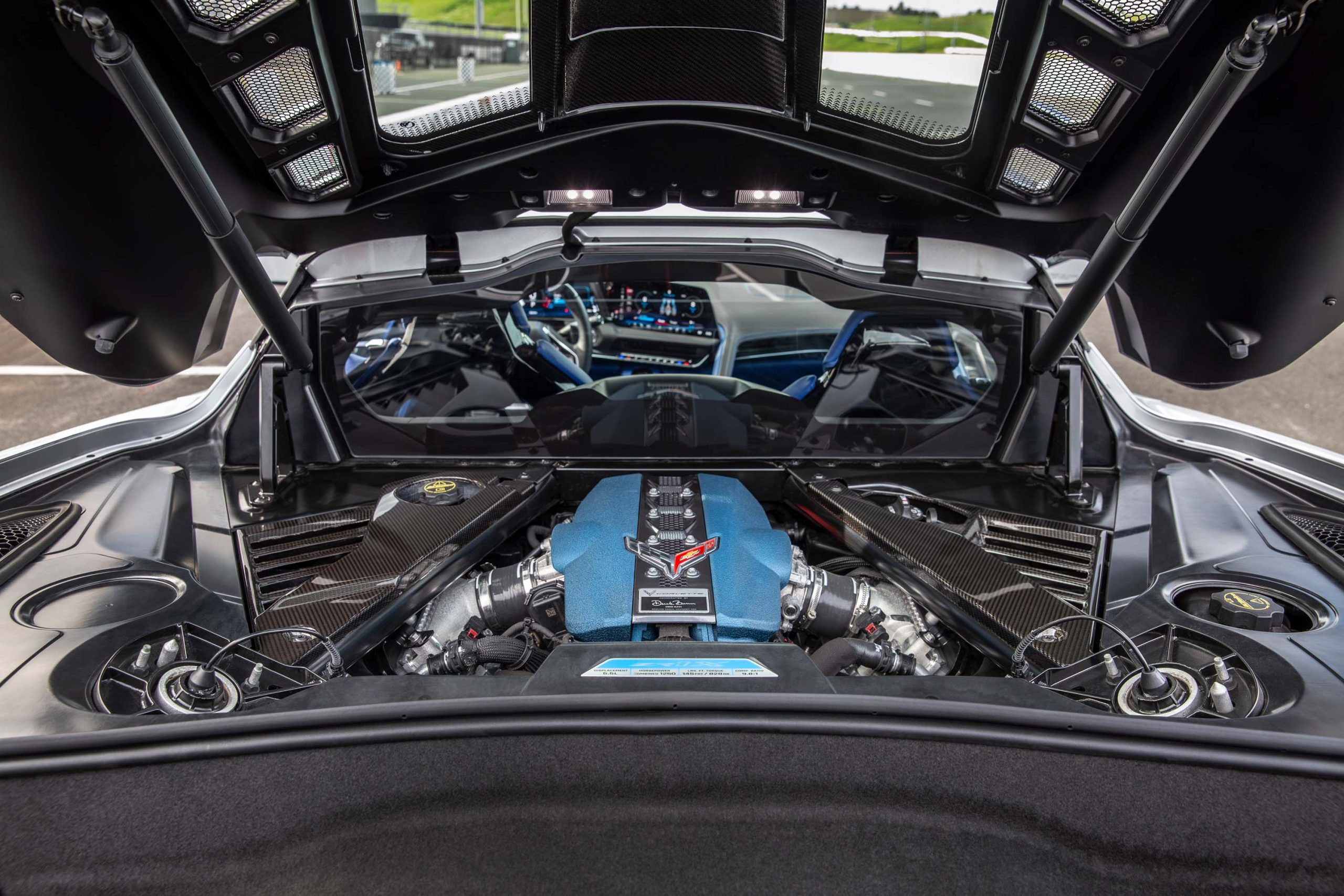
The hand-assembled 5.5-liter LT7 twin-turbo V8 produces 1,064 horsepower at 7,000 rpm and 828 lb-ft of torque at 6,000 rpm, more than any production V8 an American automaker has sold. The engine uses a forged flat-plane crankshaft, a finger-follower valvetrain and dry-sump lubrication, and was developed alongside the naturally aspirated LT6 that powers the Z06 and the Z06 GT3.R race car. Its dual 76-mm turbochargers sit in a combined manifold-and-turbo housing that GM calls a maniturbo design, placing the turbines as close to the exhaust valves as possible to shorten boost response. Dynamic anti-lag controls keep the turbos spinning off-throttle so boost returns almost immediately when the driver gets back on the power. All of it reaches the rear wheels through an eight-speed dual-clutch transmission.
The front axle houses a compact electric motor rated at 186 horsepower and 145 lb-ft of torque. It shares its dimensions with the E-Ray unit but gains strengthened internals and revised energy deployment, worth an additional 26 horsepower and 20 lb-ft over the earlier application. The motor draws from a 1.9 kWh battery mounted low within the central spine of the chassis. Capacity matches the E-Ray pack, but usable energy has grown, raising peak operating voltage and with it the front drive unit’s output. The pack was engineered to cycle rapidly between discharging and charging, and it survived Corvette’s 24-hour track durability test during development.
There is no mechanical connection between the axles and no charge port. Regeneration at the front drive unit keeps the battery topped up. The front motor can apply power all the way to 160 mph before disconnecting, a threshold that directly shapes the car’s quarter-mile numbers and its balance on track. Stealth Mode carries over as well, allowing 4 to 5 miles of electric-only driving at speeds up to 45 mph.
Performance Figures
Every figure below comes from Chevrolet’s validated testing, published in January 2026.
- 0-60 mph: 1.68 seconds on a prepped surface. On unprepped asphalt with the ZTK package, 1.89 seconds.
- Quarter mile: 8.675 seconds at 159 mph prepped, 8.99 seconds at 157 mph unprepped.
- Nürburgring Nordschleife: 6:49.275, the fastest lap by an American production car.
- Launch force: a peak of 1.75G, reaching 60 mph in under 100 feet.
The historic Nürburgring time was achieved by GM Vehicle Dynamics Engineer Drew Cattell, setting the fastest lap at the circuit ever recorded by a non-professional driver. His lap beat the rear-drive ZR1’s 6:50.763 (piloted by Brian Wallace) and the Ford Mustang GTD’s 6:52.072, giving Chevrolet the two quickest American production-car laps in history.
One figure remains unpublished. Chevrolet has not released an official top speed for the ZR1X. Above 160 mph the V8 works alone, and GM has not staged a top-speed run comparable to the one that certified the ZR1 at 233 mph.
How It Stacks Against the Competition
| Vehicle | Power | 0-60 MPH | Base Price |
|---|---|---|---|
| Corvette ZR1X | 1,250 hp | 1.89 seconds | $207,395 |
| Porsche 911 Turbo S | 701 hp | 2.4 seconds | $272,650 |
| Ferrari SF90 Stradale | 986 hp | 2.5 seconds | $524,814 |
| Lamborghini Revuelto | 1,001 hp | 2.5 seconds | $604,363 |
A 911 Turbo S costs $63,000 more and gives up 549 horsepower. The Italian pair costs more than double and trails in a straight line. Ferrari has since ended SF90 production in favor of the 849 Testarossa, and the comparison holds against the newer car as well.
AWD Dynamics & Real-World Handling
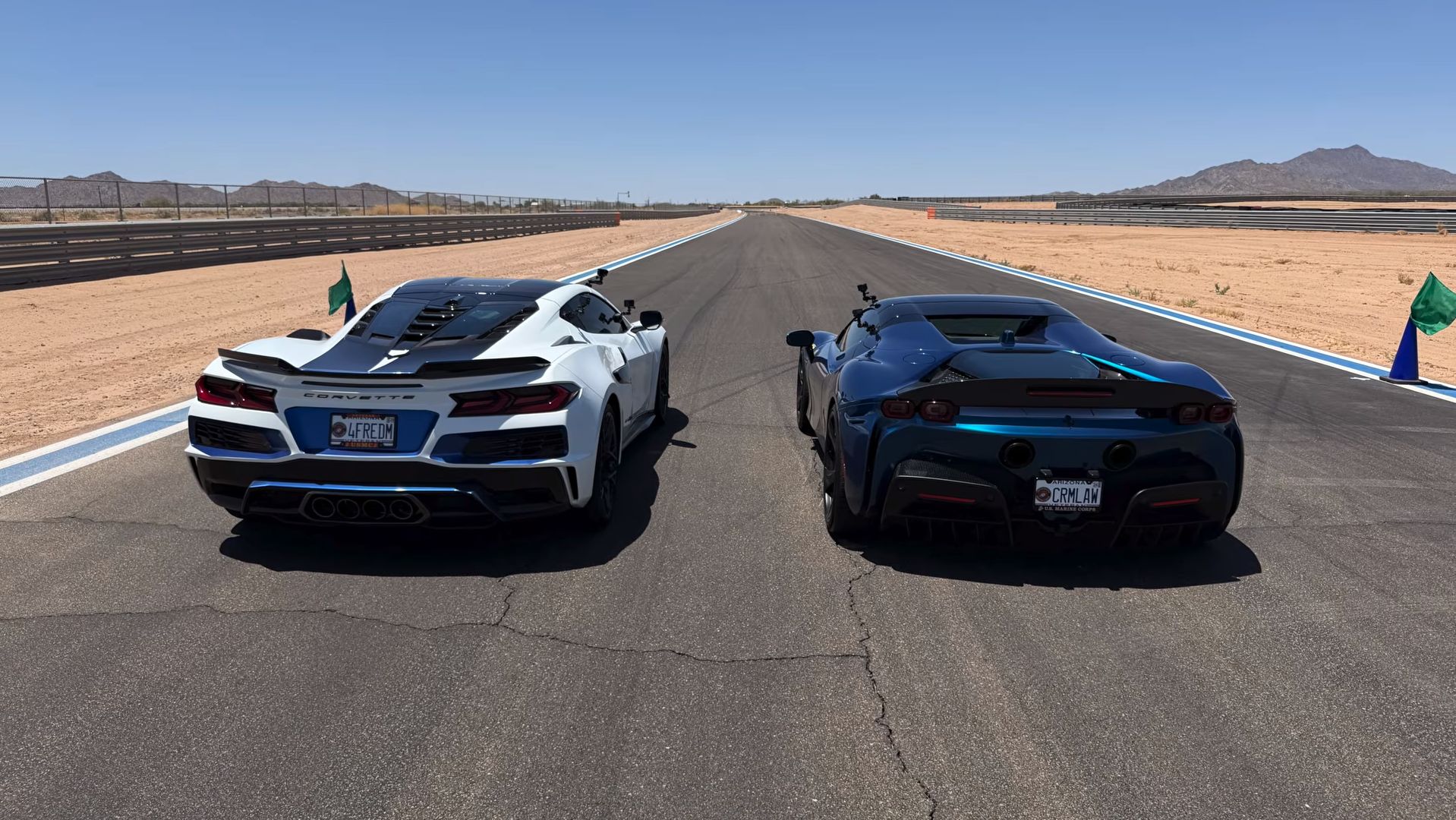
The eAWD chassis controls developed for the E-Ray were substantially reworked for the ZR1X, tuned around the LT7’s character and output. The system continuously monitors driver inputs and vehicle conditions, blending torque between the axles for traction management on the road and corner-exit drive on track. Slow-corner exits are where the difference over the rear-drive ZR1 is most apparent. The ZR1X puts power down immediately where the RWD car has to wait for grip.
Three selectable energy strategies govern how the battery spends its charge on track. Endurance, engaged through the Charge+ button, adjusts the storage strategy for consistent eAWD output across a full tank of fuel. Qualifying deploys maximum energy for a single flying lap. Push-to-Pass delivers full available power on demand.
New for 2026 across the Corvette range, and designed with the ZR1X in mind, is PTM Pro. The setting switches off traction and stability control while keeping three systems active: Regen Brake Torque Vectoring, which recovers energy under braking without dulling agility, Front Axle Pre-Control, which manages inside front brake pressure for maximum corner-exit traction, and customizable Launch Control.
The trade-off is weight. At 3,914 pounds for the coupe and 3,978 for the convertible, the ZR1X is the heaviest Corvette ever sold, roughly 240 pounds over a comparable 2026 ZR1. The AWD hardware masks much of the difference in normal driving, but buyers who prioritize low mass above all else will find the standard ZR1 the more focused instrument.
Exterior & Aero
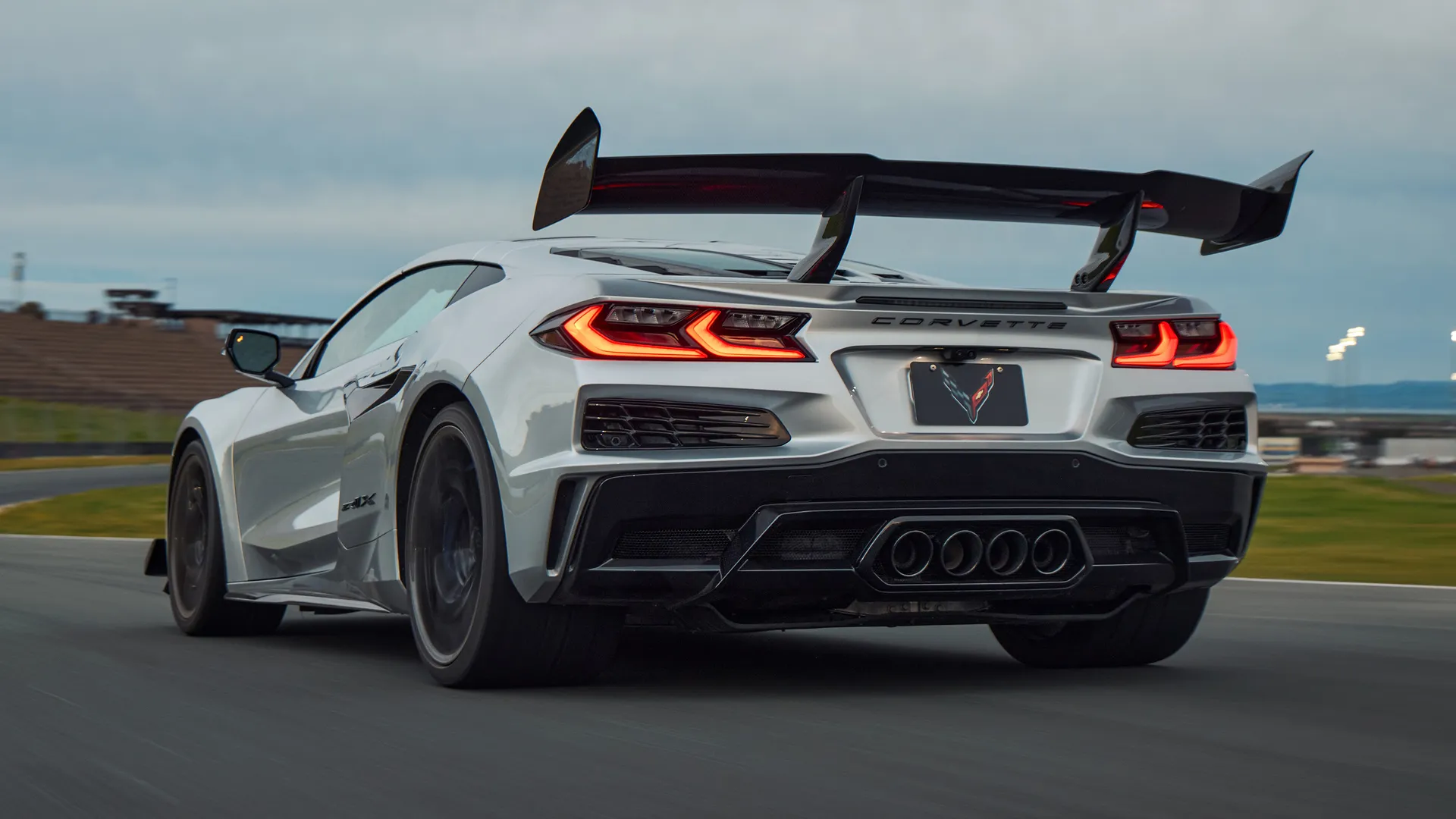
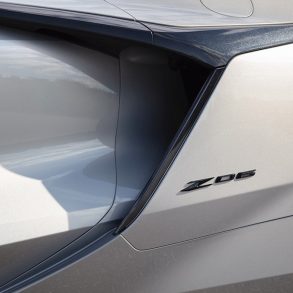
The ZR1X shares the ZR1’s widebody proportions and cooling-driven design, including the carbon-fiber wishbone bezels framing the side intakes and the flow-through hood that vents the top-mounted intercooler. A dedicated badge distinguishes the two.
The standard configuration relies on a front splitter, underwing and smooth underbody to generate suction with minimal drag. The available Carbon Aero package adds dive planes, underbody strakes, a gurney lip on the hood heat extractor and a large rear wing, producing up to 1,200 pounds of downforce at top speed, the highest of any production Corvette. The package can be ordered on a standard-chassis car and comes included with the ZTK Performance Package.
A styling footnote: the Quail Silver Limited Edition introduces Blade Silver Matte, Corvette’s first factory matte paint in roughly 60 years.
Suspension, Tires & Brakes
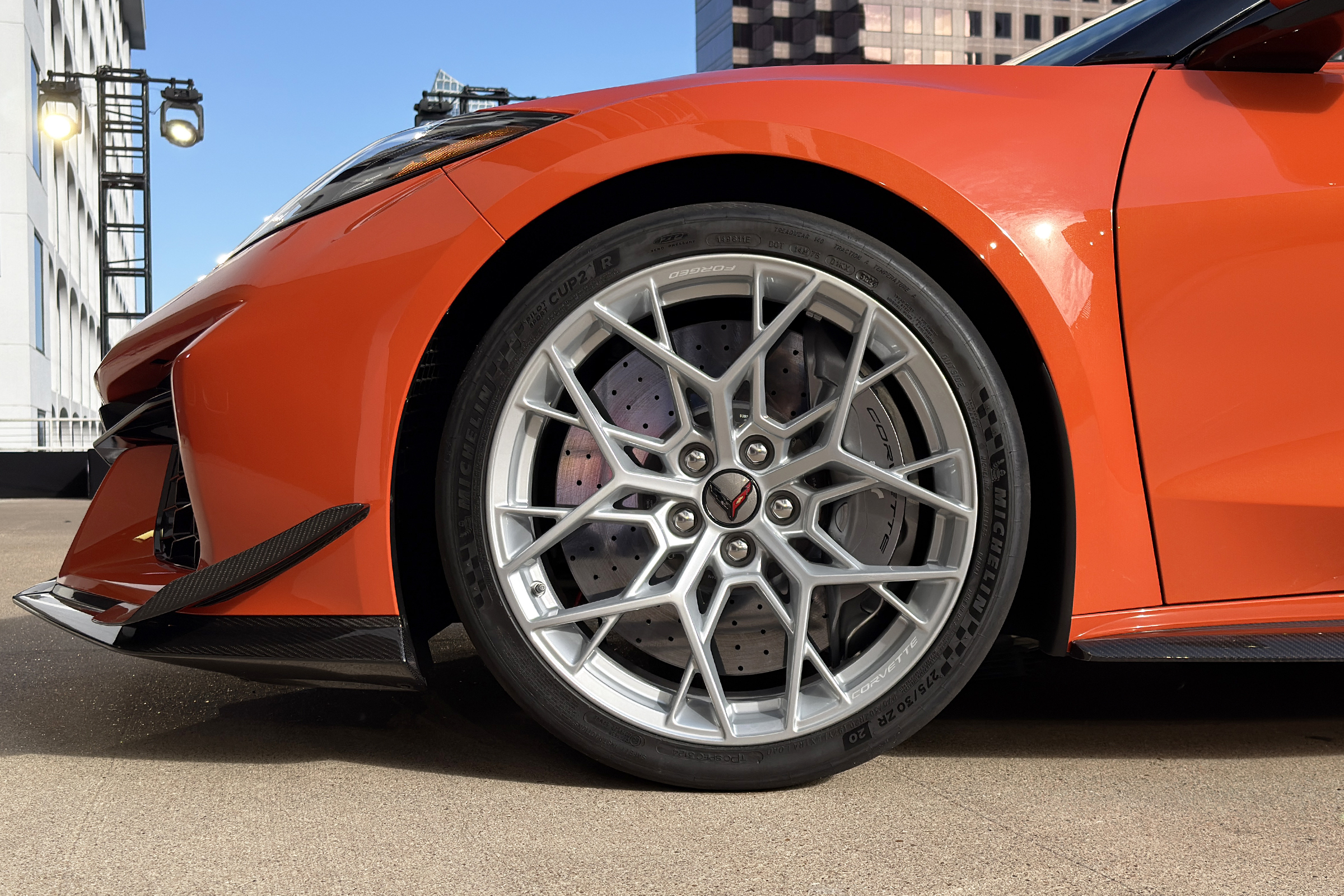
Two chassis configurations are offered, both with Magnetic Ride Control standard. The base setup rides on Michelin Pilot Sport 4S tires sized 275/30ZR20 front and 345/25ZR21 rear, and is calibrated as a comfortable tourer that remains capable at the track. The ZTK Performance Package raises spring rates, revises the chassis calibration and fits Michelin Pilot Sport Cup 2R tires. At $1,500 it is among the least expensive options on the sheet.
Braking comes from the J59 package, a clean-sheet carbon-ceramic design standard on the ZR1X and optional on the ZR1. Alcon 10-piston front and 6-piston rear calipers clamp 16.5-inch rotors at all four corners, the largest ever fitted to a Corvette, constructed from continuously woven carbon-fiber threads. During development GM measured 1.9G of deceleration from 180 to 120 mph and described the system as the most resilient it has tested on a production car.
Interior & Tech
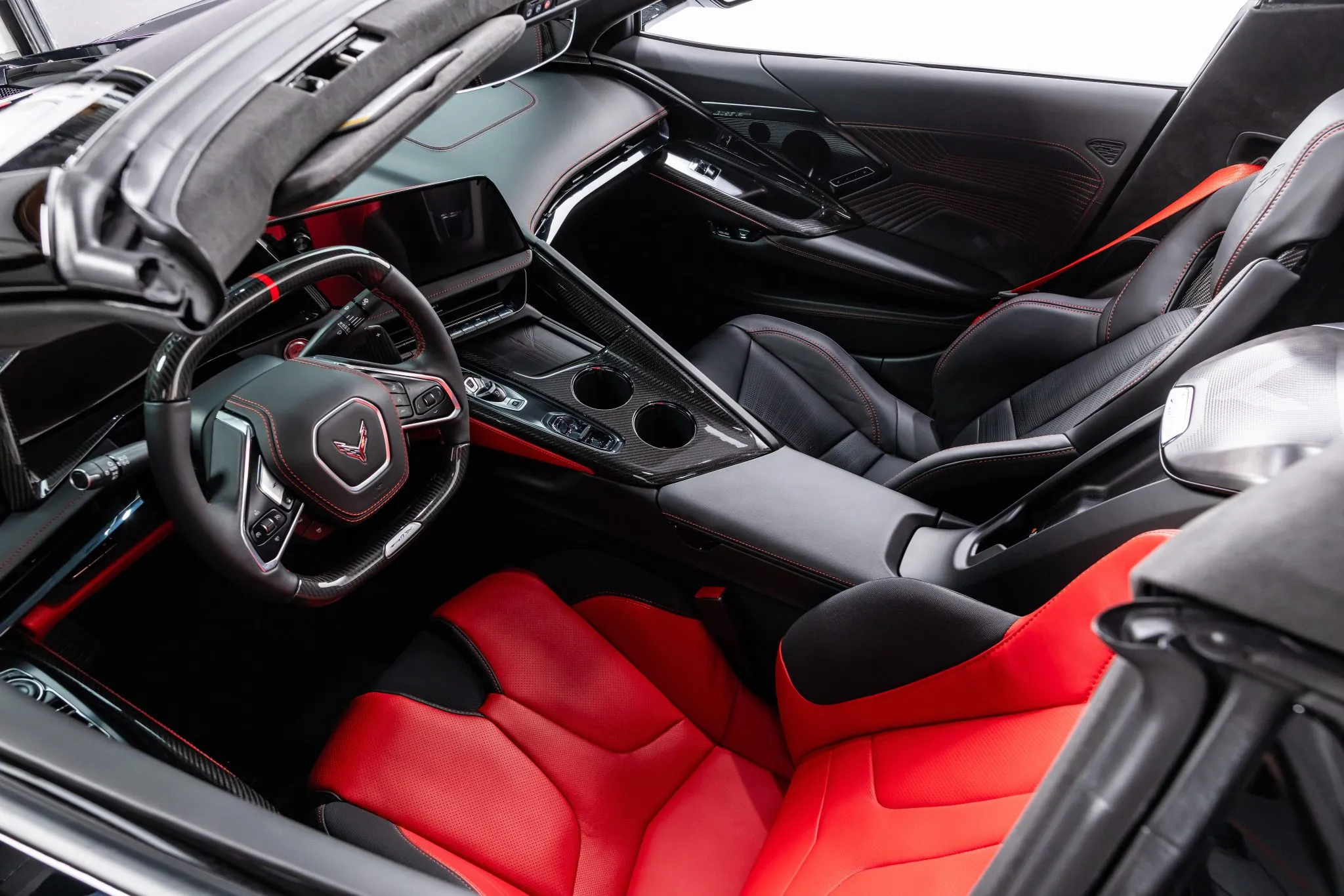
The ZR1X arrived with the 2026 Corvette interior redesign, which replaces the long spine of climate buttons that drew criticism throughout the C8’s first six years. The new layout centers on three screens: a 14-inch configurable digital cluster, a 12.7-inch center touchscreen and a 6.6-inch auxiliary display to the left of the steering wheel. The software runs Google Built-in with native Maps and voice control alongside wireless Apple CarPlay and Android Auto. A built-in Performance App provides real-time vehicle data, including live horsepower and torque graphs and hybrid system status.
GT1 bucket seats are standard on the 1LZ trim. The 3LZ adds GT2 buckets, Napa leather, sueded microfiber trim and Bose Performance Series audio.
Safety, Warranty & Everyday Usability
For all its output, the ZR1X keeps the C8’s daily-use character. Stealth Mode allows quiet departures, the driven front axle adds security in poor weather, and the dual-trunk layout carries over unchanged from the rest of the lineup.
Driver assistance includes forward collision alert, automatic emergency braking, lane-keep assist and rear cross-traffic alert. A pedestrian alert sound operates during electric-only running.
Warranty coverage follows Chevrolet’s standard terms: 3 years or 36,000 miles limited and 5 years or 60,000 miles on the powertrain. The hybrid components carry extended electric propulsion coverage, consistent with the E-Ray.
Pricing & Availability
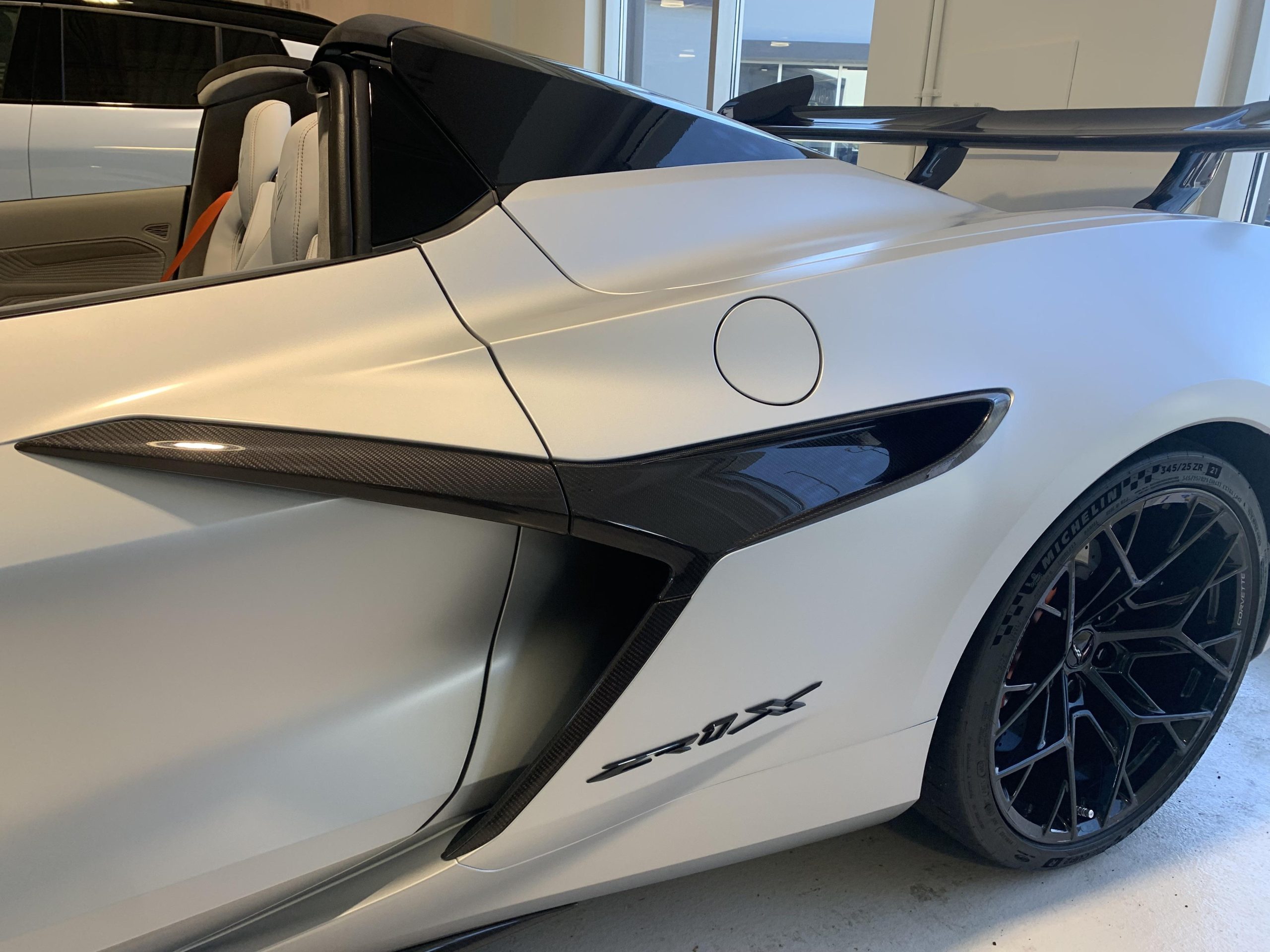
The ZR1X launched in August 2025 at $207,395 for the 1LZ coupe. GM raised prices by $2,200 across the board mid-year and increased the destination charge, bringing current MSRPs to:
- 1LZ Coupe: $207,395
- 1LZ Convertible: $217,395
- 3LZ Coupe: $218,595
- 3LZ Convertible: $228,395
- Quail Silver Limited Edition: from $241,395, 3LZ convertible only
A $2,600 gas guzzler tax applies to every configuration. The significant options are the $10,495 Carbon Fiber Aero Package and $13,995 visible carbon-fiber wheels. Production began in December 2025 at GM’s Bowling Green Assembly Plant in Kentucky, with every LT7 hand-assembled at the on-site Performance Build Center. First-year allocations are tight, and early cars have transacted well above sticker.
ZR1X vs. E-Ray: Two Generations of Hybrid Corvette
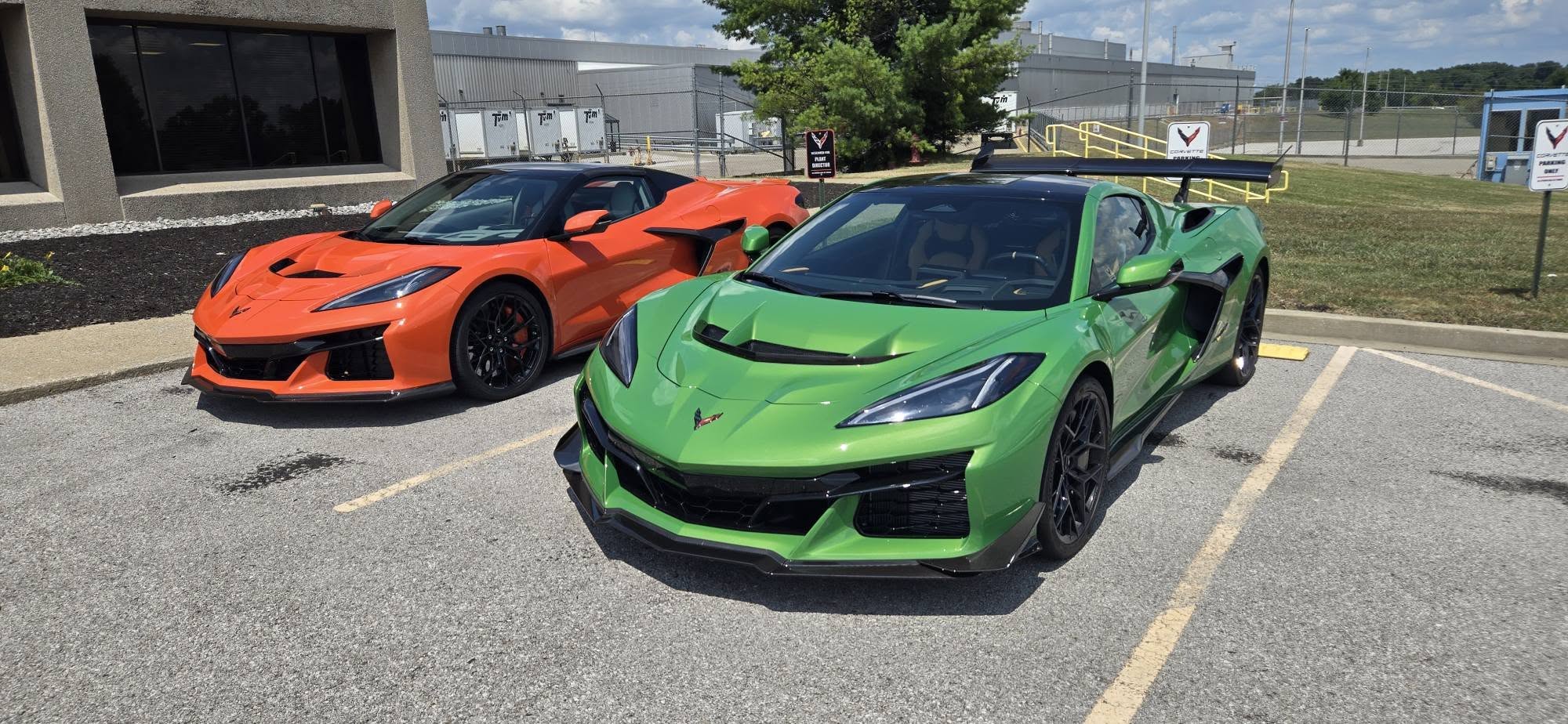
The E-Ray established the electrified AWD architecture in 2024. The ZR1X develops it to its full potential.
| Feature | ZR1X | E-Ray |
|---|---|---|
| Powertrain | 5.5L TT V8 + front e-motor (1,250 hp) | 6.2L NA V8 + front e-motor (655 hp) |
| Drivetrain | eAWD | eAWD |
| 0-60 MPH | 1.89 seconds (1.68 prepped) | 2.5 seconds |
| Quarter Mile | 8.99 seconds | ~10.5 seconds |
| Weight (Coupe) | 3,914 lbs | 3,774 lbs |
| Focus | Maximum performance | All-weather daily speed |
| Starting Price | $227,500 | $108,600 |
Both share the 1.9 kWh battery capacity and the through-the-road hybrid layout, though the ZR1X runs its pack at higher voltage with a stronger front drive unit. The E-Ray remains the approachable grand tourer of the pair, and at nearly half the price it will suit most buyers better. The ZR1X answers a different question.
Why the ZR1X Stands Out
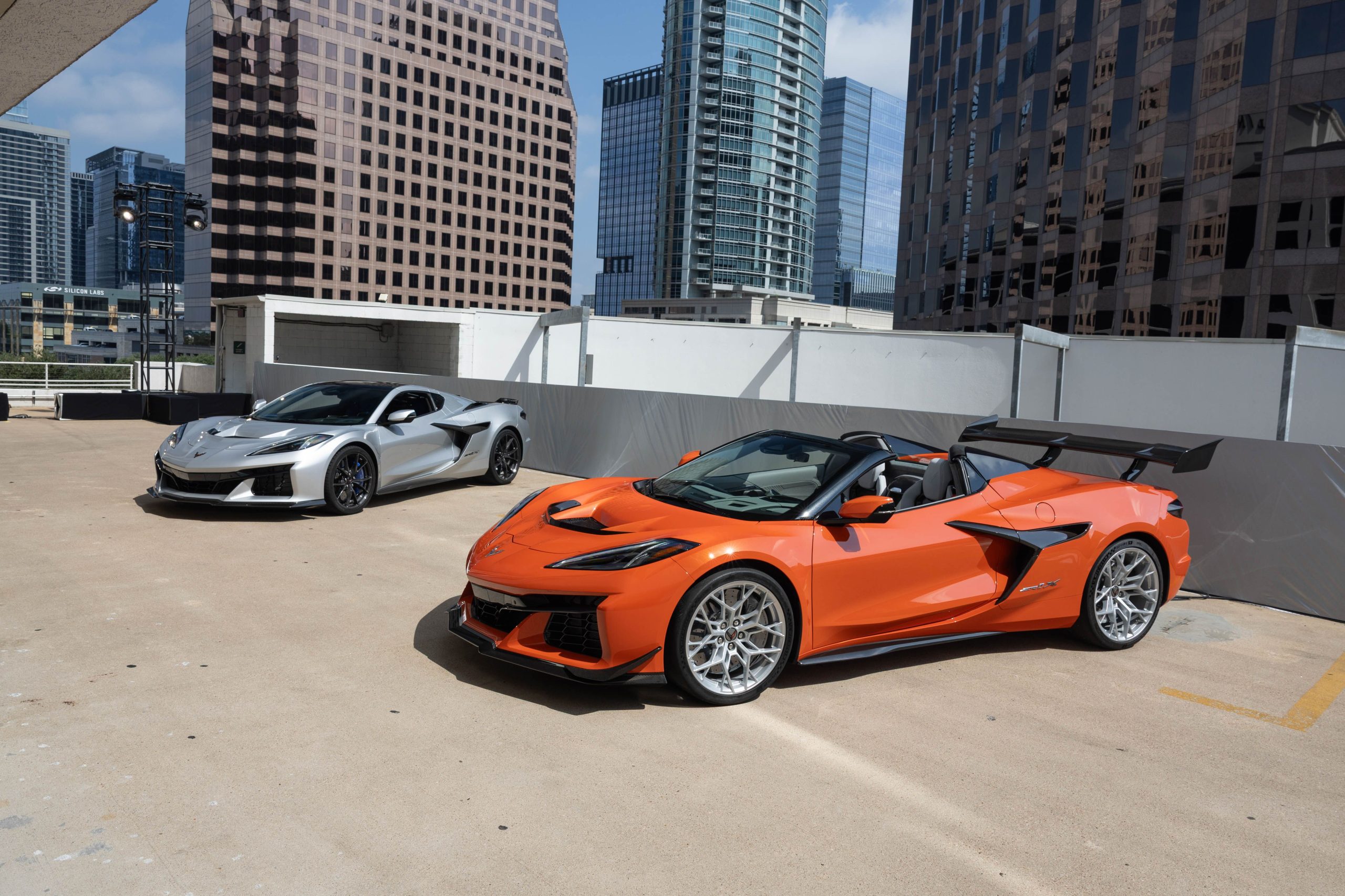
No Corvette has held the American Nürburgring record before, run eights in the quarter mile or carried a six-figure price this deep into hypercar territory. GM says the mid-engine platform was designed with this car in mind from day one, and the breadth of the current lineup, spanning the $70,000 Stingray and the $240,000 Quail Silver Edition on the same architecture, supports that account. The ZR1X now competes against machinery costing two, three and even ten times as much.
Final Thoughts
The ZR1X combines the E-Ray’s hybrid architecture with the ZR1’s engine and adds a factory warranty, a dealer network and a price that undercuts every rival in its performance bracket. The lighter, rear-drive ZR1 will remain the enthusiast’s preference, with some justification. As a demonstration of what Bowling Green can build, however, the ZR1X has no precedent in the model’s 73-year history, and the records it holds were set on pump gas and street tires.
Chevrolet Corvette ZR1X Specifications
ENGINE
| Type: | LT7 5.5L Twin-Turbo DOHC VVT DI/PI V8 + Front Electric Motor |
| Bore & stroke (in. / mm): | 4.104 x 3.150 / 104.25 x 80 |
| Block Material: | A319-T7 sand-cast aluminum, unique machining for turbo cooling/oiling |
| Oiling System: | Seven-stage dry sump |
| Oil Type: | DexosR synthetic 5W50 |
| Cylinder Head Material: | A356 T6 cast aluminum |
| Combustion Chamber Volume: | 59.0cc |
| Compression Ratio: | 9.8:1 |
| Valvetrain: | DOHC, mechanical finger followers |
| Valve Size (in. / mm): | 1.77 / 45 titanium (intake) & 1.37 / 35 high-nickel Nimonic (exhaust) |
| Fuel Delivery: | Dual-System: Direct Injection + Port Electronic Fuel Injection (16 total injectors) |
| Firing Order: | 1-4-3-8-7-6-5-2 |
| Throttle Body: | Twin 65mm drive-by-wire |
| Charging: | Dual BorgWarner 76mm mono-scroll turbochargers (nominal 20 psi boost) |
| Charge Cooling: | Twin water-to-air intercoolers |
| ECU: | GM VIP Architecture with intelligent anti-lag engine calibration |
| Horsepower (hp / kW): | 1,250 hp combined / 932 kW (1,064 hp @ 7,000 rpm gas engine + electric assist) |
| Torque (lb.-ft. / Nm): | ~953 lb-ft combined (828 lb-ft @ 6,000 rpm gas engine alone) |
TRANSMISSION & AXLE
| Type: | Upgraded 8-speed DCT (shot-peened gears, beefier input/output shafts) + Front Electric Drive (AWD) |
CHASSIS & SUSPENSION
| Front Suspension: | SLA double wishbone, tuned for front motor weight; Magnetic Ride Control 4.0 standard |
| Rear Suspension: | SLA double wishbone; Magnetic Ride Control 4.0 standard |
| Steering Type: | Speed-sensitive, variable-ratio rack-and-pinion with electric power assist; integrates torque-vectoring software calibrated for the front electric motor drive unit |
| Steering ratio: | 16.2:1 |
| Turning Circle (ft. / m): | 39.4 / 12.0 |
| Brake Type: | Advanced Carbon Ceramic; 10-piston front calipers, 6-piston rear calipers |
| Brake Rotor Size (in. / mm): | Front: 15.7 x 1.3 / 400 x 34 Rear: 15.4 x 1.3 / 390 x 34 |
| Wheel Size: | Front: 20-inch x 10-inch (w/ 5 x 150mm bolt pattern; aluminum or optional carbon fiber) Rear: 21-inch x 13-inch (w/ 5 x 150mm bolt pattern; aluminum or optional carbon fiber) |
| Tire Size: | Front: 275/30ZR20 (Michelin PS4S or Cup 2R) Rear: 345/25ZR21 (Michelin PS4S or Cup 2R) |
EXTERIOR DIMENSIONS
| Wheelbase (in. / mm): | 107.2 / 2723 |
| Overall Length (in. / mm): | 186.7 / 4742 |
| Overall Width without mirrors (in. / mm): | 79.7 / 2025 |
| Overall Height (in. / mm): | 48.6 / 1235 |
| Track (in. / mm): | Front: 66.3 / 1685 Rear: 66.1 / 1678 |
INTERIOR DIMENSIONS
| Headroom (in. / mm): | 37.9 / 42.8 |
| Legroom (in. / mm): | 54.4 / 52.0 |
| Shoulder Room (in. / mm): | 54.4 / 1382 |
| Hip Room (in. / mm): | 52 / 1321 |
WEIGHTS & CAPACITIES
| Dry Weight (lb. / kg): | Coupe: ~3,920 / 1,778 3599 / 1633 (convertible) |
| Cargo Volume (cu. ft. / L)1: | 9.1 / 257.6 |
1Cargo and load capacity limited by weight and distribution.
FUEL TANK CAPACITY (approx.)
| 18.5 gal. / 70 liters |