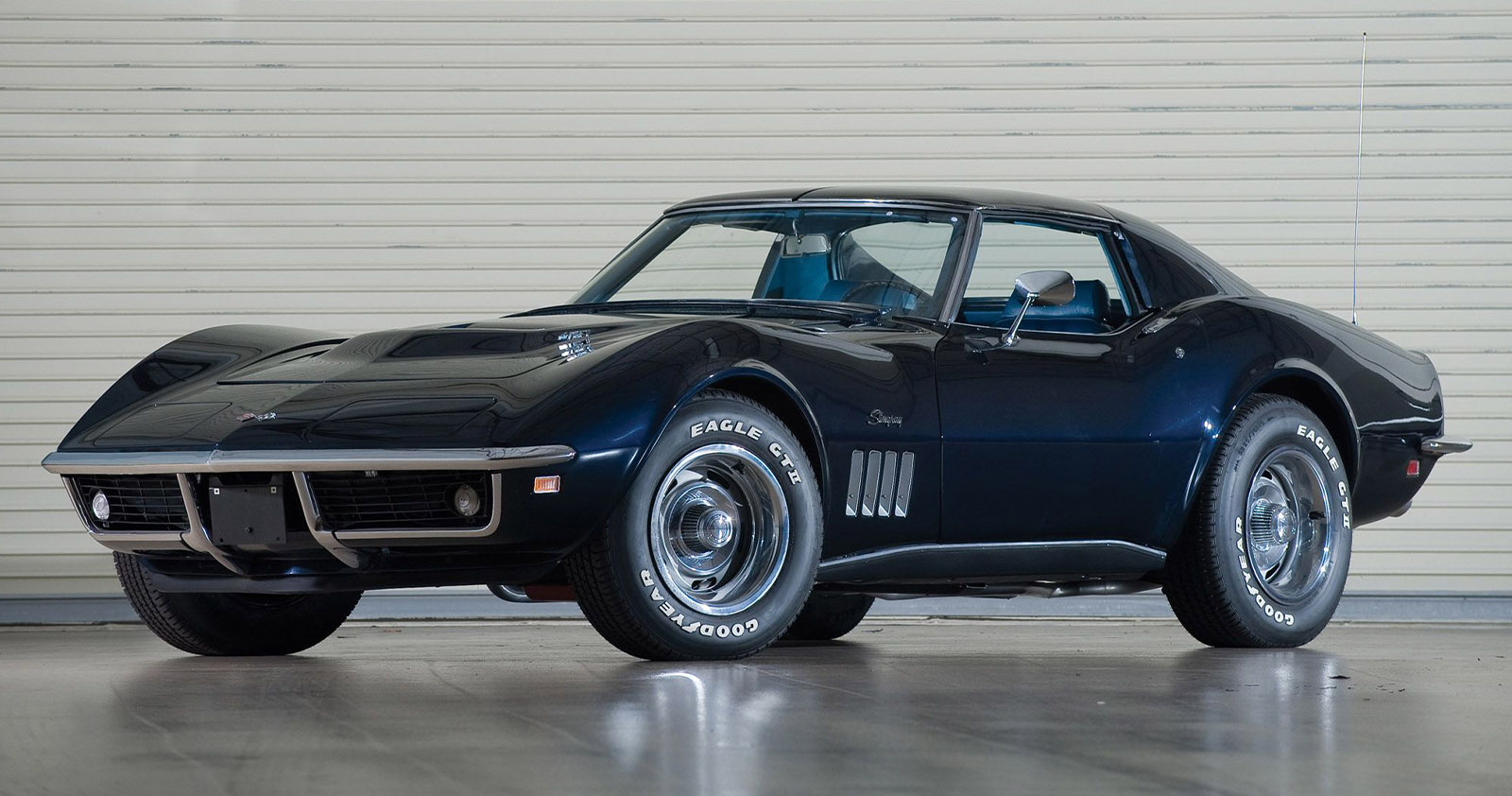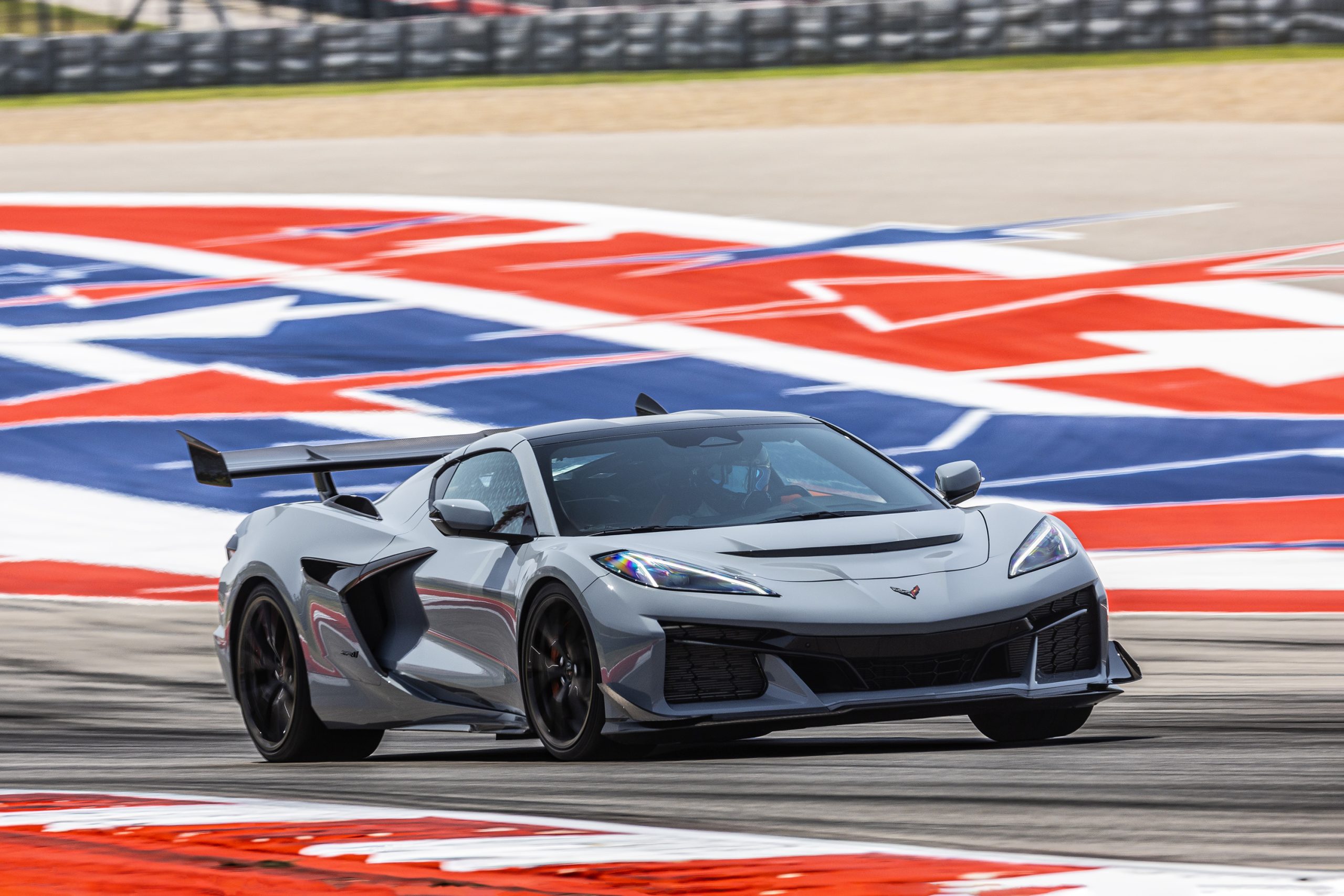
When Chevrolet pulled the wraps off the 2026 Corvette ZR1, the automotive world knew the C8 platform had reached its absolute limit. Not its limit in the sense of compromise or concession. Its limit in the sense that Chevrolet engineers had taken everything the mid-engine architecture could physically contain and filled every last cubic inch of it with intent. This is the grand return of forced induction to the Corvette nameplate, and it arrives without apology, without hybrid assistance, and without any ambiguity about what it is trying to do.
Where the Z06 targeted the kind of precision that makes a driver feel surgically connected to a racetrack, the ZR1 goes somewhere else entirely. It goes for brute, overwhelming force. Chevy took the same fundamental mid-engine layout that already embarrassed six-figure European machinery and dropped a twin-turbocharged heart into it capable of challenging elite hypercars that cost three times as much. Here is how this thing actually behaves on the road, on the track, and against the stopwatch.
The LT7 Twin-Turbo Powertrain
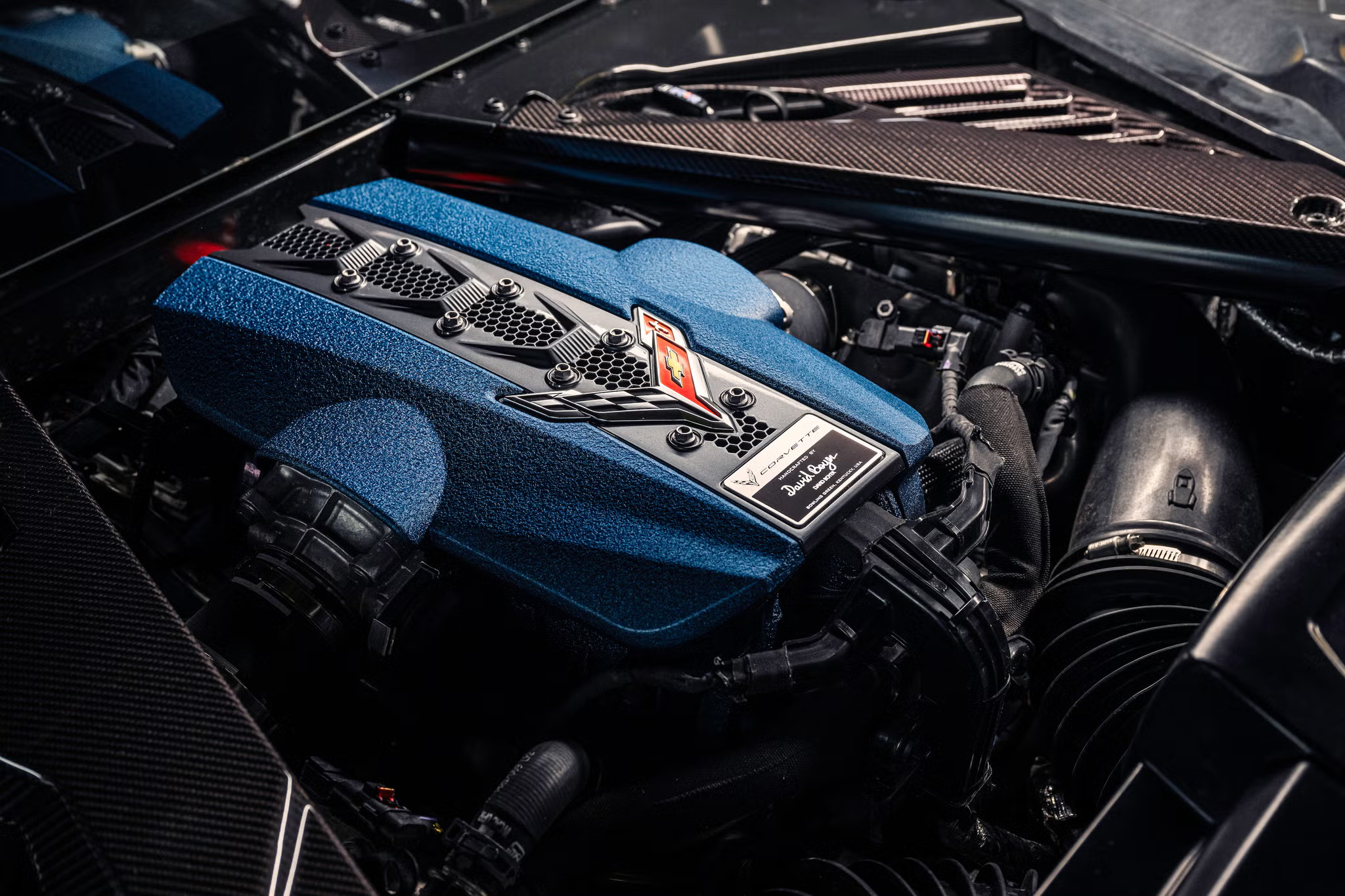
At the center of it all sits a mid-mounted 5.5-liter LT7 dual-overhead-cam V8 fed by two massive turbochargers. The engine shares the basic flat-plane crankshaft design of the Z06’s LT6, but the LT7 uses unique block castings, a lower compression ratio of 9.8:1, and substantially reinforced internals designed to survive the kind of boost pressure that would destroy a lesser engine.
Total output: 1,064 horsepower and 828 lb-ft of torque, both figures arriving at higher in the rev range than you might expect from a turbocharged engine. Peak horsepower lands at 7,000 rpm, peak torque at 6,000 rpm. Those numbers make the ZR1 the most powerful factory Corvette ever put into production, and the performance data backs it up. Zero to 60 mph in 2.3 seconds, which beats both the Z06 and the all-wheel-drive E-Ray.
Power goes through an upgraded eight-speed dual-clutch transmission to the rear wheels only. No electric motors, no battery pack, no hybrid assistance of any kind. Chevrolet made a deliberate choice here, and it shows. The ZR1’s performance identity comes entirely from combustion engineering, from boost pressure, from a dry-sump oiling system with seven stages and oil-spray piston cooling, from twin 76mm mono-scroll ball-bearing turbos with electronic wastegates. The hardware list reads like something out of an endurance racing specification sheet, which is not entirely accidental given how much the LT7’s architecture owes to the C8.R program.
Performance Figures
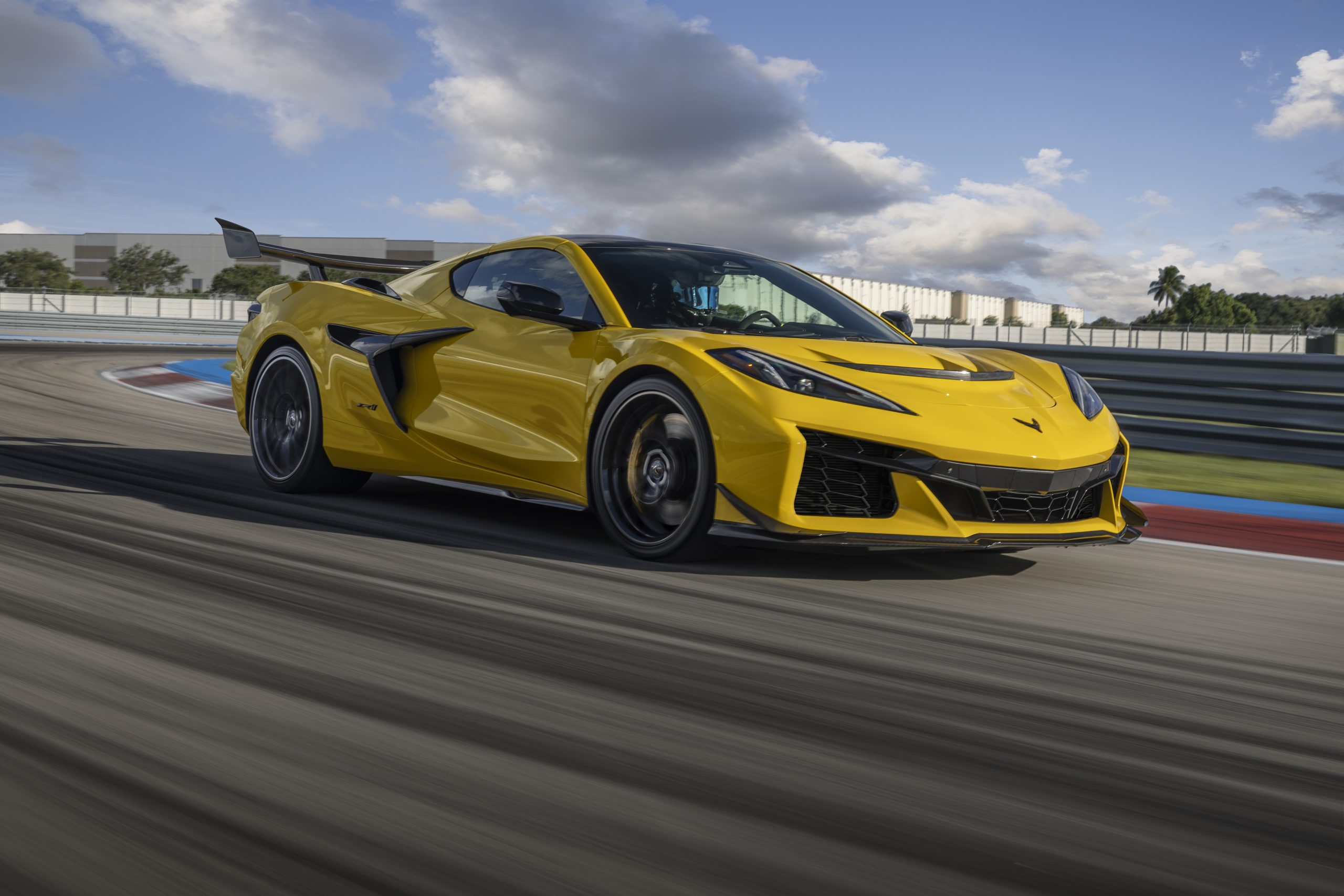
The actual numbers place this car in a very exclusive bracket.
- 0-60 mph: 2.3 seconds
- 0-100 mph: 4.5 seconds
- Quarter-mile: 9.6 seconds at 150 mph
- Top speed: 233 mph on a closed test track
The quarter-mile figure alone would have seemed like science fiction applied to an American production car a decade ago. The top speed puts the ZR1 ahead of machines that cost multiples of its asking price, which is something Chevrolet has been doing in one form or another since 1953. They are just better at it now than they have ever been.
How it Stacks Against the Competition
| Vehicle | Power | 0-60 MPH | Base Price |
| Corvette ZR1 | 1,064 hp | 2.3 seconds | $182,000 |
| Mustang GTD | 815 hp | 2.8 seconds | $325,000 |
| McLaren 750S | 740 hp | 2.7 seconds | $324,100 |
| Ferrari SF90 Stradale | 986 hp | 2.4 seconds | $524,950 |
The Ferrari comparison is worth dwelling on for a moment. The SF90 Stradale uses a hybrid powertrain, all-wheel drive, and costs $524,000 to get within a tenth of a second of the ZR1’s launch. Chevrolet’s car does it with rear-wheel drive and a combustion-only powertrain that starts at $182,000. That gap is not a rounding error. It is a philosophical statement.
RWD Dynamics & Real-World Handling
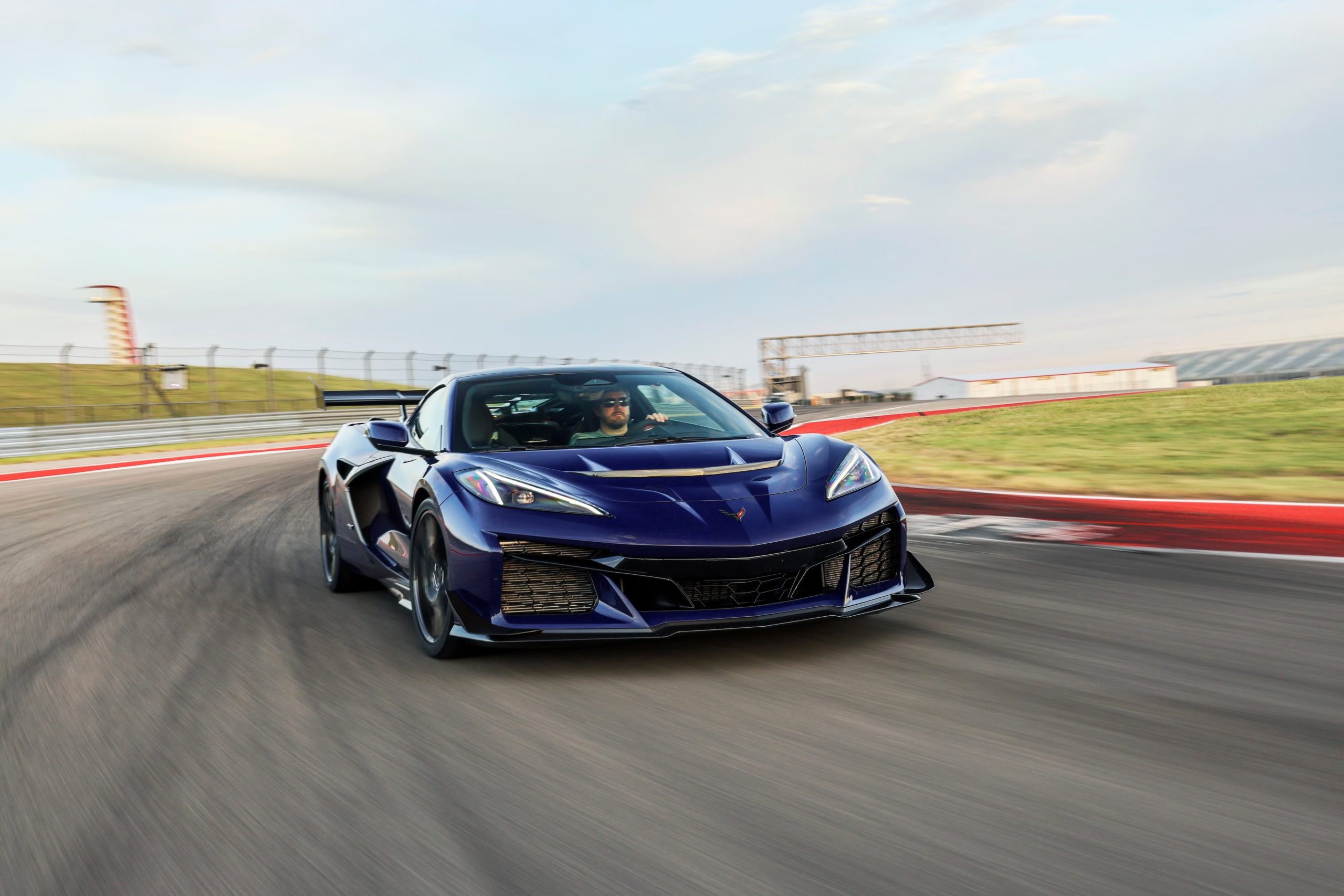
Managing 1,064 horsepower through the rear wheels alone takes serious suspension calibration, and Chevy’s engineers knew they were not building something for the faint of heart. The ZR1 delivers sharp, composed track dynamics when the conditions are right: clean asphalt, warm tires, a driver paying attention.
The coupe weighs 3,670 pounds dry, up from the Z06’s 3,434 pounds, a consequence of the turbo plumbing, additional intercoolers, and expanded cooling hardware the LT7 demands. That weight is real and the ZR1 does not pretend otherwise. What it does instead is manage that mass exceptionally well through an electronic limited-slip differential, continuous stability management, and Magnetic Selective Ride Control 4.0 dampers that read the road surface and adjust in real time.
Standard rubber is Michelin Pilot Sport 4S run-flats in a staggered setup: 275-section fronts on 20-inch wheels, 345-section rears on 21-inch wheels. The rear tire is enormous. It needs to be. Buyers who specify the ZTK Performance Package get Michelin Pilot Sport Cup 2 R track rubber instead, which changes the car’s character substantially and probably should not be chosen by anyone who plans to drive in rain.
Exterior & Aero
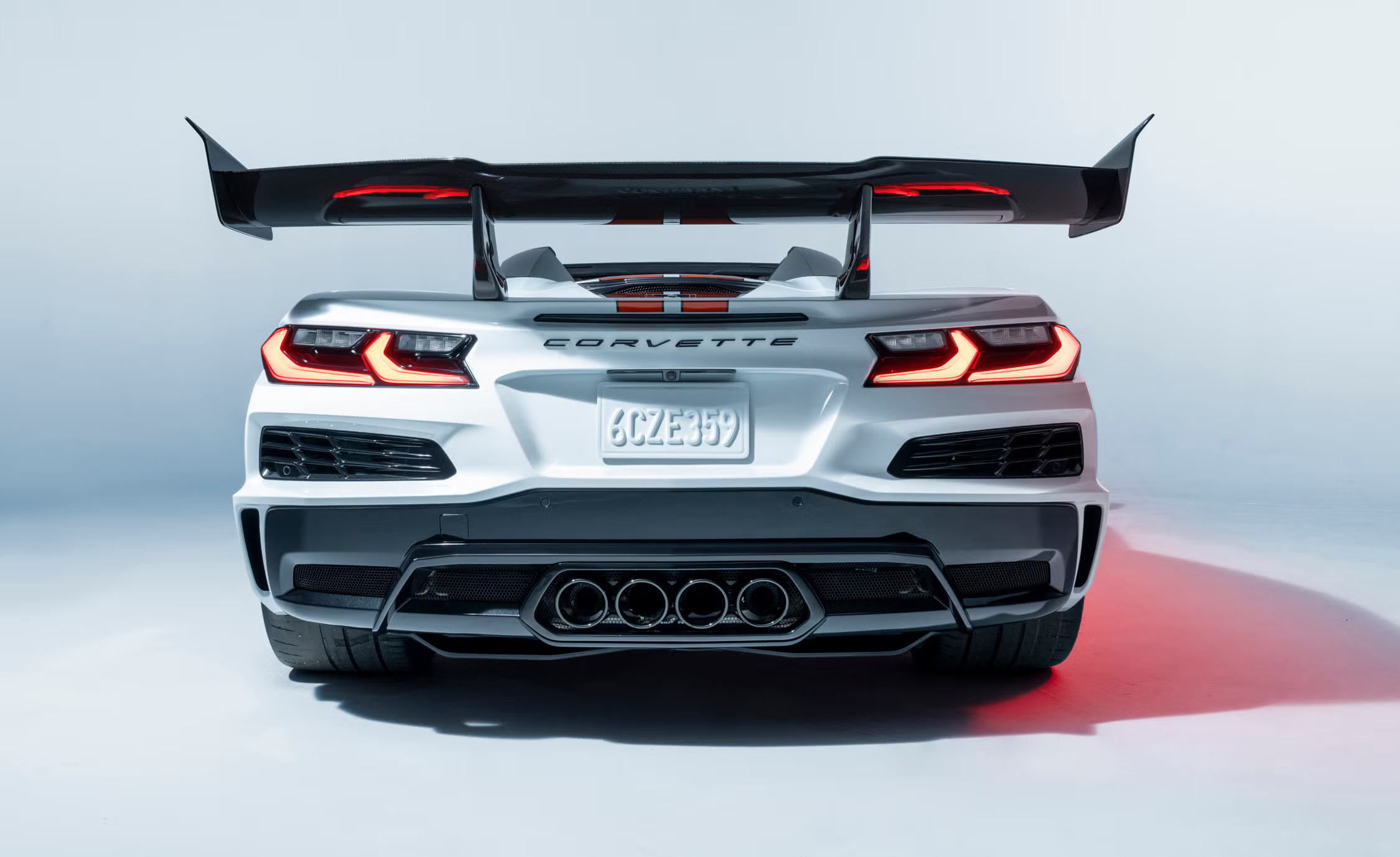
The ZR1 borrows the Z06’s wide body architecture and then goes considerably further. Every opening on this car serves a function. There are no decorative vents, no styling exercises masquerading as aerodynamic features.
The flow-through hood pulls air in through the front grille and vents it out through the hood surface, cooling the turbo intercoolers and generating front downforce in the process. A carbon-fiber spine runs down the rear glass, pulling hot air out of the engine bay. The large side intakes feed fresh air directly to the turbochargers and rear brake cooling ducts. None of this is subtle, and none of it is cosmetic.
The ZTK Performance Package adds a high-mounted carbon-fiber rear wing, front dive planes, and underbody strakes that together generate 1,200 pounds of downforce at speed. That is more aerodynamic loading than the base car’s tires and suspension are tuned to exploit, which is exactly why the ZTK package also upgrades the suspension calibration and replaces the street tires with Cup 2 R compounds. The package is a system, not a collection of individual upgrades, and Chevy engineered it that way deliberately.
Suspension, Tires & Brakes: Four-Square Control
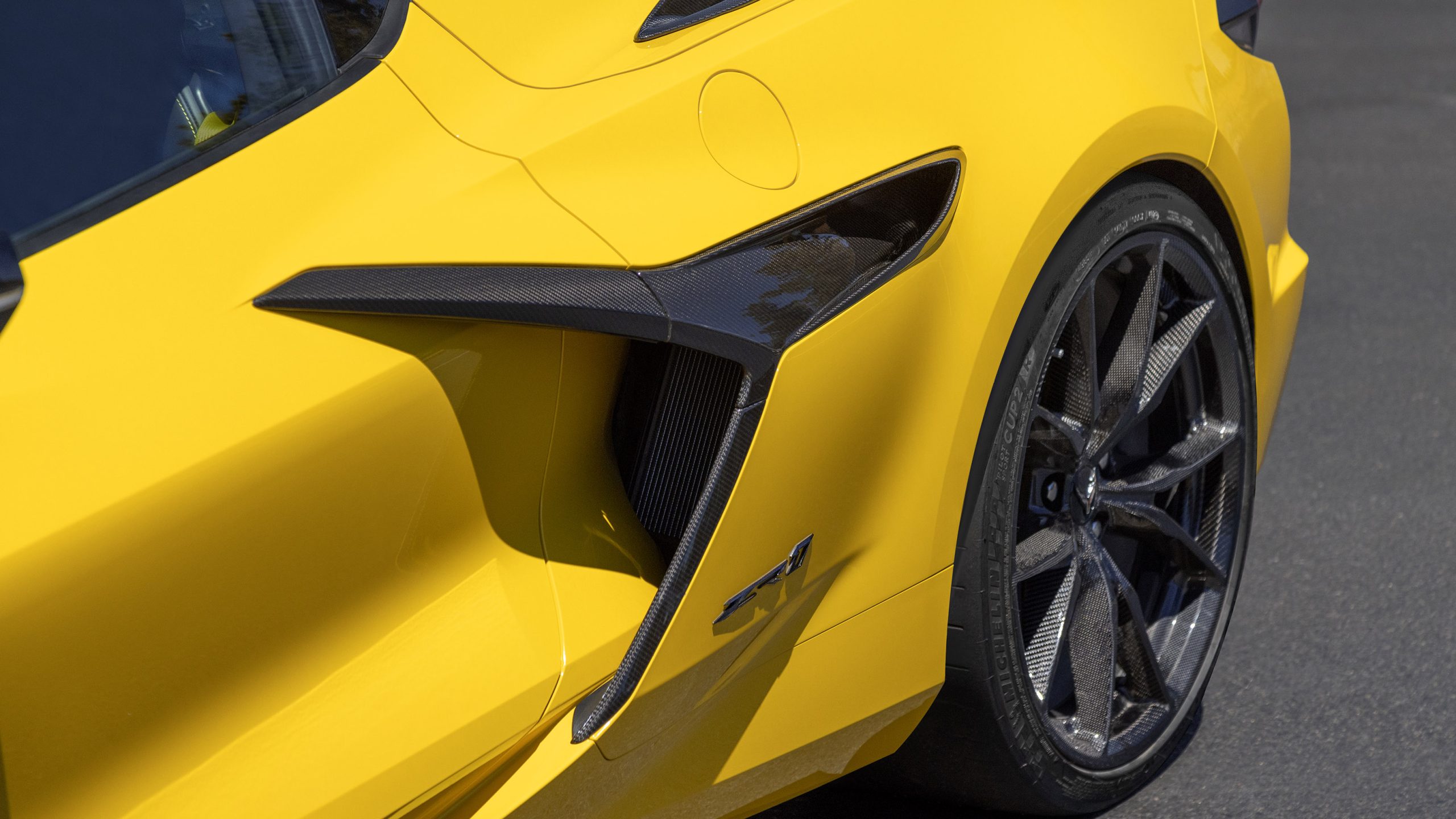
Double wishbones at all four corners carry over the architecture established on the C8 Stingray, but the ZR1’s specific tuning is its own. Chevy re-calibrated the Magnetic Ride Control software specifically around this car’s downforce loads and weight distribution, tightening body roll control without sacrificing the ride quality that makes long highway stretches tolerable in Tour mode.
The brake package is the largest ever fitted to a production Corvette. Brembo carbon-ceramic rotors come standard across all trim levels: 15.7-inch front rotors gripped by six-piston calipers, 15.4-inch rears with four-piston calipers. The eBoost-assisted system is calibrated for the forces involved in scrubbing speed from 150-plus mph, and the carbon-ceramic material handles heat dissipation in a way that conventional iron rotors simply cannot sustain through repeated hard stops.
Interior & Tech
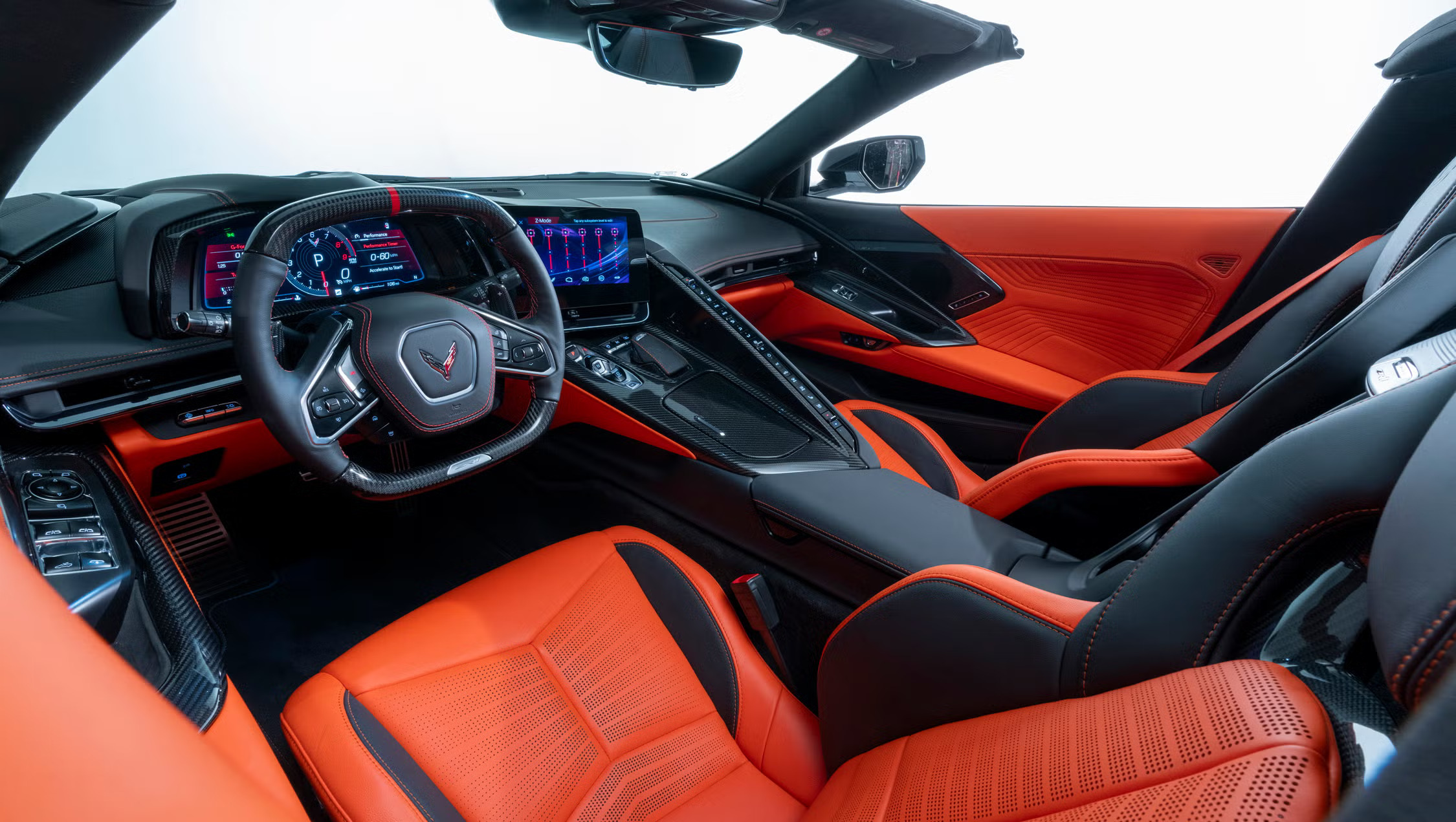
Inside, the ZR1 shares the C8’s fundamental architecture, which is not a criticism. That architecture has always been well-executed, and the ZR1 builds on it with upgraded materials and a few model-specific touches that reflect what this car actually is.
The 12.7-inch center touchscreen handles navigation, media, and a Performance App that displays real-time boost pressure, torque delivery, and lap data. The 14-inch digital gauge cluster ahead of the driver is configurable and includes shift lights for track use. Base GT1 seats are genuinely comfortable on long drives. Stepping up to the 3LZ package brings heated and ventilated GT2 buckets wrapped in Napa leather, which is where most buyers will end up.
Carbon-fiber trim pieces run through the dashboard, leather covers the main contact surfaces, and the overall impression is of a car that takes its interior seriously without losing sight of the fact that the powertrain is the reason anyone is here. The front trunk space is reduced by the flow-through hood design, but the rear trunk holds enough luggage for a weekend trip, which is more than most cars in this performance bracket can claim.
Safety, Warranty & Everyday Usability
Chevrolet did not build the ZR1 as a track-day special that has to be trailered home. It functions as a real car for real driving when you want it to.
Forward collision alert, automatic emergency braking, lane-keep assist, and a high-definition backup camera all come standard. The 3-year/36,000-mile bumper-to-bumper warranty and 5-year/60,000-mile powertrain coverage apply, along with one complimentary scheduled maintenance visit. Switching the drive mode selector to Tour softens the suspension considerably, and the result is a car that is genuinely comfortable at highway speeds in a way that its performance figures would not lead you to expect.
Pricing & Availability
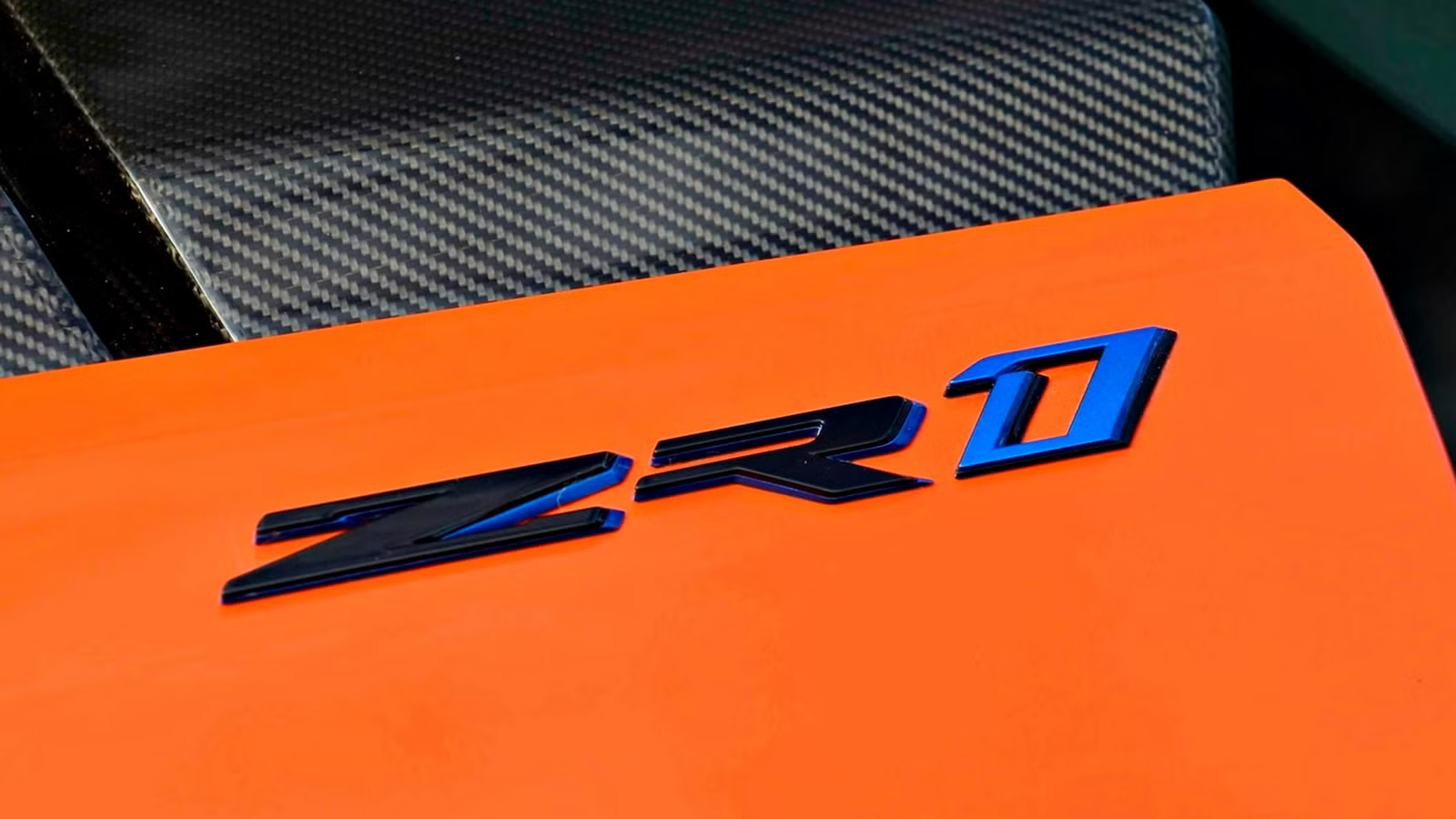
The ZR1 is the most expensive Corvette available, and it still manages to undercut European rivals by a staggering margin.
- 1LZ Coupe: Starts at $182,000
- 1LZ Convertible: Starts at $192,000
- 3LZ Trim: Adds approximately $11,000 for upgraded leather and a 14-speaker Bose audio system
- ZTK Package: Carbon-fiber aerodynamic components priced separately, pushing final totals higher for track-focused builds
Production capacity is limited, and dealer waiting lists are already substantial. If you want one, the time to start that conversation is now.
ZR1 vs. Z06
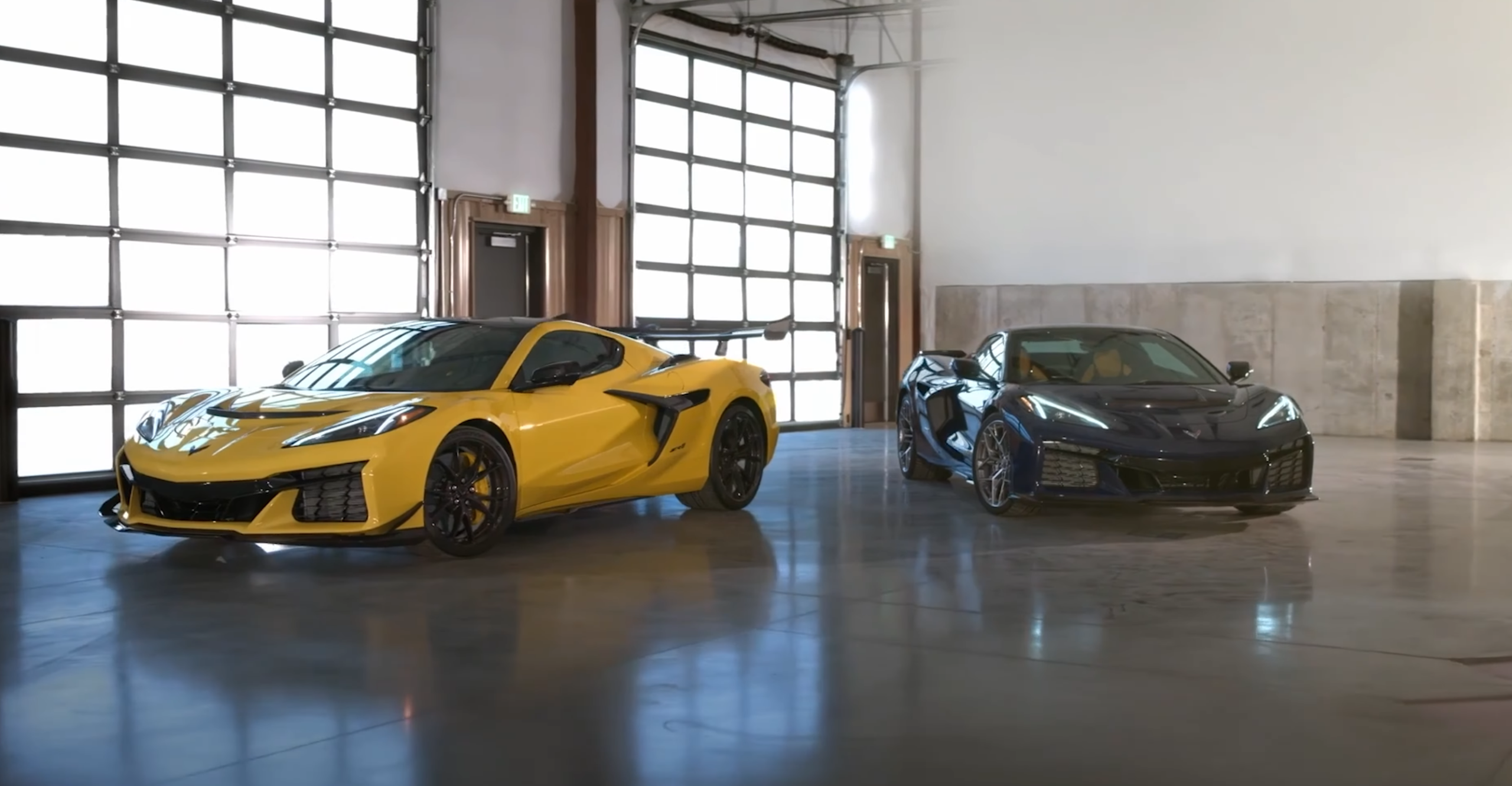
| Feature | ZR1 | Z06 |
| Powertrain | 5.5L Twin-Turbo V8 (1,064 hp) | 5.5L NA flat-plane V8 (670 hp) |
| Drivetrain | RWD | RWD |
| Acceleration (0-60) | 2.3 seconds | 2.6 seconds |
| Top Speed | 233 mph | 189 mph |
| Weight | 3,670 lbs (coupe) | 3,670 lbs |
| Focus | Forced-induction top speed | Track precision, raw engagement |
| Starting Price | $197,700 | $120,300 |
These two cars share a chassis, a basic engine architecture, a transmission, and a production facility in Bowling Green, Kentucky. Beyond that, they are pursuing entirely different performance philosophies.
The C8 Corvette Z06 is about the engagement of a naturally aspirated engine screaming to 8,600 rpm, about a driver feeling every revolution of a flat-plane crank that traces its lineage directly to endurance racing. The ZR1 is about what happens when you apply serious forced induction to that same foundation and ask how fast an American production car can actually go in a straight line. Both answers are valid. They just appeal to different kinds of drivers.
Why the ZR1 Stands Out
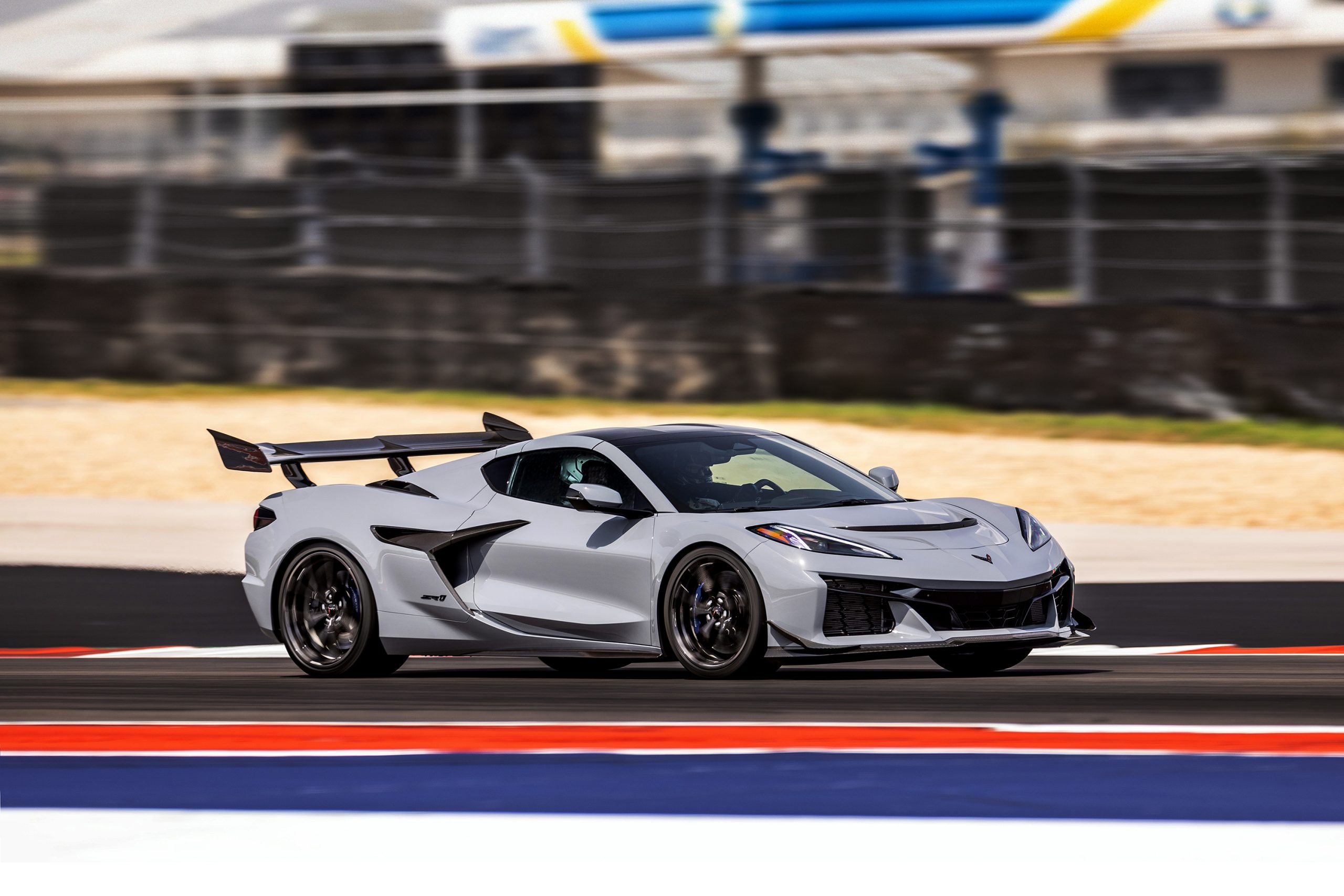
- The most powerful standalone V8 engine an American factory has ever built
- Functional race-car aerodynamics across every body panel
- Standard carbon-ceramic Brembo brakes on every trim level
- Verified 233 mph top speed
- Comfortable enough for daily use in Tour mode
- The definitive internal combustion Corvette
It costs more than a Z06 and weighs more than a Z06, and it earns both of those facts honestly. The performance it delivers in exchange used to require a seven-figure European hypercar with a waiting list and a regional sales representative who called you by your first name. The ZR1 just needs a Chevrolet dealer and a serious down payment.
Final Thoughts
The 2026 Corvette ZR1 represents General Motors at its most confident. It pairs a world-class twin-turbo V8 with the sharp mid-engine handling the C8 platform has always been capable of, and it does it at a price point that makes the European hypercar market look genuinely embarrassed. It does not have the screaming high-revving character of the Z06. It does not have the all-weather security of the hybrid E-Ray. What it has instead is 1,064 horsepower, 233 mph, and a 9.6-second quarter-mile, all delivered from a car you could theoretically drive to the grocery store on a Tuesday morning.
For collectors, it will be a centerpiece. For the rest of the automotive world, it is a reminder that American engineering, when given the resources and the freedom to pursue a singular goal without compromise, remains as capable as anything built anywhere on Earth.
Chevrolet Corvette ZR1 Specifications
ENGINE
| Type: | LT7 Twin-Turbocharged 5.5L DOHC VVT DI |
| Bore & stroke (in. / mm): | 4.104 x 3.150 in. / 104.25 x 80 mm |
| Block Material: | A319 cast aluminum with cast-in iron cylinder liners and four-bolt main bearing caps |
| Oiling System: | Seven-stage dry sump (8-qt. capacity) with oil-spray piston cooling |
| Oil Type: | Dexos R 5W50 synthetic |
| Cylinder Head Material: | A356 T6 cast aluminum |
| Combustion Chamber Volume: | 59.92 cc |
| Compression Ratio: | 9.8:1 |
| Valvetrain: | Dual overhead camshafts, four valves per cylinder, mechanical finger-follower valvetrain, dual-coil valve springs, dual-independent camshaft phasing |
| Valve Size (in. / mm): | 1.77 in. / 45 mm titanium (intake); 1.37 in. / 35 mm sodium-filled Nimonic (exhaust) |
| Fuel Delivery: | PDI (Direct Injection at max 5,076 psi plus Port Fuel Injection) |
| Firing Order: | 1-4-3-8-7-6-5-2 |
| Throttle Body: | Twin 65mm single bore (electronic) |
| Charging | Twin 76mm mono-scroll ported shroud ball-bearing turbos (67mm MAR compressor) with electronic wastegates |
| Battery | N/A |
| ECU: | GM E68 (32-bit processing) |
| Horsepower (hp / kW): | 1,064 hp / 873 kW @ 7,000 rpm |
| Torque (lb.-ft. / Nm): | Torque: 828 lb-ft / 1,123 Nm @ 6,000 rpm |
TRANSMISSION & AXLE
| Type: | Type: 8-speed dual-clutch transmission (DCT) |
CHASSIS & SUSPENSION
| Front Suspension: | Short/long arm (SLA) double wishbone, forged aluminum upper and cast aluminum L-shape lower control arms; stabilizer bar; Magnetic Selective Ride Control 4.0 (ZTK package upgrades to track-tuned calibration) |
| Rear Suspension: | Short/long arm (SLA) double wishbone, forged aluminum upper and cast aluminum L-shape lower control arms; direct-acting stabilizer bar; Magnetic Selective Ride Control 4.0 |
| Steering Type: | Variable-ratio rack-and-pinion with electric power assist |
| Steering ratio: | 15.7:1 |
| Turning Circle (ft. / m): | 36.4 / 11.1 |
| Brake Type: | Front and rear eBoost-assisted Brembo carbon ceramic discs with six-piston front calipers and four-piston rear calipers |
| Brake Rotor Size (in. / mm): | Front: 15.7 x 1.5 / 398 x 38 Rear: 15.4 x 1.3 / 391 x 34 |
| Wheel Size: | Front: 20-inch x 10-inch Rear: 21-inch x 13-inch |
| Tire Size: | Front: 275/30ZR20 Michelin Pilot Sport 4S Run Flat (Cup 2 R with ZTK Package) Rear: 345/25ZR21 Michelin Pilot Sport 4S Run Flat (Cup 2 R with ZTK Package) |
EXTERIOR DIMENSIONS
| Wheelbase (in. / mm): | 107.2 / 2723 |
| Overall Length (in. / mm): | 185.9 / 4722 |
| Overall Width without mirrors (in. / mm): | 79.7 / 2025 |
| Overall Height (in. / mm): | 48.6 / 1234 |
| Track (in. / mm): | Front: 66.3 / 1685 Rear: 66.1 / 1678 |
INTERIOR DIMENSIONS
| Headroom (in. / mm): | 37.9 / 963 |
| Legroom (in. / mm): | 42.8 / 1087 |
| Shoulder Room (in. / mm): | 54.4 / 1382 |
| Hip Room (in. / mm): | 52 / 1321 |
WEIGHTS & CAPACITIES
| Dry Weight (lb. / kg): | 3670 / 1665 (coupe) 3758 / 1705 (convertible) |
| Cargo Volume (cu. ft. / L)1: | 9.1 / 258 |
Cargo and load capacity limited by weight and distribution.
FUEL TANK CAPACITY (approx.)
| 18.5 gal. / 70 liters |