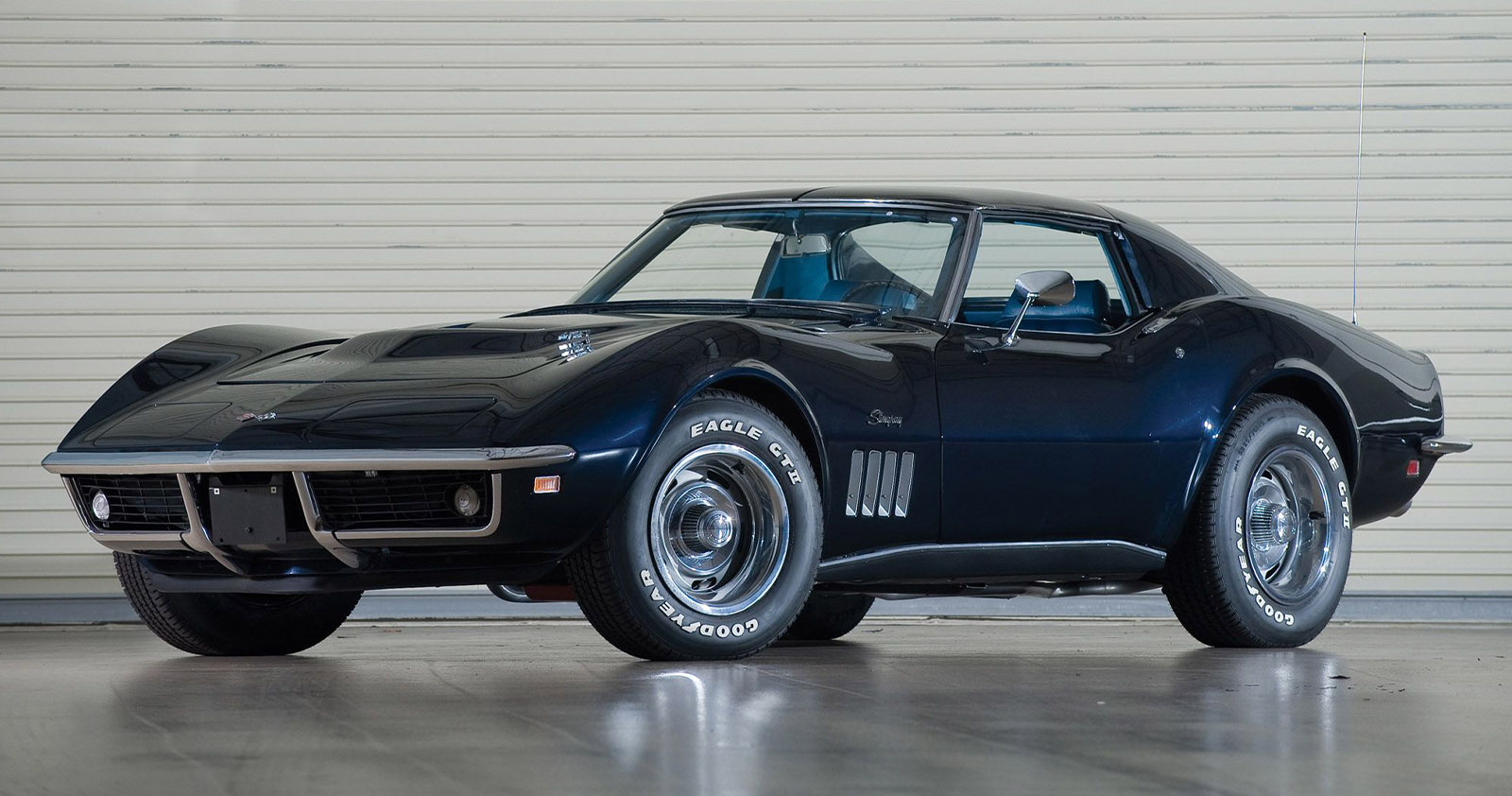
From March 5th to the 8th, thousands of enthusiasts from around the globe will convene at The Ritz-Carlton on Amelia Island, Florida, for The Amelia Concours, an annual event that has teased the senses since 1996. This year, America’s Sports Car is making concours history as one of its most revered RPOs, the L88, is crossing paths with the legendary Amelia Concours. Let’s walk through this decade’s most compelling L88 story.
Two Legends, One Lawn: Amelia Island Welcomes The L88
The 2026 edition of the Amelia Concours will spotlight a remarkable gathering of L88 Corvettes alongside a curated field of historically important road and race cars. For an event that routinely displays more than 250 rare and significant automobiles, dedicating space to ten examples of Chevrolet’s most feared big-block RPO is no small statement. To see ten L88s assembled in one place is extraordinary. To see them on the grass at Amelia elevates the moment into Corvette folklore.
A Concours Built On Legacy And Global Prestige
Since its debut in April 1996, The Amelia Concours has drawn an eclectic blend of everyday enthusiasts, championship drivers, celebrated designers, television personalities, and titans of the automotive industry. Visionary founder Bill Warner, supported by a devoted team of volunteers, transformed Amelia Island into a world-class automotive stage. That dedication earned international acclaim, including the prestigious “Motoring Event of the Year” honor from the International Historic Motoring Awards in both 2013 and 2016. Now under Hagerty’s stewardship since 2021, Amelia continues to attract thousands for auctions, seminars, and its crown jewel—the concours show itself.
Born In Secrecy: The Mark II “Mystery Motor”
The L88 story traces back to 1962, when Chevrolet’s Corvette engineering team, led by Zora Arkus-Duntov, developed a track-focused 427-cubic-inch V8. General Motors’ compliance with the AMA’s 1957 ban on factory-backed racing meant the program operated in the shadows. Internally, the engine carried the cryptic nickname “Mark II Mystery Motor.” Race innovator Mickey Thompson secured two of these powerplants, installed them into a pair of Corvette Z06s, and campaigned them in February 1963. Officially rated at 430 horsepower, whispers from the paddock suggested real output comfortably exceeded that figure—with some estimates pushing beyond 500 horsepower.
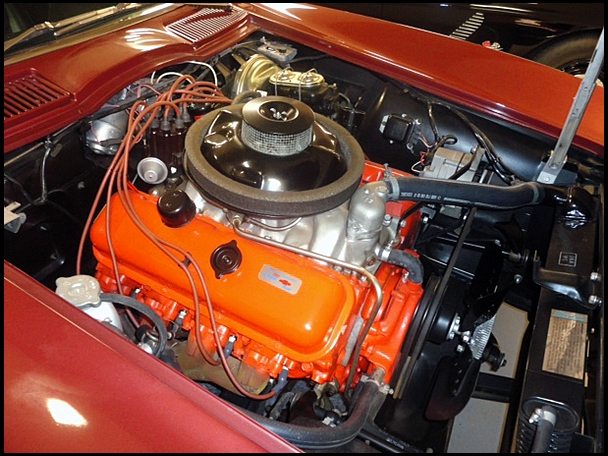
The Hardware That Defined A Generation
Once released under its Regular Production Option code—L88—the engine was paired with the formidable Muncie M22 four-speed manual transmission, famously dubbed the “Rock Crusher” for its durability under brutal torque loads. A distinctive hood featuring an oversized, fully functional scoop forced cool air into the engine bay, visually separating the L88 from its small-block siblings. Creature comforts were deliberately absent. No air conditioning. No power steering. No radio. Not even a heater. The L88 was conceived as a lightweight, uncompromising machine. Yet despite its race-first mission, a surprising number found their way into private hands for street duty.
Engineering Extremes And Ultra-Low Production
In 1967, just 20 examples were equipped with aluminum cylinder heads in place of cast iron, trimming 75 pounds from the engine’s mass. Domed aluminum pistons and a towering 12.5:1 compression ratio underscored its competition intent. That same year, Corvette News ran an article titled “Proceed with Caution,” describing the L88 as an engine intended strictly for qualified racing groups. Production remained scarce: 80 units were built in 1968, followed by 116 in 1969. Across three years, only 216 L88 Corvettes were produced.
Today, the L88 stands as a high-water mark of American performance engineering. Revered for its raw power and limited production, it commands staggering values in the collector marketplace—often reaching into the millions. That The Amelia Concours has assembled ten of these icons on a single show field is not just impressive. It is historic. And while each car’s full story could fill volumes, what follows are the highlights of the ten L88 Corvettes set to captivate Amelia Island this March.
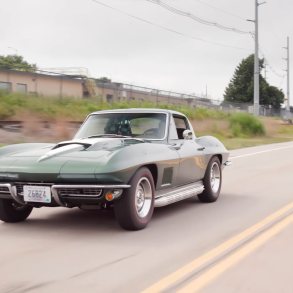
The top L88 dog from CorvSport’s recent exclusive feature, “Tracking The Corvette Legends: The Story Of The L88 Engine & Its Top Sales.” This 1967 L88 Coupe fetched $3,850,000 under the bright lights of Barrett-Jackson’s 2014 Scottsdale extravaganza.
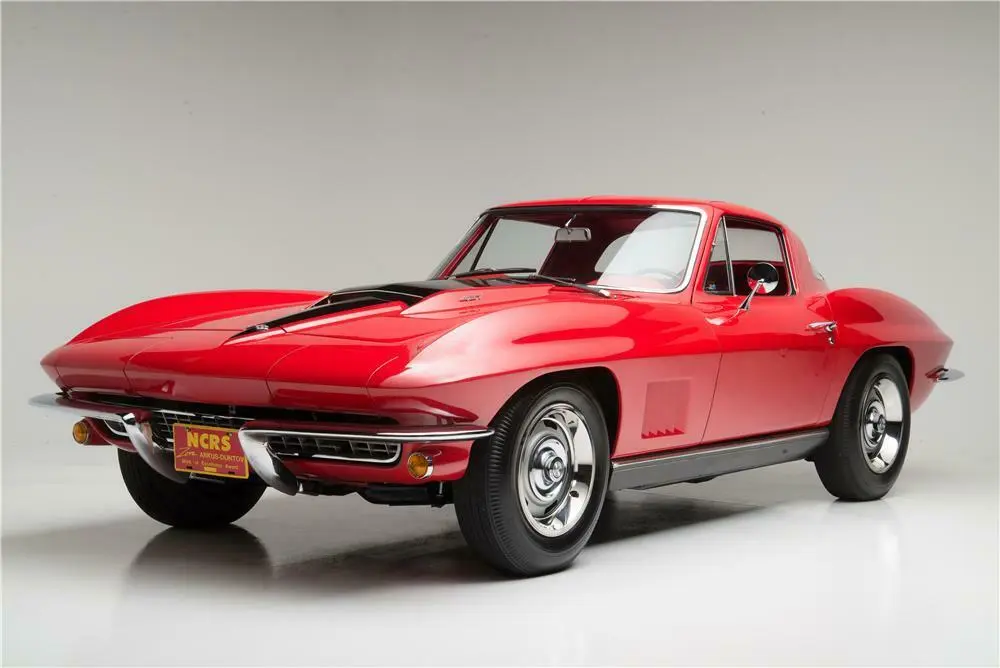
The Ten L88s Staged To Steal The Show At The 2026 Amelia Concours
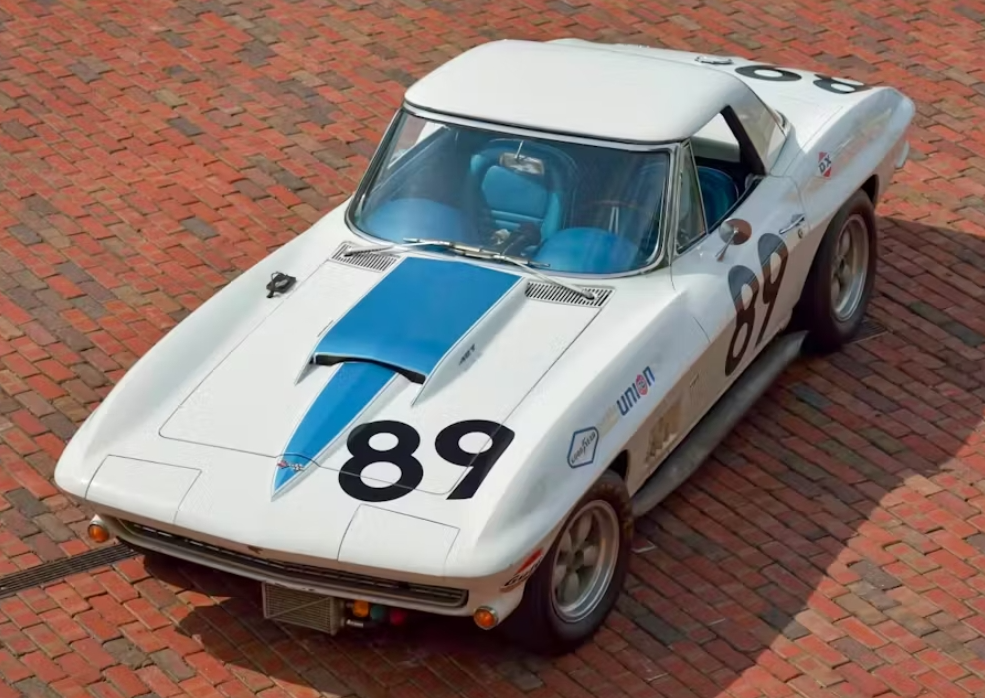
1 — 1967 Corvette Factory L88 Cliff Gottlob Racer #89
The Ultimate L88: Gottlob’s #89 That Rewrote The Record Books
Few Corvettes carry a résumé as commanding as the 1967 Factory L88 convertible campaigned by Cliff Gottlob. Revered as the most thoroughly documented example of its breed, this machine has earned a reputation among historians as “The Ultimate L88.” Its authenticity runs deeper than paperwork—it remains the only 1967 L88 to retain its complete original engine assembly, from block and heads to crankshaft, rods, pistons, lifters, and valvetrain. In a world where racing often meant mechanical attrition, this level of preservation borders on miraculous.
Racing & Technical Highlights:
- Original, numbers-matching engine assembly: block, heads, crankshaft, rods, pistons, lifters, valvetrain
- Eight-year competition career with original owner Cliff Gottlob
- 1970 Daytona 24 Hours: 2nd in GT class, 11th overall
- Nearly 300 podium finishes
- More than 150 overall victories
- Record-setting streak of 52 consecutive wins
What elevates this car beyond statistics is the way its story has been preserved. Following its dominant run at Daytona in 1970, the Corvette underwent a painstaking return to its as-raced Daytona configuration. Many components remain untouched, while others were carefully restored or replaced to harmonize with surviving original pieces. The result is a time capsule of American endurance racing—a Corvette that didn’t just compete, but conquered. As Amelia prepares to host ten L88 legends, Gottlob’s #89 stands tall as the benchmark.
Gottlob’s #89 In The Flesh
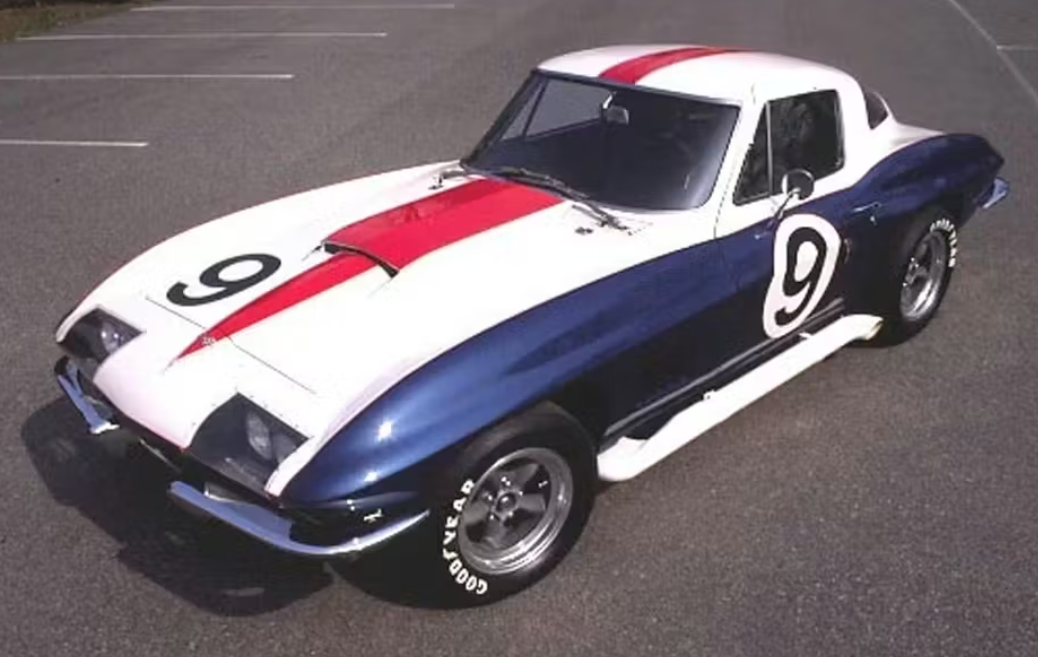
2 — 1967 Corvette Factory L88 Le Mans Racer #9
Le Mans Lightning: The Dana Chevrolet L88 That Shook France
In 1967, Dana Chevrolet’s Peyton Cramer and Paul Dombrowski set their sights on motorsport’s most grueling stage: the 24 Hours of Le Mans. Cramer was no stranger to the Circuit de la Sarthe, having captured GT class honors in 1964 and an overall triumph in 1966 with Shelby American. But this time, he wanted to return under his own banner—armed with Chevrolet’s newest competition weapon, the L88 Corvette. The result was one of the boldest privateer efforts ever launched from American soil.
Racing & Technical Highlights:
- 1967 Factory L88 Corvette Coupe
- Entered by Dana Chevrolet of Los Angeles
- Competed in the 1967 24 Hours of Le Mans
- Achieved 171.5 mph during qualifying
- Ran 10 seconds quicker than the prior GT record
- Early race stint built a commanding GT-class lead
- Only midyear Corvette ever to compete at Le Mans
The race itself began with promise. Bob Bondurant quickly distanced the GT field, establishing a decisive advantage within hours. As strategy dictated, Dick Guldstrand climbed in and continued turning disciplined laps into the night. Then, just before the halfway mark, mechanical fate intervened—a connecting rod exited the block, ending the campaign in dramatic fashion. Though it failed to see the checkered flag, this L88 etched its name into endurance racing history. It remains the sole midyear Corvette to take on Le Mans, and that distinction alone secures its place among the most significant Corvettes ever assembled on a concours lawn.
The #9 In The Flesh
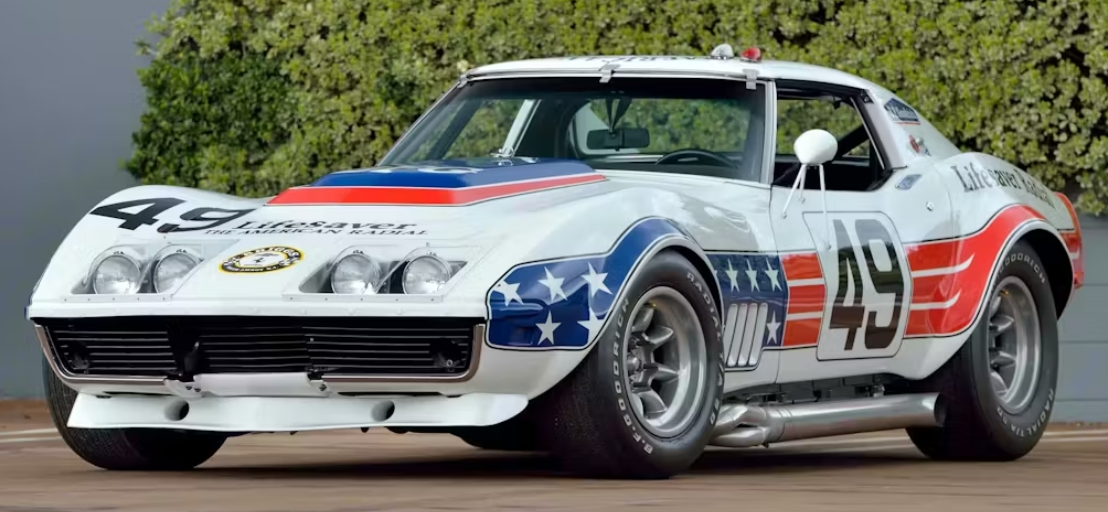
3 — 1969 Corvette Factory L88 Greenwood “Stars & Stripes” Racer #49
Stars, Stripes, And 215 MPH: Greenwood’s #49 Warhorse
When John Greenwood rolled out his trio of BF Goodrich–backed Corvettes in the early 1970s, the mission was clear: prove the dominance of a new generation of radial tires on the world’s toughest endurance stages. The 1969 Factory L88 known as the “Stars & Stripes” #49 became one of three team cars—#48, #49, and #50—fielded from 1971 through 1973. Delivered originally as an L88 and first used as Greenwood’s promotional car, #49 would soon evolve into a full-fledged competition machine when contract obligations required a second active race entry after #50 suffered crash damage in 1972.
Racing & Technical Highlights:
- One of three BF Goodrich–sponsored Greenwood team cars (1971–1973)
- Competed at Sebring 12 Hours, Daytona 24 Hours, and Le Mans 24 Hours
- Driven by John Greendyke, John Greenwood, Robert Johnson, Dick Smothers, and Don Yenko
- Powered by Chevrolet ZL-1 all-aluminum 427 V-8
- Output exceeding 750 horsepower at 6500 rpm
- 1st in GT class, 1972 Watkins Glen Six Hours (Greenwood/Smothers)
- 215 mph GT qualifying speed record at Le Mans (as #68)
Greenwood transformed the #49 with a series of innovative upgrades: notched trailing arms to accommodate massive rear rubber, rapid-swap radiator hardware, and adjustable camber settings front and rear. In 1973, the car returned to the global spotlight, contesting Sebring and Le Mans. At the French classic, it set a blistering 215 mph GT qualifying mark on the Mulsanne Straight before an off-track incident involving Don Yenko prevented it from starting the race.
Restored to concours standard by Kevin Mackay and Corvette Repair, the car reemerged in 2008 at Bloomington Gold’s Special Collection. It earned the NCRS Heritage Award in 2009 and retains remarkable originality, including its rear clip, gauges, mirrors, dash, T-tops, removable radiator brackets, and Minilite wheels. With continuous ownership documentation, a Greenwood authentication letter, and its original bill of sale, this is the most intact of the Greenwood trio—now stewarded by Irwin Kroiz.
The #49 In The Flesh
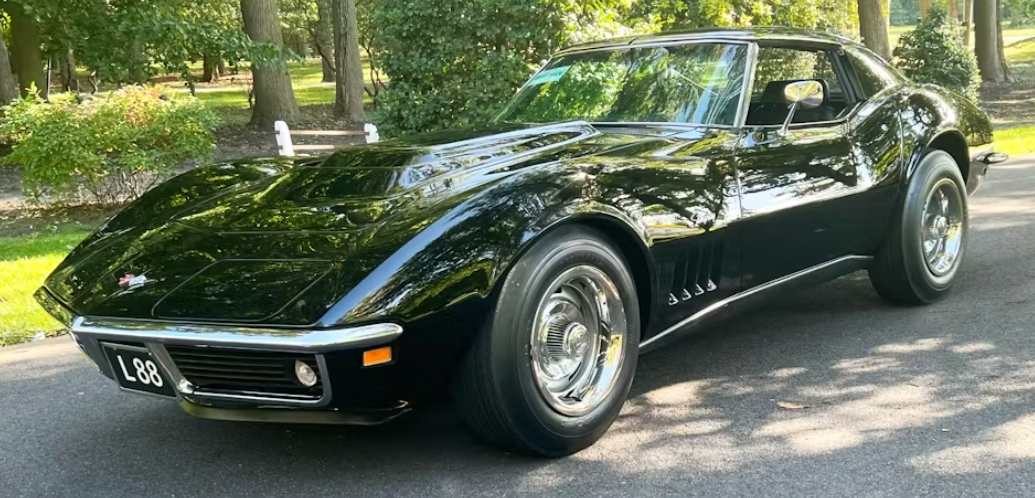
4 — 1969 Corvette Factory L88 Coupe
Midnight Menace: The Black-On-Black ’69 With A Snowy Sendoff
Among 1969 L88 coupes, few combinations carry the mystique of black paint over a black interior. This example is one of just five known black coupes and stands among the rarest configurations of the model year. Its provenance is as vivid as its finish: original window sticker, original dealer invoice, and even video footage capturing the first owner and his wife driving it home from Mark Chevrolet in Wayne, Michigan, through a snowstorm on December 17, 1969.
Awards & Technical Highlights:
- 1969 Factory L88 Coupe
- One of five known black coupes
- 20,833 miles accumulated over 43 years by original owner
- Original engine, transmission, and rear end
- Retains original interior and exhaust system
- NCRS Top Flight Award: 2016 (Warwick, Rhode Island)
- NCRS Top Flight Award: 2023 (French Lick, Indiana)
For more than four decades, the original owner quietly enjoyed the car, logging just over 20,800 miles—his wife even commuting in it during the early years. When it surfaced publicly in 2013, it had remained largely under the radar. Restoration duties were handled by Kevin Mackay and Corvette Repair, and the car went on to earn Bloomington Gold certification, appearing at the 2018 L88 Explosion Event. Now owned by Frank Stech since June 2022, this black-on-black L88 represents rarity layered with authenticity—a street-driven time capsule elevated to concours royalty.
The ’69 In The Flesh
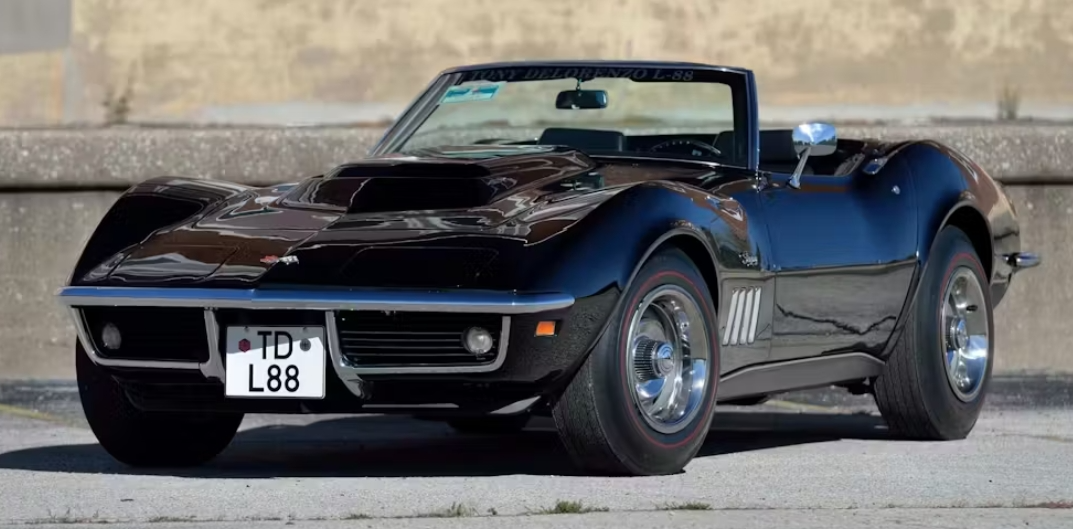
5 — 1969 Corvette Factory L88 Roadster
From Detroit To Deutschland: Tony DeLorenzo’s Jet-Set L88
In early 1969, famed Corvette racer Tony DeLorenzo ordered a highly optioned L88 through his sponsor, Hanley Dawson Chevrolet of Detroit. Intended initially as personal transportation, the Roadster was anything but ordinary. It was one of only two examples ordered in this special configuration, combining raw L88 performance with select functional upgrades. What began as a daily driver soon embarked on an international racing odyssey that would cement its place in Corvette lore.
Rarity & Technical Highlights:
- 1969 Factory L88 Roadster
- One of two known examples in this special order configuration
- L88 427ci/430hp V8 with closed-chamber aluminum heads
- M22 “Rock Crusher” transmission
- Positraction limited-slip differential
- J56 special heavy-duty brakes
- F41 heavy-duty suspension
Persuaded by his friend Curt Wetzel, DeLorenzo prepared the Corvette for competition and sold it to him. In December 1969—amid a brutal snowstorm—the car was driven to Detroit Metro Airport and loaded onto a Pan Am cargo jet bound for Frankfurt. Wetzel campaigned the L88 across European circuits, routinely outrunning Porsche and BMW competitors. Swiss enthusiast Hans Hirt later identified its authenticity through telltale L88 details: absence of radio provisions, distinctive brake hardware, and heavy-duty suspension components.
Finished in Tuxedo Black—the most coveted 1969 L88 color—the car carries exhaustive documentation, including its original window sticker copy, DeLorenzo affidavit, FIA homologation papers, race grids and results, show certifications, and even a license plate signed by DeLorenzo. Honors include Bloomington Gold, NCRS Top Flight, Triple Diamond, Bloomington Gold Special Collection, and Bloomington Gold Hall of Fame recognition. Reunited with DeLorenzo in 2005 after 36 years, this globe-trotting L88 is now owned by Steve Leitstein—a rare American icon that once conquered Europe and now commands the concours stage at Amelia.
The Roadster In The Flesh
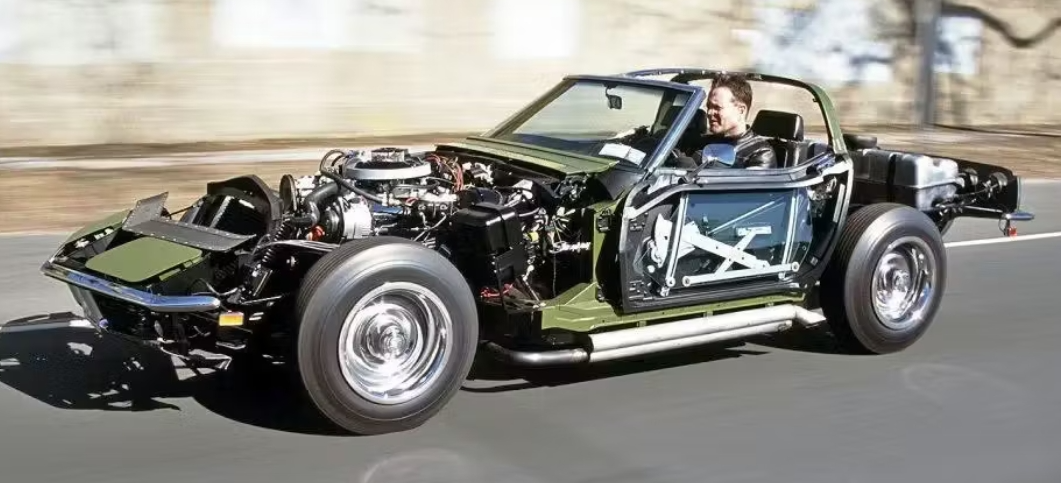
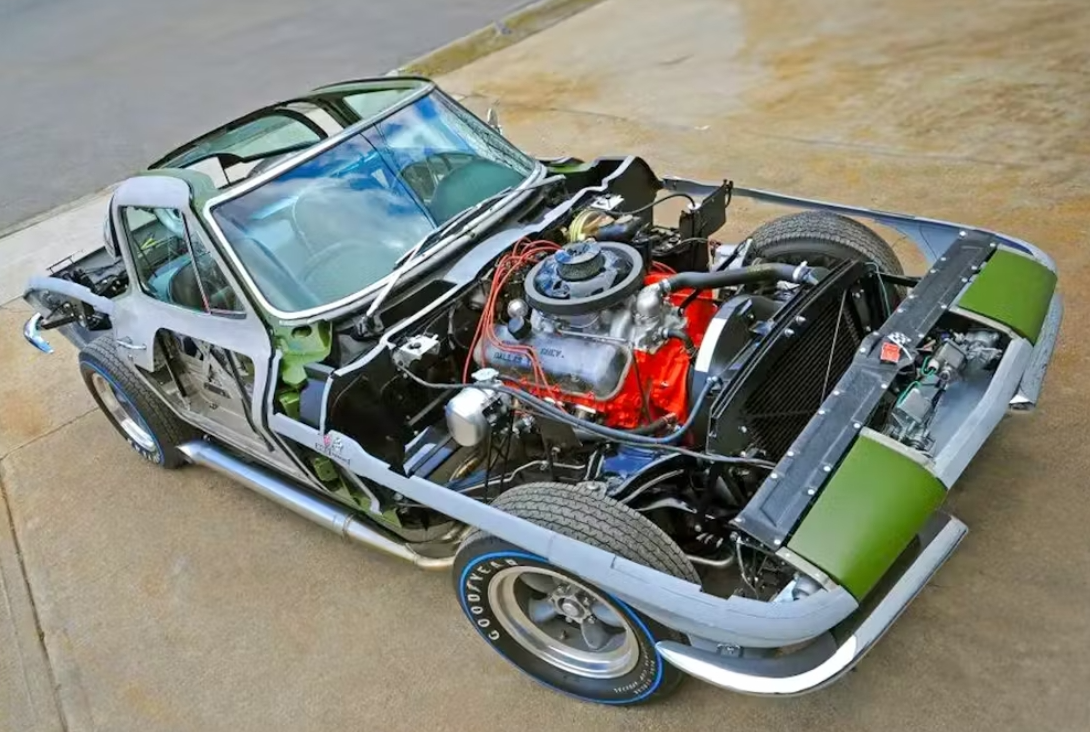
6 — 1969 Factory L88 “See-Thru Corvette”
The See-Thru Statement: A Black L88 Turned Inside Out
Some L88s made headlines on racetracks. This 1969 Factory L88 earned its fame by revealing what most Corvettes hide. Originally delivered through Bay Chevrolet in Douglaston, New York, this Tuxedo Black coupe—black interior, blackwall tires—was ordered by a buyer who simply wanted the fiercest machine Chevrolet offered. He checked the right boxes, including factory-installed side pipes (RPO N14). In 1969, that option was exclusive to the Stingray, and this car is believed to be the only black-on-black L88 so equipped from new.
Rarity & Technical Highlights:
- 1969 Factory L88 Coupe
- Tuxedo Black exterior with black interior and blackwall tires
- Factory-installed side pipes (RPO N14)
- 1969: the only year side pipes were available on the Stingray
- Original body panels and original-dated window glass
- Original build sheet still intact atop fuel tank
- Believed to be the only black-on-black L88 factory-equipped with N14
After just three years, the original owner listed the car in the Newark Star Ledger, where Andrew Deckhut Jr. discovered it and purchased it in spring 1972. Two subsequent New Jersey owners later, the L88 sat dormant in a Piscataway machine shop until word reached Kevin Mackay of Corvette Repair. When Mackay inspected it, he found remarkable originality—factory glass, untouched body panels, and a fully original interior aside from homemade front carpets installed by the second owner, whose name remained written beneath them.
For Mackay, the connection ran deeper. Like the Corvette, he traced his roots back to Bay Chevrolet, where he once worked before founding Corvette Repair. Determined to create something extraordinary, he envisioned a fully operational, street-legal L88 stripped of its outer skin—an engineering showcase exposing the chassis, drivetrain, and craftsmanship beneath. Dubbed “The See-Thru Corvette,” the project became Corvette Repair’s rolling 3D business card, spotlighting the precision, teamwork, and obsessive detail that define the shop.
The “See-Thru” In The Flesh
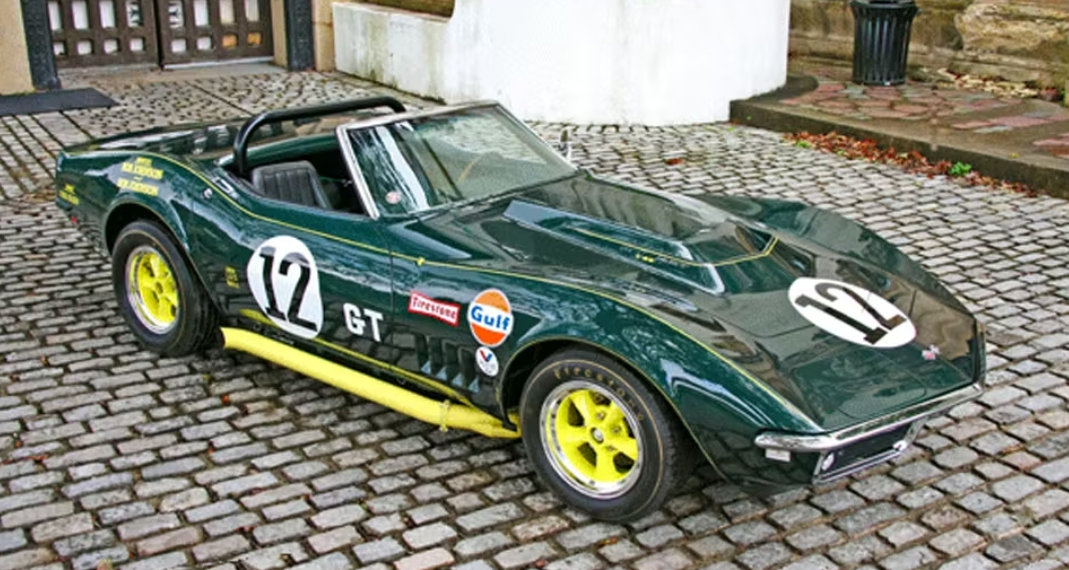
7 — 1968 Corvette Factory L88 Band-Aid Racer #12
The Band-Aid Warrior: Doug Bergen’s Record-Breaking ’68
Doug Bergen knew exactly what he needed in 1968: the most potent Corvette money could buy. Ordering his first of two L88s through Williamson Chevrolet in Marietta, Ohio, Bergen prepared the car with one goal—competition. With insight from GM engineer Gib Hufstader, who was deeply involved with the L88 program, Bergen aimed to debut the car at the International Championship of Makes at Watkins Glen on July 14, 1968. The result was immediate validation.
Racing & Technical Highlights:
- 1968 Factory L88
- Ordered through Williamson Chevrolet, Marietta, Ohio
- 1st in class at Watkins Glen (July 14, 1968)
- Set a new class lap record at Watkins Glen
- Finished 11th overall at Watkins Glen
- 1st overall at Mid-Ohio Sports Car Course (driven by Robert “Columbus Bob” Johnson)
- Original FIA homologation paperwork retained
At Watkins Glen, the L88 claimed first in class, shattered its class lap record, and secured 11th overall. Months later, at Mid-Ohio, Robert “Columbus Bob” Johnson—nicknamed to distinguish him from “Marietta Bob” Johnson—drove the car to an overall victory. The Band-Aid racer’s documentation trail is exhaustive: complete ownership history, factory window sticker, FIA homologation papers, and a vast photographic archive.
Four decades after its glory days, Bergen and Johnson reunited with the car at the Corvettes at Carlisle Racers Reunion. Restored in its Watkins Glen six-hour, first-in-class livery by Kevin Mackay and his Corvette Repair team, the car also earned the NCRS American Heritage Award. From Ohio roots to national recognition, this L88 stands as a testament to preparation meeting opportunity.
The #12 In The Flesh
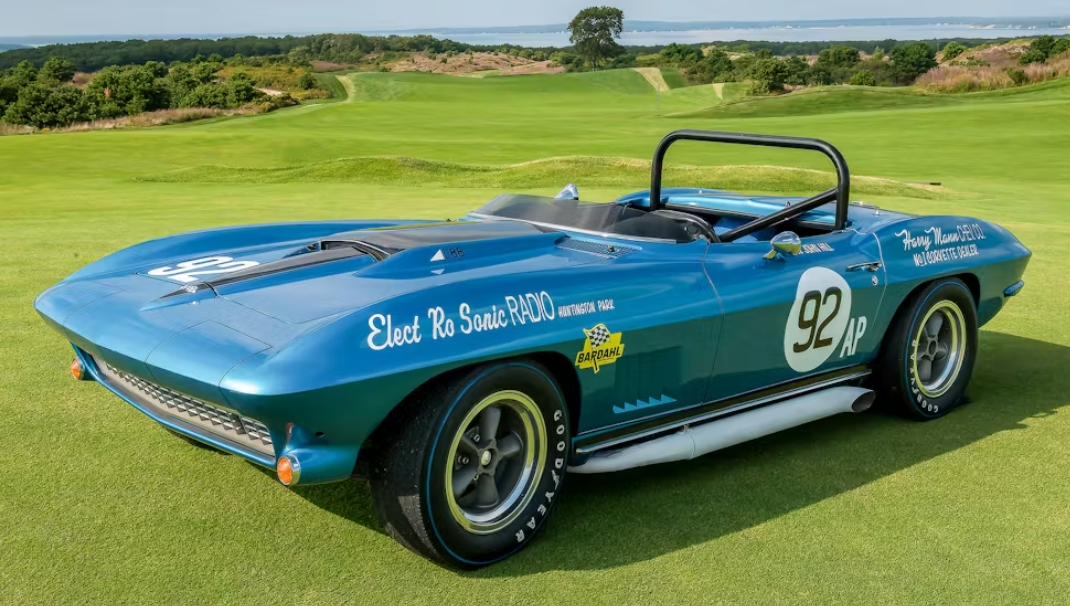
8 — 1967 Corvette Factory L88 Dana & Harry Mann Racer #92
West Coast Thunder: The Marina Blue #92 Convertible
In 1967, Dana Chevrolet of South Gate, California, launched its performance division with serious intent. To lead the charge, the dealership recruited renowned drivers Dick Guldstrand and Dale Armstrong and ordered a Marina Blue L88 convertible with a black interior straight from the factory. This was no ordinary showroom car—it arrived race-ready and built to dominate Southern California circuits.
Rarity & Technical Highlights:
- 1967 Factory L88 Convertible
- Marina Blue exterior with black interior
- M22 “Rock Crusher” four-speed transmission
- 3.55-ratio Positraction limited-slip rear differential
- RPO J56 heavy-duty brakes
- RPO F41 special suspension
- One of only 20 L88s built in 1967 (16 known to exist today)
Factory-equipped with racing headers and American Torq Thrust wheels, the Corvette competed as #92 at Las Vegas, Santa Barbara, and Riverside. Its configuration included transistor ignition and the deliberate absence of radio, heater, and convertible top—shedding comfort in favor of competition focus. Today, it remains the only documented Marina Blue L88 convertible.
With complete Dana Chevrolet paperwork and continuous ownership history, this rare drop-top now resides with Kevin Mackay of Corvette Repair. The shop played a key role in refinishing the car in its 1968 Harry Mann livery. Honored with the NCRS American Heritage Award, this L88 represents West Coast racing heritage distilled into one of just 20 examples built for 1967, of which only 16 are accounted for today.
The #92 In The Flesh
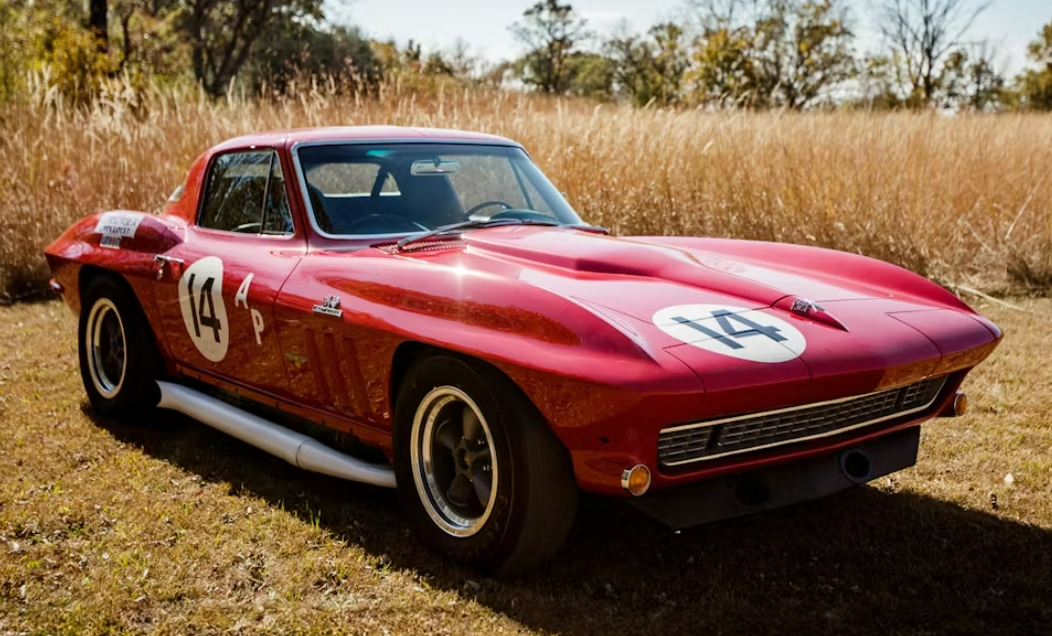
9 — 1966 Corvette Development L88 Racer #14
The “Four Kings” Prototype: A Development L88 With Sebring Roots
Before the L88 became a Regular Production Option, Chevrolet quietly refined its formula through a handful of factory-built development cars. This 1966 Corvette coupe was one of four such machines—nicknamed the “Four Kings” — as recalled by Dick Guldstrand in 2010 to the current owner, Scott Freese. Built specifically for Pedro Rodriguez to campaign at the 1966 12 Hours of Sebring, this coupe represents ground zero for the L88’s competition DNA.
Racing & Technical Highlights:
- 1966 Corvette coupe, one of four L88 development cars (“Four Kings”)
- Built for Pedro Rodriguez for the 1966 12 Hours of Sebring
- 427ci/425hp engine configuration
- G81 Positraction limited-slip differential (3.70 ratio)
- M22 heavy-duty four-speed transmission
- N03 36-gallon fuel tank
- Complete SCCA/FIA race logbooks documenting continuous competition history
Factory-equipped with an array of purposeful hardware, the car featured shoulder belts (RPO A85) as a field-test installation, heater and defroster delete (C48), radio delete, F41 heavy-duty suspension, J50 power brakes, J56 special heavy-duty brakes, K66 transistor ignition, and an N36 telescopic steering column. After Sebring, Rodriguez entrusted Don Yenko with its sale, leading to racer Harold Whims—Yenko’s longtime friend—becoming the next steward.
Unlike many former race cars that eventually transitioned to street use, this Corvette has lived exclusively on the circuit, with documentation and race logbooks confirming its uninterrupted competition life. In 2020, Scott Freese’s ownership was honored at the Amelia Island Concours d’Elegance with the Grand Sport Trophy, presented by GM President Mark Reuss. Among the ten L88s gathered, this prototype stands apart—not just as a racer, but as one of the cars that helped shape the legend itself.
The #14 In The Flesh
10 — 1965 Heavy-Duty Development 427 Mark IV Engine “See-Thru” Corvette
Genesis Of The 427: The Mark IV “See-Thru” Development Car
Before the L88 badge ever reached order sheets, the seeds of its dominance were planted in secrecy. In 1965, Delmo Johnson of Johnson Chevrolet in Dallas received a direct call from Zora Arkus-Duntov with an extraordinary proposition: a heavy-duty 427-cubic-inch V-8 for the upcoming Sebring 12-hour race. The engine began life as a 396 V-8 but was expanded to 427 cubic inches, fitted with a large four-barrel carburetor and experimental side-mounted open headers—serious hardware for serious intent.
Racing & Technical Highlights:
- 1965 Heavy-Duty Development 427 Mark IV engine
- Enlarged from 396 to 427 cubic inches
- Large four-barrel carburetor
- Prototype side-mounted open headers
- Achieved speeds exceeding 180 mph on Sebring’s back straight
- The earliest known Mark IV 427 paired with a Muncie M22 in a test setting
In true backdoor-engineering fashion, Duntov discreetly moved the engine from Chevrolet’s Experimental Department in Warren, Michigan, routing it through the St. Louis Corvette plant before it arrived in a 1965 convertible at Johnson Chevrolet in March 1965. The plan was precise: extract the development engine from the roadster and install it into Corvette Grand Sport #3. With just days remaining before Sebring, testing was minimal—but the results were emphatic, with the Corvette charging past 180 mph on the back straight. This marked the earliest documented pairing of a Mark IV 427 with the first Muncie M22 transmission in a development environment.
To honor this foundational chapter, Corvette Repair later engineered a fully operational “see-through” Corvette, designed to spotlight the groundbreaking 427 Mark IV engine and educate enthusiasts on its inner mechanics. As the tenth car in Amelia’s L88 showcase, this development machine reminds us that every legend has an origin story—and sometimes, it begins behind closed doors.
The ’65 In The Flesh
Our Final Thoughts
From clandestine development engines and prototype “Four Kings” coupes to record-setting endurance warriors and concours-restored time capsules, the L88 story has always lived at the intersection of engineering audacity and racing ambition. What makes this Amelia gathering so compelling through the CorvSport lens isn’t just the rarity—it’s the full-circle narrative. These cars were born from secrecy, refined in battle, and, in many cases, preserved with obsessive care. Now, they stand together not as scattered legends, but as a unified statement of what America’s Sports Car was capable of when comfort was sacrificed for outright performance.
The Amelia Concours has long celebrated the world’s most important automobiles, but assembling ten L88 Corvettes on one lawn reshapes the conversation. This isn’t merely a display of valuable machines—it’s a summit of mechanical rebellion, of 427 cubic inches built to defy limitations, of owners and racers who refused to think small. For collectors, historians, and enthusiasts alike, this moment feels larger than a concours class. It’s a living archive of Chevrolet’s most uncompromising big-block experiment—gathered in one place, under one Florida sky, reminding us that some legends don’t fade. They get louder with time.
The team at CorvSport truly appreciates having you as a reader. Make 2026 our best year yet and join the CorvSport movement!
- Engage with CorvSport’s 166,000 Facebook followers and be the first to see our daily content.
- Experience how obsessed we are and view our top 25 monthly features by visiting our digital magazine, CORVETTE OBSESSED.
- Enjoy an ad-free experience, get exclusive content, and support CorvSport for only $2.92/month!
*Additional Source For This Feature: Hagerty