

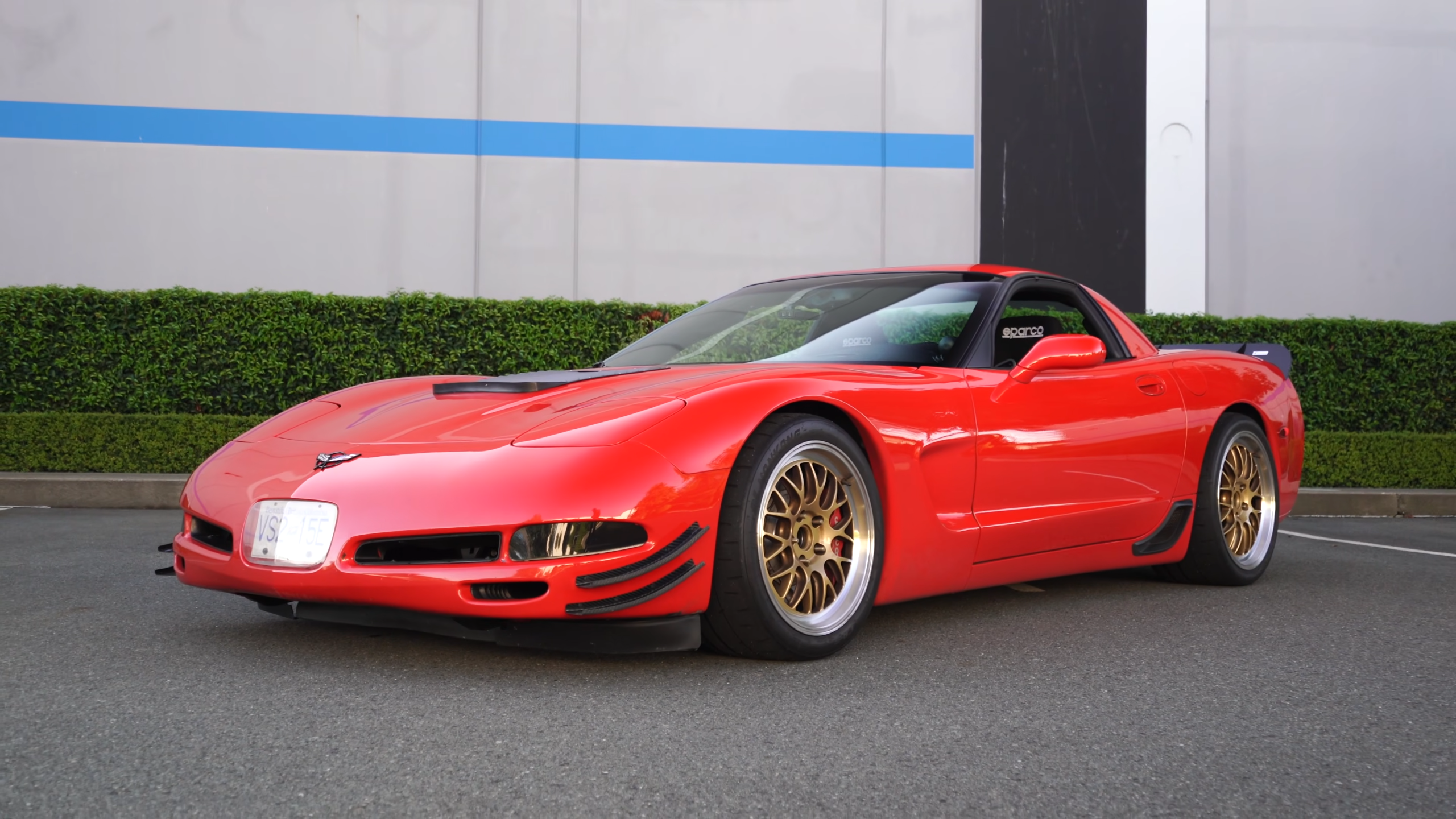
The Chevrolet Corvette C5 Z06 has emerged as a compelling option for enthusiasts seeking a dedicated track car without the acquisition costs associated with newer, more powerful performance models. As values of the C6 ZR1 and C7 ZR1 reflect their growing collector appeal, a well-developed C5 offers a different proposition: a front-engine, rear-wheel-drive sports car that rewards mechanical understanding and driver skill.
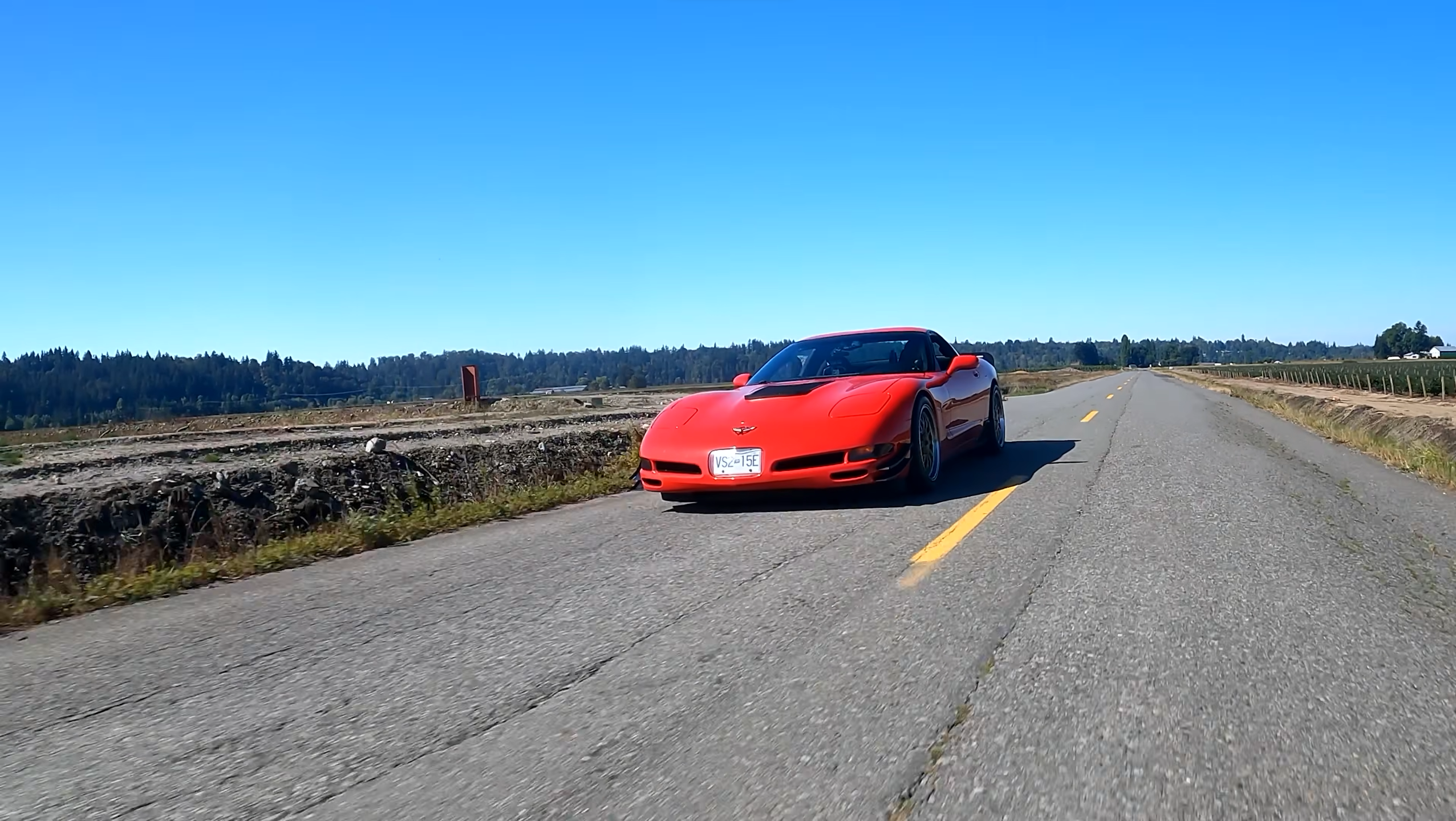
In a follow-up feature, Roads Untraveled revisits Graham’s heavily modified C5 Corvette to examine how targeted engineering improvements have transformed the car through repeated track use. Rather than preserving a low-mileage example as a collector piece, the owner has focused on extracting its performance potential and addressing weaknesses revealed during demanding circuit sessions.
Upgraded V8 Delivers Stronger Performance
The most significant change is under the hood. Instead of the factory LS6 5.7-liter V8, which produced approximately 405 horsepower at the crankshaft in the C5 Z06, the Corvette now uses a modified 6.2-liter GM crate engine delivering 476 horsepower at the wheels and approximately 450 lb-ft of torque.
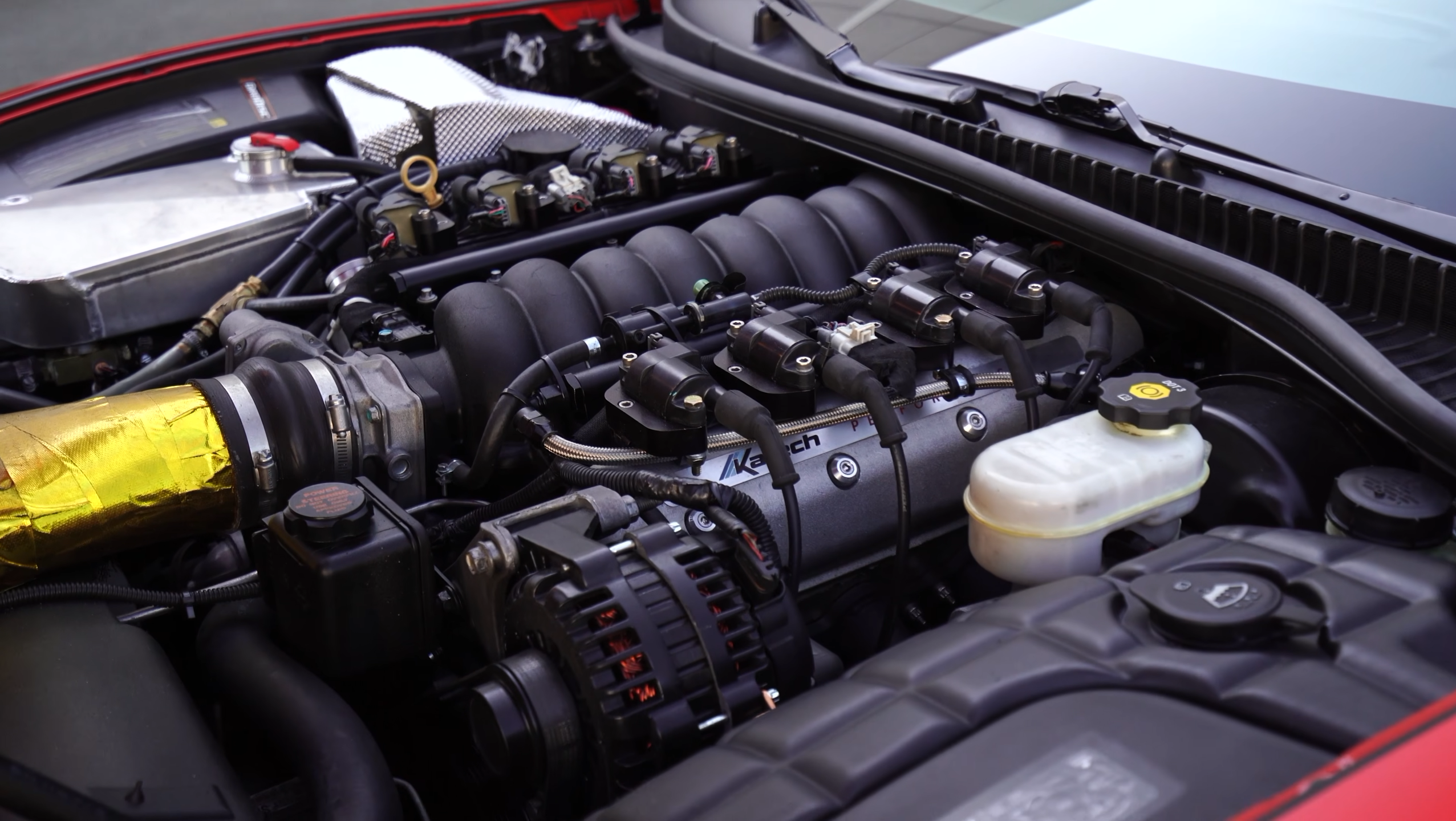
The increased displacement provides substantial low- and mid-range pulling power while preserving the high-rpm character needed for spirited driving. A lightweight flywheel and revised clutch sharpen throttle response and make rev-matching more immediate, although the reduced rotational inertia introduces a modest compromise in low-speed drivability.
A racing gearbox strengthens the drivetrain for repeated track use, while upgraded valvetrain components from K-Tech support the engine’s more demanding operating requirements. The result is a powertrain that emphasizes usable torque, responsive acceleration, and greater driver involvement.
Suspension and Chassis Refinements
Chassis development has been equally extensive. QA1 coilovers, Delrin suspension bushings, a bump-steer correction kit, and adjustable camber hardware work together to improve body control, steering precision, and tire contact.
A major part of the transformation involved professional suspension calibration. Overdrive in Richmond handled adjustments to ride height, alignment, compression, and rebound, helping establish a more coherent relationship between the suspension components and the car’s intended track use.
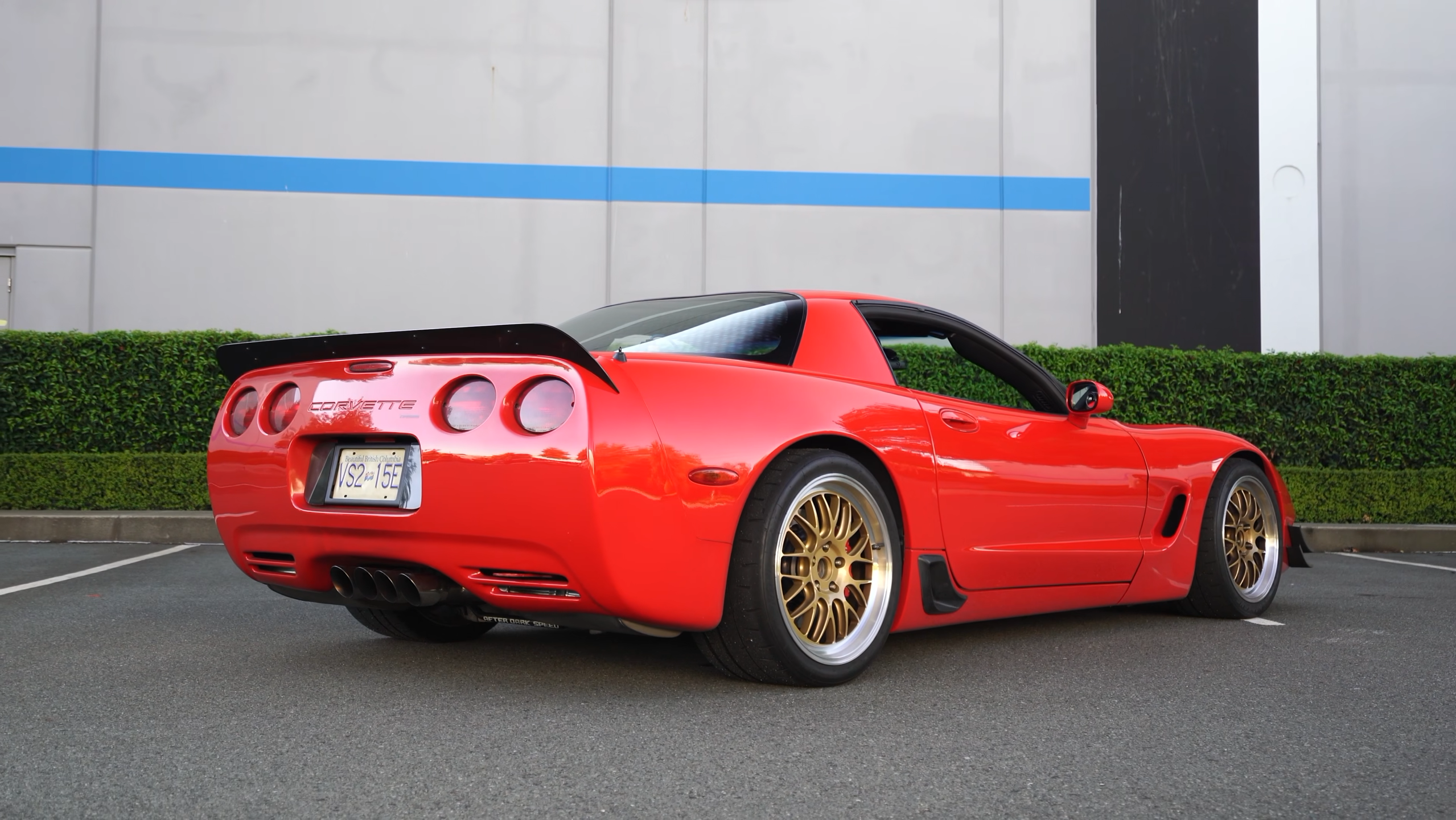
The resulting setup gives the Corvette exceptionally direct steering and rapid directional responses. However, the aggressive alignment can make the car more demanding on uneven public roads, particularly when suspension loads change over bumps or the tires encounter inconsistent pavement.
Upgraded Brakes and Track-Focused Hardware
Braking performance has been substantially improved through six-piston front and four-piston rear calipers. The upgraded system provides stronger stopping capability and a progressive pedal response that allows the driver to modulate braking force deeper into a corner.
Cooling-system revisions and aerodynamic modifications further support the car’s track-oriented mission. These upgrades address the demands of repeated high-load driving, where temperature management, braking consistency, and mechanical durability matter more than isolated performance figures.
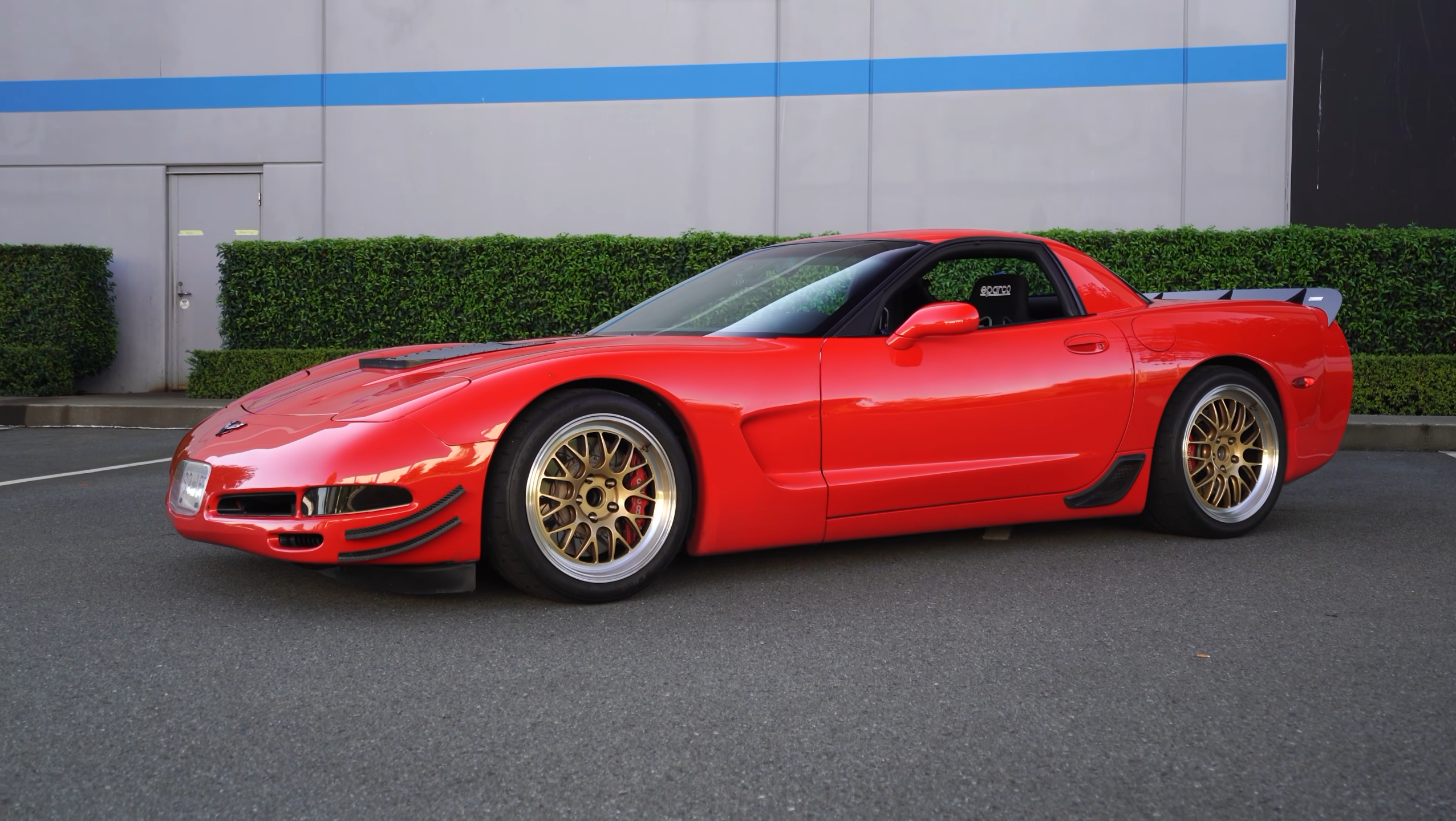
The build also illustrates the importance of resolving weaknesses exposed by actual track use. Graham reports multiple clutch configurations, coilover changes, and redesigned cooling systems, demonstrating how developing a reliable performance car often requires experimentation beyond simply installing higher-specification components.
Analog Driving Dynamics and Road Manners
On the road, the C5’s defining characteristic is its mechanical transparency. Steering inputs produce immediate responses, while subtle changes in tire grip and weight transfer are communicated through the steering wheel and seat. The chassis encourages continuous adjustments rather than allowing the driver to settle into a corner and rely on electronic systems to manage the car’s behavior.
Its predictable rear-wheel-drive dynamics reward smooth inputs, accurate braking, and disciplined throttle control. Nevertheless, the combination of aggressive suspension geometry, increased grip, and limited electronic intervention demands concentration, especially on uneven roads where unexpected surface changes can unsettle the chassis.
Although the Corvette remains usable at lower speeds, its noise, vibrations, firm suspension behavior, and track-focused setup make it less suitable for long-distance touring than a more refined modern sports car.
A Case for the Modern Classic Corvette
Graham’s modified C5 Z06 demonstrates that the platform’s performance potential extends well beyond its original factory specification. Its appeal lies not in matching every modern supercar technology or specification, but in delivering the feedback, mechanical engagement, and track capability that make every lap a lesson in driving technique.
For enthusiasts prioritizing seat time over showroom condition, a higher-mileage C5 can provide a compelling foundation for a dedicated performance build. The key is not simply adding power or expensive hardware, but combining compatible components with professional setup, reliable cooling, and a clear understanding of the car’s intended use.
Source: Roads Untraveled
