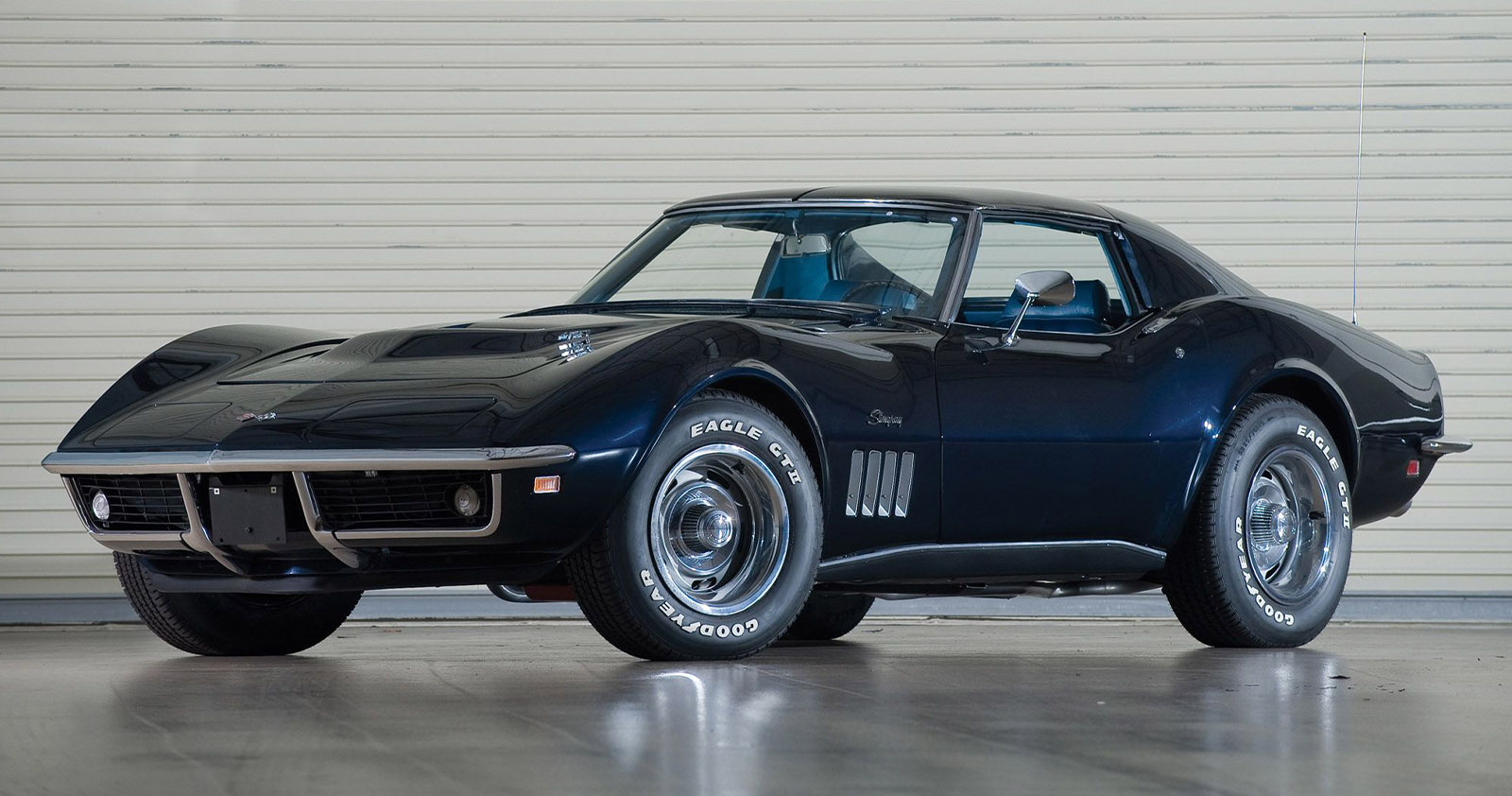
Introduced in 1963, the Corvette Sting Ray marked a radical shift in both design and engineering. Its futuristic styling—available in coupe and convertible forms—was the result of the Bill Mitchell-led GM design studio, with contributions from Peter Brock and Larry Shinoda. Inspired by Mitchell’s privately funded Stingray racer that dominated the 1960 SCCA championship, the 1963–67 Sting Ray remains one of the most celebrated American sports cars ever built.
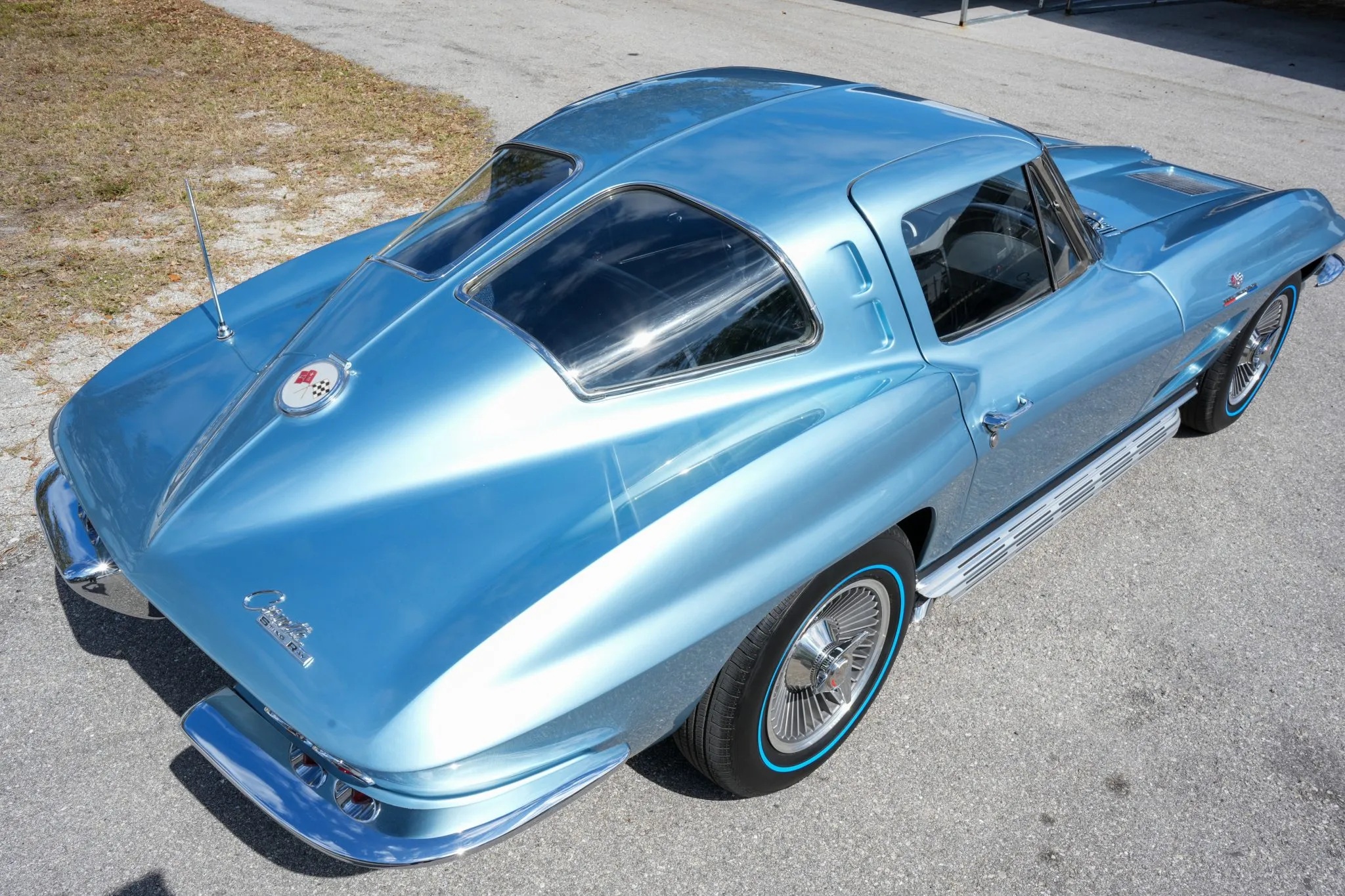
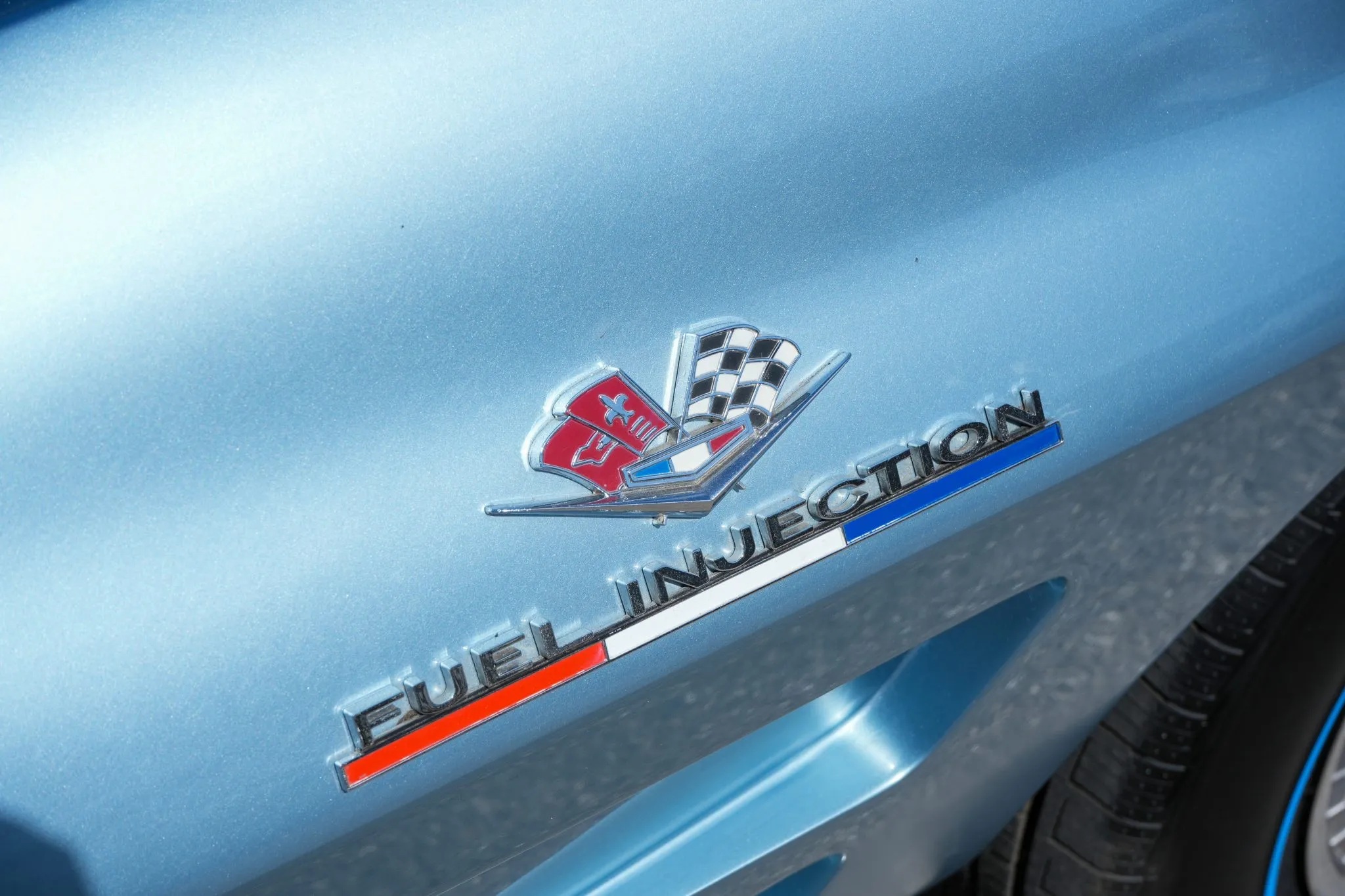
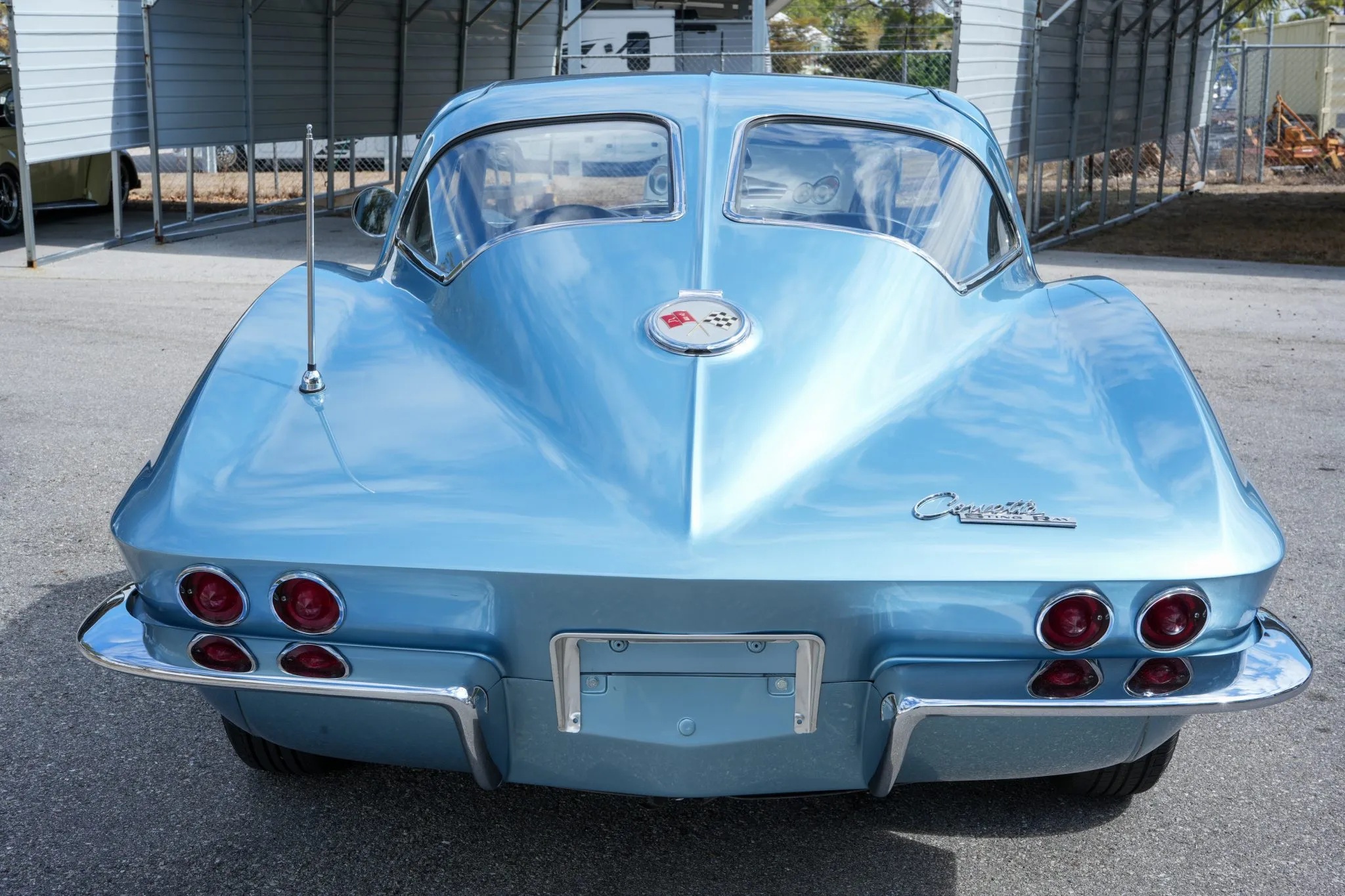
It debuted a fully independent rear suspension, a milestone achievement led by Chief Engineer Zora Arkus-Duntov, and offered a wide range of performance options. Production for 1963 totaled 10,594 coupes featuring the now-iconic split rear window—a striking yet controversial element that was discontinued after one year, making it highly collectible today. Of the 2,610 fuel-injected Corvettes built that year, roughly 1,300 were split-window coupes, including this fantastic example currently listed on Bring a Trailer.
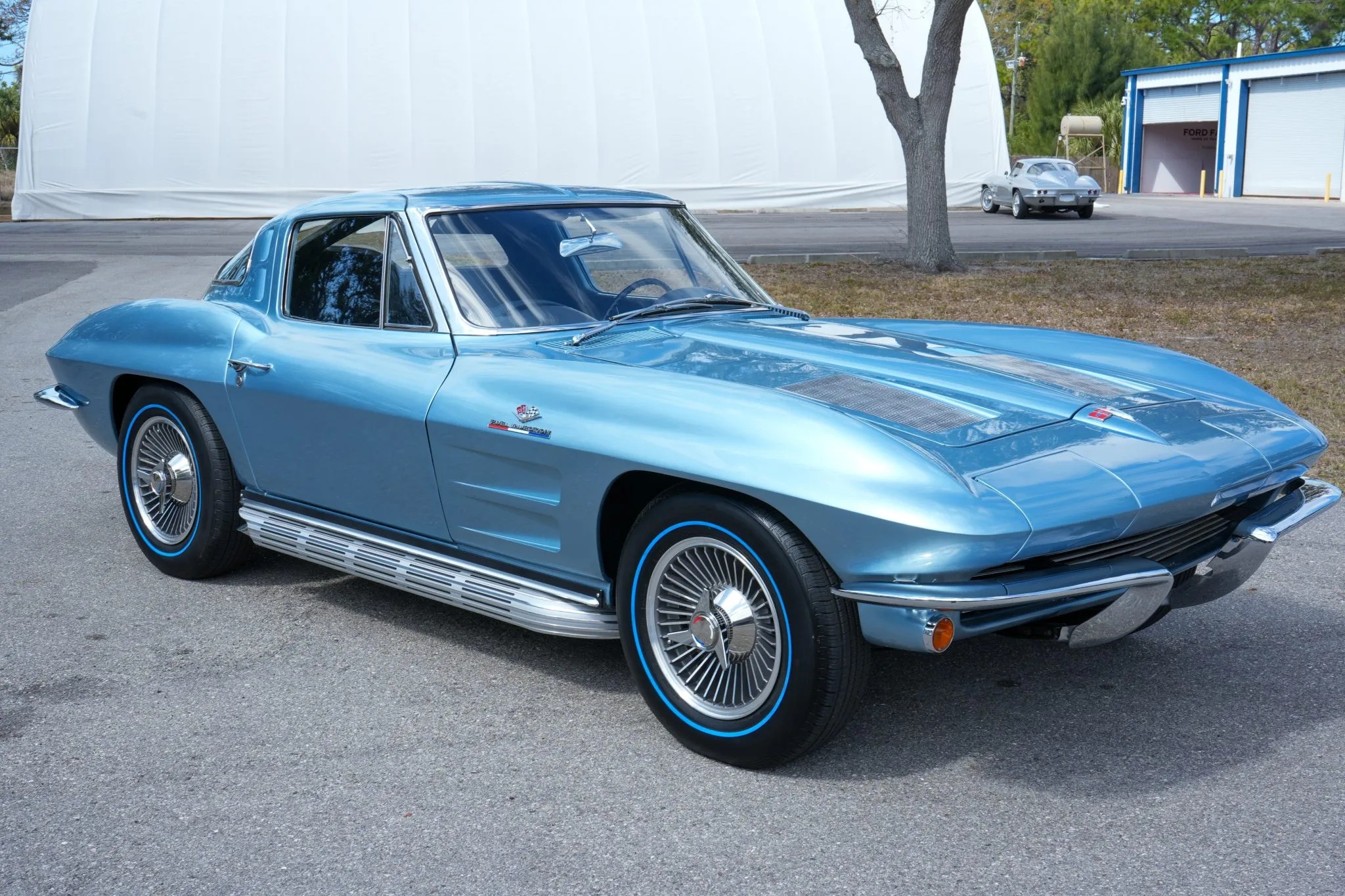
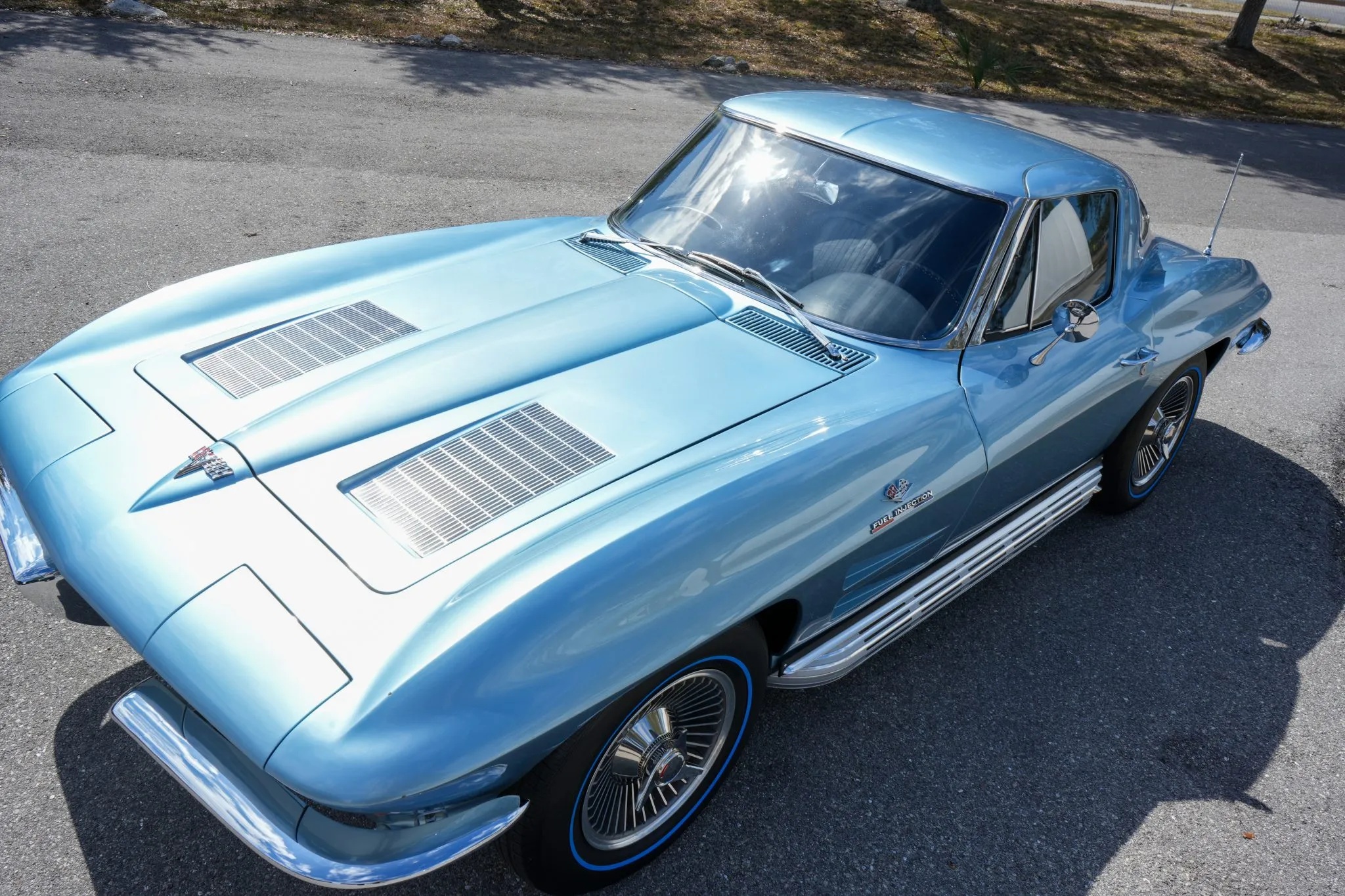
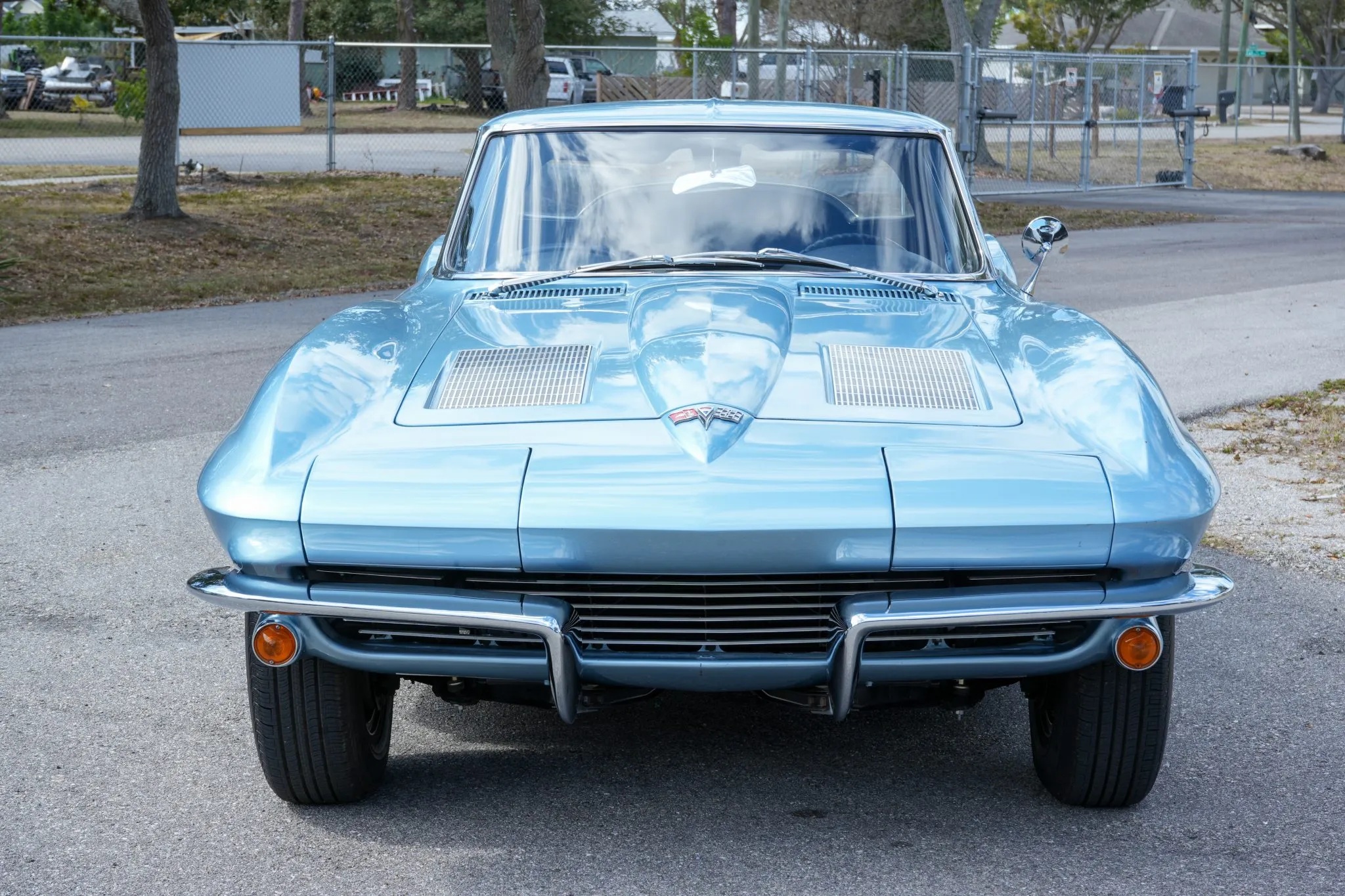
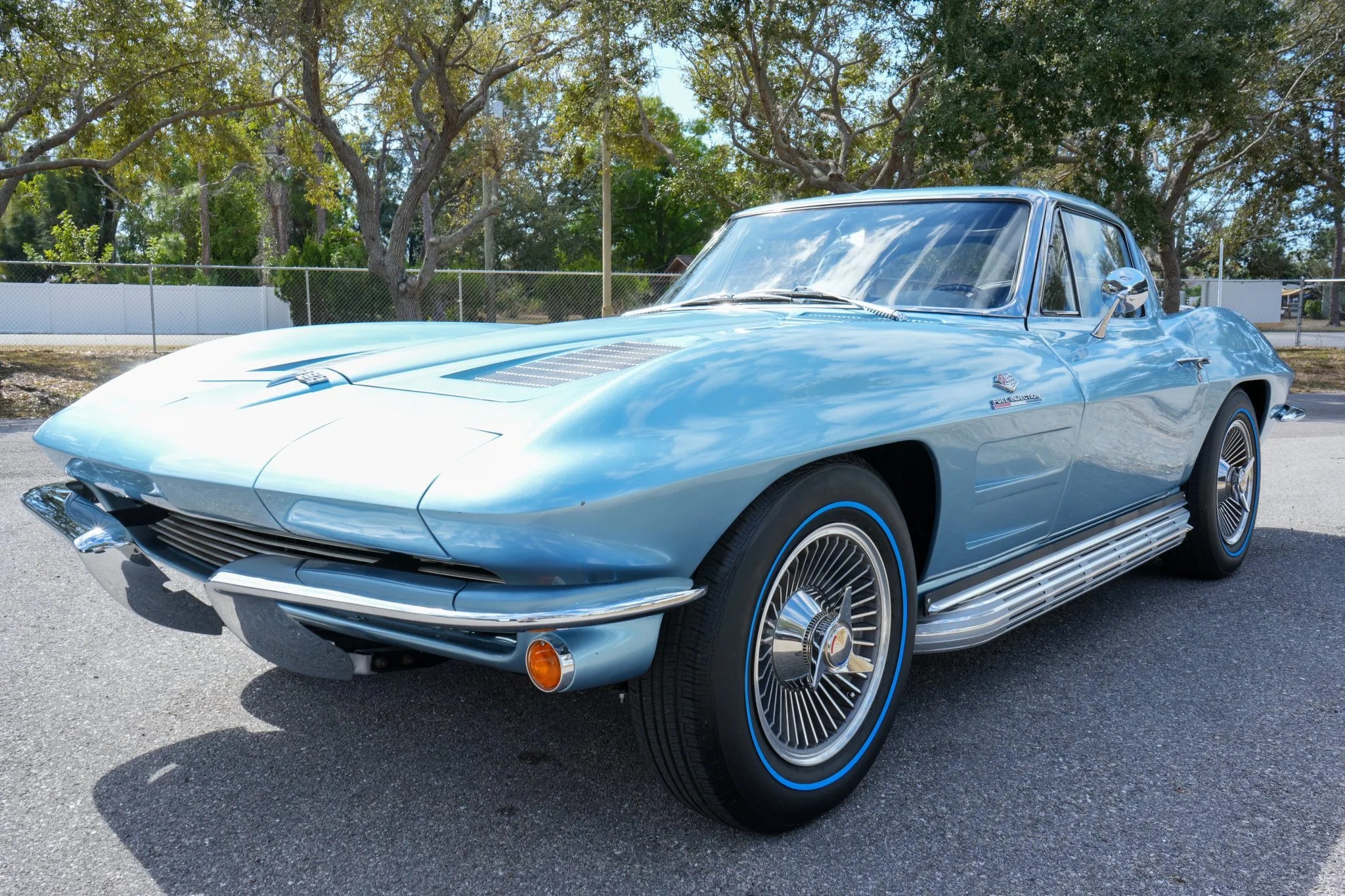
This 1963 Chevrolet Corvette split-window coupe was originally delivered in Silver Blue, the fiberglass body has since been refinished, with chrome trim and glass components replaced during the restoration. Period-correct details remain, including concealed flip-up headlights, fender vents, and quad taillamps, while side-exit exhaust pipes have been added for a more aggressive appearance and sound.
The car rides on reproduction 15-inch turbine-style wheels fitted with distinctive three-eared knock-off spinners and 205/75 blue-line tires. As a C2-generation Corvette, it features Chevrolet’s early fully independent suspension setup, with unequal-length control arms up front and a rear three-link arrangement with a transverse leaf spring. The suspension is reported to have been refreshed during the refurbishment, while braking is handled by four-wheel drum brakes.
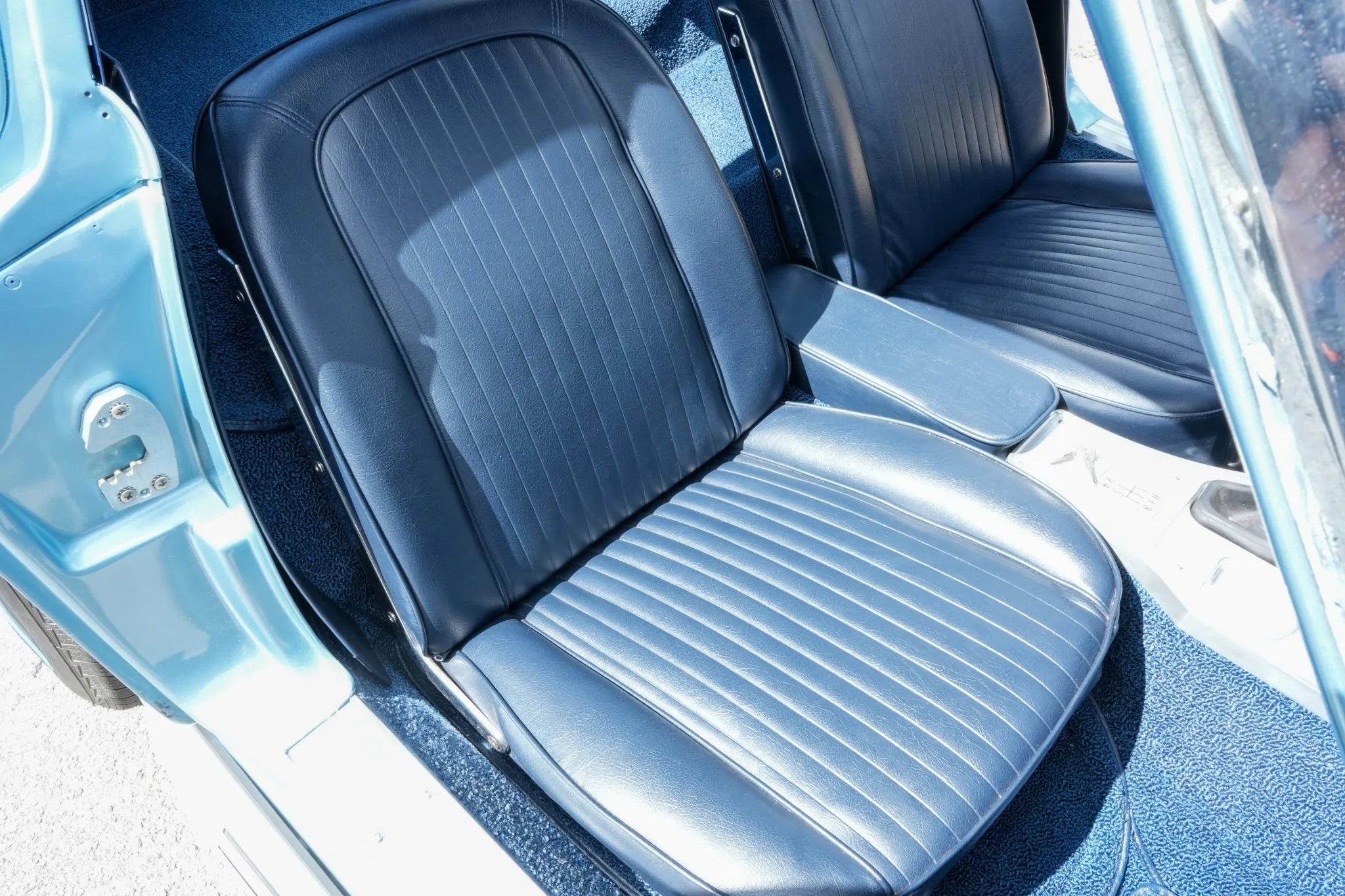
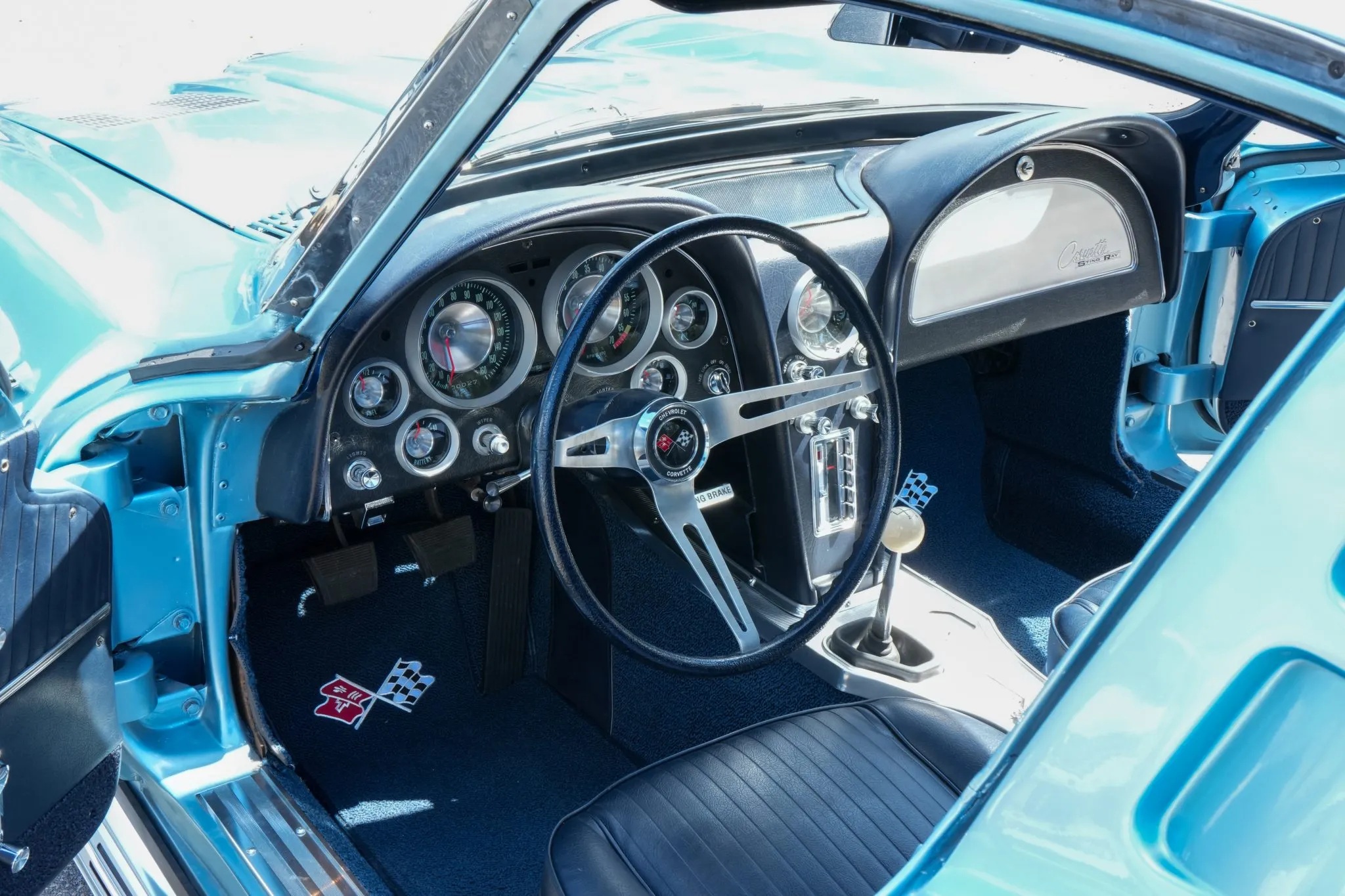
Inside, the cabin is trimmed with reupholstered dark blue leather bucket seats, complemented by matching door panels and carpeting. Equipment includes a Hurst shifter, AM/FM radio, heater, analog clock, and lap belts, maintaining a period-correct driver-focused layout.
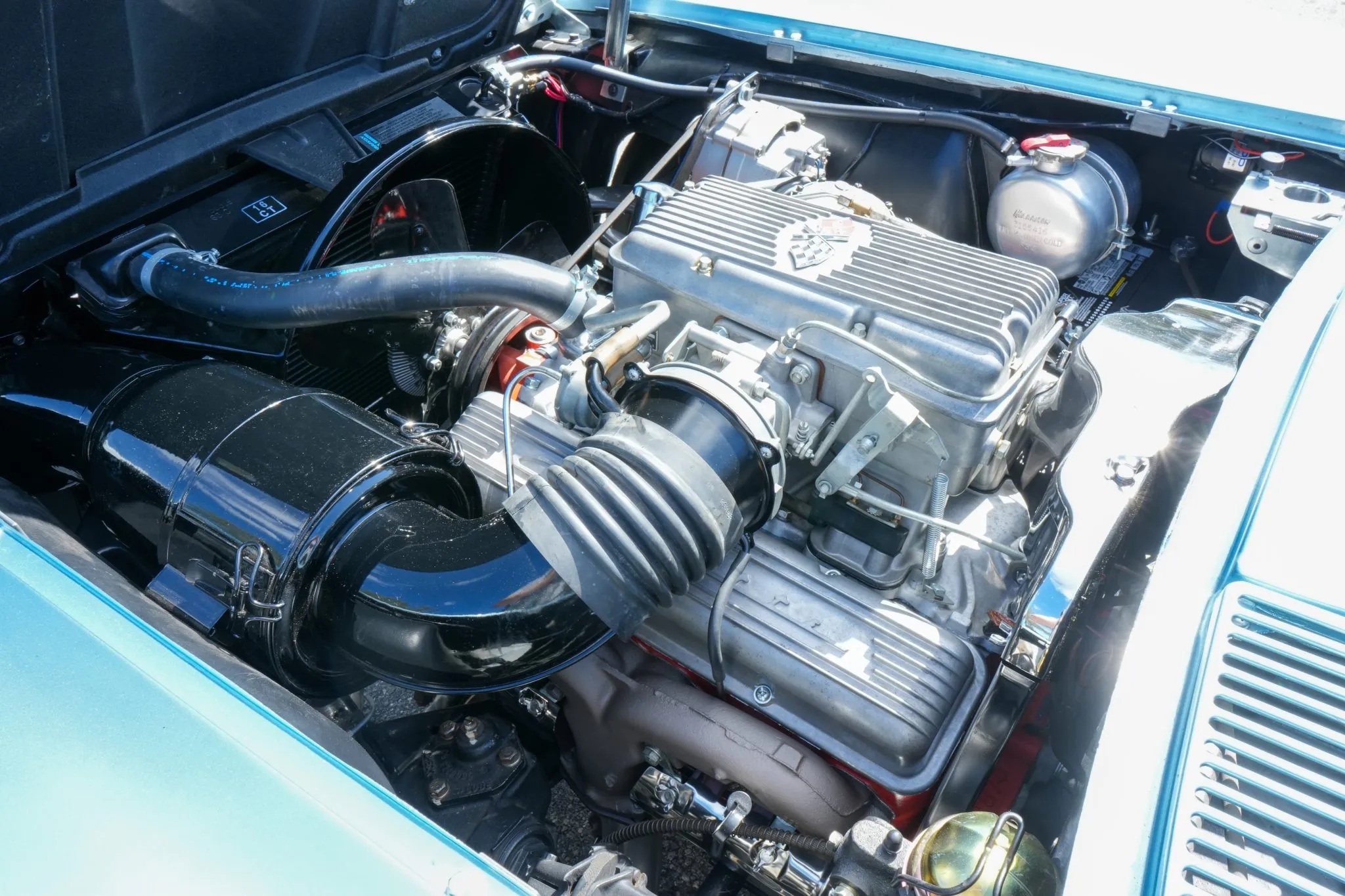
Power comes from the high-performance 327ci L84 V8, equipped with Rochester mechanical fuel injection and a high-lift camshaft, producing a factory-rated 360 horsepower. Drive is sent to the rear wheels through the four-speed manual transmission, preserving the classic analog driving experience characteristic of early high-performance Corvettes.
Source: Bring a Trailer