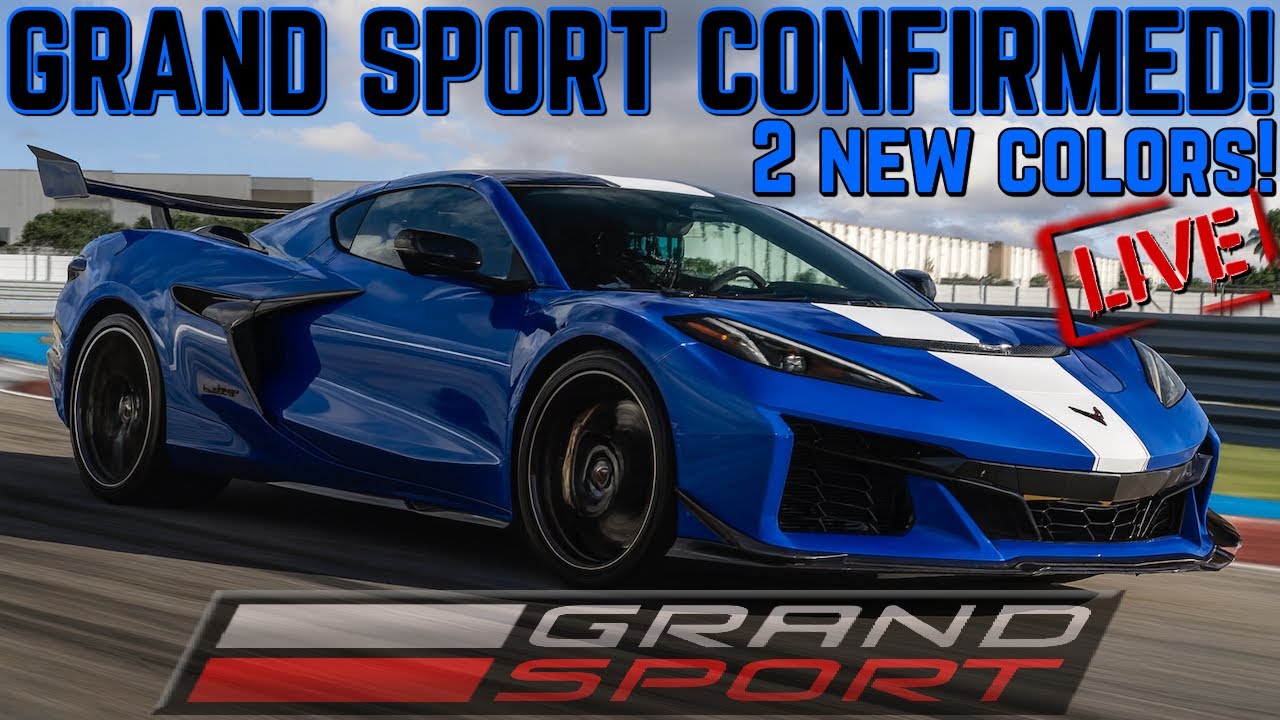
Today’s Corvette conversation has a different kind of electricity in the air. Not the familiar crackle that follows a new trim announcement or horsepower headline, but the sustained hum of something bigger taking shape in real time. The 2027 Corvette Grand Sport has become impossible to ignore, not because Chevrolet has made it official, but because the evidence is stacking up in plain sight. Social feeds are flooded, comment sections are buzzing, and for the first time in the C8 era, the Grand Sport name feels not just plausible—but inevitable. Here’s what we know as of February 2026, compiled by CorvSport in one convenient place, including the Grand Sport origins that make the moniker so special.
From Doubt to Disbelief to “Maybe They’re Right”
The road to the 2027 Grand Sport didn’t start with excitement. It started with skepticism. When the eighth-generation Corvette arrived, many believed the traditional Grand Sport formula had been permanently absorbed by the widebody E-Ray. On paper, it made sense. The slot appeared filled, the lineup balanced, and the Grand Sport name seemingly redundant. For a long stretch, that assumption held. Rumors surfaced anyway—some grounded, others wildly speculative—but most were waved off as wishful thinking. One fringe Corvette pundit went further, insisting that his inside GM source confirmed a Grand Sport was coming. The response from parts of the online Corvette community was swift and unforgiving. He was dismissed, mocked, and quietly pushed to the margins. Fast forward to today, and that same voice is enjoying a very public reversal of fortune.
The Leaks That Changed The Conversation
What shifted the narrative wasn’t a press release—it was paperwork. As GM leaks began circulating, patterns emerged that didn’t align with existing C8 variants. New components hinted at another widebody configuration, distinct enough to reignite serious discussion. Suddenly, the idea of a C8 Grand Sport wasn’t fringe—it was feasible. Online forums, insider circles, and private group chats lit up. If you thought the Corvette brand was already operating at full throttle, the digital undercurrent told a different story entirely. The speculation machine went into overdrive, and the underbelly of Corvette chatter became louder, sharper, and far more confident.
One of the Earlier Viral Sightings Under Camo
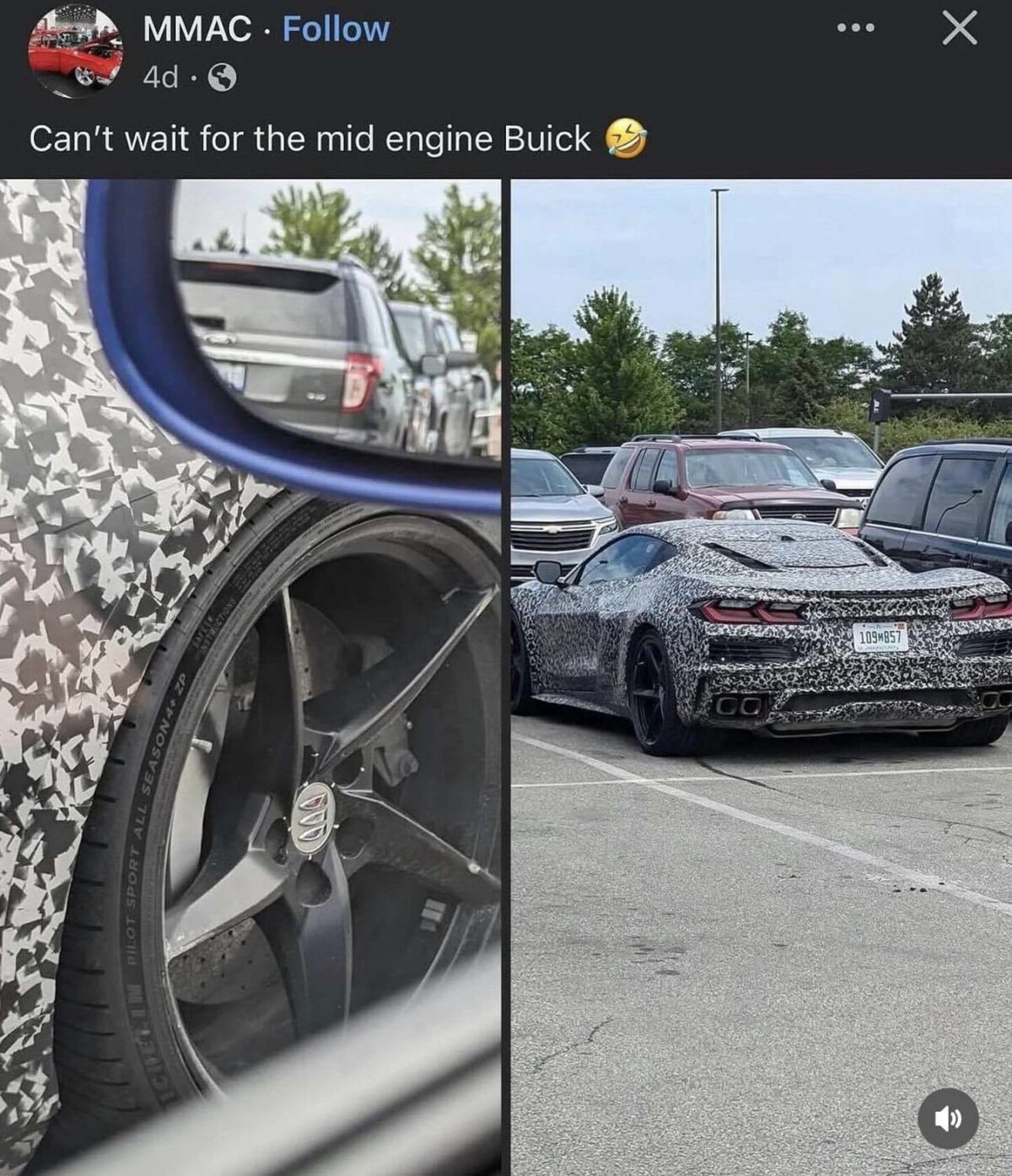
A Sighting That Lit The Match
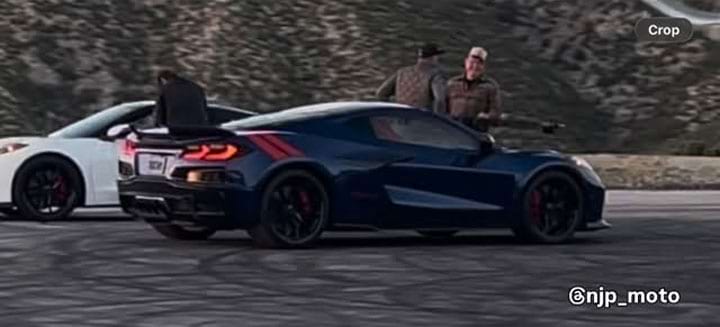
Then came the moment that pushed everything over the edge. A newly circulating spy video, filmed on California’s legendary Angeles Crest Highway, appears to capture a defining chapter in Corvette development. The footage shows a professional convoy escorting two C8 Corvettes—one finished in white, the other wearing a deep, dramatic blue. Camera vehicles and support trucks surround them, the unmistakable footprint of an official photo or video shoot. This wasn’t casual testing. This was staged, deliberate, and intentional. More importantly, the blue Corvette displays the precise visual cues long associated with the rumored 2027 Grand Sport, sending the internet into a frenzy almost instantly.
New Colors, New Signals, And What Comes Next
Adding fuel to the fire are two new 2027 Corvette colors that have leaked through GM’s internal systems. Color leaks have a way of telling stories long before official announcements do, and in this case, they feel like a breadcrumb trail leading directly to a Grand Sport revival. Taken together—the long-ridiculed rumors, the parts catalog clues, the unmistakable convoy sighting, and now the color revelations—the picture is becoming clearer by the day. This is where the speculation phase ends and the historical context begins. To understand why this moment matters, we have to step back and revisit what the Grand Sport has always represented—and why its return in the C8 era could be one of the most important Corvette chapters yet.
1 — Grand Sport: Built In Defiance, Remembered As Legend
The Grand Sport story begins with one man refusing to accept limitations. Zora Arkus-Duntov arrived at Chevrolet in 1953 with a singular belief: Corvette could not survive without real performance credibility. His relentless push for V8 power, racing legitimacy, and engineering rigor reshaped the car’s destiny. Early internal memos to Ed Cole read less like suggestions and more like ultimatums—without speed and innovation, Corvette would fade into irrelevance. The 1955 V8, followed by fuel injection and the now-mythic “Duntov Cam,” weren’t endpoints. They were stepping stones toward something far more extreme.
Racing Ambition Meets a Corporate Wall
As Corvette’s competition efforts escalated through experimental programs like the SR-1, SR-2, and the magnesium-bodied Corvette Super Sport, momentum was unmistakably building. Then came the industry-altering shock of the 1955 Le Mans disaster. The resulting AMA Racing Ban slammed the door on factory-backed competition, forbidding manufacturers from racing, promoting performance, or supporting motorsports in any official capacity. For Chevrolet, it should have meant retreat. For Duntov, it simply meant the mission would continue quietly, creatively, and without permission.
A Lightweight Weapon Is Secretly Forged
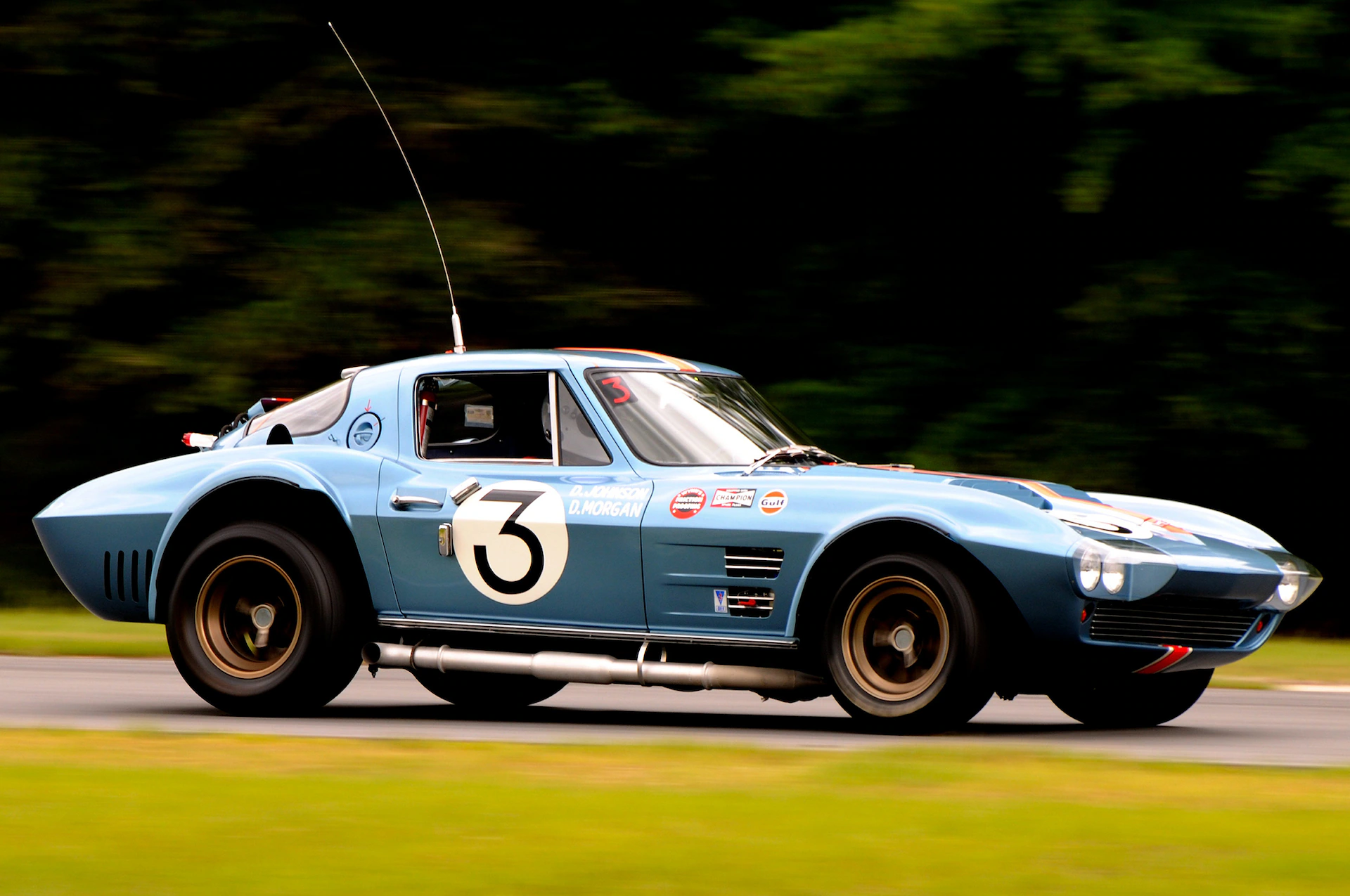
The 1963 arrival of the second-generation Corvette finally gave Duntov the canvas he needed. While the Z06 already stood as a serious machine with its 360-horsepower 327ci V8, heavy-duty suspension, and oversized fuel tank, it still wasn’t the answer. Ferrari loomed large, and Carroll Shelby’s Cobra demanded respect. The solution was radical weight loss paired with escalating power. Developed in near secrecy, the Grand Sport program introduced a bespoke lightweight chassis, razor-thin fiberglass body panels, and extensive aluminum construction. The payoff was staggering—nearly 1,000 pounds shed compared to a Z06.
Built To Win, Remembered Forever
Powering the Grand Sport was a purpose-built 377 cubic-inch V8 with aluminum heads, engineered to deliver 550 horsepower at 6,400 rpm. The strategy was clear: build 150 examples, satisfy homologation rules, and take the fight to Europe, starting at Le Mans. That plan unraveled quickly. With just five cars completed and a sixth chassis in progress, GM leadership terminated the program, enforcing the AMA ban with finality.
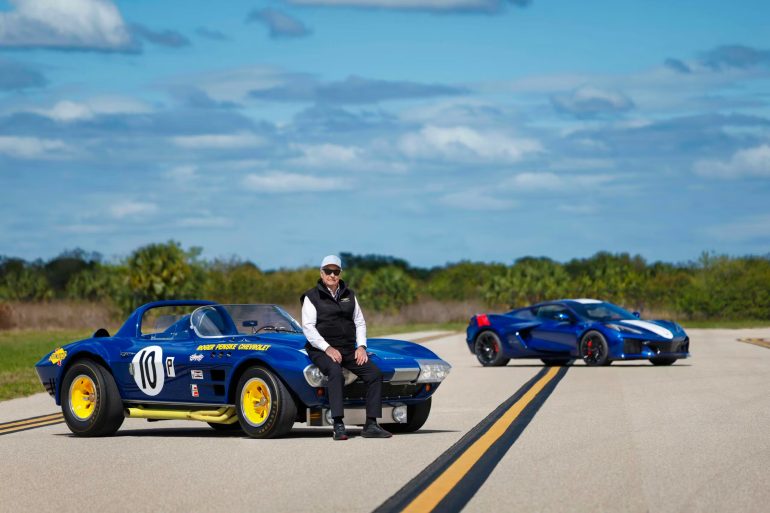
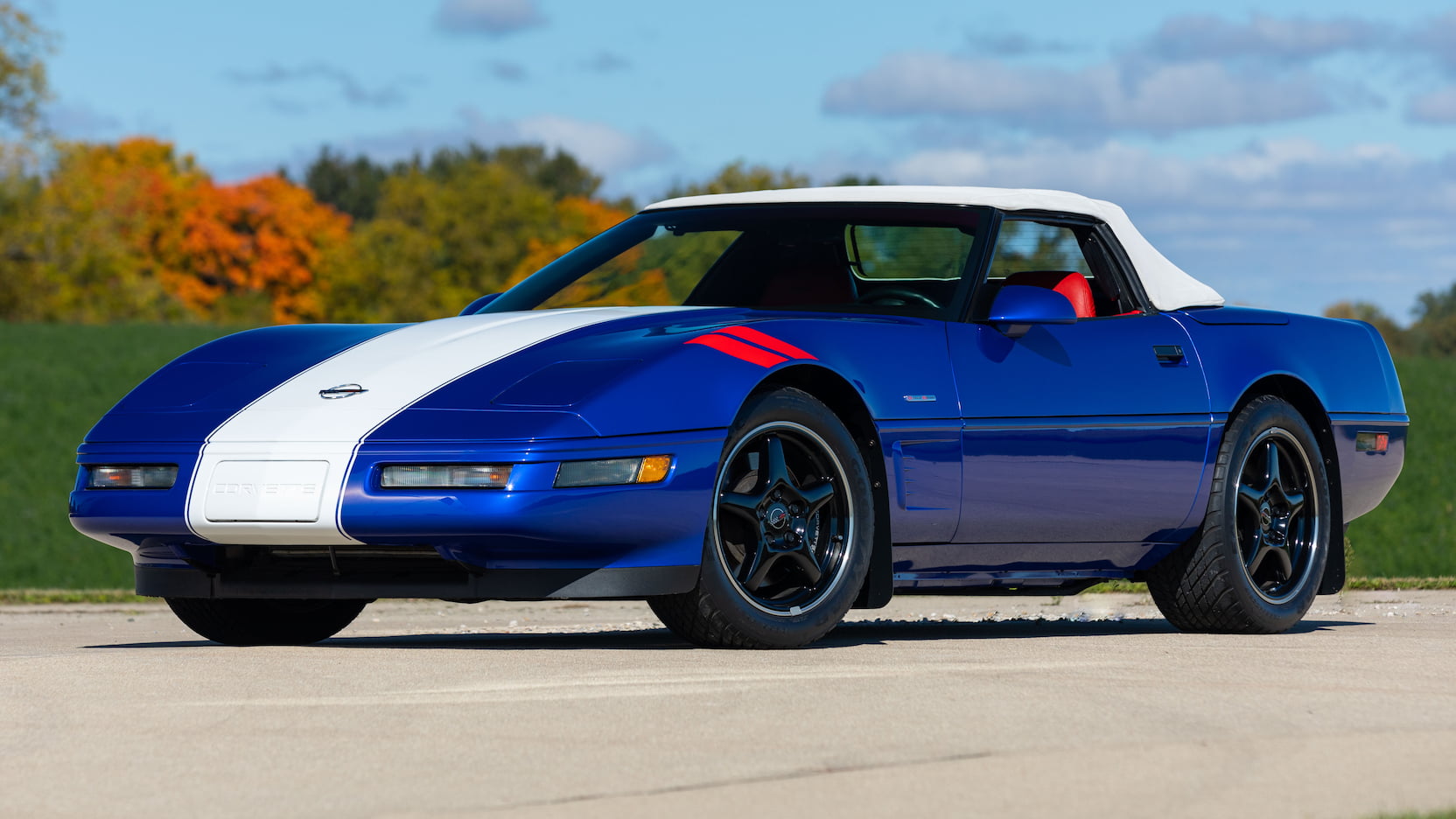
Officially, the Grand Sport was over. Unofficially, its legend was just beginning. Duntov discreetly placed the completed cars with elite drivers, including Roger Penske, A.J. Foyt, Jim Hall, and Dick Thompson. Even without their original engines, the cars proved their worth, scoring victories at Watkins Glen and Nassau Speed Week. The myth solidified: the greatest Corvette that was never supposed to exist. That spirit resurfaced decades later with the 1996 Z16, skipped the C5, returned for the C6 and C7, and after six years of C8 production, the signals are unmistakable. CorvSport and every major Corvette publication are aligned—the Grand Sport story isn’t finished.
And with that legacy firmly established, it’s time to shift from history to hardware, and examine the technical clues shaping what the next Grand Sport is poised to become.
2 — Under The Skin: The Hardware Telling The Real Story
For all the smoke surrounding the 2027 Corvette Grand Sport, the most convincing signals aren’t visual—they’re mechanical. Behind closed doors and buried deep inside GM’s internal systems, a trail of technical evidence is beginning to outline what could be the most meaningful powertrain shift of the C8 era. Multiple independent leaks are now converging on the same conclusion: the next Grand Sport isn’t just a trim or handling package—it’s being built around an all-new heart.
A New LS6 Brings Back A Legendary Number
According to repeated entries traced to GM’s internal parts infrastructure, the 2027 Corvette Grand Sport is slated to receive a naturally aspirated 6.7-liter V8 carrying the LS6 designation. This Gen 6 small-block is expected to combine direct injection with port fuel injection, blending modern efficiency with old-school responsiveness. Output is projected in the 525 to 550 horsepower range, placing it squarely between the Stingray and Z06 while preserving the Grand Sport’s traditional balance. For longtime Chevrolet loyalists, the displacement itself carries weight—6.7 liters translates to 409 cubic inches, a historic number that quietly reconnects the future Corvette to its most storied past.
The Screenshot That Changed The Tone
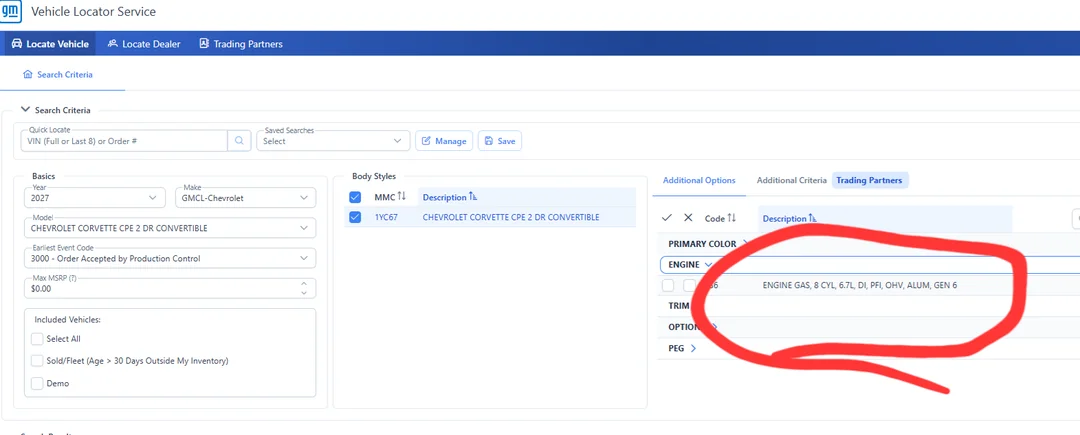
Another leak quickly escalated the conversation. A screenshot allegedly pulled from GM’s internal systems and shared via a Corvette-focused subreddit has added credibility to the LS6 narrative. The post originated from an individual claiming to work within a GM dealership, and the image is said to be sourced from GM’s Vehicle Locator Service—the same backend tool dealers use to monitor allocations and production details. If accurate, this would represent one of the most substantial mechanical evolutions of the C8 Stingray since the platform’s debut.
The January Image That Reignited The Chatter
What The Dealer-Side Data Reveals
The leaked image outlines a vehicle listed as a 2027 Chevrolet Corvette CPE 2DR Convertible with equipment group 1YC67, clearly identifying it as a Stingray Convertible. The technical description, however, is what stopped enthusiasts mid-scroll. The real headline sits in the engine description, which reads: “ENGINE GAS, 8 CYL, 6.7L, DI, PFI, OHV, ALUM, GEN 6.” This engine specification reads with unusual clarity and depth, pointing toward a genuine internal listing rather than conjecture. Key technical details referenced in the leak include:
- Engine designation: 6.7L Gen 6 Small Block V8, labeled LS6
- Fueling system: Direct Injection (DI) and Port Fuel Injection (PFI)
- Construction: Aluminum block
- Valvetrain layout: OHV pushrod architecture
- Implication: A significant 2027 model year powertrain update for the C8 Stingray
Why This Matters For The Grand Sport
While the listing itself references a Stingray configuration, its implications ripple far beyond a single trim. A Gen 6 small-block at this displacement reshapes the entire C8 hierarchy and provides the perfect mechanical foundation for a reborn Grand Sport. The combination of naturally aspirated power, dual-injection technology, and heritage-driven displacement aligns precisely with what the Grand Sport has always represented—maximum performance without forced induction excess. With the technical puzzle pieces now falling into place, attention naturally shifts back to the road, where recent sightings may be revealing how this hardware is being wrapped.
And that brings us back to the moment that reignited everything—the sighting that turned rumor into rolling proof.
3 — Caught In Motion: The Moment The Internet Exploded
Sometimes a single piece of footage does more than confirm a rumor—it reframes the entire conversation. A newly circulating spy video has done exactly that, capturing what appears to be a decisive chapter in the development of the next great Corvette. Shot along California’s legendary Angeles Crest Highway, the clip shows a tightly organized professional convoy escorting two C8 Corvettes, one finished in white and the other wrapped in a deep, striking blue. Camera vehicles, support trucks, and the controlled pacing all point to an official photo or video shoot, not casual testing. More importantly, the blue car displays the unmistakable visual cues long associated with the rumored 2027 Corvette Grand Sport.
The Paint That Speaks Volumes
The most immediate giveaway isn’t a badge or aero tweak—it’s color. The blue Corvette wears a rich, dark shade identified by sources familiar with GM’s planning as Admiral Blue. This isn’t a coincidence or a styling experiment. Admiral Blue carries deep Grand Sport DNA, famously defining the limited-run C4 Grand Sport and serving as the signature hue of the C7 Grand Sport. Its return sends a deliberate message. That message grows louder with the presence of red hash marks on the rear quarter panels, a classic Grand Sport hallmark thoughtfully repositioned for the mid-engine layout. Add in center-mounted quad exhaust outlets and red-accented badging, and the car’s identity becomes increasingly difficult to deny.
Timing That Tells The Real Story
Equally revealing is when this shoot took place. The sighting arrives as GM prepares to retire two current colors—Riptide Blue and Hysteria Purple—for the 2027 model year, replacing them with Admiral Blue and a newly introduced gray called Pitch Metallic. That overlap isn’t accidental. It positions the Grand Sport, complete with its heritage cues and rumored new engine, as the visual and emotional anchor of the 2027 lineup. Chevrolet, as expected, remains silent on unofficial media. But the convergence of roadside evidence and internal documentation is becoming impossible to ignore.
With the sighting now etched into the Corvette timeline, the color story takes on new importance—because specifics on the 2027 palette may be the clearest signal yet of just how real the Grand Sport revival has become.
The C8 Grand Sport in the Wild, Once Again…
Click here for njp_moto’s full Instagram reel.
4 — New C8 Colors That Make The Case Louder Than Words
Coming off the roadside evidence and internal paperwork, the 2027 color story feels less like coincidence and more like choreography. Two newly surfaced paint options from GM’s internal ordering systems add another layer of confirmation, especially for readers tracking the Grand Sport breadcrumb trail. Chevrolet isn’t just refreshing the palette—it’s reviving colors that carry unmistakable meaning in Corvette history, and the timing couldn’t be more deliberate.
Key Talking Points
- RPO GTR – Opulent Blue Metallic
Internal listings identify this as the modern formulation tied to Admiral Blue, a historically significant Grand Sport color. - RPO GEC – Pitch Metallic
A new dark gray option expected to replace outgoing gray tones. - Outgoing Colors After 2026
Riptide Blue Metallic and Hysteria Purple Metallic are set to be discontinued. - Heritage Alignment
Admiral Blue has long been associated with Grand Sport models, dating back to the C4 era and most recently the C7. - Mechanical Synchronization
Color timing aligns with leaks pointing to a naturally aspirated 6.7L LS6 V8 for the upcoming Grand Sport.
Digging deeper, RPO code GTR appears internally as Opulent Blue Metallic, a name that longtime Corvette fans will immediately recognize as the modern evolution of Admiral Blue. That shade became inseparable from the Grand Sport identity during the C7 run from 2017 through 2019 and traces its roots even further back to the ultra-rare C4 Grand Sport. Alongside it is RPO code GEC, Pitch Metallic, a darker, more aggressive gray expected to step in as Hypersonic Gray and Sea Wolf Gray exit the lineup. Together, these colors formally replace Riptide Blue Metallic and Hysteria Purple Metallic after the 2026 model year, reshaping the visual tone of the C8 lineup just as the performance narrative escalates.
When viewed in isolation, new paint codes are easy to dismiss. Viewed alongside heritage cues, internal engine leaks pointing to a 6.7-liter LS6, and a Grand Sport sighting wearing unmistakable blue, the picture sharpens quickly. Chevrolet appears to be aligning visual history with mechanical substance, setting the stage for a C8 that feels as rooted as it is revolutionary. As order guides approach their typical late spring or early summer reveal window, these 2027 Corvette colors give enthusiasts one more reason to believe that the Grand Sport revival isn’t just coming—it’s being carefully, deliberately prepared.
5 — Bonus Video: Grand Sport Deep Dive
Corvette enthusiast and pundit HorsePower Obsessed is locked and loaded in this 2027 Grand Sport deep dive.
Thanks for being with us today on this Corvette journey. We hope you love what you see and join the CorvSport movement!
- Engage with CorvSport’s 166,000 Facebook followers and be the first to see our daily content.
- Experience how obsessed we are and view our top 25 monthly features by visiting our digital magazine, CORVETTE OBSESSED.
- Enjoy an ad-free experience, get exclusive content, and support CorvSport for only $2.92/month!
Additional Sources For This 2027 Grand Sport Guide: GMAuthority, LSXMagazine