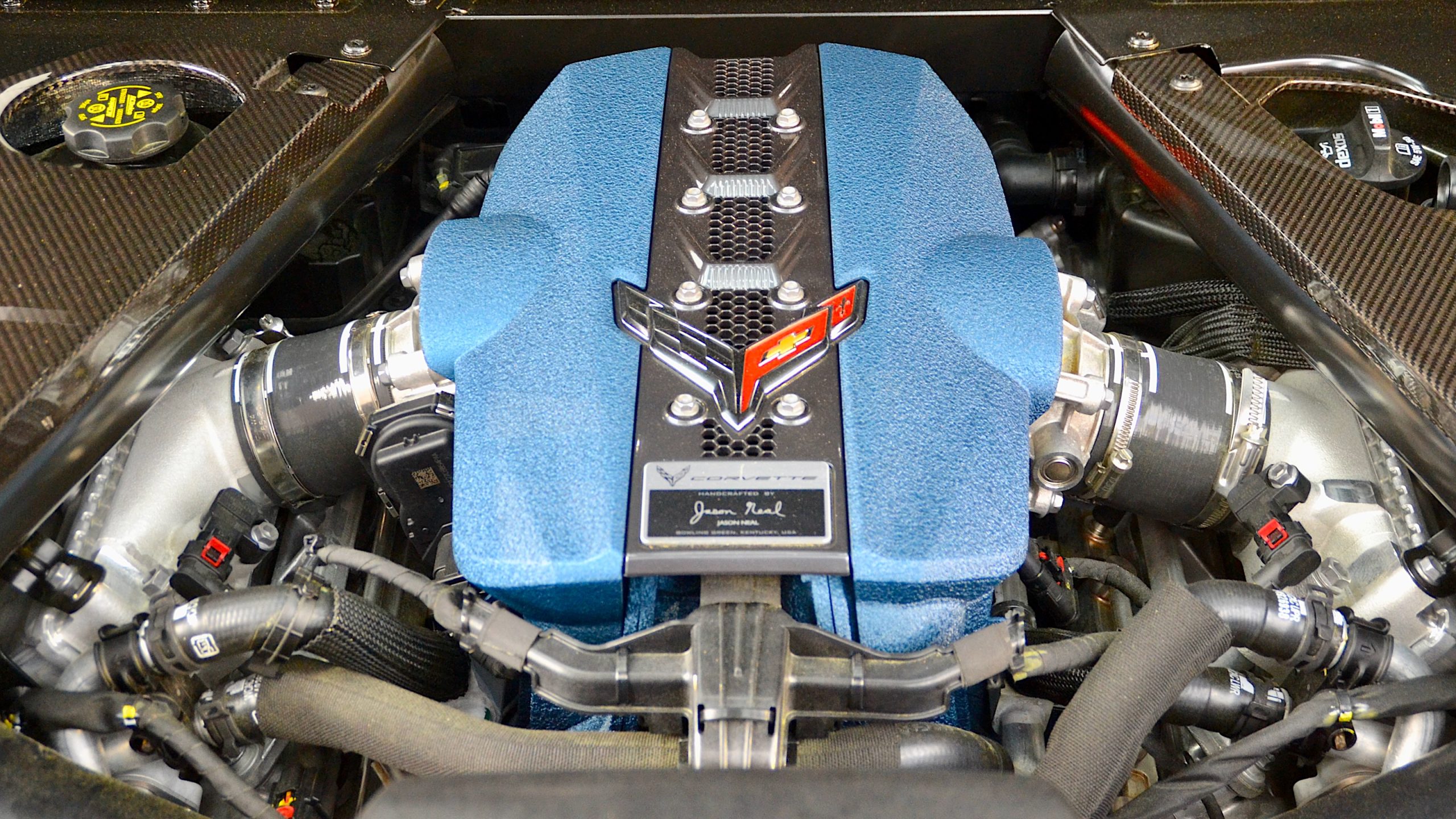
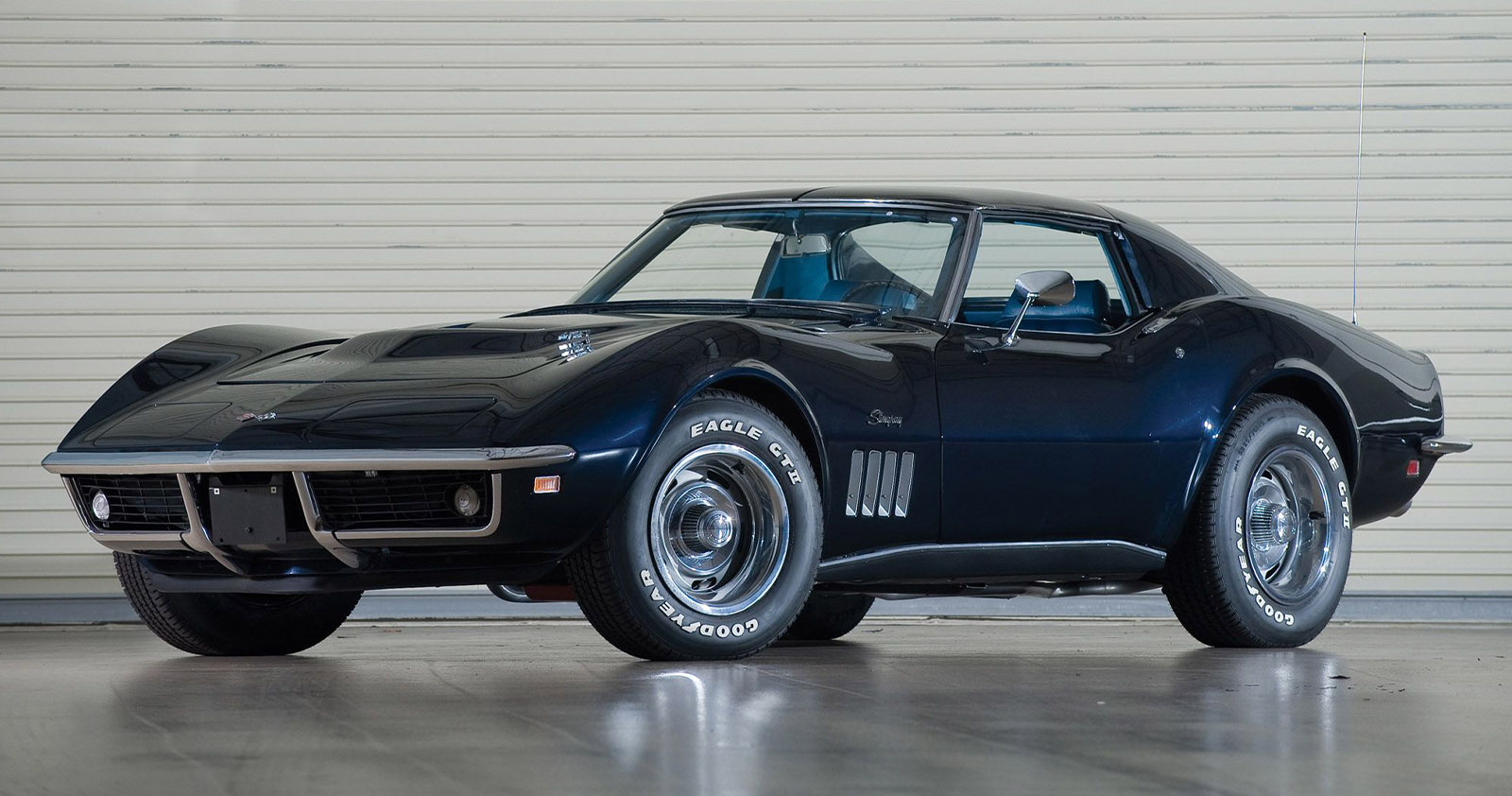
For more than seven decades, the identity of America’s sports car, the Corvette, has been built around one defining trait: the overhead valve (OHV) V8, commonly known as the pushrod small-block. Thanks to its simple yet robust design, the small-block V8 has consistently delivered tons of low-end torque and proven reliability in a smaller, lighter package and with a lower center of gravity. This last feature is particularly crucial for sports cars and race cars, such as the Corvette.
However, despite its pushrod heritage, in several instances, often driven by the desire to take the Corvette into the territory of European supercars, Chevrolet has explored the more technologically complex double overhead cam (DOHC) layout. GM engineers have tested, evaluated, and even fully developed DOHC V8s for the Corvette, some of which made it to production. This back-and-forth is what makes the Corvette’s engine story so unusual because Chevrolet has never completely ruled out DOHC. It just keeps coming back to the packaging and performance advantages of the pushrod layout. But the debate about which layout best fits the Corvette’s mission, chassis constraints, and target price remains today.
No Subscription? You’re missing out
Get immediate ad-free access to all our premium content.
Get Started