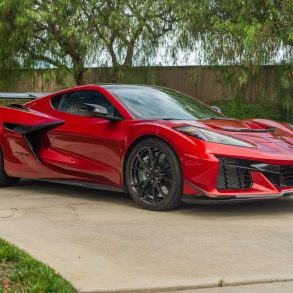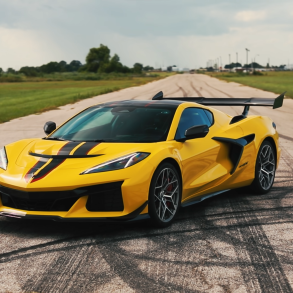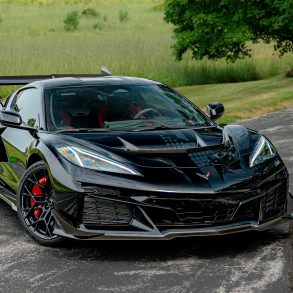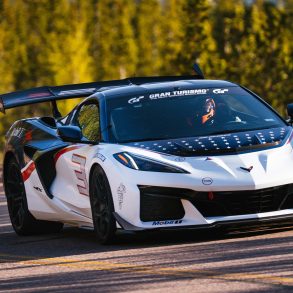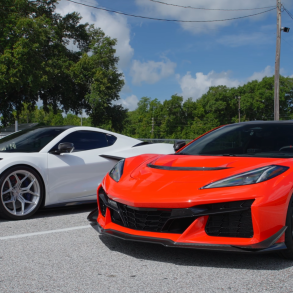
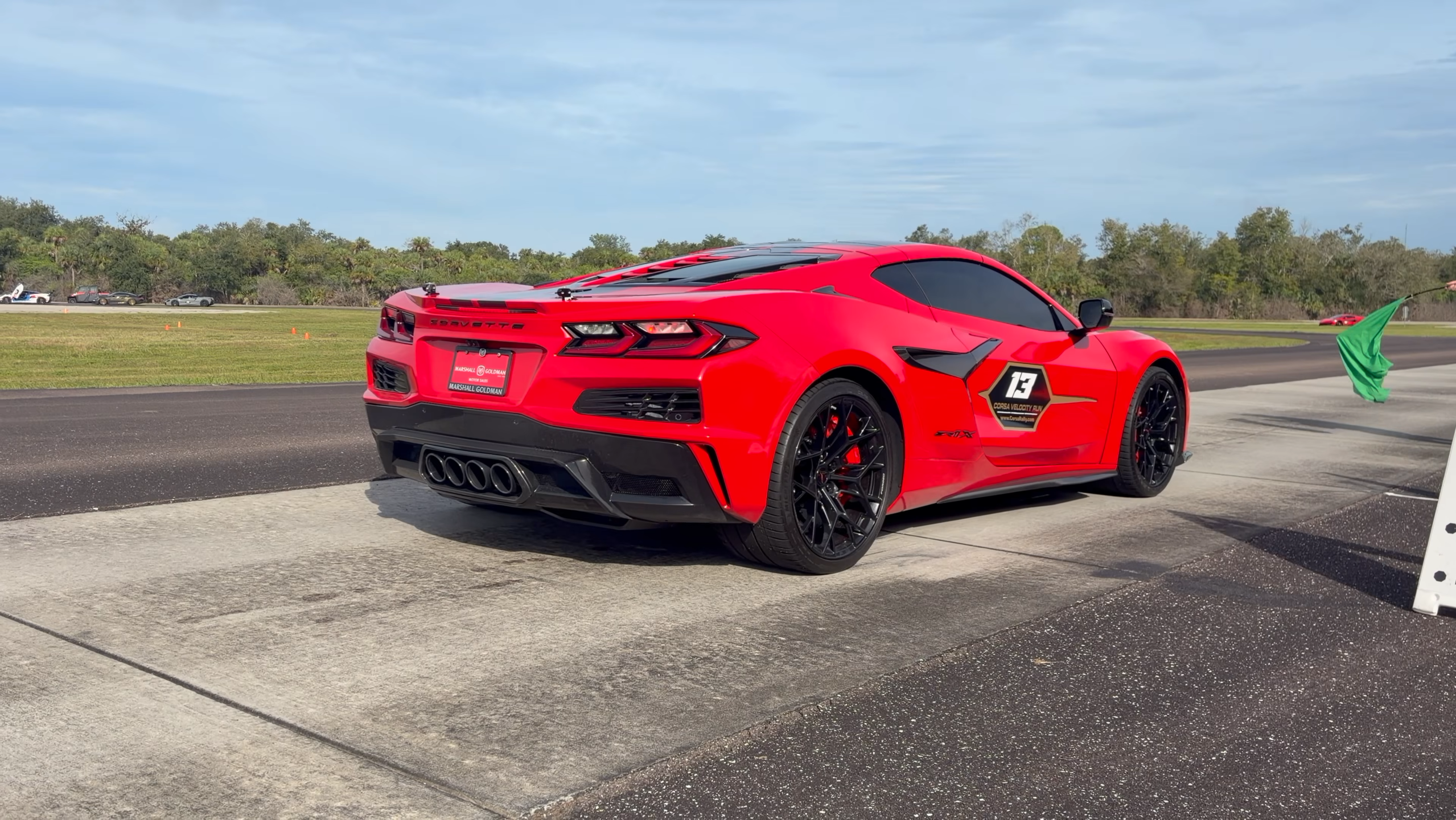
Brooks Weisblat of DragTimes brought his 1,250-horsepower Chevrolet Corvette ZR1X to the Johnny Bomber Proving Grounds for a high-speed runway session focused on exploring the car’s top-speed potential. With approximately two miles of runway available, the testing program included half-mile and one-mile acceleration runs designed to examine how the ZR1X performs as speed builds.
Weisblat’s ZR1X was deliberately configured with reduced aerodynamic drag. The high-drag aero components were removed, while the front canards and gurney flap were also taken off. Openings left by the removed components were taped over to maintain a cleaner airflow path. The objective was to determine how much straight-line performance could be gained by sacrificing some of the downforce generated by the factory configuration.
The initial half-mile shakedown produced a speed of approximately 181 mph. For the subsequent one-mile attempt, the ZR1X was placed in Race mode with launch control engaged and the battery fully charged. The Corvette continued accelerating strongly beyond 160 mph, ultimately reaching approximately 204 mph over the measured mile.
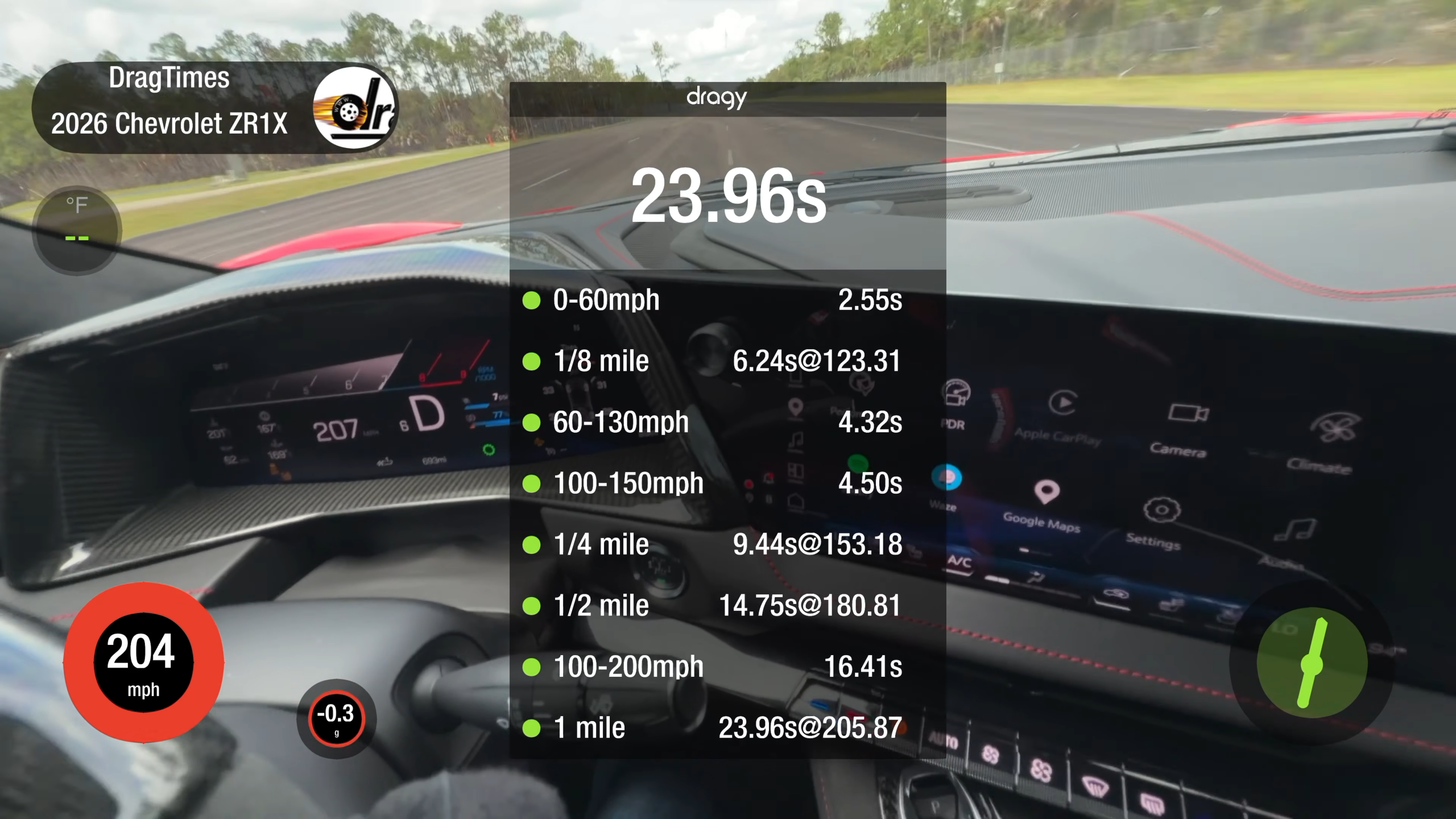
One of the most significant technical factors in the test is the ZR1X’s front electric motor. Producing 186 horsepower, the motor provides additional propulsion at lower speeds but disconnects at approximately 163 mph. Beyond that point, the car effectively loses its electric assistance, placing greater emphasis on the twin-turbocharged V8 and aerodynamic efficiency.
The event also offered useful comparisons with other high-performance machinery. A 1,000-horsepower McLaren 750S recorded approximately 185–186 mph in the half mile, while a modified twin-turbo Corvette Z06 producing around 900 wheel horsepower reached approximately 161 mph. A ZR1 convertible equipped with its full aerodynamic package recorded lower speeds than the ZR1X, highlighting the impact of both additional power and reduced aerodynamic drag.
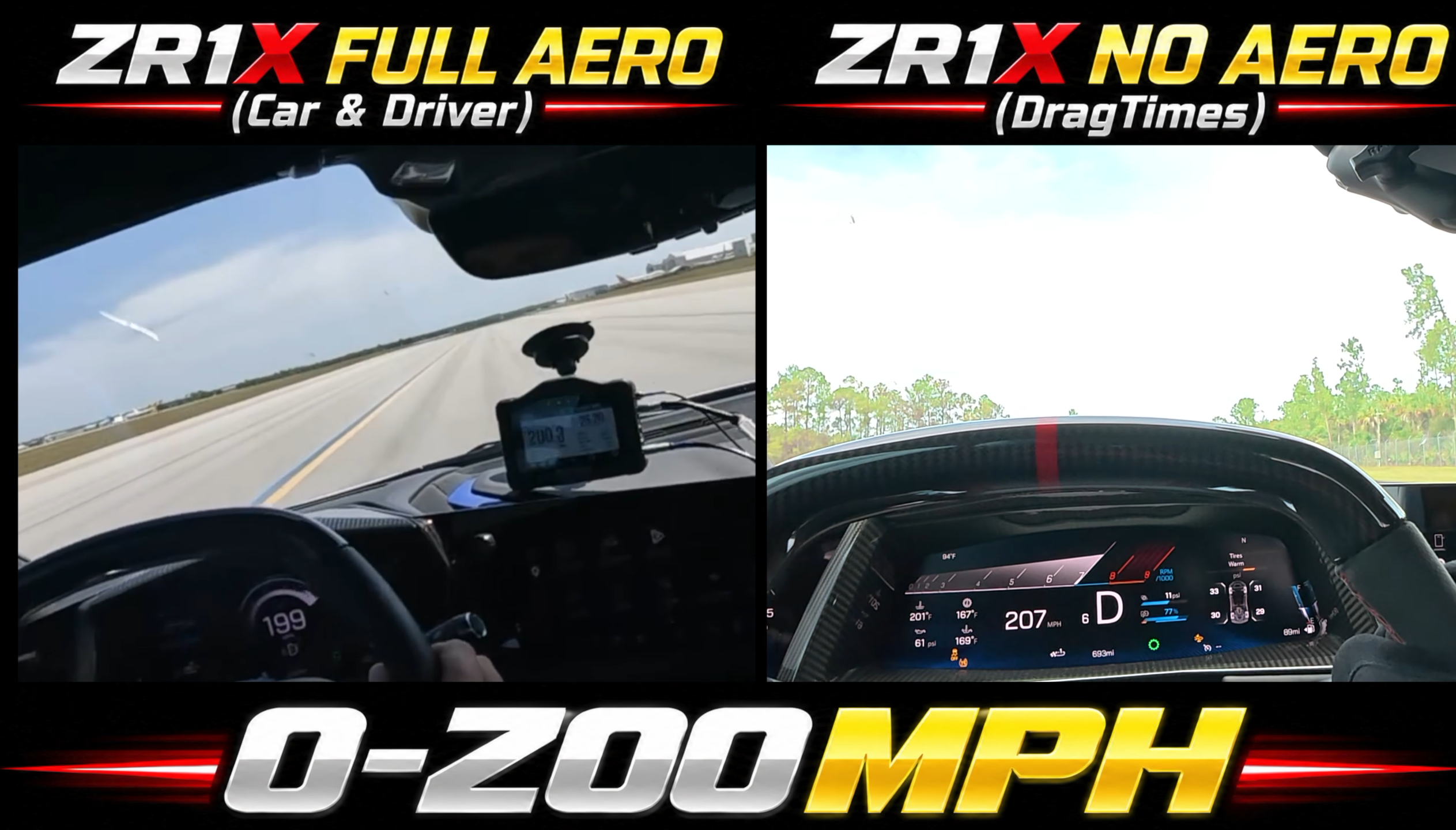
Weisblat also compared his ZR1X against a factory-aero-equipped example tested by Car and Driver. Despite differences in environmental conditions, the lower-drag ZR1X reached approximately 205–207 mph, while the fully equipped car reached roughly 199 mph during the comparable high-speed testing.
The runway session ultimately demonstrated that the ZR1X’s performance is shaped not only by its extraordinary power output, but also by the balance between aerodynamic load, vehicle stability and the point at which its electric front drive disengages.
Source: DragTimes