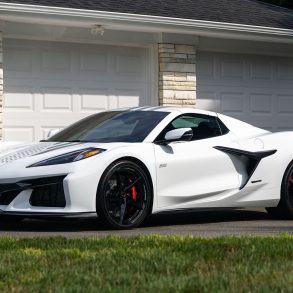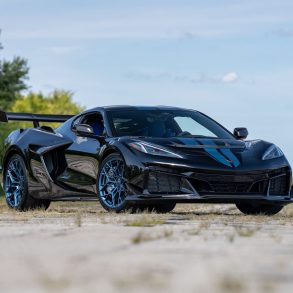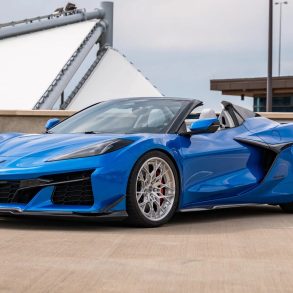
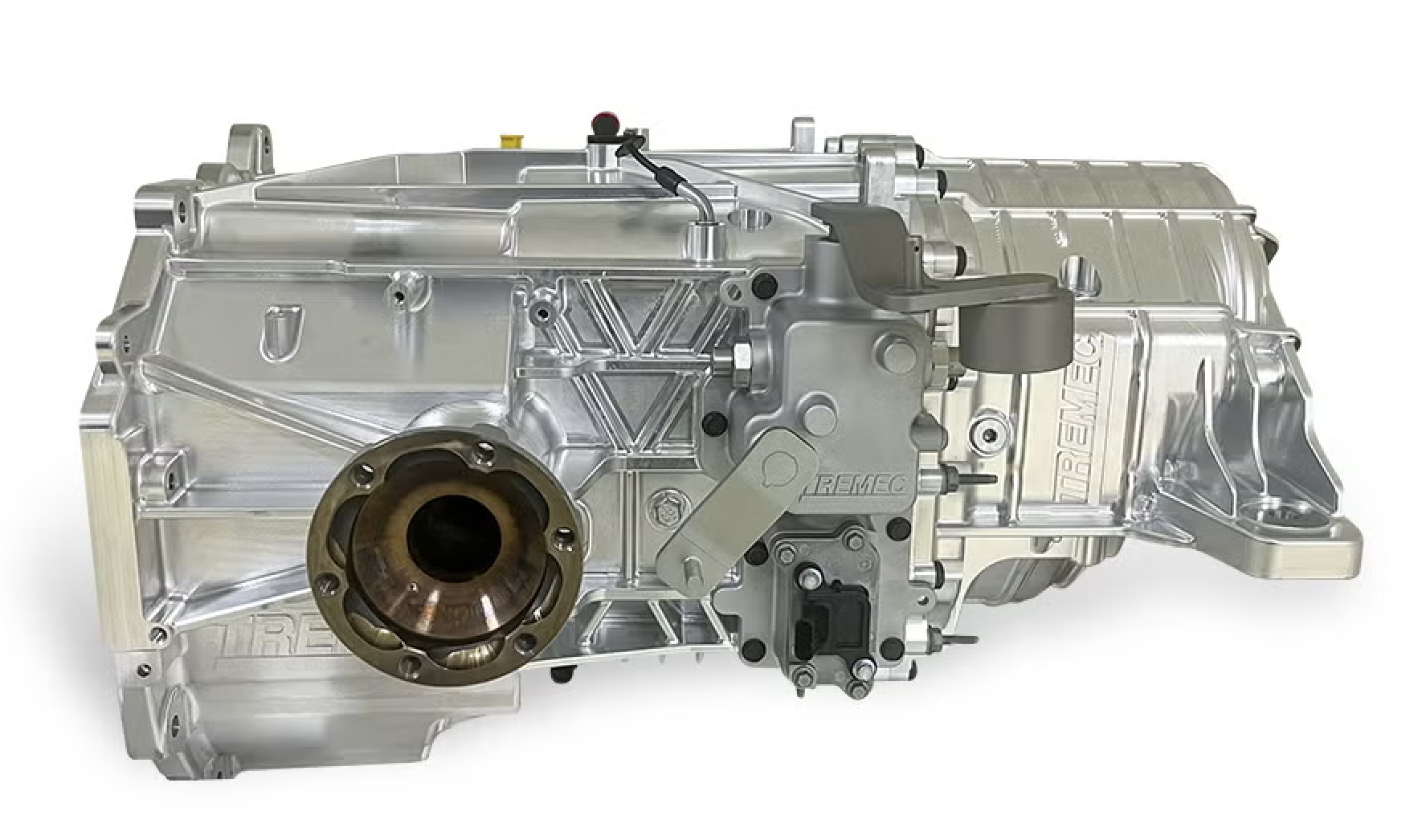
For half a decade, the mid-engine C8 Corvette has been married to a single transmission: TREMEC’s excellent TR-9080 eight-speed dual-clutch. The package delivers blistering performance and everyday civility, but it left a vocal slice of the Corvette faithful asking a simple question—will there ever be a clutch pedal again? This week, the needle moved from fantasy to plausible. TREMEC has unveiled a new 6-speed manual transaxle engineered with the same mounting points and closely matched case dimensions as the C8’s TR-9080 DCT, a decision that immediately positions the gearbox as a potential fit for mid-engine Corvettes.
Unveiled in the run-up to—and on the floor at—SEMA, the unit isn’t a nostalgia play. It’s a modern, high-capacity, aluminum-cased transaxle rated around 1,000 hp and 800 lb-ft with an internal gerotor oil pump for circulation and cooling. It uses a mechanical limited-slip differential and is designed to be cable-shifted, with the shift mechanism located on the left side of the case—details that matter when threading a shifter path through the C8’s tightly packaged interior.
Crucially, TREMEC isn’t pitching this as a C8 “factory option.” The company’s public language casts it as an aftermarket solution “ideal for mid-engine builds and custom rear-wheel-drive vehicles”—kit cars, restomod exotics, and home-brewed projects that need a robust, mid-engine-friendly manual. But because it mirrors the TR-9080’s installation hard points, the new 6-speed instantly becomes the most credible path yet to a manual-swapped C8. That’s why mainstream outlets and Corvette specialists alike are treating the reveal as a watershed moment.
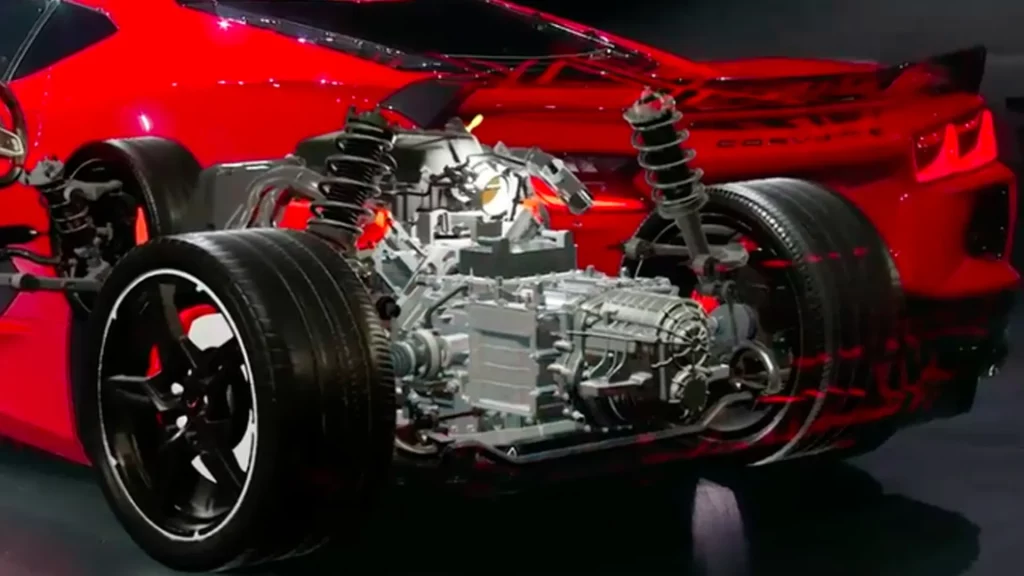
On paper, the tradeoffs are understandable. Fewer ratios and the move from the C8’s electronically controlled e-diff to a mechanical LSD could trim some outright performance and electronic trickery at the limit. Yet for many, the gain is tactile: the engagement of a conventional clutch pedal and shift lever in a chassis that, from day one, felt like it was begging for three pedals. If the torque capacity proves out—and early guidance suggests it was engineered with big-power applications in mind—
the box should comfortably live behind everything from a Stingray LT2 to a Z06’s LT6 (and even the wilder toys roaming the aftermarket).
The broader context is just as telling. TREMEC is the Corvette’s current transmission partner, and it also supplies the TR-9080 for other halo machines like Ford’s Mustang GTD. Designing a manual with TR-9080-like packaging smartly widens the potential customer base: any platform built around that DCT envelope becomes a candidate in theory. That kind of cross-fit engineering helps explain why this product exists now and why it has attracted such outsized interest among Corvette owners.
That said, fitment is only step one. The C8 lives on GM’s modern electrical backbone, and the car’s calibration expects to see a dual-clutch and a raft of networked controllers. As several early reports have emphasized, electronic integration is the real mountain to climb—convincing the car that the DCT’s ghost isn’t missing, harmonizing ABS/ESC logic with a mechanical LSD, and ensuring rev-matching, stall protection, and even cruise control behave as intended. None of that is insurmountable for a determined aftermarket (or for GM, should it choose), but it will require brainpower, time, and money that go beyond simply bolting parts together.
Even with those hurdles, the near-term implications for the Corvette community are exciting. Expect to see specialty builders mock up shifter routes, pedal box solutions, and clutch hydraulics, leveraging the C8’s relatively generous center tunnel volume and the new transaxle’s cable-actuated design. The first successful integration—complete with happy instrument clusters, content stability-control modules, and no limp modes—will become the template others follow. If SEMA’s aisle chatter is any guide, you won’t have to look hard to find builders already sketching brackets and wiring strategies.
For readers weighing the “should I wait?” question, two realities can coexist. First, TREMEC has not announced pricing or on-sale timing, and production intent/lead times are still developing. Second, GM has offered no official signal that the C8 will receive a factory manual transmission in its remaining lifecycle. As of today, this is an aftermarket-led path with tantalizing potential—made plausible by TREMEC’s packaging decisions and torque claims, but still dependent on integration work that has to be proven on the road and dyno.
1.) GM would need to validate all safety and emissions controls with a manual (think OBD readiness, stall and creep behaviors, cold-start drivability), re-engineer powertrain and chassis software to live happily without the DCT’s networked modules, and ensure driver-assist systems (ABS/ESC/launch logic) are re-mapped for a mechanical LSD and human-timed shifts.
2.) The interior would require packaging and certification for a production shifter and pedal assembly, NVH tuning would change, and regulatory testing would restart across multiple markets.
3.) Finally, there’s the business case: manuals are a dwindling share of performance-car sales.
If GM believed the volume and brand value justified the engineering and certification spend, a late-cycle manual special (call it a driver’s edition Stingray or Z06) isn’t impossible. But absent that green light, the first three-pedal C8s you see are likely to wear tuner plates—not Bowling Green window stickers.