By the mid 1980s, America’s sports car was reaching its peak with the fourth generation of the Corvette. After a few years of disappointing powertrains and an aging C3 platform, Chevrolet had finally set the stage for modern Corvette engineering with the C4. The fourth-gen Corvette (1984–1996) was a “clean sheet” redesign. It dragged the model out of the muscle-car era and into the modern sports car world by pushing technology boundaries and prioritizing handling and aerodynamics over raw brute power.
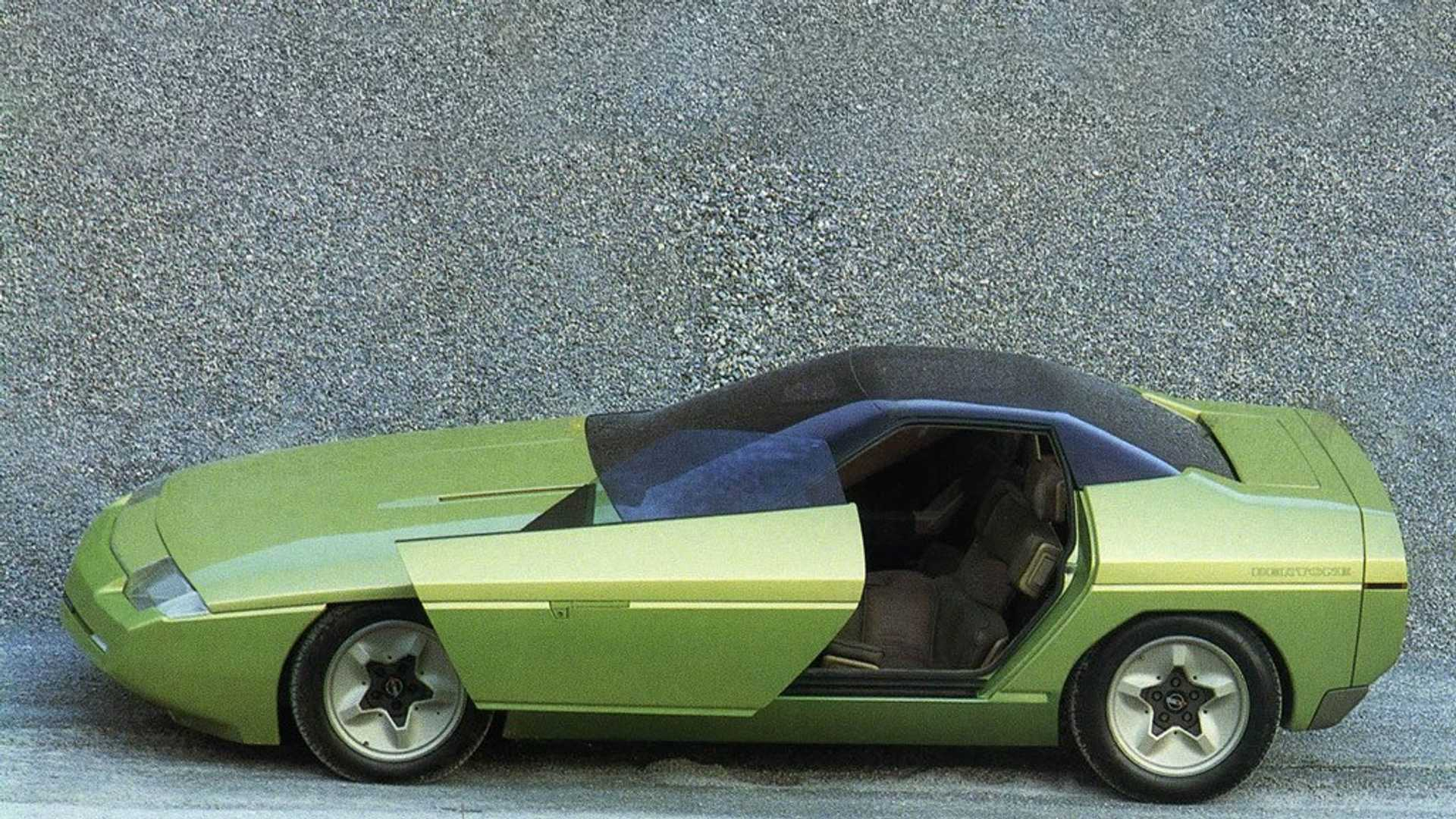
With its digital dash, pop-up headlights, and sleek body lines, the new Vette captivated car enthusiasts worldwide, including Italy’s oldest coachbuilder, Bertone. With a team led by French designer Marc Deschamps, they created the Bertone Ramarro, a futuristic concept car based on the Corvette C4 chassis, unveiled at the 1984 Los Angeles Auto Show. Today, we look back at this fusion of American brawn with Italian flair.
An Italian Vision for an American Icon

Bertone had been operating out of Turin since 1912, and by the time they got their hands on a C4, they had already left their mark on some of the most iconic shapes in the business. Ferraris, Lamborghinis, Alfa Romeos. The Italian firm had a long history of taking someone else’s platform and finding lines the original designers hadn’t bothered to look for. That’s a very European way of thinking about cars, and applying it to a Corvette was a genuinely strange idea.

Chevrolet handed over a production C4, and Marc Deschamps’ team started pulling it apart. Nobody was trying to make it faster or more powerful. The exercise was simpler and stranger than that: what does a Corvette look like when Italian designers stop treating it like an American car? The answer showed up at the 1984 Los Angeles Auto Show, and it didn’t look like anything else on the floor. The C4 next to it, already a sharp and modern design by most measures, suddenly looked conservative. The Ramarro was fluid where the production car was geometric, organic where the C4 was precise.
Radical Design Inspired by a Green Lizard

Ramarro is Italian for a type of bright green lizard found around the Mediterranean, and that’s exactly where Deschamps started. The car was finished in metallic green, and the body was shaped to make the name feel inevitable rather than decorative. Surface transitions were smoother than anything on the standard car, the overall profile sat lower visually, and the whole thing had an organic quality the angular C4 never chased.
The doors got the most attention, and reasonably so. Instead of opening outward on conventional hinges, they slid forward toward the front fenders. It sounds like a gimmick until you see the car and realize the mechanism actually makes the design more coherent rather than less. The roofline contributed to the same effect. The glasshouse was treated as a continuous canopy rather than a separate element, which gave the cabin an almost sealed, aerospace quality when viewed from outside.

The interior matched the exterior closely enough that it felt intentional rather than coincidental. Green leather throughout, sculpted forms that echoed the body shapes, an overall sense that the same thinking governed every surface. Most concepts of that era had a disconnect between what was happening outside and what was happening inside but Ramarro didn’t.
Engineering Changes Beneath the Surface

Here’s the thing that separates the Ramarro from a typical auto show exercise: it ran. Bertone’s team didn’t just wrap a new body around a C4 and push it onto a turntable. They modified the structure to fit the new body and to accommodate the sliding door mechanism, which required real engineering work rather than cosmetic adjustments. Custom tracks, structural reinforcement, changes to the underlying architecture that couldn’t be faked.
The more involved change was what happened to the cooling system. Bertone moved the radiator and air conditioning components toward the rear of the car. Part of that was visual, clearing the nose for a smoother front end. Part of it was functional, shifting weight rearward and improving the balance of a platform that was already decent in that regard. Rerouting a cooling system isn’t something you do casually.

The airflow through the whole car had to be rethought, and the Ramarro worked properly after the changes were made, which says something about how seriously the project was taken. The aerodynamics followed the same logic. The reshaped nose and rear deck weren’t just styling decisions. Continuity of surface reduces drag, and the Ramarro had more of it than the factory car. No official figures came out of the project, but the shape made the intent obvious enough.
Legacy and Why It Never Reached Production

Nobody involved in the Ramarro expected it to go into production. By 1984, that era was already over. Safety regulations had grown complex enough to make homologating a low-volume coachbuilt variant a serious undertaking, and the economics of that kind of manufacturing had gotten progressively harder to justify through the 1970s. Chevrolet had spent heavily on the C4 program. A radical Italian-bodied version of it would have required crash testing, warranty infrastructure, and manufacturing commitments that made no sense for a car that would sell in the dozens.

What the project got instead was the Car Design Award in 1985. That was not a minor citation. The Car Design Award was the most recognized honor in automotive design at the time, and it wasn’t handed out for interesting attempts. The Ramarro won because the judges considered it a finished idea, resolved and disciplined in a way that most show cars never manage. For Bertone, the award confirmed that the project had been worth doing. For anyone keeping track of Corvette history, it meant something else: the C4, still in its first model year when the Ramarro debuted, had attracted the kind of serious international attention that very few American cars ever receive.

The Ramarro didn’t change the direction of Corvette development. It wasn’t supposed to. What it did was make a clear argument that the C4 was a serious platform, serious enough that one of Europe’s oldest and most respected design firms thought it was worth building something around. That’s not a footnote. For a car that had been through as much as the Corvette had gotten to 1984, it was a meaningful vote of confidence from an unexpected corner of the world.