It’s time to experience one road, eight generations, and one verdict. Have you ever wondered what it’s like to drive all eight generations of the Corvette back-to-back, in one day? While that is nearly impossible for most enthusiasts, today you’ll meet somebody who did just that. You’ll hear one cohesive perspective and eight comprehensive reviews. Not speculation. Not bench racing. But one driver, one canyon road, and more than 70 years of America’s Sports Car experienced in a single, uninterrupted journey.
Who was the man who attained that impossible dream? Meet Brad Hansen, the creator behind Retro Cars Forever, a YouTuber with 37,700 subscribers, who set out on a history-making mission: drive and review every Corvette generation from C1 to C8, consecutively, on the same road. Filmed in Southern California’s Little Tujunga Canyon country, this wasn’t just a comparison — it was a celebration. A passion project. As he openly admits throughout the video, this was a dream come true, the kind of once-in-a-lifetime opportunity Corvette people fantasize about.
The community responded in force. With 117,156+ views, 4,500+ likes, and 1,404 comments, the video went viral — because authenticity always does. At CorvSport, we’re grateful for creators like Retro Cars Forever who pour time, respect, and heart into telling Corvette’s story. And at the end of this journey, he doesn’t hedge. He names a winner — and an honorable mention — after a day living with every generation back-to-back. Brad’s winners may take you by surprise!
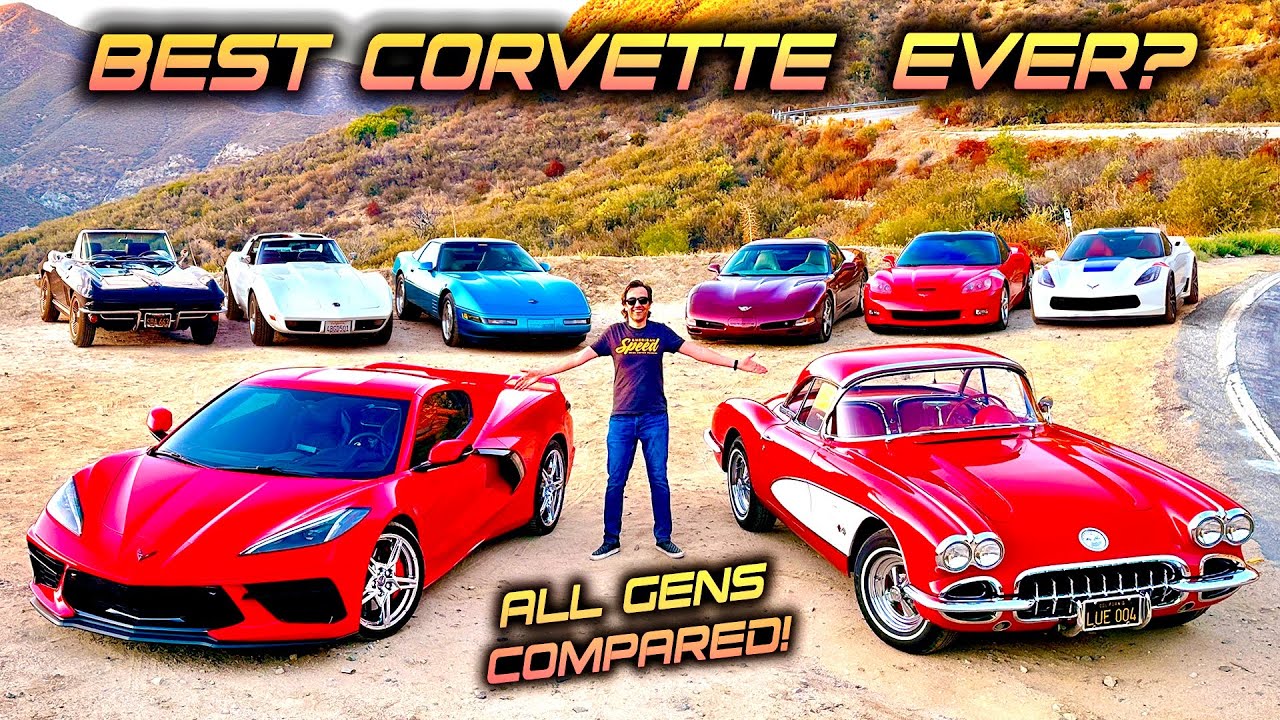
The Great 8 Comparo
Curated by CorvSport, Credited to Retro Cars Forever
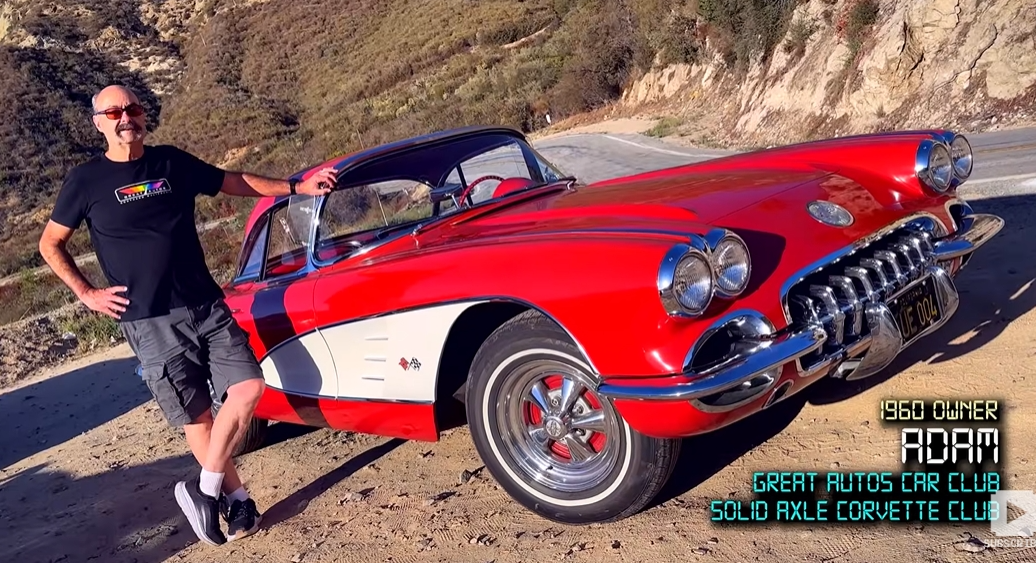
C1 Corvette: Where The Dream Began And Nothing Was Easy (1:14)
Sliding behind the wheel of the C1 is like stepping into a living museum — except this one fires up, rattles, and demands your full attention. Retro Cars Forever doesn’t approach the first Corvette with modern expectations. Instead, he treats it as a historical moment brought to life, openly acknowledging that just driving a C1 at speed is an achievement in itself. This is the car that dared Chevrolet to dream bigger, even if it didn’t yet know how to execute that dream.
On the canyon road, the C1 feels tall, raw, and unapologetically mechanical. Every input requires intention. The steering wheel dominates your chest, the brakes require muscle, and the engine communicates through vibration rather than refinement. Yet somehow, that struggle becomes the magic. You aren’t piloting the car so much as negotiating with it, learning its language corner by corner.
The Good
- Pure, mechanical driving experience
- Lightweight and engaging at modest speeds
- Iconic styling and historical importance
The Bad
- Modest power by modern standards
- Primitive brakes and handling
- Least refined driving dynamics
By the time he steps out, the takeaway is clear: the C1 isn’t about speed, comfort, or even confidence. It’s about courage. It represents a moment when Chevrolet took a risk without knowing the outcome. Every mile driven feels earned, every corner an exercise in respect. Without this imperfect, ambitious beginning, the rest of the Corvette story simply doesn’t exist.
The Test Vehicle: 1960 (283 CI V8, 4-speed manual)
Brad’s Most Memorable Quote: “The great thing about a classic car like this, it forces you to be present in every moment. Nothing about it is easy, but that’s kind of part of the charm.”
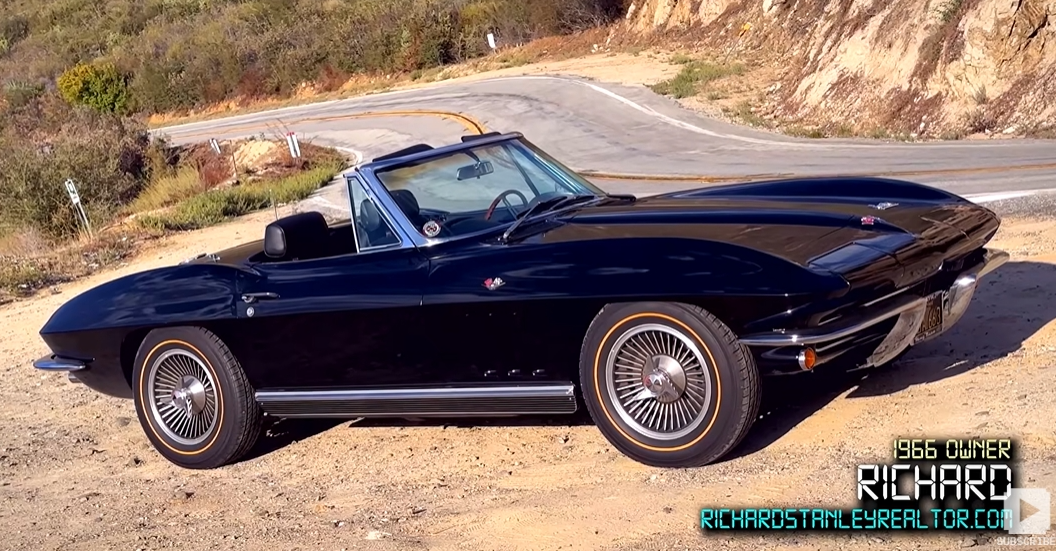
C2 Corvette: The Moment Corvette Found Its Confidence (7:17)
The transition from C1 to C2 feels seismic. As Retro Cars Forever rolls onto the road, the difference is immediate — lower seating, sharper responses, and a sense that this Corvette finally knows what it wants to be. The C2 doesn’t ask for patience the way the C1 does; it rewards trust.
Through the canyon, the Sting Ray feels alive in a new way. The independent rear suspension settles the car mid-corner, the disc brakes inspire confidence, and the engine finally feels like it belongs in a sports car. There’s still effort involved, still correction required, but now the car works with you instead of against you.
The Good
- Significant performance leap over C1–by 1966, the standard V8 had swelled to 327 cubic inches, delivering 300 gross horsepower
- Iconic Sting Ray design
- The first Corvette to offer a fully independent suspension and four-wheel disc brakes
The Bad
- Still demanding to drive at the limit
- Less forgiving than later generations
- High collector values limit accessibility
As he pulls back in, the realization hits: this is the first Corvette that could genuinely take on the world. The C2 doesn’t just improve the formula — it defines it. This is where Corvette stops experimenting and starts competing. It establishes the balance of beauty, performance, and ambition that every generation afterward would chase. In many ways, everything that follows is built on this confidence.
The Test Vehicle: 1966 Convertible (327 CI V8, 2-speed auto)
Brad’s Most Memorable Quote: “The C2 was the first Corvette that I consider to be a world-beating car.”
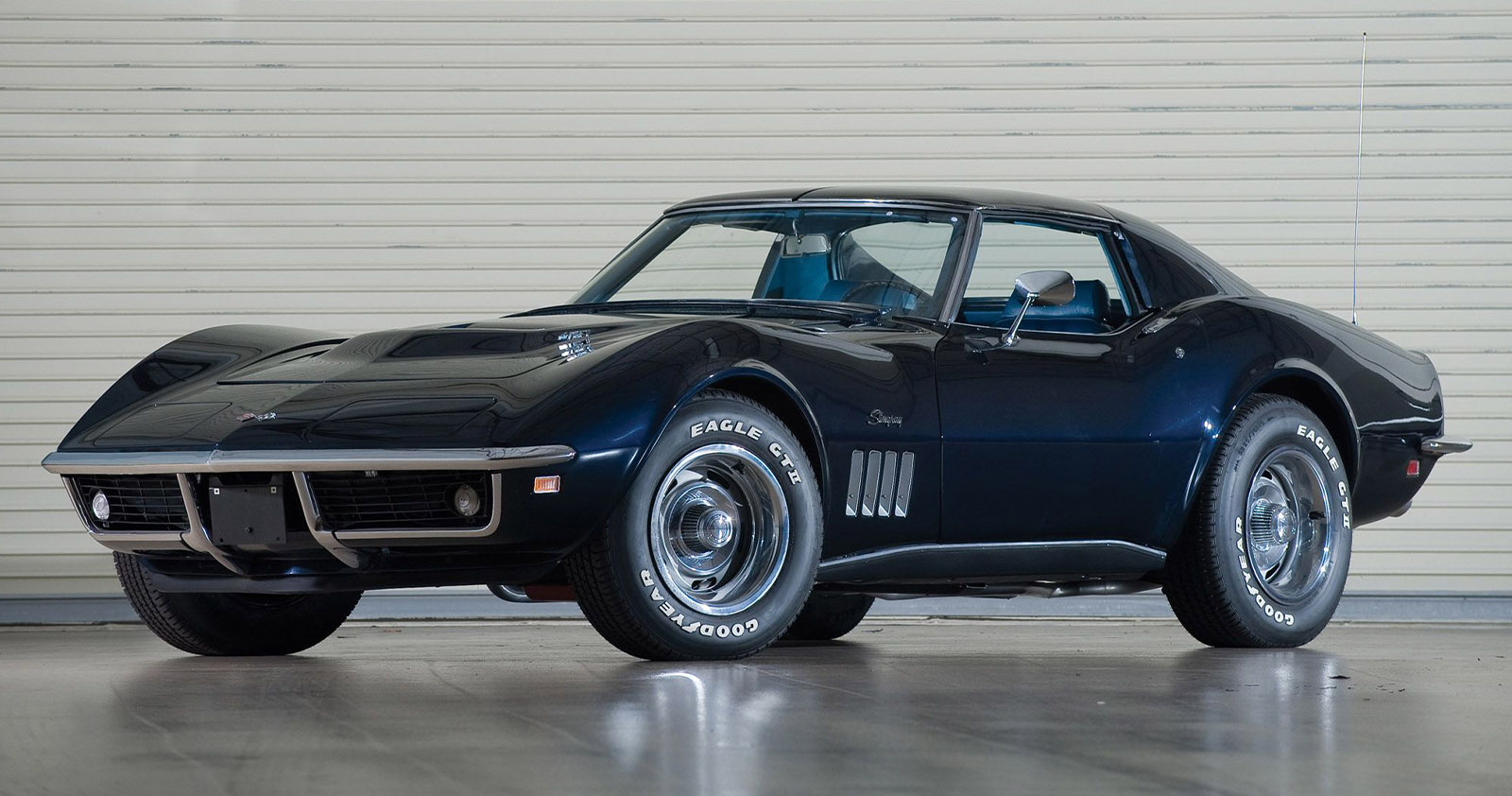
C3 Corvette: Style First, Attitude Always (14:32)
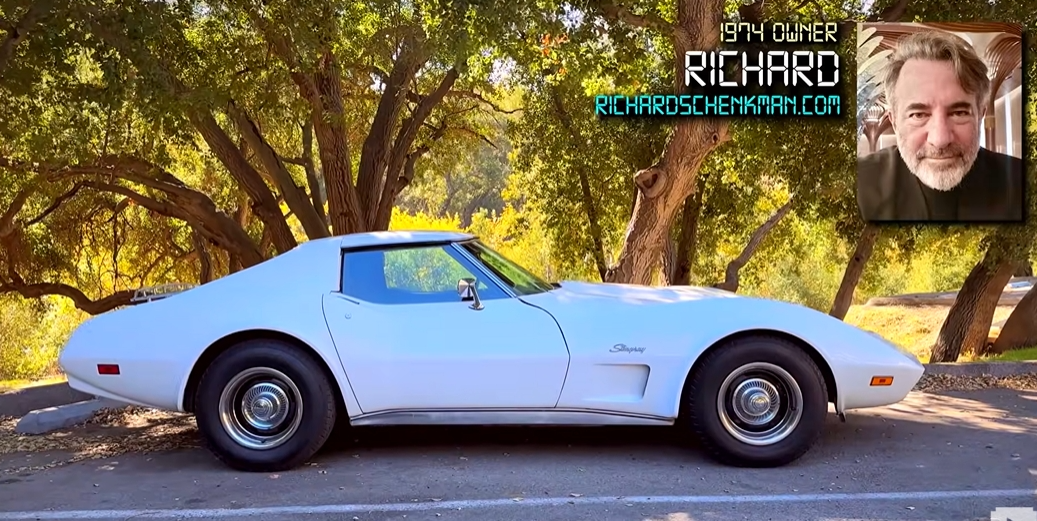
Dropping into the C3 is like stepping into a time capsule from the wildest era of automotive design. Retro Cars Forever immediately leans into its personality, T-tops off, long hood stretching endlessly ahead. This Corvette isn’t subtle — it’s theatrical.
On the road, the C3 feels more like a grand touring cruiser than a razor-edged sports car. The steering wanders, the body moves, and the power delivery is more about torque than urgency. But context matters. For its time, this car was still quicker than most of what shared the road with it — and far more dramatic.
The Good
- Iconic Shark styling
- Early C3s were offered with enormous engines, with 427 and 454 cubic inch displacements available
- The C3 reached unprecedented sales figures, peaking in 1979 with 53,807 units, a record that still stands
- Comfortable cruiser with strong low-end torque
- Affordable entry into classic Corvette ownership
The Bad
- Wandering steering and body movement
- Chintzy interior materials
- Limited cargo space
By the end of the drive, the C3 earns respect not for precision, but for presence. It’s a Corvette that prioritizes emotion over execution. This generation leaned hard into design, culture, and personality. It may not be the sharpest tool in the shed, but it’s one of the most memorable. The C3 proves that Corvette is as much about feeling as it is about figures.
The Test Vehicle: 1974 (350 L48 V8, 3-speed auto)
Brad’s Most Memorable Quote: “In a weird way, time has been really kind to this car because no one in their right mind is going to use a car like this for anything other than cruising. And that’s where this car excels at.”
C4 Corvette: The Comeback Kid That Changed Everything (22:57)
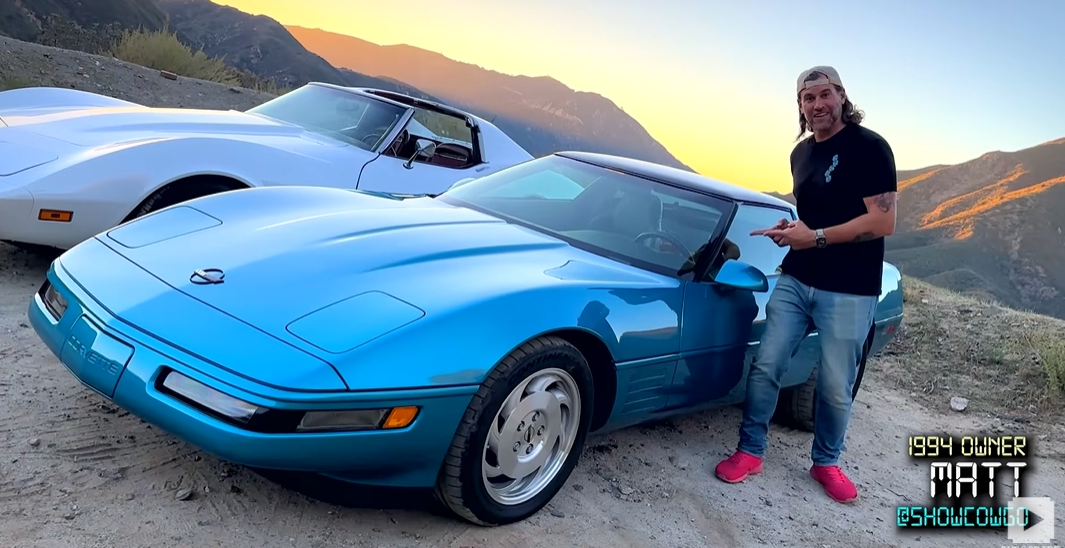
When the C4 fires up, the tone of the entire test shifts. This is no longer nostalgia — this is performance. Retro Cars Forever calls it out immediately: this is the first Corvette in the lineup that truly pins you back in the seat.
On the canyon road, the C4 feels planted, wide, and serious. The steering is sharp, the grip is real, and the car finally communicates like a modern machine. It demands respect, but rewards commitment, reminding you that this generation was Chevrolet’s declaration that Corvette was back in the performance fight.
The Good
- Huge leap in handling and performance
- The 300hp LT1, revealed in 1992, could catapult the C4 from 0 to 60 mph in 5.4 seconds
- Advanced tech for its era (ABS, traction control, airbags)
- The C4 annihilated its competition in the SCCA showroom stock racing series
- Exceptional value
The Bad
- Difficult ingress and egress
- Early build quality issues
- Targa-top rigidity compromises
As he climbs out, the verdict is simple: the C4 may not be pretty to everyone, but it saved the Corvette. It reestablished credibility at a time when it mattered most. This was the reset button. Without the C4’s engineering leap, the modern Corvette story never happens. It’s the foundation that everything else stands on.
The Test Vehicle: 1994 (LT1 V8, 4-speed auto)
Brad’s Most Memorable Quote: “This is the first one I really feel like a race car driver!”
C5 Corvette: The Everyday Superpower (32:17)
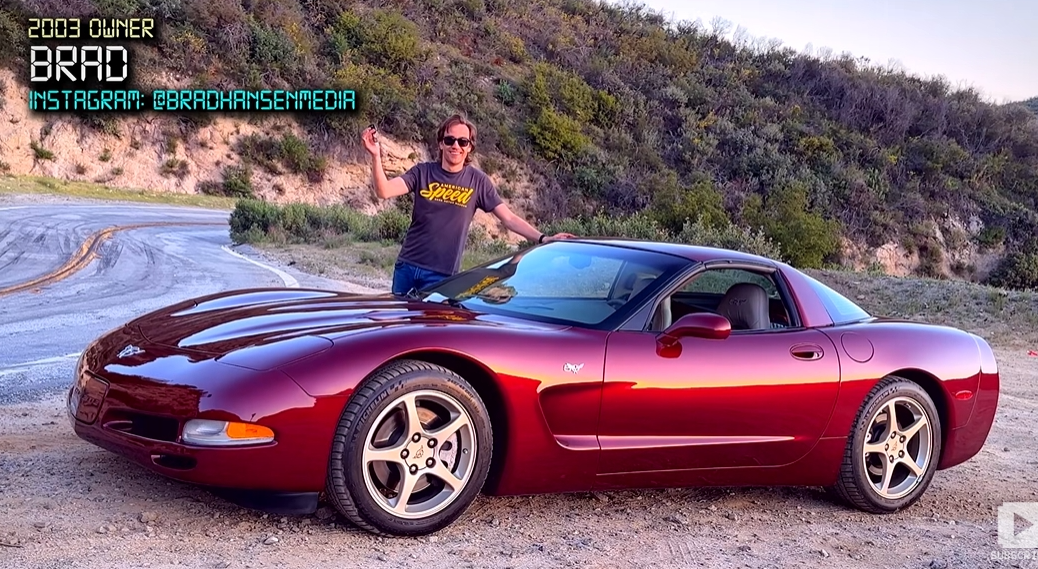
This one hits differently — because this is the Corvette Brad lives with. Jumping into the C5 feels almost too easy, almost too normal. And that’s exactly the point. The C5 doesn’t overwhelm you; it invites you.
On the road, everything just works. The LS1 pulls smoothly, the chassis feels balanced, and the car shrinks around you. It doesn’t shout for attention — it earns trust. This is the Corvette you could drive every day, across the country, without hesitation.
The Good
- LS1 power and reliability, with its 350hp propelling the C5 from 0 to 60 mph in just 4.9 seconds
- The C5 structure was 4 1/2 times stiffer than the C4, due to advanced hydroformed side rails, a strong central backbone, and stiff floor panel sandwiches of balsa wood and fiberglass
- Massive interior and cargo improvements
- For the first time, the transmission was moved to the back, which helped balance weight distribution and allowed for far more footroom
- Everyday usability
The Bad
- Less charisma than earlier generations
- Interior materials feel cheap
- Known EBCM issues
As the miles click by, the C5 reveals itself as the great bridge between eras. It blends modern performance with analog feel in a way that feels effortless. This is the Corvette that taught Chevrolet how to make speed livable. It may not stir the soul immediately, but it wins you over quietly and completely. The C5 is confidence on four wheels.
The Test Vehicle: 2003 50th Anniversary (LS1 V8, 6-speed manual)
Brad’s Most Memorable Quote: “This is in a lot of ways the last truly analog Corvette.”
C6 Corvette: The Sweet Spot Where Everything Clicked (40:48)
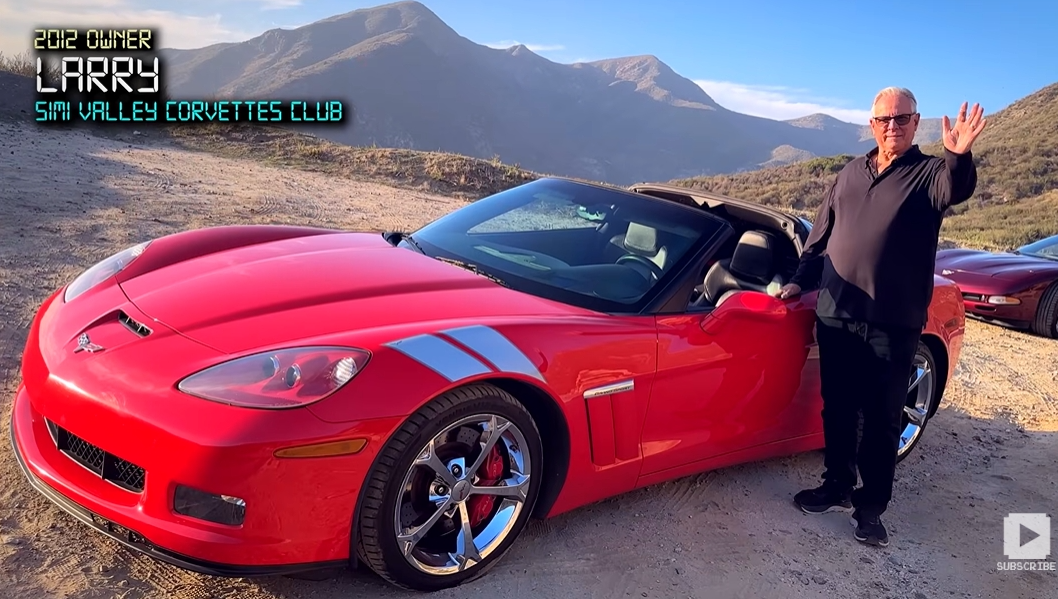
The moment the C6 stretches its legs, the conclusion begins forming. This is speed without intimidation. Power without chaos. Retro Cars Forever feels it instantly — the LS3 surges, the steering talks, and the car begs to be driven harder.
On the canyon road, the C6 feels playful rather than punishing. It delivers thrills without fear, balance without boredom. It’s fast enough to excite, refined enough to trust, and raw enough to feel like a Corvette should.
The Good
- Outstanding performance from the 430hp 6.2L LS3, with 0 to 60 mph arriving in 4.3 seconds
- Refined chassis and steering (2008+)
- Comfortable, usable, and thrilling
The Bad
- Rising costs
- Because the C5 was a hit in sales and accolades, Chevy’s changes to the C6 were more evolutionary than revolutionary
- Loss of pop-up headlights
- Increasing tech creep
By the end of the drive, the C6 feels inevitable. This is where all the lessons come together. It captures the soul of earlier Corvettes while benefiting from decades of refinement. Nothing feels excessive, nothing feels compromised. The C6 isn’t just great — it’s complete.
The Test Vehicle: 2012 Grand Sport (LS3 V8, 6-speed auto)
Brad’s Most Memorable Quote: “Think of the C6 like the C5 with all the rough edges just sanded down.”
C7 Corvette: When Performance Outpaced Engagement (49:41)
The C7 is stunning from the first glance to the last. Inside, the materials finally match the performance promise. Press the throttle, and the response is immediate — violent, even. This Corvette doesn’t build speed; it detonates it.
But on the canyon road, something changes. The limits are so high, the pace so extreme, that enjoyment starts to shrink. You’re managing capability rather than exploring it, respecting the car more than bonding with it.
The Good
- Best interior quality yet
- Explosive performance, with an all-new 455hp 6.2L LT1
- Corvette’s first use of variable valve timing, direct fuel injection, and cylinder deactivation
- Seven-speed manual with rev-matching, the last 3-pedal Corvette
- The last front-engine Vette
- The new fully aluminum frame was not only lighter than the C6s, but also 57% stiffer
The Bad
- Styling lacks classic Corvette elegance
- Speed reduces engagement
- Expensive, and holding its value better than most generations
The C7 is extraordinary, but it signals a shift. Performance begins to outpace intimacy. The car is almost too good at what it does. It’s a reminder that faster doesn’t always mean more fun. And it sets the stage for what comes next.
The Test Vehicle: 2018 Grand Sport (LT1 V8, 7-speed manual)
Brad’s Most Memorable Quote: “In some ways, it is more fun to drive a slow car fast than a fast car slow.”
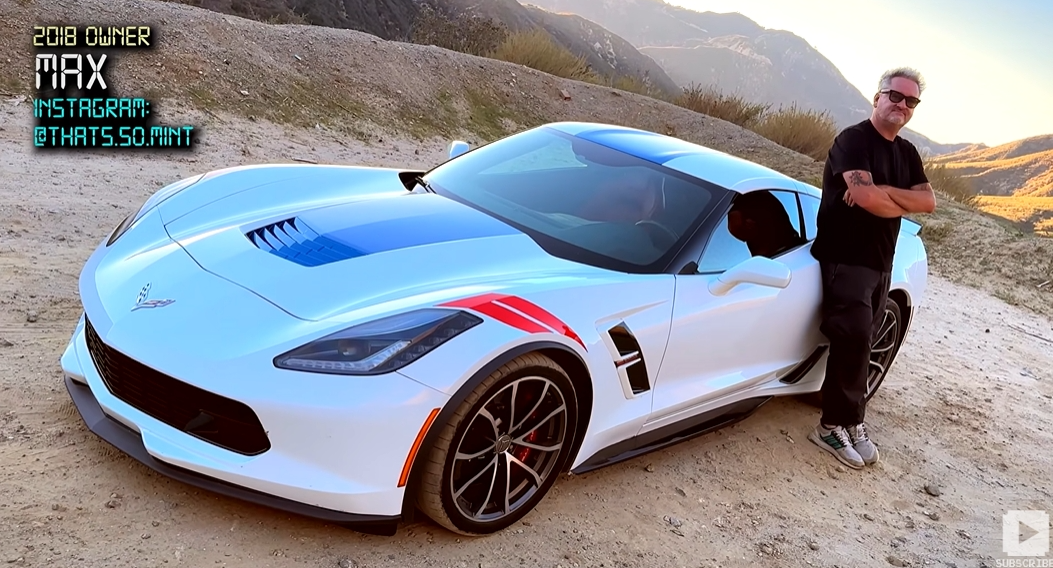
C8 Corvette: A Supercar Rewrites The Rulebook (1:00:45)
The C8 doesn’t feel like the next Corvette — it feels like a different species. Sitting low, surrounded by technology, Retro Cars Forever likens it to piloting a fighter jet. The mid-engine balance transforms everything.
Acceleration is instant. Cornering is surreal. The car feels unstoppable. But that perfection comes with distance. You marvel at it more than you converse with it, experiencing awe instead of intimacy.
The Good
- Revolutionary design, including its mid-engine placement
- Astonishing performance, with the evolutionary LT1, now named the LT2, seeing a power bump to 490hp
- Incredible chassis balance
- Modern supercar presence
The Bad
- No manual transmission
- Overwhelming speed
- Less emotional feedback
- DCT shifting issues and complicated service recommendations
As the test concludes, the truth settles in. The C8 is the most capable Corvette ever built. It redefines what the nameplate can do on a global stage. But it also raises a deeper question about connection versus capability. And that question makes the final verdict all the more compelling.
The Test Vehicle: 2021 Z51 (LT2 V8, 8-speed dual clutch)
Brad’s Most Memorable Quote: “I really do feel like I’m piloting a fighter jet.”
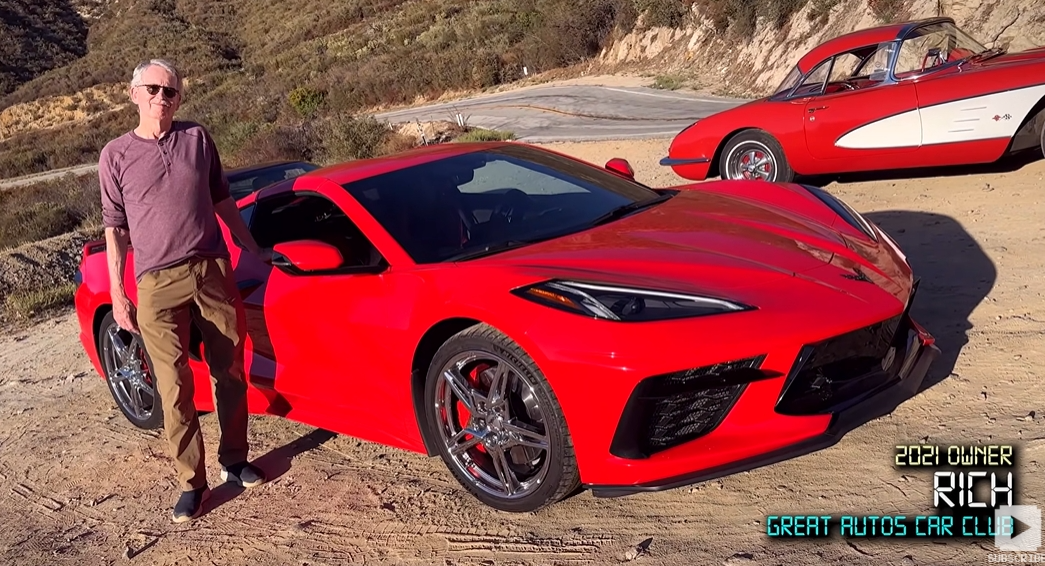
The Ultimate Corvette Showdown Winner
After driving all eight generations back to back, Brad doesn’t hedge, hesitate, or soften the verdict. He frames the decision around what matters most to real enthusiasts today — performance, comfort, style, reliability, and value — and then delivers it plainly: “Without further ado, I present the sixth-generation C6 as my winner.” In his eyes, the C6 occupies a rare and fleeting moment in Corvette history, where old-school character and modern capability overlap perfectly. Older Corvettes may tug harder at the heartstrings, and newer Corvettes may dominate the stopwatch, but neither blends the full experience quite like this one.
What ultimately seals it is balance. Brad explains that “the C6 represents the sweet spot of everything that makes the Corvette great, at a reasonable cost.” It’s spacious and comfortable enough to live with every day, yet still delivers performance that far exceeds what most drivers can responsibly use. Add in what he calls “classically attractive Corvette design,” and the equation becomes even stronger. He’s especially clear-eyed about the sweet spot within the generation itself, noting that “the improved 2008 and later model years” elevate the C6 even further. For the broadest audience — from weekend warriors to daily drivers — this is the Corvette that simply makes the most sense.
The People’s Champion: The C5 Corvette’s Enduring Value
The honorable mention lands close to home, and Brad doesn’t disguise his admiration for the C5. He points directly to the market reality, saying that “if you’re shopping for a Corvette in the $15,000 to low $20,000 range, where you’ll find either a late C5 or an early C6, I personally recommend going with the late C5.” While it may not be as quick or as refined as the C6, the C5 delivers something increasingly rare: simplicity. Brad describes it as offering “a simpler, more natural feeling motoring experience,” calling it “easily the most user-friendly of all the Corvette generations.” For buyers focused on value, approachability, and everyday enjoyment, it remains one of the smartest performance bargains on the road.
The CorvSport Takeaway: The Sweet Spot Isn’t An Accident
At CorvSport, this conclusion surprises us — but not really. Having owned and lived with both the C5 and C6, we’ve long understood why these two generations continue to dominate real-world enthusiast conversations. The C6 truly is the sweet spot: modern enough to feel special every time you drive it, analog enough to keep you connected, and attainable enough to still feel like a win. The C5, meanwhile, remains one of the greatest performance values Chevrolet has ever produced, a Corvette that rewards drivers rather than intimidating them. Brad says it best when he reminds us that “there’s not a bad one in the bunch,” and we couldn’t agree more. For every taste, every budget, and every kind of enthusiast, there really is a Corvette waiting — and that’s what makes this story, and this car, timeless.
Featured Video
Thanks for being with us during 2025 on this Corvette journey. Let’s make 2026 the best year ever–join the CorvSport movement!
- Engage with CorvSport’s 167,000 Facebook followers and be the first to see our daily content.
- Experience how obsessed we are and view our top 25 monthly features by visiting our digital magazine, CORVETTE OBSESSED.
- Enjoy an ad-free experience, get exclusive content, and support CorvSport for only $2.92/month!