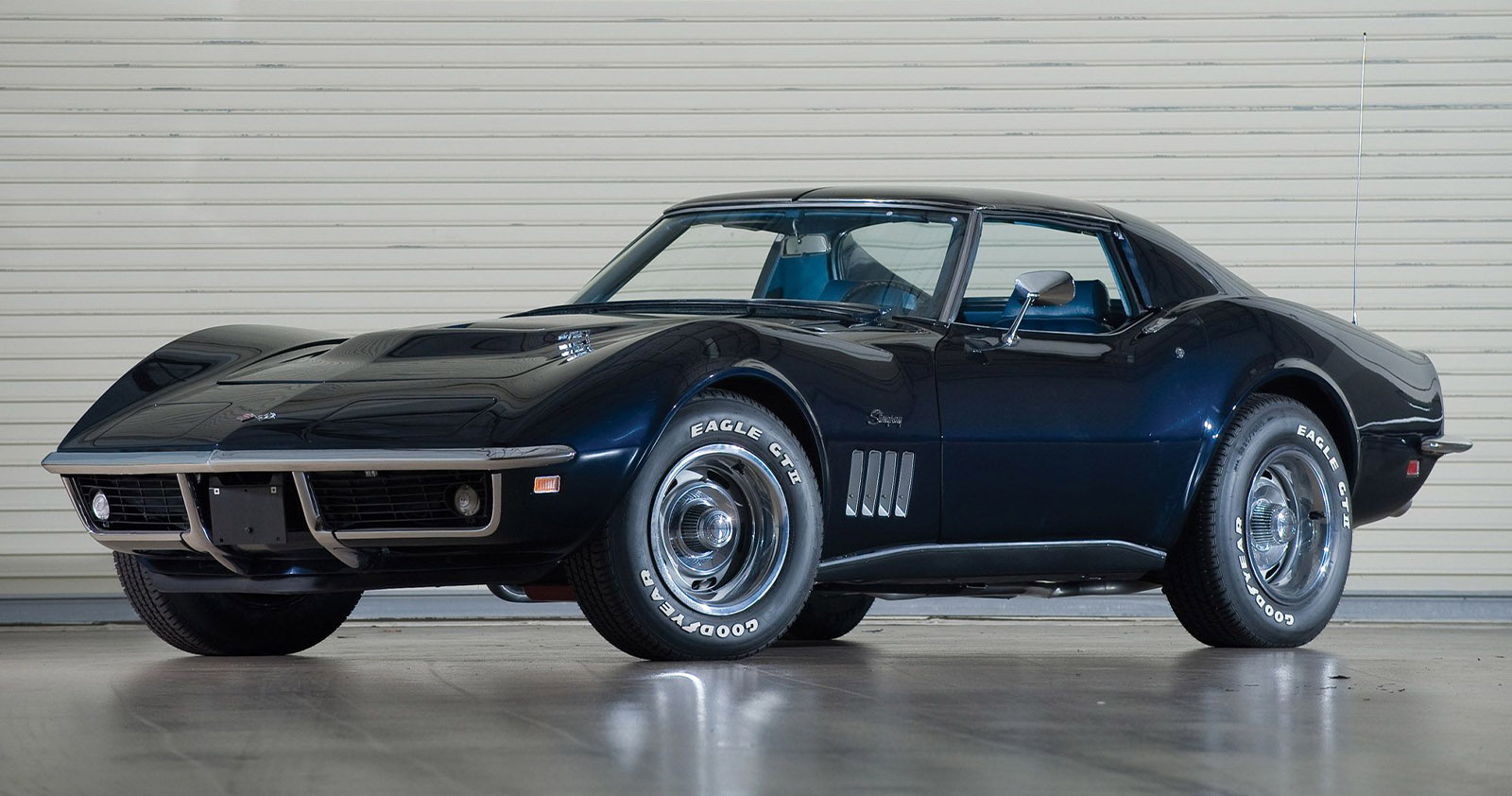
The first 327 year in detail: four engine outputs topped by the 360-hp fuel-injected RPO 582, Carter and Rochester part numbers, 3-speed and close-ratio 4-speed gearing, Powerglide ratios, dimensions, weights and fluid capacities.



CORVETTE RESEARCH
Engines, horsepower, torque, 0–60, the quarter mile, top speed, weight, dimensions and gearboxes for every Corvette since 1953, from the 150-horsepower Blue Flame six to the 1,250-horsepower ZR1X. This page gives the performance story by generation, the fastest Corvette of each, how the numbers were measured and why they are not always comparable, and a specifications page for every model year.
Quick Nav: Overview · How to Read Them · Fastest by Generation · Performance · C1 · C2 · C3 · C4 · C5 · C6 · C7 · C8 · FAQs
What This Is: The factory specifications and the tested performance of every Corvette model year: engines with horsepower and torque, transmissions and axles, dimensions and weight, brakes, tires and the acceleration, quarter-mile and top-speed figures
Years Covered: 1953 to 2027; every model year except 1983
Horsepower, Then and Now: 150 (1953 Blue Flame six); 283 (1957 fuelie, one per cubic inch); 435 gross (1967–69 L71); 165 net (1975, the low); 405 (1993 ZR-1); 505 (2006 Z06); 638 (2009 ZR1); 755 (2019 ZR1); 1,064 (2025 ZR1); 1,250 (2026 ZR1X)
Acceleration, Then and Now: 0–60 in about 11 seconds (1953), 5.7 (1957 fuelie), 5.3 (1967 L71), 4.2 (1990 ZR-1), 3.7 (2006 Z06), 3.4 (2009 ZR1), 2.95 (2015 Z06), 2.85 (2019 ZR1), 2.9 (2020 Stingray), 2.3 (2025 ZR1), under 2.0 (2026 ZR1X)
Top Speed, Then and Now: 107 mph (1953), 132 (1957), 150 (1985), 180 (1990 ZR-1), 198 (2006 Z06), 205 (2009 ZR1), 212 (2019 ZR1), 233 (2025 ZR1, the fastest American production car)
Related Research: The engine guides for every engine, the generation hubs’ engine and racing tables, the quarter-mile and 0–60 histories, the year pages’ full spec sheets
The Corvette’s specifications read as one long acceleration: 150 horsepower and eleven seconds to 60 in 1953, 283 horsepower and the first one-horsepower-per-cubic-inch engine in 1957, 435 gross horsepower in 1967, a fall to 165 in 1975, then 405, 505, 638, 755, 1,064 and 1,250 horsepower in the flagships of each generation since, with 0–60 falling from 5.3 seconds for a 1967 L71 to under two for the 2026 ZR1X. This page is the index: each generation’s table lists every model year with its engines and a link to that year’s specifications page, where the full factory sheet sits with the tested performance, the dimensions and the weights.
The numbers need reading with care, because the methods changed. Horsepower was SAE gross through 1971, measured on a bare engine, and SAE net from 1972, measured with the accessories and exhaust fitted, which is why the same LT-1 reads 370 in 1970 and 255 in 1972; the 2005 SAE J1349 certification tightened net ratings again. Acceleration and top-speed figures are the magazines’ and GM’s, from different tracks, drivers and tires, and the year pages say whose figure each one is. The explainer below walks through the eras and the methods, and the reference table gives the fastest Corvette of each generation.
What the specifications do not change is the formula: a V-8 (after 1955) in a two-seat body on a separate structure, with the engine in front until 2020 and behind the driver since, a manual gearbox until 2019 and a dual-clutch since, a transverse leaf spring until 2019 and coils since. The generation hubs carry the chassis and engine tables; the engine guides cover every engine; the year pages carry each year’s full sheet.
A specification sheet is a set of claims, and a Corvette’s claims have been measured four different ways over seventy years. Here is what the numbers mean, era by era, and which ones can be compared.
Through 1971 Chevrolet quoted SAE gross horsepower, measured on a dynamometer with no air cleaner, exhaust system, alternator or fan, and sometimes with a view to insurance and racing classes: the L88 was rated at 430 to keep it off the street buyers’ list and made about 550, and the 435-horsepower L71 of 1967–69 is the highest gross rating a Corvette ever carried. From 1972 the ratings are SAE net, with the engine as installed, which took the base 350 from 270 to 200 overnight without changing it, and the LT-1 from 330 to 255. The C3’s 165-horsepower low of 1975 is a net figure with a catalytic converter; the 230 of the 1980 L82 would have read around 300 gross. From 2005 GM certifies to SAE J1349 with a witness, which is why the LS2’s 400 and everything since are the firmest numbers on the page. Compare within an era, not across one.
0–60 and quarter-mile times are the magazines’ until the 1990s and GM’s own since, and they depend on the driver, the surface, the tires and the launch. A 1967 L71 ran 0–60 in about 5.3 seconds and the quarter in 13.6 on bias-ply tires; a 1990 ZR-1 4.2 and 12.8; a 2006 Z06 3.7 and 11.7; a 2015 Z06 2.95 and 10.95 with the eight-speed; a 2019 ZR1 2.85 and 10.6; a 2020 Stingray Z51 2.9 and 11.2, the first base Corvette under three seconds; a 2025 ZR1 2.3 and 9.6; and the 2026 ZR1X under two seconds and under nine in the quarter. The quarter-mile and 0–60 histories linked below list every year’s best; the year pages say whose figure it is.
Top speed went from the 107 mph of a Blue Flame 1953 to 132 for the 1957 fuelie, 150 for the 1985 L98 (Car and Driver’s fastest car in America), 180 for the 1990 ZR-1, 198 for the 2006 Z06, 205 for the 2009 ZR1, 212 for the 2019 ZR1 and 233 mph for the 2025 ZR1 at Papenburg, driven by the chief engineer, the fastest American production car. The 1978–82 cars had 85-mph speedometers by federal rule and would do 120 to 130; the 1969 ZL1 was never officially timed.
The Corvette has weighed between 2,700 and 3,700 pounds for seventy years. The 1953 weighed 2,850; the 1963 coupe 3,035; the 1970s cars 3,500 with the urethane bumpers and the sound insulation; the 1984 C4 3,200; the 1997 C5 3,245 with the transaxle; the 2006 Z06 3,132 on the aluminum frame; the 2019 ZR1 3,560; the 2020 Stingray 3,366 and the 2026 ZR1X about 4,100 with its battery and motor. Wheelbase went from 102 inches (1953–62) to 98 (1963–82), 96.2 (1984–96), 104.5 (1997–2004), 105.7 (2005–13), 106.7 (2014–19) and 107.2 (2020 on); overall length from 167 inches to 182.3. The year pages carry each year’s full dimension sheet, and the generation hubs the chassis notes.
Every engine has its own guide, linked from the generation hubs and the engines page: the Blue Flame six, the 265, 283 and 327 small blocks, the 350 in its L48, L82, LT-1, L81 and L83 forms, the 396, 427 and 454 big blocks, the C4’s L98, LT5, LT1 and LT4, the C5–C7’s LS1 through LS9 and LT1, LT4 and LT5, and the C8’s LT2, LT6, LT7, the hybrids and the 2027 LS6. Gearboxes ran from the two-speed Powerglide and the 1955 three-speed to the four-speeds, the 4+3, the ZF six-speed, the T56 and TR6060, the seven-speed TR6070 and the C8’s eight-speed dual-clutch; axle ratios from 3.55 to 4.56 on the early cars decide more of a car’s feel than its horsepower, and the year pages list what was offered.
MORE: QUARTER-MILE TIMES, ALL YEARS / 0–60 TIMES, ALL YEARS / THE FASTEST PRODUCTION CORVETTES / THE ENGINES
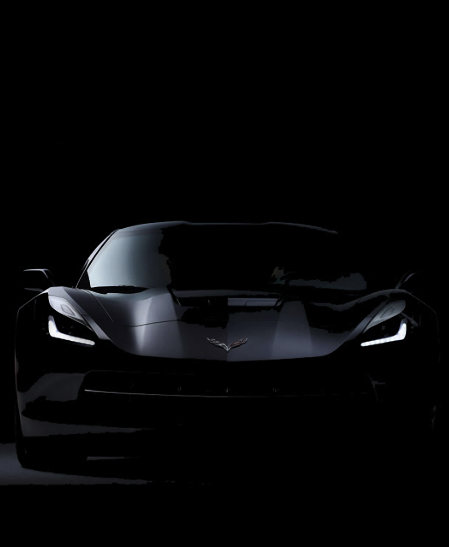
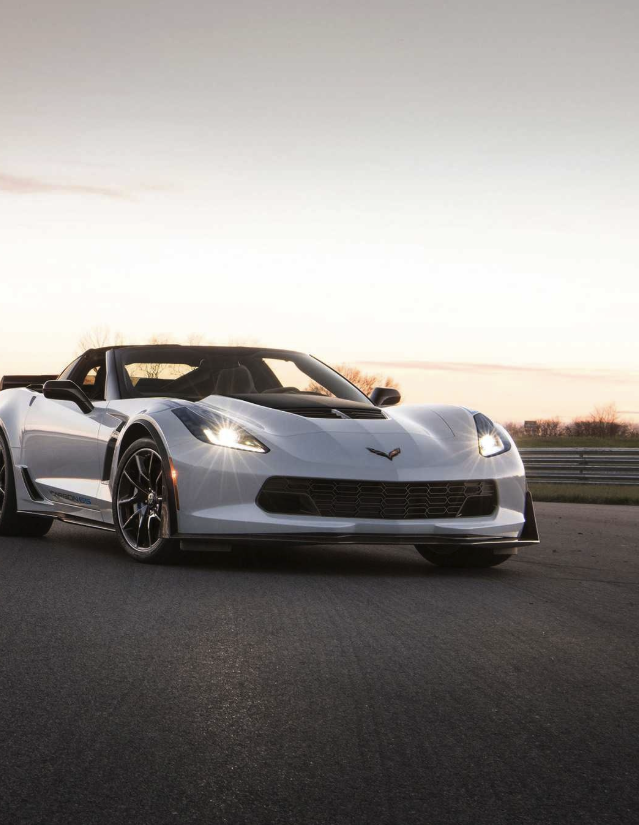
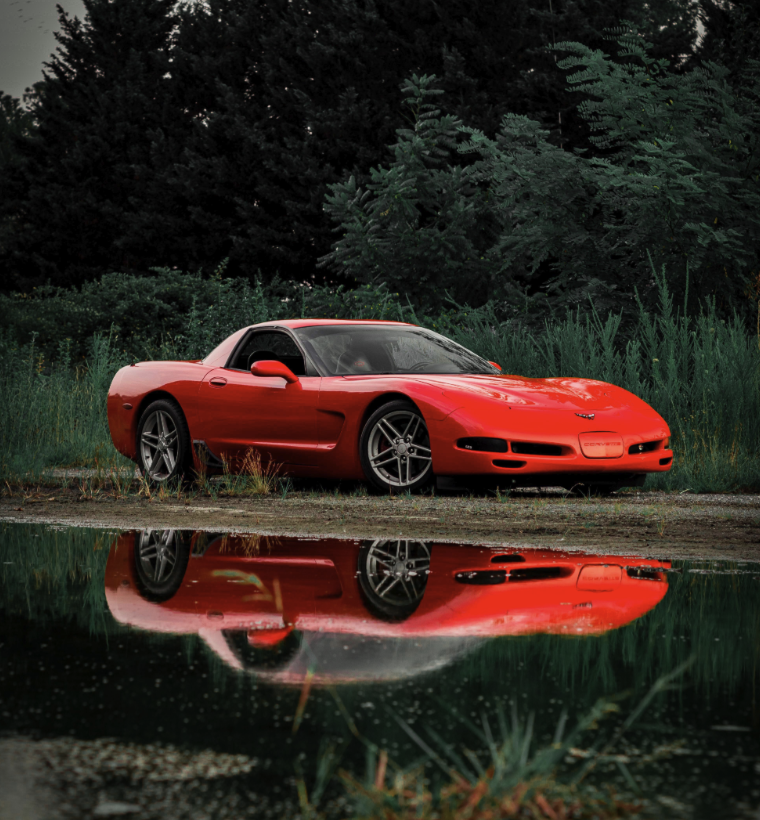
Each generation’s top car with its engine, output, acceleration and top speed, and the base car beside it for scale, every one linked to its guide. Horsepower is gross through 1971 and net after; acceleration figures are the best contemporary tests or GM’s, as noted on the year pages.
The spread inside a generation is the story: a 1967 ran from 300 to 435 horsepower, a 2026 from 495 to 1,250.
MORE: THE FASTEST PRODUCTION CORVETTES / THE EVOLUTION OF THE QUARTER MILE
| GENERATION | BASE CAR | THE FASTEST | OUTPUT | 0–60 / ¼ MILE | TOP SPEED | GUIDE |
|---|---|---|---|---|---|---|
| C1 Corvette | 1953: Blue Flame six, 150 hp, 11.0 s | 1962 327 L84 fuelie (or the 1957 283 fuelie, 283 hp) | 360 hp gross | 5.9 s / 14.5 s | 132 mph | C1 engines |
| C2 Corvette | 1963: 327, 250 hp, 7.8 s | 1967 427 L71 Tri-Power; the 1967 L88 unofficially | 435 hp gross (L88 430 rated, ~550 real) | 5.3 s / 13.6 s | 140 mph | L88 |
| C3 Corvette | 1975: 350 L48, 165 hp, 8.6 s | 1969 427 ZL1 / L88; the 1970 LT-1 among small blocks | 430 hp rated (ZL1); 370 hp (LT-1) | about 5 s / 13 s (L88) | 140+ mph | ZL1 |
| C4 Corvette | 1984: 350 L83, 205 hp, 7.0 s | 1993–95 ZR-1 (LT5) | 405 hp | 4.2 s / 12.8 s (1990, 375 hp) | 180 mph | C4 ZR-1 |
| C5 Corvette | 1997: LS1, 345 hp, 4.7 s | 2002–04 Z06 (LS6) | 405 hp | 3.9 s / 12.4 s | 171 mph | C5 Z06 |
| C6 Corvette | 2005: LS2, 400 hp, 4.2 s | 2009–13 ZR1 (supercharged LS9) | 638 hp | 3.4 s / 11.3 s | 205 mph | C6 ZR1 |
| C7 Corvette | 2014: LT1, 455 hp, 3.8 s (Z51) | 2019 ZR1 (supercharged LT5) | 755 hp | 2.85 s / 10.6 s | 212 mph | C7 ZR1 |
| C8 Corvette | 2020: LT2, 495 hp, 2.9 s (Z51) | 2026 ZR1X (twin-turbo LT7 + front motor); the ZR1 for top speed | 1,250 hp | under 2.0 s / under 9 s | 233 mph (ZR1) | 2026 ZR1X guide |
The site-wide performance histories: every year’s best quarter-mile and 0–60, the fastest production Corvettes, and the engines page that covers each engine in detail.
Corvette Quarter Mile Times, All Years — the best quarter-mile for every model year
Corvette 0–60 Times, All Years — acceleration year by year, 1953 to today
The Fastest Production Corvettes So Far — ranked by top speed and acceleration
The Evolution of the Corvette’s Quarter Mile — from the C1 to the ZR1X’s 8.675
Corvette Engines — every engine, with its guide
From the 150-horsepower Blue Flame six and the Powerglide of 1953 to the 360-horsepower fuel-injected 327 and four-speed of 1962: 102-inch wheelbase, solid rear axle, drum brakes, 2,850 to 3,100 pounds, 0–60 from eleven seconds to under six. The 1957 fuelie’s 283 horsepower from 283 cubic inches is the generation’s headline. The 1958 and 1959 have two specs pages each; the plain one is linked, the C1-titled one is on the grid.
MORE: THE C1 HUB / C1 ENGINES / C1 PERFORMANCE / ALL C1 SPECS PAGES
| YEAR | THE SPECS PAGE | ENGINES | MORE |
|---|---|---|---|
| 1953 | 1953 Corvette Specs & Performance | 235-ci Blue Flame six, 150 hp, Powerglide | Year page |
| 1954 | 1954 Corvette Specs & Performance | Year page | |
| 1955 | 1955 Corvette Specs & Performance | 265 ci V-8 | Year page |
| 1956 | 1956 Corvette Specs & Performance | 265 ci V-8, 210 hp | Year page |
| 1957 | 1957 Corvette Specs & Performance | 283 ci V-8, 220 to 283 hp | Year page |
| 1958 | 1958 Corvette Specs & Performance; Performance & Specifications | 283 ci V-8, 230 to 290 hp | Year page |
| 1959 | 1959 Corvette Specs & Performance; Performance & Specifications | 283 ci V-8, 230 to 290 hp | Year page |
| 1960 | 1960 Corvette Specs & Performance | 283 ci V-8, 230 to 315 hp | Year page |
| 1961 | 1961 Corvette Specs & Performance | 283 ci V-8, 230 to 315 hp | Year page |
| 1962 | 1962 Corvette Specs & Performance | 327 ci V-8, 250 to 360 hp | Year page |
One page per model year. Click through for the full data, the sources and the notes on that year.


Duntov’s chassis: 98-inch wheelbase, independent rear suspension, four-wheel discs from 1965, about 3,035 pounds, and engines from the 250-horsepower 327 to the 435-horsepower L71 and the L88, with the 396 in 1965 and the 427 from 1966; a 1967 L71 ran 0–60 in about 5.3 seconds and the quarter in 13.6. The 1965 page is the specifications post, not the Mako Shark II story that shares its tag.
MORE: THE C2 HUB / C2 ENGINES / C2 PERFORMANCE / ALL C2 SPECS PAGES
| YEAR | THE SPECS PAGE | ENGINES | MORE |
|---|---|---|---|
| 1963 | 1963 Corvette Specs & Performance | 327 ci V-8, 250 to 360 hp | Year page |
| 1964 | 1964 Corvette Specs & Performance | 327 ci V-8, 250 to 375 hp | Year page |
| 1965 | 1965 Corvette Specs & Performance; Mako Shark II Concept | 327 ci V-8, 250 to 375 hp | Year page |
| 1966 | 1966 Corvette Specs & Performance | 327 ci V-8, 300 or 350 hp | Year page |
| 1967 | 1967 Corvette Specs & Performance | 327 ci V-8, 300 or 350 hp | Year page |
One page per model year. Click through for the full data, the sources and the notes on that year.


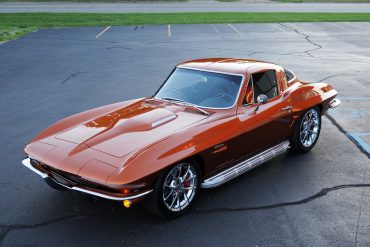

The Sting Ray chassis under a bigger body, 3,200 to 3,600 pounds, and the widest spread of any generation: the 435-horsepower L71, the L88 and ZL1 and the 370-horsepower LT-1 in the gross years, then the switch to net ratings in 1972 and the fall to 165 horsepower in 1975 with the catalytic converter, back to 230 in 1980 and 200 with Cross-Fire Injection in 1982. Fifteen specs pages, one per year.
MORE: THE C3 HUB / C3 ENGINES / C3 PERFORMANCE / ALL C3 SPECS PAGES
One page per model year. Click through for the full data, the sources and the notes on that year.


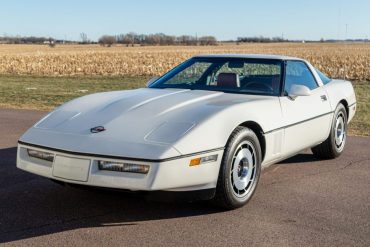
The uniframe, 96.2-inch wheelbase, aluminum suspension and fiberglass springs under 3,200 to 3,500 pounds: the 205-horsepower Cross-Fire 1984 at 7 seconds to 60, the L98 at 230 to 250, the LT1 at 300 and the LT4 at 330, and the ZR-1’s 375- and 405-horsepower LT5 at 4.2 seconds and 180 mph, with the Callaway B2K at 345 to 403. Thirteen specs pages.
MORE: THE C4 HUB / C4 ENGINES / C4 PERFORMANCE / ALL C4 SPECS PAGES
| YEAR | THE SPECS PAGE | ENGINES | MORE |
|---|---|---|---|
| 1984 | 1984 Corvette Specs & Performance | 350 ci L83 with Cross-Fire Injection, 205 hp: the 1982 engine carried over, the only… | Year page |
| 1985 | 1985 Corvette Specs & Performance | 350 ci L98 with Tuned-Port Injection, 230 hp: the first year of the TPI small-block | Year page |
| 1986 | 1986 Corvette Specs & Performance | 350 ci L98 with Tuned-Port Injection: 230 hp with cast-iron heads | Year page |
| 1987 | 1987 Corvette Specs & Performance | 350 ci L98 with Tuned-Port Injection and new roller lifters, 240 hp | Year page |
| 1988 | 1988 Corvette Specs & Performance | 350 ci L98 with Tuned-Port Injection and new aluminum heads, 240 hp | Year page |
| 1989 | 1989 Corvette Specs & Performance | 350 ci L98 with Tuned-Port Injection and new Multec injectors, 245 hp in coupes with the… | Year page |
| 1990 | 1990 Corvette Specs & Performance | 350 ci L98 with speed-density Tuned-Port Injection, 245 hp | Year page |
| 1991 | 1991 Corvette Specs & Performance | 350 ci L98 with speed-density Tuned-Port Injection, 245 hp | Year page |
| 1992 | 1992 Corvette Specs & Performance | New 350 ci LT1 small-block, 300 hp, with reverse-flow cooling and Mobil 1 factory fill | Year page |
| 1993 | 1993 Corvette Specs & Performance | 350 ci LT1, 300 hp and now 340 lb-ft | Year page |
| 1994 | 1994 Corvette Specs & Performance | 350 ci LT1, 300 hp and 340 lb-ft, now with sequential fuel injection and a stronger… | Year page |
| 1995 | 1995 Corvette Specs & Performance | 350 ci LT1, 300 hp and 340 lb-ft, with new connecting rods, injectors and a vented… | Year page |
| 1996 | 1996 Corvette Specs & Performance | 350 ci LT1, 300 hp and 335 lb-ft, now with OBD-II | Year page |
One page per model year. Click through for the full data, the sources and the notes on that year.

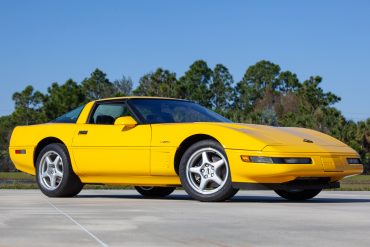


Hydroformed rails, the rear transaxle, 104.5-inch wheelbase and 3,245 pounds for the coupe, 3,118 for the Z06: the LS1 at 345 and 350 horsepower (4.7 seconds to 60, 172 mph) and the Z06’s LS6 at 385 and 405 (3.9 seconds, 171 mph). Eight specs pages.
MORE: THE C5 HUB / C5 ENGINES / C5 PERFORMANCE / ALL C5 SPECS PAGES
| YEAR | THE SPECS PAGE | ENGINES | MORE |
|---|---|---|---|
| 1997 | 1997 Corvette Specs & Performance | 346 ci | Year page |
| 1998 | 1998 Corvette Specs & Performance | 346 ci | Year page |
| 1999 | 1999 Corvette Specs & Performance | 346 ci | Year page |
| 2000 | 2000 Corvette Specs & Performance | 346 ci | Year page |
| 2001 | 2001 Corvette Specs & Performance | 346 ci | Year page |
| 2002 | 2002 Corvette Specs & Performance | 346 ci | Year page |
| 2003 | 2003 Corvette Specs & Performance | 346 ci | Year page |
| 2004 | 2004 Corvette Specs & Performance | 346 ci | Year page |
One page per model year. Click through for the full data, the sources and the notes on that year.
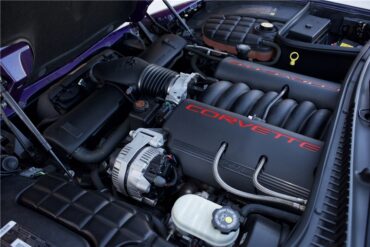


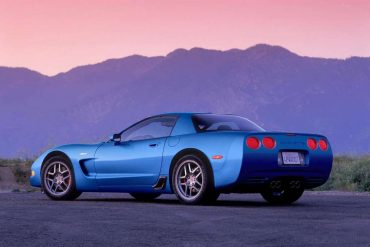

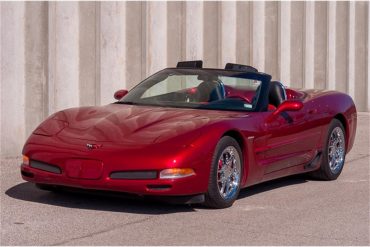


105.7-inch wheelbase, 3,200 pounds, and four engines: the 400-horsepower LS2 (4.2 seconds), the 430/436-horsepower LS3, the Z06’s 505-horsepower LS7 (3.7 seconds, 198 mph) and the ZR1’s 638-horsepower LS9 (3.4 seconds, 205 mph), with the Grand Sport and the 427 Convertible between. Nine specs pages, one per year; the old index skipped the C6 and this one does not.
MORE: THE C6 HUB / C6 ENGINES / C6 PERFORMANCE / ALL C6 SPECS PAGES
| YEAR | THE SPECS PAGE | ENGINES | MORE |
|---|---|---|---|
| 2005 | 2005 Corvette Specs & Performance | 364 ci | Year page |
| 2006 | 2006 Corvette Specs & Performance | 364 ci | Year page |
| 2007 | 2007 Corvette Specs & Performance | 364 ci | Year page |
| 2008 | 2008 Corvette Specs & Performance | 376 ci | Year page |
| 2009 | 2009 Corvette Specs & Performance | 376 ci | Year page |
| 2010 | 2010 Corvette Specs & Performance | 376 ci | Year page |
| 2011 | 2011 Corvette Specs & Performance | 376 ci | Year page |
| 2012 | 2012 Corvette Specs & Performance | 376 ci | Year page |
| 2013 | 2013 Corvette Specs & Performance | 376 ci | Year page |
One page per model year. Click through for the full data, the sources and the notes on that year.


The aluminum frame on every car, 106.7-inch wheelbase, 3,300 to 3,600 pounds: the direct-injected LT1 at 455/460 horsepower (3.8 seconds with Z51), the Z06’s LT4 at 650 (2.95 seconds, 185 mph) and the ZR1’s LT5 at 755 (2.85 seconds, 212 mph), with the seven-speed manual and the eight-speed automatic. Six specs pages.
MORE: THE C7 HUB / C7 ENGINES / C7 PERFORMANCE / ALL C7 SPECS PAGES
| YEAR | THE SPECS PAGE | ENGINES | MORE |
|---|---|---|---|
| 2014 | 2014 Corvette Specs & Performance | 376 ci | Year page |
| 2015 | 2015 Corvette Specs & Performance | 376 ci | Year page |
| 2016 | 2016 Corvette Specs & Performance | 376 ci | Year page |
| 2017 | 2017 Corvette Specs & Performance | 376 ci | Year page |
| 2018 | 2018 Corvette Specs & Performance | 376 ci | Year page |
| 2019 | 2019 Corvette Specs & Performance | 376 ci | Year page |
One page per model year. Click through for the full data, the sources and the notes on that year.
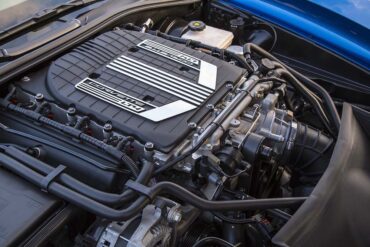


Mid-engine, 107.2-inch wheelbase, 3,366 pounds for the Stingray to about 4,100 for the ZR1X: the LT2 at 490/495 horsepower (2.9 seconds), the Z06’s flat-plane LT6 at 670 (2.6 seconds), the E-Ray at 655 (2.5), the ZR1’s twin-turbo LT7 at 1,064 (2.3 seconds, 233 mph), the ZR1X at 1,250 (under 2.0) and for 2027 the 535-horsepower LS6 in the Stingray and Grand Sport. Specs pages exist for 2020–2023, with a separate 2023 Z06 page; the later years are on the year pages and the in-depth guides.
MORE: THE C8 HUB / THE ZR1X IN-DEPTH / C8 PERFORMANCE / ALL C8 SPECS PAGES
| YEAR | THE SPECS PAGE | ENGINES | MORE |
|---|---|---|---|
| 2020 | 2020 Corvette Specs & Performance | 376 ci | Year page |
| 2021 | 2021 Corvette Specs & Performance | 376 ci | Year page |
| 2022 | 2022 Corvette Specs & Performance | 376 ci | Year page |
| 2023 | 2023 Corvette Specs & Performance; Z06 Performance & Specifications | Stingray: 376 ci | Year page |
| 2024 | Specs on the year page | Stingray and E-Ray: 376 ci | Year page |
| 2025 | Specs on the year page | Stingray and E-Ray: 376 ci | Year page |
| 2026 | Specs on the year page | Stingray: 376 ci | Year page |
| 2027 | Specs on the year page | Stingray, Grand Sport and Grand Sport X: 409 ci | Year page |
One page per model year. Click through for the full data, the sources and the notes on that year.


The 2025–26 ZR1 for top speed, 233 mph at Papenburg with the twin-turbo 1,064-horsepower LT7, the fastest American production car; the 2026 ZR1X for acceleration, 1,250 horsepower, under two seconds to 60 and under nine seconds in the quarter mile, with the Pikes Peak production-car record. Before the C8, the 2019 ZR1 (755 hp, 212 mph) and the 2009 ZR1 (638 hp, 205 mph) held the titles.
Depends on the year and model, from 150 in 1953 to 1,250 in the 2026 ZR1X. The base car has made 495 horsepower since 2020 and 535 from 2027; the Z06 670; the E-Ray 655; the ZR1 1,064. Historically: 283 in 1957, 435 gross in 1967, 165 net in 1975, 230 in 1980, 375 in the 1990 ZR-1, 345 in the 1997 LS1, 505 in the 2006 Z06, 638 in the 2009 ZR1. The year pages give every engine’s rating.
Because the measurement changed. Through 1971 ratings were SAE gross, on a bare engine with no accessories or exhaust, which flattered them by a quarter or more; from 1972 they are SAE net, measured as installed, which is why the same LT-1 reads 370 in 1970 and 255 in 1972. The 1975 low of 165 is a net figure with a catalytic converter. From 2005 ratings are SAE-certified and the firmest of all. Compare within an era, not across one.
A 2020-on Stingray with Z51 does it in 2.9 seconds, a C8 Z06 in 2.6, the E-Ray in 2.5, the ZR1 in 2.3 and the ZR1X in under 2.0. Earlier: a 1957 fuelie about 5.7, a 1967 L71 5.3, a 1990 ZR-1 4.2, a 2002 Z06 3.9, a 2006 Z06 3.7, a 2009 ZR1 3.4, a 2015 Z06 2.95 and a 2019 ZR1 2.85. Figures are the best contemporary tests or GM’s, as noted on each year page.
C1: 107 mph (1953) to 132 (1957 fuelie); C2: about 140; C3: 140-plus for the big blocks, 120–130 for the late cars with 85-mph speedometers; C4: 150 (1985), 180 (ZR-1); C5: 172 (LS1), 171 (Z06); C6: 186 (LS2), 198 (Z06), 205 (ZR1); C7: 181 (Stingray), 185 (Z06), 212 (ZR1); C8: 194 (Stingray), 195 (Z06), 233 (ZR1).
Between about 2,700 and 4,100 pounds across seventy years: 2,850 for a 1953, 3,035 for a 1963 coupe, about 3,500 for a 1970s car, 3,200 for a 1984, 3,245 for a 1997, 3,132 for a 2006 Z06, 3,560 for a 2019 ZR1, 3,366 for a 2020 Stingray and about 4,100 for the hybrid ZR1X. The year pages give each year’s curb weight by body and model.
The Blue Flame six (1953–55); the small-block V-8 in 265, 283, 327 and 350 forms (1955–96) including the fuelies, LT-1, L82, L83, L98, LT1 and LT4; the 396, 427 and 454 big blocks (1965–74); the DOHC LT5 (1990–95); the LS1, LS6, LS2, LS3, LS7 and supercharged LS9 (1997–2013); the Gen V LT1, LT4 and LT5 (2014–19); and the C8’s LT2, flat-plane LT6, twin-turbo LT7, the E-Ray and ZR1X hybrids and the 6.7-liter LS6 of 2027. Every one has a guide on the engines page.
Factory figures are Chevrolet’s own, from the sales brochures, order guides, press kits and shop manuals of each year; performance figures are the period road tests (Road & Track, Car and Driver, Motor Trend, Hot Rod) through the 1990s and GM’s own tests since, with the source noted on each year page. Where sources disagree the year page says so.