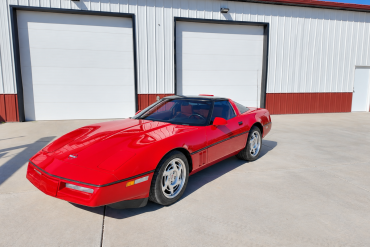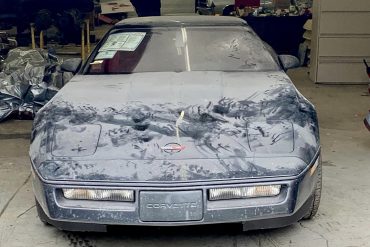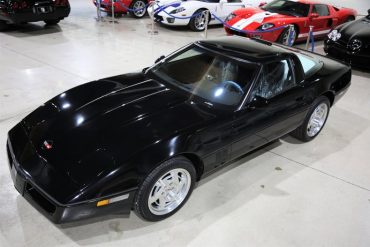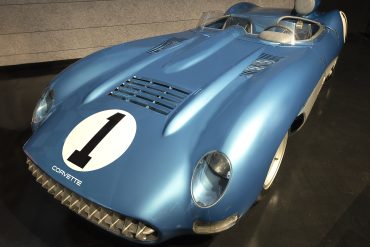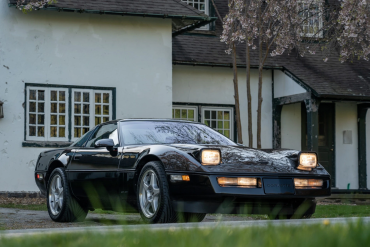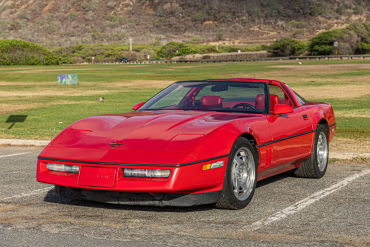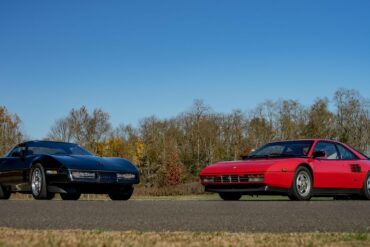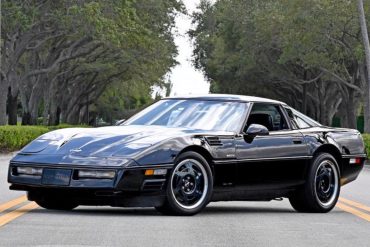
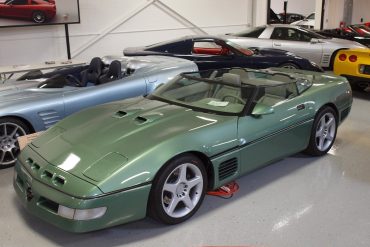
Only three drivable examples are believed to survive of the 25 active-suspension ZR-1s GM built with Lotus, the cars that led to Active Handling in 1996 and Magnetic Ride Control in 2003.



C4 CORVETTE - 1990
The King of the Hill arrives: 3,049 ZR-1s with the 375-hp, 32-valve LT5 designed by Lotus and built by Mercury Marine, a ZF six-speed, FX3, a three-inch-wider tail and a $58,995 sticker. Every 1990 got a driver’s airbag, a new dash with analog gauges, a glovebox and a Bose CD option; 23,646 were built.
Quick Nav: Story · Specials · ZR-1 · CERV III · Price & Options · VIN · Specs · Technical · Pics & Videos · The Market · All · FAQs
Model & Gen: 1990 Corvette (C4)
Body Type: Two-door hatchback coupe with lift-off roof panel and two-door convertible; ZR-1 coupe (RPO ZR1) with 3-inch-wider rear body and convex tail
VIN: 1G1YY2380L5100001 – 1G1YY2380L5120597 (L98 coupes 1G1YY23…, convertibles 1G1YY33…); ZR–1: 1G1YZ23J…L5800001 – 803049
Original Price: $31,979.00 coupe; $37,264.00 convertible; ZR-1 $58,995.00 ($27,016.00 package); Callaway Twin Turbo $26,895.00
Colors: 10 solid colors, five of them new (Steel Blue, Turquoise, Competition Yellow, Quasar Blue, Polo Green); Bright Red on nearly three cars in ten
Engine: 350 ci L98 with speed-density Tuned-Port Injection, 245 hp (250 with the 3.07:1 axle); or the ZR-1’s 5.7 L LT5 all-aluminum 32-valve V-8 by Lotus and Mercury Marine, 375 hp
Transmission: 700-R4 four-speed overdrive automatic (MX0) standard on L98 cars; ZF six-speed manual (MN6) at no cost, 8,101 cars, and the only transmission on the ZR-1
Units Produced: 23,646 (16,016 coupes, of which 3,049 ZR-1s, + 7,630 convertibles), plus 58 Callaway B2Ks
The 1990 Corvette is the year the C4 got the engine it had been promised since 1985. The ZR-1 package (RPO ZR1, $27,016 on a $31,979 coupe) replaced the L98 with the LT5: a 5.7-liter 90-degree V-8 of 3.90 x 3.66 inches with an all-aluminum block on Nikasil-lined wet liners, a one-piece main-bearing cradle on 28 bolts, forged crank and rods, twin overhead camshafts per bank driven by roller chains, four valves per cylinder at a 22-degree included angle so the engine fit between the C4’s frame rails, 11.25:1 compression, and a three-stage induction system with sixteen runners and sixteen Multec injectors, the secondary eight opened by a vacuum actuator the driver could lock out with a console “valet” key. Lotus designed it under Tony Rudd to Chevrolet’s brief (fifty percent more power than the L98, L98 fuel economy, no structural changes to the car, 22.5 mpg); Mercury Marine built it in Stillwater, Oklahoma, because GM’s engine plants had no room for a few thousand hand-assembled engines a year. It made 375 hp at 5,800 rpm and 370 lb-ft at 4,800, revved to 7,200, weighed only 39 pounds more than the L98 and came only with the ZF six-speed.
The rest of the package was what the engine needed: a stronger differential, the 13-inch front brakes from the 1988 Z51, FX3 Selective Ride Control, Z51 springs and bars, 17 x 11-inch rear wheels on P315/35ZR17 Goodyears under rear quarters pushed out three inches, a convex rear fascia with square taillights and a ZR-1 badge, and the high-mounted stop lamp moved into the roof. Contemporary tests ran 0–60 in 4.5 to 4.9 seconds, the quarter in 12.8 to 13.4 seconds at up to 111 mph and 175 mph flat out, which made it the fastest car sold in America, at a price half a Ferrari’s; and in March 1990 Tommy Morrison’s team took a near-stock ZR-1 to Firestone’s 7.7-mile oval at Fort Stockton, Texas, and set FIA world records for 24 hours (175.885 mph average), 5,000 kilometers and 5,000 miles (173.791 mph) that stood until Volkswagen’s W12 prototype in 2001. Buyers had waited years and paid for it: 3,049 were sold, many at $20,000 to $40,000 over sticker in the first months. The criticisms were the price, the CAGS skip-shift and that the car looked like a Corvette.
Every 1990 Corvette got the first driver’s airbag in a Corvette, a new instrument panel that paired a digital speedometer with an analog tachometer and gauges and added an oil-life monitor, a glovebox in the passenger side of the dash, anti-lock brakes with yaw control, a more efficient radiator that retired the boost fan, and a Delco-Bose CD system with an anti-theft code. The L98 moved from mass-airflow to speed-density control and a new camshaft for 245 hp, 250 in coupes with the 3.07:1 axle; the leather sport seats were freed from the Z51 requirement; FX3 could be had on any coupe, not just Z51s, and went into 7,576 cars; and five new colors arrived, Steel Blue, Turquoise, Competition Yellow, Quasar Blue and Polo Green. Callaway sold 58 B2Ks at $26,895 as the ZR-1 took its customers. Production was 23,646: 16,016 coupes including the ZR-1s and 7,630 convertibles. Today the 1990 ZR-1 is the first and the most numerous of the LT5 cars and the cheapest way into one, with unused examples bringing $45,000–$55,000 and good drivers $20,000–$30,000, while the L98 1990 is a 1989 with an airbag and a better dash at a small premium.
Although the C4 had already proven itself throughout the second half of the nineteen-eighties, there was no question that the Corvette would be transformed forever with the arrival of the 1990 model year.
In its entire history, there have been few model years that were so widely anticipated as the 1990 Corvette ZR-1. Although the ZR-1 had originally been slated for a mid-1989 release, it had been delayed until the 1990 model year because of engineering and design refinements that prevented it from being ready prior to 1990.
Now, as Chevrolet moved into a new decade, it did so with the most technologically advanced, and one of the most powerful Corvettes of all time.
Although the automotive world was focused on the arrival of the ZR-1, all Corvettes built-in 1990 received some minor improvements. In an ongoing effort to meet the first phase of the federal government’s passive-restraint crash protection regulations, Chevrolet introduced a standard driver’s side airbag to its entire fleet, including the Corvette.
The supplemental inflatable restraint (SIR) airbag was the Corvette’s first. Additionally, the Corvette’s antilock braking system was upgraded with improved yaw control that allowed for more secure handling. The L98 engine received a slight increase in power, boosting it to 245 horsepower (250 in coupes with the 3.07:1 axle) thanks to a new speed-density intake control system in place of the mass-airflow sensor and a revised camshaft.
A more efficient radiator was installed. It worked so well that there was no longer a need for the optional boost fan (RPO B4P) which had been offered from 1986 to 1989.
The interior of the Corvette received some minor improvements as well. A newly revised instrument display was introduced in the 1990 Corvette. The new display combined a digital speedometer with an analog tachometer and analog fuel, oil-pressure, voltage and temperature gauges.
An engine-oil monitor, which provided drivers with a display that calculated the useful oil life remaining and indicated when an oil change was necessary, was installed as part of the driver information center.
As CD technology was quickly replacing cassette tapes as the standard form of music media, Corvette offered a newly available Delco-Bose compact disc player audio system as an option in the 1990 model year. When ordered, the CD player included a special lock-out feature to discourage theft; in the event that the stereo was removed from a car, it would require a special code to be entered to reactivate it or the stereo head unit would remain inoperative.
Also new was a glove box on the passenger side dashboard. Lastly, the optional leather sport seats became available on all 1990 models, not just Z51 cars.
Without question, the most significant change for 1990 was the introduction of an entirely new option (RPO ZR1) that would transform the Corvette line for all time. While the ZR-1 was an option package rather than a separate model, its introduction represented a return to the glory days of the Corvette, when such engineering legends as Zora Arkus-Duntov and Bill Mitchell were building Corvettes that could be optioned out for their drivability and performance.
For many within General Motors, the ZR-1 literally marked a return to the days of “Detroit Muscle”, though this new Corvette would neither be built in Detroit (as all Corvettes since 1981 were built in Bowling Green, Kentucky) nor would it rely solely on sheer engine displacement to provide its unparalleled acceleration and drivability.
The ZR-1 was a costly option that would transform conventional Corvettes into a sports car that would truly rival the likes of Ferrari and Lamborghini. Priced at $27,016 above the base model 1990 Corvette, the total sales price of the ZR-1 was a then-staggering $58,995, which, for its time, put the ZR-1 financially out of reach for many consumers – even those who had considered purchasing a base model Corvette. Still, despite its costly price tag, it was still far more affordable than its Italian counterparts, making the ZR-1 a very desirable entry in the world of performance super cars.
At the time that the C4 had been introduced in 1984, it inherited an engine which was subpar to many of the engines that preceded it in earlier Corvettes. The standard low-tech overhead-valve V8 engine was anything but impressive from a performance standpoint, and it had been outclassed by more powerful and better engineered engines of the European GT class vehicles of that same era. Because of corporate policies and financial limitations, the design teams behind the Corvette – including Chief Engineer Fred Schaafsma and Corvette Engineering Chief Dave McLellan – were unable to truly grace the early C4’s with an engine that would properly serve to give Corvette its place in the venerable world of performance cars.
Still, General Motors’ people had begun considering the Corvette’s near future even before the first C4 had rolled off the production line. Lloyd Reuss, who had spent much of his career working for General Motors as a powertrain engineer, would be promoted to General Motors Vice President in 1984 and would doubly serve as the general manager of the newly formed Chevrolet-Pontiac-Canada (CPC) group.
It was Reuss who insisted on keeping Chevy’s “halo vehicle” (as Reuss himself called the ZR-1 in its earliest days) as a top priority, despite corporate pressure to abandon the project. He believed that the Japanese sports car lines would move in, take over, and eventually dominate the American sports car market if manufacturers like GM could not produce a vehicle that could more fully satiate the appetites of performance driven consumers.
Ironically, the staff behind the Corvette had long been exploring a number of ideas to increase the car’s performance numbers. McLellan and Reuss turned to Powertrain Engineering Director Russ Gee to head up an endeavor to explore the development of new engine concepts to power the Corvette. In turn, Gee assigned Roy Midgley, Chief Engineer of V-type Engines to the assignment and, working with Gee, the pair began to explore the options that were available to them. Gee and Midgley had solicited outside firms for engineering concepts that would help push the performance of small block engine performance well beyond the limitations of the day.
Out of the many conceptual ideas emerged an array of V6 and V8 engines, many of which included twin turbochargers, and a naturally aspirated V8 capable of producing up to 600 horsepower. Ultimately, the turbo V6 was dismissed as running too harsh for conventional use in the Corvette. Besides, it was long believed that no Corvette owner would ever be satisfied with a 6-cylinder Corvette, regardless of horsepower. McLellan was interested by and supportive of the twin turbo V8 engine, but their fuel consumption and emissions were ultimately too high to be acceptable for use in a Corvette.
Did you know? In the early development phases of the powertrain for the C4 Corvette, a number of turbocharged V6 and V8 engines were produced, including a twin-turbo V8 engine that gained considerable support amongst GM insiders. It was this early engine design, and a total of 14 prototypes that featured the twin turbo V8 engine, that led General Motors to ultimately “green-light” the Callaway Twin Turbo conversion option for the 1987 model year.
After extensive conceptual development, the realization was made that in order for Corvette, and moreover, a performance driven variant of the Corvette, to co-exist both as a true super car and as a conventional street car, it would have to include an engine and drivetrain that was considered “bi-modal”. Effectively, this meant that the engine had to be quiet, docile, smooth, unobtrusive and undemanding in routine driving, yet be able to summon race-car speed and handling at a moment’s notice.
To accomplish this, General Motors turned to England’s Group Lotus, a world renowned builder of championship Formula 1 cars and a leader in high-output engine technology. As General Motors entered into negotiations to purchase Lotus in the spring of 1985, the Corvette Group met with Tony Rudd (Lotus’s Managing Director), to discuss adapting Lotus’s four-valve head technology to the Corvette’s 350-cubic inch V8 engine.
After extensive experimentation with the existing L98 V-8 engine, Rudd proposed building an all–new engine that would meet Chevrolet’s performance, emissions, and fuel-economy targets. With continued prodding from Chevrolet’s engineering team, a lot of powerful support from Reuss and GM Board Chairman Roger Smith, and moreover, with Chevrolet’s acquisition of Lotus in 1986, GM management approved the development of a “brand-new no-holds-barred” V8 engine.
Of course, developing a high performance engine was not enough. General Motors established specific guidelines that were to be strictly adhered to throughout the development of this new V8 engine. First, the new engine was to provide acceleration that was second to none while simultaneously maintaining superior drivability at all speeds. It had to have a fuel economy that was comparable to the existing L98 engine. It had to be adaptable to the existing body/chassis structure of the current Corvette (meaning that no structural modifications were to be required for installation of the engine).
The desired power and torque gains of the new engine were to be at least 50% greater than the existing L98 and this increased power was to come from a modern engine having four valves per cylinder and twin overhead camshafts per cylinder bank. A mandate was issued that the engine was to have electronically controlled ignition, fuel delivery and throttle actuation to ensure good drivability while maintaining an overall fuel economy of at least 22.5 miles per gallon and the ability to meet all U.S. emissions requirements.
Lastly, the new engine would have to have a pleasing underhood appearance, with no compromise in reliability or durability.
Despite this long laundry list of specific requirements, the combined Lotus/Chevrolet-Pontiac-Canada engineering groups were up for the challenge. Denoted “LT5”, this new power plant would become the latest in a long and storied line of L-badged Corvette performance engines.
The LT5 was to be a 5.7-liter/350-cubic-inch 90-degree V8 engine with 4.4 inches between bore centers. Beyond its general similarities to the L98 engine in size and spec, the LT5 was unlike any other engine that had breathed life into a Corvette before it. An all-aluminum construction was deemed mandatory from the beginning of the LT5’s development because of aluminum’s ability to rapidly dissipate heat. Additionally, the use of aluminum would result in a much lighter engine than its cast-iron counterpart, which, when combined with its heat dissipating capabilities, would lead to increased operating efficiency and fuel economy.
Because of the location of the front frame rails on the existing C4 chassis, it was determined that the valve angle of the new engine would have to be 22 degrees to make the four-valve V8 as narrow as possible. At its widest point, the new Corvette engine measured just 26.6 inches, which meant that the new engine would seat itself in the same engine bay space as the L98 had before it.
At its core, the engine utilized separate, “wet” cylinder liners, which were also constructed of aluminum. These reduced bore by 0.1 inch compared to the L98 engine, thereby increasing stroke from 3.48 to 3.66 inches to maintain the 5.7-liter displacement. The cylinder liners were specially matched to their bores, into which they locked via a simple slip-fit.
The interior surfaces were coated with Nikasil, a nickel-silicon alloy that provided an extremely durable, low-friction surface for the specified lightweight cast-aluminum Mahle pistons. The connecting rods and crankshaft were forged of steel to maximize their strength and durability. To enhance the overall strength of the engine as a whole, the block was heavily ribbed and gusseted. The usual five main crankshaft bearings were supported by a special one-piece aluminum cradle that attached to the block by no fewer than 28 bolts. The bearings were oversized at 70 millimeters, which was considered necessary for reliable, sustained operation at 7,000 rpm.
While the engine was fabricated to incorporate exacting standards and minimal tolerances between moving parts, a great deal of effort was also placed into ensuring proper lubrication within the engine. The LT5 crankshaft was cross-drilled for internal centrifugal oiling from the front of the crank to the conrod pin bearings and main bearing journals.
The engine included a separate oil cooler with thermostatic control, and the crankcase consisted of a two-piece aluminum assembly with an integral pickup that assured proper feed and bottom-end oiling during hard cornering, (when sloshing oil might otherwise leave part of the oil sump momentarily dry.)
From an engineering standpoint, one of the most fascinating aspects of the LT5 engine is the unique three-stage induction system. Much like the Tuned Port Injection that was used on the L98 engine since 1985, it took advantage of “Ram-effect” tuning. A large, forward mounted air cleaner would feed a cast-aluminum throttle-body assembly with three throttle blades – a primary blade of 0.87-inch diameter and two larger, secondary blades measuring 2.32 inches across. The throttle body, in turn, connected to an aluminum plenum chamber that branched into 16 individual runners, one for each intake port. Eight of these would feed the primary ports and would operate continuously; the other eight had individual throttles for supplying the secondary ports under certain conditions. Each runner was given its own fuel injector that was supplied by twin tank-mounted electric fuel pumps and was activated in sequence by the engine control module (ECM).
The injection system of the LT5 actually operated in three, progressive stages. In the “first stage” mode, air would be drawn into the throttle body and past the primary throttle blade to the plenum, from which it was distributed to the eight primary ports. During this stage, the secondary throttle blades remained closed below 80 degrees (approximately) of the primary blade opening, which equated about 70 miles per hour on the road. During the “second stage” mode, the secondary throttle blades would open to add air to the eight secondary runners and ports, providing that the ECM was satisfied that full power would be required. In that event, the ECM would trigger the vacuum actuator to open the secondary runner throttles. The third “mode” of the LT5 engine was commonly referred to as the “Valet Mode”. Because the engine management system operated in stages that were mechanically controlled, the second stage performance could literally be locked out with a key. The actuator could be manually disabled via a mechanism in the center console, engaging the “valet” mode, which inhibited full-power operation when handling the car over to parking-lot attendants or other vehicle operators who might otherwise not be trusted with the car.
Like the 1989 L98 engine before it, the new LT5 engine was fitted with the new Multec (Multiple Technology) fuel injectors developed by General Motor’s Rochester Products division. The new fuel injectors provided improved fuel atomizing and spray control. They also claimed to require less operating voltage for improved cold-weather cranking performance and were less susceptible to clogging than earlier fuel injection designs.
The LT5 came with a total of four camshafts, two per cylinder bank, one for each set of intake and exhaust valves. Valves were actuated directly from the lobes on the cams, and the intake cams featured distinct primary and secondary lobe profiles to match the valve operation of the staged induction system. Each bank’s pair of camshafts was driven by a steel duplex roller chain with a hydraulic tensioner. An ECM-governed fuel shutoff limited the engine to a maximum of 7,200 rpm
Engine valves were canted at 11 degrees to their respective ports in a classic cross-flow cylinder head. Essentially a modified pentroof type, it allowed the spark plugs to be centrally placed for good flame propagation and thus faster, more complete combustion, for better efficiency and emission control. With this combustion-chamber shape and slightly dished pistons, the engine’s compression ratio was a high 11.25:1. Despite this, the fast burn design combined with the new injection system allowed the LT5 to tolerate regular unleaded without detonation, though premium was recommended.
Although the plan had initially been to have Lotus design and GM construct it, it was determined by Manufacturing Manager Dick Donnelly that General Motor’s engine people were far too busy to take on such a complicated, small-volume project. As with before, Russ Gee instructed Midgley to again seek outside help. Although he reached out to a number of companies, including Lotus and another British firm known as Coventry Climax, none of these facilities offered the required production capabilities.
Ultimately, Chevrolet contracted with Mercury Marine, the Wisconsin outboard-engine maker, to build the LT5 engine for the ZR1. They were also contracted to develop a marine version of the new powerplant, which was fitting as many of Mercury Marine’s “Mercruiser” engines had originated as GM designs. Given the anticipated low production numbers that were anticipated for the ZR-1, it was reasonable to assume that Mercury Marine would have no issues keeping up with the demand for these specialized, high performance engines. Interestingly, whenever an LT5 engine required any major mechanical service, A Chevy Dealer’s service department would have to remove the engine and ship it back to Mercury Marine. Once that happened, the car’s owner would have one of two possible choices: They could either receive an entirely new engine or they could get the original engine repaired. This practice would continue through the end of calendar-year 1993, at which point Chevrolet assumed all service responsibilities for the powerplant.
The engines were built at Mercury Marine’s plant in Stillwater, Oklahoma, and on completion were loaded on a flatbed and shipped to the Corvette Assembly Plant in Bowling Green, Kentucky. The LT5 engine weighed in at only 39 pounds more than the L98, which was amazing since it produced more than 50 percent more horsepower over the base model Corvette. These new engines would turn even the largest cynics into believers. Yes, despite its near-staggering performance numbers, the LT5 maintained a respectable fuel economy – approximately 22 miles per gallon city/highway.
The engine was mated to the rear axles and, in turn, the rear wheels by a brand new six-speed transmission. The transmission was developed by General Motors and a renowned German transmission company called Zahnradfabrik Friedrichshafen AG – better known simply as ZF. As all ZR-1 Corvettes were to include six-speed manual transmissions, this new transmission was a vast improvement over the inefficient (and often clunky) 4+3 Overdrive manual transmission that preceded it.
In both the standard Corvette and the ZR-1 variant, the ZF gearbox offered two important new features over the previous Corvette transmission. First, its gears were arranged to minimize synchronizer loads. Second was the inclusion of Computer-Aided Gear Selection (CAGS) which was included to help improve fuel economy. The CAGS system was not solely intended for the Corvette, but was also used on Chevrolet Camaros and Pontiac Firebirds that were equipped with a six speed manual transmission.
The CAGS system utilized an integral-rail shift linkage with a solenoid actuator that guided the lever from first gear directly to fourth whenever the car was running at 12-19 miles per hour with at least a partly warm engine and a throttle opening of no more than a third. While the CAGS system did tend to restrict drivability of the car by limiting the driver’s ability to manually shift the transmission at their discretion, it also helped to prevent the ZR-1 from falling prey to the gas-guzzler tax.
Regardless of drivers’ varying opinions of the CAGS system, there was no question whatsoever that the new ZF gearbox was a major improvement over the clunky, awkward 4+3 manual transmission that preceded it.
Early “complete car” testing, both in England and America, involved the installation of the brand new LT5 engines in stock-bodied Corvettes. From the onset however, Reuss and McLellan knew that a new look would be required to differentiate the ZR-1 from the base model Corvette. For Reuss, it was important that the “King of the Hill” stand out from the crowd even more than a typical Corvette.
McLellan’s motivation involved fewer form considerations but an increased focus on functionality. Ultimately, the ZR-1 Corvette featured a variety of subtle, but notable changes to the base model Corvette. The car’s rear fenders were pushed out three inches wider than those on the L98 models. The sole reason for this modification was to accommodate the ZR-1’s massive 315/35ZR17 rear tires. These tires, which measured 11 inches wide, added 1.5 inches of surface contact/traction when compared to the standard-issue 275/40ZR17’s (which were still on the front axles, as on L98 models.)
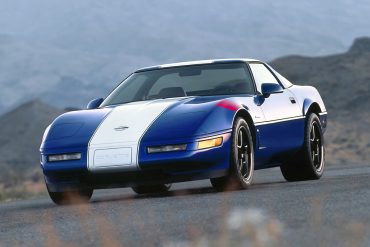
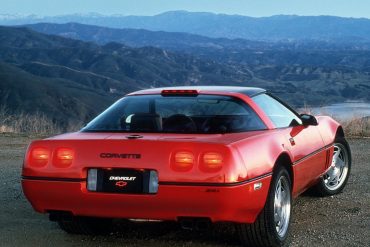
Aside from the rear fenders, the only notable cosmetic change to the car was the introduction of a new rear bumper. Where the base model Corvette featured a concave bumper with round taillights, the ZR-1’s rear bumper was three inches wider, convex in shape and included squared off taillights. Corvette engineers claimed that the convex rear end would provide greater aerodynamics to the car (it would become standard on all C4 Corvettes from 1991). Additionally, a ZR-1 badge was added to the rear bumper (mounted to the far right just below the perimeter rub strip). Lastly, the high-mounted stop lamp was set into the roof above the rear window, which would remain a unique identifier of the ZR-1 line until the car’s retirement in 1995. Despite the dramatic and extreme upgrades that were made to the mechanical systems of the ZR-1, this upgraded Corvette was scarcely discernible to the casual observer.
While the engine and transmission upgrades were the most notable of the mechanical upgrades, other modifications that were part of the ZR-1 package included a heftier differential, 13-inch twin caliper front disc brakes (which had been previously introduced on the 1988 Z51 package), and a reinforced front-end structure designed to counter cowl shake on rough roads. The race-oriented Z51 handling package was also included as part of the ZR-1 option as was the Selective Ride Control suspension option that was added elsewhere in the line as optional equipment for 1989.
As was expected, motoring and automotive journalists were quick to praise the ZR-1’s increased muscle, and their reviews featured performance figures that were unparalleled with anything else in its class. The top reviewers recorded unprecedented 0–60 mph times ranging from 4.5 to 4.9 seconds, racing through the quarter mile in as little as 12.8 seconds at a speed of 111 mph. Testers reached top speeds as high as 175 miles per hour.
Not only was the ZR-1 eagerly anticipated, it created an instant sensation in the marketplace. Even before the ZR-1 was officially made available, Corvette enthusiasts were clamoring for the opportunity to own Chevrolet’s latest and possibly greatest Corvette ever. A total of 3,049 fanatics paid well in excess of the already incredibly expensive suggested retail price for the chance to be the first to own one of the fastest cars in the world. It has been reported that some dealers initially asked for – and received –as much as $100,000 for the first commercially available ZR-1s.
While reviewers praised the car for its uncompromising acceleration, the ZR-1 was also criticized for its high sticker price, its unpopular CAGS skip-shift feature, and most especially its general lack of unique body styling. With the exception of the aforementioned items, the physical appearance of a ZR-1 and a standard L98 Corvette were virtually indistinguishable to the casual observer, and critics noted that individuals who were going to spend the additional twenty-seven thousand (or more) dollars for a unique, one-of-a-kind sports car should receive just that.
Still, despite its commonplace appearance, the ZR-1 was anything but commonplace when it came to breaking performance records. In March 1990, a near-stock ZR-1 would set 12 FIA (Fédération Internationale de l'Automobile) world records for speed and endurance at Firestone’s 7.7-mile test track at Fort Stockton, Texas. Three of these records were set regardless of classifications – which was the first time in 50 years that they had been claimed by a regular production car. The ZR-1’s level of performance was so advanced for its time that no competitor would touch its records until 2001 when Volkswagen’s 600-horsepower W12 prototype surpassed them.
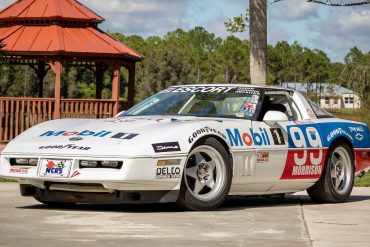
With the ZR-1 now commercially available, the Callaway twin-turbo Corvette would quickly fall out of favor with consumers everywhere. In 1990, the Callaway Corvette sold just 58 units, compared to the 3,049 ZR-1 equipped models which were sold – most to buyers who had been put on a waiting list until its official introduction. Twenty-three Corvettes were built with heavy-duty suspensions for use in the new 1990 World Challenge racing series and could readily be ordered via regular dealer channels. Buyers could choose a Chevy engine or they could provide their own engines. In either case, any modifications from the factory engine were the responsibility of the owners/racers.
Overall, sales of the Chevy Corvette dropped slightly in 1990, with a total sales of 23,646 units. Despite this decrease in sales, there was no question that Corvette had achieved an incredible success with the introduction of the ZR-1. Without question, the King had arrived.
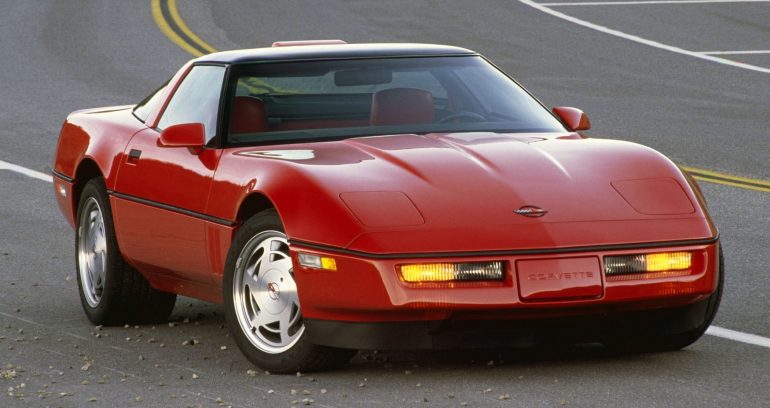
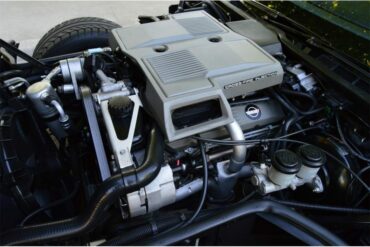
 The ZR-1 Corvette LT5 32 Valve Engine
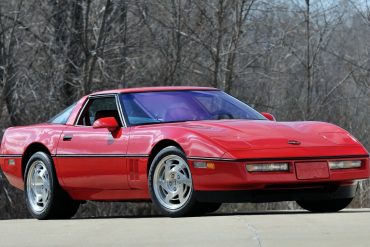
 1990 ZR-1 and L98 Corvette. Note the differences between the rear fascia and taillights.
 The newly designed 1990 Corvette interior included a revised instrument display and a completely re-designed driver and passenger side dashboard.
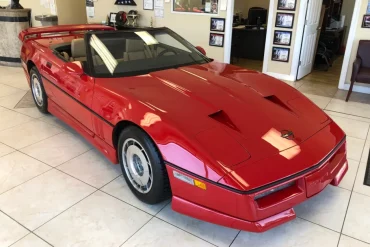
 A 1990 SCCA World Challenge Racing Corvette.
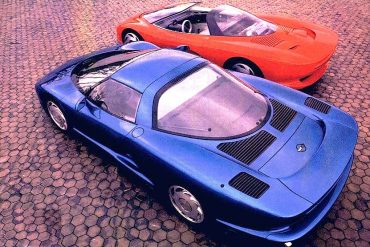
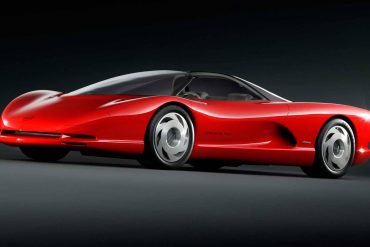
 The 1990 CERV III (Chevrolet Engineering Research Vehicle).
The LT5 was designed in England, built in Oklahoma by a company that makes outboard motors, and came with a key: turn the “valet” switch on the console and the vacuum actuator for the eight secondary intake runners stayed shut, so a parking attendant got a 200-horsepower Corvette instead of a 375-horsepower one. Until the end of 1993, an LT5 that needed major work was pulled out at the dealer and shipped back to Mercury Marine in Stillwater, and the owner could choose a repaired engine or a new one.
DID YOU KNOW
The ZR-1 has its own section below, as does the CERV III mid-engine show car. Also here: the ZR-1 Active Suspension prototype, the Bertone Nivola, the 1990 World Challenge racers, the Callaway B2K in its fourth year and the Callaway Super Speedster.
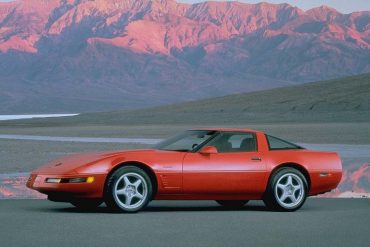
RPO ZR1, $27,016 on a $31,979 coupe: the 375-hp LT5 all-aluminum 32-valve V-8 designed by Lotus and built by Mercury Marine, the ZF six-speed, FX3 Selective Ride Control, Z51 suspension, 13-inch brakes, a heavy-duty differential, 17 x 11-inch rear wheels on 315-section Goodyears under a tail three inches wider, with square taillights, a roof-mounted stop lamp and a valet key that locked out the engine’s secondary intake ports. 0–60 in under five seconds, 175 mph, and FIA 24-hour and 5,000-mile world records set at Fort Stockton in March 1990. 3,049 were built, the most of any year, and dealers charged $20,000 to $40,000 over sticker; in the 2025–26 auction season they sold for $15,250 to $53,500, mileage deciding.
MORE: ALL 1990 ZR-1 POSTS
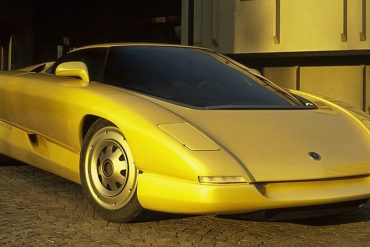
The third Chevrolet Engineering Research Vehicle, shown at the Detroit show in January 1990: a mid-engined coupe with a twin-turbocharged LT5 rated at 650 hp, four-wheel drive, a six-speed built from a three-speed automatic and a two-speed transfer case, active suspension, carbon-fiber and Kevlar bodywork by Lotus and a projected $300,000 price. Chevrolet called it a production study and then shelved it; it is the direct ancestor of the 2020 mid-engine C8 and sits today in the GM Heritage Collection.
MORE: ALL 1990 CERV III POSTS
The 1990 coupe listed at $31,979.00 and the convertible at $37,264.00, both up about $450 on 1989 with the airbag, the new instrument panel and glovebox, the 17-inch wheels, Bilsteins and fast steering, anti-lock brakes with yaw control, VATS, air conditioning and power windows standard; 12,967 L98 coupes and 7,630 convertibles were built.
The ZR-1 Special Performance Package (RPO ZR1, $27,016.00) made a coupe a $58,995 car and brought the LT5, the six-speed, FX3, Z51, the wide body, the 13-inch brakes, power leather sport seats, electronic air conditioning, the Bose CD and the tire-pressure warning with it; 3,049 were built, and with demand far ahead of Mercury Marine’s engine supply, early buyers paid dealers $20,000 to $40,000 over sticker.
The Callaway Twin Turbo (B2K, $26,895.00) went into 58 cars. On L98 cars the ZF six-speed (RPO MN6) was free and went into 5,052 of them (8,101 including the ZR-1s), Z51 ($460.00, six-speed coupes) into 2,397 (5,446 with the ZR-1s), FX3 ($1,695.00), now available on any coupe, into 4,527 (7,576 in all), the oil cooler (KC4, $110.00) into 16,221 and the 3.07:1 axle (G92, $22.00), good for 250 hp on a coupe, into 9,362 automatics. California emissions (NN5, $100.00) went on 4,035 cars and the block heater (K05, $20.00), not offered on the ZR-1, on 1,585.
Inside, the power driver seat (RPO AC3, $270.00) went into 23,109 cars and the passenger seat (AC1, $270.00) into 20,419; 11,457 took the leather sport seats (AQ9, $1,050.00), now available without Z51 and standard on the ZR-1, and 11,649 leather on the base seats (AR9, $425.00), leaving about 540 cars in cloth.
The new Delco-Bose CD system (U1F, $1,219.00) went into 15,716 cars, two in three, against 6,701 for the cassette Bose (UU8, $823.00); electronic air conditioning (C68, $180.00) into 22,497 and the tire-pressure warning (UJ6, $325.00) into 8,432. Coupe roof panels: blue-tinted glass (24S, $615.00) on 7,852, bronze (64S, $615.00) on 4,340, both panels (C2L, $915.00) on 6,422. Convertibles: the hardtop (CC2, $1,995.00) on 2,371, the luggage rack (V56, $140.00) on 1,284.
A typical L98 coupe with leather, both power seats, the CD, electronic air and a tinted roof came to about $35,500, a convertible with the hardtop about $42,000, and a ZR-1 with a tinted roof panel about $59,600 at list, if you could find one at list. The published color totals add up to 23,646 exactly.
MORE: PRICING, OPTIONS & COLORS / RPO CODES
| CODE | DESCRIPTION | QUANTITY | RETAIL PRICE |
|---|---|---|---|
| 1YY07 | Base Corvette Hatchback Coupe (245-hp L98, 700-R4 automatic, driver airbag, new instrument panel, 17-inch wheels, ABS, VATS, cloth seats, lift-off roof panel, air conditioning, power windows) | 16,016 | $31,979.00 |
| 1YY67 | Base Corvette Convertible (as coupe, with manual soft top and reinforced structure) | 7,630 | $37,264.00 |
| AR9 | Base Seats, leather | 11,649 | $425.00 |
| 24S | Removable Transparent Roof Panel, blue tint (coupe) | 7,852 | $615.00 |
| 64S | Removable Transparent Roof Panel, bronze tint (coupe) | 4,340 | $615.00 |
| AC1 | Six-Way Power Passenger Seat (included with ZR1) | 20,419 | $270.00 |
| AC3 | Six-Way Power Driver Seat (included with ZR1) | 23,109 | $270.00 |
| AQ9 | Sport Seats, leather (now on any car; included with ZR1) | 11,457 | $1,050.00 |
| B2K | Callaway Twin Turbo conversion (installed by Callaway Cars; 382 hp, 562 lb-ft) | 58 | $26,895.00 |
| C2L | Dual Removable Roof Panels, body-color and tinted (coupe) | 6,422 | $915.00 |
| C68 | Electronic Air Conditioning Control (included with ZR1) | 22,497 | $180.00 |
| CC2 | Removable Hardtop (convertible) | 2,371 | $1,995.00 |
| FX3 | Selective Ride and Handling, electronic (any coupe; included with ZR1) | 7,576 | $1,695.00 |
| G92 | Performance Axle Ratio, 3.07:1 (automatic cars; coupes so equipped rated 250 hp) | 9,362 | $22.00 |
| K05 | Engine Block Heater (not with ZR1) | 1,585 | $20.00 |
| KC4 | Engine Oil Cooler | 16,221 | $110.00 |
| MN6 | ZF Six-Speed Manual Transmission with CAGS (standard and only transmission on ZR1) | 8,101 | no charge |
| NN5 | California Emission Requirements | 4,035 | $100.00 |
| U1F | Delco-Bose AM-FM Stereo with Compact Disc, 200 watts, anti-theft code (new; included with ZR1) | 15,716 | $1,219.00 |
| UJ6 | Low Tire Pressure Warning Indicator (included with ZR1) | 8,432 | $325.00 |
| UU8 | Delco-Bose AM-FM Stereo with Cassette, 200 watts | 6,701 | $823.00 |
| V56 | Luggage Rack (convertible) | 1,284 | $140.00 |
| Z51 | Performance Handling Package (coupe with six-speed: heavy-duty springs and bushings, larger stabilizer bars, 13.0/12.0-inch rotors, heavy-duty cooling; included with ZR1) | 5,446 | $460.00 |
| ZR1 | Special Performance Package (coupe: 375-hp LT5 by Lotus and Mercury Marine, ZF six-speed, FX3, Z51 suspension, 13-inch front brakes, heavy-duty differential, 3-inch-wider rear body with convex fascia and square taillights, 17 x 11-inch rear wheels on P315/35ZR17, power leather sport seats, Bose CD, low-tire-pressure warning, valet key) | 3,049 | $27,016.00 |
| CODE | EXTERIOR | TOTAL | SOFT TOP | INTERIOR |
|---|---|---|---|---|
| 81 | Bright Red | 6,956 | Black, Saddle, White | Black, Gray, Red, Saddle |
| 10 | White | 4,872 | Black, Saddle, White | Blue, Black, Gray, Red, Saddle |
| 41 | Black | 4,759 | Black, White | Blue, Black, Gray, Saddle |
| 68 | Dark Red Metallic | 2,353 | Black, Saddle, White | Black, Saddle |
| 91 | Polo Green Metallic (new) | 1,674 | Black, Saddle | Black, Saddle |
| 96 | Charcoal Metallic | 878 | Black, Saddle | Black, Gray |
| 25 | Steel Blue Metallic (new) | 813 | Black, White | Blue, Black |
| 42 | Turquoise Metallic (new) | 589 | Black, Saddle | Black, Saddle |
| 80 | Quasar Blue Metallic (new) | 474 | Black, Saddle | Black, Saddle |
| 53 | Competition Yellow (new) | 278 | Black, Saddle, White | Black, Gray, Saddle |
Two engines for the first time since 1982. The L98 350 kept its roller lifters and 10088113 aluminum heads at 9.5:1 but moved from mass-airflow to speed-density fuel control and took a new camshaft, rated at 245 hp at 4,000 rpm and 350 lb-ft at 3,200, or 250 hp in coupes with the 3.07:1 axle and their low-restriction mufflers; it came with the 700-R4 automatic (2.59:1 axle, 3.07:1 as G92) or the ZF six-speed (3.33:1).
Motor Trend’s six-speed coupe ran 0–60 in 5.6 seconds and the quarter in 14.1 at 101.5 mph, its automatic 5.7 and 14.2, its convertible 6.3 and 14.8, all stopping from 60 in 109–116 feet and pulling 0.90 g. The LT5 (RPO ZR1) was a 5.7-liter (349.8 ci) all-aluminum 90-degree V-8, 3.90 x 3.66 inches, with Nikasil-lined aluminum wet liners, cast-aluminum Mahle pistons, forged steel crank and rods, five 70-mm main bearings in a one-piece aluminum cradle on 28 bolts, a cross-drilled crank and a two-piece crankcase with a thermostatic oil cooler; four chain-driven camshafts, 32 valves at an 11-degree cant in pentroof chambers with central plugs, 11.25:1 compression; and a three-stage induction system with a 22-mm primary and two 59-mm secondary throttles feeding sixteen tuned runners and sixteen Multec injectors, the secondary runners’ throttles opened by a vacuum actuator above about 80 degrees of primary opening or locked shut by the console valet key.
It was rated at 375 hp at 5,800 rpm and 370 lb-ft at 4,800, fuel cut at 7,200 rpm, 26.6 inches wide and 39 pounds heavier than the L98, with block casting 10090511; Lotus designed it, Mercury Marine built it in Stillwater, Oklahoma, and it came only with the ZF six-speed and a 3.45:1 axle.
The ZR-1 chassis was the 1989 Z51/FX3 car with more of everything: a heavier-duty Dana 44 differential, the 13.0-inch front and 12.0-inch rear rotors with twin-piston front calipers, FX3 Selective Ride Control with ZR-1 calibrations, Z51 springs and bars, a reinforced front structure against cowl shake, and 17 x 9.5-inch front and 17 x 11-inch rear unidirectional wheels on P275/40ZR17 and P315/35ZR17 Goodyear Eagle ZR tires, the rears three inches wider than the L98 car’s and housed in rear quarters, doors, rockers and a rear fascia unique to the ZR-1, the fascia convex with four square taillights and the stop lamp moved into the roof.
Contemporary tests put the ZR-1 at 0–60 in 4.5 to 4.9 seconds, the quarter in 12.8 to 13.4 at 108–111 mph, 175 mph and about 0.90 g; the March 1990 Fort Stockton records averaged 175.885 mph for 24 hours and 173.791 mph for 5,000 miles. Every 1990 gained Bosch ABS II with yaw control, a more efficient radiator, the driver’s airbag in a new steering wheel and the redesigned dash.
Wheelbase stayed at 96.2 inches and length at 176.5 (177.4 for the ZR-1); curb weight was about 3,225 lb for the L98 coupe, 3,265 for the convertible and 3,465 for the ZR-1.
MORE: FULL SPECIFICATIONS / ENGINE
| SPEC | 1990 CORVETTE |
|---|---|
| Engine, L98 | 350 ci (5.7 L) small-block V-8, RPO L98: Tuned-Port Injection now with speed-density control (no mass-airflow sensor), new camshaft, roller lifters, aluminum heads (casting 10088113) at 9.5:1 on the 14093638 block; 245 hp net @ 4,000 rpm, 350 lb-ft @ 3,200 rpm; 250 hp in coupes with the 3.07:1 axle and low-restriction mufflers; engine suffix ZSA (automatic) |
| Engine, LT5 (RPO ZR1) | 5.7 L (349.8 ci) all-aluminum 90-degree V-8, 3.90 x 3.66 in, designed by Lotus, built by Mercury Marine, Stillwater, Oklahoma: Nikasil-lined aluminum wet liners, cast-aluminum Mahle pistons, forged steel crank and rods, 70-mm mains in a one-piece aluminum cradle (28 bolts), cross-drilled crank, two-piece crankcase, thermostatic oil cooler; four chain-driven camshafts, 32 valves (22-degree included angle, 11-degree cant), central plugs, 11.25:1; three-stage induction with 22-mm primary and two 59-mm secondary throttles, 16 tuned runners, 16 Multec injectors, vacuum-actuated secondary runner throttles with console valet lock-out; 375 hp @ 5,800 rpm, 370 lb-ft @ 4,800 rpm, 7,200-rpm fuel cut; 26.6 in wide, 39 lb heavier than the L98; block casting 10090511 |
| RPO B2K | Callaway Twin Turbo, $26,895.00, 58 cars: L98 rebuilt by Callaway Cars with forged pistons and two intercooled turbochargers, 382 hp, 562 lb-ft |
| Transmission | 700-R4 four-speed automatic with overdrive and lock-up converter (RPO MX0) standard on L98 cars; ZF S6-40 six-speed manual (RPO MN6, no charge, 8,101 cars) with CAGS skip-shift, standard and only transmission on the ZR-1 |
| Axle ratio | 2.59:1 automatic, 3.07:1 with RPO G92 ($22.00, 9,362 cars), 3.33:1 with the six-speed on L98 cars; 3.45:1 in the ZR-1’s heavy-duty Dana 44; limited-slip standard |
| Suspension | Independent front with forged-aluminum control arms and transverse fiberglass monoleaf spring; independent five-link rear with fiberglass monoleaf spring; Delco-Bilstein gas shocks standard; Z51 (RPO Z51, $460.00, 5,446 cars incl. ZR-1s, six-speed coupes) adds heavy-duty springs, bushings and bars; FX3 Selective Ride Control (RPO FX3, $1,695.00, 7,576 cars incl. ZR-1s) on any coupe, with Touring, Sport and Performance settings |
| Brakes | Four-wheel discs with Bosch ABS II, now with yaw control; two-piston front calipers; 11.5-in rotors on base cars, 13.0-in front / 12.0-in rear on Z51 and ZR-1 |
| Safety & security | Driver’s airbag (supplemental inflatable restraint) standard in a new steering wheel, the Corvette’s first; VATS resistor key; alarm |
| Steering | Rack-and-pinion with power assist, 13.0:1; tilt-telescopic column |
| Body | Fiberglass hatchback coupe with lift-off roof panel (blue-tinted glass RPO 24S or bronze 64S, $615.00; both panels RPO C2L, $915.00) and convertible with manual top (hardtop RPO CC2, $1,995.00, 2,371; luggage rack RPO V56, $140.00, 1,284); ZR-1 with unique doors, rear quarters, rockers, upper rear panel and convex rear fascia three inches wider, four square taillights, roof-mounted stop lamp, ZR-1 badge |
| Interior | New instrument panel with digital speedometer, analog tachometer and gauges and oil-life monitor; passenger glovebox; cloth base seats, leather (RPO AR9, $425.00, 11,649 cars) or leather sport seats (RPO AQ9, $1,050.00, 11,457, standard on ZR-1); power driver seat (RPO AC3, $270.00, 23,109) and passenger seat (AC1, $270.00, 20,419); Delco-Bose 200-watt cassette (RPO UU8, $823.00, 6,701) or CD with anti-theft code (RPO U1F, $1,219.00, 15,716, standard on ZR-1); electronic air conditioning (RPO C68, $180.00, 22,497); low-tire-pressure warning (RPO UJ6, $325.00, 8,432, standard on ZR-1) |
| Wheels & tires | L98: 17 x 9.5-in unidirectional alloys with P275/40ZR17 Goodyear Eagle ZR. ZR-1: 17 x 9.5-in front with P275/40ZR17, 17 x 11-in rear with P315/35ZR17 |
| Fuel tank | 20 gal; unleaded only (premium recommended for the LT5) |
| Wheelbase | 96.2 in |
| Overall length / width / height | 176.5 in / 71.0 in / 46.7 in (L98 coupe); ZR-1 177.4 in long, 73.1 in wide at the rear |
| Track, front / rear | 59.6 in / 60.4 in (L98); ZR-1 rear 61.9 in |
| Curb weight | approx. 3,225 lb L98 coupe; 3,265 lb convertible; 3,465 lb ZR-1 |
| 0–60 mph | ZR-1: 4.5–4.9 sec (period tests). L98: 5.6 sec six-speed coupe, 5.7 automatic, 6.3 convertible (Motor Trend, April 1990) |
| Quarter mile | ZR-1: 12.8–13.4 sec @ 108–111 mph. L98: 14.1 sec @ 101.5 mph six-speed coupe, 14.2 @ 99.1 automatic, 14.8 @ 95.0 convertible (Motor Trend) |
| Top speed | ZR-1: 175 mph (period tests); L98: about 150 mph |
| Records | March 1990, Fort Stockton, Texas (Tommy Morrison team, near-stock ZR-1): FIA world records for 24 hours (175.885 mph), 5,000 km and 5,000 miles (173.791 mph), unbroken until 2001 |
| Lateral acceleration / braking | 0.90 g; 60–0 mph in 109–116 ft (Motor Trend, L98) |
| Production | 23,646: 16,016 coupes (3,049 ZR-1) and 7,630 convertibles; 58 Callaway B2Ks; 23 World Challenge cars |
| Assembly | Bowling Green, Kentucky; LT5 engines from Mercury Marine, Stillwater, Oklahoma; B2K conversions at Callaway Cars, Old Lyme, Connecticut |
The 1990 Corvette carries two VIN series. L98 cars run 1G1YY2380L5 for the coupe and 1G1YY3380L5 for the convertible, with one sequence from 100001 to 120597 for the 20,597 L98 cars; ZR-1s run 1G1YZ23J…L5 with their own sequence from 800001 to 803049 for the 3,049 ZR-1s. The 1 is the United States, G General Motors, 1 Chevrolet, Y (fourth) the Corvette car line, Y (fifth) the base series or Z the ZR-1, 2 (sixth) the hatchback coupe or 3 the convertible, 3 (seventh) the new driver-airbag passive-restraint system, 8 the L98 or J the LT5 in the eighth position, the ninth character a check digit that varies with the car, L the 1990 model year and 5 the Bowling Green plant. The VIN plate sits on top of the dash on the driver’s side, visible through the windshield; the body and trim plate on the left door-hinge pillar carries the build date, the paint code and the trim code.
The L98’s engine pad carries the plant prefix, build date and a suffix, ZSA on an automatic, on casting 14093638 with 10088113 heads and the speed-density intake without a mass-airflow sensor. The LT5 carries Mercury Marine’s build plate and the partial VIN on the block (casting 10090511), and no ZR-1 can be faked cheaply: the Z in the fifth VIN position, the J in the eighth, the 800001-series sequence, the wide rear body and square taillights, the roof-mounted stop lamp, the 11-inch rear wheels and the valet switch on the console all have to agree, and the LT5’s service history matters because until the end of 1993 major repairs meant the engine went back to Stillwater. A Callaway B2K carries its Callaway serial plate; a World Challenge car its race documentation.
MORE: VIN DECODER / PRODUCTION
| POSITION | MEANING |
|---|---|
| 1G1 (First through Third) | Country, maker, make: 1 = built in the USA, G = General Motors, 1 = Chevrolet |
| Y (Fourth) | Car line: Y = Corvette |
| Y or Z (Fifth) | Series: Y = Corvette (L98); Z = ZR-1 |
| 2 or 3 (Sixth) | Body: 2 = two-door hatchback coupe (all ZR-1s); 3 = two-door convertible |
| 3 (Seventh) | Restraint system: 3 = manual belts with driver’s airbag (new; 1984–89 cars carry a 1 here) |
| 8 or J (Eighth) | Engine: 8 = 350 L98 Tuned-Port Injection, 245/250 hp (Callaway B2K cars keep the 8); J = 5.7 L LT5 DOHC 32-valve, 375 hp (ZR-1) |
| x (Ninth) | Check digit, calculated from the other sixteen characters |
| L (Tenth) | Model year: L = 1990 |
| 5 (Eleventh) | Assembly plant: 5 = Bowling Green, Kentucky |
| 100001–120597 / 800001–803049 (Twelfth through Seventeenth) | Production sequence number: L98 coupes and convertibles from 100001 (20,597 cars); ZR-1s in their own series from 800001 (3,049 cars) |
Ten colors, five of them new: Bright Red (6,956), White (4,872), Black (4,759), Dark Red (2,353), Polo Green (1,674), Charcoal (878), Steel Blue (813), Turquoise (589), Quasar Blue (474) and Competition Yellow (278). Convertible tops in black (4,161), white (2,205) and saddle (1,284); interiors in Black, Red, Saddle, Gray and Blue leather or cloth, with the new dash in every car and power leather sport seats in every ZR-1.
The 1990 is two cars in the market. The ZR-1 is the collectible: 3,049 built, the most of any LT5 year, with the 1990-only interior details and the first-year cachet, and because so many were bought as investments there are still unused and sub-5,000-mile cars, which set the top of the range; honest 20,000–40,000-mile drivers sit in the middle, and high-mileage or modified cars at the bottom, where a ZR-1 can cost less than a clean L98 of the same year. Classic.com’s benchmark for the C4 ZR-1 as a whole stood at $37,240 in October 2026. The L98 1990 is a 1989 with an airbag and the better dash, priced with it: six-speed coupes and FX3 cars bring the premium, convertibles a little more than coupes, and the five new colors, especially Competition Yellow (278 cars) and Quasar Blue (474), are the ones people seek. The 58 Callaway B2Ks trade on documentation; the ZR-1’s arrival ended their price advantage then and keeps them behind the ZR-1 now.
Results tracked by Classic.com from November 2025 through February 2026, when the winter auctions move most ZR-1s: Bring a Trailer sold a 37-mile 1990 ZR-1 for $53,500 and a 2,000-mile car for $46,500, both in Solon, Ohio, in January 2026, a 13,000-mile car for $38,000, a 32,000-mile car for $39,250, 11,000-mile cars for $31,000 and $24,250, 12,000- and 38,000-mile cars for $27,250 each and a 13,000-mile car for $22,000; Mecum Kissimmee sold 9,000-mile ZR-1s for $34,100 and $18,700 and a 61,000-mile car for $17,600; Barrett-Jackson got $22,550 at Scottsdale and Cars & Bids $15,250 for a 67,000-mile car. Unsold high bids on ZR-1s ran $17,250 to $31,000 (the latter a 4,000-mile car at Hagerty). L98 cars: a 9,000-mile modified six-speed coupe made $22,000 at Mecum Kissimmee and a 57,000-mile six-speed $15,250 on Bring a Trailer; dealers’ last asking prices ran $18,995 for a 10,000-mile automatic coupe and $10,500–$11,500 for convertibles. In autumn 2026 ZR-1s were offered at $29,980 to $43,987 (and $54,900 for a 1,000-mile car), L98 cars at $9,999 to $19,990 and a Callaway at $12,900. Check whether a result includes the buyer’s premium (Mecum and Barrett-Jackson results do, Bring a Trailer bids do not), and treat asking prices and unsold high bids separately from completed sales.
A ZR-1 verifies itself: Z in the fifth VIN position, J in the eighth, a sequence number from 800001, the wide rear body with square taillights and the stop lamp in the roof, 11-inch rear wheels, the valet key on the console and the LT5 with its Mercury Marine plate and matching partial VIN. What needs checking is the engine’s history: whether it was ever returned to Stillwater, whether the secondary-port actuator works (the car should change character noticeably at about 3,500 rpm with the valet switch off), whether the injectors have been serviced, and whether the timing chains and tensioners have been inspected. On an L98 car the sixth VIN character is 2 for a coupe and 3 for a convertible, the seventh is a 3 for the airbag, the heads are 10088113 castings on a 14093638 block with the partial VIN on the pad, and a 250-hp coupe has the 3.07:1 axle; FX3 shows on the build sheet, the console switch and the shock-rod motors, and Z51 on the build sheet. A B2K needs its Callaway serial plate.
The LT5 is strong but specialized: the sixteen Multec injectors clog when the car sits (eight secondaries especially, since they rarely fire), the secondary-port vacuum actuator and the valet solenoid stick, the coolant plumbing and the oil cooler lines leak, the timing-chain tensioners and starter are buried under the plenum, and the plenum must come off for plugs and injectors, which is why ZR-1 service bills are a multiple of an L98’s and why a specialist matters. The chassis shares the C4 list: the new 1990 dash is more reliable than the 1984–89 LCD cluster but its digital speedometer section still fails, VATS keys and decoders wear, ABS pumps and sensors are expensive, FX3 shocks fail electrically and many have been swapped for conventional Bilsteins, the ZF’s CAGS solenoid and shifter bushings wear, headlight motors strip their gears, and the uniframe rusts under the battery tray and at the rear kick-ups. P315/35ZR17 rear tires are scarce and dear. Convertibles add top fabric and pads, frame bushings and leaks at the rear corners.
MORE: THE MARKET

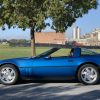
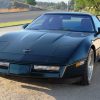
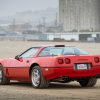
Get all the latest news stories, upcoming auctions, prices, videos and more about the 1990 Chevrolet Corvette! The latest headlines here.


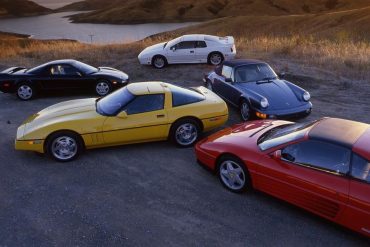

Chevrolet built 23,646 Corvettes for 1990 at Bowling Green, Kentucky: 16,016 hatchback coupes, of which 3,049 carried the ZR-1 package, and 7,630 convertibles, plus 58 cars converted by Callaway. Of the cars, 23,109 had the power driver seat, 22,497 electronic air conditioning, 15,716 the new Bose CD system, 11,457 leather sport seats, 9,362 the 3.07:1 axle, 8,432 the tire-pressure warning, 8,101 the ZF six-speed (including every ZR-1), 7,576 FX3 Selective Ride Control and 5,446 the Z51 package.
Between November 2025 and February 2026, 1990 ZR-1s sold at auction for $15,250 (67,000 miles) to $53,500 (37 miles), with 9,000–13,000-mile cars at $18,700 to $38,000 and 30,000–40,000-mile cars at $27,250 to $39,250; Classic.com’s benchmark for the C4 ZR-1 was $37,240 in October 2026, and dealers were asking $29,980 to $54,900. L98 1990s sold for $15,250 to $22,000 and were offered at $9,999 to $19,990, with convertibles asking $10,500 to $11,500. Mileage, originality and LT5 service history decide a ZR-1’s price.
The LT5: a 5.7-liter all-aluminum 90-degree V-8 designed by Lotus and built by Mercury Marine in Stillwater, Oklahoma, with four chain-driven camshafts, 32 valves, 11.25:1 compression, Nikasil-lined wet liners, a one-piece main-bearing cradle and a three-stage induction system with sixteen runners and sixteen injectors, the secondary eight lockable by a console valet key. It was rated at 375 hp at 5,800 rpm and 370 lb-ft at 4,800, redlined at 7,200, and came only with the ZF six-speed. Tests ran 0–60 in 4.5–4.9 seconds, the quarter mile in 12.8–13.4 at up to 111 mph and 175 mph; the standard L98 made 245 hp (250 with the 3.07:1 axle).
Ten colors, five of them new. Bright Red (6,956) led, then White (4,872), Black (4,759), Dark Red Metallic (2,353), the new Polo Green Metallic (1,674), Charcoal Metallic (878), new Steel Blue Metallic (813), new Turquoise Metallic (589), new Quasar Blue Metallic (474) and new Competition Yellow (278). Convertible tops came in black (4,161), white (2,205) and saddle (1,284); interiors in Black, Red, Saddle, Gray and Blue, leather or cloth, with the redesigned dash in every car. Chevrolet did not publish ZR-1 production by color.
The coupe was $31,979.00, the convertible $37,264.00 and the ZR-1, as a $27,016.00 package on the coupe, $58,995.00; early ZR-1 buyers paid dealers $20,000 to $40,000 more. The Callaway Twin Turbo was $26,895.00, FX3 $1,695.00, the Bose CD system $1,219.00, leather sport seats $1,050.00, the convertible hardtop $1,995.00, Z51 $460.00, each power seat $270.00 and a tinted roof panel $615.00; the ZF six-speed was free. A well-equipped L98 coupe came to about $35,500, a hardtop convertible about $42,000 and a ZR-1 about $59,600 at list.
“King of the Hill” was the program’s name inside Chevrolet, used by Lloyd Reuss, the GM executive who protected the project, for a Corvette that would outrun Ferrari and Porsche at half the price; the press picked it up during the 1989 preview and it stuck. The car earned it: 375 hp, 175 mph, 0–60 in under five seconds, and in March 1990 FIA world records for 24 hours at 175.885 mph and 5,000 miles at 173.791 mph, set at Fort Stockton, Texas, by a near-stock car, that stood until 2001. The ZR-1 was never a separate model, only RPO ZR1, which is why it looks like a Corvette with a wider tail.
The ZR-1 went on sale with the 375-hp LT5, the six-speed, FX3, 13-inch brakes and a three-inch-wider rear body. Every 1990 got a driver’s airbag, a new instrument panel with a digital speedometer and analog gauges, an oil-life monitor, a passenger glovebox, ABS with yaw control, a better radiator (the boost fan was dropped), a Bose CD option with an anti-theft code and five new colors. The L98 went to speed-density control and a new camshaft for 245 hp, leather sport seats and FX3 no longer required Z51, and Callaway’s B2K entered its fourth year with 58 cars.
1990 Corvette Advertisements / 1990 Corvette CERV III / 1990 Corvette Colors / 1990 Corvette Common Issues / 1990 Corvette Engine / 1990 Corvette Factory Options / 1990 Corvette For Sale / 1990 Corvette Maintenance / 1990 Corvette Mods / 1990 Corvette Owners Manual / 1990 Corvette Performance / 1990 Corvette Posters / 1990 Corvette Pricing / 1990 Corvette Production / 1990 Corvette Recalls / 1990 Corvette Research / 1990 Corvette RPO Codes / 1990 Corvette Sales Brochures / 1990 Corvette Special Model Overview / 1990 Corvette Specifications / 1990 Corvette Technical Research / 1990 Corvette Service Bulletins / 1990 Corvette VIN Numbers / 1990 Corvette ZR1