CORVETTE LISTS
The Worst (Least-Loved) Corvettes, And The Case For Each One
Every Corvette has its defenders. These are the model years that get called the worst, what actually went wrong with each, and why most of them are better cars, and better buys, than their reputations.
Quick Nav: At A Glance · All Fifteen · The First Years · Emissions Years · The C4 Launch · Matters Of Taste · About · FAQs · More Lists
At A Glance
The ones that always come up: 1954, 1975, 1979, 1982 and 1984, Scott Kolecki’s five; Josh Boyd’s fifteen add 1953, 1958, 1971, 1974, 1977, 1980, 1987–88 and the 1995 and 1998 pace cars
What went wrong, mostly: Emissions rules (1974–82), a new generation’s teething problems (1953–54, 1984) and matters of taste (1958, 1988, the pace cars)
The lowest point: 165 horsepower in the 1975 base car, fifteen more than the 1953 Blue Flame six
The twist: Three of these are among the best-selling Corvettes ever (1979: 53,807; 1984: 51,547; 1977: 49,213)
The case for them: Most are the most affordable Corvettes you can buy, and several (1953, 1958, 1982 Collector Edition, the pace cars, the Callaways) are now collectible
The Overview
Since its introduction in 1953, the Chevy Corvette has been synonymous with the American Dream. For more than seventy years, Chevrolet has manufactured the Corvette and has refined its appearance and performance from the original “rolling bathtub” (as the original Corvettes quickly became known when first introduced at General Motors Motorama in 1953) to a machine that rivals the highest-performance sports cars in the world today. Still, throughout the Corvette’s colorful history, there have been some truly great years, while others have been, arguably, maybe not quite as great (we’ll never refer to ANY Corvette as being “bad,” because, well, that’d be just plain UN-American!)
Still, just as “beauty is in the eye of the beholder,” so too is each individual’s perception of what makes one Corvette stand out as being “the best” or “the worst” of its kind. Every Corvette on the road - from a commonplace fourth-generation coupe to an early model-year C1 - is something special to behold. No matter how fast or slow, how generic or utterly unique, a Corvette stands out in a crowd.
So this page is not a ranking. It is the fifteen model years that come up whenever the question is asked, grouped by what actually went wrong, with Scott Kolecki’s and Josh Boyd’s original assessments and, after each one, the case for the car as it stands today. Read it as a buyer’s guide in disguise: nearly every car here is the cheapest way into its generation, and a few have quietly become collectible.
The Model Years That Come Up, And Why
Fifteen model years, what went wrong, and the case for each.
| YEAR | WHAT WENT WRONG | THE NUMBER | THE CASE FOR IT TODAY |
|---|---|---|---|
| 1953 | 150-hp six, Powerglide only, sedan suspension, hand-built quality | 300 built | The first one; among the most valuable C1s |
| 1954 | Same car, $3,254 price, 1,500 unsold | 3,640 built | The affordable Blue Flame Corvette; reliable and simple |
| 1958 | Chrome, louvers and spears on Earl’s last design | 9,168 built | First profitable year; the one-year details are why collectors want it |
| 1971 | A carry-over year with compression cut for unleaded fuel | LS6 425 hp | The last 425-hp big block and the ZR2; one of the most collectible C3s |
| 1974 | The big block’s last, choked year; 20 hp over the L82 | LS4 270 hp | The last big-block Corvette and the last without a catalyst |
| 1975 | Catalytic converters, 165 hp, Zora retires | 38,000+ sold | The last convertible until 1986; cheap, and the L82 helps |
| 1977 | Unchanged body, 180–210 hp, the glass T-top cancelled | 49,213 sold | The 500,000th Corvette; the best interior of the mid-C3s |
| 1979 | L48 195 hp, neglected while the C4 was designed | 53,807 sold | The all-time sales record and the cheapest classic Corvette |
| 1980 (Cal.) | 305 V8, 180 hp, automatic only, in California | 3,221 built | Rarer than most special editions; 250 lb lighter body |
| 1982 | Cross-Fire Injection, 200 hp, no manual, double the 1979 price | 25,407 built | The Collector Edition hatchback; the first Bowling Green cars |
| 1984 | Harsh ride, Cross-Fire, the 4+3, a digital dash | 51,547 sold | 0.95 g on the skidpad; the start of the modern Corvette; the cheapest Corvette on the market |
| 1987 Callaway | Early twin-turbo cars ran hot and broke | 184 built in 1987 | 345 hp when a ZR-1 did not exist; Sledgehammer DNA; collectible |
| 1988 35th Anniv. | White on white on white | 2,050 built | A period piece now, and a numbered one |
| 1995 Pace Car | Purple over white, with graphics | 527 built | The rarest C4 replica, and prices know it |
| 1998 Pace Car | Radar Blue with yellow wheels and seats | 1,163 built | The first C5 pace car; a cult favorite |
MORE: THE BUYER’S GUIDES
Growing Pains: The First Two Years
A six-cylinder, two-speed sports car at a Cadillac price. Zora’s V8 was two years away.
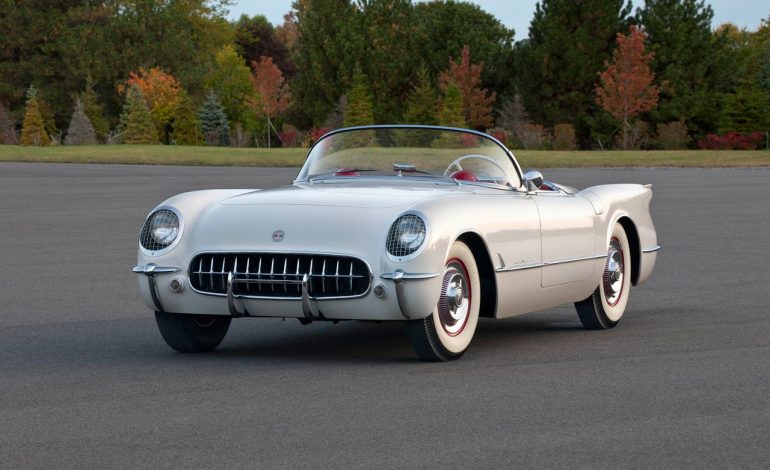
1953 Corvette
The one that started it all, with 150 horsepower.
It is almost painful to admit, but upon the Corvette’s launch in 1953, there was a lot of room for improvement. Not only is this a consensus among many, but sales numbers also reflect accordingly. The 1953 Corvette came within a stone’s throw distance from being a commercial failure right out of the gate. One of the most commonly cited reasons for the early Corvette’s woefully inadequate sales stems from its lackluster power plant. The Corvette’s original “Blue Flame” engine and the modest 150 HP that it produced left many consumers wishing for more pedal. Other criticisms include the use of repurposed sedan suspension components that left owners with a less than desirable level of ride quality, and a nasty reputation for a lack of workmanship upon assembly.
The case for it. Three hundred were built, by hand, in Flint, all Polo White over red, and the car they started is the reason this page exists. A 1953 today is one of the most valuable C1s there is, and the Blue Flame six, whatever its 150 horsepower, is the most reliable engine Chevrolet put in a Corvette for twenty years.
MORE: THE 1953 CORVETTE / THE BLUE FLAME SIX ENGINE GUIDE / C1 BUYER’S GUIDE

1954 Corvette
Scott’s No. 5: the same car, a year older, 1,500 unsold.
When Harley Earl introduced his Corvette to the world in 1953, Chevrolet felt certain that their two-door roadster would be a surefire hit. After all, American Servicemen still stationed in Europe after World War II were exposed to many of the two-seat sports cars that were taking that continent by storm. Cars built by Mercedes, Jaguar and MG had captured the attention of these soldiers, and many returned home in search of something similar that they could have for their own. When the first Corvette rolled off the assembly line on June 30, 1953 - Americans did respond, and a love affair (of sorts) began with the Corvette. Despite its initial warm reception however, the Corvette was quickly plagued with a number of real problems that adversely influenced the car's initial popularity.
The 1954 Corvette, which was largely a carryover from the 1953 model year, came at a high sticker-price for its day. Priced at $3,254.10, the Corvette was considered far too expensive for the youthful market for which the car was intended. The car was under-powered - with a stovebolt six-cylinder engine which produced a mere 155 horsepower.
Moreover, General Motors early marketing campaigns did nothing to instill confidence in potential buyers. Chevrolet advertised the base price of the 1954 Corvette at $2774.00 (which was still more than the price of a Cadillac with a standard V-8 engine), and indicated that the car, when equipped with "optional" equipment, drove the price up over the three-thousand dollar price range. However, the "optional" equipment in question included the two-speed Powerglide transmission, windshield wipers and a heater!
Consumers saw through this marketing trickery and sales of the 1954 Corvette suffered dramatically because of it. Despite a reputation of being a highly reliable automobile, only 3,640 units were manufactured - less than a third of Chevrolet's projected total. Of the 3,640 that were built, nearly 1,500 units remained unsold in dealerships across the country at the end of the model year!
The 1954 Corvette featured essentially the same shortcomings as the year prior. Sedan quality suspension led to poor ride quality, fit and finish issues continued to plague the Corvette, and the “Blue Flame” power plant didn’t exactly light a fire underneath the car in which it was fitted. Luckily, change was just around the corner. 1955 saw the introduction of the 265 cubic-inch V8 that rendered a 195 HP output. If it had not been for the introduction of such an option, the Corvette would have not likely survived the poor showing during its first two years of production.
The case for it. The 1954 is the affordable way into the first two years: 3,640 built, in Pennant Blue, Sportsman Red and black as well as white, with the same simple, reliable six and Powerglide. It drives like a 1950s touring car because that is what it is, and it is the only Corvette whose shape owes nothing to anything that came before.
MORE: THE 1954 CORVETTE / C1 BUYER’S GUIDE
The Emissions Years: 1971–1982
Unleaded fuel, catalytic converters, insurance surcharges and a fifteen-year-old body. The C3 carried the Corvette through the worst decade American performance has had, and it is remembered for the horsepower it lost rather than the fact that it survived.
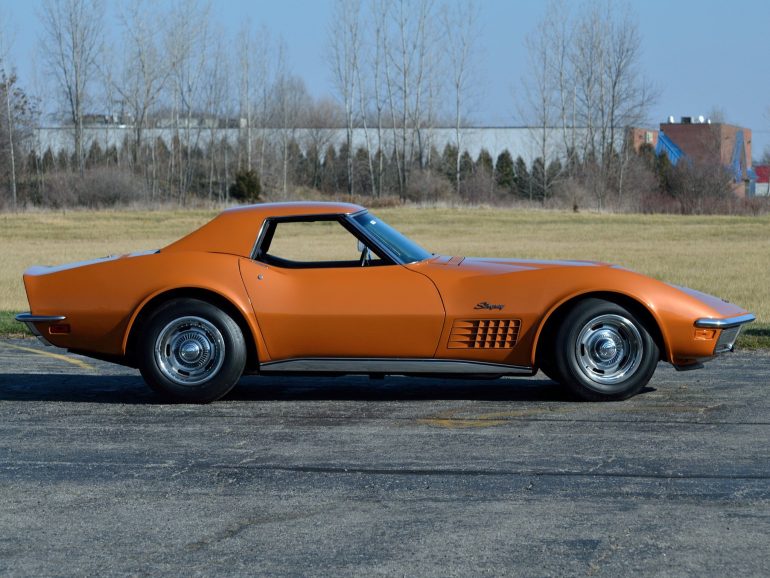
1971 Corvette
A carry-over year, by design.
Things had quickly become stagnant for the Corvette during the 1971 production year. Due to the United Auto Workers labor dispute of May 1969, production of the 1969 Corvette extended two months past the date that was initially intended. This also shortened the 1970 production year by four months. Because of this, Chevrolet executives decided that 1971 should be an extension of the 1970 production year. The result of this chain of events was a 1971 model year Corvette that went virtually unchanged in relation to the prior year’s offering. This limited the buzz around the 1971 Corvette, due to a relatively low-level of enthusiasm toward the above mentioned 1970-model year extension and the lack of change that accompanied it.
The case for it. The 1971 is on this list for standing still, and what it stood still with was the LS6 454 at 425 horsepower, the last of the great big blocks, and the 330-hp LT-1 small block, both with the ZR1 and ZR2 racing packages. Compression dropped for unleaded fuel, but the 1971 LS6 is one of the most collectible C3s built, and a 1971 LT-1 is the 1970 car for a little less.
MORE: THE 1971 CORVETTE / C3 BUYER’S GUIDE
1974 LS4 454 Corvette
The big block’s last year, twenty horsepower ahead of the small block.
By 1974, the Corvette’s big-block line of engines had begun to lose their superiority over their small block brethren. As emissions crackdowns stifled the capabilities of the market’s highest output offerings, the horsepower gap had almost completely closed between the Corvette’s small and big block offerings and consumers began to openly criticize the LS4 454’s performance. By 1974, the LS4 was only posting a 20 horsepower edge over the L82. This relatively low divide in horsepower between big and small block offerings led many individuals to shun the less than ideal handling characteristics of the big block due to its sheer size and weight.
The case for it. The LS4 made 270 horsepower against the L82’s 250, and it was the last big block in a Corvette, the last year without a catalytic converter, and the last year a Corvette ran on leaded fuel. The 1974 also brought the body-colored rear bumper that completed the C3’s soft-nose look. As the last of a line it has a following the numbers do not explain.
MORE: THE 1974 CORVETTE / C3 BUYER’S GUIDE
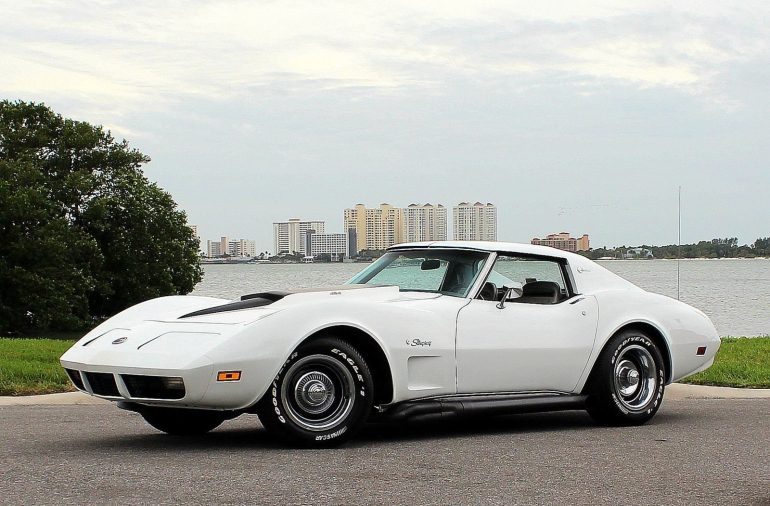
1975 Corvette
Scott’s No. 1: catalytic converters, 165 horsepower, and Zora retires.
The 1975 Corvette was almost destined to fail before it was ever introduced. There were a number of contributing factors for this - the most significant of which was the retirement of Zora Arkus-Duntov, the "Father of the Corvette" on January 1, 1975. Zora had been instrumental in transforming the Corvette - almost from its inception - into a track-worthy sport car. Had he not intervened in the very early years of the car, the Corvette would most certainly have "died on the vine" given the over-priced/under-powered nature of the 1953 and 1954 models. Instead, his involvement with the Corvette program catapulted the sports car into a machine that rivaled any similarly priced sports car in the world. His departure from Chevrolet left many questioning what would become of the Corvette.
The second factor was the introduction of Federally mandated requirement to control exhaust emissions by introducing catalytic converters and the elimination of engines that could run on lead-based fuel.
In 1974, it was possible to purchase a Corvette equipped with a big block engine capable of producing 270 horsepower, or even a small-block that was still capable of producing 195 horsepower. While arguably under-rated when compared to similar sized engines just a few years earlier, these numbers were still far more impressive than those produced in 1975. With the introduction of catalytic converters and the elimination of lead-based fuel (which caused a half-point drop in engine compression) , the 1975 Corvette was now only capable of producing a meager 165 horsepower.
That's correct - 165 horsepower.
Admittedly, an optional L82 engine was offered that produced 205 horsepower, but only ten-percent of the Corvettes built in 1975 included the upgraded powerplant. For the rest, the 1975 Corvette was the most under-powered Corvette since its introduction in 1953 - and the 1975 Corvette was only capable of producing 15 horsepower more out of its small-block 350 engine than the 1953 "Stovebolt" six-cylinder engine.
While the styling of the car remained virtually unchanged from the 1974 model year, this considerable reduction in horsepower ought to have negatively influenced consumers from purchasing the car. However, some speculation suggests that the 1975 Corvette sold as well as it did because of the uncertainty surrounding the Corvette's longevity with the departure of Zora Duntov from the Corvette program. Despite a significant loss in power compared to the 1974 Corvette (and, essentially, ALL Corvettes before it), Chevrolet managed to sell 38,665 of the 1975 vintage - which was the highest number of Corvettes sold up until that time.
The 1975 Corvette base model is an unfortunate story of the onset of stringent emissions standards choking the life out of a true icon car. The transition from 1974 to 1975 was quite painful to watch for Corvette faithful. Within this time, the big-block offerings of the past were no more, and in another move to meet the emission standards of the day, the Corvette’s small-block power plant was nearly stifled into non-existence. In 1975 the ZQ3 engine was redesigned for a compression reduction of half a point and was simultaneously outfitted with catalytic conversion. This reduced their output to a measly 165 HP. This is especially hard to bear when stopping to consider that upon the Corvette’s launch in 1953, the “Blue Flame” was turning out approximately 150 HP, only 15 HP less than its 1975 counterpart over two decades its junior.
The case for it. The 1975 was the last Corvette convertible until 1986, which makes the 4,629 convertibles built the rarest open C3s of the decade, and the L82 at 205 horsepower is the one to look for. It is also among the least expensive chrome-bumper-era Corvettes you can buy, and the chassis under it is the same one that carried the LT-1.
MORE: THE 1975 CORVETTE / C3 BUYER’S GUIDE
1977 Corvette
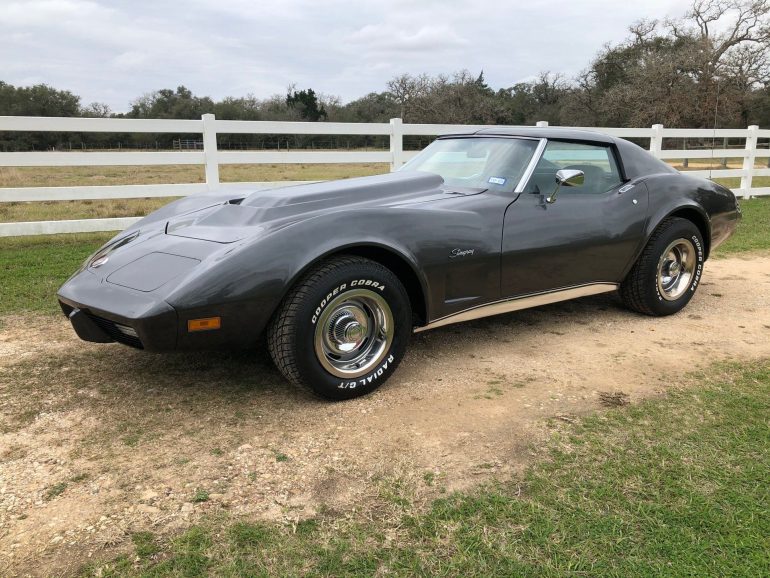
Unchanged, and 49,213 people bought one anyway.
The 1977 C3 gains its rightful spot on this list for more than one reason. The 1977 Corvette went essentially unchanged in relation to its prior rendition from the year before. The only major exception to this was reworked luggage and roof racks. The 1977 year model also fell prey, like so many other offerings of that era, to emission-related power production woes. Additionally, the year’s only other significant change, in the form of glass panels that corresponded to the vehicle’s T-top, was canceled mid-production year due to a sales rights dispute with the manufacturer of the panels in question. Between the unimpressive 180 and 210 HP engine options, and its virtually unchanged profile, the 1977 was a fairly unremarkable specimen within the Corvette’s lengthy history.
The case for it. Chevrolet built 49,213 of them, the second-best year in the car’s history to that point, and the 500,000th Corvette, a white 1977, came off the St. Louis line on March 15, 1977. The interior was the best of the mid-C3s: a new console, a steering column that took the stalks, and a sun visor that worked. The 1977 is a comfortable, honest car at a comfortable price.
MORE: THE 1977 CORVETTE / C3 BUYER’S GUIDE
1979 Corvette
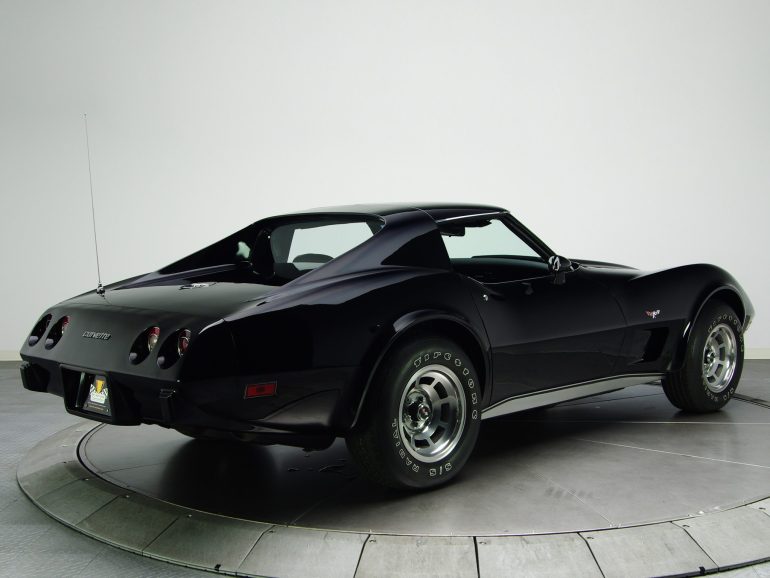
Scott’s No. 3: the L48, the neglected year, and the all-time sales record.
The last three entries in this "worst of" category all come from the era of the C3, or third-generation, Corvette. That's not to say that the C3 was a sub-standard entry in the history of the Corvette. In fact, some of the early examples of the third-gen Corvette were the most well regarded, most-powerful and, arguably, the most iconic of any Corvette ever built. However, the third-gen Corvette remains one of the longest production runs of all time (a variant of the C3 was built from 1968 to 1982 - a total of 15 years!) and, along the way, there were bound to be some less-than-desirable attributes associated with at least some of the different model years of this car.
Towards the end of the C3's long and challenging existence, it was clear to all involved that the Corvette engineers and design teams were focused on its next-generation model, leaving the current model to continue on essentially unchanged from the previous model years. This was especially true of the 1979 Corvette.
From the outside, the 1979 Corvette was virtually identical to the 1978 edition, minus some of the cool special edition models that were available in the previous model year. In 1978, Chevrolet introduced the incredibly popular black-and-silver Indy 500 Pace Car and Silver Anniversary editions. While neither of these special edition cars offered much of anything other than a unique paint scheme (as well as a front/rear spoiler and decal kit in the case of the Indy Pace Car), both of these cars still had some flare to them. For 1979, no special edition models were offered, and few features were introduced to entice prospective buyers to consider purchasing a Corvette.
Mechanically, the 1979 Corvette was a far cry from its older, more powerful predecessors. Whereas a 1969 Corvette was boasting as much as 435 horsepower (when equipped with a 427CI engine), the 1979 Corvette offered just two engine options - the L48 engine which boasted a meager 195 horsepower, or the L82, which was only marginally more impressive at 225 horsepower - and both of these power plants only achieved that level of power thanks to the introduction of an "open flow" muffler design.
Standard features for the 1979 Corvette were equally unimpressive. The ignition cylinder lock received extra shielding to reinforce it, the previously optional AM/FM radio became standard equipment, and an illuminated visor-mirror combination for the passenger sun-visor became one of the few available options for the 1979 model year. The most notable change to the car was the introduction of the high-back seats that had previously been introduced in the 1978 Pace Car the year before.
While most automotive critics were quick to criticize the C3 as being overpriced and no longer relevant (when compared to more competitively priced rivals like the Mazda RX-7, the Datsun 280ZX and even the 1979 Porsche 924), the 1979 Corvette's greatest accomplishment was that it sold more units in one year than any Corvette before or since. With a base price of $10,220.23, the 1979 Corvette sold a total of 53,807 units, a record that appears to have no threat of being broken by any other model year of Corvette.
The 1979 Corvette outfitted with the L48 engine was another prime example of just how negatively a performance-minded vehicle can be affected when emission standards are suddenly thrown into the mix. Absent were the 400 plus horsepower offerings of the 1960’s. In their place stood the L48 and its sub-par 195 HP output. To make matters worse, the 1979 Corvette was often seen as a neglected year model, due to the eagerness of GM development and design staff to perfect the brand's next-generation offering. Among the complaints related to this was the outdated and less than eye-appealing interior that was utilized during the 1979 production year.
The case for it. The 1979 outsold every Corvette before or since, 53,807 of them, which is why there are so many and why they are the cheapest classic Corvette in the market. The L82 made 225 horsepower, the 1978 Pace Car’s high-back seats became standard, and the body is the one everybody pictures when they picture a C3. A good L82 four-speed 1979 is a lot of Corvette for the money.
MORE: THE 1979 CORVETTE / THE CHEAPEST CORVETTE FROM EACH GENERATION / C3 BUYER’S GUIDE
1980 California 305 Corvette
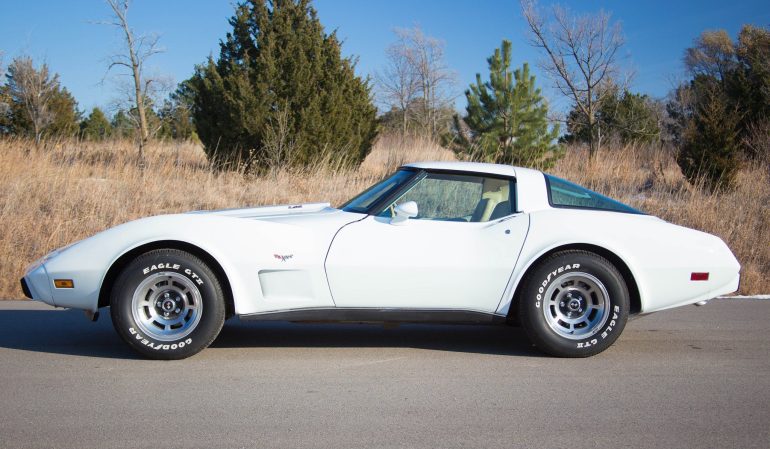
A 305, an automatic, and no choice about either, if you lived in California.
Oh, the poor 1980 Corvette: as if emissions standards didn’t hit the country’s automotive industry hard enough, the state of California decided not to leave well enough alone. Because of this, the 5.7L/350 cubic-inch, four-barrel power plant that had been standard was eliminated in favor of a drastically underwhelming 5L/305 cubic-inch alternative. This smaller displacement engine alternative only cranked out a mere 180 HP, which makes for a less than noteworthy driving experience. To make matters worse, the 4-speed manual transmission was no longer available for California based emissions Corvettes. Instead, it was replaced with a 3-speed turbo-hydromatic.
The case for it. Only 3,221 California cars got the 305 and the automatic, which makes them rarer than most special editions, and every 1980 benefited from the new integrated front and rear spoilers and a diet that took about 250 pounds out of the car. The 49-state 1980 with the L82 made 230 horsepower, the most since 1974.
MORE: THE 1980 CORVETTE / THE 1980 CALIFORNIA 305 ENGINE GUIDE / UNDERRATED: THE 1980 L82 / C3 BUYER’S GUIDE
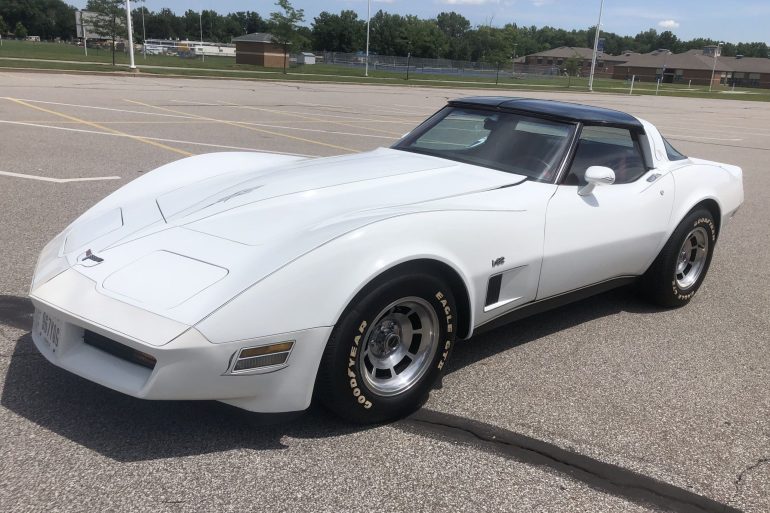
1982 Corvette
Scott’s No. 2: Cross-Fire Injection, no manual, and nearly double the 1979 price.
By the time the 1982 Corvette arrived on the scene, there was no question that the car's only real value was to serve as a marketplace holder until Chevrolet finally unveiled its next-generation Corvette. By their own admission, Chevrolet executives made the decision to manufacture the 1982 Corvette solely to allow the new manufacturing plant in Bowling Green, which had opened in the summer of 1981, to have time to test out new manufacturing machinery and develop standardized assembly procedures while working on an already familiar design.
More than that, the 1982 Corvette was a bit of a "Frankenstein's Monster." It still featured a chassis that was introduced in 1963, a body design that was introduced in 1968, and for 1982, the new "Cross-Fire" fuel injection system that utilized injectors mounted into twin throttle-body assemblies. The 350 cubic-inch, L83 engine produced an unimpressive 200 horsepower. Worse still, the 1982 Corvette was only manufactured with an automatic transmission, marking the first time since 1955 that a manual transmission wasn't offered.
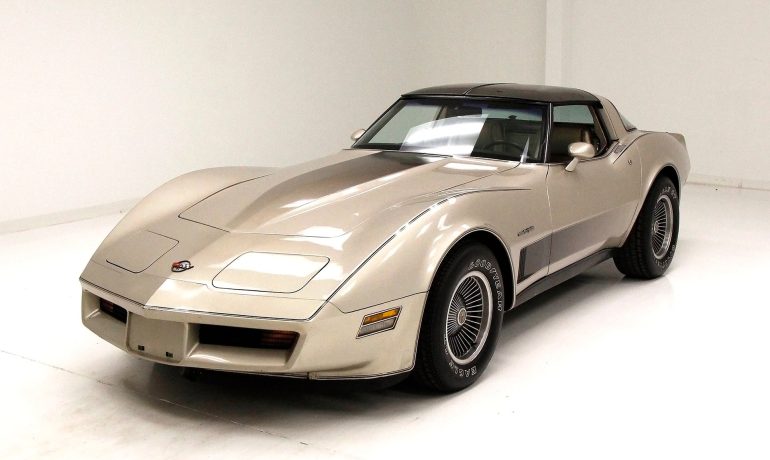
To "celebrate" the departure of the third-generation Corvette, Chevrolet offered a final, commemorative “Collectors Edition” model. For its time, the 1982 Collector Edition Corvettes were considered one of the best C3 models of them all. David McLellan, then Chief Engineer of Corvette, stated that it was "a unique combination of color, equipment and innovation (resulting in) one of the most comprehensive packages ever offered to the Corvette buyer." While it featured a few unique features - including an all-new frameless lifting rear-glass hatchback, a special crossed-flag emblem on the hood that read "Corvette Collector Edition," finned "turbine" alloy wheels (reminiscent of those first introduced on the 1963 split-window Stingray), a special silver-beige metallic paint scheme and bronze-tinted glass T-tops - the car was still little more than its other base model counterparts.
Perhaps the most astounding part of the 1982 Corvette was its price. Whereas the 1979 Corvette sold for just over ten-thousand dollars, the 1982 Corvette nearly doubled in price, with a base coupe starting at $18,290.07 and the Collector Edition Corvette demanding a staggering $22,537.59, which was also the first Corvette to break the $20,000 price barrier.
By 1982, the C3 had more than run its course. With GM design and development teams hard at work on the upcoming C4, the continued development of the C3 wasn’t exactly at the top of anyone’s priority list. This quickly became apparent as several relatively uninspired cars came out of the last several years of C3 production. However, the only thing any worse than not giving the third-generation Corvette the level of attention that it so desperately needs, is using it as a guinea pig to test out GM’s new Cross-Fire Injection system, and discontinuing the car’s manual transmission option. This is exactly what GM decided to do with the 1982 Corvette. This resulted in a less than overwhelming 200 HP showing.
The case for it. The Collector Edition, with its lift-up rear glass, turbine wheels and silver-beige paint, is the most sought-after late C3, and the 1982s were the first Corvettes built in Bowling Green. Cross-Fire Injection has a bad name, but it was the first fuel-injected Corvette since 1965 and the system is well understood now. For the money, a 1982 is one of the nicest-finished C3s.
MORE: THE 1982 CORVETTE / THE 1982 COLLECTOR EDITION GUIDE / C3 BUYER’S GUIDE
The three best-selling Corvette model years of the twentieth century, 1979 (53,807), 1984 (51,547) and 1977 (49,213), are all on this page. The years enthusiasts like least are the years the public liked most.
DID YOU KNOW
A New Generation’s Teething Problems: 1984
The most anticipated Corvette since 1963, and the most criticized on arrival.
1984 Corvette
Scott’s No. 4: a world-class chassis with a harsh ride, a Cross-Fire engine and a 4+3 gearbox.
There tends to be a trend between the introduction of a new-generation of Corvette, and the general overall quality of the new model. There are exceptions of course - the 1963 Split-Window Stingray (which is included in the "best of" portion of this list) is arguably the most desirable of that generation and one of the most collectible of any Corvette ever built. The same could not be said of the fourth-generation Corvette when it was first introduced in 1984.
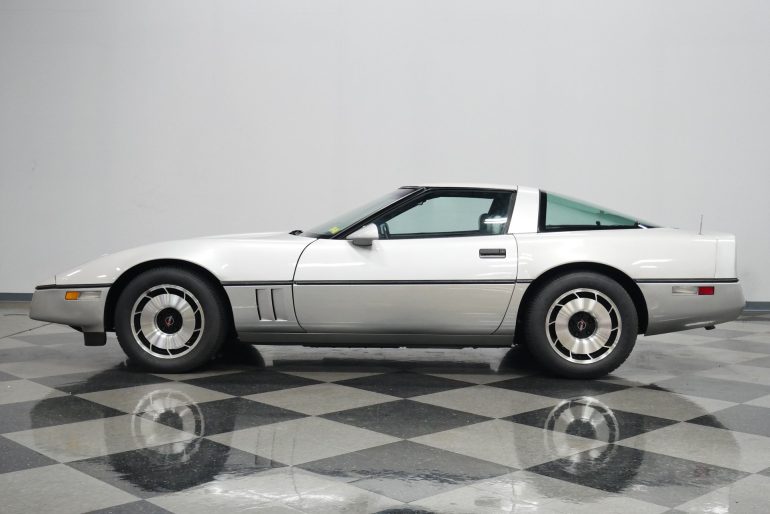
The 1984 Corvette was not considered a failure by any means. In fact, few cars in history have ever been more eagerly anticipated than the arrival of the C4 Corvette. This new ‘Vette was a completely original design – from top to bottom – and was a contemporary interpretation of the American Classic. Sales in 1984 also reflected the American public's excitement at the prospect of owning a fourth-generation Corvette. Chevrolet sold 51,547 units that year, which is the second highest number of units sold (the most was 53,807 units sold in 1979) in Corvettes sixty-plus year history.
So why would such a highly-anticipated and well received car make any "worst of" list?
For starters, the car received almost immediate criticism for being far too "harsh-riding" during daily driving. While the car was setup to corner and handle on road courses, the ultra-stiff suspension jostled the car's occupants so dramatically that it was considered by some to be "undrivable" on the open road.
The interior received significant criticism as well. The 1984 Corvette had a passenger side dashboard bumper (part of a passive restraint system) that jutted out in front of its occupant. It contained deep door sills (as a result of the unit body frame) that resulted in drivers and passengers having excessive difficulty climbing into and out of the car. The digital dashboard was difficult to read, especially when exposed to direct sunlight. And, between excessive exhaust and road noise, the car was just plain loud.
Mechanically, the car contained the unreliable and difficult to maintain "Crossfire Injection" fuel delivery system. While the engine produced sufficient power (though limited to just 205 horsepower,) the fuel delivery system required frequent maintenance to continue running. The 1984 Corvette also came equipped with the 4+3 Overdrive Manual Transmission. This transmission was clunky, featuring a high-effort clutch and shift linkage that made stop-and-go driving challenging. The 4+3 Overdrive Manual Transmission was deemed so unreliable, that most Corvettes sold between 1984 and 1988 came equipped with an automatic transmission, at which point GM decided to do away with the transmission all together.
Lastly, the aesthetics of the 1984 Corvette were criticized as being "remarkably restrained" and lacking any real body-lines. To this day, many Corvette enthusiasts denounce the fourth-generation Corvette as being one of the least-inspired of any of the Corvettes produced both before and since. The silver-lining of the 1984 Corvette is this - anyone looking to purchase an affordable used Corvette can readily find the early fourth-generation model, especially the 1984 vintage, for sale in any market. They are also considered to be the most affordable of all Corvettes on the used-car market today.
As highly anticipated as the 1984 Corvette’s release was, the reality was that many consumers were left wondering what all of the commotion had been about. Many individuals were quick to criticize the C4’s lack of defined body lines. The 1984 Corvette also featured Cross-Fire Fuel Injection technology. Unfortunately, downtime for repairs was frequent with this system and reliability was less than one would have hoped for. Perhaps the biggest complaint with the 1984 Corvette was its poor ride characteristics. Many consumers stated that there was little enjoyment to be had when driving their 1984 Corvette on a day-to-day basis.
The case for it. The 1984 sold 51,547 cars, second only to the 1979, because the chassis was a revelation: 0.95 g on the skidpad, the best-handling American car of its day, with a clamshell hood, a digital dash and a glass hatch that looked like the future. The ride was fixed for 1985 and the engine for 1985 too, but every C4 that followed, including the ZR-1, was built on the 1984. It remains the most affordable Corvette on the market.
MORE: THE 1984 CORVETTE / 1984 CORVETTE COMMON ISSUES / HOW THE C4 SET THE STAGE / C4 BUYER’S GUIDE
1987 Callaway Twin Turbo Corvette
Three hundred and forty-five horsepower, from a Chevrolet dealer, with a GM warranty, and early cars that ran hot.
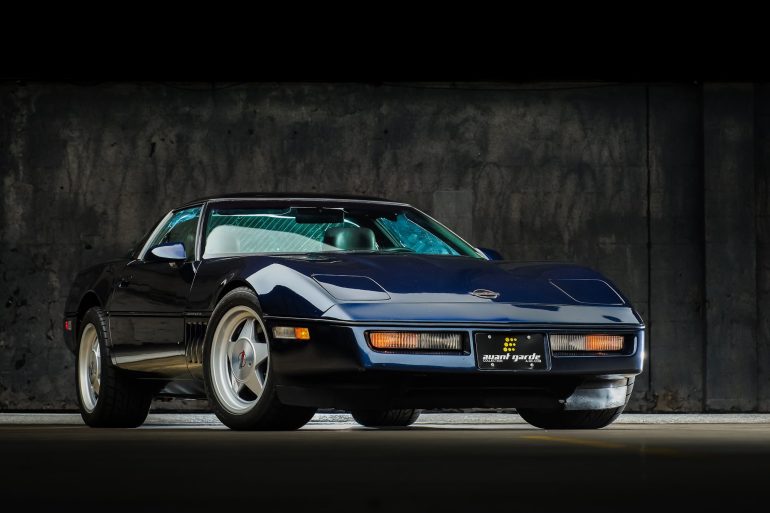
Although the purchase of a twin-turbo powered Corvette undoubtedly sounded enticing to consumers in 1987, it would have been a purchase that could have very possibly led to regret. As noble as this configuration sounded, the earliest cars proved failure-prone, running hot even under normal conditions. To make matters worse, this additional level of output strained nearly every component within the engine bay and beyond. Early Callaway Twin-Turbos earned a reputation for heat-related failures that the later, better-sorted cars never quite shook.
The case for it. Callaway’s RPO B2K Twin Turbo was a factory-sanctioned option you could order from a Chevrolet dealer with a GM warranty: 345 horsepower and 465 lb-ft in 1987, when the ZR-1 was three years away, and 177 mph. The early heat problems were real, and Callaway sorted them; the later 382-hp cars were strong. About 500 were built from 1987 to 1991, and the Sledgehammer that ran 254.76 mph in 1988 was one of them. Today a Twin Turbo is one of the few C4s with a collector market.
MORE: THE 1987 CORVETTE / THE CALLAWAY B2K TWIN TURBO GUIDE / THE CALLAWAY CORVETTE GUIDE
Matters Of Taste
Nothing wrong with the cars. Plenty of opinions about how they looked.
1958 Corvette
Harley Earl’s last Corvette, and his most chrome-plated.
If you are immensely fond of chrome, you will likely find the 1958 Corvette to be one of your favorite year models in the iconic car’s nearly 70-year run. As Harley Earl’s career with the GM design department was coming to a close, he decided that his last Corvette project would be one of much shiny splendor. However, although noble in theory, the lengthy list of chrome appendages was overwhelming, to say the least. The 1958 Corvette featured sizable chrome wrap-around bumpers, an over-the-top chrome grill, and chrome strips running rearward down the fenders from the headlights. Then there was the issue of the headlights. It was decided that a four-headlight design would be included in the 1958 Corvette, which did not receive much fanfare. These headlights were set in bezels with a coating of … you guessed it, chrome.
The case for it. The 1958 was the first year the Corvette made money for Chevrolet, 9,168 sold, and the quad headlights Earl introduced stayed to the end of the C1. The louvered hood and twin trunk spears were one-year-only, which is precisely why collectors seek the 1958 out, and underneath the chrome was the 290-hp fuel-injected 283 and the first year of the four-speed as a popular option.
MORE: THE 1958 CORVETTE / C1 BUYER’S GUIDE

1988 35th Anniversary Edition
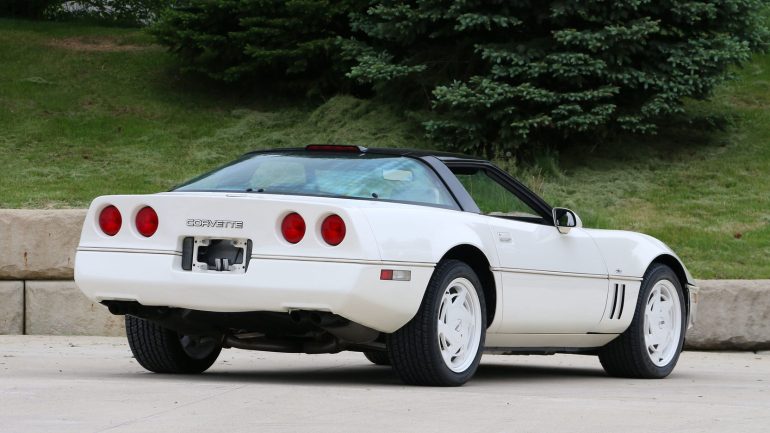
White paint, white leather, white wheels, white steering wheel.
Much like the disdain associated with the off-putting effects of chrome overload that is often associated with the 1958 Corvette, its 1988 35th Anniversary Edition counterpart was plagued by an intense overload of the color white. It wasn’t just the car’s body that featured this white color scheme. It was almost anywhere on the vehicle that you could think to look. The 1988 35th Anniversary Edition featured white paint, white upholstery, white door panels, and a white steering wheel. In case you felt as if the car could use a little more white, the rims were painted white as well.
The case for it. The 35th Anniversary Edition was 2,050 numbered cars with the Z52 handling package and the 245-hp L98, and the white-on-white that looked like too much in 1988 looks like a period piece now. It is one of the few C4 special editions, it is cheap for what it is, and the numbered dash plaque means they are tracked.
MORE: THE 1988 CORVETTE / THE 35TH ANNIVERSARY EDITION GUIDE / C4 BUYER’S GUIDE
1995 Indy Pace Car Replica
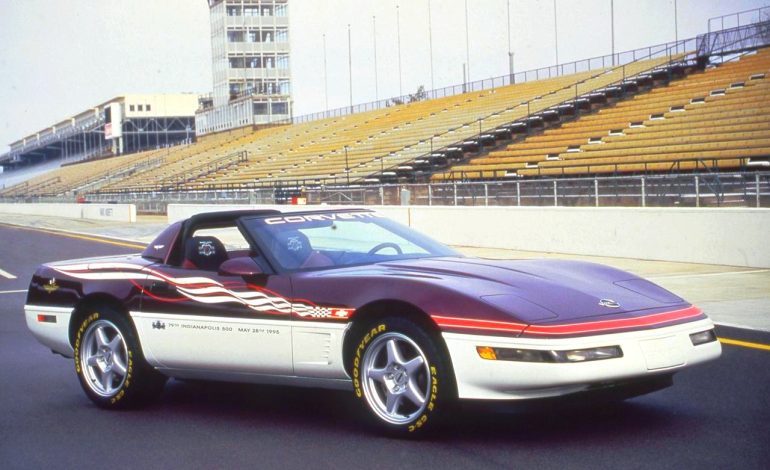
Dark purple over white, with the graphics.
After the Corvette was chosen as the pace car for the 1995 Indianapolis 500, GM decided that the production of a limited number of replicas for public purchase was in order. There was nothing of much relevance to complain about in regards to the pace car’s mechanical functionality. However, these replicas most often drew attention for the paint scheme that was applied to them. With a color scheme that features variants of the colors white, purple, red, and black, many were left to scratch their heads in curiosity as to just what this paint scheme was attempting to represent.
The case for it. Chevrolet built 527 Pace Car replicas, Dark Purple Metallic over Arctic White with the graphics, which makes it the rarest C4 special edition after the Grand Sport, and the LT1 under it was the best engine the C4 ever had short of the LT5. Nobody is neutral about the livery, and that is exactly why values have climbed.
MORE: THE 1995 CORVETTE / THE 1995 PACE CAR REPLICA GUIDE / PACE CAR BUYER’S GUIDE
1998 Indy Pace Car Replica
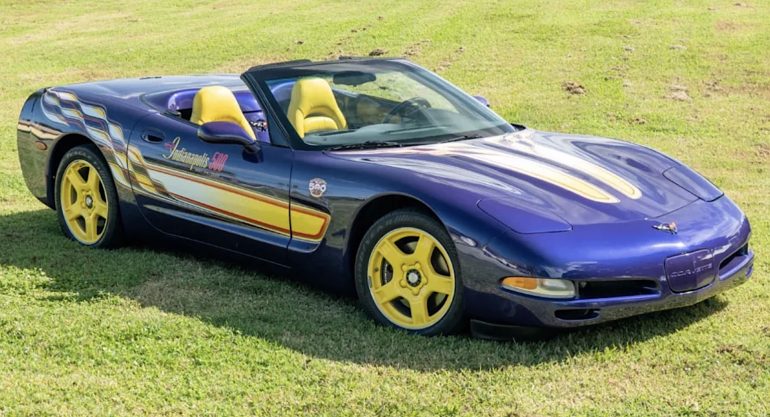
Radar Blue, yellow wheels, yellow seats.
If the 1995 pace car’s livery was loud, the 1998 pace car turned the volume up again. It appears that whoever headed up the design team for the year’s pace car was highly fond of the color yellow. The car’s already head-turning paint job was perfectly complemented by the design team’s choice of the color yellow for the vehicle’s upholstery and rims. It is, to this day, the most divisive paint scheme Chevrolet ever put on a Corvette.
The case for it. The 1998 was the first C5 pace car, 1,163 replicas in Radar Blue with yellow wheels and yellow leather, and it introduced Active Handling to the Corvette. The LS1 and the C5 chassis make it a far better car than the 1995, and the color scheme that was the joke in 1998 has made it the most recognizable C5 at any show. It has become a cult car.
MORE: THE 1998 CORVETTE / THE 1998 PACE CAR REPLICA GUIDE / PACE CAR BUYER’S GUIDE / EVERY CORVETTE PACE CAR
How This List Works
The fifteen cars here are the union of two CorvSport lists: Scott Kolecki’s five “not so greats” from 2017 and Josh Boyd’s fifteen from 2020, kept in their own words. We have grouped them by cause rather than ranking them, because the ranking was never the point: a 1975 with 165 horsepower is not a bad car, it is a car built in 1975, and the interesting question is what happened and what the car is now. Josh’s sharpest lines have been trimmed, because a few of them were unfair to people who own and love these cars; the substance is unchanged, and the edits are listed in the build notes.
“The case for it” is written from the market and the record: production numbers from GM, performance from period tests, values from the buyer’s guides linked under each car. If you own one of these and think we have still been too hard on it, the comments are open, and we have changed our minds before.
FAQs
What is the worst year for the Corvette?
By horsepower, 1975: 165 hp in the base L48, the lowest since the 1953 six. By reputation, 1984, for its harsh ride and Cross-Fire engine, though it sold 51,547 cars and its chassis was the best-handling in America. Neither is a bad car to own today; both are among the cheapest Corvettes you can buy.
Which Corvette years should I avoid?
None outright. The ones to buy carefully are the Cross-Fire cars (1982 and 1984) if you want originality and the 1975–80 base cars if you want performance, since a 350 making 165–195 hp will feel slow next to anything modern. The generation buyer’s guides linked above list what to check on each.
Why were 1970s Corvettes so slow?
Unleaded fuel forced lower compression from 1971, catalytic converters arrived in 1975, horsepower ratings switched from gross to net in 1972, and insurance and emissions rules killed the big block after 1974. The Corvette was still the fastest American car most of those years; the bar had simply dropped.
Is the 1984 Corvette really that bad?
No. It was criticized for a brutally stiff ride (fixed for 1985), the Cross-Fire engine (replaced by Tuned Port Injection for 1985) and the 4+3 gearbox. Underneath was an all-new aluminum-suspension chassis that pulled 0.95 g, and the car sold 51,547 copies. It is the least expensive Corvette on the market and a sound one if you accept it for what it is.
Was the Callaway Twin Turbo unreliable?
The earliest 1987 cars had heat and durability problems that Callaway worked through; later cars were better sorted and more powerful. The Twin Turbo was a GM-warrantied RPO (B2K) with 345–382 hp when the standard car made 240, and it is now one of the most collectible C4s.
What is the cheapest Corvette to buy?
A 1984–1987 C4, followed by the 1975–1979 C3s and the 1980–82 cars. The 1979, with 53,807 built, is the most plentiful classic Corvette and usually the cheapest chrome-less C3. Driver-quality examples of all of them cost less than a used economy car.
What is the ugliest Corvette?
The usual nominees are the 1958 for its chrome, the 1988 35th Anniversary for its all-white scheme and the 1995 and 1998 pace car replicas for their liveries. All four have since become collectible precisely because of the thing people disliked.
More Corvette Lists
The fastest, the rarest, the most expensive, the best of every generation and the ones we would buy with our own money. All of CorvSport’s lists and rankings.