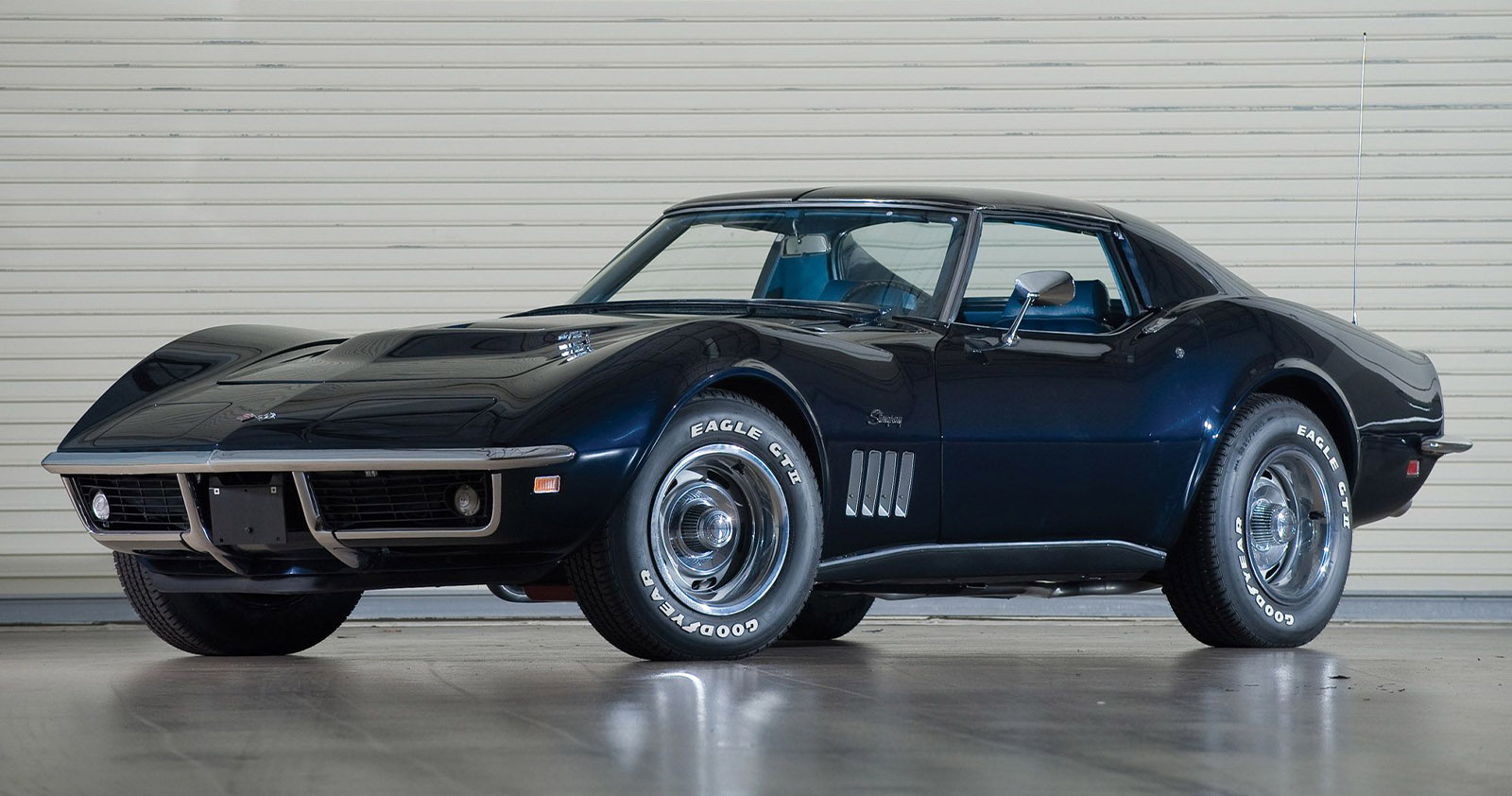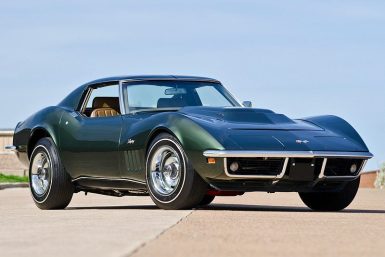
C3 Corvette L88 (1968–1969): The Complete Guide Quick Nav: The Story · The...


CORVETTE BUYER’S GUIDES
Buying a 1968–82 Corvette? Fifteen years, from the six-figure chrome-bumper big blocks to the cheapest classic Corvette there is. This guide covers every year, what each costs in today’s market from the results the site tracks, the best buys, the clones to see through, the model guides and the cars for sale.
Quick Nav: Overview · Why Buy · Year by Year · Year Details · Variants · Values · Price Ladder · What Moves the Price · Model Guides · Driving · Costs to Own · Considerations · Problems · Inspection · Verification · Market Reports · For Sale · FAQs
The Car: The third-generation Corvette, 1968–1982: Larry Shinoda’s Mako Shark II body on the Sting Ray’s chassis, the longest-running Corvette generation and the first with T-tops
Years and Built: 542,861 over fifteen model years, from 17,316 in strike-hit 1970 to the all-time record of 53,807 in 1979; convertibles 1968–75 only
Eras: Chrome bumpers 1968–72 (the collector cars); urethane nose 1973, urethane both ends 1974–77; fastback glass 1978–82 with the Pace Car, Silver Anniversary and Collector Edition
Engines: 327 and 350 small blocks from 165 to 370 hp (the LT-1); 427s to 435 hp, the L88 and the aluminum ZL1 (1968–69); 454s, the LS5, LS6 and LS4 (1970–74); the L82 (1973–80); Cross-Fire Injection in 1982
Transmissions: Muncie and Borg-Warner four-speeds to 1981; Turbo Hydra-Matic 350/400; the 700-R4 overdrive automatic only in 1982
What One Costs Today: Late-C3 drivers $10,000–$25,000; the best smog-era cars and chrome-bumper small blocks $25,000–$55,000; LT-1s, 427s, LS5s and LS6s $55,000–$220,000; L88s $330,000–$860,000 and the ZL1 at $3.14 million (results tracked through October 2026)
The Pick: A 1977–81 L82 four-speed with the Gymkhana suspension for a driver; a 1970–72 small block with the paperwork for a chrome-bumper Shark; a documented 427 or LT-1 for the collection; the 1978 Pace Car or 1982 Collector Edition for a low-mile keeper
Related: The C3 hub, the fifteen year pages, the C3 Stingray, ZR1 and L88 model pages, the L88, ZL1, ZR1/ZR2 and Pace Car guides, the colors, production, VIN and RPO pages
For many of us the idea of a Corvette started with a C3: the Shark that astronauts, athletes and television detectives drove, the first Corvette to pace the Indianapolis 500, and the generation that took the car from Le Mans racer to American icon. It is also the longest-lived Corvette, fifteen model years in which the car went from 435-horsepower Tri-Power 427s to a 165-horsepower smog motor and back up to a fuel-injected 200, and that is what makes it the broadest buying decision in the Corvette world.
A 1969 L88 and a 1977 L48 automatic are the same shape and a hundred thousand dollars apart. The chrome-bumper cars of 1968–72 are collector cars priced by engine code and paperwork, and the most faked Corvettes ever built; the 1973–77 cars are the cheapest classic Corvette, bought for the shape and the drive; the 1978–82 cars are priced by mileage and by edition, with the Pace Car and the Collector Edition the ones people kept. Every one of them sits on the C2’s steel birdcage and runs its headlights on vacuum, and the inspection is the same from end to end.
This guide walks through the fifteen years and what changed, the variants and the specials, what each tier of the market costs from the auction and dealer results the site tracks, what moves the price, what the cars are like to drive and to own, the problems they have at forty to sixty years old, the inspection step by step, how to verify each year’s engine (easier from 1972, when the VIN started naming it), and the questions readers ask most. The year pages and the model pages go deeper on each car; this page is where to start.
For many of us, the idea of purchasing a Corvette has been a dream of ours since the time we first saw one of these classic cars on the open road. While all Corvettes are iconic, and while each has a loyal following of owners and enthusiasts who claim their generation is the best, there is little doubt that the third-generation Corvette is one of the most iconic generations of them all. Consider this - the C3 still holds the record for the longest production run of any generation Corvette, before or since. It was the generation that saw the Corvette grow-up from being a powerful track car and Le Mans racer to an iconic sports car synonymous with the American Dream. The C3 Corvette was owned by astronauts, celebrities and athletes all around the world. It was showcased in movies, on television and in mainstream music. It was the first-generation to serve as the official pace car of the Indianapolis 500.
Introduced in 1968 and produced until 1982, the third-generation Corvette has a sorted history full of highs-and-lows throughout its 15 year production run. Much of the evolution of this generation followed the economic and political climate of the United States in the late 1960's and 70's. While early model years (1968 - 1972) featured big engines producing massive horsepower, stricter Federal emissions regulations would cause Chevrolet to reduce engine output ratings in later models (1973 - 1982). At the same time, these changes forced Chevrolet to improve upon their engineering standards. By looking for ways to reduce the car's weight and improve upon its overall design, they were able to continue to drive performance, even with the restrictions forced upon them.
Because of the dramatic changes that occurred throughout the C3's fifteen-year production run (and the number of different powerplants offered by GM during that period), this C3 Corvette Buyers Guide was written a little differently than others in our Buyers Guide series.
We thought that it was important to understand the many differences between all of the C3 Corvettes. Our C3 Corvette Buyers Guide starts with an overview of each model year which highlights all of the details that made each of these cars unique. Because there were so many different engines introduced throughout the C3's production run, and because so many of these Corvettes have had their engines swapped out over the natural course of time, we did not include a lot of mechanical information (known mechanical issues, common fail-points, work-arounds, etc.) for each of the engines introduced in the C3 Corvettes as a separate section.
Instead, we provided a list of the engines provided with each model year in the Year By Year - What Are the Differences section below, and included specific information such as engine size, displacement, horsepower ratings, etc. Should you have questions about a specific engine platform used in any of the C3 Corvettes, please contact us by clicking HERE. We'll be happy to answer any questions you may have about a prospective Corvette (or anything else related to the C3 (or any-generation) of Corvette.)
The C3 is the Corvette that grew up. Introduced in 1968 on the Sting Ray’s chassis with Bill Mitchell and Larry Shinoda’s Mako Shark II body, it kept the big engines for its first five years, then followed the country through emissions rules, the oil embargo and the 55-mph limit, and came out the other side selling more cars than ever: 53,807 in 1979, a record no Corvette has touched since. GM sold more than 200,000 in the middle years alone, and the result is a generation with a car at every price.
The chrome-bumper cars of 1968–72 are the collector Sharks: the 427s and 454s, the solid-lifter LT-1, the L88s, the two ZL1s and the ZR1 and ZR2 packages, with the 1970 the year the market has settled on as the best of them. They are bought like a C2, on the engine pad, the casting dates and the tank sticker, and they trade from the twenties for a small-block driver to seven figures for a ZL1. From 1973 the rules changed: urethane bumpers, hydraulic cams, catalytic converters from 1975 and a steady slide in horsepower, but also air conditioning, leather, radial tires and a car that is far easier to live with. The 1973–82 Sharks are the cheapest way to own a classic Corvette, and a good L82 four-speed is a proper sports car for the price of a used sedan.
Half a million were built, so parts are reproduced down to the last clip, the small-block Chevrolet is the best-understood engine in the world, and any classic shop can service one. The weak points are known and fixable at a known price: the vacuum system that runs the headlights, the four-piston calipers, the trailing-arm bushings, the T-top seals and the urethane bumper covers. The one thing that is not cheap is the steel birdcage under the fiberglass, which is why this guide spends so long on it.
The chrome-bumper big blocks and LT-1s have appreciated with the muscle-car market and the L88s, LS6s and ZR cars keep setting records; the 1973–77 cars have stayed cheap because so many were built and so many were automatics; the 1978 Pace Car and the 1982 Collector Edition were bought to be kept and are now the C3s with the most delivery-mileage examples in circulation. A buyer who knows which market he is in gets a good car; the clone market, from LT-1 and 454 dress-ups to decaled Pace Cars, is where the mistakes are made.
A sorted Shark is a usable classic: it starts, stops and keeps up, the T-tops come off, and a 1975-on car runs on anything from any pump. The cars that disappoint are bought for the wrong reason, a solid-lifter LT-1 for traffic, a California 305 for performance, a rough chrome-bumper project for the chrome. The rest of this guide is about buying the right one.
MORE: THE C3 HUB / THE C3 STINGRAY MODEL PAGE / ALL THE GENERATIONS
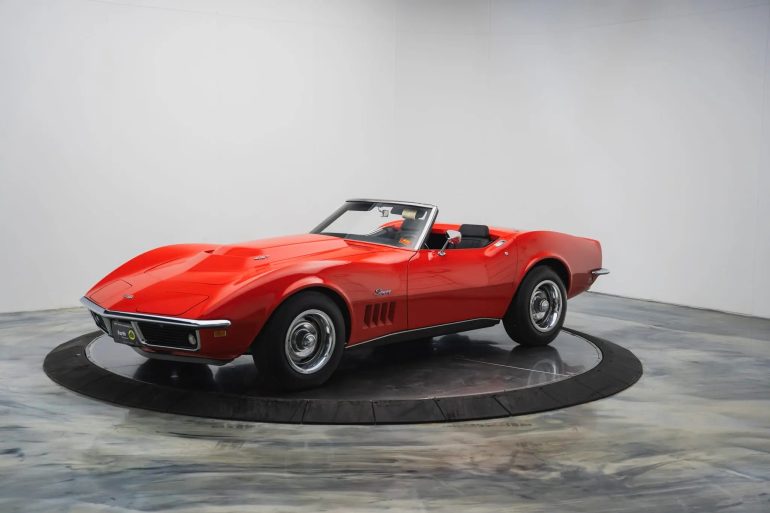
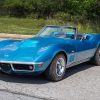
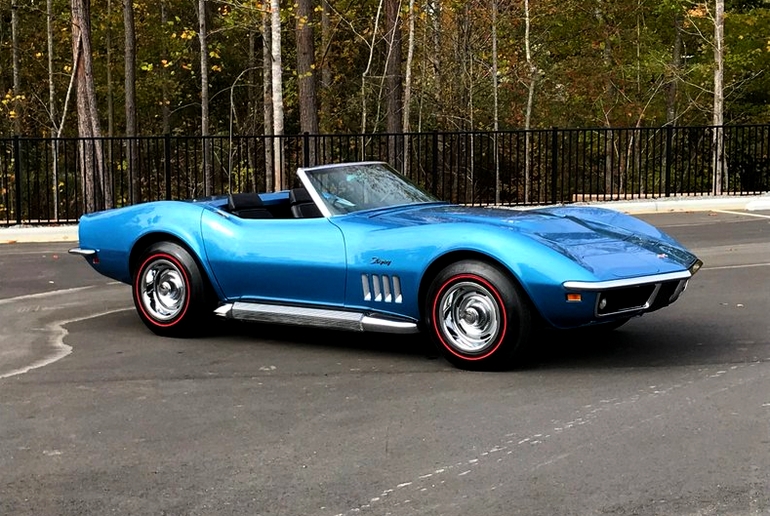 The 1969 Corvette Convertible.
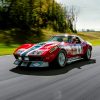
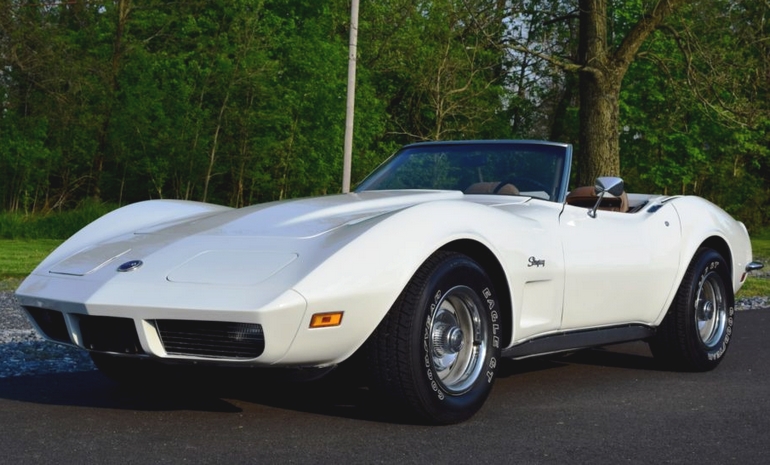 1973 Corvette Convertible

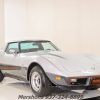
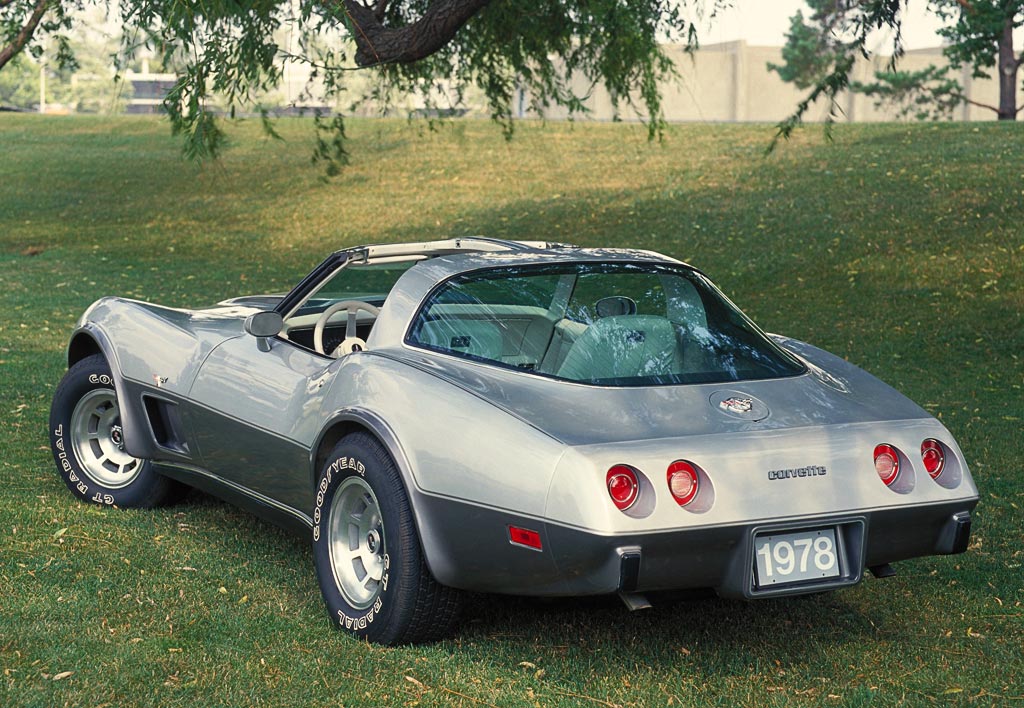
 The Collectors Edition Corvette was the first to feature a rear lifting glass hatchback, which has since become a standard on all Corvettes built since 1982. (Image courtesy of GM Media.)
No Corvette generation changed as much from end to end as the Shark, and the changes decide what a car is worth and how it drives. The 1968–72 chrome-bumper cars carry the value, with the 1970 the best of them; 1973 and 1974 are the chrome-and-urethane bargains with the last big blocks; 1975–77 are the bottom of the market and the cheapest way in; 1978–82 are priced by mileage and edition. The table gives the changes, the production, the engines and the verdict for each; the year pages have the full story, the specs, the options, the colors and the current market for that year.
Three rules hold across all fifteen. A four-speed is worth more than an automatic in every year it was offered, and the last manual is the 1981. The engine code matters more than the year on a chrome-bumper car, and the mileage and originality matter more than the engine on a 1978–82 car. And from 1972 the fifth VIN character names the engine, which makes a dressed-up 350 easy to catch on anything but a 1968–71.
MORE: 1968 / 1969 / 1970 / 1971 / 1972 / 1973 / 1974 / 1975 / 1976 / 1977 / 1978 / 1979 / 1980 / 1981 / 1982 / THE C3 HUB
| YEAR | WHAT CHANGED | BUILT | ENGINES | THE VERDICT |
|---|---|---|---|---|
| 1968 | All-new Mako Shark II body on the Sting Ray chassis: T-tops, a removable rear window, hidden wipers, vacuum headlights, Astro-Ventilation, the Turbo Hydra-Matic 400 replacing the Powerglide, the battery behind the seats, fiber-optic lamp monitors. Longer, wider, 200 lb heavier; the same engines as 1967 plus 80 L88s. Record 28,566 built. | 28,566 | 327 ci V-8, 300 or 350 hp; 427 ci big block, 390 hp (L36), 400 hp Tri-Power (L68), 435 hp Tri-Power (L71/L89), 430 hp L88 (80 built) | The one-year car and the cheapest route into a 427 Corvette. Worst build quality of the run and the most one-year-only parts; buy the 80 L88s on the registry, the rest on condition. |
| 1969 | Stingray badge (one word), the 327 becomes a 350, side pipes and 8-inch wheels, a stiffened frame, flush door handles, smaller wheel, ignition on the column, headrests standard, door panels opened up half an inch; 116 L88s and two aluminum ZL1s. A strike-stretched record of 38,762. | 38,762 | 350 ci V-8, 300 or 350 hp; 427 ci big block, 390 hp (L36), 400 hp Tri-Power (L68), 435 hp Tri-Power (L71/L89), 430 hp L88 (116 built), all-aluminum ZL1 (2 built) | The most valuable C3 year: the 116 L88s and the two ZL1s. The first year to live with (stiffer frame, better fit) and a step up from a 1968 for the same engine. |
| 1970 | Egg-crate grille and fender louvers, flared wheel arches, square exhaust tips, bigger side markers, better seats with integral headrests, tinted glass standard, the custom interior; the LT-1 small block and the 454 (LS5); the ZR1 package. UAW strike: 17,316 built. | 17,316 | 350 ci V-8, 300 or 350 hp, or 370 hp solid-lifter LT-1; 454 ci big block, 390 hp (LS5); the 460-hp LS7 was listed but never sold | The chrome-bumper Shark the market likes best: the facelift, the first LT-1, the 390-hp 454 and the smallest run of the decade. The LT-1 is the most faked small block Chevrolet built. |
| 1971 | A 1970 with the compression taken out for 91 octane: 270 hp base, 330 LT-1, 365 LS5, the 425-hp aluminum-head LS6 (188 built); ZR1 (8) and ZR2 (12) packages; the last fiber optics. 21,801 built. | 21,801 | 350 ci V-8, 270 hp, or 330 hp solid-lifter LT-1; 454 ci big block, 365 hp (LS5) or 425 hp aluminum-head LS6 (188 built) | A 1970 with less compression for less money, happy on modern fuel, with the LS6 and the ZR2 at the top. The sensible chrome-bumper buy. |
| 1972 | The last chrome bumpers, egg-crate grille, fender grilles and removable rear window; ratings go to SAE net (200/255/270); the horn-honking alarm standard; the ZR2 and LS6 gone, the LT-1 and ZR1 in their last year. 27,004 built. | 27,004 | 350 ci V-8, 200 hp net, or 255 hp net solid-lifter LT-1 (last year); 454 ci big block, 270 hp net (LS5, not sold in California) | The last chrome-bumper car and the first year the VIN names the engine. The last LT-1 carries the premium; a small block with the automatic and air is the entry-level C3 with chrome at both ends. |
| 1973 | Body-color urethane nose over a steel bumper, two inches longer, a hood that hides the wipers with cowl induction, fixed rear window, radial tires, door beams, chrome rear bumper kept; L82 replaces the LT-1, LS4 454 at 275 hp; YJ8 aluminum wheels listed then withdrawn (casting 329381). 30,464 built. | 30,464 | 350 ci V-8, 190 hp (L48) or 250 hp (L82, new); 454 ci big block, 275 hp (LS4); all hydraulic-lifter, SAE net | The one-year look: soft nose, chrome tail, the early dash and a 454 on the list. Below the 1972, above everything after it; the chrome-and-urethane bargain. |
| 1974 | Urethane tail in two halves with a center seam, the last 454 (LS4, 270 hp), the last leaded-fuel engines and true duals, integrated shoulder belts on coupes, a 10-inch mirror, Gymkhana suspension (FE7) added, a tougher Turbo Hydra-Matic. 37,502 built, two thirds automatic. | 37,502 | 350 ci V-8, 195 hp (L48) or 250 hp (L82); 454 ci big block, 270 hp (LS4), the last big-block Corvette; all SAE net | The last big block and the cheapest one, and the last leaded-fuel car with true duals. The two-piece tail is the year’s tell. Priced with 1975–77. |
| 1975 | Catalytic converter, HEI ignition, unleaded fuel; bumper pads front and rear, a one-piece rear cover with shock absorbers, a headlights-on buzzer, a fuel-tank bladder; two engines only (165 and 205 hp), the last Astro-Ventilation and the last convertible (4,629) until 1986. Duntov retires. 38,465 built. | 38,465 | 350 ci V-8 only: 165 hp (L48; 155 hp in California) or 205 hp (L82); catalytic converter and HEI ignition new; no big block | The last convertible for eleven years, the first catalytic converter, 165 hp. The bottom of the market with 1976–77; the convertibles carry a scarcity premium. |
| 1976 | Cowl flap gone, a duct ahead of the radiator instead; two rear emblem styles; YJ8 aluminum wheels return (Kelsey-Hayes, Mexico); the Vega four-spoke wheel; a steel floor pan over the catalyst; 180 and 210 hp; no L82 or four-speed in California (TH350 there); power steering and brakes standard mid-year. Record 46,558. | 46,558 | 350 ci V-8 only: 180 hp (L48) or 210 hp (L82, not sold in California); last year of the Stingray badge | The last Stingray script, the first aluminum wheels, 15 more horsepower, coupe only. A clean L48 automatic is the entry ticket; an L82 four-speed the one to drive. |
| 1977 | Stingray script off, crossed flags on; the 500,000th Corvette; a new console for Delco decks and the first cassette, restyled gauges, a longer shifter, a column two inches shorter with the Smart Switch stalk, a leather wheel, the alarm in the door-lock button, leather seats standard; V54 roof rack; engines orange then blue from September 1976. Record 49,213. | 49,213 | 350 ci V-8 only: 180 hp (L48) or 210 hp (L82); engines painted orange, then blue from September 1976 | Mechanically a 1976 with the better console, wheel and switchgear and a blue engine. The year buyers who know the cars prefer at the bottom of the ladder. |
| 1978 | The fastback compound-curve rear glass for the 25th anniversary; a new dash with a real glovebox and squared gauges, screwed-on door armrests, a single-reel belt; glass T-tops and lockable latches; a 24-gallon tank; 185 and 220 hp; the Silver Anniversary scheme (15,283) and 6,502 Indy Pace Car replicas with spoilers and the new thin-shell seats. 46,776 built. | 46,776 | 350 ci V-8 only: 185 hp (L48; 175 hp in California and at high altitude) or 220 hp (L82) | Three markets: the Pace Car replica (the collectible, priced by mileage), the Silver Anniversary (the sleeper, one car in three) and 40,000 standard coupes with the new fastback glass. |
| 1979 | Crossed flags back, black trim around the glass, tungsten-halogen high beams, the Pace Car’s high-back seats standard, spoilers (D80) and tinted panels (CC1) optional, AM-FM standard, air, power windows and tilt column standard from May; 195 and 225 hp on open-flow mufflers; some late cars get the 85-mph speedometer. All-time record 53,807. | 53,807 | 350 ci V-8 only: 195 hp (L48) or 225 hp (L82), both up 5 hp on new open-flow mufflers | The most common Corvette ever built, so plenty of choice and low prices. An L82 four-speed with FE7 and spoilers is the best late-1970s C3 for the money. |
| 1980 | Aluminum differential housing and front crossmember, thinner hood and doors, lighter roof panels: 250 lb off; spoilers molded in, grille raked, fender flags gone, a longer emblem, new lights; 85-mph speedometer, two-lid rear storage, air, power windows and tilt standard; 190 hp L48, 230 hp L82 (automatic only, last year), the 305 LG4 for California. 40,614 built. | 40,614 | 350 ci V-8: 190 hp (L48) or 230 hp (L82, last year, automatic only); California cars got a 305 ci, 180 hp LG4 with Computer Command Control | The light Shark: 250 pounds off, molded spoilers, the last L82 (automatic only) and California’s 305. A better car than its price; skip the LG4. |
| 1981 | Bowling Green opens June 1 while St. Louis finishes; one engine, the 190-hp L81 with Computer Command Control and magnesium valve covers; the four-speed returns to California and ends after this year; a fiberglass mono-leaf rear spring (8 lb against 44) on automatics; quartz clock, electronic tuning, a six-way power seat that finally reclines; D84 two-tones (5,352). 40,606 built, 8,995 at Bowling Green. | 40,606 | One engine for every state: 350 ci L81, 190 hp, with Computer Command Control, magnesium valve covers and stainless exhaust manifolds | One engine for every state, two plants, the last four-speed (14 percent of production) and the fiberglass spring. The historical pick is a documented first-week Bowling Green car. |
| 1982 | Cross-Fire Injection on the 200-hp L83, the 700-R4 four-speed overdrive automatic as the only gearbox, an in-tank pump, a hood air door; “QUARTZ” on the clock face; the Collector Edition (6,759) with a lifting rear glass, Silver Beige shadow stripes, bronze tops, turbine wheels and its own VIN prefix to stop clones. 25,407 built. | 25,407 | 350 ci L83 with Cross-Fire Injection, 200 hp: the first fuel-injected Corvette since 1965 and the C4’s engine a year early | The C4’s engine and gearbox a year early. The Collector Edition is the late-C3 collectible after the Pace Car; the standard coupe sits with 1980–81. Check the Cross-Fire is complete. |
The table gives the headlines; this is the detail a buyer uses at the viewing, because the small changes are how you tell a 1968 from a 1969, a real 1973 nose from a 1974 repair, a 1976 from a 1977 and a factory Pace Car from a decaled Silver Anniversary. Because so many C3 engines have been swapped over the years, the engines are verified in the Verification section below; the year pages carry the full specifications, options, colors and production for each.
For serious Corvette collectors, the 1968 to 1972 model years contain some of the most sought-after Corvettes in the brand's history. These models, which include the L88 and ZL1 Corvettes, are considered to be the holy grail of the third-generation production run. These Corvettes are some of the last to emerge without specific emissions controls systems or impact-absorbing safety bumpers. They contained the big, beefy engines - from the modest 350 cubic-inch small blocks to some of the most aggressive big-blocks ever produced by Chevrolet.
During these first four years of the C3's production run, the Corvette's outward appearance remained largely unchanged, with some notable exceptions that help to identify the cars. Corvettes built in 1968 and 1969 feature four vertical vents on the front fenders (just behind the front wheel wells), no fender flares and round exhaust tips. Conversely, Corvettes built between 1970 and 1972 feature more of an egg crate pattern in the front grill and front fender vents. They also feature fender flares and rectangular exhaust cutouts.
The late 1960's and early 1970's Corvettes were also distinguished for their robust powerplants with large engine displacements. The 1968 and 1969 Corvettes featured the 327 cubic-inch small-block and the 427 cubic-inch big-block engines. In 1970, these displacements increased to 350 cubic inch and 454 cubic inch respectively. Horsepower increases were proportionate with the growth of these engines, achieving peak outputs that exceeded 450 horsepower before government-mandated emissions restrictions and safety programs would begin to reign-in the performance of these powerful engines.
Although there are Corvettes from this era (including the L88, L89 and LT1) that trade hands among serious collectors for millions of dollars apiece, there are many more 1968-1972 Corvettes available today for prices that make ownership of an early-era C3 not only possible, but affordable as well.
Although it featured a completely new body design, the 1968 Corvette included many of the same powertrain offerings as the out-going 1967 C2 Corvette - with one notable exception. In 1968, General Motors introduced the Turbo Hydra-Matic three-speed automatic transmission to replace the earlier two-speed Powerglide automatic. Additionally, Chevrolet offered six optional engine platforms to consumers in the 1968 Corvette ranging from the standard 300 horsepower, 327 cubic-inch small-block engine (which came paired to a three-speed manual gearbox) to the high-output 435 horsepower, 427 cubic-inch L71 big-block V8 engine. (NOTE: All of the available engine options are listed above.)
The 1968 Corvette had a harsher ride than its predecessor, a fact that did not go un-noticed by the automotive press. The car also had a tendency to understeer, (a regrettably recognizable trait of the early-generation Corvettes,) which was a direct result of installing stiffer rear springs to reduce front end lift during acceleration. The rear roll center was also lowered, which, when coupled with the suspension tuning, further added to the under-steering issue.
The C3’s battery was relocated behind the seats which also provided additional room under the hood. The second-generation Corvette’s side vent windows were eliminated in favor of a new fresh-air “Astro-Ventilation” system. The Astro-Ventilation system routed fresh moving air in through the front cowl, around the interior airspace, and out through grilles located in the rear deck right behind the back window. For maximum ventilation, the rear window could also be removed.
Shoulder belts were introduced in 1968 as a “no-cost” option for all Corvette coupes (although the option remained an additional expense on convertible models.) Additionally, the 1968 model year included an electric rear-window defroster, speed warning indicator, AM/FM stereo radio, and a high-tech, futuristic fiber-optic light monitoring system.
The 1968 Corvette sat lower than its predecessor had. It was also longer, wider, and heavier. The overall length of the new Corvette increased from 175 inches to 182 inches, and most of this was the direct result of the greatly increased overhanging nose assembly at the front of the car. In fact, the wheelbase remained unaltered from the second-generation Sting Ray’s 98 inches. The track width increased at both the front and rear of the car, from 56.5 inches to 58.7 inches in the front and from 57.0 inches to 59.4 inches in the rear. The car's weight also increased by nearly 200 pounds over the 1967 Sting Ray, putting the 1968 Corvette's curb weight at approximately 3,400 pounds.
The 1968 model year set a new Corvette sales record (up to that point in time) at 28,566 units sold, which was up approximately 5,000 units from the final Sting Ray.
The 1969 Corvette was largely a carry-over of the 1968 model. Almost all of the changes to the sophomore year of the third-generation Corvette were made to correct for design and engineering errors in the initial design. These errors were often identified from feedback from both the automotive media and consumers alike.
Exterior alterations were fairly minor - with one notable exception. For 1969, Chevrolet returned to using the Stingray designation for its new Corvette, although for the C3, the name was now a single word (unlike the Sting Ray used on all second-generation Corvettes.) Elsewhere, the 1969 Corvette received an all-welded, 5-cross-member, ladder-type, steel-reinforced frame that was intentionally stiffened to help reduce body vibration. The car's exterior door handles were relocated from the conventional door grip with thumb-release button to a single-piece door lever that was depressed as the door was gripped during opening. A new headlight washer system was introduced and the windshield washer jets were relocated to the wiper arms. Lastly, a trunk-mounted luggage rack was offered to consumers to increase the Corvette's overall luggage capacity.
The interior received a number of minor, but significant changes. First, a new, smaller steering wheel was introduced, trimmed back an inch for more under-rim thigh clearance. The interior door handles and control knobs were redesigned to improve upon safety. The ignition switch, which had been mounted on the dashboard since Corvette’s inception in 1953, was moved to the steering column for the 1969 model year, where it combined with the newly mandated column lock for additional security. A warning light was added to inform drivers if the pop-up headlights did not open completely. A flexible dash mounted three-section map pocket was included to help make up for the lack of a proper glovebox. Headrests became a standard feature although they could be deleted when ordering the car. Lastly, Zora Arkus-Duntov got GM to approve a $120,000 tooling change that opened up the inner door panels a half-inch per side, allowing occupants additional shoulder space.
The 1969 Corvette received an extensive array of safety features that were specifically design to protect both the occupants of the car as well as the car itself. These included an energy-absorbing steering column, seat and shoulder belt restraints, an energy-absorbing instrument panel, padded sunvisors and a reduced-glare instrument panel for improved visibility during night driving. Additionally, an anti-theft ignition system was installed with featured both anti-theft steering and transmission locks as well as an anti-theft ignition key warning buzzer that would sound whenever the keys were left in the ignition cylinder.
Like the 1968 model before it, the 1969 Corvette was offered to consumers with a number of different powerplants, from the standard 300HP, 350 cubic-inch small block to the ultra-rare, incredibly valuable 435HP, 427 cubic-inch L88 big-block engine.
Despite the improvements that were made to the 1969 Corvette, some critics continued to take issue with the Stingrays “dismal build quality, styling eccentricities, and overall lack of finesse.” However, the criticisms did nothing to deter consumers from purchasing it. In 1969, Corvette sales increased by more than 10,000 units to a total of 38,762 Corvettes sold that year. Of those sold, 22,129 were coupes and the other 16,633 were convertibles.
The 1970 Corvette made its formal debut in late February. While much of the car was a carryover of the 1969 model, the 1970 Corvette did include a number of small-but-significant design improvements. These design changes, which had been first introduced on a concept vehicle dubbed the Aero Coupe, included many elements which proved GM's interest in moving the Corvette away from its current role as a pure sports car (the ZL-1 notwithstanding) towards the blended role of becoming a Luxury Sports car.
The 1970 Corvette featured an egg-crate patterned grille, matching louvers along the fenders (which replaced the four gills of the 1968 and 1969 model years), and more deeply flared wheel house designed to reduce the severity of the bodyside tuck-under, which had been discovered as being susceptible to stone damage. Additionally, the parking lights were squared off and set into the corners of the grille. Mandatory side marker lights at the front and rear of the car were made larger and were better integrated into the design than those of earlier model years. In the back of the car, new rectangular exhaust pipe tips were recessed into the underside of the rear bumper/fascia assembly. A number of detail refinements were also made to the taillights and the stainless steel rocker moldings.
The interior of the 1970 Corvette was improved upon in a number of areas. The seats, which had been re-designed in 1969, underwent another design change that added an inch of urgently needed headroom as well as better lateral support. The headrests were integrated into the seat design. A more accessible release button was introduced for the seat back hinge. The inertia reels for the shoulder harnesses were tucked away more neatly in the rear quarters which opened up more space in the trunk area. The seatbelts were fed through slots in the seat backs which made them more integrated into the overall design.
Some 1970 Corvettes included a custom interior (an option that could be ordered when purchasing the vehicle new (though there was no RPO assigned to this option.)) These custom interiors gave the 1970 Corvette a “dressed-up” look. When so equipped, these Corvettes featured leather-trimmed seats, cut-pile, door-to-door carpeting, a leather boot (for manual transmission shift levers), and wood-grain trim on the console and doors.
The previously optional Soft-Ray Tinted Glass option (RPO A01) was made standard equipment for the 1970 model year. As a result, all 1970 Corvettes received evenly tinted glass on all windows.
Mechanically, there were many carryovers from the previous model year. The small-block engine lineup remained the same at the two lower power ratings (300 horsepower and 350 horsepower respectively). However, GM did introduce a new solid-lifter, small block engine that they designated the LT-1. Corvettes equipped with this engine received a special hood dome surrounded by striping and “LT-1” lettering.
For the 1970 model year, Chevrolet introduced a big block 427 that was stroked out to a full 4.00 inches and 454 cubic inches. It was the first time that the stroke had been increased since the engine had been introduced in its more conservative iteration – a 396 cubic-inch big block – in 1965. The added cubic inches in the Corvette were actually the byproduct of Chevy’s need to expand the engine’s size to counterbalance the loss of performance in its regular passenger cars due to the mandatory reductions in exhaust emissions as required by state and federal laws.
There is a more limited number of 1970 Corvettes available than other model years from that era. This is due to a late production start on the model year as the result of a UAW strike. Chevrolet produced just 17,316 Corvettes in 1970, comprised of 10,668 coupes and 6,648 convertibles.
The 1971 Chevy Corvette remains one of the least changed models in design (when compared to the preceding model year) in the Corvette’s entire production history. Because of this, it was decided by Chevrolet management that they should treat the 1971 model year as an extension of the 1970 line, which meant that the Corvette remained essentially unaltered between the two model years.
Because the production of the cars would remain virtually unchanged from 1970 to 1971, production lines in the St. Louis Corvette plant were able to work in earnest to manufacture a more trouble-free car. The 1971 Corvette also arrived in conjunction with Federally sanctioned mandates that enforced the reduction of exhaust emission output. The bi-product of this sanction is that GM began manufacturing engines that could operate on gasoline rated at a maximum 91 octane. This mandate also resulted in the manufacturing of engines with lower compression ratings and horsepower.
All of the engines offered in the 1971 Corvette were impacted by this mandate. The solid lifter, small block LT1 engine was now rated at a modest 330 horsepower with a 9.0:1 compression ratio. The LS5 454 cubic inch big-block produced 365 horsepower at 4800 rpm, and a new aluminum-head big-block engine identified as the LS6 was rated at 425 horsepower at 5,600 rpm.
There were minor refinements made to the 1971 Corvette. These included an easier-to-open fuel filler door, and an automatic transmission selector quadrant that illuminated during night time operation. However, these minor refinements were the only thing that separated the 1971 model from earlier years. The 1971 Corvette would be the last Corvette model to feature the fiber-optics light monitoring system. It is believed that many late model 1971 Corvettes were actually manufactured without the fiber optics.
For 1971, Chevrolet offered consumers two special purpose (racing) packages.
The first of these was the RPO ZR1 package which utilized the aforementioned LT1 engine, and also included a heavy-duty, four-speed, close ratio transmission (RPO M22), heavy-duty power brakes, a special aluminum radiator, a metal fan shroud, a transistor ignition, and a revised suspension with special springs, shocks, spindle-strut shafts, and front and rear stabilizer bars (though it has since been determined that the 1971 ZR1 has appeared with and without rear stabilizers.) When equipped with the ZR1 package, consumers were unable to include many of the more “luxurious” amenities available such as power windows, a rear window defroster, air conditioning, power steering, deluxe wheel covers, an alarm system, and any type of AM/FM radio.
The second special purpose package that Chevrolet offered was RPO ZR2. This second special purpose package was identical to the ZR1, except that instead of a small block LT1 engine, the ZR2 came equipped with the aforementioned 454 cubic inch LS6 engine. Like the ZR1, the ZR2 package included the same ordering restrictions – namely none of the “creature comfort” amenities that were appealing to many consumers.
In total, only eight Corvettes were ordered with the ZR1 option, and only twelve were ordered with the ZR2, making these cars extremely rare - and valuable - in today's collector car market.
Chevrolet produced a total of 21,801 Corvettes in 1971. Of these, 14,680 were coupes and 7,121 were convertibles.
There were virtually no physical or mechanical changes made to the 1972 Corvette from the previous year. Most of the changes made to the 1972 model centered on options that were no longer available to consumers.
The ZR-2 package was no longer offered to consumers. The elimination of this package was the direct result of the LS-6 engine being eliminated from production by Chevrolet. Similarly, all of the engines offered for the 1972 model year suffered from a loss of power thanks to mandatory emissions restrictions that were implemented that year. The 1972 Corvette's stock engine - designated ZQ-3 - was rated at a conservative 200 brake horsepower. The LT-1 was rated at 225 horsepower and the LS-5 was rated at 270 horsepower. (NOTE: starting in 1972, Chevrolet begin publishing engine ratings in NET horsepower, resulting in output numbers that looked more exaggeratedly low when compared to earlier production years.)
Both the coupe and the convertible models featured the horn-honking alarm system as a standard option. The alarm could be armed/disarmed via a lock cylinder located at the rear of the car.
The 1972 Corvette had the distinction of being the last model year to feature both front and rear chrome bumpers, a bright egg-crate grill, side-fender grills and a removable rear-window.
In total, 20,496 Corvette coupes and 6,508 convertibles were manufactured in 1972.
The middle years of the C3 Corvette were definitely a time of transition for the brand. Government regulation and stricter emission standards had an adverse impact on engine horsepower/output as did increasing fuel costs, oil embargos and foreign trade policy. All of the forces at work in the world definitely added to the challenge of building more efficient engine options that improved upon fuel economy and reduced exhaust emissions. The days of building big horsepower were over - at least as far as the third-generation Corvette was concerned. The mid-1970's were the end of the line for multiple key elements that had been synonymous with the Corvette since 1953: the factory big-block V8 was discontinued in 1974; 1975 was the last year of a convertible model until 1986 and the 1976 model had the dubious distinction of being the only Corvette to sport a steering wheel lifted from the lowly Chevy Vega. Engine choices dwindled as well with the L-82 emerging as the hot engine.
While engine output suffered, the aesthetics of the Corvette improved as the third-generation Corvette matured. The 1973-1977 Corvettes retained the sugar scoop rear window but switched to urethane bumpers and single slot fender vents. The 1973 model was unique as it was the only year with a soft front end and chrome rear bumpers. As the Corvette transitioned away from being a pure sports car, it took on a more luxurious overtone. Corvettes were now being offered with genuine leather, automatic transmissions, air conditioning etc. The more creature comforts that were built into the C3, the better the car sold. In fact, Corvettes equipped with 4-speed manual transmissions accounted for less than ten percent of total production. GM sold more than 200,000 C3 Corvettes during this period.
Lastly, Zora Arkus-Duntov retired in 1975 and Dave McClellan took over the coveted job of Corvette chief engineer. For the first time since 1953, the Corvette enterprise was helmed with new vision.
The 1973 Corvette marked the 20th anniversary of the Corvette. It also marked the first re-design of the C3 since it was introduced in 1968.
The changes to the 1973 Corvette included a new front-end on both the coupe and convertible models. The Corvette's nose was increased by approximately two inches and featured a steel bumper that was covered by a deformable urethane plastic fascia that was painted to mach the body color of the car. A longer hood panel was also introduced. The new hood shrouded the parked wiper blades and allowed for the return of a cowl-induction system controlled by a solenoid-operated value that was built into the hood.
The 1973 Corvette's rear window, which had been removable on earlier models of the C3 Corvette, was now fixed in-place. The fixed window added an additional inches of rear storage space to the car thanks to the removal of the rear-window storage shelf.
An optional set of wheels were offered for the 1973 Corvette. Listed under RPO YJ8, these wheels were offered for just one year due to a design flaw in the material used to fabricate the wheels. While only four sets of wheels were ever recorded as being sold during production of the car, it is believed that Chevrolet produced as many as 800 sets of these unique aluminum wheels. When looking at 1973 Corvettes that might have been equipped with this option, these wheels can be identified by casting number 329381 - and make for a unique and collectible component with these cars. It is unknown how many sets of the YJ8 aluminum wheels still exist today.
Mechanically, the 1973 Corvette featured several engines including: the base 350 cubic-inch engine (RPO L48) rated at 190 horsepower, an optional small block (L82) rated at 250 horsepower and an optional 454 cubic-inch big-block (LS4) rated at 270 horsepower.
Chevrolet produced 30,464 Corvette in 1973, of which more than 80% (25,521 units) were produced as coupes.
The 1974 Corvette was the final model-year to offer an optional big-block, 454 cubic-inch V-8 engine. It was also the final year that Chevrolet would manufacture engines that ran on leaded gasoline - a decision that aligned with an industry-wide requirement to install catalytic converters in every 1975 (and later) models.
The exterior of the 1974 Corvette received a new rear-end treatment designed to comply with a new, Federally imposed five-mile-per-hour impact standard. Like the front bumper re-design on the 1973 Corvette the year before, the 1974 Corvette's rear bumper now featured a urethane plastic skin covering an aluminum impact bar that was mounted to the Corvette's chassis by two, telescoping brackets. The rear fascia assembly featured built-in recesses for the license plate and the car's taillights and was actually made of two halves divided by a vertical, center seam - a detail that is unique to the 1974 Corvette.
The interior of the 1974 Corvette received only minor enhancements. The most notable improvement for the 1974 coupe was the introduction of an integrated shoulder belt/lap belt assembly. Shoulder belts remained an optional feature on convertible models. For convertibles equipped with a shoulder belt, they remained a separate assembly from the lap belts. The rearview mirror was increased in size from 8 to 10 inches on both the coupe and the convertible.
Mechanically, a number of refinements were made for the 1974 Corvette. The standard engine output was increased to 195 horsepower. The Turbo-Hydra-Matic automatic transmission was refined to make it more durable (and ended up being installed in nearly two-thirds of all 1974 Corvettes.) The radiator was re-designed for more efficient cooling at low speeds. The power steeping pump was made more durable via the use of magnets, which were installed to attract/capture debris in the power-steering fluid. Downstream from the engine, resonators were added to the exhaust system, which enhanced the tone of the car during operation. An inexpensive option (RPO FE7) resulted in the installation of the Gymkhana Suspension package, which featured a higher-rate spring assembly and firmer, specially calibrated shocks.
Chevrolet produced a total of 37,502 Corvettes in 1974. Of these, 32,028 were produced as coupes and 5,474 were produced as convertibles.
The 1975 Corvette was almost identical to the 1974 Corvette, with the exception of the introduction of front and rear bumper pads. These pads were integrated into the urethane front and rear bumpers and offered drivers additional protection in parking lots, curbs and other cars. The interior of the front bumpers also received a honeycomb core to increase structural rigidity. The rear bumper was re-designed as a single-piece assembly and received inner shock absorbers to reduce damage in the event of an impact condition.
Mechanically, the 1975 Corvette came equipped with just two engine platforms - the stock, 165 horsepower, 350 cubic-inch engine and the optional L82 205 horsepower, 350 cubic-inch engine. There were a limited number of big-block engines offered at the start of the production year, but this option was dropped early in the model year, making it a rare option on the 1975 Corvette.
Elsewhere, the car received a headlights-on warning buzzer as part of a Federal mandate. An internal bladder was added to the fuel tamp to help prevent gas fumes from escaping the tank and preventing air from entering and/or getting trapped in the tank. Hood emblems featuring the engine designation L82 were introduced in 1975 (though many Corvettes equipped with the L82 engine that year did not receive the badging on the hood.) Lastly, the 1975 Corvette was the final model year to feature the Astro-Ventilation System (first introduced in 1968).
The 1975 Corvette marked the final year that a convertible-option would be offered on the third-generation model.
A total of 38,465 Corvettes were built in 1975, of which all but 4,629 units built that year were coupes.
Many automotive critics agree that the 1976 Corvette is one of the best-looking model years of the C3-generation.
For starters, the 1976 model no longer featured a cowl-flap. Instead, a simpler system was developed that rammed air through a duct that ran forward of the radiator support to scoop up some of the cooler, outside air that fed the radiator. While the cowl-induction system was eliminated on the 1976 Corvette, the intake grill remained on the car until 1977.
Chevrolet introduced two different styles of rear bumper/fascia assemblies on the 1976 Corvette. The first fascia was actually a carryover from the 1975 model year and featured the word CORVETTE in a large font that filled the width of the surface area between the rear headlights. The second, which was introduced in 1976, featured the word CORVETTE in smaller, recessed letters.
Perhaps the most notable change for 1976 was the re-introduction of the aluminum wheels that had first been introduced in 1973. Listed as option RPO YJ8, the option included a set of four aluminum wheels plus a full-size spare. The wheels were manufactured by Kelsey Hayes in Mexico and could be identified by the source and build location information etched on their inside surface.
The interiors of the 1976 Corvette remained mostly unchanged from the previous year with one, notable exception - the introduction of a four-spoke, sport steering wheel. Many Corvette enthusiasts were less than enamored with the introduction of the new steering wheel as it was the same as that found in the sub-compact Chevy Vega GT, along with a number of other Chevrolet models introduced that year.
A steel under pan was added to the car to increase the car's rigidity and to act as a heat shield/insulator between the Corvette's catalytic converters and the vehicle cockpit. The installation of a catalytic converter on the 1976 Corvette actually increased the engine horsepower slightly on all engine platforms. The L48 engine saw an increase of 15 horses, pushing its total horsepower to 180bhp. The L82 increased to 210bhp. Unfortunately, the L82 engine was not offered in California in 1976 (and 1977) because it did not meet the state's tougher emissions standards.
Four-speed manual transmissions were also banned out west for those same model years. An automatic transmission was the only option available to Californians in 1976 (and 1977). However, it wasn't the Turbo Hydra-Matic 400 that had been previously used behind all Corvette engines. Instead, Chevrolet mandated use of the less robust TH 350 automatic transmission.
Power steering and power brakes became standard on all 1976 Corvettes midway through the model year (though 173 early-production Corvettes were produced without power steering).
Chevrolet sold a total of 46,558 Corvettes in 1976, breaking the previous Corvette sales record set in 1969.
Like several of its earlier iterations, the 1977 Corvette received only minor modifications from the previous model. However, the 1977 Corvette did incorporate a significant manufacturing milestone for the Corvette brand - it was the year that Chevrolet produced it's 500,000th Corvette.
Outwardly, the car was virtually identical to the 1976 model, save for the introduction of a reworked luggage and roof panel rack (RPO V54) that could be used to transport the car's T-tops (instead of placing them in the Corvette's lidless trunk.) With regard to the T-tops, glass roof panels were introduced as a new option at the start of the model year, though General Motors later canceled the option because of a reputed dispute with the supplier over sales rights. The most notable change from 1976 to 1977, however, was the removal of the Stingray nameplate from the Corvette's front fenders. It was replaced by Corvette's traditional crossed-flags insignia.
Moving inward, the 1977 Corvette did see a few notable refinements. First, the interior center radio console was redesigned to accept a broader array of Delco audio decks (including an AM/FM/cassette stereo as a first-time option). The instruments on the dashboard were restyled to provide drivers greater visibility. The climate controls were simplified. The manual transmission lever was lengthened, placing the shift ball higher up in relation to the disengaged handbrake. The steering column was shortened by two inches to allow for more of an arms out driving posture. Additionally, the shorter steering column improved driver accessibility in-to, and out-of, the new Corvette. Mated to the steering column was a new leather trimmed steering wheel. The alarm switch was moved again and was incorporated into the left door-lock button assembly. The sun visors were revamped to allow them to swing from the windshield to the side windows. Even the mounting location of the rearview mirror was shifted from above the windshield to the windshield itself. Lastly, for the 1977 model year leather upholstery came standard with the Corvette while cloth seats with leather bolsters were an optional no-cost alternative.
For cars equipped with the optional tilt-telescopic steering column (RPO N37), the 1976 style steering wheel was carried over for the 1977 model year. While tilt and telescopic adjustments remained optional, Chevrolet did introduce a new feature to the 1977 Corvette - namely the new Smart Switch - a steering column stalk that combined the headlight dimmer and wiper/washer functions with the turn signals.
Mechanically, the 1977 Corvette went essentially unchanged from the 1976 model year. As in 1976, the 1977 Corvette came standard with a 180 horsepower, 350 cubic-inch, small-block Chevy engine mated to a 4-speed, wide-ratio manual transmission.
Between August 23 and September 7, 1976, the Flint Engine Plant (the plant where the small-block 350 was manufactured) began using blue paint in place of the traditional Chevy Orange paint that had normally been applied to Corvette engines. Thus, early 1977 model year Corvettes continued to feature the familiar orange block, while later production engines were blue.
A total of 49,213 Corvettes were sold in 1977, setting another single-year sales record for the brand.
After several years of being built without much revision to the car's design, Chevrolet decided to refresh the Corvette's design in 1978. Gone forever was the sugar scoop rear window assembly. Instead, Chevrolet introduced a wraparound glass window that vastly improved storage space and rear visibility when operating the car. A new dashboard and console assembly were introduced, allowing for increased versatility on the types of audio equipment that could be installed in these cars. Even the stock L-82 was enhanced, receiving a bump in horsepower (up to 220 over the stock 210 from the outgoing 1977 model.) Further refinements would continue into 1979 (more on this below). It seemed that GM had taken a calculated risk by waiting on introducing any design changes for as long as they did - but the risk paid big dividends. Between 1978 and 1979, more than a 100,00 Corvettes were sold, proving that even a 10 year old design (remember that the C3 was first introduced in 1968) could remain relevant with a little vision.
While the 1978 Corvette brought a large number of refinements to the brand, its most significant milestone was the fact that the 1978 model marked the Silver (25th) Anniversary of the brand!
Chevrolet saw the 25th anniversary of the Corvette as the perfect opportunity to re-envision the C3's overall design. The result was the removal of the old flying buttress sail panels and flat-rear window in exchange for a large, compound curved window. In so doing, Chevrolet engineers not only gave the aging third-generation Corvette a new look, but they also brought about the return of the Corvette fastback, which had been notably absent since 1967.
In addition to the new rear window, Chevrolet introduced a special 25th Anniversary package to commemorate the car's silver anniversary. The Silver Anniversary model was finished in Bill Mitchell's favorite color - silver. It was later decided that all 1978 25th Anniversary Corvettes would include a silver paint scheme. The anniversary cars also included special Silver Anniversary badges, aluminum wheels, and dual sport outside mirrors as mandatory options.
To further commemorate Corvette's 25th anniversary, Chevrolet also introduced their first-ever Corvette Indy Pace Car. The car, much like the Silver Anniversary Edition, featured a special, two-tone paint scheme, although for this model, the color choice was black over silver metallic with a bright red pinstripe between the two tones of paint. The Corvette Indy Pace Car also featured a front and rear spoiler, both of which added a more dramatic appearance to the car, though neither offered much in the way of additional downforce (or other functionality.) The front spoiler was similar to the one installed on the 1978 Pontiac Trans Am. It wrapped under and around the front of the car, blending into the wheel wells. The rear spoiler, on the other hand, curved down at its outbored ends to meet the bodysides of the Corvette.
The interior of the Corvette Pace Car featured either full silver leather or leather/gray cloth upholstery and gray carpeting. Chevrolet introduced a new, thin-shell seat design that featured more lumbar support. These seats were originally slated for the 1979 model, the development program was accelerated so that these new seats could be introduced as part of the 1978 Pace Car package.
The Limited Edition Indy Pace Car Replica Corvette actually accounted for 15 percent of all the Corvettes manufactured that year.
All 1978 Corvettes received other updates as well. Every Corvette would undergo a series of cosmetic and functional updates, including receiving special Silver Anniversary badging on the exterior of the car. The interiors received far more attention. The speedometer and tachometer were now encased in squared-up instrument panel housings, matching the previous year's revamped console gauges. A genuine glovebox was added. The interior door panels featured an all-new design with armrests that were screwed onto the door instead of being molded into the door as they had been since 1965. The doors now featured integral door pulls. A single piece, fully padded dashboard with a front mounted cluster was developed for easier removal in such cases where service was required. Windshield and wiper controls were moved back to the instrument panel, but the dimmer switch remained on the steering column. The three-point seat belts were given a single inertia reel, and belt guides were eliminated.
All of the 1978 Corvettes also featured an updated anti-theft system. The new security system, which was installed as a standard option on all Corvettes, was modified from previous years to include activation in the event that the T-tops were to be tampered with in any way.
Glass T-tops were offered for the first time in 1978, though GM had originally intended for them to be available on the 1977 model. Both the glass tops and the normal fiberglass T-top panels were modified to provide additional headroom to both the driver and passenger, and both included a key-lock assembly that helped further secure them to the vehicle by securing each T-top latch from being operable when locked.
Power ratings diminished some as a result of stricter emission standards, and also as a result of the government's new Corporate Average Fuel Economy (CAFE) mandates that took effect that year. As with the 1977 Corvette it, the 1978 model featured two basic versions of the 350 CI small-block V-8 engine from which consumers could choose. The base L48 produced 185 brake horsepower in every state except California. For California and high-altitude areas, the engine generated 175 bhp. The optional L82 engine featured an engine output of 220 brake horsepower via a dual-snorkel air intake system which allowed the delivery of a larger volume of cool air into the engine while a revamped exhaust system that featured larger exhaust and tailpipes along with lower restriction mufflers had been designed to reduce back pressure.
Elsewhere, the car remained very similar to the 1977 Corvette. A few changes were made, including a larger fuel tank, which now held 24 gallons of gas (versus the 17 gallon tank used on the previous year.) The tank itself features an internal molded plastic liner cased inside of a steel shell. To accommodate the larger fuel tank, Corvette introduced a smaller, lighter weight spare tire. Wider 60-series tires were also introduced on the 1978 Corvette as an option.
In total, Chevrolet produced 46,776 Corvettes in 1978.
The 1979 Corvette provided further refinements to the re-designed Corvette first introduced in 1978. Previously optional equipment, including: tilt-telescopic steering columns, air conditioning, and power windows became standard equipment in 1979, though a few of the early 1979 Corvettes were produced before the decision was made to make these optional components standard.
The fastback design carried over into the 1979 model year with a few (mostly subtle) refinements made to the car's overall appearance. For one, the 25th Anniversary emblems were replaced by the traditional crossed flags which had been a key identifier of the Chevy Corvette for more than a quarter century. Additionally, the chrome trim that wrapped the 1978 rear window and the roof panels was replaced with black trim moldings. Tungsten-halogen headlights were phased into 1979 production early in the model year for increased visibility. The tungsten-halogen headlight beams replaced only the high-beam units. Lastly, a couple of carryover items from the 1978 Pace Car Package became options for the 1979 model year. These included the tinted roof panels (RPO CC1) as well as the front and rear spoilers (RPO D80). The spoilers were functional, decreasing drag by about 15% and increasing fuel economy by about a half-mile per gallon.
Moving inward, the interior received slightly more refinement than the exterior. The biggest, most notable change centered around the introduction of the new high back seat style previously introduced on the 1978 Pace Car Replicas. These same seats were now standard equipment for the 1979 model year. The seats used an extensive amount of plastic in their frame structure which resulted in an overall weight reduction of about twelve pounds per seat. At the same time, the new seats offered improved side bolster support to its occupants. They also featured seat backs that folded at a higher point (than most conventional seats) to permit easier rear storage area access.
The ignition cylinder lock received additional shielding to reinforce it. The previously optional AM-FM radio became standard equipment, while an illuminated visor-mirror combination for the passenger sunvisor became an available option on the 1979 Corvette. An 85 miles-per-hour (max.) speedometer, which would be officially introduced as standard equipment in the 1980 Corvette, was installed on some late-production 1979 models. This last was the result of a Federal mandate that was slated to begin in September, 1979 and would remain in effect until March, 1982.
Mechanically, both the base L48 and optional L82 engines received a 5 horsepower increase due to a new open flow muffler design. Additionally, the low restriction, dual snorkel air intake that had been introduced on the L82 engine was added to the L48 engine, which gave the base engine an additional 5 horsepower boost, resulting in an overall output of 195hp for the L48 and 225hp for the optional L82 engines, respectively.
In total, Chevrolet manufactured 53,807 Corvettes in 1979, which set the record for the most Corvettes built in a single year of the car's 26 year history (and a record which still stands today!)
By 1980, the Corvette community was clamoring for a new Corvette. Recognizing that the current car, despite its re-design in 1978, had been around for twelve years already, Chevrolet had already begun investing into the design of a next-generation (the eventual C4 Corvette), leaving production of the current-generation Corvette devoid of significant changes for the duration of its run. Although the 1980 to 1982 Corvettes would prove to be the swan song of this generation, these late model cars proved that even with a new Corvette in the works, the C3 would not go quietly into the night. From revised front and rear styling elements that included integrated spoilers and fender vents with black grilles, GM was able to integrate federally required bumper standards without screwing up the look of the car. Unfortunately, dramatic declines in horsepower caused many to have a negative stigma about these last of the C3 Corvettes. However, these last years of the third-generation Corvette have also proved to be some of the most affordable Corvettes on the market today - and with a little ingenuity (perhaps replacing the factory engine with an LS crate motor, for example) - they can be made into something that rivals any other Corvette on the open road at a fraction of the cost of the newer models.
The 1980 Corvette arrived on the heels of the most successful sales year in the history of the brand. While GM engineers were already working on development of the C4 Corvette, the overall sales success of the car continued to motivate the car's engineers and designers to further refine the aging vehicle. For 1980, several refinements were introduced to the car, though many of them were only visible to the trained eye of someone who knew the mechanics of these cars.
To start, the differential housing and front-frame cross-member were switched from steel to aluminum. Similarly, the aluminum intake manifold that had been previously used on the optional L82 engine was now included on the base L48 engine as well. Externally, engineers reduced the car's gross weight by using lower density roof panels and by reducing the material thickness of the hood and outer door skins. Lastly, greater use was made of plastics throughout the car on everything from interior trim components to sub-assemblies in seats, and so on.
The previously optional front and rear spoilers were reshaped and made an integral part of the bodywork. Additionally, the front grilled was raked back slightly. Exterior chrome was kept to a minimum, which meant the elimination of the crossed-flag emblems from the front fenders. The Corvette emblem itself was modified some, and now featured a new, more elongated design. Additionally, the hood featured a lower profile, and new cornering and taillights were introduced. Urethane was applied during the molding of the body panels forward of the firewall and was also applied to the roof panels. This application resulted in improved surface quality, which also helped in the reduction of drag.
Mechanically, the 1980 Corvette suffered some because of increasingly stringent emissions regulations. The base L48 engine, which had been rated at 195 horsepower in 1979, lost five bhp as a result of emissions tuning - taking it back to 190HP at 4,400rpm and 280lbs/ft. of torque at 2,400rpm. Worse was the impact that California emission standards had on the Corvette. For the 1980 model, California consumers were forced to settle for a 305 cubic inch engine - the same used in Chevrolet's standard passenger car models. The California version of this engine came equipped with stainless-steel tubular exhaust headers, a computer command control system that adjusted air-fuel mixture and ignition timing on demand, and an oxygen sensor in a closed loop system.
Inwardly, a number of other changes were implemented, many of which were the result of either Federal requirements or the need to make cosmetic changes as a result of functional improvement. The speedometers of all 1980 Corvettes now showed a maximum speed of just 85 miles per hour. The rear storage compartments were changed from a three-lid to a two-lid design in 1980. The battery remained in a separate compartment behind the driver, but the center and passenger-side compartments were combined and were now accessible through just a single door. Additionally, power windows, air conditioning and tilt/telescopic steering were made standard options, a new ribbed-pattern cloth interior was introduced, a side-shield was added to the driver side sunvisor to reduce sun glare, and the power door lock buttons were relocated to increase operator convenience. Lastly, a new convenience group was developed that included time-delayed dome and courtesy light operation, a headlight warning buzzer that signaled when the headlights were still on after the vehicle was shut off, a low-fuel warning light, intermittent windshield wipers, and a passenger-side illuminated visor mirror.
Chevrolet sold 40,614 Corvettes in 1980, which was roughly a 20 percent decline in sales from the 1979 model year.
On June 1, 1981, production of the Corvette began its transition from eastern Missouri to southern Kentucky as the first Corvette was completed at the new Bowling Green Corvette plant. Because of the decision to move production from Missouri to Kentucky, Chevrolet revised the Corvette engine program to include just a single engine for the 1981 - the L81 small-block 350 cubic inch V-8 engine. The engine, which was rated at 190 brake horsepower at 4,000rpm and 280 lbs/ft peak torque at just 1,600rpm, featured an auxiliary electric cooling fan that worked in conjunction with a smaller, engine driven cooling fan, which aided in the reduction of noise.
The 1981 model year was the first since Corvette's earliest days to offer a single engine option for all models - including Corvettes built for sale in California. Making the L81 engine legal for use in California was simply a matter of incorporating the lightweight tube headers (with oxygen-sensor smog controls) and computer controls used by the LG4 V-8 in 1980. What was even more significant for California consumers was that the L81 could be mated to a four-speed manual transmission, meaning that manual-trans Corvettes could be sold in that state for the first time since 1975. This is also ironic because the 1981 Corvette was the last third-generation model to be offered with a manual transmission.
The most significant improvement to the 1981 Corvette over earlier models was the introduction of Computer Command Control (CCC).
A few weight savings measures were introduced to further help with the improvement of gas mileage. The aforementioned magnesium valve covers used on the L81 were actually incorporated as a weight savings measure. Additionally, Chevrolet introduced a mono-leaf fiberglass rear spring. Added to automatic-transmission Corvettes with standard suspensions, this plastic spring weighed only 8 pounds, compared to the 44-pound steel leaf springs used in 1980.
Inwardly, the dashboard in the 1981 Corvette received a more modern and user-friendly makeover, including the introduction of a standard quartz clock and electronic tuning for all factory radios. A new six-way power driver's seat was also introduced (one which finally reclined (a notable shortcoming of the seats in earlier third-generation Corvettes).
Outwardly, the car remained virtually identical as it had in 1980, with the exception of a new paint option - RPO D84 - that was offered exclusively for the 1981 Corvette. As Chevrolet officials were extremely proud of their new paint processes at the Bowling Green manufacturing plant, they chose to showcase them by featuring a two-tone paint option on almost all of the cars built that first year. Four two-tone combinations were offered - Beige/Dark Red, Silver/Dark Blue, Silver/Charcoal, and Autumn Red/Dark Claret - with sales of those combinations totaling 5,352 units
Of the 40,606 Corvettes built for the 1981 model year, 8,995 were manufactured in Bowling Green, Kentucky.
It could be argued that the 1982 Corvette was as much a test-bed for the technology being developed for the fourth-generation Corvette as it was the outgoing model of the current third-generation Corvette. Afterall, the 1982 Corvette was fitted with the same, revised engine and transmission which had been developed for the new C4 Corvette.
The new engine was essentially the time-proven 350 cubic-inch V-8 equipped with a newly developed twin throttle-body fuel-injection system instead of a carburetor. Improved Computer Command Control (CCC) electronics governed the duration of injector opening in response to signals from various engine-mounted sensors. The new CCC was capable of making eighty adjustments per second (compared to just ten adjustments per second on earlier versions of the system). The fuel delivery system was given the name Cross Fire Injection. The Cross Fire 350 was given the engine designation L83, and was rated at a respectable 200 bhp at 4,800 rpm, which was a 10 horsepower increase over the 1981 Corvette's L81 engine.
Like the engine, the 1982 Corvette came equipped with only a single transmission - a four-speed automatic transmission designated the 700-R4. Essentially a variation of the Turbo Hydra-Matic, the 700-R4 included a long-striding overdrive fourth gear. The transmission was electronically linked to the car's ECM (Engine Control Module.) The ECM controlled shifting and made adjustments based on speed and load data inputs. No manual transmission option was offered in 1982.
Other notable mechanical refinements to the 1982 Corvette included an in-tank fuel pump and a new fuel metering system which included a positive fuel cutoff to prevent engine run-on (dieseling.) A new solenoid-operated trap door was installed in the hood that opened at full throttle to allowed the engine to breathe better. The charcoal air filtering element of the 1981 model was replaced with a paper element. The exhaust system was extensively redesigned around a significantly smaller and lighter catalytic converter.
Outwardly, the base coupe model received few cosmetic alterations. The most notable outward changes were the addition of Cross Fire Injection labels above the front fender vents and a two-tone paint option - silver over a deep burgundy - that was reminiscent of the 1978 Pace Car Replica models (those these earlier cars were actually painted silver and black.)
Inwardly, there were a few minor, but identifiable, additions/changes made to the 1982 Corvette. The most notable of these (remember, we said MINOR details) was the introduction of a new, console mounted, quartz clock. The identifier of these clocks was simply that the clock's face had the word QUARTZ printed on it. A small detail to be sure, it nonetheless is a unique identified of the 1982 Corvette.
To celebrate the C3's departure, Chevrolet introduced a commemorative Collectors Edition model in 1982. The 1982 Collectors Edition Corvette introduced a frameless lifting rear-glass hatchback in place of the fixed rear glass window assembly. The car was finished in a special silver-beige metallic paint with a graduated shadow-like contrast striping on the hood, fenders and doors. It featured special bronze-tinted T-tops and special finned turbine alloy wheels like the ones first introduced on the 1963 Split-Window Corvette Stingray. Each of the 1982 Collector Edition Corvettes were affixed with a unique vehicle identification plate to deter individuals from cloning their base model Corvettes to look like a Collector's Edition model (an issue that continues to plague the 1978 Corvette Indy Pace Car model to this day.)
The interior of the 1982 Collectors Edition Corvette featured a silver-beige leather upholstery and door trim that matched the car's exterior paint color. In addition to the leather upholstery, the steering wheel also received a matching hand-sewn leather wrap including the horn cap.
Final sales numbers of the 1982 Corvette included 18,648 base coupes and 6,759 Collectors Edition hatchback Corvettes.
MORE: 1968 / 1969 / 1970 / 1971 / 1972 / 1973 / 1974 / 1975 / 1976 / 1977 / 1978 / 1979 / 1980 / 1981 / 1982 / THE C3 TIMELINE
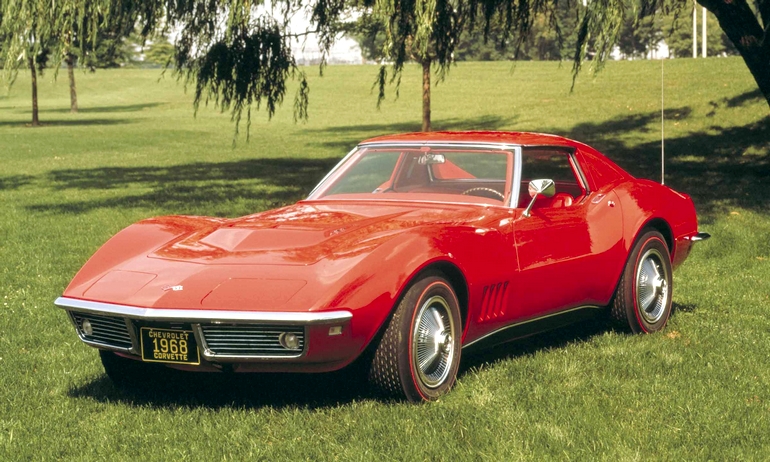 1968 Corvette1973 Corvette Convertible
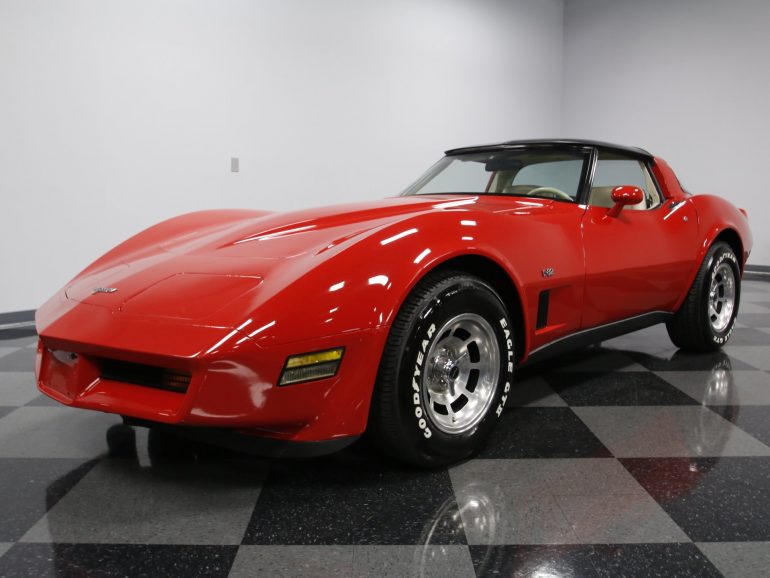 The Collectors Edition Corvette was the first to feature a rear lifting glass hatchback, which has since become a standard on all Corvettes built since 1982. (Image courtesy of GM Media.)
Chevrolet sold one Corvette in two bodies, and the option sheet, the era and a handful of special editions made everything else. A C3 is bought by its year group first, then by its engine code and its RPOs, and the paperwork matters because the hoods, badges, stripes, spoilers and decals that tell a special car from a plain one have all been reproduced. The table sorts what was built into the tiers the market uses; the engine list on the C3 hub has every RPO with its output and years, and the model pages carry the full guides to the Stingray, the ZR1 and the L88.
A word on names. Chevrolet wrote it “Stingray” on the fenders from 1969 to 1976 and not at all in 1968 or 1977–82, so every C3 is a Stingray to the market and a “Sting Ray” is a C2. “Chrome bumper” means 1968–72, “rubber bumper” or “smog era” 1973–82, and “Shark” any of them.
MORE: THE C3 STINGRAY GUIDE / THE C3 ZR1 GUIDE / THE C3 L88 GUIDE / THE 1969 ZL1 / THE 1978 PACE CAR / EVERY C3 ENGINE
| VARIANT | WHAT IT IS | BUILT | WHAT A BUYER SHOULD KNOW |
|---|---|---|---|
| T-top coupe | The coupe with two removable roof panels (glass from 1978) and, 1968–72, a removable rear window; fastback glass from 1978 | 424,000+ | The majority body and the only one after 1975. The T-tops leak and rattle when neglected, and the 1968–72 rear window frame is a birdcage rust point. |
| Convertible | The roadster, with an optional auxiliary hardtop, 1968–1975 only | 118,000+ | Leads the coupe in the chrome-bumper years at every engine level; scarce after 1972 (just 4,629 in 1975), so the late ones carry a premium that is about scarcity, not driving. Convertibles have been built from coupes, so check the top frame, boot and rear deck are correct. |
| Chrome-bumper cars | 1968–72: chrome bumpers both ends, the egg-crate grille from 1970, the big blocks and the LT-1 | 133,449 | The collector Sharks, bought like a C2 on the engine pad, the casting dates and the paperwork. The 1970 is the year the market likes best, the 1971 the same car for less, the 1972 the first with the engine in the VIN. |
| Small blocks | 327 (1968) and 350: 300/350 hp to 1970, 270 hp 1971, 200 net 1972; L48 165–195 hp 1973–80; L81 190 hp 1981; L83 200 hp 1982 | Most cars | What most C3s have and the easiest to live with; the L46 350/350 of 1969–70 is the best of the hydraulic chrome-bumper small blocks. From 1973 the L48 is the volume engine of the smog years. |
| LT-1 | The solid-lifter 350: 370 hp (1970), 330 (1971), 255 net (1972); 780 Holley on an aluminum intake, the domed and striped hood | 1,287 · 1,949 · 1,741 | The most faked small block Chevrolet built, because the hood, stripes and plaque are reproduced. Verified at the pad (CTK/CTR/CTU, CGY, CKY) and, on a 1972, by the L in the VIN. Benchmark about $54,000; air-conditioned 1972s are the rarest. |
| L82 | The hydraulic high-performance 350 with LT-1 heads and intake: 250 hp (1973–74), 205 (1975), 210 (1976–77), 220 (1978), 225 (1979), 230 (1980, automatic only) | 2,000–12,000 a year | The engine to want in a 1973–80 car, especially with the four-speed and the Gymkhana suspension. Easy to verify: the fifth VIN character (T, X, 4 or 6 by year) names it, and hood badges prove nothing. |
| Big blocks | 427s in 1968–69 (L36 390, L68 400, L71 435, L89 aluminum heads); 454s in 1970–74 (LS5 390/365/270, LS6 425, LS4 275/270) | 1968–69: 17,000+ · 1970–74: 14,000+ | The 1968–69 427/435 and the 1970 LS5 are the collector engines; the 1971 LS6 (188 built) the most valuable regular engine of the C3; the 1973–74 LS4 the cheapest big-block Corvette. A 350 wearing 454 badges is the most common fake in the hobby after the LT-1. |
| L88 and ZL1 | The 427 race engine with aluminum heads (80 in 1968, 116 in 1969) and the all-aluminum ZL1 (2 in 1969) | 196 + 2 | Six- and seven-figure cars bought on provenance, not inspection: the registries know every one, and an undocumented one is a tribute whatever the parts. The C3 L88 page is the guide. |
| ZR1 and ZR2 | The LT-1 (ZR1: 25 in 1970, 8 in 1971, 20 in 1972) or LS6 (ZR2: 12 in 1971) with the M22, J56 brakes, F41 suspension, aluminum radiator and no radio, air or power assists | 53 + 12 | The rarest regular-production Corvette package and the most valuable C3s after the L88s and ZL1s. The package left no VIN trace, so only the tank sticker or build sheet proves it; many LT-1s have been dressed as ZR1s. The C3 ZR1 page is the guide. |
| 1978 Pace Car replica | Black over silver with red pinstripes, spoilers, high-back seats, glass tops, owner-applied decals; its own VIN series (900001–906502) | 6,502 | The late-C3 collectible, priced by mileage because so many were stored new. Clones are everywhere: a 9 in the eighth VIN position and the 19U/47M trim tag settle it; the decals prove nothing. |
| 1978 Silver Anniversary | Two-tone silver (B2Z) with badges, aluminum wheels and sport mirrors mandatory | 15,283 | The sleeper: not rare, but an L82 four-speed Anniversary car with FE7 and wide tires is the best-driving late C3. Trim tag 13U/07M. |
| 1982 Collector Edition | Silver Beige with shadow stripes, a lifting rear glass, bronze tops, turbine wheels, matching leather; VIN prefix 1G1AY07 | 6,759 | Built to order for keepers, so low-mileage cars are common and mileage sets the price. The paint and the bronze glass are the expensive things to replace; a converted Cross-Fire costs value. |
| Z07 and FE7 | Z07 (1973–75): heavy-duty springs, shocks, bars and brakes with an L82 or 454 and a four-speed; FE7 Gymkhana (1974–82): springs and shocks | Z07: 45 · 47 · 144 | Z07 is a documented premium (the build sheet or tank sticker proves it); FE7 is the suspension to want on a driver and is easy to add later, so it adds little on its own. |
The C3 market is the widest in the Corvette world and it sorts by era first. The chrome-bumper cars of 1968–72 carry the value: big blocks above small blocks, solid-lifter LT-1s above hydraulic 350s, four-speeds above automatics, convertibles above coupes and documentation above all, with the L88, ZL1, LS6 and ZR1/ZR2 cars in their own six- and seven-figure market. The 1973–77 cars are the entry to a classic Corvette, with the 1973–74 454s and the L82 four-speeds on top and the 1975–77 base coupes at the bottom. The 1978–82 cars are priced by mileage and by edition: the Pace Car and Silver Anniversary, then the Collector Edition, then low-mile L82 four-speeds, then everything else.
Results tracked by Classic.com and the auction houses in 2026 show the spread. 1969 L88s sold for $330,000 to $860,000 (the $860,000 coupe on Bring a Trailer in June is the 1969 record), 1971 LS6 cars for $112,750 to $136,000, 1968–69 L89s for $124,000 to $194,000, and the 1969 ZL1 convertible made $3.14 million in 2023 and the 1971 ZR2 convertibles $962,500 and $863,500. 1970–72 ZR1s sit at a Classic.com benchmark of about $209,000 (a 1972 sold for $159,500 in 2024). Chrome-bumper LT-1s sold for $25,500 to $81,400, LS5 454s for $23,100 to $65,500, 427/400 and 427/435 cars for $49,500 to $110,000 and ordinary 1968–72 small blocks for $20,000 to $41,000. 1973–74 454s brought $23,100 to $32,450 and a 1973 four-speed coupe $55,000; 1973–77 coupes ran $6,600 to $28,600 and the 1973–75 convertibles $10,000 to $32,450. 1978 Pace Cars sold for $9,300 to $44,000 and Silver Anniversary cars for $9,400 to $36,300, 1982 Collector Editions for $14,000 to $27,000, 1979–81 coupes for $7,700 to $32,480 (the top figure a 49-mile 1980), and restomods ran $21,000 to $170,500 on their builds.
Two cautions that apply to every figure on this page. Check whether an auction result includes the buyer’s premium (Mecum and Barrett-Jackson results do, Bring a Trailer bids do not), and treat asking prices and unsold high bids separately from completed sales: a 1973 LS4 bid to $60,000 without selling is not a $60,000 car. The year pages carry each year’s results and are updated as the site tracks new sales; the price ladder below puts the whole generation in five tiers.
The used collector's car market is a difficult thing to measure in terms of vehicle values. Every sports car on the market today will have significant swings in its market value based on a number of varying factors including: long-term reliability, availability and demand of next-generation models (this one has a huge impact on Corvettes of all generations), rarity of particular options within a particular series of cars (such as paint color/interior color combinations, included options, limited edition models, etc.)
When trying to valuate what a used Corvette's worth is, there are a number of approaches that can be taken. Fortunately, the internet has taken some of the mystery out of the valuation process because it allows would-be consumers the opportunity to look at cars across the nation (and even around the world) and compare prices in real time. It is a worthwhile exercise to get online and spend time shopping at reputable automotive websites such as AutoTrader, CarGurus, Craigslist and the like. These websites will allow you to narrow down your search to a specific model, geographic area or even by specific options that are important to you as a consumer, and the compare hundreds of similarly equipped cars that are all prospective options for purchase.
MORE: 1969 / 1970 / 1972 / 1974 / 1978 / 1982 / CORVETTE AUCTION COVERAGE
What the money buys at each level of the 1968–82 market, from the results above. The ranges are for the generation as a whole: a chrome-bumper car sits a tier above the same condition of 1973–82, a four-speed above an automatic, a documented LT-1 or 454 two tiers above a base car of the same year. Where a car is modified, the build sets the price more than the engine code.
$3,000 – $12,000
Long-stored late Sharks, rough automatics with cracked bumper covers and dead vacuum systems, chrome-bumper cars with rotten birdcages and lost engines. Recent sales: a 1975 project at $3,300, a 1977 at $4,250, 1981 projects at $5,500 to $13,950, high-mileage 1976–80 coupes at $6,250 to $9,900. The entry point only for someone who will do the work: a birdcage repair costs more than the car at this level.
$10,000 – $25,000
Honest 1975–82 coupes with the automatic and air, driver-grade Pace Cars and Collector Editions with miles on them, mild restomods and the cheapest 1973–74 L48s. Recent sales: 1979 L48s at $10,450 to $19,750, 1981s at $15,400 to $20,900, 1977–78 L82 four-speeds at $19,000 to $24,200, Collector Editions at $14,000 to $23,100. The cheapest classic Corvette there is; buy the body and the frame, not the engine.
$25,000 – $55,000
Low-mileage Pace Cars and Silver Anniversary L82 four-speeds, 1973–74 454s, the best 1975 convertibles, 1968–72 small blocks with the four-speed and the paperwork, 1972 LT-1s. Recent sales: Pace Cars at $30,000 to $44,000, Anniversary L82s at $30,750 to $36,300, LS4s at $23,100 to $32,450, 1972 LT-1s at $44,000 to $50,000, a 1973 four-speed coupe at $55,000. The tier where a careful buyer gets a real car with real paperwork.
$55,000 – $220,000
Documented 1970–71 LT-1s, LS5 454s, 1968–69 427/400 and 427/435 cars, the 1971 LS6s, the L89s and the 1970–72 ZR1s, with NCRS or Bloomington history. Recent sales: LT-1s to $81,400, LS5s to $65,500, 427s at $49,500 to $110,000, LS6s at $112,750 to $136,000, L89s at $124,000 to $194,000, a 1972 ZR1 at $159,500 against a $209,000 benchmark. Bought on the pad, the castings and the tank sticker; every one has been faked.
$220,000 – $3.14 million
The 196 L88s of 1968–69, the twelve ZR2s and the two ZL1s. Recent sales: 1969 L88s at $330,000 to $860,000, the RED/NART 1968 L88 racer at $747,500 in August 2026, ZR2 convertibles at $863,500 and $962,500, the Can-Am White ZL1 convertible at $3.14 million in 2023. These trade privately or at the headline auctions and the work is done before the car is seen: the registry, the history, the restorer, the photographs.
Era first. A chrome-bumper car is worth more than a rubber-bumper car of the same condition in every combination, and within 1968–72 the 1970 leads, the 1972 is the first with the engine in the VIN, and the 1968 trails for its one-year parts and its build quality. Within 1973–82 the 1973 leads for its chrome tail and the 1975–77 base coupes trail.
Engine code and gearbox. On a chrome-bumper car the engine is the ladder: L88 and ZL1, then LS6, L89 and the ZR packages, then L71 and L68, then LT-1 and LS5, then L36 and LS4, then the L46 and the 300s. From 1973 the L82 over the L48 and the 454 over both. A four-speed is worth more than an automatic in every year it was offered, most of all on an LT-1, an L82 or a Pace Car.
Mileage and originality on the late cars. A 1978–82 car is priced by its odometer and its paint before anything else: a 1,000-mile Pace Car brought $44,000 and a 37,000-mile one $18,700 in the same autumn. Original paint, the standard leather, glass tops, aluminum wheels and a working stereo count for more than small mileage differences on an ordinary 1976–81 coupe.
Documentation. The tank sticker (often still on the tank from 1973), the Protect-O-Plate, the build sheet, the trim tag agreeing with the paint and interior, the engine pad with its suffix and partial VIN, and NCRS or Bloomington Gold sheets with dates and scores. On an L88, a ZR car or a Pace Car the paperwork is most of the value; on a 1979 L48 it is a nice bonus.
Originality versus modification. A correct original leads; a correct restoration follows; a color change costs real money at resale; an LS swap or a restomod is priced on its build and sells to a different buyer. Period performance options (side pipes in 1969, the aluminum wheels, spoilers) add value only when documented, because all are easy to add.
Condition of the steel. A clean birdcage, frame, door beams and floor pan are worth more than a fresh paint job, because the paint is a cost and the structure is a project. The inspection section explains where to look.
Color and equipment. Black and Red bring a premium in the late 1970s, Dark Brown and Dark Green do not; the rare colors of the early 1970s and the 1981 two-tones carry more among collectors; air conditioning is a plus on a driver and rare with an LT-1. The colors pages have the counts by year.
MORE: C3 COLORS BY YEAR / RPO CODES & OPTIONS / PRODUCTION NUMBERS
The C3 is two investments. The chrome-bumper big blocks, LT-1s and specials have moved with the muscle-car market for twenty years and the top of it keeps setting records: the 1969 L88 record was reset in June 2026 at $860,000, the ZR2 convertibles have made $863,500 and $962,500 and the ZL1 $3.14 million. Documented 1968–72 cars with the right pad and the right paperwork have appreciated steadily; undocumented ones and tributes have not.
The 1973–82 cars are a different proposition: half a million were built, most with automatics, and prices have stayed low for decades. They are stable rather than appreciating, which makes them the cheapest classic Corvette to own and the worst to speculate on. The exceptions are the cars people kept: delivery-mileage Pace Cars, Silver Anniversary L82 four-speeds and Collector Editions have begun to separate from the pack, and a 1980 with 49 miles brought $32,480 in September 2026.
Realistic expectations: steady gains at the documented chrome-bumper end, stability for a good late Shark, and nothing for a clone at a real car’s price or a restomod bought as an asset rather than as a car to drive. The strongest cases are a documented 1970–72 LT-1 or LS5 four-speed, a 1968–69 427 with the paperwork, a low-mileage Pace Car or Collector Edition, and a clean L82 four-speed in an original color. The weakest is a color-changed, dressed-up or decaled car with a story.
Buy the car you want to drive and let the market be a bonus. The site’s auction coverage and market reports track every notable C3 sale; the year pages are updated as they come in.
MORE: AUCTION RESULTS / WHOLESALE MARKET REPORTS / BARGAIN HUNTING
The charts below from our friends at Classic.com track recent sales and trends in the 1968–82 Corvette market: the generation as a whole, then the chrome-bumper 1968–72 cars, the LT-1 and the 1978 Pace Car. For any other year or engine, the year pages carry the results the site tracks and Classic.com has the rest.
The model pages carry a full buyer’s guide for each car: which year to buy, what one costs from the tracked results, how to verify a real one, the inspection list, the known issues and the options that carry a premium.
MORE: THE 1969 L88 / THE 1969 ZL1 / THE ZR1 & ZR2 / THE 1978 PACE CAR / GREENWOOD CORVETTES / THE FULL MODEL LIST
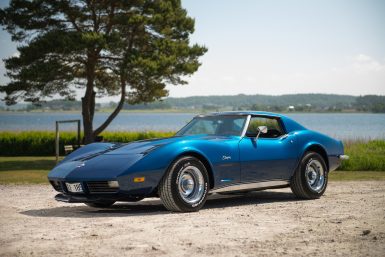
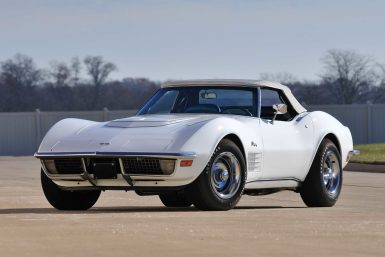
A Shark drives like a Sting Ray with a longer nose and a lower seat: the same 98-inch wheelbase, the same independent rear with its transverse leaf, four-wheel discs, a recirculating-ball steering box that is heavy at parking speeds without assist and light once rolling, and a cabin you sit in rather than on. The 1968 rode harder and understeered more than the C2; the 1969 frame fixed the shake and the 1970 seats fixed the headroom, and from 1973 radial tires and from 1974 the Gymkhana suspension made it a better road car than it had ever been. Visibility is the price: the long hood, the sugar-scoop rear window of 1968–77 and the wide sills take getting used to.
Chrome-bumper small blocks. A 300- or 350-hp 350 with a four-speed is the all-rounder, strong from 2,000 rpm and happy at highway speed on a 3.36 or 3.55 axle. The solid-lifter LT-1 is a different animal: a lumpy, uneven idle that is correct, valve lash to set, a Holley that must be right or the car will not idle, and a 6,500-rpm habit that makes it the best-driving C3 of all on the right road and a chore in traffic. The 1971–72 low-compression cars run on pump premium; a 1970 LT-1 wants the good stuff.
Big blocks. A 427 or 454 changes the car: more nose weight, heavier steering, more understeer at the limit and so much torque that the gearing is irrelevant. The hydraulic L36, LS5 and LS4 are the usable ones; the solid-lifter L71 and LS6 idle lumpily and come on hard, and a Tri-Power 1968–69 should idle on the center carburetor and open the outers with a definite step above about 3,500 rpm. All of them run hot in traffic by design, and a big block that cannot hold its temperature has a radiator, shroud or timing problem rather than an engine problem. The L88 and ZL1 are race engines bought for the collection.
The smog-era cars. A 1973–82 Shark is the easy Corvette to own: hydraulic cams, HEI ignition from 1975, unleaded fuel, air conditioning and power everything, and a car that starts every morning. The trade is performance. An L48 automatic is a brisk cruiser and no more; an L82 four-speed with FE7 is a real sports car, with 220–230 hp moving a 3,500-pound car respectably and the best chassis of the generation under it; the 1980 California 305 and the 1982 Cross-Fire are the ones to drive before you buy, the first for its lack of power and the second for its 700-R4, which should lock up on the highway and shift cleanly or it needs work. The 85-mph speedometer of 1980–82 is a conversation piece, not a limit.
Brakes, T-tops and the rest. The four-piston discs stop the car well with a firm pedal when the calipers have been sleeved, which most driven cars have had done. The T-tops come off in a minute and store in the back (the 1977 rack carries them outside), and a car with good seals is quiet; one without whistles and leaks. The 1968–72 removable rear window and the 1978-on fastback glass make the coupes very different cars to sit in, and a convertible with the hardtop is the most practical early Shark of all.
Daily driver or weekend car? A 1975–82 car with air and the automatic can be driven as often as you like; parts are a phone call away and any shop can fix it. A chrome-bumper small block is a weekend car that can do more; an LT-1, a solid-lifter big block or an L88 is a collector’s car driven on cool days. Drive several before buying one: the fifteen years feel different, a 1968 427 and a 1982 Collector Edition most of all, and the car that suits you is as likely to be the 1979 L82 as the 454 you came for.
MORE: C3 PERFORMANCE FIGURES / SPECS BY YEAR / EVERY C3 ENGINE
The C3 is the cheapest classic Corvette to run and the gap between running one and restoring one is where buyers get hurt. Routine costs are low: a small-block or hydraulic big-block Chevrolet takes ordinary oil and tune-up parts, tires are common sizes, and brakes, suspension bushings, U-joints, vacuum hoses, weatherstrips, trim and interior pieces are all reproduced and in stock. In owners’ experience a driven car on a modest budget runs $1,000 to $2,500 a year in parts and labor at an independent shop that knows the cars, plus insurance and storage, and the 1975-on cars are cheaper still because they run on anything and any shop understands them.
The large bills are structural and specialist. A birdcage repair, with the windshield and door posts cut out and new steel let in, runs well into five figures; a frame repair at the kickups and trailing-arm mounts is a body-off job; a correct repaint on properly prepared fiberglass is $15,000 and up, more on a two-tone or a Collector Edition with its shadow stripes; a set of urethane bumper covers is cheap to buy and expensive to fit, bond and paint to match; a numbers-correct rebuild of a solid-lifter LT-1 or 454 is a specialist job; and the 1982’s Cross-Fire and 700-R4 need people who know them, as do the 1980–82 Computer Command Control systems. None of this is a reason not to buy a C3; all of it is a reason to buy one that has had it done, with the receipts, rather than the cheaper one that will need it.
Insurance is the easy part: a classic-car policy on an agreed value, with the mileage limits most owners never reach, costs a fraction of a modern Corvette’s. Get the agreed value right on a chrome-bumper car and revisit it, because the market moves. Storage matters more than on a modern car; a Shark that lives outside loses its weatherstrips, its bumper covers, its interior and eventually its birdcage and floor pan.
Budget, in other words, for the car plus the inspection, plus whatever the inspection finds, plus a first-year refresh of tires, brakes, fuel system, fluids, vacuum hoses and seals on any car that has sat. A stored Pace Car with 500 miles needs every rubber part and fluid replaced before it is driven; most of these cars see a few hundred miles a year, and that is what wears them.
MORE: C3 MAINTENANCE SCHEDULES / C3 COMMON ISSUES / OWNER’S MANUALS
Beyond price, condition and mileage, a C3 purchase turns on a handful of judgments the inspection alone cannot make: which of the three markets you are buying in, whether the specialist support exists where you live, how much of the value is paperwork, where the steel stands, and where the car sits in a market that has already decided what it likes. Think these through before the first viewing.
Decide first whether this is a car to drive, to show or to hold, and which era fits. A driver wants a 1975–82 car with air, or a 1977–81 L82 four-speed with the Gymkhana suspension, and the engine code barely matters; a show car wants a chrome-bumper car with matching numbers, the tank sticker and judging history, or a delivery-mileage Pace Car or Collector Edition; an investment wants the documented LT-1, 454 or special and the patience to find the right one. Most regrets come from buying one kind of car for the other purpose: the LT-1 that will not idle in traffic, the restomod that will not win a class, the clone that will not sell.
The drivetrains are simple and any competent shop can service a small-block Chevrolet, but the solid-lifter engines, the Tri-Power, the vacuum system, the birdcage and the fiberglass are specialist work, and so are the 1980–82 electronics and the 1982’s Cross-Fire and 700-R4. Know who will look after the car before you buy it. Ask what has been done rather than what has been “gone through”: a receipts file for the brakes, the trailing arms, the vacuum system, the cooling system and the seals is worth more than a seller’s description, and a hot-running big block, a weeping caliper or a headlight that stays half-open each has a known cause and a known cost.
When shopping for a C3 Corvette, it is important to remember that you are looking at a used car that has been around for decades. Because of this, you'll definitely want to maintain a little more discretion when considering a potential purchase. Many Corvette owners take great pride in the proper care and maintenance of their cars, but that doesn't mean the car is devoid of potentially costly issues. The old adage of what you see is what you get doesn't necessarily apply here. There are a lot of potential issues that may not be immediately visible when looking over a used Corvette. Even if the car looks like it belongs on a showroom floor, remember to be thorough and to take your time - go over every facet of the car. While there are MANY amazing third-generation Corvettes out there - you don't want to get stuck with someone else's problems.
NOTE: While this C3 Corvette Buyers Guide is intended to help you make a well-informed decision, we always encourage you to seek the advice of an expert.
One of the unseen problems with a car that includes a fiberglass body is that they don't rust - on the surface. Why is this a problem? Because the outward appearance of the car may not represent what's going on inside/beneath the surface. Just because Corvette bodies don't rust doesn't mean that their frames won't. The steelwork on these cars is extensive and is definitely rust prone, especially on cars from northern climates that may have been exposed to years of salt on icy roadways or cars from areas near the ocean where airborne salt water may have accelerated the corrosion process.
When evaluating a C3 Corvette, start with an inspection of the undercarriage. Have the car put on a lift so that a thorough examination of the undercarriage can be completed. Remove trim panels where possible and look for potential damage and for frame integrity. Inspect the chassis, the door frames and the birdcage - the area that links the sills, door posts, screens and roof bridge assembly. Make sure to take the time to examine each piece closely, looking for rust debris, fatigue around weld points and overall structural rigidity of the steel itself. On cars equipped with T-tops, look at the center bar that replaces the cross braces at the windows.
Make sure to inspect the trailing arms. They can gather dirt and debris and are prone to rust. Additionally, take the time to perform a visual inspection of the internal side of the body panels as well. Make sure each panel is properly mated to the other, that each sits square and appear to be bonded properly to its appropriate sub-structures. Ensure that all sub-structure assemblies appear to be in good condition, especially at the bottom of the windshield posts, the radiator support and front body and bumper-support structures.
The chassis is also vulnerable to corrosion, especially in the boxed side rails beneath and behind the doors.
The C3 Corvette's body was made up of approximately two dozen separate body panels that were glued together using a unique bonding adhesive and bonding strips. The bonding strips are thin sections of fiberglass glued to the reverse sides of abutting panels.
Take time to examine the bonding strips and the body panels. Make special note of any body panels that appear to be smoother or have a different bonding arrangement that other panels on the car. These can be indicators that a body panel has been repaired or replaced. While not necessarily a deal breaker, it will help identify areas that have been previously damaged and, more importantly, help determine if they were repaired correctly.
Along with evaluating the body panels and bonding strips, take time to look for uneven gaps in the body panels, bumpers that appear to be misaligned and/or mismatched paint. Look for doors that are difficult to close or doors that don't line up (as in the example above.) While there may be a reasonable explanation for these gaps, all of these items could also be indicators that the car was previously damaged - either as the result of an accident or improper maintenance. Additionally, look for crazing, stars, ripples and cracks in the body panels and in the wheel arches. Commonly known as stress cracks, these are all indicators of paint shrinkage and can result in expensive body work/repairs.
All C3 Corvettes manufactured from 1973 to 1982 utilized plastic bumper/fascia assemblies. While this type of assembly is commonplace today, it was in its infancy when introduced on the third-generation Corvettes. As a result, the materials used on these cars was considerably less durable, and many of these assemblies are known to crack, become brittle and deteriorate over the course of time. Fortunately, these fascia/bumper assemblies are available from many aftermarket manufacturers, but it is important to remember that they can be costly to repair as they are labor intensive to have properly fitted, bonded and painted to match the existing body color.
Anyone that has ever owned a vehicle equipped with T-Tops know of the many potential issues they can cause. From noisy air gaps to squeaks and rattles to water leakage, poorly maintained T-Tops can be the cause of a lot of trouble. They can also be expensive to properly repair.
Inspect each T-top thoroughly. Test the operation of the latches on each unit. They should be tight without being difficult to lock/unlock. Remove the T-top from the car and evaluate the condition of the weatherstripping on each assembly. If the weatherstripping is cracked or dry-rotted, it will need to be replaced. Look at the glass in each T-Top as well. Make sure it is devoid of cracks, crazing or other damage that could indicate that the T-Top has been compromised in some way. Keep in mind that T-Tops on later models are more prone to cracking (due to the use of thinner glass on these units.)
Although the tuck-away headlight assemblies found on all of the third-generation Corvettes definitely add to the mystique of the car, it is important to take time to inspect the operation of these units carefully. The C3 Corvette utilized vacuum operated headlight doors throughout its production run. On early models, the windshield wiper cover was operated using the same technology. Because vacuum lines are made of rubber and are exposed to engine heat during operation, they are prone to become brittle and cracking, which can result in vacuum leaks (and other issues.) A visual inspection of the vacuum lines is important not only for the headlight assemblies, but as a measurement of the car's care and maintenance. When operating properly, the headlights should open simultaneously and without hesitation.
The third-generation Corvette had disc brakes on all four wheels. However, these brakes were largely a carry-over of the same brake system first introduced on the C2 Corvette and were known to corrode over time, causing brake failure during vehicle operation. While aftermarket brake assemblies have since been developed to overcome/resolve this issue, it is important to evaluate the condition of the existing brake system on the car prior to purchase.
You should inspect the fluid level in the master cylinder reservoir and examine the fluid color. Check the rubber bladder beneath the master cylinder cover and verify that it is not swollen or corroded - this could indicate contamination of the brake fluid. Look at the brake lines and calipers and verify that the lines are free of corrosion. Look for dripped/leaking brake fluid. Verify that the brake pedal is firm and not spongy.
The third-generation Corvette continued to utilize the independent rear suspension system previously used on the C2 Corvette. The rear suspension on these cars is subject to a number of maintenance issues. When inspecting the car, make sure to check the U-joints, half-shafts and trailing arms to ensure that all components are tight and free from corrosion. If any of these components is fatigued, they will need to be replaced prior to operating the car for any length of time. Make sure that components that require lubrication have been properly maintained and look for leaks, rust or other signs of deterioration.
While not critical to vehicle operation, the condition of a car's interior says a lot about the level of care given to the rest of the car. The driver and passenger seats (made of vinyl or leather, depending on the year), are known to wear, especially on the side bolsters. The center consoles and the dashboard are both prone to cracking, especially from daily prolonged exposure to sunlight or extreme fluctuations in temperature. Inspecting these elements will provide an indication of how and where the car was stored as well as how it was operated.
In addition to the dashboard and seats, take time to inspect the carpets for moisture. Damp carpets is a strong indicator of corrosion/rust in the floorpans and should be a definite warning sign of bigger, unseen issues. Similarly, inspect the headliner, especially on cars equipped with T-tops, for moisture and/or water stains.
When looking at any C3 Corvette, an important item to identify is whether the car in question is numbers-matching. A numbers matching car is any car whose VIN, engine serial number, transmission serial number and rear axle serial numbers all match. Number Matching actually emerged as the result of the NCRS (National Corvette Restorers Society) establishing a standard that could be used to measure the originality of any car. Today, number matching cars tend to be more valuable (by as much as 30%) than a car that has been modified, even if said modifications improved the performance and/or handling of the original car.
While numbers matching cars are definitely desirable among collectors, finding a used C3 Corvette that has aftermarket components (engines, transmissions, etc.) does not necessarily indicate a problem with the car. It is important to ask the current owner for the history on any modifications to the car - as much to know what components have been installed as to ensure that the changes made were properly installed and operating as intended.
If number matching is important to you, take the time to verify the VIN (Vehicle Identification Number) and engine casting numbers to ensure that the components included with the car in-question are original. Corvsport.com has a complete list of all the vehicle identification numbers, engine casting numbers, etc., for each model year of Corvette produced.
One item that tends to cause issue/concern among Corvette enthusiasts is coming across a Corvette that has been re-painted a different color. Once again, this is not necessarily a deal breaker, but color change on a Corvette is a major detractor from the standpoint of re-sale, so it should be taken into consideration prior to purchase.
Take time to have the car checked by a reputable mechanic (either at a dealership or trusted service garage). Ask them to check the vehicle's fluids, perform a compression test on each of the cylinders, check the brakes, the steering linkage, the cooling and electrical systems and the safety restraint/airbag systems to ensure that everything on the car is as it should be. While you'll probably have already inspected a number of these items yourself, having a trained professional verify your findings will provide you with a greater peace of mind before handing over your hard-earned dollars for a used sports car - even one as nice as a Corvette!
After you've done all of your homework, its time to get your prospective Corvette out on the open road. The test drive will allow you to experience the car in a way that no inspection ever could. It will help you determine whether or not the car is a good fit for you as a driver. Even a perfectly maintained Corvette isn't going to be of value (or enjoyment) to you if you aren't comfortable driving it. For some prospective owners, a C3 Corvette might sit too-low-to-the-ground, or the cockpit might seem too compact (keep in mind these cars are all two-seat sports car with no backseat and limited storage space, especially in the convertible models.) For others, the ride may be too harsh, or the exhaust and/or road noise might be too loud.
It is important to remember that the C3 Corvette evolved considerably from its introduction in 1968 to the end of its production in 1982. As previously stated, the suspension was refined throughout the car's lifespan as was its creature comforts. We recommend you drive several different examples - while they're all based on the same platform, you'll be surprised how different each year is from the others.
Also, the test drive is another means of checking the car's operability. When driving the car, don't allow the passenger (which will probably be the car's current owner) spend the entire drive talking at you or with you. It is important that you listen to the car. Pay attention to any clunks, engine or transmission noises. Also, take enough time to really put the car thru its paces. Observe if the car wants to pull to the left or right. Be intentional about testing the brakes and the steering. If it is a manual transmission, pay attention to when the clutch begins to catch - if it's got a high clutch pedal, it could indicate that the clutch is worn out. Look for smoke coming from the exhaust or beneath the hood and pay attention for any unusual smells - such as burning oil or engine coolant.
For most of us, buying a Corvette is an emotional experience. It's a promise that many of us make to ourselves when we see our first Corvette that someday I'm going to have one of my own.
If you are in the market to buy your first (or next) Corvette - CONGRATULATIONS! This is an exciting time for you, and it is understandable that you'd want to find the perfect car to bring home and have for evermore. However, you must practice patience when shopping for a used Corvette. Just as you dream of drifting thru the corners and tearing up the straightaways at (insert favorite local race track here), the people who purchased the cars you are now looking at dreamed the same dreams. As such, finding the right Corvette is a little different than buying a daily driver that you'd use for your commute back and forth to work. These cars are driven harder, faster and often with less regard to the wear and tear than to the exhilarating experience of flying thru a sharp turn just a little too fast.
Because of this, you'll want to follow all the steps we outlined in this article. You'll want to keep emotion out of the decision making process as much as is humanly possible. That's not to say you shouldn't enjoy the experience, but be informed and purchase a Corvette that passes all these search criteria so you'll have as much enjoyment with your Corvette after you make the purchase as you did finding it in the first place. It is also worth noting that shopping for a Corvette can be a lot of fun! You'll definitely get to drive some amazing cars along the way...and here's where you should embrace and enjoy the journey of finding the perfect Corvette. If nothing else, you can be certain that when you do finally make your big purchase, you'll have found a Corvette that is perfect for YOU.
There is one other item worth considering when purchasing a 40-year old Corvette. This car is likely not going to be your primary means of transportation and, as such, this car will not be driven daily. Make sure you've got sufficient space to store your automobile. Additionally, you'll want to contact your insurance provider to determine the cost of insuring a Corvette. Keep in mind that the amount of anticipated mileage to be driven each year will influence the cost of insuring the car. Lastly, remember that even the best-maintained Corvettes will require some amount of maintenance, so evaluate the costs associated with vehicle maintenance and verify the affordability of the car before committing to its purchase.
Know which of the three markets the car is in before you pay for it. Chrome-bumper cars follow the collector market and reward documentation; 1973–77 cars are stable, liquid and cheap and will stay that way; 1978–82 cars are priced by mileage and edition, with the kept cars starting to separate from the used ones. Clones, color changes and decaled cars sell at a discount to what they imitate and always will. Price against the site’s tracked results and the year pages, not the asking prices around the car, and remember that an unsold high bid at auction is a ceiling the market declined to pay.
You are looking at a used car that has been around for forty to sixty years, and what you see is not what you get: a Shark that looks like it belongs on a showroom floor can hide a rotten birdcage, a dead vacuum system and a dressed-up engine. The generation’s problems are well known, well documented and, with one exception, all fixable at a known price; the exception is structure, which turns a purchase into a restoration. Everything on this list should be on the inspection checklist and in the negotiation, and a car with paperwork for the fixes is the one to buy.
The year pages carry the common-issues, recall and service-bulletin posts for each year; the list below is the generation’s.
MORE: C3 COMMON ISSUES / C3 RECALLS / C3 SERVICE BULLETINS
| PROBLEM | YEARS | WHAT HAPPENS | THE FIX AND THE COST |
|---|---|---|---|
| Birdcage rust | 1968–82 | The steel structure the body is bonded to rusts from inside at the windshield frame (water from the cowl), the door hinge pillars, the T-top channels and, on 1968–72 coupes, the rear window frame; the signs are bubbling at the pillars, water in the footwells, doors that sag or will not latch, and T-tops that no longer seal. | Cut-and-weld repair with the glass out; the most expensive C3 repair, well into five figures. Inspect with a light, a mirror and a magnet under the windshield trim and inside the door posts, and look at the T-top center bar. |
| Frame rust | 1968–82 | The ladder frame rusts at the kickups over the rear wheels, around the trailing-arm mounts and shim stacks and in the boxed side rails under and behind the doors; cars from the salt states worst. The trailing arms themselves collect debris and rot. | A body-off repair or a replacement frame; replacement trailing arms are reproduced. Look from below with the car on a lift, and photograph everything. |
| Vacuum headlights and wiper door | 1968–82 | The headlight doors (and, 1968–72, the wiper door) run on engine vacuum through rubber hoses, check valves, relays and actuators that harden, crack and leak until the lights stall half-open or nothing works. Early cars add the fiber-optic lamp monitors that go dark. | Hoses are cheap, the diagnosis is not; a full system rebuild is a few hundred dollars in parts and a weekend. The lights should open together without hesitation. Fiber optics are a hobby of their own and often left dark. |
| T-tops and seals | 1968–82 | Neglected panels whistle, rattle and leak at the weatherstrips and latches; glass panels (1978-on) leak more than fiberglass ones and crack, and the 1968–72 removable rear window leaks at its seals. | New weatherstrips and adjusted latches, a few hundred dollars; cracked glass panels are expensive. Remove each panel and check its seals, glass and latch; the headliner tells you about past leaks. |
| Urethane bumper covers | 1973–82 | The early urethane cracks, fades and sags where the mounting hardware corrodes; the 1974 two-piece tail opens at its seam; 1973 noses have mostly been repainted or replaced. | Reproduction covers are available and cheap to buy, costly to fit, bond and paint to match. A 1974 with a one-piece 1975-style tail has been repaired, which is common and should be priced in. |
| Door beams and floor pan | 1973–82 | The steel door beams added in 1973 hold water and rust the lower doors; the steel floor pan added over the catalyst in 1976 rusts where carpet holds water. | Door skins and floor sections are reproduced; wet carpet is a warning about both. Lift the carpet. |
| Brakes | 1968–82 | The C2’s four-piston calipers weep fluid past the pistons once the bores pit and the pedal sinks; contaminated fluid shows as a swollen reservoir bladder; corroded lines fail. | Sleeve the calipers in stainless (most driven cars have been done) with new pistons and seals, a few hundred a corner. Check for a firm pedal, fluid on the inside of the wheels and the bladder under the master-cylinder cover. |
| Trailing arms, bushings and half-shafts | 1968–82 | The trailing-arm bushings and the half-shaft and driveshaft U-joints wear; the rear wanders, clunks on the throttle and squats unevenly. | A known job with parts in stock, a few hundred to a couple of thousand depending on what has gone. Check for play on the lift and listen on the test drive. |
| Engine originality and clones | 1968–82 | Pads decked and restamped; a 350 dressed as an LT-1 or a 454 with the hood, stripes and badges; LT-1s dressed as ZR1s; 427s built into L88 tributes; L82 badges on L48s; decals on Silver Anniversary cars to make Pace Cars. | The suffix and partial VIN on the pad, casting dates before the build date, the fifth VIN character from 1972 (and the eighth on a 1978), the tank sticker or build sheet, the registries for the L88s, ZL1s and ZR cars. A clone sold as one is a fine car; sold as the real thing it is fraud. |
| Heat in traffic | 1968–82 | The C3 runs hot by design; big blocks and emissions-era cars worst, and a tired radiator, a missing shroud, a weak fan clutch or the wrong timing tips them over. | A recored or correct aluminum radiator, the right shroud and clutch, the timing set properly; a few hundred to a thousand. A car that holds temperature in traffic has a healthy system. |
| Solid-lifter and Tri-Power engines | 1968–72 | An LT-1, L71 or LS6 that has not had its lash set or its Holley set up will not idle or will stumble; Tri-Power outers with failed diaphragms or linkage do nothing above 3,500 rpm or hang open and flood. | Valve lash, carburetor setup, Tri-Power diaphragms and linkage by someone who knows them. A car that idles lumpily but evenly and comes in hard is right. |
| Bonded rear glass and dash electronics | 1978–82 | The fastback glass delaminates and leaks at its edges and is expensive to replace; the printed-circuit instrument cluster fails in ways that need a specialist; the 1980–82 Computer Command Control needs its ECM, oxygen sensor and E4ME carburetor understood and parts are scarce for the LG4. | Glass is a specialist job; cluster repair is a known trade; CCC is simple when someone knows it. Check the hatch struts and lower-corner seals on a Collector Edition. |
| Cross-Fire Injection and the 700-R4 | 1982 | Throttle-body gasket leaks, failed injectors and an ECM nobody stocks; the early 700-R4 is the weakest part of the car and a converter that never locks is an electrical fault. | Most 700-R4s have been rebuilt or should be; a complete, original Cross-Fire system is worth keeping and worth money to collectors. Many cars were converted to carburetors and are worth less. |
| Thin panels and paint | 1980–82 | The thinner 1980-on hood and door skins show stress and star cracks more readily; early Bowling Green clear coat peels and St. Louis lacquer crazes. | Grind, re-glass and repaint; a few cracks are normal, a car covered in them has been outside or repaired badly. |
| Interior | 1968–82 | Seat bolsters split (vinyl or leather by year), dash pads and consoles crack in the sun, door panels warp, carpets rot where seals leak; the 1968 interior is one-year-only and expensive to assemble from parts. | Everything is reproduced; a full interior is a few thousand in parts. Wet carpet is a birdcage and floor question before it is a weatherstrip question. |
Take your time, bring a flashlight, a mirror, a magnet and a camera, and see the car on a lift. Most of what follows takes an hour; the rest is paperwork you can do before you travel. While this guide is meant to help you make a well-informed decision, we always encourage you to seek the advice of an expert on the car in front of you.
1. Start with the paperwork. The title and the VIN plate (riveted to the windshield pillar from 1968, visible through the glass), the trim tag on the body under the glovebox with its paint and trim codes against the car, the fifth VIN character against the engine on a 1972-on car and the eighth against a Pace Car claim on a 1978, any tank sticker, Protect-O-Plate, build sheet, window sticker or dealer paperwork, the ownership history, NCRS or Bloomington judging sheets with dates and scores, restoration photographs and receipts. The VIN decoder, production and RPO pages tell you what the numbers should be for the year, and the verification table below gives the engine codes.
2. The engine pad and the castings. The machined pad on the front of the block, ahead of the passenger-side head, carries the plant prefix (V for Flint small blocks, T for Tonawanda big blocks, F from 1980), the assembly date and suffix code and the partial VIN. The suffix must match the engine the car claims, the pad should show its original broach marks (a smooth, bright pad has been decked), the partial VIN must match the car, and the block casting date on the bellhousing flange must precede the build date. Then the heads, intake, carburetor or injection, distributor and exhaust manifolds, each with its own casting number and date. Whether numbers-matching matters to you is a personal choice, but it is worth 20 to 30 percent to the market and it decides whether an LT-1 or 454 price is justified.
3. The birdcage. With the car on the ground, look under the windshield trim at the base of the pillars and along the cowl for bubbling, scale or fresh paint; open the doors and look at the hinge pillars, the lower door posts and the sill plates with a light and a mirror; run a magnet along the windshield frame to find filler; on a T-top car check the center bar that replaces the cross bracing, and on a 1968–72 coupe the rear window frame from inside and under the decklid. Doors that drop when opened or need lifting to latch are telling you about the hinge pillars.
4. The frame and underside. On the lift, look at the frame kickups over the rear wheels, the trailing-arm mounts and shim stacks, the boxed side rails under and behind the doors, the crossmembers and the radiator support. Tap for scale, look for plating and fresh undercoat, and photograph everything. Check the trailing arms themselves, the half-shaft and driveshaft U-joints, the differential and its mounts (aluminum housing from 1980), the transverse spring (fiberglass on 1981-on automatics), the brake lines, the fuel lines and, from 1975, the catalytic converter and Y-pipe, which are often long gone in favor of true duals.
5. The body. Inside the wheel wells and from below, look at the bonding strips where the two dozen panels join: a smoother panel or a different bonding arrangement means a repair or a replacement, not necessarily a deal-breaker but a question. Outside, sight down the panels for ripples and check the gaps at the doors, hood, headlight doors and decklid; uneven gaps are accident history, hinge wear or fifty years of movement, and 1968–69 cars were never good when new. Look for crazing, stars and stress cracks at the wheel-arch lips, the headlight buckets, the door edges, under the decklid and around the windshield posts, and on the thin 1980–82 hoods and doors. On a 1973–82 car check the urethane covers for cracks, sag and seam separation; on a 1978–82 car check the bonded rear glass for delamination at its edges.
6. The vacuum system, T-tops and seals. Operate the headlights several times from cold and hot: they should rise together, fully and without hesitation, and on a 1968–72 the wiper door should open and close with them. Look at the hoses, check valves and actuators under the hood for cracking. Remove each T-top, check its weatherstrips (soft and pliant, not cracked or dry-rotted), its glass or fiberglass for cracks and its latches (tight but not stiff), and look at the headliner for water stains. On a 1968–72 coupe check the removable rear window’s seals; on a Collector Edition the hatch struts and lower seals.
7. The drivetrain. Ask for a cold start: a small block should fire quickly and settle, a solid-lifter engine idle lumpily but evenly, a Tri-Power idle on the center carburetor, a Cross-Fire start without stumbling. Look for blue smoke, oil leaks at the rear main and valve covers, coolant weeping at the pump and heater core, and then let it idle long enough for the fans to cycle and the gauge to settle, because a Shark that runs hot in the driveway runs hotter in traffic. Check the transmission stamping and the rear-axle code. A compression and leak-down test by a shop that knows the cars is money well spent.
8. Brakes, steering and suspension. Look for fluid on the inside of the wheels and feel for a sinking pedal (sleeved calipers are a plus and should be in the receipts); check the master-cylinder fluid color and the bladder under its cover for swelling, and the lines for corrosion. The steering should have little play; check the idler arm, tie-rod ends and the box for leaks, and the power-steering hoses and control valve on assisted cars. Check the shocks, the front bushings and, on an FE7 or Z07 car, that the heavy-duty parts are actually there.
9. Interior and electrics. Lift the carpet and check the floors for damp and rust (a steel pan from 1976); check the seats, dash pad, console and door panels; run every gauge, light, the wipers, the heater, the air, the power windows, the alarm and the radio, and on a 1980–82 car make sure the Check Engine light behaves and the 85-mph speedometer and quartz clock are the correct year’s. Water in the footwells is a birdcage and floor question before it is a weatherstrip question.
10. The test drive and the second opinion. Drive it yourself and make the owner stop talking. Listen for clunks from the rear on and off the throttle, feel for wander and brake pull, work the gearbox through every gear (a high, soft clutch pedal means a clutch; on a 700-R4 the converter should lock on the highway), watch the temperature in traffic, and take it to highway speed. Drive several: the fifteen years feel different and the car that suits you may not be the one you came for. Then pay a Corvette specialist or an NCRS judge who knows the year for a pre-purchase inspection, price the car against the site’s tracked results rather than the asking prices, keep the emotion out of the decision as far as is humanly possible, and be prepared to walk away. There is always another Shark, and half the fun is the hunt.
Good Luck and Happy Hunting!
We hope this buyer's guide helps you navigate the exciting (and sometimes challenging) prospect of purchasing a used C3 Corvette. While we've identified a number of items to watch out for, we also want to make sure to remind you that all of the items listed in this buyer's guide are based on individual issues experienced at different times by Corvette owners over the course of many years. While there's probably that basket case Corvette out there that is plagued with multiple issues, most Corvettes (especially those that have been maintained) will provide their owner with many happy years of fun on the open road. Additionally, it is important to recognize that any car which maintains its value (as listed above) this many years after being sold as new is most definitely a worthwhile investment.
Remember, half the fun is the experience of hunting for the perfect Corvette. We wish you every success in your search and hope you'll drop us a line at Corvsport.com after you purchase your C3 Corvette. Good luck and happy hunting!
MORE: THE VIN DECODER / PRODUCTION NUMBERS / RPO CODES / COLORS & TRIM CODES
What the VIN, the engine pad and the parts should say for each year, and the thing most often faked. The year pages carry the full code lists and the verification notes for every engine; this is the short version to take to the viewing. In every year the block casting date must precede the car’s build date, the suffix must match the equipment, the partial VIN on the pad must match the car, and a big block should carry a Tonawanda “T” prefix. From 1972 the fifth VIN character names the engine, which is why a 1972–82 clone is easy to catch and a 1968–71 clone is not.
MORE: 1968 / 1969 / 1970 / 1972 / 1978 / 1982 / THE VIN DECODER
| YEAR | THE VIN, THE PAD, THE CASTINGS, THE PARTS | WHAT IS FAKED MOST, AND WHAT TO CHECK |
|---|---|---|
| 1968 | Big blocks: T prefix, IR (L71), IU (L89), IT (L88), a 3916321 or 3935439 casting; L89 and L88 heads are the aluminum 3919842 castings; the Tri-Power intake is the 1968 low-rise unit, not a 1967 part. An L88 needs the bare aluminum heads, chrome valve covers, the AIR pump and the J56 and K66 hardware. The 1968 Protect-O-Plate records the engine suffix and axle code. | Everything that makes a 427 valuable is reproduced, so a 390 dressed as a 435 is the year’s tribute; almost all 80 L88s are known to the registries and an undocumented one is suspect. Originality in the one-year dash, door releases and interior counts for more than on any later C3. |
| 1969 | Plant prefix T for big blocks and V for small; LR (L71), LP (L89), LO or MR (L88), LV (automatic L88), ME or MG (ZL1); castings 3935439, 3955270 or 3963512 for an iron 427 and 3946052 for the aluminum block; 3919842 heads on an L89 or L88. The first-year 350 has the fewest reproduction parts chasing it. | All 116 L88s and both ZL1s are known to the registries, so an undocumented one is a tribute until proven otherwise. Check the partial VIN on the pad against the car; L89 heads on an L71 is the cheaper dress-up. |
| 1970 | LT-1: V prefix, CTK, CTR or CTU (CTV for a ZR1) on a 3970010 block with 3973414 heads, a Holley R4489A or R4555A, the aluminum intake and 2.5-inch exhaust. LS5: T prefix, 3963512 block, CGW, CRI, CRJ or CZU, 3964290 heads. A ZR1 needs the LT-1 plus the M22, J56 calipers and proportioning valve, F41 springs, K66 distributor, the aluminum radiator with its metal shroud and no radio or air. | The LT-1 is the most faked small block Chevrolet built: the hood, stripes and console plaque prove nothing. A ZR1 proves itself only on the tank sticker, build sheet or Protect-O-Plate, and the registries know most of the 25. |
| 1971 | LT-1: V prefix, CGY (CGZ for a ZR1), 3970010 block, 3973487 heads, the Holley, aluminum intake and 2.5-inch exhaust. LS6: T prefix, 3963512 block, CPW (four-speed) or CPX (automatic), aluminum 3994026 or 3946074 heads. LS5: CPH or CPJ with iron 3993820 heads. ZR1/ZR2: the M22, J56, F41, K66, aluminum radiator, no radio or air. | The LS6 is the easiest engine of the year to fake with aluminum heads on an LS5, so the suffix, the casting dates and the build sheet matter more than badges. All twenty ZR cars are known to the registries. |
| 1972 | The fifth VIN character names the engine: L is an LT-1, W an LS5, K a base car. LT-1: V prefix, CKY (CKZ for a ZR1, CRT or CRS with the air pump), 3970010 or 3970014 block, 3998916 heads, Holley, aluminum intake, 2.5-inch exhaust; an air-conditioned LT-1 has the 5,600-rpm tachometer. LS5: T prefix, 3999289 block, CPH, CPJ, CSR or CSS, 3999241 heads. | A 350 with an LT-1 hood and a K in the VIN is a tribute, full stop. A ZR1 needs the M22, J56, F41, K66 and aluminum radiator with no radio, air or power assists; all twenty are known. |
| 1973–74 | The fifth VIN character: J base, T L82, Z 454. L82: V prefix, CLR or CLD (CLS or CLH in California), 3970010 or 3970014 block, 330545 (1973) or 333882 (1974) heads. LS4: T prefix, CWM, CWR, CWT or CWS, 3999289 block, 353049 (1973) or 336781 (1974) heads. The 1974 rear cover has two halves and a center seam; a one-piece tail on a 1974 is a repair. | An L82 with a J in the VIN is a dress-up. A Z07 car needs the heavy-duty springs, shocks, bars and brakes with an L82 or LS4 and a four-speed, and the build sheet or tank sticker to prove it. An original 1973 nose is a plus, not a flaw, even with the factory’s flex-agent paint mismatch; a YJ8 wheel set (casting 329381) is a find. |
| 1975–77 | 1975: fifth VIN character J base, T L82; L82 suffixes CHC, CRL, CUD, CKC, CRM or CHR on a 3970010 block. 1976–77: X is an L82 and L a base car; L82 suffixes CHC or CKC (1976), CLD or CLF (1977); L48 CKW, CKX, CLS (1976), CKZ, CLA, CLC, CHD, CLB or CKD (1977). HEI distributor on all. California cars (YF5) are always L48 automatics. 1977 engines are orange only on the earliest cars, blue after September 1976. | An L82 with the wrong VIN letter is a dress-up, and hood badges prove nothing because many real 1975 L82s never got them. Original YJ8 wheels carry Kelsey-Hayes and Mexico markings inside the rim. A 1976 has no rear-deck grilles and no cowl flap; a 1977 has crossed flags, the new console, the stalk switch and the alarm in the door-lock button. Convertibles have been built from coupes: check the top frame, boot and deck. |
| 1978 | Fifth VIN character 4 for an L82, L for a base car; a 9 in the eighth position is a factory Pace Car, which should also carry a 19U/47M trim tag, 152 or 15C silver trim, the high-back seats and glass roof panels. A Silver Anniversary shows 13U/07M on the tag with aluminum wheels and sport mirrors. L82: V prefix, CMR or CMS on a 3970010 block; L48: CHW, CLM or CUT (CLR, CLS). | The Pace Car clone is the C3’s most common fake after the LT-1: the decals were owner-applied and prove nothing either way, and a decaled Silver Anniversary is not a Pace Car. The Pace Car VIN series runs 900001–906502. The bonded rear glass is expensive; look for delamination and leaks, and check the roll-out luggage cover is present. |
| 1979 | Fifth VIN character 4 for an L82, 8 for a base car. L82: V prefix, ZBA or ZBB on a 3970010 block; L48: ZAA, ZAF, ZAB, ZAH, ZAC, ZAJ or ZAD; HEI distributor. A 1979 has crossed flags, black trim around the rear glass, high-back seats and a radio in the dash. | Spoilers are correct only on the 6,853 D80 cars and D80 is not on the trim tag, so a build sheet or tank sticker is the only proof. Original N90 wheels carry Kelsey-Hayes and Mexico markings; QBS cars should show the factory-trimmed fender lips. |
| 1980 | Fifth VIN character 6 for an L82, 8 for an L48, H for the California 305. L82: F prefix, ZBC on a 3970010 or 14010207 block, automatic only; L48: ZAK or ZAM; LG4: ZCA on a 4715111 block. A 1980 has molded-in spoilers, no fender emblems, two-lid rear storage, the 85-mph speedometer and an aluminum differential housing. | An L82 with an 8 in the VIN is a dress-up, and any L82 should be an automatic; a four-speed is correct only behind an L48. A QXH car should have a fifth matching wheel in the spare well rather than the space-saver. |
| 1981 | One engine, so the eighth VIN character is always 6 and the questions are plant and gearbox: the eleventh character is S for St. Louis (sequence 4xxxxx) or 5 for Bowling Green (1xxxxx), and the paint code on the trim tag should belong to that plant; a two-tone (D84) is a Bowling Green car. L81: V prefix, ZDA, ZDC, ZDD or ZDB on a 14010207 block; a four-speed shows ZDA or ZDC and a steel rear spring. | The plastic rear spring is correct only on an automatic without the Gymkhana suspension and many have been swapped either way. Early Bowling Green paint peels its clear coat; the quartz clock and ETR radio are the dash markers. |
| 1982 | A Collector Edition starts 1G1AY07 with a 0 in the sixth position, a coupe 1G1AY87; paint code 59 with trim 592 on a Collector Edition, with the glass hatch, bronze-tinted panels, finned wheels, Silver Beige leather and cloisonné emblems, and shadow stripes under clear coat rather than decals. Every 1982 has an 8 in the eighth position and a 5 in the eleventh. L83: V prefix, ZBA, ZBN or ZBC on a 14010207 block, two throttle bodies on the crossover manifold and the hood air door and solenoid in place. | Engine and plant are never in question on a 1982; the questions are whether the Cross-Fire system is complete and original (converted cars are worth less), whether the 700-R4 locks up (a converter that never locks is an electrical fault), and whether a Collector Edition’s paint and glass are original. |
What CorvSport has written about buying, selling and valuing the 1968–82 Corvette: the auction results, the wholesale lanes, the L88 and ZL1 stories, the Pace Car and Collector Edition pieces and the common-issues posts, newest first. The year pages carry the current results for each year.
Record-Breaking $860,000 Sale Of 1969 Corvette Writes A New Chapter Of The L88 Story — 2026
Tracking The Corvette Legends: The LS6 Story & The Top 7 All-Time Sales From The 1971 Big Block — 2026
Tracking The Corvette Legends: The Story Of The L88 Engine & Its Top Sales — 2025
CorvSport Curates: Ten Rules For Buying Your First C3 Corvette — 2025
Bargain Hunter: Here's Your Chance At The Coveted 1978 Pace Car For A Deal — 2024
[Time Capsule 4-Sale] How Much To Own This '78 Pace Car With Only 16 Miles? — 2023
1972 Corvette Common Issues — 2021
1971 Corvette Common Issues — 2021
1970 Corvette Common Issues — 2021
1969 Corvette Common Issues — 2021
1968 Corvette Common Issues — 2021
The site’s recall, service-bulletin, maintenance-schedule and common-issues posts for the 1968–82 Corvette.


The C3s the site has listed for sale, newest first: owners’ cars, dealer stock and the auction consignments worth watching, with the asking price and what we make of it. The for-sale page has every Corvette the site is following and the auctions tag the results.
It depends on which of the three C3 markets you are in. For a chrome-bumper Shark, the 1970 is the year the market likes best (the facelift, the first LT-1, the 390-hp 454) and the 1971 is the same car for less, happy on modern fuel; the 1972 is the first year the VIN names the engine, which makes it the safest early car to buy. For the cheapest classic Corvette, a 1973 or 1974 gives you the chrome tail and a 454 on the list, and a 1975–77 L82 four-speed is the best driver of the middle years. For a modern-feeling late car, a 1977–81 L82 four-speed with the Gymkhana suspension is the site’s recommended place to start, and the 1978 Pace Car and 1982 Collector Edition are the ones to keep.
If you want one answer: a 1977 to 1981 L82 four-speed in an original color with a clean birdcage, working headlights and the receipts. It does everything, it costs less than a used sedan, and it is the easiest C3 to resell.
From about $3,000 for a project to $3.14 million for the ZL1 convertible, which is why the price ladder on this page has five tiers. In the results the site tracked through October 2026, driver-grade 1975–82 coupes ran $10,000 to $25,000; low-mileage Pace Cars, Silver Anniversary L82s, 1973–74 454s and 1968–72 small blocks $25,000 to $55,000; documented LT-1s, LS5s, 427s, LS6s, L89s and ZR1s $55,000 to $220,000; and the L88s, ZR2s and ZL1s from $330,000 up.
Every figure moves and every figure depends on era, engine, gearbox and documentation, so use the year pages, which carry the current results for each year, and check whether an auction result includes the buyer’s premium.
The 1968–72 cars have chrome bumpers at both ends, the egg-crate grille from 1970, a removable rear window on the coupe and the big engines: the 427s and 454s, the solid-lifter LT-1, the L88s, the ZL1 and the ZR packages. They are the collector Sharks, bought like a C2 on the engine pad and the paperwork, and they carry the value. From 1973 the nose went to body-color urethane over a steel bumper (the 1973 kept its chrome tail, one year only), the tail followed in 1974, the solid-lifter engines gave way to hydraulic cams, catalytic converters arrived in 1975 and horsepower fell to 165 before climbing back to 230.
The rubber-bumper cars are the cheapest classic Corvette, easier to live with (air, leather, radials, HEI, unleaded fuel) and far less valuable, with the 1978 Pace Car, the Silver Anniversary and the 1982 Collector Edition the exceptions that collectors chase. Both eras sit on the same birdcage and run their headlights on vacuum, so the inspection is the same.
From 1972 the fifth VIN character names the engine (L for an LT-1, W for an LS5, then J/T/Z, X/L, 4/8 and 6/8/H by year), so a 1972–82 clone is caught at the windshield. On a 1968–71 car you start at the engine pad: the plant prefix (T for a big block, V for a small block), the suffix code that must match the engine claimed (CTK/CTR/CTU for a 1970 LT-1, IT/LO/MR for an L88, CPW/CPX for an LS6), the partial VIN that must match the car, the original broach marks, and the block casting date on the bellhousing flange, which must precede the build date; then the heads, intake and carburetor for the right castings. An L88, ZL1 or ZR package needs its tank sticker, build sheet or Protect-O-Plate because every part is reproduced, and the registries know every one.
A 1978 Pace Car has a 9 in the eighth VIN position and a VIN in the 900001–906502 series, with the 19U/47M trim tag; the decals were owner-applied and prove nothing. A Silver Anniversary shows 13U/07M. The verification table above gives the codes year by year, and when in doubt pay an NCRS judge for an afternoon.
Rust in the steel birdcage under the fiberglass (the windshield frame, the door hinge pillars, the T-top channels and, on 1968–72 coupes, the rear window frame), in the frame at the rear kickups and trailing-arm mounts, and from 1973 in the door beams and from 1976 the steel floor pan: the expensive problems and the first things to inspect. After those: the vacuum system that runs the headlights and, on early cars, the wiper door, which leaks until nothing works; weeping four-piston calipers; worn trailing-arm bushings and U-joints; T-top seals that leak; urethane bumper covers that crack and sag; a car that runs hot in traffic; the fiber optics on 1968–71 cars; the bonded rear glass and dash electronics of 1978–82; and the 1982’s Cross-Fire and 700-R4.
All of them are known, documented and fixable at a known price except the structure, which is why the inspection on this page starts there. The common-issues posts for each year go deeper, and most Sharks that have been maintained will give their owners many happy years on the open road.
The chrome-bumper cars have been: documented 1968–72 big blocks, LT-1s and specials have moved with the muscle-car market for twenty years, the 1969 L88 record was reset at $860,000 in June 2026, and the ZR2s and the ZL1 have made $863,500 to $3.14 million. The 1973–82 cars have not: half a million were built, most with automatics, and they are stable rather than appreciating, which makes them the cheapest classic Corvette to own and the worst to speculate on, with delivery-mileage Pace Cars, Silver Anniversary L82 four-speeds and Collector Editions the exceptions that have begun to separate from the pack.
Realistic expectations: steady gains at the documented chrome-bumper end, stability for a good late Shark, and nothing for a clone at a real car’s price or a restomod bought as an asset. Buy the car you want to drive and let the market be a bonus.
Buy for how you will use it. A numbers-matching car (VIN, engine pad, transmission and rear-axle stampings all agreeing) is what collectors, judges and the resale market want, and it brings 20 to 30 percent more than the same car altered; on an LT-1, a 454 or a special the originality is most of the value. A non-matching driver, a late Shark with a crate 350 or an LS swap, or a mild restomod with modern brakes and overdrive is a better car to drive for less money, as long as it is priced as what it is and the work was done properly: ask the owner for the history of every modification.
The two mistakes are paying a matching-numbers price for a car that is not, which the pad, the castings and from 1972 the VIN will tell you, and buying a restomod as an investment: restomods sell on their build to a different buyer and do not follow the collector market. A color change hurts resale on every C3, however well done.
Convertibles were built only through 1975 and lead the coupe in the chrome-bumper years at every engine level, with the hardtop adding value when original to the car; after 1972 they are scarce (4,629 in 1975) and carry a premium that is about scarcity rather than driving. The T-top coupe is the majority body and the only one from 1976, and it is a fine thing when the seals and latches are right: the panels come off in a minute and store behind the seats. When they are neglected the car whistles, rattles and leaks, the headliner stains and the carpet rots, and the glass panels of 1978–82 crack and leak more than the fiberglass ones.
Remove each panel at the viewing, check its weatherstrips, glass and latches, and look at the headliner and the T-top center bar of the birdcage. Convertibles have been built from coupes, so check that the top frame, boot and rear deck are correct for the year.
A sorted car on a few thousand miles a year costs $1,000 to $2,500 in parts and labor at an independent shop that knows the cars, plus a classic-car policy on an agreed value, which is cheap, and dry storage, which is not optional. Every part is reproduced, the small-block Chevrolet is the best-understood engine there is, and a 1975-on car runs on anything from any pump. A solid-lifter LT-1 or big block, a Tri-Power car, a 1980–82 computer car or the 1982 Cross-Fire wants a specialist and costs more to keep right.
The big bills are structural and specialist: a birdcage or frame repair, a correct repaint on properly prepared fiberglass, bumper covers fitted and painted, a numbers-correct rebuild of a solid-lifter engine, a 700-R4 rebuild. Buy the car that has had them done with the receipts, and budget a first-year refresh of tires, brakes, fuel system, fluids, vacuum hoses and seals on anything that has sat.
The for-sale section above and the site’s for-sale page gather the C3s we are following from owners, dealers and the auctions, newest first, with what we make of each asking price. The year pages carry the current tracked results for each year, the auctions tag has the sale-by-sale coverage, the Bargain Hunting series finds the cheapest clean cars by generation each month and the wholesale market reports follow what dealers pay in the lanes. Classic.com, Bring a Trailer, Mecum, Barrett-Jackson, Hagerty, GAA and the NCRS classifieds are the places the cars change hands.
Use the results, not the asking prices, and remember that a Shark listed at a number is not a Shark worth the number: dealers were asking $124,000 for a 1969 L71 and $149,995 for a 1968 in autumn 2026 while comparable cars were selling for $42,500 to $110,000 at auction. A car offered well below the market is worth a look and a very careful inspection, because the seller may be getting out from under a problem.