C3 Corvette ZR1 (1970–1972): The Complete Guide Quick Nav: The Story · The...


CORVETTE BUYER’S GUIDES
Buying a Corvette ZR1? Five generations, from a 53-car race package to a 1,250-hp hybrid, and prices from $15,000 to $450,000. This guide compares them, gives what each costs today from the results the site tracks, explains why the C4 needs a specialist and the C7 trades above sticker. This is the guide for you.
Quick Nav: Overview · Why Buy · Which Generation · Generation Details · Editions & Packages · Values · Price Ladder · What Moves the Price · Model Pages · Driving · Costs to Own · Considerations · Problems · Inspection · Verification · Market Reports · For Sale · FAQs
The Car: The ZR1: the top Corvette of its generation, five times: the 1970–72 LT-1 race package, the 1990–95 “King of the Hill” ZR-1 with Lotus’s LT5, the 2009–13 638-hp “Blue Devil”, the 2019 755-hp last front-engine Corvette, and the 2025– 1,064-hp twin-turbo car and its 1,250-hp ZR1X
Built: 53 ZR1s and 12 ZR2s (1970–72) · 6,939 (1990–95) · 4,684 (2009–13) · 2,953 (2019) · about 1,733 ZR1s and 270 ZR1Xs through 2026
Engines: LT-1 350 to 370 hp · LT5 DOHC 375–405 hp · supercharged LS9 638 hp · supercharged LT5 755 hp · twin-turbo LT7 1,064 hp (1,250 with the ZR1X’s front motor)
Transmissions: M22 four-speed (C3); ZF six-speed only (C4); six-speed manual only (C6); seven-speed manual or eight-speed automatic (C7); dual-clutch only (C8)
What One Costs Today: C3 $159,500–$962,500 · C4 $15,250–$85,000 · C6 $73,700–$151,250 · C7 $125,000–$340,000 · C8 $233,500–$452,000, by year, mileage and spec (results tracked through October 2026)
The Pick: A documented, specialist-serviced C4 ZR-1 for the cheapest way in; a low-mileage C6 for the collector who wants to drive; a 3ZR automatic C7 for the last front-engine car at the sensible price; a 2026 C8 for the newest
Related: The Corvette ZR1 line guide, the C3, C4, C6, C7, C8 ZR1 and ZR1X model pages, the Z06 buyer’s guide, the generation buyer’s guides
ZR1 is the name Chevrolet has used for the most Corvette it could build, and it has used it five times, with gaps of fifteen years or more between them. The 1970–72 ZR1 was a race package of brakes, suspension and a solid-lifter small block that 53 buyers ordered; the 1990–95 ZR-1 was a Lotus-designed 32-valve engine in a wide-bodied C4 at twice the price of a coupe; the 2009–13 ZR1 was the first Corvette over $100,000 and the first over 200 mph; the 2019 ZR1 was the last front-engine Corvette and the last with a manual; the 2025– ZR1 is the most powerful car General Motors has ever sold, and the ZR1X above it is the fastest-accelerating. They have the badge, the position at the top and the collector’s interest in common, and almost nothing else.
That makes the ZR1 buying decision a decision about what kind of owner you are. The C3 is a registry car bought on paperwork. The C4 is a specialist’s car whose LT5 rewards the right shop and punishes the wrong one, and the cheapest ZR1 by far. The C6 is a modern supercar with a durable engine and a collector’s price. The C7 is a one-year car that has traded above its sticker since the day it went on sale, with the manual worth $50,000 more than the automatic. The C8 is a new car with a new car’s questions: the allocation, the invoice, the markup and the recall.
This guide compares the five generations side by side, gives what each costs in 2026 from the auction and dealer results the site tracks, sets out the price ladder and what moves a car on it, describes what each is like to drive and to own, and carries the known issues, the inspection and the verification for every generation. The model pages go deeper on each car; this page is where to decide which one.
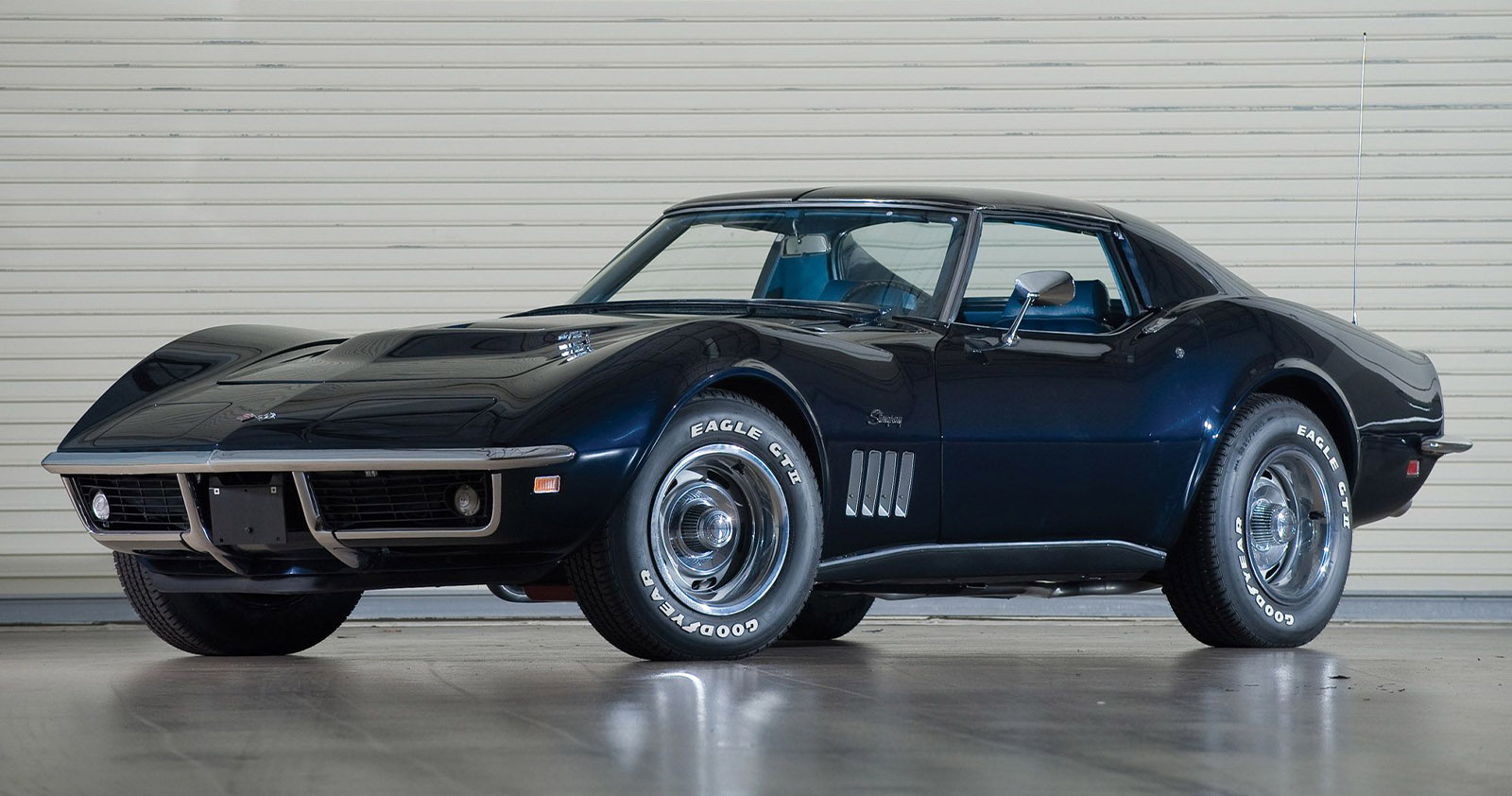
ZR1 was first a three-character RPO on the 1970 order form: the Special Purpose Engine Package, Zora Arkus-Duntov’s LT-1 with the M22 Rock Crusher, J56 heavy-duty brakes, the F41 suspension and an aluminum radiator, with the radio, air conditioning and power assists deleted so that the car could be raced. Twenty-five buyers took it in 1970, eight in 1971 (with twelve more choosing the 454 ZR2) and twenty in 1972. When Chevrolet revived the code in 1990 it meant something else: the King of the Hill, a hand-built engine from Lotus and Mercury Marine in a car that cost $58,995 when a coupe cost $31,979. Since then ZR1 has meant the Corvette with no compromise and no price ceiling, and every one has been collected from new.
Each ZR1 was the fastest, most expensive Corvette of its generation and each was built in small numbers because of it: 6,939 C4s over six years, 4,684 C6s over five, 2,953 C7s in one, and a few hundred C8s a year. Each was also a technical leap the base car did not get: the first dual-overhead-cam Corvette engine, the first carbon-ceramic brakes and carbon bodywork, the first 200-mph Corvette, the first 755 horsepower, the first turbocharged and the first 1,000-horsepower Corvette. The Z06 below each of them is the value; the ZR1 is the one the market remembers.
Unlike the Z06, which trades as a used car until it is old, the ZR1 trades as a collectible from new. The C7 has never sold below its sticker; the C8 ZR1 and ZR1X sell above theirs; the C6 bottomed in the $60,000s a decade ago and has climbed past $100,000; the C4 is the exception, the one ZR1 that fell to used-car money and the one with the most room to move. Mileage drives all of them, because so many were bought to keep: delivery-mileage cars set every auction high and a driven car of the same year brings half.
A C6 or C7 ZR1 is a Corvette to run, with Z06 parts under the carbon and an independent shop able to do everything but the rotors; a C8 is a dealer car under warranty; a C3 is an LT-1 with a specialist for the solid lifters. The C4 is the one that needs its own expert: the LT5’s injectors, tensioners, vacuum system and plenum-off service are a different world from an L98, and the ZR-1 Net Registry, the LT5 shops and the site’s ZR-1 pages are where to find it. Buy the right ZR1 for the owner you are and it is the best Corvette you will have; buy the wrong one and it is the most expensive.
MORE: THE CORVETTE ZR1 GUIDE: EVERY GENERATION / THE Z06 BUYER’S GUIDE / ZR1 VS Z06 BY GENERATION

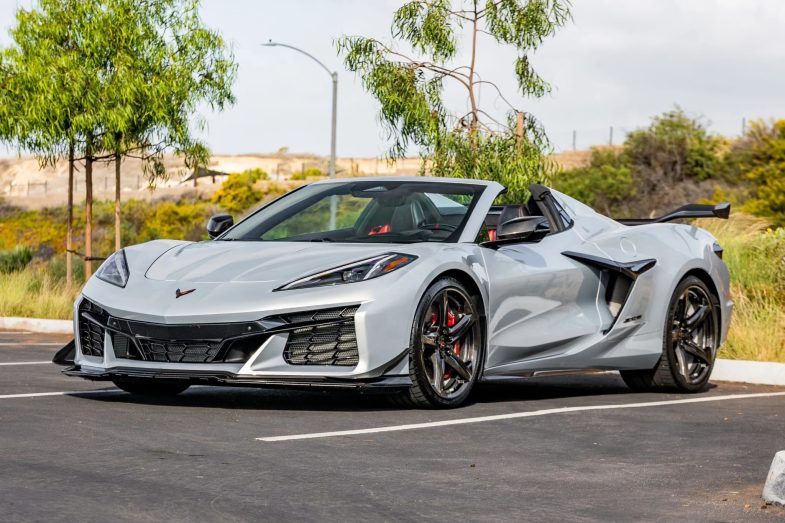
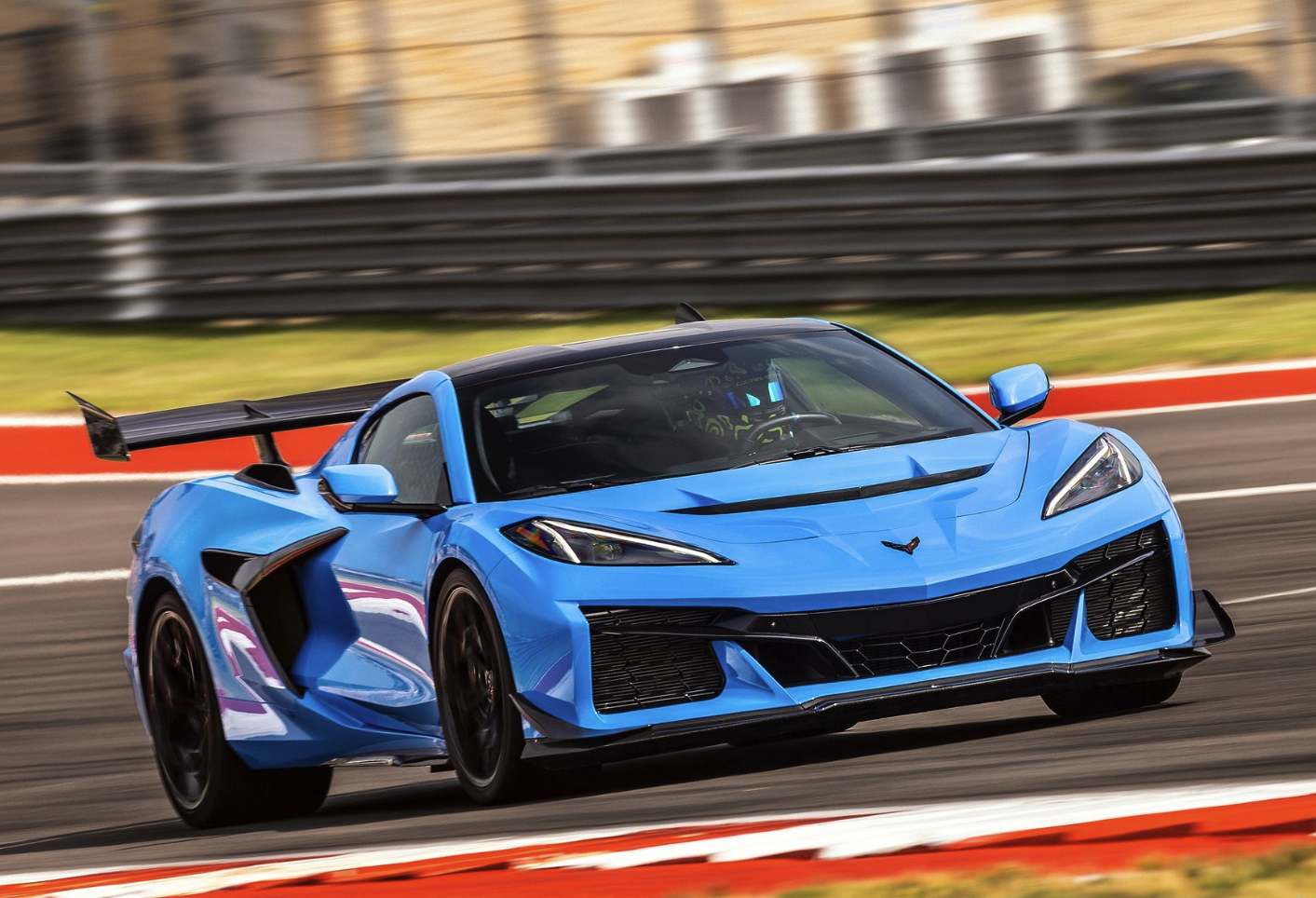
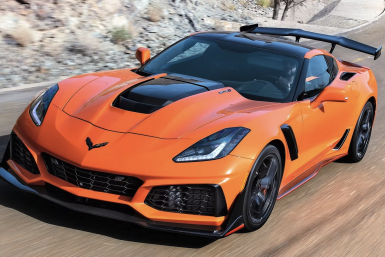
 The 2019 Corvette ZR1 features a unique two-piece, carbon fiber hood assembly,. The actual hood opens around a carbon fiber assembly which covers the intake manifold and superchargers on the LT5 engine.
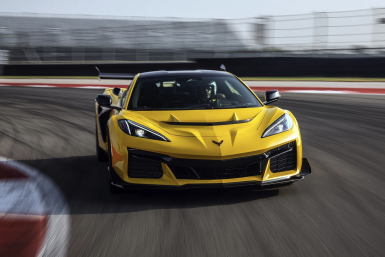
 Front aerial shot of the Chevrolet Corvette ZR1 coupe in Competition Yellow with optional ZTK Performance Package on the race track. Preproduction model shown. Actual production model may vary.
The first decision is the generation, and the table puts the five side by side: the years, the engine, how many were built, what they cost new and what they bring in 2026, and the verdict. Each generation’s model page has the same comparison year by year, with the 2026 results for each year.
Three rules hold across all five. Mileage sets the price inside a generation more than anything else, because so many ZR1s were bought to keep. Paperwork proves the car: a tank sticker on a C3, an LT5 service history on a C4, a plaque or a VIN series on an edition, a build sheet and recall status on a C8. And the gap between a driven car and a delivery-mileage car is wider on a ZR1 than on any other Corvette.
MORE: THE C3 ZR1 PAGE / THE C4 ZR-1 PAGE / THE C6 ZR1 PAGE / THE C7 ZR1 PAGE / THE C8 ZR1 PAGE / THE ZR1X PAGE / THE ZR1 LINE GUIDE
| GENERATION | YEARS | ENGINE AND POWER | BUILT | PRICE NEW | WHAT ONE COSTS IN 2026 | THE VERDICT |
|---|---|---|---|---|---|---|
| C3 | 1970–1972 | RPO ZR1: the solid-lifter 350 LT-1 (370 / 330 / 255 net hp) with the M22 four-speed, J56 brakes, F41 suspension, aluminum radiator and the mandatory deletes; ZR2 (1971): the same package around the 425-hp LS6 454 | 53 ZR1s (25 / 8 / 20) and 12 ZR2s | $968.95–$1,010.05 package on a $5,192–$5,533 car; ZR2 $1,747 | A 1970 coupe $217,500 (Bring a Trailer, Nov 2024), a 1972 coupe $159,500 (Mecum Indianapolis, May 2024); the 1971 ZR2 convertibles $863,500–$962,500 and the export coupe $650,000; the 1971 ZR1s seldom trade | A registry car bought on paper: the tank sticker or build sheet with the package, the LT-1’s CTV/CGZ/CKZ suffix, the M22, J56 and F41 parts and the deletes. Without the paperwork it is an LT-1 at LT-1 money; with it, the rarest regular-production Corvette package there is. For the collection, not the road. |
| C4 | 1990–1995 | LT5 5.7-liter all-aluminum DOHC 32-valve V8, designed by Lotus and built by Mercury Marine, 375 hp (1990–92) / 405 hp (1993–95); ZF six-speed only; the wide rear body | 6,939 | $58,995 (1990) to $68,043 (1995); the package $27,016–$31,683 over a coupe | $15,250–$53,500 for 1990s and $17,600–$37,400 for 1991s in the 2025–26 season, mileage deciding; 405-hp 1993–95 cars $43,000–$85,000; a 226-mile 1995 $69,553; Classic.com’s C4 ZR-1 benchmark $37,240 (October 2026) | The specialist’s car and the cheapest way into the line: a documented LT5 serviced by someone who knows it is worth more than any year or color. The 1990 is the collector’s first-year car, 1993–95 have the 405-hp engine and the fewest built, 1991–92 are the value, and mileage sets the price above all. |
| C6 | 2009–2013 | LS9 6.2-liter supercharged V8 (2.3-liter Eaton TVS), 638 hp / 604 lb-ft, dry sump; six-speed manual only; carbon roof, hood, fenders and splitter; carbon-ceramic brakes and Magnetic Ride standard | 4,684 | $103,300 (2009) to $112,575 (2013), plus gas-guzzler tax | $73,700–$151,250 in 2026 against a $100,221 benchmark: driven cars in the $80,000s and $90,000s, delivery-mileage cars $120,000–$151,250 (a 3,000-mile Centennial on top); no 2013 at auction, dealers asking $89,997–$142,995 | The first supercar Corvette and already the collectible C6, with an LS9 that has none of the LS7’s guide history. Buy on mileage, edition and the condition of the expensive parts: the rotors, the supercharger coupler and intercooler pump, the twin-disc clutch. 2009 and 2013 carry the premiums, 2012–13 PDE cars are the performance pick, 2010–11 the value. |
| C7 | 2019 | LT5 6.2-liter supercharged V8 (2.65-liter Eaton), 755 hp / 715 lb-ft; seven-speed manual (about 900 cars) or 8L90 eight-speed automatic; coupe or convertible; carbon-ceramic brakes standard; ZTK track package optional | 2,953 | $119,995 coupe / $123,995 convertible | Manual ZTK coupes $200,000–$340,000 (benchmark $220,516), automatics $125,000–$260,000 (benchmark $160,593); every result above the sticker, the manual worth $50,000–$60,000 more than the automatic | A one-year car, so the decision is spec, not year: manual or automatic, ZTK or not, coupe or convertible, and the odometer. The last front-engine Corvette and the last with a manual, trading above its sticker since new; a manual ZTK 3ZR coupe with delivery miles is the top of the C7 market, a 3ZR automatic coupe the sensible one. |
| C8 | 2025–present | LT7 5.5-liter twin-turbo flat-plane DOHC V8, 1,064 hp / 828 lb-ft; eight-speed dual-clutch; carbon-ceramic brakes standard; ZTK and carbon aero packages. ZR1X (2026–): the LT7 plus a 186-hp front motor, 1,250 hp, all-wheel drive | about 1,733 ZR1s and 270 ZR1Xs through 2026 | $174,995 (2025) to $197,195 (2027) plus $3,000 gas-guzzler tax; ZR1X $207,395 | Above sticker: 2025s $233,500–$301,000, 2026 ZR1s on a $294,306 benchmark (a 9-mile 3LZ $320,000); ZR1Xs $315,000–$452,000 at auction, with dealers asking $249,000–$320,000 for ZR1s against $182,395–$203,395 new | The 1,064-hp car and the only ZR1 that trades above sticker in 2026: 180 cars in 2025, the first full year in 2026, the ZR1X above it. Too new for a used-car history; buy from the build sheet and the invoice, confirm the fuel-system recall by VIN, treat a 2025 as the collector car and a 2026 as the one to drive. |
What each generation is, what to buy within it and the verdict on every model year, from the model pages. Each page carries the full year-by-year table, the 2026 auction results, the verification and inspection lists and the site’s market reports for that car.
The 1970–72 ZR1 is the rarest regular-production Corvette package: 25, 8 and 20 cars, the LT-1 small block with the M22, the J56 brakes, the F41 suspension and no radio, air or power steering, plus the twelve 1971 ZR2s with the LS6 454. They are registry cars and they seldom trade; buying one is a matter of documentation, patience and the auctions where they appear.
A ZR1 verifies itself only on paper: the tank sticker or the build sheet with the package, the CTV engine suffix on a 1970, the LT-1 hood and the deleted options. Many LT-1 cars have been dressed as ZR1s because the parts are the same; without the paperwork, pay LT-1 money.
Year by year: 1970: 25 built; the first year. 1971: 8 ZR1s and 12 ZR2s; the rarest year and the 454 ZR2s. 1972: 20 built; the last year and the most often seen.
The C4 ZR-1 is a specialist’s car: a Lotus-designed, Mercury Marine-built 32-valve LT5, a ZF six-speed and a wide-body C4 with its own VIN series, 6,939 built in six years. Prices run from used-car money for a driven 1991–92 to serious money for a delivery-mileage 1990 or a 1995, and the gap is all about mileage and the engine’s history.
Buy the engine: an LT5 that has been serviced by someone who knows it (injectors, the secondary-port actuator, the timing-chain tensioners, the plenum-off plug change) is worth more than any color or year. The 1990 is the collector’s first-year car, the 1993–95 cars have the 405-hp engine and the fewest built, and 1991–92 are the value.
Year by year: 1990: First year, 3,049 built, the collector car; the 1990-only interior and the most low-mileage survivors. 1991: The facelift year and the value: 2,044 built, the cheapest LT5s. 1992: The rarest-looking bargain: 502 built, the second-fewest. 1993: 405 hp and the 40th Anniversary package (Ruby Red); the performance year. 1994: Passenger airbag and the new interior; 448 built. 1995: The last year, 448 built, the collectible late car.
The C6 ZR1 is the first supercar Corvette and already the collectible C6: 638 hp from the LS9, a manual only, carbon-ceramic brakes, Magnetic Ride and carbon bodywork, 4,684 built over five years. The LS9 has none of the LS7’s valve-guide history, so the buying questions are mileage, the special editions and the condition of the parts that are expensive to replace: the rotors, the supercharger and the clutch.
The 2009 first-year car and the 2013 last-year car carry the premiums, with the 2012–13 PDE cars (the Cup tires, the stiffer calibration) the performance pick; 2010–11 cars are the value. Most ZR1s have led easy lives, so a 10,000-mile car with a full history is easy to find; a tracked one needs its brakes and clutch looked at.
Year by year: 2009: First year, 1,415 built; the collectible, with the 60 pilot cars at the top. 2010: The biggest year (1,577) and the value. 2011: The fewest built; otherwise a 2010. 2012: The PDE package (Cup tires, the recalibrated chassis) and the Centennial Edition; the performance pick. 2013: The last year and the 60th Anniversary package; the last-year premium.
The 2019 ZR1 is a one-year car, so the buying decision is not which year but which spec: manual or automatic, ZTK or not, coupe or convertible, and how many miles. About 900 of the 2,953 have the seven-speed, and the market treats the manual as a different car; the ZTK Track Performance Package (the high wing, the Cup 2 R tires, the stiffer springs and the Magnetic Ride tuning) is the other premium, and a manual ZTK 3ZR coupe with delivery miles is the top of the C7 market.
It is also the last front-engine Corvette and the last with a manual, which is why it has held above its sticker since new. Buy on documentation and condition rather than on options: every ZR1 has the 755-hp LT5, the carbon-ceramic brakes, Magnetic Ride and the carbon aero, so the window sticker and the build sheet decide the spec and the odometer decides the price.
The C8 ZR1 is the 1,064-hp twin-turbo one, 180 cars in 2025 and the first full year in 2026, and it is the Corvette that trades above its sticker in 2026. Buying one is a question of which car it is — standard aero, the carbon aero or the ZTK package — whether it has the carbon wheels, and what the seller paid, because the window sticker is the floor and the auctions set the premium.
The ZR1 is too new for a used-car history: the known items are the 2025 fuel-system recall it shares with the Z06, the first-year software and the dealer markup that every early car carried. Buy from the build sheet and the invoice, confirm the recall by VIN, and treat a 2025 as the collector car and a 2026 as the one to drive.
Year by year: 2025: 180 built, the first-year car and the collector pick; 83 with ZTK, 43 with the carbon wheels. 2026: The first full year, 1,553 ZR1 and ZR1X; the one to drive. 2027: On sale; the pace-car year for the ZR1X.
The ZR1X is the 1,250-hp car — the ZR1’s twin-turbo LT7 with a 186-hp front motor on the E-Ray’s battery — and in 2026 it is the newest and most expensive Corvette, selling above its sticker at auction and at dealers. There is no used-car history yet; buying one is a question of the allocation, the spec and the premium.
Treat it as a new car with a new car’s questions: the build sheet, the invoice and the dealer’s markup, the campaign history by VIN (it shares the Z06 and ZR1 fuel-system recall), and whether the carbon wheels and the ZTK package are on it. The 2027 pace-car year adds the Indianapolis cars to the list.
Year by year: 2026: The first year, built alongside the ZR1 (1,553 ZR1 and ZR1X together); the launch cars, the Quail Silver Limited Edition and the Stars & Steel one-off set the records. 2027: The Indianapolis 500 pace-car year; on sale.
 The 2019 Corvette ZR1 features a unique two-piece, carbon fiber hood assembly,. The actual hood opens around a carbon fiber assembly which covers the intake manifold and superchargers on the LT5 engine.Front aerial shot of the Chevrolet Corvette ZR1 coupe in Competition Yellow with optional ZTK Performance Package on the race track. Preproduction model shown. Actual production model may vary.
Every ZR1 is already the top of its range, so the premiums inside a generation come from the few things that could be added: the 405-hp engine on a late C4, the Cup-tire PDE package on a 2012–13 C6, the manual and the ZTK on a 2019, the ZTK, carbon aero and carbon wheels on a C8, and the anniversary and launch editions. Each is proved by a label code, a VIN series or a plaque, and each has been imitated; the model pages carry the verification details.
The table gives what each adds and what it does to the price. Where a package is track hardware (PDE, ZTK, carbon-ceramics, Cup tires), the premium depends on the condition of what it added.
MORE: EVERY ZR1 AND ZR1 PROTOTYPE / EVERY SPECIAL EDITION / MSRP BY YEAR
| GENERATION | PACKAGE OR EDITION | WHAT IT IS | BUILT | WHAT IT DOES TO THE PRICE |
|---|---|---|---|---|
| C3 | ZR2 (1971) | The ZR1 package around the 425-hp aluminum-head LS6 454; coupes and convertibles. | 12 | The most valuable C3s after the L88s and ZL1s: $863,500–$962,500 for convertibles. |
| C3 | Coupe or convertible; documentation | Both bodies were built; the tank sticker, Protect-O-Plate and judging history are the car. | — | Convertibles have led the ZR2 results; paperwork is the premium. |
| C4 | 405-hp LT5 (1993–95) | Ported heads, a new cam and the revised injection; 1,344 cars across three years. | 1,344 | A premium among drivers; the fewest built. |
| C4 | 40th Anniversary package (1993) | Ruby Red over Ruby Red with the embroidered seats and badges; Z25 on the build sheet. | 245 ZR-1s | A premium with the documentation: $44,000 and $85,000 at auction in 2025–26. |
| C4 | 1990 first-year car | The 1990-only dash and interior details, the most low-mileage survivors. | 3,049 | The collector’s preference; delivery-mileage cars set the C4 highs. |
| C6 | PDE package (2012–13) | Cup tires, the recalibrated Magnetic Ride, the black or silver Cup wheels; PDE and XFH on the label. | Few hundred | The performance premium; the tires age out and are expensive. |
| C6 | Centennial (2012) and 60th Anniversary (2013) | Carbon Flash with satin-black wheels and the Centennial badges (ZLC, 58U); Arctic White with the 60th stripes (Z25). | 206 Centennial ZR1s; 3 60th ZR1s offered in a year | A modest premium, larger with mileage: a 3,000-mile Centennial made $151,250 in 2026. |
| C6 | Pilot cars (2009) | The first 60 built, in their own 700001 VIN series. | 60 | A premium with the documentation. |
| C7 | Seven-speed manual (M7) | About 900 of the 2,953; the last manual Corvette. | about 900 | The biggest single premium in the C7 market: benchmarks $220,516 manual against $160,593 automatic. |
| C7 | ZTK Track Performance Package | The stanchion-mounted high wing, splitter end caps, Cup 2 R tires, stiffer springs and Magnetic Ride tuning; FEB on the label. | — | A clear premium, more on manuals; a low-wing car with a high wing added is not a ZTK. |
| C7 | Sebring Orange Design Package; 3ZR | The launch color with orange calipers, belts and stitching; the full interior, competition seats and PDR. | — | A modest premium for the color; 3ZR expected on a collector car. |
| C8 | ZTK Performance Package and carbon aero | ZTK: the high wing, stiffer springs, Cup 2 R tires and the track tuning (83 of the 180 2025s); carbon aero: the wing and dive planes without the chassis changes. | 83 (2025) | The main premium; the 2025 ZTK cars lead the market. |
| C8 | Carbon-fiber wheels | The lightest wheels GM sells; 43 of the 2025 cars. | 43 (2025) | A premium that depends on their condition. |
| C8 | ZR1X (2026–) | The LT7 plus the E-Ray’s 186-hp front motor: 1,250 hp, all-wheel drive, under two seconds to 60; $207,395. | about 270 in 2026 | Above the ZR1 at every sale: $315,000–$452,000 at auction in 2026. |
| C8 | Quail Silver Limited Edition; Stars & Steel | The Monterey launch ZR1X (3LZ convertible, Blade Silver Matte); the America-250 Stars & Steel ZR1s and the one-off ZR1X. | 25 Stars & Steel ZR1s; 1 ZR1X | Quail Silver No. 19 made $452,000 at three miles; the Stars & Steel ZR1X $2,605,000 for charity. |
Five generations, five markets, and only the C4 trades as a used car. The figures below are the auction and dealer results the site tracked for each generation through October 2026; the model pages carry them year by year and are updated as new sales come in.
C3 (1970–72). The ZR1s seldom trade and the ZR2s set the prices: a 1970 ZR1 coupe sold for $217,500 on Bring a Trailer in November 2024 and a 42,561-mile 1972 coupe for $159,500 at Mecum Indianapolis in May 2024, while 1971 ZR2 convertibles brought $962,500 (Mecum Indianapolis 2022) and $863,500 (Monterey 2023) and the export ZR2 coupe $650,000. An undocumented car is an LT-1 at LT-1 money.
C4 (1990–95). The one ZR1 in used-car territory. Classic.com’s benchmark for the C4 ZR-1 stood at $37,240 in October 2026; in the 2025–26 season 1990s sold for $15,250 to $53,500 and 1991s for $17,600 to $37,400, mileage deciding; 1992s ran $31,750–$33,000 at 40,000 miles and $40,500–$78,500 at 4,000; the 405-hp 1993–95 cars brought $43,000–$53,000 driven, 40th Anniversary cars $44,000 and $85,000, and a 226-mile 1995 $69,553. A ZR-1 can cost less than a clean L98 of the same year, and a documented LT5 is the whole difference.
C6 (2009–13). Against a $100,221 Classic.com benchmark, 2009s sold for $73,700 to $147,400 in 2026, 2010s $88,000–$132,000, 2011s $92,000–$150,000 and 2012s $102,000–$151,250 (a 3,000-mile Centennial on top); no 2013 sold at auction and dealers asked $89,997–$142,995. Driven cars sit in the $80,000s and $90,000s, delivery-mileage cars above $120,000.
C7 (2019). Every 2019 ZR1 has sold above its $119,995–$123,995 sticker. Classic.com’s October 2026 benchmarks are $160,593 for an automatic coupe, $220,516 for a manual coupe, $176,346 for an automatic convertible and $227,507 for a manual convertible. Manual ZTK coupes sold for $201,000 to $276,000 on Bring a Trailer in the year to October 2026 and a 3,000-mile Admiral Blue ZTK 3ZR for $340,000 in January; automatics mostly $132,000 to $187,000 with delivery-mileage cars to $260,000. CarScoops noted in February 2026 that the best C7 ZR1s now bring more than a new C8 ZR1.
C8 (2025–). Above sticker a year on: an 8-mile 2025 convertible $301,000 (December 2025), a 207-mile 2025 coupe $233,500 (September 2026), a 2026 benchmark of $294,306 with a 9-mile 3LZ at $320,000 on Bring a Trailer (July 2026), and dealers asking $249,000–$320,000 against $182,395–$203,395 new. The ZR1X has no benchmark yet and has sold for $315,000 to $452,000, the one-of-one Stars & Steel for $2,605,000 for charity.
Two cautions. Check whether an auction result includes the buyer’s premium, and treat asking prices and unsold high bids separately from completed sales (a 2026 ZR1 passed at $250,000 at Mecum Nashville is not a $250,000 car). The ladder below puts the whole line in five tiers.
MORE: C3 VALUES / C4 VALUES / C6 VALUES / C7 VALUES / C8 VALUES / AUCTION COVERAGE
What the money buys across the five generations, from the 2026 results. The tiers overlap at the edges (a delivery-mileage C4 costs what a driven C6 costs), so within a tier the choice is between a better example of an older car and a more ordinary example of a newer one.
$15,000 – $35,000
Driven 1990–92 ZR-1s with 40,000 to 100,000 miles, often with deferred LT5 service, the 1991s cheapest. Recent sales: $15,250 to $37,400 in the 2025–26 season against a $37,240 benchmark. The cheapest ZR1 and the one with the most to check: budget a baseline LT5 service (injectors, tensioners, plugs) on any car without recent specialist history.
$35,000 – $85,000
Low-mileage 1990–92 cars, the 405-hp 1993–95 cars and the 40th Anniversary ZR-1s. Recent sales: 1993–95 cars $43,000 to $53,000 driven, 40th cars $44,000 and $85,000, a 226-mile 1995 $69,553, a 4,000-mile 1992 $78,500. The tier where a documented LT5 with a specialist’s history meets a collector’s mileage.
$75,000 – $150,000
Every 2009–13 ZR1: driven cars in the $80,000s and $90,000s, PDE and 3ZR cars above, delivery-mileage and Centennial cars to $151,250, against a $100,221 benchmark. Bought on mileage, then the rotors (weighed), the supercharger coupler, the intercooler pump and the clutch; a tracked car with records over a garage car without.
$125,000 – $340,000
The 2019s: automatics $125,000 to $260,000 (benchmark $160,593), manuals $200,000 to $340,000 (benchmark $220,516), ZTK and 3ZR and delivery mileage at the top. A 3ZR automatic coupe around $140,000 is the sensible ZR1; a manual ZTK coupe with delivery miles is the top of the C7 market.
$230,000 – $450,000+
Every 2025–26 ZR1 and ZR1X: 2025 ZR1s $233,500–$301,000, 2026 ZR1s on a $294,306 benchmark, ZR1Xs $315,000–$452,000, all above window stickers of $182,395–$290,678. Bought on the build sheet, the invoice and the markup the first owner paid, the recall status by VIN, and the condition of the carbon wheels, rotors and Cup 2 Rs.
Mileage. The ZR1 was bought to keep from 1990 onward, so unused and sub-5,000-mile cars exist in every generation and set the highs; a driven car of the same year brings half to two-thirds. A C4 at 79 miles made $66,000 where 40,000-mile cars made $32,000.
The transmission, on the C7. The seven-speed is worth $50,000 to $60,000 more than the automatic on Classic.com’s benchmarks, and it is the last manual Corvette; nothing else on any ZR1 moves the price as much.
The packages and editions. ZTK on a C7 or C8, PDE on a C6, the 405-hp engine and 40th Anniversary on a C4, the Centennial, 60th, Quail Silver and Stars & Steel cars, the 1971 ZR2: each is a premium proved by a label, a VIN series or a plaque.
Engine history, on the C4. A documented LT5 serviced by a specialist (injectors, tensioners, vacuum system, plenum-off plugs) is worth more than any year or color; an engine with no history is priced for a baseline service, and a damaged one is a search for a donor, because LT5 blocks and heads are no longer made.
Consumables, on the C6, C7 and C8. Carbon-ceramic rotors (weighed), Cup tires (dated), a twin-disc clutch and the carbon aero and wheels are five-figure items when used up, and a tracked car is priced on their condition.
Paperwork, on the C3. The tank sticker or build sheet with the ZR1 package is the car; an LT-1 dressed as a ZR1 is an LT-1.
MORE: THE ZR1 LINE GUIDE / COLORS BY YEAR / MSRP BY YEAR
The ZR1 is the Corvette that has rewarded buying from new: the C7 has never dipped below its sticker, the C8 ZR1 and ZR1X trade above theirs, and the C6 ZR1 climbed from the $60,000s of a decade ago past $100,000. The C4 is the exception and the opportunity: the only ZR1 that fell to used-car money, with a $37,240 benchmark for a car that cost $58,995 to $68,043 new and a specialist’s engine that keeps casual buyers away. Documented low-mileage C4s have begun to move, and the 405-hp and 40th Anniversary cars lead.
The realistic expectation is steady appreciation for low-mileage, documented examples of the C4 and C6, stability at a high level for the C7 (the manual especially), and a few years of settling for the C8 as allocations catch up with demand and the markups the first owners paid wash out of the market. The cars with the strongest case are the ones the next collector can verify: a documented 1990 or 1993–95 ZR-1, a Centennial or delivery-mileage C6, a manual ZTK 3ZR C7, a 2025 ZTK C8 and the ZR1X launch editions.
The weakest case is a modified or neglected C4 (an LT5 with no history is a liability), a tracked C6 or C7 with its consumables used up and priced as if they were new, and a C8 bought at a dealer markup on the assumption that the auction premiums are permanent. Buy the car you will enjoy and treat appreciation as a bonus; the ZR1 has been kind to patient owners and unkind to speculators.
MORE: AUCTION RESULTS / WHOLESALE MARKET REPORTS / BARGAIN HUNTING
The charts below from our friends at Classic.com track recent sales and trends in the Corvette ZR1 market by generation. The model pages carry the results the site tracks year by year.
Each page has the car year by year with the specs, the numbers and the colors, and a buyer’s guide for it: which year to buy, what one costs from the tracked results, how to verify a real one, the inspection list, the known issues and the options that carry a premium.
MORE: THE ZR1 LINE GUIDE / THE Z06 BUYER’S GUIDE / THE FULL MODEL LIST
Five ZR1s drive like five different cars, and the one you want is the one whose compromises you can live with.
C3 (1970–72). An LT-1 with the race package: a solid-lifter 350 that idles lumpily and pulls to 6,500 rpm, the M22 Rock Crusher with its whine, the stiff F41 springs and bars, the J56 brakes, no radio, no air, no power steering or brakes on most. It is a 1970s Corvette at its most demanding and most rewarding, and nearly every surviving one is a show car; the drive is a footnote to the paperwork.
C4 (1990–95). The one with a different engine note: Lotus’s 32-valve LT5 spins to 7,000 rpm, pulls hardest above 4,500 when the secondary ports open (the valet key closes them and halves the power), and sounds like no other Corvette. The ZF six-speed is long-legged and a little notchy, the FX3 adjustable suspension firm, the wide body planted, and 1993–95 cars have 405 horsepower and the better ride and interior. A 1990–91 has the digital dash and the first-year details. It is a quick car still (0–60 in 4.4 seconds, 179 mph) and a comfortable one, and every drive reminds you that the engine is the car.
C6 (2009–13). A modern supercar with a Corvette’s manners: 638 supercharged horsepower that arrives from 2,000 rpm, a six-speed only, carbon-ceramic brakes that stop it from 205 mph, Magnetic Ride that makes the ride better than the Z06’s. The twin-disc clutch rattles at idle (normal) and takes up high; the supercharger whines; the 2012–13 PDE cars on Cup tires are the sharpest and the worst in the wet. It is the easiest of the collectible ZR1s to drive every day, and the one most owners actually drive.
C7 (2019). The last front-engine Corvette and the most powerful: 755 horsepower, the halo hood with the supercharger through it, thirteen heat exchangers that cured the Z06’s heat problem, a seven-speed or an eight-speed automatic that is quicker. The ZTK cars on Cup 2 Rs with the high wing are track cars that are miserable in the cold and wet; the standard-wing automatic is a fast grand tourer. Most 2019 ZR1s have led garage lives, so the first drive after purchase often shows stale tires and a dead battery before it shows anything about the car.
C8 (2025–). The most powerful car GM has sold: 1,064 twin-turbo horsepower behind the seats, a dual-clutch, 233 mph, and in the ZR1X a 186-hp front motor that takes it under two seconds to 60 with all-wheel drive. It drives like a Z06 with a second stage: docile at part throttle, violent when the turbos arrive, and dependent on its tires (Cup 2 Rs on ZTK cars are summer-only) and its brakes. A new car under warranty, serviced by dealers, with a cabin that is a generation newer than the C7’s. Few buyers will drive one hard; most will drive it carefully to the next auction.
Drive at least two before choosing. Many buyers who come for the C7’s numbers leave with a C6 and $100,000; many who come for a C4’s price discover the LT5 is the engine they wanted all along.
MORE: ZR1 PERFORMANCE FIGURES BY YEAR / ZR1 SPECS BY GENERATION / THE ENGINES
A ZR1 costs what its generation costs to run plus what the ZR1 added, and the added part ranges from a set of carbon-ceramic rotors to an engine nobody makes any more. In order: the C3 is an LT-1 with a specialist, the C4 is the one Corvette that needs its own expert, the C6 and C7 are Z06s with more expensive consumables, and the C8 is a dealer car with a warranty.
A ZR1 is an LT-1 C3 to run — a specialist for the solid-lifter engine and the Holley, parts available, insurance on an agreed value — and most are shown more than driven.
The ZR-1 is the one Corvette that needs a specialist, and the bills are specialist bills: injectors, tensioners, the plenum-off service and anything inside the LT5 cost several times what the same job costs on an L98 or LT1. The rest of the car is a C4 and cheap. Find the LT5 shops before you buy (the owners’ registry and the site’s ZR-1 posts name them) and budget for a baseline service on any car without recent history.
Insure on an agreed value as a classic; most ZR-1s qualify for limited-use policies, and most are driven little.
A ZR1 costs about what a C6 Z06 costs to run until something ZR1-specific wears out: the rotors, the Cup tires on a PDE car, the supercharger’s coupler and the clutch. Oil is a dry sump of Mobil 1 (about ten quarts), the fuel is premium and the drinking is serious. Parts other than the LS9 and the carbon are shared with the Z06.
Insure on an agreed value: the ZR1 trades well above the Z06 and a standard policy will not reflect it.
A ZR1 is a Corvette to run, not a supercar: the LT5 takes Mobil 1 on a dry sump (about ten quarts), the oil change is a dealer or specialist job on a car under its remaining warranty, and parts are shared with the Z06 except the LT5 itself and the carbon pieces. The expensive items are the carbon-ceramic rotors, the ZTK’s Cup 2 R tires (which last a few thousand miles) and the carbon aero, which is costly to repair after a parking-lot tap.
Insure it on an agreed value; the ZR1 has stayed above its sticker, and a standard policy will not pay what one costs to replace. Most owners drive them little, so budget for tires by age, a battery tender and a fuel stabilizer rather than by mileage.
The ZR1 runs like a Z06 with two turbochargers added: the LT7 shares the dry sump and the oil schedule, the tires and brakes are the Z06’s most expensive items made more so, and the carbon wheels and aero are costly to repair. Dealers service it; there is no independent history yet.
Insure on an agreed value: the ZR1 has traded well above sticker and a standard policy will not replace one.
The ZR1X costs what a ZR1 costs plus the hybrid system: the dry-sump LT7, the dual-clutch service, the carbon-ceramic rotors, the carbon wheels and the tires. Dealers service it; insure it on an agreed value, because nothing else will replace one.
Across all five, budget the first year’s refresh on any car that has sat (tires by date, a battery, fluids, fuel-system work on a C4 stored with a low tank) and a pre-purchase inspection by someone who knows the generation. The ZR-1 Net Registry’s buyer’s guide sorts C4 jobs into cheap (under $100), moderate ($100–$1,000) and expensive (over $1,000) and is the place to start on an LT5; the site’s ZR-1 pages name the specialists.
MORE: MAINTENANCE SCHEDULES / OWNER’S MANUALS / THE MODS HUB
Beyond price, mileage and condition, a ZR1 purchase turns on a handful of judgments: which generation suits the owner, whether the engine has the history it needs, whether the car has been driven or kept, whether it is a real ZR1 or a real edition, and where it sits in a market that treats four of the five generations as collectibles.
A car to drive wants a C6 (the modern supercar that owners actually use) or a 3ZR automatic C7; a car to collect wants a delivery-mileage C7 manual, a 2025 C8 or a Centennial C6; an engine to love wants a C4 and the patience for its specialist; a C3 is for the collection and the judging field. Most regrets come from the mismatch: the C4 bought as a cheap Corvette by someone who will not learn the LT5, the ZTK C7 bought for the road, the C8 bought at a markup as an investment.
At $30,000 the C4 is the only ZR1; at $50,000–$85,000 a documented low-mileage or 405-hp C4; at $100,000 a driven C6; at $150,000 a delivery-mileage C6 or an automatic C7; at $220,000 a manual C7; at $250,000 and up a C8. In each overlap the older car is the better example and the newer car the faster one, and the cost of ownership runs the other way except on the C4.
C3: the tank sticker or build sheet with the ZR1 package, the engine pad suffix (CTV in 1970, CGZ in 1971, CKZ in 1972), the casting dates, the M22, J56, F41 and K66 parts and the deleted options. C4: the LT5’s service history by a specialist: injectors flow-tested or replaced, cam-chain tensioners, the vacuum system and secondary ports working on the full-power key, oil-cooler lines, plugs (a plenum-off job), the Mercury Marine plate matching the VIN. C6: supercharger coupler and intercooler pump, the clutch, oil pressure, the rotors weighed. C7: the airbag recall on early cars, fluid history on an automatic, the dry sump checked hot on a tracked car. C8: recall 25V536 by VIN, the first-year software updates, the oil changes from the first 500 miles.
Most ZR1s were kept, and a kept car has its own list: tires that have aged out with tread left, a battery, seals and injectors that have dried (the LT5 especially), brake fluid and a clutch that has never been bedded. A driven car with records is a known car; a tracked C6 or C7 shows it in the rotors, the Cup tires, the clutch and the splitter, and should be priced for them. Ask directly and look for the signs: brake dust inside the wheels, shoulder wear, drilled cowl holes on a C6 from non-GM blower work, a torn harness boot from nitrous or wide-band wiring.
A C3 ZR1 left no VIN trace and is proved only by the tank sticker or build sheet; an LT-1 with the parts added is an LT-1. A C4 ZR-1 proves itself: Z in the fifth VIN position and J in the eighth, an 800001-series number, the wide rear body with the square taillights and the roof-mounted stop lamp, the valet key, the LT5’s Mercury Marine plate with the partial VIN. A C6 ZR1 has R (2009) or T (2010–13) in the eighth position and an 800001-series number (700001 for the 60 pilots), LS9 and J57 on the console label, the polycarbonate hood window and clear-coated carbon; a wide-body coupe with an E or W is a Z06 or a tribute. A C7 ZR1 has a 9 in the eighth position and an 800001-series number, the halo hood and the front underwing; ZTK needs FEB on the label, not just the wing. A C8 is proved by the VIN, the window sticker and the dealer’s records. Each edition has its plaque, VIN series or label code; the verification table below has them.
C6, C7 and C8 ZR1s share everything but the engine and the carbon with the Z06 of their generation, and an independent Corvette shop can service the first two. The C4 needs an LT5 specialist (the ZR-1 Net Registry, the LT5 shops the site’s ZR-1 pages name), because the engine is unlike anything else in a Corvette and because blocks and heads are no longer made. Carbon-ceramic rotors, Cup tires, carbon wheels and carbon aero are available and expensive; the C4’s ZR-1 windshield and unique A/C compressor are the odd parts to find.
The C7 and C8 trade above sticker, the C6 above $100,000, the C3 in the hundreds of thousands, and the C4 at used-car money with a documented-car premium growing. Delivery-mileage cars and the editions lead each generation and are the easiest to resell; driven and modified cars trail. Price against the site’s tracked results and the model pages, not against asking prices (dealers were asking $249,000–$320,000 for 2026 ZR1s that benchmark at $294,306), and remember that an unsold high bid is a ceiling the market declined to pay.
Each generation has its list and most of it is the generation’s own (the C3’s birdcage and frame, the C4’s electronics and weatherstrips, the C6’s column lock and roof bond, the C7’s eight-speed, the C8’s software); the ZR1 adds the engine, the brakes and the tires. The table carries all of it with the fix and, where the site, GM or the registries have one, the number. None of these should stop a purchase; all of them belong on the checklist, and a car with paperwork for them is the one to buy.
The generation buyer’s guides carry the generation-wide lists; the model pages carry each year’s.
MORE: THE C3 GUIDE / THE C4 GUIDE / THE C6 GUIDE / THE C7 GUIDE / THE C8 GUIDE
| GEN | PROBLEM | YEARS | WHAT HAPPENS | THE FIX |
|---|---|---|---|---|
| C3 | Provenance | 1970–72 | The package left no VIN trace; only the tank sticker or build documentation proves it. | No paperwork, no ZR1 price. |
| C3 | Tribute cars | 1970–72 | LT-1 cars with the ZR1 parts added. | Registry and paperwork. |
| C3 | LT-1 running | 1970–72 | Solid lifters to adjust, a Holley to set up, 2.5-inch exhaust. | A specialist. |
| C3 | J56 brakes | 1970–72 | The heavy-duty calipers weep unless sleeved. | Check for leaks. |
| C3 | Birdcage and frame | 1970–72 | The C3 items. | Inspect. |
| C4 | Fuel injectors | 1990–95 | The sixteen Multec injectors clog when the car sits, the secondaries first because they rarely fire; the car runs rough and will not make power. | Cleaning or replacement; a rebuilt set is a known cost. |
| C4 | Secondary-port actuator and valet solenoid | 1990–95 | The vacuum actuator that opens the secondary ports sticks, and the valet key solenoid fails, leaving the car in half-power mode. | Check the full-power key gives the full engine; the parts are available. |
| C4 | Timing-chain tensioners | 1990–95 | The original tensioners wear and the chains rattle on start-up. | A known job; ask whether it has been done. |
| C4 | Coolant and oil-cooler plumbing | 1990–95 | The rubber lines age and weep. | Look for staining under the car and around the oil cooler. |
| C4 | Starter and plug change | 1990–95 | Plugs are a plenum-off job; the starter lives under the intake. | Budget labor; ask when the plugs were last done. |
| C4 | Head gaskets and the engine itself | 1990–95 | LT5 blocks and heads are no longer made; a damaged engine is a search for a donor. | Buy a healthy, documented engine over everything else. |
| C4 | C4 general | 1990–95 | Weatherstrips, the FX3 ride-control actuators, the digital dash (1990–91), Bose amplifiers, the power antenna and the roof-panel weatherseals. | The site’s C4 buyer’s guide has the list. |
| C6 | Supercharger coupler and bearings | 2009–13 | A rattle at idle from the LS9’s supercharger snout. | The isolator coupler; a specialist job, not an engine failure. |
| C6 | Intercooler pump | 2009–13 | The charge-cooler pump fails and the intake temperatures climb under boost. | An inexpensive pump; a scan tool shows the intake air temperature rising on a pull. |
| C6 | Twin-disc clutch | 2009–13 | The clutch rattles at idle (normal) and wears on tracked cars (not). | Check the pedal and the take-up; a clutch is a torque-tube-out job. |
| C6 | Carbon-ceramic rotors | 2009–13 | Standard on every ZR1; they wear by weight and cost a five-figure sum. | Have them weighed at a dealer before you agree a price. |
| C6 | Carbon bodywork | 2009–13 | The hood, roof, fenders and splitter are carbon and the clearcoat on the exposed-weave pieces can yellow or craze. | Look at the roof and hood in daylight; repainting carbon is expensive. |
| C6 | Polycarbonate hood window | 2009–13 | The window over the engine cover scratches and hazes. | Cosmetic; replacements exist. |
| C6 | C6 general | 2009–13 | Headlamps that yellow, the dash and door panels that bubble, the NPP exhaust actuators, the PS2 tires that age out. | The usual C6 list; the site’s C6 buyer’s guide has it. |
| C7 | Airbag sensing module | 2019 | A recall on about 490 early cars: hard braking or acceleration could put the module into a fault state. | A dealer reprogram; check the VIN for completion. |
| C7 | 8L90 automatic shudder | 2019 | The torque-converter shudder and harsh low-speed shifts GM addressed across the C7 range with fluid and software. | The updated Mobil 1 LV ATF HP fluid flush and the latest calibration; a car that still shudders after both needs a converter. |
| C7 | Wheel cracking | 2019 | The forged aluminum wheels on the Z06, Grand Sport and ZR1 bend and crack on bad pavement; the subject of two class actions. | Inspect every wheel inside and out; budget for replacements on a car with curb or pothole history. |
| C7 | Heat on track | 2019 | The ZR1’s 13 heat exchangers cured the Z06’s heat-soak problem for most owners; hard track use in hot weather can still bring reduced power. | Ask for track history and the oil-change record; a tracked ZR1 should have the dry-sump checked hot and running. |
| C7 | Carbon-ceramic rotors | 2019 | Standard on the ZR1 and very expensive to replace; they wear by weight, not thickness. | Have the rotors weighed at a dealer; a set of four is a five-figure job. |
| C7 | Cup 2 R tires (ZTK) | 2019 | The ZTK’s Michelin Pilot Sport Cup 2 R tires age out quickly and are poor in the wet and cold. | Check date codes; many cars have been switched to Cup 2s or Pilot Sport 4S for the road. |
| C8 | Fuel-system fire risk | 2025 | The August 2025 recall and stop-sale on every Z06 and ZR1. | Confirm completion by VIN. |
| C8 | First-year software | 2025–26 | The LT7’s calibration and the dual-clutch’s updates in the first months. | A car that has been back to the dealer for the updates is the better car. |
| C8 | Carbon-ceramic rotors and carbon wheels | 2025– | Both standard or optional on the ZR1, both very expensive, both damaged by track use and curbs. | Weigh the rotors, inspect the wheels. |
| C8 | Cup 2 R tires (ZTK) | 2025– | Short-lived and poor in the cold and wet. | Check date codes and tread; many owners keep a road set. |
| C8 | Dealer markups | 2025–26 | Early cars sold for tens of thousands over sticker; the used market has not refunded all of it. | Know the sticker and the invoice before you negotiate. |
| C8 | Warranty on resold cars | 2025– | GM’s policy on early resales applied to the Z06 and may apply here. | Confirm the warranty by VIN. |
| C8 ZR1X | First-year everything | 2026– | The LT7, the hybrid front drive and the calibration are all in their first year together. | Buy from a dealer that will stand behind the updates; keep the warranty intact. |
| C8 ZR1X | Fuel-system recall | 2026 | Shared with the Z06 and ZR1. | Confirm by VIN. |
| C8 ZR1X | Carbon-ceramic rotors and carbon wheels | 2026– | Standard and optional respectively; the most expensive consumables in the range. | Weigh and inspect. |
| C8 ZR1X | Hybrid battery | 2026– | The E-Ray’s 1.9-kWh pack feeding a bigger motor. | Ask for the hybrid warranty terms. |
| C8 ZR1X | Dealer markups and the resale policy | 2026– | The highest markups of any Corvette; GM’s early-resale warranty policy may apply. | Know the sticker; confirm the warranty by VIN. |
| C4 | Injectors, vacuum pump, fuel pump | 1990–95 | The Multec injectors use a steel ball that rusts when the car sits; the vacuum pump under the right headlight should run only a few seconds after key-on, and one that runs constantly has a leak (usually under the plenum); a fuel pump left in a low tank rusts and a GM replacement runs to $1,100. | Flow-test, clean or replace the injectors; find the vacuum leak; the ZR-1 Net Registry notes a 1996 Suburban pump (GM 25163473) fits for under $100. Ask whether the car was stored with a full tank. |
| C4 | Cam-chain tensioners, oil leaks | 1990–95 | A cold-start rap is the chain tensioner, harmless but audible; oil-pan screws loosen, header studs weep and the oil-cooler lines leak at the block and at the rubber-to-metal joints. | The newer tensioner is optional; retighten the pan and studs; replace the cooler lines with the later GM parts. |
| C4 | Windshield, roof and glass | 1990–95 | ZR-1 windshields distort and delaminate (the ZR-1 glass has the cutout above the dash), the plastic targa roof cracks at its mounts, and 1994–95 side glass scratches. | An expensive windshield, a moderate roof exchange; confirm the car has both roof panels (painted and tinted). |
| C4 | ZF synchros and clutch | 1990–95 | Hard-driven cars grind in the gears (first is always noisy, and a misaligned shifter mimics worn synchros); every clutch takes up high; a shifter that lifts under hard acceleration points to loose torque-beam bolts. | A rebuild is a four-figure job; the torque-beam bolts are a retorque; low clutch fluid under the ECM is a slave cylinder. |
| C6 | The 3ZR dash and the cowl | 2009–13 | The 3ZR’s wrapped dash separates at the top (owners call it a very expensive fix); drilled holes under the wiper cowl at the blower corners are the sign of non-GM supercharger work, and a torn harness boot under the glovebox of nitrous or wide-band wiring. | Look before you buy; a modified LS9 is priced as one. |
| C7 | Airbag module recall | 2019 | About 490 early 2019 ZR1s were recalled because hard braking or acceleration could put the airbag sensing module into a fault state and the bags might not deploy. | A dealer reprogram; confirm completion by VIN. |
| C8 | Fuel-filler fire recall | 2025–26 | Recall 25V536 (August 2025), with a stop-sale: fuel spilled into the filler pocket while refueling could reach the left-side radiator and fan and ignite; it covers 2023–26 Z06s and 2025–26 ZR1s. The ZR1X entered production after the recall and was not part of it. | A dealer-fitted shield, free; owner letters went out in November 2025. Confirm completion by VIN on a ZR1, and that a ZR1X carries the production fix. |
The generation guides carry the full inspection for each car; this is the ZR1 layer on top of it, in the order a viewing goes.
1. The paperwork, before you travel. On a C3, the tank sticker or build sheet with the ZR1 or ZR2 package and the NCRS or Bloomington judging history; on a C4, the window sticker, the owner’s kit (the 1990–91 box with the second sticker, video and key chain; the 1992–95 pouch) and the LT5 service history with the specialist’s name; on a C6 and C7, the window sticker, the service history and the recall status by VIN (the 2019’s airbag module); on a C8, the build sheet, the invoice with the dealer’s addendum, recall 25V536 by VIN and the warranty status. Run the VIN through a search engine as well as a history report: one C6 buyer found his car in a police auction without an engine that the report never showed.
2. Is it a ZR1? The VIN characters and the label for the generation (see the verification table), the wide body and roof lamp on a C4, the carbon and the hood window on a C6, the halo hood and underwing on a C7, the plaque and the VIN series on an edition, and the full set of ZR1 parts and deletes on a C3. Ten minutes that save a great deal of money.
3. The engine, cold. Hear it start from cold if you can. A C4 LT5 may rap for a moment on the cam-chain tensioner (harmless) but should settle and idle smoothly; a 1990–91 high idle is a PROM update away. A C6 or C7 should fire and settle without supercharger-snout noise beyond the normal whine; a C8 with its cold tick that fades. Look for oil at the LT5’s pan screws, header studs and oil-cooler lines, at an LS9’s or LT5’s supercharger, at the front of an LT7. Check a dry-sump level the right way: hot, engine running.
4. The engine’s history and function. On a C4, confirm the full-power key gives the full engine (the secondary ports and the valet solenoid), that the vacuum pump under the right headlight runs only a few seconds after key-on, that the injectors have been flow-tested or replaced, when the plugs and tensioners were done, and that the car was stored with a full tank. On a C6 and C7, the intercooler pump (a scan tool shows the intake temperature climbing on a pull if it has failed), the coupler, oil pressure. On a C8, the software updates and the oil-change record. A compression and leak-down test by a shop that knows the engine is worth paying for on any C4 and any tracked car.
5. Brakes and tires. On a C6, C7 or C8 have the carbon-ceramic rotors weighed (they wear by weight, not thickness) and read the date codes on the tires; a set of each is a five-figure bill, and PDE and ZTK cars wear Cup tires that age out with tread left. On a C4 check the tires for autocross or drag wear and the wheels for curb damage. On every car look inside the wheels for cracks: the C7’s forged wheels bend and crack, and a C8 carbon wheel with a crack is scrap.
6. Transmission and driveline. A C4 ZF that grinds in any gear needs a rebuild (first is always noisy; a shifter that lifts under hard acceleration is loose torque-beam bolts, and clutch fluid under the ECM that is low or black is the slave or the Ranger method overdue). A C6 or C7 manual should take up with a pedal that is high but not soft; a shudder on take-up or a clunk on lift-off is the twin-disc clutch or the torque-tube coupler, both torque-tube-out jobs. An 8L90 C7 is driven at 25–45 mph under light throttle for the shudder; a C8 dual-clutch in traffic for hesitation. Check the differential for leaks and whine on every generation.
7. Body, roof, glass and underside. A C4’s windshield for distortion and delamination (and that it is the ZR-1 glass with the cutout), its targa roof for cracks at the mounts, both roof panels present, the door, top and hatch seals, and the floors from below for impact damage. A C6’s clear-coated carbon roof, hood, fenders and splitter in daylight for yellowing and crazing, and the splitter and rockers for repairs. A C7’s halo hood seals, wing stanchions and underwing for curb damage. A C8’s carbon aero and wheels for every scuff. On a C3, the birdcage and frame as on any Shark.
8. Electrics and interior. The C4’s digital dash (1990–91), VATS keys and both power keys, the FX3 ride control, the DIC, the Bose amplifiers and antenna, the lumbar bladders and sport-seat functions, the backup-light switch, the fuel-tank bladder; the C6’s HVAC controls, the 3ZR dash separation at the top, headlamps and the dash and door panels that bubble; the C7’s PDR and MyLink; the C8’s screens and software. Everything that has a button gets pressed.
9. The drive. Full throttle once warm: an LT5 should come alive above 4,500 rpm when the secondaries open, a supercharged car should pull without stumble or boost leak, a C8 should spool cleanly. Hard braking for pull and judder, a few slow corners for the limited-slip and the suspension (confirm a C4’s FX3 changes the ride), the highway at 70 mph for vibration (a C6 owner’s check), a parking lot for the clutch or the dual-clutch at crawling speed.
10. Price it against the market, then decide. The model pages carry the tracked results year by year and this page the ladder; price the car against completed sales, deduct for what the inspection found (an LT5 baseline service, rotors, tires, a clutch, a windshield), and be prepared to walk away. There are 16,000 ZR1s and the right one is a documented car whose owner can tell you who serviced it and when.
MORE: THE VIN DECODER / RPO CODES / COLORS & TRIM CODES
What the VIN, the console service-parts label and the car itself should show for each generation, and the edition markers. The model pages carry the full year-by-year notes (engine suffixes and castings, VIN series, label codes, plaque numbers); this is the short version to take to the viewing.
MORE: C3 VERIFICATION / C4 VERIFICATION / C6 VERIFICATION / C7 VERIFICATION / C8 VERIFICATION / THE VIN DECODER
| GEN | THE VIN AND THE LABEL | THE CAR ITSELF | THE EDITIONS AND PACKAGES |
|---|---|---|---|
| C3 | No VIN marker for the package. The engine pad: a V prefix and the LT-1 suffix with the ZR1 variant (CTV in 1970 against CTK/CTR/CTU; CGZ in 1971 against CGY; CKZ in 1972 against CKY), the partial VIN beside it, a 3970010 (or 3970014) block with the year’s LT-1 heads. From 1972 the fifth VIN character names the engine: L is an LT-1, and a 350 with an LT-1 hood and a K is a tribute. The tank sticker or build sheet with ZR1 or ZR2 is the proof. | The LT-1 with its Holley, aluminum intake and 2.5-inch exhaust; the M22 four-speed; J56 calipers and proportioning valve; F41 springs and bars; the K66 transistor ignition; the aluminum radiator with its metal shroud; no factory radio, air conditioning or power assists. | ZR2 (1971): the same package with the LS6 454 (CGZ-era codes for the LS6, aluminum heads with the correct casting number); 12 built. All 53 ZR1s and 12 ZR2s are known to the registries. |
| C4 | Z in the fifth VIN position, J in the eighth, a sequence number from 800001; the trim tag with a matching paint code; the LT5 with its Mercury Marine plate and the partial VIN. An L98 car has a 2 or 3 in the sixth and a sequence into the 100000s. | The wide rear body with square taillights and the stop lamp in the roof, 11-inch rear wheels, the valet key on the console, the ZR-1 windshield with the cutout above the dash, the FX3 switch. | 40th Anniversary (1993): Z25 on the build sheet or window sticker, paint code 68 and trim 793 on the door-pillar tag, Ruby Red sport seats with the embroidered headrests, the wheel-center emblems and badges; 245 ZR-1s. 405-hp (1993–95): the ported heads and revised injection; the owner’s kit (box 1990–91, pouch 1992–95). |
| C6 | R in the fifth and eighth VIN positions on a 2009 (1G1YR26R), T in the eighth from 2010, with an 800001-series sequence (700001 for the 60 pilot cars); LS9, MH3, FE5, J57 and R8E on the console label. A wide-body car with an E (LS7) is a Z06, with a W a Grand Sport. | The polycarbonate hood window over the “LS9 SUPERCHARGED” intercooler cover, the Wixom plaque, clear-coated carbon on the splitter, rockers and roof, 19 x 10 / 20 x 12 wheels, carbon-ceramic rotors (gray-black, no scoring), the twin-disc clutch. | PDE (2012–13): PDE and XFH on the label with the black or silver Cup wheels. Centennial (2012): no VIN marker; ZLC, F55, paint 58U and the RUL/RUM/RUR wheel code on the label. 60th (2013): Z25 with the Arctic White and stripes. Pilot cars: the 700001 series. |
| C7 | A 9 in the eighth VIN position and an 800001-series number; LT5 on the engine cover; 1ZR or 3ZR on the service parts label; MEK (manual) or M5U (automatic). ZTK adds FEB on the label. | The halo hood with the supercharger cover through it, the front underwing, thirteen heat exchangers, carbon-ceramic rotors (887 cars with blue calipers, 758 orange), the stanchion-mounted high wing and splitter end caps on ZTK cars. | ZTK: FEB on the label and the stiffer suspension; a low-wing car with a high wing added is not a ZTK. Sebring Orange Design Package: the orange calipers, belts and stitching. The first manual (800004) and the Hendrick car (800001) are known; the airbag recall covered about 490 early cars. |
| C8 | The VIN, the window sticker (ZR1 or ZR1X, 1LZ/3LZ, ZTK, carbon aero, carbon wheels, the $3,000 gas-guzzler tax) and the dealer’s records by VIN: recall 25V536 status, software updates, warranty status. | The ZR1 body with its intakes and the LT7 under the glass, carbon-ceramic rotors standard, the ZTK high wing and Cup 2 Rs, the optional carbon wheels (inspect every spoke); on a ZR1X the front motor and the J59 brakes. | ZTK (83 of 180 in 2025); carbon wheels (43 in 2025); ZR1X (2026–, about 270); Quail Silver Limited Edition ZR1X (3LZ convertible, Blade Silver Matte, the EMT interior, numbered); Stars & Steel (25 ZR1s and the one-off ZR1X); the 2027 ZR1X Indianapolis pace cars. |
What CorvSport has written about buying, selling and valuing the ZR1: the wholesale reports with ZR1 sightings, the auction coverage, the record sales and the guides, newest first. The model pages carry each generation’s.
Wholesale Market Report: The First C8 Corvette ZR1 1LZ Faces Dallas’ Unstoppable Market — 2026
1 of 1 Stars & Steel ZR1X Leads Corvettes That Steal The Show At Barrett-Jackson Scottsdale 2026 — 2026
Wholesale Market Report: C6-C8 Z06 Edition With A Bonus 2026 ZR1! — 2025
Garage Queens: Will The C7 ZR1s Continue To Sell Slowly? — 2025
You'll Never Guess Who Outbid Everyone To Pay $3.7 Million For VIN 001 Of The 2025 Corvette ZR1 — 2025
How Many Of The Amazing C3 Corvette ZR1s Sold At Mecum Kissimmee 2025? — 2025
Garage Queens: Two Sweet C4 Corvette ZR-1s And Rare C7.R Z06 Total Less Than 600 Miles — 2024
Top 5 Most Interesting Sales: 2019 Corvette ZR1 Sets New Bring a Trailer Record — 2024
The State Of The Market: 2019 Corvette ZR1 Values Over The Years — 2024
Lowest Mileage Example Of Revolutionary C4 ZR-1 Up For Bidding On Bring a Trailer — 2023
VIDEO: Would You Pay 7 Figures To Own The Last C6 ZR1 And C7 ZR1 To Be Produced? — 2023
The Bertone Mantide Is a C6 Chevrolet Corvette ZR1 and It's Up for Auction — 2020
The site’s recall, service-bulletin and maintenance-schedule posts for the ZR1’s generations.


The C4, C6, C7 and C8 Corvettes the site has listed for sale, newest first; the ZR1s are among them. The for-sale page has every Corvette the site is following and the auctions tag the results.
It depends on the owner. The C4 ZR-1 (1990–95) is the cheapest by a distance, $15,250 to $85,000 in the 2025–26 season, and the only one that needs a specialist for its Lotus-designed LT5. The C6 ZR1 (2009–13) is the modern supercar with a durable LS9, $73,700 to $151,250 against a $100,221 benchmark, and the one owners drive. The C7 ZR1 (2019) is the last front-engine Corvette and the last manual, $125,000 to $340,000 and never below its sticker. The C8 ZR1 (2025–) and ZR1X are new cars trading above list. The 1970–72 ZR1 is a registry car for collectors.
If you want one answer: a documented low-mileage C6 ZR1 is the ZR1 that makes sense for most buyers, and a specialist-serviced C4 ZR-1 is the bargain of the whole Corvette line for someone who will learn the engine.
From about $15,000 for a driven 1991 ZR-1 to $452,000 for a ZR1X launch edition, which is why the price ladder on this page has five tiers. In the results the site tracked through October 2026: C4s $15,250–$85,000 by mileage against a $37,240 benchmark; C6s $73,700–$151,250 against $100,221; C7s $125,000–$260,000 for automatics and $200,000–$340,000 for manuals (benchmarks $160,593 and $220,516); C8 ZR1s $233,500–$320,000 and ZR1Xs $315,000–$452,000; the 1971 ZR2 convertibles $863,500–$962,500.
Within each generation the order is mileage, then the transmission (on the C7), the package or edition, and the engine’s history (on the C4). The model pages carry the results year by year.
It is a different engine, not a bad one: the ZR-1 Net Registry cites cars past 270,000 miles. The LT5 is a 32-valve DOHC V8 designed by Lotus and built by Mercury Marine, and its known items are specific: the sixteen Multec injectors (a steel ball inside rusts when the car sits, the eight secondaries first), the secondary-port vacuum actuator and valet solenoid, cam-chain tensioners that rap on a cold start, oil-cooler lines and pan screws that weep, a vacuum pump under the right headlight that should run only briefly after key-on, a fuel pump that rusts in a low tank, and plugs and a starter that live under the plenum. Blocks and heads are no longer made, so a damaged engine is a search for a donor.
Buy a car with a specialist’s service history (the registry and the site’s ZR-1 pages name the shops), budget a baseline service on one without, and confirm the full-power key gives the full engine on the test drive. Do that and a ZR-1 is the cheapest great engine in the Corvette world.
The market has decided: Classic.com’s October 2026 benchmarks are $220,516 for a manual coupe and $160,593 for an automatic, about 900 of the 2,953 cars have the seven-speed, and it is the last manual Corvette, so the manual is the collector’s car and will stay the more valuable one. The eight-speed automatic is quicker, more common and the better road car, and its torque-converter shudder at low speed is a known item addressed with fluid and software; a 3ZR automatic coupe around $140,000 is the sensible ZR1.
Either way, check the airbag-module recall on early cars by VIN, have the carbon-ceramic rotors weighed, read the tire date codes (Cup 2 Rs on ZTK cars age out with tread left), and expect a garage car’s first-drive list: tires, battery, fluids.
On the 2019 ZR1, ZTK is the Track Performance Package: the stanchion-mounted high wing, the front splitter end caps, Michelin Pilot Sport Cup 2 R tires, stiffer springs and Magnetic Ride tuning, with FEB on the service-parts label. On the C8 ZR1 and ZR1X it is the equivalent: the high wing, the stiffer springs, the Cup 2 Rs and the track tuning of the carbon-ceramics (83 of the 180 2025 ZR1s had it). It carries a clear premium, more on manual C7s, and it is the spec collectors want.
For a car that will be driven on the road it is a mixed blessing: the Cup 2 Rs are useless in the cold and wet and last a few thousand miles, and a set of carbon-ceramic rotors is a five-figure bill when they wear. A low-wing car with a high wing added is not a ZTK car; the label and the suspension are the test.
A C4 ZR-1 proves itself: Z in the fifth VIN position and J in the eighth, an 800001-series number, the wide rear body with the square taillights and the roof-mounted stop lamp, the valet key and the LT5’s Mercury Marine plate with the partial VIN. A C6 ZR1 has R (2009) or T (2010–13) in the eighth position with an 800001-series number (700001 for the 60 pilots), LS9 and J57 on the console label, the hood window and the clear-coated carbon; a wide-body car with an E or W is a Z06 or Grand Sport. A C7 ZR1 has a 9 in the eighth position and an 800001-series number, the halo hood and the underwing. A C8 is proved by the VIN, the window sticker and the dealer’s records.
The 1970–72 ZR1 is the hard one: the package left no VIN trace, and it is proved by the tank sticker or build sheet, the LT-1 pad suffix (CTV, CGZ or CKZ), the M22, J56, F41 and K66 parts and the deleted options; all 65 cars are known to the registries, and an LT-1 with the parts added is an LT-1. The editions have their own markers, in the verification table above.
The ZR1 has been the Corvette that rewards buying from new: the C7 has never sold below its sticker, the C8 ZR1 and ZR1X trade above theirs, the C6 climbed from the $60,000s of a decade ago past $100,000, and the C3 ZR2s are approaching seven figures. The C4 is the one that fell to used-car money and the one with the most room: a $37,240 benchmark for a car that cost $58,995–$68,043 new, with documented low-mileage, 405-hp and 40th Anniversary cars starting to move.
Realistic expectations: appreciation for documented low-mileage C4s and C6s and the editions, stability at a high level for the C7 (the manual especially), and a few years of settling for the C8 as the first owners’ markups wash out. The weak cases are a neglected or modified C4, a tracked C6 or C7 priced as if its consumables were new, and a C8 bought at a dealer markup as an investment.
A C6 or C7 ZR1 costs what a Z06 of its generation costs until something ZR1-specific wears: carbon-ceramic rotors (five figures a set), Cup tires on PDE and ZTK cars, the supercharger coupler and intercooler pump, the twin-disc clutch (a torque-tube-out job); oil is a dry sump of Mobil 1, fuel is premium and plenty of it. A C8 is a new car serviced by dealers under warranty, with the same consumables made more expensive and carbon wheels that cost more than a used C4 each. A C3 is an LT-1 with a specialist for the solid lifters and the Holley.
The C4 is the one with specialist bills: injectors, tensioners, the vacuum system and the plenum-off service cost several times what the same jobs cost on an L98, and the rest of the car is a cheap C4. The ZR-1 Net Registry’s buyer’s guide sorts the jobs by cost and is the place to start. Insure every ZR1 on an agreed value; a standard policy will not replace one.
Three things. They are new cars with new-car questions: the build sheet, the invoice and the dealer markup the first owner paid, which the used market has not fully refunded; the first-year software updates for the LT7 and the dual-clutch; and GM’s warranty policy on early resales, which applied to the Z06 and may apply here, so confirm the warranty by VIN. Second, recall 25V536 of August 2025, with a stop-sale: fuel spilled in the filler pocket could reach the left-side radiator and fan and ignite on 2023–26 Z06s and 2025–26 ZR1s; the fix is a free dealer-fitted shield, owner letters went out in November 2025, and the ZR1X entered production after the recall and was not part of it. Confirm completion by VIN on a ZR1.
Third, the consumables: carbon-ceramic rotors standard, carbon wheels optional and fragile, Cup 2 Rs on ZTK cars that are summer-only and short-lived. A 2025 is the collector car (180 built, 83 ZTK), a 2026 the one to drive, and the ZR1X the one above both.
The for-sale section above and the site’s for-sale page gather the C4–C8 Corvettes we are following from owners, dealers and the auctions, newest first; the wholesale market reports note every ZR1 that passes through the dealer-only lanes, and the auction coverage follows the record sales. The model pages carry the tracked results year by year. Bring a Trailer, Mecum, Barrett-Jackson, GAA and the ZR-1 Net Registry’s marketplace (for the C4) are where the cars change hands.
Use the results, not the asking prices: dealers were asking $249,000 to $320,000 for 2026 ZR1s that benchmark at $294,306, and $89,997 to $142,995 for 2013 C6 ZR1s none of which sold at auction in 2026. A ZR1 listed at a number is not a ZR1 worth the number.