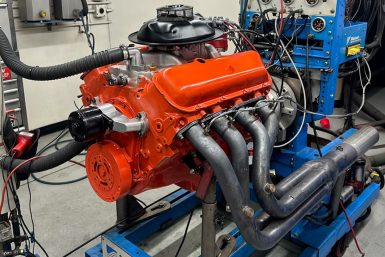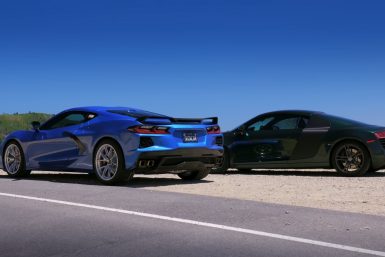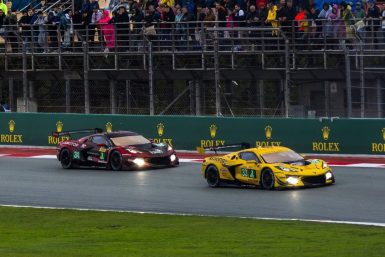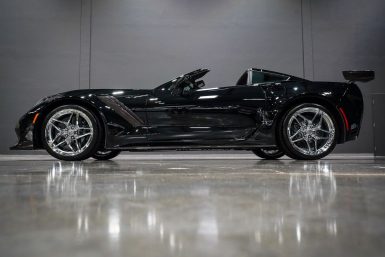
We’re pushing full throttle into Episode 69 of our exclusive Insider Series, where our resident retired dealer draws...



CORVETTE LISTS
The site’s two best-of lists in one place: the single best Corvette of each generation, C1 to C8, and the three most notable cars of every decade from 1953 to the 2020s — 32 picks in all — each with its story, its picture, GM’s or the period road tests’ figures and the links to go deeper, plus the records and the best Corvette for every purpose.
The Lists: The best of each generation (8 cars) and the three most notable of each decade (24 cars, 1950s–2020s)
On Both Lists: The 1967 L88, the 1996 Grand Sport and the 2019 ZR1
The Span: 1953 to 2025: 150 to 1,064 horsepower, $2,774 to $174,995 new
The Pattern: White-and-red 1950s originals, the Sting Ray big-blocks, the LT-1, then from 1990 on the Z06s, ZR1s and Grand Sports
How We Chose: Significance first (what the car changed), then performance for its day, rarity and what it means to owners; one pick per generation, three per decade
The Figures: GM’s where published, otherwise Car and Driver, Road & Track and the period tests; every pick links to its year page
Related: The buyer’s guides, Corvettes Compared, MSRP by Year, the model-line guides (Z06, ZR1, Grand Sport, L88)
When Chevrolet introduced the Polo White convertible with the red interior in 1953, few people believed it would become one of the most successful sports cars in the world. The fiberglass body of the C1 Corvette powered by a lackluster 235-cubic-inch inline six resulted in poor performance and disappointing sales in 1954 and prompted Chevrolet to consider scrapping the project. Now at its eighth generation, the Corvette has produced an endless array of versions, capable of a sweet and melancholy song one moment and a hard rock tune the next.
Below we try the impossible: to sort them into best-of lists. The first is the single best Corvette of each generation, picked by the site’s historians in 2020 and updated for the C8. The second is the three most notable and important Corvettes of every decade, from the 1950s to the 2020s. Then the records — fastest, rarest, most valuable — and the best Corvette for every purpose, from the collector’s pick to the one to drive every day.
Every pick carries the story from the original post, a picture, the car’s figures from the site’s Compared dataset and links to its research page, its hub and its guide. Disagree? Every one of the eight posts behind this page takes comments.
They say that beauty is in the eye of the beholder. While we know this is true with most things, it is most definitely true when selecting the best Corvette from each generation ( C1 thru C7 ). However, not all of the cars in this review are just beauties - many of them are also BEASTS! Whether admiring the early-generation Corvettes or reveling at the power and technology packed into many of the current models, every generation of Corvette featured some truly beautiful - and POWERFUL - variants.
Significance comes first: the car that changed what a Corvette was, or set the record, or saved the line. Performance counts as it stood in its own day — a 1957 Fuelie at 5.7 seconds to 60 was as fast as anything on American roads, and a 1984 at 6.9 was a revolution after the 1970s. Rarity and the market matter at the margins; what the car means to the people who own and race them matters more.
The lists overlap on purpose. The 1967 L88, the 1996 Grand Sport and the 2019 ZR1 are the best of their generations and among the three of their decades; the 1970 LT-1 is the best C3 and one of the three 1970s cars. Three names recur because they are the ones that matter — Z06, ZR1 and Grand Sport — and since the C5 every pick has worn one of them or an edition badge.
MORE: THE BEST OF EVERY GENERATION POST / THE BUYER’S GUIDES / CORVETTE HISTORY
Eight picks, one per generation, with the figure that made each the choice. Each has its full story below; the decade lists follow, and the Side by Side table at the end puts the eight on one sheet.
MORE: THE ORIGINAL POST / THE GENERATIONS
| THE PICK | YEAR | ENGINE AND POWER | PRICE NEW | |
|---|---|---|---|---|
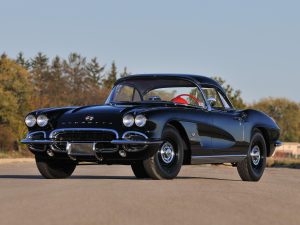 |
C1: The 1962 Corvette The first model year to incorporate the 327 cubic-inch V8 engine |
1962 | 327 ci FI, 360 hp — 360 hp | $4,038 |
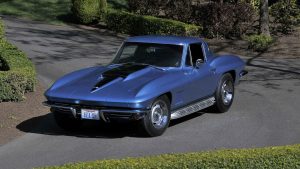 |
C2: The 1967 L88 Corvette Highly modified 427-cubic-inch V8 engine with very conservative 435 horsepower |
1967 | 427 ci L88, 430 hp rated (540–580 actual) — 430 hp | $5,337 |
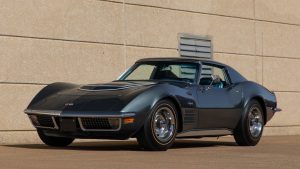 |
C3: The 1970 Corvette LT-1 The ultimate engine package/upgrade in 1970 |
1970 | 350 ci solid-lifter LT-1, 370 hp — 370 hp | $5,192 |
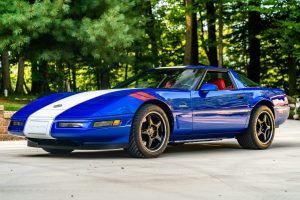 |
C4: The 1996 Corvette Grand Sport A fitting special edition send off to the fourth generation model |
1996 | 350 ci LT4, 330 hp — 330 hp | $40,475 |
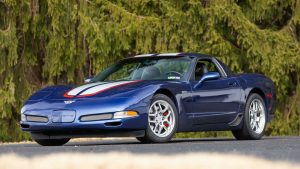 |
C5: The 2004 Commemorative Edition Corvette Designed to pay homage to Corvette’s successful return to racing |
2004 | LS6, 405 hp; FE4 retuned at the Nürburgring — 405 hp | $52,385 |
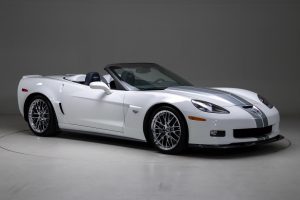 |
C6: The 2013 Corvette 427 Convertible Took Corvette convertible performance to an entirely new level |
2013 | LS7, 505 hp — 505 hp | $76,900 |
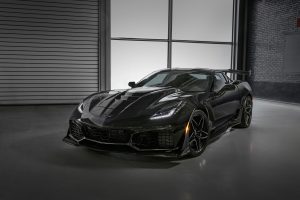 |
C7: The 2019 Corvette ZR1 One of the fastest, most powerful Corvettes in the history of the brand |
2019 | 6.2 L supercharged LT5, 755 hp — 755 hp | $119,995 |
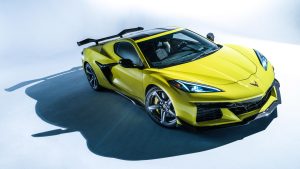 |
C8: The 2023 Corvette Z06 Chevy builds a Ferrari 458 Speciale. WOW, just WOW. |
2023 | 5.5 L flat-plane LT6, 670 hp — 670 hp | $106,395 |
Many Corvette enthusiasts say that the 1962 Corvette is the best model-year of its generation. We are inclined to agree. The 1962 Corvette was the first model year to incorporate the 327 cubic-inch V8 engine in place of the smaller 283 cubic-inch engine. Though technically the same engine block as the 283, the smaller engine was bored and stroked to bring its cylinder dimensions to 4.00 x 3.25 inches and it’s displacement up to 327 cubic inches. The larger 327 V8 produced more horsepower and torque than any Corvette powerplant that came before it.
Aesthetically, the 1962 Corvette had a more refined look than any of the other Corvettes that came before it. This final variation was stripped of the remaining excesses that had plagued it’s earlier counterparts.
The most obvious of these deletions was the removal of the chrome outlines that had framed the body side coves since 1956. Further, the chrome accent spears (that had accentuated the side vents within the coves) were also removed and replaced by more conservative aluminum blades that were finished in black. Additionally, the side coves of the car were painted to match the rest of the exterior. This gave the car a more cohesive appearance.
Despite it’s origins and it’s undeniable ties to the very first Corvette, the 1962 was faster, handled better, was more physically appealing and was the most completely realized and refined Corvette of its generation.
MORE: THE 1962 RESEARCH PAGE / THE C1 HUB

Period road-test figures for the 1962 Corvette; the Compared page has every year’s, and the 1962 research page the full spec sheet.
MORE: CORVETTES COMPARED / MSRP BY YEAR
| SPEC | THE 1962 CORVETTE |
|---|---|
| Year | 1962 |
| Engine | 327 ci FI, 360 hp |
| Power | 360 hp |
| Torque | 352 lb-ft |
| 0–60 mph | 5.9 s |
| Quarter mile | 14.5 @ 104 |
| Top speed | 140 mph |
| Weight | 3,137 lb |
| Price new | $4,038 |
| Built | 14,531 (all convertibles; fuel injection on 1,918) |
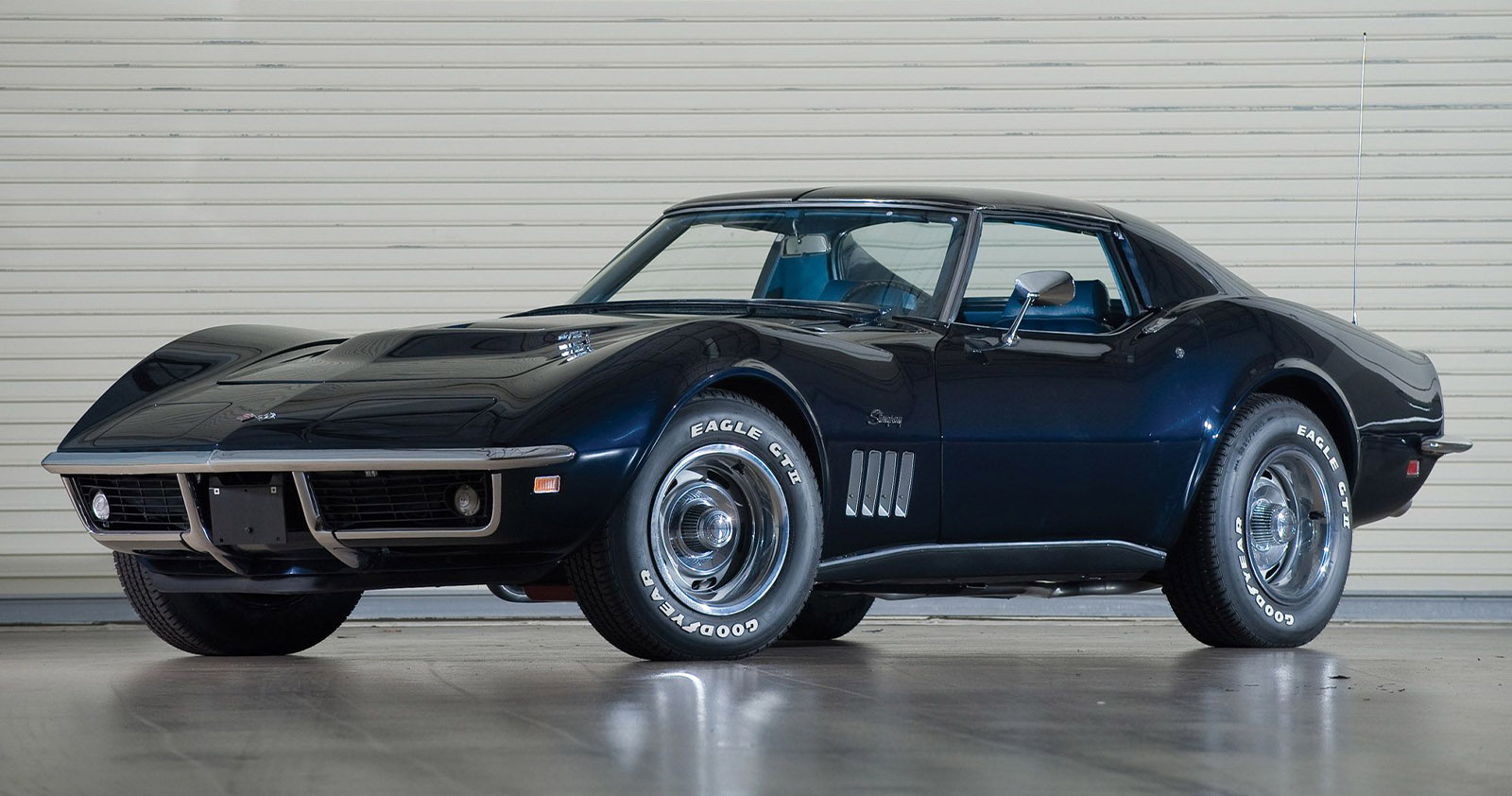
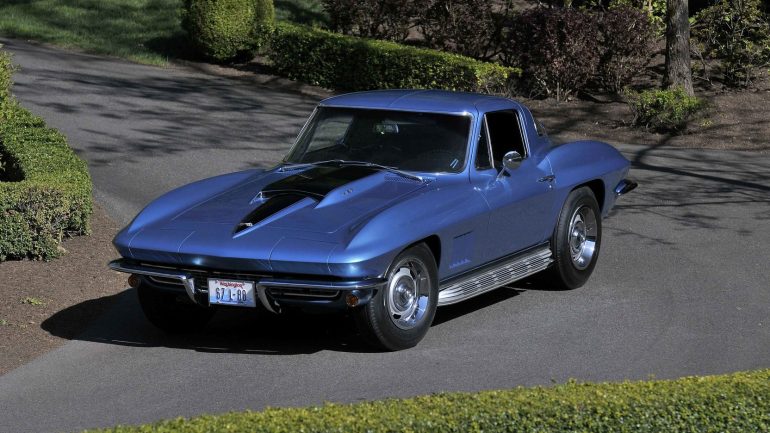
The 1967 L88 Corvette is not only one of the best Corvettes of its generation, it is also considered by many to be one of the best Corvettes of all time. The L88 was introduced in 1967 as a special option package that had been developed under the direction of Zora Arkus-Duntov. The car featured a highly modified version of Chevy's 427-cubic-inch V8 engine that boasted a very conservative 435 horsepower (though actual engine output has since been estimated at between 540 and 580 horsepower!)
Duntov developed this variant of the Corvette specifically for racing. Despite General Motors agreement to comply with the AMA's (American Manufacturers Association) ban on factory-backed race cars, Duntov was passionate about developing a Corvette that could contend with brands like Ferrari and Porsche .
The L88 Corvette was his vision made a reality. In addition to massive horsepower, a number of weight-and-power saving measures were included with the L88 package. Creature comforts including power steering, air conditioning and even the car radio were deleted when the L88 option was selected by would-be owners. Instead, each car received a heavy-duty M22 four-speed transmission, a performance suspension package, a Positraction rear differential, upgraded brakes including heavy-duty disc brake calipers and a transistor ignition.
Because of the AMA ban, General Motors discouraged consumers by publishing language in the sales literature that warned would-be consumers that this Corvette could only run on racing-grade gasoline. That alone was enough to deter many casual enthusiasts from purchasing the L88 package. Even more discouraging was the added cost of $1,500 to the car's base price of $4,240.75 (that would be the equivalent of $11,551.26 today (at the time of this publication.)) As a result, most of the early L88 Corvettes were built for racing teams. While versions of the L88 Corvette were also manufactured in 1968 and 1969 , just twenty of the 1967 L88 Corvettes were manufactured, making this variant of the C2 ultra-rare and incredibly valuable in today's collector's car market.
MORE: THE L88 GUIDE / THE 1967 RESEARCH PAGE / THE C2 HUB
Period road-test figures for the 1967 L88 Corvette; the Compared page has every year’s, and the 1967 research page the full spec sheet.
MORE: CORVETTES COMPARED / MSRP BY YEAR
| SPEC | THE 1967 L88 CORVETTE |
|---|---|
| Year | 1967 |
| Engine | 427 ci L88, 430 hp rated (540–580 actual) |
| Power | 430 hp |
| Torque | 460 lb-ft |
| 0–60 mph | — |
| Quarter mile | high 11s on slicks |
| Top speed | 150 mph |
| Weight | 3,150 lb |
| Price new | $5,337 |
| Built | 20 L88s of 22,940 |
While not specifically a variant so much as an engine package/upgrade, the 1970 LT-1 Corvette nonetheless has become one of the most sought-after models of its day. In 1970, Chevrolet introduced a small block, 350-cubic-inch,V8 engine that was capable of producing 370 horsepower. Designated the LT-1, this small-block engine was developed to rival the power output of its big-block counterparts while also introducing weight-saving measures because of its smaller mass/size.
Although 370 horsepower was the LT-1's “official” rating, most Corvette enthusiasts felt that this was a very conservative estimate of the car’s actual power. The LT-1 equipped Corvettes could manage a quarter-mile run in just 14.2 seconds with a top speed of 102 miles per hour, strongly suggesting that the engine was probably producing closer to 400 horsepower. However, with stiffer emission regulations and the ever increasing cost of insurance, the lesser horsepower number remained the official published rating.
Corvettes equipped with this engine received a special hood dome surrounded by striping and “LT-1” lettering. While these markings were certainly a differentiation between which engine a particular Corvette was equipped with, it was also readily obvious to anyone who heard the unique rumble from the exhaust pipes and the tapping of its mechanical lifters that they were in the presence of an LT-1 engine.
The 1970 Corvette LT1 was specified for use in the SCCA’s Class B Production car series. For racers wishing to purchase a Corvette so equipped, they would need look no further than the factory order sheet and select the correct options, which included the LT-1 engine as well as a cold-air hood and all of the relevant brake and chassis racing equipment.
MORE: THE 1970 RESEARCH PAGE / THE ENGINES / THE C3 HUB
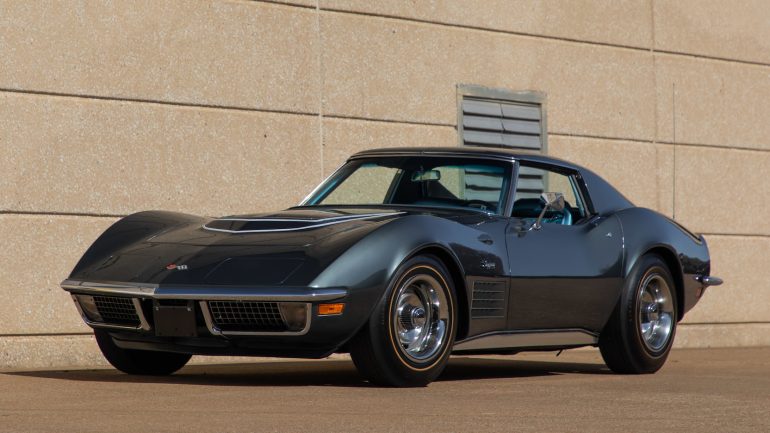
Period road-test figures for the 1970 Corvette LT-1; the Compared page has every year’s, and the 1970 research page the full spec sheet.
MORE: CORVETTES COMPARED / MSRP BY YEAR
| SPEC | THE 1970 CORVETTE LT-1 |
|---|---|
| Year | 1970 |
| Engine | 350 ci solid-lifter LT-1, 370 hp |
| Power | 370 hp |
| Torque | 380 lb-ft |
| 0–60 mph | 5.7 s |
| Quarter mile | 14.2 @ 102 |
| Top speed | 135 mph |
| Weight | 3,390 lb |
| Price new | $5,192 |
| Built | 1,287 LT-1s of 17,316 |
Although there are a number of fourth-generation Corvettes that made an indelible mark on the history of the brand, there is no other Corvette from this era as remarkable as the 1996 Corvette Grand Sport. Chevrolet introduced the Corvette Grand Sport special edition as a send off to the fourth generation model. Each car came finished with an Admiral Blue exterior featuring an Arctic White stripe and red hash marks on the left-front fender. This unique paint scheme was deliberately developed by GM to pay homage to the classic Corvette Grand Sport Racer of the 1960’s.
The Grand Sport’s interior upholstery was offered either in an all black or a sporty red/black combination, and all of the Grand Sport interiors featured a specialized embroidered headrest which featured the Grand Sport emblem.
All of the 1996 Corvette Grand Sports were equipped with the newly revised 33o horsepower LT4 5.7 liter small-block V8 engine. Each engine received a special “dress” kit that included bright red paint and red ignition wires. All Grand Sports –both coupes and convertibles- were also equipped with a six speed manual transmission.
In all, Chevy built 1,000 Grand Sports - 810 were coupes and 190 were convertibles - and each was given a special, sequential serial number. While many of the C4 Corvettes have depreciated considerably over the past twenty years, the 1996 Corvette Grand Sport Corvettes continue to command an asking price in the used market that is comparable to when these cars were new.
MORE: THE GRAND SPORT GUIDE / THE 1996 RESEARCH PAGE / THE C4 HUB
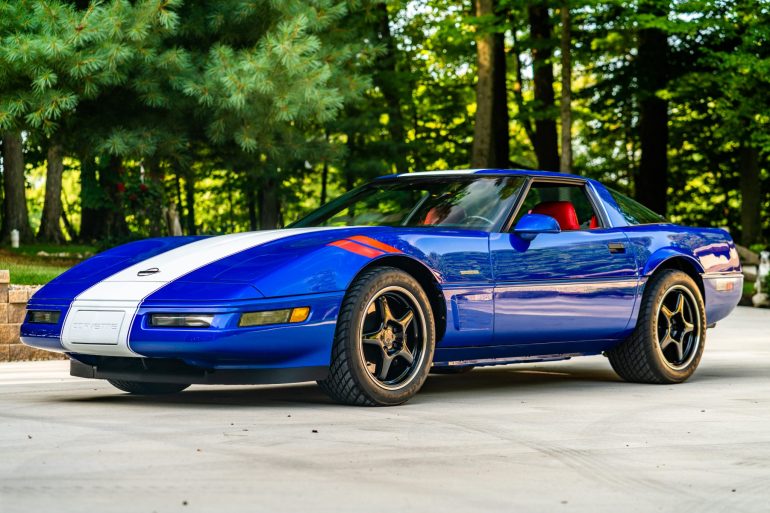
Period road-test figures for the 1996 Corvette Grand Sport; the Compared page has every year’s, and the 1996 research page the full spec sheet.
MORE: CORVETTES COMPARED / MSRP BY YEAR
| SPEC | THE 1996 CORVETTE GRAND SPORT |
|---|---|
| Year | 1996 |
| Engine | 350 ci LT4, 330 hp |
| Power | 330 hp |
| Torque | 340 lb-ft |
| 0–60 mph | 5.1 s |
| Quarter mile | 13.6 @ 104 |
| Top speed | 168 mph |
| Weight | 3,298 lb |
| Price new | $40,475 |
| Built | 1,000 Grand Sports of 21,536 |
The 2004 Commemorative Edition Corvette was specifically designed to pay homage to Corvette’s successful return to racing. All the Commemorative Edition Corvettes (including the coupe, convertible and Z06 models) were finished in a striking LeMans Blue paint with red-edged silver stripes that adorned the hood, roof and rear deck lid. Special “LeMans 24-hours” emblems featuring Corvette’s iconic crossed-flags trademark appeared on the nose and the tail of the car, and a matching emblem was embroidered into the headrests of the custom shale color interior leather seats.
Completing the commemorative package on all of the specially equipped coupes and convertibles was the introduction of polished alloy wheels. This option, which could be ordered as part of the regular 1SB Preferred Equipment group, was also made available – at a moderate additional cost of $3,700 for either the coupe or convertible upgrade.
The Z06 Commemorative Edition was a little more costly. However, it also included a few additional upgrades over the base coupe and convertible. Priced at an additional $4,335 (when new), the Commemorative Edition option for the Z06 Coupe included a unique carbon-fiber hood that reduced the nose weight of the car by 10.6 pounds.
Beyond the car’s hood, clear coat wheels with hubs reading “Commemorative 24:00 Heures du Mans” were also added to the Z06 package upgrade. Additionally, a black interior was once again featured as part of the Z06 Commemorative Edition package, just as it had been on the 50th anniversary commemorative edition.
MORE: THE SPECIAL EDITIONS / THE 2004 RESEARCH PAGE / THE C5 HUB
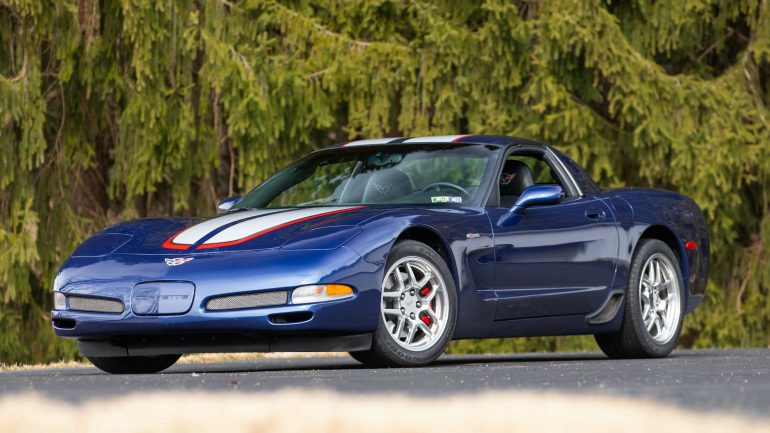
Period road-test figures for the 2004 Commemorative Edition Corvette; the Compared page has every year’s, and the 2004 research page the full spec sheet.
MORE: CORVETTES COMPARED / MSRP BY YEAR
| SPEC | THE 2004 COMMEMORATIVE EDITION CORVETTE |
|---|---|
| Year | 2004 |
| Engine | LS6, 405 hp; FE4 retuned at the Nürburgring |
| Power | 405 hp |
| Torque | 400 lb-ft |
| 0–60 mph | 4.2 s |
| Quarter mile | 12.4 @ 117 |
| Top speed | 171 mph |
| Weight | 3,118 lb |
| Price new | $52,385 |
| Built | 2,215 Commemorative Edition Z06s (plus coupes and convertibles) of 34,064 |
Evoking the heritage of early 427-powered Corvettes, the 427 Convertible Collection edition model took Corvette convertible performance to an entirely new level. It combined the convertible found in the base model and Grand Sport editions, and fused it with elements from the Z06 and the ZR1 Corvettes, making it the fastest and most-capable convertible in Corvette’s history. The car’s powertrain is the same as the Z06 coupe, including its 505 horsepower, 427 cubic-inch LS7 engine with dry sump. Also like the Z06 Corvette, the 427 Convertible was only offered with a manual transmission.
With a curb weight of just 3,355 pounds (1,522 kg), the 427 Convertible was designed to be lighter than other 2013 Corvette convertibles. Combined with the LS7 engine, the Corvette 427 Convertible produced a power-to weight ratio of 6.64 – or hone horsepower for every 6.64 pounds of vehicle mass. Comparatively speaking, that’s a better power-to-weight ratio than that found in an Audi R8 Spyder or a Ferrari California. This combination of low mass and high output made the 427 Convertible one of the fastest convertibles in the world, deliver an estimated 0-60 performance time of just 3.8 seconds, a quarter mile time of just 11.8 seconds, a lateral acceleration of 1.04 g and a top speed of more than 190 miles per hour!
All 427 Convertibles came equipped with a manual transmission, 427 hood badging, ZR1-style rear spoiler, and carbon-fiber hood, fenders and floor panels. Wheels were machine-face cup style (black cup wheels and chrome ZR1 wheels were optional) and included nineteen inch wheels up front and twenty inch wheels in the back.
MORE: THE 2013 RESEARCH PAGE / THE SPECIAL EDITIONS / THE C6 HUB
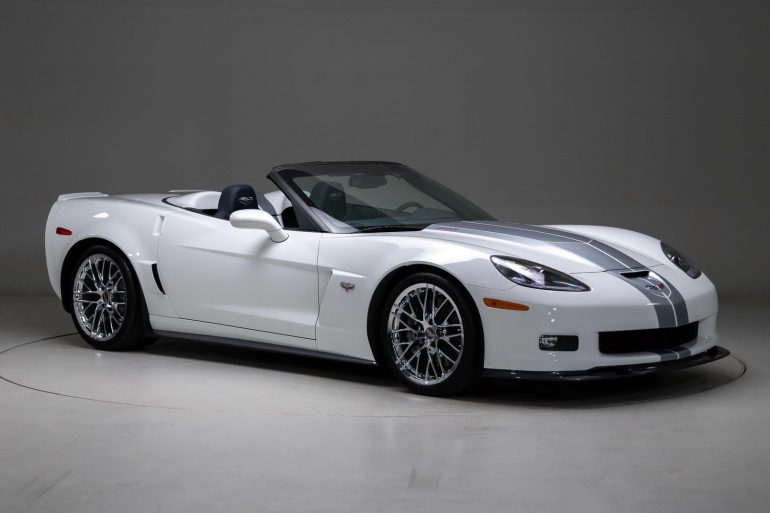
GM’s figures for the 2013 Corvette 427 Convertible; the Compared page has every year’s, and the 2013 research page the full spec sheet.
MORE: CORVETTES COMPARED / MSRP BY YEAR
| SPEC | THE 2013 CORVETTE 427 CONVERTIBLE |
|---|---|
| Year | 2013 |
| Engine | LS7, 505 hp |
| Power | 505 hp |
| Torque | 470 lb-ft |
| 0–60 mph | 3.8 s |
| Quarter mile | 11.9 @ 122 |
| Top speed | 190 mph |
| Weight | 3,355 lb |
| Price new | $76,900 |
| Built | 2,552 427 Convertibles of 13,466 |
Introduced in 2019 as a send-off to the much-loved seventh-generation Corvette Stingray, the C7 ZR1 Corvette is the fastest, most powerful Corvette in the history of the brand.
The 2019 Corvette ZR1 featured an LT5 6.2L V-8 supercharged engine which dramatically advanced the supercharging technologies first introduced in the 2009 sixth-generation Corvette ZR1. The engine, which is officially rated with an SAE-certified 755 horsepower (563 kW) and 715 lb-ft of torque (969Nm), established an entirely new benchmark in Chevrolet performance. Mated to the LT5 engine was either a seven-speed manual transmission or an optional eight-speed automatic transmission. The introduction of an automatic transmission on the ZR1 was a first for the seventh-generation iteration of the Corvette supercar.
The 2019 Corvette ZR1 incorporates the highest percentage of carbon fiber components of any Chevrolet vehicle to date. A special carbon-fiber “halo” hood with a uniquely designed central opening was developed to clear the LT5 engine’s supercharger/intercooler assembly.
What makes this Corvette truly incredible is what it can do - especially in the hands of a professional GM performance driver. The car has a 0-60 time of just 2.8 seconds, a quarter mile time of just 10.1 seconds at 134 mph, a standing mile at 190 mph with the wing removed and a top speed of 214 mph with the low downforce package. It ran wide open for 24 hours straight at Virginia International Raceway , stopping only to change fuel and tires, demonstrating the car's endurance and durability, even under extreme driving conditions. In the process of running 24 hours at VIR , the 2019 Corvette ZR1 accidentally set a new record, running its fastest lap 1.37 seconds quicker than the Ford GT did at the same track barely a week before.
MORE: THE ZR1 GUIDE / THE 2019 RESEARCH PAGE / THE C7 HUB
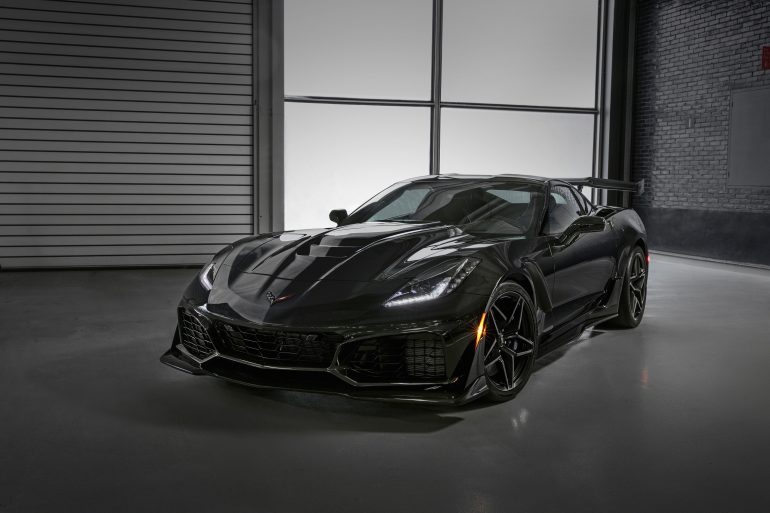
GM’s figures for the 2019 Corvette ZR1; the Compared page has every year’s, and the 2019 research page the full spec sheet.
MORE: CORVETTES COMPARED / MSRP BY YEAR
| SPEC | THE 2019 CORVETTE ZR1 |
|---|---|
| Year | 2019 |
| Engine | 6.2 L supercharged LT5, 755 hp |
| Power | 755 hp |
| Torque | 715 lb-ft |
| 0–60 mph | 2.85 s |
| Quarter mile | 10.6 @ 134 |
| Top speed | 212 mph |
| Weight | 3,584 lb |
| Price new | $119,995 |
| Built | 2,953 ZR1s of 34,822 |
The 2023 Z06 was designed and engineered to be a “precision tool” for the race track. While the DNA of every modern Corvette evolved from its racing car heritage, the new Z06 has blurred the lines between street car and race car to such an extent that it is hard to decide which environment this car is best suited for. Everything about this car – from its outward aesthetic, to its wider front and rear fascias, its exotic proportions, and its luxuriously appointed interior – all state unequivocally that the 2023 Z06 is not just a Corvette – but a car thats fully capable of holding its own in the supercar stratosphere.
“Corvette has always brought a discerning customer to the Chevy family,” said Steve Hill, vice president of Chevrolet. “This new Z06 was designed and engineered to set a higher bar with increased levels of craftsmanship, personalization and performance so customers can truly have their own bespoke performance car.”
An all-new 5.5L LT6 engine sits at the heart of this beast. Rated at an incredible 670 horsepower, this NATURALLY ASPIRATED V8 is the most power engine of its kind to be introduced in ANY production car….EVER. The LT6 features an all-new, lightweight, flat-plane crankshaft designed to rev the engine to a staggering 8,600 rpm. It’s at this point that the engine hits its peak horsepower. Where past iterations of the Z06 relied heavily on superchargers to achieve this level of horsepower, Chevrolet’s engineers recognized an opportunity to return to a naturally aspirated engine without compromising horsepower or responsiveness. In fact, engine responsiveness and trackability were both identified as top priorities for the eighth-generation Z06.
MORE: THE Z06 GUIDE / THE 2023 RESEARCH PAGE / THE C8 HUB
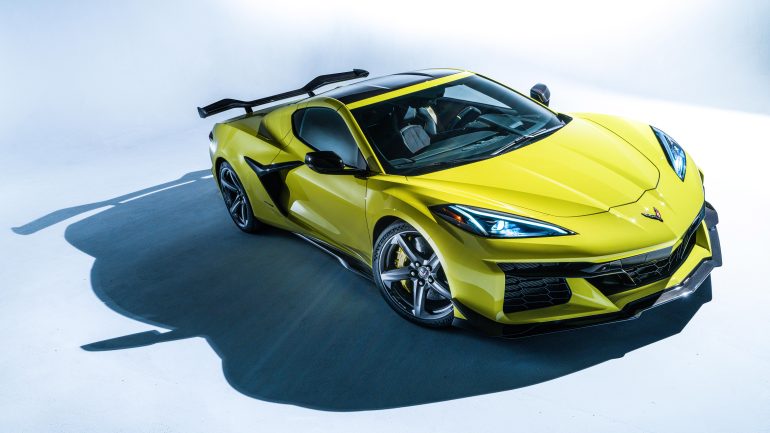
GM’s figures for the 2023 Corvette Z06; the Compared page has every year’s, and the 2023 research page the full spec sheet.
MORE: CORVETTES COMPARED / MSRP BY YEAR
| SPEC | THE 2023 CORVETTE Z06 |
|---|---|
| Year | 2023 |
| Engine | 5.5 L flat-plane LT6, 670 hp |
| Power | 670 hp |
| Torque | 460 lb-ft |
| 0–60 mph | 2.6 s |
| Quarter mile | 10.6 @ 131 |
| Top speed | 195 mph |
| Weight | 3,670 lb |
| Price new | $106,395 |
| Built | Z06 sales began in 2023; 53,785 Corvettes that year |
The ultimate bar-room list of lists: the three most iconic and important Corvettes from each decade, 1950s to 2020s, as the site’s historians picked them — with the 2020s added here for the first time. Each decade has its story, a picture and a table of the three with the figures.
MORE: THE 1950s POST / THE 2010s POST
Production of America’s sports car has now been running strong for nearly 70 years. Through eight generations and numerous decades, the Corvette has maintained its iconic status, captivating the imaginations of motorists the world over. With every passing year, the Corvette’s legacy as the nation’s premier performance car only continues to strengthen. Each decade of Corvette production has given rise to several particular models that stand out above the rest, for reasons related to their form, function, or intrinsic value. The 1950s were no exception to this rule. During this period of time, I Love Lucy was broadcast on television sets across the country, Elvis Presley began his domination of the radio airwaves, and the Corvette was released, spending the better part of the decade in the midst of an identity crisis of sorts. Luckily, the Corvette line soldiered on, eventually finding favor among consumers and experiencing increased sales by the end of the decade. The following are our picks for the three most notable Corvette models to be released during the line’s first decade in existence.
Although the Corvette was initially released to mixed reviews and experienced less than stellar sales, it is difficult to exclude the line’s genesis from a list of the decade's three most notable models. The 1953 Corvette was indeed notable for several reasons, with the most obvious of which being that it was the point of launch for what would grow into America’s premier line of performance cars. Though only 300 total units were sold during the Corvette’s initial year of production, the value still remains. Over the next few years, steps would be taken to bolster the somewhat anemic early Corvette’s performance, and great strides would be made in terms of the line’s fit/finish, ride quality, and handling. As a result, total unit sales would grow exponentially, bringing the Corvette into the limelight, where it has remained ever since.
During the Corvette’s initial two years of production, a substantial amount of criticism existed over the car’s subdued 150 HP “Blue Flame” engine, and the less than stellar performance that it afforded. These criticisms were met with the introduction of an optional 265 cubic-inch V8 for the 1955 model year . With the addition of this option, the Corvette gained a substantial amount of performance credibility, and silenced many of the line’s early skeptics. The introduction of this engine option, which only cost an additional $135, also signaled the beginning of an era. The use of a V8 small block powertrain would go on to become synonymous with the Corvette, later inspiring the design, development, and subsequent introduction of legendary engine platforms, such as that of the LS series of small blocks.
Going into the 1957 production year , the Corvette’s sales numbers had begun to show signs of life. For the first time since its introduction, it seemed as if the Corvette’s viability was not consistently called into question. However, Ed Cole and his design staff were not satisfied with the Corvette simply being “viable”. As a result, the 1957 production year saw the Corvette fitted with a 283 cubic-inch V8, which produced 220 HP in its base form. Outside of its base form, which included the use of a single four-barrel carburetor, the 283 cubic-inch V8 was also offered in two additional forms. The first of which was a dual four-barrel equipped variant, which produced 245 HP. The second was an even more impressive Ramjet fuel-injected model, which was capable of producing an astonishing 259 HP.
MORE: THE 1950s POST / THE 1953 RESEARCH PAGE / THE 1955 RESEARCH PAGE / THE 1957 RESEARCH PAGE
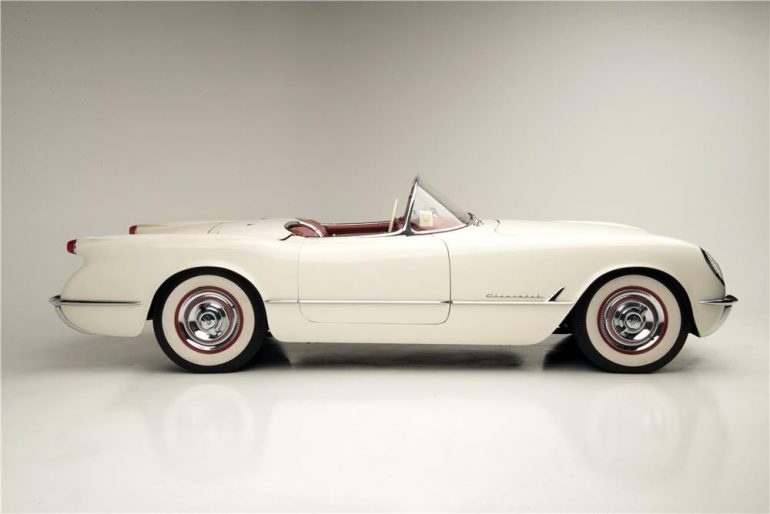
The three 1950s picks with GM’s or the period road tests’ figures; every year links to its research page.
| THE CAR | ENGINE | POWER | 0–60 | TOP SPEED | PRICE NEW | BUILT THAT YEAR |
|---|---|---|---|---|---|---|
| 1953 Corvette | 235 ci Blue Flame six, Powerglide | 150 hp | 11.0 s | 107 mph | $3,498 | 300 |
| 1955 Corvette V-8 | 265 ci V-8, 195 hp | 195 hp | 8.7 s | 120 mph | $2,909 | 700 |
| 1957 Corvette Fuelie | 283 ci V-8, Ramjet fuel injection, 283 hp | 283 hp | 5.7 s | 132 mph | $3,176 | 6,339 |
As one reflects back upon the Corvette’s storied run of production, which now spans nearly 70-years in length, no shortage of particular models stand out from the pack based upon their form, function, or intrinsic value. This is perhaps never more evident than when assessing the various model years of Corvette production, from one decade to the next. The 1960s were certainly a period of change, both in the American landscape and for the Corvette itself. The Vietnam War was raging, the space race was in full swing, and the now-infamous Woodstock music festival played out before a crowd of approximately 400,000. Meanwhile, the 1960s saw the Corvette span parts of three individual generations, and undergo subsequent design and developmental changes too numerous to count. The following are the three most notable Corvette models from the 1960s.
The 1963 model year served as the jumping-off point for what many still refer to as the Corvette’s finest generation. The 1963 Corvette was nothing short of a marvel, both mechanically and cosmetically. This came largely as a byproduct of collaborative work between design virtuoso Bill Mitchell, and mechanical visionary Zora Arkus-Duntov. Visually, the 1963 Sting Ray was a masterpiece, showcasing pronounced front fenders, sweeping body lines, and a now-infamous split rear window. Mechanically, the all-new C2 made great strides over previous first-generation models. The Corvette’s prior solid rear axle design was nixed in favor of an independent rear suspension, wider drum brakes became standard equipment, and a total of four engines were available to consumers, including three carbureted models, and one 360 horsepower “Fulie” small-block.
The 1965 model year is often recalled as the point during which the Corvette gained true credibility as a performance car, free of any remaining negative stigma that surrounded the iconic sports car’s earliest days. Much of the credit for this level of mechanical revitalization lies with Arkus-Duntov, who championed a significant degree of the Corvette’s performance pedigree, both on and off of the track, often to the begrudgery of top GM brass. In 1965, consumers were treated to 5 individual engine options, including 3 variations of the 327 cubic-inch small-block (2 carburated, 1 fuel injected) and 2 individual big-block offerings (396, 427). Additionally, 1965 is also remembered as the year when 4-wheel disk brakes first came standard on the Corvette.
By 1967, the Corvette’s second generation had run its course. Many consumers were holding out for the arrival of the much-anticipated C3, which consequently led to a decline in sales during the C2’s final year of production. However, those who passed up the opportunity to purchase a 1967 Corvette , have likely since lived to regret it. The 1967 Corvette is not only heralded by many as the greatest 1960’s rendition of the iconic American sports car, but is often cited as being one of the greatest Corvette’s to date. Aesthetically, the 1967 C2’s body lines were refined to perfection. Excessive badging was removed, exterior ducting took on a cleaner look, and the “Stinger” hood became a mainstay of all big-block optioned models. However, much of the 1967 Corvette’s appeal stemmed from the car’s generous number of available powerplants. Two different 327 cubic-inch small-blocks were offered for the 1967 production year, as were a myriad of big-block alternatives. The most fearsome of these big-blocks was the legendary L88, which was rated for 430 horsepower, though most believe this engine to have truly produced well in excess of 500 horsepower.
MORE: THE 1960s POST / THE 1963 RESEARCH PAGE / THE 1965 RESEARCH PAGE / THE 1967 RESEARCH PAGE
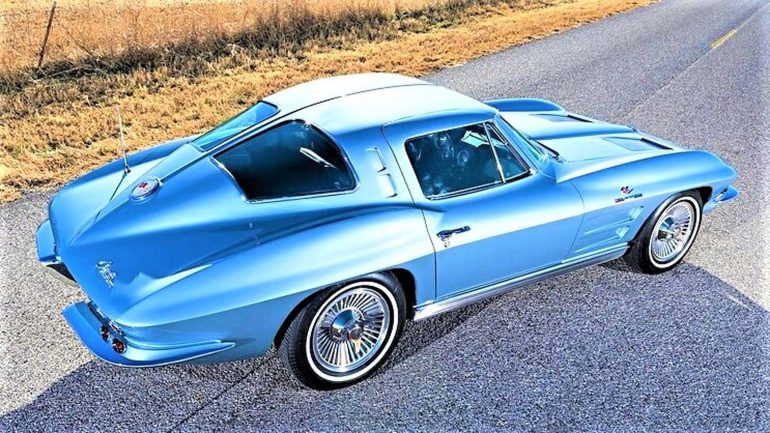
The three 1960s picks with GM’s or the period road tests’ figures; every year links to its research page.
| THE CAR | ENGINE | POWER | 0–60 | TOP SPEED | PRICE NEW | BUILT THAT YEAR |
|---|---|---|---|---|---|---|
| 1963 Sting Ray Fuelie | 327 ci FI (L84), 360 hp | 360 hp | 5.9 s | 142 mph | $4,257 | 21,513 |
| 1965 Sting Ray 396 | 396 ci big-block (L78), 425 hp | 425 hp | 5.7 s | 136 mph | $4,321 | 23,564 |
| 1967 Sting Ray 427 Tri-Power | 427 ci (L71), 435 hp | 435 hp | 5.5 s | 140 mph | $4,389 | 22,940 |
The Corvette has now spent nearly 70 years in the limelight, enduring 8 successive generations of production and a wealth of developmental progress. One decade after the next has passed, with the Corvette serving as the poster child for what a true American sports car can and should be. Of these generations, each has produced its share of stand-out performers within the Corvette line, holding distinct value for their form, function, or intrinsic value. The 1970s were an ever-changing time in both Corvette production and the United States as a whole. The Watergate Scandal made headlines, an ongoing oil crisis left gasoline in short supply, and the movie Jaws first debuted in theatres. However, the 1970s was also a decade during which the muscle car fell from prominence, primarily due to growing oversight toward fuel consumption and environmental concerns. Despite this, the Corvette soldiered on, as sales continued to flourish. The following are the three most notable Corvette models from the 1970s.
By the year 1970, the writing was on the wall, and industry insiders were well aware of impending oversight related to fuel consumption and emissions output, which would soon come into effect. While the bulk of manufacturers began dialing back their vehicles’ performance to reach compliance, GM went full steam ahead, outfitting the Corvette with some of the era’s most robust powerplants which included the 370 HP LT-1 and the 390 HP LS5. Aside from its obvious performance attributes, the 1970 Corvette also showcased numerous improvements to the line’s interior. Such improvements included the use of redesigned seats, relocated shoulder harness inertia reels, and seat-back integrated seat belts. Additionally, one could opt for GM’s new “Custom Interior” option, which further expanded upon the Corvette’s cabin amenities.
In 1971, GM’s design and development team were attempting to hold on to their dignity, knowing full well that the coming years would see the Corvette’s performance specifications fall to nearly unprecedented levels. Still, the 1971 Corvette provided much for consumers to be excited about, including the introduction of one of the line’s highest performing big blocks, the LS6. The 454 cubic-inch LS6 was offered in conjunction with the specialty ZR2 package and was rated at 450 HP, though these figures are often cited as being tremendously conservative. Outside of the 1971 Corvette’s list of notable engine options, little else changed from the model year prior. However, the Corvette had just undergone several notable interior upgrades during the two previous years of production.
By the mid-1970s, the Corvette’s performance had withered to a level that few could have predicted. Horsepower had fallen much in line with that of a 4-cylinder sedan today, and recovery from these troubling times was slower than most would have hoped. However, by the end of the decade, the Corvette had slowly begun to reclaim its performance merit, and a significant amount of refinement had taken place in the car’s interior. In 1979, numerous features, which were previously offered on an optional basis, made their way onto the list of standard equipment. These features include AM/FM radio, air conditioning, power windows, and tilt/telescopic steering. GM also introduced new “high-back” seats for the 1979 production year.
MORE: THE 1970s POST / THE 1970 RESEARCH PAGE / THE 1971 RESEARCH PAGE / THE 1979 RESEARCH PAGE
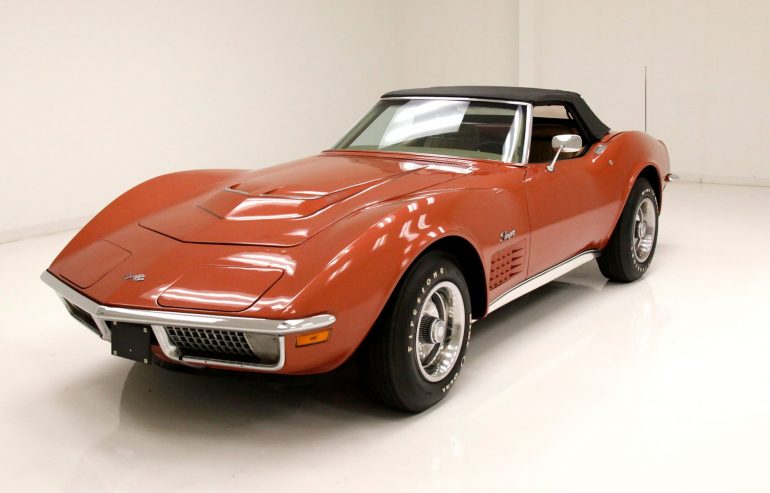
The three 1970s picks with GM’s or the period road tests’ figures; every year links to its research page.
| THE CAR | ENGINE | POWER | 0–60 | TOP SPEED | PRICE NEW | BUILT THAT YEAR |
|---|---|---|---|---|---|---|
| 1970 Stingray LT-1 | 350 ci solid-lifter LT-1, 370 hp | 370 hp | 5.7 s | 135 mph | $5,192 | 17,316 |
| 1971 Stingray 454 LS6 | 454 ci aluminum-head LS6, 425 hp | 425 hp | 5.3 s | 140 mph | $6,532 | 21,801 |
| 1979 Corvette L82 | 350 ci L82, 225 hp | 225 hp | 6.6 s | 127 mph | $10,220 | 53,807 |
For nearly seven decades now, the Corvette has remained front and center, standing as a true testament to what a quintessential American sports car can, and should be. Each of these seven decades has produced its share of stand-out performers within the Corvette line, holding distinct value for their form, function, or intrinsic value. Even today, each of these particular models carry a distinction as being among the most notable Corvettes to ever roll off of the assembly line. The 1980s were a booming time, both for the Corvette, and the world in general. The stock market was flourishing, the Cold War was drawing to a close, and Ronald Reagan spoke the now infamous words, “Mr, Gorbachev, tear down this wall.” Meanwhile, the Corvette was undergoing a change of identity, so to speak. In 1984, the Corvette’s long-awaited fourth-generation came to fruition, effectively revitalizing GM’s flagship sports car line. The following are the three most notable Corvette models from the 1980s.
By 1984, the C4 Corvettes’ imminent release was anything but a secret. After the C3’s 15 year stint in the sun, consumers were clamoring to get their hands on the new, totally redesigned fourth-generation Corvette. What these consumers received was a totally reimagined sports car, that featured a space-aged look like nothing the automotive world had seen. Though legendary Corvette designer, Bill Mitchell, went on record as being unimpressed, the C4’s reception was largely positive in nature. The 1984 Corvette featured a 205 HP Cross-Fire V8, and a 4+3 overdrive transmission. By most accounts, the fourth generation’s initial offering was renowned for its rapid acceleration and superb handling. However, GM’s engineering team still had a few kinks to work out of the mix, especially in regards to the 1984 Corvette’s notably rough ride, which was accompanied by an abundance of road noise.
By 1986, GM had begun working out a number of the C4’s earliest issues, including those pertaining to reliability complaints which plagued the generation’s earliest powerplant. By this time, the Cross-Fire V8 of old had been ousted in favor of a new, more robust L98 V8, which was fitted with a set of aluminum heads for the 1986 production year. These heads featured larger intake ports, centrally located copper-core spark plugs, and sintered-metal valve seats, all of which played a role in boosting the L98’s output to 235 HP. The 1986 Corvette was also the first year of production to feature anti-lock brakes (ABS), as well as a hardwired anti-theft system. The latter of these two improvements came as an absolute necessity, as 7-percent of all 1984 and 1985 Corvettes had been reported stolen at one point in their service lives.
In preparation for the C4’s 1989 production run, GM’s engineering staff set out to remedy a long-standing critique, which had loomed over the fourth-generation Corvette since its initial year of production. Many critics had repeatedly scoffed at the C4’s Doug Nash 4+3 manual transmission, which featured a tiring high-effort clutch, and an awkwardly arranged linkage configuration. In an effort to meet these critiques head-on, GM discontinued the use of the Doug-Nash 4+3 manual, in favor of a new, more user-friendly ZF (Zandfabrik Friedrichshafen) 6-speed manual transmission. Though this transmission itself drew some level of concern from critics, it proved to be a far more appreciated option by the majority of consumers.
MORE: THE 1980s POST / THE 1984 RESEARCH PAGE / THE 1986 RESEARCH PAGE / THE 1989 RESEARCH PAGE
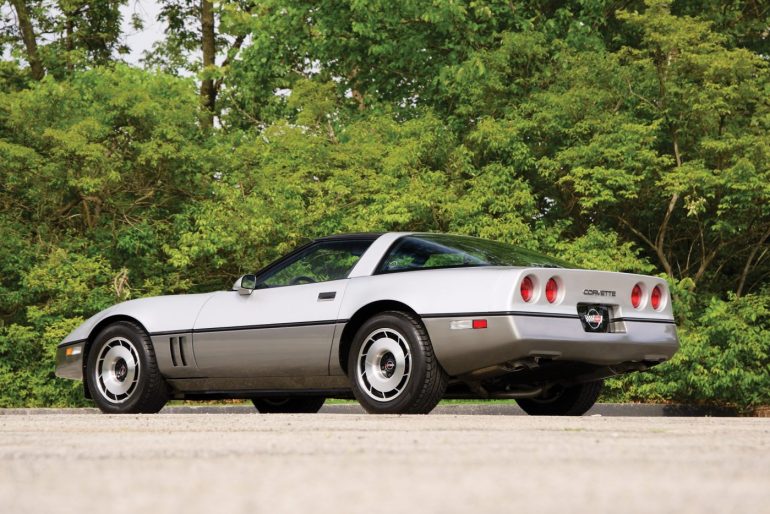
The three 1980s picks with GM’s or the period road tests’ figures; every year links to its research page.
| THE CAR | ENGINE | POWER | 0–60 | TOP SPEED | PRICE NEW | BUILT THAT YEAR |
|---|---|---|---|---|---|---|
| 1984 Corvette | 350 ci L83 Cross-Fire, 205 hp | 205 hp | 6.9 s | 140 mph | $21,800 | 51,547 |
| 1986 Corvette | 350 ci L98, 230 hp | 230 hp | 5.8 s | 150 mph | $27,027 | 35,109 |
| 1989 Corvette | 350 ci L98, 245 hp; ZF six-speed | 245 hp | 5.6 s | 152 mph | $31,545 | 26,412 |
Nearly seven decades have now passed since the Corvette was originally unveiled, to those in attendance at the 1953 GM Motorama show. Each of these individual decades has produced a number of stand out performers within the Corvette line, which hold significant value for their distinctive form, function, or intrinsic value. Even today, these iconic models are often referred to as being among the most notable Corvettes to have ever rolled off of the assembly line. The 1990s proved to be a distinctive time, both in Corvette production, and across the American landscape as a whole. The World Wide Web officially launched, the Hubble Telescope was sent into orbit, and the Gulf War raged on. Meanwhile, the Corvette’s fourth generation came to a close, and the newly refined C5 debuted to much anticipation. The following are the 3 most notable Corvettes produced during the 1990s.
By 1990, the C4 had undergone a significant amount of revision, since its 1984 release. Many initial consumer complaints had been addressed, and the fourth-generation Corvette’s popularity was on the rise. Additional revisions were made for the 1990 year model, including the addition of a standard driver-side airbag, upgraded ABS capabilities with improved yaw control, and a new, more robust radiator. The C4’s L98 powerplant was also the recipient of a revised camshaft and increased compression ratio, bringing its total output to 245 HP. However, the 1990 model year was most notable for the introduction of the all-new ZR-1 Corvette. The ZR-1 was powered by a 375 HP, 350 cubic-inch, LT5 V8 engine, produced by Mercury Marine at their Stillwater, Oklahoma plant. Also featured was GM’s Z71 high-performance handling package, as was Selective Ride Control capabilities. The ZR-1, dubbed “King of the Hill”, effectively returned the Corvette to its former, pre-emissions era performance glory.
After 13 years in the limelight, the C4 was set to make its departure at the conclusion of the 1996 production year. To bid the Corvette’s fourth-generation farewell, GM’s engineering department decided to up the ante, offering two individual special edition models for the C4’s final year of production, known as the Collectors Edition Corvette, and Grand Sport Corvette. Both of these special edition Corvettes were powered by GM’s newly released 350 cubic-inch, LT4 V8 small-block . The LT4 featured a free-flowing intake, specialty aluminum heads, and premium head gaskets that were designed to withstand the engine’s higher rate of compression. This robust powerplant operated on a 10.8:1 compression ratio, and churned out an impressive 330 HP at 5,800 RPM.
In 1997, the C5 Corvette was finally released to the eagerly awaiting public. News regarding the C5’s development had been circulating for a lengthy period of time, which bolstered speculation regarding what was to be expected, and piqued the curiosity of Corvette enthusiasts the world over. By all accounts, the fifth-generation Corvette did not disappoint. Consumers were treated to an aesthetically pleasing exterior design, complete with sweeping body lines and a refined stance. Inside, the C5’s cockpit was significantly more spacious than that of the C4 before it. GM also introduced the Corvette world to the all-new LS series, small-block V8. The 346 cubic-inch LS1 featured an all-aluminum construction, and was capable of producing 345 HP at 5,600 RPM. Little known to most at the time, was the fact that the LS1 would go on to serve as the jumping-off point for one of GM’s most iconic engine platforms, and would foretell the general direction of Corvette powertrain development for years to come.
MORE: THE 1990s POST / THE 1990 RESEARCH PAGE / THE 1996 RESEARCH PAGE / THE 1997 RESEARCH PAGE
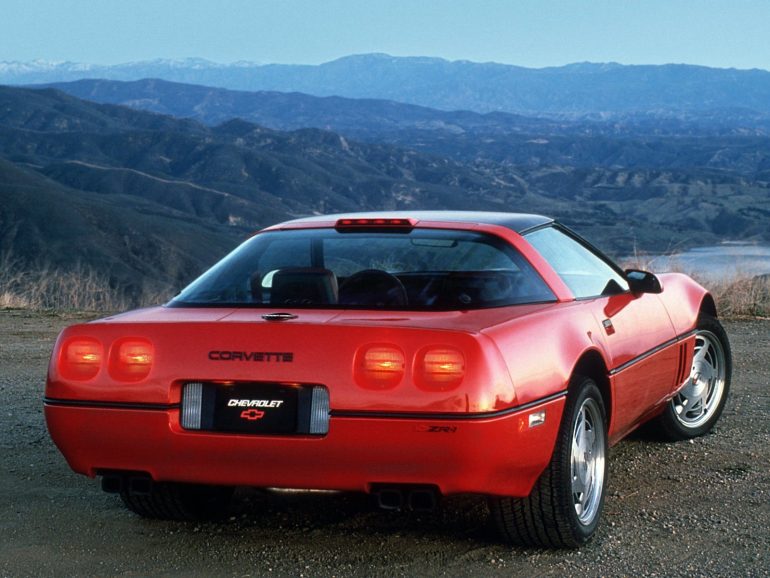
The three 1990s picks with GM’s or the period road tests’ figures; every year links to its research page.
| THE CAR | ENGINE | POWER | 0–60 | TOP SPEED | PRICE NEW | BUILT THAT YEAR |
|---|---|---|---|---|---|---|
| 1990 Corvette ZR-1 | 5.7 L LT5 DOHC 32-valve (Lotus), 375 hp | 375 hp | 4.5 s | 175 mph | $58,995 | 23,646 |
| 1996 Corvette Grand Sport | 350 ci LT4, 330 hp | 330 hp | 5.1 s | 168 mph | $40,475 | 21,536 |
| 1997 Corvette C5 | 5.7 L LS1, 345 hp | 345 hp | 4.7 s | 172 mph | $37,495 | 9,752 |
The Corvette is, and has always been, America’s sports car. With the passing of each decade, the Corvette evolves in its appeal, proving to be as versatile, as it is legendary. In the process, each successive decade of production has offered up its share of stand-out performers within the Corvette line, holding distinct value for their form, function, or intrinsic value. By the turn of the millennium, America’s sports car had been running strong for nearly fifty years. The Corvette was in its fifth-generation of production and growing increasingly popular with each passing year. Unbeknownst to many, a performance revolution would soon take place, which would ultimately yield a number of the most fearsome Corvettes to date. The following are the three most notable Corvette models from the 2000s.
Upon its release in 2001, the C5 Z06 proved to be one of the most powerful Corvettes to ever roll off of the assembly line. The track-ready Z06 featured an LS6 powerplant, capable of producing 385 horsepower and 385 lb-ft of torque. The LS6 was mounted to a 6-speed manual transmission, which featured more aggressive gearing than that offered by the era’s base coupe. The C5 Z06 exhibited 0-60 MPH times of approximately 4-seconds, and was capable of completing a ¼ mile pull in only 12-seconds. The Z06’s introduction signaled the Corvette’s return to performance dominance. Not since the pre-emissions era had the Corvette produced such a degree of output. Combined with modern advances in steering and suspension technology, the C5 Z06 was arguably the most refined Corvette of its day.
Immediately following the C5 Z06’s release, many consumers felt that the Corvette had peaked, in regards to performance and overall output. However, GM quickly proved this notion to be of little merit. In 2006 , the automotive world was introduced to the all-new, sixth-generation Z06 Corvette. The C6 Z06 proved to be nothing short of an engineering marvel. Equipped with its signature LS7 powerplant, the Z06 produced 505 bhp, and churned out 475 lb-ft of torque, placing itself in a class all its own. The sixth-generation Z06 was not only immensely powerful, but also handled remarkably well. While the Z06’s suspension system appeared outwardly similar to that which was found on the year’s base model coupe, special mono-tube dampers, higher-rate springs, and larger sway bars were included.
In what was quickly becoming a standard affair, the Corvette again bested its prior performance benchmark, upon the ZR1’s 2009 release. The ZR1, fitted with GM’s new supercharged LS9 engine , was capable of dominating the track, and was like nothing to have ever previously carried the Corvette name. The ZR1’s output was rated at 638 HP, and 604 lb-ft of torque, making it unequivocally powerful in every sense. The C6 ZR1 also holds the illustrious distinction of having been the first Corvette to feature a top speed in excess of 200 MPH. The ZR1 produced 0-60 MPH times of only 3.4-seconds, and recorded ¼ times of just over 11-seconds. Even today, over a decade after its initial release, the C6 ZR1 is still considered to be frighteningly quick.
MORE: THE 2000s POST / THE 2001 RESEARCH PAGE / THE 2006 RESEARCH PAGE / THE 2009 RESEARCH PAGE
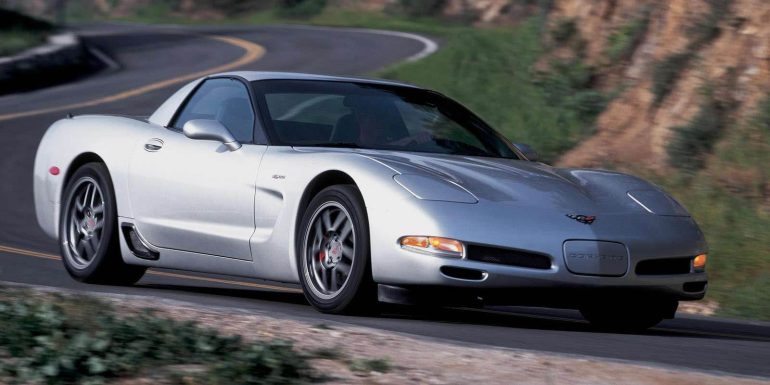
The three 2000s picks with GM’s or the period road tests’ figures; every year links to its research page.
| THE CAR | ENGINE | POWER | 0–60 | TOP SPEED | PRICE NEW | BUILT THAT YEAR |
|---|---|---|---|---|---|---|
| 2001 Corvette Z06 | 5.7 L LS6, 385 hp | 385 hp | 4.0 s | 171 mph | $47,500 | 35,627 |
| 2006 Corvette Z06 | 7.0 L LS7, 505 hp | 505 hp | 3.7 s | 198 mph | $65,800 | 34,021 |
| 2009 Corvette ZR1 | 6.2 L supercharged LS9, 638 hp | 638 hp | 3.4 s | 205 mph | $103,300 | 16,956 |
As we now look back upon nearly 70 years worth of Corvette production, one can quite easily see the immense strides that the true American sports car has made, since its inaugural year of production in 1953 . With each passing decade, the Corvette has grown increasingly advanced in virtually every facet of its design. Of these decades, each has produced its share of stand-out performers within the Corvette line, holding distinct value for their form, function, or intrinsic value. There has perhaps been no more significant decade, in regards to Corvette performance, than that which has directly preceded the current day. Over the past ten years, GM has transformed America’s sports car into one of the most powerful production vehicles currently available. The following are the three most notable Corvette models from the 2010s.
Upon its 2015 release, the C7 Z06 ushered in a new wave of Corvette performance. Powered by the now legendary 650 HP, supercharged LT4 V8 , the Z06 was capable of tearing up both the track and street in a way that few prior Corvettes could. With a top speed of 205 MPH, the Z06 could complete a 0-60 MPH sprint in only 2.95-seconds, and could conquer the ¼ mile in just under 11-seconds. This high-output Corvette also carried the distinction of being the first Z06 since 1963 to be offered in both coupe and convertible forms. Though a number of Z06 iterations had been released since 1963, none had been offered in a convertible configuration.
In 2017, GM released the C7 Grand Sport Corvette , commemorating the unveiling of Zora Arkus-Duntov’s race-inspired Corvette of the same namesake, some 50 years prior. The C7 Grand Sport not only performed at a superior level, but handled with unsurpassed acuity. In fact, the production-racer featured an estimated 1.05g in cornering capabilities. To further enhance the Grand Sport’s on-track capacity, it could be equipped with the Z07 performance package. This package included carbon-ceramic brakes, Michelin Sport Cup II tires, and a specialty carbon-fiber aerodynamics package, which provided enhanced downforce.
The 2019 ZR1 Corvette was, and still is, the most powerful production Corvette. Backed by a supercharged LT5 powerplant , the ZR1 produced 755 HP, as well as 715 lb-ft of torque, and featured a top speed of 212 MPH. In the ¼ mile, the ZR1 was capable of posting sub-10 second times, and could complete a 0-60 MPH sprint in only 2.85-seconds. The C7 ZR1 also cornered with superb agility, thanks in large part to its highly aerodynamic design. This included a rear spoiler, which could be optioned in two individual height configurations. A standard “low-wing” allowed drivers to achieve the highest possible rate of speed, while an optional “high-wing” provided optimal downforce. “I’ve never driven a Corvette like this before, and nobody else has either, because there’s never been one like this before,” said Mark Reuss, executive vice president, Global Product Development, Purchasing and Supply Chain. “Its unprecedented performance puts all other global super-cars on notice that the ZR1 is back.”
MORE: THE 2010s POST / THE 2015 RESEARCH PAGE / THE 2017 RESEARCH PAGE / THE 2019 RESEARCH PAGE
 The 650-hp, 2016 Chevrolet Corvette Z06 is one of the most capable vehicles on the market, capable of accelerating from 0 to 60 mph in only 2.95 seconds, achieving 1.2 g in cornering acceleration, and braking from 60-0 mph in just 99.6 feet.
The three 2010s picks with GM’s or the period road tests’ figures; every year links to its research page.
| THE CAR | ENGINE | POWER | 0–60 | TOP SPEED | PRICE NEW | BUILT THAT YEAR |
|---|---|---|---|---|---|---|
| 2015 Corvette Z06 | 6.2 L supercharged LT4, 650 hp | 650 hp | 2.95 s | 185 mph | $78,995 | 34,240 |
| 2017 Corvette Grand Sport | LT1, 460 hp, on the Z06 chassis | 460 hp | 3.6 s | 184 mph | $66,445 | 32,782 |
| 2019 Corvette ZR1 | 6.2 L supercharged LT5, 755 hp | 755 hp | 2.85 s | 212 mph | $119,995 | 34,822 |
The 2020s are the mid-engine decade, and the three cars that define it so far are the three that moved the Corvette into company it had never kept: the Stingray that put the engine behind the driver for $59,995, the Z06 that put a flat-plane V8 in it, and the ZR1 that made it the fastest car General Motors has ever sold.
Fifty-six years after the CERV II, the 2020 Stingray was the mid-engine Corvette Zora Arkus-Duntov had asked for: a 6.2-liter LT2 V8 behind the seats, an eight-speed dual-clutch gearbox, 0–60 in 2.9 seconds with the Z51 package, and a base price of $59,995 that undercut every mid-engine car on earth. It was named North American Car of the Year and MotorTrend’s Car of the Year, and it changed what every later Corvette would be.
The 2023 Z06’s 5.5-liter LT6 is a naturally aspirated flat-plane V8 that spins to 8,600 rpm and makes 670 horsepower, the most of any production naturally aspirated V8 when it arrived; with the Z07 package it is a track car with license plates, 0–60 in 2.6 seconds and 1.22 g on the skidpad. The site’s best-of-every-generation pick for the C8, above, is this car.
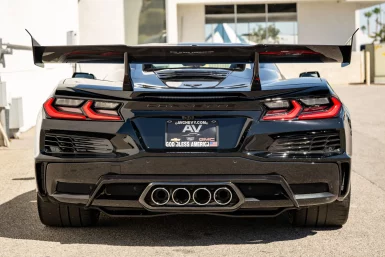
The 2025 ZR1 put two turbochargers on the Z06’s flat-plane engine for 1,064 horsepower and 828 lb-ft, ran 233 mph at Papenburg in Germany and lapped Virginia International Raceway faster than any production car before it; at $174,995 it is the most powerful car GM has ever sold and the first Corvette with a four-figure horsepower number. The 2026 ZR1X added the E-Ray’s front electric motor for 1,250 horsepower and 0–60 in 1.9 seconds.
MORE: THE C8 HUB / THE Z06 GUIDE / THE ZR1 GUIDE
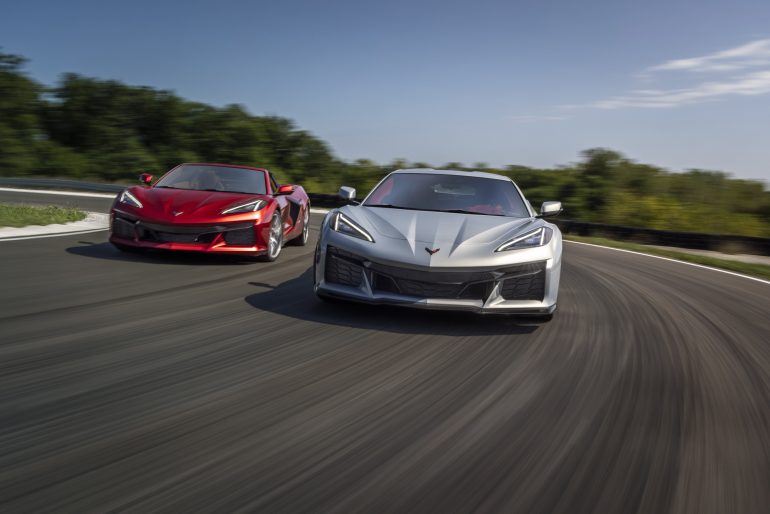
GM’s figures for the three; the 2026 ZR1X (1,250 hp, 0–60 in 1.9 seconds) is on the Compared page.
| THE CAR | ENGINE | POWER | 0–60 | TOP SPEED | PRICE NEW | BUILT THAT YEAR |
|---|---|---|---|---|---|---|
| 2020 Corvette Stingray Z51 | 6.2 L LT2, 495 hp; mid-engine | 495 hp | 2.9 s | 194 mph | $59,995 | 20,368 |
| 2023 Corvette Z06 | 5.5 L flat-plane LT6, 670 hp | 670 hp | 2.6 s | 195 mph | $106,395 | 53,785 |
| 2025 Corvette ZR1 | 5.5 L twin-turbo LT7, 1,064 hp | 1064 hp | 2.3 s | 233 mph | $174,995 | 25,835 |
The picks by what you want from the car: the records, the rarities, the value and the one to drive, each with the page that makes the case.
MORE: CORVETTES COMPARED / THE BUYER’S GUIDES / THE RAREST CORVETTES
| THE BEST… | THE CAR | WHY |
|---|---|---|
| The first | 1953 Corvette | 300 hand-built Polo White cars; the one that started it all |
| The fastest | 2025 ZR1 | 233 mph at Papenburg; 1,064 hp |
| The quickest | 2026 ZR1X | 0–60 in 1.9 seconds and the quarter in under 9, with 1,250 hp |
| The most powerful naturally aspirated | 2023 Z06 | 670 hp from the 5.5-liter flat-plane LT6 |
| The most valuable | 1967 L88 coupe | $3.85 million at Barrett-Jackson in 2014, the record for a production Corvette |
| The rarest | 1969 ZL1 | Two sold with the all-aluminum 427; the 1963 Grand Sport (five built) and 1957 SS are rarer still but not production cars |
| The best-selling year | 1979 Corvette | 53,807 built, the all-time record |
| The biggest leap | 1984 C4 / 2020 C8 | The C4 rebuilt the car around handling; the C8 moved the engine |
| The best value today | C5 1997–2004 / C6 2005–13 | The buyer’s guides’ pick for performance per dollar: LS power, modern chassis, prices still below the C7 |
| The one to drive | 2017 Grand Sport | The Z06’s chassis and wide body with the 460-hp LT1: the site’s “sweet spot” |
| The collector’s pick | 1996 Grand Sport / 2004 Commemorative Edition Z06 | Numbered editions with the generation’s best engine, documented and still affordable |
The best of every generation on one sheet: sixty-one years, 360 to 670 horsepower, $4,038 to $106,395.
MORE: EVERY YEAR’S FIGURES / MSRP BY YEAR
| PICK | ENGINE | POWER | 0–60 | ¼ MILE | TOP SPEED | PRICE NEW |
|---|---|---|---|---|---|---|
| C1 · The 1962 Corvette | 327 ci FI, 360 hp | 360 hp | 5.9 s | 14.5 @ 104 | 140 mph | $4,038 |
| C2 · The 1967 L88 Corvette | 427 ci L88, 430 hp rated (540–580 actual) | 430 hp | — | high 11s on slicks | 150 mph | $5,337 |
| C3 · The 1970 Corvette LT-1 | 350 ci solid-lifter LT-1, 370 hp | 370 hp | 5.7 s | 14.2 @ 102 | 135 mph | $5,192 |
| C4 · The 1996 Corvette Grand Sport | 350 ci LT4, 330 hp | 330 hp | 5.1 s | 13.6 @ 104 | 168 mph | $40,475 |
| C5 · The 2004 Commemorative Edition Corvette | LS6, 405 hp; FE4 retuned at the Nürburgring | 405 hp | 4.2 s | 12.4 @ 117 | 171 mph | $52,385 |
| C6 · The 2013 Corvette 427 Convertible | LS7, 505 hp | 505 hp | 3.8 s | 11.9 @ 122 | 190 mph | $76,900 |
| C7 · The 2019 Corvette ZR1 | 6.2 L supercharged LT5, 755 hp | 755 hp | 2.85 s | 10.6 @ 134 | 212 mph | $119,995 |
| C8 · The 2023 Corvette Z06 | 5.5 L flat-plane LT6, 670 hp | 670 hp | 2.6 s | 10.6 @ 131 | 195 mph | $106,395 |
Three cars appear on both lists — the 1967 L88, the 1996 Grand Sport and the 2019 ZR1 — and the 1970 LT-1 is the best of its generation and one of three for its decade. No base-engine car has made a list since 1997: from the C5 on, every pick is a Z06, a ZR1, a Grand Sport or an edition.
DID YOU KNOW
The original features this page is built from, each with more pictures and the comments.
The research behind the picks.
Corvette Buyer’s Guides — every generation, what to pay and what to check
Corvettes Compared — every year’s performance figures
Corvette MSRP by Year — what each cost new and in today’s dollars
Every Corvette Model and Year — the full list
Corvette Generations — C1 to C8 explained
Corvette Special Editions — every official GM edition
Corvettes for Sale — the market
Corvette Lists — every list on the site
By the site’s picks, one per generation: the 1962 Corvette, the 1967 L88, the 1970 LT-1, the 1996 Grand Sport, the 2004 Commemorative Edition, the 2013 427 Convertible, the 2019 ZR1 and the 2023 Z06. Pressed for one, the 1967 L88 is the car that appears on both lists and holds the auction record for a production Corvette, $3.85 million.
The 2025 ZR1, 1,064 horsepower and 233 mph; the 2026 ZR1X adds a front electric motor for 1,250 horsepower and 0–60 in 1.9 seconds. Among the generation picks the 2019 ZR1 (212–214 mph) was the fastest front-engine Corvette and the 2023 Z06 the fastest naturally aspirated one.
Of production cars, the 1969 ZL1 (two sold with the aluminum 427) and the 1967 L88 (20); the 1963 Grand Sport (five) and 1957 SS (one) were racing cars. The Rarest Corvettes feature has the full list; the best-of picks here that are also rare are the L88, the 1996 Grand Sport (1,000) and the 2013 427 Convertible (2,552).
A 1967 L88 coupe sold for $3.85 million at Barrett-Jackson Scottsdale in 2014, the record for a production Corvette; the 1963 Grand Sport #002 brought $18.7 million in 2025 and the 1957 SS $7.7 million, but neither was a production car. The L88 guide has the auction records.
The buyer’s guides point to the C5 (1997–2004) and C6 (2005–13): LS power, a modern chassis and prices still below the C7, with the C5 Z06 and C6 Z06 the performance bargains. The 2017 Grand Sport is the site’s “sweet spot” C7 and the 2020 Stingray the cheapest way into a mid-engine car.
The generation list asks which one car best represents each era; the decade list asks which three cars mattered most in each ten years, which lets the 1967 L88 sit beside the 1963 split-window and the 1965 big-block instead of displacing them. Three cars make both.
The decade posts stop at the 2010s; the 2020s section here is new — the 2020 Stingray, the 2023 Z06 and the 2025 ZR1 — and the C8 pick on the generation list (the 2023 Z06) is from the updated post. Both will move as the C8 ages.
Every pick’s horsepower, acceleration, top speed, weight and price come from the site’s Corvettes Compared dataset: GM’s published figures where they exist, otherwise Car and Driver, Road & Track, MotorTrend or the period tests, each row labeled with its source. Production comes from the year pages.