

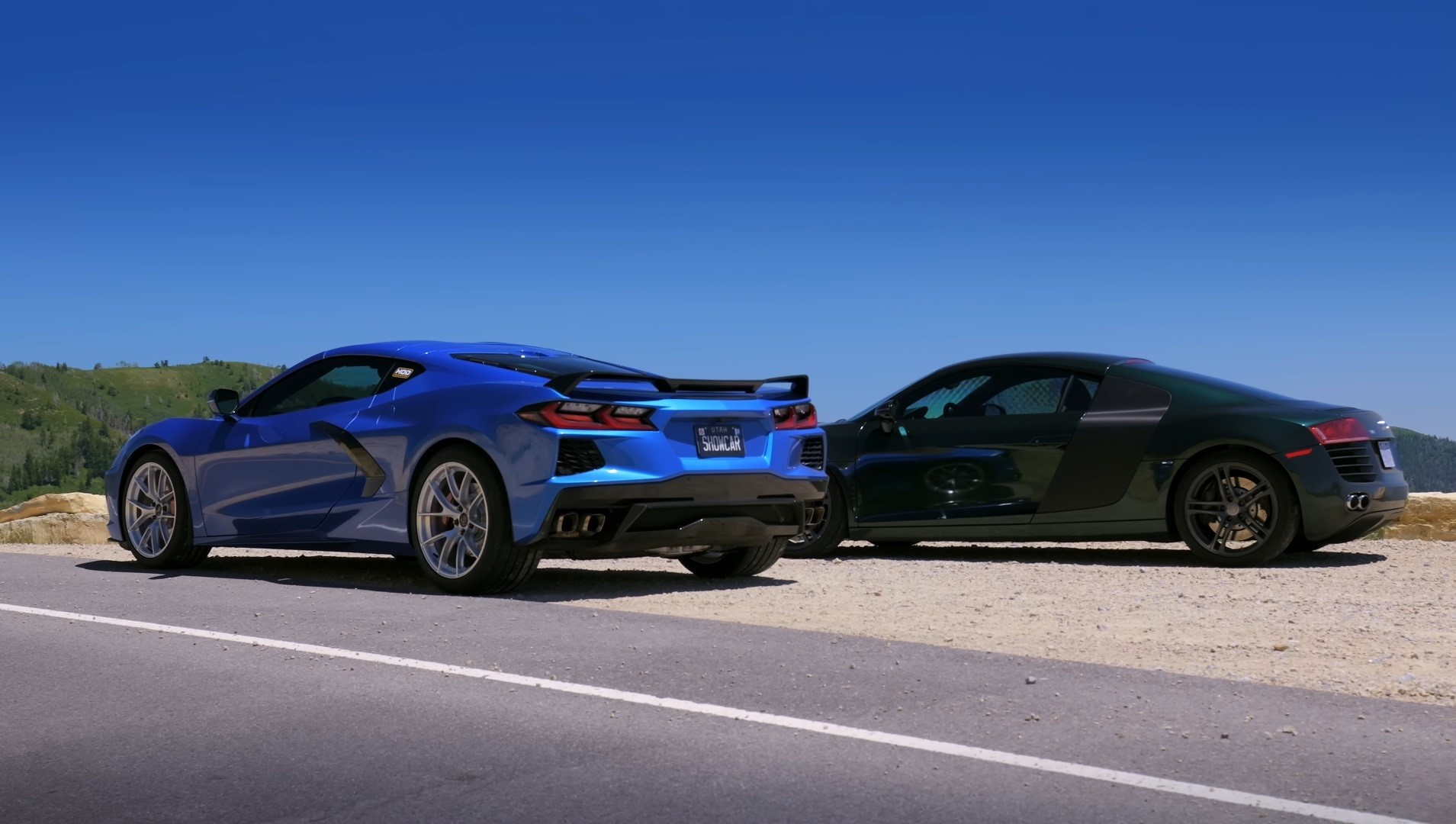
Despite seven decades as America’s sports car, the Corvette has always had a complicated relationship with Europe, and with Britain in particular. There’s never been a shortage of fans, but official Corvettes arrived with the steering wheel on the left, dealer coverage was thin at best, and the front-engine, pushrod V-8 formula never quite won over buyers raised on Porsches and mid-engine Italian exotica. Distribution changed hands several times over the years, and by the time the C8 was announced, the brand’s entire British footprint amounted to a single Chevrolet retailer in Virginia Water, Surrey.
Things got rough enough late in the C6‘s run that GM’s UK arm cut Corvette prices by around 11 percent after a month in which it sold exactly one car. The mid-engine C8 was supposed to change all of that, and in a lot of ways it did, though it arrived at an interesting moment. When the first right-hand-drive Stingrays reached Britain, Audi’s R8 was still on sale with its naturally aspirated V-10, sitting more or less exactly where Chevrolet had aimed its new car. Fast forward to 2026, and only one of them is still around.
The First Right-Hand-Drive Corvette
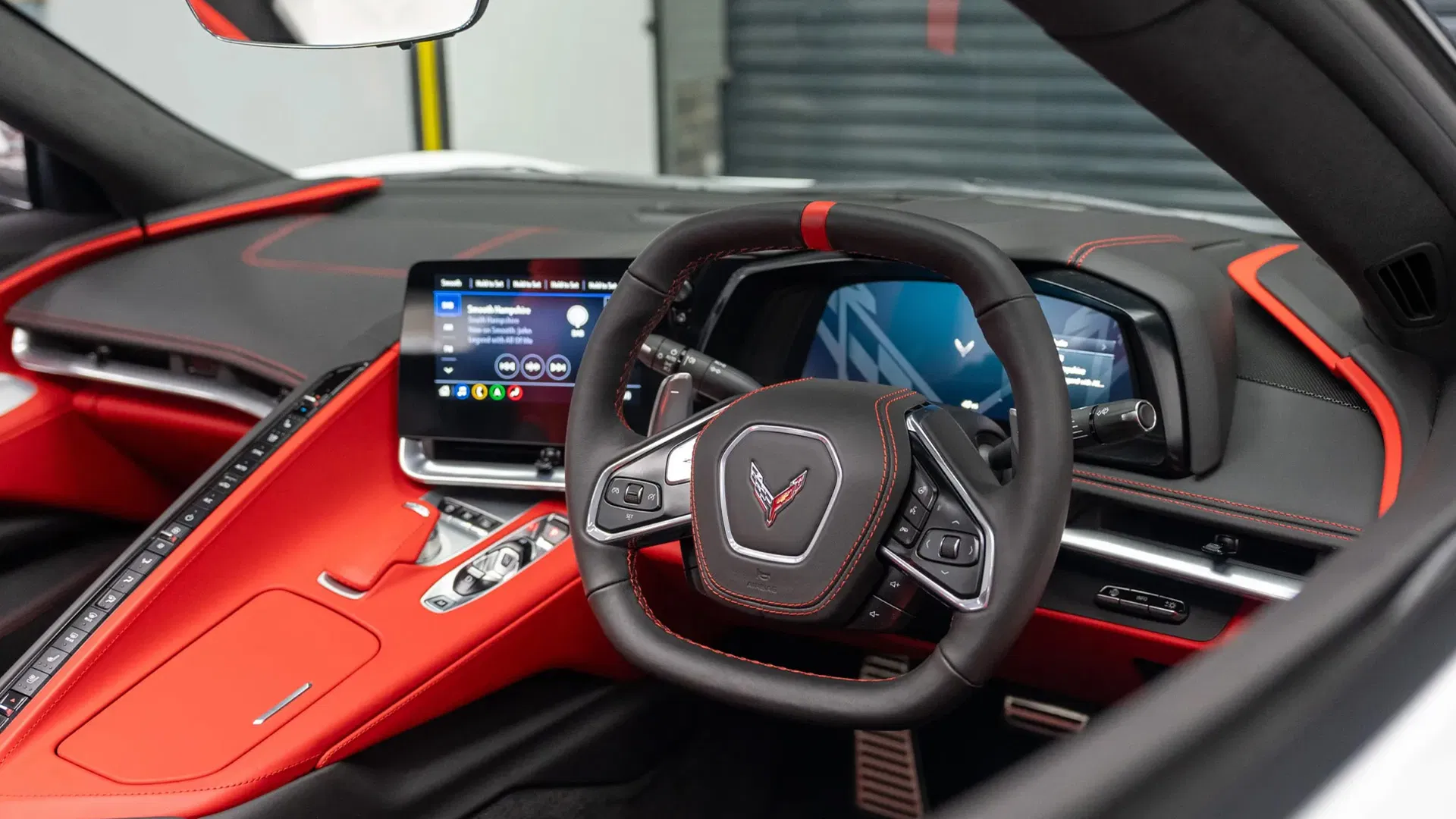
Moving the engine behind the driver did a lot more than reshape the Corvette’s proportions. With the V-8 no longer crowding the front of the car, a factory right-hand-drive version became far simpler to package, and GM committed to building one from the start, with Japan getting the first cars and the UK following. The RHD Stingray made its official British debut at the 2021 Goodwood Festival of Speed, making the C8 the first Corvette ever officially sold with the steering wheel on the right. Considering British owners had spent decades overtaking from the wrong side of the car, it was a long time coming.
Chevrolet didn’t send over a stripped-out base car, either. Every Stingray sold in Europe came standard with the Z51 Performance Package and 2LT trim, and UK pricing started at £81,700 for the coupe and £87,110 for the convertible, undercutting a base Porsche 911 Carrera by roughly £1,000. European emissions rules did take a small bite out of the LT2, as the gasoline particulate filter required for homologation dropped output to 482 PS (about 475 horsepower) and 452 lb-ft of torque, though the Euro-spec Stingray still managed zero to 62 mph in 3.5 seconds when it landed in European showrooms in October 2021.
Sizing Up the Audi R8
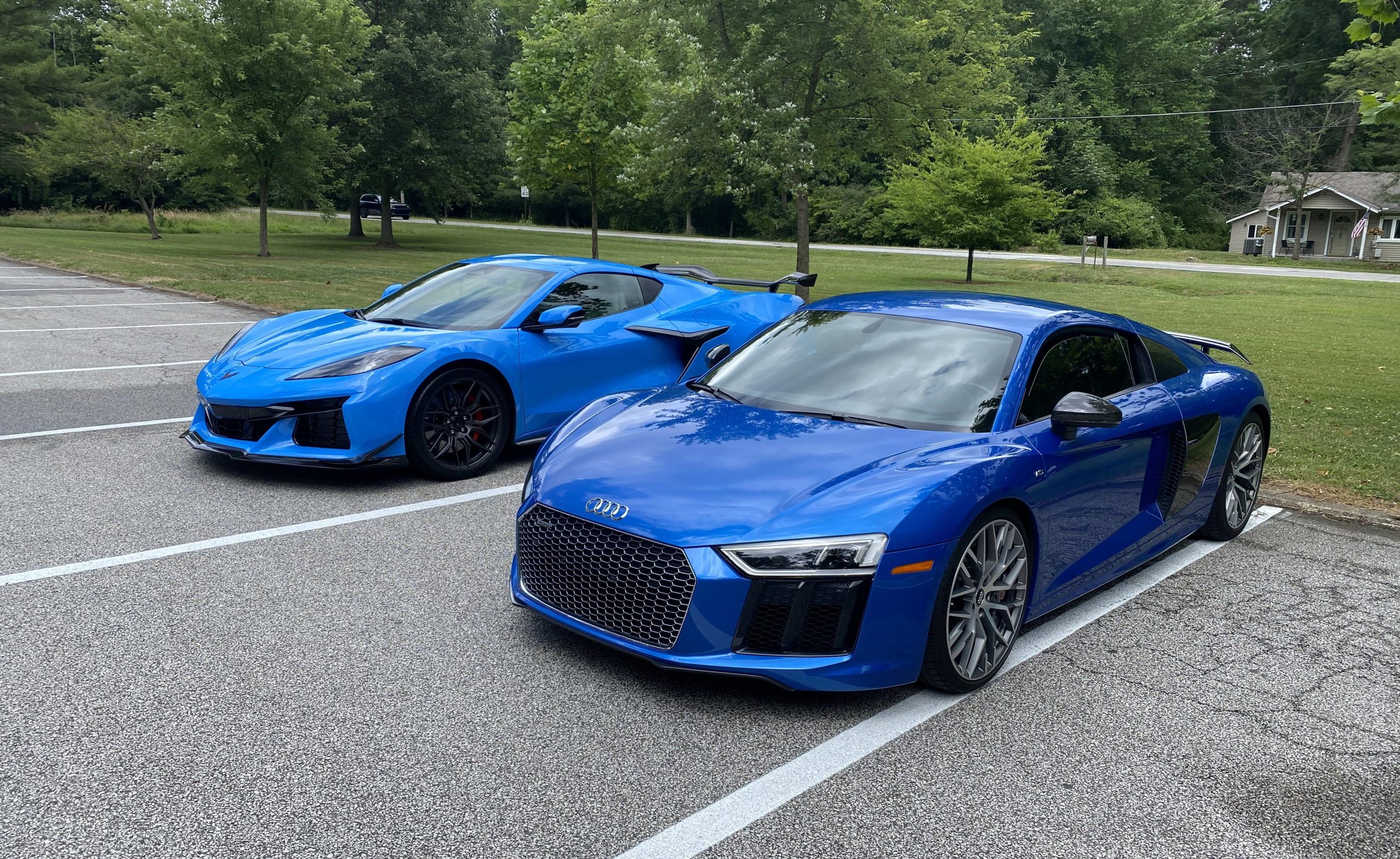
The comparison everyone reached for was obvious. Audi had been selling a mid-engine, naturally aspirated supercar you could actually drive every day since 2007, and by the time the C8 showed up, the second-generation R8 was running the 5.2-liter V-10 it shared with the Lamborghini Huracán, good for 602 horsepower and 443 lb-ft of torque in Performance Quattro form. In other words, the R8 was the closest thing in Britain to what Chevrolet was selling, minus the pushrods and plus a considerable chunk of money.
On paper, the Audi had the advantage in power, badge cachet, and that glorious V-10 shriek (as much as it pains us to admit it on these pages). The Corvette had the advantage in price, and it wasn’t particularly close. A new R8 sat well north of £100,000 in the UK, which made the launch-edition Stingray look like a genuine bargain, or at least as much of a bargain as an £80,000 sports car can be.
The End of the Audi R8
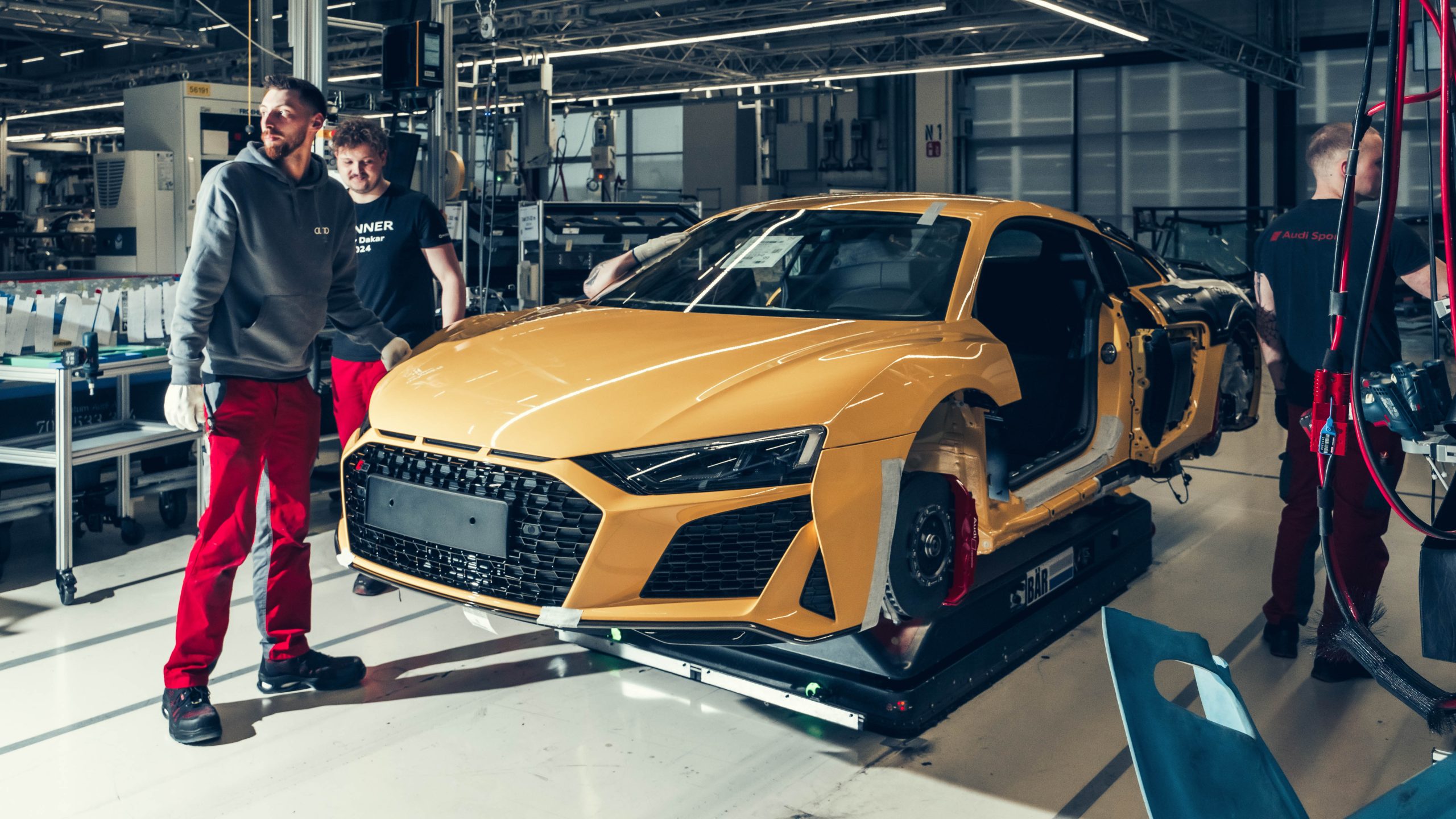
Audi had already scheduled the R8’s retirement by then as part of its push toward electrification. Production was originally slated to wrap up in 2023 but was stretched into early 2024 after a late wave of orders, with the limited-run R8 GT RWD serving as the official send-off. Just 333 were built, 15 of them allocated to the UK, and all were spoken for almost immediately. The very last R8, a Vegas Yellow V10 Performance Quattro coupe, rolled off the line at Audi’s Böllinger Höfe facility in Neckarsulm on March 22, 2024, and went straight into Audi’s heritage collection rather than to a customer.
There was no direct replacement. Böllinger Höfe carried on building the electric e-tron GT, and Lamborghini retired the related Huracán later that same year in favor of the far pricier hybrid Temerario. Practically overnight, the car that had defined the everyday supercar for nearly two decades was gone, and the Corvette was left holding a slot it had originally shown up to fight over.
Corvette in the UK Today
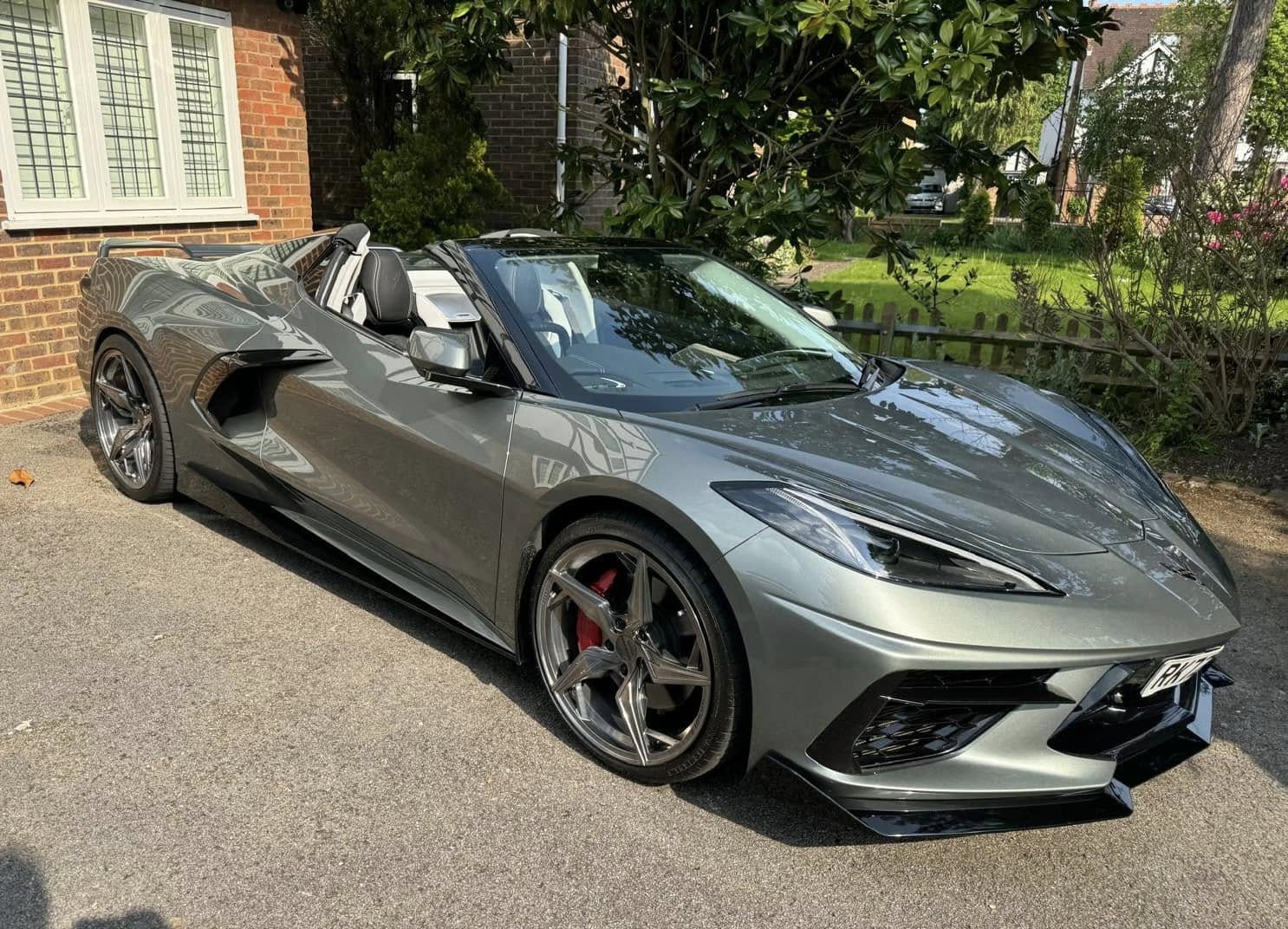
The Corvette, for its part, kept on growing. GM rebuilt its UK distribution around franchise partners, and the current network runs through Arnold Clark, Cambria, Lookers, and Clive Sutton, which added a dedicated London showroom this year. The full right-hand-drive lineup now covers the Stingray, the all-wheel-drive E-Ray hybrid, and the flat-plane-crank Z06, with the updated 2026 models going on sale in Britain this past summer.
Prices have crept up considerably since launch. The Stingray now starts at just under £98,000, the E-Ray at £156,430, and the Z06 at £182,730, with UK-spec Z06s rated at around 637 horsepower rather than the 670 horsepower American buyers get, emissions regulations once again being the culprit. That puts the top of the range up against the Porsche 911 GT3 and the hottest Mercedes-AMG GT models, which tells you a fair bit about how GM views the Corvette’s standing in Europe these days.
Corvette vs. the Monthly Payment

Outliving the R8 doesn’t mean the Corvette has the British market to itself, mind you, mostly because British buyers rarely shop for cars the way Americans do. Finance & Leasing Association figures have long shown dealer finance, mostly personal contract purchase and leasing deals, funding more than 80 percent of private new-car sales in the UK, so buyers at this level tend to think in monthly payments rather than sticker prices.
With the R8 gone, a would-be Corvette buyer in Britain is far more likely to be cross-shopping one of Audi’s RS models. An RS 6 Avant or the electric RS e-tron GT will go about as quickly as most owners will ever need on a public road, both come backed by a nationwide dealer network, and a sensibly structured Audi lease on either one can look awfully tempting next to a six-figure American import. We’d still argue the Corvette makes the stronger case for anyone who cares about how a car feels, though. The RS 6 is a phenomenal all-rounder, but you’ll pass three of them on any given stretch of the M25, while a right-hand-drive Stingray with its V-8 sitting under glass behind your head is still a rare sight in Britain.
Audi After the R8
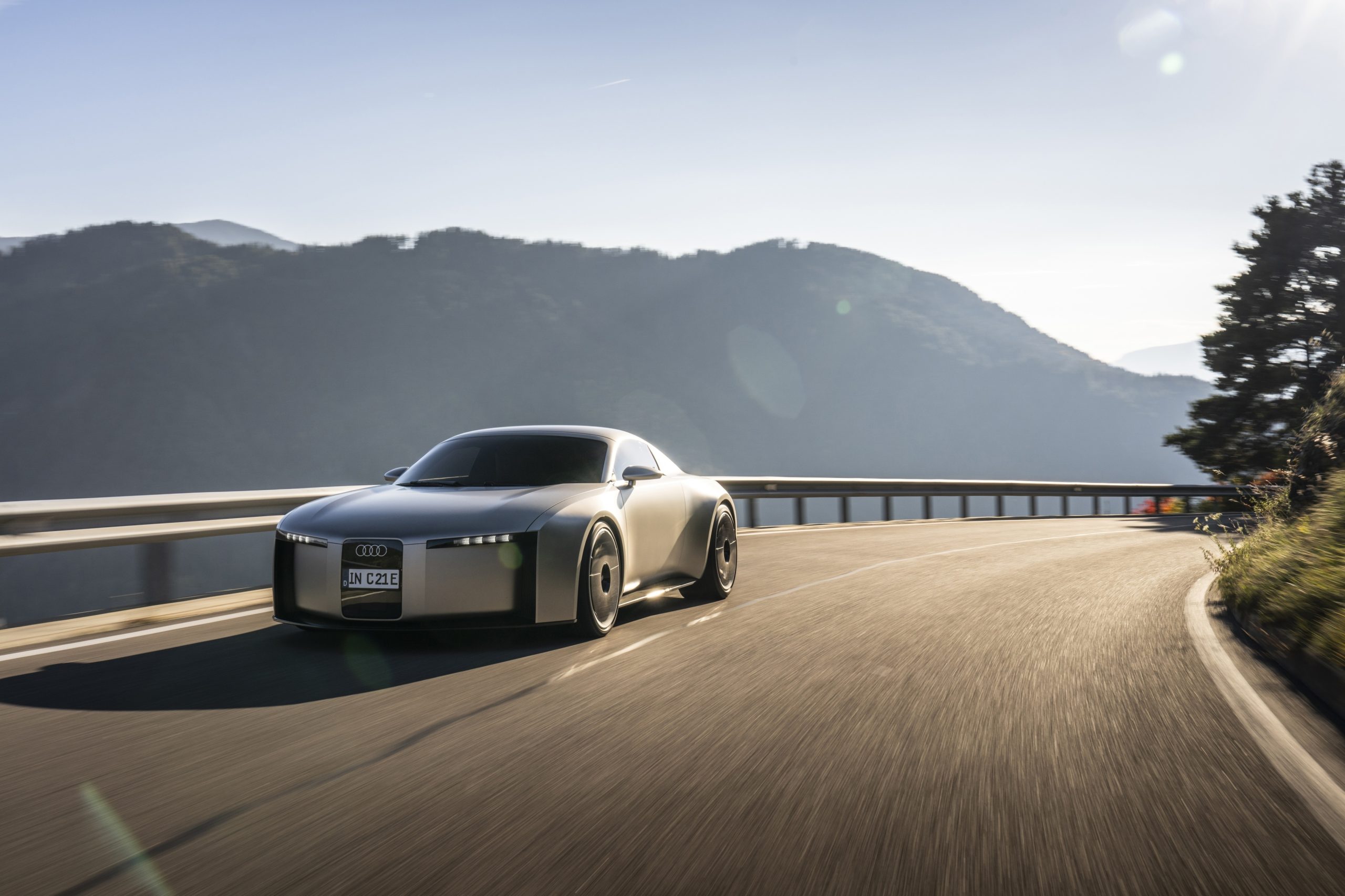
Audi isn’t completely done with sports cars, to be fair. The Concept C, an all-electric two-seater with a retractable targa roof, is due in production form in 2027 and will be built at the same Böllinger Höfe plant that produced both generations of the R8. Audi has made it clear the car won’t wear the R8 or TT name, and it will slot between the two rather than as a true supercar. There’s been talk of a third-generation R8 using the Temerario’s hybrid V-8, but nothing official.
As for the Corvette, the timing couldn’t have worked out much better. The C8 came to Britain to take on the R8 and ended up outliving it, picking up a proper dealer network and a full right-hand-drive lineup along the way. For a car you could only buy from one dealer in Surrey not that long ago, that’s real progress.
