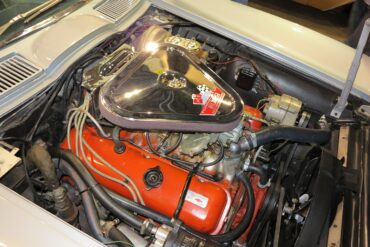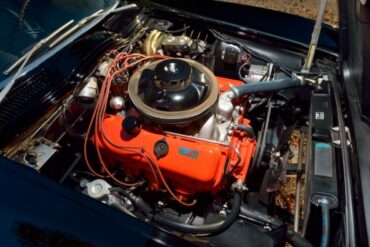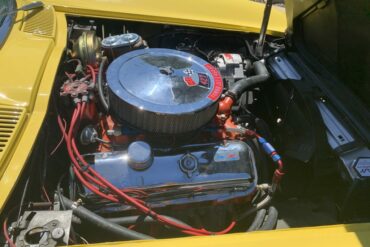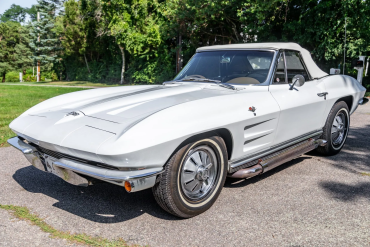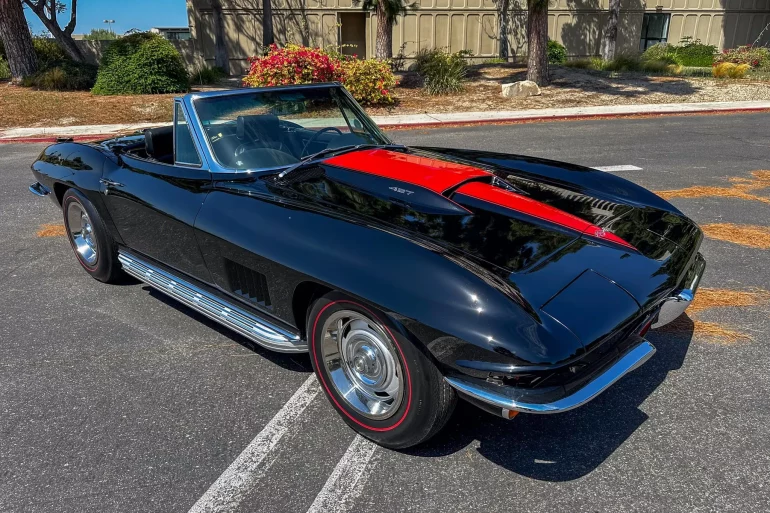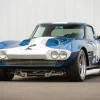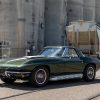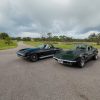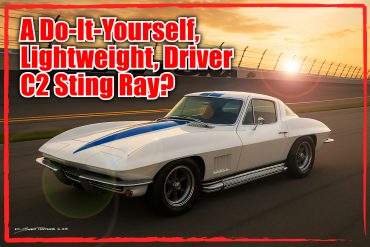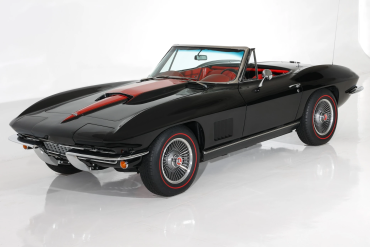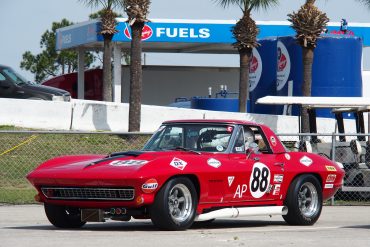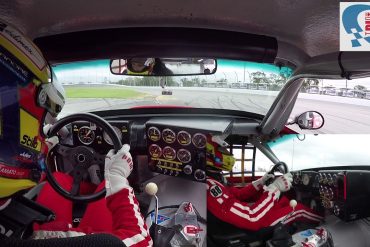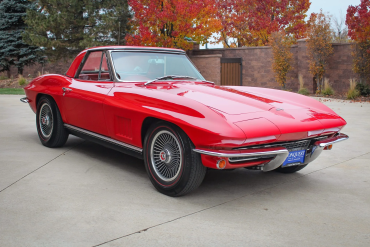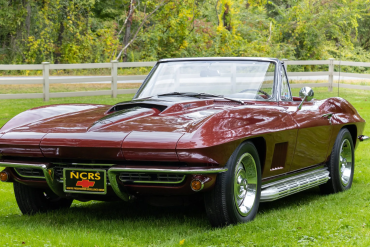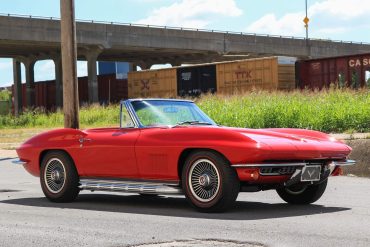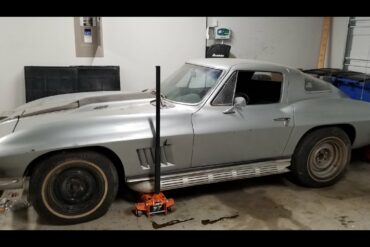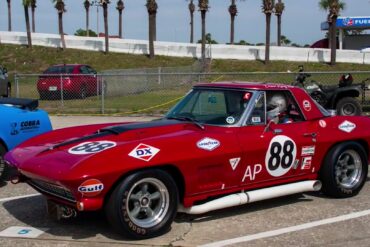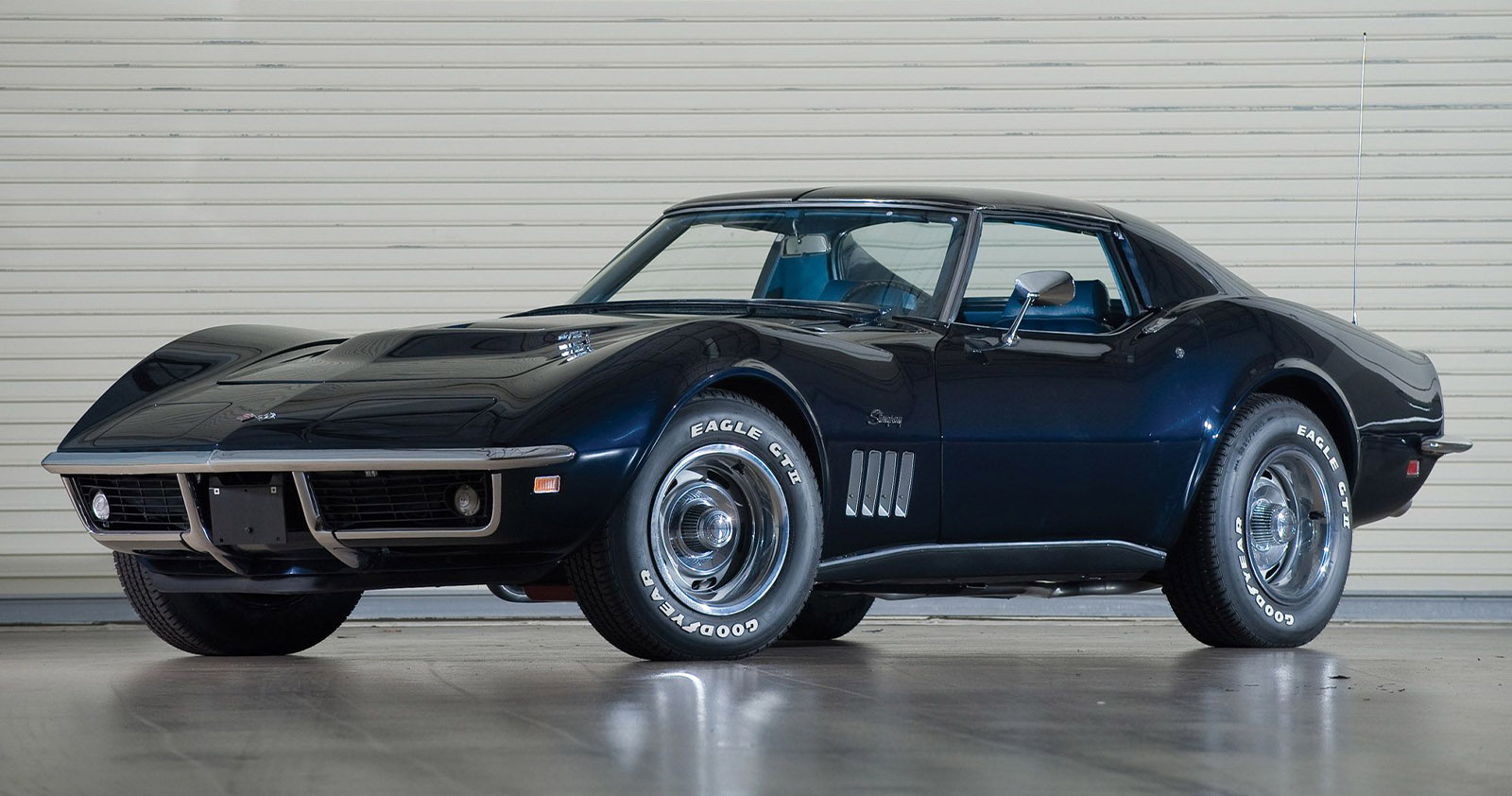
Only 16 buyers checked the L89 box in 1967. Aluminum heads cut 75 pounds off the nose of the Tri-Power 427 and made this the rarest street Sting Ray of the year.


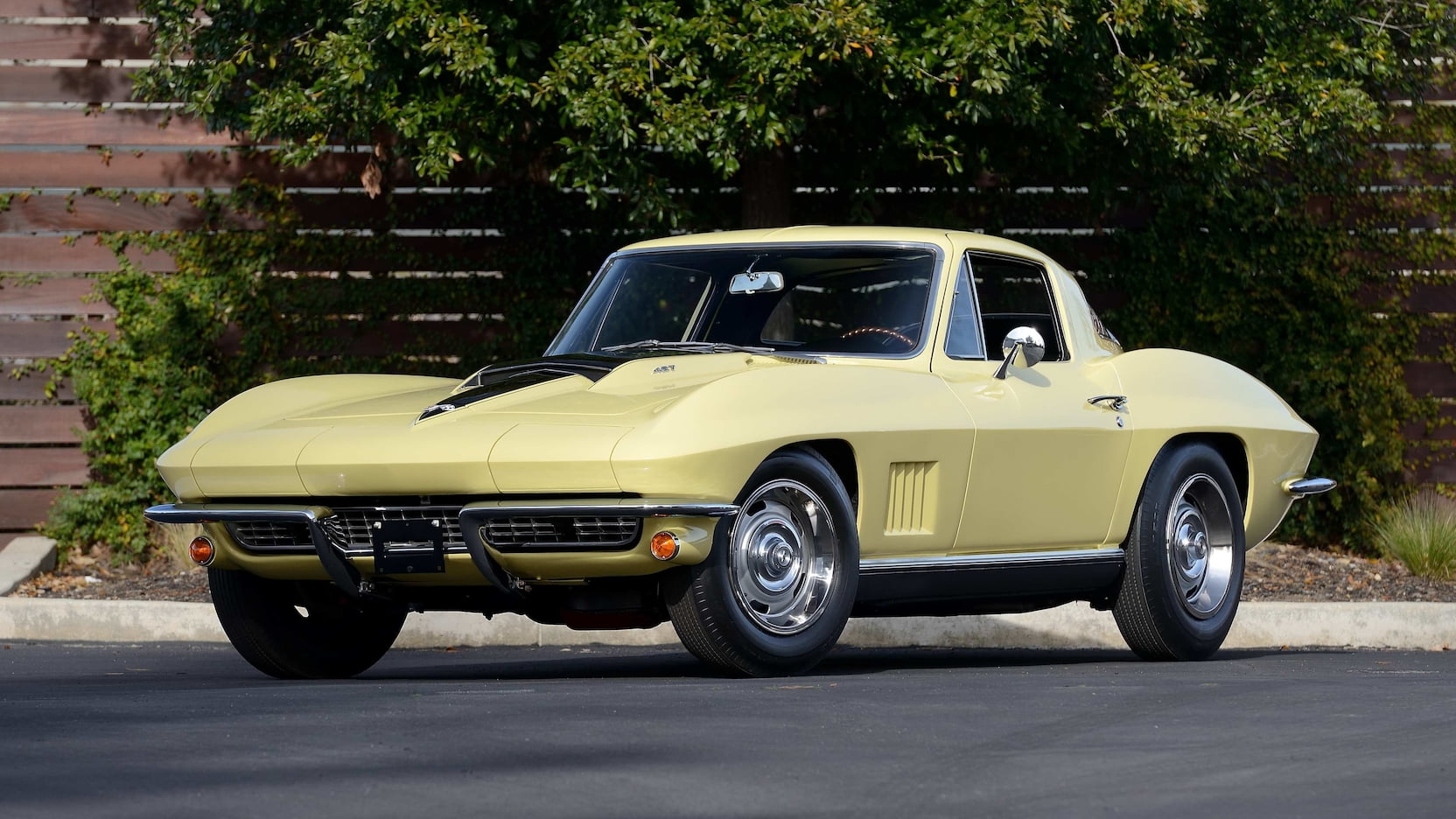
C2 CORVETTE - 1967
The last and cleanest Sting Ray: five fender louvers, Rally wheels, Tri-Power 427s with 400 and 435 hp, and twenty L88s built for the track. 22,940 made before the Shark arrived.
Quick Nav: Story · Specials · L88 · Price & Options · VIN · Specs · Technical · Pics & Videos · The Market · All · FAQs
Model & Gen: 1967 Corvette (C2)
Body Type: Sport Coupe or Convertible
VIN: 194377S100001 – 194377S122940
Original Price: $4,388.75 coupe / $4,240.75 convertible
Colors: 10 (Goodwood Green, Marina Blue, Marlboro Maroon, Rally Red, Sunfire Yellow, Silver Pearl, Ermine White, Lynndale Blue, Elkhart Blue, Tuxedo Black)
Engine: 327 ci V-8, 300 or 350 hp; 427 ci big block, 390 hp (L36), 400 hp Tri-Power (L68), 435 hp Tri-Power (L71/L89), 430 hp L88 (20 built)
Transmission: 3-speed manual standard; Muncie 4-speed (M20/M21/M22) and 2-speed Powerglide optional
Units Produced: 22,940
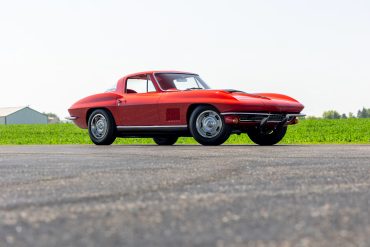
The 1967 Corvette is the Sting Ray Chevrolet did not plan to build. The C3 was ready for 1967 until Zora Arkus-Duntov sent it back to the wind tunnel, so the C2 got a fifth year, and Chevrolet used it to take things off rather than put them on: the hood script and fender flags went, the rocker trim was flattened, the three fender vents became five louvers, a single backup light sat over the license plate, and the knock-off wheels gave way to bolt-on Rally wheels and a cast-aluminum N89 option. The result is the cleanest C2 and, for most people, the most desirable.
Under the hood the 427 came four ways. The 390-hp L36 carried over; the new L68 added three two-barrel Holleys for 400 hp; the solid-lifter L71 with the same Tri-Power made 435, and 16 L71s got aluminum heads as the L89. Above them was the L88: aluminum heads, 12.5:1 compression, a racing cam and an 850-cfm Holley under a cowl-induction hood, rated at 430 hp to discourage the curious and good for well over 500. Twenty were built, with the radio and heater deleted and a label warning that anything less than 103-octane fuel would break it. The small blocks stayed at 300 and 350 hp.
Inside, the parking brake moved between the seats, the passenger grab bar over the glove box disappeared after nine years, the seats were restyled and the hardtop could be ordered with a vinyl cover. Production fell to 22,940, 8,504 coupes and 14,436 convertibles, as buyers waited for the new car, but 9,707 of them were big blocks. The 1967 is the C2 that collectors pay for, and the L88 is the most valuable production Corvette ever built.
There were varying reports as to why General Motors decided to keep the current model around for one more year. Some speculated that the launch of the C3 was intentionally delayed because Chevrolet had introduced the Camaro to its lineup in 1967. Although many critics and enthusiasts proclaimed that the 1967 Corvette Sting Ray would in fact be the first of an entirely new generation of Corvettes, it turned out that it would actually be the last – and most refined of the C2s.
Factually, however, most of it stemmed from the large levels of apprehension about Corvette’s successor, especially centered around issues with undesirable aerodynamics. Zora Arkus-Duntov, who had been directly involved with the development of the second-generation Corvette and was now championing the third-gen, had demanded that more time in the wind tunnel be given to the new Corvette prototype.
The early results of such testing on the prospective third-generation model had proven that the car had undesirable aerodynamics, an issue Duntov had hoped to clear up well before the new Corvette went into production.
Not surprisingly, the 1967 Corvette proved to be the most sophisticated of all the Sting Ray models. The second-generation Sting Ray had been refined to its evolutionary limits – the result of which was a car that was clearly the best model of its five-year run.
The ‘67’s lines were the cleanest of all the C2s, though the changes that were made to the Corvette were modest (just as they had been on the 1966 model). To start, much of the trim (including hood script emblems and fender flags) were removed. The front fenders now featured five smaller air vents in place of the three larger ones that had originally been introduced in 1965.
The rocker panels were given a flat finish without any ribbing, which gave the car a lower, smoother outward appearance. In the rear of the car, a new, single backup light was introduced (unique only to the 1967 model) over the license plate. Lastly, the earlier models’ wheel covers were replaced with slotted six-inch Rally wheels with chrome beauty rings and lug nuts that were concealed behind small chrome caps.
In truth, the change of wheels was as much a result of safety legislation which required modifying the use of a knock-off wheel to a bolt-on type.
Also like the 1966 model, the 1967 only received minor updates to its interior. As with before, the upholstery was revised and the seats were a new design. The hand brake (parking brake) was relocated from beneath the dashboard to between the seats – a Corvette first. While the inner doors remained largely the same as before, the lock buttons were moved further forward and an attaching screw was added at the rear. Perhaps the most notable change to the 1967 Corvette’s interior was the removal of the passenger hand-hold above the glovebox, a feature that had been part of the Corvette since 1958.
The convertible’s optional hardtop offered with a black vinyl cover, which had been a fad among the automotive industry as a whole during that time.
Even fewer changes were made to the ‘67’s powertrain. As with the previous year, the two small-block V-8 engines returned, as did the 390 horsepower big-block, though this last engine was fitted under a redesigned hood scoop.
The biggest changes involved the pair of big-block 427 engines, which now produced 400 and 435 brake horsepower respectively, due to the introduction of triple two-barrel carburetors. Like last year’s model, these new 427s differed in compression ratios – 10.25:1 and 11.0:1 respectively. The latter of these two engines, RPO L71, could also be ordered with aluminum cylinder heads in place of cast iron as RPO L89. Also as with previous years, the actual (true) horsepower of these behemoths was understated.
Did you know? While there are many unique identifiers that single out any model year of Corvette, the 1967 Sting Ray has a unique identifier to help set it apart - If you know where to look. A blue, GM Mark of Excellence label was attached to the back of each 1967 Corvette door above the latch. This initiative was the direct result of General Motors’ quality awareness program. Additionally, safety legislation required a modification of the knock off wheel option. For the 1967 model year, the wheels were changed to a bolt on, cast alloy style with a clip on center cap to conceal the lug nuts.
Based on the already impressive L89 engine, Chevrolet decided to introduce the “ultimate” Corvette engine in 1967 by introducing an engine coded with the designation L88. The L88 engine was an immensely powerful production engine, and was about as close to a pure racing engine as any Chevrolet had introduced in a commercial vehicle up to that point in time.
The big-block engine featured weight-saving aluminum cylinder heads mounted atop a standard Mark IV four-bolt iron block. The L88’s crankshaft was specially forged out of 5140 alloy steel, and was then cross-drilled for maximum lubrication and Tuftrided for hardness. Attached to the crankshaft via Magnafluxed connecting rods were eight forged-aluminum pop-up pistons that produced an air/fuel mixture at a staggering 12.5:1 compression ratio.
Although General Motors claimed that it was no longer involved with racing (due to their commitment to support the Automobile Manufacturers Association’s ban on racing), there was no question that all twenty of these special L88 engines were intended for the racetrack.
The L88 was yet another of Zora Arkus-Duntov’s unabashed attempts at elevating the Corvette to the stature of a race car, which is where he knew the Sting Ray ultimately belonged. However, when the engine was originally introduced to Corvette in the spring of 1967, the engine didn’t light the racing circuits afire as the L88 had durability problems early on in its career.
The engine was prone to overheating and utilized underrated (and inherently weak) connecting rods in the engine’s lower end. Nonetheless, the 1967 L88 equipped Corvette was definitely worth taking notice of, and proved that it had mastered the ability to go fast. At the 24 Hours of LeMans in June, 1967, a Corvette equipped with an L88 actually topped 170 miles per hour on the Mulsanne Straight before a connecting rod failed, thereby ending Corvette’s chance for a victory at the 24 hour race.
Of course, ordering the L88 production option meant more than just placing an order for an engine. When equipped with the L88 427 Corvette engine, the build also called for blank covers to replace both the AM/FM radio controls and the heating/cooling controls normally found in the center console of a ’67 Corvette’s dashboard. In fact, ordering the big-block 427 also meant the mandatory elimination of a radio head and power windows, as well as the elimination of a convenient automatic engine choke – though Chevrolet did have a retrofit hand-choke kit available for those drivers that could not get along without it.
In addition to the removal of some of the car’s creature comforts, other notable absences could be found under the hood. First, the fan shroud (which aids in engine cooling) was absent, as was any semblance of an emissions controls system. There was no PCV (Positive Crankcase Ventilation) valve, but rather an obsolete road-draft tube that vented crankcase vapors directly into the atmosphere through the driver’s side valve cover. What was left instead was an impressive engine that was as perfectly suited to run on the racetrack.
If ever an off-road engine option had been developed for the Corvette, this was it. The L88’s ultra-high compression ratio left Chevrolet officials no choice but to warn owners about the car’s fuel consumption. The paperwork that was included with each Corvette equipped with the L88 option read “This unit operates on Sunoco 260 or equivalent gas of very high octane. Under no circumstances should regular gasoline be used.” A second label was placed inside the Corvette as well which similarly read “Warning: Vehicle must operate on a fuel having a minimum of 103 research octane and 95 motor octane or engine damage may result.”
Ultimately, sales of the L88 equipped Corvette were limited to a mere 20 units. While the car was immensely powerful, it was also an extremely expensive option. At $947.90 for the engine alone, and well over $1,500 with the options it required, the sticker shock proved too expensive for most enthusiasts, which was okay with GM since they had always felt that the L88 Corvette belonged on the racetrack.
As a whole, sales of the 1967 Corvette Sting Ray were down from earlier models. GM attributed most of the sales lag as a by-product of the anticipated arrival of Corvette’s overdue redesign. With a third-generation Corvette just around the corner, the final year of the C2 Corvette still produced respectable sales numbers. In total, 22,940 units were sold, which was down over 5,000 units from the 1966 sales numbers, with the convertible accounting for nearly two-thirds of all sales with an impressive 14,436 units sold to the coupe’s meager 8,504 units.
Even as the sales numbers began to reach an end for the C2 Corvette, Chevrolet was ramping up for the introduction of its next-generation Corvette. While the introduction of the C3 Corvette would include the discontinuation of the Sting Ray designation (an absence that was more than five years in the making) the new Corvette would continue to retain a marine-based designation, though this time as a nickname. As 1968 approached, General Motors was about to unveil the “Shark”, and its unveiling would usher in another challenging era for both the Corvette and late-1960’s America.
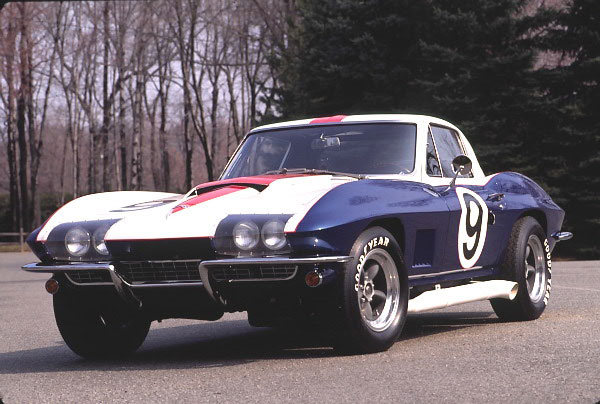 The 1967 Sting Ray was the only second-generation Corvette to run in the 24 Hours of Le Mans.
 The 1967 Corvette featured five smaller air vents in place of the three larger vents featured on the earlier second-generation Corvettes.
 The 1967 Sting Ray's interior received only minor updates for the final year of the second-generation Corvette.
 The 1967 Corvette featured an optional 400 or 435 horsepower 427 cubic inch engine.
 The L88 Engine was the closest to a pure racing engine ever produced to be installed in a production model Corvette.
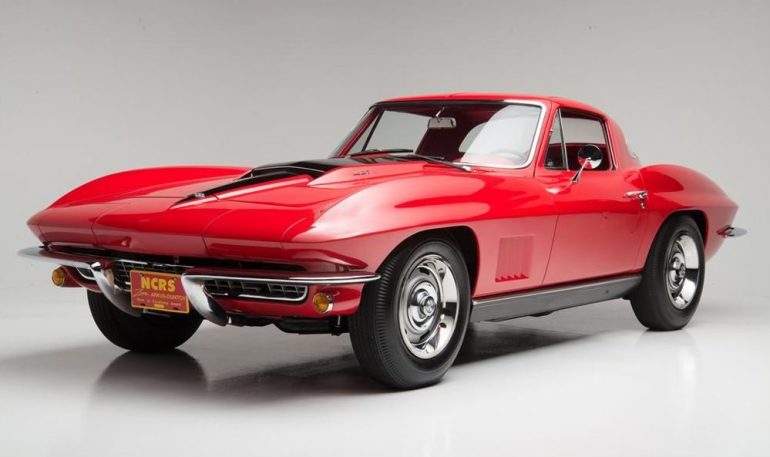
Chevrolet rated the L88 at 430 horsepower, five fewer than the $437 L71, so that no one would order the $947.90 race engine by mistake. The real figure was closer to 550, and a 1967 L88 coupe sold for $3.85 million at auction in 2014, which remains the record for a Corvette.
DID YOU KNOW
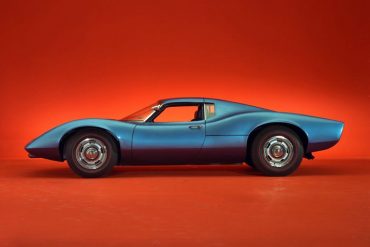
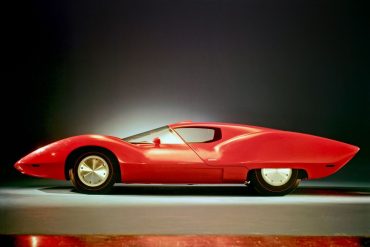
1967’s specials are the L88s, the Tri-Power L71 and aluminum-head L89 cars and the racers built from them, along with the Astro I concept and the mid-engine proposals that were already shaping the car after the Shark.
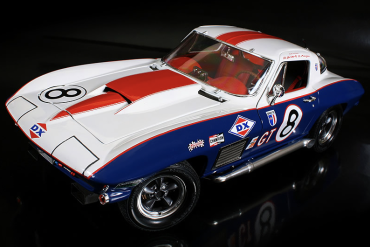
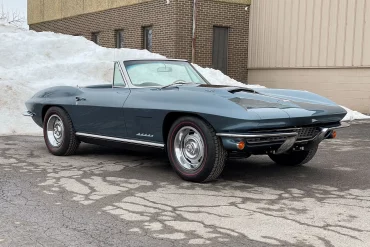
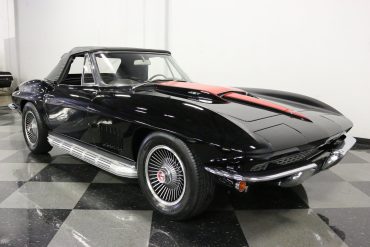
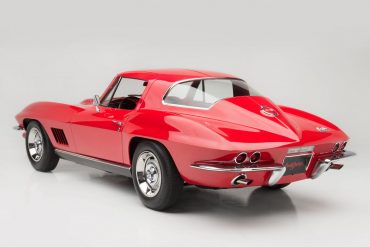
RPO L88 put a racing 427 in a production Corvette for $947.90: aluminum heads, 12.5:1 compression, a forged bottom end, an 850-cfm Holley under a cowl-induction hood, and a deliberately low 430-hp rating. It required the heavy-duty brakes, suspension, ignition, Positraction and the M22 gearbox, deleted the radio and heater, and demanded 103-octane fuel. Twenty were built in 1967, and they are the most valuable production Corvettes ever sold.
MORE: ALL 1967 L88 POSTS
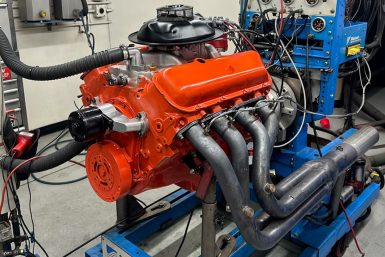


The Sport Coupe listed at $4,388.75 and the convertible at $4,240.75 with the 300-hp 327 and the three-speed, up about $90 and $155 on 1966 because the dual-circuit brake system, the energy-absorbing steering column and the other federal safety items were now standard.
The engine list was the longest of the C2 years: the 350-hp L79 at $105.35 went into 6,375 cars, the 427/390 L36 at $200.15 into 3,832, the new Tri-Power 427/400 L68 at $305.50 into 2,101 and the 427/435 L71 at $437.10 into 3,754, with 16 L71 buyers adding the L89 aluminum heads for $368.65 and 20 ordering the L88 at $947.90. That left about 6,858 cars with the base engine. The four-speed ($184.35) went into 20,172 cars in M20 or M21 form, the M22 into 20 and the Powerglide (RPO M35, $194.35) into 2,324; only about 424 kept the three-speed. Positraction (RPO G81, $42.15) was on 20,308 cars.
Side-mount exhaust (RPO N14, $131.65) reached 4,209 cars, its best year, and the new bolt-on aluminum wheels (RPO N89, $263.30) went onto 720. Redline tires (RPO QB1, $46.55) replaced the goldwalls on 4,230 cars and whitewalls (RPO P92, $31.35) went on 13,445. Air conditioning (RPO C60, $412.90) went into 3,788 cars, power steering (RPO N40, $94.80) into 5,747, power brakes (RPO J50, $42.15) into 4,766, power windows (RPO A31, $57.95) into 4,036, the telescopic column (RPO N36, $42.15) into 2,415, leather seats ($79.00) into 1,601, transistor ignition (RPO K66, $73.75) into 5,759 and the AM/FM radio (RPO U69, $172.75) into 22,193; the new speed warning indicator (RPO U15, $10.55) went into 2,108 cars and headrests (RPO A82) into 1,762.
The hardtop (RPO C07, $231.75) went onto 6,880 of the 14,436 convertibles, 1,966 of them with the new vinyl covering (RPO C08, $52.70). The 36-gallon tank sold just two, and 35 buyers deleted the heater. Ten colors were offered with black, white or teal blue tops; the color totals add up to 22,930, ten short of production.
MORE: PRICING, OPTIONS & COLORS / RPO CODES
| CODE | DESCRIPTION | QUANTITY | RETAIL PRICE |
|---|---|---|---|
| 19437 | Base Corvette Sport Coupe | 8,504 | $4,388.75 |
| 19467 | Base Corvette Convertible | 14,436 | $4,240.75 |
| 402–421 | Genuine Leather Seats (black, red, medium bright blue, dark teal blue, medium saddle) | 1,601 | $79.00 |
| A01 | Soft Ray Tinted Glass, All Windows | 11,331 | $15.80 |
| A02 | Soft Ray Tinted Glass, Windshield | 6,558 | $10.55 |
| A31 | Power Windows | 4,036 | $57.95 |
| A82 | Headrests | 1,762 | $42.15 |
| A85 | Shoulder Belts | 1,426 | $26.35 |
| C07 | Auxiliary Hardtop (convertible) | 6,880 | $231.75 |
| C08 | Vinyl Covering for Auxiliary Hardtop | 1,966 | $52.70 |
| C48 | Heater and Defroster Deletion (credit) | 35 | −$97.85 |
| C60 | Air Conditioning | 3,788 | $412.90 |
| F41 | Special Front and Rear Suspension | 2,198 | $36.90 |
| G81 | Positraction Rear Axle, all ratios | 20,308 | $42.15 |
| J50 | Power Brakes | 4,766 | $42.15 |
| J56 | Special Heavy Duty Brakes | 267 | $342.30 |
| K19 | Air Injection Reactor (California) | 2,573 | $44.75 |
| K66 | Transistor Ignition System | 5,759 | $73.75 |
| L36 | 427ci, 390HP Engine | 3,832 | $200.15 |
| L68 | 427ci, 400HP Engine (Tri-Power) | 2,101 | $305.50 |
| L71 | 427ci, 435HP Engine (Tri-Power) | 3,754 | $437.10 |
| L79 | 327ci, 350HP Engine | 6,375 | $105.35 |
| L88 | 427ci, 430HP Engine | 20 | $947.90 |
| L89 | Aluminum Cylinder Heads for L71 | 16 | $368.65 |
| M20 | 4-Speed Manual Transmission, Wide Ratio | 9,157 | $184.35 |
| M21 | 4-Speed Manual Transmission, Close Ratio | 11,015 | $184.35 |
| M22 | 4-Speed Manual, Close Ratio, Heavy Duty | 20 | $237.00 |
| M35 | Powerglide Automatic Transmission | 2,324 | $194.35 |
| N03 | 36 Gallon Fuel Tank (coupe) | 2 | $198.05 |
| N11 | Off-Road Exhaust System | 2,326 | $36.90 |
| N14 | Side-Mount Exhaust System | 4,209 | $131.65 |
| N36 | Telescopic Steering Column | 2,415 | $42.15 |
| N40 | Power Steering | 5,747 | $94.80 |
| N89 | Cast Aluminum Bolt-On Wheels (set of 5) | 720 | $263.30 |
| P92 | Whitewall Tires, 7.75x15 | 13,445 | $31.35 |
| QB1 | Redline Tires, 7.75x15 | 4,230 | $46.55 |
| U15 | Speed Warning Indicator | 2,108 | $10.55 |
| U69 | AM-FM Radio | 22,193 | $172.75 |
| CODE | EXTERIOR | TOTAL | SOFT TOP |
|---|---|---|---|
| 983 | Goodwood Green | 4,293 | Black, White, Teal Blue |
| 976 | Marina Blue | 3,840 | Black, White, Teal Blue |
| 988 | Marlboro Maroon | 3,464 | Black, White, Teal Blue |
| 974 | Rally Red | 2,341 | Black, White, Teal Blue |
| 984 | Sunfire Yellow | 2,325 | Black, White, Teal Blue |
| 986 | Silver Pearl | 1,952 | Black, White, Teal Blue |
| 972 | Ermine White | 1,423 | Black, White, Teal Blue |
| 977 | Lynndale Blue | 1,381 | Black, White, Teal Blue |
| 980 | Elkhart Blue | 1,096 | Black, White, Teal Blue |
| 900 | Tuxedo Black | 815 | Black, White, Teal Blue |
The news for 1967 was induction. The 427 kept its 390-hp L36 form with a single Holley, and above it Chevrolet put three two-barrel Holleys on an aluminum manifold under a triangular air cleaner: as the L68, with the L36’s hydraulic cam and 10.25:1 compression, that made 400 hp, and as the L71, with the solid-lifter cam, 11.0:1 compression and four-bolt mains, 435 hp at 5,800 rpm.
The outer carburetors open on vacuum, so a Tri-Power car drives on the center two-barrel most of the time. The L89 option put aluminum heads on the L71 for about 75 lb off the nose and the same 435-hp rating; 16 were built. The small blocks were unchanged: the hydraulic-lifter 300-hp L75 and the 350-hp L79.
Then there was the L88, built for the track and sold to the public only because homologation required it. It used the L71’s block with aluminum heads, 12.5:1 forged pistons, a Tuftrided and cross-drilled forged crank, a 0.540-in-lift solid cam, an 850-cfm Holley and a cowl-induction hood that fed the carburetor from the base of the windshield. Chevrolet published 430 hp; on a dynamometer the engine made 540 to 560. The option required the K66 ignition, J56 brakes, F41 suspension, Positraction and the M22 gearbox, deleted the radio, heater and choke, and came with a warning that it needed 103-octane fuel. Twenty were built.
The chassis under all of them carried over from 1966 with a dual-circuit master cylinder added for safety, the four-wheel discs, and new 15 x 6 Rally wheels; Car and Driver ran an L71 through the quarter in 13.8 seconds at 104 mph.
MORE: FULL SPECIFICATIONS / ENGINE
| SPEC | 1967 CORVETTE |
|---|---|
| Engines | 327 ci (5.4 L) small-block V-8 in two versions; 427 ci (7.0 L) Mark IV big-block V-8 in four production versions plus the L88 |
| Base engine (L75) | 327/300 hp @ 5,000 rpm, 360 lb-ft @ 3,200 rpm, 10.5:1, hydraulic lifters, Carter four-barrel; about 6,858 cars |
| RPO L79 | 327/350 hp @ 5,800 rpm, 360 lb-ft @ 3,600 rpm, 11.0:1, hydraulic lifters, Holley four-barrel; 6,375 cars, $105.35 |
| RPO L36 | 427/390 hp @ 5,400 rpm, 460 lb-ft @ 3,600 rpm, 10.25:1, hydraulic lifters, single Holley four-barrel; 3,832 cars, $200.15 |
| RPO L68 | 427/400 hp @ 5,400 rpm, 460 lb-ft @ 3,600 rpm, 10.25:1, hydraulic lifters, three Holley two-barrels (Tri-Power) on aluminum intake, triangular air cleaner; 2,101 cars, $305.50 |
| RPO L71 | 427/435 hp @ 5,800 rpm, 460 lb-ft @ 4,000 rpm, 11.0:1, solid lifters, Tri-Power, four-bolt mains; 3,754 cars, $437.10 |
| RPO L89 | L71 with aluminum cylinder heads (about 75 lb lighter), same 435-hp rating; 16 cars, $368.65 over L71 |
| RPO L88 | 427 with aluminum heads, 12.5:1 compression, forged crank and pistons, radical solid-lifter cam, 850-cfm Holley on aluminum intake, cowl-induction hood; rated 430 hp (actual output 540–560 hp); 20 cars, $947.90; required K66, J56, F41, G81 and M22 and deleted the radio, heater and automatic choke |
| Transmission | 3-speed manual standard (about 424 cars); Muncie 4-speed wide-ratio M20 (9,157 cars) or close-ratio M21 (11,015), $184.35; heavy-duty M22 (20 cars, $237.00); 2-speed Powerglide (RPO M35, $194.35; 2,324 cars, not with L71/L88) |
| Axle ratio | 3.36:1 standard; 3.08, 3.55, 3.70, 4.11 and 4.56:1 available; Positraction (RPO G81, $42.15) on 20,308 cars |
| Front suspension | Independent; short-long arm, coil springs, anti-roll bar; F41 heavy-duty springs and bar (2,198 cars) |
| Rear suspension | Independent; frame-mounted differential, half-shafts, trailing arms, nine-leaf transverse spring |
| Brakes | Four-wheel disc, 11.75-in rotors, four-piston calipers, dual-circuit master cylinder; power assist (RPO J50; 4,766 cars); J56 heavy-duty brakes (267 cars, $342.30) |
| Steering | Recirculating ball; telescopic column (RPO N36; 2,415 cars); power steering (RPO N40, $94.80; 5,747 cars) |
| Exhaust | Side-mount exhaust (RPO N14, $131.65) on 4,209 cars; off-road exhaust (RPO N11) on 2,326 |
| Wheels & tires | 15 x 6 in slotted steel Rally wheels with trim rings and center caps, new for 1967; 7.75 x 15 tires; cast aluminum bolt-on wheels (RPO N89, $263.30; 720 cars) replaced the knock-offs; redline tires (RPO QB1) on 4,230 cars |
| Fuel tank | 20 gal; 36-gallon tank (RPO N03, $198.05) on 2 coupes, the last year offered |
| Wheelbase | 98 in |
| Overall length / width / height | 175.1 in / 69.6 in / 49.8 in (coupe) |
| Curb weight | approx. 3,150 lb small block; big-block cars roughly 100 lb heavier |
| 0–60 mph | approx. 5.5 sec (427/435); 6.0 sec (327/350); 7.8 sec (327/300) |
| Quarter mile | 13.8 sec @ 104 mph (427/435, Car and Driver); approx. 15 sec (327/350) |
| Top speed | approx. 140 mph (427/435); an L88 topped 170 mph on the Mulsanne Straight at Le Mans |
| Production | 22,940: 8,504 coupes and 14,436 convertibles; 9,707 big blocks |
| Assembly | St. Louis, Missouri; small blocks from Flint, big blocks from Tonawanda |
The 1967 Corvette carries a thirteen-character VIN: 194377S for the Sport Coupe and 194677S for the convertible, followed by a sequence number from 100001 to 122940 shared by both bodies and accounting for all 22,940 cars. The 1 is Chevrolet, 9 the Corvette series, 4 the V-8, 37 or 67 the body, 7 the model year and S the St. Louis plant. The VIN plate is on the instrument panel brace under the glove box, with the trim tag beside it; the number is also stamped on the frame.
The engine pad suffix identifies the engine: HE and HO for the 300-hp 327 with manual and Powerglide, HT for the 350-hp L79, IL and IM for the 427/390 with manual and Powerglide, IQ and IR for the 427/400, JE for the 427/435 (JD with L89 aluminum heads), and IT for the L88, with additional codes for California air-injection cars. Small blocks carry Flint’s F prefix and big blocks Tonawanda’s T. For a big block the stamping, the block casting (3904351 for 1967 427s) and the casting date matter more than anything on the fenders.
MORE: VIN DECODER / PRODUCTION
| POSITION | MEANING |
|---|---|
| 1 (First Digit) | Manufacturer: 1 = Chevrolet |
| 9 (Second Digit) | Series: 9 = Corvette |
| 4 (Third Digit) | Engine: 4 = V-8 |
| 37 / 67 (Fourth & Fifth Digits) | Body: 37 = Sport Coupe, 67 = Convertible |
| 7 (Sixth Digit) | Model year: 7 = 1967 |
| S (Seventh Digit) | Assembly plant: S = St. Louis, Missouri |
| 100001–122940 (Eighth through Thirteenth Digits) | Production sequence number, shared by coupes and convertibles |
Ten colors, with Goodwood Green and Marina Blue the favorites and Tuxedo Black the rarest: Goodwood Green (4,293), Marina Blue (3,840), Marlboro Maroon (3,464), Rally Red (2,341), Sunfire Yellow (2,325), Silver Pearl (1,952), Ermine White (1,423), Lynndale Blue (1,381), Elkhart Blue (1,096) and Tuxedo Black (815).
The 1967 is the most valuable year of the C2 at every level. The L88s are seven-figure cars and trade privately or at headline auctions: a 1967 L88 coupe sold for $3.85 million at Barrett-Jackson Scottsdale in 2014 and an L88 convertible for $3.2 million at Mecum in 2013, and recent offerings have carried estimates of $3 million and up. Below them the 16 L89 cars, then the 435-hp L71, the 400-hp L68 and the 390-hp L36, then the 350-hp L79 (the best-driving small block) and the 300-hp cars most of the 22,940 are. Coupes carry a premium over convertibles at each level, and a documented Tri-Power car with side exhaust and the N89 wheels is the picture most buyers have in mind.
Results tracked by Classic.com for September and October 2026 show the ladder below the L88: 427/435 L71 convertibles sold for $185,000 (with hardtop) and $111,000 on Bring a Trailer, and another was bid to $142,500 at Mecum Nashville without selling; an L68 coupe was bid to $165,000 without selling; L36 cars were bid to $55,500 to $90,000 without meeting reserve. L79 cars sold for $104,500 (coupe) and $126,500 (convertible with hardtop) at Mecum and $150,000 on Bring a Trailer, and a 300-hp convertible with hardtop for $49,000. Modified and restomod cars sold between $53,000 and $121,000, and a project coupe for $20,250. Dealer asking prices for L71s ran $290,000 to $315,000. Check whether a result includes the buyer’s premium, and treat asking prices and unsold high bids separately from completed sales.
Verification is everything in a 1967 big block, because the Tri-Power setup, the hood and the badges are all reproduced and a 390 is easily dressed as a 435. Start at the engine pad: a Tonawanda T prefix, the right suffix (JE for L71, JD for L89, IT for L88), a 3904351 casting and a casting date before the car’s build; an L71 needs the four-bolt block and a 1967-series Tri-Power intake, an L89 real aluminum heads with the correct casting number, and an L88 the aluminum heads, the cowl-induction hood, the radio and heater delete plates and a known history, since all twenty are accounted for. Positraction and the four-speed were mandatory with the L71 and L88, so a 435 with a Powerglide is wrong. NCRS judging sheets, tank stickers, Protect-O-Plates, old photographs and ownership records all help, and ask to see dates and scores rather than just the award.
The C2 body is bonded to a steel birdcage, and that is where the expensive problems hide: the windshield frame, the door hinge pillars and, on coupes, the rear window frame rust from inside and are costly to repair. The ladder frame rusts at the kickups over the rear wheels and around the trailing-arm mounts, trailing-arm bushings and half-shaft U-joints wear, and the four-piston calipers weep brake fluid unless they have been sleeved in stainless. A Tri-Power car should idle cleanly on the center carburetor and come in hard when the outers open above about 3,500 rpm; if it stumbles there, the vacuum diaphragms or linkage need work. A big block that runs hot usually has a radiator or shroud problem. Most of these cars see few miles, so budget for tires, brakes and fuel-system work on anything that has sat.
MORE: THE MARKET
Get all the latest news stories, upcoming auctions, prices, videos and more about the 1967 Chevrolet Corvette! The latest headlines here.
Chevrolet built 22,940 Corvettes for 1967 at St. Louis, Missouri: 8,504 Sport Coupes and 14,436 convertibles, down from 27,720 in 1966 as buyers waited for the new C3. Of those, 9,707 had a 427 big block (3,832 L36, 2,101 L68, 3,754 L71, 16 L89 and 20 L88), 6,375 had the 350-hp L79, 20,172 had a four-speed, 4,209 had side-mount exhaust and 720 had the aluminum bolt-on wheels.
In late 2026, 427/435 L71 cars sold for $111,000 to $185,000 at auction and dealers asked $290,000 and up for the best; L68 and L36 cars were bid to $55,000 to $165,000; L79 cars sold for $105,000 to $150,000 and 300-hp cars for around $50,000 to $75,000, with coupes above convertibles at each level. Modified cars ran $53,000 to $121,000. The 20 L88s are worth millions: one sold for $3.85 million in 2014, the record for any Corvette.
Seven: the 327 small block at 300 hp (L75) or 350 hp (L79), and the 427 big block as the 390-hp L36, the 400-hp Tri-Power L68, the 435-hp Tri-Power L71, the L71 with aluminum heads (L89, 16 built) and the 430-hp-rated racing L88 (20 built). A three-speed manual was standard, the Muncie four-speed went into 88 percent of cars, and the Powerglide was available with the small blocks and the L36 and L68.
Ten: Goodwood Green (4,293 cars), Marina Blue (3,840), Marlboro Maroon (3,464), Rally Red (2,341), Sunfire Yellow (2,325), Silver Pearl (1,952), Ermine White (1,423), Lynndale Blue (1,381), Elkhart Blue (1,096) and Tuxedo Black (815), with black, white or teal blue soft tops. Goodwood Green, Marina Blue, Marlboro Maroon, Lynndale Blue and Elkhart Blue were new for 1967.
The Sport Coupe was $4,388.75 and the convertible $4,240.75 with the 300-hp engine and three-speed manual. The 427/390 added $200.15, the 427/400 $305.50, the 427/435 $437.10, the L89 heads another $368.65, the L88 $947.90, the L79 $105.35, the four-speed $184.35, Positraction $42.15, side exhaust $131.65, the aluminum wheels $263.30 and air conditioning $412.90. A 435-hp coupe with the four-speed, Positraction, side exhaust and aluminum wheels came to about $5,450.
Outside: five fender louvers in place of three vents, no hood script or fender flags, flat rocker moldings, a single backup light above the license plate, slotted Rally wheels and bolt-on aluminum wheels instead of knock-offs, and a redesigned big-block hood scoop. Inside: the parking brake moved between the seats, the passenger grab bar was removed, the seats were restyled and a vinyl hardtop cover was offered. Mechanically: the Tri-Power L68 and L71, the L89 heads and the L88; a dual-circuit brake master cylinder and the federal safety items became standard.
A factory race engine sold as RPO L88 for $947.90: a 427 with aluminum heads, 12.5:1 compression, a forged crank and pistons, a radical solid-lifter cam and an 850-cfm Holley under a cowl-induction hood. Chevrolet rated it at 430 hp so that buyers would choose the 435-hp L71 instead; it actually made around 550. It required heavy-duty brakes, suspension, ignition, Positraction and the M22 gearbox, deleted the radio and heater, and demanded 103-octane fuel. Twenty were built in 1967, and they are the most valuable production Corvettes ever made.
1967 Corvette Advertisements / 1967 Corvette Colors / 1967 Corvette Common Issues / 1967 Corvette Engine / 1967 Corvette Factory Options / 1967 Corvette For Sale / 1967 Corvette L88 / 1967 Corvette Maintenance / 1967 Corvette Mods / 1967 Corvette Owners Manual / 1967 Corvette Performance / 1967 Corvette Posters / 1967 Corvette Pricing / 1967 Corvette Production / 1967 Corvette Recalls / 1967 Corvette Research / 1967 Corvette RPO Codes / 1967 Corvette Sales Brochures / 1967 Corvette Special Model Overview / 1967 Corvette Specifications / 1967 Corvette Technical Research / 1967 Corvette Service Bulletins / 1967 Corvette VIN Numbers