C5 Corvette Z06 (2001–2004): The Complete Guide Quick Nav: The Story · The...



CORVETTE BUYER’S GUIDES
Buying a 1997–2004 C5 Corvette? This guide covers the eight years, the coupe, convertible, hardtop and Z06, what each costs in today’s market from the results the site tracks, the best buys, the column lock and the other known faults, how to verify a Z06 or an edition, and the full inspection, with the year pages, and model guides.
Quick Nav: Overview · Why Buy · Year by Year · Year Details · Variants · Values · Price Ladder · What Moves the Price · Model Guides · Driving · Costs to Own · Considerations · Problems · Inspection · Verification · Market Reports · For Sale · FAQs
The Car: The fifth-generation Corvette, 1997–2004: an all-new hydroformed chassis with a rear transaxle and balsa-cored floors, the 345- then 350-hp all-aluminum LS1, and from 2001 the 385- then 405-hp LS6 Z06
Years and Built: 248,715 over eight model years: 9,752 (1997), 31,084 (1998), 33,270 (1999), 33,682 (2000), 35,627 (2001), 35,767 (2002), 35,469 (2003), 34,064 (2004)
Bodies: Hatchback coupe with a removable roof panel (124,596), convertible with a trunk (89,610, from 1998), fixed-roof hardtop (6,121, 1999–2000) and the Z06 on the hardtop body (28,388, 2001–04)
Engines: 5.7 L LS1, 345 hp (1997–2000) and 350 hp (2001–04); LS6 in the Z06, 385 hp (2001) and 405 hp (2002–04); six-speed manual or four-speed automatic in the rear transaxle, the Z06 six-speed only
The Editions: 1998 Indy 500 Pace Car replica (1,163), 2003 50th Anniversary Edition (11,632, with Magnetic Selective Ride Control), 2004 Commemorative Edition (6,899, 2,025 of them Z06s with the carbon-fiber hood)
What One Costs Today: High-mileage drivers from $8,000; clean coupes and convertibles $13,000–$25,000; hardtops $21,000–$25,000; Pace Cars, 50th Anniversary and Commemorative cars $18,000–$46,000; Z06s $16,000–$55,000, most $21,000–$36,500 (results tracked October 2025–October 2026)
The Pick: A 2001–04 six-speed coupe with the column lock sorted for a driver; a 2002–04 Z06 for performance and the first modern Corvette to appreciate; a 1998–2000 coupe for the least money into a modern Corvette
Related: The C5 hub, the eight year pages, the C5 Z06 model page, the Z06, Pace Car, 50th Anniversary and Commemorative Edition guides, the Bargain Hunting series, the colors, production, VIN and RPO pages
For more than half a century owning a Corvette has been part of the American Dream, and for most of that time it was a dream for people with money. The C5 changed that. Built from 1997 to 2004, it is the most reliable Corvette made to that point and the most affordable modern one: a 345- or 350-horsepower LS1 coupe with under 75,000 miles can still be had for under $20,000, a 1998–2000 car for less, and even the 405-horsepower Z06, the car that first connected the production Corvette to its racing counterpart, starts in the twenties. Few cars give this much power, handling and usability for the money.
That affordability is why the C5 is bought differently from a C2 or a C3. Nobody is verifying an engine pad; the questions are how the car was maintained, cared for and driven, how many miles it has and whether the handful of well-documented faults, the electronic column lock above all, have been dealt with. The price of a C5 can be misleading: two cars at $18,000 can be a 30,000-mile six-speed with the Preferred Equipment Group and a 90,000-mile automatic with a cracked dash, so what you are getting for the money matters more than the number.
This guide walks through all of it: the eight years and what changed, the four bodies and three editions, what each tier of the market costs from the auction and dealer results the site tracks, what moves the price, how a C5 drives and what it costs to own, how to decide what you need before you shop, the known problems, the inspection step by step (every item of our original checklist is here), how to verify a Z06 or an edition, and the questions readers ask most. The year pages and the Z06 page go deeper on each car; this page is where to start.
For more than half a century, owning a Corvette has been identified by millions of car enthusiasts as a quintessential part of the American Dream. While Corvettes used to be perceived as cars that could only be afforded by white collar, high-income earning individuals, the reality is that many used Corvettes have reached a level of affordability that puts ownership in reach for just about anyone.
When considering a Corvette as your potential next purchase, there are a lot of vehicle choices out there that will readily present themselves as viable options. Some may be more affordable, others might be more aesthetically pleasing to the eye, while still others might offer higher levels of performance and horsepower.
While each generation of Corvette has attributes that might make it a desirable purchase, today’s focus is going to be on what to look for when considering a fifth-generation, or C5, Corvette.
Built from 1997 until 2004, the C5 Corvette is considered one of the most reliable Corvettes built to date. Given its increasing affordability, the C5 offers a lot of power and performance at a great value. Still, as with any sports car, the way the car was maintained, cared for and driven can dramatically affect the overall quality of the car you are considering.
The C5 was built utilizing an LS1 engine. Rated at 345 horsepower, this engine provided drivers a significant power gain over the outgoing C4. As anyone today will tell you, the LS1 engine – part of the now legendary “LS” engine family - was an extremely reliable workhorse. This engine literally ushered in the era of the LS, and proved that GM had developed a powerplant that could be used reliably during even the most aggressive driving conditions.
And speaking of aggressive driving? The fifth-generation Corvette also ushered in a new era of Corvette performance – the Corvette Z06. Introduced in 2001, the Z06 Corvette was a variant of the FRC (Fixed Roof Coupe, which was introduced in 1999) that featured an LS6 engine that produces 385 horsepower (2001-02 models) and 405 horsepower (2003-04) models. These cars were blistering fast, and demonstrated (probably for the first time ever) the connection between the Corvette as a production vehicle and its race car counterpart.
Even with the base coupe and convertible models, the C5 Corvette’s design implemented elements that were developed in cooperation with the race-car variant of the car. While this practice would increase with future generations, the C5 was the first to utilize “race inspired” technology as part of its platform, and the result was a car that pushed the boundaries of horsepower, handling and drivability.
While the C5 Corvette improved on almost all aspects of the outgoing fourth-generation Corvette, the car still had some issues that emerged after its introduction in 1997. While many of these items were addressed thru technical service bulletins or factory recalls, there were a few that were serious enough that they continue to cause mild concern among fifth-generation Corvette enthusiasts.
The most notable issue with C5 Corvettes (all years) is with the steering-wheel lockout system. Installed as a theft deterrent, the steering column on a number of fifth-generation Corvettes has been known to lock down if the ignition key is inserted improperly. Even if the key is inserted just a “little bit wrong”, the lockout system will misread the key, which can cause big problems for the driver including steering column lockup during operation.
While this issue was addressed with a factory recall, it’s is something that you’ll want to verify has been repaired properly by the dealer before considering the purchase of the vehicle.
Another (much less critical) item is the failure of the pop-up headlight motors. While this should be a readily identifiable problem (the C5 Corvette may appear to be winking at you), it is still a known issue that occurs on these vehicles, so be conscious of the fact that over time, you’ll likely need to replace one, or both, of these headlight motors.
The C5 was the first all-new Corvette in thirteen years and the one that nearly did not happen: hydroformed frame rails and a backbone tunnel four and a half times stiffer than the C4’s, a rear transaxle for a near 50/50 balance, balsa-cored composite floors, a 104.5-inch wheelbase, run-flat tires in place of a spare, and the LS1. The result ushered in a new era of Corvette performance, more than anything built since the late 1960s, and it did so with a car you could drive every day.
The LS1, rated at 345 horsepower against the outgoing LT1’s 300, was the first of the now-legendary LS family and proved that GM had built a powerplant that would run reliably under the most aggressive driving. An all-aluminum pushrod V-8 with coil-near-plug ignition, it returns 25 mpg on the highway, goes well past 150,000 miles on oil changes, and is serviced by any shop in the country; the 1997–2000 cars have 345 horsepower, the 2001–04 cars 350.
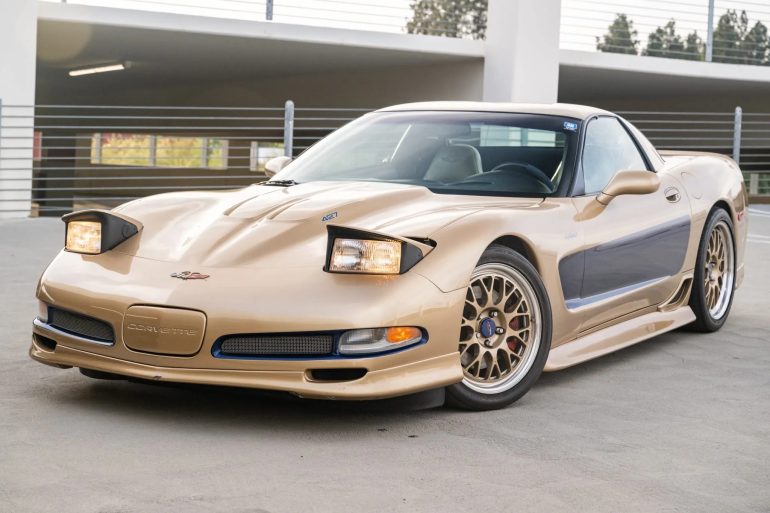
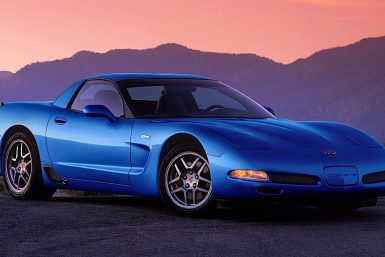
In 2001 the fixed-roof hardtop introduced in 1999 became the Z06: the LS6 with 385 horsepower, 405 from 2002 to 2004, a close-ratio six-speed, FE4 suspension, wider wheels on Eagle F1 Supercars, a titanium exhaust and 3,118 pounds. Blistering fast, and for the first time the production Corvette and the race car were visibly connected: the Pratt & Miller C5-R won Daytona outright in 2001, Le Mans in class in 2001, 2002 and 2004, and four straight ALMS championships, and even the base coupe and convertible carried race-developed pieces into the showroom. The 2004 Commemorative Edition, with its Le Mans Blue paint and the first painted carbon-fiber hood on an American production car, marks it.
The C5 is one of the most reliable Corvettes built, its faults are documented to the part number, and its prices have been the lowest of any modern Corvette since the C7 arrived in 2014 and pushed the C6 down behind it. The Z06, the Pace Car, the 50th Anniversary and the Commemorative Editions have begun to appreciate, the first modern Corvettes to do so, while the ordinary coupe still tracks mileage and condition. Less-expensive does not mean less-quality here: there are great deals out there, and a sorted LS1 coupe is a lot of Corvette and a lot of fun.
MORE: THE C5 HUB / THE C5 Z06 MODEL PAGE / THE SWEET SPOT BETWEEN CLASSIC AND MODERN / ALL THE GENERATIONS
 The 1997 Corvette ushered in a new-era of higher-performance Corvettes than anything than any Corvette built since the late 1960's.
 The 1997 Corvette LS1 Engine saw a significant increase in horsepower from 300 in the outgoing LT1 to 345 in the LS1, which was introduced in 1997.
 The Heads Up Display (HUD) on fifth-generation (and newer) Corvettes enables drivers to keep their attention on the road while still being able to observe speed, engine RPM's and much more.
 One of the most notable issues of the fifth-generation Corvette is the lockout system on the steering column. While recalls have been issued to correct this issue, it is important to verify this work has been performed before purchasing a used fifth-generation Corvette.
The C5 changed less year to year than any classic Corvette, which is why it is bought by body, edition, transmission and mileage before year. Still, the years matter: the 1997 is coupe-only with a few first-year parts of its own; 1998 brought the convertible and the Pace Car; 1999 the hardtop, the HUD and the telescoping column; 2000 the forged wheels and the key fob; 2001 the Z06, the 350-horsepower LS1 and standard Active Handling; 2002 the 405-horsepower Z06; 2003 the 50th Anniversary and Magnetic Ride; 2004 the Commemorative Edition and the best-sorted Z06. The table gives the changes, the production, the engines and the verdict for each; the year pages have the full specifications, options, colors and the current market.
Three rules hold across all eight. The six-speed adds to everything and the automatic subtracts, more on a coupe than on a convertible. Mileage counts for more than year: a 5,000-mile car of any kind brings two to three times a 60,000-mile one. And a Z06 is a different market from the rest, with the 405-horsepower 2002–04 cars above the 385-horsepower 2001.
MORE: THE 1997 PAGE / THE 1998 PAGE / THE 1999 PAGE / THE 2000 PAGE / THE 2001 PAGE / THE 2002 PAGE / THE 2003 PAGE / THE 2004 PAGE / THE C5 HUB
| YEAR | WHAT CHANGED | BUILT | ENGINES | THE VERDICT |
|---|---|---|---|---|
| 1997 | All new: hydroformed frame, rear transaxle, balsa floors, 104.5-in wheelbase, 345-hp LS1, run-flats and no spare, pop-up headlights, proximity key; coupe only with the removable roof panel, unveiled January 6, 1997 at $37,495. A short model year with the thinnest option list. | 9,752 | 346 ci (5.7 L) LS1 all-aluminum small-block V-8, 345 hp and 350 lb-ft, the first of the Gen III engines | The entry ticket: the rarest C5 but not the dearest, a few thousand under a 1998–2000 for its first-year parts and thin option list. A sorted six-speed (2,809 built) is the best-value C5 there is. |
| 1998 | The convertible returns with a trunk for the first time since 1962; the Indy 500 Pace Car replica (1,163, Radar Blue with yellow wheels and interior, Z4Z); Active Handling (JL4) optional; $3,000 magnesium wheels; Light Pewter, Light Oak and fifteen Aztec Gold cars. North American Car of the Year. | 31,084 | 346 ci (5.7 L) LS1 all-aluminum V-8, 345 hp and 350 lb-ft, unchanged | The convertible’s return and the Pace Car. The Pace Car holds value (six-speeds above automatics); standard convertibles bring a few thousand over coupes; the coupes sit with the 1997s and 1999s. |
| 1999 | The fixed-roof hardtop (4,031): six-speed and Z51 standard, black leather only, 12 percent stiffer, the lightest C5 and the cheapest at $38,777. Head-Up Display, power telescoping column and Twilight Sentinel optional on coupe and convertible; Magnetic Red; 853 heads on the LS1; Active Handling on six cars in ten; the C5-R’s first race at Daytona. | 33,270 | 346 ci (5.7 L) LS1 all-aluminum V-8, 345 hp and 350 lb-ft, now on 853 heads | The hardtop year: the lightest, stiffest C5, six-speed and Z51 only, 4,031 built, and the body the Z06 came from. A sorted hardtop is the best-driving pre-Z06 C5 and the best value in the generation. |
| 2000 | Forged thin-spoke wheels with a polished option, Millennium Yellow and Dark Bowling Green, Torch Red leather, bigger Z51 bars, a remote key fob in place of the proximity system and no passenger key cylinder, the LS1 recalibrated to California LEV; the last 2,090 hardtops. The C5’s best year, 33,682. | 33,682 | 346 ci (5.7 L) LS1 all-aluminum V-8, 345 hp and 350 lb-ft, recalibrated to California LEV standards with platinum plugs | The LS1 C5 to buy if the badge does not matter: forged wheels, the fob, HUD and telescoping column on most cars, the teething behind it and none of the Z06 premium. The last 2,090 hardtops carry a small premium. |
| 2001 | The Z06 on the hardtop body: LS6 385 hp, close-ratio M12 six-speed, FE4, 17 x 9.5 and 18 x 10.5 wheels on Eagle F1 Supercars, titanium exhaust, $47,500, 5,773 built. The LS1 goes to 350 hp with a revised intake and cam; Active Handling standard; Preferred Equipment Groups 1SB/1SC on most cars. Corvette Racing wins Daytona and Le Mans. | 35,627 | 346 ci (5.7 L) LS1, now 350 hp and 360/375 lb-ft; Z06: LS6, 385 hp and 385 lb-ft | Two markets: the first Z06, 385 hp and the cheapest of the four Z06 years, and the best-equipped LS1 coupes and convertibles, 350 hp with Active Handling standard. The 2001 LS6’s valve springs are the item to ask about. |
| 2002 | Z06 to 405 hp: higher-lift cam, hollow-stem valves, freer intake and exhaust, a stronger clutch, cast-spun wheels, revised shocks and a standard HUD, $50,150, 8,297 built, 3.9 seconds to 60. Electron Blue replaces Navy Blue; the 50th-anniversary pace car at Indy without a replica. The most of any C5 year, 35,767. | 35,767 | 346 ci (5.7 L) LS1, 350 hp and 360/375 lb-ft; Z06: LS6, now 405 hp and 400 lb-ft | The C5 the market wants: the first 405-hp Z06 with the 2001’s weaknesses addressed and 8,297 built, so there is choice. The 350-hp cars are the LS1 at its best, before the editions muddy the comparison. |
| 2003 | The 50th Anniversary Edition (1SC, $5,000): Anniversary Red over Shale, champagne wheels and Magnetic Selective Ride Control, 11,632 sold; F55 magnetic dampers optional on any coupe or convertible; fog lamps, sport seats, dual-zone air and a power passenger seat standard; a 50 emblem on every car, the Z06 unchanged at 405 hp. | 35,469 | 346 ci (5.7 L) LS1, 350 hp and 360/375 lb-ft; Z06: LS6, 405 hp and 400 lb-ft, unchanged | Three cars: the unchanged 405-hp Z06 (the most built, 8,635), the collectible 50th Anniversary Edition with Magnetic Ride, and ordinary cars with F55 optional. The 50 emblem is on every 2003 and proves nothing. |
| 2004 | The Commemorative Edition (6,899): Le Mans Blue with Shale leather on coupe and convertible, and on 2,025 Z06s silver-and-red stripes and the first painted carbon-fiber hood on an American production car; Z06 damping retuned at the Nürburgring; Machine Silver, Arctic White, Magnetic Red II; the last C5, 248,715 in all. | 34,064 | 346 ci (5.7 L) LS1, 350 hp and 360/375 lb-ft; Z06: LS6, 405 hp and 400 lb-ft, unchanged | The C5 the market has settled on: the Commemorative Z06 with the carbon hood is the most valuable C5 of all, the standard 2004 Z06 has the best damping, and the coupe and convertible Commemoratives carry a modest premium. |
Our original C5 guide was organised around how to shop rather than year by year, so this section is new. The table gives the headlines; this is the detail a buyer uses at the viewing, because on a C5 the year is read from the small things: the key (proximity fob through 1999, remote key from 2000), the wheels (five-spoke to 1999, thin-spoke forged from 2000, Z06 and anniversary designs), the roof (coupe, convertible, or the fixed-roof hardtop that became the Z06), the HUD and the telescoping column, and the edition colors. The year pages carry the full specifications, options, colors and production for each.
The first all-new Corvette since 1984 and the one Chevrolet nearly cancelled. Everything underneath was new: hydroformed steel perimeter rails with a central backbone, balsa-cored composite floors, a 104.5-inch wheelbase on a car no longer than the C4, the transmission moved to the rear axle as a transaxle, aluminum double-wishbone suspension on transverse composite leaf springs, Goodyear run-flat EMTs with no spare or jack, and the 345-horsepower, 350-lb-ft all-aluminum LS1 with a Borg-Warner T56 six-speed or 4L60-E automatic. Only the hatchback coupe with its removable roof panel was offered (a body-color panel, a transparent panel or both with C2L), unveiled at Detroit on January 6, 1997 at $37,495, and the short model year produced 9,752 cars, every one a coupe, 2,809 of them six-speeds. First-year parts of its own: the early cylinder heads, a one-year-only PCM, some interior trim, and the thinnest option list of the generation (sport seats, F45 Selective Real Time Damping, Z51, the Bose system). Torch Red and Black were two-thirds of production.
The convertible returned, with a trunk for the first time since 1962 and a top that needed no tonneau cover, at $44,425. The Corvette paced the Indianapolis 500 and Chevrolet built 1,163 Pace Car replicas (Z4Z, $5,039, $5,804 with the six-speed) in Radar Blue with yellow wheels, a yellow-and-black interior with embroidered headrests, a black top and factory-applied yellow graphics; 547 were six-speeds. The Active Handling System (JL4) arrived as an option, the first stability control on a Corvette; $3,000 magnesium wheels (N73) joined the list; Light Pewter and Light Oak were new and fifteen cars were painted experimental Aztec Gold. Motor Trend and North American Car of the Year, and 31,084 built, the most since 1986.
The fixed-roof hardtop (1YY37) arrived: a convertible body with a bonded roof and a trunk, six-speed and Z51 standard, black leather only and a $38,777 price under the coupe’s, 12 percent stiffer and the lightest C5, 4,031 sold. The coupe and convertible gained the Head-Up Display (UV6), the power telescoping steering column (N37) and Twilight Sentinel automatic headlamps, the steering was recalibrated, the LS1 moved to 853 heads, Magnetic Red became the first extra-cost C5 color and Active Handling went on six cars in ten. The C5-R made its first start at Daytona in January. 33,270 built.
The quiet year before the Z06. New forged thin-spoke wheels replaced the five-spokes, with a polished option (QF5); Millennium Yellow (tint-coat, $500) and Dark Bowling Green were new; Torch Red leather arrived; the Z51 anti-roll bars grew; a remote key fob replaced the 1997–99 proximity system and the passenger door lost its key cylinder, so a dead battery means the driver’s door; the LS1 was recalibrated to California LEV standards with platinum plugs; the last 2,090 hardtops were built. The 7.0-liter C5-R won its first races at Texas and Petit Le Mans. 33,682 built, the C5’s best year.
The Z06: the hardtop body with the LS6, 385 horsepower and 385 lb-ft from higher compression, better heads, a bigger cam, a high-flow intake and a titanium exhaust, a close-ratio M12 six-speed only, FE4 suspension, 17 x 9.5 and 18 x 10.5-inch forged wheels on Goodyear Eagle F1 Supercars, functional rear brake ducts, a mesh grille, red calipers and engine cover, a 6,500-rpm cluster and 3,118 pounds, for $47,500; 5,773 sold. The LS1 went to 350 horsepower with a revised intake and camshaft, Active Handling became standard on every car, and the Preferred Equipment Groups (1SB and 1SC, bundling the HUD, the power telescoping column, memory seats, electrochromic mirrors, Twilight Sentinel and the Bose system) went on most coupes and convertibles. Corvette Racing won the 24 Hours of Daytona outright and finished 1–2 in class at Le Mans. 35,627 built, the most since 1985.
The Z06 got its 405 horsepower and 400 lb-ft: a higher-lift camshaft, hollow-stem intake and sodium-filled exhaust valves, a freer intake and exhaust, a stronger clutch, stronger valve springs, cast-spun aluminum wheels in place of the forged 2001 set, revised shocks, aluminum front stabilizer-bar links and a standard HUD, for $50,150; 8,297 sold and 3.9 seconds to 60. Electron Blue replaced Navy Blue, a 50th-anniversary convertible paced Indianapolis without a replica (the anniversary-look graphics seen on some 2002 convertibles are a licensed decal kit, not a factory package), and Corvette Racing won Le Mans and Sebring. 35,767 built, the most of any C5 year.
Fifty years on. The 50th Anniversary Edition (1SC, $5,000 on a coupe or convertible) came in Anniversary Red over a Shale interior with embroidered emblems, padded armrests, champagne wheels with anniversary caps, a Shale top on the convertible, and Magnetic Selective Ride Control, the first production magnetic dampers; 11,632 sold (4,085 coupes, 7,547 convertibles), more with the automatic than the six-speed. F55 magnetic ride became an option on any coupe or convertible; fog lamps, sport seats, dual-zone air and a power passenger seat became standard; every 2003 wore a 50 emblem, including the Z06, which was unchanged at 405 horsepower and had its biggest year at 8,635. Corvette Racing took a third straight ALMS title. 35,469 built.
The last C5 and the Commemorative Edition: Le Mans Blue with Shale leather, polished wheels with special centers and Le Mans badges on the coupe (2,215) and convertible (2,659, with a Shale top), and on the Z06 (Z16, 2,025) silver-and-red stripes, embroidered black headrests and the first painted carbon-fiber hood on an American production car, 10.6 pounds lighter than the fiberglass one. The Z06’s dampers were retuned on the Nürburgring, the colors added Machine Silver, Arctic White and Magnetic Red II, a Corvette paced Indianapolis for the sixth time, and Corvette Racing won Le Mans for the third time in a season it never lost. 34,064 built, 5,683 of them Z06s, bringing the generation to 248,715.
MORE: 1997 / 1998 / 1999 / 2000 / 2001 / 2002 / 2003 / 2004 / THE C5 TIMELINE
 1997 Chevrolet Corvette
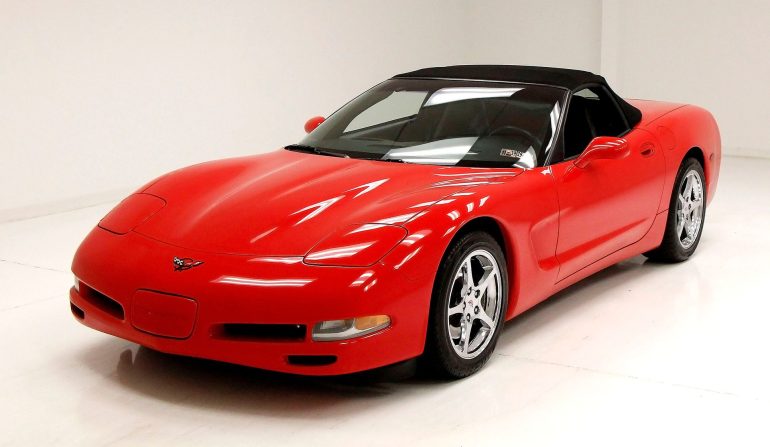
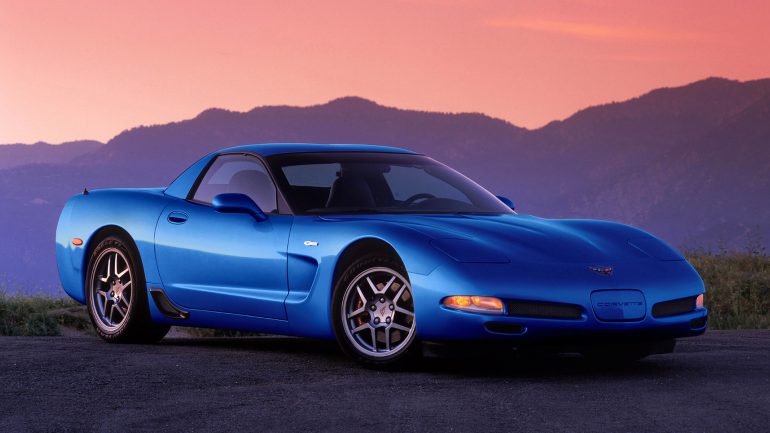
 2003 Chevrolet Corvette 50th Anniversary | Photo Credit: Bring a Trailer
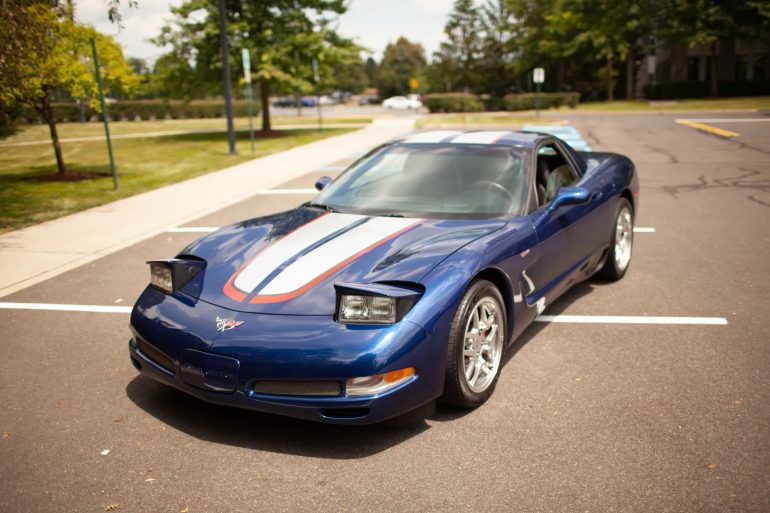
Chevrolet sold the C5 in four bodies and three factory editions, and that is how the market sorts it: the Z06 first, then the Pace Car, the 50th Anniversary and the Commemorative Editions, then the 1999–2000 hardtops, then coupes and convertibles by transmission and mileage. Within each the six-speed adds and the automatic subtracts, the Preferred Equipment Group (HUD, power telescoping column, memory seat, electrochromic mirrors, Twilight Sentinel) is expected on the better cars, and color moves the price more than most buyers expect. The table sorts what was built; the Z06 model page carries the full guide to that car, and the edition posts the full guides to each.
One warning that applies to every row: the C5’s editions are easy to imitate. Radar Blue, Anniversary Red and Le Mans Blue have all been repainted onto ordinary cars, Pace Car graphics and Commemorative stripes are reproduced, and a 1999–2000 hardtop with Z06 wheels, badges and a red engine cover is the most common forgery of the generation. The console service parts label and the VIN settle every one of them; the verification table below gives the codes.
MORE: THE C5 Z06 GUIDE / THE 1998 PACE CAR / THE 50TH ANNIVERSARY EDITION / THE COMMEMORATIVE EDITION / EVERY C5 ENGINE
| BODY OR EDITION | WHAT IT IS | BUILT | WHAT A BUYER SHOULD KNOW |
|---|---|---|---|
| Coupe | The hatchback with the removable roof panel (body-color, transparent, or both with C2L), 1997–2004; the only body in 1997 | 124,596 | The most of them and the least expensive way into a modern Corvette. Priced by transmission, mileage, the equipment group and the glass roof; check both roof panels are present on a C2L car and that the panel does not creak. |
| Convertible | The roadster with a trunk, from 1998, with a manual top and a glass rear window | 89,610 | Brings a few thousand over a coupe of the same mileage; the better car in summer. Check the top’s rear seal, the latch adjustment, the trunk drains and the tonneau struts. More automatics than six-speeds were built, so a six-speed convertible carries a premium. |
| Hardtop (FRC) | The fixed-roof convertible body with a bonded roof and a trunk, six-speed and Z51 standard, black leather only, 1999–2000 | 6,121 | The lightest and stiffest C5, 12 percent stiffer than the coupe, the cheapest when new and the body the Z06 was built on. Brings a few thousand over a coupe; the Z06-style modifications many carry help when done well. A 1 in the sixth VIN position with a G in the eighth is a hardtop, not a Z06. |
| Z06 | The hardtop body with the LS6 (385 hp in 2001, 405 from 2002), M12 close-ratio six-speed, FE4, wider wheels, titanium exhaust, brake ducts and mesh grille; 2001–04 | 28,388 | The performance C5 and the first modern Corvette to appreciate: 5,773 / 8,297 / 8,635 / 5,683 by year. The 405-hp 2002–04 cars bring more than the 2001; unmodified cars with the titanium exhaust, the right wheels and the inflator kit bring more than the cam-and-headers majority. An S in the eighth VIN position is the test. |
| 1998 Indy 500 Pace Car | Z4Z: Radar Blue convertible with yellow wheels, yellow-and-black leather, a black top and factory yellow graphics; 547 six-speeds | 1,163 | The collectible of the LS1 years, often stored, so low-mileage cars are common and six-speeds bring more. Verified by a 3 in the sixth VIN position, Z4Z on the label and paint code 21; graphics are reproduced and repainted purple convertibles exist. |
| 2003 50th Anniversary Edition | 1SC, $5,000: Anniversary Red over Shale with embroidered emblems, champagne wheels, a Shale top on the convertible, and Magnetic Selective Ride Control | 11,632 | Delivery-mileage cars bring $30,000–$46,000 and turn up every month; driven ones sit only a few thousand above an equivalent 1SB car. Verified by 1SC and F55 on the label and paint code 94; the exterior 50 badges are on every 2003 and prove nothing. Shale leather marks easily and the champagne wheels chip. |
| 2004 Commemorative Edition | Le Mans Blue with Shale leather, polished wheels with special centers and Le Mans badges on coupe and convertible (Z15); on the Z06 (Z16) silver-and-red stripes, black embroidered headrests and the carbon-fiber hood | 6,899 (2,025 Z06s) | The Z06 Commemorative is the most valuable C5 of all, $35,000–$43,000 for documented low-mileage cars; the coupe and convertible carry a modest premium over a 1SB car. Verified by Z16 or Z15 on the label and paint code 19, and on a Z06 by the weave of the carbon hood under the stripe’s red border. |
| Z51 / F45 / F55 | The performance suspension (Z51), Selective Real Time Damping (F45, 1997–2002) and Magnetic Selective Ride Control (F55, 2003–04) | Optional | Z51 adds to a six-speed car and is standard on hardtops; F45 is a mild plus; F55 is a real plus on the road but the dampers are expensive to replace and the originals are now over twenty years old. Check for leaks, a Service Ride Control message, and cars converted to conventional shocks with the warning disabled. |
| Tuner cars | The Callaway C12 (about 20 built, 440 hp), Lingenfelter 427 and twin-turbo cars, Mallett and others | A few hundred | Trade on the builder and the documentation rather than the C5 market; a Lingenfelter twin-turbo six-speed brought $27,000 at Hagerty in October 2025. Buy the paperwork and a specialist’s opinion of the build. |
The C5 is the most affordable modern Corvette and the market sorts it by body and edition first: the Z06, then the Commemorative and 50th Anniversary editions and the 1998 Pace Car, then the hardtops of 1999–2000, then coupes and convertibles by mileage. The six-speed adds to everything and the automatic subtracts; on a Z06 the 405-horsepower 2002–04 cars bring more than the 385-horsepower 2001. Low mileage counts for more than the year, and the Z06 has been the first modern Corvette to appreciate, which the market has noticed.
The results the site tracked on Classic.com between October 2025 and October 2026 show the spread. Standard coupes and convertibles sold for $8,100 to $31,900, most clean cars between $13,400 and $25,000, with the 1997 the rarest but not the dearest; 1999–2000 hardtops for $21,000 to $24,750; 1998 Pace Car replicas for $18,000 to $41,000 with the benchmark about $30,000; 50th Anniversary cars for $11,550 to $46,200 with a benchmark of about $26,400; coupe and convertible Commemoratives for $19,800 to $22,500. Z06s sold for $16,300 to $55,000, most clean cars between $21,000 and $36,500, with the 2001 benchmark about $28,500 and the 2004 Commemorative Z06 about $34,800; delivery-mileage Z06s brought $41,500 to $55,000. Dealers asked more across the board, up to $45,995 for a 2002 Z06 and $39,990 for a Pace Car.
Two cautions that apply to every figure on this page. Auction figures are hammer prices, so add the buyer’s premium (typically 5 to 10 percent) when comparing with dealer asking prices, and treat asking prices and unsold high bids separately from completed sales: an 11,000-mile 1997 bid to $21,000 at Mecum without selling is not a $21,000 car. The year pages carry each year’s results and are updated as the site tracks new sales; the price ladder below puts the whole generation in five tiers.
MORE: 1997 MARKET / 1998 MARKET / 1999 MARKET / 2000 MARKET / 2001 MARKET / 2002 MARKET / 2003 MARKET / 2004 MARKET / IS THE C5 Z06 TAKING OFF? / CORVETTE AUCTION COVERAGE
What the money buys at each level of the 1997–2004 market, from the results above. The ranges are for the generation as a whole; a Z06 sits a tier above a coupe of the same mileage and condition, an edition a half-tier above an ordinary car, and a six-speed above an automatic throughout. Where a car is modified, the build and the receipts set the price more than the badge.
$8,000 – $13,000
Coupes and convertibles with 75,000 to 140,000 miles, older paint, a few warning lights and the usual deferred items. Recent sales: 141,000 miles for $8,100 and 76,000 for $10,250 on Bring a Trailer, 123,000 for $8,200 at Cars & Bids, 106,000 for $12,650. The LS1 shrugs off the miles; the interior, the column lock and the suspension bushings do not. The cheapest Corvette with a modern drivetrain, and the subject of our $10,000 Bargain Hunting piece.
$13,000 – $22,000
Clean coupes and convertibles with 20,000 to 65,000 miles, mostly automatics, with the equipment group on the better ones and the known faults sorted. Recent sales: 13,000- to 39,000-mile automatics at $17,500 to $18,900, 21,000- to 40,000-mile cars at $13,900 to $19,500, a 67,000-mile 1997 six-speed at $18,250. The best value in the generation: a lot of Corvette for the price of a used compact.
$22,000 – $32,000
Low-mileage six-speed coupes, the better convertibles, the 1999–2000 hardtops, driven Pace Cars and 50th Anniversary cars, and the coupe and convertible Commemoratives. Recent sales: 4,000- to 35,000-mile six-speeds at $23,000 to $26,000, hardtops at $21,000 to $24,750, convertibles at $29,700 to $31,900, Commemorative coupes at $22,500, a 15,000-mile 50th at $24,200. A real car with its paperwork, usable and holding its value.
$25,000 – $40,000
Clean 2001–04 Z06s with 10,000 to 50,000 miles, documented Commemorative Z06s, low-mileage 50th Anniversary cars and six-speed Pace Cars. Recent sales: Z06s at $25,000 to $36,500, Commemorative Z06s at $29,000 to $40,000, 50th Anniversary cars at $29,750 to $35,000, a 19,000-mile six-speed Pace Car at $28,750. The tier that has appreciated since 2020; buy the unmodified car with the titanium exhaust, the right wheels and the inflator kit.
$40,000 – $55,000
Z06s and editions with a few hundred to a few thousand miles, bought new as keepsakes and stored. Recent sales: a 354-mile 2003 Z06 at $55,000, a 430-mile 2002 Z06 at $50,000, a 550-mile 50th Anniversary six-speed at $46,200, a 4,000-mile 2004 Z06 at $42,750, a 22-mile Pace Car at $41,000, an 11,000-mile Commemorative Z06 at $40,000. Priced against a $47,500–$52,385 sticker, these are the first modern Corvettes to sell for more than new.
Body and edition. The Z06 is its own market, a tier above a coupe of the same mileage; the Commemorative Z06 leads it, then the 2002–04 cars, then the 2001. Among the rest the editions lead (Pace Car, 50th Anniversary, Commemorative), then the hardtops, then convertibles over coupes by a few thousand dollars.
Mileage. The biggest single factor on a C5: a 5,000-mile car of any kind brings two to three times a 60,000-mile one, and delivery-mileage Z06s and editions bring more than they cost new. High-mileage cars are not worse cars, because the LS1 and LS6 go well past 150,000 miles with oil changes, but they are cheaper cars, and the interior, the bushings and the column lock are what the miles wear.
Transmission. The six-speed adds to everything and the automatic subtracts, more on a coupe than on a convertible and most of all on a hardtop or a Pace Car. Serious enthusiasts will not consider an automatic; daily drivers in traffic often should.
Equipment and options. The Preferred Equipment Group (HUD, power telescoping column, memory seat, electrochromic mirrors, Twilight Sentinel, Bose) is expected on the better cars; Z51 adds on a six-speed; F55 Magnetic Ride is a plus on a 2003–04 car if the dampers are healthy; the glass roof, polished wheels and chrome wheels are talking points. The less-is-more buyer saves real money by skipping them and gets the same drivetrain.
Color. Chevrolet offered more than twenty colors over eight years and they are not priced alike. Torch Red and Black bring the highest asking prices and Millennium Yellow is sought; the blues and silvers run a little under; light blue, white and the greens are the least expensive, and because fewer were ordered they are also the rarer cars, so a buyer who is flexible on color gets a more unusual Corvette for less. Electron Blue and Millennium Yellow on a Z06, Radar Blue, Anniversary Red and Le Mans Blue on the editions are the exceptions that add.
Originality and history. An unmodified Z06 with its titanium exhaust, factory wheels, inflator kit and paperwork brings more than the cam-headers-and-cat-back majority; a documented low-owner car with service records brings more than a clean history report alone; a clean CarFax or AutoCheck is the floor, not the ceiling. Track use shows in the clutch, the torque tube, the wheels and the rotors before it shows on the odometer.
MORE: C5 COLORS BY YEAR / RPO CODES & OPTIONS / PRODUCTION NUMBERS
The C5 Z06, the 1998 Pace Car, the 50th Anniversary and the Commemorative Editions have appreciated since about 2020, the first modern Corvettes to do so, and the lowest-mileage Z06s now bring $40,000 to $55,000 against a $47,500–$52,385 sticker. The reasons are simple: the Z06 was the last Corvette under 3,200 pounds with a manual only and no electronic nannies worth the name, 28,388 were built and a great many were modified or tracked, so clean original cars are already scarce, and the people who wanted one at 25 can now afford one at 50.
The ordinary C5, with 220,000 coupes and convertibles built, is a driver’s car whose price tracks mileage and condition and has been flat for years; the 1998–2000 coupes are the cheapest Corvettes on the market and will stay that way until the supply of clean ones thins. Buy one to drive and expect to get your money back rather than make any, which for a 345-horsepower sports car is a fine outcome.
The realistic expectation is steady appreciation for unmodified, documented Z06s and editions with low mileage, stability for clean driver-grade cars, and nothing at all for a modified car bought as an asset or a high-mileage car bought as a future collectible. The best risk-and-reward in the generation is a 2002–04 Z06 with 20,000 to 40,000 miles, unmodified and sorted, in the high twenties to mid thirties: a real car at a price that has only one direction left in it if the market is right, and a 405-horsepower Corvette to drive if it is not.
The site asked whether the C5 Z06 is the next Corvette to take off in value; the answer so far is that the best cars have and the rest have not. The year pages are updated as new results come in.
MORE: IS THE C5 Z06 TAKING OFF? / AUCTION RESULTS / BARGAIN HUNTING
The charts below from our friends at Classic.com track recent sales and trends in the 1997–2004 Corvette market: the generation as a whole, the Z06, the 50th Anniversary and Commemorative Editions. For any other year or body, the year pages carry the results the site tracks and Classic.com has the rest.
The Z06 model page carries a full buyer’s guide for that car: which year to buy, what one costs from the tracked results, how to verify a real one, the inspection list, the known issues and the options that carry a premium. The edition guides cover the Pace Car, the 50th Anniversary and the Commemorative Edition, and the C5-R page the race car behind them.
MORE: THE 2001–04 Z06 / THE 1998 PACE CAR / THE 50TH ANNIVERSARY / THE COMMEMORATIVE EDITION / THE C5-R / THE FULL MODEL LIST
A C5 drives like a modern car, which after any earlier Corvette is the first surprise: the hydroformed chassis does not shake, the transaxle puts the weight where it belongs, the aluminum suspension soaks up what the C4 crashed over, and 345 or 350 horsepower moves 3,200 pounds to 60 in the high fours. The second surprise is how ordinary it is to live with: a hatch that swallows two golf bags, a trunk on the convertible, a roof panel that comes off in a minute, 25 mpg at a cruise, and a cabin that, plastics aside, works. The steering is light and a little numb on base cars, better on Z51 and hardtops, and the run-flat tires are the thing most owners change first for ride and noise.
Six-speed or automatic? If the car is a weekend car, for shows, cruising, caravans or track days, buy the six-speed: the T56 is a good gearbox, the market wants it and for serious enthusiasts an automatic is not worth considering. If the car is a daily driver, think again. Morning and evening rush hour is a litany of start-and-stop, a manual in that is an exercise in frustration, and the 4L60-E is a competent, durable automatic that most C5s were sold with. Buy the transmission you will enjoy on the roads you actually drive.
The LS1 cars. Smooth, torquey, quiet at a cruise and happy to rev; the 2001–04 cars have five more horsepower and a crisper intake, and Active Handling as standard, which is a real improvement on a wet road. F45 Selective Real Time Damping is mild; F55 Magnetic Ride on 2003–04 cars is the best ride-and-handling combination of the generation when the dampers are healthy. Z51 is firmer and sharper and the hardtops, with Z51 standard and 12 percent more stiffness, are the best-driving pre-Z06 C5s.
The Z06. A different car: 385 or 405 horsepower in 3,118 pounds, the close-ratio M12, FE4 suspension that is firm on a bad road, 295-section rear tires that hook up, a titanium exhaust that sounds like it, and 3.9 seconds to 60 on the 2002–04 cars. It is also the C5 most likely to have been driven hard, so the drive is where the inspection pays: a shudder on take-up or a rumble from behind the seats is the clutch or the torque-tube coupler, a crunch into second or third is the M12’s synchros, and a vibration under braking is a cracked cast-spun wheel or a warped rotor.
Daily driver or weekend car? The C5 is the first Corvette that is a reasonable answer to both. A 2001–04 coupe with the automatic, the equipment group and Active Handling is a comfortable daily driver that happens to run twelves; a hardtop or a Z06 with the six-speed is a weekend car that can do the commute if it must. Higher-mileage cars can be reliable, and many owners praise 100,000-mile cars that drive like new, but a daily driver’s mileage matters more than a weekend car’s, and a car for long trips and caravans should see a GM technician before you buy it.
Drive it until it reaches operating temperature, in city and highway conditions, with the radio off. Listen for knocking, pinging, squealing, humming or grinding, which can mean anything from a failing drive belt to damaged lifters; make a list of anything out of the ordinary and ask about each. Then drive another one, because a 1998 automatic coupe, a 1999 hardtop and a 2004 Z06 are three different cars with the same shape, and the right one is as likely to be the quiet coupe as the Z06 you came for.
MORE: C5 PERFORMANCE FIGURES / SPECS BY YEAR / EVERY C5 ENGINE
Setting a budget and sticking to it is the first and most important part of buying any car, and most especially a Corvette, because the purchase price is only the first number. The good news is that a C5 is the cheapest Corvette to own by a distance: the LS1 and LS6 are wet-sump pushrod V-8s any shop can service, oil changes and brakes cost what they cost on a Camaro, parts are shared across 248,715 cars and the aftermarket, and the car returns 25 mpg on the highway. In owners’ experience a sorted driver runs $1,000 to $2,000 a year in parts and labor plus insurance, which on a standard policy is ordinary for a sports car.
The bills to know about are specific. Tires: a set of four run-flats is $1,800 or more, the Z06’s Eagle F1 Supercar sizes are limited and expensive, and because there is no spare or jack a car on non-run-flats needs the inflator kit or a plan. The electronic column lock: a dealer or aftermarket bypass is cheap, a column is not. The Electronic Brake Control Module: a rebuild is a few hundred dollars and the site has a DIY. Fuel-level senders: a tank-out job that most cars have had. Headlight gears: brass kits and an afternoon. Seat bolsters and foam: a few hundred to recover. F55 magnetic dampers on 2003–04 cars: the originals are over twenty years old and replacements are expensive, so price a tired set into the car. On a Z06, a clutch or a torque-tube coupler is a transaxle-out job, the titanium exhaust is easily damaged by careless jacking and costly to replace, and the cast-spun 2002–04 wheels crack on potholes.
Used cars rarely come with a warranty, and the ones that do are generally good for three days or a thousand miles, so budget for the inspection and for whatever it finds, plus a first-year refresh of fluids, Dexcool, plugs and wires, brakes and tires on any car that has sat or been neglected. Insure a Z06, an edition or a low-mileage car on an agreed value with a classic-car insurer; an ordinary policy is fine for a driver. Storage matters less than on a classic, but a C5 that lives outside loses its roof seals, its interior and its paint.
In other words: the C5 is the Corvette you can afford to run as well as to buy, as long as you buy a sorted one or price the sorting into the deal.
MORE: C5 MAINTENANCE SCHEDULES / C5 COMMON ISSUES / THE C5 BUYING & MAINTENANCE GUIDE / OWNER’S MANUALS
Even before you find the one, you will spend a lot of time looking at C5s, online, at dealers and at auction, from bone-stock to highly modified. The price range is wide and misleading, so the work that pays is done before the first viewing: how you will use the car, what you can realistically afford and for what equipment, how much weight to put on mileage, whether the car is what it claims to be, and where it sits in a market that has already decided what it likes. Our original C5 guide’s shopping advice and its full exterior, interior and other-considerations checklists follow below as written, between our own notes on use and mechanical condition and our note on the market.
Decide first what the car is for, because the C5 is the first Corvette that can honestly be either. A weekend car for shows, cruising, caravans and track days wants the six-speed, a hardtop or a Z06, and can be a higher-mileage car that saves thousands; a daily driver wants the automatic in traffic, the Preferred Equipment Group (1SB or 1SC: the Head-Up Display from 1999, the power telescoping column, memory seats, electrochromic mirrors, Twilight Sentinel automatic headlamps and the Bose system), and a closer look at the odometer. Most regrets come from buying one kind of car for the other purpose: the Z06 that has to sit in rush hour, the automatic coupe that goes to the autocross. Our original guide’s advice on this follows, as written.
The LS1 and LS6 are among the most reliable engines GM has built and any shop can service them, so the questions are the known C5 items rather than the drivetrain: whether the column-lock recall or a bypass is on the car, whether the EBCM, the fuel senders, the headlight gears and the balancer have been dealt with, and on a Z06 whether the 2001 valve springs were replaced and how hard the car has been driven. Ask what has been done rather than what has been “gone through”: receipts for those items are worth more than a seller’s description. Many Chevrolet dealers have Corvette-specific technicians, and a car bought for long trips or caravans should see one before the money changes hands.
Setting a budget – and sticking to it – is probably the first most important part to buying any car, but most especially when considering a Corvette.
For most people, a Corvette is not going to be a daily driver, and it will likely spend a good amount of its time being driven at the racetrack, or on the weekend. Even if you are considering the car for your every-day vehicle, it is important to weigh pros and cons of purchasing new versus used, high mileage versus barely driven, base level trim versus higher-end models.
But even when considering these things, the price range of C5 Corvettes can vary dramatically, and it is important to understand how you plan on using the car so that you can narrow your search and begin to focus in on the cars that really meet your needs.
As suggested above, a Corvette is often purchased as a second (or third, or fourth….) car that is intended solely for weekend use such as car shows, cruising, track racing, etc. If this is the case, it might make sense to purchase a six-speed manual instead of an automatic transmission. For serious sport car enthusiasts, driving a Corvette with an automatic isn’t even worth considering.
But what if you are driving the car every day? If you’ve ever sat in traffic during morning or evening rush hour, you know that it’s a litany of start-and-stop driving. Driving any car with a manual transmission in this type of environment is an exercise in frustration. If your Corvette is going to be a daily driver, then the automatic transmission is definitely your friend. Along those same lines, If the car’s primary use is as a daily driver, then the number of miles on the odometer needs to be a serious consideration. Cars these days are better built than any that have come before them. However, even with more stringent engineering standards, higher quality construction and better materials, a used car is still a used car.
As we mentioned earlier, the C5 Corvettes utilize LS engines. While the LS family of engines has an outstanding reputation, mileage is still a strong measure of the “how much life” the car has left in it. Higher-mileage C5 Corvettes are definitely more affordable, and you’ll hear many owners praise their high-mileage cars as being very reliable, even after the odometer rolls over the 100k mark. We’ve seen a number of incredibly well cared for Corvettes out there that drive just like they were new – and look like it too!
If your Corvette is going to be a “weekend-warrior”, then considering a higher-mileage Corvette may save you thousands and still provide you with many years of trouble-free driving. At the same time, if you are considering going on long road trips, Corvette caravans (a popular pastime for MANY Corvette owners) or the like, it is important -and highly recommended - that you have the engine thoroughly inspected by a trained GM technician prior to purchase.
Once you’ve determined how you plan on driving your Corvette, the next step in the process is to consider what you can realistically afford.
Since the introduction of the C7 Corvette in 2014, and the increased availability of the C6 Corvette since the C7’s introduction, the C5 has become a very affordable model – with many lower mileage cars available on the market for under $20,000.00. Even the higher-priced Z06 Corvettes have become increasingly affordable, and, like its coupe and convertible counterparts, examples have been seen listed around twenty-grand.
However, the price of a Corvette can be a little misleading.
While its probable that you’ll find even lower mileage (less than 75,000 miles) for $20k or less, you need to understand what you are getting for that price.
Beginning in 2001, Chevrolet introduced trim packages in their Corvettes that provided consumers with bundled options that enhanced the driver’s experience. These packages, which were known as “Preferred Equipment Groups” and featured bundled options including:
A Heads Up Display (HUD)
A Power-Telescopic Steering Column
Electrochromatic Mirrors
Driver Seat Memory Package
Twilight Sentinel (auto-dimming mirrors for night driving conditions)
Even at its introduction in 1997, the fifth-generation Corvette could be ordered with several options that did not come standard on the base-model cars. As such, it is important to look beyond the price-tag and the mileage, and evaluate what options are most important. For some, it might be the type of wheels on the car (chrome versus painted, for example), while others might want the technology to be more robust – a heads-up display and a Bose stereo. Whatever the options, reviewing the options that were available during each model year and identifying the options that are important to you will help narrow down your search considerably.
Even before you find “the one,” you will spend a lot of time looking at Corvettes. Whether you choose to shop online, visit a local dealership, or even consider purchasing a car at an auction, having a clear understanding of what to look for will help ensure you find a car that will make you happy for many years to come. The process itself can be a lot of fun and you’ll likely see a wide variety of cars – from bone-stock to highly-modified – that might catch your eye. This list of items will help you identify potential issues with each car along the way.
(NOTE: This list, while somewhat extensive, is not a complete list of potential issues. As always, we encourage you to take any car you might consider purchasing to a reputable dealer or mechanic for a more advanced inspection.)
Because Corvettes sit so low to the ground, there is always the risk of damage to the front fascia, fenders, quarter panels, etc. Before you begin your inspection, look beneath the car for any identifiable damage to body panels (scratched, torn, cracked or shattered.)
The front airdam on the fifth-generation Corvette is known to take a fair amount of punishment during vehicle operation. General Motors identifies the airdam as a “wear” part.
In the event the air damn is scraped up, it may require replacement and is a necessary component to ensure the car “breathes” (gets adequate air to cool the engine) properly. If the air damn is hanging or missing (even partially – it comes in 3 pieces) this could be an early warning of larger issues. Even if the car checks out, make sure that the air damn is in good condition or replace it after purchase.
Be observant of panel-edge seams (look at space between panels such as the fender and door line, fender and hood, etc.). Look at the paint closely and look for any disparity between panels. This could indicate that a panel(s) may have been replaced. Similarly, raise the hood and check for worn or replaced screws that hold body panels in place.
Open all components – the hood, the doors, the fuel door, and the rear hatch – and look for paint overspray or mis-match in paint colors. Again, this can indicate that the car was involved in an accident or suffered some kind of body damage.
Inspect the tires! Make sure that the installed tires have good tread on them. One rule of thumb that is often referenced is the “Honest Abe” approach. Take a penny and insert it so that Lincoln’s head is in the tread. If you can see the top of the president’s head, then the tire tread is considered low and will need to be replaced.
When inspecting the tire tread, make sure you turn the front wheels all the way to the right and left, and check for tire wear on the inside of the tire. Uneven wear could indicate an alignment issue.
In addition to tire tread, inspect the type of tire installed. Corvettes come with run-flat tires from the factory. These are installed because Corvettes do not have a spare tire or jack. Some sellers (especially private sellers) may indicate that they’ve replaced the tires with regular, less-expensive tires that match the specified size, but if they aren’t run-flat tires, you run the serious risk of getting stranded in the event of a flat tire.
Keep in mind that a new set of tires for any C5 Corvette can cost as much as $1,800 for a set of four run-flat tires.
On Z06 Corvettes (2001-2004), ask if the car has the flat-tire kit (which includes a special tire pump and fix-a-flat type inflation canister. While the Z06 should also be equipped with run-flat tires, this additional protection may save you unnecessary wear on the wheel rim or even the suspension if a flat tire does occur.
While inspecting the tires, take a few minutes to inspect the rims as well. Look closely for scuffs or other damage.
INSPECT THE ENGINE! Overlooking the engine and mechanical components of a car is one of the most common mistakes made by people considering the purchase of a used vehicle. In many (most) instances, a used car does not include a warranty, and even those that do are generally only good for 3 days or 1,000 miles.
Start by looking at how clean the engine is. A clean engine indicates a well-cared-for car. Corvette owners love to show off their vehicles, so a clean engine often means that the car’s owner has taken good care of the entire car.
Look closely at the valve covers, cylinder heads, and exhaust manifold. Look for any indications of leaks or discoloration. Oil leaks around the valve covers could indicate hard driving and be symptomatic of other issues that will require repair.
If possible, inspect the cooling system. Make sure that Dexcool antifreeze has been used if the system has been flushed.
Inspect the plug wires (if possible) for cracks or discoloration.
Before driving the car, start the car and let the engine run. Listen for any “abnormal” sounds. If you hear anything that sounds out of the ordinary, make a list and inquire about each.
Drive the car with the radio off and listen to the engine. Make sure you listen for any knocking, pinging, squealing, humming or grinding sounds. These could indicate issues ranging from a failing drive belt to damaged valve lifters. While not all engine sounds indicate an issue, this step is an important part of the car buying process and should not be overlooked.
NOTE: We strongly recommend that you have the engine inspected by a professional mechanic before purchasing any Corvette. While the LS1 (coupe/convertible) and LS6 (Z06) engines are known for their durability and reliability, even the best engine requires proper care and maintenance. Purchasing an engine that has been poorly or improperly maintained can result in expensive repairs!
Before entering the vehicle, inspect the driver’s seat closely. The driver’s seat of any Corvette is a great indicator of how well the car was maintained. Look for tears in the side bolsters, the seams, and in the headrest areas. Look at the condition of the leather. Is it faded or cracking? Properly maintained leather should remain soft and supple. If the seats are faded, cracked or peeling, these indicate a poorly maintained interior which often translates into a poorly maintained car.
If the car has seat covers installed, remove them and inspect the factory seats beneath. In some instances, owners will cover the seats to protect the factory finishes, but its just as likely that those seat covers are there to cover something else up.
Operate every electronic device on the car’s interior. Like the engine (above) this is an area where things often get overlooked. At a minimum, you should inspect all of the following items:
The driver door handle.
The passenger door handle.
The driver window switch.
The passenger window switch.
The driver door lock button.
The passenger door lock button.
The driver/passenger sideview mirror controls.
The driver and passenger power seats (if so equipped).
The turn-signal switch. (Have someone inspect the front and rear exterior turn signals to ensure operability.)
The cruise control switch.
The wiper switch (check delay modes and all speeds.)
The windshield washer/wiper switch (make sure the washer fluid sprays evenly on the windshield!)
The headlight switch – NOTE: The C5 Corvette uses “pop-up” headlights. Make sure that both units roll open and closed easily, and at the same time. If one or the other delays during this inspection, it could indicate an issue with the headlight drive motors.
High beam/low beam switch.
Brake pedal (have someone inspect the brake lights.)
The stereo, including all components:
Cassette deck (if so equipped).
CD Player (if so equipped).
MP3 Input (if so equipped).
Left and Right stereo channels.
Volume Control.
Channel Selector.
Preset channel buttons.
HUD (Heads-Up Display) if so equipped.
Adjust brightness control
Adjust position switch
All other dashboard control switches (which will vary based on the options the C5 was equipped with from the factory.)
Heater/AC Control
Rear defogger switch.
Seat warmer switches (if so equipped.)
Ride Selection Control Switch (if so equipped.)
Auto-dimming rearview mirror (if so equipped.)
Cigarette/auxiliary power ports.
Make sure to drive the car until it reaches normal operating temperature. Drive it in both city and highway conditions. Make sure that no warning lights are lit on the dashboard or, if they are, have them inspected by a neutral, third-party mechanic who will be able to indicate its potential cause.
When operating the car, pay close attention during braking. Make sure that, while braking, the car slows down in a smooth, even manner. If you feel a pulsing during braking, it could indicate that the brake rotors are warped. A grinding or squealing sound could be indicators that the brake pads are worn and will need to be replaced.
NOTE: Inspect the brake rotors. If you inspect them after vehicle operation, make certain that you DO NOT TOUCH THEM. They will likely be heated and can cause serious injury (burns.)
In addition to all of the electronic controls in the car, make sure to test/inspect the parking brake (especially on Corvettes equipped with a manual transmission.) Make certain the parking brake fully engages and disengages. This can easily be tested by bringing the car to a stop on a gradual incline, engaging the parking brake, and removing pressure from the vehicle’s brakes. If the car remains stationary, the parking brake is engaged and operating.
If the car has a transparent top, inspect it for crazing (small, hairline cracks in the glass). Make sure that the glass top is transparent (not hazy or hard to see thru.) While this is an accessory item and not critical to the operability of the car, it is still an indicator of how well the car was taken care of.
Believe it or not, color affects price! Between 1997 and 2004, Chevrolet produced the Corvette in more than 20 distinct colors ranging from the traditional red and black, to all shades of blue, green, purple, yellow, silver, white and more. While color may be a major consideration for some, you may be able to save a fair amount of money if you are willing to purchase a Corvette that comes in a less-traditional color.
Market research indicates that red and black Corvettes often have the highest asking price. Yellow is also a more highly sought-after color.
Shades of blue and silver are somewhat less desirable, which often translates into less expensive.
The least expensive models tend to be light blue, white and green. Ironically, these colors are also less common because fewer Corvettes were ordered new with these color choices, but if you can find a C5 Corvette in one of these colors, you’ll likely save money on your purchase and end up with a car that is more unique!
Sometimes “less is more”. As any Corvette owner will tell you, there is no other driving experience that compares to the exhilaration of driving (and owning) a Corvette. At the end of the day, all of the extras found in the higher trim packages such as the HUD, the higher end stereo, some of the other electronic extras are fun, but their absence does not detract from the elation of pressing the accelerator pedal to the floor and feeling yourself get thrown back in the driver’s seat! If you can live without the “extras”, you can save a lot of money on the purchase of your vehicle and, speaking from experience here, you will still end up with a lot of Corvette – and moreover, a lot of FUN!
Even after carefully inspecting any car, it is still incredibly important to know as much about the car as possible. Fortunately, there are a number of companies out there that can provide you with a detailed history of the car you’re considering buying. Companies like CarFax.com and Autocheck.com (amongst others), can provide you with information about accidents, number of previous owners, service history, where the vehicle originated (where it was originally sold), etc. These reports are a valuable tool and should definitely be purchased as part of the car buying process.
We’ve said it before, and we’re going to say it again – take time to have the car inspected by a professional mechanic. Chevrolet dealers have trained mechanics – many have Corvette specific mechanics – who can properly inspect your vehicle prior to purchase. One item to consider is scheduling a time with your mechanic prior to scheduling time to go look at a vehicle. This will ensure that you can have the car inspected by a mechanic at the same time you are inspecting it yourself.
Know where the car sits before you pay for it. High-mileage LS1 coupes are the floor of the Corvette market and will not go lower; clean driver-grade cars are stable and easy to resell; the 1999–2000 hardtops and 2001–04 six-speed coupes are the undervalued tier; unmodified Z06s and the editions have appreciated and the best of them sell for more than they cost new. A modified car sells on its build to a fellow modifier at a discount, however good the parts. Price against the site’s tracked results and the year pages rather than the asking prices around it, and remember that an unsold high bid is a ceiling the market declined to pay.
The C5 improved on almost every aspect of the C4, but it had its issues, most addressed by technical service bulletins or recalls and a few serious enough to still cause concern. None of them is a reason not to buy a C5; all of them should be on the inspection list and in the negotiation, and a car with paperwork for the fixes is the one to buy. The one that matters most is the electronic column lock.
The year pages carry the common-issues posts for each year; the list below is the generation’s, with the Z06’s own items at the end.
MORE: C5 COMMON ISSUES / C5 RECALLS / C5 SERVICE BULLETINS
| PROBLEM | YEARS | WHAT HAPPENS | THE FIX AND THE COST |
|---|---|---|---|
| Electronic column lock | 1997–2004 | The theft-deterrent lock on the steering column misreads the key if it is inserted even slightly wrong, fails to release so the car will not start, shows “Pull Key, Wait 10 Seconds”, and in the worst cases has locked the column with the car moving. Recall 04V060 (2004) covered it. | Verify the recall work or the bypass before buying any C5. Dealers disabled or relayed the lock under the recall and most cars now carry a dealer or aftermarket bypass, which is cheap; a new column is not. Ask which the car has and look for the relay. |
| EBCM, wheel-speed and steering-position sensors | 1997–2004 (EBCM mostly 1997–2000) | ABS, traction and Active Handling lights from a failing Electronic Brake Control Module, a dirty or failed wheel-speed sensor or the steering-wheel position sensor; the early EBCM is a known weak point. | A rebuilt EBCM is a few hundred dollars and the site has a DIY; the sensors are inexpensive. Have any warning light diagnosed by a neutral third-party mechanic rather than taking the seller’s word. |
| Harmonic balancer | 1997–2004 | The balancer walks forward on the crank on early LS1s, taking the pulley out of line; a wobble at idle and belt noise. | A new balancer, pinned on the better repairs; a known job. Look for wobble with the engine running. |
| Rocker-arm needle bearings | 1997–2004 | The rocker trunnion needle bearings fail and announce themselves as valvetrain tick and metal on the drain plug. | A trunnion upgrade kit and an afternoon; cheap insurance on any car with a tick. |
| Fuel-level senders and fuel pump | 1997–2004 | The sulfur in modern fuel kills the sending units, so the gauge reads empty or wrong and the light stays on; the main pump behind the driver’s seat hums. | Replacement senders, a tank-out job most cars have had; the quieter later pump is a known fix. Check the gauge against a fill. |
| Headlight motors | 1997–2004 | The pop-up headlight gears strip and one lamp stays down or lags the other, so the car appears to be winking at you. | Brass gear kits and an afternoon, or rebuilt motors; a readily identifiable and inexpensive fix. Cycle the lights several times and make sure both open and close together. |
| Battery and PCM | 1997–1999 | The original Delco battery cracked at the posts and leaked acid onto the PCM and harness beneath it. | Check the battery tray and the computer’s connectors for corrosion; a damaged harness is a bigger job than it looks. |
| Front rotors and brakes | 1997–2004 | The front rotors warp and the pedal pulses under braking; worn pads grind or squeal. | Rotors and pads cost what they cost on any GM car; the Z06’s are larger. Do not touch the rotors after a drive; they will burn you. |
| Proximity key and fobs | 1997–2004 | The 1997–99 proximity system and its receivers fail; the 2000-on fobs fail and are easily lost, and the passenger door has no key cylinder, so a dead battery means the driver’s door or the trunk release. | Receivers and fobs are available; make sure the car comes with two working keys and that the passive entry works. |
| Roof panel, hatch and seals | 1997–2004 | The removable roof panel creaks and leaks until its seals are greased; the hatch-glass seal cracks; a transparent panel develops crazing (hairline cracks) and hazes; the convertible top’s rear seal and the trunk drains let water in. | Seals, grease and adjustment are cheap; a hazy transparent panel is a few hundred dollars used and says how the car was kept. Check both roof panels are present on a C2L car. |
| Interior wear | 1997–2004 | The driver’s bolster splits at the seam, the leather fades and cracks, the seat foam collapses and the seats rock a quarter inch under braking; window regulators, headlight bezel plugs and door-handle switches fail; the dash plastics scratch. | Recovering a seat is a few hundred dollars and everything is reproduced; a worn seat is not neglect by itself but it is an expensive repair to negotiate. Lift any seat covers and look underneath. |
| Front air dam and fascia | 1997–2004 | The three-piece front air dam is a GM wear part and takes a beating from curbs; a missing or hanging dam lets the engine run hot, and a heavily scraped front fascia can hide a bent radiator support. | Replace the dam after purchase if it is damaged; look under the nose for cracks, tears and signs of a hard hit. |
| Run-flat tires | 1997–2004 | There is no spare or jack. Sellers often replace the run-flats with cheaper conventional tires of the right size, which leaves the car stranded by a flat. | A set of four run-flats is $1,800 or more; a Z06 should have its inflator kit. Check what is fitted, the tread (the penny test), the date codes and the inside edges for alignment wear. |
| Lap-belt retractors | 1997–1999 | The retractors twisted the webbing; recall 00V111. | Check the recall was done; a VIN lookup settles it. |
| F55 Magnetic Ride dampers | 2003–2004 | The magnetic shocks leak, throw a Service Ride Control message and ride harsh or floaty; the originals are over twenty years old and replacements are expensive. | Price a tired set into the car; be wary of cars converted to conventional shocks with the warning disabled. |
| Z06: valve springs and valves | 2001 (springs); 2001–04 (valves) | The 2001 LS6’s weaker springs broke and dropped valves, and GM replaced many; on abused 2002–04 engines the sodium-filled exhaust valves and their guides are the known weak point. | Ask for the spring paperwork on a 2001 and listen for valvetrain noise on any Z06; a compression and leak-down test tells the story. |
| Z06: clutch, torque tube and M12 | 2001–2004 | Hard-driven and tracked cars wear the clutch, the torque-tube coupler and bearings and the M12’s synchros; a shudder on take-up, a rumble from behind the seats, a crunch into second or third. | All transaxle-out or gearbox-out jobs; price them in. The 2002-on clutch is the stronger one. |
| Z06: wheels, tires and exhaust | 2001–2004 | The 2002–04 cast-spun wheels crack on potholes (the forged 2001 wheels did not); the Eagle F1 Supercar tires wear fast and the sizes are limited; the titanium exhaust is easily damaged by jacking in the wrong place and costly to replace. | Inspect every wheel inside and out, check the tires’ age and brand, and look under the car at the exhaust before it is lifted. |
This list is extensive but not complete, and we encourage you to take any car you are considering to a reputable dealer or mechanic for a more advanced inspection; many Chevrolet dealers have Corvette-specific technicians. Schedule the mechanic before you schedule the viewing, so the car can be inspected by both of you on the same day. Then bring a flashlight, a penny and a list.
1. Start with the paperwork. The title and the VIN; the console service parts label with every RPO the seller claims (MN6 or M12 for a six-speed, Z51, F45 or F55, 1SB or 1SC, JL4, UV6, N37, C2L, Z4Z, Z15 or Z16); the build sheet and window sticker, which survive on many cars; the service records; and a CarFax or AutoCheck for accidents, owners, service history and where the car was originally sold. These reports cost little and should be part of every purchase. Check the recalls (04V060 column lock, 00V111 belt retractors) have been done.
2. Underneath, before you open a door. Corvettes sit low and scrape what other cars clear. Look beneath the nose for scratched, torn, cracked or shattered panels, at the three-piece front air dam (a wear part, but a missing or hanging one is an early warning of a hard hit) and at the radiator support behind it. Look along the rockers and the rear fascia for the same.
3. Body and paint. Check the panel-edge seams, fender to door, fender to hood, and look for any disparity in paint between panels, which can mean a replaced panel. Raise the hood and look for worn or replaced screws holding the panels. Open everything, hood, doors, fuel door and rear hatch, and look for overspray or mismatched color inside the jambs, which means bodywork, which may mean an accident. On a coupe, check both roof panels are present and that a transparent panel is clear, not crazed or hazy; on a convertible, the top’s rear seal, the latches and the trunk for water.
4. Tires and wheels. Inspect the tread with the penny test (Lincoln’s head showing means low), and turn the wheels full lock each way to check the inside edges, where uneven wear means an alignment problem. Check they are run-flats, because there is no spare or jack and sellers often fit cheaper conventional tires of the right size; a new set is $1,800 or more. On a Z06, ask for the inflator kit, check the date codes and brand, and look at every wheel inside and out for cracks and bends, especially the 2002–04 cast-spun wheels. Look for scuffs and damage on all four rims.
5. The engine. Overlooking the engine is the most common mistake in buying a used car, and most used cars come without a warranty. Start with how clean it is: a clean engine usually means a cared-for car. Look at the valve covers, the cylinder heads and the exhaust manifolds for leaks and discoloration; oil at the valve covers can mean hard driving and other issues to come. Check the cooling system has Dexcool if it has been flushed, the plug wires for cracks and discoloration, the harmonic balancer for wobble, and the battery tray and the PCM beneath it on a 1997–99 car for acid damage. Start it cold if you can and listen before you drive: a tick is the rocker bearings, a whine the pump, a rattle the balancer.
6. Inside, before you drive. The driver’s seat is the best indicator of how the car was kept: look for tears in the bolsters, the seams and the headrest, and for faded, cracked or peeling leather, and if there are seat covers take them off, because they protect the seats or hide them. Lift the carpet edges for damp. Then operate every electronic device, at a minimum: both door handles, both window switches, both lock buttons, the mirror controls, the power seats, the turn signals (have someone watch front and rear), cruise control, the wipers in every speed and delay mode, the washer (it should spray evenly), the headlight switch (both pop-ups should open and close together; a lag means a motor), high and low beams, the brake pedal (have someone watch the brake lights), the stereo and every component (cassette, CD, MP3 input, both channels, volume, tuning, presets), the HUD and its brightness and position controls, the heater and air conditioning, the rear defogger, the seat heaters, the ride selection switch on an F45 or F55 car, the auto-dimming mirror and the power ports.
7. The drive. Drive it until it reaches normal operating temperature, in city and highway conditions, with the radio off. Make sure no warning lights stay lit; if one does, have it diagnosed by a neutral mechanic. Listen for knocking, pinging, squealing, humming or grinding. Under braking the car should slow smoothly: pulsing means warped rotors, grinding or squealing means pads. Feel for pulling, for vibration through the wheel, for a shudder on take-up and a rumble from behind the seats on a six-speed (clutch, torque tube), for a crunch into second or third on a Z06 (synchros). Test the parking brake on a gradual incline, especially on a manual car: engage it, release the brake pedal, and the car should stay put. Afterward, inspect the brake rotors, but do not touch them.
8. The column lock and the electronics. Cycle the key several times and watch for “Pull Key, Wait 10 Seconds”; ask whether the car has the recall relay or a bypass and look for it. Scan for codes if you can: the EBCM, the wheel-speed sensors and the steering-position sensor leave a history even when the lights are off, and so do the fuel senders.
9. On a Z06 or an edition, verify it. An S in the eighth VIN position for an LS6, a 1 in the sixth for the hardtop body; Z4Z, 1SC, Z15 or Z16 on the console label and the build sheet; paint codes 21, 94 and 19 for the edition colors; the carbon hood’s weave under the stripe on a Commemorative Z06. The verification table below has the detail by year. Then look for track history: the clutch, the torque tube, the wheels, the rotors, the seat bolsters and the tires tell it before the odometer does.
10. Get the facts, then decide. Have the car checked by a professional, ideally a Corvette-specific technician at a Chevrolet dealer or a trusted independent, and have them check the fluids, compression, brakes, steering, cooling, electrical and restraint systems. Price the car against the site’s tracked results and the year pages, not the asking prices around it, and remember that less-expensive does not always mean less-quality: there are great deals out there, and the informed buyer who takes the time to inspect properly is the one who finds them. If the car fails the list, there is always another C5.
From our original guide: Owning a Corvette can be an amazing experience. Hopefully this article will help you navigate the many choices that are available on the market today. Remember that less-expensive doesn’t always mean less-quality. There ARE great deals out there. By being informed and taking the time to properly inspect each vehicle you are considering, you’ll have the tools needed to make a successful purchase and join thousands of other happy Corvette owners who share a love affair with the open road.
MORE: THE FIRST-TIME C5 OWNER’S GUIDE / THE VIN DECODER / RPO CODES / COLORS & PAINT CODES
The C5 is easy to verify, which is why there is no excuse for buying the wrong one. The VIN’s sixth character is 2 for a coupe, 3 for a convertible and 1 for a hardtop or Z06; the eighth is G for the LS1 and S for the LS6; the tenth is the model year (V 1997 through 4 2004). The service parts label in the console or glovebox lists every RPO the car was built with, the build sheet and window sticker survive on many cars, and the National Corvette Museum will pull the production order. This is the short version to take to the viewing; the year pages carry the full lists.
MORE: 1997 VERIFICATION / 1998 VERIFICATION / 1999 VERIFICATION / 2000 VERIFICATION / 2001 VERIFICATION / 2002 VERIFICATION / 2003 VERIFICATION / 2004 VERIFICATION / THE VIN DECODER
| YEAR | THE VIN, THE LABEL, THE PARTS | WHAT IS FAKED MOST, AND WHAT TO CHECK |
|---|---|---|
| 1997 | V in the tenth position, G in the eighth, sequence 100001–109707, coupes only; the console label lists MN6, F45 or Z51, AQ9, C2L; early heads and a one-year PCM. | Nothing to fake, since there were no editions; the questions are whether both roof panels are present on a C2L car and whether the first-year items (battery acid on the PCM, the column lock, the belt retractors) have been dealt with. |
| 1998 | W in the tenth; a 3 in the sixth for a convertible; Pace Car: Z4Z on the build sheet, window sticker and console label, paint code 21, yellow-and-black leather with embroidered headrests, black top, factory yellow graphics, yellow wheels, Active Handling (JL4) button; N73 magnesium wheels are Speedline castings. | The Pace Car: graphics are reproduced and repainted purple convertibles exist, so a car without its label and build sheet is a tribute until proven otherwise. The site’s Pace Car VIN post lists every replica’s sequence number. |
| 1999 | X in the tenth; hardtop: a 1 in the sixth, 1YY37 on the label with MM6, GU6 and FE3, a bonded roof with no panel seams, a trunk, black AR9 seats, one of five hardtop colors; UV6, N37, N73, JL4 and the $500 Magnetic Red on the label. | A Z06 look-alike built from a hardtop: a 1 in the sixth with a G in the eighth is a 1999–2000 hardtop, not a Z06, whatever the wheels, badges and engine cover say. Check that a hardtop still has its Z51 Bilsteins. |
| 2000 | Y in the tenth; the label settles MM6, F45, Z51, JL4, UV6, N37, QF5 polished wheels and the tint-coat paints (79U Millennium Yellow, 86U Magnetic Red); the 2000-only forged thin-spoke wheel casting; remote key fob, no passenger key cylinder. | Millennium Yellow and Magnetic Red repainted onto other cars; aftermarket polish passed off as QF5; Z06 wheels on an ordinary car. The last 2,090 hardtops are verified as the 1999’s. |
| 2001 | 1 in the tenth; Z06: S in the eighth and 1 in the sixth, 1YY37, LS6, M12 and FE4 on the label, forged 17 x 9.5 / 18 x 10.5 wheels, mesh grilles, rear brake scoops, red calipers and engine cover, the 6,500-rpm cluster, embroidered headrests and mats, no run-flat sensors; 1SB/1SC on coupes and convertibles. | The forgery of the generation: a 1999–2000 hardtop or a converted coupe with Z06 badges, wheels and a red cover, settled by the eighth character. Ask for the valve-spring paperwork on a real 2001. |
| 2002 | 2 in the tenth; Z06: S in the eighth, 1YY37, LS6, M12, FE4, the HUD standard, cast-spun wheels (the 2001’s were forged), no pup converters on the manifolds, Electron Blue, Quicksilver, Black, Torch Red or Millennium Yellow only. | Pace-car-look graphics on a 2002 convertible are the $465 licensed decal kit, not a factory package; Chevrolet built no 2002 replica. Cracked cast-spun wheels replaced with 2001 forged or aftermarket wheels are common and should be disclosed. |
| 2003 | 3 in the tenth; 50th Anniversary: 1SC on the build sheet, window sticker and label, paint code 94, the Shale interior with embroidered anniversary emblems on seats and mats, padded armrests, champagne wheels with anniversary caps, a Shale top on a convertible, F55 on the label; Z06: S in the eighth, the thicker 2003 headliner. | The 50 badge is on every 2003 and proves nothing; repainted Anniversary Red cars with ordinary interiors exist. Check an F55 car’s dampers work and have not been swapped for conventional shocks with the warning disabled. |
| 2004 | 4 in the tenth; Commemorative Z06: Z16 on the sheet, sticker and label, paint code 19, the carbon-fiber hood (check the underside and the weave in the stripe’s red border), polished wheels with “Commemorative 24:00 Heures du Mans” centers, embroidered black headrests, Le Mans badges; coupe and convertible: Z15, paint 19, Shale interior and top, the badges and wheels; export Z18 (46 built) is an S in the eighth with a 2 in the sixth. | Le Mans Blue has been repainted onto other cars and the stripes are easy to copy; a fiberglass hood with stripes is a tribute. The site’s Commemorative Z06 sequence post can match a Z16 car’s VIN. |
What CorvSport has written about buying, owning and valuing the 1997–2004 Corvette: the Bargain Hunting pieces, the Z06 market updates, the auction results and the owner’s guides, newest first. The year pages carry the current results for each year and the common-issues posts.
The C5 Corvette Is the Sweet Spot Between Classic and Modern — 2026
The Ultimate C5 Corvette Buying & Maintenance Guide: Why Didn't Anybody Tell Me This?!? — 2026
Frankensteined Trick C5 VolvoVette Brings $16,000 on BaT & Some Say It Was Too Cheap — 2025
Bargain Hunting: Will A $10,000 C5 Corvette Be Garbage Or Good? — 2024
Garage Queens: Two Corvette Z06s And A Rare 50th Anniversary Pace Car — 2024
C5 Market Update: You'll Never Believe How Much This 200,000-Mile FRC Sold For — 2024
Market Report: Did This 1600-Mile 2003 Z06 On Bring a Trailer Bring a New Record? — 2023
VIDEO: Here's Your Chance To Own The Infamous 199.7 MPH World Record Setting C5 Z06 — 2023
First-Time C5 Owners Guide — 2023
The site’s common-issues, recall, service-bulletin and maintenance-schedule posts for the 1997–2004 Corvette, year by year.

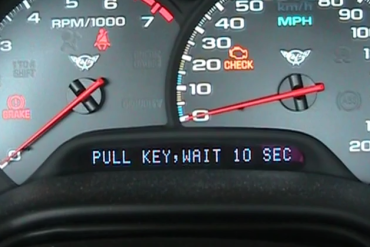


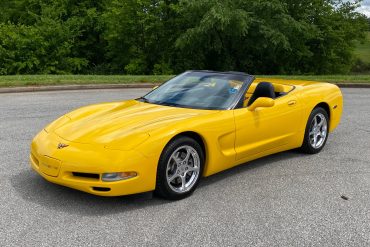


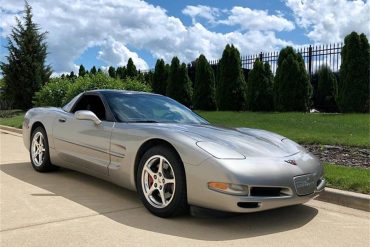
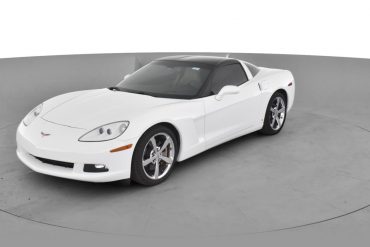


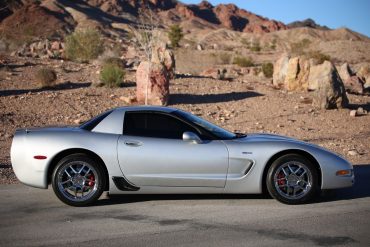


The C5s the site has listed for sale, newest first: owners’ cars, dealer stock and the auction consignments worth watching, with the asking price and what we make of it. The for-sale page has every Corvette the site is following and the auctions tag the results.
For performance, a 2002–04 Z06: 405 horsepower, the stronger valvetrain and clutch, and the 2004’s retuned damping, with the Commemorative Edition the collector car and the 2002 the value. For a driver, a 2001–04 coupe or convertible with the six-speed: 350 horsepower, Active Handling standard, the equipment group on most cars and the fewest first-year faults, with 2003–04 adding Magnetic Ride as an option. For the least money, a 1998–2000 coupe, which is the cheapest modern Corvette there is, or a 1999–2000 hardtop, the best-driving pre-Z06 C5.
If you want one answer: a 2001–04 six-speed coupe with the column lock sorted, the equipment group and under 50,000 miles, in the high teens to mid twenties. It does everything, it is easy to resell, and it costs a third of a Commemorative Z06.
From about $8,000 for a 140,000-mile coupe to $55,000 for a delivery-mileage Z06, which is why the price ladder on this page has five tiers. In the results the site tracked between October 2025 and October 2026, clean coupes and convertibles ran $13,400 to $25,000, hardtops $21,000 to $24,750, Pace Cars $18,000 to $41,000, 50th Anniversary cars $11,550 to $46,200, Commemorative coupes and convertibles $19,800 to $22,500, and Z06s $16,300 to $55,000 with most between $21,000 and $36,500.
Mileage, transmission and originality move a car within those ranges more than the year does. Auction figures are hammer prices, so add the buyer’s premium when comparing with dealer asking prices, and use the year pages, which carry the current results for each year.
The electronic column lock is a theft deterrent that locks the steering column when the key is removed. On many C5s it misreads a key inserted even slightly wrong, fails to release so the car will not start and shows “Pull Key, Wait 10 Seconds”, and in a few cases it has locked the column with the car moving. GM recalled every 1997–2004 car (04V060) and disabled or relayed the lock, and most cars now carry a dealer or aftermarket bypass.
Before buying any C5, verify the recall was done by VIN and ask whether the car has the relay or a bypass; look for the bypass module under the column and cycle the key several times at the viewing. The fix is cheap; a car that still has the original lock is a car with a known fault waiting to happen.
If the car is a weekend car, for shows, cruising, caravans or the track, buy the six-speed: the T56 is a good gearbox, the market pays more for it in every body and most of all on a hardtop, and for serious enthusiasts an automatic is not worth considering. If the car is a daily driver, think about your commute: a manual in start-and-stop rush hour is an exercise in frustration, and the 4L60-E is a durable automatic that most C5s were sold with.
The Z06 settles it for you, six-speed only. On everything else, buy the transmission you will enjoy on the roads you actually drive, and know that the automatic will cost less to buy and bring less when you sell.
Often, yes. The LS1 and LS6 go well past 150,000 miles on oil changes, many owners praise 100,000-mile cars that drive like new, and a higher-mileage C5 can save thousands for a weekend car and still give years of trouble-free driving. What the miles wear is not the engine but the interior (seat bolsters and foam), the suspension bushings, the window regulators, the fuel senders and the clutch on a six-speed, so a high-mileage car is a car to inspect for those and to price for them.
The exception is a car you will drive every day or take on long trips, where mileage becomes a serious consideration and a trained GM technician’s inspection is the price of confidence. And the market will always pay for low mileage, so a high-mileage car bought cheap sells cheap.
The paperwork (title, console label, build sheet, service records, a CarFax or AutoCheck, the recall history); the underside and the front air dam for scrapes and a hard hit; the panel seams and jambs for bodywork; the tires (tread, inside-edge wear, run-flats or not, date codes) and the wheels for cracks; the engine for leaks, the balancer for wobble, the battery tray for acid; the driver’s seat and every electronic device in the car, including both pop-up headlights together; and then a long drive to operating temperature with the radio off, checking the brakes, the warning lights, the parking brake and, on a six-speed, the clutch and torque tube.
Then a professional inspection by a Corvette-specific technician, scheduled for the same day as your viewing. The inspection section above has all of it in ten steps, and the common-problems table says what each symptom means.
The Z06, the 1998 Pace Car, the 50th Anniversary and the Commemorative Editions have appreciated since about 2020, the first modern Corvettes to do so, and the lowest-mileage Z06s now bring $40,000 to $55,000 against a $47,500–$52,385 sticker. The ordinary coupe and convertible, 220,000 of them, are drivers’ cars whose price tracks mileage and condition and has been flat for years.
Realistic expectations: steady appreciation for unmodified, documented, low-mileage Z06s and editions, stability for clean drivers, and nothing for a modified car bought as an asset. The best risk-and-reward is a 2002–04 Z06 with 20,000 to 40,000 miles, unmodified and sorted, in the high twenties to mid thirties. Buy the car you want to drive and let the market be a bonus.
The Commemorative Z06 (2,025 built, Le Mans Blue, the carbon hood, the Le Mans story) is the most valuable C5 and the one most likely to keep appreciating, at $35,000 to $43,000 for documented low-mileage cars. The 1998 Pace Car (1,163, Radar Blue and yellow) is the LS1 collectible, unmistakable and often stored, at $18,000 to $41,000 with six-speeds on top. The 50th Anniversary Edition (11,632, Anniversary Red over Shale with Magnetic Ride) is the most common and the most usable, with delivery-mileage cars at $30,000 to $46,000 and driven ones only a few thousand above an ordinary car.
All three are imitated, so buy on the console label and the build sheet (Z4Z, 1SC, Z15 or Z16), the paint code and, on a Commemorative Z06, the carbon weave under the stripe. The coupe and convertible Commemoratives are the quiet buy: a real edition at a modest premium.
Yes, more than most buyers expect. Chevrolet offered more than twenty colors over eight years, and the market does not price them alike: Torch Red and Black bring the highest asking prices and Millennium Yellow is sought after; the blues and silvers run a little under; light blue, white and the greens are the least expensive. Because fewer cars were ordered in those colors they are also the rarer ones, so a buyer who is flexible gets a more unusual Corvette for less money.
The exceptions are the colors that define a car: Electron Blue and Millennium Yellow on a Z06, and the edition colors, Radar Blue, Anniversary Red and Le Mans Blue, which add rather than subtract when they are factory paint on the right car. The colors pages have the counts by year.
The for-sale section above and the site’s for-sale page gather the C5s we are following from owners, dealers and the auctions, newest first, with what we make of each asking price. The Bargain Hunting series tracks the cheapest clean cars by generation each month, including the $10,000 C5 question, the year pages carry the current tracked results for each year, and Bring a Trailer, Cars & Bids, Mecum, Hagerty and the dealer sites are where the cars change hands.
Pay against the results, not the asking prices: dealers were asking $45,995 for a 2002 Z06 in 2026 while clean ones sold at auction for $25,000 to $36,500. And remember that less-expensive does not always mean less-quality; the informed buyer who inspects properly finds the great deals.