CORVETTE LISTS
The Greatest Corvette Concept Cars Of All Time
Every Corvette concept and prototype that mattered, from the 1953 Motorama car to the 2,000-horsepower CX of 2025, with Scott Kolecki’s ten greatest in full, the twelve mid-engine cars that led to the C8, and where each one is today.
Quick Nav: At A Glance · Every Concept · The Ten Greatest · Mid-Engine · The 2025 Cars · About · FAQs · Concept Guides · More Lists
At A Glance
The first: 1953 EX-122, shown at the Motorama in New York on January 17, 1953 and in production by June
The most influential: The 1959 Sting Ray Racer and 1961 Mako Shark (the 1963 Sting Ray), the 1965 Mako Shark II (the 1968 Corvette)
The mid-engine cars: Twelve, from the 1960 CERV I to the 1990 CERV III, thirty years before the C8 did it
Closest to production: The Aerovette, approved as the 1980 Corvette and cancelled; the CERV III, priced at $300,000–$400,000
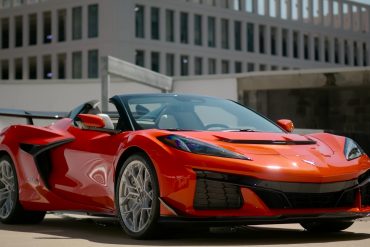
The newest: The Corvette CX and CX.R Vision Gran Turismo, 2,000 hp each, revealed at The Quail in August 2025
Where to see them: GM Heritage Center, Sterling Heights (most of them); the National Corvette Museum, Bowling Green (the Two-Rotor and others)
The book: Corvette Concept Cars: Developing America’s Favorite Sports Car by CorvSport founder Scott Kolecki (CarTech, 2022)
The Overview
It has long been said that “beauty is in the eye of the beholder.” While this statement tends to hold true for many things, it is especially accurate when evaluating how beautiful different automobiles are when compared to one another. If you’ve ever been to a car show with a group of people, each of you will (likely as not) have different opinions as to which car(s) are the best looking, the best designed, etc.
Today, I want to take it a step further. I am going to introduce ten original concept cars that emerged over the past seventy years from GM’s Design Studios, each of which helped give rise to one of the most iconic sports cars of all time - the Chevy Corvette. I am writing this piece in the wake of the publication of my first book: “Corvette Concept Cars: Developing America’s Favorite Sports Car.” The cars listed below are some of my personal favorites from the book, and while each is a testament to the amazing designers that created them, I think you’ll be surprised to discover how many of these cars ended up influencing the production models we all know and love today.
Every Corvette Concept That Mattered, 1953–2025
Seventy-two years of show cars, research vehicles and might-have-beens, in order.
| YEAR | CONCEPT | CODE | WHAT IT WAS | WHERE IT IS |
|---|---|---|---|---|
| 1953 | Corvette Motorama show car | EX-122 | Harley Earl’s Project Opel; the car that became the production Corvette five months later | Kerbeck collection, the oldest Corvette |
| 1954 | Corvette Nomad / Corvair / Hardtop | — | Three Motorama show cars on the Corvette theme: a wagon, a fastback and a removable hardtop | Nomad: destroyed; the hardtop went to production for 1956 |
| 1956 | Corvette SR-2 | — | Sebring racer built for Jerry Earl with a tail fin and a headrest fairing; three built | All three survive in private hands |
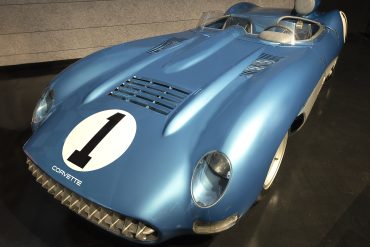
| 1957 | Corvette SS | XP-64 | Magnesium-bodied tube-frame racer; Fangio tested it, it retired from Sebring after 23 laps | GM Heritage Center |
| 1957 | Q-Corvette | — | A rear-transaxle, independent-rear coupe study whose shape became the 1963 Sting Ray | Never built as a running car |
| 1958 | XP-700 | — | Bill Mitchell’s personal show car; its tail became the 1961 Corvette’s and its bubble canopy went on the Mako Shark | Rebuilt into the Mako Shark |
| 1959 | Sting Ray Racer | XP-87 | Mitchell’s racer on the SS mule chassis; won the 1960 SCCA C-Modified title, then became the 1963 Sting Ray | GM Heritage Center |
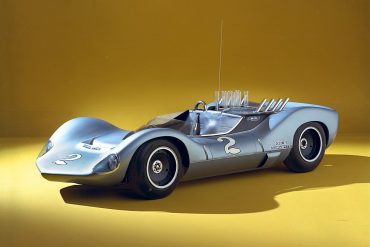
| 1960 | CERV I | — | Duntov’s open-wheel Chevrolet Engineering Research Vehicle; 206 mph at Milford with an alloy 377 | Privately owned |
| 1961 | Mako Shark | XP-755 | The Sting Ray preview on a 1961 chassis, painted like Mitchell’s shark | GM Heritage Center |
| 1962 | C2 styling study | XP-720 | The production design study for the 1963 Sting Ray, including a four-seat version | Clay models only |
| 1963 | Corvette Rondine | — | Pininfarina’s one-off coupe on a 1963 chassis, shown at Paris | Private; sold for $1.76 million in 2008 |
| 1964 | CERV II | — | Mid-engine, all-wheel-drive Le Mans study with a 377 alloy V8; 200-plus mph | Private; sold for $1.1 million in 2013 |
| 1964 | XP-819 | — | Frank Winchell’s rear-engine Corvette with a Shinoda body; crashed in testing and sold to Smokey Yunick | Restored, privately owned |
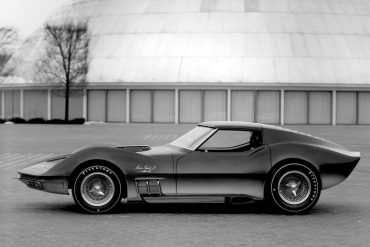
| 1965 | Mako Shark II | XP-830 | Two built, one running with a 427; the 1968 Corvette almost line for line | Show car: GM Heritage Center; runner became the Manta Ray |
| 1967 | Astro I | — | A 35.5-inch-tall, rear-engine canopy car with an overhead-cam Corvair flat six | GM Heritage Center |
| 1968 | Astro-Vette | — | An aerodynamic study on a 1968 convertible, nicknamed Moby Dick | GM Heritage Center |
| 1968 | Astro II | XP-880 | The first mid-engine Corvette shown to the public; 427 big block, New York Auto Show | GM Heritage Center |
| 1969 | Astro III | — | A gas-turbine, three-track canopy car that looked like a jet fighter | GM Heritage Center |
| 1969 | Manta Ray | — | The running Mako Shark II reworked with a long boat tail and a ZL1 427 | GM Heritage Center |
| 1970 | XP-882 | — | Duntov’s transverse mid-engine 400 small block, rushed to New York to answer the De Tomaso Pantera | Rebuilt into the Four-Rotor car |
| 1972 | Reynolds Aluminum Car | XP-895 | An XP-882 body re-created in aluminum by Reynolds, 450 lb lighter | GM Heritage Center |
| 1973 | Two-Rotor | XP-897GT | Pininfarina-built Wankel coupe on a Porsche 914 chassis; Frankfurt Motor Show | National Corvette Museum |
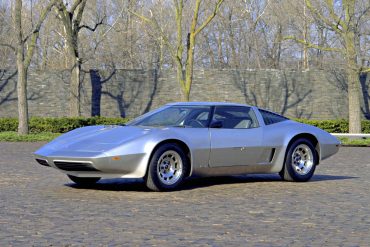
| 1973 | Four-Rotor | XP-882 | Two Wankels joined into a 420-hp “super rotary” under gullwing bifold doors; Paris Salon | GM Heritage Center (as the Aerovette) |
| 1976 | Aerovette | — | The Four-Rotor car with a 400 small block; approved as the 1980 Corvette, then cancelled | GM Heritage Center |
| 1979–80 | Turbo Corvette / Turbo Vette 3 | — | Turbocharged L48 development cars built with aluminum panels and a 1980 nose | GM |
| 1984 | Bertone Ramarro | — | Bertone’s rebody of a 1984 Corvette with sliding doors, shown in Los Angeles | Sold from the Bertone collection |
| 1986 | Corvette Indy | — | Tom Peters’ mid-engine show car with the Ilmor Indy V8; the running prototypes got a twin-turbo LT5 | GM Heritage Center |
| 1990 | CERV III | — | The Indy made real: 650-hp twin-turbo LT5, all-wheel drive, 225 mph, priced out of production | GM Heritage Center |
| 1990 | Bertone Nivola | — | Bertone’s mid-engine ZR-1-powered roadster, named for Tazio Nuvolari | Sold from the Bertone collection |
| 1992 | Sting Ray III | — | John Schinella’s California studio concept on a long wheelbase; its cabin pointed at the C5 | GM Heritage Center |
| 2003 | Italdesign Moray | — | Giugiaro’s 50th-anniversary tribute on a C5 chassis, Geneva Motor Show | Italdesign |
| 2009 | Corvette Stingray Concept | — | Tom Peters’ Sideswipe for Transformers: Revenge of the Fallen; Chicago Auto Show | GM Heritage Center |
| 2025 | Corvette concept (UK) | — | GM Advanced Design Leamington Spa’s electric hypercar study, March 2025 | GM Design |
| 2025 | California Corvette | — | The Pasadena studio’s electric hypercar with a fighter-style canopy, July 2025 | GM Design |
| 2025 | Corvette CX / CX.R Vision Gran Turismo | — | Warren’s 2,000-hp electric hypercar and its hybrid racing twin, The Quail, August 2025 | GM Design; the CX.R in Gran Turismo 7 |
The Ten Greatest Corvette Concepts
Scott Kolecki founded CorvSport in 2010 and wrote Corvette Concept Cars: Developing America’s Favorite Sports Car (CarTech, 2022). The overview and the ten entries below are his; the chronology, the mid-engine section and the 2025 cars were added to make this the complete reference.
1) The 1953 EX52 / EX122
Motorama, New York, January 1953 · Harley Earl
You can’t talk Corvettes without talking about the car that started it all. Based on Harley Earl’s Project Opel plaster model, the EX52 / 122 was the original concept car that inspired the nation and left countless consumers wanting a Corvette to call their own. This Corvette concept was introduced at GM’s Motorama in January 1953. It was so well received that GM moved the car from prototype to production in just six months’ time!
MORE: 1953 EX52 / EX122 CONCEPT GUIDE / CORVETTES REIGN AT THE 1954 MOTORAMA
 Image courtesy of GM Media LLC.
2) The 1968 XP-880 Mid-Engine Astro II
New York Auto Show, April 1968 · Frank Winchell, Larry Shinoda
Anyone who has complained that the eighth-generation Stingray ruined the Corvette when its engine got moved behind the driver clearly doesn’t know the long history of the mid-engine Corvette program. Developed under the direction of Frank Winchell, the 1968 Astro II was originally developed as a potential competitor to the production model of the original Ford GT-40. This car was designed by the talented Larry Shinoda (whose work will be featured on several of the concepts in this article) and was considered (albeit briefly) as a potential production model after it was unveiled at the New York Auto Show in April 1968.
MORE: 1968 ASTRO II GUIDE / THE ASTRO CONCEPTS: THREE YEARS OF INNOVATION
 The 1968 Astro II (Image courtesy of GM Media LLC)
3) The 1961 XP-755 Mako Shark (I)
Road America, June 1961 · Bill Mitchell, Larry Shinoda
The creation of the Mako Shark started during a fishing trip in the Bahamas. Bill Mitchell, GM’s recently appointed second VP of Design, had reeled in a shortfin Mako Shark. He was so enamored with the shark’s sleek lines and its ability to twist and turn in the water that he felt it would make the perfect motif for the second-generation Corvette. Mitchell worked with designer Larry Shinoda on the exterior aesthetic of the Mako Shark. The car was built on a 1961 Corvette chassis and was equipped with a 327 cubic-inch Chevy V8 engine. Although the car wouldn’t make its official debut until April 1962, Mitchell drove the car at a Road America race on June 18, 1961. The car gave spectators a thrill as it was the first time anyone had glimpsed the styling being considered for the second-generation Corvette.
 The 1961 Mako Shark (Image courtesy of GM Media LLC)
4) The 1969 Manta Ray (the Mako Shark II re-imagined)
1969 · Larry Shinoda, Bill Mitchell
The 1969 Manta Ray was actually a re-imagining of the Mako Shark II that had been designed by Larry Shinoda and introduced by Bill Mitchell in 1965. While the basic profile and many of the design elements remained unchanged on the car, the Manta Ray featured a long, tapered rear end, a narrow, vertical window mounted just behind the cockpit with a sugar scoop element that cascaded atop the car’s decklid. The car also featured widened rear fenders and new, flip-up brake light assemblies that would activate during extreme braking situations or when the driver activated the car’s turn signals. The Manta Ray name replaced the Mako Shark II moniker in the winter of 1969. Today, this car resides at GM’s Heritage Center in Sterling Heights, Michigan.
 The 1969 Manta Ray (Image courtesy of GM Media LLC)
5) The 1986 Corvette Indy
Detroit Auto Show, January 1986 · Tom Peters
Arguably one of the most radical of all the Corvette concept cars, this mid-engine sports car is an expression of pure design, without the constraints of driver ergonomics, cockpit accessibility, or adequate interior space. This incredible concept car was designed by GM designer Tom Peters, who went on to create many of the most iconic Chevrolet vehicles introduced in recent years, including the sixth- and seventh-generation Corvettes, the fifth-generation Camaro, the Cadillac XLR and the 2014 Silverado, to name but a few. The 1986 Corvette Indy featured a powerplant created by the Lotus company. A variant of this same engine would be introduced in the fourth-generation Corvette ZR-1. The 1986 Corvette Indy Concept also served as a precursor to Chevrolet’s next engineering/research vehicle, the 1990 CERV III.
 The 1986 Corvette Indy concept. (Image courtesy of GM Media LLC)
6) The 2009 Corvette Stingray Concept
Chicago Auto Show, February 2009 · Tom Peters
One of the last notable Corvette concepts was the 2009 Corvette Stingray Concept. Initially developed as a “secret” project by designers around the globe, the car’s development gained momentum when Michael Bay came “calling” at GM for would be automobile “superstars” that could be included in his “Transformers” movie. After the success of the original film in 2007 (in which Bay introduced the world to the awesome fifth-generation Camaro concept), Bay knew that he needed another car that was equally engaging for this Transformers sequel, “Revenge of the Fallen.” Once more, Tom Peters (who by now was serving as the director of exterior design for GM) was tasked with creating a modern interpretation of the Corvette inspired by some of the most iconic models ever built. The result - the car you see here - thrilled moviegoers and automotive enthusiasts alike. However, when asked if this car might be the prototype for a seventh-generation Stingray, Ed Welburn, GM’s Global Vice President of Design, simply said “No....it was a great styling concept with a role in a movie.” He wanted the seventh-generation Stingray to be even better. Do you think GM succeeded? We do.
 The 2009 Corvette Stingray Concept (Image courtesy of GM Media LLC.)
7) The 1957 XP-64 Corvette SS
Sebring, March 1957 · Harley Earl, Zora Arkus-Duntov, Clare MacKichan
Dubbed Chevrolet’s “1957 Sebring car”, the Corvette SS was the company’s first effort to develop a pure, purpose-built Corvette race car. The car’s development was helmed by Harley Earl and Zora Arkus-Duntov in what would prove to be one of Earl’s last projects. Utilizing a design created by Clare MacKichan (under Earl’s guidance), the car needed to feature the streamlining of a race car while still conveying the aesthetic of a Corvette. The result was a car that was both Corvette and a European race car all rolled into one. Although the car struggled at Sebring, it proved that Chevrolet had the “chops” to build a serious race car. Ed Cole ordered the creation of three additional Corvette SS racers for that year’s 24 Hours of Le Mans, but the 1957 AMA ban on manufacturer-backed racing brought the SS to a quick - and final - end.
 The 1957 Corvette SS with Zora Arkus-Duntov at the wheel. (Image courtesy of GM Media LLC.)
8) The XP-897 GT Two-Rotor Corvette
Frankfurt Motor Show, September 1973 · Kip Wasenko, Pininfarina
The XP-897 GT was one of several concept Corvettes developed to showcase GM’s newly-acquired Wankel rotary engines. Originally referred to as the “Chevrolet GT,” the car was to be developed as a mid-engine platform. It was developed as a cooperative between Chevrolet’s styling and engineering divisions. The XP-897 GT’s exterior aesthetic was developed by John “Kip” Wasenko of GM Styling, and was developed around a modified Porsche 914 chassis. The final body was fabricated by Pininfarina in Turin, Italy. Although a dramatic departure from the styling of the Corvette (from essentially any era), this small, sporty coupe still holds up well today. It can be seen at the National Corvette Museum as part of the museum’s permanent collection.
 The XP-987 GT Two-Rotor Concept. (Image courtesy of Kolecki Photography)
9) The Four-Rotor Concept / Aerovette
Paris Salon, October 1973 · Bill Mitchell, Henry Haga, Zora Arkus-Duntov
The Four-Rotor / Aerovette was the last in a series of mid-engine Corvette concepts developed in the mid-1970s. This car was one of Zora Arkus-Duntov’s final efforts as Corvette Chief Engineer to build his beloved sports car as a mid-engine platform. The car is actually a re-imagining of Zora’s earlier 1970 XP-882 Corvette Concept and utilized much of the same underpinnings as that earlier car. The four-rotor engine’s fuel-efficiency limitations ultimately forced GM to abandon the Wankel rotary engine program, especially after the 1973 OPEC energy crisis. The car was re-worked to incorporate a 400-cubic-inch small block Chevy V8, but the popularity of the front-engine, rear-wheel-drive third-generation Corvette convinced GM to pull the plug on this program. As with other cars in this article, the Aerovette is now part of the Heritage Center’s collection.
MORE: 1973 FOUR-ROTOR XP-882 GUIDE / THE AEROVETTE WAS A C8 FOUR DECADES TOO SOON
 The Four-Rotor / Aerovette Concept (Image courtesy of GM Media LLC.)
10) The 1990 CERV III
Detroit Auto Show, January 1990 · Tom Peters, Lotus
The 1990 CERV III (Corporate Experimental Research Vehicle III) was the fully realized version of Tom Peters’ radical 1986 Corvette Indy concept. Where the Corvette Indy was a “pure design” automobile, the 1990 CERV III was touted as a “fully operational research vehicle utilizing state-of-the-art technology to explore the outer reaches of automotive performance.” The car showcased the advances that Chevrolet had made in engine performance and vehicle handling thru its acquisition of Lotus and its own advances in computer-controlled technologies. It made its debut at the Detroit International Auto Show in 1990 and was seriously considered for production. Unfortunately, its high price tag (some estimates put its sell price at between $300k and $400k), the car was deemed too expensive for the traditional Corvette enthusiast and was later abandoned. This car can be seen at the Heritage Center in Sterling Heights, Michigan.
MORE: THE CERV III WAS THE PROOF OF CONCEPT FOR THE C8 / MID-ENGINE PROTOTYPES: CORVETTE INDY AND CERV III
 The 1990 CERV III (Image courtesy of GM Media LLC.)
So that’s our list of the top-ten Corvette concepts. Of course, these ten cars are but a handful of the many beautiful concept cars built by Chevrolet since the Corvette’s introduction in 1953.
To learn a lot more about these (and the many other) Corvette concepts that helped give rise to the Corvettes of today, check out my book “Corvette Concept Cars: Developing America’s Favorite Sports Car,” published by CarTech. The book features all of the cars in this article along with dozens of other concepts, test mules, and one-of-a-kind prototypes. More than that, the book is a history of the whos-who of Corvette design. I hope you’ll check it out....and let me know what you think. I can’t wait to hear from you!
The 1959 Sting Ray Racer is the only Corvette concept to win a championship. Bill Mitchell built it on the 1957 Corvette SS test-mule chassis he bought from GM for $500, Dr. Dick Thompson drove it to the 1960 SCCA C-Modified title, and its body became the 1963 Sting Ray.
DID YOU KNOW
The Mid-Engine Corvettes Before The C8
Zora Arkus-Duntov proposed a mid-engine Corvette in 1960 and never stopped. Between the CERV I and the CERV III, GM built twelve mid-engine or rear-engine Corvette studies, five of them under Duntov himself, and every one failed for the same two reasons: no customer was asking for it, and no transaxle existed that could take big-block torque. Scott Teeters’ member story on why the C5 was almost the first mid-engine Corvette tells the whole thirty-year campaign.
Thirty Years Of Trying
Twelve cars, 1960–1990
The table below is the whole lineage. Five are Duntov’s own (CERV I, CERV II, XP-882, the Reynolds car and the Four-Rotor/Aerovette), three are Frank Winchell’s rear- and mid-engine experiments, and the last two are Tom Peters’ Indy and the CERV III that grew out of it. Put side by side, the C8 Stingray looks less like a break with tradition than the end of a very long argument.
MORE: EVERY MID-ENGINE CORVETTE PROTOTYPE / THE C5 WAS ALMOST THE FIRST MID-ENGINE CORVETTE / FRANK WINCHELL, THE FORGOTTEN MID-ENGINE ENGINEER
 Image Credit: GM Archives
The Twelve Mid-Engine Corvette Studies
| YEAR | CAR | ENGINE | LAYOUT | WHY IT MATTERED |
|---|---|---|---|---|
| 1960 | CERV I | 283 → 377 alloy small block | Mid-engine, open-wheel | Duntov’s first; 206 mph at Milford, the test bed for the C2’s suspension |
| 1964 | CERV II | 377 alloy small block | Mid-engine, all-wheel drive | Built for Le Mans; killed by GM’s racing ban before it could run |
| 1964 | XP-819 | 327 small block | Rear-engine | Winchell’s Corvair-logic Corvette; proved the engine belonged ahead of the axle |
| 1967 | Astro I | OHC Corvair flat six | Rear-engine | The lowest car GM had built; pure show |
| 1968 | Astro II (XP-880) | L36 427 big block | Mid-engine, transaxle | The first mid-engine Corvette the public saw; its tail became the 1974 Corvette’s |
| 1970 | XP-882 | 400 small block, transverse | Mid-engine | Duntov’s most production-ready design; shown to blunt the Pantera |
| 1972 | XP-895 Reynolds | 400 small block | Mid-engine | The XP-882 in aluminum, 450 lb lighter |
| 1973 | Two-Rotor (XP-897GT) | GM two-rotor Wankel | Mid-engine | The rotary Corvette that was supposed to be small and cheap |
| 1973 | Four-Rotor (XP-882) | Twin two-rotor Wankel, 420 hp | Mid-engine | The most beautiful of them; gullwing doors, Paris Salon |
| 1976 | Aerovette | 400 small block | Mid-engine | Approved as the 1980 Corvette by the board; cancelled after Mitchell and Duntov retired |
| 1986 | Corvette Indy | Ilmor 2.65 twin-turbo V8 (show); LT5 (runners) | Mid-engine, all-wheel drive | Peters’ showcase for electronics: active suspension, four-wheel steering, CRT displays |
| 1990 | CERV III | Twin-turbo LT5, 650 hp | Mid-engine, all-wheel drive | 225 mph and a $300,000+ price; the last mid-engine study before the C8 program |
The 2025 Concepts
For sixteen years after the Stingray Concept there was no new Corvette show car; the mid-engine program was being built in secret. Then in 2025 GM’s three advanced design studios each revealed one, as a look past the C8.
2025 Corvette concept, GM Advanced Design UK
Royal Leamington Spa · March 2025 · electric hypercar study
The first was the Leamington Spa studio’s: a low electric hypercar with a split-cockpit canopy and an “Apex Vision” centerline, described by GM as the more technical reimagining of the three. It was a design study only, with no powertrain figures, and it set off a year of speculation about an electric Corvette that GM has not confirmed.
MORE: THE UK CONCEPT REVEAL
2025 California Corvette
GM Advanced Design Pasadena · July 2025 · electric hypercar
The Pasadena studio’s answer was a fighter-canopy single-piece-glass hypercar with a T-shaped prismatic battery in the floor and a tail inspired by the Mako Sharks and the Sting Ray Racer. Like the UK car it was a full-size model, not a runner.
2025 Corvette CX and CX.R Vision Gran Turismo
GM Design Warren · The Quail, August 15, 2025 · 2,000 hp each
The home studio’s car is the one GM called the north star for the Corvette’s future. The CX is an all-electric hypercar with a motor at each wheel, 2,000 horsepower, torque vectoring at every corner and a 90-kWh battery under a fighter-style canopy. The CX.R Vision Gran Turismo is its racing twin: a 900-hp two-liter twin-turbo V8 revving to 15,000 rpm plus three electric motors, 2,000 hp in total, built for Gran Turismo 7 and, GM hinted, for a synthetic-fuel Le Mans. Chevrolet’s design director Phil Zak said the name was chosen so nobody would read it as a C9 teaser.
About This List
The ten greatest are Scott Kolecki’s, chosen from the dozens of cars in his book for their beauty and for how much of each one reached production; he numbered them but did not rank them, and neither do we. The chronology above it is every Corvette concept, prototype and show car that either influenced a production Corvette, was seriously considered for production, or survives in a museum; one-off customer specials, race cars built from production Corvettes and pure engineering mules are left out. Where a car is today is from the GM Heritage Center’s and the National Corvette Museum’s published collections and auction records.
Every car with a CorvSport concept guide links to it under its entry; the guides carry the full specifications and photo galleries. The page is updated when GM shows a new concept or a car changes hands.
FAQs
What was the first Corvette concept car?
The EX-122, Harley Earl’s Motorama show car, revealed at the Waldorf-Astoria in New York on January 17, 1953. Public reaction put it into production that June with almost no changes. The car survives in the Kerbeck collection and is the oldest Corvette in existence.
Which Corvette concepts became production cars?
The EX-122 became the 1953 Corvette; the Sting Ray Racer, Mako Shark and XP-720 became the 1963 Sting Ray; the Mako Shark II became the 1968 Corvette almost unchanged; the Sting Ray III’s interior pointed at the C5; and the 2009 Stingray Concept’s cues (and name) returned on the 2014 C7 Stingray.
How many mid-engine Corvette concepts were there before the C8?
Twelve, from the 1960 CERV I to the 1990 CERV III, including two rear-engine cars (the XP-819 and Astro I). The Aerovette came closest: GM’s board approved it as the 1980 Corvette before cancelling it.
Why did GM never build a mid-engine Corvette until 2020?
Because the front-engine car kept selling. Corvette sales rose every year of the 1970s while performance fell, so Chevrolet saw no reason to take the risk, and no production transaxle existed that could handle big-block torque until the C5 program. The C8 finally did it with a purpose-built Tremec dual-clutch.
Where can I see the Corvette concept cars?
Most are in the GM Heritage Center in Sterling Heights, Michigan (the SS, Sting Ray Racer, Mako Shark, Manta Ray, Astros, Aerovette, Corvette Indy, CERV III, Sting Ray III, Stingray Concept), which opens for tours and events. The Two-Rotor car is at the National Corvette Museum in Bowling Green. The CERV I, CERV II, Rondine and XP-819 are privately owned.
What is the most valuable Corvette concept?
Of the ones that have sold publicly, the 1963 Pininfarina Rondine ($1.76 million, Barrett-Jackson 2008) and the 1964 CERV II ($1.1 million, RM Sotheby’s 2013). The GM-owned cars have never been offered.
Is the Corvette CX concept the next Corvette?
GM says no. The CX, CX.R, California Corvette and UK concept are design studies of what a Corvette could be beyond the C8; the CX.R exists as a drivable car only in Gran Turismo 7. Chevrolet has not announced a C9 or an electric Corvette.
Corvette Concept Guides
CorvSport’s full guide to every concept and prototype: specifications, the designers, the galleries and what became of each car.

More Corvette Lists
The best of every generation, the fastest, the rarest, the most expensive and the ones we would buy with our own money. All of CorvSport’s lists and rankings.